Penman No. 156: Why I’ll Never Become Ambassador

Penman for Monday, July 6, 2015

IN MY early middle age, around 40, I nursed an ambition of becoming an ambassador, an official representative of the Republic of the Philippines. Some of my friends and schoolmates were on their way to becoming one—Vicky Bataclan, now in Belgium, and Libran Cabactulan, now at the UN, were just two of them—and I imagined that I might carve out a new career in my seniorhood in the grand tradition of writer-diplomats such as Pablo Neruda, Octavio Paz, and our own Manuel Viray and S. P. Lopez. I’ve met a few real and truly worthy ambassadors and have been much impressed by their demeanor—Cesar Bautista, Delia Albert, and Joey Cuisia, for example.

With a background in literature and economics, and having written a slew of speeches for Presidents, senators, and CEOs, I thought that I had acquired enough political savvy and possessed the language to be able to craft an intelligent and suitably tart or nuanced response to any issue from island-grabbing in the West Philippine Sea to the Chinese in all of us. I also happen to like wearing suits and to be driven around, and I can say “Good morning” in six languages, so I have the externals covered. If I were serious about my ambassadorial plans two decades ago, all I needed to do (if I didn’t want to go the career route and take the FSO exams) was to hitch my wagon to some political star, which is apparently how one too many stragglers like me get to be called “Ambassador” for life, their diplomatic skills be damned.

But I suppose I’ve always had at least two strikes going against my being posted to some swanky European capital: my incipient misanthropy, and my culinary incorrectness.

The older I get, the more reclusive I tend to be, shying even farther away from the frenzy of Facebook and the emoji-enabled spontaneity of many online “friendships.” It’s not that I actively dislike people; I think most strangers will find me friendly, and I warm up easily once we get a real conversation going. (With the exception, I must say, of telephone conversations; having grown up without a phone, I have always disliked—loathed would be the better word—talking on the phone, especially for anything longer than three minutes.)

It’s just that, past 60, I’ve come to seek out human company less and less, preferring to keep to myself and family, and a few close friends who wouldn’t mind not hearing from me for months or years and picking up where we left off, which is my gauge of a true friendship. Over the past five years or so, I’ve become such a homebody (my poker nights excepted) that Beng feels like she has to ask me now and then, “Don’t you have any friends?” She means, of course, people other than herself, because she knows that I’ve been perfectly happy to just have her for company, at home or on the road, and that, in our sixties, our need and desire to socialize as a couple has diminished considerably.

Beng compensates for this by being a Facebook fiend, and aside from her snoring bedmate, Facebook’s the first thing she sees in the morning and the last thing she sees at night. Like I wrote here not too long ago, I’m not even on FB, and obstinately stay out of it, because I think it’s cheapened the meaning of “friend.”

Diplomacy, of course, requires not only meeting with a lot of people, but people you hate, and who very likely feel likewise—sort of like the online world, only it’s face to face. Now, I can fake pleasantness as well as anyone else—except maybe Beng, who’d lose our house and car at poker within five minutes—but I know, from practice, that while they say it takes just 17 muscles to smile and 42 to frown, smiling can be a lot more tiring than frowning, especially if you don’t mean it.

The more important reason I’ll never head an embassy is the mess I would likely make of our foreign relations by my equally boneheaded refusal to acquire a more catholic or at least a more cosmopolitan palate, despite Beng’s entreaties for us to try menus more complicated than Chow King’s. Nothing flusters me more than the prospect of “fine dining.” (I recall how, many years ago, I begged off from joining a very exclusive and epic feast prepared by ten of Manila’s top chefs—much to the dismay of a fellow professor who had wangled the invitation—precisely because all that good food would have been wasted on me.)

That’s also why I’ve declined dinner invitations, especially from people I don’t know or who don’t know me and my curious preferences, to spare us the mutual embarrassment of my shying away from anything with cheese, or oregano (I can sniff out one part in a million), or the aforementioned curry, which effectively leaves out much of Italian, French, Greek, Indian, and Mexican cuisine. No pizzas, thank you! But I’ll take pancit, lechon, adobong pusit, Ligo sardines, chicken mami, and KFC anytime—I’m actually easy to please.

Ambassadors should be able to eat anything with anyone, and not just gorge like a hungry peon (someone called my rice-and-pancit combo “pagkaing obrero”) but dine intelligently, knowledgeably, with the ability to make off-the-cuff remarks like “Don’t you just love the tanginess and the fruitiness of this Dréan d’Auvergne? It’s a bit more complex than the St. Nectaire, don’t you agree?” (Thanks to cheesenotes.com for the technical details.)

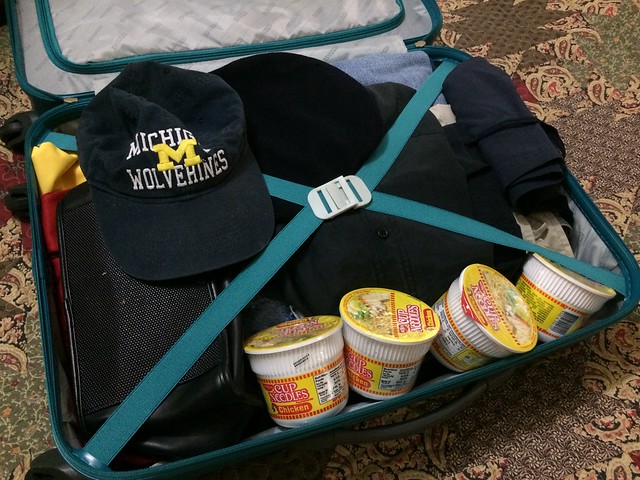
The only place I can imagine not having this culinary quandary would be China—where I’ve gone pretty often because, as I told Beng, I was sure to find a lot of yummy Chinese food there—but I’d hate to tell my Chinese hosts what I really thought of the nine-dash line, and I’d hate to have to explain, on the rebound, why bright kids with Chinese names can create such a fuss on Pinoy Facebook.

Penman No. 150: Looking Eastward in Toronto

IMG_7573 (1)Penman for Monday, May 25, 2015

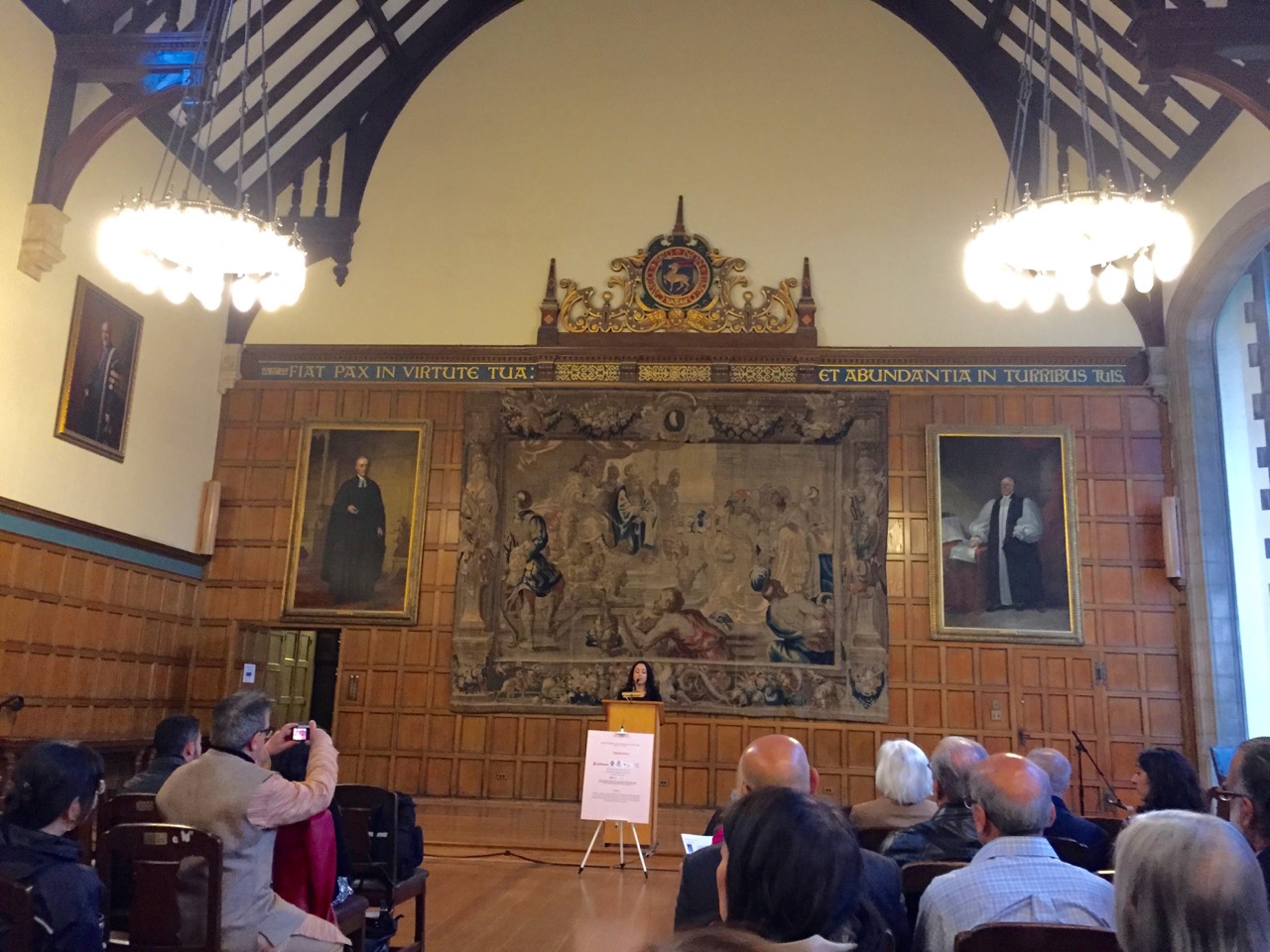
I FLEW out to Toronto in Canada a little over a week ago to take part in that city’s Festival of Literary Arts, possibly the first Filipino author to join that long-running festival, now on its 15th year. Previously, the festival had focused on South Asia (India, Pakistan, Bangladesh, Sri Lanka), but has recently opened itself up to more representation from East Asia, Africa, and the Caribbean, thus my inclusion in this year’s roster of invited writers and speakers.

Over a weekend, from Friday to Sunday (May 15-17), several dozen representatives from these regions and from Canada met in various venues on the scenic campus of the University of Toronto and its environs to tackle issues and problems besetting writers and publishers from outside the global centers. How does a writer from the periphery break through to the center? Or is that “periphery” its own legitimate center? Is yearning for publication and validation in the West a vestige of the colonial mindset, an experience shared by all the countries represented in Toronto?

Aside from these seminal discussions, of course, the meeting was first and foremost a festival, a sharing of the artists’ finest work, and I felt privileged to be introduced to authors and creations I would otherwise have totally missed or blithely ignored. With many of the authors coming from expatriate and postcolonial backgrounds, the offerings were rich and deeply nuanced, the talents outstanding.

Among others, I discovered a major international writer in the festival director, the novelist M. G. Vassanji, who had been born in Tanzania in East Africa, and whose account of his pilgrimage to his ancestral roots across the ocean (A Place Within: Rediscovering India) is a modern classic of creative nonfiction—a sympathetic but unsentimental and often searingly critical chronicle of his encounter with the sprawling reality of India today.

The visit also allowed me to reconnect with some old Filipino friends who had migrated to Toronto and had built new lives there. I was very graciously taken out to a scrumptious dimsum lunch in Toronto’s fabled Chinatown by Patty Rivera and her husband Joe. Patty and I worked together 40 years ago as writers and editors at the National Economic and Development Authority (an unlikely Camelot for young writers and artists under the patronage and protection of then-Sec. Gerry Sicat).

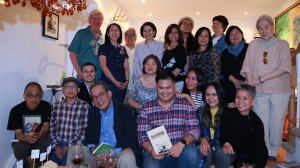
Though trained and still active as an editor and journalist, Patty has since developed into an accomplished and prizewinning poet, with three volumes to her name. Her first collection, Puti/White, was shortlisted for the 2006 Trillium Book Award for Poetry. Patty’s husband Joe, a former Ford executive who also wrote plays in the Philippines, became a lawyer in Canada and then, upon his recent retirement, turned to painting, an avocation in which he demonstrates a most unlawyerly exuberance. I also met and was happy to engage with some Alpha Sigma fraternity brothers led by Amiel “Bavie” de la Cruz, who now runs his own accounting firm in Toronto. IMG_7597 (1) Patty and Joe arranged a reading for me with a large and lively group of Toronto-based Pinoys (including Hermie and Mila Garcia, the moving spirits behind Canada’s longest-running Filipino newspaper, the Philippine Reporter, and expat poet Naya Valdellon); this was held in the very stylish apartment of writer-artist Socky Pitargue, and a great time was had by all as we threshed out the travails of Philippine literature and politics, two deathless topics that occupy me on every one of these overseas sorties. DALISAY_HMG_8056-300x168 Yet another meaningful encounter I had, thanks to the festival organizers, was with two classes of high school students at the Mother Teresa Catholic School in Scarborough, a Toronto suburb with a high concentration of Asian students, including Filipinos. These teenagers had very likely never met a living writer before, let alone a Filipino one, and I was glad to try and show them that we do exist, and that we have something to say. I, too, learned something from their teacher Kathy Katarzyna, who ended our session with a terrific quote from the Canadian poet Leonard Cohen: “There’s a crack in everything…. That’s how the light gets in.”

Many thanks to the Sri Lankan poet Aparna Halpe for taking me to the school. Of course, my thanks wouldn’t be complete without acknowledging the help and support of my sister Elaine Sudeikis and her husband Eddie, who flew in from Washington, DC to join me at the festival and to show me Toronto and a bit of Ontario (most notably Niagara Falls—we walked over to the US side as well for my shortest visit to the US, ever). Ed’s dad Al—all of 92 but still feisty—also gave me a little taste of Lithuania in Toronto.

And the visit would never have happened for me without the recommendation of Prof. Chelva Kanagayakam, an eminent scholar and festival founder whom I’d met in Manila, who tragically died of a heart attack a few months before the festival, on the very day he was inducted into the Royal Society of Canada. I found Toronto itself to be a highly livable and largely safe city (guns are under strict control in Canada), with a vibrant ethnic mix.

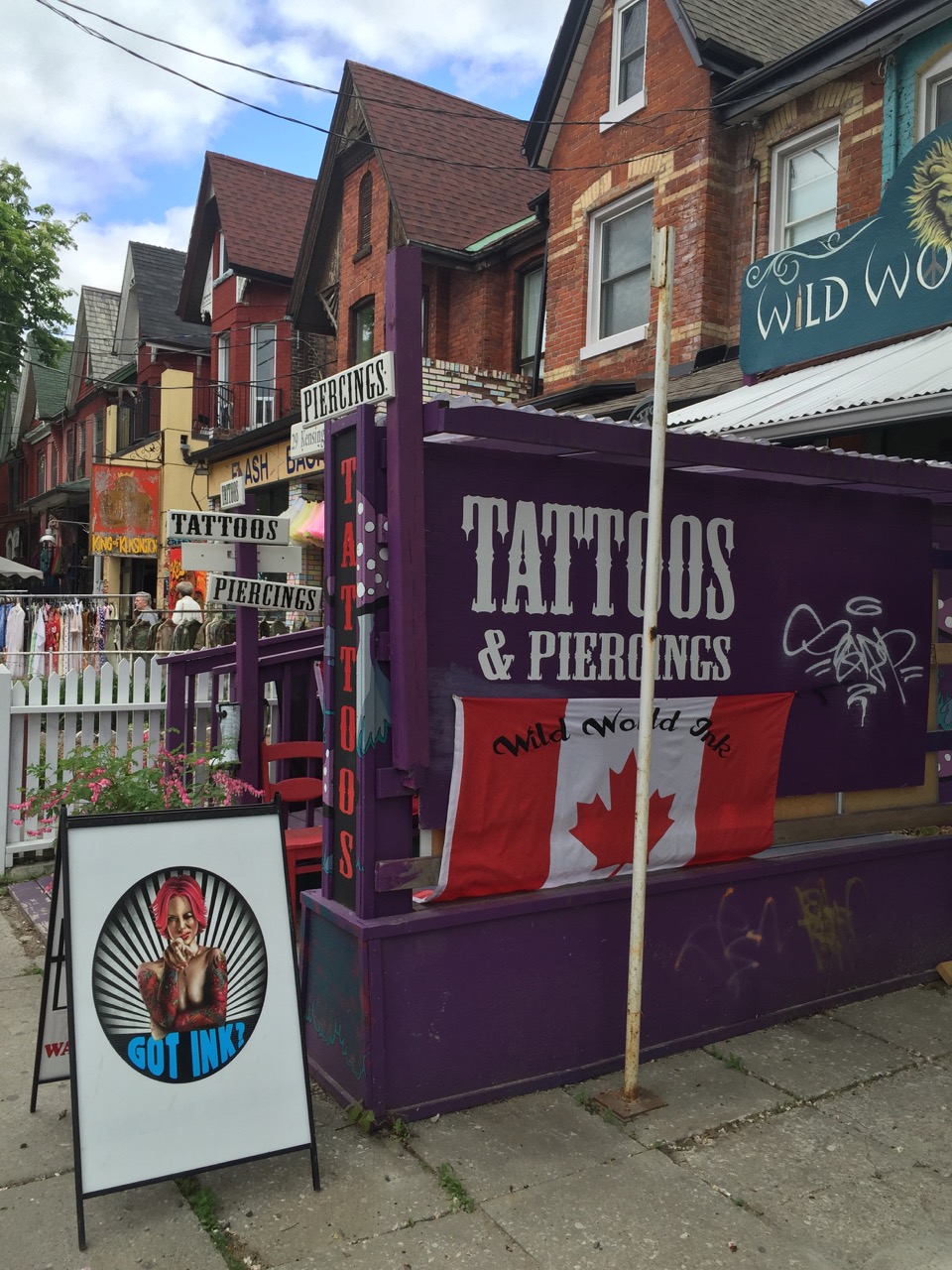
One out of every two Torontonians comes from somewhere else, and Vietnamese, Tibetan, and Puerto Rican restaurants stand cheek-by-jowl beside each other, not to mention a Chinatown noted to be among North America’s best culinary havens. (A Pinoy food store aptly named “Butchokoy” stood a block away from my lovely B&B—a three-storey house from 1853—on Dunn Street.) Victorian structures still in use by the university and the city government contrast sharply with ultramodern architecture in an eclectically energetic skyline. Seekers of the funky and the quirky can have their fill in the city’s counterculture-inspired Kensington Market. IMG_7691 (1) For someone schooled in Americana, this exposure to things Canadian was an interesting re-education—to think, for example, in terms of “Tim Hortons” instead of Starbucks or Seattle’s Best; of “Roots” instead of Gap; of “Hudson Bay” instead of Sears or JC Penney, etc.

But the most useful re-orientation took place for me at the festival itself, in reminding me that we have a lot to learn from South Asia as far as developing readerships in local languages is concerned, among other issues. We Filipinos think we’re well traveled and globally savvy, but we actually don’t get around enough in terms of mixing with our fellow Asians, let alone Africans. We seek out Western—specifically American—tutelage and patronage, often to our own deep disappointment.

It seems ironic that I had to learn this in Toronto—a true cosmopolis like New York—but sometimes you have to stand in the West for a better view eastward.

[Group photo from philippinereporter.com]

Penman No. 147: On Southern Seas

IMG_7501

Penman for Monday, May 4, 2015

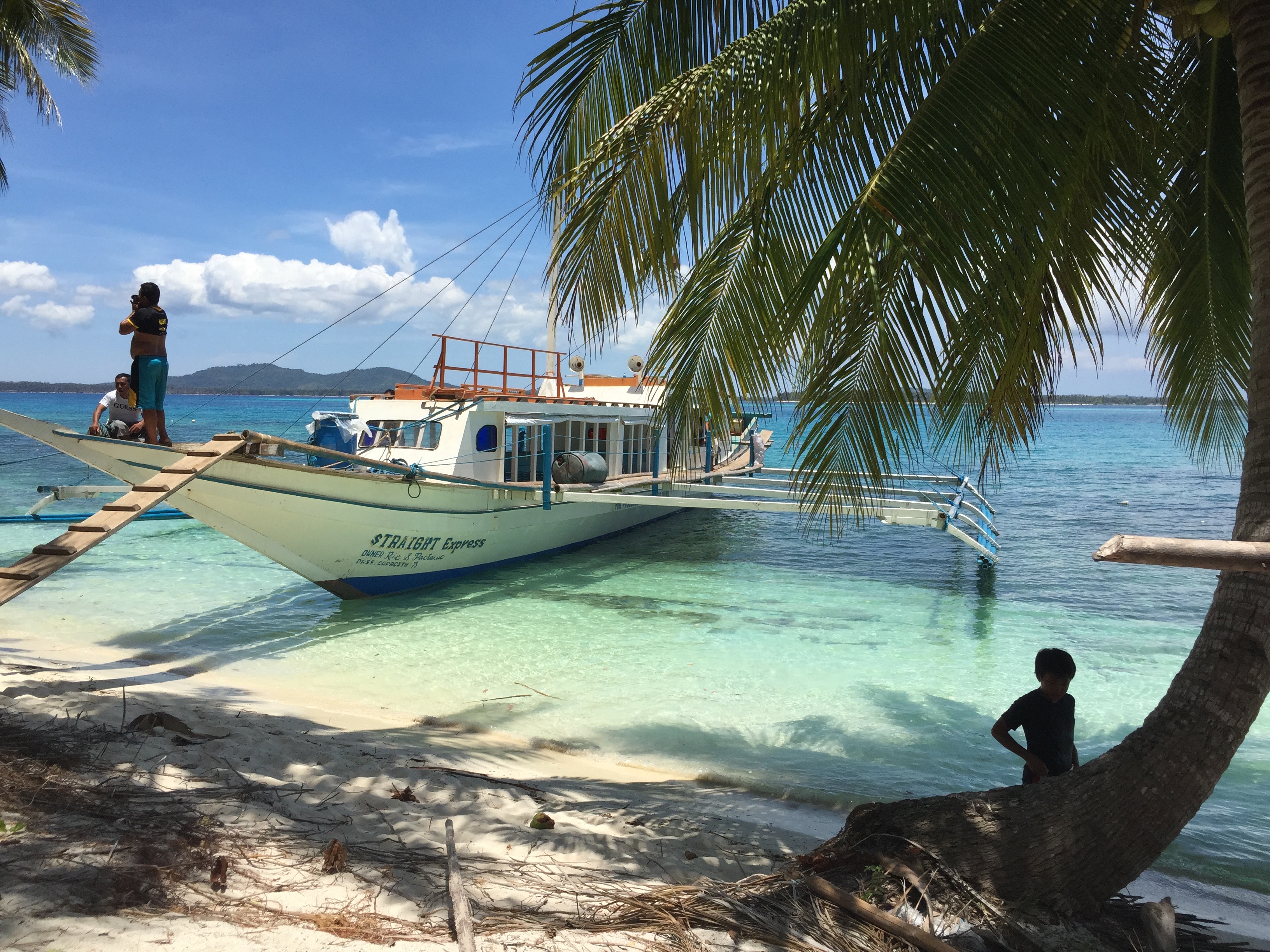
“ON A CLEAR day, you can see Malaysia,” they said. And we did, from the waters off Balabac, on the southernmost tip of Palawan. At that point, approaching the lighthouse at Cape Melville, our guide pointed to a gray mass on the far horizon across the strait, and said, “That’s part of Sabah.”

We had arrived in Balabac the day before, after a six-hour ride by van from downtown Puerto Princesa to the station at Rio Tuba, and then another three- to four-hour trip by motorized boat to Balabac’s poblacion. It was an unlikely adventure for Beng and me, being the only seniors in our party that included our favorite traveling companions—my niece Susie, her husband Toto, my cousin Edith, and our good friends the Puerto-based expat innkeeper Herwig and his wife the chef and baker Theresa. We’ve been to Palawan pretty often—staying when possible with Herwig and Theresa, who run the very aptly named Amazing Villa in Aborlan just outside of Puerto—but had never been down to Balabac. An invitation from a Balabac native, Theresa’s lawyer Atty. Regidor Tulale, proved compelling enough to make us pack our bags and head out to our southern frontier.

I’ve always wondered why our tourists—both foreign and local—seem so fixated on Boracay when Palawan offers beaches just as spectacular, in contexts far more interesting than D’Mall, without the crush of tricycles and tourist vans depositing hordes on fellow visitors on the same crowded stretch of white sand. Puerto Princesa alone and the islands on Honda Bay offer enough pleasures and treasures for the urban straggler, but, as we would discover, the farther out you go, the closer you get to tropical nirvana.

There are buses that ply the 240-kilometer route from Puerto to Rio Tuba, the nickel-mining barangay in the town of Bataraza past Brooke’s Point, but it’s a trip best taken in an air-conditioned van, given the summer heat and the need—especially for the elderly—to stop at a gas station now and then for some private relief. It’s a long but pretty ride, not unlike the run up to Baguio from Manila in the distance and scenery, on a road flanked by views of cloud-topped mountains, and golden showers blooming riotously.

Rio Tuba itself seems as rough as mining towns tend to be, an impression little helped by a recent fire that gutted the area around the pier, the transit point for boats venturing on to Balabac. Nevertheless, there was a plucky, pick-me-up cheerfulness to the locals (the fire, they said, had started accidentally in one of the big stores in the neighborhood, and everyone was busy rebuilding what they had lost), and the pier at the end of a huddle of houses on the water bustled with traffic.

The boats they use in these waters are large motorized outriggers that can easily take 30 passengers, seated four or five to a row on wooden planks; they can theoretically reach Sabah in a few hours, but, we were told, these boats were prohibited from docking in Malaysian ports because their breadth took up too much berthing space; the sleeker and faster kumpit would be the vessel of choice for that voyage. There was clearly a lot of trade going on between Palawan and Sabah, judging from the stockpiles of Malaysian goods and groceries in Rio Tuba, and one had to wonder how much of that went through customs and other legal encumbrances, but we opted, I think wisely, not to ask too many questions.

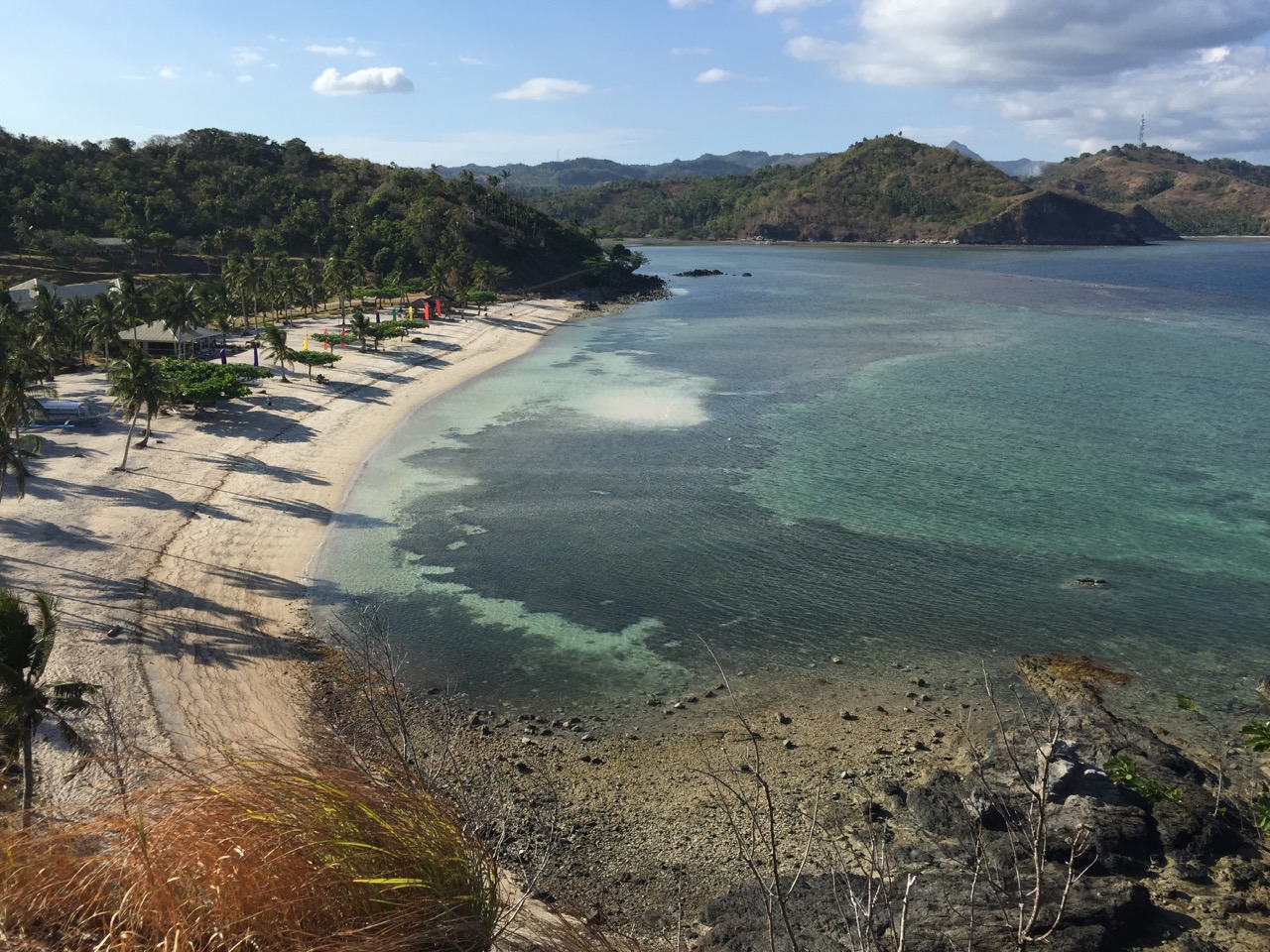
The three-hour ride to Balabac itself, with one or two stopovers on the way, was smooth and pleasant. “Balabac” is the central island and town in the area, but it also broadly refers to a cluster of more than 30 islands, and you’re never too far from one of these. (“That’s owned by Senator XXX and by former President YYY,” our guide would tell us as we passed by one paradaisical isle after another.) The glassine sea challenged the poet to come up with all variables of blue and green, and with some luck—not that day—dolphins were known to swim alongside the boats.

IMG_7470

Balabac’s town proper was small and compact, with one main street along which shops selling clothes and groceries huddled; the largest and most impressive building in town, aside from the municipio, was the Coast Guard quarters, a sign of how important patrolling these waters was. The local tribe, the Molbog, are said to have migrated from North Borneo and have their own dialect, but what surprised me throughout this visit was how widely Tagalog (or, more accurately in a national context, Filipino) was spoken, even by the locals among themselves.

You won’t have any problems choosing a place to stay, because there’s only one public lodging house in Balabac, above and adjacent to the Sing and Swing Karaoke Bar. Maybe not the best prescription for a good night’s sleep, as some of my companions would discover, but for P300 per room a night with shared toilets and baths (P100 per extra person), you can’t complain.

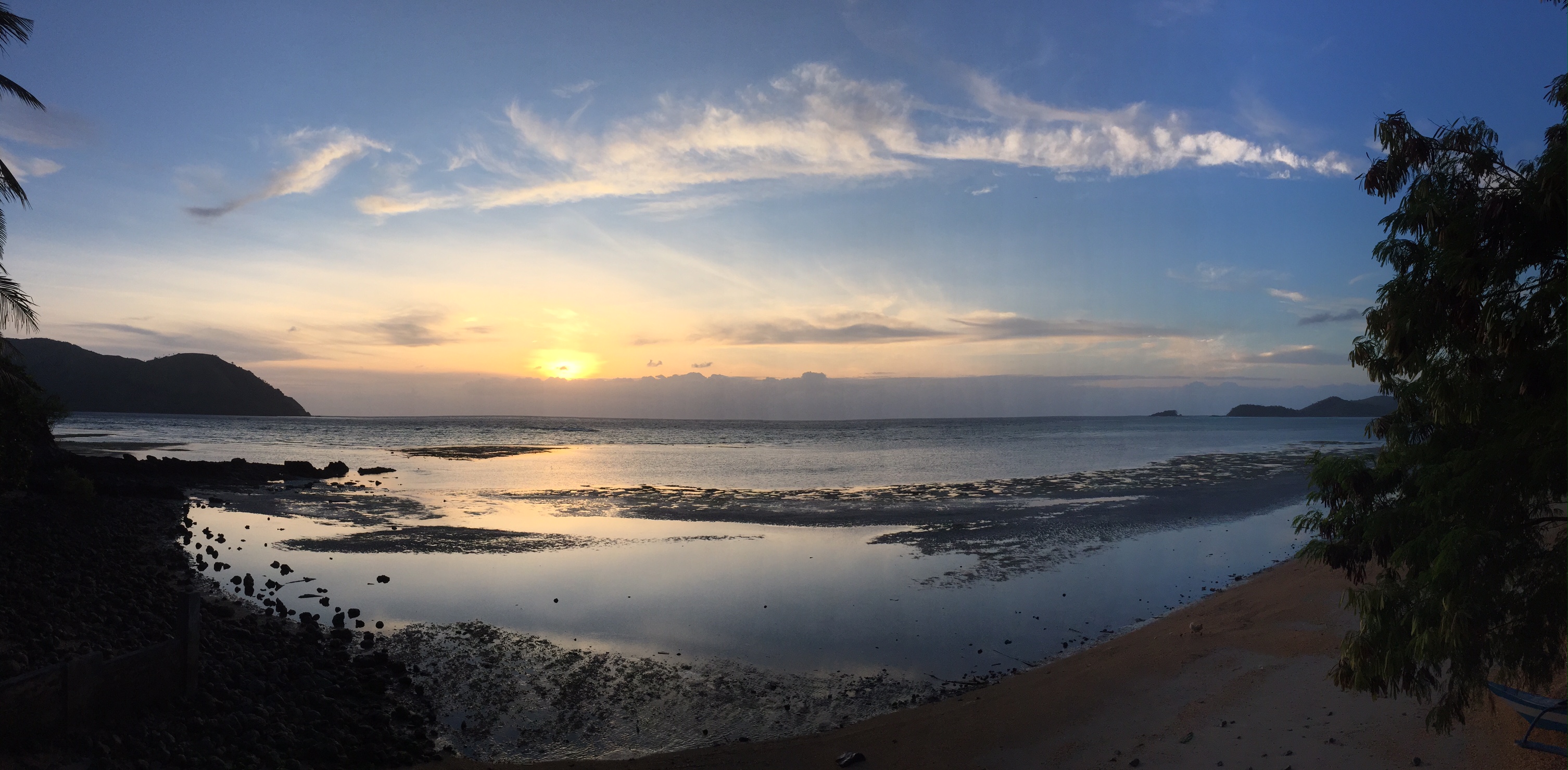
What to do in Balabac, aside from shopping for Malaysian chocolates and biscuits? Why, island-hopping, of course, and dining on the plentiful fish, which we did the next day, taking a boat out to Candaraman Island and dipping into the cool clear water beside the small seaweed farms cultivated by the people for their livelihood. Unfortunately, the low tide prevented us from docking and marching up to the century-old lighthouse on Cape Melville, but we did get that glimpse of Malaysia along the way, in a day that culminated in one of the most stunning sunsets I’d ever seen.

As the darkness deepened around us, we sat quietly along the dock, watching the southern summer sky. Above us blazed Venus, a solitary sparkle; down to its left, as if a genie had conjured it up with a wave of his hand, emerged a crescent moon. It was a long way from home, but a sight well worth the journey.

Penman No. 145: Another Watch to Watch

Penman for Monday, April 20, 2016
KNOWING WHAT an Apple diehard I am, friends have been asking me about the forthcoming Apple Watch, and if I’m going to get one. So I’m going to make another little digression today to answer that question—although, arguably, technology is art and culture in contemporary society, particularly when it’s something close and familiar enough to wear on your person.

As half the planet now knows, Apple announced the Apple Watch last September 9 in a splashy event helmed by the company’s new and nimble CEO, Tim Cook. It’s due to be released this Sunday in the US, and preorders opened last April 10; within six hours, most models—about a million units—were sold out.

That’s the kind of first-day frenzy and manic marketing that Apple might as well take out a patent on, because no other company even comes close in making people line up on the sidewalk a week before the store doors open. It’s also what turns Apple haters—and there are more than a few—apoplectic, refusing to understand how the mere whiff of a new toy from Cupertino, California could leave a fourth of humanity in a hypnotic trance.

Well, the Apple Watch is finally here, heralding Apple’s entry into the fashion market—make that high-fashion, with its top-of-the-line, solid-gold model selling for a toe-curling $17,000 (base models start at $349, or about P15,500). It comes in two sizes and a number of finishes, with an array of attractive watchbands (attractive to most people, anyway, who sadly don’t include old leather-loving codgers like me.)

Given those numbers, it’s safe to conclude that the Apple Watch was made to do more than tell the time. While hardly in the same stratosphere of high-end watch brands such as Patek Philippe and Rolex, Apple hasn’t done too badly as a horological upstart. Designed to work best with an iPhone, the Apple Watch can receive your email and text messages, and show incoming calls. It can do Facebook and Twitter, and perhaps most hyped of all, it can track your health stats. It can play your favorite tunes, and store some of your favorite pics. You can still use it without an iPhone for neat little tricks like Apple Pay (if and when that comes to our shores).

What are its downsides? It doesn’t have built-in GPS; you’ll need your iPhone for that. And with its touted 18-hour battery life, you’ll probably need to recharge it every night.

Many of these features, I should point out—except for the Apple-specific apps—were and are available on other smart watches, for a lot less than what Apple is charging for their sum total. Before the Apple Watch, Beng and I had some fun with our his-and-hers Pebble watches, which basically told the time and displayed our email and SMS messages on a monochrome screen. Eventually, we both got tired of charging the buzzing beasties, and went back to our analog Hamiltons.

Which brings me to my answer to my friends’ question. Am I getting an Apple Watch? Heck, no—and this will probably be the first Apple rollout since the Newton that I’ll be passing on. But why not?

I’ll admit that the price is a factor—the Pebble didn’t cost me more than $100, and it’s way below that now (feature-wise, of course, the Pebble can’t hold a candle to the Apple Watch). But in truth, cost never did turn back the Apple masses, who seem convinced that the pricier and sleeker something with an Apple logo is, the more compelling it must be to possess.

It certainly isn’t for any lack of features, either, that I’m not in the buyers’ queue (where I was for the iPhone 6; I had ordered mine as soon as the online counters opened, and received it via UPS last September 19, the first day of delivery in the US). The Apple Watch is abundantly capable and versatile, and we’ve only seen the barest suggestion of all the lively apps that are going to be developed for this device.

Instead, I may have to admit, as I’ll do now, to the onset of what we might call digital fatigue—that awful sensation of drowning under an onrushing wave of 1’s and 0’s. I’ve never felt this before, and it must be my biological age showing, but it took the Apple Watch and its kaleidoscope of colors to tell me that I’ve had enough. Please, not another device to tether and feed like a pet goat, and one that will bleat mightily when some silly text message comes in selling a condo I can’t possibly afford, and one that will remind me with a smug chirp about how overweight I am.

I know that I can talk to the Apple Watch, which will be the coolest thing for my students to see since I stepped into class with a Nokia the size of a shoe strapped to my waist in the early ‘90s. But I have trouble enough talking to my phone; I hate making and taking phone calls, because they usually mean problems to deal with. My iPhone is, first of all, a camera, a jukebox, a browser, and a datebook; and then it’s a phone (come to think of it, it’s also and already a watch, and a damn good one).

As it is, I don’t even use my iPad often enough, and I have to remember to charge it after letting it idle for a couple of weeks in solitary stupor. There’s a nest of charging cables at the foot of my bed, with phones, power banks, and digital recorders huddled like suckling pigs; I can just see the Apple Watch joining that blue- and red-eyed menagerie—but again, I’d rather not.

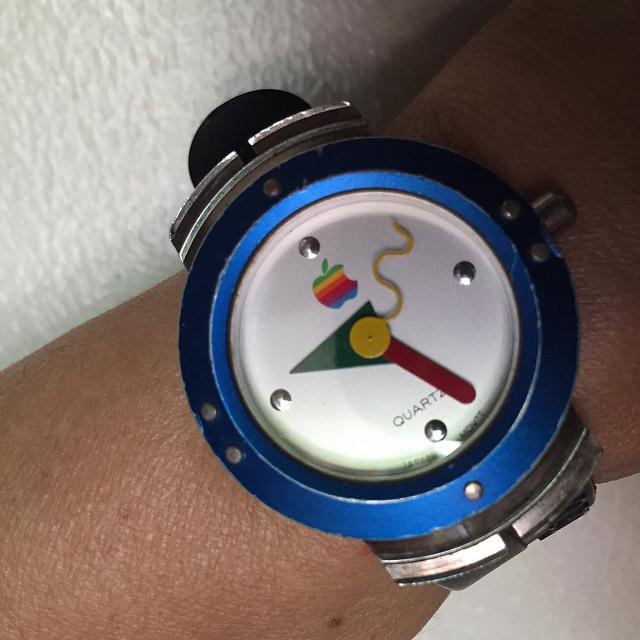
The ultimate reason for my self-denial is, I guess, the romantic one. I love my vintage and my two-handed watches too much to trade them for some blingy upstart. I believe a watch’s first and only duty is to tell the time. I believe a watch should have a clear, round, and honest face, from which I can read the time at a glance, without breaking my train of thought. I believe a watch should have a soft and pliant strap, like good leather; it should be beautiful, but quiet and undemanding, except for the occasional turn of the crown.

Appwatch95

Kind of like the original Apple watch from 1995—I think the happiest watch ever designed—which everyone seems to have forgotten about in the mad rush to get the new one. I dusted mine off the other day, put a new battery in, and gave it to Beng. It tells the time, and puts a smile on your face. What more can you ask for?

[Apple Watch pic from wired.co.uk]

Penman No. 143: A Foray into Fairyland (2)

IMG_7281Penman for Monday, April 6, 2015

LAST WEEK’S piece on “Fairlyand”—the mountain of Calatong in my home province of Romblon—elicited quite a bit of interest among my readers, and I was very pleased with the response until my mother, who grew up around the place, called my attention to a potentially lethal mistake I’d made in my retelling of my cousins’ and aunts’ stories about that enchanted kingdom. (I’m thinking that “lethal” might depend on whether you believe in spirits or not, and I don’t, but talk like this always reminds me of a conversation I had with a sharp old nun whom I met in one of my Italian sojourns, who said: “The question isn’t “Do you believe in God?’ but rather ‘Does God believe in you?’”)

The mistake I’d apparently made was in saying that eating quinta, or black mountain rice, was an antidote to fairy spells. “It actually works the other way around,” my mother told me in our little garden in Diliman. “They’ll offer you black rice, and if you eat even a handful of it, they’ll take you to Calatong and you’ll never be seen again.” So folks, be so advised; beware of strangers offering black rice, although it’s not very likely you’ll be seeing any soon. The last time I saw truly black rice was in an American grocery store in the Midwest, where it was being sold as Indian wild rice, and cost considerably more than any other exotic variety on the shelf. But then maybe that preciousness implies more than a smidgen of magic. If black rice banishes people to oblivion, I’d like to buy a sack of it, whatever the cost, to feed to certain politicians before 2016.

Which returns us to the more prosaic realities of modern-day Romblon. Not too many people, even Filipinos, know about Romblon, which if they ever board a ship for Panay they’re likely to pass unseen in the night, after Mindoro. It’s composed of three main islands—Tablas, Sibuyan, and Romblon—and was a sub-province of Capiz during Spanish times. As Philippine provinces go, it’s a pretty small one, with less than 300,000 people (excluding encantos), and my favorite quote about it comes from Jose Rizal via NVM Gonzalez (who was born in Romblon in 1915), who passed it on his way back to Manila from exile in Dapitan, remarking that it was “muy hermosa pero muy triste.”

Much of the hermosa part remains. On this first long visit home in two decades, we took an SUV around Tablas, a day trip I’d never taken before, and I was awestruck by how lovely the place was, fringed by one emerald cove after another. I lost no time in telling my friends to consider Romblon as a vacation alternative to Batanes, Palawan, and Boracay.

Indeed, Boracay’s a short hop away by motorized banca, and being on the other side of the same oceanic basin, Romblon is also blessed with many white beaches, most of them yet undiscovered. (All these islands and their people belong to one ecosystem, as it were, their languages familiar to one another, though subtly different; my paternal grandfather must have come from the Dalisays of Ibajay, Aklan, where a playwright named Marianito Dalisay Calizo wrote moro-moros in the mid-1700s.)

Some of these natural getaways have been found out, and the developers and entrepreneurs have begun streaming in, and foreigners with Filipino wives have been buying up prime beachfront property for a fraction of Boracay prices. (The best fish catch in Romblon still goes to Boracay, where it can fetch two to three times as much.)

One happy discovery we made was just a 15-minute ride from my hometown of Alcantara: Aglicay Beach, owned and managed by an affable balikbayan doctor, which offers a white-sand beach, great snorkeling, and spectacular hilltop views, all within a resort with the usual amenities, including conference facilities and wi-fi. You’ll have to pay the admission fee, though—all of 30 pesos. (To know more, check out www.aglicaybeachresort.com.)

The triste part, I don’t know. There’s certainly enough to be sad about, as much of Romblon remains painfully poor. On the other hand, the tougher things get, the harder many Romblomanons work, with their brains if not with their hands. I was puzzled by the knot of schoolchildren who gathered in front of our beachside house at dawn every morning—they carried their shoes rather than wore them—until I realized that they had walked over barefoot from a nearby island at low tide. I would later learn that one child, barely nine, had drowned this way when the tide came back in too quickly. But there was no fear in these survivors’ faces, only an insistent resolve that now and then would fracture into laughter.

We were roused one morning by the thump-thump-thump of techno music in the plaza. “They’re just testing the sound system,” said our host. “It’ll be fiesta soon.” They called the uncanny practice of waking every one up pag-di-diana, and I thought that it might have had something to do with Paul Anka’s karaoke staple.

A few other discoveries I learned on this trip were rather more personal. I had always wondered why I had spent such a long summer there as a ten-year-old in 1964—an experience I recounted in my first novel, Killing Time in a Warm Place—and I learned that it was because we were then so hard up in Manila that we children had to be farmed out, as it were, to save some money. My aunts recalled me as a smart but prissy boy who wore long-sleeved shirts in a seaside village and who would recite long poems in English at the drop of a hat.

We also solved the mystery of why my grandmother Pinang left my Lolo Tolio in the mid-1920s shortly after marrying him and giving birth to my father Jose. It had been something of a forced marriage to begin with, and Pinang was a headstrong woman, but the story we heard was that she hated being made to serve hot chocolate when some constables came visiting one day, and took that as the last straw and left. (They would live a kilometer apart for the next 60 years, and would inevitably run into each other in town but never speak.) Now it emerged that Tolio was having a saucy little affair—an explanation that makes Lola Pinang much less petulant than the chocolate story would make her out to be.

Whether sad or funny, it felt good to hear and to understand these stories again in Romblomanon without having to defer to my wife’s more widely spoken Hiligaynon, to say udi instead of diri, basi instead of ngaa; it’s still palangga in both languages. I felt at home.

Penman No. 136: Back to the BlackBerry (Sort of)

IMG_6926Penman for Monday, February 16, 2015


THIS MONDAY, I’m going to take a break (and give my readers one as well) from my ponderous ruminations on Philippine culture and politics and revert from PenMan to GadgetBoy, that now-overaged fancier of technotoys who still nurses a naïve faith in technology as the savior of humanity, or at least the bringer of boxed delights.

One of those boxes (in matte black, natch) came my way last month on my US trip, when—shortly before my departure—I discovered that the LG clamshell that I had been using as my US Verizon phone had finally died, refusing to boot up after four years of faithful employment. I’m in the US at least once a year to visit family and attend conferences, so a dedicated US phone has been good to have, which I simply load with prepaid credit when I go there.

Like human life itself, the eventual death of anything digital is a foregone conclusion, but in the case of these gadgets, it’s a passing not necessarily met with lamentation; rather, it’s cause for relief and release, making possible that word that brings joy and profit to every technotoy maker’s heart, “Upgrade!” I was frankly glad to see the little LG go; it was SIM-less and locked to Verizon, and I wanted a US phone that I could use somewhere else. (My iPhone 6 is unlocked, but as my local mainstay, I can’t afford to switch it over to another network while I’m away. Note to Apple: how about a dual-SIM iPhone?)

Enter—or rather re-enter—the BlackBerry. The BlackBerry? Remember, that once-upon-a-time smartphone market leader and innovator, the darling of the business and political crowd? For those born around the time when the world worried not about ISIS but Y2K, the emergence of the BlackBerry and its kickass keypad tore us away from our beloved Palm Pilots and Treos… until the iPhone came along in 2007 and rendered everything else instantly obsolete. (Of course, the iPhone itself has since been periodically upstaged by some Android upstart or other—until the new iPhoneX is announced.)

So the BlackBerry and its shares of stock have languished in the dumps, experiencing a momentary spike only when rumors of a buyout (recently, supposedly by Samsung) skitter through the Web. Which brings up the obvious question: why would anyone still want to get a BB?

That was No. 1 on the mind of BlackBerry CEO John Chen, who in mid-December boldly announced the release of the company’s latest model, the BlackBerry Classic—or I should say, latest but not quite. The BB Classic is premised on the idea that the BlackBerry got to where it did because it stuck true to its most prominent design feature—the physical keypad—and that people still long for solid keys to punch rather than pecking away like mad chickens on a flat screen.

It’s a bold gamble, an appeal to our deepest retro urges, and the design of the Classic revives and reinforces everything we felt about the BlackBerry of old. The Classic, said John Chen, would bring back the old BB faithful who had deserted the platform for the iPhone and Android, typically the more mature business user who felt more comfortable with the tactile keypad, who didn’t mind if their phone came only in black, and who valued security in communications (note that Sony executives hit hard by the Interview hack resorted to BlackBerrys for their fallback). I listened to Chen saying all this to CNN’s Richard Quest and found myself mesmerized—yes, that business user was me, I’d been away from the BB too long, and I missed that keypad like my first serious girlfriend.

Convinced that I needed a new US phone anyway, I ordered an unlocked Classic off Amazon, and had it delivered to my daughter in California in time for my arrival in the US in mid-January. I got a T-Mobile prepaid nanoSIM and a 128GB SanDisk microSD card to complete the package, and was back in BlackBerry heaven.

Sort of. As a phone, the Classic is everything Chen touted it to be—rock-solid, a delight to use, and by far the best in its class (given that it’s a class that graduated six or seven years ago). Externally, it’s the bigger brother of the old BB Bold 9XXX, with the familiar belt, trackpad, and keypad, the square screen, and the rounded corners. It’s a bit heavier than the iPhone, but I don’t mind—my one complaint about the IP6 was that it was so thin I kept panicking to think it was lost. It’s perfect for one-handed operation. The screen is sharp and crisp, the sound is good, and with System 10, you don’t need to go through the old BIS provisioning routine—it’s plug and play.

The downside? As I’d been forewarned, apps are sparse, although the BB can now use many Android apps through Amazon’s AppStore, MobiMarket, and Snap. I was able to get decent versions of many of my favorite iOS apps (WorldMate is BlackBerry Travel, for example); Skype and Viber work just fine, and a free program called Navigation provides useful and accurate street-level guidance. I wanted to give it every chance to become my main phone in lieu of the IP6—but in the end, I just couldn’t do it, on two accounts: the BlackBerry still has no true equivalent for FaceTime, which for those of us with daughters and mothers in the US is the iPhone’s real killer app, and its camera can’t hold a candle to the iPhone’s, which I and many others use semi-professionally, forsaking our bulky DSLRs.

So I say welcome back to the BlackBerry, and the Classic does live up to its name; it’ll be a great backup phone, for a second or a US line. Buying one in 2015 is a bit like choosing a new car with manual transmission, but oldtimers like me know what fun that can be—sometimes.

(The BlackBerry Classic is now available in the Philippines from MemoXpress.)

Penman No. 132: Return to Romblon

RomblonPenman for Monday, January 19, 2015


SOMETIMES THE best-laid plans are those you don’t lay out at all. I’d been meaning to pay another visit to my home province of Romblon, where I was born 61 years ago, but I kept putting it off from one year to the next until that absence became 20 years.

The last time I went home in 1994, I was with my father Jose Sr., who incidentally would have marked his 92nd birthday today; he died in 1996, so that trip was also his last journey home. We were born in the same small seaside town of Alcantara on Tablas island. When I went there to address the graduating class of the local high school, the marching band spelled out my full name and WELCOME TO ALCANTARA under the hot summer sun. I felt bad for the kids but deeply appreciated the gesture. I don’t think most of them had any idea who I was and what I’d done, but why should they? The only writers they knew were probably white and dead.

But Romblon has been good to writers (NVM Gonzalez was born several kilometers and 40 years ahead of me), offering a wealth of material as lustrous as its signature marble. And like marble, sometimes it lies starkly bare on the surface, and sometimes its veins need to be probed and palpated. My first novel, Killing Time in a Warm Place (Anvil, 1992) was set largely in Romblon, based on the events and discoveries of a long summer I spent there as a ten-year-old boy in 1964. Those discoveries included my grandfather’s windowed tomb, an enchanted mountain, and sweet water bubbling out of the mountainside, not to mention a crush or two on an older girl. Ten years later I returned with a wife heavy with child, seeking refuge from one of the many dragnets cast by martial law, and it wasn’t government agents my aunts sought to protect my wife and unborn baby from, but other evil spirits best kept away by a wad of herbs pinned to Beng’s chest called a carmen-carmen.

Two Fridays ago I had and took a sudden chance to return to all that, upon the invitation of my niece Susie and her husband Toto, who had to make a quick weekend run on family business to Bgy. Guinbirayan in Sta. Fe town, about an hour’s dusty drive from Alcantara. My mother had been born in Guinbirayan in 1928 and I myself had many happy memories of the place from 1964 of picking up sea shells at low tide and gorging on duhat as fat as my thumbs. I had a mountain of work set up on my desk for the weekend, but how could I possibly say no? I packed as much of my work as I could into my laptop, and Beng and I joined Susie and her sisters in a Pajero driven by Toto to the Batangas seaport, where we left the jeep and got on board a RORO vessel bound for Odiongan, Romblon’s busiest port.

We left Batangas at sunset and arrived in Odiongan early in the morning, shaken and stirred by tall waves off Mindoro, but eager to board the waiting van driven by another one of my nephews (I would discover that I had a whole village full of them—my Lolo Cosme had a dozen children—and the word “Uncle,” in English, would resonate throughout our brief stay). Guinbirayan was another couple of hours away by a winding mountain road, now thankfully paved for the most part (“It depends on who the mayor is and on his political clout,” explained Toto), and getting there at sunrise, in time for a breakfast of grilled fresh fish, crabs, squid, and nilupak, proved well worth the journey.

We had just one full day in Guinbirayan—Susie and her siblings were getting their lots surveyed—so we spent most of that on the old farm feasting on fresh buko and native chicken, and in the afternoon we took a banca ride to Puro Island, where my mother still owns a small seaside lot, with much of the beach now washed away. The following morning, before boarding another RORO boat for Batangas, we paid a visit to my hometown of Alcantara, just long enough to say hello to a favorite aunt, Manang Adoring, and to note that a Globe cellsite now served that part of Tablas (Smart ruled the other part, so it helps to have two phones in such corners of the archipelago). By sunset, we were steaming out of the harbor for home.

Forty-eight hours after twenty years may not seem long enough, but brevity makes for intensity, and everything that I had seen and felt from my previous visits came swarming back to me with poignancy, making me more aware than ever of time past and time passing.

I went back to Lolo Cosme’s tomb, recalling my peek through its curious window in my novel: “I saw my grandfather’s skull on its macerated pillow, its teeth long and raw, the bone laced with patterns of black and yellow moonscapes and Great Walls of China running into the hollows and into the silver thicket of his hair—fine wiry hair that radiated above and around his brow like an aura, rampant, resplendent, indestructible.” That view was gone, as they had joined his bones with my grandmother’s and two aunts’ in a big concrete box. But the beach on which I had strolled many an afternoon was still there, and across it rose the massif of Kalatong, the enchanted mountain, where, my cousins and nieces swore, fairies and spirits abounded, ever ready to cast their spells on the unwitting visitor. “They can look like beautiful children riding golden chariots,” said one. “But they can also be evil.”

As we crossed fields of mango and cassava, I heard how one schoolgirl was known to have been possessed by these spirits, periodically falling into a trance: “She would faint on the muddy road in her white dress, then rise without a spot of dirt on her!” We were spared the carmen-carmen, but were warned about the kilkig, a slow-acting poison induced into one’s food, causing days of misery. My cellphone caught a signal on a hilltop and I called my mother in Manila, who cautioned me about meeting certain people: “They’re a family of witches,” she whispered.

We were, indeed, bewitched during that weekend, and entranced by the food, so I suppose there was some sorcery at work. The first thing I did when we got back was to book ferry tickets for a longer visit in March.

Penman No. 131: Museums and Musicals (Part 2)

IMG_5928Penman for Monday, January 12, 2015


LAST WEEK I wrote about museums as a popular form of American entertainment and education, reporting in particular on my encounter with the MacArthur Memorial in Norfolk, Virginia. Musicals are arguably no less educational, except that they educate the heart and spirit rather than the mind.

There seems to be something fundamentally silly about people suddenly breaking into song in moments of high tension (in Bollywood, of course, they’d start shimmying and shaking), but the truth of the matter is (and the magic of the musical is) that it feels just right, and that the characters are singing exactly what we’re feeling. When Nancy sings “As Long as He Needs Me” in “Oliver” or when Tuptim and Lun Tha bewail their lot in “We Kiss in a Shadow” in “The King and I,” we absolutely understand what’s going on, and root even for the most ill-fated love.

Sometimes silliness is pure fun: who could have resisted Mary Poppins (except her famously persnickety creator, P. L. Travers) trilling “Supercalifragilisticexpialidocious”? Some songs just give you a lift to sing, like “On the Street Where You Live” from “My Fair Lady,” “Till There Was You” from “The Music Man,” and “The Impossible Dream” from “Man of La Mancha.”

And then there are those rare and very strange moments when a song from a musical just walks into your life, providing the perfect refrain for the occasion. This happened to me 40 years ago, as I waited outside the maternity ward while Beng was giving birth; at that very instant, as if on cue, a song came on over the PA system, and it was the “My Boy Bill Soliloquy” from “Carousel,” where the expectant father wonders what it would be like if the son he expects turns out to be a girl… as our Demi was.

I don’t know what it was that drew me to musicals when I was a young boy growing up in Pasig, except the long hot summer afternoons better spent in a cool dark moviehouse than under a tin roof at home. Ours was a moviegoing family, and I’d already seen “South Pacific,” “The King and I” and “West Side Story” in some theater downtown on Avenida Rizal, but the musical that got me hooked—maybe because it coincided with the onset of puberty—was “The Sound of Music.” What this chaste production full of nuns and Nazis had to do with adolescence could be answered by the doe-eyed Brigitta, aka Angela Cartwright, who was Penny in “Lost in Space”; of course I also nursed a crush on Julie Andrews, but she could’ve been my mom. I watched “The Sound of Music” six, seven times until I could recite the libretto and sing the songs by heart. (For fans of “The Sound of Music,” there’s a very interesting story about the writing of the song “Edelweiss” here: http://www.steynonline.com/6683/edelweiss.)

Prurient considerations aside, the old-fashioned Broadway musical (which we Pinoys got in the movie version) had something going for it that Westerns, thrillers, and spy movies hardly ever did: an insistent optimism, even in the darkest and direst of circumstances. “West Side Story” doesn’t end with just a death; it ends with the song “Somewhere,” and a plaintive hope for “peace and quiet and open air;” “Carousel” ends with the redemption of the likeable scoundrel Billy Bigelow, promising that “You’ll Never Walk Alone.” (Billy may have gone to heaven, but critics gave “Carousel” hell for changing the ending of the original play on which it had been based.) “Camelot” was probably the first musical I saw that didn’t come with a happy ending, but even Lerner and Loewe couldn’t possibly undo centuries of Arthurian lore.

In a time of AIDS, 9-11, tsunamis, and ISIS, the darkening of the American musical was probably inevitable if not mandatory. One of art’s most necessary functions is to provide relief to the distressed even by the mere recognition and reflection of pain, and today’s less melodic, more dissonant musicals do that, acknowledging that rainbows don’t come with pots of gold, and may not even come at all after a long day’s rain.

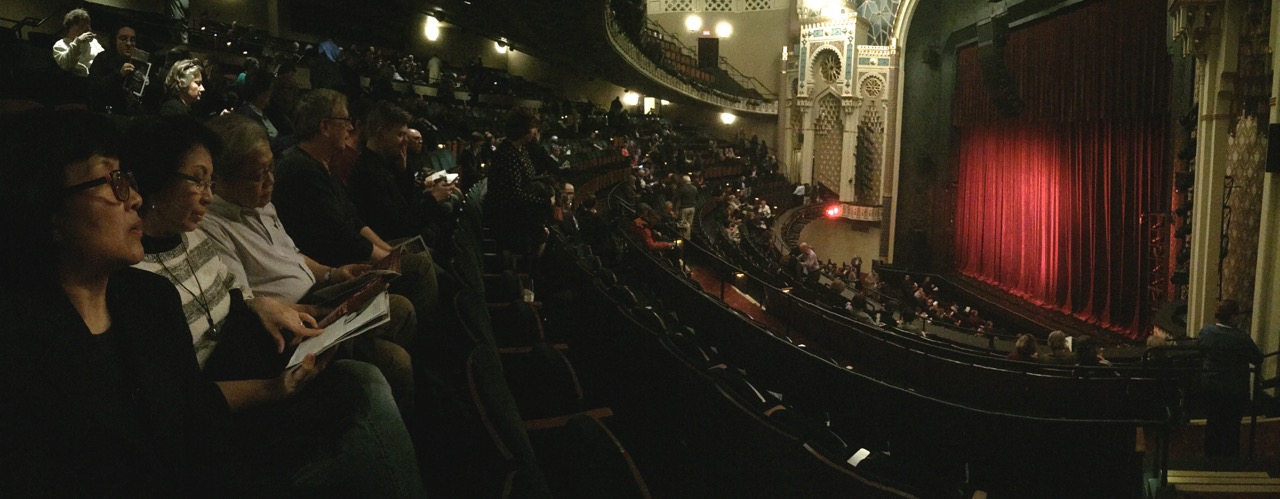
I watched my first live Broadway musical—Fats Waller’s “Ain’t Misbehavin’,” which was actually more of a revue—in 1980, from behind a post, the cheapest seat in the house. Since then I’ve been able to afford a few seats with a view, though not by much; as I reported in this corner a couple of years ago, my happiest hours in the musical theater came not on Broadway but in Melbourne, during a rousing Australian production of “South Pacific” that I watched from the topmost row where I sat all by my lonesome, to the amused consternation of the ushers, who urged me to move on down after the lights had dimmed. But I declined, because where I was, I could merrily sing along to “Dites-moi, Pourquois” and “There Is Nothing Like a Dame.” Having outgrown Angela Cartwright, I now rank “South Pacific” my most favorite of musicals, with “West Side Story” a close second (Beng has a soft spot for “The King and I,” and never fails to cry when Mongkut dies).

On this most recent trip to the States, we caught “Evita” (my third favorite) at the Kennedy Center in DC and a trio of shows in New York: “From Burlesque to Broadway,” a revue of an art form that I wish I’d seen at a more responsive age; “The Bandwagon,” the revival of a forgotten art-about-art opus with three showstoppers (“You and the Night and the Music,” “That’s Entertainment,” and “Dancing in the Dark”) and, finally, the Rockettes Christmas Special, classic Americana.

We stepped out of the theaters freezing in the cold but warm and dizzy with song, fortified against the inevitable anxieties and disappointments of another day.


[Images from flixster.com, childstar.com, musicalheaven,com, and amazon.com]

Flotsam & Jetsam No. 45: I Love My Pig

THERE’S SOMETIMES a thin line between handicraft and fine art, and I think that this wooden pig I picked up yesterday from a souvenir shop in Puerto Princesa, Palawan may have crossed that line.

It stood all by itself in a roomful of pretty and exquisitely carved objects, but something about its form appealed to me, even the roughness of its finish—that long rise up its spine and then the precipitous drop down its snout, which ends up as solid as a fifth foot, and here and there the little lumps and undulations suggesting bone and muscle.

It was when I lifted it that I knew I had to have it—it’s one hefty porker, having been carved out of ipil (Intsia bijuga), a local hardwood. My hands wrap nicely over its back and belly. This is one pig that’ll be rooting on my desk for a long time.

Flotsam & Jetsam No. 44: My Fincy Walks

AS A break from the usual fountain pen, I’m treating myself this Christmas to a new pair of shoes—and “new” here means literally, refreshingly new, as almost all of my shoes come from the resale shop, or ukay-ukay, and look fit enough to march through the pig farm with.

This time I opted for something a wee bit fancy, and settled on these “Fincy Walk” (that’s what they call them) shoes by Clarks–just about the softest and toniest shoes I’ve worn in years, fit to be danced in. I am not worthy! (But I’ll wear them, anyway, to my next poker game—they’ll go nicely with the fedora, and my chips may walk away from me, but these won’t.)