Qwertyman No. 46: The Writer as Liberator

Qwertyman for Monday, June 19, 2023

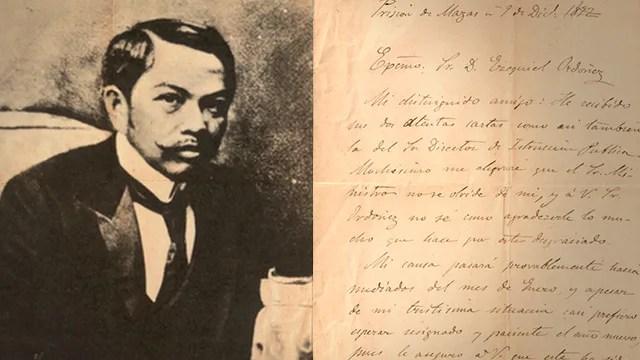
AS PART of its Independence Day celebration, the J. Amado Araneta Foundation asked me to give a talk on “The Writer as Liberator” last Saturday, and today being Jose Rizal’s birthday, I’m very happy to share that talk in full (a shorter version appeared as my Qwertyman column in the Star):

When I was first asked to talk about “The Writer as Liberator,” the first thought that went through my mind was probably the thought that’s now going through yours, which was that of the writer as political revolutionary or dissident, in the mold of Jose Rizal, Marcelo H. del Pilar, Lorraine Hansberry, Alexander Solzhenitsyn, Nadine Gordimer, Wole Soyinka, and so many others of their caliber and stature.

That presumption, of course, is certainly valid and reasonable. Indeed, human history is fraught with examples of writers who fought colonialism, slavery, racial prejudice, and feudal and capitalist oppression and exploitation in India, South Africa, and the United States, particularly the American South, among many if not most other countries in the world. Wherever evil has reared its head, writers have arisen to call it out by name in all its forms—overweening pride among the ancient Greeks, blind ambition in Shakespeare’s time, lust and greed everywhere down the ages. 

The Philippines has been no exception. Decades before Rizal, Francisco Baltazar or Balagtas employed allegory in Florante at Laura to depict suffering and denounce injustice. Rizal and the whole Propaganda Movement followed, in a story of resistance and revolution that many of us already know. It’s a high climactic point that we could talk about all day but I won’t, because I’d rather talk about other things that most of us don’t know about writers and liberation. 

Again, to deal with the obvious, writers of all kinds have been at the forefront of political and social change. They included poets, playwrights, novelists, journalists, screenwriters, and today we would have to count bloggers and comic book script writers.

Our heroes and champions of freedom were poets—Rizal’s Mi Ultimo Adios and Bonifacio’s Pag-Ibig sa Tinubuang Lupa spring to mind, but they were also followed by the likes of Claro M. Recto, Francisco “Soc” Rodrigo, Carlos P. Garcia, and Diosdado Macapagal. These men—sadly, our political and even our cultural life was dominated then by the patriarchy—came from a generation when there was a very thin line between journalism and creative writing, when an opinion column could appear in verse, and when senators were expected to be literate and eloquent.

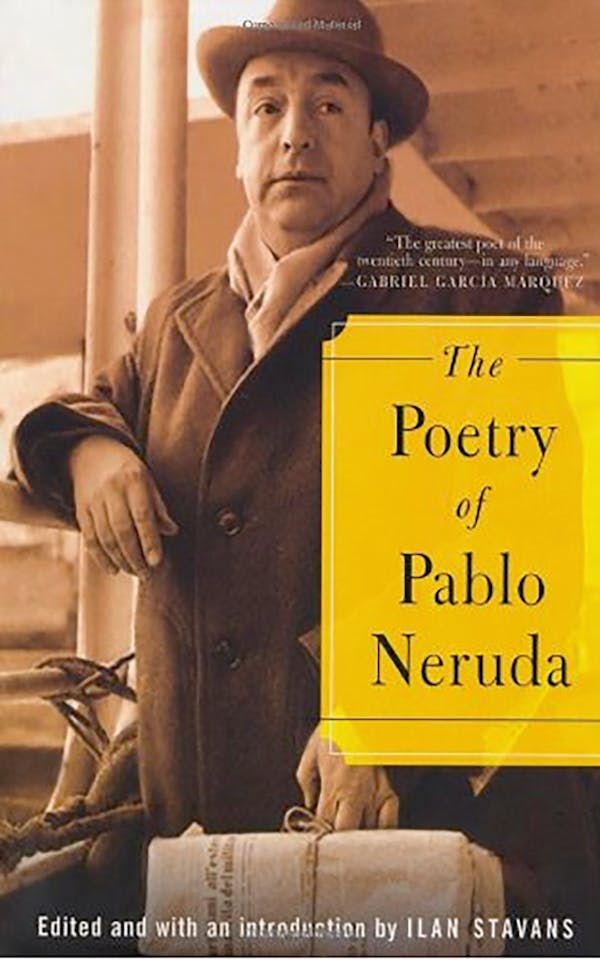
As I mentioned earlier, this was true of many countries around the world where people were fighting for freedom and justice. In South America, Simon Bolivar—who was known as The Liberator or El Libertador—led the fight for independence from Spain of what are now his native Venezuela, Colombia, Bolivia, Peru, Ecuador, and Panama, but he was also a poet, alongside the Cuban Jose Marti, among others. The Chilean poet and Nobel Prize winner Pablo Neruda wrote a poem in tribute to Bolivar, titled “A Song for Bolivar,” which I will read to you:

Our Father thou art in Heaven,
in water, in air
in all our silent and broad latitude
everything bears your name, Father in our dwelling:
your name raises sweetness in sugar cane
Bolívar tin has a Bolívar gleam
the Bolívar bird flies over the Bolívar volcano
the potato, the saltpeter, the special shadows,
the brooks, the phosphorous stone veins
everything comes from your extinguished life
your legacy was rivers, plains, bell towers
your legacy is our daily bread, oh Father.

The line “everything comes from your extinguished life” might as well have applied go Neruda himself, who was murdered by the fascist Pinochet government he opposed. Many writers have died for what they have written—and again we go back to Rizal—but others fought, lived on, and even succeeded in their struggles for national liberation. Two of the most prominent were Ho Chi Minh and Mao Zedong, who led long and ferocious wars against both local and foreign oppressors.

Imprisoned in China during the war, Ho Chi Minh wrote this poem in 1943 upon reading a book called the Anthology of a Thousand Poets:

The ancients liked to sing about natural beauty:
Snow and flowers, moon and wind, mists, mountains and rivers.
Today we should make poems including iron and steel,
And the poet should also know how to lead an attack.

In 1950, shortly after the Communists took over in China, Mao wrote this poem in reply to another poet named Liu Yazi:

The night was long and dawn came slow to the Crimson Land.

For a century demons and monsters whirled in a wild dance,

And the five hundred million people were disunited.

Now the rooster has crowed and all under heaven is bright,

Here is music from all our peoples, even from Yutian,

And the poet is inspired as never before. 

Note how, in these two poems, Ho and Mao locate the poet at the center of a collective struggle. This idea is developed even more strongly by Jose Ma. Sison—who by the way was an English major in UP—in his poem from the 196os titled “The Guerilla is Like a Poet”:

The guerilla is like a poet 
Keen to the rustle of leaves 
The break of twigs 
The ripples of the river 
The smell of fire 
And the ashes of departure. 

The guerilla is like a poet. 
He has merged with the trees 
The bushes and the rocks 
Ambiguous but precise 
Well-versed on the law of motion 
And master of myriad images. 

The guerilla is like a poet. 
Enrhymed with nature 
The subtle rhythm of the greenery 
The inner silence, the outer innocence 
The steel tensile in-grace 
That ensnares the enemy. 

The guerilla is like a poet. 
He moves with the green brown multitude 
In bush burning with red flowers 
That crown and hearten all 
Swarming the terrain as a flood 
Marching at last against the stronghold. 

An endless movement of strength 
Behold the protracted theme: 
The people’s epic, the people’s war. 

Given the aesthetics of the Philippine Left at that time, you could actually reverse this proposition to read “The poet is like a guerilla,” which Emman Lacaba certainly was, as was Ma. Lorena Barros, whose poem “Sampaguita” follows:

This morning Little Comrade

gave me a flower’s bud

I look at it now

remembering you, Felix,

dear friend and comrade

and all the brave sons and daughters

of our suffering land

whose death

makes our blades sharper

gives our bullets

surer aim.

How like this pure white bud

are our martyrs

fiercely fragrant with love

for our country and people!

With what radiance they should still have unfolded!

But sadness should not be

their monument.  

Whipped and lashed desperately

by bombed-raised storms

has not our Asian land

continued to bloom?

Look how bravely our ranks

bloom into each gap.

With the same intense purity and fragrance

we are learning to overcome.

Decades later, her namesake Kerima Lorena Tariman would write “Pagkilos,” a poem that celebrates motion in both nature and society:

Ang lahat ng bagay ay tila kitikiti,
Palagiang kumikilos at hindi mapakali.
Ang paggalaw ay kakambal ng bawat bagay,
Likas na kaugnay at hindi maihihiwalay.

Ang mga bagay-bagay ay kay hirap isipin,
Kung walang paggalaw, kung kaya, gayundin,
Ang paggalaw mismo ay di natin matatanto,
Kung wala ang mga bagay dito sa mundo.

Sa daigdig, halimbawa, nagpapahinga man ang pagod,
Matikas man ang estatwa at patay-malisya ang tuod,
Sila’y hindi naliligtas sa paggalaw ng planeta,
Ang pag-ikid at pag-inog ang palagiang sistema.

Kung kaya ang masa na akala mo’y walang imik,
Kapag natutong lumaban ay nagiging matinik!
May mga kasama man na natitigil sa pagkilos,
Ang rebolusyon sa daigdig ay hindi natatapos!

A, lahat ng bagay ay saklaw ng ating kilusan,
Katotohanan ito na di maaaring iwasan.
Kung kaya’t habang tayo ay may lakas at talino,
Sa pagkilos natin ialay ang ating bawat segundo!

Tragically, both Lorenas—and Emman Lacaba before them—would be killed in the struggle that they took on, and be hallowed as revolutionary martyrs.

Now, all this may sound like an open invitation for our favorite red-taggers to call all poets rebels, and all rebels communists. That would be ridiculous. Most poets are still happy and perfectly within their rights to write about the moon and the stars and undying love. Some rebel-poets were proud and self-admitted communists, at a time when the word was invested with a sheen of holiness. But the abject failure of communism to set up a truly free and egalitarian society and its appropriation in both China and Russia by new and autocratic elites has shed much of that romantic mystique, and it is supremely ironic that those writers and artists now fighting for civil liberties in both countries are considered enemies of the state.

“The Writer as Liberator” was an easier concept to deal with when we had a foreign occupier like Spain, America, or Japan. Today, our oppressors are internal, lodged within our society, and within our hearts and minds. The liberation we need today is from our worst selves, which is often the hardest enemy to face. Bad leadership has enabled and encouraged that side of us that accepts extrajudicial killing and unjust imprisonment as normal. 

The minds of so many of our people remain shackled by ignorance, falsehood, prejudice, superstition, fear, and a crippling dependency on the old and familiar, however self-destructive they may be. In an increasingly polarized and intolerant world, people everywhere face racial violence and discrimination, gender inequality, economic exploitation, and political repression.

The writers who will battle this chimera have many weapons at their disposal—not just books and the traditional press but social media, a universe of communication unto itself that Rizal and his contemporaries never dreamed of. Journalists fight with the truth, creative writers fight with the truth dressed up as artistic lies. 

I have often said that the best antidote to fake news is true fiction. By this I mean that it often takes artistry and good storytelling, more than a mere recitation of facts, to show people what is true.

Long before there were newspapers, writers gave voice to their people’s hopes and fears through what today would be called fiction: through myths, legends, tales, epics. These stories transported people from the crushing routine of their everyday lives to the realm of the gods, to a romantic past cloaked in the mists of fable and fancy. Indeed, these stories came even earlier than literacy itself, transmitted orally from one generation to the next. Creation myths validated and gave meaning to a tribe’s or a people’s existence; tragic drama reminded them of the consequences of our moral choices. 

When I started my Qwertyman column in the Philippine Star and began writing what I called “editorial fiction,” a columnist in another newspaper immediately cried “Foul!”, claiming that fiction cannot possibly be taken as opinion. I responded that all fiction is opinion, if you know how to read it closely enough. Like the mirror Perseus used to kill Medusa, we employ fiction to deal with truths we cannot bear to face.


I am under no illusion that the next revolution, whatever it may be against or when, will be sparked by a novel or a poem. Very likely, it will be a viral video that will ignite that flame. I pray it will not be violent, but rather a comprehensive conversion of our people’s minds and spirits for the good. But there will always be a place for the writer in the offices, kitchens, and workshops of democracy, on the bunkbeds where we lie dreaming of justice and prosperity for all. 

Let me close with a short poem that I wrote last year, titled “Freedom Is When”:

Freedom is when 

We don’t think about it

But it’s there like air

We seek only in its absence

When we’re gasping for breath.

Freedom is when

We can choose whom to love

Or whom or what to believe 

Without any fear

Of punishment or death.

Freedom is when

We can sleep without guilt

And dream without ghosts

Waking up to the aroma

Of steaming rice and stewed fish.

Ang kalayaan ay kung

Hindi natin ito iniisip

Tulad ng hangin

Hanggat ito’y mawala

At tayo’y maghingalo.

Ang kalayaan ay kung

Malaya tayong pumili

Ng iibigin, o paniniwalaan

Nang walang katatakutang

Parusa o kamatayan.

Ang kalayaan ay kung

Mahimbing tayong makakatulog

At managinip nang di minimulto

Hanggang tayo’y pukawin ng halimuyak

Ng bagong saing na kanin at pinangat.

Qwertyman No. 45: Onward to Frankfurt?

Qwertyman for Monday, June 12, 2023

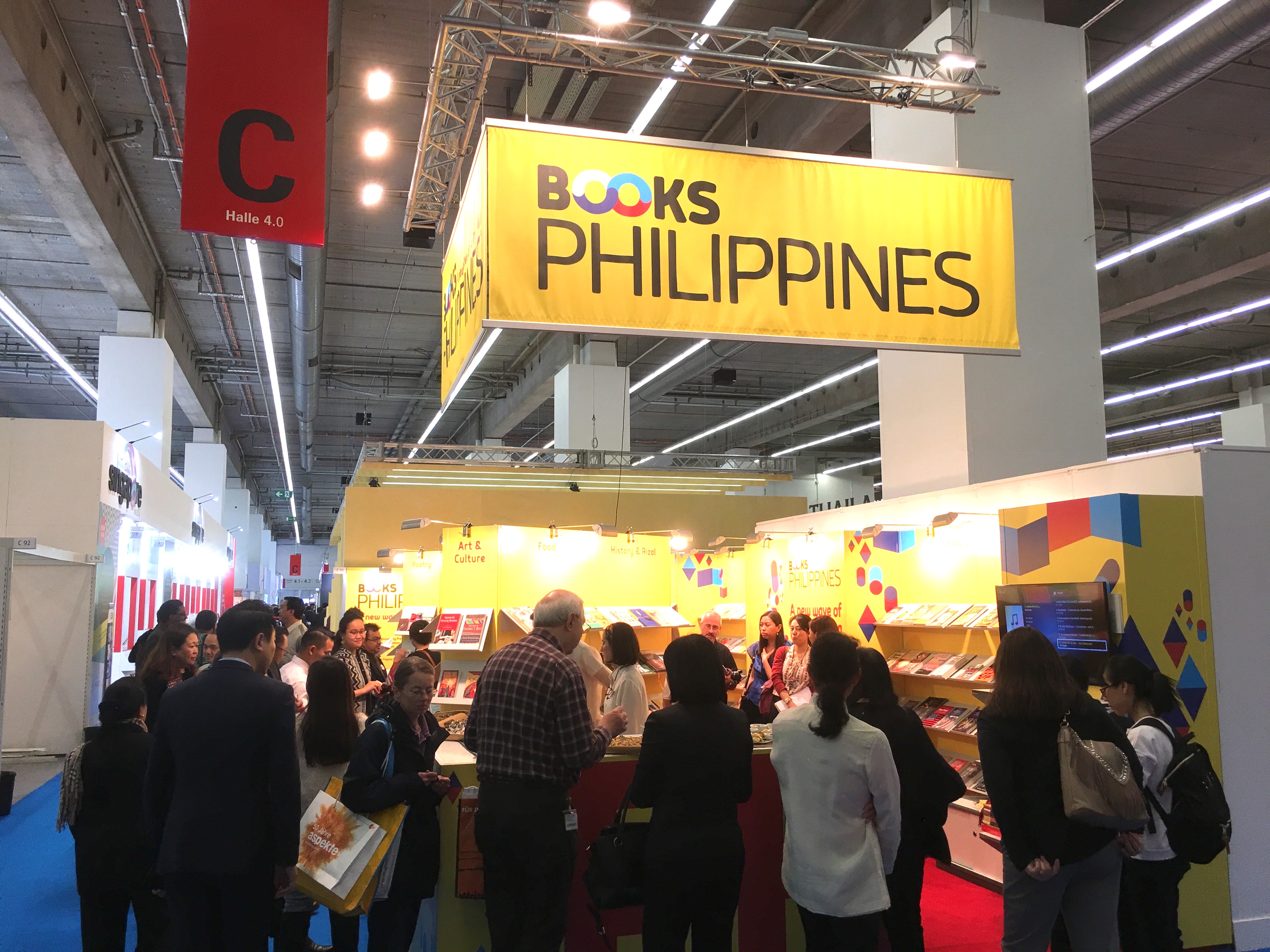
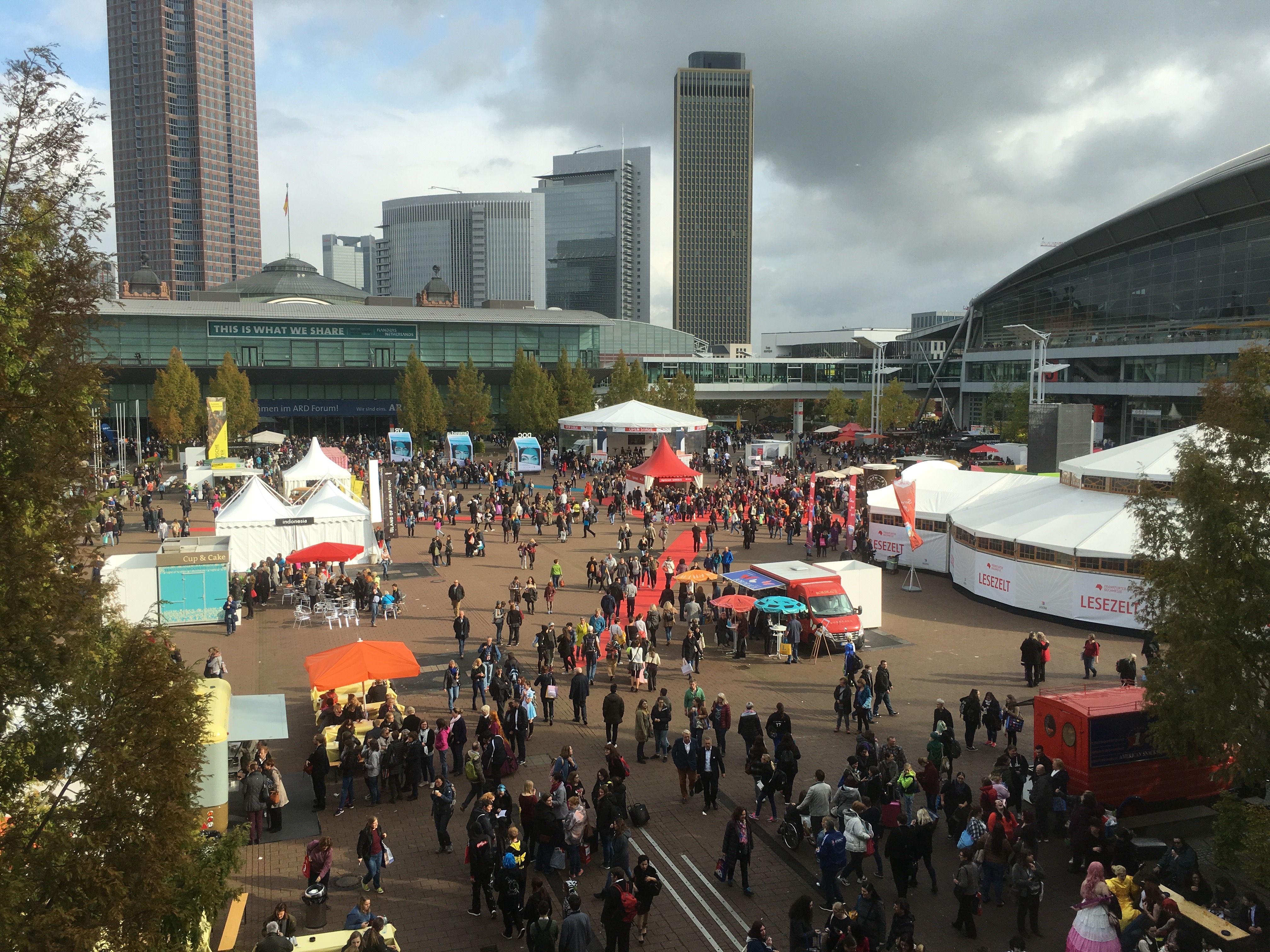
IF YOU were at the Philippine Book Festival (PBF) that took place at the World Trade Center earlier this month, you would have been surprised to find how many Filipinos were writing, publishing, selling, buying, and reading books. A project of the National Book Development Board (NBDB), the PBF was the first such event devoted solely to locally produced books—as opposed to, say, the Manila International Book Fair (MIBF) in September, which is open to books and publications from overseas. The NBDB wisely decided to showcase our homegrown literary talents—not only from Manila, and not only from my generation of old fogeys, but from all over the country, and writers of all persuasions and ages (as young as fourteen!).

We Pinoys have become so immersed in Netflix, YouTube, and social media that many of us have forgotten about reading, and what a good book can do for one’s mind and soul. We want everything delivered to us in short sentences—even in acronyms or, if possible, in memes—because long paragraphs (and, God forbid, pages) can only mean a waste of our precious time (which is, of course, best spent posting what we last ate on Instagram, and critiquing someone’s OOTD). Whether fiction or nonfiction, books challenge us to carry ideas through to the limits of our reason and imagination. The difference between a good meme and a good book can be that between wit and wisdom—between the bubbles that rise to the top of your champagne and the notes that linger on your tongue and senses long after you’ve put your drink down.

And despite the death knells that have been tolled for publishing and reading in this country, the droves of people who flocked to the PBF and the MIBF show otherwise; as I’ve noted elsewhere, more new authors and publishers are emerging across various genres and languages than ever before, spurred by writing programs and workshops, new technologies, and more exposure for Filipino writers in international markets.

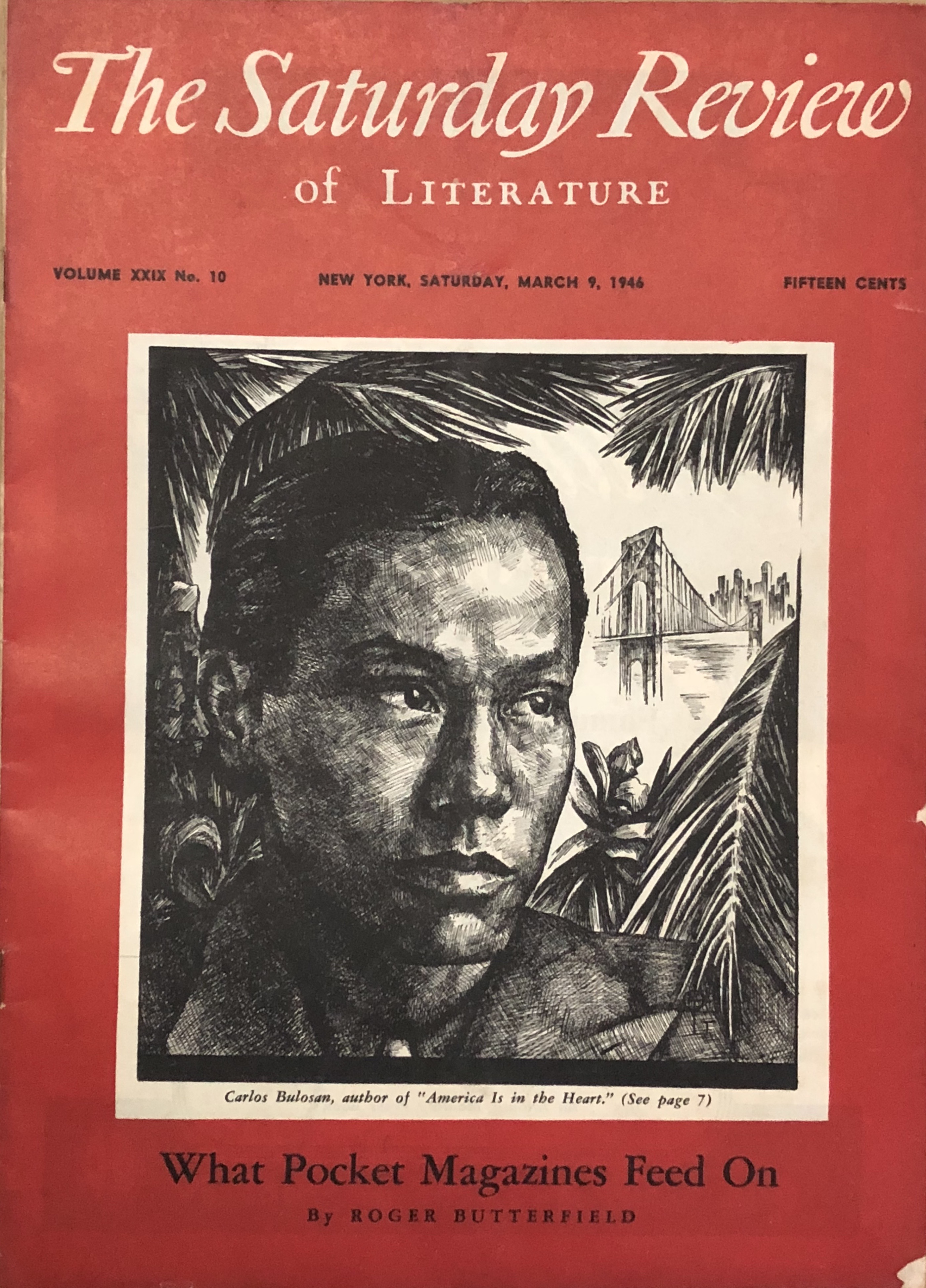
That last note—the emergence of Philippine writing in the global consciousness—has been a long time coming. We’ve had, of course, writers who’ve been published abroad, most notably Jose Rizal and the late National Artist F. Sionil Jose. In America, both expatriate and US-born writers such as Gina Apostol, Ninotchka Rosca, Jessica Hagedorn, Eric Gamalinda, Zach Linmark, and Brian Ascalon Roley have made important inroads into publishing, some with mainstream publishers. Of course, they were preceded by the likes of Carlos Bulosan, Jose Garcia Villa, NVM Gonzalez, and Bienvenido Santos, in a time when getting published in America seemed to be the apex of a literary career. We’re way past that now, having found our own voice and our own readers right here at home. 

I’ve often remarked that I’d rather be read by 10,000 Filipinos than 100,000 Americans, but I may have spoken too soon, as even those 10,000 Pinoys willing to buy and read a serious novel can be hard to round up. Therein lies the irony: we’re happy to write and publishers seem happy to publish, and the high attendance at the PBF could be a sign that things are changing, but creating a critical mass of local readers for literature remains a struggle. 

Even in America, where we imagine that almost four million Filipinos should be able to clear out an edition of 5,000 books without any trouble, that simply doesn’t happen. I suspect that that’s because we’ve never really been a book-reading culture, unlike the Japanese and the Indians, and the easy availability of entertainment on Netflix and Tiktok just aggravates the situation. (A more disturbing possibility is that our writers still haven’t learned to write the kind of stories with the kind of treatment that Filipino readers—and there are also many kinds of them—expect, without sacrificing literary “quality,” whatever that means. In my old age, this is what I’m aiming for—to give my readers stories that they’d want to see turned into movies.) 

There’s no doubt that we’re producing materials of high literary value—in English, Filipino, and our regional languages; we saw that in the PBF and we see it in our classes and workshops all the time. These works deserve to be shared with a broad audience—not just here, but overseas, where the Chinese, the Japanese, the Koreans, the Indonesians, and the Vietnamese have already made a name for themselves in the publishing world. 

But that takes a network we still have to familiarize ourselves with and learn how to navigate—a network of translators, literary agents, editors, publishers, and booksellers largely unknown and therefore closed to us. We’re not totally clueless. Through the NBDB and local publishing stalwarts such as Karina Bolasco (just recently retired from the Ateneo Press and the founder of Anvil Publishing before that) and Andrea Pasion-Flores (our very first international literary agent, now owner of Milflores Publishing and president of the Book Development Association of the Philippines), the Philippines has been represented over the past few years in such major events as the annual Frankfurt Book Fair, the world’s largest such market of authors, publishers, and agents.

Not meaning to be immodest, thanks to my agents and publishers, I myself have benefited from this kind of exposure, having sold my second novel Soledad’s Sister in last year’s FBF into a German translation and edition, which just came out; before that, it had already been translated into and published in Italian and French, aside from an American edition. Imagine what that network could do for the rest of our writers.

This brings me to an idea whose time, I strongly believe, has come: focal representation in a forthcoming Frankfurt Book Fair as a “guest of honor,” a position reserved for a country wishing to showcase the best of its literary talent across all genres (two years ago it was Canada, followed by Slovenia). This has to be accompanied by a strong effort in translation—from the regional languages to English, and from English to other international languages like Spanish and French, perhaps even Chinese. It will take much planning and a sizeable budget, but as our recent forays into the Venice Biennale have shown on behalf of our leading artists, with the right cultural leadership and vision, it can be done.

Qwertyman No. 44: Again, America

Qwertyman for Monday, June 5, 2023

I HAVE a good friend whom we’ll call Ted, a Fil-Am who retired a few years ago as a ranking officer in the US Navy. He was in town recently on some family business, and like we always do when circumstances permit, we had dinner and a good chat just before he and his wife flew back home.

Most of us have friends if not relatives in America, and all of this would be pretty routine except for one fact: I’m a flaming liberal, and Ted is a Trump Republican. Over the fifteen years or so that we’ve known each other—well before Donald Trump entered the picture—we’ve been aware of those political differences, but rather than politely skirt them in our conversation like many sane people would, we feel comfortable enough with each other to talk at length about them, and even exchange some friendly barbs.

Much of that level of comfort comes from my belief that, in his own way, Ted sincerely and deeply loves his country—and his ancestral home, the Philippines. He’s smart, curious, eager to learn and understand. In his former naval job and as a private citizen, Ted—who was born in the US but spent some of his formative years in his family’s hometown in Bicol, and speaks some of the local language aside from Filipino—has visited the Philippines as often as he can, trying his best to improve relations between the two countries on a personal level. (On this last visit, for example, he also took part in a ceremony to celebrate the commissioning of the USS Telesforo Trinidad, named after an Aklan-born Filipino petty officer who was awarded the Medal of Honor for bravely rescuing his shipmates from an explosion aboard their ship in 1915.)

Given his naval background—his dad joined the Navy in the 1970s—I’m not surprised that Ted is a Republican, like many military Fil-Ams are. (One notable exception is a mutual friend of ours, the former West Pointer, Army Ranger, and diplomat Sonny Busa, as staunch a Democrat as they come, and a key figure behind Filipino veterans’ causes in Washington.) His support for Trump despite the man’s many failings continues to mystify me, but I’m guessing that in his calculations, Ted chose to cast his lot with the man best positioned to thwart the liberal agenda. That includes items that Ted and other Republicans feel extremely uncomfortable with, such as what he calls the “celebration, beyond just acceptance” of transgender rights, and their judicial enforcement.

Perhaps with any other person, my liberal hair-trigger would have fired away at such comments with a fusillade of counter-arguments, but with Ted I find more value in listening and trying to understand a certain mindset, as different as some of its premises may be from mine. In our last conversation, what Ted had to say was profoundly disturbing. I’m paraphrasing here, but essentially it was this: “America is a mess. People can’t talk civilly to each other anymore. When I say I’m a Republican, people instantly assume I’m a racist.” To which I said that people at the top like Trump (and our own version of him here) greenlighted that kind of boorish discourse, with additional pressure brought on by right-wing militias armed with AR-15s. We talked about January 6 (which he opined was not an insurrection) and the Second Amendment (which I said seemed sacrosanct in American politics). “You have cancel culture,” he sighed, “to which the other guy responds by going bam bam bam!” He was deploring, not endorsing it, trying to get a fix on his own society’s ailments. “It’s in our DNA,” he said glumly about guns.

Thankfully Ted and I always have other things to talk about—like the Philippines, in which Ted said he feels much more relaxed than his own country. He knows how worked up I can get about politics and our own leadership (or the lack thereof), but as far as he could see on this trip, I and my fellow Filipinos (including those he met in Bicol) were just chugging along. “We’re survivors,” I said, “and we’ll do what it takes to get by from day to day.”

That brings me to another friend, “Tony,” who messaged me out of the blue the other day, obviously distraught by the Senate vote on the Maharlika Fund bill and asking if it was time for him and his family to leave the country, given how we seem to be back on the road to political plunder and economic ruin. It wasn’t just a rhetorical question; he was really thinking about it. Here’s what I said:

“Hi, Tony—If it’s a realistic option, I don’t think anyone can or should blame you for leaving or wanting to leave. We have only one life and we have to make the most of it in all ways. Politics is important, but it’s only one of many other factors that define who we are—love, art, family, and faith, among others. That said, it can have a way of complicating our lives and life choices. 

“Moving to the US has also been an option for me for some time now. Our only daughter lives in California and has been wanting to petition us. But my wife and I have been strongly reluctant to move there, although we visit almost every year and are familiar and comfortable with living in the US, where I spent five years as a grad student. We are artists, and our work is culture-bound. We feel appreciated here, within our small circle of friends. However good we may be, in America we would be marginalized; we don’t want to become an American minority and deal with all the issues that will come with it. And America has become much less inviting now, with all the intolerance and racial violence provoked by Trumpism. 

“So unless it were a matter of life and death, we’ll stay here, despite the present dispensation and many more aggravations like the Maharlika Fund to come in the years ahead, because I feel that my continued survival and success will be my best way of fighting back. Having survived martial law, we can survive this as well. Everyone’s circumstances are different, and again you should feel free to find your place where you can best live with your family and secure their future. Nothing is ever final anyway, and you can always come back. Follow your heart and conscience, and you should be all right, wherever you may go. All best!”

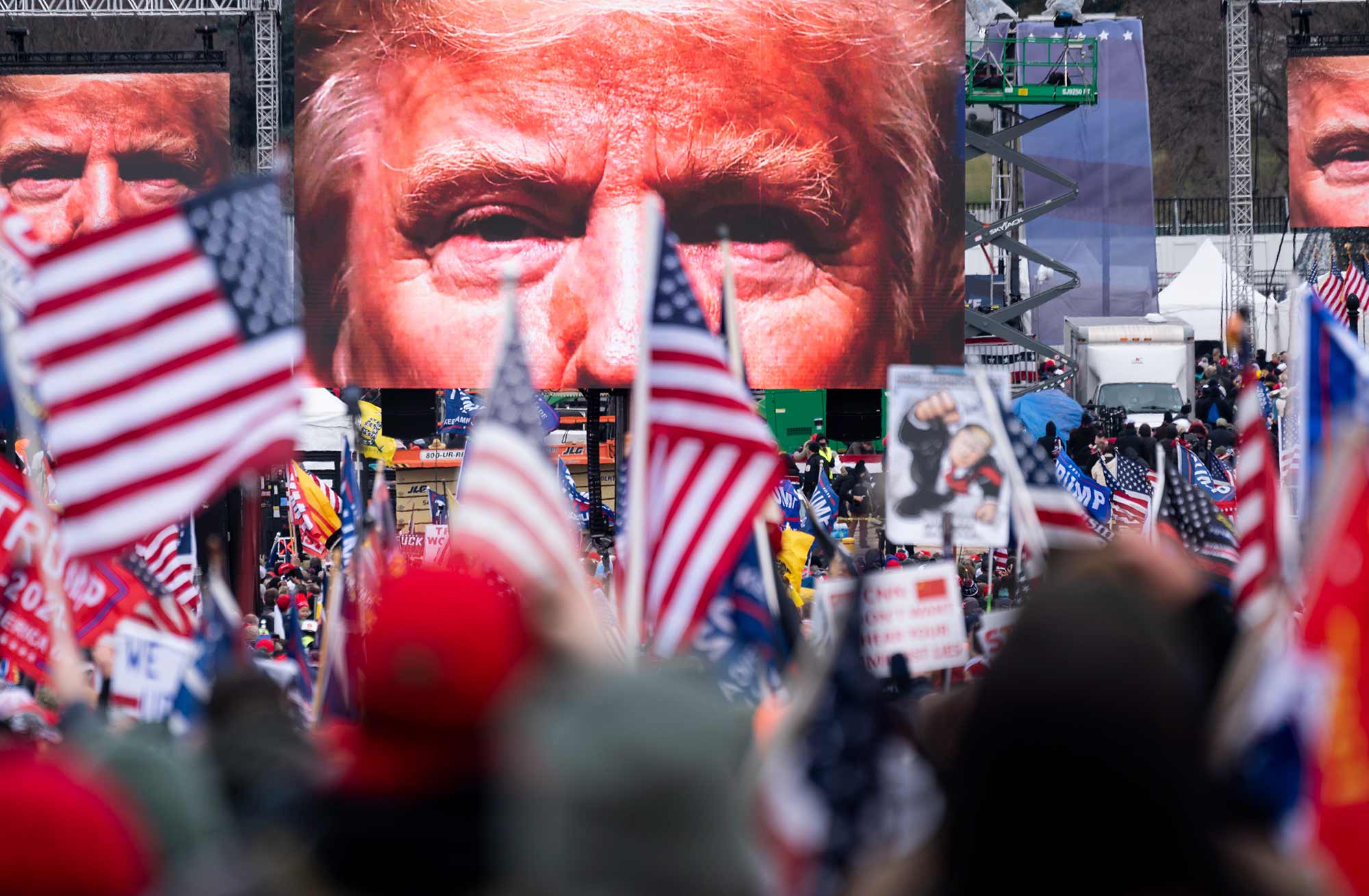
(Image from bu.edu)

Penman No. 451: A Harvest of Books

Penman for Sunday, June 4, 2023

IF YOU’RE reading this on this Sunday morning, then it’s not yet too late for you to find a cab and get yourself over to the World Trade Center in Pasay City to catch the last day of the Philippine Book Festival, and have your favorite Filipino authors sign their books for you.

Organized by the National Book Development Board (NBDB) in partnership with the National Library and other agencies and organizations, the PBF will showcase the best of new Philippine writing and publishing, with the bonus of having most of the authors around for signings, chats, and the now-obligatory selfies.

Since the Internet took off thirty years ago, people have been declaring that “Books are dead!” (And even before that, “The Author is dead!”—although, of course, not quite in that almost literal sense). Well, guess what—both are very much alive, whole new generations of them, as if the Internet never happened. I don’t have the hard figures to show—I’m sure the NBDB has them—but just from what I’ve seen at the past Manila International Book Fairs (the next one of which will be held in September), there’s much more new writing and publishing happening now than there was before the Internet. 

There are many drivers for that, one of which has to be the proliferation of writing programs and workshops, whose graduates really succeed only when they come out with books. (Like I often remind Creative Writing grad students who take forever to “perfect” their thesis projects, “You’re writing for no more than five readers—your dissertation committee—and when you’re done, your thesis will be sitting on a solitary shelf. Just do what you need to pass the damned defense and focus on producing your first book out of that draft! Your real examiners will be your readers.”) 

Another factor is the growth of the publishing industry, which has become much more diversified in terms of ownership, material, and audience. The long years of martial law drove much creative output underground, so to speak, with few available venues for literary publishing and only competitions like the Palancas providing incentives for continued production. (On the other hand, the government presses kept churning out books on the First Couple’s abounding wisdom.) Post-EDSA, the pent-up dam broke, and literature flourished, but still hardly on the scale we’re seeing today.

I suspect that’s because many new players have gone into publishing, finding niche markets for everything from religious and self-help books to graphic novels and high-end coffee-table books. Among these, I’d count Milflores Publishing, founded by the late Tony Hidalgo and now in the hands of the very capable Andrea Pasion-Flores. Balangay Books, focused on local literature, has been opening doors for new young authors, and belongs to the Indie Pub Collab PH, a group of independent publishers. Down south, Savage Mind Bookshop and the Ateneo de Naga University Press have made great strides in literary publishing not just in the Bicol region but well beyond. Emerging in the wake of the Pink Revolution, San Anselmo Publications has made a name for itself as a purveyor of progressive thought. A recent visit to OMF Literature’s bookshop and office along Boni Avenue showed me how Christian literature is flourishing, attracting both new authors and readers. 

Let’s not forget self-publishing, which with such new technologies as print-on-demand and e-books has outgrown the stigma of “vanity” publishing and has produced both commercial and critical successes. While overall quality remains highly variable, the free Internet has empowered and enabled a new generation of young people to feel like they can become “writers” by posting on such sites as Wattpad—and some of them will be. (The irony here is that, as on Amazon, writers who succeed in their e-book debuts then get picked up by publishers of physical books.) Professional design and editorial outfits such as Studio 5 and Perez NuMedia also exist to help individuals and institutions turn their ideas into prizewinning books.

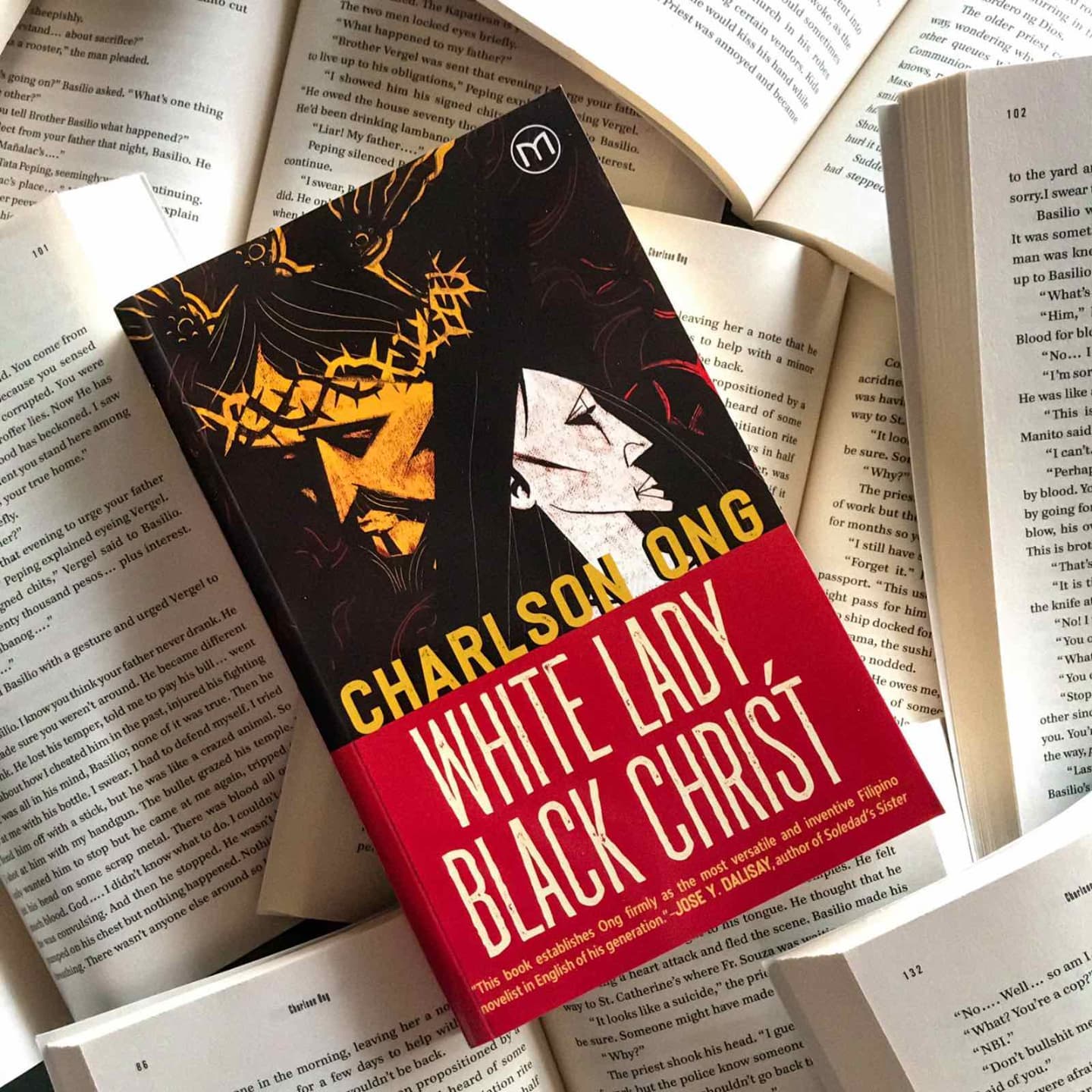
And then of course the long-established big-name publishers and academic publishers are still around: Anvil Publishing, UP Press, Ateneo de Manila University Press, UST Publishing House, and the University of San Carlos Press, among others. Vibal Publishing has produced impressive and sumptuously printed historical books—as has, let’s not forget, the National Historical Commission. They remain the publishers of choice for what might generally be considered prestigious but non-commercial projects, although their marketing savvy has vastly improved, from book design to distribution (much of the bookselling has moved online, to Shopee and Lazada). But since the wait at these publishing houses tends to be long, even established Filipino authors like novelist Charlson Ong (White Lady, Black Christ) have gone with such alternatives as Milflores (as did I, in its previous incarnation), which can often provide speedier results with no sacrifice of quality.

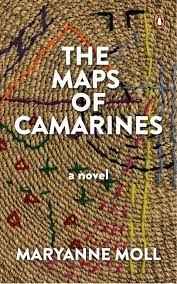
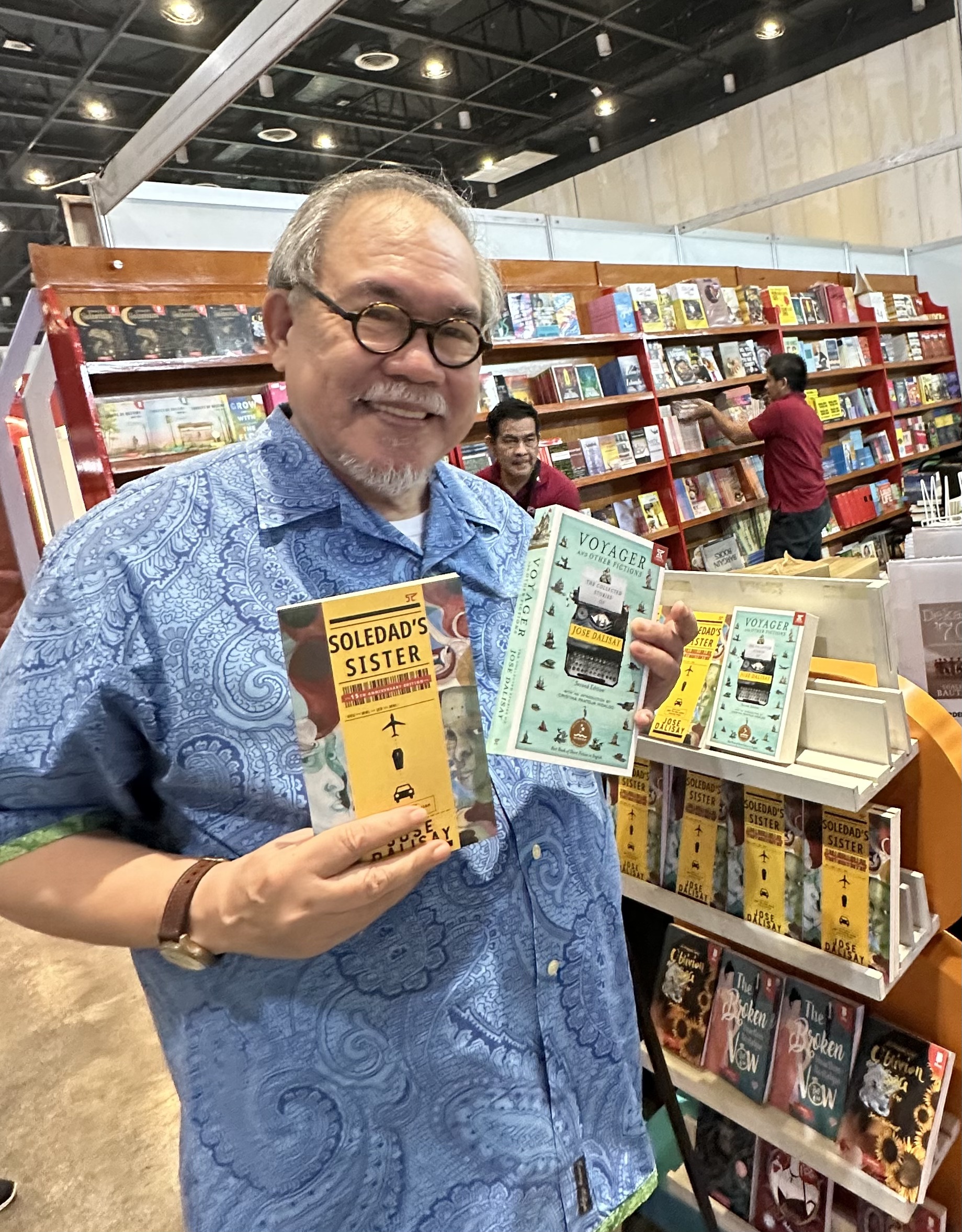
One more thing: more Filipino authors have begun to get published and noticed abroad, beyond America. Note the recent publication of Ulirát: The Best Contemporary Stories in Translation from the Philippines, edited by Tilde Acuña et al., and the South Africa-based Jim Pascual Agustin’s Waking Up to the Pattern Left by a Snail Overnight, both by Gaudy Boy in Singapore. Singapore is also where Penguin Random House SEA is based, and from where it published Danton Remoto’s novel Riverrun and his book of stories The Heart of Summer(aside from his translations of our classic works in Filipino), and Maryanne Moll’s novel The Maps of Camarines. I’m also happy to report that my novel Soledad’s Sister just came out in a German hardcover edition (as Last Call Manila) from Transit Buchverlag, following earlier editions in Italy, France, and the US. A 15th-anniversary edition of the novel, along with a new edition of my Voyager collected stories, are on sale at PFB—as are almost all of the books I mentioned here, with their authors on hand to sign them.

So wait no further and grab that ride to the WTC, for your share of this bountiful harvest of Filipino books. (Did I say that entrance is free?)

Qwertyman No. 43: Perhaps It Takes a Fire

Qwertyman for May 29, 2023

THE WORST fire I ever witnessed was that of the Family Clinic hospital near Quiapo in Manila in 1972. I was a police reporter for the Philippines Herald, on the graveyard shift at the MPD HQ, when the three-alarm alert came in and we sped out in our jeep to the fire. Flames were billowing out of the upper floors and people were on the roof when we got there, and soon, sickest of all, I began to hear the thuds of bodies falling onto the pavement, of those who could no longer bear the heat and chose the only other terminal option. When I called the night editor to tell him what I was looking at, he had an additional assignment for me: “Count up the bodies, we need a figure.” I spent the early morning making the rounds of the nearby hospitals and their morgues, seeing up close what fire can do to a human body, the weeping of burnt flesh. I was eighteen, a college dropout eager to work; that night was worth a year in journalism school for me.

Many decades later, early in the morning of April 1, 2016, I was playing poker with some friends when I got a text message from another night owl that the UP Faculty Center was burning. Ever the skeptic, my first thought was that it was the first of what would be many April Fool’s Day jokes, but then other messages confirmed the terrible news. I dropped my cards and drove back to the campus—where I also live, by the way—behind the blare of firetrucks speeding to the scene of the fire, their loudness and haste almost superfluous in the stillness of the night. 

I arrived in time to catch the sight of my office burning—the whole first floor, our whole department, was burning. Strangely at that moment I felt no pain, no sense of loss; I didn’t flail around or throw up my hands in anguish. I suppose that was a form of shock, the way our brain throws a cold, wet blanket around us to insulate us from the heat, to keep us immobilized and therefore safe in the face of catastrophe. Unavoidably my mind began taking inventory of what was in my room—books, paintings, the best student papers of thirty-some years, twenty first-edition copies of my book Penmanship I had saved for its special paper, a computer, flotsam and jetsam from an academic life. There were many precious and irreplaceable pieces in that office, for sure, but again strangely, as soon as I remembered them, I said goodbye; I realized that I was muttering what amounted to a prayer.

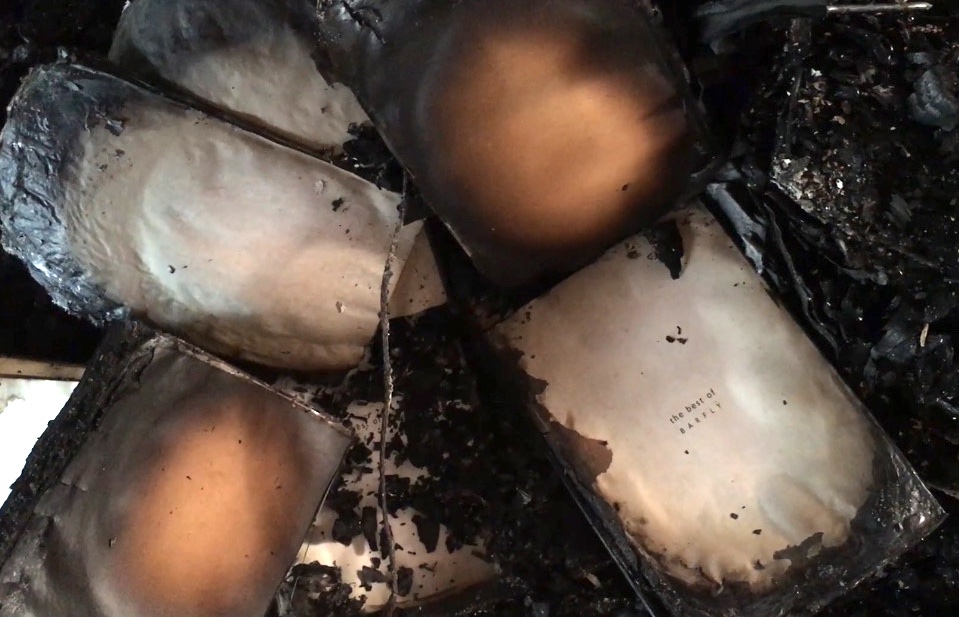
Two days later, when the smoke had cleared, I stepped into the gutted building and took a video with my phone. The embers were still steaming beneath my feet. I confirmed with my own eyes the finality of things. Everything but the shards of a ceramic cup was gone—and my book of stories, prettily charred around the pages as though for some theatrical presentation. My writer’s mind was compensating, salvaging scraps of beauty from the crushing loss. That comes to us like second nature; we want to give our grief exquisite form, hoping for meaning and consolation.

There is something about a fire, a compelling majesty, that Filipinos instinctively respond to—not necessarily to help, which is beyond most of us, but to watch and be spellbound by. Where is the child who didn’t jump out of bed and dash into the street at the shouts of “Sunog!”, followed by the festive clangor of alarms and firetrucks? Nighttime fires are especially dramatic, as the sky glows orange and the smoke curls into your nostrils. You are aware that something terrible is happening to someone, and the next morning the news will carry the grim details: a family trapped, a mother curled over her baby, a son who had just graduated the week before. We feel sorry for these victims, while being secretly relieved that we ourselves were spared. Perhaps what attracts us to fire is its anticipation of The End, with science assuring us that the sun will scorch the earth in its last embrace and religion threatening yet more heat for miscreant souls.

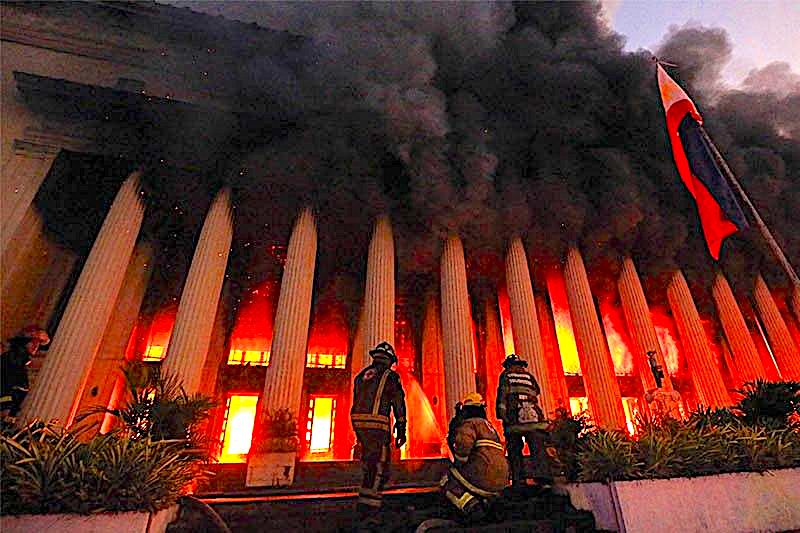
When I heard about the fire at the Manila Central Post Office building last week and began seeing the pictures coming online, I reacted with the same stunned silence, trying to absorb the enormity of it all, while morbidly, guiltily, indulging my fascination with fire. It was epic theater—the inferno raging behind and through the neoclassical columns that had withstood a war. I should have been mourning the loss of hand- and typewritten letters—rarities themselves in these days of email—and of other valuables in that building (oh, the stamp collection of the Bureau of Posts!), but my mind drew me back to my childhood, when my father was working at what was then the Department of Public Works, Transportation, and Communications, which was housed in that building.

I must have been just five or six when my dad brought me there to his mezzanine office; I recall rocking on his wooden swivel chair, and playing with the double-tipped red-blue pencils on his desk. At lunch, we crossed an inner courtyard to the cafeteria. My father was just a clerk then, but to me, he seemed like the boss of the place, and I wanted to be like him, seated behind a big table with a pen in hand (in my sixties, I would buy a similar swivel chair). 

Editorials will and should be written about the MCPO building’s loss and for its reconstruction. Explosive words like “arson,” “heritage,” “accountability,” and “negligence” will fly up in the air. For a while, like the fire itself, they will consume us, hold us in thrall, until they flicker out and we return to our daily business, our outrage expended.

Once again we find ourselves loving what is gone too late. But perhaps it takes a fire to awaken love and memory, and to teach us important albeit bitter lessons about impermanence, and thus the need to care and to give value while we can. Whether started by accident or by diabolical intent, fires remind us that we are not what we accumulate but what we regret losing, and struggle to rebuild and recover.

(MCPO photo from philstar.com)

Qwertyman No. 42: Life Lessons for the College Student

Qwertyman for May 22, 2023

TWO YEARS ago, well before I began writing this column, I was asked to share some thoughts with fellow teachers of General Education—that special recipe of college courses in various disciplines meant to give incoming students a basic but challenging introduction to the issues of life and society. Instead of giving a lecture, I decided to come up with a list of 12 “life lessons” that I thought every undergrad should learn, one way or another, over their four years in college. I’d like to share them here as well, with further notes from me in parentheses, to reach a larger audience—and yes, even well beyond college. Here goes:

1. You don’t have to understand everything right away. In any case, you can’t. Some things in life will forever remain mysteries—some of them wonderful, some of them perplexing. Staying curious is what matters to the lifelong learner. (Aside from being usually obnoxious and insufferably arrogant, know-it-alls never learn that they can’t possibly know everything.)

2. Engagement helps—and by engagement, I mean investing yourself, putting in your time, effort, and maybe even money behind some belief or idea or activity that means something to you. Sometimes engagement is the best way of knowing, learning, and finally understanding. (Talk is cheap; get off your butt and actually do something. Remember the “community pantry”? That was because somebody took charge of an idea and put it into action.)

3. Not everything has to have practical value—at least not yet, or maybe ever. Value can mean more than utility or money. Delight and discovery are their own rewards. (All art involves finding beauty in the abstract; even sport is the quest of abstract perfection. Of course both art and sport have ironically become big business, and their best practitioners deserve every reward, but just as ironically, their greatest feats are driven by love and passion, not money.)

4. You are not the center of the universe. Not everything has to do with you. However, every connection you can make to the world around you leaves a mark that you were here—and that, in your own way, you mattered. (Know the difference between history and Instagram.)

5. Learn to see time in years and centuries, not seconds or hours. If you want to foretell the future, look back to the past. We may seem to be headed for the future, but in fact we will all inevitably be part of the past. How will you want to be remembered? (Repeat: Know the difference between history and Instagram.)

6. Intelligence, cleverness, knowledge, and wisdom are very different things. Knowledge without values is worthless and even dangerous. The middling student who has a sense of good and bad and right and wrong is worthier than the summa cum laude who doesn’t. (The people who have methodically impoverished and destroyed this country are no idiots; they are experts at what they do, or can hire whatever expertise they need.)

7. The first thought that comes to your mind may not be the best one. Pause and think before you speak or write, especially in these days of Facebook and Twitter. Speech but also silence can require courage and good judgment. (Live and write as if there were no “delete” or “unsend” buttons at your fingertips.)

8. Learn to love something larger than yourself, your family, and your prized possessions. “Nation,” “freedom,” “justice,” and “equality” are very attractive ideas, but you have to learn to bring these big words down to earth, in concrete forms, actions, and decisions. Can you accept that you are your housekeeper’s equal as a human being? (Good citizenship is always personal. Bad leadership is no excuse; be the example to your family, friends, and community.)

9. Be prepared to take risks and to make mistakes—and even to fail. You can learn more from failure than from over-performance. Everybody—even the very best of us—will fail sometime, and it will be good to believe that we are all entitled to at least one big mistake in our lives. (Being humbled by failure is always a good starting point; as we like to say in Diliman, you have nowhere to go but up!)

10. Be prepared to change your mind. As you grow and learn, some things will become more simple, and others more complex. You are not a fixed entity; you are changing all the time, and you can change faster than the world around you. (In my twenties, I thought I had the world all figured out in black and white, and would have been prepared to die for my causes. I’m glad I didn’t—I needed more time to learn that the world is mostly shades of gray, and that “compromise” is not necessarily a bad word.)

11. Technology can be deceptive. It can lead us to believe that the world is changing very fast and for the better. That may be true for some of us and for the way we live. But for many others left behind, the world is no better than it was a hundred years ago. (Technology, even artificial intelligence, is amoral. It’s only as good as the person who uses it, and his or her intentions.)

12. Competition is good, but cooperation is often better—and necessary. Poems are written by solitary genius, but bridges, cathedrals, and nations are built by many minds and hands. The best way to deal with loneliness is to find meaning in the many—to learn from and to contribute to the experience of others. (And I’m not talking here just about networking online; indeed nothing has made us lonelier in this century than the Internet. Share a cup of coffee, and learn to listen—their causes could be more urgent than yours, and you might even have the answer.)

Qwertyman No. 41: Living up to “Honorable”

Qwertyman for Monday, May 15, 2023

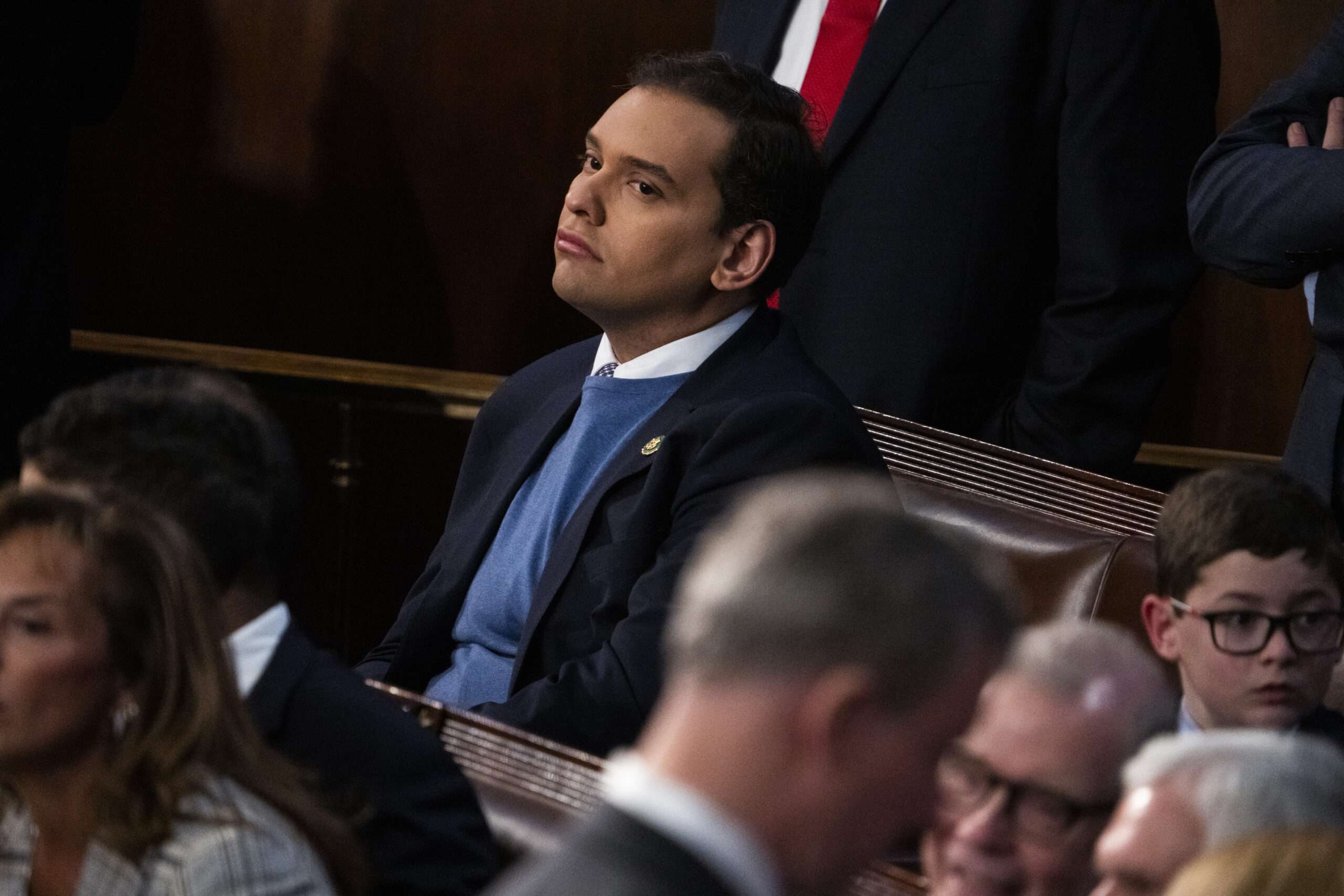
I’VE BEEN following the saga of the Hon. George Santos, the freshman Republican congressman from New York, who’s been caught in a tangle of lies he made about his education and employment on his résumé, and who’s now been charged in federal court on 13 counts from wire fraud and money laundering to theft of public funds and making materially false statements to the House of Representatives. So brazen have been this young politico’s prevarications that even his fellow Republicans—many of whom had forced themselves to swallow Donald Trump’s gargantuan lies about the 2020 election—have called on Santos to resign, if only to spare their party from the prolonged embarrassment of nursing a self-confessed falsifier in their ranks.

Now this is what gets me: Santos had earlier admitted to having fabricated about four-fifths of his CV, an act he called “résumé embellishment” which involved a “poor choice of words.” He said he was sorry—but then just as quickly insisted that he was no criminal and intended to serve the rest of his term, and even run for re-election. He boldly reappeared in Congress—still dressed like the preppy he never was—and acted like nothing happened. Despite the ostracism, he stood his ground, knowing that under its rules, the US Congress couldn’t kick out one of its own—even someone convicted of a crime, unless that crime was treason.

The story fascinates me because it illustrates the utter shamelessness and disregard for the truth that now seems par for the course in politics, and not just in America. The fact that many of his colleagues found Santos’ behavior reprehensible offers hope that some people still know right from wrong. The other fact, that Santos refuses to take responsibility for his actions and resign—and that some people continue to support him nonetheless—reminds us of how degraded the idea of “honor” has become in contemporary society. 

Social scientists tell us that “honor” has evolved over the centuries from the chivalric, even aristocratic notion of responsibility to a community—think of a hero undertaking a noble sacrifice, even at the cost of one’s life, for the common good—to something much more individualized and internalized, to one’s own sense of respect, dignity, and integrity. 

I’d argue even further that for most people today, “honor” has become a much more elastic term, one that allows for a range of justifiable behaviors. I’ll give you an example: would you rat on an officemate, perhaps even your best friend, who’s also your chief competitor for that AVP position? You could, and you would—if you convince yourself that becoming that AVP is a more important honor, something your family and circle of friends would appreciate. This is the difference, as one scholar noted, between “internal” and “external” honor, between integrity and reputation. If we equate, as many might, “reputation” with popularity, with a positive public perception of your image, then it’s easy to see how and why many people find integrity expedient and expendable.

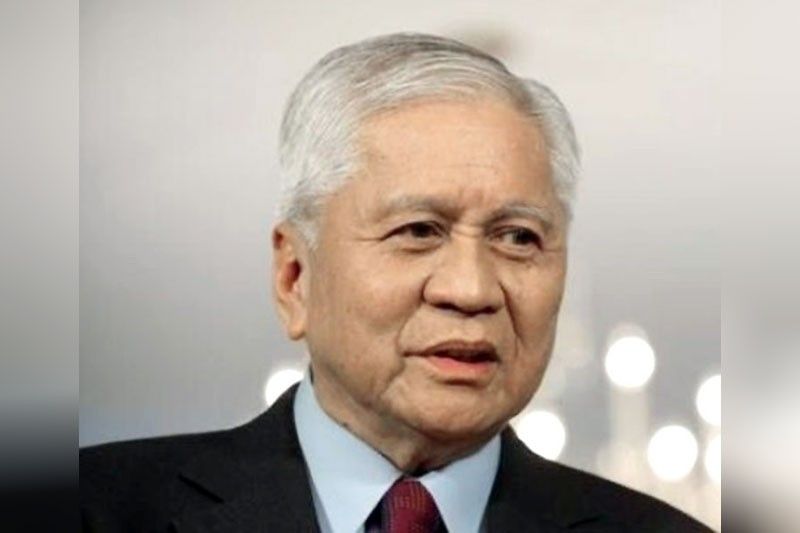
These thoughts ran through my mind when I learned of the recent passing of former Foreign Affairs Secretary Albert del Rosario, and read the many eulogies and encomiums following his death. All of them spoke of him as a man of honor, someone who fought for his country, stood by his word, and conducted himself with dignity. I had only occasional brushes with him, but can agree from those encounters with what was said. Some people communicate their integrity instantly, even wordlessly, just by their very manner. 

On the other hand, there are people who, by their swagger and arrogance (often a cover for some deeply felt inferiority), immediately invite mistrust if not repugnance. I’m reminded of a man who, from his lofty perch, drenched the good secretary with vitriol, accusing him of being “not a Filipino, you don’t look like a Filipino,” and threatening to “pour coffee on your face.” To which the diplomat merely reiterated the need to defend the country’s interests and to beware of the duplicity of our aggressive neighbor. 

The sad thing is how many Pinoys laughed along with that sneering man and thought that he was doing and saying the right thing. For years, he had fed them a diet of vulgarity, as if to reinforce the idea that that was the Filipino’s natural state and that he was one of them and spoke their language. In fact, he was cultivating and normalizing their basest instincts, an easier thing to do than the nobler alternative: appealing to their better selves, to what they could yet be. I see this innate goodness and decency, this desire for self-betterment, in Filipinos every day, even among the poorest of us. Overwhelmingly, this is still who and what we are. Those who believe otherwise debase only themselves.

But we are short on exemplary leadership—on leaders who value honor and integrity, on leaders who can feel shame, on leaders who can curb their profligacy out of respect for the poverty of the many, on leaders who will be genuinely missed and mourned by the masses when they depart. Our role models have become so few—and our expectations of our officials have become so low—that many of us have forgotten what honor truly means, assuming simply and tragically that it comes with wealth and power. The word “Honorable” is too easily affixed to certain high offices. Are they truly so?

I may be aghast at Rep. George Santos’ behavior in New York, but who knows how many lies are buried in our politicians’ CV’s, how many “résumé embellishments” and “poor choices of words” we have had to swallow?

And then again there’s a part of me that says, forget the résumé; it’s never been a trustworthy predictor of moral intelligence. Ability is the most basic we should expect of our “honorables.” Living up to their titles lies at the other extreme. But still I have to wonder: if a George Santos happened here, would he resign? 

Qwertyman No: 40: Teaching History

Qwertyman for Monday, May 8, 2023

I HAVE a subscription to the New York Times, which I enjoy for its features and commentary as much as its news coverage, and the other day my attention was piqued by a small headline: “It’s Not Just Math and Reading: US History Scores for 8th Graders Plunge.”

According to the article, recent test scores reveal that young Americans (about 13-14 years old for eighth-graders) have become much less knowledgeable about their history and civics over the past decade—with 40 percent scoring “below basic” and only 13 percent ranked as “proficient.” 

I immediately wondered how our students would score given similar tests. Would they be able to answer even simple questions about why Ferdinand Magellan sailed to the Philippines, what prompted Filipinos to revolt against Spain, why the Americans occupied us, what led to our involvement in the Second World War, and what martial law and EDSA were all about? I’ll probably be safe in my prediction that they would score dismally, from what I’ve seen in my own classes in UP (yes, in UP), where I’ve been dismayed to find a yawning ignorance of history and literature among my students, supposedly among the best in the country. 

Don’t get me wrong: these are bright, idealistic kids, desirous of all things good for their people and their families. They perform well in class and will likely succeed in whatever career lies ahead of them. But when I ask a roomful of English majors if they know or have read NVM Gonzalez and only a couple of hands go up, I get worried. When I ask when or what year the Americans arrived to conquer us and I get strange answers like “1945,” I get worried. 

However shocked we may profess to be, we can’t blame the students. In 2014, following the passage of the Enhanced Education Act of 2013 or the K-12 Law, the Department of Education issued Order No. 20, Series of 2014, effectively removing Philippine History as a high school subject and subsuming it as an “integrated subtopic” under “Asian Studies,” supposedly to provide students with a wider global perspective. The idea sounds nifty, but as many educators have since pointed out, its practical effect has been to dilute the teaching of Philippine history to the point of oblivion. The result is that we have young Filipinos with no knowledge of the most basic facts and issues of their past, and no appreciation of how that past brought us to where we are today.

That vacuum has been an open invitation to misinformation and historical distortion, the stock-in-trade of political propagandists, trolls, and spinmeisters. It’s become much easier to sell myths like a golden age under martial law to impressionable youngsters who were never told or taught the truth. Not surprisingly, Order No. 20 has been attacked by its critics as a means to lobotomize the youth and to render them more susceptible to alternative narratives (aka fake news) concerning our history. 

And yes, I have to acknowledge that all this began under the late President Noynoy Aquino, a champion of K-12, whom I prefer to believe had no such nefarious motives in mind, as he and his family would have had little to gain by erasing history. But the policy was upheld and sustained by the following administration, with DepEd Secretary Leonor Briones arguing strenuously that History (including our martial-law experience) was being taught in Grade 6 under Araling Panlipunan, and again in high school as a component of Asian and World History.

Given the current DepEd’s expressed desire to review K-12, it might be a good time to test how effective that policy has been: just how much Philippine History are our high school students learning and retaining? How much should they know by the time they get to college, where thornier issues such as nationalism, agrarian reform, and foreign policy will be threshed out in all their nuances?

Long before these questions arose, it was a common complaint among students and even teachers that our problem with History was how badly it was taught, often as a collection of names and dates rather than a coherent narrative (which I must say I sometimes wonder about, fact often being stranger and messier than fiction). We generally agree that History should involve more reasoning than rote memorization. But as the New York Times reports, “That emphasis can contribute to a troubling lack of background knowledge,” with experts observing a “rapid and very significant decline in what students know about history and geography—like the fact that Africa is a continent, not a country.” So the basics of names, dates, and places remain important—getting the facts straight before getting into more complicated arguments.

It’s even more troubling to note that on top of this decline in historical knowledge and awareness among young Americans, there’s now a ham-fisted effort from conservative politicians to purge school curricula of what they see as “woke” content—subjects that have challenged the longstanding impression of America as a nation forged by whites. Governors like Florida’s Ron DeSantis—eager to present themselves as the flag-bearers of political and moral rectitude—have supported moves to eliminate African-American and LGBTQ studies from the curriculum. Others have called for banning books that threaten their view of traditional America, including books titled “The Infinite Moment of Us” (a young adult novel about love and sex) and “How to Be an Antiracist” (a nonfiction book about racism and ethnicity). This reminded me of how some Philippine state universities, not too long ago, went on their own book-banning spree, on some silly suspicion that books by such authors as National Artist Bienvenido Lumbera were “subversive.”

The New York Times piece came with an irresistible teaser: a brief five-question, multiple-choice history quiz for readers to test themselves on how well they know American history. I scored four out of five (failing a question about post-Civil War reconstruction)—not too bad, I thought, for a guy living seven thousand miles away. But then I come from a generation schooled on American textbooks, who know American history and geography better than many Americans. That’s a topic for another column.

In the meanwhile, let’s ask ourselves: how well do we know our history, and how important is that knowledge to understanding our present and shaping our future? Is “Maria Clara and Ibarra” pointing the way forward?

Penman No. 450: A Hillside Haven

Penman for Sunday, May 7, 2023

“SHAMBALA’ IN Tibetan Buddhism is a mythical kingdom where, according to lore, resides a community devoted to good deeds. But there’s a real version of it, aligned with the same beneficent principle, and it’s just two hours from Manila on a good day.

Thanks to the herculean efforts of the wife-and-husband team of Riza and Albert Muyot, a place called Shambala Silang now exists to welcome city folk fleeing stress, pollution, and stop-and-go traffic for a day or two of blissful living.


The two-hectare hillside resort seems larger than it is, magnified by the panorama that opens behind it—the green sprawl of a provincial landscape under a bright blue bowl of sky. But “resort” seems a misnomer, because Shambala doesn’t have a swimming pool, a karaoke bar, a disco, or a zipline. Except for short walks around the property, you don’t come to Shambala to work up a sweat, but rather to relax, meditate, and celebrate life, whether by yourself or better yet, in the company of loved ones and friends.

That’s what we did on a recent day trip organized by fellow writer and academic and dear friend Edna Manlapaz, at the gracious invitation of the Muyots. (Albert—a lawyer and former Undersecretary of Education—is another old friend, a fellow fountain-pen enthusiast and Michigan alumnus.) The main invitee and guest of honor was actually National Artist for Literature Jimmy Abad who came with his wife Mercy, and we roped in novelist Charlson Ong to complete the party.

From Quezon City, Shambala is best reached by the Skyway, then CALAX, then a series of backroads winding through Silang. We have friends who have chosen to relocate here, and passing through groves of mango and other fruit trees, we can understand why. If you want to disengage from city life, Silang is an easy option, where you can vanish into the woods while still being a short drive away from modern necessities. A narrow dirt trail leads uphill to Shambala, and I have to admit that I wasn’t expecting much from what I could (or couldn’t) see on the road, but then it appears at the very end, and the magic begins.

Shambala is a cluster of several buildings containing art galleries, collections of Philippine tribal art and culture, halls for meetings and celebrations, restaurants, gardens, and the Muyots’ private residence. It has six tribal houses open for overnight (or longer) stays, operating as a B-and-B. The houses are authentic structures brought down from the north when their owners no longer needed them, and rebuilt piece by piece. “They were originally constructed without nails, but we had to reinforce them and to introduce some modern touches and conveniences to make them more comfortable for our guests,” said Riza. “For example, we expanded the space beneath the houses , which was traditionally used for farm animals like chickens, so we could put a platform around which people could sit and meet. We also added friendlier stairs.” The one-room houses are spacious and airy, and a modern bathroom stands outside each of them.

Below the houses, down the hillside, is a circle of stones with a fireplace at its center—a dap-ay traditionally used for meetings of tribal elders and for religious functions, but now serving as a virtual theater or arena for post-prandial get-togethers under the moonlight.

And everywhere you look, there are trees—about a thousand of them, according to the Muyots, a hundred of which are Benguet and Norfolk pine, specially brought in. “There was nothing here when we bought the place around 2000 but pineapples and coffee,” said Albert. The Muyots were then looking for a sylvan hideaway to run to from their workplaces in Manila. They found the property and fell in love with it, although today’s Shambala wasn’t necessarily what they had in mind. “This is all Riza’s doing,” Albert explained. “She’s the one with the vision, the one who saw the possibilities and brought them to reality.” Now the CEO of Save the Children Philippines, Albert is happy enough to work on his laptop from his home office on the property (yes, there’s wi-fi all around).

A CPA who once worked with SGV, Riza comes from a corporate background. She’s also a gifted poet whose works subtly appear among the art on the walls. “Culture, heritage, art, and nature—that’s what we devote ourselves to here in Shambala,” Riza said. “We have an ongoing exhibit of soil painting featuring artists from the Talaandig tribe in Bukidnon. Do you know that there are 21 colors of soil in Bukidnon? They add water to those soils and use them in their painting. “ Shambala brought over Mindanao artists such as Kublai Millan and Datu Waway Saway to share their experiences and insights in the TIBOK Community Art Fair last month.

“People discovered us during the pandemic,” said Albert. “They went to Tagaytay, only to be turned away because of local restrictions on visitors from out-of-town, like seniors who couldn’t be let in. They came here and liked it, and spread the word.” It’s no surprise that on busy weekends, as many as 200 people pass through Shambala’s gates. Shambala has consistently ranked No. 1 in TripAdvisor surveys of such resorts in the area.

So if you want to try something exquisitely different—like their signature welcome drink made from malunggay, luya, and calamansi—drive off the beaten track to Tagaytay and try Shambala one of these days. The food’s as heavenly as the place itself, and you’ll wonder why you didn’t come here sooner. You can find out more about Shambala and their rates on their Facebook page here: https://www.facebook.com/ShambalainSilang/.

Qwertyman No. 39: My Mother Emy

Qwertyman for Monday, May 1, 2023

Pardon me if my column this week is a bit personal, because its subject is my mother Emilia, who will turn 95 next week, against all odds and through the grace of the One she prays to every night and every morning, and in the loving embrace of her five children and many grandchildren and great-grandchildren.

In this age of murderous Covid, rampant cancers, devastating disasters, and political turmoil, to reach 95 is extraordinary. To be 95 and be reasonably healthy, free of dementia (but for a few memory lapses that even I at 69 am prone to), able to walk a few hundred meters for her daily exercise, read without glasses, and comment tartly on the day’s political and entertainment news is almost superhuman. 

Like today’s children, my mom Emy can’t be removed from her iPhone and her iPad; she loves to play word games, beats my wife Beng at Scrabble, devours Netflix by the series, and has her telenovela programming graven in stone. She has daily Facetime audiences with our daughter Demi in California and my sister Elaine in Toronto. She even gave up her US green card to spend, she says, the rest of her time at home. In her “Tuesday Circle” of elderly friends, she is now the most senior, but hardly the most infirm. Best of all, she looks forward to reading my books and columns, and although I suspect that they sometimes bewilder her as much as they do my other readers, she invariably likes them because they were written by her first-born, who cannot possibly write anything badly. (This week’s surprise column, I think, will be a hit with her.)

A quarter-century ago, shortly after my father Jose Sr. died, we thought we were going to lose her as well. That’s what they say often happens—one dies, and then the other follows, in the utmost expression of devotion and sympathy. Emy was diagnosed with tuberculosis, so serious and advanced that we felt we were gathering at her deathbed, her sheets spotted with the blood she was coughing up. I had never seen her so frail and so helpless. She was missing my father terribly, and I’m sure she wouldn’t have minded leaving us to join him at that moment. 

Theirs had been a storybook, whirlwind romance. She was the youngest daughter of a landowner in Romblon, the only one in their brood of twelve whom her father had trusted to study and go to college in UP in Manila. She was her father Cosme’s pet, a girl who rode horses on his farm and who accompanied him when he took a boat to the big city to off-load his copra harvest and to buy necessities and a few baubles for his large family. It must have pained him when she decided to finish her high school in Manila (“I was walking on Padre Faura and saw UP High, and so I went in to see how I could study there,” she says) and to stay there so she could study to become a teacher.

My father Joe was the brightest boy in his school and, so the local legend goes, in the whole province. He was an eloquent writer and speaker and cut a dashing figure. The only problem was, his family was poor—his grandfather had been a sharecropper, his father a farmer. His parents had separated shortly after he was conceived—another story that deserves a telling of its own—and lived about a kilometer apart for the rest of their lives. Raised by my grandmother Crispina, Joe seemed destined for great things far beyond Romblon. He already had a girlfriend, among the town’s prettiest bachelorettes (I met her once when I was a boy, unaware of why she was looking at me a certain way.)

One day Emy and Joe met at the pier in Manila waiting for other people and other things. Some sparks must have flown, because not long after, they were together and engaged to be married. I was the first outcome of that improbable union, born in a nipa house in Alcantara, Romblon, pulled out of my mother by a midwife (whom I would meet about twenty years later, walking barefoot on the asphalt road, and whom I would rather awkwardly gift with a pack of Marlboros in token thanks for my delivery).

The decades following would be a mixture of toil and triumph, of struggle and hope. Both my parents had enrolled in law school, but the need to sustain us foiled that dream. Joe had even gone to the police academy, in the class of James Barbers. He clerked for Public Works, became a Motor Vehicles Office agent with a shiny badge, and took on all kinds of jobs to support us. My mother Emy, despite her pride as a UP Education graduate, soldiered on beside him and sold stamps as a postal clerk. We went through some very rough times, constantly moving around the city with all our worldly possessions on the back of a truck in search of more affordable lodgings. Sometimes my father would be gone for long periods, working as far away as Mindanao to be able to send us some money. 

But one thing they always held up for us was the value of education. My parents slaved and my siblings sacrificed so I could go to a private school, thinking like most Filipinos of their generation that a facility in English would be my ticket to success. It was a huge relief for all (and a good excuse to buy our first TV) when I got a full scholarship to the PSHS. So it must have felt like a stab in my mother’s heart when I announced, shortly after entering UP on the swell of activism, that not only was I not going to be a scientist (my Math grades were miserable) but that I was also dropping out of college to find work (which I did at 18, to write for the Philippines Herald). Despite everything, I wanted to follow in my father’s footsteps and gamble on my talent.

But I did come to my senses and many years later returned to school, where I remain to this day, with a lofty title my wife Beng prefers to downplay to “Chauffeur Emeritus.” Instead of following Joe to his grave, my mom Emy fought back, miraculously recovered, traveled the world, and cradled her great-grandchildren. So good things do happen to those who persevere and survive, for as long as we’re willing to give life another chance.

I honestly don’t think I’ll reach 95 myself, but I have the privilege—and the challenge—of living with someone to inspire me every day. Happy 95th, with all our love, Nanay!