Penman No. 211: From Fantasy to Reality: Comic-Con (2)

IMG_8346.jpgPenman for Monday, August 8, 2016


THE SAN Diego Convention Center’s ground-level exhibit hall covers more than half a million square feet—about the same acreage as the SMX Convention Center at the Mall of Asia—and Comic-Con occupied every inch of this territory and more, spilling over to more meeting rooms upstairs and to the adjacent hotels.

The throngs of attendees and kibitzers also fill up the streets and parks outside the venue, all the way to San Diego’s picturesque Gaslamp district, which turns into party town at night after the convention—a mammoth “Star Wars” bar scene, with throngs of costumed characters downing tequilas and exotic cocktails whipped up just for the occasion. You can have your pick of convention specials like the Katniss Kiss at Bang Bang (gin, honey, ginger, rose water), the Kryptonite Martini at Spike Africa’s (Svedka vodka, pepperoncini peppers, olive brine), or the Walking Dead at Searsucker (Hamilton’s Jamaican rum, Bacardi Light, pineapple juice, cinnamon simple syrup, Fee Brother’s bitters, fresh lime, Lemonhart 151, topped with ginger beer).

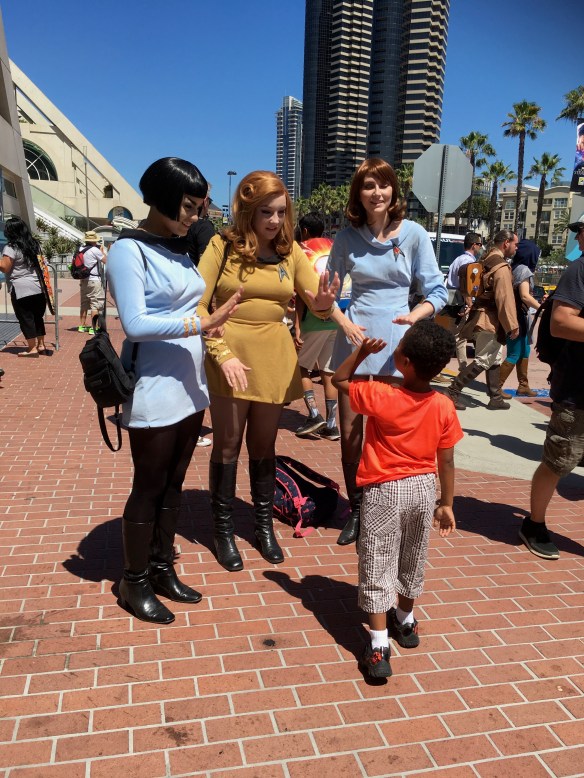
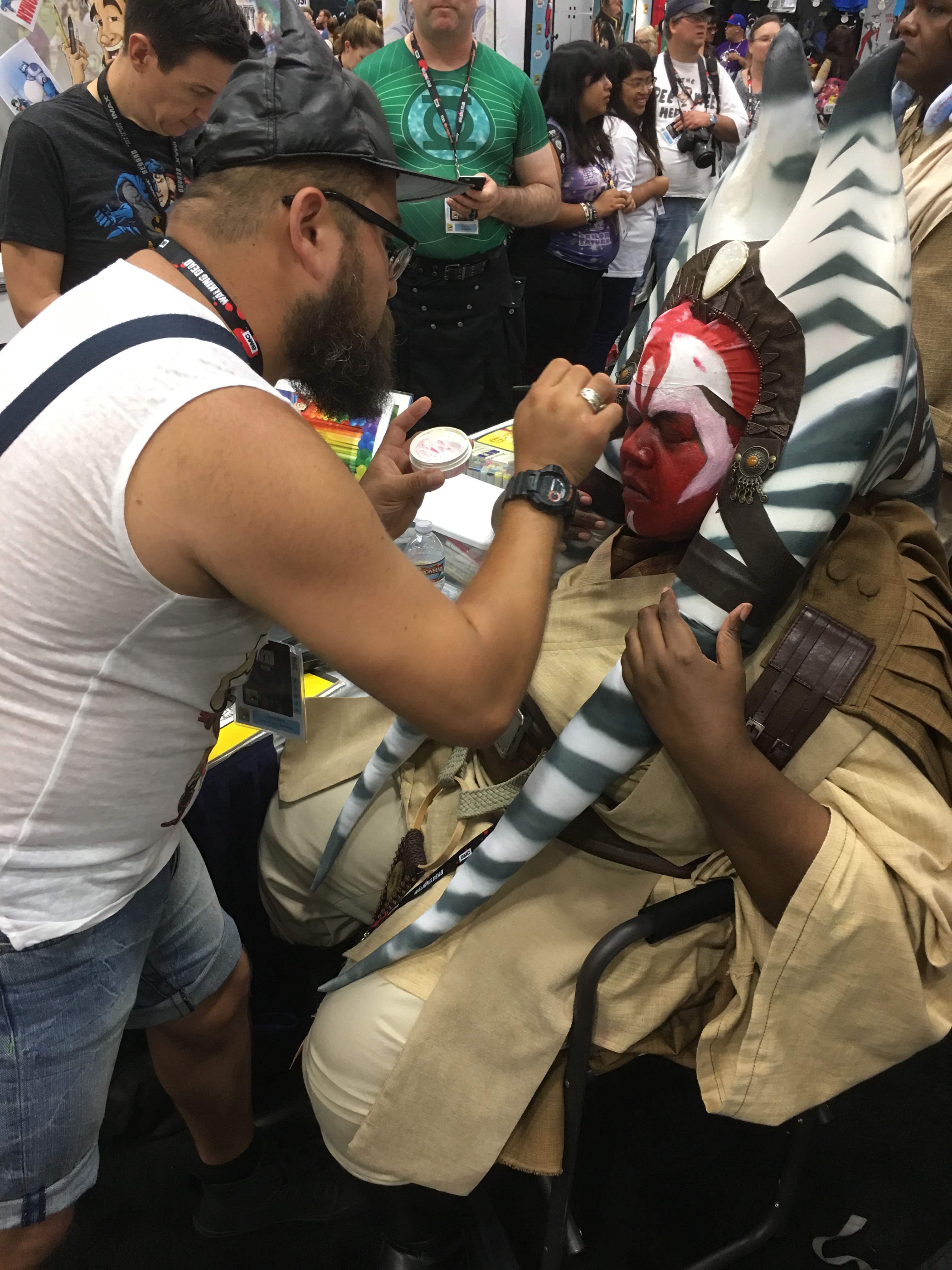
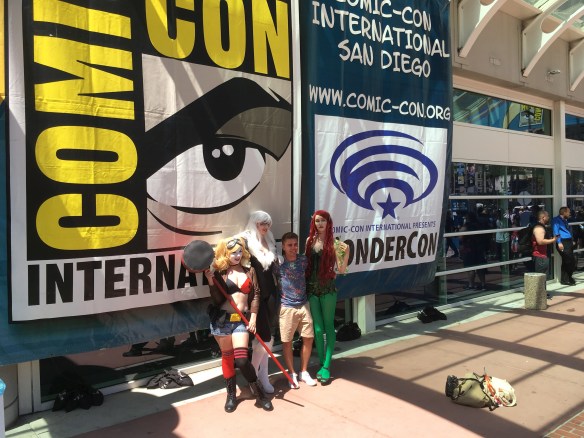
And you can choose to have that drink with Chewbacca or Captain Kirk, because Comic-Con’s strongest and most colorful attraction is, of course, cosplay, that not-too-subtle subterfuge by which anyone can be a superhero or super-villain for a day.

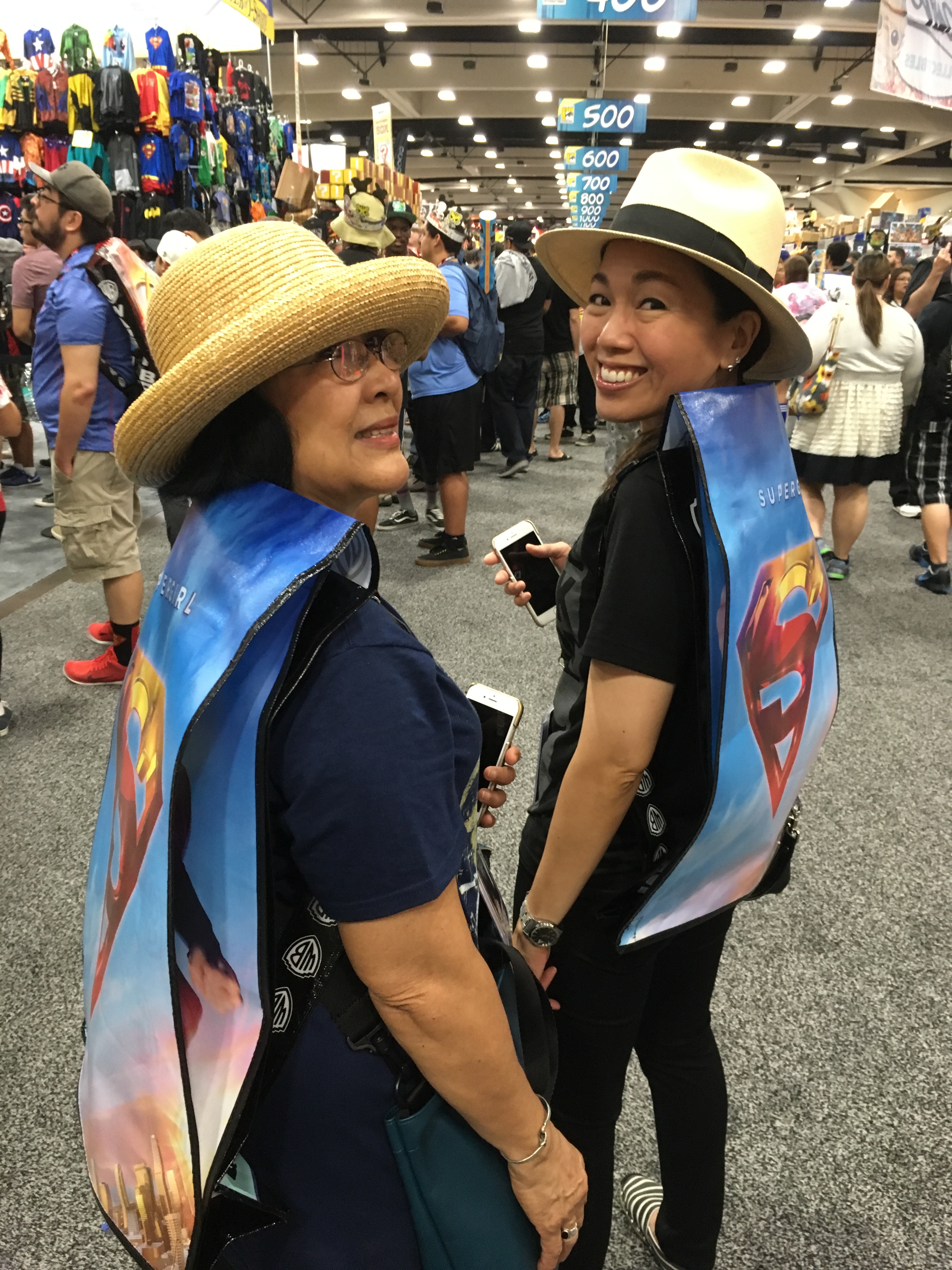
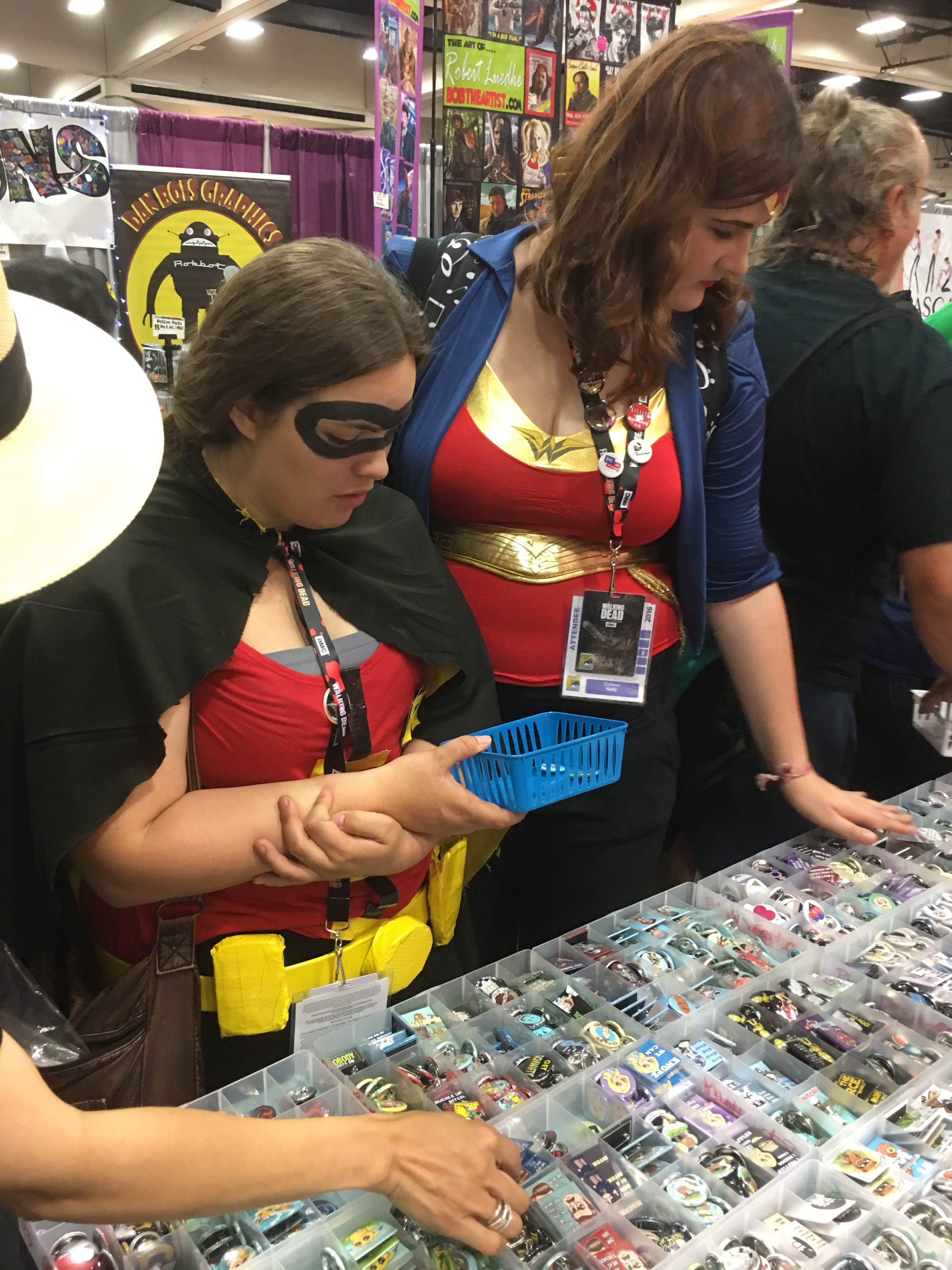
In this regard, Comic-Con 2016 more than met our expectations. There were Storm Troopers, Trekkies, Ghostbusters, and Batmen galore on the convention floor, even a Hulk, a Dumbledore, and a Silver Surfer or two. And as a couple of plus-size Supergirls demonstrated, you didn’t even need the prescribed physique to indulge your fantasy—just the costume, which the wearers had more than likely sewn up themselves, with a little help from suppliers like BuyCostumes.com (where you could be Spiderman for $44.99, or Queen Arwen for $59.99—Darth Vader will cost you more, with just the mask selling for $149.99). A day before Comic-Con opened, Demi’s nephew Matt was still busy preparing his costume and homemade weapon as the Soldier:76 character from “Overwatch,” with key components being shipped in by express courier from Hong Kong.
IMG_9059.JPG

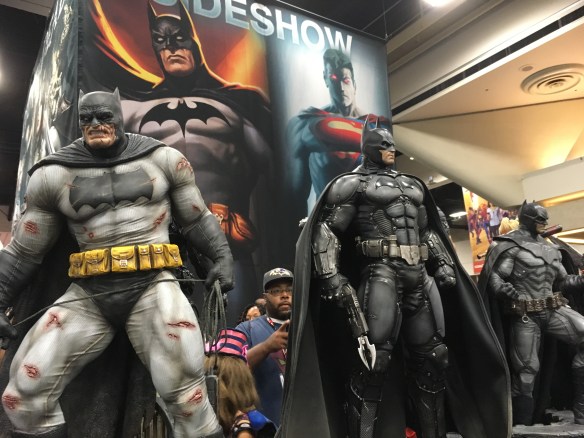
If you didn’t care to dress up as a Sith Lord but had always wanted one to park behind your bar, you could take a life-sized Darth Vader home for about $7,000, for a tenth of which you could get a silicone mask of the Ice King from “Game of Thrones.”

Comic-Con, in other words, was merchandise mania, and it wasn’t uncommon to see hardcore fans staggering out of the venue with huge boxes and bags of souvenirs. Some may have addictions that will seem very peculiar to you and me—like the people who line up at midnight for special editions of the bobble-head Funko figurines—but beyond being a passion, it’s also a business that can see a Funko character that nominally sells for $15 be worth ten times that much on eBay the morning after (more on this later).

In a corner devoted to comic-book auctions, the cover art for an August 1977 issue of Conan the Barbarian had a pre-auction estimate of $12,000—a bargain compared to $20,000 for a Watchmen page. Being oldies and cheapskates, all Beng and I could sport were our black Star Wars T-shirts, which Demi had snapped at a sale (there wasn’t much demand, predictably, for T-shirts that invited you to “Join the Dark Side!”).


It’s all about fads and fashions, and those preferences are set on a screen somewhere—the movies, TV, the Internet, the mobile phone, the vast global domain of popular culture (which is to say, still largely Hollywood). The biggest draws this year included “Game of Thrones,” “The Walking Dead,” “Wonder Woman,” “Teen Wolf,” “Snowden,” “Suicide Squad,” “Aliens” (marking its 30th anniversary), “Supergirl,” “The Flash,” “Guardians of the Galaxy,” and “Star Trek Beyond,” but there’s never a lack of fans (and merchandise) for perennials like “Superman,” “Batman,” “Star Wars,” “Harry Potter,” and “Ghostbusters.”

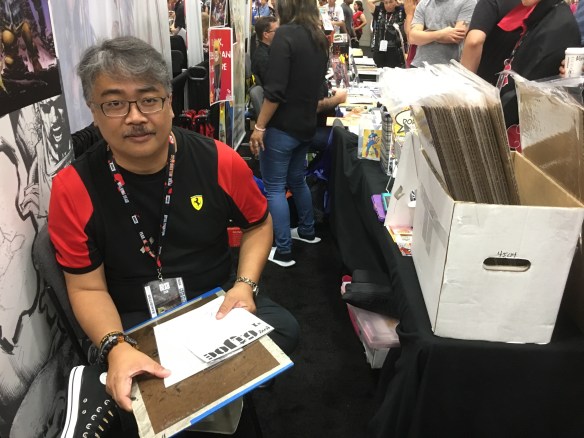
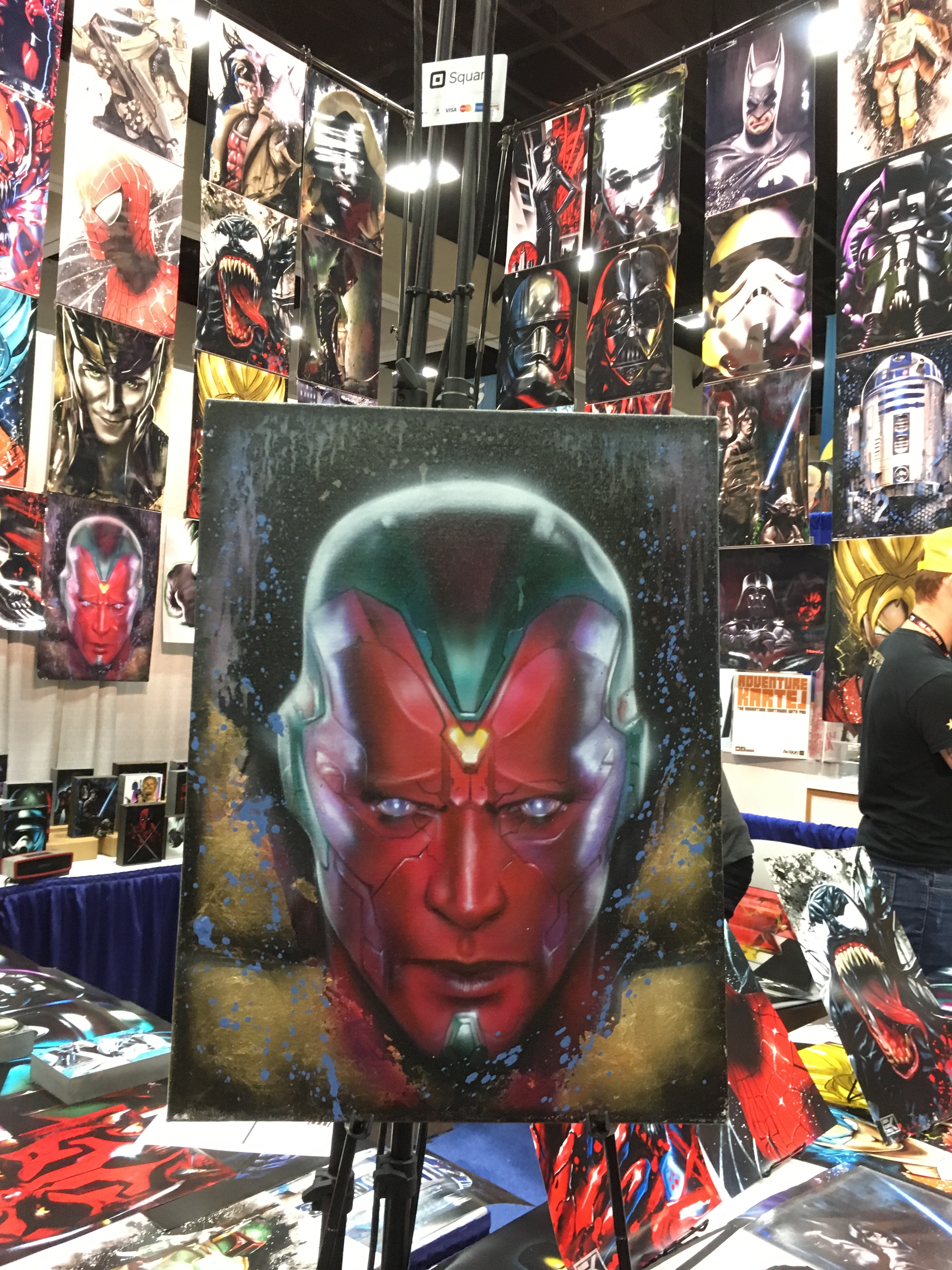
But all these blockbusters begin with a writer and an artist—a “creator,” in industry parlance, along the lines of Marvel’s legendary Stan Lee—and as another main feature of Comic-Con, these creative geniuses were gathered at the far end of the hall in the Artists’ Alley. Tipped off by my younger friends at Philmug (who were attending Comic-Con vicariously through their former chairman), I made a beeline for the booth of Whilce Portacio, one of the most accomplished Filipino-Americans in the comic-book industry.
IMG_9045.JPG

Born a Navy brat in Sangley Point, Whilce had moved to the States as a baby and had grown up in Hawaii, where his artistic talent was nurtured by supportive teachers. He came home in 1978 and studied Fine Arts at Philippine Women’s University under Ibarra de la Rosa. Not speaking Tagalog and feeling very much alone, Whilce spent the time honing his craft, and by the time he flew back to the US a few years later, he was ready for his big break—where else but at Comic-Con, which was then a much smaller event but already the place to be if you were a gifted young artist with a portfolio to show.

A Marvel editor named Carl Potts (who also had some Filipino blood) took Whilce under his wing and from there on, there was no turning back. Whilce (a shortening of William Joyce) would go on to work on Punisher, X-Factor, Uncanny X-Men, Iron Man, Wetworks, and Spawn, among many other major projects, moving up from basic inking and penciling to becoming a creator himself of such characters as Bishop in X-Men and the Pinoy superhero Grail in Wetworks.

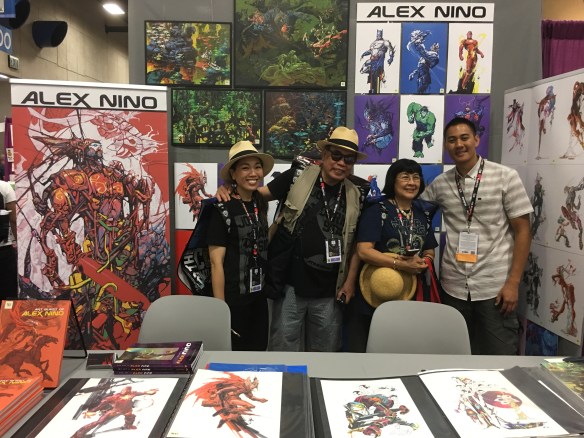
Following in the footsteps of such Filipino comics pioneers in the US as Alex Niño (who also had a booth at Comic-Con, but hadn’t checked in yet when I was there), Whilce sees himself as part of a series of waves of Filipinos who’ve excelled in the global industry. In 1995, he returned to the Philippines to set up a studio on Balete Drive, where he discovered and trained the next wave, which now includes such standouts as Leinil Yu and Philip Tan.

Indeed, another booth at Comic-Con featured the works of Philip Tan, Jay Anacleto, Stephen Segovia, and Carlo Pagulayan. While it took lucky breaks and personal contacts for people like him to succeed, Whilce says that “Today, with the Internet, young artists can introduce themselves. The bridges are now connected. The process and pipeline are now set for everybody.” (I know I promised to report on my long and very interesting interview with Whilce, but it would be a pity to summarize, so I’ll save that for another time. Better yet, come and see him in person when he flies in to Manila to grace our version of Comic-Con—the AsiaPOP Comicon, which will happen on August 26-28 at the SMX Convention Center, with tickets starting at just P550 for a one-day pass.)
IMG_9058.JPG

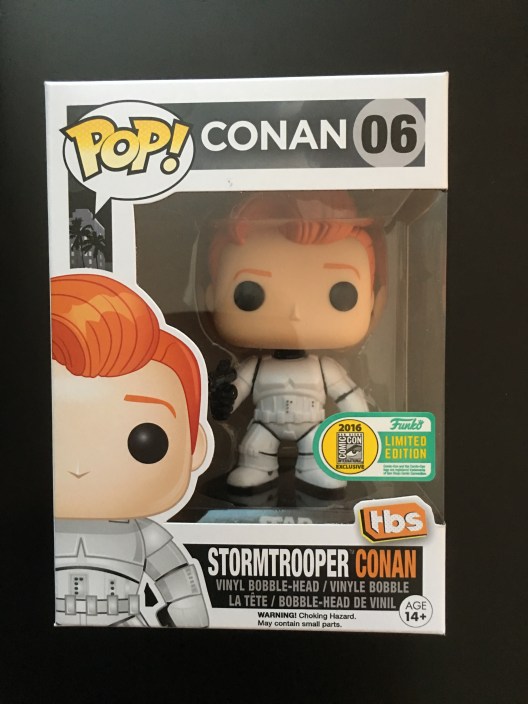
To cap my Comic-Con 2016 experience, and by another stroke of luck, our daughter Demi conjured a special pass to a live taping of Conan O’Brien’s show at the historic Spreckels Theater downtown (Conan has been a Comic-Con regular for some years now). Did I want to go? The featured guests were a surprise—the cast and crew of “Game of Thrones,” with Hodor, killed off in Season 6, getting the warmest applause. I’d have to admit that being a documentary and car-show freak, I’ve never been a fan of the series. But I had a great time watching Conan, the total pro, and every member of that audience left the theater with a Funko Conan Storm Trooper doll, which touts tried to buy at the door for a paltry $8.

Were they kidding? The dolls showed up on eBay the next day for as much as $300. I gave mine to Demi, which was the least her Tatay could do thank her for the treat of a lifetime.
 

IMG_9069.JPG

Penman No. 210: From Fantasy to Reality: Comic-Con (1)


IMG_8370.JPGPenman for Monday, August 1, 2016


IT WAS a millennial geek’s fantasy come true, except that it happened to a doddering senior with the good luck to be in the right place at the right time. As I reported last week, Beng and I were in the US last month to attend the launch of the foundation behind the prospective American Museum of Philippine Art (AMPA) in Los Angeles, and also to visit our unica hija Demi in nearby San Diego, where she’s been living and working with her husband Jerry for the past nine years.

We save up for these visits, which usually take place every year sometime in October during what used to be our semestral breaks. But with the shift in our academic calendar to the international (okay, the US) model, we timed this year’s trip for July in conjunction with the AMPA event, the sum of which was that we found ourselves in Southern California during the third week of July.

And what’s so special about that week—one marked by 90-degree-plus temperatures, water shortages, and brush fires in California’s sunbaked hinterlands? Well, as every pop-culture-savvy 30-year-old from Pandacan to Pasadena knows, it’s the time when Comics Convention International—better known as Comic-Con—takes place in San Diego, where it began 46 years ago.

So what exactly is Comic-Con, and what’s all the fuss about this annual pilgrimage attended by hordes of Earthlings, as well as presumptive superheroes and extraterrestials? It’s an exhibition, a convention, an academic conference, a parade, a pageant, a marketplace, and a film festival all at once—the world’s largest and best-known pop-cultural mecca.

IMG_8349.jpg

You might say that at 62, I had no right to be there at all, and I wouldn’t have argued, even if I’d been a staunch DC Comics fan in the ’60s who battled the Marvel masses in lunchtime chalk fights. I could easily think of half a dozen people just in my department in UP who would’ve given their right arms to be in my place, having followed every twist and turn of “Game of Thrones” and having memorized the names of every Jedi Master and Sith Lord in the Star Wars universes (the official and the expanded). These guys (and gals) take their fantasy seriously, and some of them go on from buying every issue of Batman to writing ponderous academic essays for such tomes as It Happens at Comic-Con: Ethnographic Essays on a Pop Culture Phenomenon, edited by Ben Bolling and Matthew J. Smith (Jefferson, NC: McFarland & Co., 2014).

In his foreword to that book, Matthew Pustz would recall that “When I got off the trolley in downtown San Diego, I knew just how to find it: follow the guy in the Green Lantern t-shirt. After a short walk, there it was—Comic-Con International, with the huge convention center sitting in the sun. Waiting to enter were tens of thousands of fans—all with their own strategies for making the most of what has become one of the largest popular culture events in the world. This was the summer of 2007, and I had traveled to San Diego all the way from Boston to attend something that I had dreamed about for a long time. I had attended comic book conventions before, in Chicago, Columbus, Ohio, and St. Louis. But San Diego was different, bigger, more important. This was San Diego—the Super Bowl of comic book conventions—and I was on the comic book fan’s holy pilgrimage, the trip that all fans must make at least once in their lives. This was the Gathering of the Nerd Tribes, Fanboy Woodstock.”

“Comic-Con is a fan event, but it is also a money-making extravaganza where all manner of creators, artists, and corporate owners of media products can sell and promote them to their exact target market. And this target market is one that can be virtually guaranteed to take the ‘buzz’ of Comic-Con back with them to to Iowa or Boston or Tokyo so they can ‘sell’ those products to their friends back home. Comic-Con is the ultimate merging of culture and commerce, and that makes it the perfect place to study how popular culture works in the twenty-first century.”

IMG_8380.JPG

While there are many other fantasy and pop-culture conventions—Dragon Con, for example, is a big cosplay event that takes place every year in Atlanta, Georgia on Labor Day weekend—Comic-Con is a San Diego original, run by “a nonprofit educational corporation dedicated to creating awareness of, and appreciation for, comics and related popular artforms, primarily through the presentation of conventions and events that celebrate the historic and ongoing contribution of comics to art and culture.” WonderCon, a comic-book-focused event, is held in Los Angeles.

The first Comic-Con—then known as the Golden State Comic Book Convention—was held in August 1970 at the US Grant Hotel (the grande dame of San Diego hotels, where our daughter Demi works), but it’s since moved on to the sprawling San Diego Convention Center (where Hall H alone, reserved for the biggest events, fills up its 6,000 seats) and to nearby hotels.

IMG_9048.JPG

Over its four-day run, Comic-Con 2016 was projected to draw 130,000 attendees from all over the world (and the galaxy), each of whom was also likely to spend at least $1,000 in San Diego, making it the city’s top annual grosser. Movie stars fly in to promote their projects and some celebrities like Conan O’Brien have made Comic-Con a regular item on their calendar.

Getting into Comic-Con used to be a matter of flying into San Diego and walking in through the convention door, but not anymore. According to the organizers, “Although we strive to make attending our show as easy as possible, obtaining a Comic-Con badge can require the persistence of Superman, the patience of a Watcher, the ingenuity of Tony Stark, and the readiness of Batman.” It’s hard to think of any other conference where the rules include the following:

  • All costume props and weapons must conform to state and federal law.
  • Projectile costume props and weapons must be rendered inoperable. Functional (real) arrows must have their tips removed and be bundled and zip-tied to a quiver.

Tickets to Comic-Con were sold out months ago, as were all hotel rooms in San Diego, at peak prices (“Comic-Con attendees book their rooms for next year before they leave,” Demi told us.) You don’t really buy a Comic-Con ticket but a “badge,” and to get a badge you have to pre-register online for a membership ID, with which you can then apply for a badge using a code that entitles you to a slot—well, you get the idea.

So how exactly did we get in? All I’ll say is, it pays to have a daughter in a hotel in San Diego in July. It wasn’t really in our vacation plans, but Demi decided to give a pair of seniors a special treat one morning by announcing that she could get the three of us into Comic-Con. Were we interested? You bet we were!

IMG_8362.JPG


Penman No. 208: Back to the Basics

IMG_8510.JPG

Penman for Monday, July 18, 2016


I’M VERY happy to report that on this my last three-year term as director of the University of the Philippines Institute of Creative Writing (UPICW), a number of key improvements in our programs will be taking place very soon that should bring creative writing closer to both its producers and its audiences. Much of this is made possible by support from UP’s Emerging Interdisciplinary Research Program (EIDR), a visionary fund initiated by UP President Alfredo E. Pascual and implemented by the Office of the Vice President for Academic Affairs headed by Dr. Gisela P. Concepcion.

Most significantly, we will be expanding our workshops to include an annual Basic Writers Workshop aimed at developing new and younger writers, and offering, every other year, a seminar for teachers and another for translators. We will also be holding, every semester, an Interdisciplinary Book Forum to bring together experts from various disciplines in a discussion of vital Philippine issues.

These new projects will supplement our regular flagship activities—the National Writers Workshop, held every summer for mid-career writers; the Likhaan Journal, an annual publication that showcases the best of new Philippine writing; the Akdang Buhay series of video interviews of Philippine literary luminaries; and panitikan.com.ph, the website we maintain as the world’s portal to Philippine literature. The UPICW also oversees the annual Madrigal-Gonzalez Best First Book Award and supervises the Gonzalo Gonzalez Reading Room (where our office has been temporarily housed since the Faculty Center burned down last April), and runs the Panayam lecture series featuring our fellows, associates, and advisers.

It’s a lot of work on top of our regular teaching and writing jobs, but it’s what a university-based writing center or institute is meant to do, and the UPICW—established in 1979—is a regional pioneer and leader in this respect, perhaps best known for the UP Writers Workshop that began in 1965 and which has taken place every summer for more than half a century since then. Generations of Filipino writers have gone through this workshop as a rite of passage, and workshops like it have sprung up in other places and universities around the country (the Silliman University workshop in Dumaguete was the first in 1962, and is still going strong).

About ten years ago, the UPICW decided to set itself apart from the other workshops and to perform a unique service to the writing community by focusing our summer workshop on mid-career writers—people with at least one published book or theatrical or film production to their credit—so we could deal with more advanced issues in writing and publishing. It’s been great so far, and we’d like to believe that we’ve helped to sustain the growth of Philippine literature in this time of global challenges and opportunities, but then again we keep remembering how critical the UP workshop’s intervention was in the lives and careers of young writers just starting out, as we all were at one time.

That’s why we agreed to bring back the beginners’ workshop—we’re calling it the Basic Writers Workshop for now, but we’ll think of a better name in the future—to touch base once again with our most promising young authors. And we’re going to do this very soon—over three days, from October 14 to 16, somewhere in the vicinity of the UP campus. Because it’s directed at younger writers—you’d have to be between 18 and 35 years old as of August 15, which is also the deadline for applications.

For our first BBW, we will be looking for works of speculative fiction—a popular genre that can be defined as defined as “a broad literary genre encompassing any fiction with supernatural, fantastical, or futuristic elements.” (Next year, we’ll most likely do young adult fiction). Applicants should submit two original, preferably unpublished stories in the genre in English or Filipino, with each story (which could be an excerpt from a novel in progress) running between 3,000 and 10,000 words. . Applications must be accompanied by a short CV providing the applicant’s contact details, education and employment history (if any), and list of published works and awards (if any). The stories and accompanying CVs must be submitted online to uplikhaan@gmail.com. We’ll be taking in six writers in English and six in Filipino, and successful applicants will receive a modest stipend, as well as board and lodging at the workshop venue.

The Workshop Director is Charlson Ong, with award-winning writers Eliza Victoria, Nikki Alfar, Willy Ortiz, and Vladimeir Gonzales serving as panelists and teaching staff. For inquiries, contact 9818500 (2116) and look for Luna Sicat Cleto, Deputy Director of the UP ICW, or email lcleto9@gmail.com.

We’re still planning out the teachers’ and translators’ seminars—tentatively set for January 2017 and 2018—but they’ll involve upgrading the skills of our high-school and college teachers in teaching new K-12 subjects like Creative Nonfiction, as well as developing more and better translators of texts (not necessarily just literary texts) between Filipino and English and possibly other Philippine languages. These seminars will acknowledge the key roles teachers and translators play in bringing new works and new knowledge to larger and younger audiences,

The UP Interdisciplinary Book Forum, which will start in September and be held every semester over the next two years, is another new project we’re all excitedly looking forward to. The forum will be based on a book recently published by the UP Press on a subject of broad interest, alternating between literary and non-literary titles. What will distinguish the forum will be a panel discussion on the book comprising experts from various fields such as anthropology, law, economics, biology, and medicine.

Our EIDR support runs for two years, possibly renewable for another two, so it’s going to be a very busy and interesting interlude in the history of the UPICW, and by the time we turn 40 in 2019—which is also when I retire from full-time teaching—we should have gone that much farther in realizing our mission of nurturing new writing by Filipinos for Filipinos and for the world.


Penman No. 207: The Best Student Speech Ever

66Lee2.jpg

Penman for Monday, July 11, 2016


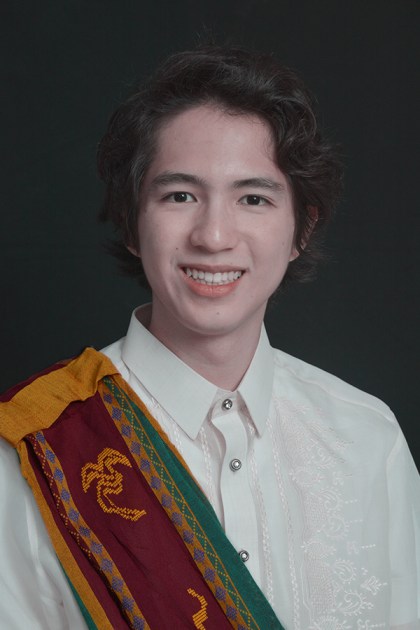
I THOUGHT that the commencement speech I recently gave before the University of the Philippines’ College of Science graduates (excerpted here last week) was pretty good, but it was the student response given by Isaiah Paolo Lee (BS Molecular Biology and Biotechnology, summa cum laude)—known to his friends and teachers as “Pao”—that blew my socks off. I later emailed Pao to say that it was the best student speech I’d ever heard, and asked him for a copy to share with my readers, so here it is, and I hope this goes viral. (Pao acknowledges that his sister Jillian helped him along with the speech—hurray for sisters!)

My name is Isaiah Paolo Atienza Lee, and I am not your valedictorian. I am not the best, I am not the brightest, and I am here speaking to you right now because all the other summas backed out. I’m somehow supposed to talk to you about honor and excellence, so let me start with my story.

When I was in first year, I almost got kicked out because of Chem 16. I wasn’t even bad at the class. I just had a habit of scribbling on my forearm during exams, which was—in hindsight, understandably—interpreted as cheating. After an unchecked exam and a lot of stress, I ended up with a diagnosis of Asperger’s syndrome. On the whole, it was a less than ideal way to get psychological support and an 1.00 in Chem 16, but I didn’t fail the class, I didn’t get dismissed from UP, and I didn’t jump off a bridge. I could have, but I didn’t. That might not sound a lot like honor and excellence to you, but that’s the point.

The College of Science is made up of brilliant people. We can’t deny that. The College of Science is also made up of people who pretend to be engineering majors when questioned about their student numbers and people who tasted their Chem 16 unknown analysis samples out of desperation. We can’t deny that either. And we all answered our exams on bluebooks that might have varied in paper quality and might have shown different scores, but they all had the same message printed on the front: University of the Philippines, 1908, Bird, Honor, Excellence.

Our valedictorian is Mao Leung. He has a weighted average of 1.0375 and a girlfriend. I do not have a weighted average of 1.0375, and most of you won’t either. I’m not going to talk about who doesn’t have a girlfriend, because this is supposed to be a happy occasion. Mao Leung is a great guy, but we can’t all be like him, and that’s okay.

Prodigies are a curse for those who need a curve on the exam to pass and a blessing for the general public; as a whole, people tend to look at the people with the best averages and pin all the country’s hopes on them, leaving the rest of us to wonder what we’re supposed to do. The truth people have difficulty wrangling with is that not only do we not need a messiah, messiahs cannot solve our problems. This country just needs honor and excellence from every single one of us, every single day. Whatever it is you do, do it well, and do it for the people.

Are you going into a career in science? There might be days when you have to run PCRs from 7 to 12. That’s 7 in the morning to 12 midnight, by the way. Do it. There might be times that your graphs would be publication-worthy if only you could get rid of one annoying data point. Don’t do it. That is honor and excellence.

Are you going into medicine despite your teachers’ laments? You might end up spending most of your nights running on adrenaline and Dunkin’ Donuts because you have to stay in the hospital. Stay. There might be an occasional addict suffering from a shabu overdose that you have to tie down to a stretcher because he won’t stop kicking you. Treat him, and treat him again when he comes back. That is honor and excellence.

Are you going to get a girlfriend because studies first no longer applies? She might be angry at you for no easily identifiable reason. Stay calm, listen, and talk things out rationally. After an argument about taking relationship advice from some guy who was supposed to give a valedictory address, you might see a book she would like. Buy it for her. That is honor and excellence.

Are you going to be a full-time parent because you had a successful relationship? You might proudly send your child to UP only to learn that your precious iskolar ng bayan has turned into a class-cutting, DRP collecting, tuition-burning machine despite your warnings. Wake them up in the morning, give them their allowance, and support them without nagging. See to it that they march and that you get to be with them. That is honor and excellence.

Are you just thinking of going to UPTown Center for a celebratory dinner after this is done? You might have a hard time parking because, wow, that is a lot of people. Don’t hog the disabled parking spaces. You might be hungry because the ceremony was too long and parking was nigh impossible because you left the wheelchair spots alone. Be nice to your waiters. They have names. Address them by name, follow up your orders without snapping at them, and say thank you the way you would like to be thanked for doing a good job. That is honor and excellence.

Are you going to do anything at all in your life? Whatever it is, do it well, and do it for the people. Do it well if doing it well is clocking in 70 hours a week at a world-class research institution. Do it well even if doing it well is just staying awake for five more minutes to finish a chapter or a boring lecture. Do it well when it matters, and do it well even when it doesn’t. And do it for the people. Do it for the people even if you don’t like the people. Do it for the marginalized even when they don’t appreciate it. Do it for the privileged even when they cause Katipunan traffic. Do it for the people whether the person in question is a drug addict in the emergency room or your waiter at UPTown Center or a stranger on the internet or even just yourself, because it’s not about the gratitude, or the credit, or the reward, but about the people, and the work. That is honor and excellence.

The unphotogenic, non-headline-grabbing, narratively-unsupported fact is that large-scale change happens in fits and bursts and stops, and often on a scale you can’t see with an electron microscope. We hold ourselves up to unreasonable standards and are subsequently disappointed most of the time, when what matters is the work we do in increments, the lab hours that we log, and the people we encounter.

You might not make your own transgenic crops, but you can disabuse your family of any erroneous notions they may have about Bt talong. You might not eradicate crime in 3 to 6 months, but you can avoid catcalling. You might not make it to the newspaper’s front page, but you can make it to your mom’s proud parent Facebook post.

We often look to larger-than-life figures to celebrate honor and excellence, from Miss Universe to near-perfect-GWA graduates. I’m not saying it’s wrong to do so, but I believe the first place to seek it is within ourselves.

My name is Isaiah Paolo Atienza Lee. I am not the best, but I am good enough, I am not the brightest, but I am a UP graduate, and I am not your valedictorian, but I am going to tell you all to go out there and show the world what we’ve got.

[Photo from the UP Diliman Information Office]


Penman No.205: Sojourn in Seoul (2)

IMG_8666.jpg

Penman for Monday, June 27, 2016


HAVING PLANNED our trip to Seoul months in advance, I made a point of touching base with some local contacts for possible meetings—something I usually don’t do, wary of disturbing people with my unseasonable presence. But with a week to kill in one city and with some longstanding connections in place, I thought it would be even more ill-mannered if I didn’t at least tell them that I was going to be in town.

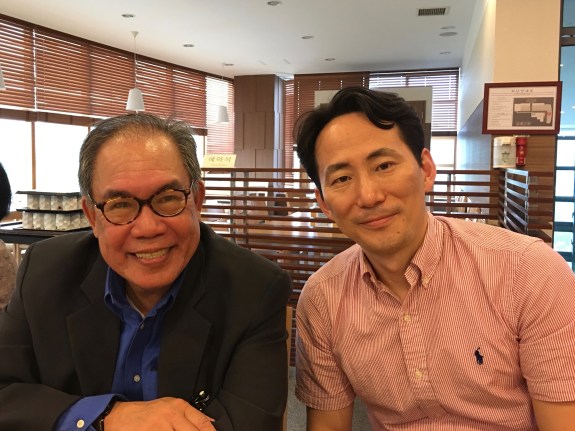
One of those connections was Dr. Sukjoo Sohn, who teaches English at Dong-a University in Busan, Korea’s big industrial center four hours by train from Seoul. Sukjoo—a specialist in world literature—happens to be married to Catherine Rose Torres, one of our bright new young fictionists who now serves as First Secretary and Consul at our embassy in Berlin. I’d first met Catherine in 2011 when I attended the Singapore Writers Festival and she was with our embassy there, and I was later very happy to write a blurb for her first book, Mariposa Gang and Other Stories (UST, 2015).

It’s really these personal connections that make for global literary networking, the value of which I can’t overemphasize. In 2014, Sukjoo translated one of my stories for publication in Global World Literature, which is put out by some of Korea’s foremost literary scholars and critics in that area. Through Sukjoo, I was also able to contribute an article to the Korea-based journal Asia, in which I wrote about some of our most gifted and exciting younger writers. As a result of that article, one of our best young non-fictionists, Sandra Nicole Roldan, will be visiting Seoul this week to attend the 2016 Asia Literature Creative Workshop.

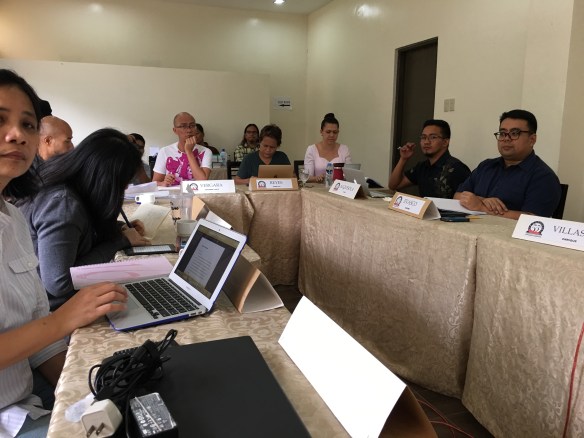
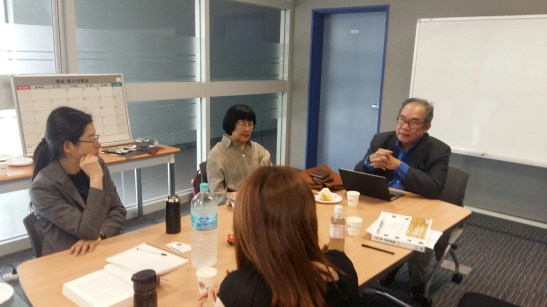
And so our connections continue and deepen. When they learned that I was visiting Korea, Sukjoo’s organization invited me to a special meeting, so I could tell them more about Philippine literature. That gathering took place at Seoul National University toward the end of our visit, and a very fruitful and engaging encounter it turned out to be. Perhaps I shouldn’t have been surprised, but their very first question had nothing to do with lyric poetry: “What do you think of your new President, Rodrigo Duterte?”

It will take more than this column to share my answer with you, but suffice it to say for now that we talked about our colonial history, our Catholic predisposition to suffering, the two Joses (not me) by which our literature is best known overseas, class as the key divisor in our literature and society, Korea’s and the Philippines’ shared experience of dictatorship, and the irony of having to deal with a resurgent Park and a resurgent Marcos, and our younger writers’ affinity with Gaiman, Murakami, and Wattpad.

We discussed my translated story, “In the Garden,” which I’d written in the 1980s about militarization in the countryside and the moral duty of a teacher caught in the crossfire. While the topics were unavoidably contentious, our meeting itself was thoroughly pleasant and mutually informative, capped by dinner, shop talk, and, yes, chatter about Lee Min-ho.

meeting 2.jpg

The second highlight of our visit—away from the malls and the flea markets—was a meeting with the Filipino community in Seoul, which had also been pre-arranged by Catherine through her Seoul colleague, the very capable Third Secretary and Vice Consul Ella Mitra.

It was a Sunday—our last full day in Korea—and much to our surprise, the embassy was open and bustling with people, with a wedding taking place right in Ella’s office. (“We can officiate at weddings,” Ella told us, “as long as the two parties are both Filipino citizens. We’re open on Sundays because that’s when most of the community can come.”) There were over 40,000 Filipinos in Korea, Ella informed me, many employed as factory workers in jobs that the locals themselves prefer not to do.

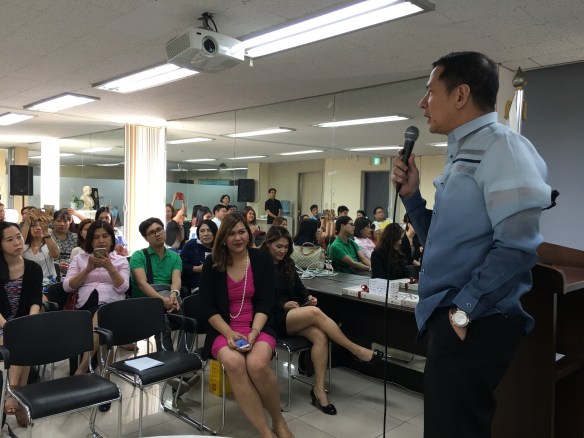
I’d been asked by the embassy to give a reading for the community—something I love to do whenever I’m abroad, as it puts me in touch with ordinary Filipinos striving to do their best in often very challenging circumstances. The Filipino, I like to say whenever the opportunity arises, is the modern-day Ulysses, roaming recklessly to the farthest reaches of the globe, but imbued with an unfailing sense of home. Now here they were, a crowd that filled the room beyond our most generous expectations—professionals, teachers, graduate students, Filipino-Korean couples, even the Ambassador himself, the dapper and articulate Raul Hernandez.

IMG_8681.jpg

The embassy had calendared my reading as its second Sentro Rizal activity, and with June 12 coming up, it seemed a good time to remind ourselves of the things that both divided and united us, and of the need to hang together as Filipinos, at a time and in a region of revived nationalisms. Even so I chose to do a very light reading, one that made fun of my own social ineptitude in cross-cultural situations, and thankfully it went over well with the audience. More than the reading, it was the ensuing Q&A and freewheeling chat over pancit and puto that proved most gratifying. I could sense the community’s strength of spirit, its determination to master a new cultural terrain.

I was especially happy to see a former student, Tech Apognol, now doing an MA in International Relations and speaking Korean. She’s hardly alone; the association of Filipino grad students in Korea now numbers 500, I was told, and there were plenty of masteral and doctoral scholarships for those inclined. “We can take classes in English,” one student named Eve told me.

Another grad student named RJ solved a mystery that had been bugging me for 40 years. Back then, I told him, I was a young writer employed by the National Economic and Development Authority, and one of my tasks was to help edit the Five-Year Development Plan, which was thicker than an encyclopedia because of its bloated prose. On the other hand, I recalled, the South Korean development plan that I used as a reference was no bigger and fatter than a paperback novel—and look, I told RJ, where Korea was now. “Ah, that’s easy,” RJ said. “It’s because the Koreans value brevity, and memos are expected to be no more than a page. The higher up the ladder papers go, the more concise they’re expected to be.”

The shopping was fun—just the flea markets for us, please, not the high-end shops—and the streetcorner food delicious, but it was, ultimately, our encounters with the people that added the most value to our visit. Kamsahamnida, Sukjoo, Cathy, Ella, and Tech for these memorable exchanges.

Penman No. 203: Another Filipino Winner at the IPSC

unnamed.jpg

Penman for Monday, June 13, 2016


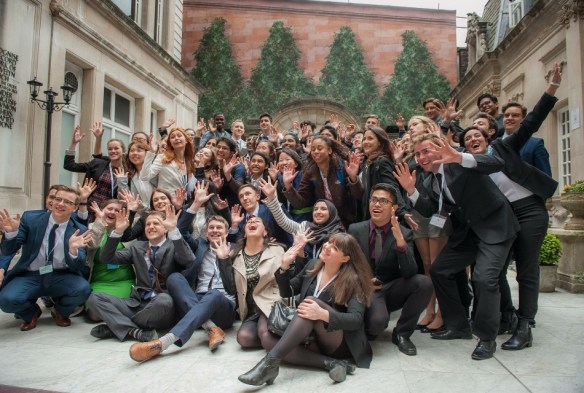
EVERY MAY, at Dartmouth House in London, about 60 young men and women from all over the world gather to represent their respective countries at the International Public Speaking Competition (IPSC). Sponsored by the English Speaking Union (ESU), the IPSC is the world’s premier public speaking event for young people, bringing together the best minds of their generation to share their ideas about the planet’s most pressing concerns.

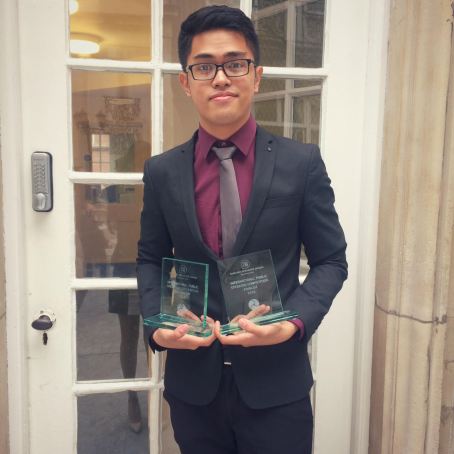
The Philippines has been sending representatives to the IPSC since 2002, and was granted International Charter Membership in October 2005. As a country we have performed superlatively, producing two world champions and at least four semifinalists. This 2016, I’m very happy to report that we notched another spectacular achievement, with Marco del Valle being named global first runner-up, after the representative from Mexico.

Just 20 and a Business Administration junior at UP Diliman, Marco is no stranger to competition, having already won six titles in business and marketing competitions, including the Henkel Innovation Challenge in Vienna, where he and his partner represented the Philippines and also placed second. Marco’s success comes as the latest in a long string of stellar finishes for young Filipino public speakers at the IPSC.

In 2004, 17-year-old Patricia Evangelista stunned everyone when she was named IPSC champion, presaging a successful career in print and broadcast journalism. In 2008, Gian Karlo Dapul became our second world champion at the IPSC, besting 57 other participants from 35 countries—an achievement made even more remarkable by the fact that he was only a Philippine Science High School senior then, competing against mostly college students. (The third-place winner that year, Rajab Ali Sayed of Pakistan, turned out to be half-Filipino.) In 2012, Bryan Chua made it to the semifinals, as did Germaine Chuabio in 2011, and Ervim Charles Orbase in 2010. (In 2012, Hong Kong’s representative in the finals, Ramon Joseph Valentin Romano, was actually a Filipino born of migrant parents.)

This year’s Philippine participation at the IPSC was made possible by the generous support of longtime partners Pilipinas Shell and Far Eastern University, led respectively by Ed Chua and Lourdes Montinola, who both sit on the board of ESU-Philippines. ESU-Philippines Chairperson Gigi Virata and President Marlu Vilches ably led this year’s selection process, along with ESU-Philippines regulars Linda Panlilio, Krip Yuson, and myself. As elated as we were by Marco’s performance, our joy was overshadowed by the recent and unexpected passing of two ESU-Philippine stalwarts—Ambassador Cesar Bautista, our chairman emeritus, and Loline Reed, who had very patiently and kindly guided our representatives in London, along with her husband Ken.

This year’s theme for the IPSC finals was “Integrity has no need of rules,” and Marco drew deeply on his personal experience to address the topic, declaring at one point that “Too often, we demonize people… who don’t live by our religious or social rules. But moral integrity isn’t about obeying rules. It’s about recognizing the fact that while we all make mistakes, we’re all capable of rising above them.”

He explains further: “Overall, my speech was about my relationship with my family, particularly my mother. In the speech (which is the same speech I gave for the national finals), I talked about the sacrifices my mother made in the face of different social norms, the same sacrifices that millions of people make every day. I talk about how our culture stigmatizes families who don’t fit the norm, and how that makes it harder for these families to function. I conclude, however, that the sacrifices we make for those we love will always outweigh any rules or social norms we might break.

“I’d have to say that my favorite part of the whole experience was getting to know the other contestants and hearing their stories. It’s one thing to place countries on a map, but it’s an entirely different thing to actually be roommates with someone from Serbia, to learn about Moroccan weddings and Estonian startup culture, and to hear stories of African democracy as told by someone from Ghana.

“As we went through the competition, I think the feeling we all got as contestants was that we weren’t competing against each other as much as we were sharing our own experiences. I was really happy to be able to show a bit of my culture to the world and share what makes Filipino culture special. Yet when you hear speech after speech from so many brilliant young minds around the world, you start to realize that there’s really not that much which separates us from other countries: we share the same dreams, the same fears, and the same ambitions. Above all, this is what I think the ESU IPSC really helped showcase: that it’s possible to celebrate our differences as individuals and as nations, while also respecting and recognizing the things we have in common. And in a world where fear and intolerance are rapidly becoming the political weapons of choice, I think it’s a lesson more people should learn.

“When I entered this competition, all I really hoped for was the chance to share my story and talk the causes I believe in. Thankfully, I’ve been given the chance to do so much more. Winning 1st runner-up is, for me, more than just a personal accomplishment. It’s a chance to show the world that the Filipino spirit is capable of anything.”

Marco’s IPSC experience mirrors that of his predecessors, most of whom have gone on to distinguished careers in public service, media, education, and business. Dr. Renzo Guinto of UP Manila, our IPSC representative in 2008, recalls that “I learned to understand, appreciate, and respect cultures and perspectives that are different from my own, which in turn bolstered my sense of empathy. I could say that the ESU contest played a crucial part in preparing me to become the global health advocate that I am today.”

Ryan Kaliph Buenafe, who as an FEU student was our first IPSC contestant in 2002 and who now serves as Global E-Learning Manager for the TelePerformance Group, attests that “The ESU content was about practice, revisions, then more practice and more revisions. Preparing for it meant that I had to tell a compelling story and message in a limited amount of time and engage the audience so they would be inspired by my story. This is not easy when you’re young. There’s no Wikipedia or Google shortcut. I had to work hard, then practice and revise. This is, as I have found out as an adult, a great preparation for life. We practice what we do so we can do it better and allow others to share their greatness (such as Dr. Jimmy Abad and Krip Yuson who helped me improve and revise my speech). It is our small but significant opportunity to share with the world, on a global stage, the story of our people and our selves…. If we are to learn from history and combat terrorism and hate, we need to connect as one people. ESU is a forum where such a connection is made possible and it has been the greatest experience of my youth.”

We can only hope that more young Filipinos like Marco will emerge to speak for the Philippines on the global stage and be heard for what they have to share. Mabuhay!

image2.PNG

(Photos by Giulia Rampinelli)

Penman No. 202: A Workshop on Mt. Makiling (2)

IMG_8512.jpg

Penman for Monday, June 6, 2016


AS I noted last Monday, this year’s UP National Writers Workshop—which we held from May 22 to 29 on Mt. Makiling in Laguna—was one of our best in recent years, with a new batch of vibrant literary talents emerging to stake their claim on our attention.

Aside from the three women writers I mentioned last week—Elena Paulma, Mina Esguerra, and Celine Fabie—we had nine other fellows presenting fine, exciting work: new projects in various stages of completion, submitted for review and comment by their peers and seniors for possible improvements in both design and execution. These works were accompanied by a brief presentation of the writers’ “poetics”—their own appreciation of how and why they write what they write. While very few outside the workshop will ever get to read them, those poetics are often gems of creative insight, a rare look into the minds of writers trying to understand their own process of writing.

Poet Vijae Alquisola, for example, grounds his collection titled “Paglasa sa Pansamantala” (which I’ll loosely translate as “Savoring the Temporary”) on painful personal experience (and here again I’ll translate what he wrote, as I will other texts in Filipino): “Temporary was the answer my siblings and I held on to over the long stay overseas of our mother. Even if I didn’t know how many nights of sleep or days of waking temporary meant—and even if it was never clear what stretch of months or days it occupied on the calendar—we had no choice but to accept it. She had to go to Hong Kong to feed us. She had to leave so we could live, just for the time being.”

Novelist RM Topacio Aplaon (Topograpiya ng Lumbay, The Topography of Loneliness): “I feel liberated by the very act of writing because this is the only place where I can be true to myself, the only way I can freely say anything I want, can do anything I may have no right to do in real life, can chronicle moments I wish never to forget: place, feeling, image, sensibility.”

Poet Vincent A. Dioquino (“we never understood proximity”): “Language is that space where the imagined thrives, where the imagined is held closer to the body, saying what the body cannot speak of. It is that consciousness by which feeling and thought are evoked, a mediation from the abstract to the more concrete., or from a plurality of concrete and particular objects (that is to say: texts, or a set of inscriptions aspiring towards the textual). Language is being made immanent and tangible, threatened with decipherment. It is this specific occurrence of language that is rendered visible and visceral in poetry.”

Poet Francisco Arias Montesena (“Iluminado”): “I write poetry as a part of my being, as an attempt at things I cannot achieve in reality. Often I have to find time and space for poetry in the midst of my work as a teacher, but I have to do myself this favor, knowing that I have to share what I have, even if I have much to learn, despite my shortcomings. How can we begin to fill this need if we cannot mine words for love?”

Novelist Rolly Rude Ortega (Rajah Muda): “I write the stories that I want to read, and I want to read more stories about the Moros, specifically the Maguindanaos, and the lumads, specifically the Dulangan Manobos. The Ilonggos of Mindanao, the Maguindanaos, and the Dulangan Manobos are all significant to me because these people had been part of my life even before I decided to become a writer. Growing up in Kulaman Plateau, I saw firsthand that while the Ilonggos and other Christian tribes were poor, the Manobos were poorer still, which should not have been the case, for they had been living in the resource-rich land long before the migrants came.”

Writer for children Cheeno Marlo Sayuno (“Super Boyong Wears a Malong”): “I love writing for children and (writing about) culture. I would like to share with the children the beauty of our cultural heritage. While the advent of modernization is nothing but inevitable and even if cultures change and evolve, I want the children to still see the colorful costumes, dances, and songs from the past, hoping that it would help in developing a sense of nationalism and appreciation for Indigenous communities.”

Poet Melecio F. Turao (“The Antimodel”): “I have a soft spot for the outsider, for things on the periphery, the ignored, the unrecognized. In my silent heroic moments, I tell myself that I champion the cause of second fiddles. I remember that Cirilo Bautista gave up writing poetry in 2000, saying we live in a prosaic world. I tend to agree so far as our predictable lives go. But a poet should be able to see through appearances. So I pushed myself to try to understand what compels me to write. And it hit me that I would have been a good student of psychology or cognitive science because I amplify awkwardness, alienation, resentment, loathing, desire and failure. I trivialize the hypocritically serious and structured. Thus, The Antimodel.”

Playwright Visconde Carlo Vergara (“Hula Hoop”): “Since I work in comics and plays, writing description isn’t my strongest suit, but people have complimented me on how natural my dialogue sounds, or reads. This I credit to being used to listening and mirroring, ever since I was a kid, as well as having that stint as a theatre actor in the nineties. I would write my drafts purely in dialogue, and simply imagine what it would look like when played out. In acting out the play in my mind, I would also do the acting myself by reading the dialogue out loud in the personalities of every character, just to test if the words rolled off the tongue well enough, and if the sentences had good rhythm.”

Poet Enrique S. Villasis (“Manansala”): “A solution I saw (for the collection) was to bring the poems closer to the times when the paintings were executed. As historical artifacts, Manansala’s many-layered lights and colors could be seen as signifiers of the disturbances, dangers, sufferings, dreams, and desires of his age. This collection is my attempt as a poet to explore the relationship between an artwork and its period, as well as an attempt of the poet to assume the mask of a critic, historian, and curator.”

It was a pleasure and a challenge taking up these writers on their given premises and seeing how closely their grasp matched their reach. (And it was no huge problem if they didn’t: in a workshop, everything is negotiable, even one’s original design, although no one is under duress to accept alternative suggestions.)

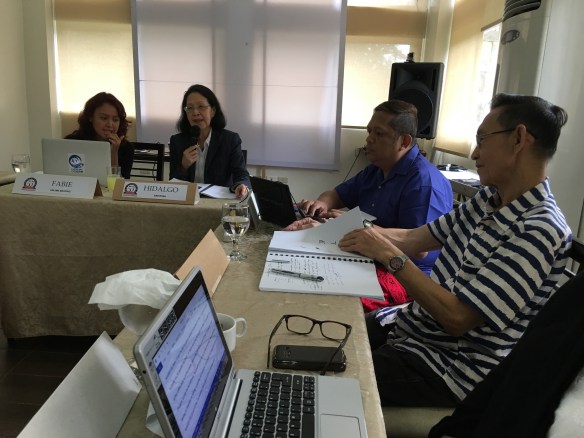
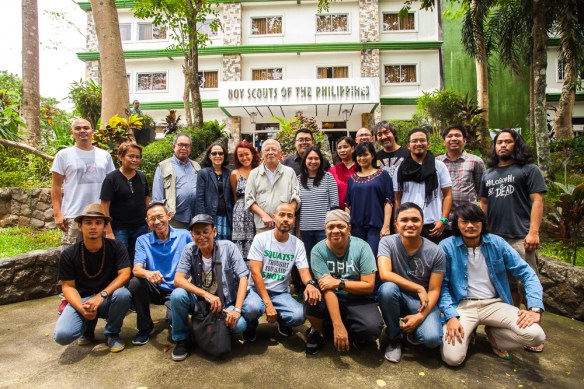
I’d like to thank my fellow panelists—National Artists Bien Lumbera and Virgilio Almario, and fellow UP professors and faculty members Jimmy Abad, Jing Hidalgo, Neil Garcia, Vim Nadera, Jun Cruz Reyes, Luna Sicat, Eugene Evasco, Issy Reyes, and Vlad Gonzales—our hosts at UP Los Baños, the National Arts Center, and the BP International Hotel, and of course the UP Diliman and UP System administration for another worthwhile effort at enriching the future of Philippine literature.

Penman No. 201: A Workshop on Mt. Makiling (1)

_MG_6720.jpg

Penman for Monday, May 30, 2016


FOR THE first time in ages, the UP National Writers Workshop—a project sustained without fail by the University of the Philippines since 1965—is being held away from its traditional venue in Baguio, this time on the foothills of Mt. Makiling in Los Baños, where UP has another major campus. The UPNWW has risen to become the premier workshop for mid-career writers in both English and Filipino, and by “mid-career” we mean writers who have published or are in the process of publishing their first book. Typically these are writers in their 30s and 40s who may be employed in jobs having little or nothing to do with creative writing, who may be teaching, or who may be simply stuck in a rut waiting for that push or kick to resume a stalled love affair with letters.

Toward December every year, we—meaning the UP Institute of Creative Writing, which runs the workshop and which I head as director—put out a call for applications for qualified writers to join the week-long workshop. No one gets a free pass—no matter how good you are or how many books you’ve published, you have to go through the application process and submit an excerpt from a work in progress and a short essay on your poetics (in other words, why you write what you write).

I could tell, even from the applications, that this year’s batch was one of the best we’ve put together in recent years. In it are Vijae Orquia Alquisola (poetry, Filipino), Celine Beatriz Fabie (CNF, English), Rolly Jude M. Ortega (novel, English), RM Topacio Aplaon (novel, Filipino), Vincent Abejuela Dioquino (poetry, English), Francisco Montesena (poetry, Filipino), Melecio Turao (poetry, English), Ma. Elena Paulma (CNF, English), Mina V. Esguerra (fiction, English), Cheeno Sayuno (children’s fiction, English), Enrique Villasis (poetry, Filipino), and Visconde Carlo Vergara (drama, Filipino).

We’re midway through the workshop as I write this, and already I’ve been impressed by what I’ve been reading and listening to. In particular, three women we brought into the workshop (sorry, guys, but ladies first) ably demonstrated the range and quality of the work at hand.

Celine Beatriz Fabie is an actress and singer by training, but her biography of her grandmother, the actress Mona Lisa, won for her the Madrigal Gonzalez Best First Book Award last year, and her continuing foray into creative nonfiction yielded a poignant recollection of her father’s passing:

“When dad went, a nurse came in and started cleaning his body, a body which hadn’t been moving anymore.  I asked her if I could do it.  I started wiping him and asked the nurse, my mom, and my uncle if he could be left there for a little while, if it’s okay that they didn’t take him away just yet, if I could just be given a moment to be with him a little more.  I crawled in bed with my dad, who clearly wasn’t there any longer.  I took his face in my hands, stayed there for an hour that seemed to me a fraction of second, and told him I loved him.  Just that I loved him.  There were no last promises, no saying goodbyes.  I knew for a fact that there was no time and place in this lifetime that I would find myself ready.  I was back to being his little girl in an instant, forever, and the little girl, I’m afraid, will never be ready to say goodbye.”

Elena Paulma spent a few years as a Cenacle nun before teaching Literature at Xavier University. I was especially proud when a short story she wrote for my class won First Prize at the Palancas in 2011. For the workshop, Elena submitted a meditation on the Sendong disaster that ravaged parts of Mindanao, which she and a friend also from Cagayan de Oro, Jeena Rani Marquez, are writing a book about. Elena recalls:

“And the raindrops just keep coming, now in torrents sweeping across the land, flowing down from mountains laid bare by chainsaws, waves of it now from the raging river washing onto the darkened houses in the subdivisions, in the main thoroughfares, along the highways, and falling riverbanks.

“Later, there will be hundreds of feet lined on the streets, dangling from trucks, hanging from roofs and treetops. Many of the houses will be no more, the whispered words and laughter silenced by the whirlpooling waters that the rains had become.

“Much later, even years later, there are those who will shiver when a single drop of rain hits the tin roof in the night. They will want to get up from their beds, gather the things   that survived the demon floods that devoured houses, cars, friends, dogs, and families, and run far away from the mere sound of rain.

“It will take a long time, a very long time, before the darkness that gathers in every household each time it rains will be cleansed away.”

Mina V. Esguerra comes from a background in Communications, which she has deftly employed to become a pioneer in digital publishing, selling thousands of copies of her romance novels online. She firmly believes that Filipino authors can break through to the global market, and that romance novels offer a viable way forward. Not surprisingly, her novels carry an upscale, millennial vibe. In her workshop piece, two characters find themselves trapped in an elevator:

“We both backed away from the speaker and… had nowhere else to go. It was hard to not look at each other, though, because all four walls of the elevator were reflective surfaces. If I looked one way, I would see his eyes, the nice shape of his lips. The sweep of his hair up and to the left, revealing a worried forehead. The other wall reflected an image of his broad back, straight and rigid because he was looking up, waiting for the display to change. A little lower down that wall and I could check out how his butt curved in his jeans, and…

“No no no, don’t go there, Iris.”

 Next week, I’ll share snippets of new work from some other workshoppers, to display the range of material and treatments that we’re dealing with. The important thing is to show and to see that Philippine literature is very much alive and advancing on many fronts, assuming a variety of voices, styles, and approaches.

Another benefit of this reacquaintance with Los Baños is discovering how the campus has changed and grown since I first visited it as a freshman on the staff of the Philippine Collegian to attend the College Editors Guild of the Philippines conference in 1971. Among my most pleasant encounters this week has been that with a former student from way back, Yvette Co, who now runs the Ginhawa Craft Studio Café in a dome-shaped kiosk in one corner of the sprawling UPLB Alumni Plaza.

IMG_8519.jpg

As its name suggests, it’s a studio, gallery, performance space, and café all in one, a new and natural convergence point for lovers of the arts in Los Baños. Yvette—a Philosophy major who shifted to Interior Design and who now sculpts and paints—leased the space to breathe new life into a campus more known for agricultural studies, and her works and those of other guest artists blend in with that environment, utilizing scraps of wood and other natural objects as might be found in the area.

So thank you, Los Baños, for the warm welcome.

Penman No. 196: A Frenchman in Jalajala

Gironiere1.jpg

Penman for Monday, April 18, 2016


I USUALLY ask my wife Beng to ride out with me on a day trip during the Holy Week break, and this year our destination was rather unusual, in that it never figures in the travel plans of Manileños, although it’s a short and pleasant drive from Quezon City or Ortigas. We took the scenic route from Diliman via Antipolo, Teresa, and Morong, and soon found ourselves following the lakeshore of Laguna de Bay on the peninsula of Jalajala, Rizal, described by the guidebook as “a fourth-class municipality with a population of 30,074 people.”

We were there on the trail of an extraordinary author and adventurer who, nearly two centuries ago, had lived in Jalajala, and had written about his sojourn in a book that had been a favorite of mine for 40 years.

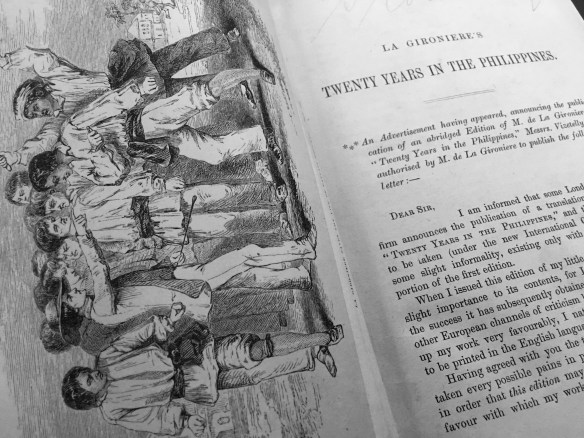
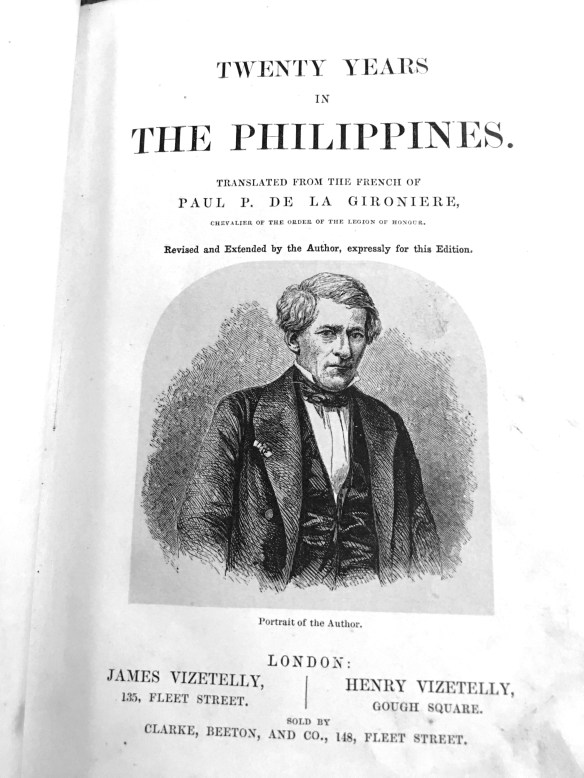
The book was Paul Proust de la Gironiere’s Twenty Years in the Philippines (subsequently expanded under the title of Adventures of a Frenchman in the Philippines), and I had recently acquired a copy on eBay, all the way from the UK—the first English edition published by James and Henry Vizetelly, undated but very likely from 1853, a year ahead of the American edition published by Harper & Bros. in 1854. The copy was far from mint, but it was in its original binding and still very readable, and wonderfully illustrated with engravings of local scenes.

Gironiere2.jpg

Gironiere was an adventurer from France who came to the Philippines in 1819 in his early 20s as a ship’s surgeon and stayed on for the next two decades, establishing himself as a landlord and farmer in what today is Jalajala, Rizal. His travails begin shortly after his arrival on the ship Cultivateur, and his account of a massacre shows why his book is—in that awful word coined by book reviewers—“unputdownable”:

I had only resided a short time at Cavite when that terrible scourge, the cholera, broke out at Manilla, in September, 1820, and quickly ravaged the whole island. Within a few days of its first appearance the epidemic spread rapidly; the Indians succumbed by thousands; at all hours of the day and of the night the streets were crowded with the dead-carts. Next to the fright occasioned by the epidemic, quickly succeeded rage and despair. The Indians said, one to another, that the strangers poisoned the rivers and the fountains, in order to destroy the native population and possess themselves of the Philippines.

On the 9th October, 1820 … a dreadful massacre commenced at Manilla and at Cavite…Almost all the French who resided at Manilla were slain, and their houses pillaged and destroyed. The carnage only ceased when there were no longer any victims. 

…Four hundred Indians surrounded me; the only way of dealing with them was by audacity. I said in Tagaloc to the Indian who had attempted to stab the captain: “You are a scoundrel.” The Indian sprang towards me; he raised his arm: I struck him on the head with a cane which I held in my hand; he waited in astonishment for a moment, and then returned towards his companions to excite them. Daggers were drawn on every side; the crowd formed a circle around me, which gradually concentrated. Mysterious influence of the white man over his coloured brother! Of all these four hundred Indians, not one dared attack me the first; they all wished to strike together. Suddenly a native soldier, armed with a musket, broke through the crowd; he struck down my adversary, took away his dagger, and holding his musket by the bayonet end, he swung it round and round his head, thus enlarging the circle at first, and then dispersing a portion of my enemies. “Fly, sir!” said my liberator; “now that I am here, no one will touch a hair of your head.” In fact the crowd divided, and left me a free passage. I was saved, without knowing by whom, or for what reason, until the native soldier called after me: “You attended my wife who was sick, and you never asked payment of me. I now settle my debt.”

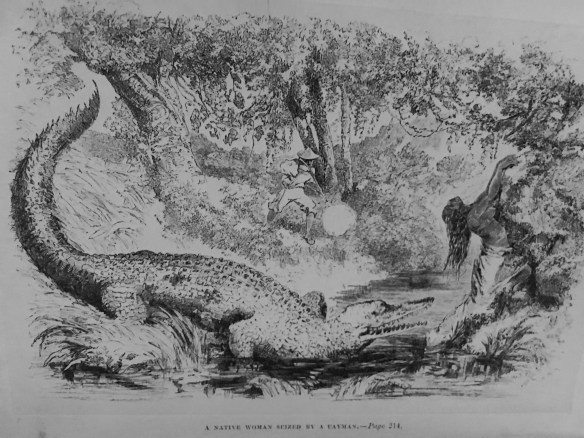
I had first read the book a long time ago, and kept my copy of Adventures, in a Filipiniana Book Guild edition reprinted locally in paperback by Burke-Miailhe in 1972, with a foreword by the eminent historian and economist Benito J. Legarda. In his foreword, Dr. Legarda says that Gironiere’s book was “probably the best seller among books about the Philippines in the 19th century,” noting that “What attracted the 19th century reader was of course the narration of several adventures, at that time considered unusual or bizarre. Among them may be enumerated the killing of man-eating crocodiles, the hunting of wild carabaos, the exploration of caves, the customs of pagan tribes, and the adventures of those caught in captivity by Moro pirates.”

IMG_8257.jpg

While granting that Gironiere’s accounts may have taken certain fanciful liberties, Legarda also considers the many real contributions the Frenchman made to his adopted soil, particularly as an agricultural pioneer who planted coffee, abaca, indigo, and rice on his 2,400-hectare estate in Jalajala, then part of Morong. Of Jalajala, Gironiere would write that it was “the greatest game preserve in the island: wild boars, deer, buffaloes, fowls, quail, snipe, pigeons of fifteen or twenty different varieties, parrots in short all sorts of birds abound in them.”

Gironiere returned to France in 1839, crushed by the deaths of his son, daughter, and wife, and he eventually remarried, and yet nothing, he said, “could induce me to forget my Indians, Jala-Jala, and my solitary excursions in the virgin forests. The society of men reared in extreme civilisation could not efface from my memory my past modest life.”

IMG_8124

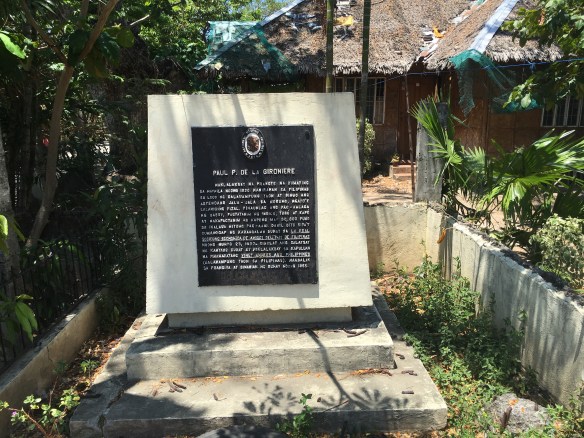
Was there anything left of Gironiere’s vast estate? All I could find on the Internet was a marker put up by the National Historical Institute in 1978 on what presumably had been his property, so I resolved to find at least that. We were there on the Wednesday of Holy Week, so I knew I had to catch someone at the municipio before it closed for the half-day, and fortunately a kind gentleman from the agriculturist’s office recognized the marker and offered to lead us there. And a short drive later, there it was, on a lot in the shade of towering acacia trees.

Nothing else would have suggested Gironiere’s presence, except possibly a stump of bricks in a corner of the lot. Not too far away was the water’s edge, and the slim profile of Talim Island, which Gironiere would have seen out his window. I struggled to imagine this spot as the center of a visiting Frenchman’s adopted life and holdings, his pursuit of bats and lizards, crocodiles and gold dust.

I didn’t feel let down; I was looking at an empty stage, but I knew the play, and I could hear the lead actor’s parting words: “Overwhelmed by the weight of troubles and of the laborious works I had executed, there was only one wish to excite me, and that was, to see France again; and yet my recollections took me continually back to Jala-Jala. Poor little corner of the globe… where my best years were spent in a life of labour, of emotions, of happiness, and of bitterness! Poor Indians! who loved me so much! I was never to see you again! We were soon to be separated by the immensity of the ocean.”

Penman No. 192: Reveling in the Risqué

IMG_7981.JPG

Penman for Monday, March 21, 2016


ONE THING I always knew but have seen more evidence of lately is that fact that when women get together, wonderful and even magical things happen. I suppose it has to do with the female predisposition to cooperate (versus the male impulse to compete). Case in point: the hugely successful literary reading billed as “Wordello,” which I plugged in this corner last month.

It had been conceived as a fund-raising project by the ladies of the Likhaan Creative Writing Foundation for the benefit of, among others, the UP Institute of Creative Writing (which I head, so I have a million reasons to be appreciative). But it turned out to be much more than just another reading of poetry and prose, mindful of how such events rarely go beyond sedate, even solemn undertakings where people stand up and mumble before politely attentive audiences.

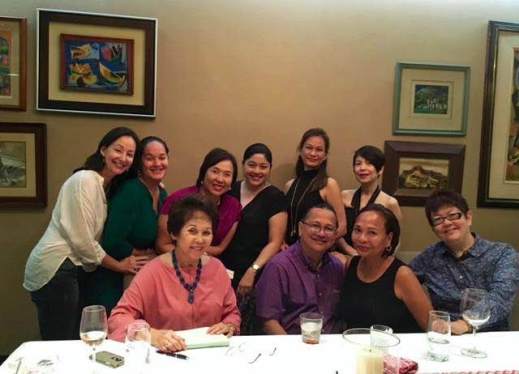
This was one evening devoted to reveling in the risqué, to pushing the boundaries of the acceptable in a way that brought us back to the freer, more spirited Sixties. Remarkably, it had been organized by a group of middle-aged women as proper and as pedigreed as they come, people you’d normally associate with golf and afternoon tea. But the Likhaan ladies are also very fine writers in their own right, mentored by no less than Jing Hidalgo, and quite a few of them have taken classes with us in UP, so it was no surprise to find them indulging their subversive side.

I’d never been to the venue at the Green Sun on Chino Roces Avenue Extension, and when Beng and I got there last March 5, we expected to walk into just another hotel-and-restaurant lobby setup. Instead, a large corner of the place had been transformed, just for the evening, into a virtual bordello, with ladies in bare backs and slinky black lingerie well, slinking around. When I found my bearings, I was glad to run into and to chat with old friends like writers Charlson Ong, JB Capino (on a home visit from Illinois, where he’s been based), Carla Pacis, Cecille Lopez Lilles, Mabek Kawsek, Linda Panlilio, Bambi Harper, and Cesar Aljama, as well as BenCab and Annie Sarthou.

Most of the readings proved appropriately racy, and I had to explain that I had come as a bashful patron, choosing to read something fairly short and chaste. But elsewhere in the room, something smoky and sexy was going on. We had to leave a little early for another commitment that evening, so I asked Likhaan Foundation’s Chichi Lizot, the writer-translator busybody behind the project, to tell us what happened next, and how they put on such a good show in the first place. Here’s Chichi’s summing-up:

“We had heard of ‘poetry brothels,’ not only in New York and Paris, but also in other parts of the world. Were we ready for it here? The idea of presenting poetry, bordello-style, in a land of taboos was both daunting and exciting. It was then that ‘Wordello,’ coined by a poet and friend who joins some of us for drinks every so often, RayVi Sunico, was born.

“Working on the concept, pinning down sponsors, inviting poets, and finding a venue accessible to all began six months ago. Creating and feeding our social media sites got going in December. A handful of active members found friends along the way willing to help, spurred by the untrodden approach towards literature. There is something about the forbidden that excites.

IMG_7972.JPG

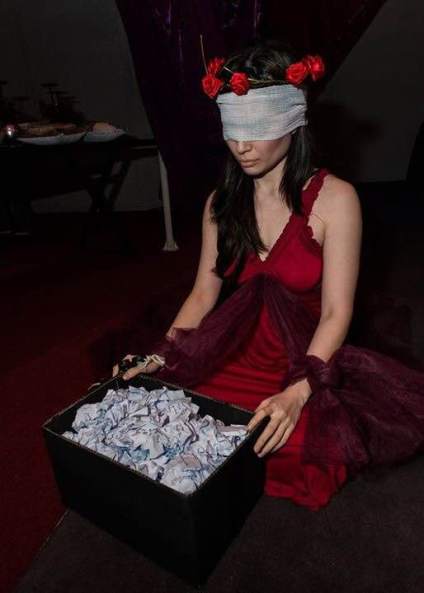
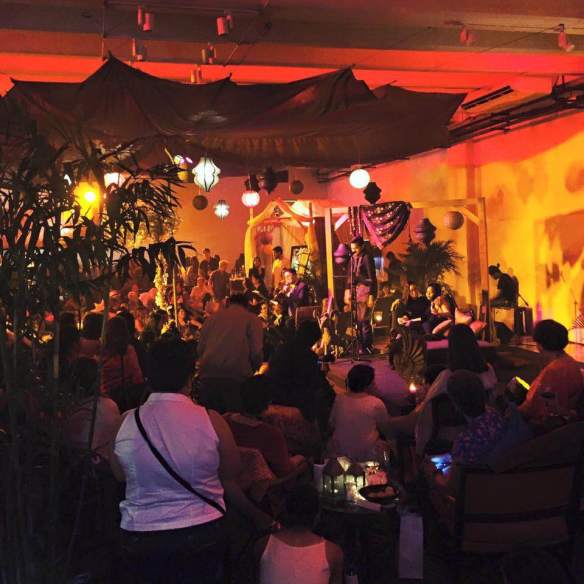
“Then came the evening of Wordello. Stepping into its entrance of beaded curtains after going through the ultra-modern corridors of Green Sun was like being transported into a secret world—of red, orange and magenta, of incense, alcohol, and erotica. It was a den of iniquity. It was Moulin Rouge—and much more. There were candles and Persian lamps. Carpets. Palm trees. Griffins standing guard. And in a cage, a masked executioner wielding an axe.

“The youngest in the audience must have been fifteen, the oldest, ninety-two. Some came in their chauffeur-driven imports, the others in jeepneys—any clothed, or rather, unclothed, comme il fallait. And as they hobnobbed with friends and strangers alike, they discovered a tarot reader of a monk in a nook somewhere. In a tent draped in extravagant silk, a body calligrapher was engrossed in a woman’s back, oblivious to spectators. Books and art pieces were up for grabs in different corners, incongruous yet fitting. The lively activity at the bar provided no respite to bartenders only eager to please. Omnipresent conversations thrived.

“And then from nowhere, a young poet delivered a line. Loud and clear. A male voice cried out from another corner. The room was stunned into silence. Yet another demanded attendance—this time female—delivering utterances from across the expanse of subdued light. Fifteen poets in a flash mob of sorts embarked us on a journey, harbingers all, of what was about to unfold. Their words were tame in comparison to the almost three hours of poetry, skits and the performing arts—mostly unbridled and unafraid. One or two in the audience left after the fifth number, scandalized. Most stayed, to either endure or embrace the words spoken by the inimitable and the sans pareil, and the fledgling.
IMG_7974.JPG

“The place was packed, denying access to waiters serving bar-chow. Seated comfortably in deep couches were the elderly. Many were happily relaxed on intricate pillows, risers, and carpets on the floor. Chairs had to be added in every space possible for the weary, but quite a few were content standing behind the bar or around divans, mesmerized.

“Sensei Shinobi, who performed the Japanese art of bondage on a defenseless but willing wisp of a woman, was saved for last. As we turned into voyeurs, watching with awe the dexterity with which Shinobi beautifully and artfully crafted rope around the young woman’s body, no one dared breathe. It was art in the sublime. And as he hoisted his model on a single metal ring that dangled from a scaffolding, and then twirled her around, a pin could have been dropped and heard.”

Bravo, Chichi, and merci beaucoup! Until the next iteration of what now deserves to be the year’s sauciest literary event.

IMG_7973.JPG


(Photos by Vidal Lim)