Qwertyman No. 173: A Page from 1937

Qwertyman for Monday, November 24, 2025
I”M NOT a historian, although there are times I wish I were, and at an early crossroads in my youth, I actually had to choose between Literature and History for my major, settling for the former only because I thought I could finish it faster. But I’ve retained a lifelong interest in history, for the treasure trove of stories to be found in the past and for what those stories might foretell of the future. 

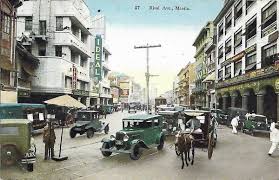
I’m particularly fascinated by the prewar period—what Filipinos of the midcentury looked back on as “peacetime” and what Carmen Guerrero Nakpil called our “fifty years in Hollywood,” which were enough to occlude much of the influence of our “three hundred fifty years in a convent” under the Spanish. It was an age of many transitions, from the jota to jazz, from the caruaje to the Chevrolet, from tradition to that liberative and all-embracing buzzword, the “modern.” Much of that went up in smoke during the Second World War, but you can still catch the ghost of this lost world on the Escolta, among other vestiges of our love-hate affair with America. (You might want to visit the Art Deco exhibition at the National Museum of Fine Arts, ongoing until May 2026; I have some items on display there.)

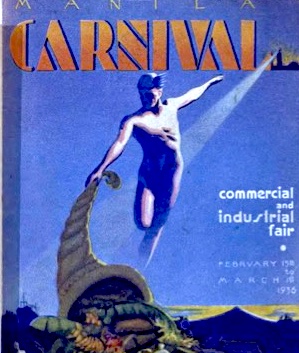
So entranced have I been by this time that I decided, during the pandemic, to set my third novel in it, at the birth of the Commonwealth and upon Quezon’s assumption of ultimate power, an upstairs-downstairs narrative about the comprador upper class and the world of the Manila Carnival set against the embers of the Sakdal uprising, the fuming and scheming Aguinaldistas, and the netherworld of printing-press Marxists and tranvia pickpockets. Progress has been slow because novels always take the back seat to life’s more pressing needs, but I still hope to get this done if it’s the last thing I do.

The research for the book, however, has brought its own rewards. Among my main sources for the background has been a slim volume—long out of print and now very  hard to find—titled The Radical Left on the Eve of War: A Political Memoir by James S. Allen (Quezon City: Foundation for Nationalist Studies, 1985). Allen (actually a pseudonym for Sol Auerbach) was an American scholar and journalist, an avowed Marxist who traveled to the Philippines in 1936 and 1938 with his wife Isabelle, also a member of the American Communist Party, to meet with local communists and socialists (then headed by Crisanto Evangelista and Pedro Abad Santos, respectively) and to get a sense of the Philippine situation under American rule. 

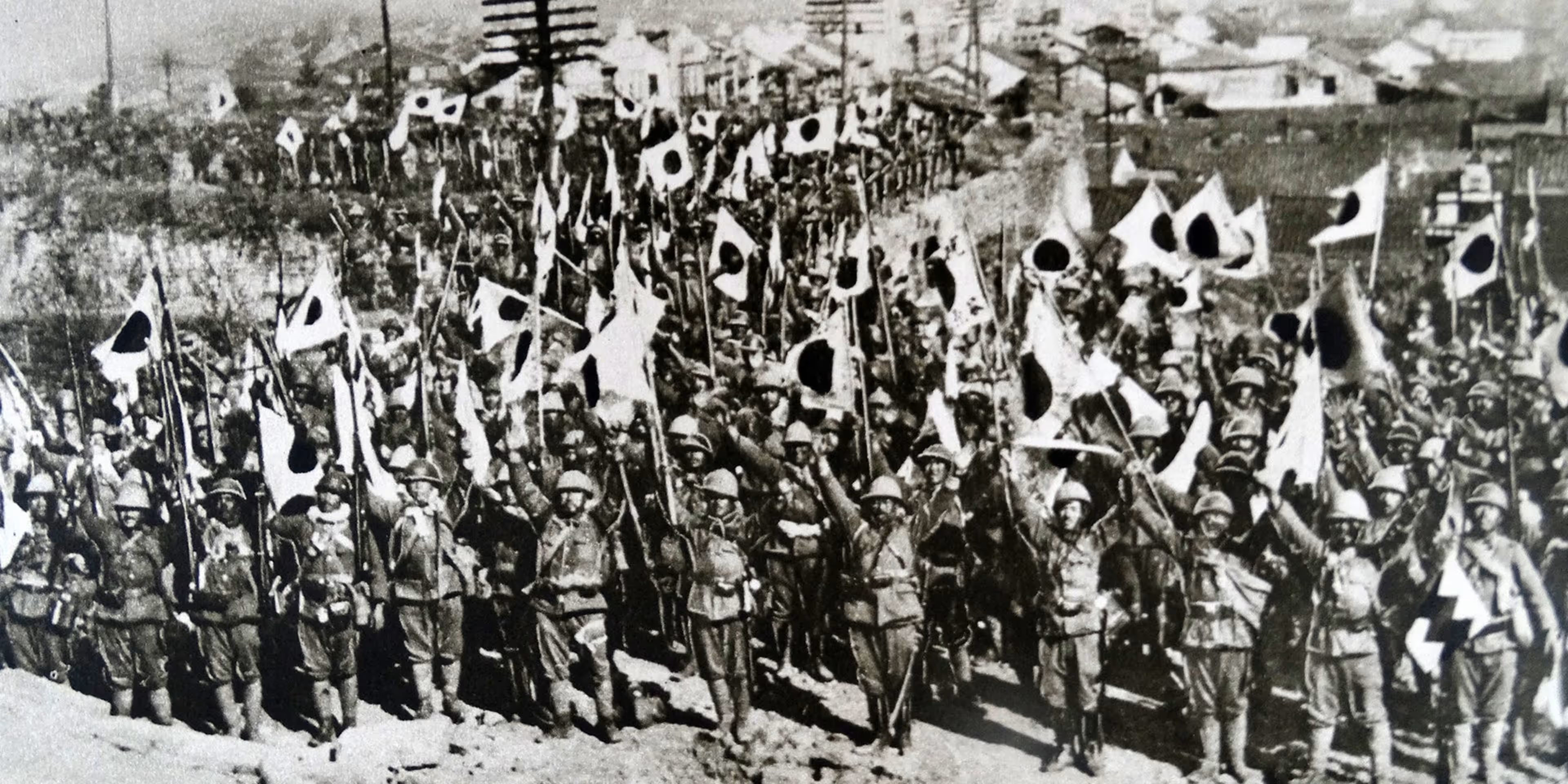
Even that early, the threat of a Japanese invasion was already looming on the horizon and causing great anxiety in the Philippines; Japan had earlier occupied Manchuria and as much as a quarter of the entirety of China by 1937. It seemed like a confrontation between Japan and the United States was inevitable, although some Filipino nationalists—fiercely anti-American—preferred to ally themselves with their fellow Asians than with prolonged white rule. At the same time, others like Pedro Abad Santos feared that the independence Quezon sought would be granted prematurely to give the US an excuse to abandon the islands and avoid confronting the Japanese. 
This is where I tell you why I’m bringing up James Allen’s memoirs this Monday—because of our present situation vis-à-vis China and (in one of history’s ironic reversals from victim to victimizer) its growing domination of the South China Sea. In Quezon, Filipinos had a leader who was deeply mistrusted and opposed by many; the United States’ willingness to defend the Philippines was in doubt; and the threat of a foreign invasion was clear and imminent. 

Allen actually sat down with Quezon for a long interview at the latter’s invitation, and was impressed by the man’s grasp of politics and his singular ambition. But the article that came out of that encounter displeased MLQ; Allen, after all, was still a communist at heart, which makes the following quotation—from a letter Allen would compose and send to his American colleagues in October 1937—even more interesting. I’ll leave it to you to observe the parallels, and to cast them against the Marcos-Duterte issues of our time.

“Filipino Marxists and radicals need to relate independence from the United States to the world crisis created by fascism. The immediate concern in the struggle for an independent and democratic Philippines is to safeguard the country against the threat of Japanese aggression. The objectives of complete independence from the United States and the internal democratic transformation must be obtained without endangering such gains as have been made or subjecting the country to new masters. The people must be awakened to the prime and pressing danger to their national existence. The United States is moving toward alignment with the democratic powers against the fascist bloc, albeit slowly and indecisively.


“Roosevelt is shifting somewhat toward the Left of Center to keep pace with his mass support from the surging labor movement and anti-fascist and anti-war popular sentiment. The national interests of the Philippines call for vigilance and precautions against Japanese aggression. This coincides with the interests of the United States in the Pacific area, and it would be folly not to take full advantage of this concurrence. In the broader perspective, the outcome of the struggle in China will be crucial for all the peoples of the Far East, and if the United States were to withdraw from the Philippines this would be a serious blow against China and encouragement to Japan’s designs upon Southeast Asia and the islands of the Pacific. The cause of Philippine independence at this time can best be served by cooperation with the United States.


“The situation also requires a change in the attitude toward Quezon, from frontal attack to critical support. Unprincipled opposition for the sake of opposition-as with some leading participants in the Popular Alliance is dangerous, for it plays into the hand of pro-Japanese elements and sentiments. Quezon certainly is not an anti-fascist, but he is not intriguing behind the scenes with Japan. The greatest opposition to his early independence plan comes from the landed proprietors, particularly the sugar barons, while it enjoys support among the people. The Popular Alliance should also support the plan, including provisions for mutually satisfactory economic, military and diplomatic collaboration after independence. Though Quezon is far from being a Cardenas or Roosevelt in his domestic policies, every effort should be made to move him away from his pro-fascist and land baron support by providing him with mass backing for such pro-labor and progressive measures as are included in his social justice program. In sum, the Popular Alliance should encourage a national democratic front devoted to the preservation of peace in the Pacific, the safeguarding of Philippine independence, and defense and extension of democracy in the country.”
Penman No. 473: New Light on (and from) the Philippine Short Story

Penman for Sunday, April 6, 2025

FEW MAY have noticed, but this year, 2025, marks the centenary of what has been widely acknowledged to be our first classic short story in English, Paz Marquez Benitez’s deathless “Dead Stars.”

As I’ve often observed as both a writer and teacher of Philippine literature, there’s probably no literary form more popular among Filipinos than the short story and its predecessors—myths, legends, folktales, and such stories that draw on the power of narrative to tell and teach us something about human life. 

A lot of this has to do with the fact that people and cultures everywhere have made use of stories to make sense of things—to establish causality in human actions—often as a way of prescribing and also proscribing certain behaviors. Stories were there to learn from, like the biblical parables, Aesop’s fables, and the creation myths. The more exciting and entertaining the stories were, the easier the learning happened. Even the mere recognition of oneself in a story that could have taken place a thousand years ago in a place across the planet makes our lives seem more meaningful.

In the Philippines—as it did in the West, where the modern short story took form—the short story was a staple of prewar weekly magazines like the Sunday Tribune, where a story written by an American author would be matched by a local story during what our early literary scholars like Leopoldo Yabes would call our period of apprenticeship. This was in English, but the short story in Filipino (then Tagalog) and other Philippine languages had developed even earlier, and continued (as it continues) to explore new forms and material.

Why the short story and not the novel? That’s another long discussion to be had, and I’ve addressed it in a lecture titled “Novelists in Progress,” but the short of it is that, well, we Pinoys like things in small doses (think Nick Joaquin’s “heritage of smallness”), and the short story satisfies our craving for a touch of fiction and fantasy in our ordinary lives. We’re not marathoners, but great sprinters; we’re not summiteers or navel-gazers, but masters of the street and alley. 

And so, over the past century, important anthologies of the Philippine short story have been published, tracking the development of the genre and its practitioners, from Yabes’ landmark Philippine Short Stories 1925-1940 (a project continued by Gemino Abad for 1956-2008) to Isagani Cruz’s Best Philippine Short Stories of the Twentieth Century (2000). Outside of English, Mga Agos sa Disyerto edited by Efren Abueg came out in 1964, proclaiming new directions for Tagalog short fiction, and the much-needed Ulirat: Best Contemporary Stories in Translation from the Philippines was published in 2021, edited by Kristine Ong Muslim.

But the 21st century is now a quarter of the way through, and just in these past two decades or so, a fresh bumper crop of brilliant new stories has built up, awaiting harvest.

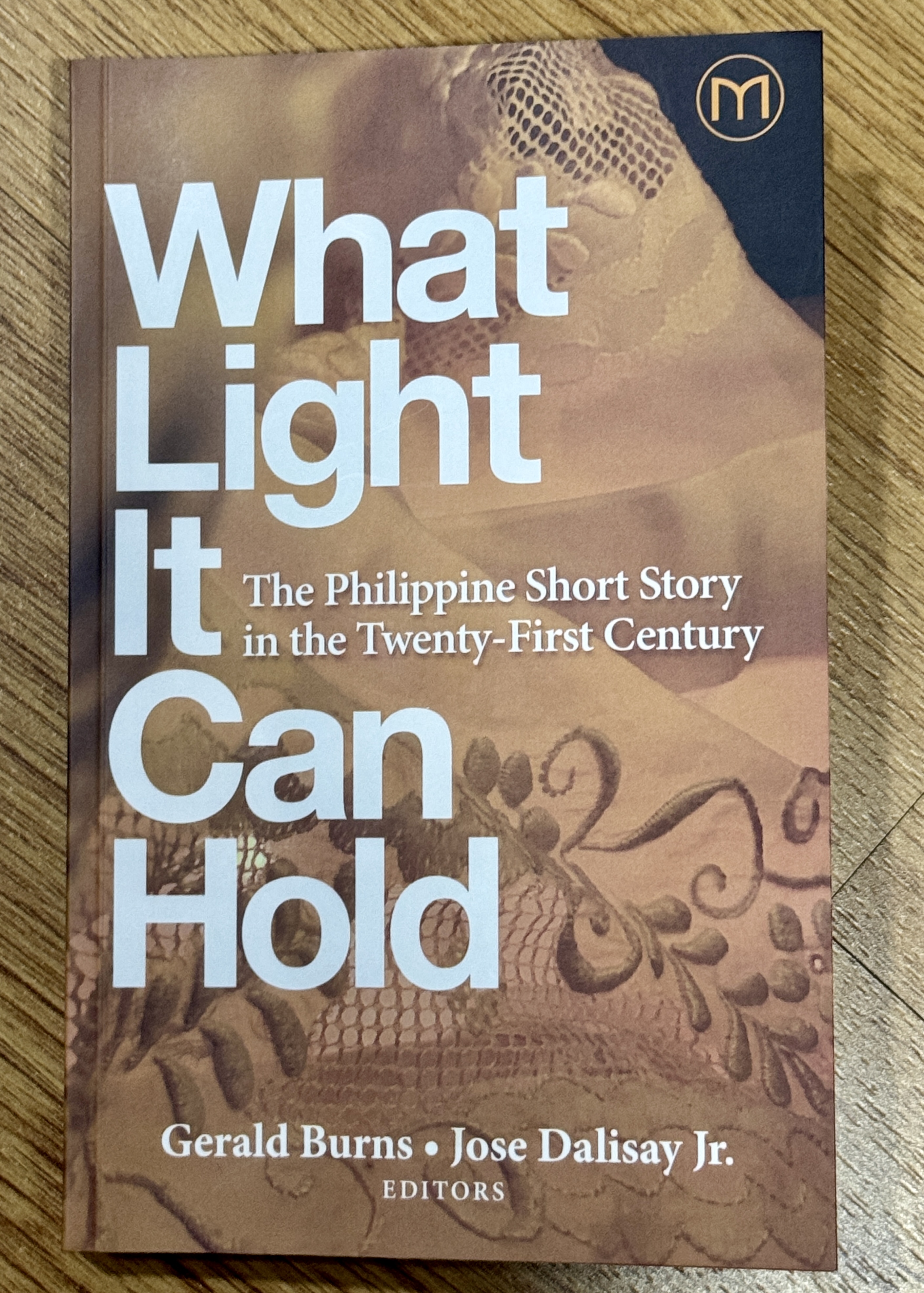
Five years ago, an American friend named Gerald “Jerry” Burns—a fellow academic and a scholar of Philippine literature in English, now Emeritus Professor at Franklin Pierce University in New Hampshire—decided to do just that: review the best of the newest Philippine short stories and produce a selection with which to introduce them to the world. He needed a collaborator, and having worked with Jerry earlier when he was a Fulbright professor at our English department in UP, I agreed to co-edit the volume with him. Because of our backgrounds, our stories would be mainly those written in English (and the excellent Ulirat had already covered much more ground in the other Philippine languages than we ever could) but Jerry wisely insisted that we should have at least some representation of non-English stories in translation in the book, if only to lead the reader to explore more in Ulirat.

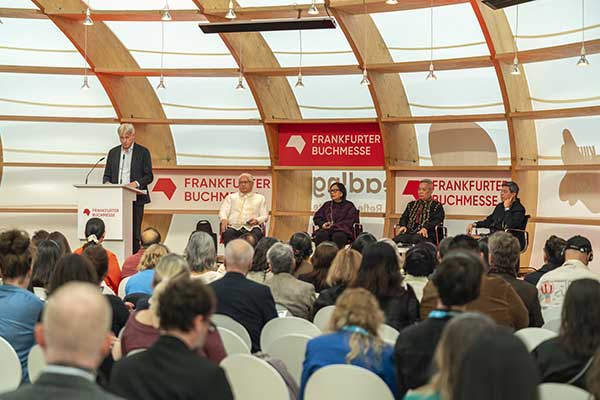
The selection process was predictably long and bruising, with all the political, aesthetic, and practical considerations that go into anthologizing, but in the end we came up with 18 stories written by both familiar and fresh names, from within and beyond the Philippines, including the diaspora: Dennis Andrew Aguinaldo, Dean Francis Alfar, Mia Alvar, John Bengan, Ian Rosales Casocot, Richard Giye, Vicente Groyon, Ino Habana, Carljoe Javier, Monica Macansantos, Perry Mangilaya, Doms Pagliawan, Ma. Elena Paulma, John Pucay, Anna Sanchez, Larissa Mae R. Suarez, Lysley A. Tenorio, and Socorro Villanueva. We also found an agreeable and supportive publisher, Milflores Publishing, fortuitously run by Andrea Pasion-Flores, herself a fine fictionist who understood the need for a new anthology like this, especially on the threshold of the Philippines’ participation as Guest of Honor in this year’s Frankfurt Buchmesse.

The book’s title, What Light It Can Hold: The Philippine Short Story in the Twenty-First Century, was suggested to Jerry by an encounter with the piña weavers of Kalibo, Aklan, and a caption he saw that said: “How fragile a single thread of piña is, how delicate, but look how much light it can hold.” He explains that “What Light… is intended to recognize the limited capacity of the Philippine short story in this period to offer any widespread or definitive illumination of the nation’s life and culture. At the same time, a more expansive understanding of that title is possible. For the short story, as will be suggested in the next pages, is a signature Philippine product, too. And these slender narratives, fashioned by their makers with a skill, patience, and devotion comparable to the piña weavers’, bring what light they can hold to vital areas of contemporary Philippine and larger human experience.”

No anthology project will be without its perceived failures and omissions, and Dr. Burns and I remain fully open to criticism in that respect. But we believe the sympathetic reader still stands to profit from both the selections and the introduction, penned largely by Jerry, that makes salient observations on the changes that have taken place in this most favored literary form of ours over the past century. Happy reading! (What Light It Can Hold is available on Lazada and Shopee.)

Qwertyman N0. 117: Our Best Books Forward

Qwertyman for Monday, October 28, 2024

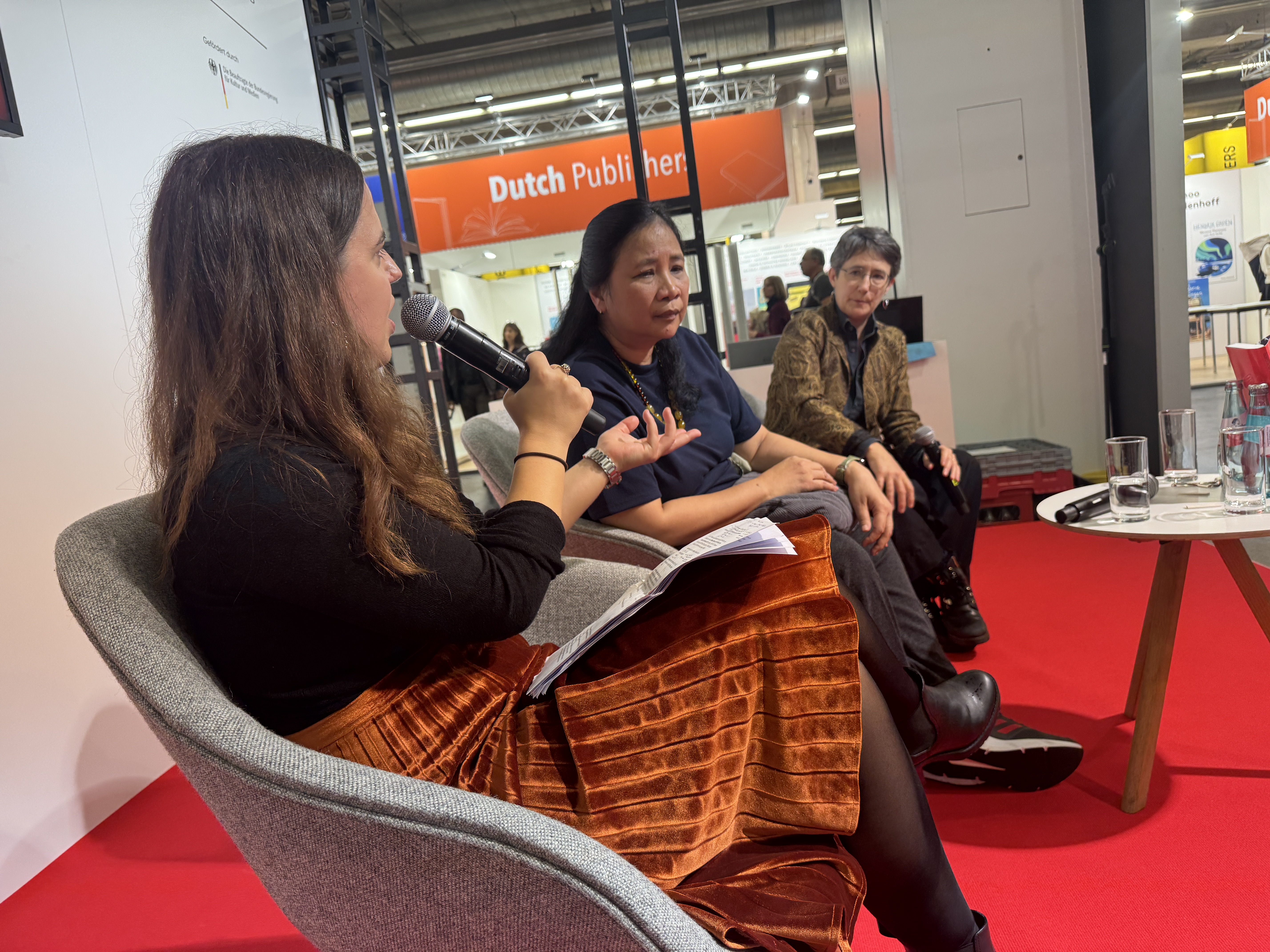
NOW ON its 76th year, the Frankfurter Buchmesse (FBM)—better known outside Germany as the Frankfurt Book Fair, the world’s oldest and largest such event—ended successfully last October 20 with a significant representation from the Philippines, which sent scores of authors, publishers, and book industry officials to the fair. All that was in preparation for FBM 2025, when the Philippines will be Guest of Honor (GOH), the country whose literature will be the focus of the fair’s attention.

You can think of the Frankfurt Book Fair as the Olympics of the global book industry, with over 200,000 participants (book industry persons and the public) representing over 100 countries. However, there are no prizes for Best Novel, Best Nonfiction Book, Best Children’s Book, and so on. Everyone is effectively in competition with everyone else, but the real rewards are in the professional and personal connections made between and among authors, publishers, agents, editors, and translators at the fair, connections that materialize into deals for translation and publication rights. Although exhibited books can be sold at the close of the fair, the FBM isn’t meant to sell books, but rights to books, for which it has become the world’s oldest and largest marketplace. This means that, through the right contacts, Filipino books can be translated into and sold in French, Turkish, Spanish, and Urdu editions, etc. and vice versa. 

Becoming GOH is a signal distinction—but it doesn’t come free. Nations vie and pay for the honor, which this year went to Italy and in 2026 will go to the Czech Republic. I’m sure that there have been and will be more criticisms of our participation in Frankfurt, chiefly of the costs of our foreign exposure vs. the local promotion of our literature, but it’s not a zero-sum game. We need both kinds of investments. We have impressive literary production from all over the country—much of it unknown even to ourselves—but we also need to share the best of it with the world, to raise their understanding of the Filipino above the stereotypes they know (Imelda’s shoes, Manny Pacquiao, DHs, cruise ship crewmen, etc.—not all of them bad, for sure, especially our OFWs, but in need of context).

If FBM 2024 was any indication, FBM 2025 will be an even more resounding success for the Philippines. All literary genres were represented this year in terms of books and panel discussions, and valuable connections were made with European publishers, translators, and agents. Philippine literature will never be the same after this. (This year’s upshot for me is that my novel Soledad’s Sister will be coming out soon in Spanish, after its versions in Italian, French, and German.)

Having followed trends in international publishing for some time, I’m particularly impressed by the way the FBM has helped to promote our new writing by young authors in literary categories that have traditionally received less attention compared to what I’ve called “the big white whale” of publishing, the novel. Approach most publishers and agents at the FBM, and what they’ll ask you is, “Where’s your novel?” For primarily commercial reasons, the novel remains the most saleable and traded commodity at book fairs. (I know many who will wince at my reference to books as commodities, but let’s be absolutely clear about this: the bottom line of book publishing and book fairs is business, not “Kumbaya”-type international peace and understanding.) 

Sadly, however, Filipinos have historically not been a novel-writing, novel-buying, and novel-reading people. In this respect, Rizal’s Noli and Fili are aberrations, familiar to us only and thankfully because of the law requiring their study. That said, our writers are masters of the short literary forms—poetry and the short story in particular. I’ve often remarked that we Pinoys are world-class sprinters, not marathoners; our world-view is not Olympian, but pedestrian, formed close-quarters at street level. 

This year, I’m told that over 70 deals were made between Filipino authors and foreign agents and publishers for the translation and publication of works that went well beyond the traditional novel, including children’s stories (another of our strongest suits) and genre and graphic fiction. These authors were young, and some had their works translated from languages other than English. If anything, this surge in translations, long overdue, is one strategic benefit that our FBM participation has enabled, and our GOH status next year should boost it even further.

According to FBM Director Juergen Boos, “I am very excited about the Philippines’ Guest of Honor presentation in 2025. The motto ‘The imagination peoples the air’ resonates with the universality of storytelling. Even though the Philippines is the world’s thirteenth largest nation with more than 109 million citizens, I believe for many of us in Europe, Philippine literature is currently still rather unknown territory. As the country steps into its role as Guest of Honor, we will learn a lot about the importance of storytelling and today’s cultural scene for Philippine civil society. With an incredible 183 different languages spoken on its 7,641 islands, the country’s diverse influences are one of the aspects I am looking forward to seeing in Frankfurt in 2025.”

I did say that there are no prizes awarded at the FBM, but I have to correct that to acknowledge the Diagram Group Prize for the Oddest Title at the FBM, given since 1978 and now voted upon by the public, and won by such books as Proceedings of the Second International Workshop on Nude Mice, The Joy of Chickens, How to Shit in the Woods: An Environmentally Sound Approach to a Lost Art, and If You Want Closure in Your Relationship, Start with Your Legs. This is not a prize to which Filipino writers have so far aspired, but who knows? Pinoy wackiness (alongside wisdom) knows no bounds.

Many thanks to the National Book Development Board, the National Commission for Culture and the Arts, the German literary organization LitProm, culture champion Sen. Loren Legarda, and our other sponsors and supporters for this great opportunity to put our best books forward on the global stage. Mabuhay!

Qwertyman No. 85: Epilogue to a Novel

Qwertyman for Monday, March 18, 2024

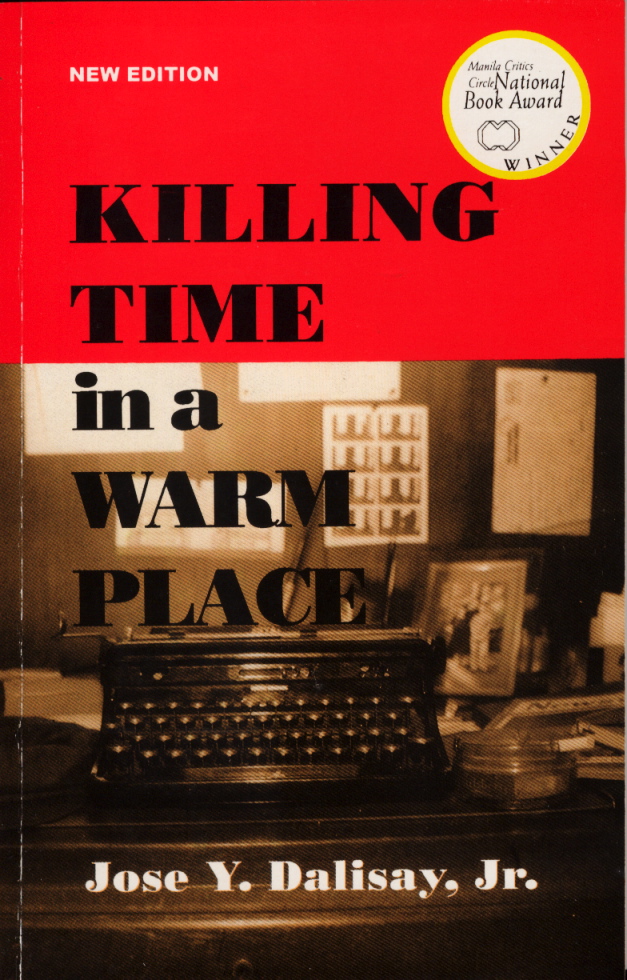
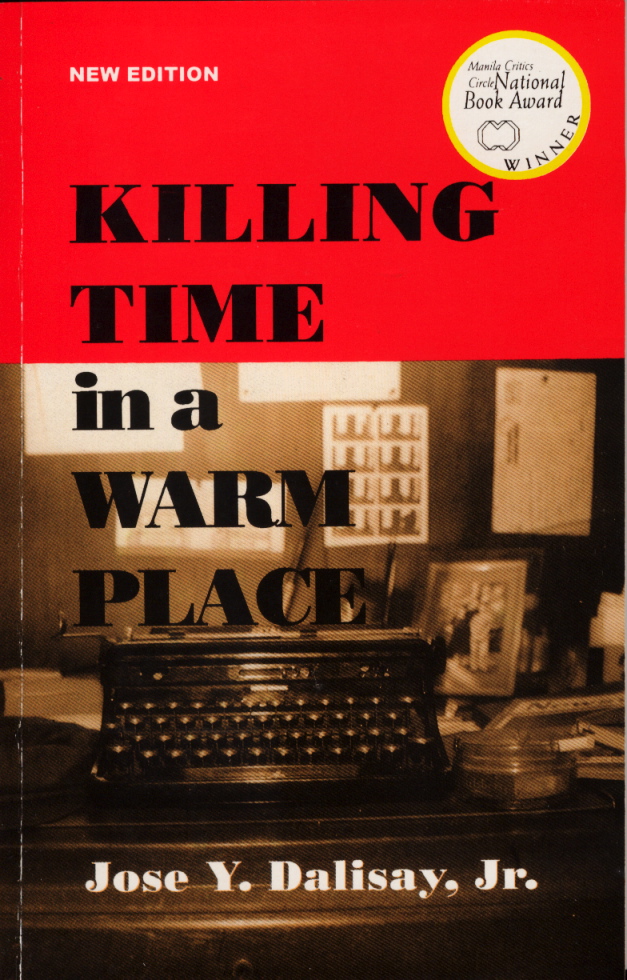
IT WAS in 1986, shortly after EDSA and my arrival in the US for my graduate studies, that I began thinking about what would eventually become my master’s thesis and my first novel, Killing Time in a Warm Place. It was published by Anvil in 1992 when I came home to resume teaching after completing my PhD. 

For those who’ve never heard of it, the novel is a semi-autobiographical account of coming of age during the Marcos years, from the point of view of a Filipino who makes the traditional journey from island to metropolis to the world at large, becoming, in the process, a kind of political chameleon. 

I had sent the first draft directly to several US publishers—my first try at getting a book published abroad—and one of them, Alfred Knopf, responded. They were interested, they said, but they needed some revisions. I knew very little about the book publishing industry then; I had no agent, wasn’t sure what lay ahead, and was in a hurry to see my book out, so I passed on Knopf—which turned out to be a titan in literary publishing—and went with Anvil, which had barely just opened.

I haven’t regretted that decision, although the Knopf deal, had it pushed through, would have been a tremendous break, not just for myself but for Philippine literature as a whole. I could understand that after EDSA, US publishing was hungry for books from and about the Philippines, so that opportunity was there, but I was also impatient to be read as a novelist by my fellow Filipinos, after having written short stories and plays. 

Anvil published the book in many printings and editions over the next two decades, as it got on the syllabi of college teachers who were looking for a novel in English on martial law, alongside Lualhati Bautista’s iconic Dekada 70. This has been my greatest reward and satisfaction from this book—knowing that somehow, it helped some of my countrymen understand what they went through.

It took a while for the novel to gain some traction overseas. In 2010, it was published in the US by Schaffner Press in a dual edition with my second novel, Soledad’s Sister. In 2012, it was translated into Spanish by Maria Alcaraz and published in Barcelona by Libros del Asteroide under the title Pasando el rato en un pais calido.

A few months ago, I received the happy news from my publisher Anvil that Killing Time was being picked up by the German publisher of Soledad’s Sister, which had apparently been doing well in the German market. So now the book is being translated into German, hopefully for a launch by Transit Verlag in time for the Frankfurt Book Fair this October, leading up to our big Frankfurt Guest of Honor year in 2025.

But I didn’t write this column just to tell you about the story of a book—rather, I wanted to say something about the story of its story.

In a message to Anvil a few days ago, my German publisher requested that I write a short epilogue to the novel, given that it’s been more than 30 years since it first came out, and that many things have happened since to the world and the Philippines—the Internet, Trump, and fake news, among others. 

So I sat down and wrote the short piece below, which I’m sharing with you since it’s highly unlikely that you’ll come across, or understand, the German translation of this epilogue if and when the new edition comes out. Here goes:

I began writing this novel in 1986, shortly after the downfall of the Marcos regime. That happened because of a massive uprising in Manila’s streets that made headlines and became a kind of model for peaceful anti-authoritarian movements worldwide. I proudly took part in that revolt, and felt the euphoria of liberation after more than a decade of martial law. It was a moment I would often return to and savor as the Iron Curtain fell and as various and largely non-violent revolutions took place elsewhere, including the Arab Spring.

I thought then that the best thing I could do was to write a novel that would try and explain how and why people fell under the spell of a dictatorship, as they did under Nazi Germany—not sparing myself, having been complicit in its later actions as an employee of the regime. I wrote it—in English—in America, mainly to fulfill my graduate school requirements, but also to celebrate our hard-won victory and share the good news with the world.

Almost four decades later, the seemingly unthinkable has happened: the right is back in power, not only in the Philippines but in many places we had thought to be reformed democracies. The optimism sweeping the planet toward the end of the 20th century has given way to a darkening horizon, a hardening of hearts, a closing of minds. Our most basic freedoms and values are under stiff and unrelenting assault, from forces we now realize had never really been vanquished but had merely been lying in wait, biding their time, seeking an opportunity for revival amidst the excesses of late capitalism.

And once again I am hearing the siren song of despotism, and see the eyes of people glazing over in the desperate desire for quick relief from their troubles, for quick salvation. I hear the march of boots, to which many young citizens—their ears plugged by loud music—seem indifferent. Even among many of their elders is a renascent yearning for the simple discipline of strongman rule.

I see all these and I wonder if I should write a sequel, an update for the new century, but what would be the point of repetition? My novel was supposed to be about the past. Why is it so suddenly pertinent again?

Penman No. 420: Highlights and Shadows

Penman for Monday, August 2, 2021

SOMETHING VERY unusual happened to me about a week ago. Driving my little Jimny on my way home to catch a Zoom meeting, I came literally the closest I’d ever been to a quick and fairly simple death.

I was following a student driver who was plodding along at a turtle’s pace. It was a busy street so I couldn’t overtake him, and I resisted the urge to honk my horn, remembering how it was when I was learning how to drive in my Beetle ages ago. We stopped at a corner a couple of blocks from my place, about to go into a main street. The student driver either stalled or stiffened, because he simply didn’t move. I felt my patience wearing thin; my Zoom meeting was about a commercial book project that would earn me some tidy cash (enough to pay, beyond the groceries, for my old books, rusty typewriters, and other toys), and I didn’t want to be even one minute late. 

The left side of the street was open, so I could overtake, but it was a streetcorner and I hesitated. That pause saved my life. 

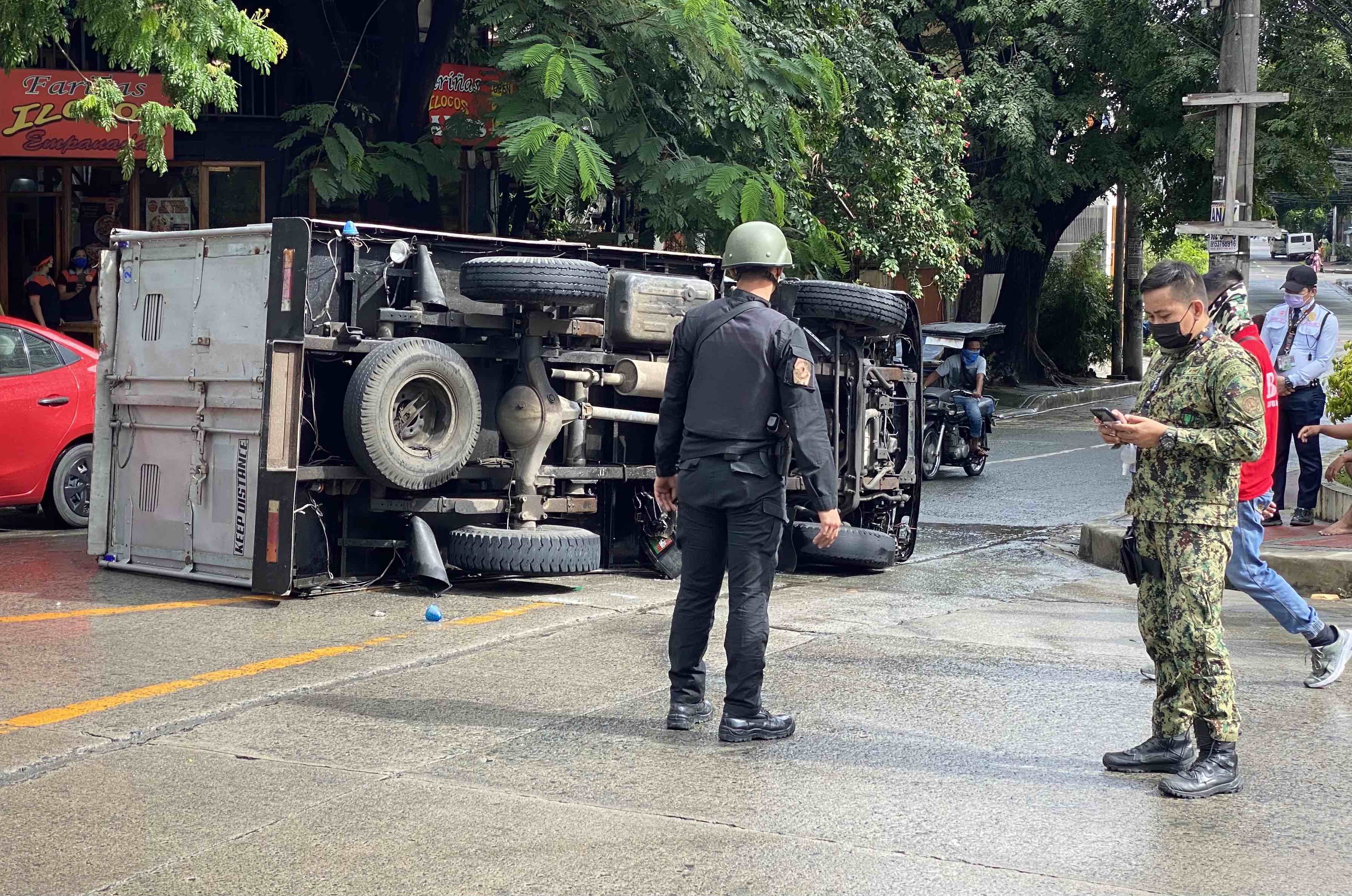
The student driver inched forward and made a right turn. I drove up right behind him, but had to brake at the tall hump just at that very corner. From my left I saw a big delivery van hurtling down the main street. Its driver had lost control; the van fell on its side, rolled over, and slid straight toward me. I didn’t move forward because I would have been hit if the van hadn’t braked, and I would have even more surely been demolished if I had tried to overtake earlier. Strapped into my seat, there was no time to jump. 

As it was, I froze and, in a cinematic cliché, watched everything happen in slow motion—the van coming, braking, rolling, and coming at me. Strangely I felt very calm. “So this is how I’m going,” I remember thinking, just waiting for the impact. One, two, three—and then the van stopped, a few feet away. I saw the driver raise and wiggle his hand, and then people rushed over. I exhaled a prayer of thanks, parked the car, hurried back to make sure the driver was okay (he was), and then went to my Zoom meeting.

I didn’t tell anyone at that meeting what had just happened to me. We had a very engaging conversation, during which we established that I was not the best fit for the job (nothing to do with money but with stylistic preferences), and I bowed out gracefully, possibly to the surprise of my chatmates, who probably expected me to be more vocally disappointed by the news.

In truth, I felt liberated. For a long time now, I had felt a gnawing urge to put everything else aside and return to my own fiction, to remind myself that I still had a few good stories to tell before I croaked. At 67, I’ve begun to feel my age, in my bones and, more distressingly, in my memory and my reflexes. When I read authors and look up their lives, I can’t help noting the ages at which they published their major works, when they died, and for what reasons. (And no one beats Jose Rizal in these departments.)

That same afternoon, with nothing else on my plate for the first time in a long time, I opened a new document in Word and typed down the first thing that came to my mind, a snippet of a conversation between a young man and an older woman, set in Manila on New Year’s Eve, 1936. I didn’t know these characters or where the story would go, but that’s how I’ve always worked, which sometimes leads to dead ends but always gives me a heightened sense of discovery and anticipation. I don’t want to know what the next page will be like; that’s why I’m writing it, making things up as I go along, looking into the highlights and shadows of the scene for clues and possibilities.

Before I knew it I had started a new novel—the literary form which, I’ve often said, I least enjoy. Each of my past two novels took me years to finish. The first was done for graduate school, the second completed for a competition—neither reason, it seems to me, the best one for writing, although practical necessity can do wonders. To some writer-friends like Charlson Ong (whose White Lady, Black Christ just came out with Milflores Publishing) and Gina Apostol (starting on a new historical project), novel-writing—and doing it well—comes almost as second nature; for me it has been hard labor, because not enough of my true heart was in it. I began a third novel many years ago, and about half of it is done, but I haven’t felt like picking up the pieces just yet.

So I’m starting a totally different one, and to keep from jinxing it I’ll only say further that it will be one that will require common intelligence and not academic cleverness to figure out, that would make a good play or movie for more people to enjoy (take the illustration above as a hint), and—most of all—that will make me feel like my own writing self again, before the next delivery van turns up at the corner. Wish me luck.

Penman No. 254: Another Filipino Writer in Norwich

l1030996

Penman for Monday, June 12, 2017


IT’S BEEN nearly 20 years since I received the news that I had won the biggest writing grant of my life. I was 45 and raring to work on my second novel, and had a germ of an idea, suggested by the sad parade of caskets that arrived almost daily at Manila’s international airport. I knew that our overseas workers and their experience was the big story of that period, but I needed time away from teaching to get started on the project, so I applied for a new grant that was being offered at the University of East Anglia in the UK for what was described then as “a novel of Asia.”

The UEA website describes that fellowship thus: “The David T. K. Wong Creative Writing Fellowship is a unique and generous annual award of £26,000 to enable a fiction writer who wants to write in English about the Far East to spend a year in the UK, at the University of East Anglia in Norwich. The Fellowship is named for its sponsor Mr. David Wong, a retired Hong Kong businessman who has also been a teacher, journalist and senior civil servant, and is a writer of fiction. The Fellowship was launched in 1997 and the first Fellow appointed from 1st October 1998.” (Collections of short stories are now accepted in lieu of the novel. The UEA and its writing program are acknowledged to be the leader in the field in the UK, with Booker Prize winners Kazuo Ishiguro, Ian McEwan, and Anne Enright among their distinguished alumni.)

2586062407_3c893e8374_b

I honestly can’t remember now how I chanced upon the Wong Fellowship—these were the early days of the Internet in the Philippines, when modems screeched like mating cats before connecting over phone lines—but Beng and I soon packed our bags for the privilege of a lifetime. It would take a few more years, but that idyllic journey eventually gave birth to Soledad’s Sister, which was shortlisted for the inaugural Man Asian Literary Prize in 2007 and published in 2008. I was only the second Wong Fellow, and after me, in 2003, another Filipino followed me to Norwich—Lakambini Sitoy, now based in Denmark, whose novel Sweet Haven also began taking shape in Norwich.

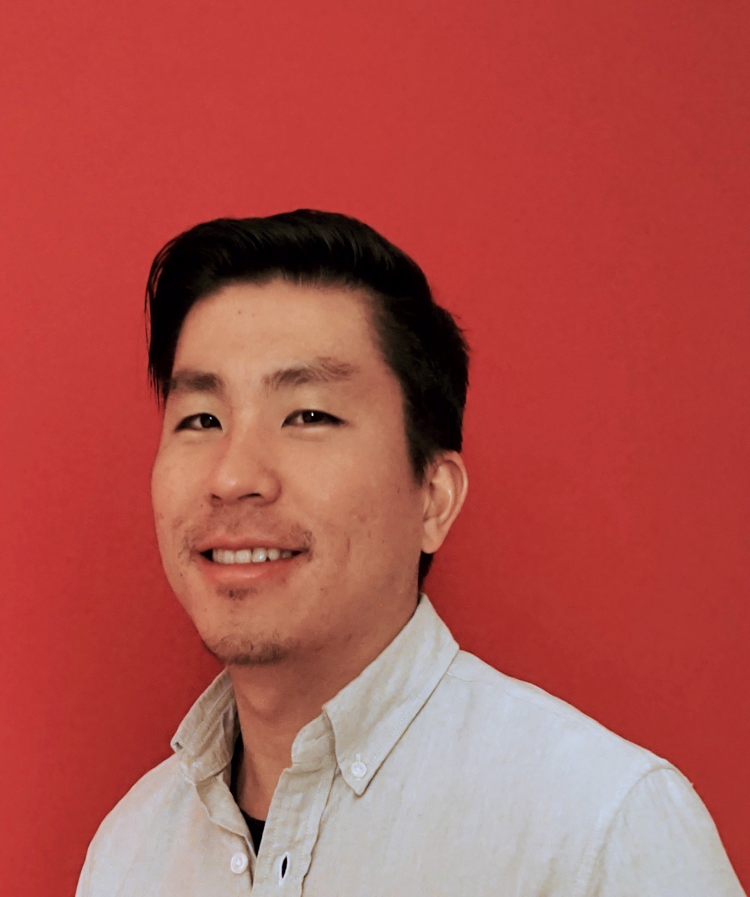
Last month came the terrific news that yet another Filipino, Nathaniel Go, had been named the new David T. K. Wong Fellow, besting dozens of other applicants from around the world. I was so elated by the news that I sought out Nathan, as he prefers to be called, by email, and got this story from him:

DGo

“I was born and grew up in Davao City. This is quite a statement to make nowadays as Davao has suddenly received a lot of attention. But back then, I remember a quiet and laid-back existence, highlighted every summer with the sickly sweet smell of mangoes, as our neighbor who owned a farm, would bring in basket after basket from their harvest. When it rained, water buffaloes would sometimes stop traffic outside our house by bathing in the large potholes filled with mud. The best thing to have come out of such a childhood, of course, is my love of books. Our bookshelf was quite small and included such juvenilia as the Bobbsey Twins, Hardy Boys, and Nancy Drew. Choose Your Own Adventure was also a hit back then. The Bible was a staple. Agatha Christie’s mysteries were the gold standard. Eventually, once I developed a taste for books I quickly sought new titles from our school library.”

Nathan was a voracious reader, so much so that his school librarian once dared him to bring a truck to borrow the whole collection. He left home at 16 and went to Ateneo de Manila, but moved to the US shortly after to join his siblings in California, where he finally got to study what he had always wanted—literature, linguistics, political science, and screenwriting. He worked briefly as a paralegal before giving in to his muse and studying fiction at the University of Michigan and at the Iowa Writers’ Workshop. A PEN Center USA Emerging Voices Fellow, Nathan has taught creative writing at the Braille Institute. He will be working on his first novel in Norwich. But as far as he’s come in the world, Nathan still writes about the Philippines and still considers it his home.

“I go back every now and then and I’m always surprised by how fast things are changing, but how—underneath the changes—the fundamental things remain the same,” he says. “These fundamental things are hard to articulate, but I guess that’s where my stories come in. As an author, I straddle an identity and the space between a true insider and outsider of the Philippines. I write about Davao and I write about the small Filipino Chinese community there that I belong to, because that’s the kind of stories I’d never read while growing up.”

Three Filipino fellows in 19 years is surely worth cheering about, but I can’t help thinking—having seen the talent out here—that we (and other homegrown Southeast Asians) could be sending more fictionists to Norwich, and Nathan’s triumph is a welcome reminder of that wonderful possibility. For more information about the David T. K. Wong Fellowship, look here: https://www.uea.ac.uk/literature/fellowships/david-tk-wong-fellowship.

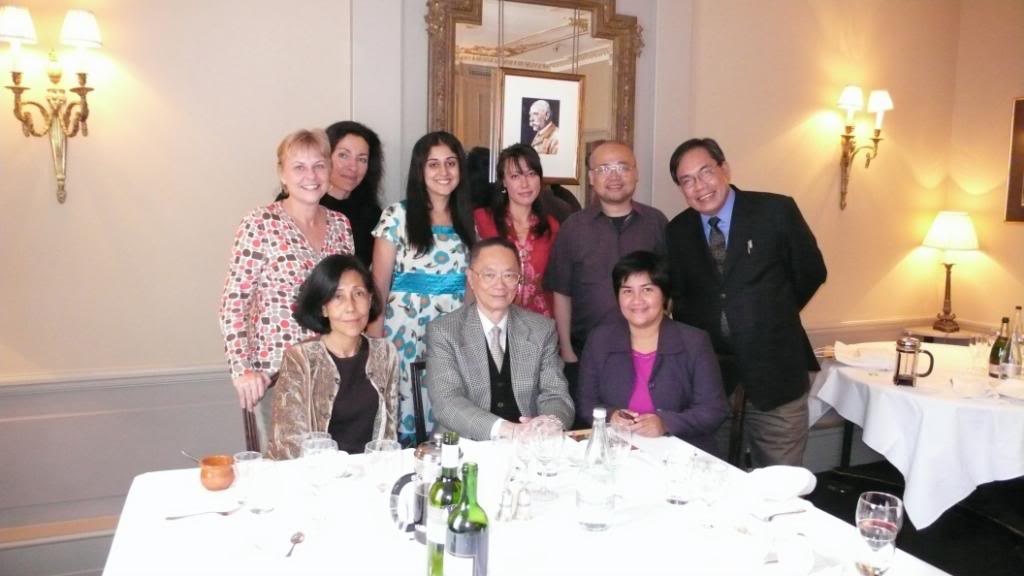
(Pictured on top are the Wong Fellows at a reunion with David T. K. Wong in London, 2008. Image of Nathan Go courtesy of UEA.)

Penman No. 72: Martial Law in Three Filipino Novels

KillingPenman for Monday, November 11, 2013 

LATE LAST month, I flew down to Davao for a group organized by the chair of the National Historical Commission of the Philippines, Dr. Maris Diokno, for a roundtable discussion on narratives of martial law. The Martial Law Historical Advisory Committee, created by Administrative Order No. 30, had been tasked to collect, evaluate, and preserve documentary and other materials pertaining to the Philippine martial law experience, and this roundtable was an early but vital stage of that process, a thinking-through of basic assumptions and expectations from participants in and scholars of that period.

I was invited not only because of my activist background and imprisonment under martial law, but because I’ve written a novel and some stories about it, and will write yet more—a nonfiction oral history of the First Quarter Storm, for which I’ve been given a grant by the NHCP. I’ll say more about this project in a forthcoming column, but in the meanwhile, let me share excerpts from a brief think piece that I contributed to the Davao roundtable (which, incidentally, was both insightful and moving, attended by the likes of martial law veterans Joy Jopson Kintanar and Judge Meinrado Paredes, as well as younger scholars and writers Leloy Claudio and Roby Alampay). Here’s what I wrote:

In his review in Philippine Studies of Azucena Grajo Uranza’s Bamboo in the Wind—one of the first and few novels to have dealt with our martial-law experience—Fr. Joseph Galdon quoted another writer, Linda Ty-Casper, who wrote that:

Literature is one way [by which] history, which too often reduces life to dates and events, can animate life so that man is returned to the center of human existence. It is man, after all, not nations, who feels the hunger caused by economic recessions and market fluctuations, who suffers separations and dislocations from social upheavals, who catches the bullets and bombs of war. It is in man’s flesh and bones that the events of history are etched. Individuals die, while their country goes on. It is in literature that generations of images representing man are preserved. It is in literature that we can recover again and again the promise of our resurrection. It is the house of our flesh in which we can refresh, restore and reincarnate ourselves.

I’m beginning with this quotation because I’d like to suggest that, in some ways, the best way to remind Filipinos and to make sense of what happened to them under martial law is through fiction rather than factual narrative, because fiction requires and creates a wholeness of human experience. Young Filipinos, especially, need to see martial law as a story—a continuing story with consequences reaching into their generation and even the next.

Considering that the Marcos era lasted more than 20 years—from his first election in 1965 to his forced departure in 1986—it’s a bit surprising that not too many Filipino novels have been written about Marcos and martial law. (I should immediately qualify this statement by saying that, actually, not too many Filipino novels have been written, period. As a literary form, the novel—whether in English or Filipino—has never been our strong suit, unlike the Indians and the Chinese.) You would expect that martial law, in particular, would have left a thick scar or welt on our literary consciousness and imagination, in the same way that many survivors of martial-law prison were plagued by intense, recurring nightmares long after their incarceration. In fact, however, we have barely dealt with it in our literature, and if our children today know little if anything at all about martial law, it is because we have not written enough about it, and have left the little that we have written out of the curriculum.

Online can be found two very interesting and fairly comprehensive listings and discussions of the literature we have produced on our martial law and martial law-related experience. The first is a lecture delivered by the writer Edgardo Maranan in London’s School of Oriental and African Studies in 1999 and published by the site Our Own Voice in 2007, titled “Against the Dying of the Light: The Filipino Writer and Martial Law.” The second is a reading list compiled by a blogger and bibliophile who calls himself “rise.” Both lists contain and discuss works of fiction, poetry and nonfiction produced during and after martial law, material that now generally falls under the rubric of “protest literature.”

Understandably perhaps, it takes time, will, and bit of distance to process—with the benefit of hindsight and a freer imagination—a traumatic experience like martial law. In my case, it took nearly 20 years after my imprisonment to try and make sense of it in a novel. I’m not even sure, at the end of things, if I succeeded. But it’s important in any case to make the effort—for our creative writers to inscribe their own history of our political and social experience—because the writerly imagination is a powerfully intuitive tool for sense-making. Creative writing is integrative, rather than analytical; it puts things together, rather than taking them apart, as scholarship and criticism tend to do.

Today, I’ll focus on how three novels—I’m immodestly including mine—have represented our martial law experience in its various aspects. At least one of these three novels—two in English and one in Filipino—would be how our students today encounter, if at all, martial law and its causes and effects. The novels I am referring to are Dekada ’70 by Lualhati Bautista, first published in 1988; Bamboo in the Wind by Azucena Grajo Uranza (1990); and Killing Time in a Warm Place by myself (1992).

What the three novels share most strongly is a narrative of how martial law came about and what its immediate effects were. Of the three, Dekada ’70 offers the broadest sweep of things, covering the whole decade as it follows the individual paths that the members of the Bartolome family take. It is also the most unabashedly didactic, presenting long and detailed expositions of the political situation obtaining at that time, an approach that literary aesthetes might find too direct but which, when you think of it, is probably the only explanation young readers will have of an episode that to them might as well be ancient history.

All three novels are basically grounded in the specific experience of the middle class, taking note of its bright-eyed idealism and yet also its vulnerability to vacillation and co-optation. In this respect, Bamboo in the Wind attempts to cover the broadest ground, reaching across the social spectrum to present the plight of peasants under feudal tenancy as well as to display the clannishness of the elite. It ends just after the declaration of martial law, on the portentous note that “It was going to be a long night,” as indeed martial law would be, for the next decade.

My semi-autobiographical first novel Killing Time in a Warm Place is focused on the person and the growth of its narrator, Noel Bulaong, who has provincial roots but grows up in Manila, studies in UP, becomes an activist, is imprisoned under martial law, and then, upon his release, joins the government service as a propagandist no less; faithless, loveless, and friendless, he leaves for the United States to study and live there, coming home only for the death of his father, where the novel begins. Of the three novels, it is the most personal, although Dekada ’70 can also be read as Amanda’s story, the making of a feminist in the crucible of political and personal turmoil.

To my mind, the most important contribution these three novels make to the discourse on martial law is not even and not only their depiction of the horrors and excesses of martial law—the obligatory scenes, you might say, the arrests, the tortures, the rapes, the thievery, the brute exercise of State power over the people. It is their exploration of the element of collusion and complicity—of how we, in a sense, allowed ourselves to be ruled by a regime that promised peace and progress for the price of a little national discipline.

In Dekada ’70, Julian Bartolome Sr. gives the regime every benefit of the doubt, convincing himself of the government’s good intentions, despite Julian Jr.’s deepening involvement in the Left. In Killing Time, Noel Bulaong does a 180-degree turn and joins the dark side—an acrobatic maneuver that many former activists, including me myself, performed, caught in a bipolar world. Having left the Left, it seemed that one had little choice but to cast one’s lot with the Right, and it’s no surprise that many ex-activists became the sharpest thinkers and most active doers of Marcos, Cory Aquino, Ramos, Estrada, and Arroyo. Bamboo in the Wind delves into how martial law benefited the elite, especially those factions that sided with the regime, and how it sought to corrupt intellectuals with progressive inclinations. In other ways, these novels speak of guilt and redemption, of how we are defined by family and class, of abject betrayal and astounding heroism.

These novels are far from perfect, and we can argue all day about what they failed to say and how they may have misrepresented this and that. But writing and promoting works of fiction like them may yet be the best way we can remind our people, especially this “selfie” generation, of the fact of martial law in the Philippines, and of its continuing legacy.

Penman No. 56: Cheers for The Mango Bride

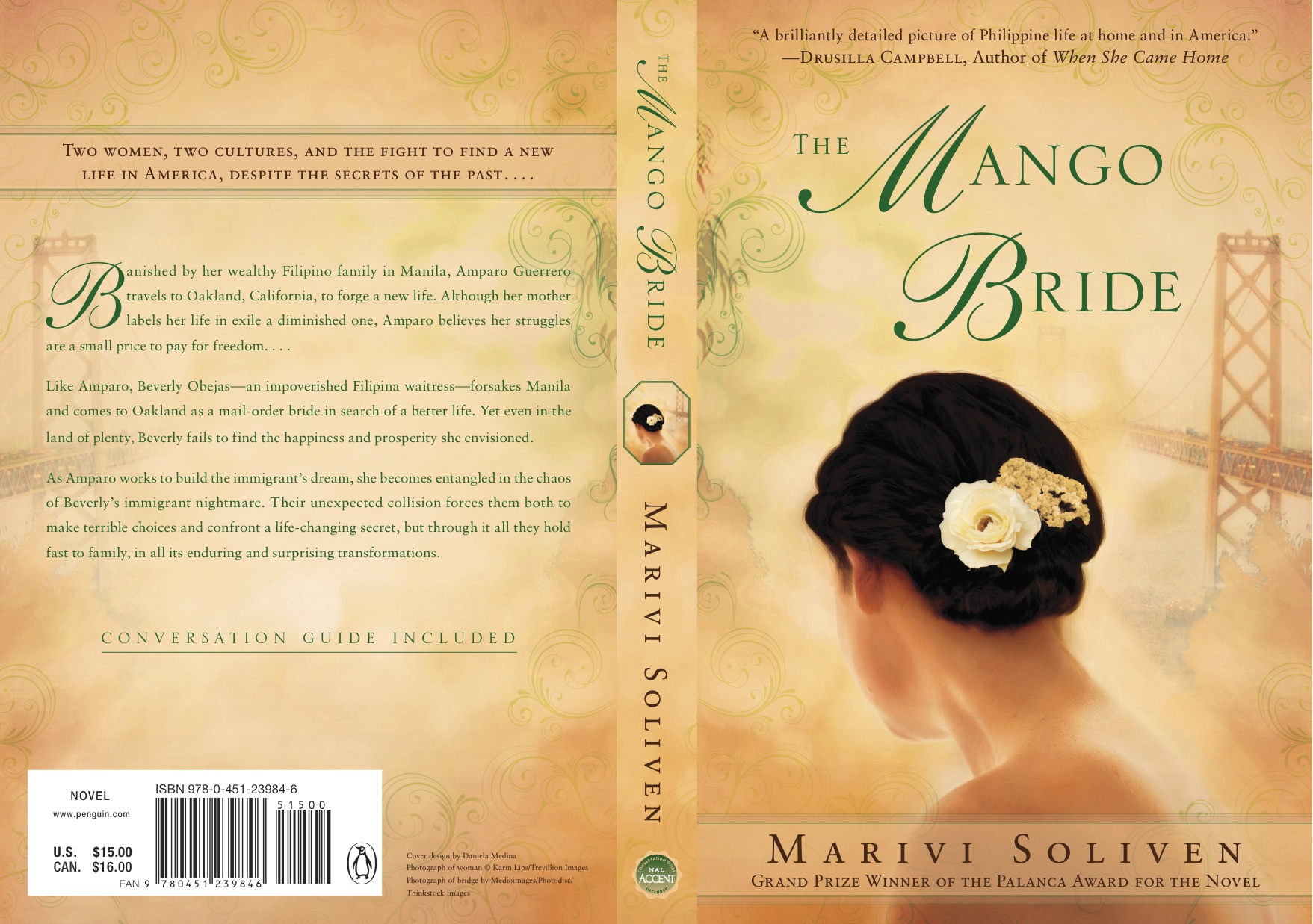
mango bride final cover copyPenman for Monday, July 22, 2013

IT ISN’T every day or even every year that a Filipino author gets published by Penguin Books—I can think of only Jose Rizal, Jose Garcia Villa, Jessica Hagedorn, and Miguel Syjuco, off the top of my head—so when Marivi Soliven told me a couple of years ago that her new novel The Mango Bride (New York: NAL Accent, 2013) had been picked up by a division of Penguin, I immediately sent her a congratulatory note. But I didn’t realize the extent of Marivi’s achievement until I received a copy of the published book and read the novel in a mad dash to the ending.

Again, that doesn’t happen to me very often; given my crushing workload, it usually takes me weeks and even months to finish a new book, which is why I habitually decline invitations to do book reviews, not wanting to keep the authors and publishers waiting interminably. But Marivi’s case was different, because I was reading the book not as a beetle-browed critic, but as a mentor and a friend; as it happened, Marivi—whose husband John Blanco teaches literature at the University of California in San Diego, where they’ve been living for many years now—was also my daughter Demi’s English teacher in UP, and since Demi herself moved to San Diego, we’ve all kept in pretty close touch.

All this chumminess and this moving around has a point, and it’s directly related to The Mango Bride, which deals with the powerful tides, both social and personal, that continue to deliver many thousands of our countrymen to America. It tracks two Filipino women—the to-the-manor-born Amparo Guerrero, who gets banished to Oakland following an unwanted pregnancy that threatens to bring shame and scandal on her family, and Beverly Obejas, a plucky girl who also ends up in Oakland following the well-traveled path of the mail-order bride.

There is, of course, more in common between these two women than meets the eye, and it will hardly be a spoiler to say that their trajectories will cross. The task of the novel’s plot is to bring these two seemingly very different characters together—Amparo is a carefree college coed, while the orphaned Beverly works as a waitress—and when they do, toward the novel’s explosive climax, the author completes a narrative coup, with both dramatic inevitability and irony.

But more than a story of individuals, The Mango Bride is also a story of Filipino families rich and poor, which is to say that it presents Philippine society as an unfolding telenovela—bitchy matrons, philandering patriarchs, wayward sons, gay go-betweens, suffering servants, and all. This is, unabashedly, the source of the novel’s power, its appreciation of life in its broad, harsh strokes.

But unlike a telenovela, Soliven’s masterful prose lends the novel a fineness of detail that extends the pleasure of reading beyond mere plot and character into language. Here’s how she presents Amparo’s first experience of sex (as novelists know, a sex scene is always one of the hardest things to do well, and do freshly): “If there was something Amparo learned that first night, it was that the rhythm of passion was deeply satisfying for its simple circularity. Mouths making pillows of opposing lips, the call and response of interlocking sighs, a passel of caresses, cascading one into the other as waves folding into sea foam. Afterward, they gathered the thin sheets about them and curled into each other, chin to chin, chest to breast, dozing twins in a cotton womb.”

There’s a brilliant scene where Amparo tries to tell her boyfriend Mateo that he’s gotten her pregnant, but an elephant—literally—strides into the picture, having escaped from a circus and running red lights all the way down EDSA. It’s unexpected pay-offs like this that keep lifting the novel above the pedestrian, that remind us of an important literary talent at work, one with an unfailing feel for her material, whether we’re in Forbes Park or North Cemetery or a grocery in Oakland.

There will, I expect, be some complaining over the coincidences that mark the plot, but even here the improbable seems fated, precisely because of the novel’s implicit message: that we are closer to each other than we think, and might do well to acknowledge and accept that closeness while we can.

Marivi says that she began the novel in 2008 in the frenzy of NaNoWriMo (National Novel Writing Month—November, to most people) and completed it two years later. It won the Grand Prize for the Novel in the 2011 Palancas, but was extensively revised by Marivi for international publication.

If you want to buy the book and see if you can share my enthusiasm, it’s available at National Bookstore. But here’s the best part: if you want to meet Marivi herself and get her to sign your copy for you, she’ll be in town very soon for a series of readings and talks, thanks to NBS, which is sponsoring her visit.

She’ll be spending an afternoon with us in UP Diliman on Wednesday, August 7, from 2:30 to 4 pm at CM Recto Hall. The UP Institute of Creative Writing and the Department of English and Comparative Literature will co-sponsor the event, which is open to all. See you there!

SPEAKING OF new books, I was happy to have attended the recent launch of a rather unusual book—unusual because it’s a bilingual Spanish-English edition—titled La Oveja de Nathan (Nathan’s Sheep), by the late novelist Antonio M. Abad. Translated into English by Lourdes Castrillo Brillantes (a professor of Spanish at UP, and the lovely wife of our friend and literary kuya Greg Brillantes), the novel won the Premio Zobel in 1928, and was being published for the first time.

The Premio Zobel was initiated by the pioneering businessman Enrique Zobel de Ayala in 1920 to preserve the linguistic and cultural heritage of Spanish in the Philippines in the face of what Nick Joaquin would have called unbridled sajonismo. The Philippines and Filipinos had imbibed English like it was God’s own drink, and bold measures had to be taken to ensure the survival of Spanish in the new American age. Over the next many decades, the Premio Zobel did just that, and more, granting recognition to the best literary works written by Filipinos in Spanish, as well as the most valuable cultural contributions made by Filipinos to the cause of hispanidad.

Abad’s novel was one of the earliest winners of the prize (which Prof. Brillantes herself would later win), and its present publication by the Premio Zobel Collection, the Filipinas Heritage Library, and Georgina Padilla y Zobel (Enrique’s granddaughter) could not be more timely, as it deals with Filipinos caught between powerful political forces.

I’d have to admit that Sra. Georgina’s thoughtfulness in sending over an invitation to my house, with my name and address hand-lettered with a fountain pen, was what convinced me to drive across town in rush-hour traffic to catch the launch. Of course, the late author’s son, the poet Jimmy Abad, is also a dear friend, and Jimmy’s moving poetic tribute to his father’s legacy (delivered, in customary Jimmy Abad fashion, straight from memory) was well worth the excursion.

Penman No. 26: New Novelist in Town

OFW AwardPenman for Monday, Dec. 23, 2012

IT’S ALWAYS a pleasure to welcome a new novelist into our ranks, and today will be one of those happy days when we acknowledge the arrival—literally and figuratively—of a new talent in our midst, Dr. Almira Astudillo Gilles, or just Almi to her friends.

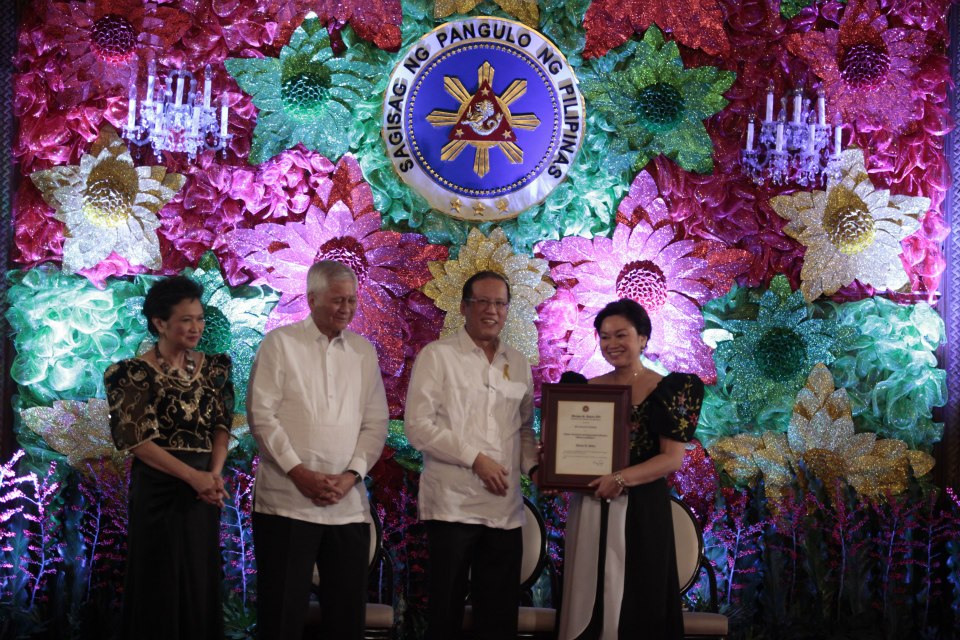
Almi flew in from Chicago as one of 29 recipients of the 2012 Presidential Awards for Filipino Individuals and Organizations Overseas, which were given out last December 5 by President Aquino at Malacañang. I had met her at the ICOPHIL conference in Michigan last September, although she had introduced herself to me by email earlier, as a fellow Filipino eager to make contact with other writers in the US and the Philippines.

Last December 9, Almi also launched her first novel, The Fires Beneath: Tales of Gold (San Francisco: Philippine American Writers and Artists, Inc., 2012), at the Ayala Museum. The novel deals with how a poor man’s discovery of ancient gold in the Philippine South changes him, his family, and his community. I haven’t finished reading the book, but I’ve been much impressed by her sharpness of eye and precision of language.

Writing about Quiapo and Binondo, for example, Gilles observes that “In Quiapo, the Golden Mosque is flanked by the Church of the Black Nazarene while the Binondo Chinese worship at Our Lady of China. On the sidewalks surrounding both places, vendors set up storefronts assembled from canvas, corrugated metal, or pieces of plywood, displaying items promising an easier spiritual journey. ‘Bypass purgatory,’ the vendors hawk. ‘Take one step closer to paradise… at a fraction of retail.’ Most believe, all pray. Both acts of nature and man cause great suffering. Metropolitan Manila lies beneath sea level and all it takes is one bad rainy season to show the inadequacy of the government’s flood control system. But the people take this all in stride. They buy both prayer beads and rubber boots.”

Since she was busy enjoying a well-deserved Christmas break with her family in the Philippines, I asked Almi to respond to a few questions I sent her by email, to map out the unlikely course she took to becoming a novelist from a professional background in the social sciences.

BD: Tell me something about yourself and your background.

AAG: I spent a few childhood years in Frankfurt, Germany where my father was assigned by the World Bank. Hence, English was the first language I learned formally. I was in premed psychology at UP Diliman and switched to AB psychology in my third year because I never intended to be a doctor and the subjects were getting harder. I graduated cum laude, and went to work for Sycip, Gorres, and Velayo (management consulting). After two years, I left for graduate school in the US, where I eventually finished a doctorate in social science, a master’s in political science, and a master’s in labor and industrial relations, all from Michigan State U. I also met my husband there, a doctoral student in economics, and got married there, on campus. My husband works in the telecommunications industry. I have a 22-year-old-son who works for Facebook and a 17-year-old daughter who’s starting college next year. I have a brother in Vancouver, Canada, and a brother and sister in the Philippines. My parents live in Manila.

BD: What started you writing?

AAG: I started writing poetry when I was about seven years old, and as I grew older I also started writing essays which were often published in the school newspaper. After graduate school, I joined the management faculty at De Paul University as adjunct professor, and taught at other area universities as well. At the same time, I had young children and my husband was traveling frequently. None of my childcare arrangements were satisfactory. After I grew dizzy and almost fainted in one of my classes (a night class for graduate MBAs), I went to see a doctor the next day and was diagnosed with hypertension, which apparently had been going on for quite a while. I then decided to quit teaching (I was teaching at campuses all over the Chicago area and would often get home around 11 at night) and try my hand at writing. My children’s book, Willie Wins, was published soon after, and I was hooked on writing. I started out writing for children since I had young ones of my own, and have published poetry, essays, short stories (one of which won a national award in the US), and plays for community theater. Now that my children are older, I thought I’d try something more adult, hence this novel.

BD: Where did the idea for this novel come from?

AAG: My friend’s sister was curator of the gold exhibit at the Ayala Museum, and she suggested I write a novel based on the discovery of the Surigao treasures. It took me about three years to finish, but I was working on other projects as well. I was fortunate that a video series of this story already existed, and I used that as reference.

I wanted the novel to reflect the tug between secularism and religiosity, and tried to delineate this struggle through my main characters (the gold discoverer and his family). Since I consider myself as a writer of the diaspora, I was careful to maintain a high level of authenticity about the Filipino experience (especially since the setting is the Philippines), while trying to appeal to American readers as well. Several chapters were workshopped at a master novel writing class led by a Northwestern University professor, and they were all white (no writer of color). While they liked the voice and style, they defined it as magical realism—a sad commentary on their knowledge of other cultures since the characters, setting, scenes were typical of a Filipino lifestyle. Some were also uncomfortable with my sentence construction (I tried to mimic the rhythms of Tagalog) but generally they liked the novel very much. In a writing workshop organization to which I belong, I’m the only Filipino writer (of English), and the only Filipino writer I know of actively publishing in the Midwest, so I feel I have to work extra hard to publicize my work and get the American readership to be more open to Filipino writing in English.

BD: What did your presidential award mean to you, and where do you go from here?

AAG: I write full time, but I guess you can say that days are filled with a lot of community organizing in addition to my writing projects. I’m very active in the Filipino American community in Chicago, and have a good working relationship with the Field Museum of Natural History. I try to promote Filipino culture whenever I can and am also invited by many schools to talk to students about multicultural writing. I’ve spoken at institutions and conferences all throughout the US, most notably at the Smithsonian Institution in Washington DC.

I’m humbled by the achievements of all the awardees—they are really exceptional people who have given so much back to the Philippines. I’m grateful that my writing has been recognized (Willie Wins is the most widely circulated Filipino American children’s book in the US, available in many schools and libraries, and is on the reading list of most multicultural publications), but I feel that a presidential awardee is obligated to continue to serve. My other passion is conservation and the environment (as president of the UP alumni group in Chicago, we raised funds for a marine study in UP Visayas), and I’m always trying to push both literacy and conservation. I’m encouraged by the feedback I get about my efforts because many have told me that I have motivated them to either write or start doing something to save the environment. I try to use the award to open doors so that I might do more, and the awards have been very effective in helping me to connect to others whom I might recruit for my cause.

AND SPEAKING of new novels, I’m awaiting an early copy of Marivi Soliven Blanco’s The Mango Bride, a comic romp through contemporary Filipino relationships, which will be released by Penguin in the US this coming April. Like Almi, the San Diego-based Marivi started out writing stories for children. Their examples should encourage more Filipinos, especially women, to make their mark in global publishing.