
Penman No. 356: Loverly London (2)

IMG_0602.jpeg

Penman for Monday, June 3, 2019


TO PUT it one way, the United Kingdom is the kind of place where the money looks too pretty to spend, especially the duotone one-pound and two-pound coins. But you better have a lot of it, and be prepared to let go—unless, like Beng and me, you thrive on the low end of things, which can come for next to nothing, if not for free.

As I’ve often mentioned here, Beng and I are inveterate flea market fanatics, and one reason we travel so much isn’t to pose beside the landmarks as nearly everyone else does, but to scour the flea markets, thrift shops, and garage sales of the world for the glorious stuff others see as junk—or maybe don’t see at all. From New York’s Hell’s Kitchen, Amsterdam’s Waterlooplein, and Barcelona’s Encants to Paris’ Clignancourt, Singapore’s Sungei, and Beijing’s Panjiayuan, we’ve been there and done that.

IMG_0285.jpeg

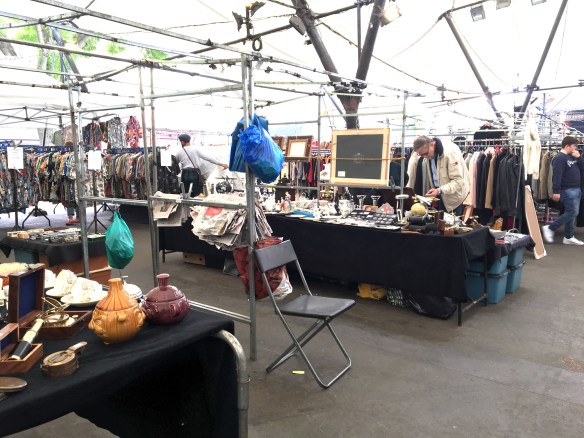
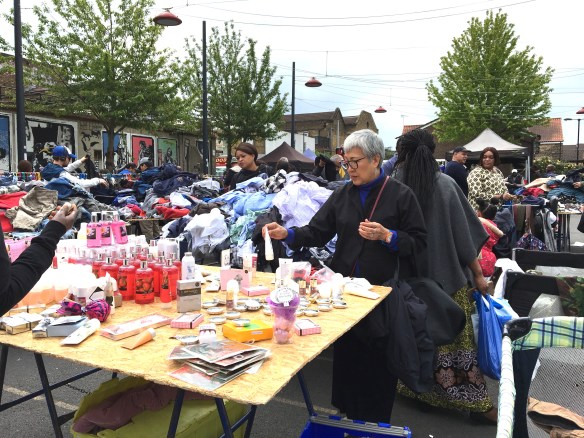
As it happens, we’ve yet to find a city as full of flea markets as London. On the weekends, you can easily find a dozen of them hawking everything from vintage Gladstone bags and Victorian silverware to paisley shirts from the ‘60s and ancient Roman coins. Beng usually looks for little silver baubles and I, of course, look for pens, old books, and anything to do with writing.

London is also charity and thrift-shop heaven, and every square mile you’d be guaranteed to find at least one Oxfam, British Heart Foundation, Cancer Research, Norwood, Barnardo’s, or British Red Cross shop, often right next to another. Being fairly large for a Pinoy, I don’t mind saying that nearly everything I wear on top comes from some ukay-ukay or resale shop, so London’s flea markets and thrift shops are always a chance to pick up well-cut shirts and blazers for a tenth or less of what they would go for on the High Street.

IMG_0238.jpeg

And true enough, London delivered in spades. Portobello Road is every tourist’s idea of a weekend bargain paradise (thanks to the Notting Hill movie—Hugh Grant’s bookshop at #142 is now a shoe shop), but the fact is that even more interesting and affordable markets can be found at Deptford, Brick Lane, and Islington, among others.

IMG_0281.jpeg

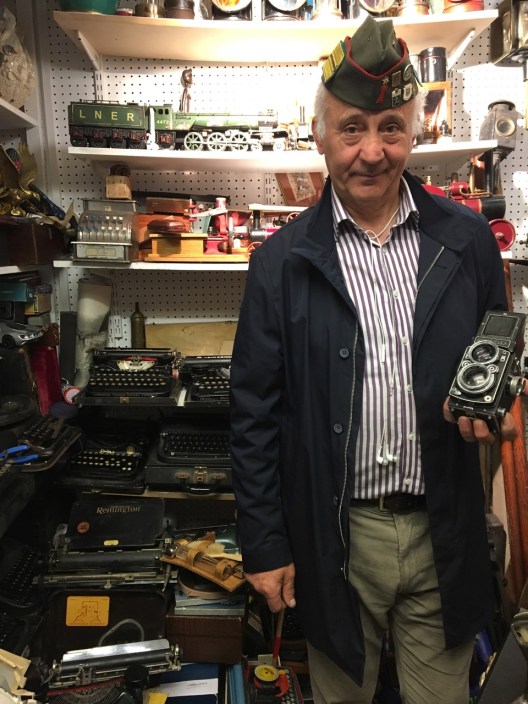
I did have a good chat with an antiques dealer named Nicholas on Portobello Road. He came over to me when he saw me craning my neck at the awesome pile of vintage typewriters he kept in one of his stalls. Even if I had to tell him that I couldn’t possibly drag one of those beauties home in my luggage, he seemed happy to meet someone—a Filipino at that—who understood how lovely and valuable his Erikas and Bar-Lets were.

IMG_0294.jpeg

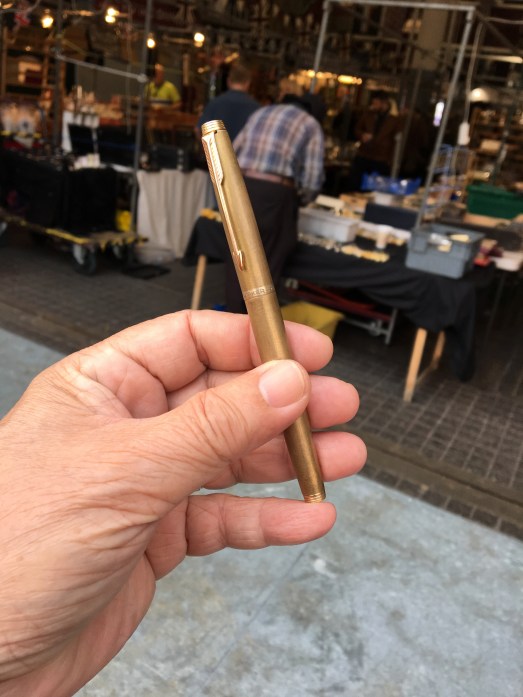
Of course I couldn’t leave London without buying a pen or two. A tip from Nicholas led me to the Jubilee Antiques Market which happens at Covent Garden every Monday. The dealers set up as early as 5 am, and we were there at 7, me scouting the stalls for tubular objects, Beng interviewing a licensed mudlark (someone who pokes around the banks of the Thames) about his finds. I came away with a prize for £25, haggled down from £30—a rare brass prototype of the iconic Parker 75.

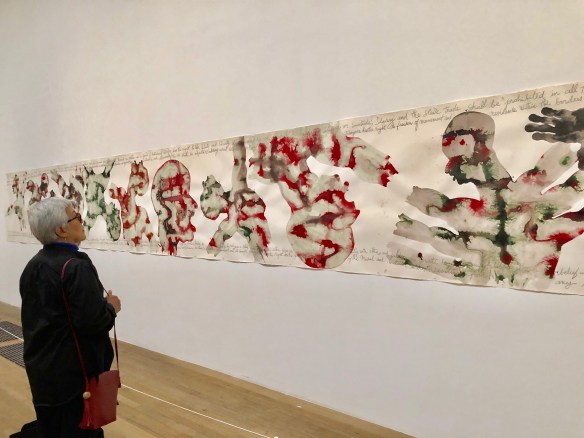
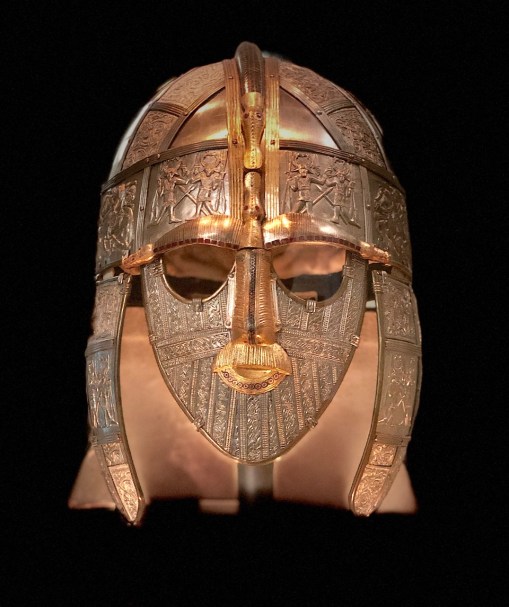
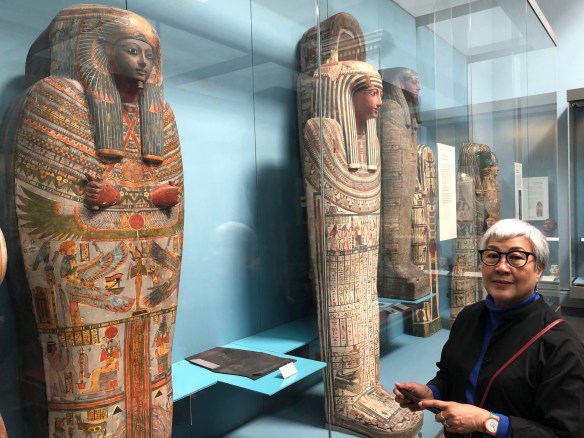
But more than markets, London is mecca for museum rats, which Beng and I also are, and while we’ve been there before and seen literally the same old things, we took in and reveled at the Sutton Hoo masks and the Egyptian mummies at the British Museum all over again, before hopping over to the Tate Modern at the South Bank for a mind-blowing exhibition of paintings from the Weimar Republic and highly inventive political art from the present. What impressed us even more were the guided tours for children at the Tate, their early exposure to the complexity of the modern mind. (Most London museums are free and open all week.)

IMG_0588.jpeg

IMG_0566.jpeg

IMG_0572.jpeg

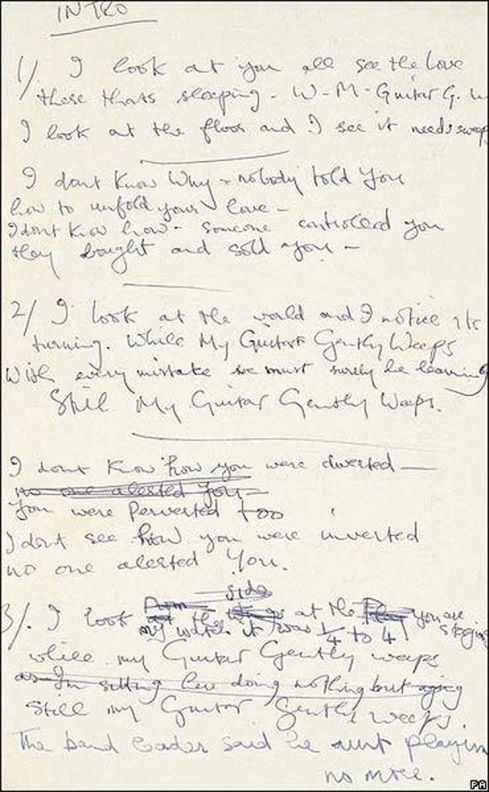
We reserved our last stop in London for a treat I had been anticipating for ages: a return to the British Library and to its exhibit of its treasures, ranging from old Bibles, the Magna Carta, and pre-modern maps to a special section on the Beatles. I was struck by how neat, orderly, and indeed unfailingly precise the ancient manuscripts were, as you might have expected of sacred texts, such as the Codex Sinaiticus, its every word hand-inscribed in the 4thcentury but looking as sharp and as fresh as this morning’s paper. Contrast that to the vigorous scrawls, scribbles, and cross-outs of modern writers—including the Beatles, who wrote letters and lyrics with a schoolboyish disregard for form and order: the draft of “Michelle” on the front of an envelope, that of “A Hard Day’s Night” on a greeting card. Elsewhere, Sylvia Plath sends a poem to a publisher in long hand.

d7bbdbf04633e0c9431f751041ddf1d6.jpg

IMG_0327.jpeg

Words, decades, and centuries come alive in London—not just in the library or museum but on the street, which makes yet another visit worth yearning for.

Penman No. 355: Loverly London (1)

IMG_0319.jpeg

Penman for Monday, May 27, 2019


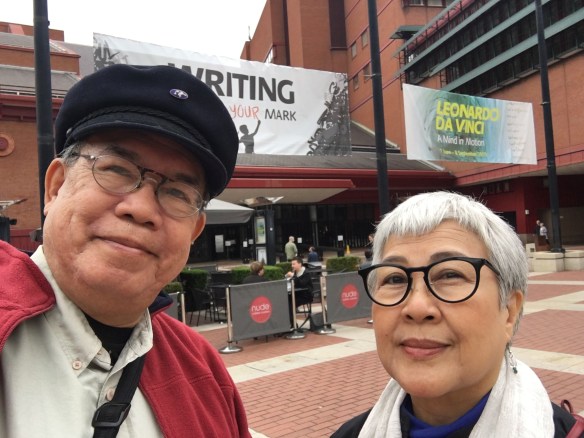
I FIRST visited London 25 years ago, on my way to Scotland to take up residence at Hawthornden Castle on the fellowship that led to Penmanship and Other Stories. Since then I’ve been back a few times—very often in 1999-2000, when again I was a writing fellow at Norwich. It’s easily my favorite city in the world to visit, given its cultural vitality and the accessibility of the things that matter most to me—museums, galleries, and flea markets—and for the past two decades, Beng and I had been dreaming of returning to London to step back into our old haunts.

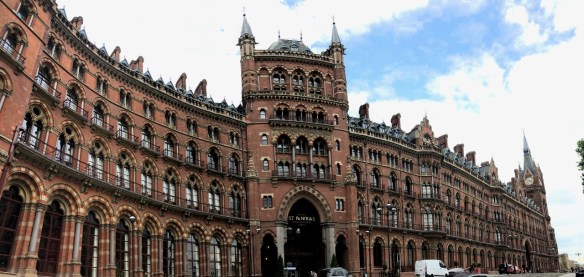
That finally came true on the heels of our recent Scotland trip with our daughter Demi and her husband Jerry; they flew back to home and work in California, so Beng and I had a full week to ourselves, and wisely we decided to just spend almost all of that time in London, except for an overnighter in nearby Chelmsford and Norwich. As with 20 years ago, we did everything by train and by Oyster card (“contactless” is a new English word you’ll learn quickly just out of Heathrow). There’s nothing like a train ride into the English countryside and its undulating greens awakened now and then by brilliant yellow swathes of rapeseed to make one understand Wordsworth and Romanticism, in the same way that Glasgow’s sooty masonry and steel sinews recall a darker, Dickensian industrial past.

9101e10824ce12963ec78a189abcd3c22e091785.jpg

Speaking of Dickens, and like many Pinoys my age, my first impression of London was shaped by Broadway’s and Hollywood’s renditions of its Victorian upside and downside, in such confections as “Oliver Twist” and “Mary Poppins” (from which the screech of my schoolboy crush, Julie Andrews, still resonates, appealing for “a room somewhere, far a-wigh from the cold night air…. Awww, wouldn’t it be loverly?”).

Well, thanks to Booking.com, Beng and I found ourselves a loverly, affordable room in a large house in the northwestern London suburb of Golders Green—a neat and quiet, multicultural neighborhood on the Tube’s Northern Line, historically Jewish but with many Turkish, Iranian, and Japanese restaurants and groceries lining the streets. And, of course, there were Filipinos everywhere, not tourists like us (you’ll find them at Harrods) but off-duty caregivers and housekeepers enjoying time together at the local KFC.

IMG_0329.jpeg

That’s where we met someone we’ll call Thelma, who has worked for the same Jewish employer for the past ten years. It just so happened that she and Beng had some mutual friends from Iloilo, where Thelma went to college. “I’m treated very well here,” Thelma said. “Every year I get a paid vacation to go home.” We spotted another unmistakably Pinay girl at the streetcorner selling suman, which we had for our next breakfast. And at the end of a long Sunday walk down Portobello Road, in a cluster of street-food stalls offering everything from vegan paella to Jamaican patties, we found Eva Caparanga’s Pinoy Grill UK, which instantly answered the question we had been asking all day, “What are we having for dinner tonight?” As she heaped our chicken adobo into a large takeout cup, Eva told us that she had been in the UK for more than 30 years, and was still working in health care, but that for the past three years she had used her days off to run her stall at the far end of the popular Portobello Market. “People ask me why I do this, and I tell them it’s so I can help family back home in Bicol. And again they ask me why I do that, and I say, well, that’s just how we Filipinos are!”

IMG_0618.JPG

The story of Filipinos in the UK and London is a long and colorful one, and I can’t count the many times they came to my succor during my tenure at Norwich and my weekend sorties to London years ago. When my feet acquired a horrible infection in Norwich, I ran to the National Health Service, only to find it staffed by kindly Pinoy nurses who got me back to walking in no time. In London, my host was the late, beloved Ed Maranan, who had ushered at the National Theatre and could sneak me into plays for free; in return, I made sure to wash the dishes at his flat on Goldhawk Road. The writer Jun Terra also brought me around once to marvel at the late Dr. Teyet Pascual’s art pieces in his Chelsea apartment.

This time, Beng and I were resolved to stay close to ground level, having neither the budget nor the inclination to splurge on the timelesss luxury that puts British-made things—whether they be suits, shoes, bags, or fountain pens—in a class all by themselves. This time, we said, we would go straight for the two things that we enjoy most in our sorties to foreign cities: flea markets and museums.

More on these next week.

IMG_0269.jpeg

Penman No. 353: Our Very Own Indiana Jones

s-l1600.jpg

Penman for Monday, May 13, 2019


IT ISN’T every day that a Filipino scientist captures the imagination not only of his own people but of the world, but last month, this amazing feat happened, putting Filipino science squarely on the global map.

The “feat” wasn’t just one event but the culmination of many years of painstaking work, research, and analysis, culminating in the publication of the results in Nature magazine of a cover article titled “Out of Asia: A newly discovered species of hominin from the Philippines,” attributed to an international team including Filipino archeologists Armand Mijares, Eusebio Dizon, and Emil Robles. The article announced the discovery of what the team named Homo luzonensis, a new and previously unknown hominin or human-like species. (For a laymanized version of the article, see here: https://www.nature.com/articles/d41586-019-01152-3.)

The discovery consisted of about a dozen small bones found over several years in Callao Cave in Peñablanca, Cagayan, which taken together indicate that an early form of man lived here at least 50,000 years ago. Dr. Mijares, an associate professor with the University of the Philippines’ archeological studies program who led the international team, had been excavating the area since the early 2000s. In 2007, the digging paid off with the discovery of a foot bone “dated to 67 thousand years ago  (which) provided the earliest direct evidence of a human presence in the Philippines,” according to Nature. The discovery radically questions and reforms previous theories about human migration in Southeast Asia.

As exciting as the unearthing of luzonensis was, almost just as important was the fact of Mandy Mijares—a UP Manila graduate who took his PhD at the Australian National University—getting published in Nature, which stands at the very pinnacle of scientific publishing. As another well-known UP scientist and a good friend of Mandy’s, the geologist Dr. Mahar Lagmay, puts it, “It is every serious researcher’s dream and struggle to publish in this journal. Out of the 15,000 manuscript submissions that the editorial board of Nature receives a year, only 1,000 or approximately 7% are accepted for publication. Only 2% of science journals have an impact factor of 10 or higher. In 2017, Nature’s IF was 41.57—equivalent to publishing 40 articles in most other scientific journals.”

ASBrods.png

Mandy also happens to be a brother of mine in UP’s Alpha Sigma fraternity (that’s him in the middle, with me and Smart founder Doy Vea), and last week, the brods honored our very own Indiana Jones in a public program at the Asian Center, where he also presented his findings. I was asked to say a few words, and here’s part of what I said:

I had been hearing about this discovery from Brod Mandy in my private conversations with him over the past two years, and I knew he was sitting on something literally groundbreaking but even I had no sense of the magnitude of his project until I saw it on the cover of Nature. In my lectures on science journalism, I often refer to Nature as the one of the summits of scientific publishing. It’s hard enough to get published in, and much, much harder to land on the cover of. That’s what Mandy Mijares has been able to do.

But bragging rights aside, the joy I share with Mandy comes from seeing scientific inquiry and intellect recognized and rewarded in an environment that has become increasingly indifferent if not hostile to intelligence, indeed to the search for truth. Sophistry and opportunism have overtaken scholarship and honest labor, and political hacks purport to know and dispense the truth better than scientists and artists remote from the centers of money and power.

The discovery of luzonensis reaffirms the role of a university not just in its own country but in the world at large—in spearheading and supporting the pursuit of knowledge, even knowledge that will probably not add one percentage point to GDP or have any practical application we can think of at the moment, but which enlarges our understanding of ourselves as humans.

The question that luzonensis poses for us in the 21st century is, how much farther have we truly come along as humans from our hominin ancestors, and what have we done with our humanity? Are we any less crude, any less brutal? Could it be that luzonensiswas more caring for its own kind than we are today with ours? What have we done with our larger brains, our gift of language, with which we have become so facile that we can now distort the truth without batting an eyelash and even look smart and smugly smile and be praised by others for how cleverly we get away with murder? Faced with a creature that may have had no appreciation or even need for truth, reason, and justice, what does it say about us today, many millennia later, at a time when a good many of us seem to be in the same position, and let me repeat—with no appreciation or need for, and perhaps just a flickering memory of, truth, reason, and justice?

I’ll stop here before my sadness gets the better of me and beclouds the brightness of the hour, which properly belongs to Homo luzonensis and its brilliant discoverer. I’ll end with our fraternity’s exhortation to seek excellence in all endeavors—or I should say, in all good and just endeavors. Mabuhay ka, Brod Mandy!

Penman No. 343: A Feast for the Eye and Spirit

IMG_9257.jpegPenman for Monday, March 4, 2019


IF YOU ever find yourself with a free morning or afternoon in Manila, with some loose change in your pocket and a bee buzzing in your head about what to do, think no further and just do as I say: get thee to the San Agustin Museum in Intramuros. Your P200 (or even less, with concessions for seniors and students) will never be spent better, certainly not for a movie at the mall.

I hadn’t been to that museum in over 20 years; the last time I visited, it was a dark and gloomy place, as you might expect a 400-year-old institution to be. The museum is attached to the church of the same name, which was completed in stone in 1607 after two earlier and flimsier incarnations were destroyed by fire in 1574 and 1583. The Augustinians were inspired and industrious church builders—the corridors of the museum are lined with paintings of their glorious creations throughout the archipelago—and San Agustin Church itself remains the splendorous anchor of that evangelical effort.

The church has become a favorite choice for weddings, and indeed it was for the wedding of a friend that Beng and I went to San Agustin a few weeks ago. We got there an hour early, so we stepped into the foyer of the museum, and decided to while away the time viewing the exhibits. And what a feast for the eye and spirit that turned out to be.

IMG_9278.jpeg

The museum is organized along six basic themes that circumscribe Augustinian life: Love for Songs, Love for Prayer, Love for Music, Love for Wisdom, Love for Science, and Love for Culture.

IMG_9265.jpeg

Love for Songs speaks of the order’s devotion to liturgical music, embodied in the old choir books, many still on parchment, that were used in the church’s famous and now accessible choir loft, from where the visitor can appreciate the church’s full majesty under the towering organ.

IMG_9277.jpeg

Love for Prayer describes the community’s gathering five times a day for prayer in that loft or coro, seated in intricately carved silleriaor choir stalls that go back to the early 1600s. The space is dominated by the lectern and organ. A tip for the visitor: peek behind the organ for a glimpse of the original colors of the place, preserved in the masonry.

Love for Music is a special exhibition of musical instruments employed for church services, highlighting the work of two important masters, the composer and organist Fr. Manuel Arostegui and musical director Marcel Adonay.

IMG_9286 2.jpeg

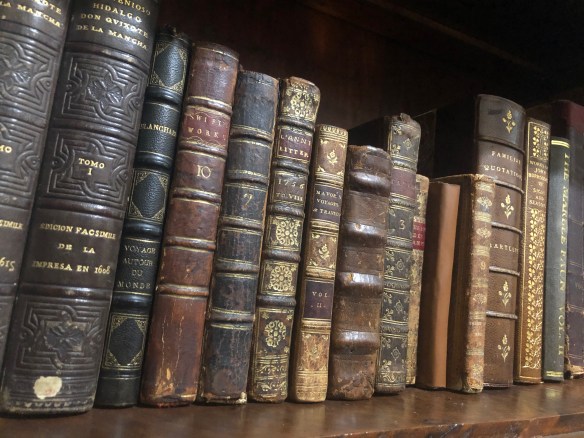
Love for Wisdom brings us to the order’s library which, despite the ravages of war—many thousands of volumes were lost to Manila’s sacking by the British and then to the city’s bombardment in the Second World War—still displays books dating back to the 1500s, proof of the Augustinian devotion to scholarship (particularly to linguistics, based on the exhibits). Being something of an antiquarian, this was of the greatest interest to me (I noted with some amusement that the oldest book in the room was said to have been published in 1552—one year younger than the oldest in my personal collection), but unfortunately the library as a whole can be seen only through a glass wall, perhaps to protect its precious contents.

IMG_9269.jpeg

Love for Science brings us to the work of the pioneering botanist Fr. Manuel Blanco, alongside that of two other Augustinian scientists, Fr. Ignacio Mercado and Fr. Antonio Llanos. It was, of course, Fr. Blanco’s Flora de Filipinasthat put the Philippines’ horticultural wealth on the global map, and the book’s illustrated 3rd edition (since reproduced) remains among the most coveted of Philippine publications.

IMG_9288.jpeg

Finally, Love for Culture dwells on the Augustinian mission in education, starting with their first school in Cebu in 1565.

In a larger sense, that educational mission continues with the museum itself and what it offers the modern visitor—people like us who, immersed in the business and digital traffic of the 21stcentury, step into a time tunnel to be magically transported into a past materially composed of gold, ivory, parchment, and wood. Indeed, as we did, the best way to appreciate this museum is simply to walk through it, without too much thought to system or design, allowing the objects—whether they be glass-eyed Madonnas, gold-threaded priestly vestments, or the gravestone of Juan Luna y Novicio—to speak to you. I’m not even a particularly religious person—I’ve long had issues with the Church, despite my deep respect for its core intentions—but this exposure to specific aspects of the Augustinian mission in the Philippines strangely reassures me that good things survive.

Endowed by the likes of the late Don Luis Ma. Araneta, the museum has been very capably maintained and is well lit, and its two stories of exhibits, plus Father Blanco’s Garden, offer the visitor at least an hour of quiet wonderment—with an emphasis on “quiet,” an increasingly rare grace to be found in our frenetic city. Spare that hour and those 200 pesos; you will feel amply rewarded.

IMG_9262.jpeg


Penman No. 337: A Perfect Ending

IMG_9010.jpeg

Penman for Monday, January 21, 2019


I RETIRED last week after 35 years of service at the University of the Philippines, and I celebrated the special day with UP friends at a dinner graciously hosted by UP President Danilo Concepcion at his official residence, the newly renovated Executive House.

Standing in a wooded corner of Diliman close to C. P. Garcia, the Executive House was built by President Vicente Sinco in the late 1950s, and in its early years no president really lived there, but it became the venue for lively faculty colloquia, involving such intellectual stalwarts of the time as O.D. Corpuz, Ricardo Pascual, Cesar Adib Majul, Leopoldo Yabes, and Concepcion Dadufalza. When President Salvador P. Lopez decided to move with his wife into the place in 1969, they were reportedly met, in typical UP fashion, by a posse of protesters insisting on certain demands.

These historical precedents were thronging in my mind when I stepped into the EH last Tuesday evening for an all-UP dinner which, unlike all the other big events I had attended there, was being held in my honor—it was a trifecta of sorts, being my 65thbirthday, retirement day, and our 45thwedding anniversary.

Long before I became Vice President for Public Affairs, it had been my dream to end my service in UP with a small party for my closest and dearest UP friends at the EH, and that came true. Of course that dream began with entering UP itself, and it was my mother Emilia—BSE 1956, the only UP graduate among her 12 siblings—who fired that ambition. When I was a small boy, she would play a 78 rpm record of “UP Beloved” flipsided by “Push On, UP.” I guess you could say that my future was laid out for me that early, and I grew up without any doubt whatsoever that I would enter UP someday. She was with us that evening, lovely and graceful at 90. (Our daughter Demi, BA Art Studies 1995, joined us in spirit from California.)

In my farewell remarks, I also thanked my sweet wife Beng, from the UP College of Fine Arts, my 45 years of togetherness with whom was for me the better reason for the festivities. Aside from my friends in administration, teaching, and writing, some seniors and mentors obliged me with their presence—Dr. Gerry Sicat, who took me in off the street and employed me as a writer at NEDA in 1973, sent me back to school to learn some Economics, and sent me to the US on my first trip abroad in 1980 to expose a young writer to the outside world; former President Dodong Nemenzo, whom I had served as VP many years ago; National Artist Amelia Lapeña Bonifacio, my professor in playwriting; Dr. Manny Alba, as debonair as ever; and dear friend Julie Hill, whose four books I have been privileged to edit, and who flew in all the way from California to be with us.

IMG_7818.jpeg

3Q2A3822.jpeg

I also noted that VPs and even presidents come and go, but UP is unique and in some ways immutable. The University is bigger than any one or even all of us. It has a life and an integrity of its own.

We need to keep fighting for a UP truly worthy of its founders’ dreams—a UP governed by merit rather than by patronage, and led by men and women of impeccable intelligence, ability, and most of all, integrity. Honor and excellence must be more than slogans to us but a way of life—honor even more so than excellence, which is easily found in a community of intellectually brilliant minds, but also easily compromised and corrupted by power.

While every day we need to recognize and to make the pragmatic decisions that keep the University afloat, every once in a while, we need to remember what makes us different from just another school, and uphold idealism over realism, principle over practical result, excellence over expediency.

I ended with a few appeals, addressed mainly to the friends I was leaving behind—foremostly, to keep the University’s liberal spirit alive. I have often argued that the true heart of UP lies neither in the authoritarian Right nor the doctrinaire Left, but in that great liberal middle, which—despite all of its confusions, contradictions, vacillations, and weaknesses—most honestly represents the search for truth, reason, freedom and justice in our society. I would much sooner trust someone who remembers and respects the value of doubt than those—like our despots and ideologues—who insist that they have the answer to everything.

I also asked the administration take special care of the UP Institute of Creative Writing, which I was privileged to serve as director for eight years. It is a truly world-class institute whose work no one else in Asia is doing. For a relatively small investment, the UPICW keeps the literary imagination and the truth itself alive in this age of fake news and demagoguery.

It was a perfect albeit bittersweet ending to my formal career. I retired saddened to miss the company of people I had come to respect and love, but gladdened by the opportunity to serve our University and people in more creative ways—in a manner, at a time, and at a pace of my own choosing.

Beng and I expect to travel much and travel far together, ngunit malayong lupain man ang aming marating, din rin magbabago ang aming damdamin.

(The 3D-printed Mini-Me up there was a parting gift from my staff at the OVPPA. Many thanks, all!)

Penman No. 336: Goodbye to All That


IMG_8927.jpegPenman for Monday, January 14, 2019


TOMORROW, THE 15th of January 2019, I retire from the University of the Philippines after 35 years of teaching, a few of them spent in administration as department chair, institute director, and most recently on my second stint as Vice President for Public Affairs.

As I write this, a week in advance, the impact of departure hasn’t hit me yet. My schedule is still bursting with meetings and appointments, I’m still shining my shoes, and the guard at our building still opens the door for me, despite my daily gesture for him not to bother getting up from his seat.

I occupy a pretty large office on the ground floor of Quezon Hall, UP’s Greek-columned administration building. Erected in 1950, Quezon Hall was renovated recently, and I was among the first beneficiaries of that facelift, stepping two years ago into the same space I had used when I first served as VP in 2003-2005, but now spruced up and modernized in all kinds of ways.

I’m really a simple guy—I can get work done with just a laptop on, well, my lap—so I can appreciate the finer things in life more than someone born to them. I still remember, like most retirees would, my first office desk back in the early 1970s, when I joined the National Economic and Development Authority as a writer, and the sense of fulfillment that one felt just to have a table and typewriter of one’s own.

Having such a nice and well-appointed office—with its own restroom, conference table, sofa, bookshelves, air conditioning, electronic security, sprinklers, and strong wifi—didn’t only make me feel privileged, but also more responsible, knowing that public money had been spent to make me feel comfortable, work efficiently, and look dignified. Indeed, I had to dignify the office, by acting as I imagined a university official should—with respect and consideration for whoever came in to see me, and with prompt attention for any piece of paper in my tray, or any message in my inbox.

The first thing I did when I moved in was to personalize the place, mainly by bringing in the best of my private collection of paintings, pens, and antiquarian books. Having lost three decades’ worth of precious items in my Faculty Center office in the 2016 fire, I resolved that my new office was now the safest place to store my baubles, although I had nothing of too great a monetary value to attract thieves.

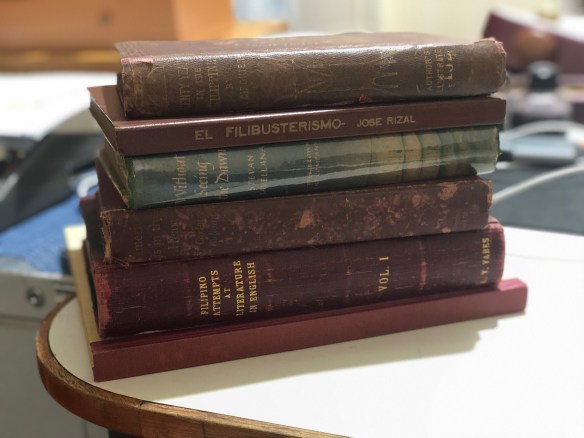
Aside from my favorites among my wife Beng’s own watercolors, the paintings consist of midcentury landscapes by the likes of Jorge Pineda and Gabriel Custodio, accomplished minor masters but nowhere as auctionable as Amorsolo or Kiukok. I have books, maps, and manuscripts dating back to 1490 (a page from a Latin breviary, my one example of true incunabula), but who else seriously wants to sniff handwritten letters from the 1600s, or musty English periodicals from the 1700s? Now and then I get a respectful question from visitors about my curios—let’s not forget the 1970s Olivetti Valentine and 1923 Corona folding typewriter stashed in a corner—but usually they don’t even notice that the magazines on my coffee table go back to the 1930s.

That’s been perfectly fine by me, because the office was always more of a shelter than a showcase, a cabinet of curiosities for my own inspection and enjoyment, particularly in moments of stress and anxiety, as any PR job inevitably entails. Confronted with the crisis of the hour, I’d leaf through the marvelous illustrations in a 200-year-old book of world travels, or patiently clean a Parker Duofold pen that Henry Ford or Manuel L. Quezon might have used, or gaze at an indelibly orange sunset from the 1940s, and feel reassured by the certainty that all the kinks and creases of today will get smoothened out by the sheer passage of imperial time.

I’m doubtlessly going to miss this mini-museum that I’ve cobbled together. I’ll be bringing the items home, or putting them away in safe storage, but it will be the place itself that I’ll be looking back on wistfully, knowing that, unlike many less-blessed employees trooping joylessly to their cubicles, I loved going to the office and working there, in the mute but expressive company of my favorite things. (I have a home office, of course, similar in some ways but much smaller and less carefully curated.)

In my fondest dreams, I wish that UP would someday accept my best books, manuscripts, and paintings as a donation and house them in a properly ventilated reading room, so that more generations of students can appreciate what I’ve enjoyed putting together and poring over. It was, after all, for the looks of surprise and delight on my students’ faces that I first bought these old books and brought them to class—not just to be ogled, but to be held and leafed through, so they could appreciate the materiality of literature, indeed of things before their time, in this now-centered world.

As I join that past and become, myself, an antiquarian artifact, let me say goodbye to all that, thanking my lucky stars and all the people who made UP the best possible workplace and second home to this writer-cum-bureaucrat. No bigger and brighter office to next step into than the future itself.

Penman No. 334: A Literary Yearender


IMG_8578.JPG

Penman for Monday, December 31, 2018


TWO BIG events rounded out the literary year for me, both of them related in some way to the University of the Philippines Institute of Creative Writing (UPICW), which not incidentally marked the 40th anniversary of its founding earlier this month.

The first was Writers Night last November 23, effectively an annual reunion and pre-Christmas party of the Filipino literary community. But more than a social bash, Writers Night also marks two important points on the literary calendar: the announcement of the winner of the Madrigal-Gonzalez Best First Book Award (given in alternating years to books in Filipino and English) and the launch of the latest issue of Likhaan: the Journal of Contemporary Philippine Literature.

Now on its 18thyear, the MGBFBA’s awarding is highly anticipated, not just because of the P50,000 cash prize but also because, miraculously, the UPICW has done a pretty good job of keeping the winner’s name secret until the proverbial opening of the envelope itself. This year’s winner was Emiliana Kampilan’s Dead Balagtas Tomo 1: Mga Sayaw ng Dagat at Lupa, published by Adarna Books, which went on to win a National Book Award the very next day.

Rappler’s Margie de Leon describes the work thus: “The first few pages alone of komikera Emiliana Kampilan’s Dead Balagtas Tomo 1: Mga Sayaw ng Dagat at Lupa will take your breath away. Depicting local mythology’s creation of the universe, each page is a luscious spread of lively lines and bold colors….The next chapters are a narrative feat, interspersing short stories between pairs of Filipinos and the geological birth of the nation. The tangled tales between each pair of characters serve to personify the actual physical shifts that occurred in our geography millennia ago.”

The second highlight of Writers Night was the launch of the Likhaan Journal, and this year being a milestone, we launched not one but two issues—the regular journal containing 20 of the year’s best and previously unpublished works in Filipino and English, and a similar collection, edited by me, which we called 40@40, featuring new works by our top writers in Filipino and English—the difference being that the 40@40 writers all had some connection to the UPICW as former fellows, panelists, or members of the board.

As I noted in my introduction to the volume, when the UP Creative Writing Center was set up in December 1978, the country was firmly in the grip of martial law, which had been declared in 1972 and six years later had settled into a certain stability, or at least the appearance thereof, buttressed by new governmental institutions such as the Batasang Pambansa, the Ministry of Human Settlements, the Ministry of Public Information, and the National Media Production Center.

Martial law—particularly martial law of “the smiling kind” that the Palace liked to tout—had to create its own fictions, chiefly that Filipinos were free to express themselves and that Philippine culture and literature could find no better sponsor than the present regime, which had after all established the Cultural Center of the Philippines in 1969. The establishment of the UPCWC—which became the UP Institute of Creative Writing (UPICW) in 2002—may have been part of that liberal façade, the notion that all was well in the New Society. It began as a small office where university-based writers and their friends converged for spirited chats over smuggled beer and gin (itself an act of subversion, as the university banned such libations), with no defined function graver than running the annual Writers Workshop and the occasional lecture or forum.

But over the years, and especially over the decades after the overthrow of the dictatorship at EDSA, the UPICW has grown into a truly writer- and university-driven institution, overseeing mid-career and novice writers workshops as well as seminars for teachers and translators, running an online portal to Philippine literature at Panitikan.com, conducting outreach programs, representing Philippine writing overseas, and encouraging writing in other Philippine languages beyond Filipino and English.

Even within UP, not too many Filipinos seem to appreciate the fact that the UPICW is a trailblazer and a leader in the region, indeed in all of Asia, in terms of what it does.

This proved true again in 2018’s last big literary event, the annual gathering of the Asia Pacific Writers and Translators held December 5-7 at Griffith University on the Gold Coast, Australia. A contingent of seven Filipinos, most of them affiliated with the UPICW, represented the Philippines—possibly the largest national contingent aside from the Australians themselves.

IMG_6908.jpeg

APWT is the region’s largest and most active literary network, and we hosted its annual conference in 2015. I sit on its advisory board, and I was accompanied in Australia by UPICW Director Roland Tolentino, writers Vlad Gonzales, Luna Sicat Cleto, Marby Villaceran, and Deedle Tomlinson, and my wife Beng. We held a very well attended panel discussion on Philippine literature, which remains a mystery to many of our neighbors who belong to the Commonwealth loop. APWT will move to Macau in 2019, and we expect an even stronger Philippine presence there.


Penman No. 333: An Academy of Our Own

DSC_9291.JPGPenman for Monday, December 24, 2018


EXACTLY A month ago, in the auditorium of the newest campus of the University of the Philippines at Bonifacio Global City, an event of great historical significance took place—the first general assembly and forum of the newly organized Akademyang Filipino, the first Philippine academy of arts, sciences, and the professions.

Conceived together by National Artist F. Sionil Jose and the late Sen. Edgardo J. Angara, the independent and non-partisan Akademyang Filipino was set up for three main goals:

“To recognize and bring together, in one chamber, the best of Filipino minds and spirits, accomplished representatives of the Filipino arts, sciences, and professions, imbued with love of country and the spirit of service to the nation;

“To uplift the material and moral lot of the Filipino people, to define, promote and defend the best interests of the Filipino nation, and to find and nurture new sources of hope and inspiration for the Filipino youth; and

“To provide a forum for the rational discussion of pressing issues and the exploration of pathways to a better future.”

In other places, such academies have had somewhat more focused roles. The venerable Academie française is devoted to being the authority on the French language; the Taiwan-based Academia Sinica covers a broad range of disciplines but supports advanced research.

In the United States, the National Academies of Sciences, Engineering, and Medicine is the collective name of the three honorific academies in those disciplines. Since its founding in 1863, these national academies have pledged “to marshal the energy and intellect of the nation’s critical thinkers to respond to policy challenges…. When faced with a complex question, we bring together experts from across disciplines to look at the evidence with fresh eyes and openness to insights from other fields. These study committees survey the landscape of relevant research, hold public meetings to gather information, and deliberate to reach consensus, which results in a shared understanding of what the evidence reveals and the best path forward.” Studies and advice by the National Academies have covered such diverse topics as fixing the Hubble telescope, preventing wrongful convictions, and preparing young Americans for careers in science and engineering.

This is probably closer to what the Akademyang Filipino aims for—to repeat, “a shared understanding of what the evidence reveals and the best path forward.”

In our first forum, Justice Carpio gave a masterful presentation of the history of China’s claims to Philippine territories in the West Philippine Sea, using ancient maps to prove—as a good lawyer might be expected to do—the paucity of those claims. A panel of Akademya members and West Philippine Sea experts—De La Salle University’s Renato Cruz de Castro, UP’s Jay Batongbacal, and author and columnist Richard Heydarian—discussed the current Philippine government stand on the disputes was and warned against a policy of appeasement and surrender.(The DFA was invited but apparently declined to send a representative to the forum.)

The Akademya’s 100-plus founding members—a roster that could grow as more names are vetted—were selected by an interim board composed of NA Frankie Jose, National Scientist Angel Alcala, former Ombudsman Conchita Carpio Morales, Senior Associate Justice Antonio Carpio, Sen. Sonny Angara, former Sen. Ramon Magsaysay Jr., Atty. Felipe Gozon, Dr. Lydia Echauz, Ms. Doris Magsaysay Ho, and myself. We also elected Justice Carpio Morales our chairperson, and NA Jose as Chairman Emeritus.

Some easily recognizable faces at the launch included former UP President Emerlinda Roman, former Education Sec. Armin Luistro, former Foreign Affairs Sec. Delia Albert, former National Historical Commission Chair Maris Diokno, former Prime Minister Cesar Virata, historian Dr. Ricky Soler, Mapua University President Rey Vea, businessman Jack Ng, novelist Cristina Pantoja Hidalgo, sculptor Toym Imao, and Anvil Publishing chief Andrea Pasion-Flores.

A smaller group had met less formally for the first time in February last year, when Sen. Ed Angara was still around and very much involved in getting the academy off the ground alongside NA Frankie Jose. It still called itself the “Academia Filipina” then, but later changed its name in deference to an existing Academia Filipina de la Lengua Española.

IMG_0895.jpeg

This was the first but certainly not the last of our forums, and we intend to have several of these large assembly-type meetings every year for issues of great and general significance, concerning not just politics and business but also science and the arts. We need to create new interdisciplinary points of intersection and interaction. Our artists and scientists hardly ever get heard by our policy makers. With all due respect to the lawyers and the businessmen, they too might benefit from the insights of these other disciplines, so that we do not get mired in the kind of cynical pragmatism that drives too many of our decisions today, and remember to value such abstractions as beauty and logic.

The dues we collect will help support a very small back room and also our future activities. Sponsorships are of course needed and welcome, for so long as they do not compromise the independence of our association.

On that note I would like to thank, once again, aside from our speakers, our sponsors for the Akademyang Filipino event, including the UP College of Law, whose Dean, Fides Cordero-Tan, also happens to be the Executive Director of UP-BGC. I’d also like to thank the National Commission for Culture and the Arts, Sen. Jun Magsaysay, and other donors who prefer to remain anonymous for their assistance. My special thanks go to our Executive Director, Ms. Jette Jose Bergkamp, and my UP team from the Padayon Public Service Office and the Media and Public Relations Office.

Penman No. 332: Southern Surprises

IMG_8556.jpeg

Penman for Monday, December 17, 2018


MY RECENT forays to southern Taiwan—the first to Tainan, and the second to Kaohsiung—reminded me that while we Pinoys love to chuckle and even snicker at how the Chinese (among others) mangle English, the economic and technological leaps they’ve made (using their own language, let’s not forget) are no laughing matter, unless you’re a Chinese entrepreneur or engineer on his or her way to the bank.

This occurred to me as I was flipping through the local travel and leisure magazines in my hotel room in Tainan between sessions of the academic conference I was attending. Typical of the prose was this advertisement for a resort on the island: “Join the exclusive equestrian sports of the aristocrats, so that parents can easily experience the price of the people, the wonderful and rich itinerary, you can easily lick the children without going far! Let you play and don’t want to go home anymore.”

I could imagine some snooty Filipinos, more English than the English, rolling on the floor and thinking that people who write that way can’t possibly go anywhere, but I would’ve liked to bring those people to the exhibits downstairs showcasing Taiwan’s state-of-the-art research in biomedical engineering, solar power, and materials science, including an interesting project aimed at improving your basketball skills through “a virtual reality basketball tactic training system.”

I don’t know how close that project will bring Taiwan to a world basketball championship, but I could see, from the presentations I was listening to, that they were going all out to become world-class champions in research and development. Our host, the National Cheng Kung University, had almost US$145 million to spend on R&D in 2017, mostly from the government. (That’s about half of the University of the Philippines’ budget for everything.)

Thankfully, we did have a break from all the S&T reports on the last day of our Tainan conference, and we were given a choice of tours between visiting a museum or an aquaculture farm. Now, I love fish as much as you do—it’s often the first thing I eat in the morning—but I wanted to have a closer look at Taiwan’s culture and history, so I hopped on the museum bus. What we saw was, well, anything but Taiwanese—unless you take the act of presenting the thing itself as an expression of Taiwan’s place in the world today.

Our destination was the Chimei Museum, named after the company that’s now the world’s largest maker of ABS resin, which goes into the making of popular plastics such as computer keyboards, auto body parts, and bicycle helmets.

The Chimei Museum is an imposing if rather odd homage to Western art and artisanship. Located on the outskirts of Tainan, it was built in 1992 by the billionaire industrialist Shi Wen-long. Now 90, Shi never got a college degree. But he’s also a passionate amateur violinist who’s played with Yo-yo Ma. That, plus his personal fortune, has allowed him to put together a stunning collection of vintage musical instruments—including priceless violins by Stradivari, Guarneri, and Amati—that are now on display at the museum, in an exhibition that recreates the workshop of a master luthier or violin maker.

The Chimei’s other showstopper—aside from the Rodin gallery and some masterpieces of French realism—is its exhibit of ancient arms and armor, from the time of the Greek hoplites and medieval knights to the Japanese samurai and English crossbowmen. I have to admit to a boy’s fascination with weaponry, and having visited many of the world’s best museums, I’d have to say that the Chimei’s collection was comprehensively fearsome. These were the real things, folks, not cheap or 3-D printed replicas.

Indeed, there’s hardly anything Chinese in the design of the Chimei or in its exhibits. The large, neoclassical, Corinthian-columned museum—set off from the street by a long walkway flanked by tall statues of the Greek gods and goddesses—could have stood anywhere in Europe or the US, and comes off as a statement, as if to say, “We could have given you the chinoiserie you expect, but we chose to acquire and to present the best of the West.”

IRide.png

And I can’t let this column end without mentioning the other surprise I came across in southern Taiwan, in the port city of Kaohsiung, where I also attended a conference on distance education. Our host, Dr. Eing-Ming Wu, made use of a free afternoon to introduce us to the city in a most unconventional way—by giving us tickets to take the I-Ride, Kaohsiung’s so-called “flying theater”—kind of like a rollercoaster in an Imax—powered by the homegrown Brogent Group’s 3D technology, which it has exported to Hollywood and other amusement capitals worldwide. If I needed to be impressed by Taiwan’s engineers, this was the best way to do it, screaming my head off, feet dangling in the air, as we swooped over a Buddhist temple then plunged into the ocean.

While travel to Taiwan remains visa-free for Pinoys, I’m definitely returning as a tourist to Kaohsiung with my wife Beng, if only to have her  experience the exhilaration of the I-Ride and maybe take her on a cruise on the Love River, feasting on the sweet giant atisuntil our eyes bulge. As they say, in Taiwan, “you can easily lick the children without going far”—whatever that means, it sounds like fun!


Penman No. 331: Opening up to Taiwan


IMG_8621.jpegPenman for Monday, December 10, 2018


AS IT happened, I was in Taiwan twice last month to represent the University of the Philippines in two conferences that underscored the vitality of our academic partnerships with our Taiwanese counterparts—and the importance they accord to improving relations with Philippine universities.

Over the past decade, the Philippines has been sending scores of graduate students to various universities in Taiwan for their masteral and doctoral degrees, mainly in the sciences, where Taiwan has a lot to offer the world, given its cutting-edge technologies and laboratories. This also plays into one of the island’s growing predicaments—a demographic dip that has encouraged its policymakers to draw students for its universities from around the region, embodied in its so-called “New Southbound Policy” of promoting relations with South and Southeast Asia and Australasia.

Southern Taiwan has been especially aggressive in opening and developing academic relations with Philippine universities, banking on its geographical and cultural proximity to us. (It always amazes me how closely their aboriginal costumes and folkways resemble ours.)

The first conference I attended was the Presidents’ Forum of the South and Southeast Asian and Taiwan Universities (SATU), a consortium organized 15 years ago and since led by the National Cheng Kung University based in Tainan. This year’s meeting was devoted to strengthening linkages between universities and industries, with experts from Thailand (medical sciences) and India (engineering) supporting their Taiwanese counterparts in providing models for cooperation. SATU universities match experts who then work collaboratively on projects ranging from robotics and wind tunnels to dengue and stem cell research.

The second and larger conference was held in the port city of Kaohsiung, even farther south (both Tainan and Kaohsiung are easily reachable from Taipei by high-speed train). This was the 3rdInternational Conference on Open and Distance e-Learning (ICODeL) with the theme “Technology-Enhanced and Inclusive Education in the Digital Age,” and while it took place in Taiwan, it was actually organized and run by the UP Open University (UPOU), with support from the Commission on Higher Education (CHED), the Manila Economic and Cultural Office (MECO), the National University of Kaohsiung, the Open University of Kaohsiung, the Southern Taiwan Universities Alliance, and Taiwan’s Edu-Connect Southeast Asia network, among others.

This is as good a time as any to highlight the work of UPOU, one of UP’s eight constituent universities—one that happens to have the smallest physical footprint (it occupies a small lot in Los Baños, Laguna) but the largest global reach, because of its online presence. Founded almost 25 years ago to democratize access to quality higher education through distance education, UPOU came fully online in 2007, with 25% of its enrollees spread out over 70 countries. It offers three undergraduate, about 30 graduate diploma and masteral, and three doctoral degree programs, from which it has produced close to 3,000 graduates, mostly from its Multimedia Studies and Education programs.

All of this happened, former UPOU Chancellor Grace “Gigi” Javier Alfonso told me, without compromising UP’s high educational standards. “Applicants to our undergraduate degree programs still have to pass the UPCAT,” she said.

There’s a persistent impression out there that open universities and distance education offer cheaper but also lower-quality education and easier-to-pass courses, but UPOU has been working hard to prove this stigmatization wrong. “We offer the same quality of education as any other UP CU,” said current Chancellor Melinda Bandelaria, who also presides over the Asian Association of Open Universities (AAOU). “What open universities like UPOU provide is a chance for working professionals, housewives, entertainers, and OFWs to acquire a college or graduate education at their own pace, wherever they may be in the world. It’s not a replacement for, but an alternative to, traditional residential colleges.”

Many of UPOU’s students are OFWs working on their degrees, which will boost their skills and employability where they are and when they come home. One of the highlights of ICODeL was the inauguration of a Philippines Learning Commons in Kaohsiung where UPOU students could access their materials online. Much of the instruction of UPOU and other open universities is done through Massive Open Online Courses or MOOCs, which have become increasingly popular in the global academic landscape. UPOU now has more than 70 MOOcs on its roster, with 3 MOOCs typically covering a 3-unit course. It typically takes three years to finish a master’s degree with UPOU.

Mandated by RA 10650 or the Open Distance Learning Act to assist CHED and TESDA, UPOU had engaged industry experts help it in designing Open Educational Resources  or OERs which are free to use by teachers and students; UPOU then develops MOOCs using these OERs. “When industries work with universities, they create a powerful engine for economic growth and innovation,” said Dr. Bandelaria.

The point of bringing ICODeL to Kaohsiung was also to match UPOU and the many Philippine SUC officials who attended the conference with their Taiwanese counterparts. The chief matchmaker was Edu-Connect’s indefatigable Executive Director, Dr. Eing-Ming Wu, a political scientist and Chair Professor at Shu-Te University who has been one of the most energetic promoters of the Philippines abroad that I’ve ever met.

With these connections in place, Philippine educators may not have to look much farther than our closest northern neighbor for vital help in raising their educational standards.