Penman No. 319: A Priceless Literary Treasure

IMG_7732.JPG

Penman for Monday, September 17, 2018


SINCE I seriously got into antiquarian book collecting not too long ago, I’ve picked up quite a few books that have required the services of a professional book restorer. Surprisingly for most people (but not to bibliophiles who know the history of papermaking and publishing), the books most in need of help often turn out to be the newer ones—and by “newer” I mean a hundred years old or so, books published in the early to mid-1900s.

My oldest book dates back to 1551, an abridged volume in English on the history of institutions. I found it in, of all places, Cubao via an OFW who received it from her employer in Paris and sent it on to her son, who thankfully for me had little use for it and advertised it online. It’s amazingly robust for its age, still tightly bound in its original leather covers, the paper crisp and the printing sharp and clear, annotated here and there by the hand of its various owners down the centuries. (I was tempted, but I didn’t dare inscribe my name on it.)

That’s also true for relatively more recent books from the 1700s and 1800s, some of which look and feel like they rolled off the press yesterday. (I first fell in love with old books as a graduate student of Renaissance drama at the University of Michigan, which kept books from the 1600s on the regular shelves of the library, fascinating me with the stiffness of their paper and the tactile feedback of the letters). I often treat visitors to my office with a whiff of centuries past, ruffling the pages of, say, a Jesuit history from 1706 beneath their noses.

But books from the 1900s and later typically turn yellow and crumbly. The culprit, of course, is the acid that forms in modern, wood-based paper because of a number of both internal and external factors.

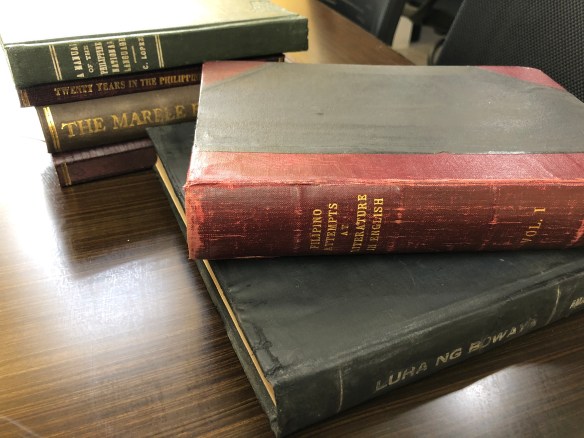
This was certainly true of a recent batch of books that I got back from my favorite book restorer (who shall remain unnamed for now lest she be deluged with requests, given that she has a full-time day job to mind). They included no book older than 1853 (a coverless edition of Paul P. de la Gironiere’s Twenty Years in the Philippines) and 1860 (a copy of Nathaniel Hawthorne’s The Marble Faun, which I didn’t even realize was a first edition until I noted the bookseller’s penciled notation 20 years after I’d bought it).

IMG_7699.jpg

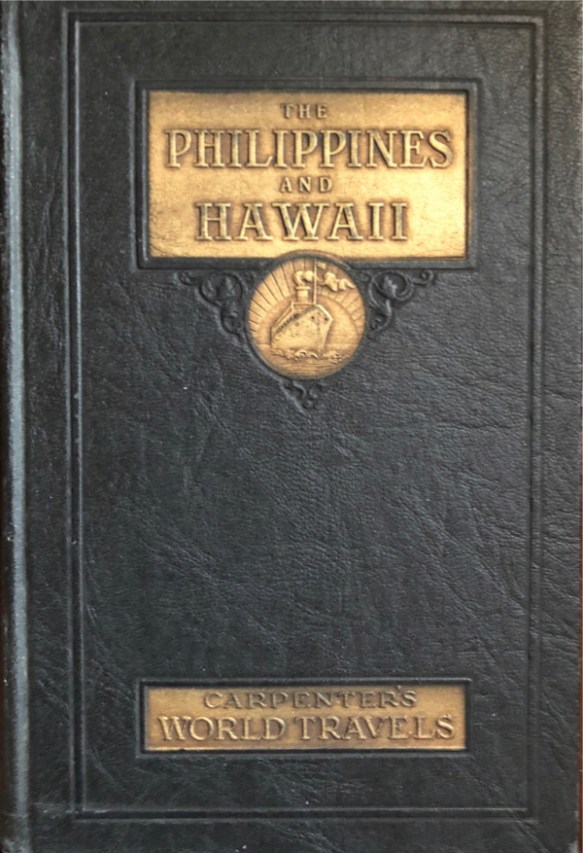
The prize in the pile was a thick clothbound book titled Filipino Attempts at Literature in English, Vol. 1 (Manila: J.S. Agustin & Sons, 1924). The volume is a compilation of smaller books from the 1920s to the 1930s, put together by the legendary professor and anthologist Dean Leopoldo Y. Yabes (1912-1986), who was scarcely in his twenties when he assembled and bound this compendium (signed “Bibliotheque Particuliere de Leopoldo Y. Yabes No. 118).

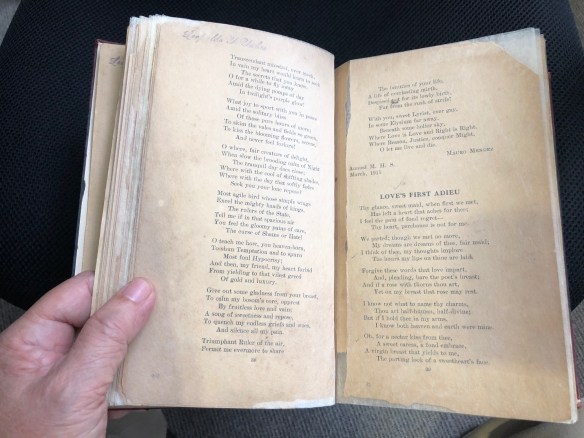
It’s an outstandingly rare collection, because it contains the only extant copy, as far as we know, of Rodolfo Dato’s landmark Filipino Poetry—the first major collection of Filipino poems in English. In the florid prose typical of the time, Dato prefaces his book by describing it as “a collection of the maiden songs of our native bards warbling in borrowed language,” acknowledging that “the full flowering of our poetic art has not yet come, but the fertile field smiles abundant growth and gives promise of a rich and bountiful harvest in a day not far distant.” In various pieces rhymed and metered, writers like Maximo M. Kalaw, Fernando Maramag, Procopio Solidum, and Maria Agoncillo give praise to mayas, moonlight, sampaguitas, and Motherland.

I had long been searching for the Dato book in the usual places online, for naught; but one day, at a committee meeting, my dear friend Jimmy Abad—the poet and anthologist—slipped it over to me, with the note “Priceless!” And indeed it was. Dean Yabes had gifted it to Prof. Abad, who was now passing it on to me in that timeless ritual that exalts and humbles writers and teachers who know exactly what they are receiving.

The compendium also contains an English-German Anthology of Filipino Poets  translated and edited by Pablo Laslo, with a preface by Salvador P. Lopez (Libreria Manila Filatelica, 1934); Dear Devices, Being a First Volume of Familiar Essays in Englishby Certain Filipinos (N. p., 1933); and the 1935 Quill, the Literary Yearbook of the University of Sto. Tomas, edited by Narciso G. Reyes. I’ll say more about these other seminal works later, as they’re truly invaluable glimpses into our earliest impulses as writers in English (and I have to wonder, if this was just Vol. 1, what Vol. 2 was like, if any).

Friendship aside, Jimmy must also have known that I was in a better position to take care of the volume, whose first 80 pages or so—almost the entire Dato book—had been torn, not just detached, from the spine by that infernal chemistry I described earlier. So I sent it to my restorer, who patiently mended each torn and fragile page with Japanese paper. Like my other jewels, this book will find its way to the UP Library at some point, now renewed for another generation of readers and scholars.


Penman No. 318: Mysteries of Fish

GenSanTuna.jpg

Penman for Monday, September 10, 2018


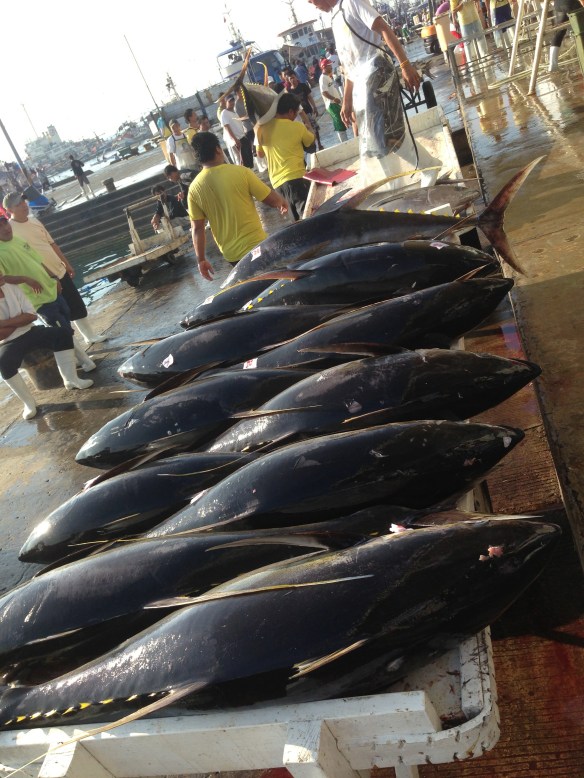
I’VE OFTEN written and spoken about how—despite the fact that we inhabit an archipelago of over 7,000 islands, bordered on all sides by the sea, and comprising one of the longest coastlines in the world—we seem to have very little by way of a maritime literature. By this I mean novels, stories, poems, and plays that have the sea as a central element, beyond serving as a romantic backdrop.

There’s a whole economy and culture to be found in our relationship with the sea, but much of this has been lost to a metropolitan generation bred on canned tuna and Starbucks coffee. Even among my students, I can count on my fingers the number of people who’ve taken a boat ride longer than a spin around a lake or the short hop from Caticlan to Boracay.

I myself was born in a house a stone’s throw from the beach, in a village on an island far from Manila, so the sea has never been far from my mind and imagination. I dream about it constantly, with recurrent images of huge waves rolling and breaking on the shore, and I as a boy walking on the sand with my father, now long gone.

But I too have to admit that save for a few scenes and the opening chapter of my novel in progress, the sea has figured minimally in my fiction. That’s probably because I feel responsible for creating credible characters whose lives are inextricably waterbound, and haven’t felt confident enough to do justice to the task. The fact is, we’ve lost touch with our marine heritage, which is supremely ironic given how Filipinos have distinguished themselves as seafarers, and how many Filipinos depend on the sea for a living.

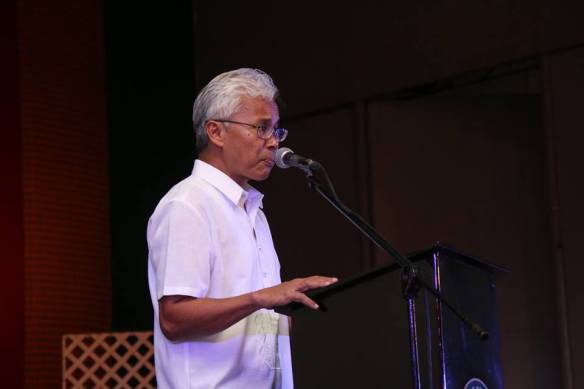
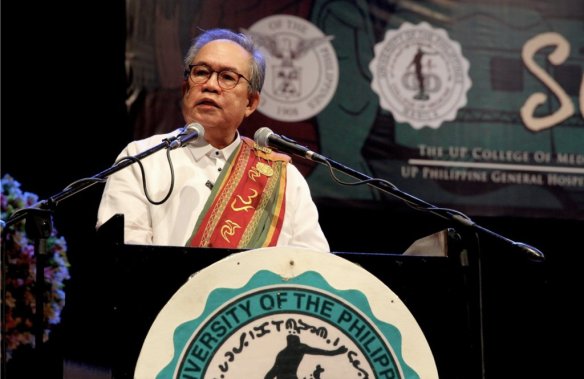
This was much on my mind two weeks ago when I flew to Iloilo to attend the formal investiture of Dr. Ricardo P. Babaran as the tenth Chancellor of the University of the Philippines-Visayas. A fisheries expert and nautical engineer, Ric recounted how, as a young boy far up north in Cagayan, he enjoyed going out to sea and to the river to fish.

“My fishing buddies generally used earthworms as bait, but they sometimes used live crickets using different fishing gear. As a young fisher, I observed that using either crickets or earthworms yielded different outcomes—certain fish seemed to prefer one or the other—but my fisher friends were never able to explain to me why. This mystery bothered me for a long time,” he told us.

RBabaran.jpg

Ric left Cagayan to study Fisheries in UP Diliman, and had to deal with the derision of other people who wondered “why Fisheries students needed four years just to learn how to capture fish with hook and line.” Even now, he says, this misappreciation of Fisheries partly explains why “fish-based industries are faring poorly in the Philippines.” (Indeed, an economist I know has pointed out that the recent spike in prices can be traced to some degree to a shortage of fish.)

Ric went on to take an MS in naval architecture and ocean engineering at the University of Washington, and then his PhD in Fisheries Science at Kagoshima University. It was in Japan where, Ric says, he finally found the answer to his childhood mystery: “I learned that catfish and mudfish responded differently to earthworms and crickets because of a process called chemo-reception.”

Dr. Babaran’s investiture was attended by many guests, including many academic officials and luminaries, but several of them stood out, for different reasons. Among them was Dr.  Loel Losanes, a UPV alumnus and the Filipino head of Japan’s Hikari Corporation, probably the largest producer of South Sea pearls in the world.

Just as significant was the presence of members of the Kamamado fishers group from Guimaras, many of them elderly women who, Ric noted, “supplement their daily income with the P40 they get from selling the equivalent of two-liter-sized containers of captured cardinal fish. Through this group, we will undertake a program that will promote responsible fisheries, which I believe will position the Philippines more strategically in the relation to the ornamental fish industry that generates $7 to 8 billion annually.”

I’m confident that the programs of Chancellor Babaran and UPV will improve the livelihoods of millions of our shore-dwelling countrymen, but I’m even more hopeful that a deeper and broader awareness of the importance of the sea in our lives will soon emerge, if only because of the crisis now roiling in the waters around us. (“About a third of our fish catch comes from the West Philippine Sea,” Ric told me.)

And I’m especially happy that a place like UPV exists to mind our waters. A young PhD in UPV, Noel Ferriols, recalled how he was convinced to study in UPV instead of Manila when he and his mother visited the campus in Miag-ao, which specializes in fisheries. “I was amazed when the security guard told me the scientific name of a certain kind of fish,” Noel said. “I thought to myself, if this is a place where even security guards can recite the genus and species of a fish, then it’s where I want to be.”


Penman No. 316: Big Stories in Little Books

IMG_7566.JPGPenman for Monday, August 20, 2018
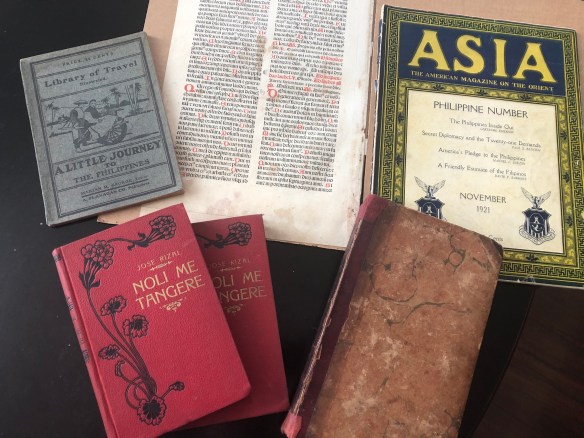
 

AMONG THE 50 pounds-plus of books that I carted home from my last visit to our daughter Demi’s place in San Diego, California, was a mini-stash of small leather-bound books that most people would probably ignore had they turned up in a yard sale. In a time wedded to the notion that bigger is better, small books attract scant attention, the impression being that they can’t have much to say.

To be honest, I didn’t know the size of the books at the time I ordered them; either I wasn’t looking too closely at the description, or was distracted by other features. My first reaction upon seeing them might have been disappointment, expecting to receive heftier volumes, especially given their topics, history and geography. But as soon as I opened them and began reading, my complaints melted away.

First, a short note about book sizes: publishers and librarians generally go by descriptions that range from the folio, the largest standard-sized book at about 12” x 19″, to the sexagesimo-quarto (or “64mo”) at 2” x 3″. Most books we buy today fall into the octavo (6” x 9”) or duodecimo (5” x 7-3/4”) category. My small books are octodecimo (4” x 6-1/2”) and smaller. (Miniature books—indeed, whole miniature libraries, one of which Napoleon was said to have carried to battle—have a fascinating history.)

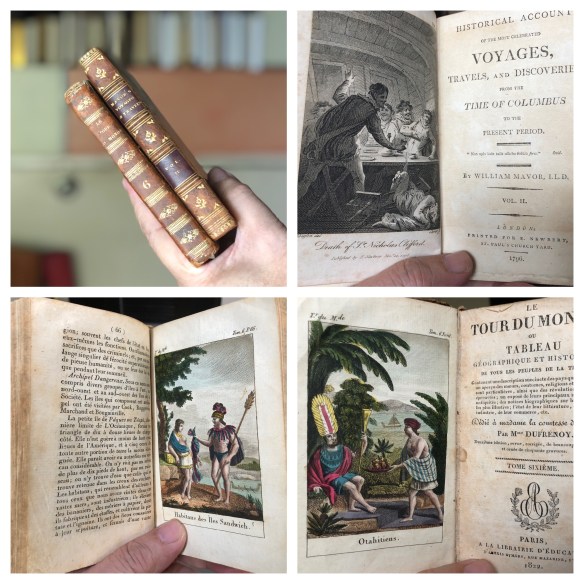
The first little book I’d like to share with readers is Vol. II of Mavor’s Voyages and Travels, published in London in 1796. (For its age, its looks almost new, the leather supple and unmolested, except for wear at the corners, and the paper is bright and crisp.) The book offers contemporaneous accounts of the voyages of the great navigators and explorers of the 17th and 18th centuries—Drake, Cavendish, Raleigh, Van Noort, etc.—and they brought me back to my boyhood readings of these travels and their marvelous discoveries.

I haven’t finished the book, but so far I’ve found one reference to the Philippines, from Joris van Spilbergen’s voyage of 1614-1617:

“On the 6th of January 1616, they landed on one of the Ladrones, and reached the Manillas the 9th of February. On the 5th of March they received intelligence of a fleet, consisting of twelve ships and four gallies, manned with two thousand Spaniards, besides Indians, Chinese, and Japanese; which powerful armament was intended to drive the Dutch out of the Moluccas.”

More gripping is this episode from the round-the-world voyage of Willem Schouten and Jacob La Maire of 1615-1617, described elsewhere as “the greatest Dutch expedition into the Pacific Ocean,” a voyage mean to find a new route to the Spice Islands and Terra Australis, today’s Australia:

“They left the coast of Sierra Leona on the 4th of October; and next day, about noon, were surprised by a violent shock given to the lower part of one of the ships. No adversary appeared, no rick had been encountered; but while they were amused with this phenomenon, the sea began to change color, and a fountain of blood seemed to surround them. This sudden alteration of the water was no less astonishing than the shock they had sustained; but of the cause of the both they were equally ignorant, till they reached Port Desire. There, in careening the ship from the strand, they found a large horn, both in form and magnitude resembling an elephant’s tooth, sticking fast in the bottom of the ship. It was a firm and solid body, without any cavity or spongy matter in the middle; and had pierced through three very stout planks of the ship, and raised one of the ribs; penetrating at least a foot deep in the timbers, and about as much more appeared outside. The incident on the coast of Sierra Leona was now explained. It was clear that some monstrous tenant of the deep, of unknown species, having made a rude assault on the ship, was unable to withdraw its weapon; which, breaking in the attack, occasioned such an effusion of blood as to discolour the surrounding ocean.”

And Port Desire? Could a port be better named, from the viewpoint of a sailor months at sea, suffering from scurvy and all manner of loneliness and discomfort? (The port, now named Puerto Deseado, still exists in Patagonia in southern Argentina, and was visited by Charles Darwin on the Beaglein December 1833.)

Another small book comes from 1822, and it’s in French: Le Tour du Monde, ou Tableau Geographique et Historique de Tous le Peuples de la Terre. These “tour du monde” or around-the-world books were popular in the 19thcentury; I’ve chased after them out because they promise exquisite engravings, and this one didn’t disappoint, with hand-colored illustrations of life in Tahiti, Java, the Sandwich Islands, Peru, and Patagonia. No Philippines here, but since it’s the sixth volume in a series, I’m pretty sure the Philippine version will turn up soon.

Of course, much of this information could be available elsewhere at little or no cost; you don’t have to buy an 18th-century book to see what it says, with websites like Project Gutenberg providing the full texts free of charge. But I choose to read not just for information, but for the romance of it—and there’s nothing like holding the very same book that a solicitor or a milliner would have sought for news and entertainment two hundred years ago.

There’s actually a few more small books in the pile, but we’ve run out of space, so I hope I’ve said enough to pique your interest in these tiny packets of wonder.

Penman No. 314: Sourcing the Pinoy Crowd

IMG_7312

Penman for Monday, August 6, 2018


ART CRITICS often like to write about the Pinoy penchant to fill up vacant spaces—our horror vacui, evident in everything from our front yards to our jeepneys and desktops. And when there’s nothing to fill up a nice big void like an empty hall or open street with, heck, we fill them up with our own bodies, to form a healthy crowd.

We Pinoys usually don’t think too much about being caught in a crush at the LRT, the ballgame, or the rally. Indeed, students of crowd psychology will point out that while they may be uncomfortable, crowds can also generate positive synergies, and that even in the most seemingly unruly mob, an inner logic eventually emerges and prevails.

But we also know that crowds can turn ugly and deadly pretty quickly, as the stampedes that every and then convulse English football show. Even much less than that, there’s nothing funny about people fainting in a queue or in a surging mass of bodies desperate for one thing, whether it’s a glance from a rock star or a little slip of paper that could be a ticket to a first-rate college education.

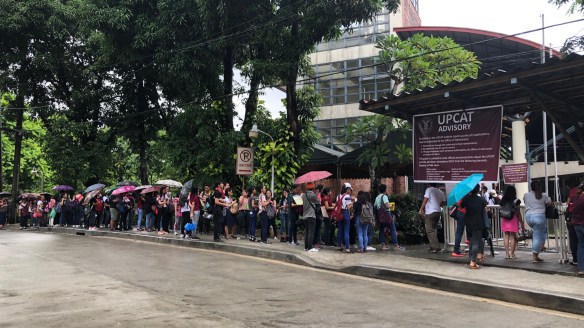
All this was on my mind last Monday as I dealt with one of my busiest days as a school administrator at the University of the Philippines, where an estimated 40,000 people converged at the Office of Admissions in Diliman in one day to submit their applications to take the UPCAT, UP’s entrance exam, in mid-September. To wrap your head around that figure, Diliman has 25,000 students on a normal day. But my guess is that at least half of those 40,000 were anxious parents taking a day off from work to accompany their kids.

It was actually the extended deadline for students of private high schools in Metro Manila (not public as erroneously reported—a lot of fake or unverified news went out that day and after, and a woman presenting herself as a network news reporter even urged the crowd to chant for an extension as her camera rolled). As a torrent of tweets soon reported, the lines kept growing longer, tempers flared, and panic seized more than a few people in the area. The media calls came soon after, and—as UP’s equivalent of, uhm, Harry Roque—I spent the rest of the day and part of the evening fielding questions.

Did we expect the size of the crowd? Well, yes and no. The surge in applications was unprecedented—in years past, we’d get something like 80,000 applications; last year it was 103,000, and this year, our estimate runs to about 167,000. What accounted for the sudden bulge? Free tuition, for one, and K-12, for another. (The actual number of qualified exam takers could be about 20 percent less, and the admission rate—those who “pass,” although there’s no fixed passing grade—about 17 percent of all takers, which is a function of UP’s carrying capacity.)

We did see that coming, but I guess what we didn’t anticipate was how many students (and/or parents) would choose to appear and line up in person, rather than avail themselves of other less stressful options clearly stated on the application webpage—to submit applications online, or by mail or courier, or in bulk with the help of their school. (UP provided the extra option of a drop box when it saw how large the crowd was.) That was probably because queuing up guaranteed—if all your papers were in order—a test permit at the end of the line. But that also meant that the line could take all day.

So we Pinoys are seguristas, willing to sacrifice comfort for the certitude of paper in hand. We still mistrust electronic processing, and can’t wait a couple of weeks to know our fate. I went onsite to see for myself what was going on, and was told by one exasperated guard that “They won’t listen! There’s a drop box right there, and we’ve told them they can courier the forms, but they’d rather line up for hours!”

You’d also have to wonder why Pinoys like to wait for deadlines to do the inevitable; July 30 was already an extension from July 27, and applications had been open for three weeks. But to be fair to the students and their parents, it wasn’t entirely their fault to have waited so late in the day to submit their papers. Some told me that their high schools had held their papers up; some were charging rather stiff fees for handling UPCAT forms.

And was there a class factor at play? When the turn of the public high school applicants came, the huge crowds dwindled, and the lines got shorter—and far fewer parents appeared, because they probably couldn’t afford a day off, or trusted their children to fend for themselves. Things moved more smoothly.

There are lessons for everyone to be learned here—by the students, by the parents, and by us, most of all—and we’ll continue seeking ways to ease procedures for everyone in the years ahead. Eventually, I foresee a time when all submissions will be made online, like visa applications—something we can’t enforce until every Filipino has access to the Internet, and overcomes his or her mistrust of information technology. Until then, we’ll all have to learn better crowd management, provide lots of water and Portalets, exercise patience, take the media brickbats, and soldier on.

Maybe this was a crowd that didn’t really need to be there, but on the other hand, and to put it positively, it was a stark visual reminder of the intensity of our people’s aspirations for a good college education. The best way to disperse it long-term would be to meet those needs, in UP and beyond.

Penman No. 313: A Life-Affirming Mission

UPCMPic.jpeg

Penman for Monday, July 30, 2018


TWO SUNDAYS ago, I had the privilege of serving as commencement speaker before the 2018 graduating class of the University of the Philippines College of Medicine. You’d have to ask them why they chose to invite a writer and professor of English to speak to a corps of medical professionals, but I was happy to accept. It was likely the last time I would wear my sablay as a UP official, as I will be retiring six months hence after 35 years of service to the university. So this, too, was my valedictory, my final opportunity to share with the audience some insights gleaned from my life in UP as student, teacher, and administrator.

Here’s a brief excerpt, about a third, from that talk. Email me if you want a copy of the full text.

Thirty-six years ago, as a young and aspiring writer, I wrote a story about a doctor. The story was set in the Philippine Revolutionary War, and it dealt with an old, cynical doctor named Ferrariz who had made a mess of his life and, seeing few other options, had signed up to become a doctor with the Spanish army, fighting the Filipino insurgents up in the mountains. His unit is taking heavy losses, but one day they capture a rebel—a fifteen-year-old boy named Makaraig, who is badly wounded. Ferrariz’s superior, a major, orders Ferrariz to save the boy’s life.

Let me quote briefly from the story:

… For three days he worked like a driven man, cleaning out and dressing the boy’s wounds, setting the arm, packing cold compresses upon the swellings. He felt godlike in that mission. He unpacked his books from their mildewed boxes, brushed off the fungi and reviewed and relived the passion of the way of healing. He watched miracles work themselves upon the boy and stood back amazed at his own handiwork. When he was through, when he faced nothing more than that penance of waiting for the boy to revive, Ferrariz realized that his eyes were wet. Not since he stepped into the University, knowing nothing, had he felt as much of an honest man.

In other words, this doctor, who had lost faith in his talents and in his hands, suddenly finds himself revived and redeemed by his mission of curing a battered boy. By saving Makaraig, he saves himself.

But the story doesn’t end there. The major has his own reasons for bringing a rebel back to life—to torture and interrogate him, and eventually to kill him, and that’s where the story closes, in a long scream that pierces the doctor’s newly awakened soul.

That story, titled “Heartland,” went on to win in the 1982 Palanca Awards for Literature. But why did I write a story about a doctor who saves a patient, only to have him murdered by others? Why did I write a story about self-redemption?

The story behind the story was that while I was only 28, I felt like Ferrariz, an old man who had gone adrift and who was just going from job to job with mechanical indifference. It was martial law, and despite the fact that I became a political prisoner at 18 and spent seven months in a camp in what we now call Bonifacio Global City, I had been working as a government propagandist for the past eight years, churning out press releases, speeches for President Marcos, and glowing articles about his New Society.

I needed to remind myself that I could write good fiction (what I was writing for work was bad fiction), that somewhere in me was truth waiting to be said.

… For the past 110 years, that has been part of the mission of the University of the Philippines, our national university, the bearer and champion of our people’s hopes. Through our general education program, we try to produce graduates who can be as conversant about Greek tragedy as about the Law of the Sea and thermodynamics. The premise is that a well-rounded, well-educated student will elevate not only himself or herself but also his or her community and society, bringing people together in common cause.

At least, that’s the noble intention. We know that, in practice, while UP has produced scores of such exemplars as Wenceslao Vinzons, Fe del Mundo, Jovito Salonga, Manuel and Lydia Arguilla, and Juan Flavier, and while we graduated 29 summa cum laudes from Diliman this year, we also know that many UP students and alumni have flunked, and flunked badly, especially in the moral department.

In other words—and it saddens me as a UP professor to say this—intelligence never guaranteed moral discernment or rectitude, and as proud as we may be of our nationalist traditions and contributions to national leadership, much remains to be done to ensure that we imbue our students not only with skills but with principles. In other words, just as we ask physicians to heal themselves, we educators first have to teach ourselves.

This is why I began this talk with my story about Dr. Ferrariz and his seemingly futile gesture. What that story really wants to ask is: What is life without freedom? What is knowledge without values?

What does a cum laude mean or matter if it will not be used to relieve human suffering but only to enrich oneself and one’s family? Of what use is a glittering GWA of 1.25 if your moral GWA is a murky 3.0? How can you study to save lives and yet remain silent in the face of its wanton loss—not even by disease or accident, but by willful human policy?

There is, indeed, no more life-affirming mission or profession than yours, and in a season of slaughter, to affirm life can be a radical and even dangerous proposition.

Penman No. 312: Recovering Fil-Am History

IMG_6999

Penman for Monday, July 23, 2018


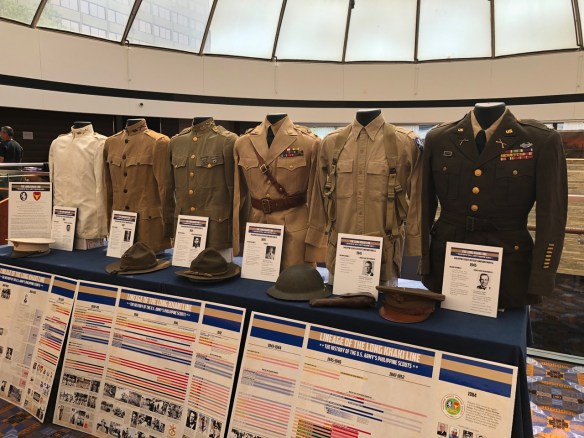
I WAS in Chicago two weeks ago to keynote the 17thBiennial Conference of the Filipino American National Historical Society (FANHS), and it was an opportunity not only to catch up with old friends from my time as a graduate student in the American Midwest but also, and more importantly, to have a sense of where the study of Filipino-American history is going.

With 33 chapters now spanning the US from Hawaii to the East Coast, FANHS has become one of the most visible and important Fil-Am organizations (we typically still hyphenate the term but many Filipino Americans no longer do), devoted to recovering, preserving, and promoting the history of Filipinos and their descendants all over that vast country.

It’s a history that dates back to at least October 1587, when the Nuestra Señora de Buena Esperanza dropped anchor off what’s now known as Morro Bay, midway between San Francisco and Los Angeles. On its crew were several luzones indios; today they would simply be called Filipinos. Some men went onshore, and one Filipino was killed by Indians.

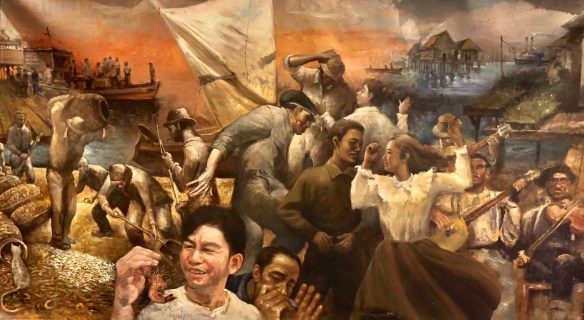
Since then, over three million Filipinos have either made that journey, or were born in America to Filipino parents, and in each one of them is inscribed a history of struggle, adaptation, acceptance, resistance, and all degrees of complex responses in between. And as the Filipino population in America has expanded, so have Filipino communities, such as that seminal one that was started by runaway Filipino sailors in New Orleans in the 1760s, which grew into a “Manila Village” that was sadly wiped out by a hurricane in 1915.

IMG_7007

I’d first heard about the Lousiana Pinoys from Jim and Isabel Kenny who produced a fascinating documentary about them in 1992 titled “Dancing the Shrimp” (a reference to the way Filipinos dried shrimp—and grew the shrimp industry—in Louisiana by stepping or dancing on them to music). In Chicago, I was happy to meet Marina Estrella Espina, a pioneering researcher, librarian, and author whose 1988 book Filipinos in Louisiana (New Orleans: AF LaBorde & Sons, 1988) laid much of the groundwork for further studies as the Kennys’ and that of younger scholars like the poet Randy Gonzales, who also grew up in New Orleans but lived for many years in Dubai. Now in her 80s, Marina excited the audience by announcing that she had found proof that Filipinos had settled in Louisiana even earlier than previously thought, and that she was working on a book chronicling Filipino journeys around the world.

From Alameda, California and local historian and Boholano Bob Balandra came the story of the Bohol Circle, a club formed there in 1936 by 16 Filipino immigrants seeking and providing support for each other in a difficult time. Some later joined the 2ndFilipino Infantry Regiment, which fought in the Pacific. Bob and his compatriots are trying to get that historic club and its clubhouse recognized with an official street name.

Elsewhere, the 300 participants in the FAHNS conference spoke on and listened to such topics as community-university partnerships in Alaska; Filipina-American marriages in the Philippine-American War; getting out the Fil-Am vote; the sakadas of Hawaii; Filipino nurses in Illinois; and decolonization and visual art. Film screenings by the noted filmmaker Nick Deocampo and the “Dreamland” team of Claire Miranda, Katrin Escay, and Moshe Ladanga complemented the lectures. Dr. Dorothy Cordova, one of the society’s founders along with her late husband Fred, graced the event. I was particularly glad to meet old friends from the University of Michigan, Dr. Romy Aquino and his wife Necie, and from the University of Wisconsin-Milwaukee, Princess Emraida Kiram, whom I hadn’t seen in years.

IMG_3237

A special feature was the unveiling of a mural depicting the Louisiana experience, produced by the Durian Collective composed of artists Leonard Aguinaldo, Darby Alcoseba, Manny Garibay, Jun Impas, Otto Neri, Orley Ypon, and Art Zamora, who were assisted by Fil-Am cultural advocate Almi Astudillo-Gilles.

Over more than 30 years, FAHNS has become a true community of shared personal, academic, and cultural interests, and has the potential to become a formidable force in American politics, especially at a time when immigration and human rights have become threatened once again by the new regime. But as with many communities, unity of vision and purpose is always a challenge, which was why this year’s conference focused on the theme of “Community for Cohesion and Collaboration.”

In my keynote, I suggested that “The only community that will last for our country and people will be one based on an appreciation and acceptance of a common stake in the Filipino future, based on truth, reason, and fairness or inclusivity.

“Under normal circumstances, you and I would not even think twice about this idea, which is almost a motherhood statement. But these are times in which truth, reason, and fairness seem to be in precariously short supply, and the notion of ‘a common stake’ an increasingly nebulous one.

“If we lack a sense of a common stake in a shared future, it may be because we lacked a sense of a common stake in the past. We like to think that we share a history, but the history of our poor is very different from that of our rich.”

And so the conference went, looking back into our past for a glimpse of the future.

Penman No. 311: A Trove of Printed Delights

BigBooks

Penman for Monday, July 18, 2018


A FEW months ago, I wrote about picking up some wonderful books online that I plan to add to my retirement library—books that I’ll be poring over at leisure, for no more compelling or more urgent reason than enjoying the stories they contain, or even just the way they were printed, illustrated, and bound. I won’t be writing any papers about them (well, maybe a column or two), and I’ll leave myself the option of reselling some of them to share the fun and feel better about buying some more.

Most of these books come from the USA, chiefly from eBay, where I’ve been actively trading for more than 20 years. You’d be amazed by the Philippine treasures—not just books but paintings and other artifacts—that made their way overseas and eventually turn up on eBay. I’ve made it my personal mission (of course my wife Beng calls it my excuse) to recover these precious objects as much as I can afford on my professor’s salary—important or interesting Filipiniana, for example, such as the first US publications of Manuel Arguilla’s stories, and early editions of Carlos Bulosan’s books.

I’ve sourced books and paintings from as far away as France, Spain, and Portugal, and have successfully had them shipped to me in Manila by regular air mail. To save on shipping, however, I typically accumulate all my US purchases at our daughter Demi’s place in San Diego, California, and then have them couriered to me when they’re enough to fill a box, or wait for our next visit to Demi and her husband Jerry to cart them home.

That opportunity happened last week, on my annual vacation leave. We came too early for Comic Con this year, but I had stranger things than, well, Stranger Things in mind. I was eager to plow through and pack away about a hundred pounds of books and paintings that had been piling up at Demi’s over the past six months.

The paintings—which include a large and marvelous Gabriel Custodio seascape from 1966 that I found at a resale store in Spokane, Washington—will be worth another story, but for now, let me share some of the most interesting publications from the pile.

NoliEtc

Old editions of the Noli and Fili are always desirable objects of study, and to complement the rather eccentric 1911 Fili I acquired last year, I received a two-volume 1909 Noli from Madrid (also published by Maucci in Barcelona), with annotations by Ramon Sempau. It’s interesting how, scarcely a decade after his execution, Rizal is hailed as a patriot by the Spaniards. This edition contains the Last Farewell and an account of his trial. (Another later edition in the pile, a Noli retitled and published by Norton in 11961 as The Lost Eden, is introduced by James Michener, who describes the novel as “a nineteenth-century Gothic melodrama, filled with eery churches, flashes of lightning, ominous strangers, premonitory whisperings, and almost unacceptable coincidences.”)

I try to collect old books that have something to do or say about the Philippines, but of course that becomes more difficult the farther back you go. In my office, I display a page from a German book on geography from 1578 that talks about “den Philippinischen Insuln,” and I’m sure other collectors have much earlier material. But sometimes I pick up antiquarian documents just to be able to show my students what truly old texts looked like, and in this batch is a page from a Latin breviary published in Augsburg in 1490—an example of true incunabula, or something printed roughly within 50 years of Gutenberg’s 1455 Bible.

There’s an extensive and rather grisly account of a “Massacre at Manilla” in my 1822 copy of Vol. X of The Atheneum, a Boston-based compilation of highlights from imported contemporary English magazines (the “magazine” as we know it today grew popular in England in the 1700s). The article is an unattributed eyewitness account, reported by a victim of a brutal massacre of foreigners—English French, Danish, Spanish, and Chinese, among others—following a false report that they were responsible for fomenting a cholera epidemic that had decimated the natives by giving out poisoned medicine (shades of today’s Dengvaxia hysteria). It occurred to me that I had read about this same massacre before from Paul P. de la Gironiere, who was serving as a doctor aboard a French ship in Cavite at the time, and who claims to have performed great deeds of daring in the emergency.

More congenial is A Little Journey to the Philippines (Chicago: A. Flanagan, 1900), edited by Marian M. George, filled with observations of a pleasant nature: “Our boat is anchored, and we start off with a guide for the Enchanted Lake. We pass ponds filled with fragrant pink pond lilies, and shortly begin to climb the crater of an extinct volcano.” It also remarks, perhaps presciently, that “There is no Philippine nation. Instead there are numerous governments; the people are divided into over eighty different tribes; and there are over seventy-five different languages spoken among them.”

If I had more space in my baggage and my house, I would buy tons more of these books, which remind me how we keep drifting back to the past, despite the GPS in our iPhones.


Penman No. 309: A Breakthrough in Tacloban

IMG_6876.JPG

Penman for Monday, July 2, 2018


LATE JUNE is graduation season under the new academic calendar of the University of the Philippines, and since the UP System is made up of eight constituent universities spread out over 17 campuses, that’s a lot of graduations to attend for officials like me. Since the President can’t possibly be at all the ceremonies—which are sometimes scheduled on the same day, or just a day apart—we VPs decide early on where we want to go to represent the System administration.

Diliman is a given, being basically home. I also attend the rites of UP Manila, partly because I’m fascinated by the number and variety of degrees we hand out under the health sciences (culminating this year in the combined MD/PhD—a physician who’s also a researcher, the very top of the heap). But also, UP Manila—harking back to an earlier tradition—still requires its graduates to wear togas instead of the now-ubiquitous sablay or sash, which means I get to drag my US-university toga, or what I call my clown costume, out of the mothballs.

Last year I chose to go to UP Baguio, only to realize, the night before the ceremony, that not only was I on the roster of visitors, but was also the commencement speaker—a little detail that no one had remembered to tell me. A faster commencement speech was never written. (I’ll admit it—I was thrilled to get the job done.)

This June, I selected UP Tacloban—not yet a constituent university but a college under the supervision of UP Visayas. I picked Tacloban because I hadn’t been there for at least 15 years since the early 2000s, and I wanted to see how the campus and the city had recovered from Yolanda’s devastation. I imagined that It was still scarred by the catastrophe five years after; instead, as soon as we landed, I was impressed by how quickly the place had gotten back on its feet, abuzz with tricycles and new construction.

With a morning to spare, I walked about town with Beng (who had come along at her own expense to see old friends) and toured the still-sequestered Sto. Niño Shrine (always more a shrine to the Marcoses), badly ravaged by the storm and by neglect. An even sorrier sight was the adjacent People’s Center and Public Library, which had been converted to a Japanese surplus store. I don’t bemoan the humbling of excess, but as Beng reminded me, “This was the people’s money.”

One happy discovery I did not expect was Tacloban as a food paradise. Wherever we went and at whatever price point—the surf and turf combo and the grilled marlin at the hotel, the fish tinola, the grilled scallops, and bulalo at the Acacia restaurant, more tinola and nilagang carabeef at the unli-rice Pinutos at the mall, and the lemongrass roasted chicken at the now-iconic Ayo restaurant—the food was fresh and flavorful, the beef amazingly tender and the tinola divinely laced with lemongrass and ginger.

All that fortified us for the graduation, which was fairly small as UP graduations go, with just about 200 graduates, two of them finishing magna cum laude, from such fields as Accountancy, Management, Communication Arts, Biology, Computer Science, and Political Science. Tacloban Dean Dr. Dodong Sabalo, a management expert, introduced me to the commencement speaker, Ms. Debbie D. Namalata, San Miguel Brewery’s National Sales Manager and Vice President for Sales, and a UPV alumna, who gave a stirring talk about how her family overcame poverty to achieve professional success against all odds. It was a theme echoed by the valedictorian, Kim Decolongon Limosnero, whose mother had sold chicharon to put him and his siblings through school.

You’d think that I would get bored going to these graduations and witnessing the endless parade of young people coming up the stage in their Sunday best with their parents in tow, but I honestly never do, especially when I listen to such stories as Debbie’s and Kim’s, and see fathers wearing denims and sneakers not because they want to look hip but because it’s the best outfit they can afford. There wasn’t a dry eye in the house when Kim addressed his widowed mother—who had never finished college—as “my summa cum laude,” and I recalled my own parents who had similarly labored mightily to send all five of us to school.

And as I sat onstage, I received the saddest message on my phone, about another UP student named Jemima Faye Dangase, who was supposed to graduate cum laude in Agribusiness Economics from UP Mindanao. The daughter of very poor parents—her diabetic father was a municipal utility worker and her mother was unemployed—Jemima was clearly her family’s hope. She submitted all her requirements for graduation, went home, then crumbled in pain—pain she had borne quietly for months without complaint, apparently so as not to trouble her already beleaguered parents. She was brought to the hospital, where doctors discovered her organs ravished by cancer; and there she died.

I know it borders on melodrama, but this is, truly, the story of Philippine education and why it’s so crucial to social transformation. For every Jemima who stumbles on the very last steps, there must be a Kim who breaks through. This is why going to such places as Tacloban revives my faith in the Filipino future, despite the dark travails of the present, in this moral equivalent of a Yolanda, which—reposing our faith in a God wiser than all despots—we will survive.

Penman No. 306: Minding the Magazine (1)

IMG_6689

Penman for Monday, June 11, 2018


IF YOU collect old books like I do, the chances are that you’ll be picking up more than books as you scour the Web, garage sales, and library throwaways for that elusive first edition or that childhood textbook. I’m referring, of course, to other printed matter such as magazines journals, posters, and maps, but also to manuscripts, letters, and such other ephemera as restaurant receipts, plane tickets, and school report cards (yes, I collect those, too).

Books—especially good ones—tend to exude a certain timelessness about them, maybe because they’re meant to be read beyond the present. They like to lay down general (and, authors like to think, immutable) principles of life, of art and science, of philosophy. The characters of fiction may live in the moment—whether it be in Charles Dickens’ London or William Gibson’s matrix—but the context, implicitly, is forever.

Magazines, on the other hand, are typically meant for no higher purpose than to capture the instant—this week, this month—in all its topical and pictorial variety. When I pick them up, it’s not because they’re going to reveal to me some eternal verity (although that might sometimes happen), but because they’ll show me exactly what people were wearing on June 11, 1898 or what the price of a Parker 51 was in August 1947. Newspapers, of course, can bring everything down almost literally to the very hours and minutes of what eventually becomes history, but magazines have just a bit more of a leisurely sweep, making them ideal for doctors’ and dentists’ waiting rooms, beauty parlors, and barber shops.

IMG_6723

It was in a barber shop in Pasig, back in the mid-‘60s, that I first got to read about people like Jose Garcia Villa in The Philippines Free Press while getting my head shaved for PMT. I didn’t understand his poetry then (and maybe I still don’t), but I was mighty impressed by what I remember him saying, in so many words: “There’s only one literary genius born every thousand years, and I’m sorry for everyone else, but for these thousand years, that’s me.”

The Free Pressand its literary pages became staple reading for me, but I also devoured the Graphic, the Sunday Times Magazine, Life, TIME, Newsweek, National Geographic, and whatever I could get my hands on at the public library (including, away from prying eyes, women’s magazines—and a bit later on in life, magazines with, uhm, women).

These memories came swarming back to me a couple of weeks ago as I received several bound collections of magazines from the 1960s—the Mirror Magazine, the Manila Chronicle Magazine, and Action Now, among others. They’ll join a large pile of Sunday Tribune Magazine issues from the late 1930s and 1940s that I’d acquired more than 20 years ago from a seller who was disposing boxes of them. Sadly, most of them have crumbled (this was before I became more serious about collecting and more organized). While I’ve gently turned away people offering busloads of National Geographic and LIFE (just as I routinely decline offers of family Bibles, law books, and encyclopedias), I’ve sought out samples of historically important or just plain interesting magazines to round out my collection.

One of the reasons I began my antiquarian collection was to be able to show my literature students—in real life, and not just in some Googled picture—what people were reading way back when. For example, when we discuss American literature during the time of the Benjamin Franklin, what would the literate Bostonian or Philadelphian have held in his or her hands?

IMG_6691

As it happens, I have the answer to that, thanks to a bit of instruction from my professor in Bibliography back in Wisconsin, Dr. James Kuist, whose type of final exam was to ask us (in those pre-Internet, pre-Google days), “If the year is 1662, and I’m a member of the Royal Society, what books would I likely have on my shelves?” Jim did his doctoral dissertation on the history of one particular publication—indeed, the very first one of its kind to call itself a magazine (derived from the French for “storehouse”)—The Gentleman’s Magazine, founded by a cobbler’s son named Edward Cave in January 1731. It became immensely popular, made Cave (also known by his pen name Sylvanus Urban) a rich man, and was published uninterrupted until 1922.

I pretty much forgot about Dr. Kuist and The Gentleman’s Magazine until recently, when I realized that there were actual copies (not reproductions) available on eBay. The issue I secured comes from November 1773, and is a special issue devoted to “The FRUGAL HOUSEWIFE, Or Complete WOMAN COOK…. including various bills of fare for dinners and suppers, in every month in the year, and a copious index to the whole.” (And before you think otherwise, The Gentleman’s Magazine did not have a centerfold or anything of the sort; it would have been, well, ungentlemanly.)

I was searching for issues ca. 1763-64, which should have had reports on the British occupation of Manila, and I do have two issues of The London Magazine, from September 1763 and February 1764. But while they have gruesome stories about Englishmen being captured and burnt by the Indians (“The blood which flowed from him almost extinguished the fire”), and other reports from the empire, they say nothing about the Philippines.

Next week, we’ll look at two Filipino magazines from August 1913 and April 1949.


Penman No. 301: Mysteries of Art (2)

RizalMural

Penman for Monday, May 7, 2018


LAST WEEK, I wrote about acquiring a trio of unsigned paintings I’m attributing to Serafin Serna (1919-1979), drawing on stylistic, thematic, and circumstantial evidence. This week, I’ll walk you on the trail of an art mystery that’s puzzled generations of viewers and scholars at the University of the Philippines.

For many decades now, a huge painting has been parked somewhere in UP Diliman—first at the College of Law, from where it was moved to the College of Fine Arts. Although terribly deteriorated, the painting depicts a man—clearly Jose Rizal—being accosted under the trees by at least six other men dressed in two kinds of uniforms—two priests, four soldiers—with more onlookers in the background. Rizal’s arms seem to be held behind his back, so he must be on his way to his execution; his sad, pensive demeanor certainly suggests so.

RizalMartinez

It seems to be an important painting—as any work with Rizal would tend to be, especially given its life-size dimensions (184 x 106 inches)—but the big question is, who painted it? It’s dated by the artist to “Manila, 1901,” but the signature above that has been blurred by age and grime. In the university’s inventory, it’s ascribed to an “A. Gomez,” the name whose letters appeared to emerge from the haze. Because nobody knows an “A. Gomez” who’s ever figured in our art history, the painting was considered second-rate and left quietly to decay.

Enter UP President Danny “Danicon” Concepcion, who as Law dean had seen the painting many times and had wondered, like everyone else, about its origins. Even without establishing who the painter was, now that he was president, he wanted the painting restored, given that it’s been with UP for so long and features a national hero.

For advice on the restoration, Danicon turned to my wife Beng, who’s worked on scores of master paintings over the past 20 years, from pieces by Juan Luna to Anita Magsaysay-Ho. (Just to be clear about this, Beng and I have agreed that she’s not going to do more for or with UP than give advice, pro bono, while I’m serving as Vice President for Public Affairs, to avoid any suggestion of impropriety. If no one else can or will do the job, then she’ll take it on for the most minimal fee she can quote, subject to all the applicable rules.) At the president’s request, Beng got together with noted artist Neil Doloricon, an old friend and former dean of the CFA, to sort out the situation.

They faced the same inescapable question: who painted Rizal & Co., and who was “A. Gomez”? As it happens, I think I’ve found the answer, or at least my theory of it.

MartinezSignatureEnhanced

Using high-resolution photographs Beng took of the painting, I digitally enhanced the signature and rendered it in monochrome to sharpen the contrast between the letters and the background. Indeed there’s what looks like an MEZ at the end with a long tail, and ahead of them, what seems to be an A. But I wasn’t seeing a G or an O to make GOMEZ. The more I stared at it, the more I saw “MARTINEZ” shaping up.

Martinez1

Martinez2

Some Googling revealed that a painter named Felix Martinez (1859-1907) was “a painter and muralist who created religious, genre, landscape and still-life paintings. He was a contemporary of Simon Flores, Lorenzo Guerrero, Paz Paterno and her half-sister Adelaida Paterno…. (He) also painted the interior of the San Sebastian church in Quiapo.” The ASEMUS website notes that “Felix Martinez y Lorenzo was a member of a family of sculptors and artisans. He was also an illustrator and an art professor. As an illustrator, he participated in… La Ilustración Filipina(1894-96) depicting daily life scenes. He also helped Regino García (1840-1916), another known Filipino naturalist art painter, illustrate La Flora de Filipinas(The Flora of the Philippines 1878), a creation of Fray Manuel Blanco.”

Examples of his paintings—particularly the one of “Gov. Blanco and His Troops” (1895), now at the National Museum—showed that again, in style and substance (and even in coloration), the Rizal mural could well have been his.

Martinez3

Do the signatures match? From those I’ve recovered—particularly a sharp one from a portrait of Pepita Bertoll in La Moda Filipina(with thanks to Pinoy Kollektor)—there’s a striking resemblance. I could be imagining things, but I can seem to discern the elevated M and T. Of course it will take more than my 64-year-old eyes and my enthusiasm to prove the case—further cleaning of the signature and better digital enhancement will surely yield clearer results—but an argument for Felix Martinez seems to be shaping up. But whether it’s by Martinez or not, this painting of Rizal by one of his contemporaries deserves to be saved.

Bertoll

Signature copy

(With many thanks to pinoykollektor.com for permission to repost the images.)