Penman No. 140: An Oktoberfest for Writers

Penman for Monday, March 16, 2015


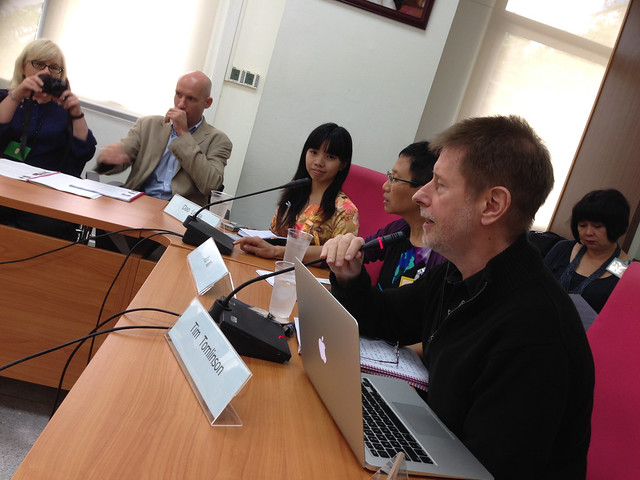
FOR THE past several years now, I’ve been actively involved in a regional organization called the Asia Pacific Writers and Translators (APWT), which has shaped up to be the liveliest and most active such grouping that I’ve joined. Writers and literary academics can join any number of professional associations and interest groups all over the world—ranging from the venerable and highly respected PEN to the more academically-oriented Modern Languages Association—and each of them will have their individual qualities and strengths, but nothing has worked quite as well for me as APWT.

The difference, I’ve found, is that this is a network that actually works as a network should—members get to know each other and help each other out on matters of both professional and personal concern; many become good friends, so you can always depend on being able to ring up a fellow writer in every port around the region for tea and sympathy. We meet as an organization once a year—it began in India, but has moved around to Hong Kong, Australia, Thailand, and Singapore. The Filipino delegation to these annual conferences has been increasingly large and substantial. Moreover, these participants are much less the familiar, senior faces like me than new, young, aspiring writers eager to establish their own contacts and networks.

This year, for the first time, APWT will be meeting in Manila, from October 22 to 25. As a member of the APWT Board, I’m helping to spread the word this early so Filipino writers can prepare to join the conference and present proposals for presentations at the conference sessions.

APWT 2015 is being spearheaded by the University of the Philippines’ Department of English and Comparative Literature, headed by its very capable chair, Dr. Lily Rose Tope, with funding from the National Commission for Culture and the Arts. Also providing key support are De La Salle University and the University of Sto. Tomas, with further assistance from the British Council, Ateneo de Manila University, and Anvil Publishing.

For this year’s conference theme, we chose something close to our contrarian hearts: “Against the Grain: Dissidence, Dissonance, and Difference in Asia-Pacific Writing and Translation.” That’s a mouthful, but just think of going “against the grain” or against the current. Like I wrote in a blurb for the conference, “That theme comes out of several centuries of an other-mindedness that seems to come naturally to Filipinos. We’re very agreeable people, but we love to argue, sometimes just for the sake of it, and value freedom of speech above everything else. That makes for a robust if raucous democracy where there are absolutely no taboos or sacred cows.” In other words, in Manila, we can talk about anything in any way we like—which you can’t necessarily say for our more, uhm, circumspect neighbors.

We’re fortunate to have the Sri Lankan-born and now London-based Booker Prize finalist Romesh Gunesekera among our keynote speakers, especially since Romesh grew up in the Philippines, where his father was one of the founders of the Asian Development Bank. APWT 2015 will open and take place for the first two days in UP Diliman, then move to La Salle and UST on its closing day. (On opening night, Anvil will host a launch and poetry reading at the thematically apt Conspiracy bar on Viasayas Avenue.)

Aside from the main plenaries and readings, there will be at least ten breakout sessions for panels on such possible topics as literature in a time of terror; taboo and transgression; writing violence, writing trauma; transmedial translation (writing across disciplines); publishing outside the center; writing within/without/beyond the canon; regional literatures in a global context; the writing life; and translating Westward, translating in-country. We will also have a special “new voices” session and several workshops with renowned international experts.

So let me lead the call for proposals for presentations by interested Filipino authors. By “presentations,” we mean informal but well-thought-out discussions of literary topics of broad interest lasting no more than 10 minutes. APWT is not the venue for long, narrowly focused academic papers; you may wish to present popularized abstracts of such work, if applicable.

At APWT, people don’t read papers; they talk. We value the idea of writers and translators in conversation—among themselves, and with the audience. For this reason, we’ll make sure that the 10-minute limit will be strictly imposed (and I won’t mind wading in and pulling the plug myself), to allow for a longer and livelier Q&A. We will discourage the use of PowerPoint unless absolutely necessary to minimize setup delays and glitches.

By “proposals,” we mean a paragraph or two about your chosen topic, its significance and possible connection to the theme, and the main points you’d like to raise about it. The broader the appeal of the topic and the sharper the edge, the likelier it will be accepted. Proposals sharing a common thread will be grouped together.

Please provide a brief CV (with a high-resolution photograph, if possible) highlighting your background and expertise, as well as your contact information. Direct all submissions and inquiries to apwt2015@gmail.com. (No deadline has been set yet for proposals, but we’ll close the panels when we have enough of them; simple participation will be open until the conference itself.)

We’d also like to remind potential participants that APWT has no funds for the travel and lodging of participants, and has traditionally subsisted on the private initiative of its members, who are strongly encouraged to seek sponsorships for their participation. A modest conference and membership fee will be collected to help sustain the association’s other activities. We can send individual invitations either upon acceptance of your proposal or upon request. For more information about APWT, visit our website at www.apwriters.org.

See you at APWT 2015!


Penman No. 126: Friendships Old and New

IMG_5878Penman for Monday, December 8, 2014


OUR THREE-MONTH American sojourn has come to a close, and by the time you read this we should be back in Manila, a bit wobbly in the knees but glad to be home. I’ve gained back too much weight—the price to pay for all that scrumptiously greasy diner food and the cold spells that excused me from my daily walks—and I’ve begun to miss my morning tinapa and my suppertime tinola. But I’ve hit my research targets and more, and am eager to hunker down to writing the book that should come out of all this. I know that in a couple of weeks this vacation will be another happy memory, and I’ll be stuck in Christmas traffic on EDSA, sweltering and muttering why the heck I didn’t stay out there for another month or two.

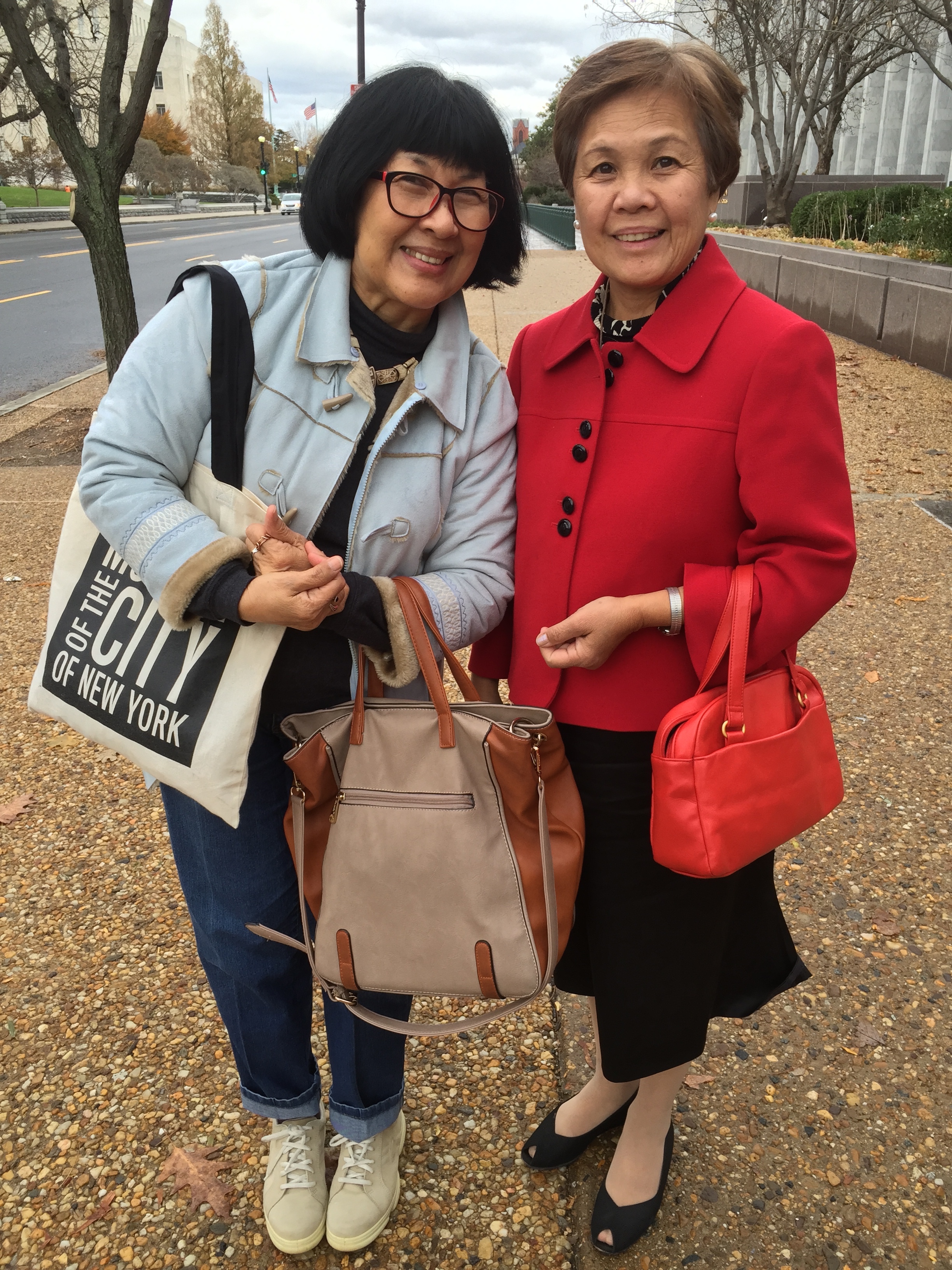
Before that happens, let me thank some very fine people we met during this visit, which apart from the work was marked by new friendships made, existing friendships strengthened, and old friendships revived. I’ve already thanked my interview subjects in a previous piece, but there were others behind the scenes who made this particular journey pleasant and memorable. They include Sonny and Ceres Busa, Nomer and Camille Obnamia, Erwin and Titchie Tiongson, and Jun and Myrna Medina.

They may just be names to those who’ve never met them, and indeed they’re not the kind of A-listers you’d find in the glossy magazines that make virtual libraries of Metro Manila’s beauty salons. Even among Filipino-Americans, just a few names keep recurring in the social registers, either titans of industry or doyennes of fashion—leading one to wonder, where’s everybody else and what are they doing? Surely the rich and famous have no monopoly on everything that’s interesting and important? So let me introduce these friends to the world at large, by way of celebrating the non-celebrity whose quiet deeds lend substance to the sparkle of those better known.

IMG_5703

IMG_6134

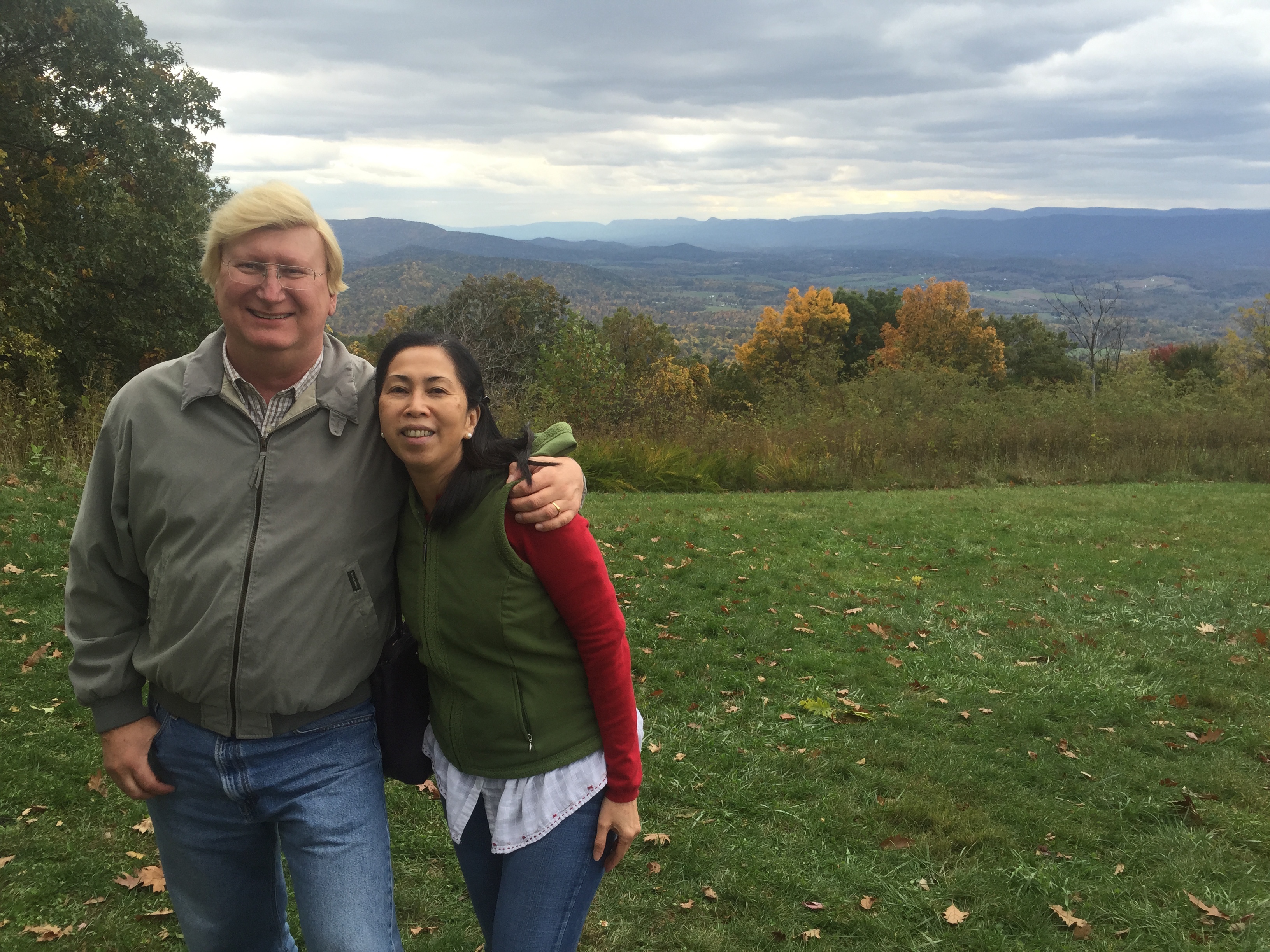
Sonny and Ceres hosted us twice at their postcard-pretty home in Annandale, Virginia and introduced us to the satisfying simplicity of Ethiopian food. The Waray-born Sonny had been a US consul in Addis Ababa, among other places, and his hilarious but spot-on insights into the American mind enlivened our every conversation. Ceres helps oversee a caregiving company for seniors in Virginia, a job eased by her patience and cheerful disposition, of which Sonny is luckily the prime beneficiary.

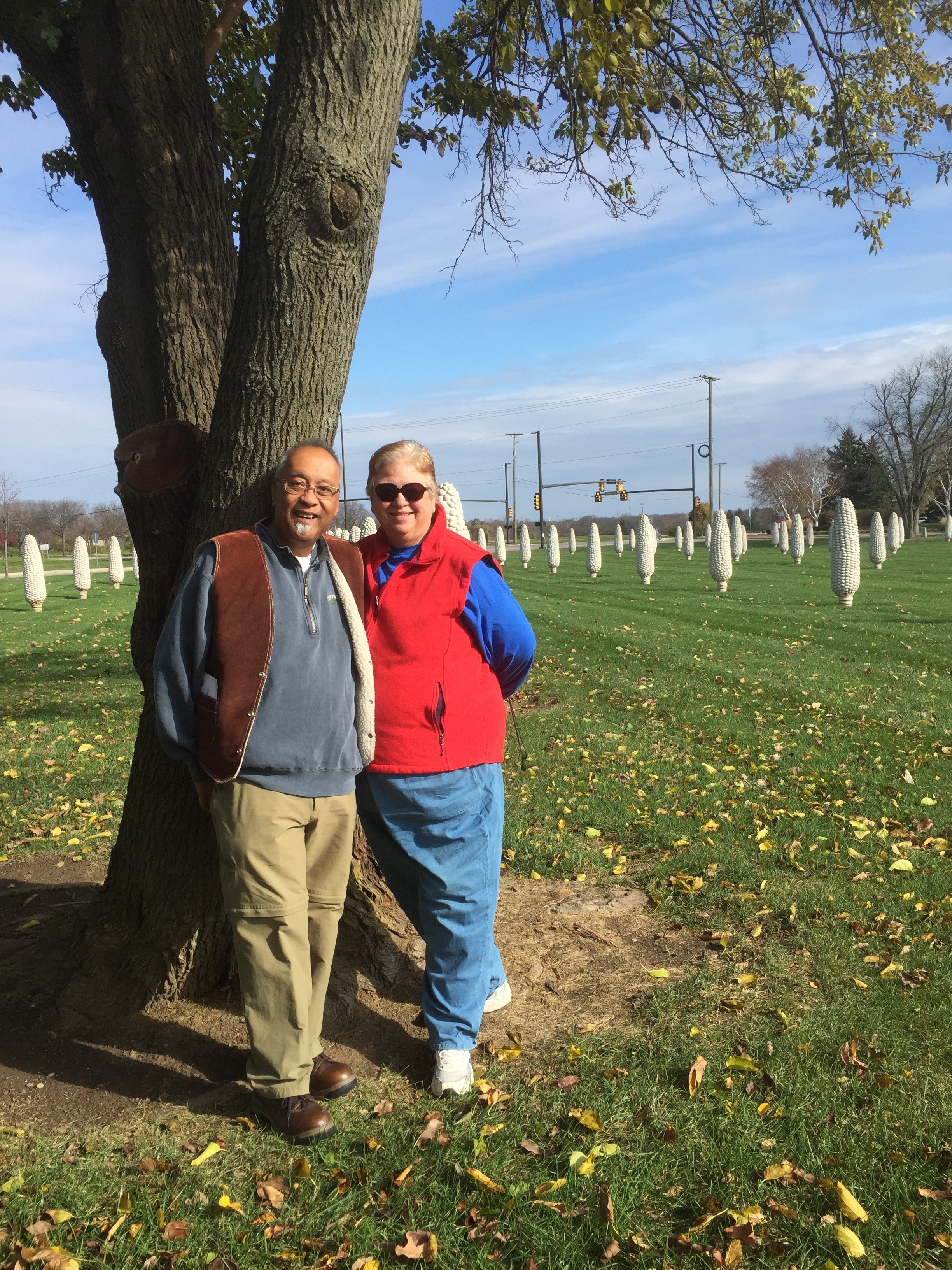
Nomer had been born in Sampaloc, Quezon and joined the Navy, where he met Camille in Hawaii; they’ve settled down in Columbus, Ohio, and our friendship began in the most unlikely circumstances. A committed conservative, Nomer had responded sharply to a column I wrote here years ago on artistic license, and our email conversation turned into a more gentle exchange of ideas and gestures. An expert in government procurement, Nomer had freely offered his counsel to our agencies and opinion-makers many times on ways of curbing corruption, but much to his dismay, his letters didn’t even merit the courtesy of a reply; I sadly felt obliged to tell him why. He and Camille took us into their home in the American heartland, where again I was reminded of the complexity and yet also the civility of much of American society, the challenges of Ferguson notwithstanding.

IMG_5951

As I wrote in this column two weeks ago, Eric and Titchie showed us, through their documentation of the Filipino presence in the capital area, that remembering the past need not be the preoccupation of the old, but has to be a continuing project for future generations to appreciate. A freelance journalist who’s been recognized for her work, Titchie wrote a fascinating article (http://www.oovrag.com/essays/essay2013b-3.shtml) about how a pretty stretch along the Potomac River was inspired by the Luneta, thanks to First Lady Helen Taft, who wanted the new park to mimic what she had seen in Manila, where her husband had served as Governor-General.

IMG_6089

Jun and Myrna Medina are old friends from the early 1970s, married four days after Beng and I got hitched. When I met Jun after being released from martial-law prison, he literally emptied his wallet for me, and later helped me get a job, a favor that in turn allowed me to propose marriage to Beng. Jun had also been a newspaperman and a fellow activist before martial law, but what many of his friends didn’t know was that he had eagerly volunteered to join a group of cadres bound for the Visayas, only to be turned down because his Capampangan origins would have marked him instantly as an outsider and gotten him killed (as, tragically, would befall everyone else in that posse). Another spin of the wheel of life took Jun to America, where he and Myrna have devoted themselves to their charismatic ministry. I hadn’t seen Jun in at least 20 years—only to discover that the Medinas had been living barely ten minutes away from my sister’s place in Centreville, Virginia, my virtual second home.

IMG_6132

Of course, let me add our family—Elaine and Eddie Sudeikis in Virginia, Jana and Senen Ricasio in New York, and Demi and Jerry Ricario in San Diego—to our list of hosts and sponsors (led primarily by the Philippine American Educational Foundation, the Fulbright folks). Other friends new and old like Mitzi Pickard, Reme Grefalda, Susan Brooks, and Moira Madrid-Spahr also contributed their time and attention to my visit.

IMG_5392

IMG_6386

IMG_5240

I was hosted by the George Washington University, and from GWU I have to thank English Department chairman Robert McRuer, creative writing program head Lisa Page, and old Manila hand and law professor Ralph Steinhardt. Ralph helped prosecute the Marcoses in Hawaii for human rights abuses when he was a young lawyer, and I’ll always remember his story about the response of a plaintiff whom he warned against the rigors and the costs of fighting the Marcoses: “I just want to be believed.”

In the end, that’s all we can hope for, and may my forthcoming book be worthy of all these good people’s graciousness and generosity.

Penman No. 125: A Date with the Doctrina

1024x1024-1510204Penman for Monday, December 1, 2014


NO VISIT to Washington, DC would be complete without looking into the Library of Congress, which stands behind the US Capitol, perhaps in a symbolic juxtaposition of knowledge and power. The library was, in fact, originally lodged with the Congress, but had to be rebuilt when British troops sacked and burned the Capitol in 1814, starting with the wholesale purchase of Thomas Jefferson’s personal collection of almost 7,000 books for about $24,000.

The LOC has come a long way since then; Jefferson’s volumes are still on display, but they have been joined by 36 million more books, not to mention more than 120 million more non-book items such as photographs, manuscripts, recordings, and sheet music. It’s easily the world’s largest library, adding some 12,000 new items to its roster every day, largely because of the copyright registration process. According to the LOC, half of its collections are in languages other than English—about 480 languages all in all, including nearly 3 million items from Asia.

A simple search of the LOC collections shows that there are more than 40,000 items here related to the Philippines (including, should you want to hear it, a recording of William Howard Taft talking about the Philippines shortly before he became President in 1909). The LOC has early editions of Jose Rizal’s Noli and Fili, which, along with other important Rizaliana, were put on special display at the Asian Reading Room in 2011 to commemorate Rizal’s 150th birth anniversary.

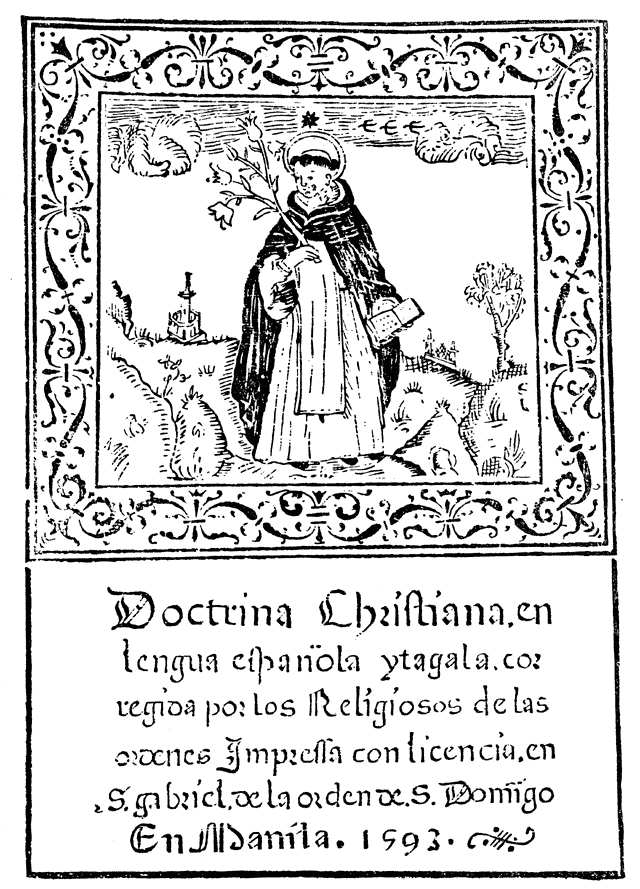
Last week, thanks to the combined efforts of the Filipino-American community in Washington and former LOC librarian and Fil-Am activist Reme Grefalda, I had the once-in-a-lifetime opportunity to see the crown jewel of the LOC’s Philippine holdings—the only known copy in the world of the 1593 Doctrina Christiana, the first book published in the Philippines.

The Doctrina is essentially a catechism, a collection of common prayers, including the Lord’s Prayer and the Hail Mary. Being basic prayer books, there had been other Doctrinas published earlier in other countries. The Philippine version was put together by Fray Juan de Plasencia, a Franciscan friar who helped found many Philippine towns, including Antipolo, Lucban, Meycauayan, and Tayabas. In 1585 he wrote King Philip II of Spain that he had already written several religious and scholarly books that could help spread the faith in the islands—including the Doctrina and studies of the Tagalog language—and asked for royal assistance in funding their publication.

But the good friar died in 1585, and it wouldn’t be until some years later, in 1593, when we see Governor General Gomez Perez Dasmariñas writing the King to present him with copies of the Doctrina in two versions—Tagalog and Chinese—and to explain that he had granted a license for the printing of these books (under Dominican auspices) because of their great value to the evangelization effort. And then, so the story goes, all copies of the Doctrina vanish, until the Tagalog one reappears—presumably the royal copy—in Paris in 1946, where it’s bought by an American dealer, who then resells it along with many other books in a lot to the American book collector and onetime Sears Roebuck chairman Lessing J. Rosenwald (1891-1979), who then bequeaths his collection, including the Doctrina, to the Library of Congress upon his death.

IMG_6183

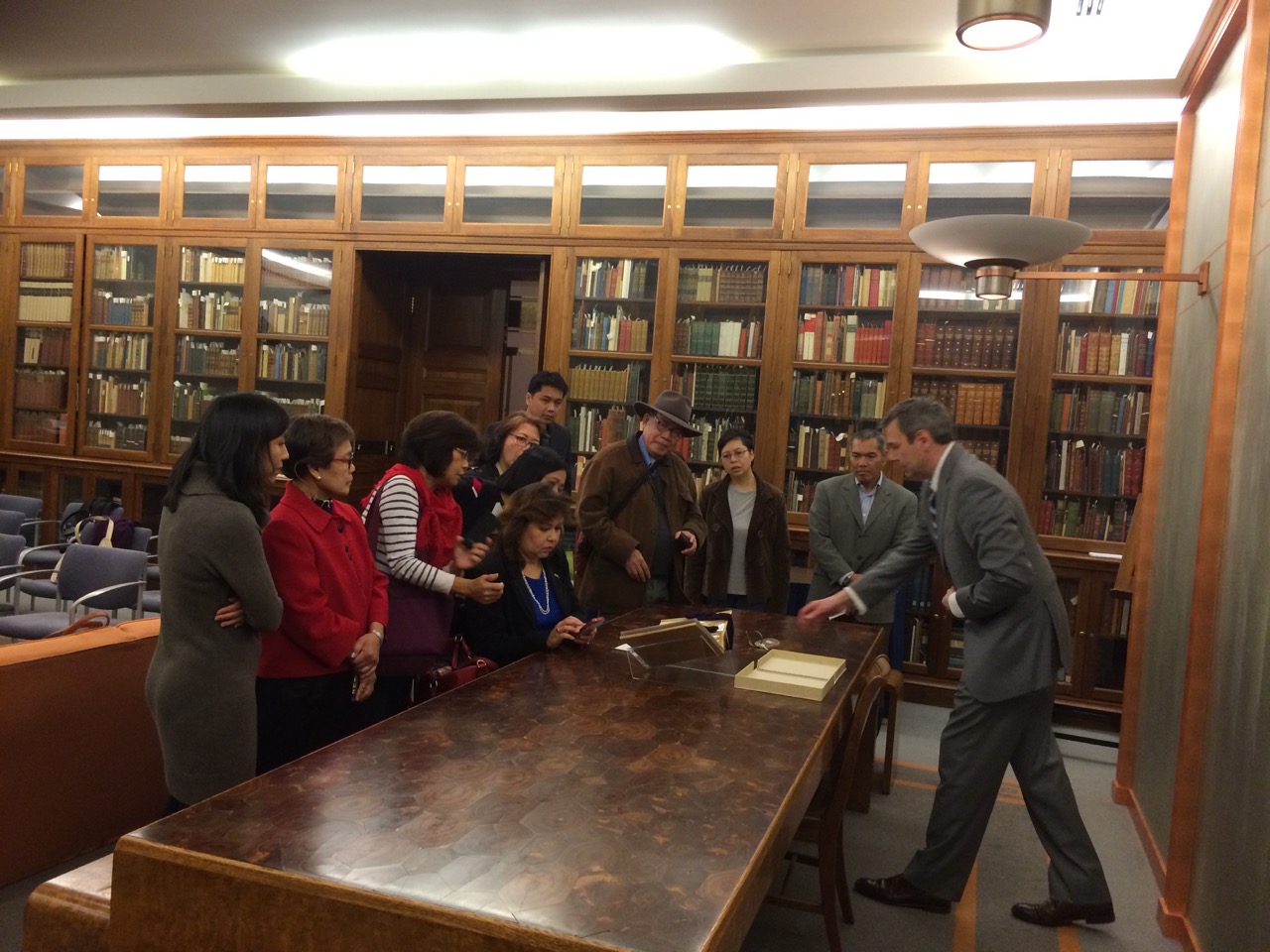
So the LOC’s copy, as far as we know, is the only one of its kind, and it was with great anticipation that Beng and I joined a group of ten Filipino and Filipino-American scholars and advocates who were kindly admitted by the LOC’s Rare Books Division to a private viewing of the Doctrina, with LOC librarian Eric Frazier doing the honors. (While waiting for our appointment, we had taken in a few of the LOC’s other prime offerings including the Gutenberg Bible, which is on permanent display near the stupendous main lobby that welcomes visitors, and the Magna Carta, on loan from the Lincoln Cathedral.)

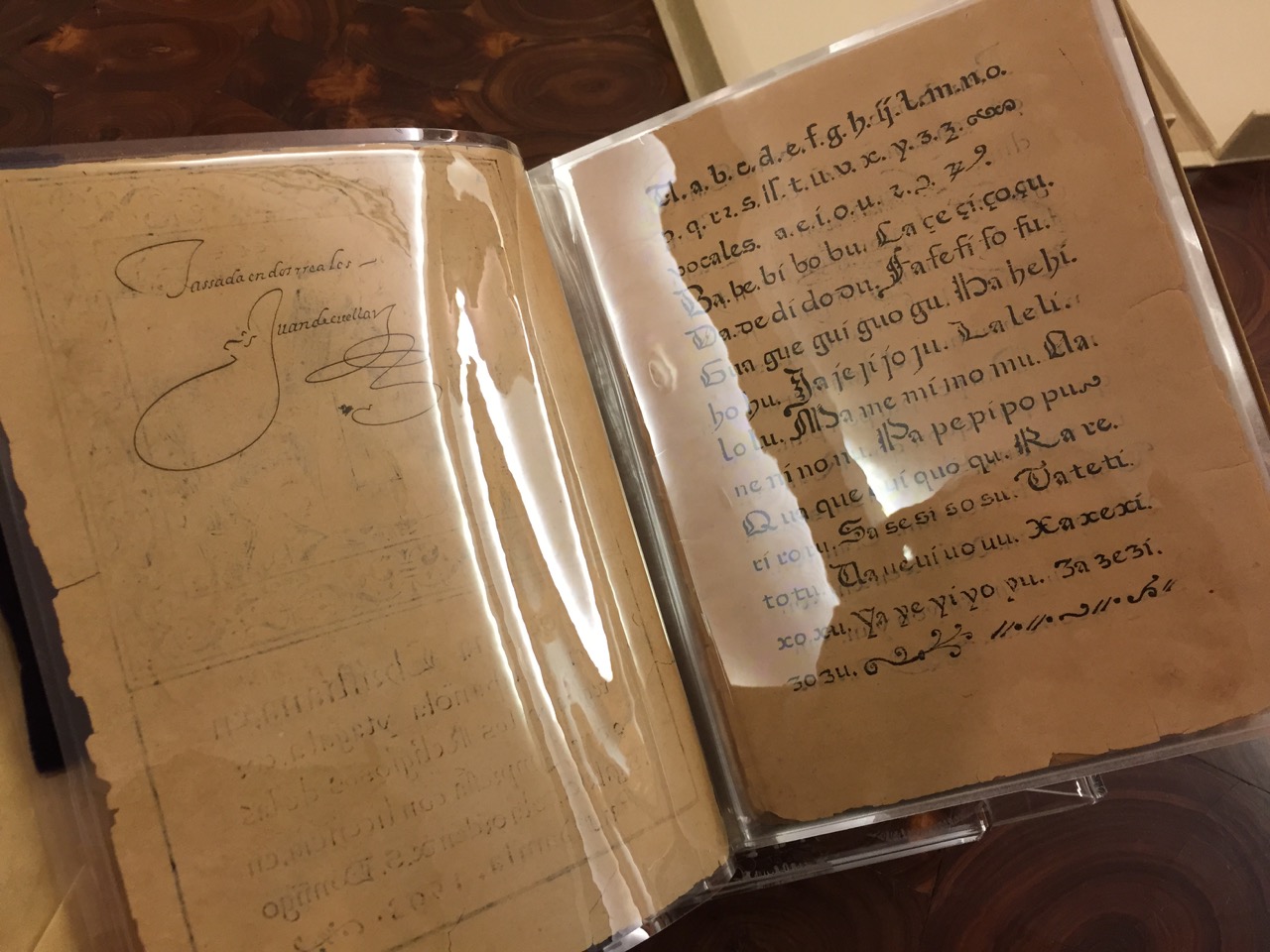
I should’ve read up more on the Doctrina before we went up there, but I was surprised by two things I realized only when I saw the book up close: its relatively small size, and the fragility of its paper. It’s only about 9 by 7 inches, not much bigger than a contemporary textbook. It was a further surprise to hear Eric say that “As far as I know, among the millions of books we have at the LOC, this is the only one whose every page is sheathed in Mylar.”

IMG_6150

I had asked Eric about the condition of the book and the paper, having seen and even handled other books from the 1600s (many of which, printed on stout, crisp linen paper, look good as new, and have survived in much better shape than the acid-lined paper of the 1800s and 1900s). The Doctrina, as it turns out, was printed xylographically—like a woodblock with the letters carved out—on mulberry paper (other sources say rice paper, although that term may have covered other papers made from mashed material). I’m not a professional historian, so I stand to be corrected on these presumptive facts by people who know vastly more about the Doctrina Christiana and about the history of books than I do (two immediately come to mind, our foremost book historians: Dr. Von Totanes and Dr. May Jurilla).

It was with the greatest of care and respect that we flipped those pages, and we saw what generations of the faithful must have seen (that is, if they saw the book at all): a syllabary, followed by prayers and other articles of faith, presented in Spanish, Tagalog, and baybayin, that pre-Hispanic script that survives in our consciousness only in the Katipunan “ka.” What’s remarkable is how fundamentally familiar the text of the prayers is: “Aba guinoo Maria matoua cana, napopono ca nang gracia. ang panginoon dios, ce, nasayyo. Bucor cang pinagpala sa babaying lahat….”

And so it went, a cry of praise and supplication across the ages, come to life again at our trembling fingertips.

I can only hope that, perhaps through an arrangement with a responsible Philippine institution, the Doctrina can be brought back to the Philippines for a special exhibition (the forthcoming Papal visit would have been the perfect occasion), or at least that more Filipinos in the US could see it, along with the other Philippine holdings at the LOC. It does take time and effort to arrange for a viewing, but in the meanwhile, the full digital copy of the book, provided by the LOC, can be found here: http://tinyurl.com/knpzkn5. For more information on the Doctrina Christiana and this particular copy, see the notes of Project Gutenberg editor Edwin Wolf at http://tinyurl.com/p6uqlvr.

Penman No. 124: Pinoys on the Potomac

cropped-logo-rizal-washington8Penman for Monday, Nov. 24, 2014


ERWIN TIONGSON and his wife Titchie are in their early 40s, successful professionals and the parents of young sons; they live in Fairfax, Virginia, a pleasantly wooded suburb just outside of Washington, DC. An Atenean from Nueva Vizcaya, Erwin teaches Econometrics at Georgetown University, while Titchie, a prizewinning writer, has chosen to stay at home to look after the children. Outwardly they might seem to be just another Filipino couple living the good American life, steadfastly focused on the present and the future. But their true passion inclines elsewhere, as Beng and I would discover in one of the most fascinating encounters we’ve had in our current American sojourn.

I’d first heard about Erwin from another new Fil-Am friend, Sonny Busa, a retired Marine, a former consul and instructor in international relations at West Point. (Sonny, in turn, had been introduced to me by upstate-NewYork-based Sharon Delmendo, who has done a lot of research on Philippine-American relations—so now you see how the academic circuit works.) Sonny had mentioned to me that there was a Filipino in the community who had taken it upon himself to chronicle the history of the Philippine presence in Washington and the surrounding area—more than a century of visits and residencies by Filipino politicians, diplomats, writers, artists, musicians, and other personages whose life and work, in one way or another, drew them to the American capital.

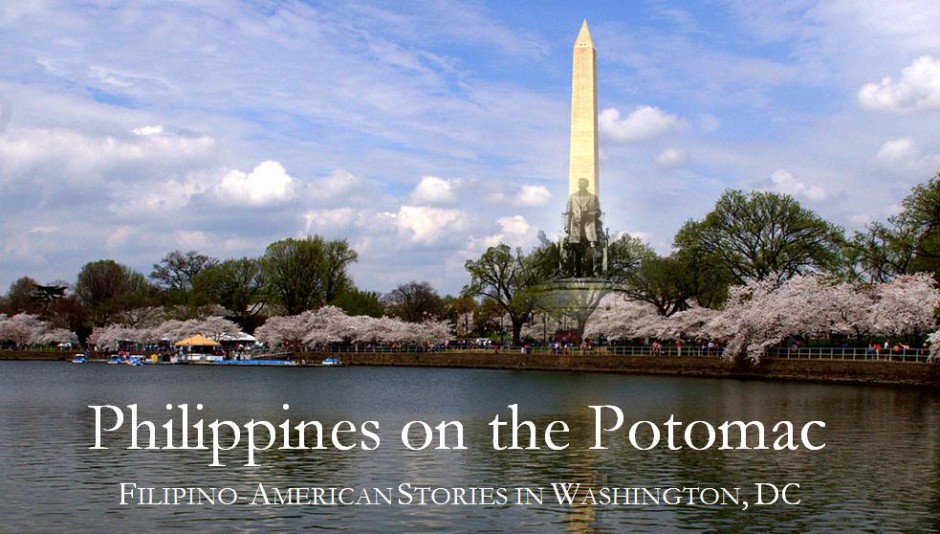
That’s how I found the website that contained all this information—a WordPress site titled “Philippines on the Potomac: Filipino-American Stories in Washington, D.C.” (https://popdc.wordpress.com). If you’ll take a minute to click on that link, you’ll discover what I did, with a child’s wonderment at the entrance of a carnival: short articles and accompanying photographs tracing the connections between Filipinos and Washington, DC.

As might be expected, the big political figures, especially those from the Commonwealth and postwar period, dominate the reportage: Manuel L. Quezon, Carlos P. Romulo, Sergio Osmeña, Manuel Roxas, and Jose Abad Santos. But cultural luminaries are also well represented: Juan Luna, Jose Garcia Villa, Juan Arellano, Enya Gonzalez, Fernando Amorsolo, and Bienvenido Santos, among others.

Quezon had served as Resident Commissioner—effectively our ambassador—in Washington until 1916, and when he went to the US on his wartime exile and died in New York in 1944, it was at the Cathedral of St. Matthew the Apostle in Washington—not too far from where our embassy now sits—where his funeral mass was held prior to his interment at Arlington (less than 20 years later, John F. Kennedy would follow the same route; MLQ’s remains were moved to the Philippines after the war, and now lie at the Quezon Memorial).

Carlos P. Romulo and his family lived in a home on Garfield Street for 16 years, CPR having served in many capacities, from aide de camp to Gen. Douglas MacArthur to Resident Commissioner, ambassador, and president of the United Nations General Assembly. (One of the website’s most remarkable images has an old sepia photograph of the Romulos superimposed exactly over the same spot in front of the present house, which has barely changed.)

The site provides a treasure trove of other historical facts—including, inevitably, tidbits of information that serious scholars might dismiss as trivia, but which enthusiasts like me can’t get enough of. The sculptor and National Artist Guillermo Tolentino, for example, once worked as a waiter in Washington, and somehow managed to meet President Woodrow Wilson and to present him with the gift of a small statue, which Wilson kept in his room until his death; Wilson later helped Tolentino get a scholarship to art school. We also learn that Juan Luna and Felipe Agoncillo went to Washington in 1899 to campaign against the Treaty of Paris, and stayed at the Arlington Hotel, where they were spied upon by the Secret Service. (All these stories are properly attributed and referenced, by the way.)

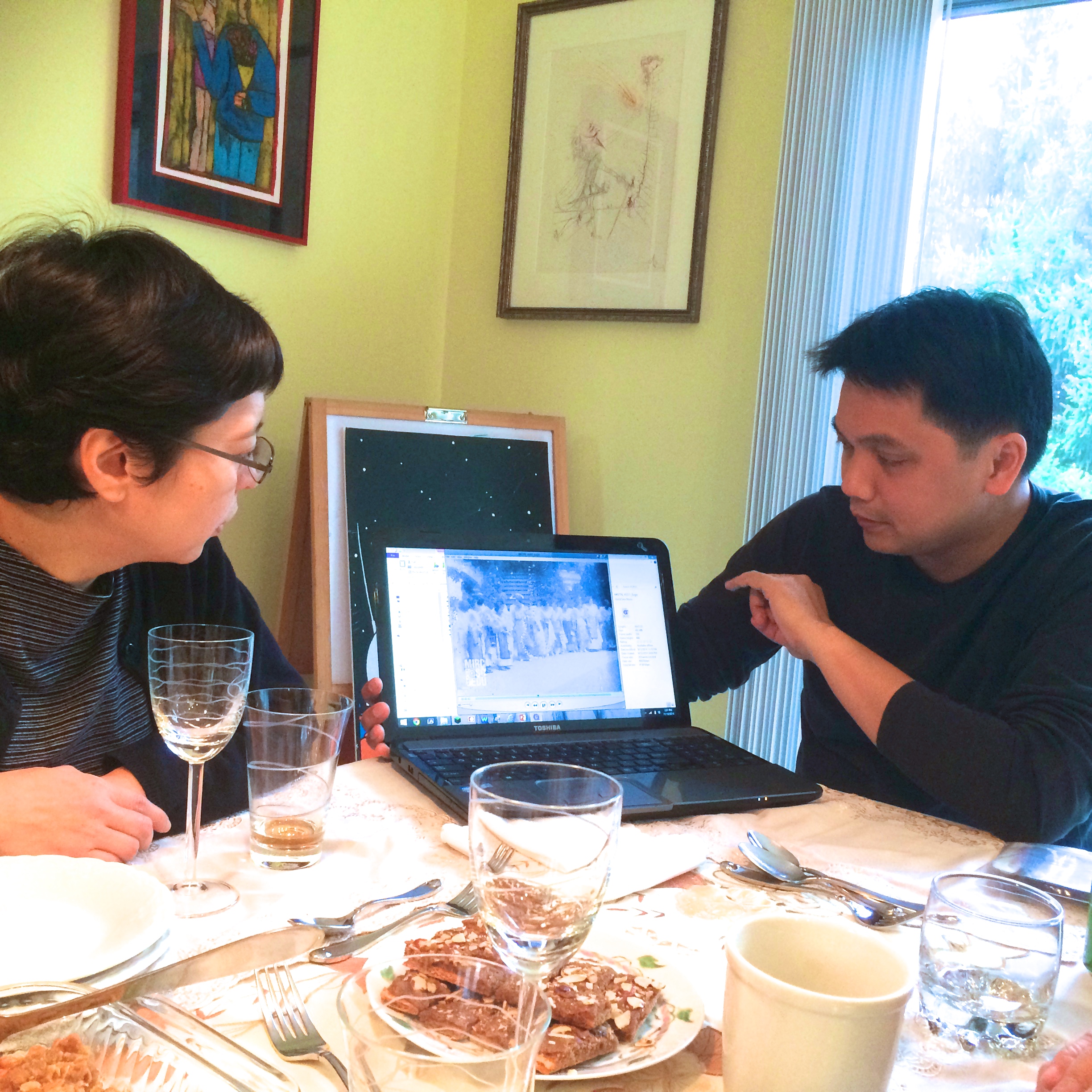
Better than just poking around the website, the Tiongsons invited us to lunch and show-and-tell, and I couldn’t wait. Learning of my current affiliation with the George Washington University, Erwin had pointed me to an article written by CPR’s granddaughter Liana relating how Romulo had coached a debating team from the University of the Philippines in an engagement with the GWU team, over this issue: “Resolved, That the Philippine Islands should be granted immediate and complete independence.” The debate took place on April 18, 1928 at GWU’s Corcoran Hall. “UP won,” said Erwin. “It was the team’s fifth victory, after defeating Stanford, California, Utah, and Colorado. The team would go on to defeat all their other opponents—a total of 14 universities, if I remember correctly.”

Tiongsons

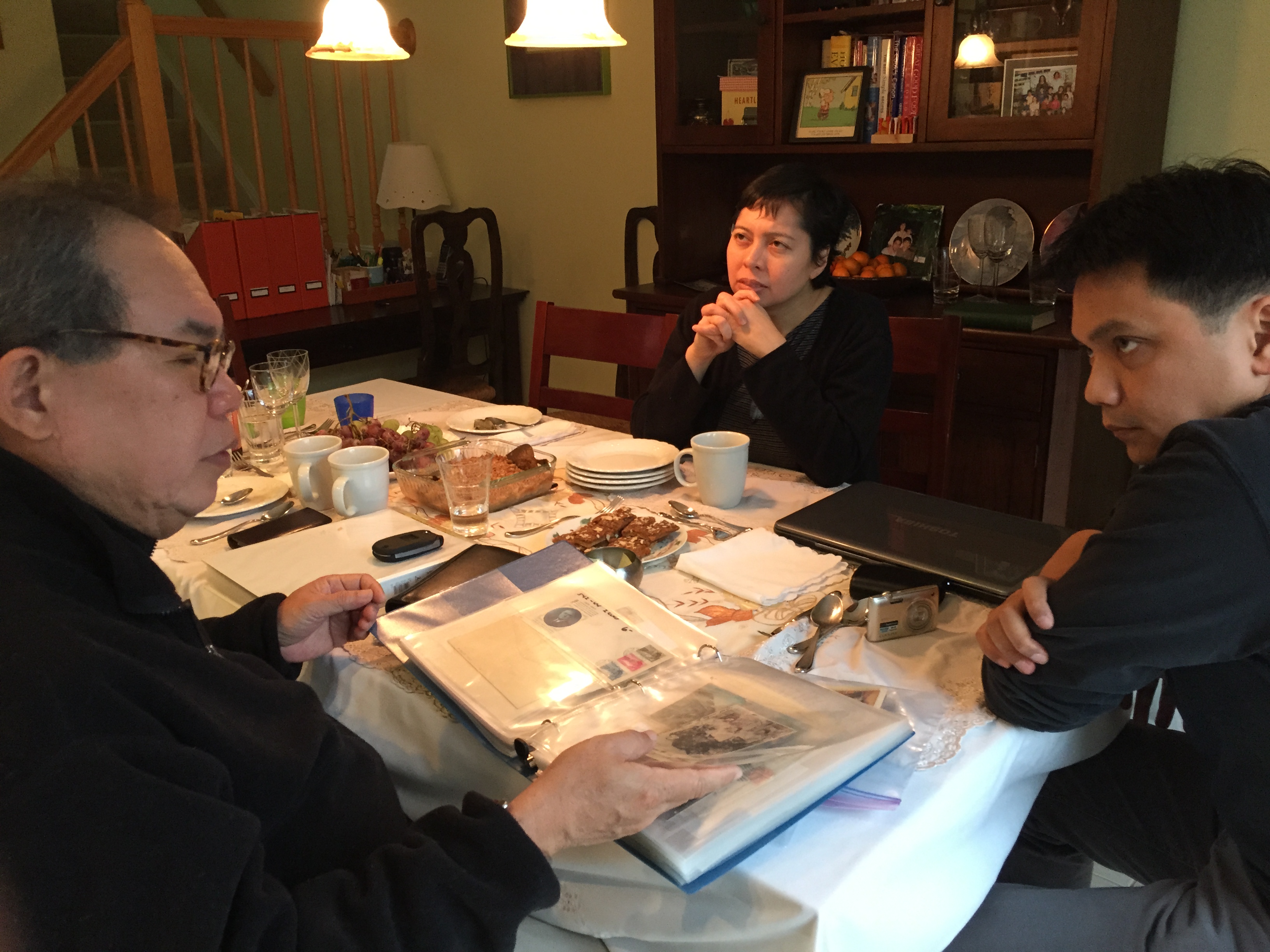
Even more interesting were the personal stories that Erwin and Titchie shared with us (after a sumptuous lunch of home-made corned beef and baked salmon, which all by itself was well worth the Sunday visit). I can’t go too deeply into the details now, but Beng and I were thrilled to share Erwin’s elation over his most recent discovery, a book that had been inscribed by Maximo Kalaw, MLQ’s private secretary, to a “Nina Thomas”—who turned out to be the American lawyer the young Quezon had been engaged to (he broke off the engagement after being advised that marrying an American was political suicide). Erwin made contact with Nina’s heirs in Virginia; she never married, but she passed on Quezon’s monogrammed walking stick and their engagement ring to her niece.

Erwin also showed us a movie poster from 1946 of Anna and the King of Siam, featuring Rex Harrison, Irene Dunne, and a little-known actress named “Chabing”—who turned out to be Isabel Rosario “Dimples” Cooper, Douglas MacArthur’s girlfriend (not mistress) between marriages; after MacArthur left her, she resumed her film career (she was notable for having recorded the first on-screen kiss in Philippine movies in 1926), assuming the single name “Chabing,” whose filmography you can look up on IMdb.

It was also a treat to listen to a radio recording of Jose Garcia Villa, made in the 1950s, of him reading his “Lyric 17” (1942) which famously begins with “First, a poem must be magical….” Most moving was the 20-minute documentary of President Quezon’s funeral—directed by no less than the renowned director John Ford—that Erwin had magically retrieved from somewhere in the many university libraries, archives, and museums that he still haunts in search of fugitive Filipiniana. He has begun a collection of war correspondence from the early 1900s and the Second World War; one 1902 letter poignantly retained a swatch of jusi, which the wife of an American official in Iloilo wanted her folks to see.

We could have stayed there the whole day, reveling in our memories of the grand old men of Philippine letters—NVM Gonzalez, Ben Santos, Nick Joaquin, Manuel Viray; I shared my own little adventures in cultural retrieval. But Beng and I had sadly had to trundle out again into the autumn chill, warmed by our imaginations, and in my ears rang a line from Viray’s poem about his old house in Washington, on Cathedral Avenue, which the Tiongsons had also located: “A streak of light aslant / On the screen door creeps up the line of dusty books.”


Penman No. 122: A Meeting in Manhattan

IMG_5861Penman for Monday, November 10, 2014


BENG AND I were in Philadelphia and New York these past two weekends, so I could do more interviews for my martial-law book project and also get in touch with a few old friends. I normally keep a very low profile and don’t tell or call people when I travel to places where friends are living, not because I’m a snob, but because I don’t want to be a bother, knowing what it’s like when somebody drops in from the blue and throws your schedule out of whack.

But there are always some friends you never mind breaking your routine for, and who never seem to mind, either, if you break theirs. And I was glad to meet up in Manhattan with two such writer-friends, the poet and essayist Luis “Luigi” Francia and the fictionist Gina Apostol, both of whom live and work in New York. Luigi teaches at Hunter College and Gina at the Fieldston School.

The first time I met Luigi, many years ago in a Malate bar on one of his visits home from New York where he has been living since 1970, I remember seeing his calling card, which described him thus beneath the name: “POET. EDITOR. PRINCE.” It seemed cheeky and chic, and I was deeply impressed, being none of the above. (I’ve since written some middling poetry and have done my share of editing chores, but remain utterly unprincely.)

IMG_5856

I had the recent pleasure of writing a blurb for Luigi’s forthcoming collection of essays titled RE: Reviews, Recollections, Reflections, to be published by the University of the Philippines Press, and this is what I said:

“Luis Francia knows New York and America better than many of the native-born, but he never loses his moorings, his critical awareness of what it means to be Filipino-American. But these essays are about far more than racial politics, as they chronicle the travails of that most blessed and in other ways most cursed of citizens—the artist, particularly the artist abroad, for whom alienation acts as a lens that magnifies and reshapes every little thing that crosses the eye. The most arresting and delightful reads are his portraits of the expatriate masters who preceded him in America—most notably Jose Garcia Villa, lover of martinis and hater of cheese. Despite the plaints, Francia has been clearly and distinctly privileged to be where he has been and to see what he has seen, and he shares that privilege with us in this well-wrought collection.”

Gina was my batchmate when I returned to finish my undergrad studies in UP in the early ‘80s; I was ten years older than everyone else, so I was kuya to all of them. It was a time when we were all dreaming of finding a way to take our graduate studies abroad—as English and writing majors, we wanted to become the next Gabriel Garcia Marquez, the next Sylvia Plath, the next Ian McEwan, the next Pablo Neruda, and so on; as Pinoys, we wanted to see America. Eventually, we just became our older selves, but we did get to see the States through one ticket-paying subterfuge or other—for me, a Fulbright grant; for Fidelito Cortes, a Wallace Stegner fellowship; for Ramon Bautista, an assistantship at Wichita. But we had to compete for these, while all the brilliant Gina had to do was to lick a few stamps and mail a couple of her typewritten stories off to John Barth, who directed the writing program at Johns Hopkins and who wrote her back forthwith to offer her an assistantship, smitten as he was with her talent. It was pure magic, in those pre-email days.

That brash young woman from Tacloban who flew off to Baltimore would go on to write several prizewinning novels. Gun Dealers’ Daughter, published by W. W. Norton, won the 2013 PEN Open Book Award given by the PEN American Center to outstanding works by authors of color to promote racial and ethnic diversity within the literary and publishing communities. (Luigi himself had won this prize in 2002, the first year it was given, for his nonfiction book The Eye of the Fish.)

Here’s what the judges said about that novel in their citation: “You will read Gun Dealers’ Daughter wondering where Gina Apostol novels have been all these years (in the Philippines, it turns out). You will feel sure (and you will be correct) that you have discovered a great fiction writer in the midst of making literary history. Gun Dealers’ Daughter is a story of young people who rebel against their parents, have sex with the wrong people, and betray those they should be most loyal to…. This is coming of age in the 1980s, Philippine dictatorship style, where college students are killed for their activism. The telling is fractured, as are the times…. Not only does this novel make an argument for social revolution, it makes an argument for the role of literature in revolution—the argument being that literature can be revolution.”

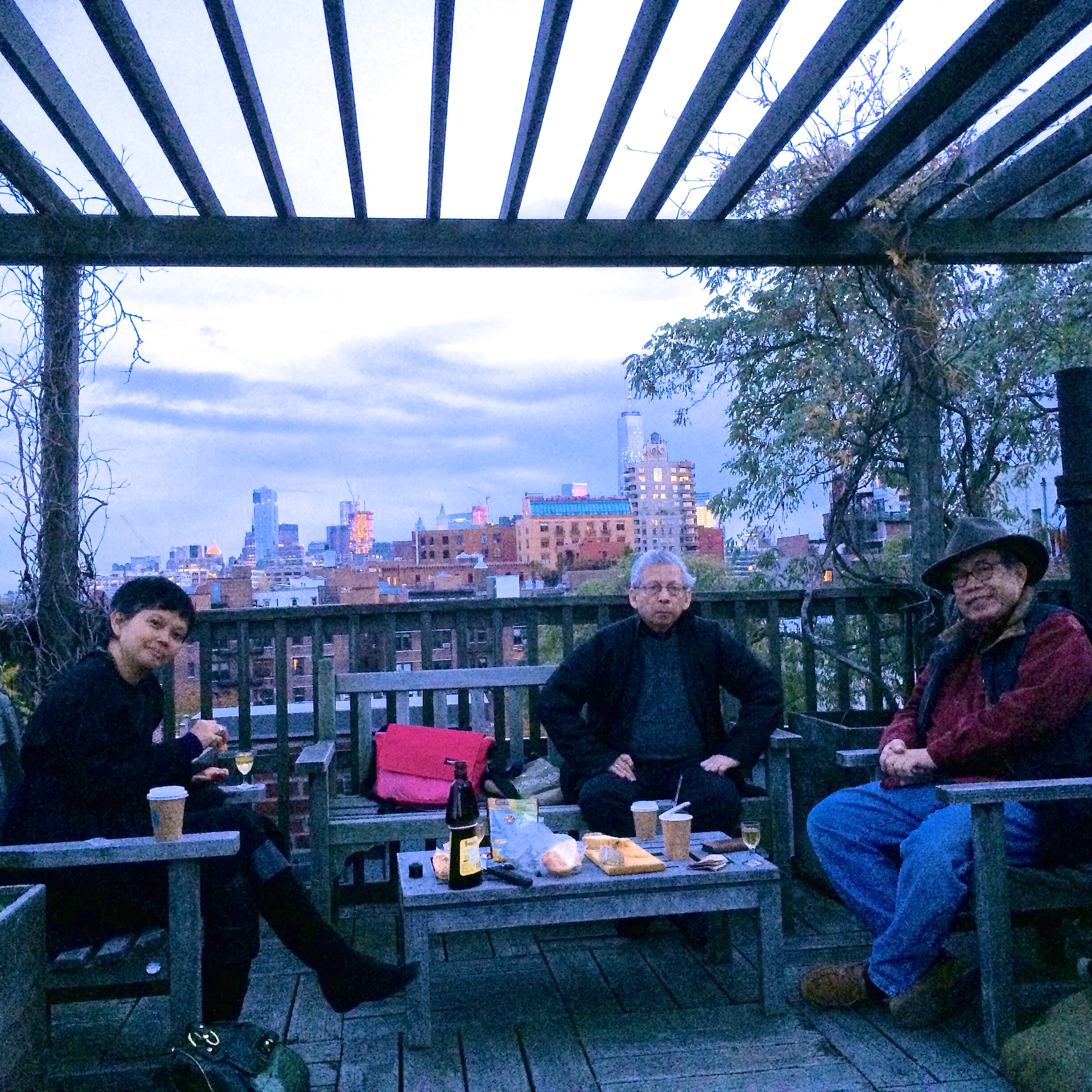
These then were the two literary luminaries who happened to be my friends (or should that be the other way around?) whom I was happy to set up a date with in a coffee shop in the West Village, near the High Line (an elevated garden and walkway that deserves its own story, among other New York landmarks). The coffee place was full, so we brought our steaming cups instead up to the roof deck of Gina’s apartment a few blocks away, pausing for a picture in front of the late Jose Garcia Villa’s old place on Greenwich Street. “This was where he held court,” said Luigi, one of Villa’s acolytes. “Nonoy Marcelo also lived in this area for many years, and I did, too, back when the rent was 65 dollars a month.” Then Gina added, “That white place is where John Lennon and Yoko Ono lived.” And I thought, if they’d stayed here instead of moving to the Dakota, he might still be alive.

We went up to the roof deck and Beng and I savored the scenery in all its 360-degree magnificence, as the sun set in the west and the full moon rose in the east, competing with the Empire State’s tricolor spire. We talked books, life, and loves over Frangelico, bread, and cheese; channeling Villa, I steered clear of the curd. Looking sharp and happy despite a recent illness, Gina said that her iPhone’s Siri had told her, in response to a question, “I’m just glad to be alive!” At that instant, we all were.

Penman No. 117: The Way We Were

IMG_4726Penman for Monday, October 6, 2014


I’D LIKE to thank the people who’ve given me their time and accorded me their hospitality during my current visit to the US. I’m here to do more research for a book project—an oral history of the First Quarter Storm (the story of my generation, in other words)—and so far I’ve had wonderfully productive interview sessions with some people who were either active participants in the anti-martial law movement or were on the other side of things (or simply on the roadside) at the time.

Those who’ve helped me out, either as interview subjects or facilitators, include former campus journalist and retired engineer Gerry Socco and his wife Chet; lawyer Rodel Rodis; editor Rene Ciria-Cruz; tech journalist and developer Joey Arcellana; and journalist Gemma Nemenzo and her husband, Col. Irwin Ver. All of them are conveniently based in the San Francisco Bay Area, so Beng and I flew out there from DC for a long weekend of interviews and reunions with old friends.

Rodel and I go back all the way to the Philippine Science High School, where I served as Rodel’s associate editor when he helmed The Science Scholar. It was also in high school—when I myself became editor in chief—that I first heard of Joey Arcellana from our adviser, Mrs. Agnes Banzon Vea (mother of the accomplished Doy and Rey Vea), who told me one day: “There are two young writers I’d like you to read. One of them writes for the UP Collegian, and his name is Joey Arcellana. The other is still in high school and writes for the Highlights, and his name is Gary Olivar.” Gemma, who now edits the ezine Positively Filipino, also edited the late, lamented Filipinas magazine, which I used to write a column for. Gerry I knew from the pre-martial law College Editors Guild of the Philippines, and we met again in the worst of possible circumstances—as fellow political prisoners in Bicutan; today, in our sixties, we share an unabashedly bourgeois passion for collecting vintage pens and watches.

In Washington, DC, where I’m formally based through my association with the George Washington University, I’ve been lucky to meet and to interview one of the torchbearers of the anti-Marcos resistance on the East Coast, Jon Melegrito, a retired librarian at GWU who now writes for the DC-based fortnightly Manila Mail. I’ve also been glad to gain the insights of three former State Department officials: former Ambassador John Maisto, who headed the old Office of Philippine Affairs and served in Manila in the late 1970s; his colleague Hank Hendrickson who now serves as executive director of the US-Philippines Society, of which Amb. Maisto is the president; and Santiago “Sonny” Busa, a Filipino-American who has served as consul in Manila, Addis Ababa, and Kuwait, and who has taught International Affairs at West Point. I’ll be doing a bit more traveling to see people in New York and possibly the Midwest.

So far, I’ve interviewed about 30 people for the book, which I’ve begun to write at my sister’s place in Virginia. It’s very strange in a way to write about bloody encounters in coconut groves in the Philippine South while reveling in the sight, outside my window, of bluejays and robins perched on the branches of trees just beginning to acquire an autumnal glow. But perhaps it’s precisely this physical and psychological estrangement that I need to handle such an emotional project—emotional, at least, for members of my generation.

Sometimes what I hear gets a bit too much; for the first time, after having written and published over 25 books with a very dry eye, I wept as I listened to an account of someone I knew shooting—executing—someone who had been her best friend. At the same time, events that might have been terrifyingly life-threatening 40 years ago can now sound absolutely hilarious—or deadpan ironic, such as when firebrand Fluellen Ortigas, selected as one of the Ten Outstanding Students of 1968, stands beside President Marcos at the awarding ceremonies, with a book titled The Essentials of Marxism in hand. “Join my staff,” Marcos tells him. “I can’t,” Ortigas replies. “You’re going to be a dictator!” Ortigas would later work for Ninoy Aquino, go underground in Panay, get arrested before martial law, get released in 1976, flee to the US via Sabah, get an MBA, and become a businessman in San Francisco.

I have many more stories like Flue’s to tell, each with its own highlights and insights—Elso Cabangon being ambushed on Taft Avenue and taking four bullets, one of them tearing through his cheek; Boy Camara auditioning for the role of Judas before eventually playing Jesus Christ, Superstar; a female comrade being married in the rites of the Party, one hand on her heart, and the other on Mao’s Quotations (it’s a marriage, like many in the movement, that will unravel). But they’ll have to wait until the book itself, which I hope to finish by early next year.

Even now, many old friends and comrades are probably wondering why I haven’t approached them yet or asked so-and-so to be interviewed, because they have interesting and important stories to tell. I’m sure they do, and I have to extend them my apologies in advance, simply because I just don’t have the time or space at the moment to include everything and everyone I should be covering. I’m almost certain that this oral history will lead to a sequel, all the way to EDSA (a book that someone else should begin writing soon). Some people I’ve asked haven’t replied or have declined, and I can only respect their implied wish to be left alone.

Again, this book will be about the past, and while we might bemoan the innocence we lost, or even wax romantic about the way we were, I don’t think too many of my respondents will want to relive their lives in exactly the same way, knowing what they do now. We might not regret what we did—it arguably needed to be done—but we or our children don’t have to repeat it, if it can be helped. That’s how history helps the future.

Penman No. 115: The Clarity of Prose

Penman for Monday, Sept. 22, 2014


“THE CLARITY of Things” is the title of the new short story I finished a few weeks ago, which will soon be coming out in the Australian literary journal Westerly. The phrase has been ringing in my ears and suggested this piece about the value of clarity in prose—an element whose importance seems so obvious but which still escapes many writers, especially those who remain unsure of what it is exactly they want to produce.

I was thinking of this the other day as I was reading, with much delight, an old essay by the New York-based Luis Francia on Jose Garcia Villa, which begins thus: “Loved New Yorker cartoons. Hated its poetry. ‘Prose,’ he’d sniff.” The essay (in which I happily discovered that I shared with Villa not just a first name but an aversion to French food and cheese) went on to describe Villa’s fabled workshops, where he decried, Luis recalls, “the prose or narrative mentality. Anathema to the poet’s creed. He urged us not to read fiction, to purify ourselves, our poems, and have that lyric spirit fly unfettered.” There was, Villa and Francia agreed, too much bad prose going around, passing itself off as poetry.

It’s an admirable and entirely understandable stance, coming from a consummate aesthete like Villa. I don’t think there’s a real writer alive who won’t concede that, in the hierarchy of letters, poetry sits at the topmost tier; I often remind students too eager to proclaim themselves poets that there’s nothing harder to do well and easier to do badly than poetry. I’ve published a book of what I offer to be poems and I’ve won a couple of prizes for poetry, but I wouldn’t for one minute describe myself as a poet; I am not worthy.

That said, the writing of good and great prose—whether fiction or nonfiction—poses its own challenges, heedless of poetry’s demands for complexity, compactness, and layered meanings. For me, the charm of prose is precisely in its accessibility—or at least, in its seeming accessibility—and then, like stepping into a roomful of riches, in its delivery of even more than the view from the doorway may have suggested.

At its most basic, and also at its best, prose should be unflinchingly clear, which means it should be written with certainty and precision, if not efficiency, from physical description to philosophical musing. (I keep hearing the imaginary voice—ironically, he was a chronic stammerer—of W. Somerset Maugham, one of my early models, intoning in one of his treatises on writing: “Clarity, clarity, clarity!”) A blue sky should come off as blue, or shade into its proper variant; a crowded room should suffocate the reader. Clarity does not imply a singularity or inevitability of meaning, especially in fiction, which thrives on ambiguity; I don’t have to understand what I’m seeing, not right away, but I should know what I’m looking at—a wet street, an orange jacket, an old man’s face. Witness the prudish Miss Mijares in Kerima Polotan’s “The Virgin”: “Secret, short-lived thoughts flitted through her mind in the jeepneys she took to work when a man pressed down beside her and through her dress she felt the curve of his thigh”; she wished she were “in the movies, to sink into a seat as into an embrace, in the darkness with a hundred shadowy figures about her and high on the screen, a man kissing a woman’s mouth while her own fingers stole unconsciously to her unbruised lips.”

Some works, like popular songs, are best understood right away to be fully enjoyed.

On our flight to the US earlier this month, I gorged on the onboard entertainment, and dwelt in particular on an HBO documentary on the life and work of the lyricist-composer Stephen Sondheim, who reminded his audience that the difference between the poem and the song lyric is that the listener has to get the song on the spot, whereas the poem’s meaning can be teased out at leisure. (And sometimes meaning doesn’t matter as much as the music: try figuring out “Send in the Clowns.”)

Clarity often comes with concrete objects, but can be even more valuable when dealing with abstractions—ideas, feelings, complex notions often more surely grasped by the many-fingered poem. I’ve found that the most complex notions are best served by the simplest language. Clarity and simplicity are not always the same thing, but can’t be too far apart. There’s a much-quoted passage from C. S. Lewis’ The Four Loves that illustrates how simple words—with a few exceptions like “irredeemable”—can reach at the most complex of meanings:

“To love at all is to be vulnerable. Love anything, and your heart will certainly be wrung and possibly be broken. If you want to make sure of keeping it intact, you must give your heart to no one, not even to an animal. Wrap it carefully round with hobbies and little luxuries; avoid all entanglements; lock it up safe in the casket or coffin of your selfishness. But in that casket—safe, dark, motionless, airless—it will change. It will not be broken; it will become unbreakable, impenetrable, irredeemable. The alternative to tragedy, or at least to the risk of tragedy, is damnation. The only place outside of Heaven where you can be perfectly safe from all the dangers of love is Hell.”

This also reminds us that good, clear writing begins with good, sharp thinking, which is perhaps the hardest task of all.


Penman No. 110: Witnessing the World

HillCoverPenman for Monday, August 18, 2014


IN MY other role as an editor rather than a writer of books, I take raw manuscripts from Iclients and friends and transform them into something publishable and popularly readable. I’ll write more about editing as a profession one of these days, because it’s an art unto itself that bears all the challenges but very little of the glamor and rewards of authorship. In the meanwhile, I’d like to talk about one of my most recent editing projects, a book about travels around the world by someone who has to be the most happily peripatetic (that’s a fancy word for “footloose”) person I know.

Julie Hill was a client before she became a friend. We were introduced to each other more than ten years ago by Jimmy Laya, who knew Julie and her late husband Arthur back from when the Hills lived in the Philippines, where Arthur represented the Ford Foundation. Then based in Southern California, Julie wanted to write a book about her life and travels with Arthur, who had just died of cancer; together, the couple had journeyed around the world, from Australia to Afghanistan, from Bangkok to Minnesota, from Samoa to China. Julie—born an Alexandrian Greek, trained in chemistry, and later a telecommunications executive—had all these stories to tell, and she needed an editor to help her tell them.

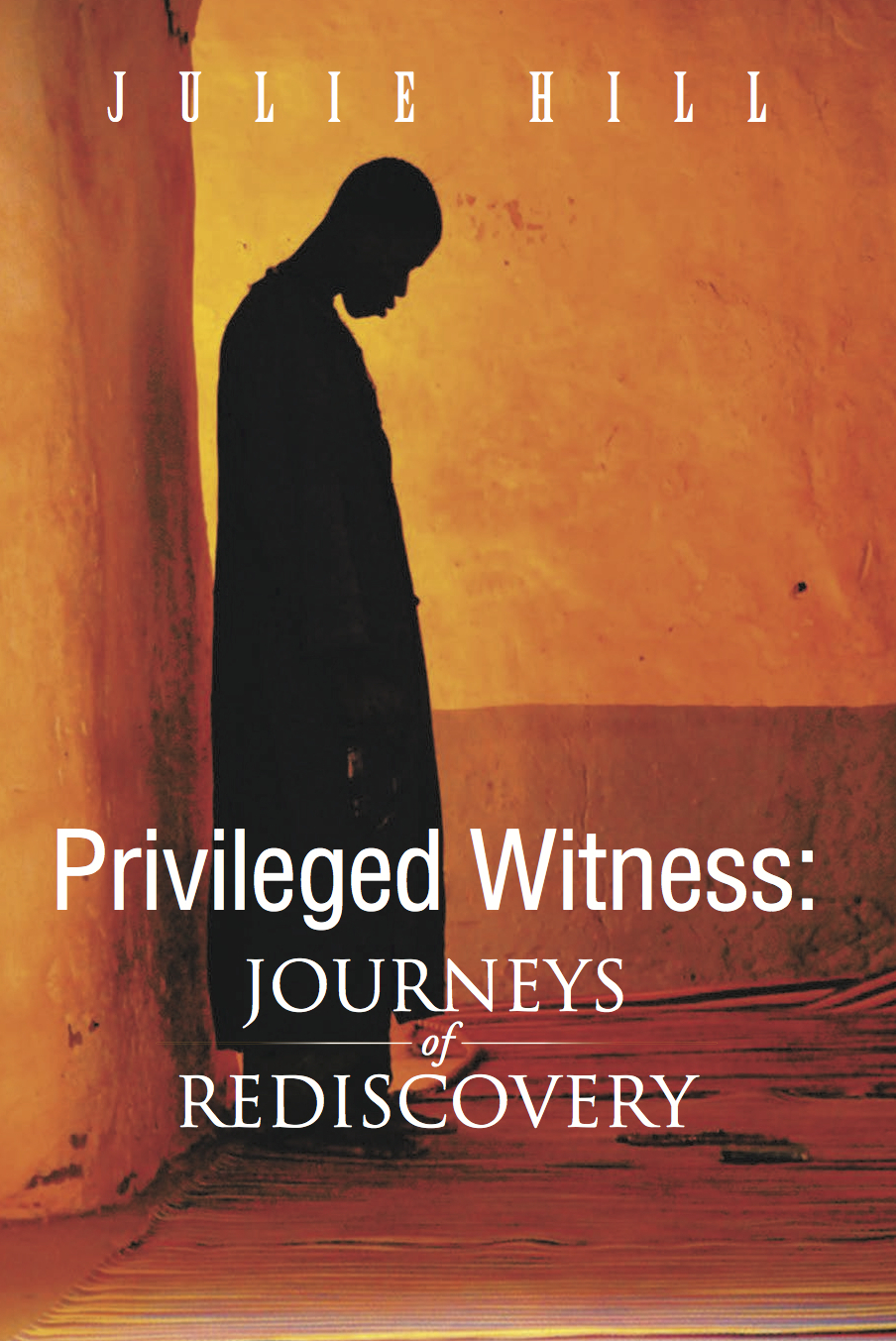
Jimmy put us together, and Julie’s first book, Promises to Keep: The Travels of Arthur and Julie Hill, came out in 2003, published by XLibris. This was followed a few years later by her second book, The Silk Road Revisited: Markets, Merchants, and Minarets (Author House, 2006). Not one to spend her widowhood moping, Julie has been actively engaged in all manner of civic pursuits, especially in her patronage of the Scripps Research Institute. Just last month, she published her third book, again with me as editor, Privileged Witness: Journeys of Rediscovery (Author House, 2014).

Julie retains a special place in her heart for the Philippines, to which she returns every now and then to visit with old friends. (In turn, Beng and I pay Julie a visit in her lovely home in Rancho Sta. Fe every time we see our daughter Demi in San Diego; Julie knows I love chocolate cake and always has a scrumptious slice of it waiting for me.)

There’s a wonderful anecdote from Julie’s first book about an encounter that she and Arthur had with then UP President Carlos P. Romulo, whom she describes as “a great raconteur.” They told each other stories about how they traveled to America, all of them being foreign graduate students, and when Julie said that she traveled by steamship, CPR asked her about, of all things, the cutlery. Julie recalls:

“’What was the cutlery like?’ asked Romulo. I was dumbfounded. Why did he take an interest in cutlery? He proceeded to tell us that he crossed the continent from Vancouver to New York on the Canadian Pacific Railway. During his journey, he systematically ‘acquired’ a set of cutlery. ‘What a better way to regale my professors at Columbia University than with cutlery embossed with my own initials: CPR!’”

In her new book, Julie takes us in hand on her journeys to around 20 countries, from Asia to Africa, to places such as Papua New Guinea, Mali, Bhutan, Botswana, and Ethiopia. She doesn’t take just the well-trodden tourist paths, but goes to the heart of the native culture, engaging with the locals to do what all good travelers (more than tourists) do: discover and reaffirm the universality of humanity. Not everyone has the ability and the resources to do the kind of traveling that Julie does, so I suggested the book title to her (taken from one of her essays), to take “privilege” in both senses of the word: as the ability to afford things, but also as the unique opportunity to see things few others could. And with that privilege comes the responsibility of witnessing and reporting.

In her introduction to the book, she writes:

“The art of adventure is the art of being bold enough to enjoy it. On a safari I must have spent hours tracking the footprints of wild animals; for other travelers the hours were too long and boring; after having seen one giraffe the others seemed all the same to them. But for me the tracking process was a fascinating adventure and locating that pride of 13 lions was an unparalleled reward, a golden joy. I could hear the muezzin in the Middle East (so much more inspiring when it is not a recording) calling the faithful to evening devotion. To me, the muezzin’s call—whether in a remote Central Asia bazaar or resounding among the tufa walls and spires of Timbuktu—is like a congregation of mountains praying.

“In my travels I have discerned a similarity among people who bear the same universal aspirations: all want their children to lead a better life and have a better future than theirs; they all cry, laugh, eat, worry, and die. We share so much, but still have to work at understanding one another…. On my travels, I have been privileged to spend time in the privacy of people’s homes and to learn of their rituals, such as the jewelry handed to the eldest daughter from generation to generation in Mali’s Djennè. An impromptu invitation at a village up in the mountains of the Caucasus brought me to a wedding, sipping vodka and dancing in a circle with other women…. Every time I was treated by my hosts as a friend, as a confessor, and I have tried to vindicate their trust by bringing their stories to life.”

In a message to her after the book was published, I told Julie that I had just watched a TV documentary about Aleppo in Syria—the subject of one of her best essays—and about the destruction that Syria’s current civil war had wrought on the ancient wonders of the place. I was almost in tears, I said, to see the Krak des Chevaliers being bombarded; without even having been there, I felt more invested in the world and in humanity, thanks to her book, for which I—in turn, as editor—was the privileged witness.

(Privileged Witness: Journeys of Rediscovery is available on Amazon.com.)


Penman No. 107: Small Loans for Big Dreams

WS-Butch-1Penman for Monday, July 28, 2014


IT HAD been a few years since I last sat down for a chat with the accounting and business guru Washington SyCip, whose biography (Wash: Only a Bookkeeper, published in 2009) I had been privileged to write, so I was only too happy to oblige when our mutual friend Marlu Balmaceda asked if I could spend some time last week to shoot the breeze with Wash.

Both Wash and I had aged a bit since we started working on his book back in 2006—I more so than he, who last month turned 93. Having just gotten my senior card in January, I’ve been feeling entitled to some relaxation, but Wash SyCip was right at his desk in his old 14th floor office where I last saw him, working away, surrounded by a growing menagerie of owls, turtles, and roosters, the gifts of friends. On the wall was a Chinese painting of a dignitary, perhaps the Emperor himself, seeking the counsel of a wizened turtle. Wash caught me looking at it and told me what the turtle’s sage advice was: “Take it easy.”

As cool and dapper as he is, Wash makes it look like he’s taken it easy all his life, but I know for a fact—having chronicled that life—that it just isn’t so. No slouch could’ve put up and sustained what became the regional accounting giant SGV.

But this time, Wash wasn’t talking about himself, but about a new program for education that he and a friend began three years ago, called the Zero Dropout Education Scheme, which seeks to put and keep poor Filipino kids in school. “The country’s biggest problem remains poverty and the wide gap between the rich and the poor,” Wash says. “For me, education is key to alleviating poverty, but ironically, the poorer you are, the more children you have, so half go to school and half don’t. Those who don’t will stay illiterate, and will be resigned to poverty all their lives.”

Seeing that illiteracy still afflicted millions of Filipinos, Wash resolved to do something about it and committed US$1 million of his own money to a fund aimed at the problem. Helping him along was his friend, the Armenian-American businessman and philanthropist Paul Kazarian, who pledged to match Wash’s contribution dollar for dollar. But even with that funding, Wash was modest and realistic enough to know that he couldn’t do the job by himself. “I don’t really know the poor, and how best to reach them,” he admits. “So I got in touch with CARD-MRI, which has been a leader in Philippine microfinance, to help us out.” Radiowealth Finance Corporation has also geared its CSR program toward the Zero Dropout scheme, and committed to provide P30 million.

The Center for Agriculture and Development-Mutually Reinforcing Institutions or CARD-MRI goes all the way back to 1986 when Dr. Jaime Aristotle Alip and 14 other rural development practitioners got together to set up CARD specifically to help empower women in poor communities. In 2008, it received the Ramon Magsaysay Award for Public Service. “With over 1,400 units all over the country, CARD had a network in place we could tap for our program,” Wash says.

Initially available to CARD members, the Zero Dropout scheme offers small renewable loans ranging from P1,500 to P3,000, at a monthly interest rate of 1 percent. “Basic education may be free,” Wash acknowledges. “But families still need money for school supplies, slippers, clothes, and other expenses. That’s where we come in. We’d like to provide not just the money, but an easy way of getting it, with as little red tape as possible.”

As of March this year, the program had supported over 46,000 students through loans totaling over P160 million, out of which P130 million in principal and P6.5 million in interest has already been paid back. They expect to hit 100,000 beneficiaries by year’s end.

While most beneficiaries come from Region IV-A (the Calabarzon area), the program has expanded to the ARMM in Mindanao, where the dropout rates are the highest. Typical beneficiaries include Lucena native Lilia Fernandez, a mother of nine who works as a manicurist alongside her husband, a construction worker; her son Erick dreams of becoming an engineer.

Unlike the government’s conditional cash transfer program, which gives cash direct to poor beneficiaries, Zero Dropout is a loan program. “They repay the loan through microfinance, by increasing their income with a loan for a store, a tricycle, and so on,” adds Wash.

If you think poor borrowers can’t or won’t repay their loans, think again. CARD has made a name for itself making sure its system works, basically because it’s led by people from the very grassroots it serves. Wash tells this story: “I had CARD’s management people over for dinner at my house once, and discovered that none of them were from Makati or Manila. They were all from the rural areas, and they were mostly women, very bright women. I was very impressed with their dedication. CARD knows its clientele. It works with groups of 20 women who guarantee each other. I’ve attended meetings with these groups and I can see that our poor communities are full of people with initiative and drive.”

I came away most impressed by an incident that Wash related: “When Yolanda hit, 8,000 students under the program were affected in Leyte and other places. My first reaction was to cancel their loans, as the least we could do to help. But Dr. Alip said, Wash, no—the poor are more honest than the rich. And as reconstruction took off, the loans also began to be repaid, even if the borrowers had lost their homes.” If that’s not inspiring—in the context of billions lost to crooks and scammers—I don’t know what is.

Penman No. 102: The Cream of the Crop

2014FulbrightPenman for Monday, June 23, 2014


A FEW weeks ago, I was happy to attend a pre-departure orientation seminar for this year’s US-bound batch of Fulbright and Hubert Humphrey scholars. I’ve been to quite a few of these PDOs over the past decade or so, and normally I’d be there up front, giving one of the orientation talks.

I’m usually the closer at these seminars, my task being to remind our scholars to enjoy their stay in America and to learn all they can—and then to come home and serve their people. “Love America all you please,” goes my spiel, “but never forget where your home is, which is here—not even here in 21st century Makati, but in those parts of our country which languish in the 20th and even the 19th century. We go to the great schools of America not just to improve our lives but theirs—those Filipinos who cannot even read, or are too hungry and tired from work to read.”

Last month, I sat in the audience on the listening end, having been privileged with a Fulbright grant—again, after my first one nearly 30 years ago, when I left for the US to do my master’s at Michigan and my PhD at Wisconsin before returning in 1991. This September, if all goes well, I’ll be leaving for Washington, DC to do advanced research in connection with my ongoing book project on the First Quarter Storm, specifically to seek out American perceptions of and experiences with martial law in the Philippines, and also to interview Filipino-American activists from that period.

The Philippine-American Educational Foundation, headed by the very capable and amiable Dr. Esmeralda “EC” Cunanan, actually administers or acts as a conduit for several distinct scholarship programs that fall loosely under the “Fulbright” rubric, named after the late Sen. William J. Fulbright, who saw educational exchanges as the best way to promote international cooperation and understanding between America and the rest of the world. (The Fulbright program also sends out American scholars for studies abroad.) Indeed, as I often tell my American friends, one Fulbright scholarship will probably cost a hundredth of and produce a thousand times more enduring goodwill than one bomb. For us Filipinos, this is the pensionado concept brought over into a new century, with the important difference that our learning is no longer meant to serve American ends, but ours.

A scan of this year’s batch of outgoing scholars offers great hope for the future. Chosen from many hundreds if not thousands of applicants after rigorous evaluations and interviews, they represent truly the cream of the crop, and I felt honored to be in their company.

The so-called “classic” Fulbright scholars—those going for their master’s and PhD degrees—include the likes of Lisa Decenteceo of UP Diliman, who’s going for her PhD in Musicology at the University of Michigan in Ann Arbor (yay, go Blue!); Neil Andrew Mijares of the University of San Carlos, who’s doing an MA in Urban and Regional Planning at the University of Iowa; and Ramjie Odin of Mindanao State University-Maguindanao, who’s entering the PhD program in Fisheries and Allied Aquaculture at Auburn University.

Among my three fellow “senior” postgraduate scholars, despite the fact that she looks young enough to pass for an undergrad, is Marites Sanguila of Father Saturnino Urios University in Butuan, who’ll be going to the University of Oklahoma to undertake advanced research in “Species Diversity and Survival in a Changing Environment: Developing a New Center for Biodiversity Conservation.”

For many years now, there’s also been a special Fulbright program focused on agriculture, the Philippine Agriculture Scholarship Program for Advanced Research, which was set up at the initiative of then Agriculture Secretary Edgardo J. Angara to improve our agricultural expertise. This year’s nine grantees include Ma-Ann Camarin of MSU-Marawi who’s going to another MSU, Mississippi State University, to do doctoral dissertation research on (hold your breath) “Disease Surveillance and Study on the Bacterial Flora of Freshwater Prawn (Machrobrachium rosenbergii) as Biological Control Against Pathogenic Bacteria.” Meanwhile, Shirley Villanueva of the University of Southeastern Philippines in Tagum is going to the University of California-Davis to conduct research on the “Genetic Diversity of Native Chicken Groups in the Davao Region.”

Among the two US-ASEAN Visiting Scholars will be Jay Batongbacal of UP, one of our foremost legal experts on maritime law, who’ll be studying issues related to current disputes in the South China Sea. The three Hubert Humphrey fellows—all accomplished professionals in mid-career—include a PNP major and former Pasay City precinct commander, Kimberly M. Gonzales, who’ll be looking into public policy and administration concerns at the University of Minnesota.

To help Americans—especially Fil-Ams—learn Filipino, the Fulbright program is sending out three Foreign Language Teaching Assistants, who include Edward Nubla from the University of St. La Salle in Bacolod; he’ll be on his way to Skyline College in San Bruno, California. Lastly, four Filipino undergraduates will soon be spending a year on a US campus, thanks to the Fulbright program. They include Michiko Bito-on of Silliman University in Dumaguete, who’s taking up Mass Communications.

It’s heartening to see the diversity not only in these scholars’ expertise and concerns but also in their representation of all corners of the archipelago, ensuring that the Fulbright experience is shared not only by the usual suspects like me from Manila’s academia, but by bright young minds from north, south, and center.


SPEAKING OF the Filipino presence overseas, a big cultural event will take place in Hong Kong over this weekend, thanks to the efforts of the poet and scholar Armida M. Azada, who’s been based there for many years now.

On Friday, June 27, 5:30-7:00 pm, Mida will sit in conversation with visiting Filipino writers Joel Toledo, Charms Tianzon, and Daryll Delgado in a symposium on new Philippine writing titled “Our Words, Other Worlds,” at the Amenities Building, Lingnan University. The next day, at noon, Mida’s new book of poems, Catalclysmal: Seventy Wasted Poems will be launched at the 7th Floor of Hong Kong City Hall in Central. Earlier that morning, from 10:30 to 12 noon in the same venue, a free writing workshop will be held for Pinoy helpers and HK-Pinoy youth. On Sunday the 29th, from 6 to 7:30 pm, a poetry reading by Filipino writers and their friends will be held on the first floor of DB Plaza Terrace near Dymocks in Discovery Bay.

This is a wonderful thing that Mida Azada—a gifted poet who was a colleague at the UP Department of English before she moved to Hong Kong and the UK—is doing not just for herself but for her fellow Filipinos in the diaspora. As prizewinning poet Joel Toledo puts it in his endorsement of Mida’s new collection, “Cataclysmal is a collection of haunts and visitations. The poems here flit in and out of the Philippine archipelago, travelling to London, Hong Kong, and New York without losing touch of a Filipino rootedness. The poet’s concerns stray and meander from the personal and cathartic to the phenomenal and ultimately global. But Azada’s voice is keen and focused, filtered on the page by a careful attention to language. One may argue that this is the poetics of the expatriate ruminating on both the post-modern and post-colonial. Yet at the heart of this collection is fierce integrity, a resonant ‘I’ persona that won’t flinch. Here are poems that both strain to capture the fleeting and restrain from exoticizing the past. The poet Fanny Howe once wrote, “Double the beautiful/because they are so little.” While phenomena can sometimes be indeed cataclysmal, the hurtful is never wasted—so long as poems remember and reconstruct and, in time, recollect the sorrows, parse them into bliss.”

Mida, Joel, Charms, Daryll, and the other fine, memorable voices of their generation—they too are the cream of the crop.