Penman No. 469: Seniors and Their Stories

Penman for Sunday, December 8, 2024

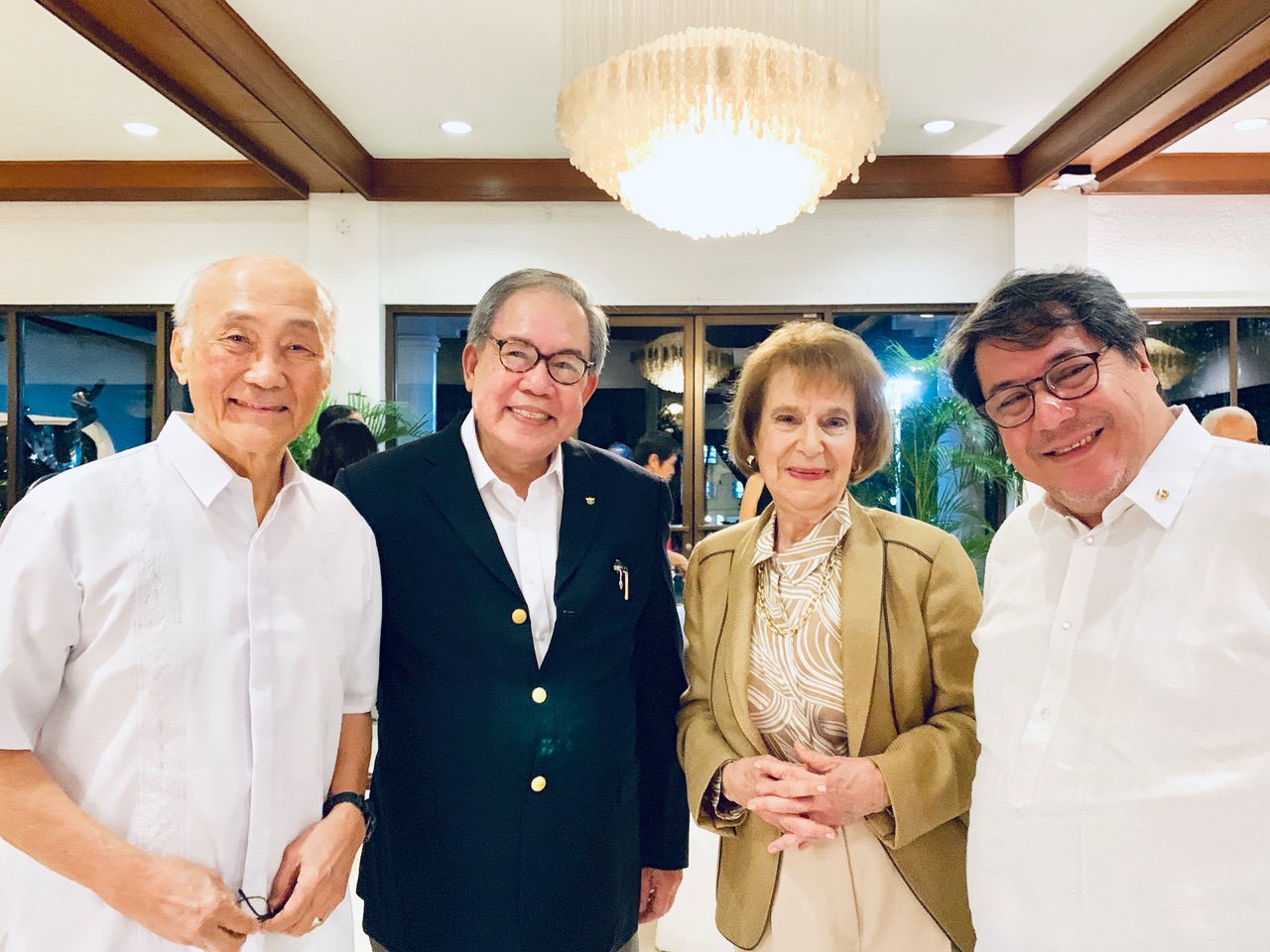
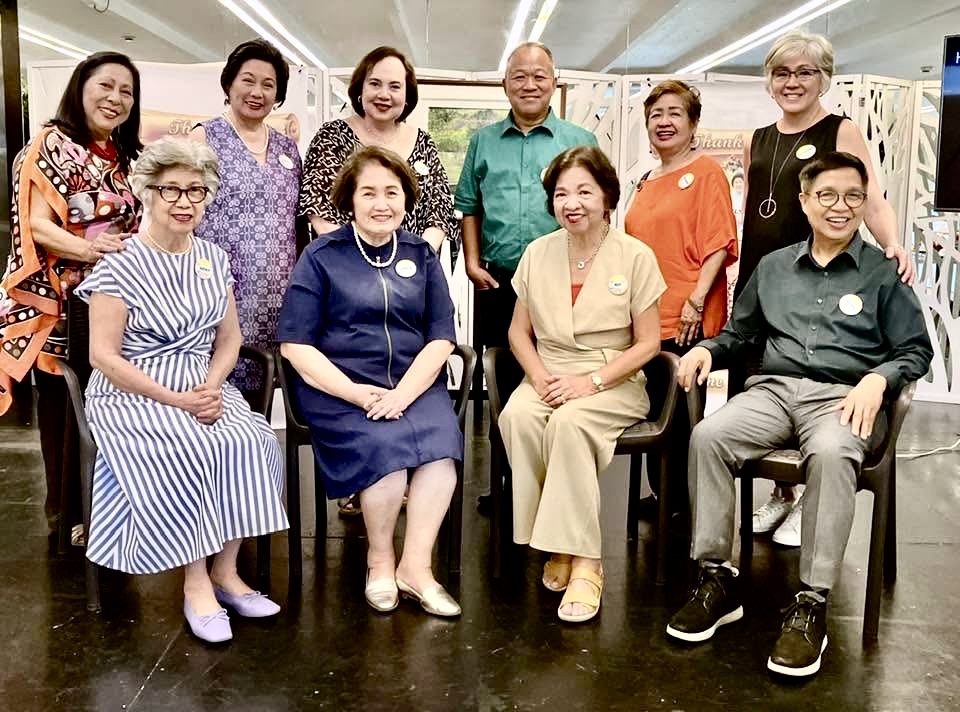
I HAD the privilege of attending the private launch of a book in Makati recently, a book titled Bridges of Memory produced by a group of seniors who had each contributed their poems, stories, and essays to the collection. None of them was a professional writer; I gathered that they came from distinguished backgrounds in banking, law, public service, and other pursuits. 

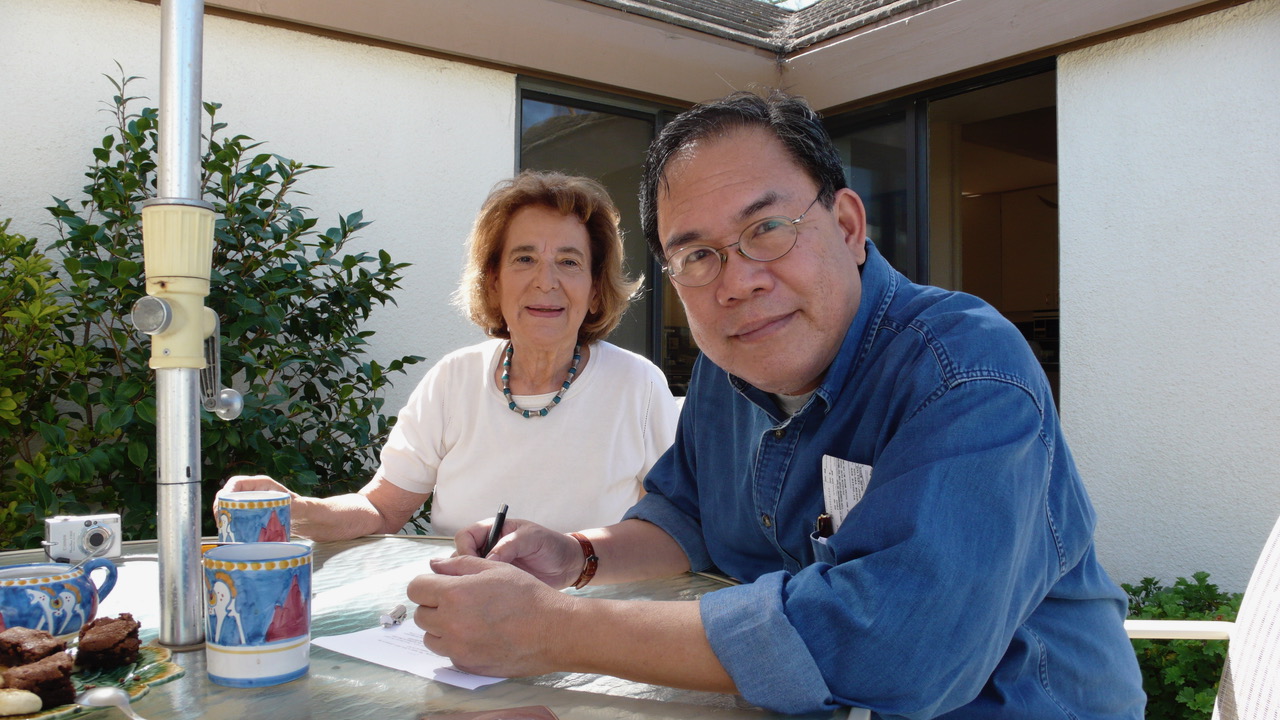
Prior to publishing the book, they had been mentored by an accomplished and experienced writer, the San Francisco-based poet Oscar Peñaranda, who just happened to be an old friend of mine. Oscar was in the US when the launch took place, so he sent a congratulatory video. I was pleasantly surprised to learn that this was already the “Sunshine” group’s (so named because they meet at the Sunshine Place for seniors in Makati) second such book.

As you might expect, the book contains the authors’ musings on life, love, and loss, the funny with the sad, the joyful with the tragic. The styles and the quality of the writing predictably varied, but the enthusiasm was palpably even, with all the contributors present eager to share their work.

At that very same moment, way across town, another mass book launch was being held at a major university, where one of the featured books was a long and distinguished biography that had partly been edited by me. I had also been invited to that event, but chose to attend the Makati one despite the Christmas traffic, because I had the feeling that it would somehow be a more enjoyable occasion, at least for me, as it would put me in touch with writers of a gentler disposition.

Having been caught in a whirlwind of literary activities over the past two months—from the Frankfurt Book Fair to the Palanca Awards to the PEN Congress—you’d think that I’d shy away from a small book launch, but aside from the fact that some of the authords were friends, I wanted to show my support for this kind of more personal writing and publishing that we too often take for granted as self-indulgence.

I’d seen books like this before, the output of writing groups, barkadas, high-school chums, and fellow alumni. They’re often triggered by an impending milestone, like a 50th anniversary or a grand reunion and homecoming.

The professional crowd might think of such volumes as vanity projects published by people who could never put out their own books. But then that’s the whole point: one person’s vanity is another person’s self-empowerment, and such private publishing reclaims the right to self-expression from the academic and commercial gatekeepers. The works they contain may not win any literary prizes, but they are as honest and heartfelt as writing can get, and satisfy the most basic urge that impels all good writers: to use words to give shape to one’s thought and feeling, and to share those words with others so they might think and feel the same way. They’re written neither for fame nor fortune, but to leave some precious memories behind for a very specific audience—although some pieces may be of such merit as to be more widely appreciated.

I’ve always said, even in my own creative writing classes at the university, that I believe that every person has at least one good story in him or her—and that it’s my job as a teacher to bring that story out. And people know this, too—many of them are dying to tell their story, but don’t know where and how, and who will listen. That’s particularly true for digitally-challenged seniors, who don’t have access to blogging, and who use Facebook for little more than “Happy Birthday!”

I’m particularly taken by the fact that these books are produced by seniors, who are increasingly being left out of a social world ruled by schemes and products for young people. Even within families—let’s admit it—very few grandchildren now have the time nor the patience to listen to their elders’ stories, much less to ply them with questions; they’d rather scroll through their social media than ask what a typical summer vacation was like half a century ago, or what people did before there were cellphones, computers, and satellite TV.

Years ago, fearing we would lose her soon because of her illness, I’d asked my mother to write down her memoirs in notebooks which I still keep. As it happened, she recovered magnificently, miraculously, and is approaching 97, still strong and alert, albeit a little slow. She walks every day, plays games on her iPad, and navigates Netflix on her own. When she’s staying with us (we siblings share her company), Beng and I pepper her with questions about her childhood in their village in Romblon, where she rode a horse and scooped fish out of the plentiful sea. The youngest of a dozen children, she was the apple of her father’s eye, and the only girl he sent to Manila for high school and college at UP. They had a rice mill, and snakes roosted in the large straw bins that kept the unhusked rice. But the snakes were to be feared much less than the beautiful encantos that came down from Kalatong on fiestas and lured their victims to join them with offerings of black rice. How could you not like and want to retell stories like that?

Our seniors are a treasury of stories to be told. They just need to be asked, encouraged to write, and published.

(For your copy of Bridges of Memory, email marketing@sunshineplaceph.com.)

Qwertyman No. 126: The Young Dodong Nemenzo (2)

Qwertyman for Monday, December 30, 2024

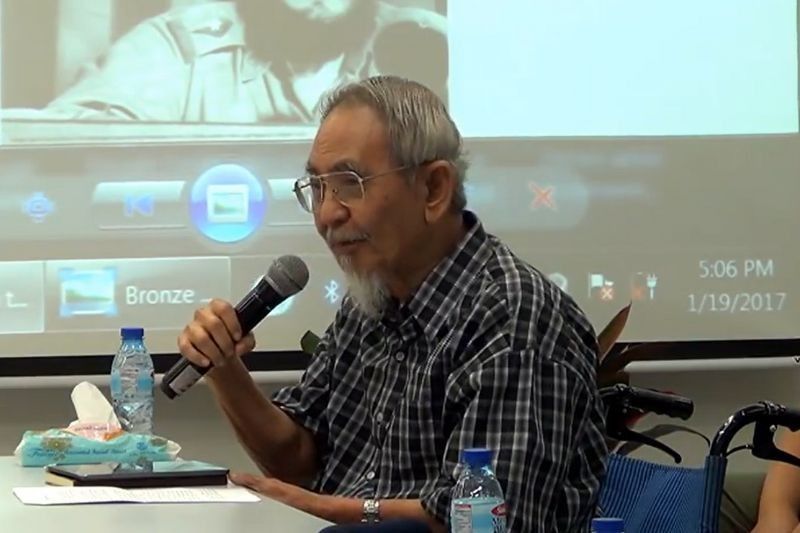
THIS WEEK I continue with excerpts from my interview with the late Francisco “Dodong” Nemenzo, on his recollections of his genesis as a young intellectual and activist at the University of the Philippines in the 1950s.

“It was all a popularity contest. Everything just seemed to be socials. Homobono ‘Bon’ Adaza, who was then the editor of the Philippine Collegian, tried to organize a socialist club with me. Bon even put out an announcement for a meeting. Bon and I were contemporaries, but he was a year older than me. I think I was a senior by then. I was living with my father on campus, since he was a professor here. We had a cottage in Area 2, then we later moved to Area 14. Our whole family was here. 

“It was because of my readings. I had already read the history of the socialist movement, and I was fascinated by that so we formed a socialist club. I think just three of us turned up for the meeting—the third was Princess. After that we were always together. We weren’t going steady yet then. We continued being friends because she was the only one who listened to my sermons on socialism. You ask her, but I don’t think she had any association with socialism before. We had just that one meeting. 

“Bon was eventually expelled from UP, but I had a hand in his election as chairman of the Student Council and editor of the Collegian twice because we were friends. The editor was elected from among the topnotchers of the exam. 

“The UPSCAns didn’t have a candidate who passed the exam, who were all frat boys. Bon landed in the top three, but he had no supporters. I bargained with the UPSCAns because they held the majority. So I used my vote in the council to push for Bon. Eventually he became editor of the Collegian

“Together with the chairman of the council and also the leader of the UPSCA, we decided to hold the first student strike. This was because for one and a half years, UP had no president, with Enrique Virata serving as acting president. It came down to a stalemate between Vicente Sinco and Gonzalo Gonzalez. Squabbling behind them were Jose P. Laurel, who represented the Senate on the Board of Regents, and Carlos P. Garcia who was supporting Gonzalez. No one could get the majority. I was on that strike. I proposed a solution arguing for the Board to take decisive action but also endorsing Salvador Lopez, whose essays I loved, for president. The UPSCANs didn’t care who won, as long as we had a president. 

“Our strike paralyzed the campus for a couple of days. It didn’t last as long as the Diliman Commune, but it was the first—and it was my first mass action. I was the one who was planning the tactics. 

“I was really looking for allies when I met this labor leader who used to be the secretary-general of the Federation of Free Farmers. [We’ll call him Hernando for this account, pending verification of the name—JD.]He claimed to be a socialist and he seemed to have read books on socialism. He was a layman. He was the one who introduced me to labor leaders such as Ignacio Lacsina and Blas Ople. They had a group of young people who revolved around Lacsina, and they met at his office in Escolta. 

“But I continued my reading. Sometimes I felt alienated because they weren’t Marxists. They were just for nationalization, and I felt more advanced than they were. There were other students there, but they were not as involved as I was. When the Suez Crisis exploded in 1957, the Americans intervened in Lebanon. We decided to picket the US embassy. We were  already using the word ‘imperialism’ then. Prominent labor leaders were there, including Hernando. When we got there, the labor attaché invited us inside to have breakfast with the US ambassador. I didn’t want to go in, but Ople and Lacsina thought they could change US policy by convincing the ambassador, so we did. I was utterly disgusted by that experience. 

“I was due then to go to US for my PhD, on a Rockefeller fellowship at Columbia University. Our demonstration took place just a few months before I was to leave. I was an instructor in UP and my college wanted me take up Public Ad, but I wanted to get out of that so I chose Political Sociology. I had become an admirer of C. Wright Mills who worked there and I wanted to work with him, only to find out that he didn’t want to handle graduate courses. 

“I already had a room at the International House in Columbia. Everything was prepared. I already had my visa. But on the day I was supposed to leave, the embassy told me that I could not leave. The consul general showed me the immigration law, which banned the entry of communists, anarchists, drug addicts, and prostitutes. 

“I think they had some earlier information about me because Lacsina later told me that Hernando was a CIA agent. He said that once, he and Blas Ople wanted to invite Hernando for a drink so they could get him drunk and then ply him with questions to extract the truth. What happened instead was that Blas got drunk first so nothing happened. Then he lashed out at Hernando and told him to his face that he was a CIA agent, and cursed him for blocking me from taking up my scholarship in the US. Looking back, I think Lacsina was right!”

Dodong Nemenzo eventually went to the University of Manchester in the UK for his PhD in Political History. He returned to serve as dean of the College of Arts and Sciences, chancellor of UP Visayas, faculty regent, and 18th president of the University of the Philippines. He married Ana Maria “Princess” Ronquillo and they had three children—one of whom, the mathematician Fidel, became chancellor of UP Diliman.

Qwertyman No. 125: The Young Dodong Nemenzo (1)

Qwertyman for Monday, December 23, 2024

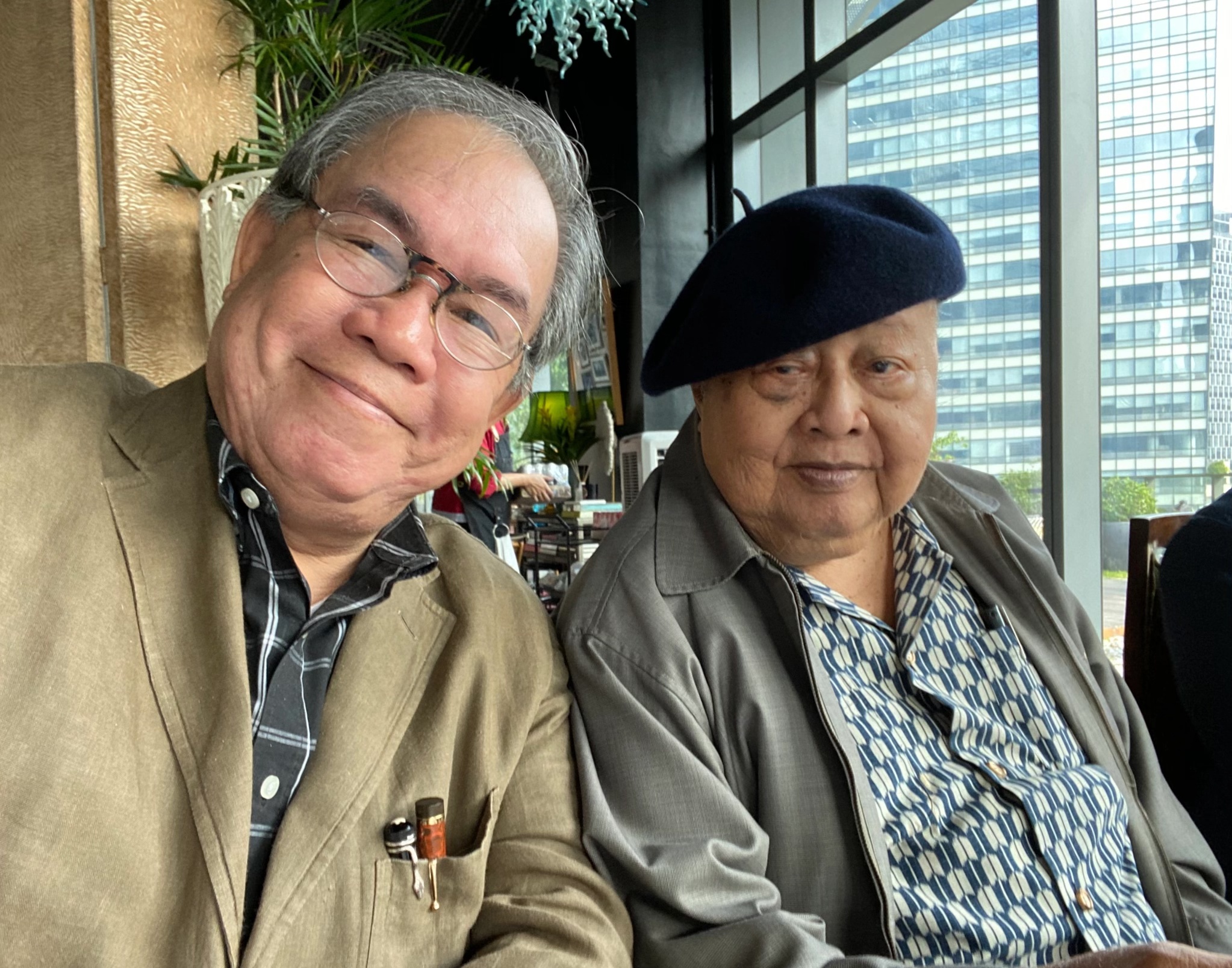
IT WAS with deep sadness that we received the news last week of the passing of Francisco “Dodong” Nemenzo, the staunch Marxist, nationalist, and former president of the University of the Philippines. My wife Beng and I are spending Christmas with our daughter in the US and being an all-UP family, we all knew Dodong and were much affected by his loss. Beng had been a student of Dodong’s at UP, and I was privileged to serve under him as his Vice President for Public Affairs twenty years ago. But long before this, I had met him as a student at the Philippine Science High School where his wife Princess taught us History; he came to pick her up in the afternoon in his Volkswagen Beetle whose door was emblazoned with the Bertrand Russell “peace” sign.

We will be missing the many memorial events that will surely be held in his honor these coming days, so I thought of recalling Dodong in a different way from what most of his colleagues and comrades will be speaking about him. More than ten years ago, I interviewed Dodong for a book I sadly have yet to finish, and he spoke with me about his life before he became the fighting ideologue everyone now remembers him to be. Let’s hear him in this abbreviated excerpt:

“We went back to Cebu after the war. Everything was still in turmoil. I enrolled at the Miraculous Medal School, a Catholic school, and completed my third and fourth grade there. By the time I reached fifth grade, Cebu Normal School was opened so I graduated from there. After sixth grade, I spent a year in the seminary in Cebu. That was my parents’ plan ever since I could remember. I was the only boy among three children, and the eldest. My parents were devout Catholics, and they considered it an honor when a member of the family became a priest or a nun. Since I was an only boy they wanted me to become a priest. I stayed there for only a year, and then I quit. That was probably the beginning of my radicalization. The seminary back then was run by Spanish or Vincentian priests who were supporters of Franco. They looked down on Filipinos and despised Rizal. 

“I went to the University of San Carlos. It was a Catholic school but my father was unhappy with the Science instruction. Our science textbook used the question-and-answer method and my father didn’t like that. He examined my notebooks every day and corrected what my teacher said. He got mad when we were taught creationism, and he lectured me on Darwin and evolution. I answered my teacher back and the principal reported me to my father for my heretical tendencies. My father decided to free me from this nonsense and transferred me to the Malayan Academy, a private non-sectarian school that had very good teachers. I finished near the bottom of my class, failing in Conduct and Tagalog. 

“I entered UP Diliman in 1953. The rule then was that you were exempted from the entrance exam if you had an average of 82, but my average was around 77 so I had to enroll in a summer institute that was like a backdoor into UP if you passed 6 units there. I didn’t know what course to take. My father didn’t want me to take up Law and wanted me to become a scientist like him, but I reckoned that if I did that, I would always be compared to him and come up short. So I chose a course called AB General. 

“The advising line was a mile long. Jose ‘Pepe’ Abueva, a friend of my father’s, passed by and saw me in the queue. He asked after me and I told him that I couldn’t think of a course I really wanted. He tried to sell me on Public Administration, but I didn’t like to serve in a bureaucracy. He said there’d be a lot of opportunities abroad, scholarships, and if I did well I could join the faculty. He had a lot of arguments, but the one that persuaded me was ‘If you join Public Ad right now, I’ll sign your Form 5 right away, and you won’t have to join this crowd.’ 

“That’s how I ended up in Public Ad. When the dean of Business Administration tried to recruit me and my (Pan Xenia fraternity) brod Gerry Sicat who was then in Foreign Service to go into Economics for our master’s, Pepe Abueva again swooped in and told me to take up an MPA instead, and to join the PA faculty immediately. So I became a faculty member in my senior year, just before my graduation, as an assistant instructor. I probably had the longest title in UP: ‘research assistant with the rank of assistant instructor, with authority to teach but no additional compensation.’ I really wanted to teach, but had no actual assignment. I only took over the classes of professors who went on leave. 

“I never joined the UP Student Catholic Action or UPSCA. Well, maybe for one year, but I was never active and then I got out of it. I joined only until I met an UPSCAn named Princess. We always met in Delaney Hall. We were together in the student council. She was representing Liberal Arts, I was representing Public Ad. I joined in 1955, my third year, along with Gerry Sicat, Manny Alba, and Jimmy Laya. I became a liberal and distanced myself from UPSCA. 

“I idolized (Philosophy professor) Ricardo Pascual. I was looking for a cause, but these liberals were just fighting for academic freedom with no purpose. It seemed empty. I was under the influence of Pascual for some time, but we had no advocacy. I joined a short course in Social Order at Ateneo on the papal encyclicals on labor. My liberalism and my growing social consciousness merged and I started reading Marx and Huberman on my own, to find out what we were fighting for. There were a couple of professors like Elmer Ordoñez and SV Epistola who according to Bill Pomeroy had already reached that level of consciousness, but when he left they became liberals, they weren’t really organized.” (To be continued)

(Photograph by Rick Rocamora, used with permission)

Qwertyman No. 122: On Writing as a Profession

Qwertyman for Monday, December 2, 2024

FOLLOWING THROUGH on last week’s piece about the challenges faced by creative writers trying to make a living in this country, let me share some further thoughts on that topic that I wove into my Rizal Lecture last week at the annual congress of Philippine PEN. My talk was titled “The Living Is in the Writing: Notes on the Profession of  Writing in the Philippines.”

Our writers of old made a profession of writing, often by working as journalists, speechwriters, and PR people at the same time that they wrote poems, stories, novels, and essays on the side. Some also taught, and of course some writing comes with that territory, but with teaching you get paid for your classroom hours than for your word count. (To which I should also add, so much of the writing that our literature professors do today is understandable only to themselves.)

Our best and most prolific writers lived by the word and died by it. The two who probably best exemplified this kind of commitment to writing—and nothing but writing—were Nick Joaquin and his good friend Frankie Sionil Jose. Both were journalists and fictionists (in Joaquin’s case, a poet and playwright as well). We can say the same for Carmen Guerrero Nakpil and Kerima Polotan, as well as for Gregorio Brillantes, Jose Lacaba, Ricky Lee, Alfred Yuson, Cristina Pantoja-Hidalgo, and Charlson Ong, among others. 

These were all writers whom you never heard to claim, as has been recent practice, that “I am a poet!” or “I am a fictionist!” They were all just writers, for whom the practice of words was one natural and seamless continuum, and a profession they mastered just as well as we expect doctors, engineers, mechanics, and lawyers to do. This was also when journalists could be poets who could also be politicians and even reformers, revolutionaries, and heroes.

This was paralleled in other arts such as painting, where artists such as Juan Luna, Fernando Amorsolo, and Botong Francisco routinely accepted commissions to support themselves and any other personal undertakings. (Of course, this was well within the old Western tradition of writers and artists having wealthy patrons to help keep them alive and productive.)

But then came a time when, for some reason, creative and professional writing began to diverge, as creative writing withdrew from the popular sphere and became lodged in academia, where it largely remains today. Professional writing, or writing for, money, came to be seen as the work of hacks, devoid of art and honor. Even George Orwell urged writers to take on non-literary jobs such as banking and insurance—which incidentally T.S. Eliot and Wallace Stevens did, respectively—rather than what he called “semi-creative jobs” like teaching and journalism, which he felt was beneath them. (Orwell himself worked as a dishwasher in Paris, where he wryly observed that “nothing unusual for a waiter to wash his face in the water in which clean crockery was rinsing. But the customers saw nothing of this.”)

An attitude of condescension soon emerged among poets and fictionists who looked down on journalists as a lesser breed—something I have always warned my students against, having been a journalist who had to turn in a story, any story, by 2 pm every day on pain of losing my job. Never knock journalists. Let’s not forget that when it comes to facing real dangers brought on by one’s written word, poets and fictionists have it easy. The last Filipino novelist who was shot for what he wrote was Jose Rizal; the only writers dying today are our journalists and broadcasters in the hinterlands offending the local poobahs. Governors and generals read newspapers, not novels; they are impervious to metaphor.

Professional writers, on the other hand, saw creative writers as artsy dilettantes enchanted by fancy words and phrases that no one else understood and very few people paid for. Creative writers took it as a given that they were wedded to a life of monastic penury, unless they had another skill or job like teaching, doctoring or lawyering, or marrying into wealth. It even became a badge of honor of sorts to languish in financial distress while reaping all manner of writing honors, in the misguided notion that starving artists produced the finest and most honest work. 

The fact is, both are two sides of the same coin, which is the currency of public persuasion through words and language. One is an artist, the master of design; the other is the artisan or craftsman, the master of execution. Both can reside in the same person, unless you’re foolish enough to disdain one or the other. You can produce great art, if you have the talent, the discipline, and the hubris for it; but you can also live off your artistic skills, if you have the talent, the discipline, and the humility for it. 

(That said, I have to report that in my forty years of teaching creative writing, some of the students who find it hardest to switch to fiction are journalists, who just can’t let go of the gritty and often linear reality they’ve been accustomed to; poets come next, those who feel preciousness in every word and turn of phrase, so much that they can’t move from one page to the next without agonizing, or, going the other way, without drowning us in verbiage.)

This was why, more than twenty years ago, I designed and began teaching an undergraduate course at the University of the Philippines called “CW198—Professional Writing.” Mainly intended for Creative Writing and English majors who had very little idea of their career options after college aside from teaching, the course syllabus includes everything from business letters, news, interviews, and features to brochures, scripts, speeches, editing, publishing, and professional ethics. The first thing I tell them on Day One is this: “There is writing that you do for yourself, and writing that you do for others. Don’t ever get the two mixed up.”

Qwertyman No. 113: My Lessons from Martial Law

Qwertyman for Monday, September 30, 2024

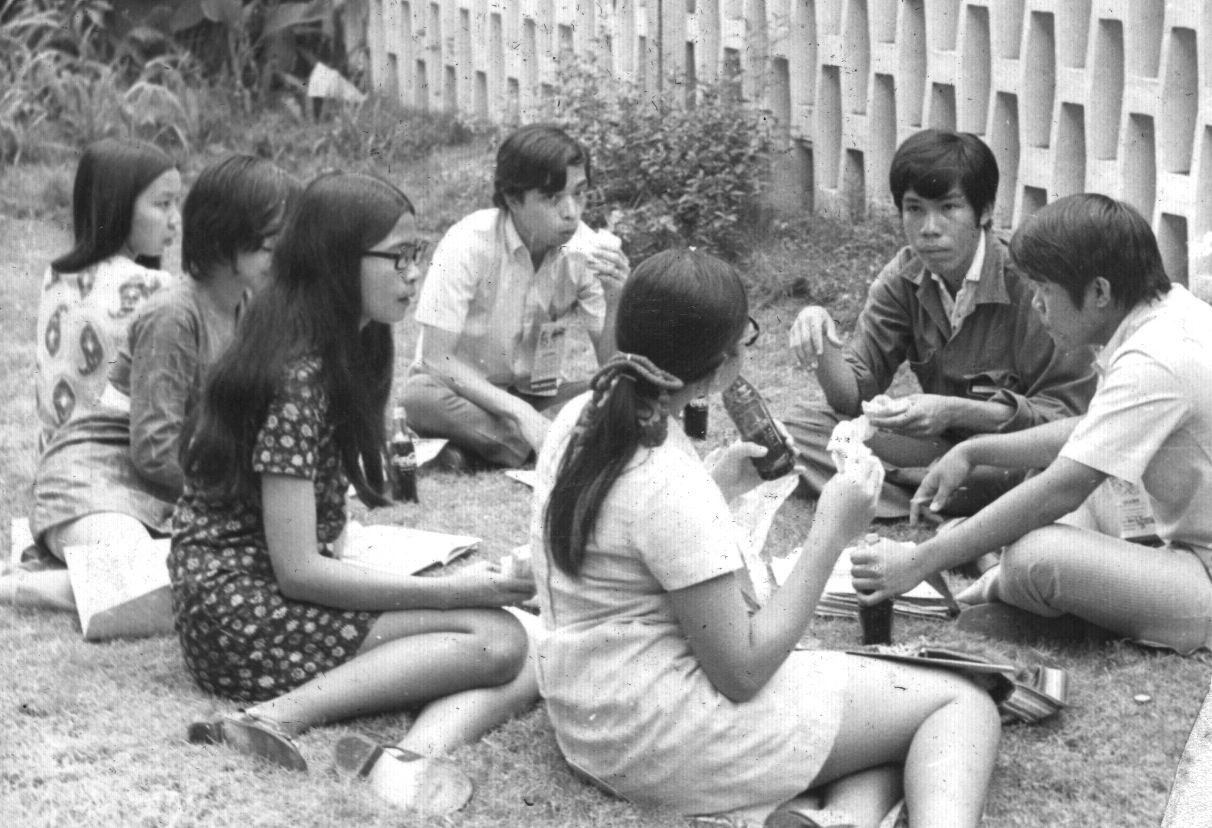
I WAS recently invited by a student organization at the University of the Philippines to speak to them about my martial-law experience, given that I had been a student activist in UP during what we called the First Quarter Storm, had been imprisoned, and had, against all odds, survived into a reasonably comfortable old age. It occurred to me, as I entered the SOLAIR building in Diliman where the event was going to be held, that I had last stepped into that place as a 17-year-old activist back in 1971 (that’s me in the picture, second from right, in that building). What had I learned since then? Here are some points I raised with my young audience:

1. We were always in the minority. Even at the height of student activism in UP and in other universities, those of us whom you might call truly militant or at least progressive were far smaller in numbers than the majority who dutifully went on with their studies and their lives and saw us as little more than a rowdy, noisy bunch of troublemakers. And the fact is, we were still in the minority in 2022, which is why Leni lost (yes, even in Barangay UP Campus). This bears emphasizing and thinking about, because sometimes we fall into the trap of believing that since we think we’re so right, surely others must think the same way. Which brings us to my next point.

2. We have to learn to communicate with other people with different views. The phrase “echo chamber” often came up in the last election, and with 2025 looming, it’s even more vital that we master modern propaganda as well as the other side does. This means sharper and more effective messaging. Enough of those two-page, single-spaced manifestoes written in the Marxist jargon of the 1970s and 1980s and ending with a string of slogans. Learn how to fight the meme war, how to navigate and employ Tiktok, Twitter/X, Facebook, Instagram, Youtube, and all the arenas now open in digital space.

3. When talking about martial law, don’t just dwell on it as the horror movie that it was for some of us. True, many thousands of people were killed, tortured, raped, imprisoned, and harassed. True, the trauma of that experience has lasted a lifetime for those involved. But most Filipinos never went through that experience, adjusting quickly to the new authoritarianism; many even look back to that period with nostalgic longing. That’s proof of martial law’s more widespread and insidious damage—the capture of the passive mind, and its acceptance or denial of the massive scale of theft and State terror taking place behind the scenes. Martial law imprisoned our minds.

3. People change; you could, too. One pointed question I was asked at the forum was, “Why is it that some very prominent student activists turned their backs on the movement and went over to the dark side?” It’s true—many of the shrillest Red-taggers we’ve seen these past few years were reportedly once high-ranking Reds themselves. So why the 180-degree turn? Well, it’s perfectly human, I said, trying to be as kind as I could, despite being at the receiving end of some of that calumny. People can hardly be expected to stay the same after twenty or forty years. Even if many if not most of my generation of activists have remained steadfast in our quest of the truth, freedom, and justice, one’s definition of exactly what is true, free, and just can change. Some people change their stripes out of conviction; some others do it for the oldest of reasons—money and power, or sheer survival. I’m saddened but no longer surprised by brazen betrayal. I learned from martial-law prison that people have breaking points, and some thresholds are much lower than others. 

4. We have to admit we were wrong about some things. This will vary from person to person, and there’s a line that could even constitute the “betrayal” I mentioned above. Some fellow activists will probably disagree with me on one of these key points: armed struggle didn’t work, and it won’t, not in the Philippines nor anytime soon. However we feel about the subject, the fact is, one armed Filipino revolutionary force or other has been at it for more than 80 years now—“the world’s longest running insurgency” as it’s often been referred to—with little gain to show for it. I don’t mean to denigrate the noble and heroic sacrifice of the thousands who gave up their lives fighting what they believed was a brutal dictatorship—many were personal friends—but how many more lives will it take to prove the efficacy of revolutionary violence, one way or another?

5. That leads me to the last point I made to my young listeners: live, don’t die, for your country. We can and will die for it if we absolutely have to (especially us seniors who have little more to lose), but today’s youth have options we never did. In the 1970s, if you were young, idealistic, politically aware, and daring if not brave, you could not but conclude that something was terribly wrong with Philippine society, and that change was badly and urgently needed. You chose between reform and revolution—and it was only a matter of time before you became convinced that the latter was the only way forward. 

Agreed, the basic problems of Philippine society may not have changed much—but one’s ways and means of addressing them have. The growth of civil society—the proliferation of NGOs covering a broad range of causes and concerns—offers practical, focused, peaceful, and professional alternatives to young people seeking social and economic change. One need not embrace the burdens of the entire nation, only to feel inadequate or ineffectual; one can do much if not enough by improving the lives of families and communities. Beyond feeling sorry or guilty for those who fought and died as martyrs, do what you can as a living, intelligent, and capable citizen to create a better Filipino future to the best of your ability.

If this sounds like the voice of a tired old man, it is. I’m tired of death and despair; I choose to fight for life and hope. 

Penman No. 465: Back to the Nineties

Penman for Sunday, August 11, 2024

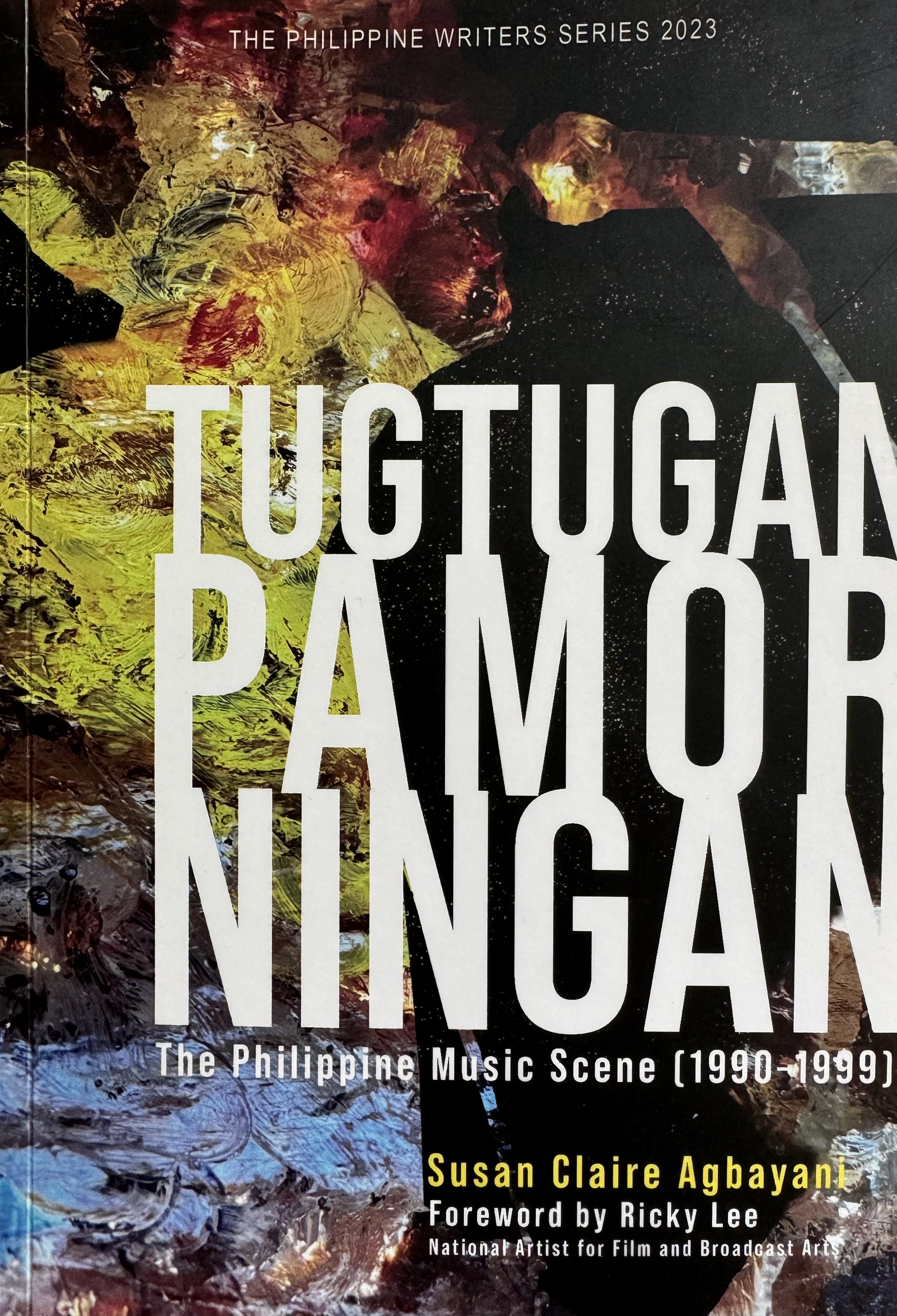
AMONG THIS year’s most interesting new books is one that’s neither a novel nor a political exposé, but a musical chronicle of a decade that many Filipinos now look back on with a certain nostalgia, albeit for different reasons—the 1990s.

Say “the Nineties,” and a range of responses will come to mind depending on how old you were then. For today’s seniors, the core of it was likely FVR’s infectious optimism over “Philippines 2000,” the relative stability we had gained after the anti-Cory coups and in anticipation of our centennial in 1998. For those younger but old enough to drink beer, it was the age of the Eraserheads, Clubb Dredd, the ‘70s Bistro, and Mayric’s, an explosion of OPM like we had seen back in the 1970s but with a harder and sharper edge.

It’s that latter scenario—set against the context of our transition from Cory to FVR to Erap—that’s captured in Susan Claire Agbayani’s landmark Tugtugan Pamorningan: The Philippine Music Scene 1990-1999 (University of the Philippines Press, 2024, part of the Philippine Writers Series of the UP Institute of Creative Writing). An indefatigable cultural journalist, publicist, and sometime concert producer (and also, I must proudly admit, my former student), Claire was among the very few writers who could have undertaken this job (Eric Caruncho, Jessica Zafra, and Pocholo Concepcion, all of whom she cites, would have been the others). 

Comprehensively, the book’s chapters cover bars and concerts, the music scene, personality profiles, duos and trios, pop/jazz/R&B/show bands, alternative/rock bands, the Eraserheads (yes, a chapter all to their own), Mr. and Mss. Saigon, and visiting acts, rounded out by a gallery of period pics.

As a compilation of pieces from Claire’s reportage at that time, the book revives not only the music but also the issues besetting the industry then, such as Sen. Tito Sotto’s wanting to ban the Eraserheads song “Alapaap” for supposedly promoting drug abuse. Priceless vignettes abound, such as that of Basil Valdez singing “Ama Namin” to composer George Canseco’s wife over the phone, three days before she died, and of Ely Buendia telling Nonoy Zuñiga that he had won a singing competition in school with the latter’s “Doon Lang.” We learn about Humanities teacher and all-around performer Edru Abraham’s Lebanese ancestry and how it connects him to world music.

The best scenes, I think, are the saddest ones, such as this piece on a jazz diva:

“She goes around greeting the waiters, then the manager. At last, she sits on a stool, and croons ‘Left Alone,’ the song after which the bar was named. She closes her eyes, closed them more tightly as a couple walks out in the middle of her song. The waiters laugh loudly in the background, occupied with their own concerns. Those who remain inside the bar talk not in whispers. No, they don’t know her. They don’t know Annie Brazil.”

But ultimately it’s the music, the sheer variety and vitality of it, that surges through, so innate to the Filipino and so necessary. If there were an Olympics for music, we’d make the podium in all the categories, and Tugtugan Pamorningan reminds us why. As the title implies, it’s a nightlong festival for us when the music starts. But like night itself, even the Nineties came to an end, with the 2000s bringing in MP3, iTunes, and Spotify, and somehow the smoky, small-bar intimacy that the previous decade connoted gave way to Taylor Swift mega-concerts that people actually flew out to instead of taking a taxi.

I contributed an afterword to the book, so here’s a bit more of what I had to say:

I was a bit too old by the time the ‘90s came along to experience it in the way Claire has so capably and faithfully chronicled in this book, but still young enough to imbibe its energy and its excesses. I was 36 in 1990, finishing my PhD in the States, and when I returned to Manila the following year after five years of being away, I found a radically different scene from the one I’d left just after EDSA. I had a lot to adjust to, and somehow San Miguel beer and the city’s new nightlife seemed to ease those pains, at least until the next morning. 

That was how, despite being too old to know the Eraserheads and their music, I managed to stumble once or twice into Club Dredd, Mayrics, the ‘70s Bistro, and a few other meccas mentioned here, but mostly just out of curiosity. I guess I was looking for something else, and found it on Timog Avenue with my partners-in-crime Charlson Ong and Arnold Azurin, finishing up with some coffee or a beer for the road at Sam’s Diner on Quezon Avenue at 3 am. I wasn’t even a Penguin person—I never thought of myself as being hip or cool—and I preferred hanging out with journos after work in that kebab place on Timog.

That was my life as a barfly—which was also how my newspaper column got that title—and its soundtrack consisted of Basia, Bryan Adams, and “Total Eclipse of the Heart.” I wasn’t much into bands—no one could beat the Beatles—and OPM for me meant APO and Louie Ocampo, whose songs were singable and could make me smile, which I needed a lot. It was a wild time, when I was smoking and drinking and messing around town in my white VW, courting disaster, until one day I found my way home and decided to stay there forever.

That makes the ‘90s sound like some kind of inferno, but now that I think about it, it was the last gasp of innocence before the 2000s and everything we associate with it—9/11, GMA and Erap, the Internet, the iPod, social media, K-pop, tokhang, Trump, the pandemic, the Marcos restoration, and AI—came in. There was a simple-mindedness even to our vices then; truth was truth, fake was fake, and it was easy to tell one from the other. It was rough and raw in many ways—even our 14.4K modems screeched like cats in heat when they connected—but we still got wide-eyed about the possibility of extra-terrestial menace in The X-Files, and we may even have believed that FVR’s “Philippines 2000” was going to be a better place even as we got worried sick over what Y2K would bring, so there remained a tender spot of credulity in us.

That’s all gone now, like Jacqui Magno’s voice, replaced by CGIs, deep fakes, and other synthetics produced by FaceMagic and ChatGPT. 

I can’t honestly say that I miss the ‘90s, and I feel much relieved to have survived them, but there’d be a huge hole in my life—and in the nation’s—if they didn’t happen. What’s in that hole is what’s in the music Claire writes about—and the music often gets it better than even we writers can.

Qwertyman No. 105: Pronouns and Parodies

Qwertyman for Monday, August 5, 2024

SOME DAYS, I swear, when I open my Facebook feed, I’m met by a flood of vexatious opinion certain to trigger my worst reflexes. Much as I’m tempted to respond, I rarely do, knowing that FB comments don’t really soften hearts and minds, but only make them harder. Also, I’m not the witty sort with one-liners that will go viral; my thoughts and words like to ramble and even lose their way, but at least you know it’s not AI or the “Forward” button at work.

Two topics did get me worked up a bit last week, and I’m going to use this column to write the kind of longish social-media comment no one will read. You’ll recognize both issues instantly if you haven’t been living under a rock.

The first was that picture of a seated gay “personality” (I’m never quite sure how persons become “personalities”) lecturing a waiter standing at parade-rest, reportedly for two hours, on gender sensitivity, all because he called her “Sir.” 

There’s a part of me that understands how and why that happened. Some will call this silly wokeness, but in UP, we take our students’ preferred pronouns and names seriously as a sign of respect for the person. 

But what I also know is, when I teach, I stand and my students sit. That’s not to emphasize my authority, but so they can relax, listen, and hopefully imbibe what I’m telling them. I realize that the lady said she invited the waiter to sit down, but I also understand why he declined. Staff don’t sit for a chummy chat with customers. And imagine this: if I (an old man, dirty or not) were the customer and I felt poorly served by a female employee, and I asked her to sit at my table for two hours while I educated her on the finer points of etiquette, would or should she oblige? And I hate listening to or giving long lectures. If I can’t get something across in twenty minutes max, then I’m a lousy teacher.

There’s politics which can be good and right—and people who may not be. Some of the most politically savvy people I’ve met have also been, as some would say, that part of you where the sun don’t shine. 

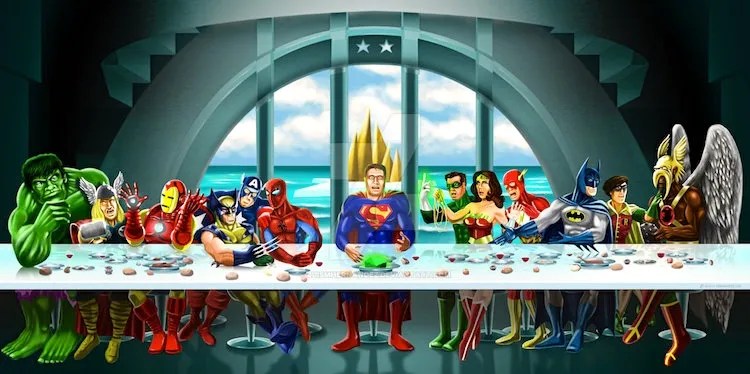
The other hot topic, of course, was the “Last Supper” tableau at the opening ceremonies of the Olympics in Paris, which allegedly mocked the Lord and Christianity itself by replacing Jesus and his apostles at the long table with a raft of drag queens and other presumably degenerate characters. 

I never saw so many Christians and especially Catholics (some of them my good friends) come out of the woodwork to profess their outrage at what they took to be willful sacrilege. And predictably, like wolves sniffing out red meat, many more friends from the other side piled on the “offendees” with mini-treatises on Bacchus and bacchanals, pagan elements in Christian ritual, art criticism, the French mentality and sensibility, and such other topics worthy of dissertations.

Now, as I’ve often confessed in this column (maybe losing five readers and FB friends every time I bring it up; in this context, maybe more), I’m not much of a churchgoer, and have continuing issues with the religion I was born into—and with all of organized religion for that matter, despite growing up in Catholic school. I prefer to pray on my own. I have nothing against people who stay in the fold, go to Mass regularly, post daily proverbs on Viber, and believe in the Bible as the one and only true source of, well, the truth. If their faith keeps them whole and happy—and I can see in many cases that it does—then well and good. Some may be hypocrites, but I’m sure many or most aren’t—and there are hypocrites as well (and worse) among apostates like me.

But back to Paris. What I’m not going to say is, “You shouldn’t have been offended.” If you were, you were. Even if you later changed your mind after listening to all the learned explanations (to some, I’m sure, excuses), the fact is, you saw something you didn’t like. (I just have to wonder—how many people responded directly to the tableau itself, and how many were nudged into seeing it and later objecting by another post screaming, “Hey, you have to see this! Look what they’ve done to Jesus!”? It works the same way on the right and on the left: a meme cascades swiftly down the Internet, and people react viscerally even before they can think.) 

Sure, the “Last Supper” is only a painting by one Leonardo da Vinci, that smart Italian fellow who also imagined flying machines, tanks, and other wonderful contraptions—so why not Jesus’ last meal? (I don’t think there’s an exact record in any of the four Gospels about how the scene was blocked for thirteen characters, except that Christ very likely sat in the middle for better reach, and certainly nobody knows who sat next to whom and leaned over whom. Some depictions down the centuries don’t even use a straight table but an inverted U, or have everyone reclining on mats and pillows, or sitting in a circle.) But even images and objects have symbolic meaning and power, so it’s easy to get hopping mad if someone, say, spits on a painting of your grandmother, or turns it into an unflattering cartoon. 

I do share the consternation over why a hyper-expensive and PR-conscious global enterprise like the Olympics would risk alienating half of France and a third of the world (presuming all Christians took umbrage at the Blue Guy) by—according to the charge sheet—deliberately, premeditatedly, and maliciously mounting a patently anti-Christian production for the whole planet to see. I know the French eat strange things like sheep testicles and have a law requiring skimpy trunks and head caps (yes, even if you’re bald) in public pools, but really now, mock the Last SupperSacré Dieu! (Or, excuse me, let’s use the milder sacré bleu!)

Given all of that, my only question is, where was all the outrage when that President was joking about raping captive nuns and cursing the Pope? And speaking of the Renaissance and the power of representation, remember that Pieta-like photograph of a grieving mother cradling her murdered son at the height of that same President’s tokhang campaign, that President who called Catholic bishops “gay SOBs”? Where was all the righteousness? But maybe we’re just getting started. There’ll be FB accounts I’ll be checking in on, the next time something wildly repulsive happens.

(Image from arnoldzwicky.org–Please condemn him. not me!)

Penman No. 464: A Fantasy Memoir

Penman for Sunday, July 7, 2024

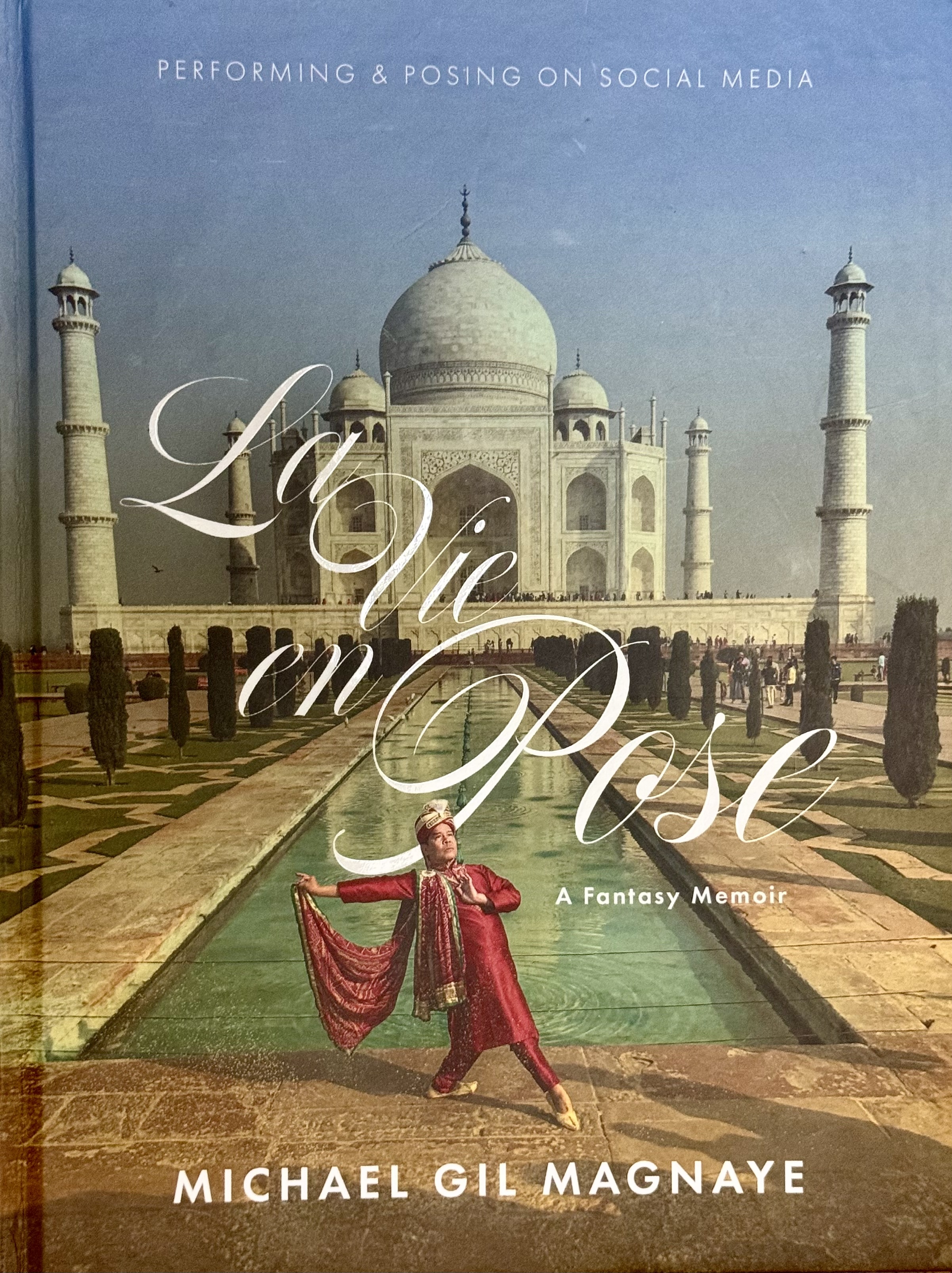
THE AUTHOR calls his book a “fantasy memoir,” and if it’s a genre you’re not familiar with, you wouldn’t be alone. Or maybe that’s just because you’re a dour and straight septuagenarian like me who doesn’t go out too much, watches true-crime shows to relax, and presses his pants and shines his shoes because, well, that’s the way it should be. I later googled the term, just to see what’s out there, and much to my surprise, it does exist—a genre defined by “imagination, escapism, and dreams,” with the stipulation that these fantasies, or products of the mind, are just as valid as memory in recreating one’s life.

Thankfully, from the cover onward, Michael Gil Magnaye’s La Vie en Pose makes it purpose clear to the most casual and non-literary of readers: to have fun—while raising some very serious questions on the side about who and what we are (or pretend to be), what poses we ourselves assume, consciously or not, in our everyday lives, and how our identities are constructed by something so simple as what we wear.

La Vie en Pose is one of those rare books one can truly call “inspired,” resulting from the kind of half-crazy “What if?” lightbulb moment that strikes you over your tenth bottle of beer at 3 in the morning. Unlike many such flashes, this one stayed with Gil, took firmer shape, and turned into a virtual obsession—a first book to be completed by his 60th birthday, not just any book, not one of dry prose between the covers, but one certain to make a personal statement for the ages.

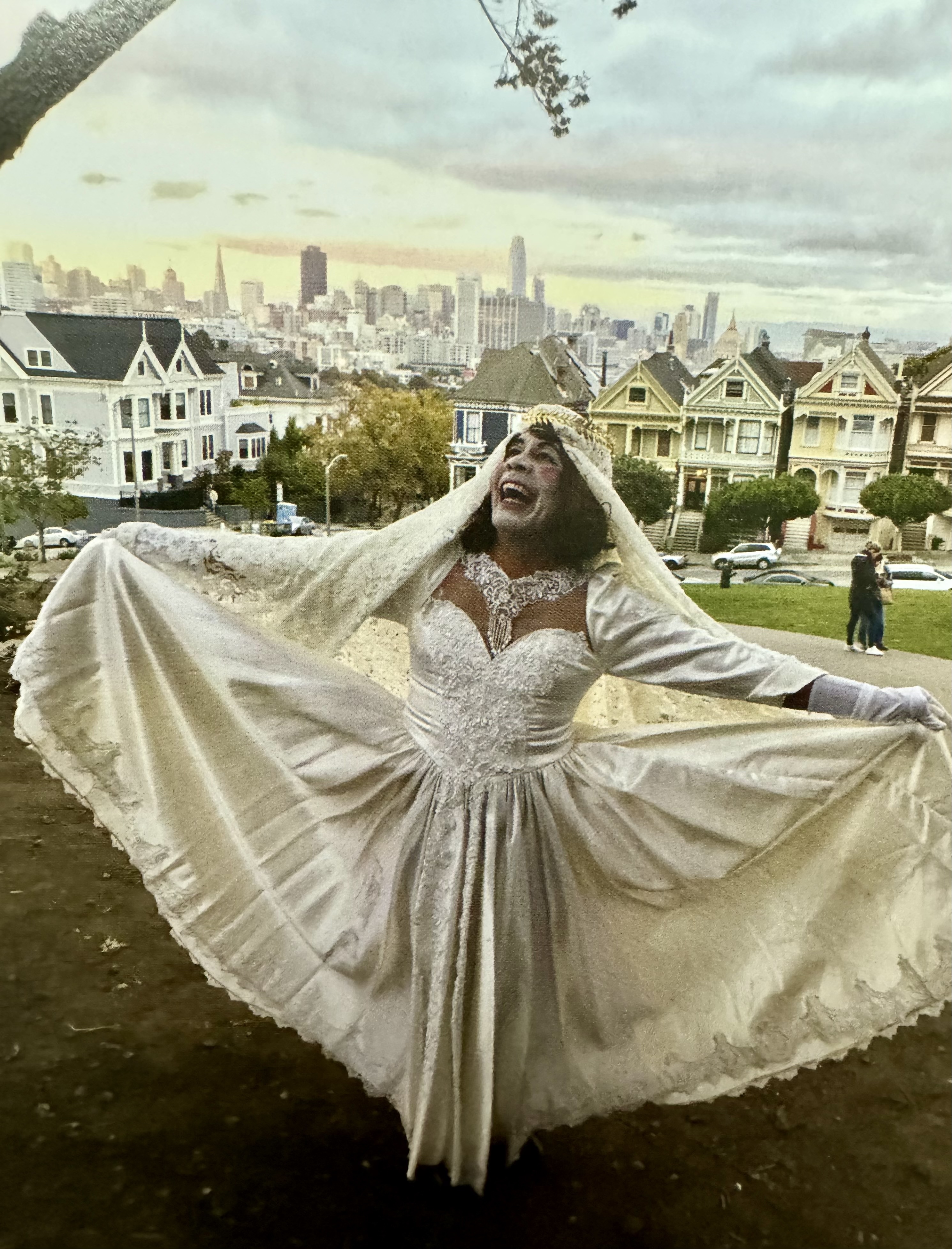
Magnaye, who works as an advisor to an international NGO, describes the book as “a fantasy memoir told in a hundred photographs of the author in costume, striking a pose around the world. Designed and photographed over a decade, these vignettes depict media celebrities, politicians, literary characters and wholly fictitious figures drawn from Magnaye’s fertile imagination. The collection offers satirical, often hilarious commentary on noteworthy personalities in pop culture, politics and history, from Game of Thrones to Bridgerton, from Jackie Onassis to Ruth Bader Ginsburg.”

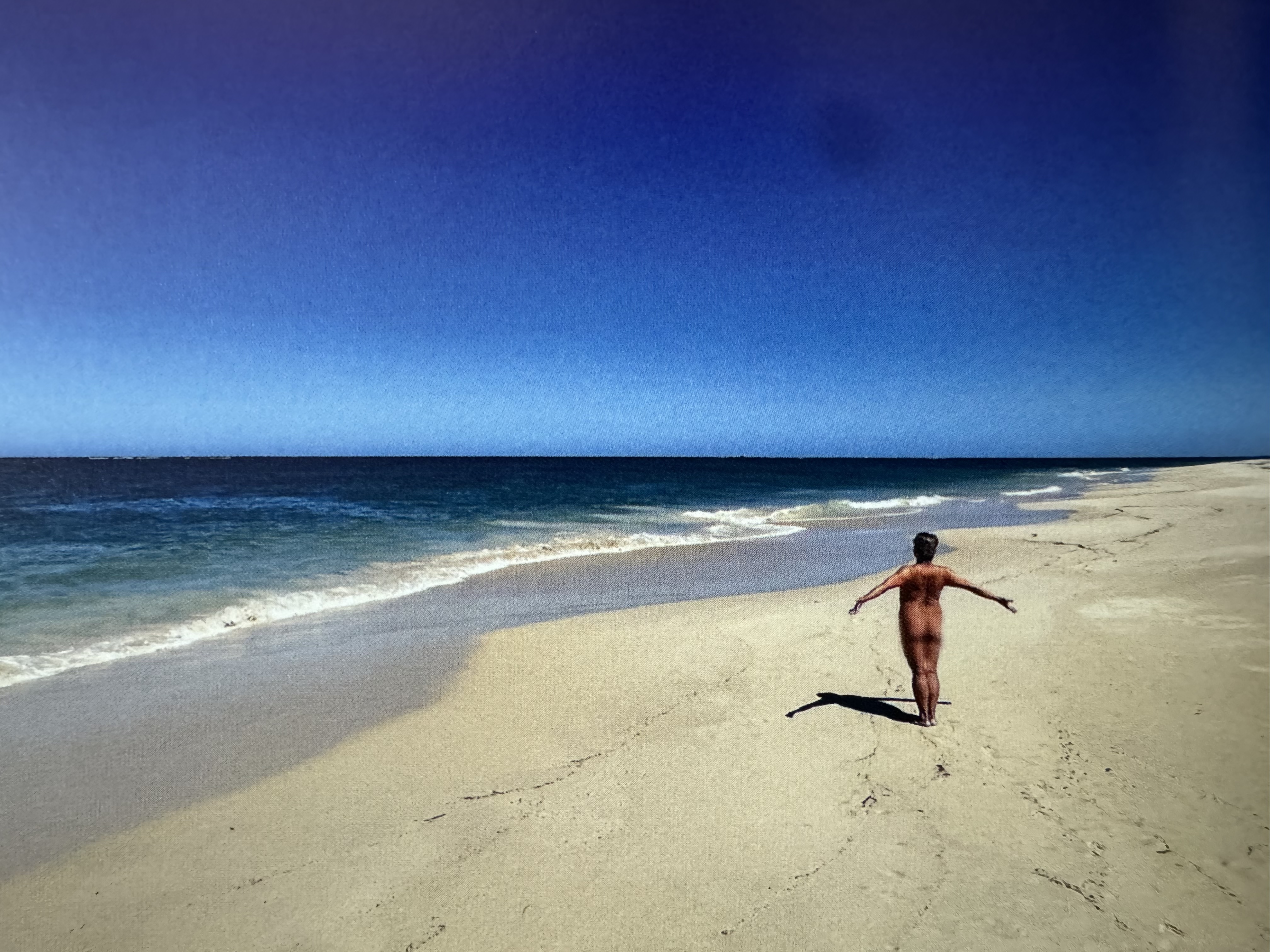
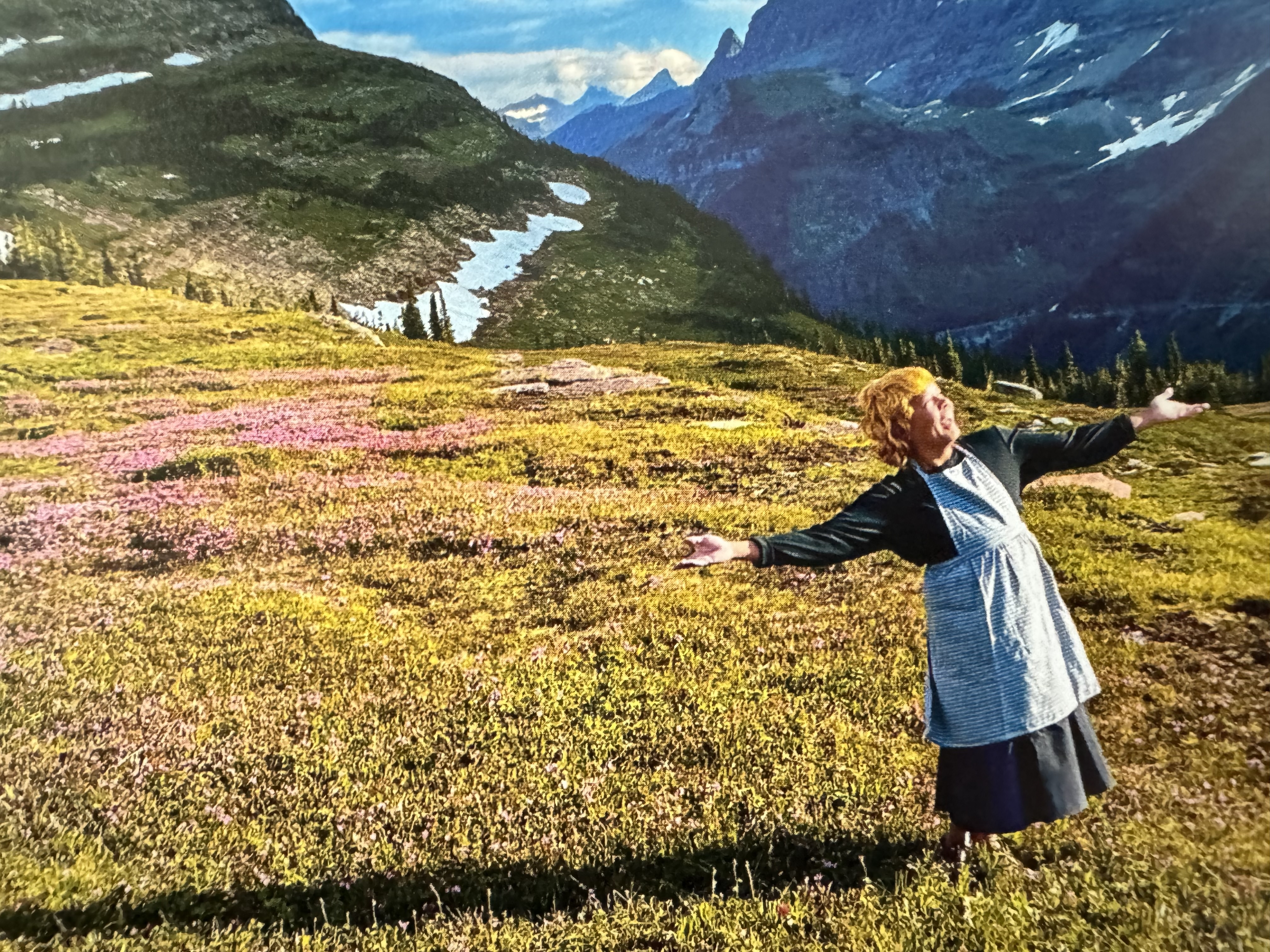
Divided into eight chapters and edited by the celebrated Fil-Am writer Marivi Soliven, the book takes Gil around the world (none of this is AI—the photography took many years and plane flights to complete), posing in various locales and contexts, often in costume, to mimic or to pay homage to familiar figures and situations. The pop-culture setups will likely elicit the most laughs and smiles—Tina Turner, Maria von Trapp, and of course Barbie all get their comeuppance—and the UP Oblation poses (thankfully just backsides) show the malayong lupain that our iskolars ng bayan have reached (Gil studied and taught Humanities in UP before going to Stanford for his master’s). The levity aside, he strikes thoughtful, almost architectural, poses against spare backdrops. He draws his husband Roy, a normally reticent software engineer, into take-offs on couples (Ari and Jackie, Ennis and Jack). The effect is both riotous and reflective, a visual essay on how pop and political culture have overwhelmed us, but also how we have appropriated and domesticated them for our own purposes, if only to say, “Hey, I can be as good that!”

The poet and queer theorist J. Neil Garcia explains it better in this note he posted online about the 30thanniversary of the landmark Ladlad anthology he co-edited with Danton Remoto: “Queer creativity is itself an integral component of the equality message, and not simply a means to an end. Since the freedom of the imagination is perhaps where all freedom begins, it is clear that giving the queer artist the power or the ability to create their own texts and art works needs to be seen as a vital objective of the equality movement, one of whose primary interests must be in securing this imaginative and/or cognitive ability above all. Hence, we need to insist on the truth that queer creativity isn’t simply a tool to promote the equality message and other activist agendas; rather, queer creativity itself is part of the agenda—is part of the equality message itself (and so, queer creativity is not just a means to an end; quite crucially, as the best evidence and enactment we have of individual and collective agency, even against the harshest of odds, it is an end, in itself).”

For Gil—whom I was friends with back when he still had a girlfriend and confronting his sexuality—the book is more than a personal celebration (he launched it in UP last June 23 to mark his 60th birthday); it’s also an assertion of his rights as a queer (the preferred term these days to “gay”) person—and by extension, of all other LGBTQ+ people as well—to express themselves creatively. In his introduction, he notes that “This book is born at a fraught moment in gender politics. Some states in the US have passed legislation that attacks transgender youth for their chosen wardrobe or preferred pronouns. A drag artist in the Philippines has been jailed for performing an irreverent dance interpretation of a Catholic hymn. Such adverse events would seem to suggest that cross-dressing is an act of subversion. I would argue that cross-dressing and mimicry are strategies that drag queens, drag kings, non-binary performers, and gender benders employ to resist, challenge, navigate, and extricate themselves from systems imposed by traditional constructs. And it’s a lot of fun.”

La Vie en Pose most surely is. Copies might still be available at the UP Center for Women’s and Gender Studies.

Qwertyman No. 97: The City That Works

Qwertyman for Monday, June 10, 2024

I WAS back last week in the city of Kaohsiung in Taiwan with a group of writers from the University of the Philippines Institute of Creative Writing, at the invitation of Dr. Eing Ming Wu of the Edu-Connect Southeast Asia Association, an education NGO seeking to establish stronger ties between Taiwanese universities and their counterparts south of Taiwan. We were there to meet with our literary and academic counterparts, but also to acquaint ourselves with contemporary Taiwanese society and culture. What we found along the way was a city and a government that works—a model we have much to learn from.

It was my second time in Kaohsiung and my sixth in Taiwan since my first visit in 2010, but those earlier sorties were either for tourism or for attending meetings and conferences, so we never really got to immerse ourselves in the place and its people. This time, Dr. Wu made sure that we went beyond casual handshakes and pleasantries with city and university officials to engage our hosts in in-depth conversations.

The first thing that usually strikes visitors about Taiwan is how modern it looks, especially when flying in through Taipei—the High Speed Rail (HSR), the wide roads, the skyscrapers (think Taipei 101, once the world’s tallest), the late-model cars. For quick comparisons, consider this: Taiwan’s population, at 24 million, is about a fifth of ours; in terms of land area, we are almost ten times larger; its nominal per capita GDP, however, is almost ten times larger than ours at US$35,000. Not surprisingly, Taiwan now ranks around 20th in the world in terms of its economic power.

That power came out of decades of dramatic transformation from an agricultural to a highly industrialized economy, starting with massive land reform and the adoption of policies that spurred export-driven growth. Industrialization itself went through key phases from the production of small, labor-intensive goods to heavy industry, electronics, software, and now AR/VR and AI tools and applications.

At a briefing at the Linhai Industrial Park by Dr. Paul Chung, a US-trained engineer who was one of the architects of this economic miracle, we learned how Taiwan built up the right environment for economic growth through such strategies as the creation of industrial parks (there are now 67 of them covering more than 32,000 hectares, with 13,000 companies employing 730,000 people and generating annual revenues of more than US$260 billion—almost eight times what all our OFWs contribute to the economy). The Taiwanese government has also implemented a one-stop-shop approach to investments, bringing together the approvals of many ministries and local governments under one roof.

Consistently, in modern times, the private sector has led the way forward, with the government acting as facilitator. This was much in evidence in Kaohsiung, Taiwan’s southern industrial hub that was, until relatively recently, a virtual cesspool, the prime exemplar of industrialization gone amuck. A strategic seaport, Kaohsiung grew out of the need to export Taiwanese sugar during the Japanese occupation (1895-1945); the sugar industry gave rise to railways that went far up north to Keelung and became the backbone of the country’s transport system. After the war, the Kuomintang who displaced the Japanese did little to improve things until a visionary mayor undertook reforms that cleaned up the place. Industry also achieved important synergies by adopting policies toward carbon neutrality and reducing waste—for example, one company’s blast furnace slag is being used to pave roads, and harmful carbon monoxide emissions have been rerouted as inputs to chemical companies.

Kaohsiung today is a city of 2.8 million people, a showcase of how runaway industrialization and urban blight can be reversed through good governance and political will. “People need responsible, responsive, and accountable government,” says Dr. Wu, a public-administration expert who worked for 15 years with five Kaohsiung mayors and who now serves as a visiting professor at UP’s National College of Public Administration and Governance (NCPAG). 

A longtime visitor to the Philippines, Dr. Wu has made it his personal mission to promote Philippine-Taiwanese people-to-people relations—a concept he calls “taiwanihan”—in the conviction that the two countries have much to learn from each other and form a natural geographical, economic, and cultural partnership. “We are each other’s closest neighbor,” Wu says. “Taipei is 96 minutes away by train from Kaohsiung, but Kaohsiung is only 90 minutes away by air from the Philippines.” 

Wu and his colleagues at NCPAG have been exploring the possibilities of developing a corridor of cooperation between Southern Taiwan and Northern Philippines, given their proximity. “We have the technology, you have the resources like biomass,” he adds, pointing out as well that taiwanihan doesn’t just mean a one-way relationship, but that the Philippines can also assist Taiwan with its growing needs, such as engineering talent and manpower. Some 8,000 Filipinos now work in Taiwanese factories, but Taiwan’s demand for highly skilled workers will only get higher as it moves into the next phase of its development, which will be heavily dependent on AI.

Artificial intelligence already takes care of many of Kaohsiung’s more mundane needs such as remote traffic monitoring and even the paid parking of vehicles, which has been outsourced by the government to a private entity. “We buy services, not things,” explains Dr. Wu. “The government provides the land for the parking, the private sector supplies the technology and the hardware. This is our version of public-private partnership: the government listens to the private sector, which can use the city as its lab.” 

E-governance and decentralization led us to an unusual sight: we visited City Hall on a weekday and saw very few people in the lobby, unlike its Philippine counterparts. That doesn’t mean that government is distant from the citizens, as a “1999” complaints center receives and fields calls online or in person, employing the disabled to man its booths. 

And even as AI has taken the forefront, it was abundantly clear that human intelligence and human priorities remained important. Good community governance, for one thing, was key to clean and peaceful neighborhoods (their village officials are appointed rather than elected, eliminating vote-buying). Their libraries alone show how and why the Taiwanese are succeeding: they not only have hundreds of thousands of books available to their citizens, but they have innovations such as the “Adopt-a-Book” program by which you borrow a book just based on a previous reader’s recommendation, and books in both Braille and regular text, so that sighted readers can read along with the blind and enjoy a story together. A city that goes that far to meet its people’s needs can’t fail.

Penman No. 463: Masters of the Old and New

Penman for Sunday, June 10, 2024

THE WORK of two outstanding Filipino artists drew my attention last month, in events that could be considered retrospectives of remarkable if somewhat divergent careers. 

The first was the exhibition “Looking Back” mounted by Fernando Modesto at the Galerie Hans Brumann in Makati, running until June 30, which gathers some of the painter’s best work over the past five decades, many of them from the private collection of the longtime Manila resident Brumann himself. That Brumann—now 83, and also a renowned artist and jeweler—was letting go of these pieces struck me much less as a disposal of worthy objects than a bequeathal, an opportunity to share the best of Modesto with other collectors. Laid low by a stroke some years ago, “Mode” as his friends know him remains mentally as sprightly and mischievous as ever; and he has striven and managed to produce new work despite his condition, taking off from the Mode we knew.

That Mode was irrepressibly bright, witty, and playful. In contrast to the somber and even dismal realism of many of his contemporaries from the 1970s onwards, Mode made light of things, opening up a world of freedom and delight in an oppressive universe. 

The playfulness, at one point, was literal. In 2018, writing in Frieze magazine, Cristina Sanchez-Kozyreva reported on the Ateneo Art Gallery’s recreation of an early Modesto installation from 1974 titled Dyolens(Marbles) that involved laying out thousands of marbles on the floor for visitors to kick around. That was about the time I first met him during my days as a printmaker in Ermita; Mode had already gained fame—or notoriety if you will—for his depictions of pendant penises, which even then were clearly meant not to offend but to make one smile.

The Brumann exhibit documents Mode’s progression from tongue-in-cheek wit to transcendent wisdom, opening a door into a world we can only hope to inhabit, where angels reach for a shimmering sun (or are they playing volleyball?) in an iridescent haze, or float face-up in a cosmic pool. His most recent work such as King of the Islands II (2021) retains that rare equanimity in the cool blue gaze of its subject.

If Fernando Modesto is a master of the modern, the second painter who caught my eye reminded me of how much richness remains to be discovered in our artistic past. May 24 saw the launching of Matayog na Puno: The Life and Art of Hugo C. Yonzon, Jr. (published by Onyx Owl, 248 pages), on the centennial birthdate of Yonzon. Authored by Hugo’s son Boboy and the late Neal Cruz, the book chronicles the life and work of a man for whom art was both a passion and a living. Hugo’s career harkened back to a time when the line between fine and commercial art was blurry and perhaps not all that important, for as long as the artist gave the work his all. 

Yonzon had to leave school early to take a job—just the first of one or many—and he would go on to become much more of a journeyman, one viscerally engaged in the trade, than an aesthete or academic. “Yonzon was always invited to the various sessions held by the Saturday Group and other weekday groups that tried to establish their name and weight in the art scene,” says the book. “But he never stayed long nor drew enough on-the-spot sketches; although he had an eye for women, nude sketching did not interest him. He would rather banter and drink a cup of coffee, then return promptly to his favorite themes in his perpetually makeshift studio.”

He was friends with some of the best artists and illustrators of his time, including Mauro “Malang” Santos and Larry Alcala. Having worked as an illustrator and as an art director for an advertising agency, Hugo wielded an extremely versatile brush, adjusting his style and treatment to the client’s needs. It got to the point that visitors to his one-man show became confused, seeing so many different styles on display, but that range was a great part of the reason for Hugo’s popularity. 

But he kept returning to his favorite themes—the pastoral, the folk, the heroic, the visual representation of what he imagined Filipinos at their best and most essential to be. This appealed to the sensibilities of patrons such as First Lady Imelda Marcos, who generously supported Yonzon. Hugo was tireless in his painting and gave his friends huge discounts to the point that his wife Betty felt compelled to manage his financial affairs.

His lifestyle was appropriately flamboyant. “Dad was a loud but chic dresser,” recalls his eldest daughter Minnie. “When psychedelic colors and prints were in vogue, his long-sleeved shirts were in paisleys and reds and greens. Why, he even painted the air scoop of our brand-new Beetle in paisley!”

The life depicted in the book is fascinating, full of struggle and drama, but ultimately it is the art that imprints itself in our consciousness—one full of vigor, color, inventiveness, and variety, celebratory in every way of the near-mythic Filipino. The writer and art critic Lisa Nakpil would say that Yonzon, who died in 1994, was the “underrated master of heroic Filipino iconography,” and this book clearly shows us why.