Qwertyman No. 38: Getting into UP

Qwertyman for Monday, April 24, 2023

(For this week, let me offer a little family drama about my favorite school, this being exam season, and before I get the usual calls from anxious friends.)

“HEY, UPCAT is back, they’re holding UPCAT live again!” Marides waved the newspaper in her husband Bong’s face. Bong was watching a car show on TV where they found old cars in barns and turned a bucket of rust into a gleaming, raging roadster. Somehow it gave him hope that, down the road when he became a senior and ached all over, they could ply him full of oils and sealants and make him go like a teenager again.

“What UPCAT?” At least the question proved he was listening. Marides had that godawful habit of intruding on his most blissful moments with some real-world problem, and then getting on his case when he ignored her. Twenty-five years of marriage, four kids, and she still didn’t know when to leave him be. 

“UPCAT—the University of the Philippines College Admission Test, the same one I took and passed thirty years ago, which led to me representing UP and meeting and beating you in an inter-collegiate debate, remember? After which you got my number and asked me out and proposed to me three months later, remember?”

Bong hated it when Marides reminded him of that first encounter and its outcome, which became a given of sorts in their household—she was smarter than him, she had all the better arguments, and who knows what she could have become—a corporate genius, a Supreme Court justice—if he hadn’t saddled her with babies and insisted on working for the both of them. He was good with the money, she had to grant him that, because he was the agreeable type who made all the right connections and who could hustle his way out of a guilty verdict if he had to, as he more than once had to. 

“So what if UPCAT’s back?” he asked for the sake of asking. On the TV, two mechanics were staring at a big hole where a Corvette’s engine should have been.

“Dondon is in his senior year. He’s supposed to be taking it soon. We need to make sure his papers are in order. Where’s that boy? Dondon! Come out for a minute, will you?” 

A teenager with frizzy hair and a phone glued to his ear straggled out of his room and deposited himself in the nearest chair, across the room from his parents, still mumbling on his phone.

“You know UPCAT is happening, right? Have you filed your application yet?”

“Yes, Ma—mumble mumble….”

“Will you please put that phone down while your parents are talking to you? Bong, could you teach your son some manners—”

Bong: “Mumble mumble….”

“I’m serious! You two listen to me—our family’s reputation is on the line!”

“What reputation, Ma?” Dondon grudgingly put his phone aside, and Bong yawned and stretched his arms to acknowledge that he was in for a long spell.

“The one I started, by passing the UPCAT, getting into UP, and serving the people any way I could!”

“But, Ma, all you ever did was to bear us babies, and look what we became—Ate Glo is divorced in the States, all Kuya Jeff does is drive Papa around, and Kuya Milo thinks more tattoos will make him a better rocker. And all of them passed the UPCAT because you told them to!”

“Well—that was my service—to them, and to our people. I give you the opportunity, and what you make of it, well, that’s your business….” Marides started sobbing, and Dondon ran across the room to embrace her.

“Aw, Ma, that’s not what I meant. I just wanted you to see that getting into UP doesn’t guarantee anything.”

“That’s what I’ve been saying all these years!” Bong added. “We’ve been sending our kids to a school for communists, and they don’t even make good communists anymore!”

“No, they don’t,” Marides shot back, “because those communists took the top five places in the bar exams!” She sniffled and Dondon handed her a box of tissues.

“Don’t cry, Ma. It’s all right, it’s all okay. Applications are done online now and my school sent all my papers in last week. I just didn’t tell you both because—well, Papa wanted to explore other options—”

“Other options? Like what?”

“Like sending him abroad to a school of his choice. We have the money—”

“What, you’ll be sending my baby, our bunso, away for the next four years?”

“Or he can pick any other school here he wants to! UP’s not the only good school for engineering or science in this country—”

“I don’t want to be an engineer, Pa….”

“What? You’re a science high school scholar! You have to be an engineer—or a chemist, a physicist, do something with numbers, you don’t have a choice!”

“I never did, Pa, you and Ma chose my high school for me, I just took the exam. Maybe I should have just failed it.”

“So what the hell do you want to do with your life? Who’s going to take over the business when I’m gone?”

“Maybe you should trust Kuya Jeff more. Keep him in the backseat with you. Me, I want to draw, to paint, to design, do something creative. I know I’m good—you’ve seen my sketches, you just haven’t paid much attention to them.”

“We just want you to be happy, son,” said Marides. “We’ll support whatever you decide—won’t we, Bong?”

“Uhm—yes, okay, sure, if it makes you happy, but will you stop crying? I’ll make sure Dondon gets into UP, even if he fails the UPCAT—”

“Pa!”

“I’ll call an old friend of mine, you know me, I know all the right people. He used to be a VP in Quezon Hall, I’m sure he can pull a few strings and get you in—”

“Pa, that’s not how I want to get into UP, that’s not what UP’s about—”

“Oh, you mean that guy who now writes a column about funny things like fountain pens and his wife Weng for a newspaper? Forget it. Chuchay called him last year to ask for the same favor, but he said sorry, no, he won’t do anything of the sort, that it’s just not done in UP!”

“Why, that useless jerk! Doesn’t he know how things work in this country? I’m sure UP’s just as full of jokers and crooks as Customs, Congress, the Palace, you name it! Don’t half the people in those places come from UP?”

“Maybe, Pa—but that’s why I want to go there, because it still has people like your friend who won’t let me in unless I pass the UPCAT! Don’t worry, Ma—I’ll do my best, I promise.”

“Oooh, my son’s going to be the next Amorsolo!” Starts singing: “UP naming mahal, pamantasang hirang….”

“I have a friend who owns a gallery….” Bong began.

Qwertyman No. 37: Time for Winter-Melon Soup

Qwertyman for Monday, April 17, 2023

AS I SHOULD have expected, last week’s Qwertyman piece on a recent visit I made to Taiwan as an ordinary tourist provoked a small firestorm from readers who berated me for my “ignorance” of the “one-China policy,” because I had described Taiwan as a “country” in my column.

I replied politely to these objections, explaining that (1) while I was aware that our government, among most others in the world, subscribed to the one-China policy, I wasn’t the government, and (2) that “country” to this writer was more of a state of mind, if not of fact (and if we have to be persnickety about fact, then consider that Wales and Scotland are accepted as countries within the United Kingdom). 

One of my reactors was gracious enough to yield the point and leave me be, but another insisted that I had China all wrong—that it had no unfriendly intentions toward the Philippines, and that its occupation of what we hold to be our islands in the South China Sea was a mere enforcement of its historic rights to those territories. “Absolutely no intentions of invading the Philippines?” Hasn’t that already begun?

My column also prompted some reflections from an old friend and comrade in the fight against the martial-law dictatorship. Commenting on China’s threats to bring Taiwan under its heel, by force if necessary, my friend remarked: “It’s hard to comprehend how the leaders of big, powerful China could feel justified in unleashing death and destruction against the people of small but proud Taiwan, a country that poses no threat, and against fellow Chinese of near identical racial and cultural origin. After all, isn’t this the China that I, and many of us, not too long ago, emulated as the model for ‘liberating’ our own country, and whose proletarian ideology we embraced as the formula for ushering a new and better age for humanity? How is this a manifestation of Mao’s ringing slogan to ‘Serve the People?’

“But then we’re seeing the same perversion of once lofty ideals in the current behavior of Russia, the progenitor of ‘egalitarian socialism,’ now immersed in a barbaric project to decimate the people of Ukraine, members of their own Slavic family. Yes, Putin doesn’t call himself socialist but it was this system that trained and tutored him, and whose humiliation he’s trying to undo…. However, in light of the current behaviors of Russia and China, the two foremost homes of the Marxist experiment, and in light of the incontrovertible failure of Joma Sison’s project in our country, we who dabbled in this belief system need to step back and take a good hard look.”

I thanked my friend for his ruminations, which I completely identify with. Indeed, as fervent if naïve activists in the 1970s, we looked up to Mao’s China as a beacon of socialist virtue. Today’s Red-taggers would have fulfilled their month’s quota with the likes of me. I kept Mao’s “Little Red Book” in my shirt pocket, and could spout quotations like “Political power grows out of the barrel of a gun” and “A revolution is not a dinner party, or writing an essay, or painting a picture, or doing embroidery; it cannot be so refined, so leisurely and gentle, so temperate, kind, courteous, restrained and magnanimous. A revolution is an insurrection, an act of violence by which one class overthrows another.” 

On my first visit to China in 1987, our guide was surprised that I could sing “Sailing the Seas Depends Upon the Helmsman” and that I wanted to visit Mao’s tomb. “What do you want to visit him for?” our guide asked in consternation. “He killed my father during the Cultural Revolution!” 

In various capacities as a tourist, a journalist, a writer, and academic, I have visited China many times since that first encounter, and have seen how its people—honest, hardworking, hopeful people like us—have managed to survive and prosper under a challenging succession of regimes and global conditions. I observed how the government was intent on modernizing its economic and physical landscape, razing down whole rows of hutongs or old communities in cities to make way for swanky new high-rises. On one visit to Shanghai, I couldn’t resist noting the irony of how the historic site of first National Congress of the Chinese Communist Party—a sacred shrine of that ideology—was located in the heart of what has become one of the city’s glitziest and most upscale districts, Xintiandi, in close proximity to a posh French restaurant.

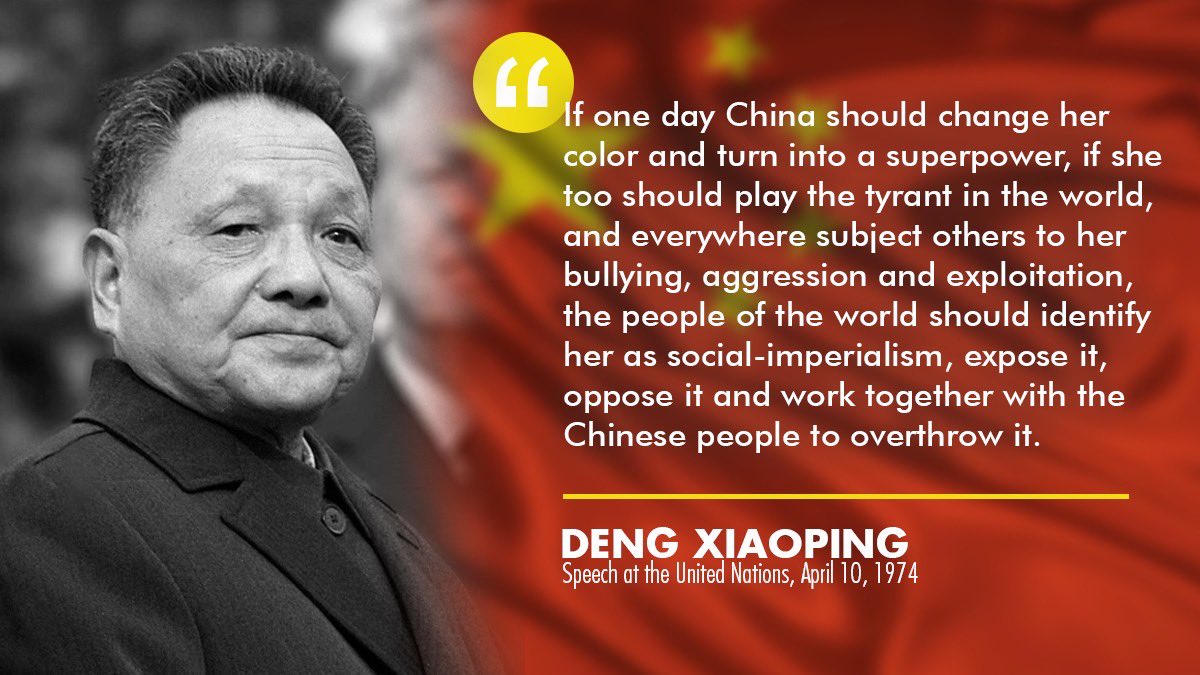
I don’t think anyone can fault China for its transformation into an economic powerhouse, or even deny that its strong central planning was a key factor in making that happen, especially under Deng Xiaoping. What I’m sad about (and this statement will probably cost me my next Chinese visa, but no matter) is how this China has remained a tyrant to its own people and a bully to its neighbors—something that it doesn’t need to be, except to flex the almighty power of the CCP. 

If it wants to, it could yet become an example of a confident and benign socialism—something the CCP will never dare to embrace, for fear of seeming soft, especially in the face of American, Japanese, Korean, and yes, Taiwanese resistance. I can’t help thinking that while there may be “one China” in whatever configuration the politicians propose, there are indeed two Chinas in our hearts—the one we have been historically and culturally enmeshed with and want to love, and the other that won’t rest until we kowtow to its might.

And before the pro-Beijing troll machine springs into action, let me say this again: I separate governments and regimes from the people they theoretically represent and should be serving. (We also have to be reminded that there are significant political factions in both Beijing and Taipei, and that Chiang Kai-shek’s Kuomintang were no angels when they “liberated” Formosa from the Japanese, only to take it over.)

I have written favorably (and critically when I had to) about both China and Taiwan without any sponsorship from either entity’s government. There are powerful lobbies for both sides right here in this country—one even offered to send me on an “observation tour,” which I gently declined, aware of the political subtext; I would go, I said, on my own dime, and I did. (Which is not to say I will refuse “observation tours” of the south of France, Tahiti, the Nordic fjords, the Patagonian forests, and other bucket-list destinations not likely to invade the Philippines.)

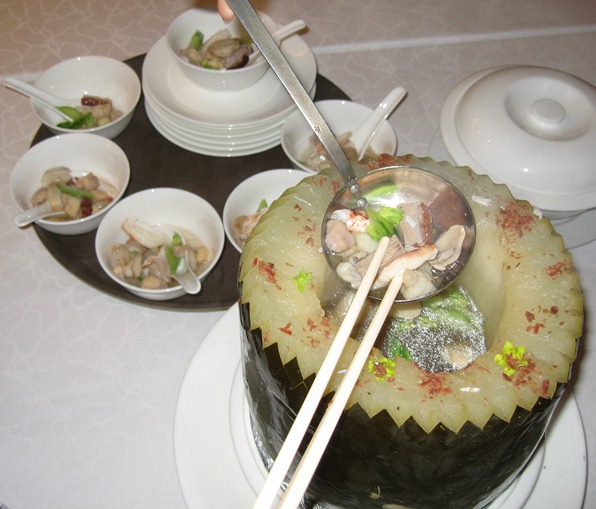
To Beijing’s and Taipei’s cheerleaders, chill out and enjoy the scenery; some calming winter-melon soup might help to keep the vitriol down.

Penman No. 449: Sharing the Joy of Pens

Penman for April 2, 2023

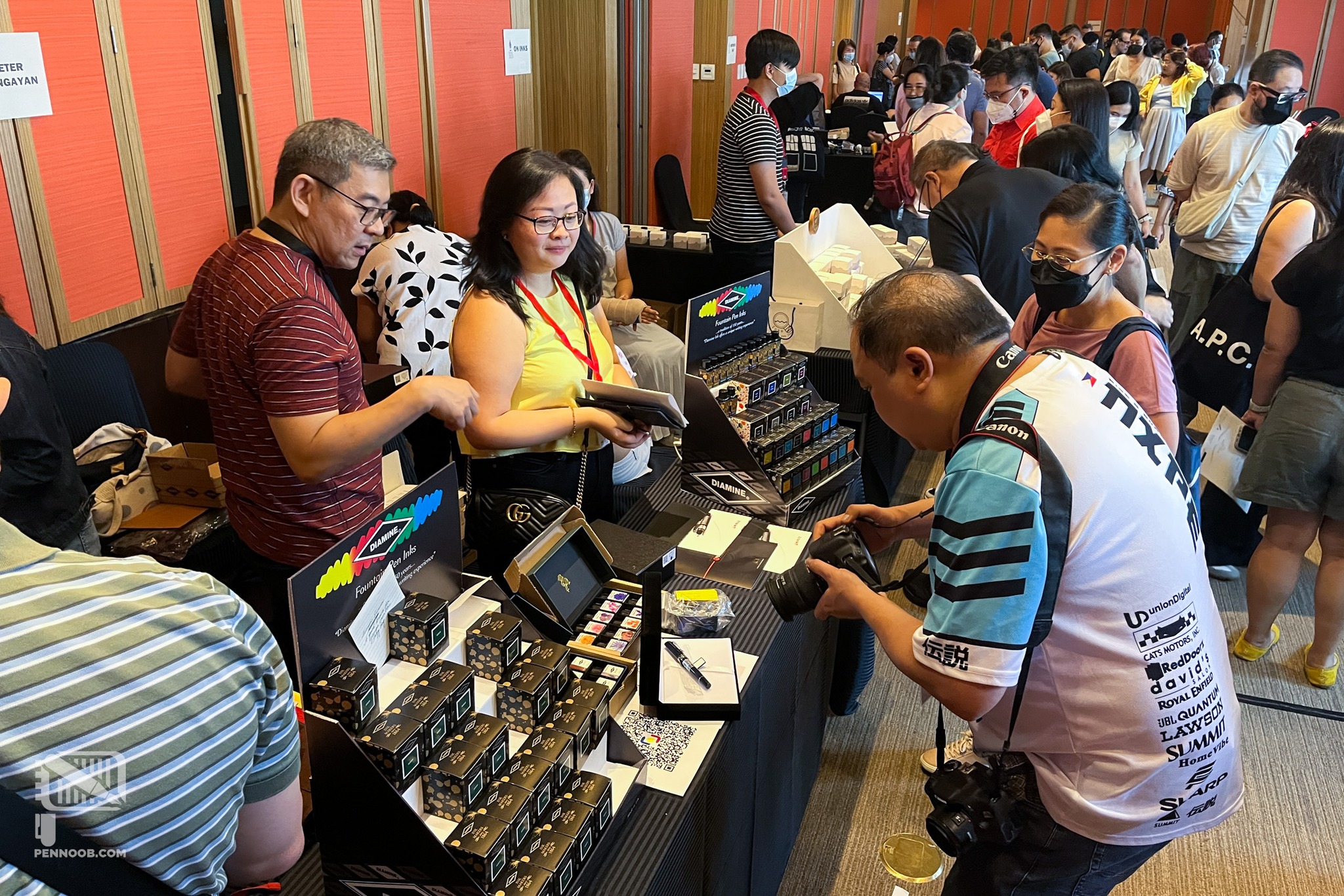
With the successful holding of the 2023 Manila Pen Show last March 18 and 19 at the Holiday Inn Makati, the Philippines firmly established itself as Southeast Asia’s Pen Central—the largest and liveliest marketplace of items and ideas related to one of the world’s fastest-growing hobbies: collecting fountain pens and other writing peripherals (inks, papers, and cases). 

The last MPS in 2019, just before the pandemic, had brought in 700 visitors. This year, that number was eclipsed on just the first day, and by closing time Sunday, over 2,000 pen lovers—from hardcore and advanced collectors picking up $2,000 Nakayas to eager newbies thrilled to get sub-P200 Wing Sungs—had showed up. The turnout wasn’t totally surprising, considering that Fountain Pen Network-Philippines (FPN-P), the pen show hosts and organizers, now counts more than 12,000 members on its Facebook page.

Aside from the country’s leading purveyors of writing paraphernalia—familiar names such as Scribe, Everything Calligraphy, Pengrafik, Stationer Extraordinaire, Leather Library, Leather Luxe, Shibui, Gav N Sav, JumpBid, and Kasama—foreign sellers from Singapore, Malaysia, and Japan such as Aesthetic Bay, Pen Gallery, Straits Pens, Musubi, and Toyooka Craft flew in just for the show. Nearly all the sellers reported robust sales at all price points.

As a longtime pen collector and co-founder of FPN-P, I’m proud of how the hobby has taken off in this country over the past decade, and also frankly amazed by how different our demographics are from the rest of the world. Fountain pen collecting, especially in the West, has long been the domain of predominantly old white men, inclined like I am toward vintage pens and high-end, limited-edition modern pens. 

FPN-P’s profile is distinctly different: mostly young professionals between 20 and 40, with far more women than men, happy to purchase the entire color range of inexpensive Chinese-made Jinhao 82s (and inks to match) but just as savvy about the latest Montblanc release, keen on using and enjoying their pens rather than keeping them in boxes. As the MPS attendance showed, ours is an exuberant, generous, and democratic community, with little sense of entitlement or competition, dedicated to sharing the joy of pens, of expressing your individuality and artistry with the ink on your nib, of doing something personal and authentic in this age of artificial intelligence.

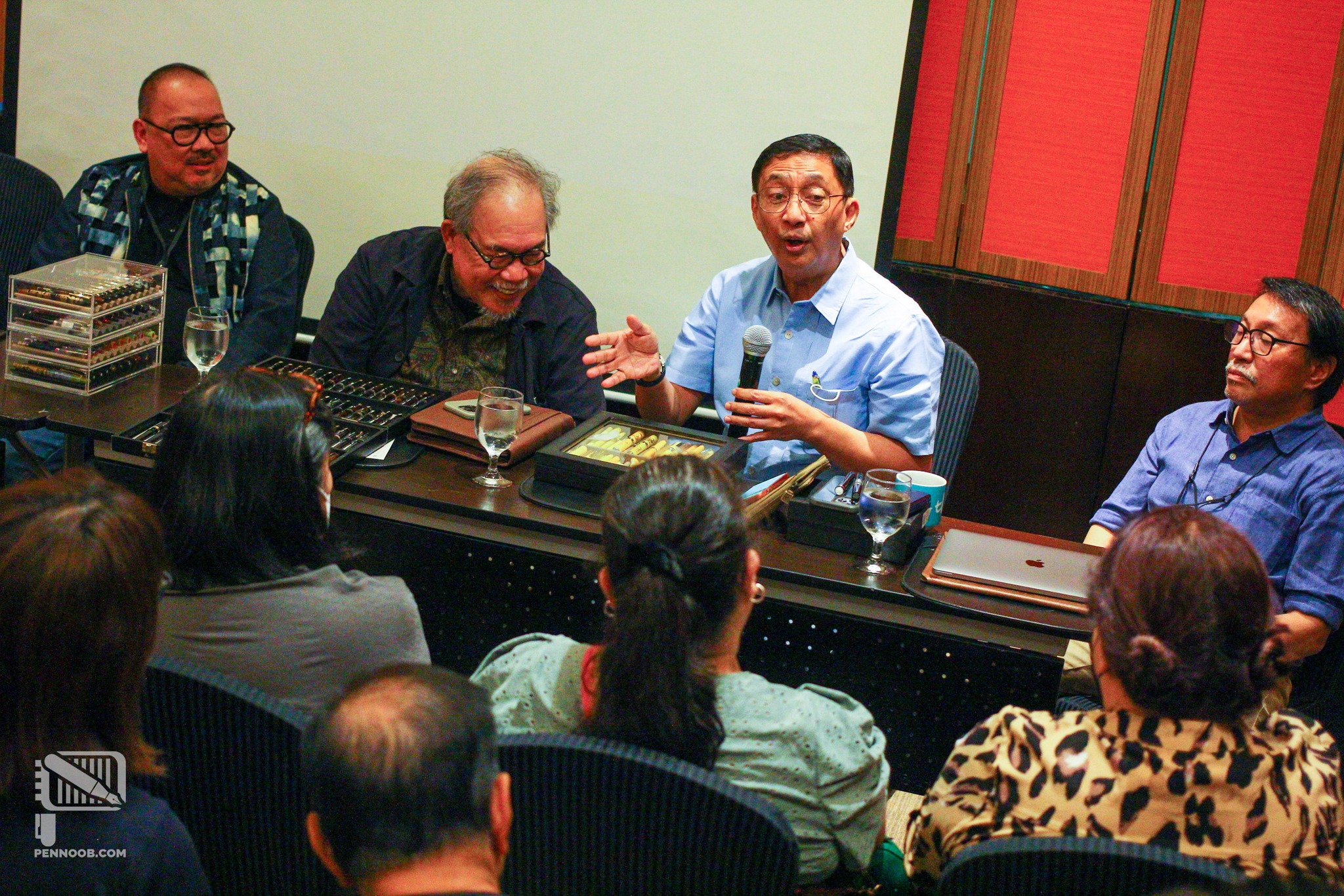
A highlight of MPS 2023 was a panel discussion devoted to the topic of “Curating a Fountain Pen Collection,” and I was privileged to share the table with fellow collectors Reggie Reginaldo, Amanda Gorospe, Jun Castro, Ronnie Geron, and Raffy Aquino. Each of us said a few words about how and why we put our collections together, given that each of us had a different focus: inexpensive pens, high-end pens, vintage pens, yellow pens, and so on.

Before talking about my passion for vintage pens (i.e., pens at least 50 years old, in many cases a hundred years old), I tried to explain what “curation” was all about. Here’s part of what I said:

Every collection begins as most love affairs do—with fleeting glimpses of the loved one, then seemingly chance encounters, then long chats over coffee before the steep and blissful freefall into a dizzying madness. 

For a moment, happiness and contentment reign. And then sadly follow the inevitable regrets, the disaffections, the “It’s not you, it’s me’s,” the parting with the old object of desire and its replacement by a new flame.

Today we’ll try to introduce some sense into this seeming cycle of bliss and despair. Curation means bringing some method into the madness, finding the inner logic that threads many disparate elements together.

The word “curation” is rooted in the Latin curare, “to take care of,” or to treat an illness, and here clearly the illness is in the collector, whom curation treats by providing guideposts to follow and guardrails against excess.

There are several kinds of collectors:

  1. Those who want anything and everything, although they might be more properly called accumulators (this describes 90 percent of us at the beginning);
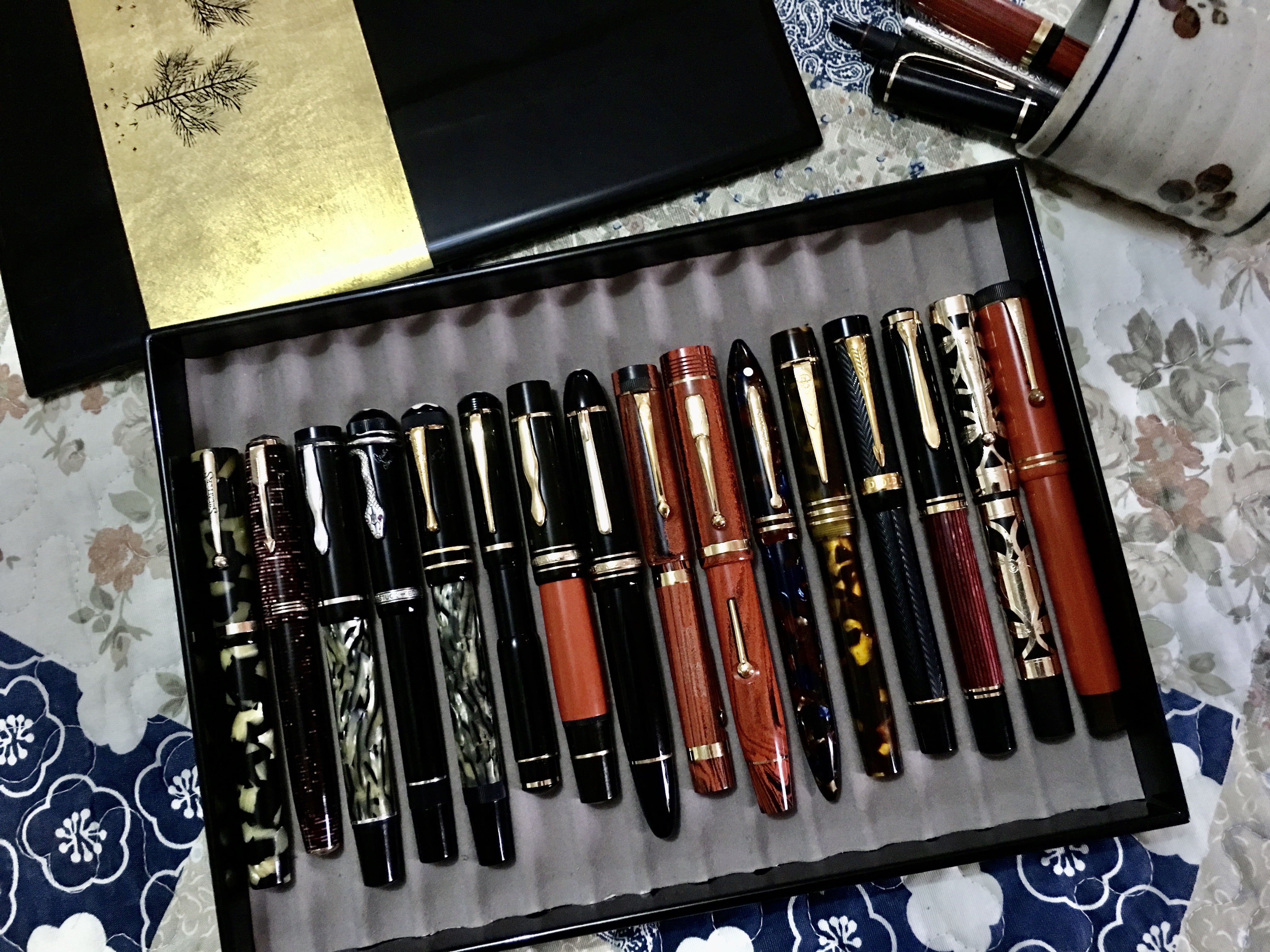
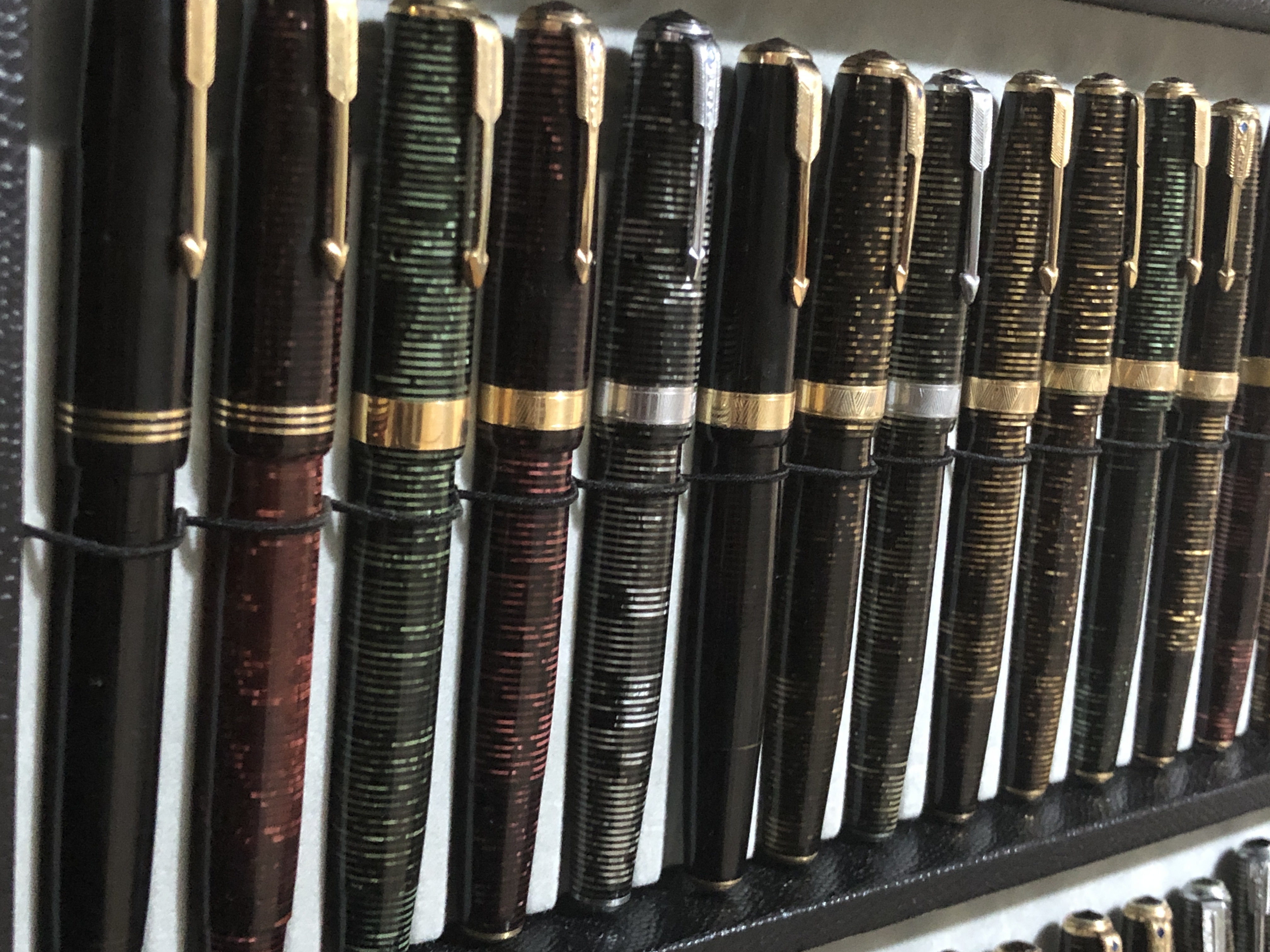
  2. Those who want everything of a kind (this applies to my fetish for Parker Vacumatics);
  3. Those who want the best or the most impressive of everything (this implies having the budget to go with your taste);
  4. Those who want some very specific things, for personal or even idiosyncratic reasons; and
  5. Those who get only what they need or can afford—perhaps the rarest of all collectors, the practical and disciplined kind.

Vintage collecting relies heavily on connoisseurship—on knowing the field and knowing what to look for. Surprisingly, it often involves less money than buying new pens. Of course there’s a cost to factor in for restoration and repairs, but even so few vintage pens reach the stratosphere of the thousands of dollars you would pay for a shiny new Montblanc.

You can collect based on brand, material, filling system, size, and of course price. For vintage you can add age and scarcity. Good working or repairable condition is presumed, although vintage collectors should always be on the lookout for cheap parts pens. 

Every quest for collectibles also involves what we might call “unicorns”—ultra-rare or one-of-a-kind pieces that exhibit some distinguishing hallmark of quality or technical innovation. These could be prototypes, custom jobs, or things in almost mint condition despite their age.

It also helps to know what you don’t like, or no longer like. For example, I generally don’t go for small and light pens, nor for blingy or too colorful pens. My pens are “lolo” pens—staid, conservative, almost severe, corny to most young collectors today.

Culling or cutting down is a good exercise, financially and mentally. I built up my collection over the years by selling five good pens to get one better pen. I have also sold very good pens that I once lusted after, but no longer spoke to me.

Curation, ultimately, is about knowing yourself. At a certain point in your collecting life, you have to take stock of your collection and ask yourself, “What do these objects say about me?” Is this the self-image I want to project, the one I’m happiest with? 

My answer to my own question is, I’m an old guy who likes old things, because they offer physical proof of life after death. We die, but our words—and the wording—go on. A vintage pen is an old guy lucky enough to find a new home. I’m happy to give him a shower and a warm bed, and all the ink he wants to drink.

Qwertyman No. 36: A Tourist in Taiwan

Qwertyman for Monday, April 10, 2023

MY WIFE Beng and I visited Taiwan with friends on a five-day holiday just before Holy Week, and returned home dog-tired but deeply impressed by what we had seen: a country not just surviving but staunchly moving forward, progressive and optimistic, despite living under the constant threat of invasion by its hulking neighbor and self-declared owner, China.

It was my fourth visit to Taiwan and my wife’s second, so we had witnessed the island’s wonders before. But we went back—this time with friends who had never been there—precisely because it had much to offer as a vacation spot. For me, Taiwan has largely been about food (especially the beef-brisket noodles and fruits like the giant atis and cherimoya), technology (like the exhilarating 3D I-Ride it has exported to Hollywood), and culture (exemplified by the legendary jadeite cabbage at the National Palace Museum). Economists and political scientists will surely have much more to look for and investigate in Taiwan, but my unsophisticated cravings were fully satisfied. 

The tourist in me observed that Taiwan had achieved First-World status, with elevated expressways, high-rise housing, clean waterways, and extensive transport networks. Taipei’s shops were open past 10 pm, catering to a busy nightlife. We took a day trip out to visit the Chimei Museum in Tainan, and boarded the High Speed Rail that zoomed down the island’s west coast at 236 km/h. Despite Taiwan’s high level of industrialization, the countryside remained lush with forests and greenery, and Taipei’s streets were litter-free. True, there were homeless people gathered around Taipei’s Main Station, living out of shopping carts and camping tents, but we had seen far worse in New York and San Diego. Some old-school courtesies persisted: on the subways and buses, younger riders still stood up to yield their seats to seniors.

That said, it was hard for me to shake off the feeling that we were experiencing an ephemeral pleasure. As we took a bridge over a river in Taipei, and reveled in the vista of a thoroughly modern city rising from its ancient roots as a Spanish trading outpost, I remarked to Beng, half-facetiously, that a few Chinese bombs could pulverize all that. China, I said, could “Ukrainize” Taipei, and blow the 101-storey Taipei 101 building, the National Palace Museum, the Shilin Night Market, and all the other attractions we associate with this city into smithereens. Beng said that I shouldn’t be making such horrible jokes, but I had to wonder how much of what I said was indeed a joke and how much of it was dire possibility.

The threat is certainly there—and has been there since 1949, when Chiang Kai-Shek’s losing Nationalist forces retreated to the island, took it over, and turned it into a thorn in Communist China’s side. China has repeatedly used shows of force around Taiwan to demonstrate its readiness and capability to employ “resolute and forceful measures to defend (its) national sovereignty and territorial integrity,” and while no explosively significant confrontations have taken place, China’s saber-rattling has only grown louder, provoked by presumptive American guarantees to help defend Taiwan in the event of a Chinese attack, and possibly emboldened by Russia’s invasion of Ukraine. (The US, of course, has been rattling its own sabers, particularly with the acquisition of more basing rights in the Philippines.)

You’d think that the specter of invasion would switch Taiwan into full military mode, with air-raid drills and sirens and tanks and soldiers in the streets, but no. When we were there, it was business as usual, with no sense of urgency, even as Taiwanese President Tsai Ing-Wen met with US House Speaker Kevin McCarthy in California, raising the cross-straits temperature further.

Taiwan-watchers such as David Sacks, whose post was republished by the influential Council on Foreign Relations last November, have warned against complacency, especially in the wake of Russia’s Ukrainian misadventure. According to Sacks, “Despite these growing worries and initial steps, actions remain far below where they need to be to deter China and respond to potential Chinese aggression. The increases to Taiwan’s defense budget over the past six years are commendable, but at 2.4 percent of gross domestic product (GDP), it is still well below where it needs to be…. While there is a recognition that the civilian population will need to play a large role in defending the island, the conversation about how to reform Taiwan’s reserve force is still in its infancy, with little consensus on what its role should be. Taiwan’s military lacks the munitions it would need to withstand an initial Chinese assault and its military services continue to pursue legacy platforms such as fighter jets and large naval vessels that will have little utility during a conflict. It is far from certain that there is buy-in across the military for adopting an asymmetric defense strategy.

“Beyond the military realm, Taiwan needs to do much more to increase the resilience of its society and decrease its reliance on trade with China…. Over 40 percent of Taiwan’s exports go to China or Hong Kong. While there is wide agreement that this is a major vulnerability, there is a certain amount of defeatism, with few ideas of how to reduce this dependence without massive government intervention.

“While the government is taking steps (albeit insufficient) to address the growing threat China poses, there is a worrying gap between officials and the public. Opinion polls reveal that Taiwanese people are not concerned about an invasion and believe war is unlikely in the next decade…. Understandably, most want to focus on improving their lives. There is a fine line, however, between stoicism and complacency.”

Is this a fatalism that we Filipinos seem to share? If China attacks Taiwan, can the Philippines be next, and what will we or can we do about it? (In my admittedly  pedestrian view, China has no need for a military invasion of the Philippines—which will be costly and troublesome, given our geography—so long as it achieves full control of the South China Sea. It will be cheaper and easier to subvert and suborn the government, if it wants pro-China policies to prevail.)

I was glad to be just a tourist in Taiwan, enjoying my cherimoya, instead of being a defense analyst pondering the medium term—or, for that matter, being a local fruit seller who might one day find a gaping hole where the orchard used to be.

(Photo from thetimes.co.uk)

Penman No. 448: Designing for the Eye and Mind

Penman for Sunday, March 5, 2023

I DON’T normally review books—even books sent to me with a request to be reviewed, which I apologetically ask authors not to do, unless they’re willing to wait a year or two. That’s because I prefer to enjoy books rather than to critique them, which sounds too much like the kind of work I happily retired from. But every now and then, along comes a book I simply can’t ignore, because it’s just too important or maybe just too beautiful to be put aside.

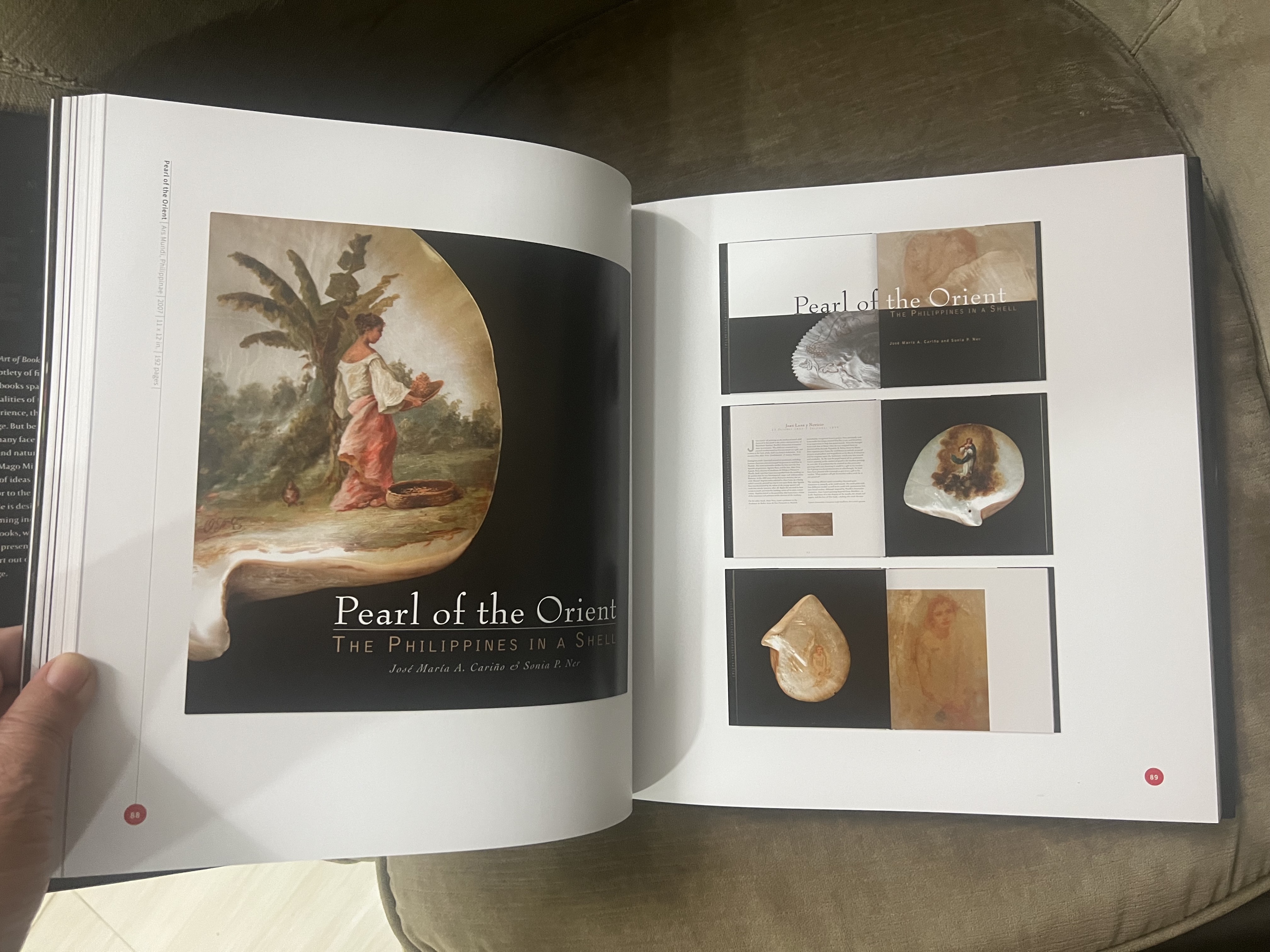
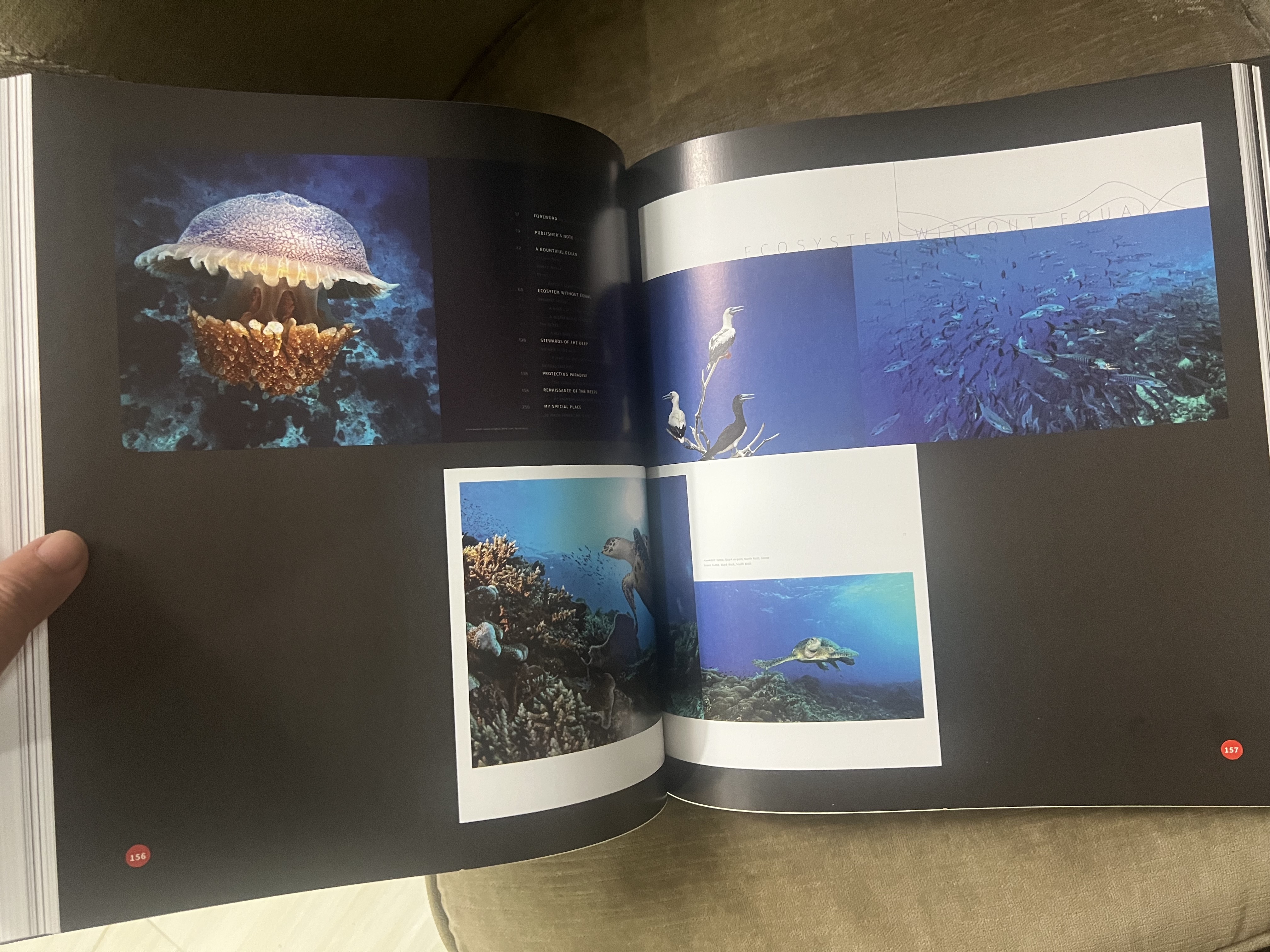
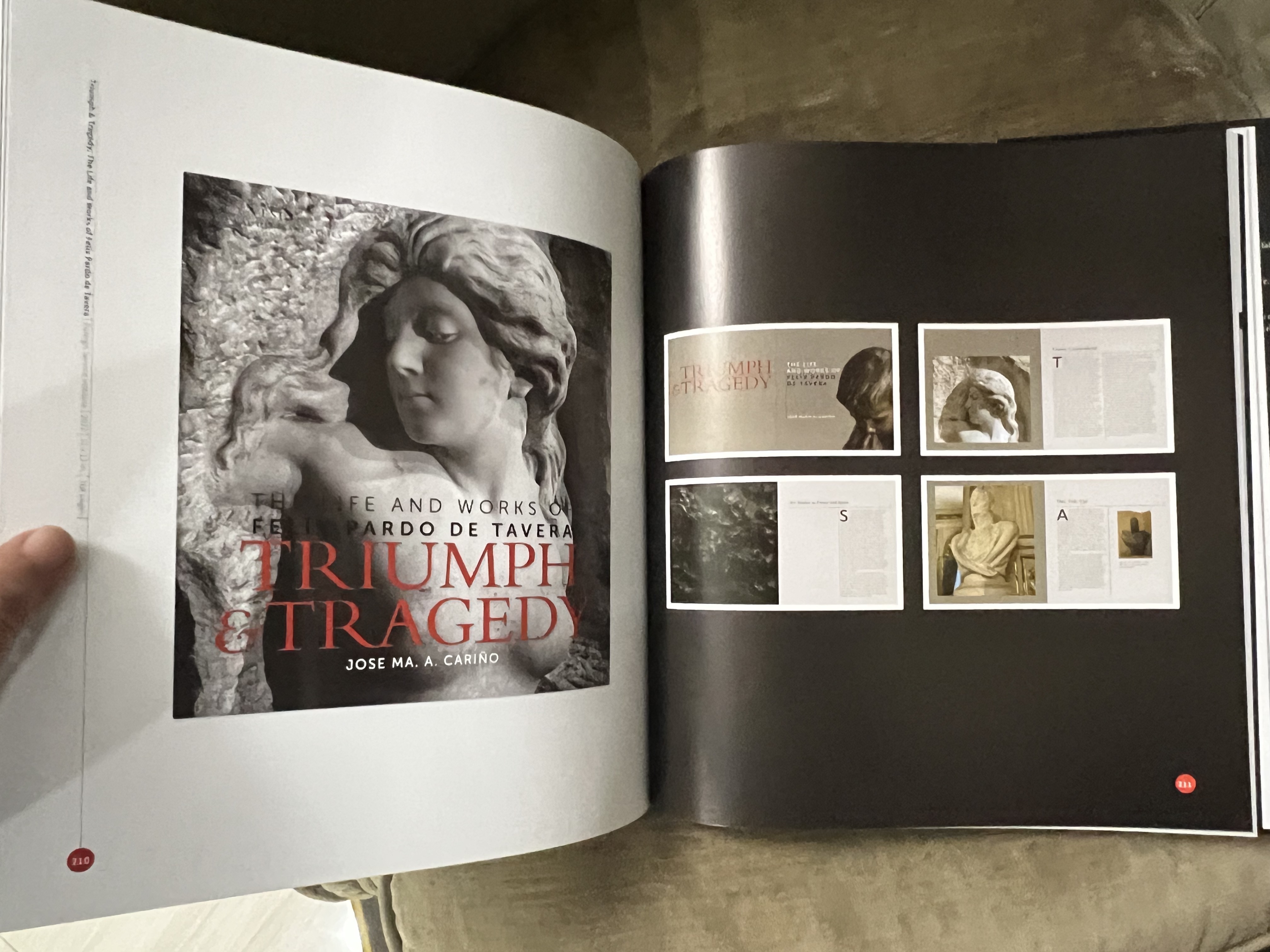
One such book—both important and beautiful—was dropped off at my doorstep last week, and as soon as I opened it, I knew I had to share my knowledge of its existence with fellow enthusiasts of art and design. The book was Felix Mago Miguel: The Art of Book Design, written by Felix’s wife Amelia F. Zubiri-Miguel, edited by Ambassador Jose Ma. Cariño, and published by the Foreign Service Institute.

One of the most talented and prolific Filipino book designers of our time, Felix has designed more than 130 books over the past 20 years, and I’ve been fortunate to have authored and edited a good number of those, including several coffee-table books and the biographies of Edgardo J. Angara and Leonides S. Virata. This hefty 264-page book is a biography, treatise, and catalogue all in one, a fine embodiment and example of its own subject, sumptuously produced not just to showcase Felix’s work but also to discuss his theory and experience of book design.

Ours has always been a country of gifted authors with endless stories to tell, but only recently has enough attention been paid to the proper design, production, and marketing of our books. The growth of Philippine publishing and the opening of foreign markets to Philippine material has spurred some of that interest as a matter of economic necessity, but the general appreciation of book design remains low. 

As an author myself, I’ve always been fussy about how my books look; I didn’t work that hard just to come out with an ugly book with my name on it. But sadly not all authors or publishers share that worry. As Felix himself laments, we Pinoys have a famous fear of spaces—horror vacui—and tend to cram our pages with as much text as we can, as if wide margins (and better readability) were a waste of precious paper.

Coffee-table books, which are Felix’s particular area of expertise, present both special challenges and opportunities. Being typically meant for promotional rather than commercial purposes, CTBs have large budgets that will allow for better production. But a poorly thought-out or executed design can render those millions useless. I’ve groaned at obviously expensive book projects ruined by gaudy or overly busy covers, barely readable type, narrow margins, and bad paper. (One of my biggest pet peeves is printing text over a photograph for that artsy effect, rendering it illegible.)

Felix’s background as a painter (and as a graduate of the Philippine High School for the Arts and the UP College of Fine Arts) allows him to see a book project not just as a technical challenge but also an intellectual exercise—a process of understanding what the book really wants to say, and translating that into a visual language.

“A book project is always like a thesis, a problem to be solved, an experience to be fleshed out,” he says. “Everything for me begins with figuring out what the book is trying to say and how best to say it. I do my best to learn the narrative, reading to understand it, absorbing its contents. If there are visuals already, I go through them, looking for the narrative that I just read among the photos and illustrations. Doing these things enables me to better feel the book and the direction it will go. My goal is to find the personality of the book, to figure out who is talking and to decide on what kind of experience is best—to design the book in such a way that, as Rita Jacobs says, it may be the only way that it can be presented.”

He designs as much for the mind as for the eye. As Amelia puts it, “Though people may say that a designer’s job is all simply a matter of art, my years of seeing Felix working have told me that it is not. At the end of the day, he always ends up more knowledgeable, better informed, and wiser with insights not just from the manuscripts but from the totality of the discussions and the time he had spent with his clients, which is probably the best bonus and priceless privilege that comes with the job, because at the end of every project, a really beautiful book needs to be more than just pretty to look at.”

Felix adds: “As designers, we become builders of experience. We may not have the privilege of letting our audience touch the skin or the sinews of what they are looking at, but if we did well in our work, what one designed becomes an exhilarating, unforgettable experience. Not only do we introduce the authors and their voices, but through a well-designed book, readers may experience the same things vicariously. What is separated by time and space is connected through emotions. And a book that touches your soul is indeed an experience to be cherished.

“After learning the technical aspects of design—the use of typography, colors, spaces, photos and illustrations, pages, covers, and printing—I realized, I have a new medium. And just like in painting, the medium is not the end of the painting; it is just part of it, because more importantly, there is a story to be told and that story is the priority of the design. My role is to ensure that this invisible visual force will allow the story to be told.”

And tell the story Felix does, in an inimitably pleasing and tasteful style that more than does justice to his material. I look forward to our next project together, whatever that may be—a writer can only write better knowing how superbly his work will look in a capable designer’s hands. 

Penman No. 447: A Tertulia and Tinio

Penman for Sunday, February 5, 2023

WE CELEBRATE National Arts Month in February in the Philippines, but it came a little early for me this year, in a January packed full of memorable cultural events that reminded me of how much we’ve missed during the long pandemic. 

First off was a trip to Bacolod for a preview of the celebrated theater director Anton Juan’s new film, Amon Banwa Sa Lawud (Our Island of the Mangrove Moons). I’d known, of course, of Anton’s stellar work in theater for many decades now, but this was the first foray of his into cinema that I was aware of, and I—and the select audience that attended the preview at the Negros Museum’s Cinematheque—was not disappointed. 

Set and shot in the island-community of Subac in the city of Sagay, and based loosely on Thornton Wilder’s seminal play “Our Town,” the film chronicles the lives of villagers whose fortunes are inextricably wedded to the sea. Isolated from many of society’s most basic comforts, they survive through hard work, faith, and ambition, despite the many threats they face—among them, roving bands of pirates and, not too subtly suggested by a floating buoy, Chinese vessels encroaching on their fishing grounds. 

Shot in ten days with a mostly amateur cast, the film is a tribute to Pinoy industry and courage, and also of the sense of community that seems to have frayed for our people on a national scale. I remarked after the screening that most of us have lost touch with our maritime culture—the sea hardly figures in our literature, for example, except as a romantic backdrop—despite the fact that ours is a country of many islands like Subac. Anton’s film offers hope—but also delivers a stern warning about the dangers hovering on our national horizon. Kudos to the Erehwon Center for the Arts and to its founder Raffy Benitez, among other producers and sponsors, for making this film possible.

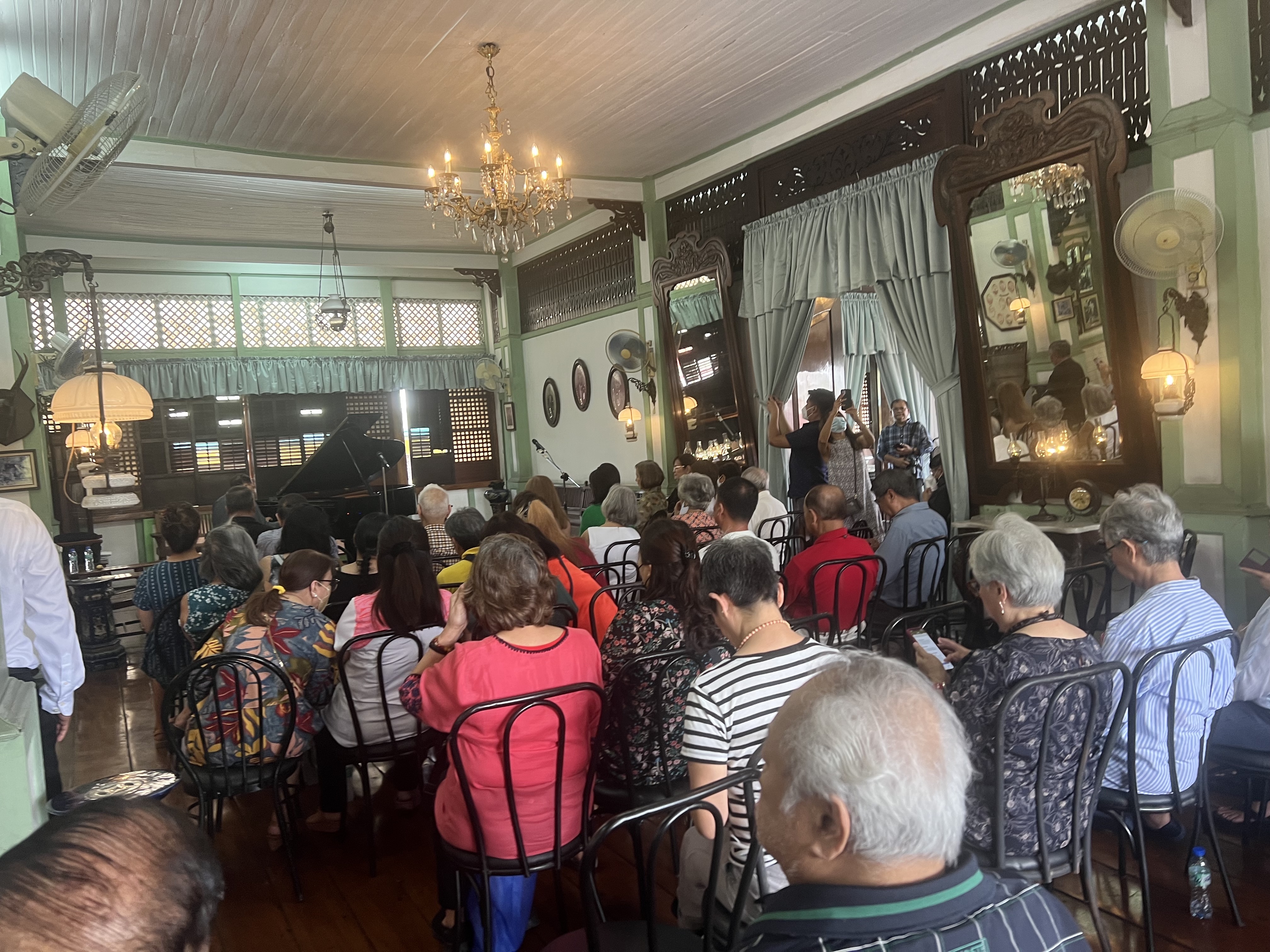
The second event that my wife Beng and I were privileged to attend was a musical tertulia at the historic Acosta-Pastor ancestral home in Batangas City, hosted by everyone’s musical tito, Atty. Tony “Tunying” Pastor. Every year, during the city’s fiesta, Ka Tunying sponsors a performance of renowned artists at his family’s home, which is a living museum of sorts, with a full-sized caruaje greeting visitors on the first floor.

This year, thanks to an invitation from the writer-curator Marian Pastor Roces, we were treated to a special program presented by the famed soprano Rachelle Gerodias, her tenor husband Byeong In Park, and tenor Nohmer Nival, fresh from their performances in last December’s “Turandot.” As was his wont, Ka Tunying—a music graduate from UP—joined the trio on the piano, and even sang gamely along. 

The repertoire comprised crowd pleasers like “Mutya ng Pasig” and “Nessun Dorma,” and the audience responded warmly, with more spontaneity than they could have shown at the CCP or some such venue. Somehow, the classics felt right at home in the 140-year-old house, which had resonated with music for decades, whose bright wooden floors had welcomed generations of guests eager for a day of revelry and good food (which was served downstairs, after the mini-concert). 

Most fascinating, however, was an evening we spent in Manila late in January with an old friend, the tenor and businessman Francisco “Frankie” Aseniero. In his other life as a bright young economist, Frankie had been our boss at the National Economic and Development Authority in the 1970s, where NEDA Director-General Gerry Sicat perhaps unwittingly nurtured a corps of writers and artists in his staff, including the late playwright Bienvenido “Boy” Noriega. 

When we met Frankie again recently to welcome home another officemate, the prizewinning Filipino-Canadian poet Patty Rivera, I asked him about his music, as he now spends most of his days as a gentleman-farmer in Dipolog, where his family has roots. (One grandfather was a student of Rizal, while another was a Swedish-American Thomasite—but that’s another long story.) He has concertized all over the world, was active with the UP Concert Chorus and the Madrigal Singers, and at one point had to choose between music and economics for further studies. He took the pragmatic option and joined NEDA, but never really let go of his singing.

One very interesting thing I learned during that chat with Frankie was how, back in the 1970s, he sang and recorded Filipino translations of classical and popular operatic pieces by the late Rolando Tinio. “We would be having lunch, and Rolando would just write his translation over the score on the table, and it would be perfect,” recalled Frankie’s wife Nenette. Tinio, of course, was a genius, for which he was rightfully named a National Artist, albeit a difficult person for some others to deal with (there’s an explosive episode recounted by the film director Mike de Leon in his two-volume memoir Last Look Back about an encounter with Tinio at the 1978 Metro Manila Film Festival). I had the privilege of having one of my plays directed by Tinio at the CCP as a young playwright, but thankfully escaped the edge of his scathing derision. At any rate, I was enamored of his Filipino translations for Celeste Legaspi in the mid-1970s—it’s an album I’ll never tire of listening to, especially the soaring “Langit Mo, Ulap Mo” (Michel Legrand’s “Summer Me, Winter Me”)—and learning that he also translated operatic and Broadway pieces intrigued me.

Frankie obliged by inviting us to his home for a soiree and a personal concert, featuring such popular favorites as “Yakap Mo’y Aking Napangarap” (“I Have Dreamed” from “The King and I”), “Wari Ko’y Di Ko Kaya ang Mag-isa” (“Stranger in Paradise” from”Kismet”), and “Ganiyan ang Aking Giliw” (“And This Is My Beloved” from “Kismet”). We had a good laugh over “Laging Nag-iiba Pusong Babae,” better known as “Donna e Mobile” from “Rigoletto.”

I can only wish that Frankie (and other Filipino singers) would make a studio recording of these Tinio translations for commercial release. It’s hidden treasure I was lucky to stumble on, but it deserves to be heard and enjoyed by many millions more.

Qwertyman No. 19: The Real Maria Ressa

Qwertyman for Monday, December 12, 2022

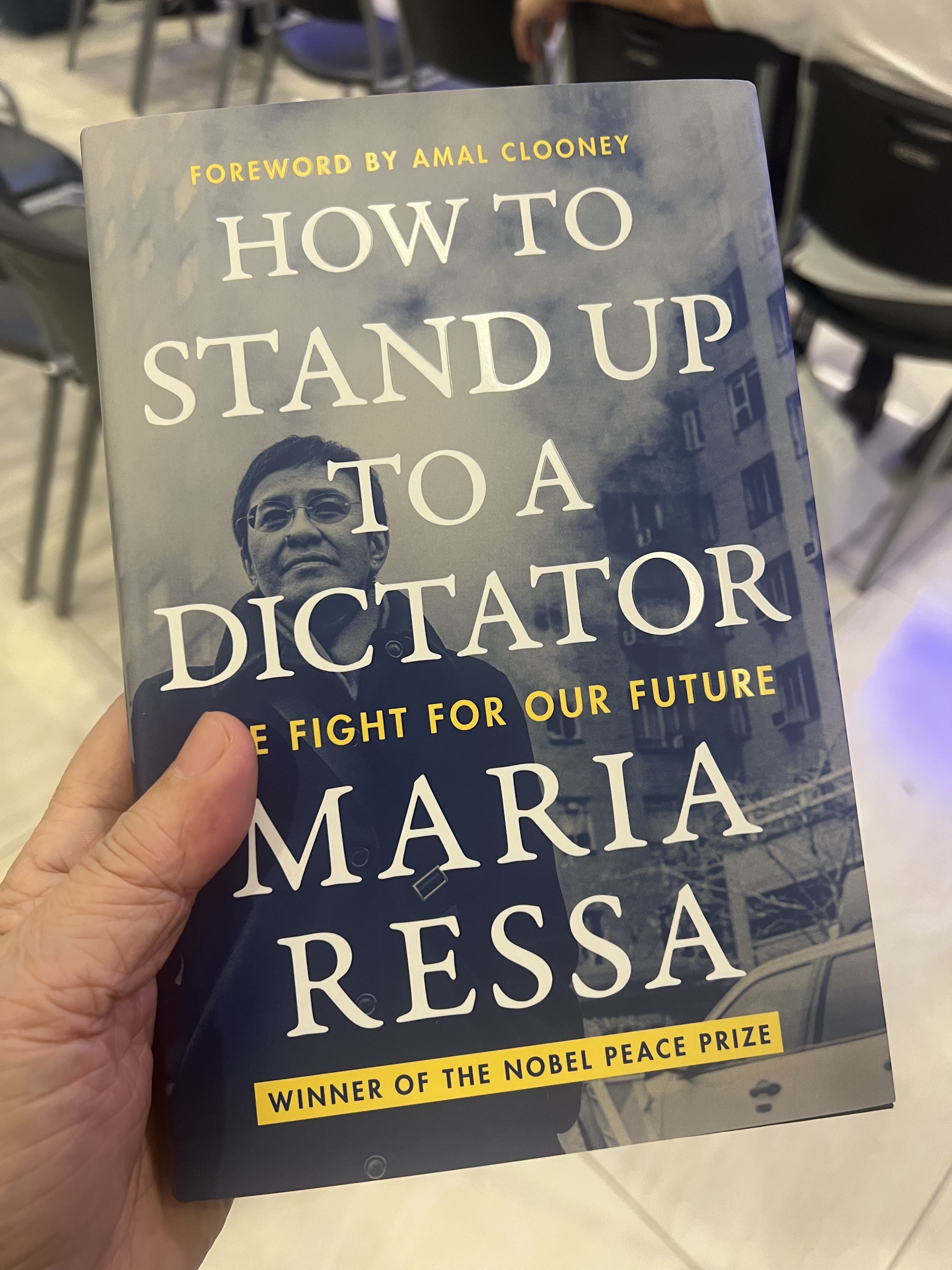
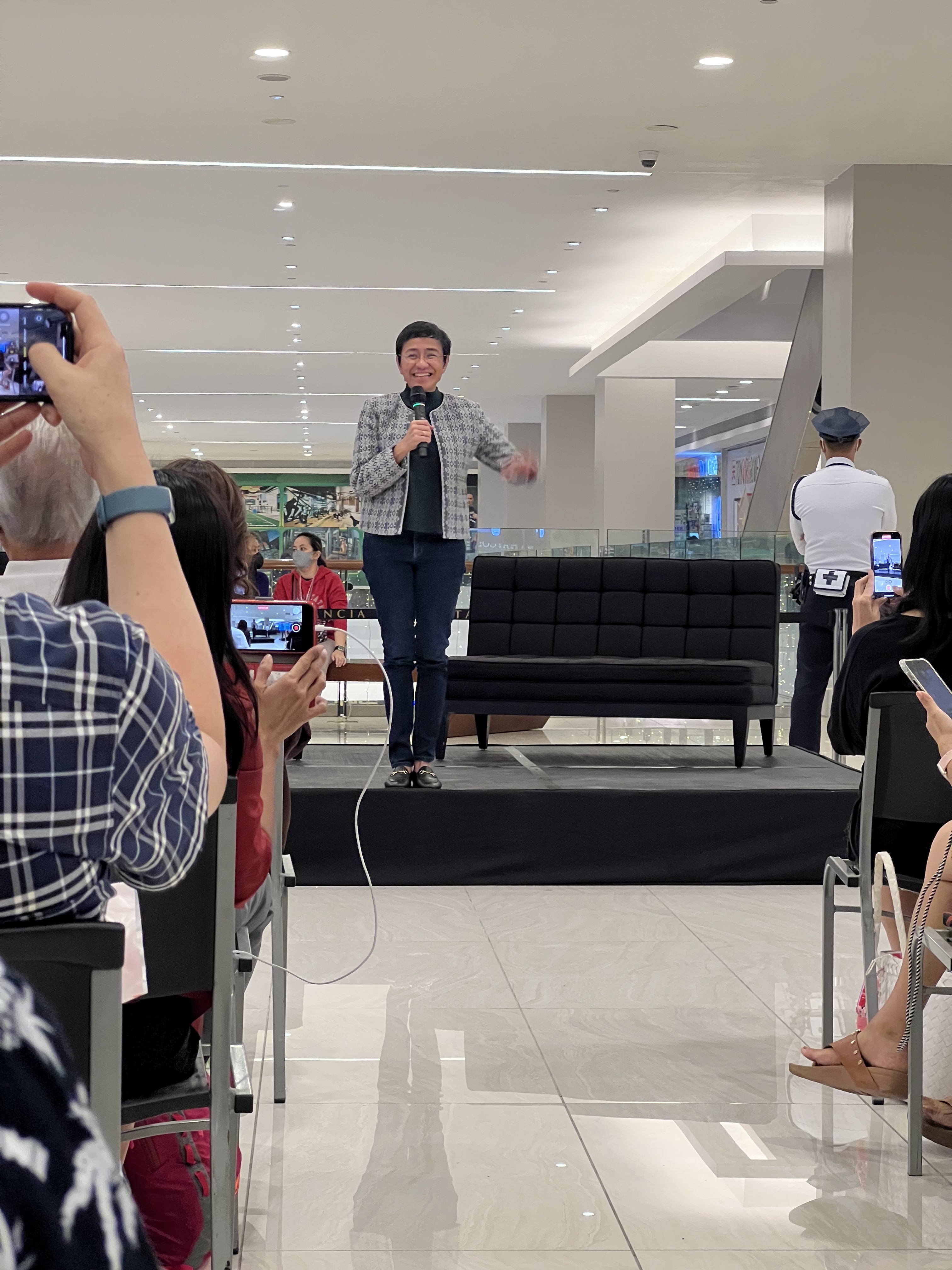
I WAS very honored to speak last Saturday at the launch of Maria Ressa’s new book, How to Stand up to a Dictator: The Fight for Our Future (Harper, 2022). I’d read an advance copy of it a couple of weeks ago, and to cut to the chase, if you’re thinking of buying a book to read for the holidays or to gift to friends, look no further. This book, for me, is among the year’s best in nonfiction.

I have to emphasize that word—nonfiction. As we all know we live in times when fiction has taken over as the most influential form of human discourse, particularly in the political arena. As a practicing fictionist, I should be happy about that, but I’m not and I can’t be, because so much of it is bad fiction, crudely written—and surprisingly, infuriatingly effective, at least with a certain kind of reader. 

Maria’s book cuts through all that. It’s undisguised, old-fashioned, in-your-face truth-telling, told in the same voice and tone we’ve become familiar with over the years of listening to her reportage over CNN. I’m sure that, like me, many of you wondered the first time you heard her: “Who was this little brown-complexioned woman speaking with an American accent?” She looked Filipino, but how come we’d never seen her before?

This was all before she rose to prominence—some would say notoriety—as the moving spirit behind Rappler, and subsequently to global fame as a Nobel Prize winner for Peace. We identified with her travails, shared her anger and sadness at the abuse she has received, and rejoiced in her victories, whether in the courts or in the larger sphere of public opinion. 

But how well do we really know Maria Ressa, and whatever drives her to be who and what she is? This book takes us to the person behind the phenomenon, and answers many questions we may have had about her and her stubborn advocacies.

The book’s title sounds like that of an instruction manual—which it is, and also is not, being part autobiography, part journalism, and part testimonial. As a manual for freedom fighters, it emphasizes the need for collaborative and collective action against seemingly insurmountable forces. Those forces now include the Internet, which, as Maria documents with both precision and profound dismay, has morphed from a medium that once held all kinds of liberative promises into a medium for mass deception and targeted assault. She draws her counsel not from some esoteric guru or academic paradigm, but from some very basic values that have informed her own life—the Honor Code she followed in school, and the Golden Rule.

“That’s what I lay out in this book,” she says, “an exploration into the values and principles not just of journalism and technology but of the collective action we need to take to win this battle for facts. This journey of discovery is intensely personal. That’s why every chapter has a micro and a macro: a personal lesson and the larger picture. You will see the simple ideas I hold on to in order to make what have—over time—become instinctive but thoughtful decisions.”

It’s this constant back-and-forth between the personal and the political—and at some point they become inextricably fused—that forms the fiber of Maria’s narrative and gives it strength. Her convictions are grounded in personal experience; they have not been paid for—as the hacks in the journalistic trade will allege, seeking to bring her down to their own level—except in the coin of personal suffering under the constant threat of imprisonment and violence.

But we learn from this book that trauma is nothing new to Maria. (We also learn that Maria Ressa wasn’t the name she was born into, but to find out her birth name, you’ll have to buy the book.) From her abrupt relocation from Manila to America at the age of ten, to her journalistic immersion in the horrors of conflict and disaster in Indonesia and Ormoc, the book chronicles Maria’s quest for truth, meaning, and purpose in her life, and that of others. She stresses the importance of remembering the past to make sense of the present, quoting TS Eliot’s phrase, “the present moment of the past.”

And so can we, she seems to suggest, even in these times of high anxiety, when we can see the vultures hovering over such once-sacrosanct treasures as our pension funds, while billions more go to feed the dogs of an increasingly untenable counter-insurgent war. The big words we have become used to tossing around—truth, freedom, reason, justice, democracy—they all come down to a personal choice to do the right thing, and the courage to do it. 

Nowhere is this matter of choice more evident than in the fact that Maria is here in the Philippines, having willfully subjected herself to our brand of justice, however imperfect it may be, instead of escaping to the safety of America or another haven, which her dual citizenship if not her celebrity can certainly afford her. She will see her own story through to the end, in the locale where it matters, among the people to whom it matters most.

I’ve often remarked, as a creative writer and professor of literature, that in this country, the writers most in danger of political persecution and retribution are really not fictionists or poets like me. Not since Rizal has a Filipino novelist been shot dead for what he wrote. For sure, we have lost many brilliant writers to the struggle for freedom and democracy—Emman Lacaba, and most recently Lorena Tariman and her husband Ericson Acosta. But they were killed by the State not for what they wrote—the State is illiterate when it comes to metaphor—but for what they allegedly did.

Rather, the most imperiled writers in the Philippines as in many other places are the journalists who speak the language of the people and of their plaints in terms too clear to ignore. They could be radio announcers like Percy Lapid, or the victims of wholesale murder in Maguindanao, or high-profile and exemplary targets such as Maria Ressa. It would have been easy for her to lash back at her critics and tormentors with the same viciousness. But, she says, “I will not become a criminal to fight a criminal. I will not become a monster to fight a monster.”

That, too, is a difficult choice, and one I am sure we are often tempted to cast aside. But Maria’s equanimity in the face of savagery shames us back into our better selves. It will be that kind of quiet resolve that we will need to survive and prevail. After all, we survived martial law. We can survive this regime—with agility, patience, and courage. But don’t take my word for it. Read Maria’s book to know that we can, and why we must.

Penman No. 444: A San Diego Sojourn

Penman for Sunday, November 6, 2022

A FEW weeks ago, for the first time since the pandemic, my wife Beng and I took a plane out of the country, and I can’t tell you how liberating that felt after three years of being landbound. I’d had few complaints about the long lockdowns, because I’m used to working and writing in isolation, and have become much less sociable as I age. But I did miss the travel, the foreign air, the view from the other side of the ocean. 

Just before the pandemic hit, Beng and I had spent my first year in retirement (and a good chunk of my retirement kitty) gallivanting around seven countries, against the advice of family and friends who thought that we were overdoing it; perhaps we were, but now we know that the world we saw then will never be the same again, and that we ourselves—in or approaching our seventies—will never be able to do that again. And so it was with a huge sigh of relief that we boarded our flight to San Diego, where our daughter Demi has been living with her husband Jerry for the past 15 years. We’d visited San Diego often before, but probably not with this much anticipation, having been away for years. 

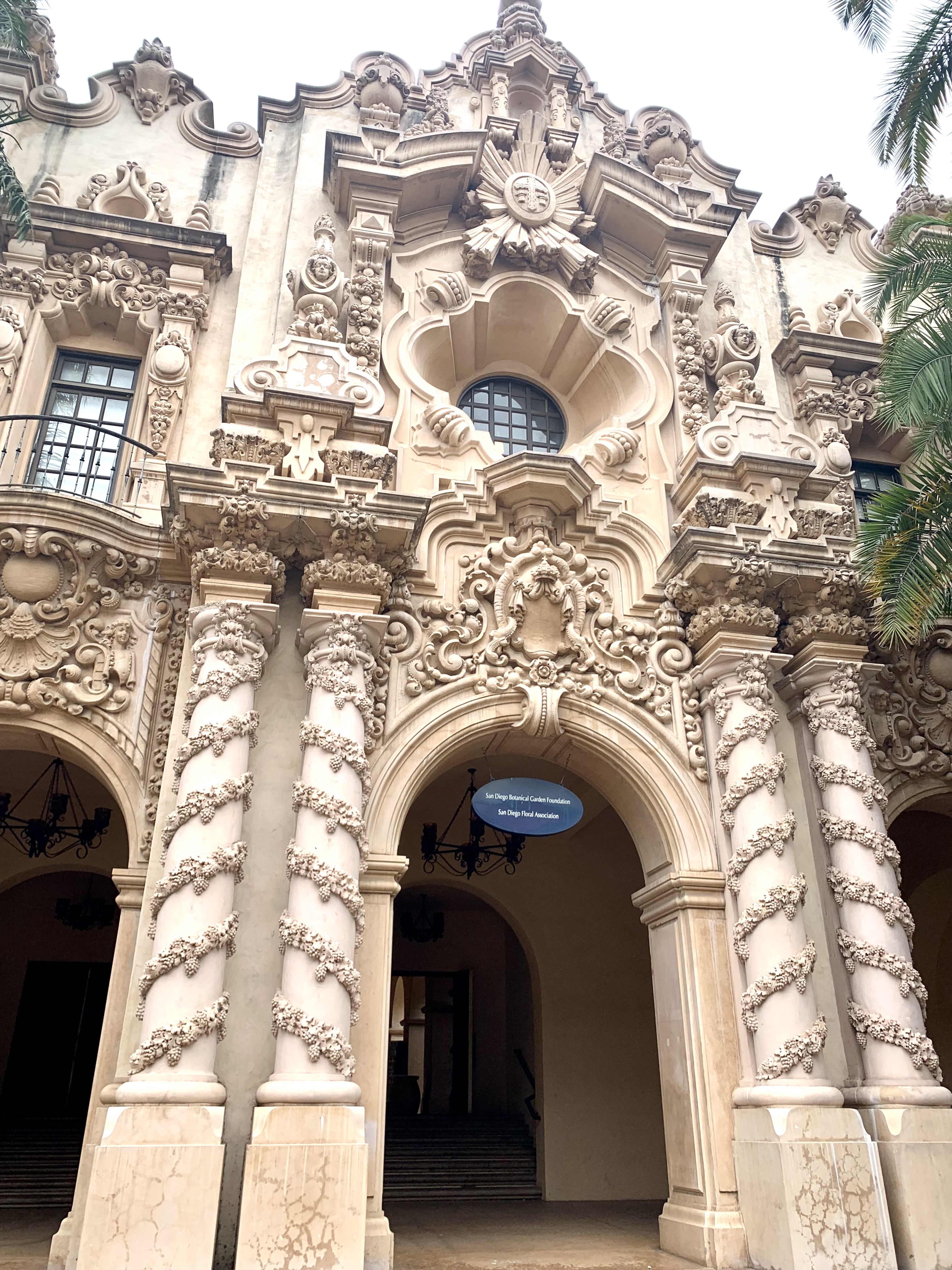
Sitting on the Mexican border, San Diego isn’t the first place most Filipinos would choose when they think of visiting America, unless, like us, they have personal reasons to go there. Los Angeles and San Francisco seem to be more exciting places, have large Fil-Am communities, and have long been the ports of entry for Pinoys landing on the West Coast. (Our Japan Airlines flight was that rare straight flight via Tokyo to San Diego.) But San Diego has its own charm and its own attractions, most notably Balboa Park, the San Diego Zoo, and Comic-Con, that annual extravaganza of pop culture that draws about 150,000 fans from around the galaxy. (Much to my young students’ chagrin, I’ve been to Comic-Con twice, happily ignorant of much of what I was looking at.) 

And whether you’ve lived there for decades or are just passing through, San Diego will always give you a taste of home, with dozens of Pinoy foods stores and restaurants, especially in National City and Chula Vista where you can shop at Seafood City for daing na bangus and Chocnut and at Goldilocks for your party cake while dropping packages off at LBC—or you can run to Mira Mesa for your Jollibee fix. (For me, an American sojourn would be incomplete without a trip to Arby’s and Red Lobster.)

Inevitably San Diego also has its own spotted history of East-West relations, in which Filipinos have figured; the better part of that history was celebrated last month as Filipino-American Heritage Month in the city. The worst part remains in the archives, in the memories of early immigrants such as Emeterio Reyes, who recalls that “I asked the driver if he could take me to a Catholic church. As soon as we got there, I told him to wait for me because I had a funny feeling I might not be welcome at this church. As I entered the door, a priest approached me and told me that the church was only for white people. That moment, I wanted to cry and die!” 

When Sebastian Vizcaino sailed into what he would name San Diego Bay on November 10, 1602, he found that he had “arrived at a port which must be the best to be found in all the South Sea, for, besides being protected on all sides and having good anchorage, it is in latitude 33½o. It has very good wood and water, many fish of all kinds, many of which we caught with seine and hooks. On the land there is much game, such as rabbits, hares, deer, very large quail, royal ducks, thrushes, and many other birds. On the 12th of the said month, which was the day of the glorious San Diego, the general, admiral, religious, captains, ensigns, and almost all the men went ashore. A hut was built and mass was said in celebration of the feast of Señor San Diego.”

As a major port facing the Pacific, San Diego has long been home to the US Navy’s Pacific Fleet, its base harboring over 50 ships. The naval presence defines much of San Diego’s character, and provides a good part of the reason why about 200,000 Filipino-Americans live there today. Since early in the American occupation, Filipinos have signed up with the US Navy as their passport to what they hoped would be a better life and to a bit of adventure. 

I just learned, for example, that the first Filipino to have joined the US Navy, back in 1903, was a seminarian in Manila named Potenciano Parel who snuck out of his vows to be a sailor, but not having the right papers, he used those of a friend and assumed his identity, Tomas Dolopo; the Dolopos continue to be San Diegans. Demi’s late father-in-law, Ric Ricario, joined in 1957; his eldest son, Ray, followed him into the Navy; Ray’s brother Jerry met and married Demi. And so we find ourselves now tied by blood to that long tradition, as did many thousands of others before us.

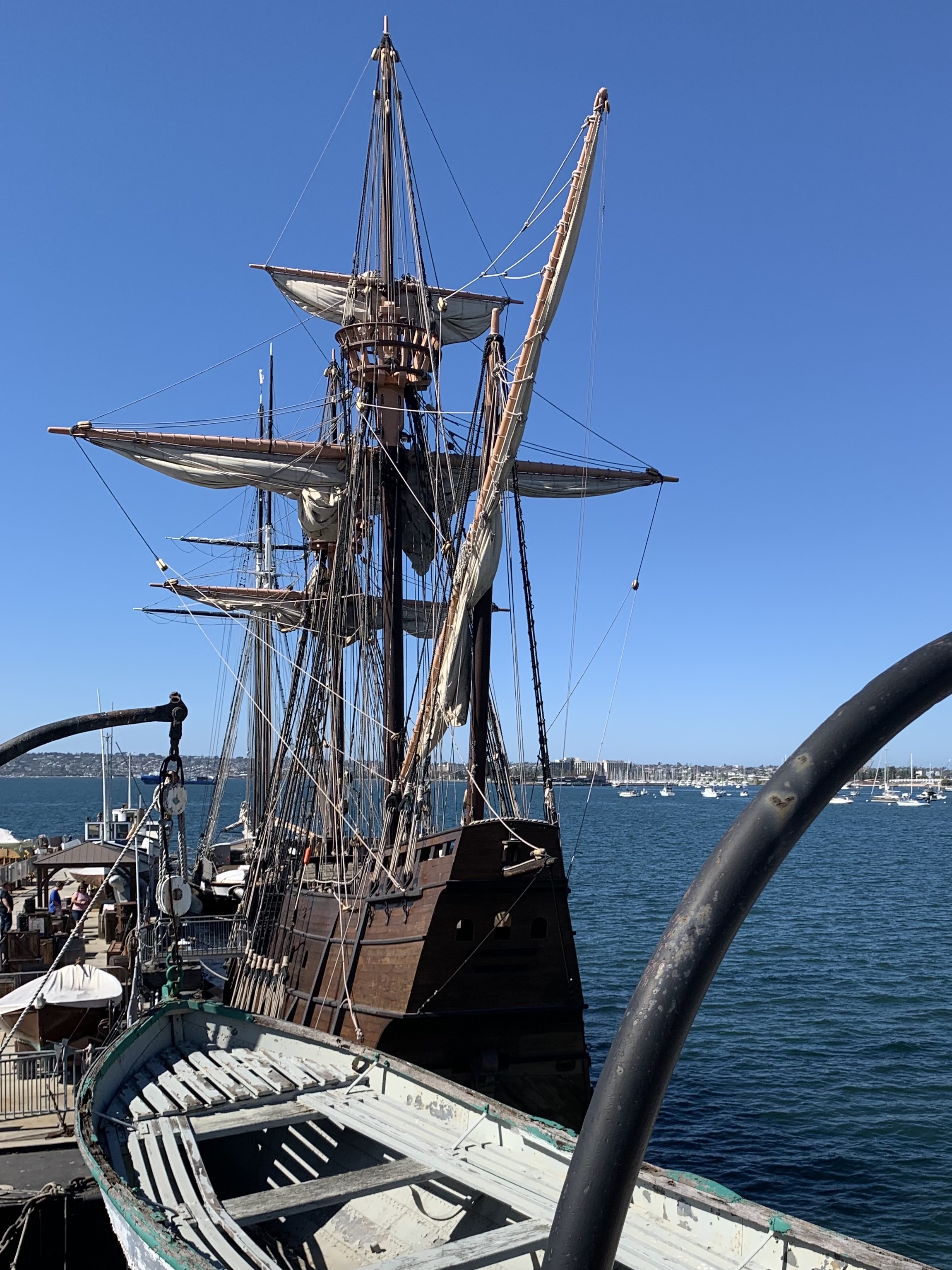
Despite having visited San Diego many times before, and having enjoyed its more popular attractions, we felt more acutely aware of history this time around. We finally stepped into the city’s Maritime Museum, a complex of many ships from various centuries that allows visitors a hands-on experience at traveling the world on water. The ships on display range from a full-size and fully functional replica of a Spanish galleon ca. 1542, the San Salvador, to the world’s oldest sailing ship, the grand, mid-1800s Star of India, to a ca. 1970s submarine that still holds the record for the deepest dive, the USS Dolphin. For just $15 for seniors and just slightly more for others, you can hop from one ship to another, and imagine what it was like to cross a tempestuous ocean with only the stars to light the way and nothing to eat but stale bread and salted pork. 

We enjoyed history of another kind by having dinner with our in-laws in a National City dive that our son-in-law Jerry chose for its unique ambience, which you can either call seedy or loaded with character. (There was a famous sailor’s bar in the area called the Trophy Lounge, Jerry told us, that used to be run by ladies from Olongapo…. But that’s another story, and San Diego has books of them, yet to be told.) La Maze is the kind of leatherbound ‘50s restaurant that the Rat Pack and other Hollywood celebrities frequented when in San Diego, and you can still order the same great steaks they had. A local band played dance music, and to the tune of “Solamente Una Vez,” I took the pretty silver-haired fox next to me to the floor and slow-dragged the night away. 

Penman No. 441: The Mystery of the Word

Penman for July 31, 2022

TO BEGIN with a small personal note: this week marks my 22nd anniversary writing Penman for the Philippine STAR, an adventure that began on August 5, 2000 with a piece about my recent writing fellowship in Norwich, England, working on the novel that eventually became Soledad’s Sister (Anvil Publishing, 2008). I’ve kept every column I’ve written since then in my digital files, now numbering over 1,100 pieces; a couple of years ago, I selected what I thought were the ones worth reading again (not every column is, to be perfectly honest) and put 110 of them together in a book titled A Richness of Embarrassments and Other Easy Essays (UP Press, 2020, still available on Shopee and Lazada). 

It’s hard to believe that 22 years and 1,100 columns later, I’m still at it, and perhaps even harder yet to believe that I’m enjoying it with the same sense of discovery and delight, looking forward to seeing my text in print with a cub reporter’s enthusiasm. Much of that I should credit to my editors, Millet Mananquil, along with Igan D’Bayan and now Scott Garceau, who have been extremely supportive, sometimes to the point of indulgence (such as when I stray far beyond the normal bounds of art and culture). I’ve since learned to moderate myself, to stay within the zone, and to proactively seek out less known but worthy cultural endeavors to publicize. (The eager beaver in me has made sure that my editors never have to worry about my meeting deadlines; my columns are usually done the week before.)

I began reporting and writing for the old Philippines Herald at age 18, in 1972; at 68, I still remind myself that writing for a national broadsheet, even in this age of Facebook, is a tremendous privilege, so I still respect my editors, my deadlines, and my readers’ intelligence. I can only hope that our younger writers—who now have the freedom and capability to write whatever they like whenever they want on their blogs—will understand that journalism is also a community of shared values (by which I don’t simply mean pakikisama, although there’s a lot of that), and that no matter how brilliant you may think you are, you still have to earn your union card, so to speak, to gain the goodwill and respect of others (and if those things don’t matter to you, then you have a problem, and good luck with that). 

Moving on to other fruitful friendships and associations, I was elated to attend the Parangal for our newest National Artists at the CCP Main Theater last month. The eight new laureates were Agnes Locsin for Dance; Nora Villamayor (aka Nora Aunor) and Ricardo “Ricky” Lee for Film and Broadcast Arts; Gemino Abad for Literature; Fides Cuyugan-Asensio for Music; and posthumously, Antonio “Tony” Mabesa for Theater, Salvacion Lim Higgins for Fashion Design, and Marilou Diaz-Abaya for Film and Broadcast Arts.

I was proud to note that I had worked with or for many of them, and was well aware of their exceptional talent and dedication to their craft. I had never met Nora Aunor, but had written a script for her, “Ina Ka ng Anak Mo,” directed by the late (and also National Artist) Lino Brocka. Lino regaled me with stories about how amazingly good a natural actress Nora was, and I thought so myself, watching her onscreen. I had many issues with former President Rodrigo Duterte’s governance, but I have to credit him for not interfering—unlike many of his predecessors—with the National Artist selection process, particularly in Nora’s case, which everyone knew had been previously held up because of her alleged drug use.

I had worked with directors Tony Mabesa and Marilou Diaz-Abaya, sadly both of them now gone. Tony directed several of my plays and always managed to get just the right tone I wanted to come across. Marilou directed my script which eventually became “Ika-11 Utos: Mahalin Mo Asawa Mo” (someone else always made up these more marketable titles, for which I had absolutely no talent), a crime and domestic drama that received respectable reviews but didn’t win any prizes. But what I observed in Marilou was her work ethic and her methodical approach to the material. I had been used to churning out one-week wonders for Lino, but with Marilou, the scripting process took months, because she would pause and analyze every scene and snippet of dialogue for its political and philosophical implications. 

I was gratified to have made the right call in the cases of Jimmy Abad and Ricky Lee; I had privately predicted, before the results were announced (and with no inside information whatsoever) that the two would be very strong contenders (I also mentioned Lualhati Bautista and Pete Lacaba, among those still living; for the record, I was also nominated, but it was more to make my 94-year-old mom proud and happy, which she was, and so I was). I had known Ricky for a long time, both of us being Lino Brocka’s go-to’s when he needed a script done fast. Ricky, of course, was more than fast; he was good. And while I wandered off into many other kinds of writing, Ricky turned screenwriting into the art and profession it deserved to be, not just for himself but for scores of acolytes. We used to ask each other, half-jokingly, why Pete seemed to get all the choice, festival-bound assignments; and we decided that it was because, by his own admission, Pete was the slowest scriptwriter among us, and therefore got to work on the long-gestating projects.

But I was happiest of all for my former professor and dear friend Jimmy Abad, whom I felt should have received this honor at least ten years earlier, given his elevated poetry, outstanding scholarship, and generous mentorship to generations of writers. For someone who began by studying to be a farmer at UP Los Baños and who then entered the Jesuit seminary (when he left after three years, he recalls, “The first thing I did was to look for a store and smoke a cigarette!”), Jimmy found his true calling in unraveling the Mystery of The Word, of language and how it shapes our view of life. I can think of no writer more purely dedicated to his art than Jimmy, the classic absent-minded professor who drives up one-way streets and whom I had to remind of his exact age. When it comes to words and their meanings, he is ever-aware, ever-present, and ever-caring. A true National Artist, indeed. Heartiest congratulations to all!

Penman No. 440: A Classic Reborn

Penman for Sunday, July 3, 2022

I’VE LONG believed that my late friend and contemporary, Bienvenido “Boy” M. Noriega, Jr., was one of our very best modern playwrights, and indeed worthy of a National Artist Award. I—and many who knew him and his work—had been hoping that he would get that distinction this year, but too much time may have passed since he left us 28 years ago for critics to recall just how good he was.

Still, there’s great news today for Boy’s fans, and for everyone eager for the return of great theater to the Philippine stage. The seminal Noriega play, “Bayan-Bayanan,” which premiered at the CCP’s Little Theater in 1975 and won that year’s Grand Prize for the Full-Length Play in the Palancas, is going to be shown again in Manila this month, rendered as a new musical, “Bayan Bayanan: Letters from Home.”

Directed by Dr. Anton Juan and produced by the Erehwon Center for the Arts with support from the Embassy of France, the updated play promises to offer fresh insights into the OFW experience, having been originally written and presented long before overseas Filipino workers came to be known as OFWs. Back in the early ‘70s, as martial law descended on the country, they were all just exiles, migrants, transients, and vagabonds, some by choice, others by the lack of it. In Europe, and specifically in Geneva where the play is set, Filipinos tended to be middle-class professionals drawn there by their work, as Boy Noriega himself was as a government economist in his early 20s attending global trade negotiations. 

As I’ve written about before, Boy and I were very close friends—and fervid contest competitors—in those days. We were UP Alpha Sigma fraternity brothers who found ourselves working in literally the same office at NEDA Padre Faura. He was two years older than me, so I looked up to him as a mentor, and when he went to Harvard for graduate school and then began flying to all these conferences abroad, he wrote me long letters to share his exhilaration at studying our heroes like Chekhov and Ibsen (he was enrolled in Public Administration, but took side courses in Drama). When he came home, we spent many lunch hours talking about the plays we were writing or wanted to write. 

Boy announced himself to Philippine theater in the most spectacular way—by writing “Bayan-Bayanan” and having it presented at the CCP almost at the very start of his playwriting career. Immediately you knew that you were witnessing a major talent unfolding. His kind of drama was quiet, thoughtful, cumulative in its impact. Writing under martial law and being somewhat more politically engaged, I resorted to historical allegory, but Boy took the present head-on, albeit from another angle, of the young Filipino discovering the world in both geographical and emotional terms.

When I heard that Erehwon was planning to revive “Bayan-Bayanan” as a musical, I was delighted and at the same time a bit concerned how Boy’s material was going to be handled almost half a century down the road. But my worries lifted when I learned that the revival was going to be directed by none other than Anton Juan, who knows the play better than anyone else around, having directed it in Athens, London, Geneva, Paris, Chicago, and Toronto, and having himself been the kind of global traveler that Boy dwells on. “I have directed this play many times before in Europe, and each time there is always something new,” Anton says. “It grows like a pearl, takes shape in the memory and hearts of those who perform it and those who watch it: why? Because it is real. It is grounded on real characters we can identify with, in all their beauty and vulnerability, in all their strengths and their weaknesses.”

Anton Juan composed some of the new songs for the play, along with Cleofe Guangko-Casambre, who had composed for the play “‘Rizal’s Sweet Stranger;” Russ Narcies Cabico, also a theater and television actor and singer; pianist-composer Andrew Bryan Sapigao; and composer-musical arranger Jonathan Cruz.

The cast comprises a mix of veterans and newcomers. Professional theater actress and singer Banaue Miclat-Janssen portrays the central character Manang, while Dino—the “Boy” in the play—is portrayed by theater actor and classically trained singer Carlo Mañalac. Supporting them are Ava Olivia Santos, Roxy Aldiosa, Carlo Angelo Falcis, Jacinta Remulla, Richard Macaroyo, Greg de Leon, and Jane Wee. Of special note is the participation of French-Filipino actress Uno Zigelbaum, through the sponsorship of the French Embassy.

The role of the Erehwon Center for the Arts (of which Anton is Creative Director) is also noteworthy. Founded by another old friend of mine, Raffy Benitez, Erehwon has established itself firmly in our country’s cultural landscape as a sponsor of painters, sculptors, musicians, dancers, and writers, who have come to see Erehwon’s Quezon City headquarters—also its performance and exhibition venue—as a haven for the arts at a time when cultural budgets everywhere have fallen. Funded largely by Raffy’s own generosity and by some other patrons, Erehwon hopes that this collaboration with the CCP and the French Embassy will lead to other significant projects that can ultimately be self-sustaining. 

The play will premiere on  the evening of July 15, followed by a 7 pm evening show on July 16 and a 3 pm matinee on July 17, at the CCP’s Tanghalang Nicanor Abelardo. Tickets are available at Ticketworld. See you there!