Penman No. 256: Get a Life (2.0)

2222316043_844c033f3e_z

GET A LIFE Ver. 2.0

Jose Dalisay Jr., PhD

Address to the Graduating Class

University of the Philippines Baguio

22 June 2017


Chancellor Ray Rovillos, Members of the UP Baguio Faculty and Staff, Distinguished Guests, Members of the Graduating Class and their Proud Parents, Families, and Friends, Ladies and Gentlemen:


GOOD AFTERNOON, and thank you all for having me here today as your commencement speaker.

Let me begin with a confession. If you were expecting someone more famous, more accomplished, and more handsome than me to be standing at this podium here today, well, so was I. No one is more surprised than I am to be your guest speaker.

I woke up at 5 am yesterday to attend the UP Manila graduation at the PICC, rushed back to Diliman to pick up my bags, then took the long, leisurely ride up to Baguio, recalling the days when, as a young boy, I eagerly anticipated visiting this city, which used to involve a train ride to Damortis, La Union, before transferring to a bus that would wind its way up Naguilian Road. I recall my nostrils tingling when they caught the scent of pine. In high school in the 1960s, Baguio meant the CMLI, Teachers Camp, marching on Session Road to proclaim “student power,” pretty faces from a school called St. Theresa’s, and a dark and exciting place called the Basement—which some of your older teachers might remember.

Those happy memories embraced me as I arrived in my hotel last night. Chancellor Ray had thoughtfully sent me a copy of the program, and after dinner, just before I went to bed, I opened the program, curious to see who the commencement speaker was going to be. And then I saw my name. Oh my god—it was me!

And it’s all my fault, because I’d told Chancellor Ray that President Danicon couldn’t make it—he sends you all his warmest congratulations, by the way. But I had volunteered to represent him, because it would give me the best excuse to enjoy Baguio all over again, to sit here and listen to some wise person talk. Apparently, Chancellor Ray reasonably took that to mean that I was also going to speak in the President’s stead. So here I am, the dutiful surrogate who can’t refuse.

But I shall speak for myself, so you cannot hold our President responsible for the outrageous things that I will be saying to this hapless audience.

Thankfully, I had the perfect speech in reserve. That happens when you’re a professional writer and you write many speeches for other people. In this case, it was a speech that I had written for myself and delivered 12 years ago—at the Baguio Convention Center, to the graduating class of UP Baguio of 2005.

Since none of our graduates today was presumably here then—unless you’re a very slow learner—I thought I would resurrect that speech and update it as Ver. 2.0 for our very interesting if troubled times.

Former President Dodong Nemenzo—my old boss—was frankly not too fond of the phrase iskolar ng bayan to describe the UP student. We are all, of course, scholars of the people in this university, in the technical sense that our studies are subsidized by the sweat of the masses, whose hopes we bear upon our shoulders.

But his point was that scholarship was a distinction to be earned not merely by scoring well in an entrance examination, but by adopting a lifelong attitude of critical inquiry and rational judgment.

This, sadly and ironically, is something that many of us lose upon our entry into the University and our immersion in its life. The curiosity ends, the magic fades, the writing dries up, and we retreat to a cocoon—to a dimly lit room marked “Me & Myself”—there to spend the rest of our career fretting over the next fellow’s salary grade and so-and-so’s appointment as dean or chancellor.

Many years ago, when I ran for the chairmanship of the Department of English and Comparative Literature—among the oldest, largest, and most pala-away of our departments—I gave the usual homily about achieving excellence in teaching, research, and extension work.

And then, I said in my vision paper: “I expect our members to be actively engaged in interests other than their immediate subjects—in social and political concerns, in creative projects, in new technologies—to save them from the kind of small-mindedness or tunnel vision that can result from locking yourself up at the Faculty Center. In other words, get a life.”

“Get a life” has actually been one of my lifelong mantras. I have always believed that while a formal education is a wonderful thing, what I call an active life—with all its serendipitous detours and little accidents—is even better. It’s a cliché by now to say that there are many things we can never learn in school—but for those of us who are in school, it’s even more important to remember this.

As a mentor to many young students, I have always advised those burning with the desire to teach or to go on to graduate studies—in other words, those who want to stay in the university—to spend a few years first outside of it: to sell insurance, work at a call center, make some money—so they can get a sense of what everyone else goes through, and give their poor parents some relief. And then they can return, enriched by their experience.

When people complain to me about the emptiness and confusion in their lives, I feel sad because I know that only they can ultimately help themselves. But there’s a principle in fiction writing—in plotting and characterization—that might offer a solution to the perplexed. When my writing students tell me that they no longer know what their characters should do to solve their overwhelming problems, I tell them to take their characters out—literally and figuratively. Get them off their butts, make them walk, make them ride the MRT, put them on a Ferris wheel, bring them to the Navotas fish market at four in the morning. Too many stories try to resolve themselves in small cafes and bedrooms, behind shut doors and windows.

Some of the best things happen when we step outside of our own lives and begin to be engaged in those of others. Often, the answers to our own problems lie in others, and in their larger predicaments. While involvement in a great cause can also create its own kind of blindness to everything else, I believe that, at least once in our lives, we should embrace a passion larger than ourselves; even the disillusionment that often follows can be very instructive, and will bring us one step closer to wisdom.

I would not have been the writer I became if I had chosen the safe path and stayed where I was supposed to be.

At 17, shortly after graduating from the PSHS and entering UP as an engineering major, I dropped out as a freshman—over the tears of my mother, whose fondest hope was for me to graduate from UP just like she did. I wanted to join the revolution, like many of my comrades; at the same time I was impatient to get a job. At 18, I was working as a newspaper reporter covering hospital fires, US embassy rallies, bloody murders, factory strikes, and disaster operations. I spent most of my 19th year in martial-law prison.

At 20, I was a husband and father. At 22, still a dropout, I studied Development Economics as a special student, and later worked as an economist with the UNDP. At 26, I took my first foreign trip. At 27, I learned how to drive—and went back to school. At 30, I got my AB, and decided that what I wanted to do was to write and teach for the rest of my life. I found a scholarship in the US. It took me two years to finish my MFA, and only three to finish my PhD, to make up for lost time, and came home, and here I am, about 30 years and 30 books later.

It’s been a messy, crazy, but blessedly glorious life. I have been shot at, imprisoned, and worst of all, rejected by more crushes than I care to remember. Aside from my abortive career in journalism, I once worked as a municipal employee, checking the attendance of street sweepers at seven in the morning. And then I studied printmaking and sold my etchings cheaply by the dozen in Ermita. in the US, I worked as a cook-waiter-cashier-busboy-janitor, cutting 40 pounds of pork and chicken everyday before turning them into someone’s dinner.

Some of these events have found their way to my writing; most of them have not and never will. I believe that creative writing should generate its own excitement, beyond whatever may have happened to the author in his or her own life. But neither can I deny that my outlook has been influenced by what I have seen out there, as bright, as indelible, and as disturbing as fresh blood.

If we are to abide by the Phi Kappa Phi motto to “let the love of learning rule humanity,” we should first ourselves be ruled by the love of learning—learning from books, and learning beyond them.

On the other side of the equation, let me observe that there is, today, a nascent but disturbing strain of anti-intellectualism in Philippine politics and society. The vulgar expression of this sentiment has taken the form of the suggestion that we can dispense with brains and education when it comes to our national leadership, because they have done us no good, anyway.

It’s easy to see how this perception came about, and how its attractiveness derives from its being at least partially true. Many of our people feel betrayed by their best and brightest—the edukado, as we are called in our barangays—because we are too easily bought out by the powers that be. Marcos and Estrada had probably the best Cabinets in our political history, well-stocked with prestigious PhDs; but in the end, even they could do nothing against their President and his excesses.

Sometimes we never learn. Today, once again, some of us are tempted by the notion that because we seem to have made a mess of our freedom, because EDSA didn’t seem to work, then maybe giving up our rights and freedoms and letting someone else do the thinking and choosing for us is a good thing. Think again.

That’s what we UP people are good at—thinking, and thinking again.

To be a UP student, faculty member, and alumnus is to be burdened but also ennobled by a unique mission—not just the mission of serving the people, which is in itself not unique, and which is also reflected, for example, in the Atenean concept of being a “man for others.” Rather, to my mind, our mission is to lead and to be led by reason—by independent, scientific, and secular reason, rather than by politicians, priests, shamans, bankers, or generals.

You are UP because you can think and speak for yourselves, by your own wits and on your own two feet, and you can do so no matter what the rest of the people in the room may be thinking. You are UP because no one can tell you to shut up, if you have something sensible and vital to say. You are UP because you dread not the poverty of material comforts but the poverty of the mind. And you are UP because you care about something as abstract and sometimes as treacherous as the idea of “nation”, even if it kills you.

Sometimes, long after UP, we forget these things and become just like everybody else; I certainly have. Even so, I suspect that that forgetfulness is laced with guilt—the guilt of knowing that you were, and could yet become, somebody better. And you cannot even argue that you did not know, because today, I just told you so.

I thought that my hardest days as an activist were over at EDSA. Now I have to think again. I thought that I had done my bit for UP by serving as Vice President 12 years ago. When President Danicon asked me to take on the same job last January, I had to think again. I said yes, because you can’t refuse when UP calls—di rin magbabago ang damdamin. I actually wept when I told my undergraduate class that I was going to be a VP again, because nothing makes me more fulfilled than teaching a roomful of undergraduates, and working in Quezon Hall was going to pull me away from them. I’ll tell this to all of you now, 18 months short of retirement: teaching people like you has been my greatest privilege.

In the first edition of this speech that I gave 12 years ago, I told my young audience to do things like read a good book, play the guitar, learn how to swim, and have fun. I’m going to update that by sharing the sort of things I told my undergrads, things my wife and I have told our only daughter all her life.

  1. Do something different, do something stupid, do something risky. Just don’t die, or land in jail—although landing in jail gave me a prizewinning novel about martial-law prison 20 years later. Nobody who didn’t take risks ever made a difference.
  2. My teacher in German taught me a saying: “Ein Fehler ist kein Fehler”—one mistake is no mistake. Or as my billiards buddy used to say, “We’re all entitled to one big failure.” Nothing will teach you better than that one big mistake you’ll make—so go ahead and make it, but make it worth it.
  3. And finally, I’ll repeat what I said at the end of that first speech—get a life, and get a good one!

Mabuhay kayong lahat, mabuhay ang UP, at marami pong salamat!


Penman No. 255: A History Book Project Like No Other

8601068._UY630_SR1200,630_

Penman for Monday, June 19, 2017


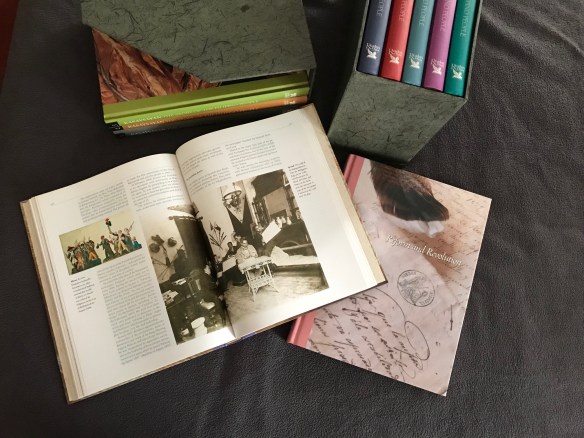
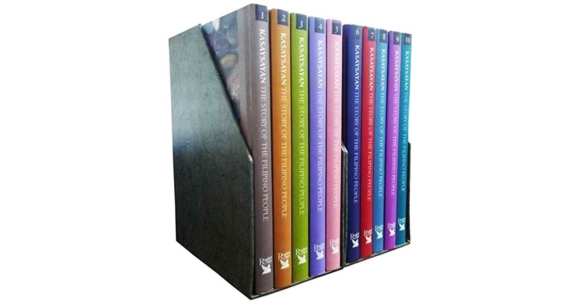
LAST MONDAY’S celebration of Independence Day reminded me of the Philippine Centennial nearly 20 years ago, when I took part in the launch of the first and still the biggest book project I’ve taken on in my professional life. I’ve edited about as many books as I’ve written—more than 30—and 10 of those were all for one massive undertaking, Kasaysayan: The Story of the Filipino People (Asia Publishing Co., 1998).

It was a 10-volume history of the Philippines like no other, put together by some of country’s foremost historians, academics, and writers, a joint project of Reader’s Digest Asia and A-Z Direct Marketing, which was then Reader’s Digest’s local distributor at a time when the family-friendly monthly was still going strong.

The idea was hatched in 1996 in anticipation of the forthcoming Centennial between A-Z’s late president Lirio Sandoval and the indefatigable Tere Custodio, who became the project director; Reader’s Digest Asia would foot most of the bill. Their idea was that while Philippine histories and encyclopedias had existed, none of them seemed comprehensive, popularly accessible, and visually compelling enough.

Tere shopped around for an executive editor, and I think it was our mutual friend Gina Apostol who suggested me (to my everlasting gratitude). We then took on two key and stellar talents, both of them sadly now gone—Doreen Fernandez as our editorial consultant and Nik Ricio as our book designer. Together, we planned out a 10-volume series, each full-sized volume no less than 300 pages, with an average of at least one picture—many of them never published before, acquired from international and private collections—on every page, 3,500 images in all.

The volume titles previewed the series’ coverage and contents: The Philippine Archipelago; The Earliest Filipinos; The Spanish Conquest; Life in the Colony; Reform and Revolution; Under Stars and Stripes; The Japanese Occupation; Up from the Ashes; A Nation Reborn; and A Timeline of Philippine History.

To write each of these volumes, we recruited our most eminent historians and experts—people like Dr. Milagros Guerrero, Fr. John Schumacher, Dr. Ricardo T. Jose, and Dr. Ma. Serena Diokno. Each volume was also supplemented by around 20 essays, contributed by the country’s top writers and cultural figures from Dr. Bienvenido Lumbera to Jessica Zafra—on topics ranging from early forms of Philippine writing and wartime “Mickey Mouse” money to 16th-century Visayan warriors and the origins of the kundiman. (My own single contribution as a writer to the series was an essay on the First Quarter Storm.)

It seemed like a gargantuan project, and indeed it was, requiring not only the production of enormous amounts of historical scholarship and pictorial research (the latter task headed by no less than Romy Gacad) but also the management of a budget hitherto unheard of in local publishing and, more dauntingly, of over 200 egos. I also organized a small team of sub-editors to help me get the job done, and sent them memos emphasizing the need for readability; every author’s brief, after all, was “to write in a style that can be understood by the Filipino high school and college student, without compromising the seriousness of the work as history.” The Internet in the Philippines was in its rudimentary stage; we had email, but still moved files around in floppies.

We gathered the editorial team for the first time one day in January 1997, setting for ourselves the formidable goal of launching 10 new, profusely illustrated books in June 1998, or 18 months hence. Against all odds, that goal was met. I would write as a promotional blurb at the end that “Here, finally, is the story of the Filipino: told from a Filipino viewpoint, but with a full appreciation of the modern Filipino’s engagement in a rapidly globalizing society.”

That priceless experience would teach me everything I needed to know as a textual editor, leaving much of the people management to the thoroughly professional and unwavering Tere. Including the essays, I read, edited, and proofread a million words; I sat side-by-side with Nik poring over the layout, adjusting the text to remove—as the perfectionist in him demanded—rivers, widows, and orphans (publishing terms you’d do well to Google), and writing and positioning subheads for visual relief.

One more task remained for me, which was to draft speeches for the two principal guests of honor at the grand book launch at the Manila Hotel on June 1—President Fidel V. Ramos and former President Corazon Aquino. I’ve sadly lost the draft I did for Cory, but I still have notes that have FVR saying:

“If the art of narrative or of storytelling is the art of making sense of seemingly random or disparate events, then Kasaysayan is our story, our understanding of ourselves, our version of the same events that other writers have used to keep us subjugated and alien unto ourselves. Written from our point of view, this version—this vision—is one that must empower us, that must make us whole, that must enable us to better ourselves and our future. We cannot change history, but history can change us.”

The handsomely boxed ten-volume set initially sold for P16,000; a few months ago I learned that surplus sets were being marketed in some Manila bookstores for as low as P2,000. That sounds to me like the bargain of the century—especially if you have a teenager in the house in need of a sense of history, or just want to see our history in a way you never did before.

IMG_2029

Penman No. 254: Another Filipino Writer in Norwich

l1030996

Penman for Monday, June 12, 2017


IT’S BEEN nearly 20 years since I received the news that I had won the biggest writing grant of my life. I was 45 and raring to work on my second novel, and had a germ of an idea, suggested by the sad parade of caskets that arrived almost daily at Manila’s international airport. I knew that our overseas workers and their experience was the big story of that period, but I needed time away from teaching to get started on the project, so I applied for a new grant that was being offered at the University of East Anglia in the UK for what was described then as “a novel of Asia.”

The UEA website describes that fellowship thus: “The David T. K. Wong Creative Writing Fellowship is a unique and generous annual award of £26,000 to enable a fiction writer who wants to write in English about the Far East to spend a year in the UK, at the University of East Anglia in Norwich. The Fellowship is named for its sponsor Mr. David Wong, a retired Hong Kong businessman who has also been a teacher, journalist and senior civil servant, and is a writer of fiction. The Fellowship was launched in 1997 and the first Fellow appointed from 1st October 1998.” (Collections of short stories are now accepted in lieu of the novel. The UEA and its writing program are acknowledged to be the leader in the field in the UK, with Booker Prize winners Kazuo Ishiguro, Ian McEwan, and Anne Enright among their distinguished alumni.)

2586062407_3c893e8374_b

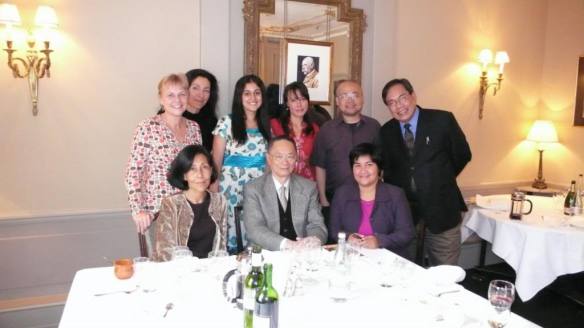
I honestly can’t remember now how I chanced upon the Wong Fellowship—these were the early days of the Internet in the Philippines, when modems screeched like mating cats before connecting over phone lines—but Beng and I soon packed our bags for the privilege of a lifetime. It would take a few more years, but that idyllic journey eventually gave birth to Soledad’s Sister, which was shortlisted for the inaugural Man Asian Literary Prize in 2007 and published in 2008. I was only the second Wong Fellow, and after me, in 2003, another Filipino followed me to Norwich—Lakambini Sitoy, now based in Denmark, whose novel Sweet Haven also began taking shape in Norwich.

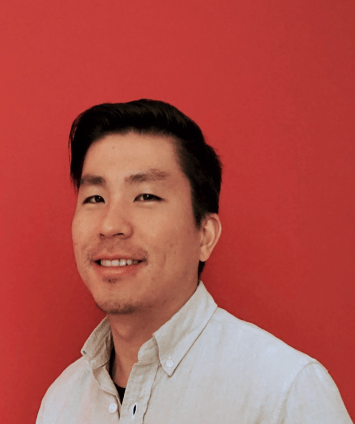
Last month came the terrific news that yet another Filipino, Nathaniel Go, had been named the new David T. K. Wong Fellow, besting dozens of other applicants from around the world. I was so elated by the news that I sought out Nathan, as he prefers to be called, by email, and got this story from him:

DGo

“I was born and grew up in Davao City. This is quite a statement to make nowadays as Davao has suddenly received a lot of attention. But back then, I remember a quiet and laid-back existence, highlighted every summer with the sickly sweet smell of mangoes, as our neighbor who owned a farm, would bring in basket after basket from their harvest. When it rained, water buffaloes would sometimes stop traffic outside our house by bathing in the large potholes filled with mud. The best thing to have come out of such a childhood, of course, is my love of books. Our bookshelf was quite small and included such juvenilia as the Bobbsey Twins, Hardy Boys, and Nancy Drew. Choose Your Own Adventure was also a hit back then. The Bible was a staple. Agatha Christie’s mysteries were the gold standard. Eventually, once I developed a taste for books I quickly sought new titles from our school library.”

Nathan was a voracious reader, so much so that his school librarian once dared him to bring a truck to borrow the whole collection. He left home at 16 and went to Ateneo de Manila, but moved to the US shortly after to join his siblings in California, where he finally got to study what he had always wanted—literature, linguistics, political science, and screenwriting. He worked briefly as a paralegal before giving in to his muse and studying fiction at the University of Michigan and at the Iowa Writers’ Workshop. A PEN Center USA Emerging Voices Fellow, Nathan has taught creative writing at the Braille Institute. He will be working on his first novel in Norwich. But as far as he’s come in the world, Nathan still writes about the Philippines and still considers it his home.

“I go back every now and then and I’m always surprised by how fast things are changing, but how—underneath the changes—the fundamental things remain the same,” he says. “These fundamental things are hard to articulate, but I guess that’s where my stories come in. As an author, I straddle an identity and the space between a true insider and outsider of the Philippines. I write about Davao and I write about the small Filipino Chinese community there that I belong to, because that’s the kind of stories I’d never read while growing up.”

Three Filipino fellows in 19 years is surely worth cheering about, but I can’t help thinking—having seen the talent out here—that we (and other homegrown Southeast Asians) could be sending more fictionists to Norwich, and Nathan’s triumph is a welcome reminder of that wonderful possibility. For more information about the David T. K. Wong Fellowship, look here: https://www.uea.ac.uk/literature/fellowships/david-tk-wong-fellowship.

(Pictured on top are the Wong Fellows at a reunion with David T. K. Wong in London, 2008. Image of Nathan Go courtesy of UEA.)

Penman No. 253: Wealth You Can’t Buy

IMG_1773Penman for Monday June 5, 2017
 

BENG AND I flew down to Iloilo City two weeks ago—she to hold a workshop on art restoration at the University of San Agustin, and I to attend Pagtib-ong, an International Conference on Intangible Heritage organized by the University of the Philippines Visayas at Casa Real—so it was a culture-heavy weekend, but happily so.

And what, exactly, is “intangible heritage”? Simply put, it’s wealth you can’t buy, of the cultural kind—the songs, stories, dances, traditions, practices, and beliefs of people, especially of those outside the increasingly homogenized and globalized mainstream. At a time when we’re all watching (and paying for) the same shows on Netflix and having the same Americano at Starbucks, younger Filipinos are fast losing touch with their own cultural roots. “Pagtib-ong” means “putting on a pedestal,” so this time and for a change, it’s our intangible heritage taking center stage.

UP President Danilo Concepcion framed the context well in his message that I read for him: “As nations and societies modernize and move deeper into the 21st century, the emphasis on material growth becomes even more pronounced, often obscuring all other considerations. Those considerations include intangible heritage—the cultural threads that bind not just people together but the past and the present, and indeed the present to the future. Our intangible heritage speaks to the very soul of our cultural community. It may not have much monetary value, if at all, but it is priceless in terms of containing, preserving, and propagating the values we seek to transmit from one generation to the next.”

Politicians will wonder how studying folk songs, kitchen practices, and the vocabulary of obscure languages can be important to national development, and it will be for us—both as scholars and cultural advocates—to show them how and why. Gatherings of scholars such as Pagtib-ong are rare and valuable, but we should also learn how to translate and communicate the significance of these events and their implications for our societies to a larger audience.

Just to give you an idea of what went on at Pagtib-ong, I’ll give you a sampler from the talks of the scholars who presented their research at the conference, and note the Asian and Filipino values and practices that I culled from their work.

Harmony. Pham Thai Tulinh of Lu TuTrong Technical College in Vietnam, the granddaughter of a general and a poet, had this to say about “QuanhoBac Folk Songs”: “The women traditionally wear distinctive round hats and scarves, while the men wear turbans, umbrellas and tunics. The Quanho folk songs are always performed voluntarily in groups of male or female (singers)…. A group of females from one village sings with a group of males from another village with similar melodies, but different lyrics, and always with alternating tunes. In each group, one person sings the leading tune and another sings a secondary part, but the two should be in perfect harmony at the same timbre.”

IMG_0920

Continuity. Anna Razel L. Ramirez of the University of the Philippines Visayas reported on “Dungkulan: The Eternal Fire”: “A dungkulan is a large piece of wood that provides kitchen fire and ensures that an ember is always available to start a fire in the absence of matchsticks…. More than a fire starter for food, dungkulans are significant in the lives of people in the countryside and in the mountain areas. It is the source of warmth at nighttime, a reliable source of coffee on cold mornings; a steady source of warm water for health emergencies; and what many others need from that slow burning log that sustains the dapug and the lives of the people attached to the dungkulan.”

Conversation. Jose R. Taton Jr. of the Philippine Women’s University spoked on “Talda for Mixed Chorus”: “The talda is one of the various forms of musical repartee practiced by the Panay Bukidnon of Central Panay. Considered as a tukod-tukod (creative invention) tradition, it involves a dynamic altercation of deep sentiments of longing and love from singers who actively and spontaneously stream words (gina-gato) using metaphorical and figurative language. It is sung at leisure at any occasion, and the length of the musical conversation varies depending on the conscious and willful response of both parties.”

There were dozens more of these fascinating talks on the menu—I was especially taken by a lecture on Panay’s fabled golden boats by Dr. Alicia Magos, herself a legend in folklore studies, because it reminded me of the golden boat with my grandfather’s name emblazoned on it, reported to have been seen in Romblon off Calatong, our own enchanted mountain—but alas, we all had to return to our more tangible existences.

Many thanks and congratulations to UPV Chancellor Dr. Rommel Espinosa and Conference Chair Prof. Martin Genodepa for reaffirming the position of both the Visayas and intangible heritage in our cultural and social maps.

IMG_1758


Penman No. 251: A Gift from Down Under

Zarcal

Penman for Monday, May 15, 2017


WE HAD some very distinguished visitors over at UP from James Cook University in Australia last week, and while most of them came from the sciences, I was happy to join the team that greeted and met with them, led by our very capable Vice President for Academic Affairs, the sociologist Cynch Bautista. These growing partnerships are part of UP’s continuing effort to assume a more international outlook—to imbibe the best of what leading universities around the world have to offer while projecting and sharing our strongest academic and intellectual resources as well.

While most of our international academic exchanges have traditionally been conducted with universities in the West, especially the United States, we have increasingly and consciously broadened our reach to embrace more universities within the region—Taiwan has been a very active partner of late—and Australia should be a logical focus for more of these exchanges.

I myself have had the pleasure of visiting Australia several times—as a visiting writer with the Australia Defence Forces Academy in Canberra, as a guest writer at the Sydney Writers Festival, and as a speaker at literary conferences in Perth and Melbourne. What has always impressed me about Australia is not only the sheer vastness of the land, but also the openness and friendliness of the people I’ve met there, and their refreshing informality.

Though not that old—it was established in 1970—JCU has risen quickly to become one of the world’s top universities focused on the tropics, with cutting-edge research in such diverse but important areas as rainforest monitoring, natural disasters, reef management, and vaccine development. Aside from campuses in Townsville and Cairns in Queensland, it also has a campus in Singapore offering courses in business, education, and health sciences.

Our leading UP scientists and administrators had much to share with their JCU counterparts, with UP Los Baños touting its research in nanobiotechnology and biofuels, UP Manila studying ways of dealing with dengue and hookworm, and the Marine Science Institute promoting conservation of genetic diversity and fishery sustainability.

But aside from these concerns, what I personally found fascinating was a discovery I made while looking up the background of our historical relations with Australia. On academia.edu (a treasure trove of academic papers), I ran into an essay written by the noted Filipino historian Reynaldo Ileto and published in 1993 by—coincidence?—James Cook University. The essay covers Philippine-Australian interactions in the late 1800s, and makes an early point about Australia being the second largest market for Philippine coffee and the largest one for sugar in the mid-19th century.

But the essay goes far beyond economic statistics to relate the remarkable stories of two Australians in the Philippines and one Filipino immigrant in Australia. It wasn’t the most diplomatic thing to bring up at our meeting, so I kept my amusement to myself over what Dr. Ileto found:

“The first Australian revealed to us by the Spanish records was an illegal entrant—a nameless and unwelcome woman…. This Sydney woman, [the British consul] pointed out, was definitely not the sort of person the governor-general would allow to stay. And true enough, the latter decreed that she was to be transported without any more delay to Sydney … ‘without permission ever to return to these islands.’

You can guess what this plucky if unlucky lady’s profession was. She would be followed in the annals by one Charles Wilridge Robinson, who first appears in 1880 and “for nearly every year” for at least 17 years “was brought to court for some offence or other,” typically involving a heightened state of intoxication and acts “of a piratical nature,” including “borrowing” a boat for six weeks and sailing down to Palawan.

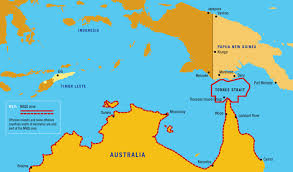
But my interest peaked and my heart swelled when I came to Ileto’s account of a Filipino who became a successful businessman in Queensland and also a revolutionary patriot. Heriberto Zarcal was a jeweler in Santa Cruz, Manila who moved to Thursday Island in the Torres Strait (facing Papua New Guinea) in May 1892, and soon offered his services as a “Lapidary and Optician, Goldsmith, Watchmaker, and Pearl Cleaner.” Filipino sailors—then known worldwide as “Manilamen”—had become pearl divers in the area since the 1870s. Zarcal grew rich, “mentioned as one of only five men on the Island licensed to deal in pearls… [who] had just acquired his own fleet of pearling vessels.” So successful was he that a European competitor complained by asking “Shall we suffer the men who ought to be our servants to become our masters?”

Unknown

What was unique about Zarcal was how—even as he had assumed British citizenship to be able to run a business—he flaunted his sympathies for the revolutionists back home, to the point of displaying a big sign saying “NOLI ME TANGERE” on top of his establishment. I’ll let Rey Ileto tell rest of the story in his own words:

“Zarcal, a frequent visitor to Hong Kong, must have been among the many expatriate nationalists who consulted with Aguinaldo. An issue of the Hong Kong journal Overland China Mail which appeared in late March 1898 reported that Zarcal had commissioned the construction of three pearling schooners and named them the Aguinaldo, the Llanera, and the Natividad—in honour of three Filipino generals who had won victories against Spanish forces.” (He would give his other boats names like Sikatuna, Magdalo, Kalayaan, Justicia, and so on.)

“After 1905 Zarcal maintained only a handful of boats for pearling. In semi-retirement, he concentrated on his Thursday Island business as pearl-buyer and jeweller, augmenting his local stock of pearls with purchases from Port Darwin and the Dutch East Indies. Characteristically, perhaps, the final episode in his life was an extended journey to Europe begun in 1914. Mr. and Mrs. Zarcal are said to have paid homage to their monarch, the Queen of England, presenting her with a huge pearl. Prevented from returning home by the outbreak of the Great War, the Zarcals waited it out in Europe, finally renting a flat in Paris in early 1916. There, on 9 February 1917, Zarcal succumbed to a stomach ulcer. At his deathbed were his wife Esther and ‘an old friend from Thursday Island,’ the Rev. Father Ferdinand Hartzer.”

So ends this amazing story, a gift from Down Under which I would never have heard of if I hadn’t been told that we were going to play host to some colleagues from James Cook University—which, to complete the circle, now runs a school on Thursday Island.

Penman No. 250: Literature in the Time of Tokhang (2)

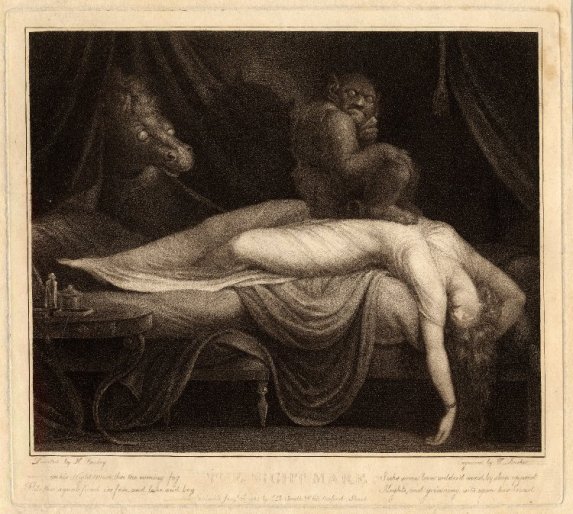
nightmare-after-henry-fuseli-print-made-by-thomas-burke-london-1783

Penman for Monday, May 8, 2017


IT’S BECOME almost a cliché in itself to say that a writer’s first responsibility is to the truth. This is no truer than today, in this age of fake news, post-truths, and alternative facts. Someone has to figure out what really happened, who’s lying, and why.

The fact that we respond to the news today mostly with consternation and skepticism only shows how difficult that task is, and how successful and how good the professional purveyors of lies, half-truths, and nuanced positions are at their job. Call them trolls, call them spin doctors—and yes, call them spokespersons—but whatever their motives are, whether they may be mercenaries or true believers, they have raised the bar for their white-hat counterparts.

The easiest and perhaps the most attractive role to take as an antagonist is that of a propagandist, especially online—to respond tweet for tweet, post for post, insult for insult, meme for meme.

But the harder and therefore the more important task is to see beyond the moment and to engage the reader on a deeper and more thoughtful level.

Clearly we need investigative journalists with the courage, integrity, and tenacity to uncover the facts. Clearly we need scholars and critics who can sift through the facts and data to make sense of this cleverly contrived and well-implemented confusion. For these writers, their mission is much more obvious.

But what can the rest of us who know nothing but to write stories, poems, plays, and essays do?

Propagandists employ the broad strokes of caricature, and there’s a time and place for that. But beyond propaganda, beyond memes and hugot lines, I submit that the creative writer’s true task is to do as we have always done, which is to go beyond the simple and the obvious to get at the truth of life—the complicated truth, the inconvenient truth, the truth that will drive evil out of the shadows into the withering light.

And by this I don’t mean just establishing the facts, although that is difficult and deserving enough. I mean the persistent affirmation of our worth and our infinite complexity as humans, against the political powers that seek to oversimplify and dehumanize people by affixing labels of convenience on their bloodied chests.

This we know as writers: life is complex; people are complex. The most trustworthy-looking person can tell a lie; the most damnable crook can tell the truth.

Our poems and stories return to this premise over and over again: things are never what they seem. Fiction is all about character revelation and transformation. Poetry dissects one moment into many. What others accept as conclusions, we take as beginnings. Our lodestar is our natural curiosity and skepticism, without which we merely echo what others have already said, and blindly accept the official narrative. The two most important words in our verbal armory are not even “truth” or “justice”—it’s “What if?”

And this is how we must respond to the stereotyping, the homogenization, and the dehumanization of people that takes place in a time of terror—to rescue and preserve the individuality and humanity not only of the victims but also of their killers, because even evil must have a recognizable face.

Fight the cliché. Resist the simple story. Refuse to be idiotized.

In the American Literature class I taught this semester, we took up three classic short stories that we could all learn from. (Not incidentally, whenever I teach American literature, I always make a point of reminding my students that we are studying the subject not to become Americans, but to become better Filipinos by replacing our awe of that country with critical understanding.)

These three stories are “The Lottery” by Shirley Jackson, in which a whole town gets together in an act of communal murder; “Good Country People” by Flannery O’Connor, in which a Bible salesman is revealed to be a perverted cynic; and “Going to Meet the Man” by James Baldwin, in which a Sunday picnic turns out to be the backdrop for the gruesome lynching of a black man.

These stories suggest to me that in the not too distant future, our own great stories, novels, and films will emerge out of this dark and turbulent period. We need a “Lottery” and a “Good Country People” and a “Going to Meet the Man” for our time and place. And when they get written, the story will no longer be just that of the rogue police going after innocent citizens, but also that of our collective complicity in it, in our people’s acceptance of EJKs as the norm. The biggest casualties of this present war have been justice and conscience.

I will not argue that the war on drugs is a popular war, and that much of that popularity derives from the fact that drugs have destroyed many lives while enriching others. But as writers, we have to remind our people and our government that there are things far worse than drugs, and that the most powerful narcotic of all is the lust for power.

Not all of us can be investigative journalists or soul-searching novelists. But I will consider that even the conscious assertion of life and beauty against a backdrop of death and terror can be an act of political resistance.

During the Second World War, when Leningrad was under siege by the German army and the Russians had resorted to eating leather belts, cats and dogs, and even flesh from corpses, a group of starving musicians came together to premiere Dmitri Shostakovich’s 7th Symphony. They played it on the radio, and even the Germans could not believe what they were hearing. The records say that “After the war, captured German officers admitted that it was when they heard The Leningrad, as the Seventh Symphony became known, that they knew they could never defeat the city.”

So our art, my friends, is what keeps us alive, and what keeps us human. Our art is our faith, the faith that will sustain us through our doubts and fears.

As Leo Tolstoy reminds us, “God sees the truth, but waits.” Only God knows when to impose justice upon the deserving. Meanwhile, we writers can serve as his eyes, his witnesses, keeping our faith in him, in our art, and in each other, praying for truth and justice to ultimately prevail.

(Image from ibtimes.com)


Penman No. 248: Ring in the Old

IMG_1088

Penman for Monday, April 24, 2017


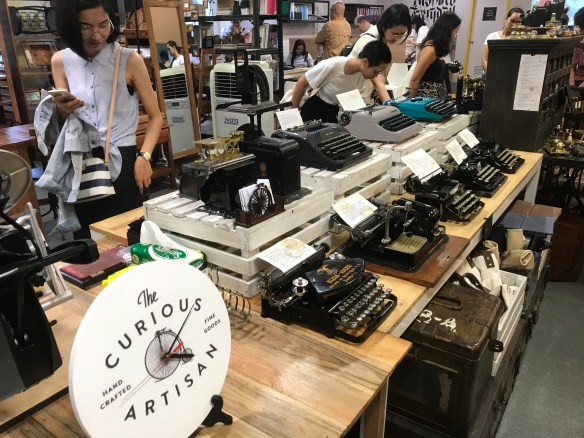
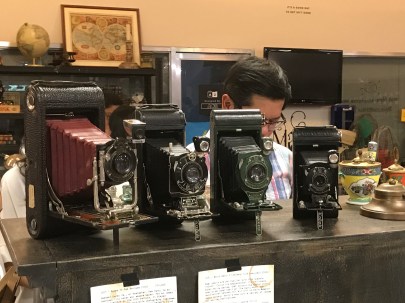
IN A GENERATION preoccupied with newness, it’s a refreshing surprise to find young people engrossed with things far older than themselves, and that’s exactly what Beng and I stumbled upon a few Saturdays ago when we entered Warehouse Eight on Chino Roces Ave. in Makati. There was absolutely no hint of it from the outside, but going up a flight of stairs, we stepped into a large room filled to the brim with antiques—typewriters, watches, cameras, bicycles, turntables, vinyl records, books, eyeglasses, and, yes, pens!

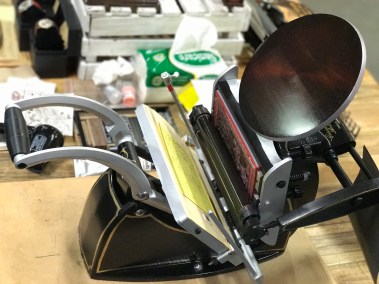
This was the Istorya Vintage Appreciation Fair, an event organized by entrepreneur and collector Lennie Dionisio (whom I’d never met before, so had the temerity to ask “What’s your day job?”). I’d come to show some of my vintage pens, of course, but I made a beeline for a tableful of Lennie’s fabulous vintage typewriter collection—a passion she shares with another friend of mine, George Mamonluk. I proudly showed off a picture of my 1922 Corona 3 which I’d found in San Francisco and hand-carried home—if you get a high from inhaling typewriter lubricant, you’d be my kind of person. But the piece de resistance of Lennie’s spread wasn’t even a typewriter but a lovely Adana letterpress machine of the kind that I’d been dreaming of, for hand-printing pages of poetry on paper you could run your fingers over and feel every word.

IMG_1105

It was that kind of vanished romance that tingled in my bones as I looked over the exhibits (most items in which were for sale), elated by the discovery that they had been brought over not by doddering seniors like me but by a new crop of millennials who actually knew how to use a Rolleiflex TLR or a Sheaffer Snorkel. Quite a few even came over to the booth we operated for the Fountain Pen Network-Philippines, asking to see how flexible nibs and lever fillers worked. There’s hope for this generation yet!

For about a decade, Beng and I used to indulge our mania for the old stuff on our October sorties to New York and its fabulous flea markets and thrift shops (that’s right, I’d save up the thousands for the plane fare so we could poke around looking for $5 bargains in dusty piles of bric-a-brac). Those fun times may be over as our knees themselves turn vintage and as our budgets dry up, but with local shows like Istorya popping up, who needs Manhattan? I can’t wait to see the next edition of Istorya and to step back into the land of the lost.

IMG_1092

THERE’S ANOTHER way of bringing the past into the present, and that’s by remanufacturing old classics into new and modernized versions that exude vintage charm but perform with almost digital precision.

I was reminded of this last month when our friend Celia, who shared our footloose ways with her late husband Rene, introduced me to a very interesting pair of locally-made grandfather clocks. I have a small trove of vintage wristwatches, mostly from the 1950s, that I manually wind up every few months or so—and I have to admit to a clock fetish in that I’ll likely have at least two clocks in one room so I can see the time wherever I look—but I have yet to acquire my first grandfather clock.

I’ve seen quite a few of these in homes and museums abroad, and what’s fascinating about them is their imposing size and that deep, sonorous chime they produce to announce the hours.

Apparently, according to Celia, there’s a company out here somewhere that makes several models of grandfather clocks, following the tradition of furniture artisan Simplicio Adriano, a Pampanga native who started his craft in 1911. The company is called SAFM, and it’s now managed by Simplicio’s great-grandsons Alfred and Francis.

I’ve yet to visit the factory, but Celia tells me that a seven-foot model they call the RAGA 70 has a chain-driven, Westminster chime movement that strikes every quarter and every hour. The movement is made by Hermle of Germany, considered the leading clock and clock movement manufacturer in the world. The cabinet is made of Philippine hardwood and comes in mahogany, dark walnut or light walnut finishes.

RAGA70_2

If tall clocks and loud chimes float your boat, text or call the manufacturer at 0905-2765288 or email adriano.grandfather.clocks@gmail.com.


A FEW years ago, I had the pleasure of giving the keynote speech at the Iligan National Writers Workshop at the MSU-Iligan Institute of Technology (MSU-IIT) in Iligan City, and I’m happy to see that despite all the odds it’s had to face, the workshop is moving along just fine and will be holding its 24th session from May 29 to June 2 under the stewardship of stalwarts Christine Godinez-Ortega and Steven Patrick Fernandez. Co-sponsored by the National Commission for Culture and Arts (NCCA), Iligan is an important hub in the national network of workshops designed to encourage new young writers in all languages and genres.

Eighteen writing fellows from all over the country have been selected for Iligan. From Luzon come: Poetry (English) Bernard Kean Mappala Capinpin; (Filipino) Joey Alcones Tabula and Vanessa Anne Joice Tanada Haro; Fiction (Filipino) Lenin Carlos Macaraig Mirasol; and Drama (English/Filipino): Fatrick Romo Tabada;

From the Visayas: Creative Non-Fiction (English) Eric Gerard de la Cruz Ruiz; Poetry (English) Andrea de Guzman Lim and Gay Josephine Valles;  (Sebuano) Hannah Marie Ramirez Aranas; and Fiction (English): Nino Augustine Masa Loyola; and

From Mindanao: Poetry (Filipino): Delfin Hingco Mundala; Loi Vincent Caparos Dériada; (Sebuano) Mildred Eran Garcia; Creative Non-fiction(English): Silvana Erika Nasser Navaja; and Drama (English/Filipino) Kwesi Ian Jay Miguel Junsan.

This year’s Boy Abunda Writing Fellow is Waray poet Reynel Mahilum Ignacio; the Ricardo Jorge S. Caluen Writing Fellow is Sebuano poet Kim Ashley B. Escalona; and the Manuel E. Buenafe Writing Fellow is Maranao poet Alican Mendez Pandapatan.

I haven’t read these young writers’ works, but the mere idea of, for example, someone continuing to write Maranao poetry in this global century is heartwarming. That probably won’t happen in Diliman, which is another good reason why a homegrown workshop in Mindanao is absolutely necessary for the enrichment and preservation of our national culture.


Penman No. 247: On the Wings of Women

LadyPilots

Penman for Monday, April 16, 2017


IN MY line of work, I get to edit a wide range of books, from institutional histories and biographies to annual reports and technical manuals. They’re all important to my clients, of course, and I accord them all the same seriousness and diligence they should expect from a professional editor.

But now and then a project comes along that’s not only significant but truly interesting, and one of them was the book I recently edited for Philippine Airlines—Stories from the Heart: Buong Pusong Alaga (PAL, 2017)—that the company launched to celebrate its 76th anniversary. The book is a collection of vignettes about PAL’s people, from the ground crews to the pilots and flight attendants to the president and CEO himself, and tells all kinds of stories from delivering babies in mid-flight to having the Pope as a passenger.

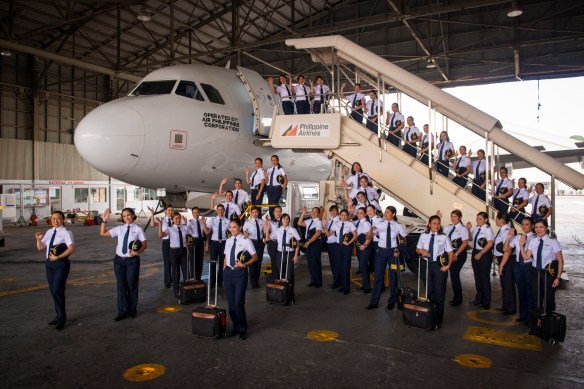
But some of the stories I found most fascinating had to do with PAL’s women—especially those who keep the planes up in the air. As a belated salute to National Women’s Month, let me share a few of those stories:

Since Capt. Aimee Carandang-Gloria became the first female to take the helm of a PAL plane in 1993, the number of lady pilots in the airline has continued to grow in recent years—from 20 in late 2012 to 54 (39 from PAL and 15 from PAL Express) in 2016.

“Yes, we’re still a minority, but a growing one. We just recently added a provision in our Operations Manual regarding female pilots. It’s a giant step for us,” says A320 pilot Capt. Emi Inciong-Ragasa.

A lady pilot on the flight deck is not something passengers see every day. But when they do, a magical moment always happens, attended by much curiosity and awe. “I remember a few times when some parents, upon seeing me, would exclaim, ‘Look, she’s a lady pilot!’ and would ask if I could have my picture taken with their daughter,” says A320 pilot Kelloggs Tioseco.

Aside from the occasional picture-taking on the side, these ladies get no special treatment—and they don’t expect it. They go through the same training, read the same manuals, and soar and slog through the same skies as the men.

“Ever since I could remember, I’ve wanted to be a pilot. I remember being in awe of this big machine that graced the blue skies,” says Capt. Ragasa. Emi comes from a family of pilots. Her husband is B777 First Officer Terrence Ragasa, and her father-in-law is former Air Force General Ramon Ragasa.

Having been with PAL for 11 years, she aspires to be a hands-on mother while enjoying her flying career. She doesn’t mind being on long layovers but she makes sure that she regularly sees her two-year old son. “I have only one chance to raise my son well. I arrange my schedule to spend more time with him,” she says.

AVP for Pilot Affairs and A320 pilot Lilybeth Tan Ng says that taking red-eye flights were much easier to handle than waking up in the wee hours of the morning to attend to her motherly duties. “Flying a plane is easier than being a mother. Flying comes with a manual while motherhood doesn’t. So you had to learn by instinct as the answers were not always easy to find.”

A330 pilot Cherryl Flores crossed over from military to commercial flying. She had been a registered nurse in a military hospital in Zamboanga City before joining the Philippine Air Force, where she served as an instructor pilot for four years. Cherryl was a bemedaled UH-IH helicopter combat utility pilot in the PAF. She was also the first and only female PAF pilot to be certified as Pilot-in-Command of UH-IH in Night Vision Goggles by the US Air Force.

Cherryl’s husband, a ship crew member, gave up his job to take care of their first-born. “When I was pregnant with my first-born, we decided that one of us had to stop working to attend to our child. My husband selflessly gave way to me so I could chase my dream of flying planes.”

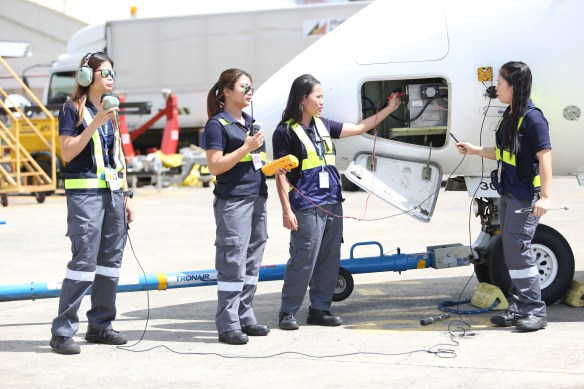
That same tenacity can be found in the seven female mechanics checking cables and wirings, overhauling systems, and replacing parts among the platoons of men working at PAL Express’ maintenance and engineering.

Avionics mechanic Maridel David wanted to work in an airline since her youth. “In Bicol, whenever we saw a helicopter flying overhead, we ran and followed it as far as we could,” she recalls. When she entered college, she chose to study BS Aviation Electronics Technology at the Philippine State College of Aeronautics.

LadyMechs

Before becoming an avionics or aircraft mechanic, one has to undergo a one-year Maintenance Training Program (MTP), which comprises six months of classroom training and six months’ field exposure. In school, the proportion of male to female students has always been high. “There have always been very few females in aviation and I find it a privilege to become one of them,” says another avionics mechanic, Mercedes Sabordo.

“My motto in life has always been, if they can do it, I can do it. We’re all equal when it comes to the job, because this is what I studied for. So whatever they can do, I can do as well,” says Elaine Saldivar, an aircraft engineer in PALEx for two years now.

More than the physical tasks, the job of an aircraft and avionics mechanic requires critical decision-making that can only be learned through time and experience.

“You have to be really smart if you enter the field of aviation. You have to be ready to go head to head with the men if you want to learn. It’s a long process of continuous learning, like getting a doctorate so you can really be an expert at what you do,” attests Engr. Rhona Abrera, an avionics mechanic. Rhona herself has overhauled and then rebuilt an airplane. From one task card to another, she finished the job after several attempts. “It’s most fulfilling when you can troubleshoot the problem right away. It’s ‘mission accomplished’ when you can watch the plane fly.”

Maridel adds that she treats a plane like her “baby” and would always talk to them. “At morning dispatch, I talk to the plane and say, ‘Baby, safe flight,” she quips.

So, go girls, and many thanks and congratulations to PAL’s Pinky Balagtas and Paeng Evangelista for piloting this project and for letting me use these excerpts!


Penman No. 246: Beauty and Sadness on Calle Bautista


IMG_1175

Penman for Monday, April 10, 2017


WITH WORK piling up at the office, I’ve increasingly been looking forward to weekends, especially Saturdays, for some fun and leisure. Weeks ahead, I start scouting the cultural horizon for interesting things to do or shows to attend. A few Saturdays ago, for example, Beng and I drove out to Makati to explore the Istorya Vintage Fair at Warehouse Eight—a totally engrossing event that merits its own write-up, which I’ll do in a forthcoming column—before rushing back to Diliman to catch the Ihudyat! marching band competition at the UP Amphitheater.

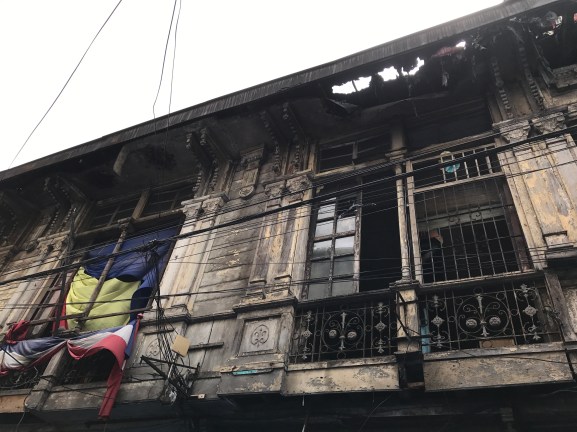
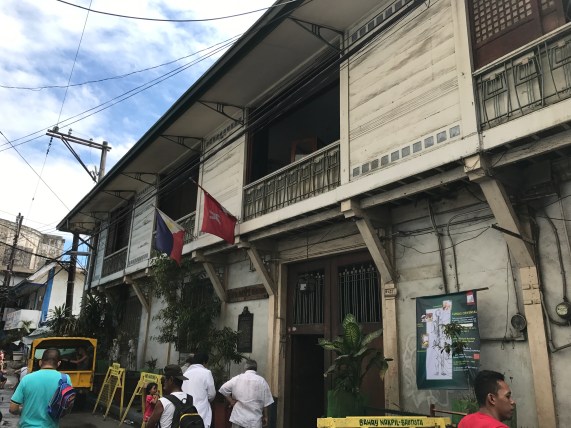
It was the following Saturday that I’ll write about first, afraid that I might forget some important detail if I wait too long. Indeed, “forget” is the operative word here, because it describes what most people did to our destination: the Boix House (also known as the Teotico-Crespo House) on Ariston Bautista Street in Quiapo, Manila. I tagged along with a posse of UP Fine Arts alumni that included Romy Carlos, Boysie Villavicencio, Ernie Canlas, and Beng—a group that had heard about the house and were interested in seeing if and how they could help in its restoration, perhaps through a benefit art exhibit. (I was delighted to learn later that an old friend, the art dealer and patron Jack Teotico, is a direct descendant of the original house owner and will be pitching in.)

Located in what has become Quiapo’s Muslim quarter, the Boix House is so named because it was acquired by the Boix-Tarradellas family from the Crespos, who got it in turn from the Teoticos. Don Marciano Teotico had the Neo-Renaissance house built in 1895 on what was then Calle Barbosa, and it soon attracted student boarders like the young Manuel Luis Quezon, who reputedly went out partying next door. There, two decades after Don Marciano built his brood a home, would rise the better known and more fortunate Nakpil-Bautista House.

We don’t know what happened next, but at some point, the ownership of the house reportedly passed on to the Society of Jesus, and we lose track of the Boix connection except through the house and what’s been put on the Internet about it—if any reader knows any more, please do share. (I’ve also been wondering about how exactly “Boix” is pronounced; I initially defaulted to the French bwah, but online sources suggest a Spanish or Catalan origin, in which case it would be boish—but then again, what do I know?)

The sad part of this story is how decrepit the Boix House has become, despite the noble efforts of well-meaning organizations such as the Kapitbahayan sa Kalye Bautista to save the house through crowdfunding. Even the World Monuments Fund has taken note of and extended some assistance to the Boix House project (https://www.wmf.org/project/boix-house).

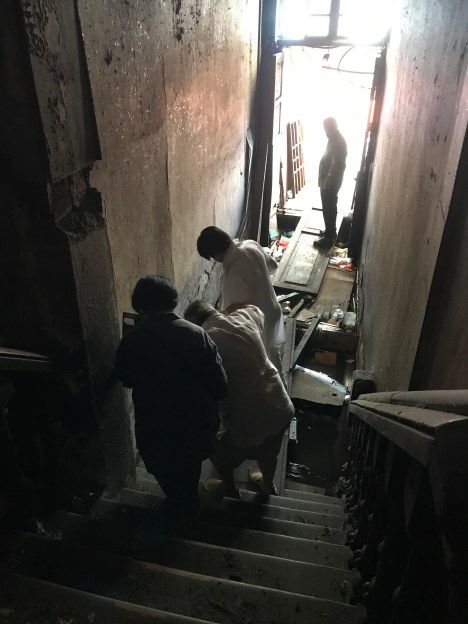
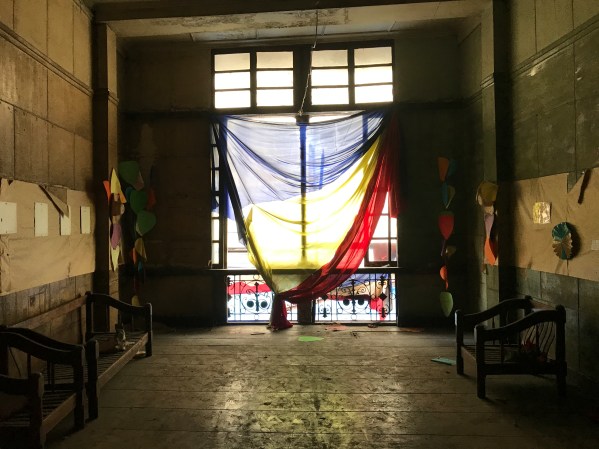
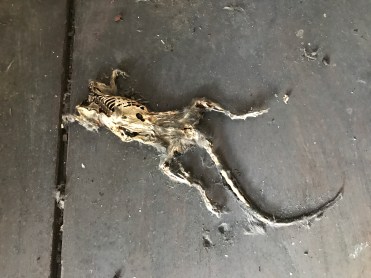
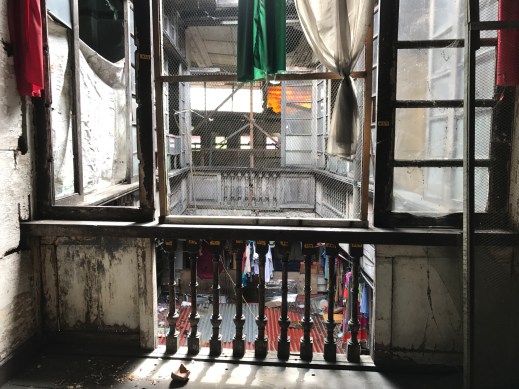
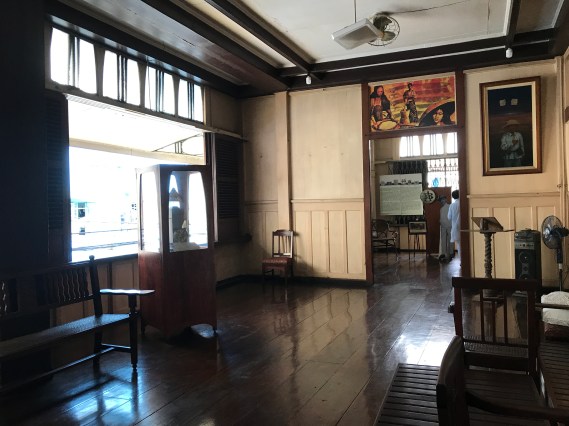
If you pay it a visit like we did, you’ll see why it could use all the help it can get. Just getting across the threshold to the stairs takes—almost literally—a leap of faith: two old doors now serve as creaky planks over which you cross a puddle of water. The wooden stairs and floor are thickly coated with dust and grime; a rat’s carcass molders away in a corner like a forgotten lab specimen. Framed panels provide a history of the house, and tattered flags and ribbons offer proof of some earlier appeals to patriotic fervor. Overall, one’s impression is a commingling of beauty and sadness, the passage not only of time but of care.

IMG_1192

IMG_1181

IMG_1187

One thing you couldn’t avoid noticing was the fact that while the second floor seemed eerily vacant, it was an entirely different story belowdecks, with the visual evidence of many families crammed into every habitable inch. The undisturbed dust and the odd debris upstairs suggested that the people left that space alone, most of the time, despite the absence of any kind of barrier or restriction. Why? Ghosts? A deep-seated respect of the departed?

IMG_1178

What’s clear is that no restoration project will succeed without taking the house’s present occupants—and indeed the whole neighborhood—into account. Even if you manage to raise the many millions required to return the house to its old glory, its antique opulence will stand in ironic contrast to the very present and very real poverty blighting its surroundings.

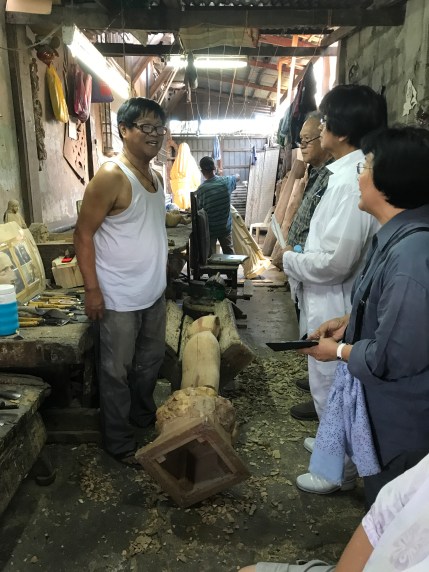
The well-preserved Nakpil-Bautista House next door might yield some clues—but not all—to what to do eventually. This ancestral home had seen generations of such notables as the composer Julio Nakpil and his wife Gregoria de Jesus, Andres Bonifacio’s widow. Still maintained by the family and open to public viewing, the house has also served as a home and studio for the past 38 years for master carver Ner Manlaqui, whose religious statues crowd the basement. Priests, churches, and other patrons keep Mang Ner busy, as the half-finished saints and virgins being worked on by his assistants attest to, employing trunks of pale yellow baticulin sourced from faraway Quezon.

IMG_1194

IMG_1220

IMG_1203

So preserving or reviving the past might necessitate providing for the present, and the cultural activists behind the Boix House project will do well to temper their admirable passion with some dry-eyed pragmatism. Houses are always more than wood and stone, and bringing old ones back to life should also mean ensuring a sustainable future for the people who live in and around them.

I couldn’t have imagined a richer Saturday morning but yet also a more poignant one, spent in the crumbling heart of the city.

IMG_1188

Penman No. 243: A New Master of Prose

Jurado2

Penman for Monday, March 20, 2017


BECAUSE OF my new administrative duties at the University of the Philippines, I was able to join the UP Writers Workshop for only two days this year, but it was time enough to make a wonderful discovery in the person of a Filipino-American writer whom I had never met before but whose voice, I predict, will resonate more loudly in the years to come.

There are 12 fellows, as usual, in the 2017 workshop, all of them mid-career writers who already have at least one book or film or theater production under their wings and who are currently at work on new projects. This workshop has become a rite of passage for most Filipino writers, and it’s always a privilege for those of us who’ve been on top of it to be able to help our finest literary talents in Filipino, English, and other Philippine languages achieve their potentials.

I wish I could have met all of this year’s fellows, but as it happened, it was Wilfredo “Willy” Pascual whom I got to know best, because we gave lectures about writing together to a large audience of teachers, writers, and students in UP Los Baños. From his talk and workshop and from a subsequent chat with him, I learned that Willy—born in 1967 in San Jose, Nueva Ecija—is a largely self-taught writer who has now spent half of his life overseas, mainly in Thailand and the US. “I had a checkered education,” he says laughing, “with a year in UST, a year in CEU, and so on, but I never finished anything.” It’s clear that his real education came from his voracious reading and his varied experiences, some of which are memorably chronicled in his first book, the privately published Kilometer Zero.

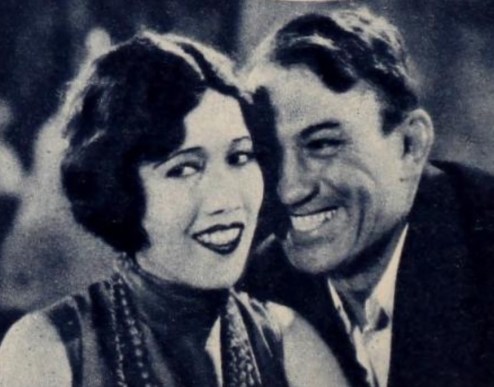
But what fascinated me about Willy’s work is his ongoing project, a long essay about his search for the personal story of a little-known Filipino-American actress from Cebu named Elena Jurado, who appeared in a small role as an Arabian dancer in a silent film titled White Hands. The essay is, of course, really about two searches: one for Elena, and the other for what Willy—a gay Filipino-American—calls his “rightful place.”

We ask our workshop fellows to preface their work with their “poetics”—an explanation of why they write what they write—and here’s part of what Willy wrote there:

“I remember the artist Roderico Jose Daroy (1954-2014) who rescued shards, refuse, and fragments and brought them home. The objects occupied an entire floor in a rented bungalow in Bangkok. I saw his orderly spread of old picture frames, hardened watercolor cakes, vintage prints in various stages of decomposition. I walked around it, sat down as if on a shore contemplating the sea of dissolution in front of me. They were meant to be exposed to the elements, the flow of time. There was an inherent wildness to it, a constant beginning and ending. I felt tethered to it. I like things that grow. Decay. And all the deviations in between. If I could be a superhero for one day, I would like to have the powers of mutability and permeability. I would be a grain of purple rice, an industrial crane that in a whim can turn into a broken microscope, the gum you are chewing now. My secret joy will be those states in between when I am neither one nor the other.”

And this comes from the essay itself:

“Elena Jurado was interviewed by Wilbur Hall, a forty-plus miner and rancher who wrote weekly features for the Chronicle. The paper ran Wilbur’s story with photos of the fair Filipina actress next to the bearded Hobart Bosworth in a dapper single-breasted suit and bowtie. The 55- year-old, tall and blue-eyed Bosworth, widely known in his time as the Dean of Hollywood, had portrayed historical figures and beloved literary characters lost in time and strange places. He slept for twenty years as Rip Van Winkle and missed the American Revolution. In the earliest film version of L. Frank Baum’s everlasting tale, he was the wizard who appeared in different forms and a disembodied voice. With the magisterial Bosworth holding a script, Elena was introduced in these publicity stills, short wavy hair parted on one side, wearing the adorned ensemble of the Filipina gown of her time. Gone were the European voluminous bell-shaped skirt and the indigenous wrap-around tapis. In its place was a more streamlined cut with an elegant trail pooled on the floor. The upper garment was a fine gauzy layer of fabric: the collarless blouse winged with elbow-length sleeves—wide, airy, suited for warmer climates; the Spanish-influenced scarf folded around her shoulders and fastened in front. She smiled at the camera, listened to Bosworth, and struck a dramatic pose—arms outstretched, palms upward, head slightly turned, lips parted, eyes yearning, almost ethereal. I’m not exactly sure what to make of this vessel’s gesture and expression, this suspended aria. She looked like she had broken through the clouds. And if there was a word or even a sigh uttered, it had been preceded by Bosworth’s pointing finger.

“…. Thousands flocked to the movie palace on opening day and saw a golden throne in the foyer’s octagonal rotunda. Overhead, a cast iron lamp illuminated the vaulted ceiling. The rotunda led to two grand staircases with tapestries on the wall. One depicted the siege of Troy, the other the birth of Rome, the twin brothers Remus and Romulus suckling a she-wolf. Inside the auditorium, the world’s largest gooseneck steel brass supported the balcony. Spanning 108 feet and weighing ninety tons, it braced the boxed seats occupied by industry giants, among them Rudolph Wurlitzer, William Hearst, and Michael de Young. Theirs were the most expensive seats at ninety cents each, commanding a full view of the auditorium: the ceiling’s central dome, its light changing from fiery sunrise to purple dusk; the walls lavished with bold relief, every column, pilaster and parapet carved with scrolls, swags, urns and coat of arms—an inflamed vision in rose and old gold, multiplying and morphing endlessly, excessive, consuming. You think you’re seeing more but you’re not really sure what you’re seeing.

“…. I spent weeks in the archives poring over Jacobs’ photos with a magnifying lens. How do you not lose yourself in this exuberant tangle of forest and empires? The more I saw, the more I read; and the more I read, the more details I saw in each photo. It sucked me into a vortex. My eyeballs became porous and the hungry gaze of ghosts streamed through them. In this world of men and empires, a young Filipina appeared on the giant screen.”

There’s a stunning conclusion to Willy Pascual’s search—he actually locates her gravestone—and I can’t wait for the essay to be finished and for this prose master’s second book to appear.

WillyP