Penman No. 242: A Husband’s Purpose

Dog

Penman for Monday, March 13, 2017


I’M NOT a dog person—next to my wife Beng, my marmalade tomcat Chippy was my best friend for twelve years until he meowed goodbye in 2012—but when I saw the trailer for this new movie A Dog’s Purpose, I just knew that I had to take Beng out to see it.

Beng loves dogs; at any given time, she has six or seven of them running around the yard. Her favorite, Bunso, invariably greets her when we get out of the car with a yelp and raises his paws for a shake and head rub, maybe even a sloppy kiss. I cringe when I see that, especially the part where the pooch’s wet tongue flicks across a cheek I might be visiting myself. For Beng, it’s just one more proof that dogs are more faithful than men, never mind that we don’t have tails to wag to flaunt our extravagant affections.

Of course, Beng knows the names of all her dogs, and who sired whom three generations removed. To me, they’re all noisy little mongrels distinguished by the fact that some are white, some are brown, and some are black. As you can imagine, over the years, we’ve given away scores of puppies to neighbors and relatives who thankfully couldn’t see beyond the cuddly cuteness to where certain recessive genes assert themselves. I become vaguely aware that the litter (and I suspect that’s where the word’s other meaning came from) is gone when a deep and abiding silence descends upon the household, at least until the other dogs demand their share of the food budget.

I’m not sure where my indifference to dogs comes from. Discounting guppies in water bags and terminally ill mayas in bamboo cages, we didn’t have pets as children—my four smaller siblings were a handful enough for my mom—so that’s probably one reason. My one dog memory from childhood involves a barking bitch and her pup whom I met on the street; I was nine years old and summering in my provincial hometown, but even at nine I had begun to read a lot, and one of the things I read was “Barking dogs don’t bite.” Well, this one did, and I grew up to be a skeptic from that point on.

At the same time, and strangely enough, I was a big fan of Lassie, and became something of a pest in the eyes of our TV-owning neighbor, parking myself in front of their TV nearly every afternoon in anticipation of another episode of Lassie chasing down scumbags and finding her way home after straying 200 miles. So I knew dogs were smart, and maybe that’s where the problem was—there could be only one top dog in the house, and as far as I was concerned, that position was already taken.

But back to the movie. Beng and I see a lot of movies, usually after a foot massage and a panciteria dinner. It’s as predictable as Tuesday, but life’s like that when you edge past 60; you don’t want too many surprises messing up your week. At least I don’t; now and then Beng makes mewling sounds about trying out new dishes or even new restaurants, and to be gracious I’ll say, “Okay, since we’ve had the miki bihon in this place half a dozen times now, let’s see what it tastes like across the street!” This is how we’ve survived 43 years together—understanding, compromise, and a little generosity.

The G word was on my mind last week when I suggested that we watch the damned dog movie. Usually we subsist on some iteration of Fast & Furious—that’s how I get my kicks, by watching cars crash into concrete walls and skulls get smashed by sledgehammers (“Isn’t violence relaxing?” I ask Beng over the popcorn). Once in a while, typically when a new iPhone hits the market, I treat Beng to a movie without Jason Statham, Dwayne Johnson, or Vin Diesel in it. I scored big with La La Land; you know she had fun when she asks you to look for the soundtrack, which is what the house will sound like for the next week, over the woofs and the whimpers of our canine company.

Beng likes movies like Hidden Figures and Sunday Beauty Queen where strong, smart women are smiling as the closing credits roll, where good people go to heaven, and where frogs turn into princes (she’s still waiting for that to happen). Whether it’s a happy or a sappy ending, she’s likely to cry over something. (She was probably the only person on the planet who wept when the Soviet Soyuz rocket ship docked with the Space Station—“Isn’t world peace wonderful?” I remember her saying.)

So I knew she was going to weep buckets when I took her to the dog movie; for me, watching her watching the movie makes it all worthwhile. Now this is going to be a spoiler, but if you’ve seen the trailer, you’ll know that A Dog’s Purpose is all about canine reincarnation, and about finding your way home (which, again, is apparently on every presumptive Lassie’s script).

I lined up for our tickets—we usually get D15 and D16, about midway across the theater—but dozens of families had also come out for the mutt show, and now only V15 and V16 were available, way up in the balcony where all the young couples nested. When I showed Beng the tickets, she giggled and said, “Are we going to neck?” I mumbled some incoherent, noncommittal reply, suddenly feeling very frog-like. She thought it was a funny idea, and threatened to call our daughter Demi in California, to tell her that her parents were going to go necking in the moviehouse.

Thankfully the movie started, and soon enough, as one dog died after the other, Beng was pulling out her tissues and sniffling serially, and I touched her on the cheek to assuage her grief. I could’ve licked her right there, but I could imagine Demi going “Ewwwww!” I left it to Bunso to do the licking later—having, for that day, served my husbandly purpose.


Penman No. 239: A Pinoy Pangalay in Hyderabad

hyderabad-literary-festival-venue

Penman for Monday, February 20, 2017


I’M GOING to turn over most of my column this week to a colleague at the UP Institute of Creative Writing, the playwright and essayist Luna Sicat Cleto, whom I commissioned (badgered is the more appropriate word, since I’m not paying her anything more than my deepest thanks) to do a report on a recent mission that she and a group of Filipino writers undertook in Hyderabad, India.

The original invitation to attend the Hyderabad International Literary Festival and organize a delegation as a “guest nation” had been sent to me, but since I couldn’t work it into my schedule, I asked performance poet and Philippine High School for the Arts director Vim Nadera to put together and lead a troupe of Filipino writers and artists. And what a delegation it turned out to be. With Vim went fellow writers Jun Cruz Reyes, Victor Sugbo, Luna Sicat Cleto, Jeena Rani Marquez, Christine Godinez Ortega, Hope Sabanpan-Yu, and Neila Balgoa. Spoken word poet Kooky Tuason also came along, as did Ifugao poet Dumay Solinggay. Dance and music were represented by Cecilia Artates and Marty Tengco. Let’s hear the rest from Luna:

“According to Dr. T. Vijay Kumar, Professor of English at Osmania University in Hyderabad, the Philippine delegation was the biggest group they had received so far, having hosted five nations since it began in 2010. The other four were Germany, France, Ireland, Poland, and Singapore.

“Dr. Kumar, alongside the novelist Pranesh Prasad, had encouraged the attendance of the Filipino writers. Prasad graced the Iligan workshop in 2013 as guest writer and also attended the Asia Pacific Writers and Translators Conference in Manila in 2015.

Since then he has felt a strong affinity with Filipinos. Prasad was happy with the performance of the delegation, saying that ‘I think we achieved our goal of creating awareness about Philippines in India, given the number of newspapers that covered your participation and all the people contact that has resulted. It bodes well for India-Philippines cultural relations.’

“Prasad’s observation was echoed by Jun Cruz Reyes, who felt that it was refreshing to read about the convergence of so many talents and minds in the festival, which was not limited to the literary field alone. Topics as diverse as politics, history, sports, and popular culture were taken up in parallel sessions. While some German industrial designers discussed the sustainable technology of chai shops, a Mumbai-based young entrepreneur talked about Instagram ruminations, while another focused on the Indian graphic novel. There were talks given by poet laureates Ashok Payjevi alongside investigative journalists like Josy Joseph and Harsh Mander, and discussions of translations of the Bhagavad Gita and Tamil stories alongside debates about the effects of the partition and human trafficking. Particiapns got to see martial-arts demonstrations of the shilambam as well as India’s latest art films. The plurality of HILF is based on its inclusive ethos: it is multilingual and multidisciplinary, and the multiple speakers—writers, artists, scholars, filmmakers, journalists, publishers—represent a wide range of creative fields. Hyderabad has been described as a ‘teeming urban masala of color and commerce,’ and indeed the city evokes the ancient prosperity of its Mughal past, alongside its twin reputation as a Silicon Valley of India.”

Luna adds that “Indeed, it is fortuitous that the Philippines was invited now, while both countries are assessing their relative positions in the global literary and cultural scene. It also became a chance to rediscover the bonds between India and the Philippines, evident in the many words from Sanskrit that are in the Filipino’s vocabulary: budhi, guro, and diwata, among others. While India has a strong tradition of writing in English because of the colonial legacy of British education, the Philippines also has a strong contingent of Filipino writers in English. India’s raucous democratic plurality in religion and politics is echoed in the Philippines’ plurality of religion, politics, cultural traditions and languages. The many languages of India are celebrated in the Hyderabad International Literary Festival, and for this year, its focus was on the Tamil language. One artist, the great Indian dancer Leela Samson, who performed in ‘Past Forward,’ said that it is about time that India listened to its many voices, and let the major languages of India be the conduits of thoughts and ideas.

“Samson’s sentiments were echoed in the Philippine delegation’s performance, aptly titled ‘Philippine Pangalay: Karmic Harvest.’ Vim Nadera strutted onstage, dressed in an all-white suit complete with an American flag tie. Channeling Donald Trump and the doomsday rhetoric of born-again speakers, he pronounced that he was dedicating his performance to the memory of National Artist Francisco Arcellana. ‘Close all open things, Lord/Open all closed things,’ Nadera intoned, appropriating Elvis’ crotch choreos with riffs from the musical Hair. The crowd was energized. He then introduced Jeena Marquez, who performed a powerful dramatic monologue based on Rizal’s epilogue in El Filibusterismo, a re-enactment of Maria Clara’s leap to death as witnessed by two civilians. Romancing Venus was the next act, which featured Tuason’s slapshock verbal performance, enhanced by Tengco’s drumming and Artate’s pangalay. But the real star of the delegation was Dumay Solinggay, who channeled the anguish of epic chanters with her poignant chorus of  ‘We must remember, we must remember…’ Solinggay did not only echo the trauma of the postcolonial subject, who may feel trapped in identities and names arbitrarily assigned, in specific situations like the call-center agents or the inevitable loss of memory in the fast pace of urban life. When she danced at the last part of her ensemble, her body resembled the paroxysm of the chanters in a trance.”

What can I say? I wish I’d been there with them in Hyderabad. The name alone sounds like magic, and I’m sure the place and the experience were every bit just that.

philippine-delegation-with-ambassador-daza-from-hope-yu

(Photos by Jeena Marquez and Hope Yu)

Penman No. 235: High Time at the Henry

img_0634

Penman for Monday, January 23, 2017


A COUPLE of weekends ago, against all odds, Beng and I celebrated our 43rd wedding anniversary and not coincidentally my 63rd birthday. It seemed like an inspired idea at the time to get hitched as I turned 20, but over the years I’ve wondered if I should have given each day its proper due, and doubled my presents that way. But I soon realized that I was never going to get or find a better gift than Beng—patient, forgiving, and gentle Beng—so January 15 has largely been a day for two.

img_0616

Around Christmas I start thinking about how and where best we can spend the day, and this year, with UP having shifted its academic calendar to begin the school term in mid-January, we could have opted, funds permitting, to fly out to some exotic destination like Penang or Pattaya (or, heck, why not Paris?).

Instead, after some Googling, we ended up in the most unlikely of romantic locales—Pasay City, at the Henry Hotel along F.B. Harrison, to be more specific, where the magic begins once the gate opens.

I’d read about the Henry somewhere before and had seen pictures of the place—a visual and sentimental journey back to the 1950s, with its stately main house and sculpted gardens, and I remember being amazed even then by the fact that such a sylvan hideaway could exist in the heart (or less kindly the armpit) of the metropolis. It was high time we checked in for a weekend staycation; the saved airfare alone would answer for the room. And being staunch northerners, we barely knew the southern sector of the city, except for visits to the Cultural Center and the Luneta area. We hadn’t even reconnoitered the cavernous Mall of Asia except again for the briefest sorties.

But again that’s not entirely true, because I had actually grown up in Pasay in the late ’50s and early ’60s, in a house on P. Manahan branching off F.B. Harrison. It was a neighborhood interlaced with catwalks, off one of which I once fell into the fetid water while showing off my brand-new cowboy outfit, which I had probably received for my fifth or sixth birthday.

That bit of unpleasantness aside, I could still remember afternoons swimming in Manila Bay and lounging on the long beach chairs by the sea wall, riding the double-decker Matorco buses up and down what was still Dewey Boulevard, and munching on foot-long hotdogs at the Brown Derby.

So this weekend in Pasay was something of a homecoming for me, even if all the old landmarks were gone. What’s now the Henry was already there when I was humming the Tom Dooley song, but it wasn’t a hotel yet then but a sprawling compound of large squarish but stylish wooden houses flanking a white concrete main house, amid greenery tamed and teased by Ildefonso P. Santos, who would go on to become a National Artist for Architecture.

img_0586

The 32-room Henry was built by its new owners out of that layout, preserving as much of the old while providing such modern amenities as wi-fi and air-conditioning. A long gravel driveway leads to a fountain and a roundabout fronting the main house, past a curtain of angel’s-hair vines; a swimming pool glows opalescent blue amid the verdure; the main house stands proud but welcoming.

I’ll report that we had a most pleasant and restful stay, helped along by an unobtrusively efficient staff. We luxuriated in the fluffy pillows and the hot shower. It was a bonus to discover that the art gallery of an acquaintance, Albert Avellana, occupied one of the houses in the compound.

img_0594

img_0593

But our anniversary weekend wasn’t meant to be spent cooped up in a room, however charming the ambience. We’ve lately been used to taking 5-7 kilometer walks as part of our seniors’ exercise regimen, so we gamely walked for our bangus and salad breakfast to a restaurant near MOA, and walked many kilometers more within the mall itself.

Staying at the chic Henry was in a way the compleat anti-mall experience, but Beng and I have never pretended to be anything but pedestrian, so that for us was the exotic treat. The mall, like all markets, was familiar territory.

We took in a couple of action movies, buying more popcorn than we could ingest, and oohed at all the nice clothes that wouldn’t fit us. When we had lunch of ukoy and suam na halaya at the KKK restaurant, Beng loudly let the manager know that we were celebrating our 43rd, snagging us a free dessert of leche flan. Hankering for a sushi dinner, we misread Chinese for Japanese and stumbled into Masuki, which served huge bowls of my all-time favorite, Ma Mon Luk-style mami.

img_0617

The literal highlight of our weekend had taken place earlier that afternoon. We had asked ourselves, the night before, “What kind of cheap, mindless fun haven’t we tried in a long time?” (Not that, naughty boys and girls.) We paid P150 each the next day for the answer: an eight-minute joyride up and down the MOA Eye, the big white Ferris wheel from whose apex we took selfies before tumbling out of our pod, giggling, to rejoin teeming humanity and the surefooted ordinariness of things.

img_0609

img_0612

Penman No. 234: A Glimpse of Interesting Manila

im_cover3e

Penman for Monday, January 16, 2017

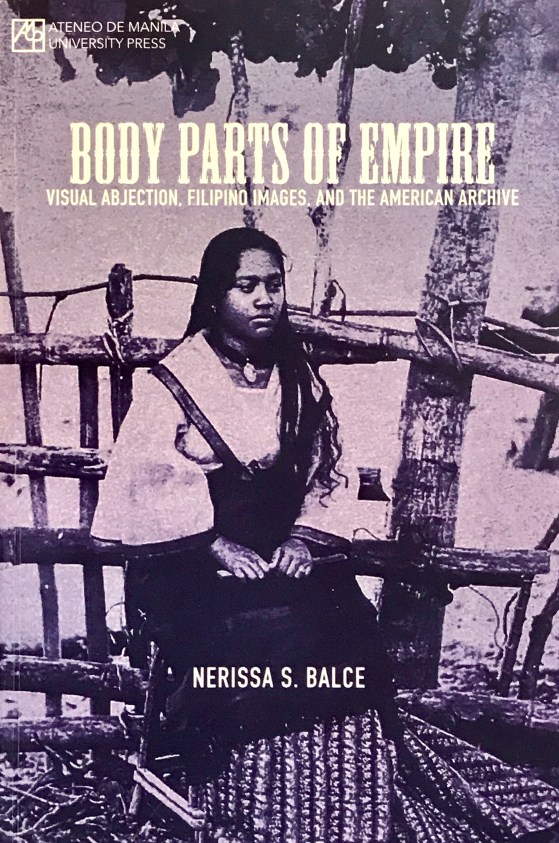
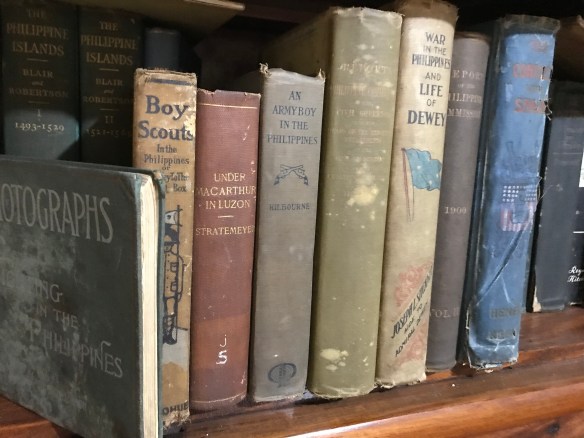
ASIDE FROM the fountain pens which I’ve recently stopped collecting, I’ve long nursed another, quieter passion, albeit on a much more modest scale. Since my grad-school days in the American Midwest in the 1980s, I’ve been drawn to old books from and about the Philippines. Sadly I can’t read Spanish—one of the great regrets of my college life, a casualty of our generation’s sweeping rejection of everything that smacked of colonialism (except, ironically, English)—so my pickings have been confined to books in English, largely from the late 1800s to the early 1900s.

I stumbled on the first of these books—and began to be conscious of their significance—while I was poking around antique and thrift shops for pens. The Midwest, with its many universities and industries (not to mention pen companies like Parker and Sheaffer), was a cornucopia of all things old and wonderful, and inevitably my eyes would drift to the dusty bookshelves that typically carried cookbooks, old Bibles, local lore, and Western novels.

Now and then, however, I’d get lucky and come across a book with some Philippine connection, usually from around the early years of the American occupation. With titles like Uncle Sam’s Boys in the Philippines and Our New Possessions, these books celebrated American imperialism, the novel fact that it now had a colony across the Pacific that deserved to be introduced to curious readers in Kansas and Missouri.

bsp

I remember finding the massive two-volume Our Islands and Their People for $10 in a Milwaukee antique store, only to have to leave them behind when I flew home from graduate school in 1991. But I did bring back a small trove of similar material, and have added to them since then, largely via eBay.

My Holy Grail had been a first edition of Carlos Bulosan’s America Is in the Heart (I would acquire one later locally in the most interesting circumstances—I’ve told the story here—and would give it to my daughter Demi as a wedding present), but another precious book I was relieved to have saved from the Faculty Center fire by foolishly leaving it in my car is a first English edition from 1853 of Paul P. de la Gironiere’s The Adventures of a Frenchman in the Philippines, an eBay pickup from the UK.

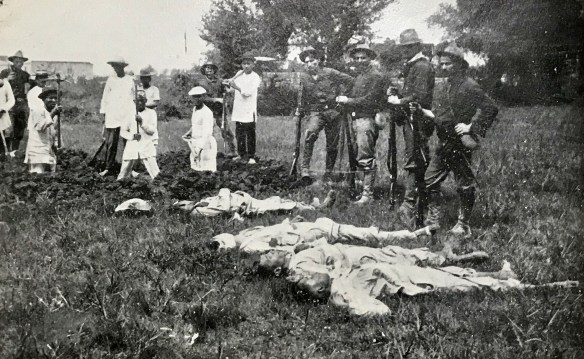
I’m not an antiquarian by any means; I lack the vision, the resources, and the scholarship for that. To be honest, I haven’t even read everything I’ve collected, a pleasure I’m saving for my impending retirement. I just like salvaging these well-worn volumes from the scrap heap, or from some dark corner where they can’t possibly be appreciated. They’re neither particularly rare nor valuable—only two or three have cost me more than $100—but they all contain very interesting, if sometimes horrifying, stories about America’s imperial project.

s-l400

It’s difficult, even for a Filipino, not to be entertained by the descriptions in these early travelogues, revive as they do the nostalgic charm of a vanished era. Take, for example, Interesting Manila by George A. Miller, first published in Manila in 1906 by E.C. McCullough, a $10 purchase from a bookseller in Massachussetts.

Its evocation of the past reminds us that Manila was already old even then: “Beautiful these old churches were in their scars and moss and vines. Many have been spoiled by fresh coats of paint. But who can sit silent in their vaulted aisles without hearing from those stained and mellow walls, whispered prayers of priests who long since have vanished, and shadow chants of acolytes who have joined the choir invisible?… My first experience in a Manila church was at High Mass in Santo Domingo at the early hour. There were sixteen hundred candles shining in the gloom of the old sanctuary, and a thousand worshipers were kneeling on the polished floor. Among the high arches gathered the smoke of the incense, and way up in the dome the morning sun streamed red and gold through the colored glass.

“The chanting of the priests reverberated through the aisles like the noise of a cataract, and the answer of the prostrate people was like the murmur of many waters upon the sand. Then the great organ with its thundering reeds made the old pile ring and shout like some strong giant in sport, and in the succeeding silence the people waited in awe for what might follow. What did follow was the chanting of the boys’ choir without accompaniment, and the effect from the high gallery was as if the voices came from everywhere, the very stones had suddenly become vocal and joined in the acclamation.”

In a voice we might be hearing today, Miller laments the thoughtless “restoration” of these old buildings: “The present Malate church has been restored until it is of little interest. The old tile roof, the hole in the west gable made by American shot, and the walls with shrubs and trees growing in their crevices made a building worth going to see, but now it is all paint and corrugated iron.”

The vividness and vigor of the experiences described can be exhilarating: “One of the really delightful experiences that many people have never discovered is that of a trip up the Pasig at sunset. We took the car to Santa Ana and at five-thirty stood by the river and were besieged by a dozen vociferous banqueros, who contended for the distinguished honor of carrying our lunch basket to the landing. The bancas all looked alike, but there must be the preliminary diplomatic stunts as to distance and price. Tagalog, English, and bad Spanish were mixed in a verbal storm for five minutes and then we were aboard and off for Fort McKinley.”

Sometimes these colonial reports afford us a priceless glimpse into our prewar treasures, likely long gone: “There are about twelve thousand volumes on these shelves,” Miller notes of the Franciscan library. “The library of the Recoletos contains about nine thousand volumes; that of the Augustinians eleven thousand, and the Dominicans have eighteen thousand. Most of the collections contain several copies of the celebrated ‘Flora de Filipinas’ by Fr. Blanco and his co-laborers. This work is in six volumes and an index and is a remarkable piece of scientific research. The best edition contains two volumes of colored plates of the flora of the archipelago, and the press work done, in Barcelona, is of the best.”

And then again quite often the interest doesn’t come out of the narrative itself but in the perspective, which almost inevitably involves some triumphal trumpeting of America’s virtues. Miller’s assertion of the Westerner as a man of action and of the Oriental as a laidback soul is typical of these white male observers’ musings:

“The West is known by its deeds, the East by its dreams. The Anglo-Saxon lives in the concrete, the Oriental in the shadows. The American, having found a ‘proposition’ in a field, makes haste and sells all that he has and buys that field that he may dig therein and get ‘results.’ The Oriental inhales the drowsy fumes of some far-off good that was, or is, or is to come—it little matters which—and is content.”

Interesting Manila, indeed—but even more interesting was what these books said of their linen-suited writers.

s-l400-1

philippines02

Penman No. 233: A Ray of Filmic Sunshine

Sunday_Beauty_Queen_poster.jpg

Penman for Monday, January 9, 2017

AS SOMEONE who wrote about 25 full-length screenplays for various film projects and directors in another life between the late 1970s and early 2000s, I really should be more interested in the remarkable developments that have taken place since in local cinema, especially on the indie scene.

But I have to confess, with some guilt and shame, that I haven’t kept up with what our younger, post-Brocka and post-Bernal directors have produced, except for the occasional viewing of a Brillante Mendoza or a Lav Diaz film, or outstanding documentaries such as last year’s Curiosity, Adventure and Love and An Open Door: Jewish Rescue in the Philippines. There are some personal reasons for this estrangement (not worth getting into at this time), but I do realize that I’ve missed out on a lot of good material while bingeing unpatriotically on Hollywood and Netflix.

I must say that the Metro Manila Film Festival and its seemingly bottomless decline from its glory days ages ago to the inevitable iteration of Enteng Kabisote contributed to my dismay. This most recent MMFF, however, seemed open to letting a ray of filmic sunshine through, with new criteria and a new selection process that put a premium on quality over commercialism. When I saw the list of the people involved and when I noted that their final selections were fresh titles by new directors, my expectations rose and I told Beng, after Christmas, “Let’s go see a movie!”

We’ve managed to see only two MMFF films as of this writing, but in both instances, our hopes were well rewarded.

Sunday Beauty Queen, which eventually won the Best Picture Award, documents the labors of Hong Kong’s OFW community in putting together a beauty pageant to ease the pangs of loneliness and the drudgery of their work. Directed by Baby Ruth Villarama, the film tracks pageant organizer Leo Selomenio—herself a longtime domestic helper—and the lives and stories of several key participants, all of them hardworking DHs. These girls, clearly, are no Gemma Cruzes or Pia Wurtzbachs, but even those of us who may scoff at the predictable inanities of beauty pageants will appreciate how the idea of “beauty” itself has been turned inward by this film, whose insistent positivity prompted me to tweet, as I stepped out of a cinema, that it was a “beautiful film about truly beautiful people.”

It wasn’t lost on me that I myself had written a novel, Soledad’s Sister, about OFWs, set briefly in Hong Kong, and had more than once observed our compatriots’ festive Sunday gatherings in Statue Square. Novels like mine tend to be morose reflections on human suffering, but there’s nothing like a well-crafted and even-handed documentary to bring out the verve and the tenacity that must accompany and cushion all that sorrow, and Sunday Beauty Queen draws on Pinay resilience in spades. The ultimate crown its subjects wear—and they are all winners—is that of dignity. Bravo, brava!

The other movie we chose to see was Ang Babae sa Septic Tank 2, with the irrepressible and hugely talented Eugene Domingo reprising her title role. We hadn’t seen the original movie from 2011 (and are now sorry we didn’t), but had no trouble wading into the premises of this sequel, which has Eugene playing herself as a comebacking star and tormenting her director (Kean Cipriano) with her “suggestions” for “improving” the script. It’s a riotously satirical project through and through, well-acted by its ensemble and well-scripted by the unfailingly sharp Chris Martinez, intelligent without being pretentious.

I may have chuckled more appreciatively than others in the audience, having gone through many of the absurd situations and propositions Eugene’s character raises in the film with her director-scriptwriter. I know I said at the start of this piece that I didn’t want to talk too much about how and why I got fed up with working in the film industry, but I feel like I should share at least one incident, from around 20 years ago, that’ll help explain why I moved from writing film scripts to writing novels and biographies.

Let’s set our scene in the offices of a big film studio, somewhere in Quezon City. I’ve been called to an urgent meeting by the producer because the movie we’re shooting (yes, we’re actually in the shooting stage) needs a new ending. Why? Because the studio’s Big Boss, who keeps track of the bottom line, doesn’t want our hero to die, like we’d originally planned; dead heroes bomb at the box office. So now we have to figure out a new extro, and the producers’ friends and alalays are all generously available and willing to help us think the ending through.

“So Gabby doesn’t die at sea when his banca is run over by a big ship,” one of them suggests, “but of course Sharon doesn’t know that, and in despair, she accepts Eric’s offer of marriage. But on the way to the wedding, she asks the car to stop by the beach, where she and Gabby used to promenade. She’s in her wedding gown, and she walks on the beach thinking about Gabby, until she reaches the tree they used to stand under. So she does some muni-muni, remembering their happy days….” At this point, another alalay interjects: “Ay, you know what, it will be so kilig if she looks up at the tree, and she’ll see the face of Gabby shimmering on every leaf!” I take a huge gulp of water to drown the welling acid in my gut.

“She makes a speech and tells the absent Gabby how much she truly loves him,” the original contributor ventures breathlessly, “and then she walks away… to her marriage and her life with Eric…. But it doesn’t end there! Because… because when she drives away, we see that there’s movement from behind the tree—it’s Gabby! He’s alive!”

There’s clapping and cheering all around the table, until somebody has the temerity to ask, “But why doesn’t he show himself to her?” It’s a question met with profound disdain. “Because—don’t you see?—Gabby is now in crutches, he lost one of his legs in the boating accident, and he loves Sharon too much to make her share her life with a cripple! So, nobly, he lets her go, as the theme song plays to the closing credits…..”

Appreciative sighs greet the revelation, as some of my water sputters onto the table.

Thankfully my director and I found a way to weasel out of that inspired conclusion, and the movie was shot and finished. I collected my paycheck, and resolved to do my best to write just stories, novels, nonfiction, and columns from that moment on.

Penman No. 229: Our Waking Dream—Why We Need Language and Literature

william blake illustrations.jpg

Penman for Monday, December 12, 2016

(This is the full version of a Powerpoint presentation I summarized for my Penman column, and I’m reproducing it here to share the visuals as well, culled from various sources on the Internet; if any of these images are copyrighted, I will be glad to take them down on request, thanks!) 

THANK YOU all for this kind invitation to share some of my thoughts with you today on “The Crucial Role of Language and Literature in the New GE Program.”

I could stand here for the next 20 minutes and deliver the standard academic lecture on why we need to put literature on the GE curriculum. But it would be the kind of lecture you would have heard dozens of times before, filled with the kind of platitudes you could recite in your sleep.

To give you an idea of what this talk could have sounded like, let me quote from what one of my alma maters, the University of Wisconsin, says about the need for literary study:

UWStout.jpg

“Because literary study involves the four processes of reading, thinking, discussing, and writing, its practical pedagogical value lies in its tendency to stimulate these activities and thereby improve the student’s ability to perform them. Careful reading increases one’s vocabulary and general verbal sensitivity and sophistication. In the classroom, the teacher can lead the student to think critically about what has been read. Classroom discussions sharpen reading and thinking skills and increase the student’s ability to express thoughts orally. The teacher can then use these processes to stimulate in students the desire to organize and record thoughts in writing. Thus the study of literature can be seen as practical intellectual discipline. It directly involves the student in the analysis of difficult literary texts, and in doing so it develops verbal skills which are transferable to other contexts. In other words, a person trained in the study of literature will be better equipped than most to read, comprehend, and analyze other kinds of texts (newspapers, reports, briefs, etc.). This is why, for example, English majors make such highly qualified candidates for law school.” (http://www.uwstout.edu/english/lit_study.cfm)

I’m sure this all makes perfect sense—indeed, that’s this whole session in a nutshell. Just to belabor the point, of course we need literature, because our students can’t live by math or physics alone. Besides, teachers of literature need jobs.

chicagostrike.jpg


But humor me for a minute and allow me to move away from the ridiculously obvious and the brain-deadeningly pedantic reasons, and return to the roots of why literature is important in the first place—in or out of the classroom, in or out of the GE program.

This will be a very short talk, and if you miss anything, don’t worry—at the end of my presentation, I’ll give a copy to the organizers to share with you. So you don’t even need to take notes; just listen.  I won’t be quoting from Shakespeare, or citing any eminent scholars with hyphenated European names. Begging your indulgence, I will simply construct the argument as I would teach it in my own class, on the topic of “Why are we studying literature?”

To begin with, we’re often told that like the other arts, “Literature is what makes us human.” But what exactly does that mean? How does literature humanize us?

2014-02-12-Fifthgraderreading.jpg


Literature relies on language, and other animals possess and command a form of language, too. Whales, monkeys, elephants, and birds communicate, presumably for the most basic things—food, sex, danger. We might even call their most basic utterances words and phrases of a kind, performing a clear and practical function. They form sequences of meaning, like saying, “There is food down there” or “I want to make a little baby with you.”

Funny-Animal-Love.gif

This is language, but it’s not literature as we know literature. Why not? Because literature requires imagination—dreaming of things beyond the immediate and the practical—and furthermore, a medium of transmission and preservation of the products of that imagination. We’re told that animals can dream, but they can’t record and communicate these dreams like we do.

Books3.png


Literature is our waking dream, a dream we describe and share through words. These dreams—these stories we make up in our minds—can teach, can delight, can disturb, can enrage, can exalt. They can remember and can therefore preserve our memories—our thoughts and feelings—as individuals and as a race.

As far as I know, no other species—nothing and no one else—can do this. Literature makes us human, because it allows us to tell stories that make sense of our lives, even stories that never happened, except in our imaginations, which also makes belief in things like Paradise possible.

Without literature, we cannot acknowledge and even talk about our inner selves, our inner lives. That’s something math or physics can’t do—at least not in the way of a poet or a novelist. The appreciation of beauty belongs to this realm of the imaginary, the recognition of pleasing and meaningful patterns in the seemingly abstract.

th.jpeg


The magic of literature lies in how it deals with reality and reason through fantasy and the imagination, and approaches the truth through make-believe, or what we might call the artistic lie. Literature can make use of use of things that don’t exist or things that never happened to talk about things that do—because reality is often too painful to confront directly. As one of my own teachers put it, art (or literature) is “the mirror of Perseus.”

That’s because—if you recall the story of the Gorgons—Perseus could kill Medusa, whose fatal gaze would have turned him to stone, only by using his shield as a mirror. Literature is that shield. By deflecting our gaze and seeming to look at other people, we are able to see the truth about ourselves, in all its harshness and unpleasantness.

medusa.jpg

At this point, I’m going to backtrack a bit so I can go deeper into another basic argument why we need literature in any curriculum. The point is no longer just to say that literature makes us human; rather, literature makes us better humans, by teaching us discernment and critical judgment.

Literature is a history of the words that have made sense of our lives. Like the Bible or the Iliad or the Noli and Fili, it shows us at our best and worst, so we can choose how we want to live—whether as individuals or as citizens or as a society.

Books2.jpg


To do that—to help us use both our reason and imagination—literature uses language, and language uses words.

Through carefully crafted stories, poems, and essays, literature shows young readers that words are supremely important in becoming a better person. This is especially true at a time when words like friend” have been devalued by Facebook,

facebook-friends1.jpg


and “hero” by those to whom history, and honor and honesty, especially in public service, no longer mean anything.

Heroes2.jpg


Every entry and every post our students make on Facebook and on Twitter is a test of how well they have learned their language and literature. I’m not talking about their grammar. I’m talking about their sensibility—the way they think and express themselves, the way they deal with other people, especially people holding an adversarial opinion. How careful are they with their ideas, with their choice of words?

Apple_Store_Trolling.jpg


And it isn’t so much they as we who are being tested. How well have we taught them? How deeply have we drawn on the wealth of human experience in literature to impress upon them that life is full of difficult choices and decisions, of hard struggles to be fought and won? To a generation of millennials weaned on instant gratification and on tweeting before thinking, the complexity of life can be a profound discovery.

This is the first and the most important lesson of all literature:

Words have meaning.

And because they have meaning, words have power, and words have consequences.

Change.png


Words can hurt.

Words can kill.

Drugs-killings.jpg

But words can also heal.

Words can save.

i am sorry (6).jpg


Words make law.

Words make war.

FM-Declares-Martial-law-596x720.jpg

Words make money.

Trump.png


Words make peace.

Words make nations.

constitution1.jpg


Words are the songs we sing to our loved and lost ones.

Words are the prayers we lift up to the skies.

Picture4.png

Words are the deepest secrets we confess.

Picture5.png

Words are what we tell our children the first thing in the morning and the last thing at night.

Words are all that some of us—especially those whom we call writers—will leave behind.

Speaking of writers, seven hundred years ago, a Persian poet named Hafez wrote a short but wonderful poem:

Even

After

All this time

The Sun never says

To the Earth

“You owe me.”

Look

What happens

With a love like that.

It lights up

The whole

Sky.

This, my friends, is what we teachers—whether of literature or science—do with our students, with every class and every lesson we teach. We light up the sky of their minds with love—the love of ideas, of engagement with the world.

And that is why we need language and literature—not just in our GE programs, but in our lives.

Thank you all for your attention.

Penman No. 227: The Southern Lights Shine Brightly

IMG_9859 2.jpeg

Penman for Monday, November 28, 2016


A RECENT gallbladder operation and the stitches in four corners of my belly couldn’t stop me from flying down to Iloilo City last week to catch the tail-end of VIVA Excon 2016, which I’d plugged here some time ago but just had to see for myself. The personal reason was that my wife Beng was one of the scheduled speakers, for a session on “Art Conservation and Restoration,” but I’d also heard that VIVA Excon was one of the most successful events of its kind in the country (“probably the only surviving and longest-running Filipino biennale,” VIVA Excon stalwart and chronicler Cecilia Locsin-Nava would emphasize to me). Here’s what I found.

From November 17 to 20, more than 250 artists, speakers, and guests from the Visayas, Mindanao, and Manila gathered at Casa Real in the old provincial capitol of Iloilo to celebrate, interrogate, and propagate art in all its splendorous variety—the important qualifier being that this was new art produced south of Manila. It’s been around since 1990, moving around the major capitals of the Visayas such as Cebu, Bacolod, Dumaguete, and of course Iloilo. Surprisingly, it was only the second time that Iloilo hosted VIVA Excon, after a 20-year hiatus, so the local organizers made up for lost time by mounting one of its most vibrant editions ever.

When it started—spurred by the need to create a southern antipode for the arts, given the emergence of such bright new talents as the Negrense painter-sculptor Charlie Co—VIVA Excon had to be funded by the artists themselves, but this year Iloilo’s provincial and city government pitched in to guarantee the event’s success, with help from a host of sponsors led by the National Commission for Culture and the Arts (NCCA). On top of the local planning was painter Rock Drilon, assisted by a corps of wizards and elves who made sure that the dozens of events on the program went off like clockwork. VIVA Excon originals Ed Defensor, Charlie Co, Peewee Roldan, and Cecilia Nava were also around to lend their wisdom and support.

IMG_9862.jpeg

As its name suggests, VIVA Excon (the “VIVA” stands for Visayas Islands Visual Arts) was at once both an exhibition and a conference. As someone who has helped to organize quite a few literary conferences myself, I was much impressed by the scope and depth of the topics taken up at the conference and by the expertise of the speakers engaged for the occasion, some of them coming from as far as the US, Singapore, and Hong Kong. I missed most of the earlier sessions, but I would have loved to listen to Ma. Victoria “Boots” Herrera speak on “Museum Practices: What Artists Need to Know”; Silvana Diaz on “Creative Economics: Art Management and Economic Viability”; Elvert Bañares on “Creative Crossover: From Visual Art to Cinema and Back—The Visayan Artists’ Experience”; Rex Aguado on “Art, the Artist, and the Art Collector”; and Patrick Flores on “Art Criticism—Its Value to the Artist and the Artworld.”

Fortunately, I came in time to catch UP art theorist Lisa Ito address issues in writing about the arts—“for what and for whom,” she would say, “beyond the popular writing geared toward the art market, and the academic writing produced by scholars and theorists.” Lisa felt that more writing should be undertaken to “connect artistic production to social contexts and current realities, and developing publics and communities that validate the vitality of art and culture” as well as to “document design practices and projects and to record transient cultural events for future generations—how communities adapt, such as by using tricycles as mobile galleries and by putting up makeshift museums.”

She was followed by New York-based Carina Evangelista whose lecture on “When Forces Shape Form” led the audience to where art has gone far beyond and outside the museum, in performative gestures—often deeply and manifestly political—that emphasized process over product, transience over permanence, and repurposing over originality. (One example: the banknotes that Brazilian artist Cildo Meireles stamped with a political message and circulated in 1970 as a form of mobile graffiti, which nervous recipients couldn’t pass on quickly enough, thereby abetting its purpose.) It was truly a semester’s worth of material packed into 45 minutes on new forms of art from body mutilation to sound and video installation, reminding me of Marjorie Perloff’s lecture on avant-garde poetry just a couple of weeks earlier in Singapore; sometimes you learn the most wonderful things in the oddest places.

Of course, I was happiest and proudest to see Beng onstage walking the audience through the various stages of restoring Amorsolos and Botong Franciscos, and it was clear from the flurry of questions she fielded after her presentation that conservation and restoration were two of the least understood concerns of the art world, yet also two of the most vital if not inevitable. (Sculptor and installation artist Martin Genodepa graciously emceed the presentations.)

Outside the conference hall, three art exhibits were held: a curated one on “Contemporary Art of the Islands” at the UP Visayas Art Gallery, the more freewheeling Visayas Art Fair at Casa Real, and a special retrospective of the late Ilonggo sculptor Timoteo Jumayao at the Museo Iloilo.

IMG_9867.JPG

The culminating activity of VIVA Excon was the presentation of the Garbo sa Bisaya award to eight outstanding Visayan artists for excellence in their respective fields: painter Antonio Alcoseba (Cebu); scholar and painter Dulce Cuna Anacion (Leyte); film artist Elvert Bañares (Iloilo); film animator Oliver Exmundo (Iloilo); painter Allain Hablo (Iloilo); multimedia artist Manny Montelibano (Negros Occidental); painter Javy Villacin (Cebu); and painter and scholar Reuben Cañete (Cebu).

IMG_9887.jpg

But I’m sure that all the attendees will agree if I suggest that the best part of VIVA Excon was, ultimately, the company of fellow artists, a fraternity forged over beer and music as much as over linseed oil and plaster. Even if I was little more than an onlooker at the event, I was glad to meet up with old friends and acquaintances like Rock Drilon, whose Mag:Net bar and gallery on Katipunan Avenue used to be one of our favorite hangouts. He moved to Iloilo years ago to take care of his ailing mom, and found himself drawn inextricably into the local art scene, until he realized that he was truly home. “Viva should last beyond the Excon,” Rock told me, “so an artists’ cooperative has been organized to sustain the energy sparked by VIVA Excon.”

IMG_9881.JPG

Two years from now, the event will be hosted by Roxas City in Capiz. Iloilo could be hard to top, but these Visayans are full of surprises.

Link

IMG_9635.jpg

Penman for Monday, November 17, 2016


IT WASN’T on the official itinerary, but I have to report that the personal highlight of our recent participation at the Frankfurt Book Fair didn’t happen at the fair itself, or even in Frankfurt, but about an hour and a half away by train and bus. This was a plan that a few of us had hatched even before we left Manila: we’d do our jobs and put in our hours in the Philippine booth, then take a day off in pursuit of a pilgrimage that any Pinoy in Frankfurt shouldn’t forgo: a visit to Jose Rizal’s haunts in Heidelberg and neighboring Wilhelmsfeld.

I’ve been a lifelong fan of Pepe, not just for his writing skills and love of country (I won’t mention his charming ways with the ladies) but also his wanderlust which made him, in my book, the first truly global Filipino. Considering that he didn’t live very long, he was still able to do more and see more than most of us do in a full lifetime. The intensity of that life and the excellence he sought at every turn have been enduring inspirations for me, and I’ve realized that sometimes by design and sometimes by serendipity, I’ve been tracking his footsteps around the world.

In 2009, my wife Beng and I, along with our daughter Demi and her husband Jerry, had booked ourselves into the Palace Hotel on Market Street in San Francisco, where it took a waiter (a fellow Pinoy, of course) to inform us that Rizal had stayed there during his only visit to America in May 1888, an event commemorated by a marker just outside the hotel, which we had missed.

PalaceHotel.jpg

Two years later, Beng and I visited Rizal’s well-kept shrine in Dapitan, where he had spent four fruitful years in exile before being transported back to Manila. How poignant it must have been to catch the sunset along the bay with Josephine Bracken, inflamed and torn by two of the strongest passions to afflict any writer—love and revolution.

Dapitan.jpeg

And then in 2014, again with Beng, Demi, and Jerry, I sought out some of Rizal’s locales in Spain, from Plaza Mayor in Madrid to the Castell de Montjuic in Barcelona, where Rizal had been detained before being shipped back to Manila for trial and eventual execution. (The castle has designated a room, Sala Rizal, in his honor and in memory of the many political prisoners who had spent time in that place—ironically, one of the best spots from which to appreciate the city’s beauty.)

Montjuic.jpg

There was no question, therefore, that I would make that sortie to Heidelberg, given the once-in-a-lifetime opportunity. Five other sojourners made up our group: National Artist Virgilio “Rio” Almario and his wife Lyn, their daughter Ani and her husband, the geologist CP David, and the poet and Inquirer staff writer Ruey de Vera. Lyn and Ani were attending the book fair on behalf of Adarna House and the Book Development Association of the Philippines, but we all agreed that a visit to Heidelberg was well worth a day off.

Rizal had stayed in various places in Heidelberg and Wilhelmsfeld for much of 1886, marking his 25th birthday there, studying ophthalmology with tutors like Dr. Otto Becker while improving his command of German. When he moved to Wilhelmsfeld—a 12-kilometer walk through the forest that Rizal essayed and even today a 30-minute bus ride from downtown Heidelberg—Rizal boarded with Pastor Karl Ullmer and his family, and it was there that he completed the manuscript of Noli Me Tangere (a feat that, achieved at 25, still astonishes me when I consider the juvenilia most of us still produce at that age).

Rio Almario had visited Heidelberg once before but not Wilhelmsfeld, and the rest of us were total newcomers to the area (I had traveled around Germany and reported on it extensively in 2004, but hadn’t gone this far). So it was with giddy enthusiasm that we assembled at the Frankfurt Bahnhof and boarded the 9:20 train to Heidelberg. About an hour later, we were in Heidelberg, where we made a beeline for the information kiosk just outside the train station to buy bus tickets to Wilhelmsfeld. “Filipinos?” asked a clerk at the kiosk, apparently familiar with posses of brown-skinned Asians asking about Jose Rizal, and he whipped out a xeroxed guide to Rizal’s known habitations in Heidelberg and Wilhelmsfeld. There were about six of these sites in Heidelberg alone, so we decided to go for Wilhelmsfeld first, given our limited time.

After a pleasant ride along the Neckar River and the lovely autumn scenery (punctuated only by an unexpected stop during which two European bison appeared fairytale-like out of the woods), we reached Wilhelmsfeld, which announced itself in a most unusual way, with a Filipino flag flying abreast of its German counterpart in front of the Rathaus, or town hall (Wilhelmsfeld and Calamba are sister cities). We were in search specifically of the statue that sculptor Anastacio Caedo had made of Rizal in a special park devoted to him. An initial query led us astray, to the wrong church and into a drizzle of hail (magical story elements we couldn’t have invented to accentuate our pilgrim status), until a kind lady pointed us in the right direction.

Many shuddering steps later, we arrived at a park overlooking the valley, in the center of which stood Rizal’s figure, easily a foot larger than life, as it deserved to be. We celebrated by opening a bottle of Potsdamer beer which CP had brought along for the occasion, and raising a toast to the great wanderer who had preceded us by 130 years but who yet challenged us, as it were, to write a Noli for our own times. After lunch back in Heidelberg, we prepared for another long trek to find his clinic at Bergeimherstrasse, only to realize that we had gotten off on exactly that street, and were only steps away.

Wilhelmsfeld.JPG

Weeks later, a totally unexpected bonus followed. I was in Singapore covering the Writers Festival when fictionist Cathy Torres—a diplomat who was serving with the Philippine Embassy in Berlin after a stint in Singapore, and had also joined us in Frankfurt—casually mentioned to me that Rizal had taken note in his letters of the black elephant statue beside the old Parliament House where the festival was being held. As it turned out, Rizal had visited Singapore four times—the first time in 1882, on what also happened to be the 21-year-old’s first trip abroad. The tip prompted me to look up Rizal’s Singaporean connections—immortalized in a marker near the Cavenagh Bridge, beside the likes of Ho Chi Minh, Jawaharlal Nehru, and Deng Xiaoping—but what floored me was discovering that he had once stayed at the old Hotel de la Paix at the corner of Coleman and Hill Streets—long gone, but since replaced by the Peninsula-Excelsior Hotel, where I was staying. I felt like I was no longer following Rizal, but he was following me.

IMG_9813.jpeg

In Dapitan, he had written: “I left, scarcely a youth, my land and my affections, and vagrant everywhere, with no qualms, with no terrors, squandered in foreign lands the April of my life.” If this was squandering one’s youth, what a glorious waste it was.


Penman No. 224: Fantastic, Frenetic Frankfurt (2)

IMG_9577.JPG

Penman for Monday, November 7, 2016


GOING TO the Frankfurt Book Fair was a great opportunity to renew old friendships and make new ones within both the global and Philippine publishing community. While we authors count publishers among our closest and most valuable friends, I realized in Frankfurt that we really don’t talk about their side of the business that much, as engrossed as we often are by our own fabulations.

I was particularly happy to finally meet Renuka Chatterjee, who had been India’s premier literary agent when she worked for the big Osian’s cultural conglomerate in New Delhi. As my first literary agent, Renuka had been instrumental in getting my second novel, Soledad’s Sister, translated and published in Italy; but more than that, she guided me through my first textual revisions, through which I began to learn how international publishing worked. When Osian’s shut down its literary operation, I passed on to another very capable agent in New York, and Renuka eventually joined another leading publishing house in India, Speaking Tiger. We had corresponded by email over the years, but Frankfurt gave us an excuse and a venue for a long-overdue face-to-face.

Another acquaintance lost and found was the dynamic and groundbreaking Malaysian publisher Amir Muhammad, whom I had first met at a conference in Penang in 1992; Amir gifted me with a new trilogy of Southeast Asian stories he had just published, featuring the works of some of our best young Filipino authors. (Those books—like many others I’ve gathered on my travels—are now lodged at the Gonzalo Gonzalez Reading Room in UP, where we keep a repository of contemporary Southeast Asian literature.) Indeed, and not surprisingly, the Malaysians became the Philippine delegation’s best buddies at the fair; we frequented their booth to partake of the nasi lemak and to trade notes on the writing life. The Indonesians were equally hospitable, and our troop of visitors enjoyed a chat and the inevitable selfie with their star, the novelist Eka Kurniawan, whose Man Tiger made the 2016 Man Booker International Prize long list.

IMG_9554.JPG

Neither were the long hours at our own booth wasted, as a steady stream of visitors curious about our books and our culture came by to browse, to converse, and to do business. Business, after all, was what most people went to the book fair for, and while some of us minded the store, our delegates were often out meeting with their counterparts from the US, the UK, Europe, and the rest of Asia. (I had a very productive conversation with a gentleman from Montenegro who runs a kind of global blog of blogs—expect “Penman” to appear there soon, but only after it’s published here, of course.)

IMG_9583.JPG

It was the Ateneo University Press’ new boss Karina Bolasco’s third straight year at the fair, which she had previously attended representing Anvil Publishing. University presses don’t generally look at their books as profit-makers, reducing the financial pressure somewhat, but Karina still had a full schedule of meetings with academic publishers, especially longtime Philippine partners such as the University of Wisconsin Press. “Our job is to negotiate for reprint rights,” Karina told me. “We try to find material already published abroad that will be interesting to Filipino readers, and we also offer other presses the rights to reprint Filipino works with a global appeal.”

One of the most visited displays in the Philippine booth this year was that of Mandaluyong-based OMF Literature, Inc., which has published religious and inspirational books since 1957. OMF CEO Alexander Tan told me that their market was big and growing—extending even to OFWs in the Middle East—and that it had developed its own local stars such as pastor Ronald Molmisa, who draws huge crowds to his lectures on love and relationships. “I realized that by breaking the rules and letting people like Ronald use Taglish in their books, we could reach more readers,” Alex said.

On the other hand, literary agents like Andrea Pasion-Flores, who now works with the Singapore-based Jacaranda agency, assume the task of representing Filipino authors abroad and finding publishers to buy their works (and who then assign editors to work closely with the authors on revising their text for publication). Andrea—an accomplished author in her own right who also happens to be a lawyer and the former executive director of the National Book Development Board—is the first and, so far, the only literary agent working actively in the Philippines. Jacaranda has already sold the rights for such distinguished Filipino writers as the late Nick Joaquin, Charlson Ong, Isagani Cruz, and Ichi Batacan (whose Smaller and Smaller Circles will be a movie soon).

IMG_9563.jpg

Andrea and her Jacaranda colleagues Jayapriya Vasudevan and Helen Mangham spent long working days in Frankfurt at the exclusive Literary Agents section upstairs, which only registered agents (who paid a hefty price for table space) and publishers could theoretically access. But Andrea secured a pass for me so I could observe the frenetic 30-minute “speed-dating” sessions that took place in hundreds of cubicles. “You’re probably the only author in this room,” Andrea told me. When I asked her what international publishers were looking for from Filipino authors, her response was quick and to the point: “The big novel, more genre fiction, and more high-quality literary fiction—and less ego, please, as Filipino authors generally aren’t used to revising their work!”

Back downstairs the next day, my companions at the Philippine booth were surprised to see me in animated conversation in Filipino with a Caucasian lady, whom I was happy to introduce to everyone. Our visitor was Annette Hug, a novelist and translator who had come from her home in Zurich to meet with me and with her publisher at the book fair. Annette—who took her MA in Women’s Studies in UP and regularly practices her Filipino with an OFW friend—had just translated a piece I had published last month in the Philippine edition of Esquire magazine, a piece on extrajudicial killings that had somehow gone viral; Annette’s translation had come out that same day in a Swiss newspaper and she brought me my copies, fresh off the press. But apart from that sad topic, Annette had also just published a novel in German, Wilhelm Tell in Manila, based on Jose Rizal’s work on that Swiss hero’s life, and the UP Press will now explore the possibility of publishing a translation of her novel in the Philippines.

IMG_9597.jpeg

Another visitor was children’s book author and Palanca Hall of Famer Eugene Evasco, who just happened to be in Munich on a three-month research fellowship, so he took the three-hour train ride to Frankfurt to visit the fair and to take in the mind-blowing displays at the children’s literature section.

Of such providential encounters, magnified into the thousands, was the Frankfurt Book Fair made, and while I was there less on business than as a roving cultural ambassador of sorts, I was glad and privileged to tick another item off my bucket list. I’ve run out of space to talk about an excursion some of us took to trace the footsteps of that quintessential Filipino writer, Jose Rizal, in nearby Heidelberg, so I’ll save that for another column soon.

IMG_9567.JPG

Penman No. 223: Fantastic, Frenetic Frankfurt (1)

IMG_9550.jpeg

Penman for Monday, October 31, 2016


I’VE BEEN to mammoth meetings before—the Modern Languages Association in Chicago, MacWorld in San Francisco, Comic-con in San Diego, for instance—but nothing comes close to the Frankfurt Book Fair in size and scope. Covering over ten hectares of exhibition space spread out over several buildings and many floors, it’s certainly the world’s biggest and best-known book fair, gathering participants from nearly 200 countries.

Unlike author-focused literary festivals, the vast majority of those participants are publishers, booksellers, editors, literary agents, and printing industry representatives, all looking to make a pitch and a sale of their wares across the globe. That globe may have been made much smaller by the Internet, but nothing still beats a face-to-face transaction with one’s possible partners, and that’s where a book fair like Frankfurt’s comes in, as a week-long physical marketplace where the world’s publishers, from the biggest to the smallest ones, all go.

Inevitably a few writers and artists stray into the mix (we spotted David Hockney through a crack in the wall being interviewed at the Taschen booth by German TV), and this year I was one of those lucky few, with some help from the National Commission for Culture and the Arts and the University of the Philippines. Spearheaded by the National Book Development Board and invaluably assisted by the prime advocate of culture and the arts in the Senate, Sen. Loren Legarda, the Philippines expanded and upgraded its representation at FBF 2016, with a much larger booth and an impressive array of books from all our major commercial and academic publishers. The NCCA also sponsored one of our top graphic artists, Manix Abrera, and it didn’t hurt that National Artist Virgilio Almario came along in his private capacity to accompany his wife Lyn and daughters Asa and Ani who were representing Adarna Books and the Book Developers Association of the Philippines.

IMG_9720.jpeg

While Filipinos have attended the FBF in dribbles for some time now, it was only this year that we went all out, helped incalculably by our bigger booth. Last year, publishers had to chip in P100,000 each to rent a tiny plot of real estate at the fair, which starts at 400 euros per square meter. Sen. Legarda’s timely intervention meant that publishers could put their rental money into bringing more representatives and more books, and our 2016 delegation hit a historic high at over 40 members.

Though not yet quite the pavilion that countries like China and Singapore could afford, our corner booth was colorful and visually attractive—a plus in a fair with thousands of such offerings, all competing for the passing viewer’s eye. Through the Ateneo University Press (now headed by Karina Bolasco, formerly of Anvil Publishing), the Philippines also had another albeit smaller booth in another hall as part of the FBF’s invitational program, an affirmative-action project that brings in and sponsors selected publishers from developing countries. Predictably, China’s exhibit occupied a whole city block (for the price of which they could have gotten a better English editor for their signs, which proclaimed “Chinese Publication”).

On the other end of publishing pomp and circumstance, the FBF annually invites and celebrates a Guest of Honor, and this year it was the Netherlands and Flanders, which decked out an enormous hall as a haunting landscape reminiscent of the Dutch flatlands. The Guest of Honor status focuses attention not only on that country’s literature but its entire culture and society, providing an opportunity to put one’s best foot forward (Dutch royalty attended the opening ceremonies, lending a touch of glamor to the event—and ratcheting up security for everyone). The Guest of Honor also gets to choose a theme for its exhibit, which this year was “This Is What We Share” (last year, New Zealand—on the other side of the world, for Europeans—whimsically chose “While You Were Sleeping”). My fancy tickled, I asked what the Philippines needed to be named Guest of Honor—one can both apply or be invited—and received an unequivocal answer: “Millions of dollars.” I shut up.

Its cultural import aside, the book fair means big business for Frankfurt, which, in partnership with the private sector, leases out the fair grounds to such clients as the publishers’ association which directly runs the book fair; at other times the venue hosts other big events such as automotive fairs and a forthcoming Justin Bieber concert. Last year the FBF brought in 250,000 participants, a figure the organizers expect to rise to 280,000 in 2016.

IMG_9573.JPG

This year’s edition of the Frankfurt Book Fair is officially the 68th, but it traces its lineage much farther back to medieval times, when friars traded pages of illuminated Biblical manuscripts. There’s still a special section of the FBF devoted to the antiquarian trade, to which I gravitated naturally, being interested in all things ancient. Other than this parchment-heavy and leather-bound corner, the FBF dwells and thrives on nothing but new, newer, and newest—new books, new ideas, new authors, new media, new technologies, new markets, new connections, new networks.

Exhibits are grouped by geographic region, by language, and by theme, so one has to roam far and wide to get the full scale of things and to zero in on specific interests. Much of the business at Frankfurt, however, is pre-planned; with table space at a premium, publishers and agents would have emailed each other months or weeks in advance to set up meetings for specific dates and times in Frankfurt.

IMG_9584.JPG

The publishers of so-called “trade books”—novels, cookbooks, children’s books, etc. aimed at the general public—showcase their works to attract attention from international publishers and booksellers who may want to translate them into another language, or to sell the books on consignment in other countries. Academic publishers—this year we were represented by the UP Press, Ateneo de Manila University Press, and UST Press—negotiate among each other for reprint rights, which can make costly works more easily available to local readers.

Led by NBDB Chair Neni Sta. Romana-Cruz, the Philippines launched its exhibit with a reception at its booth on the fair’s formal opening on October 19, a well-attended event graced by Ambassador Melita Sta. Maria-Thomeczek (who was happy to recall that she had once been an employee in Rio Almario’s Adarna Books and had been a student of Rio’s wife Lyn at Maryknoll) and by First Secretary and Consul Cathy Rose Torres, who herself happens to be a prizewinning fictionist. The reception was catered by Maite Hontiveros, who laid out a scrumptious spread that featured lumpia, spoonfuls of adobo on rice, mango juice, and Philippine chocolate, which were clearly a hit among our foreign guests.

IMG_9536.jpg

Filipino books, of course, remained on top of the menu, and for the next week, we took turns at the booth to entertain visitors and book buyers from other countries, while occasionally slipping out to survey the vast array of exhibits and inevitably to marvel at the scope, vitality, and quality of global publishing in the 21st century. I came away even more convinced that culture is a global battleground, and that books are weapons—of mass instruction, if you will.

Next week, I’ll share the highlights of my conversations with key people at the book fair, and report on retracing Rizal’s footsteps in Heidelberg.

IMG_9564.JPG