Qwertyman No. 79: Hymns of Repentance

Qwertyman for Monday, February 5, 2024

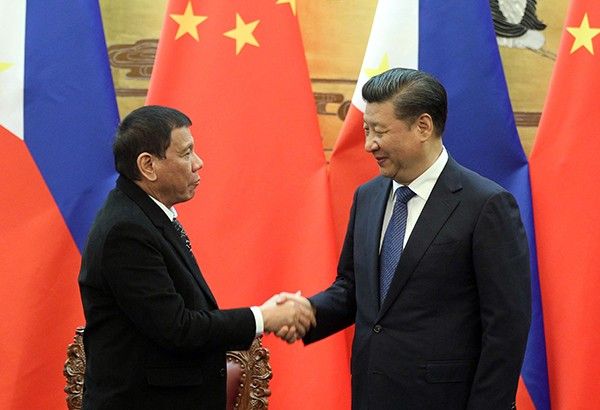
A CERTAIN senator was quoted some time ago as saying that Filipinos supporting the intentions of the International Criminal Court to probe the Duterte administration’s bloody tokhang campaign should be made to sing the national anthem 1,000 times to regain their sense of patriotism. The clear message was that, if you were in favor of an international body looking into local crimes and liabilities, you were being anti-Filipino. 

It wasn’t surprising, of course, given that the good senator was among those prominently mentioned as possible defendants in the case. In jest, he said that if he were found guilty, he would miss his grandchildren if he were incarcerated in the Hague. And just to be sure, he added that not all people in jail are guilty—he certainly wasn’t.

Without commenting on the merits or demerits of a hypothetical ICC case against officials of the previous administration—something we have enough lawyers on both sides to perorate upon—I’ll just observe that the quality of justice the senator and his likely dock mates can expect from the ICC will surely be far better than that received by the victims of summary and extrajudicial executions under the regime of tokhang. In the very least, guilty or not, they will be alive and reasonably comfortable, although they might temporarily miss the company of family and friends, as those bereaved by tokhang have come to experience for all eternity.

I was intrigued by the suggestion that repeated singing of “Lupang Hinirang” would make a better Filipino out of me, or at least make me think of the ICC as some kind of fire-breathing Godzilla threatening to incinerate the Filipino race off the face of the earth.

There are far more effective songs  for instilling love of country. Yoyoy Villame’s “Philippine Geography” will teach us more about the country we say we’re dying for than our anthem, which must have been sung hundreds of times in the halls of Congress without much palpable effect on the patriotism of some occupants. At least I’m assuming it’s regularly sung there; if not, then perhaps our senator can start a little closer to home.

(As for professing one’s innocence, oldtimers will remember Diomedes Maturan’s “Huwag Kang Manalig sa Bulong-Bulungan” (remade by Victor Wood). Even Billy Joel warbled that “Although this is a fight I can lose, the accused is an innocent man!”)

On a more serious tangent, let me swipe a page from a recent talk given by UP President Angelo A. Jimenez, himself a lawyer, at a seminar of police officials on the thorny topic of national security and human rights:

“Our police officers should be commended for the seizure of a total of P6.2 billion worth of illegal drugs in the first half of 2023. The PNP’s Intensified Cleanliness Program, aligned with the Philippine Anti-Illegal Drugs Strategy, has employed a coordinated approach among government agencies to create drug-free communities. This shows that a serious and successful war on drugs can be undertaken without any needless loss of life, for as long as we observe the law, fight corruption, and remember the need for compassion in a just society. Even drug suspects have rights—indeed, even convicted prisoners—and we maintain our moral superiority by respecting those rights, even as we dispense justice. Only then and only thus can we regain our people’s trust.

“Ours is a society that operates on leadership by example. If people see their public officials and law enforcers doing the right thing, they will follow suit. If they see the law being flouted by these very same people—such as unauthorized government SUVs using the bus lanes along EDSA—they feel entitled and emboldened to do wrong themselves. Exemplary behavior at the top will create and strengthen the moral foundation for a responsible and law-abiding citizenry. We cannot demand what we ourselves cannot supply or enforce.”

Frankly, I myself doubt that a full-blown ICC investigation will prosper under the present dispensation, which reportedly promised the senator that not a hair of his (but then, where’s the hair?) would be touched by the ICC, back when the two camps were—just to use an idiomatic expression, and meaning no malice—as thick as thieves.

Now that the knives are out between the erstwhile allies, the ICC card seems to be in play again, teasing us with the possibility of justice being done, but I’m not holding my breath. It’s just too big a risk for those in power to take, too wide a door to open—like Cha-cha for ostensibly just economic provisions. Who knows what other crimes the ICC will unearth, who else they will indict, and how far back they will go? Once you give people a taste of respect for human rights, why, they’d be at it like potato chips—they’ll keep wanting more. There’d be chaos in the streets and no, sir, we can’t have any of that, just when we need law and order.

For this reason alone, I don’t think our good-humored senator has anything to worry about, neither from the Palace nor from the Hague. He can finish his term, retire to his farm in peace, shoot the breeze (or something else) with his old boss, and have his memoirs ghost-written. Unless, of course, a certain lady succeeds in clawing her way to the top, in which case the senator—still fairly young as senior politicos go—can expect a new lease on his public life and serve afresh, perhaps in the Cabinet, where men and women of action belong, rather than in the Senate, where they’re reduced to preening and tweaking their moustaches.

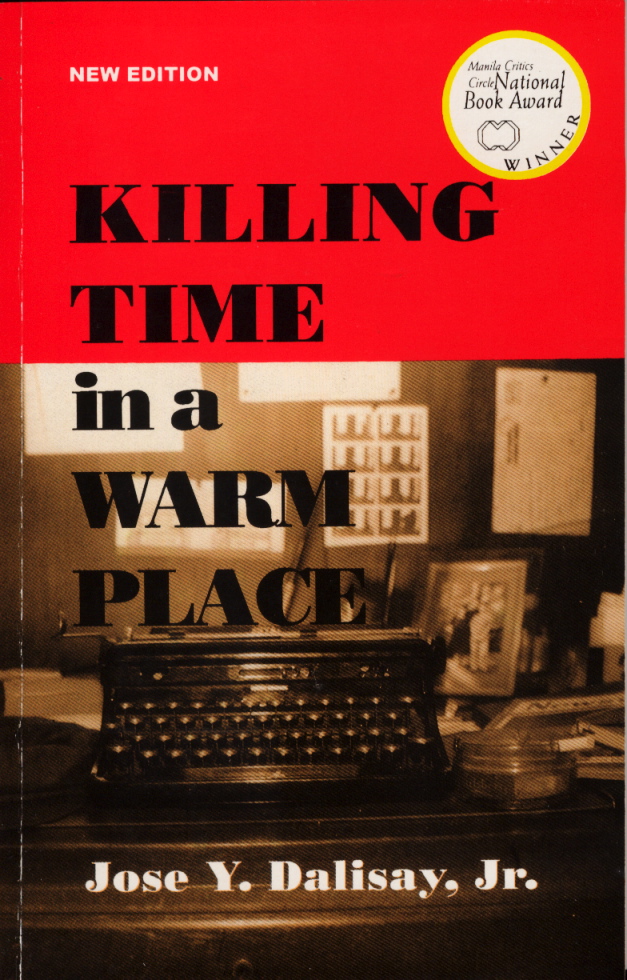
Someone with far greater and indisputable jurisdiction will take over this case and pronounce ultimate judgment; he will need no rapporteur, no investigating party, no authorization, no earthly prison; his verdict will be unappealable. His brand of justice will make the ICC look like talent-show judges by comparison. Those found guilty will be killing lots of time in a very warm place. Some people better start learning and singing hymns of repentance.

Qwertyman No. 78: Fighting Windmills in Masungi

Qwertyman for Monday, January 29, 2024

“ONDOY STARTED here.” If that memory of the catastrophic flood that turned much of Metro Manila into a deadly swamp in 2009 doesn’t chill you, then little else will.

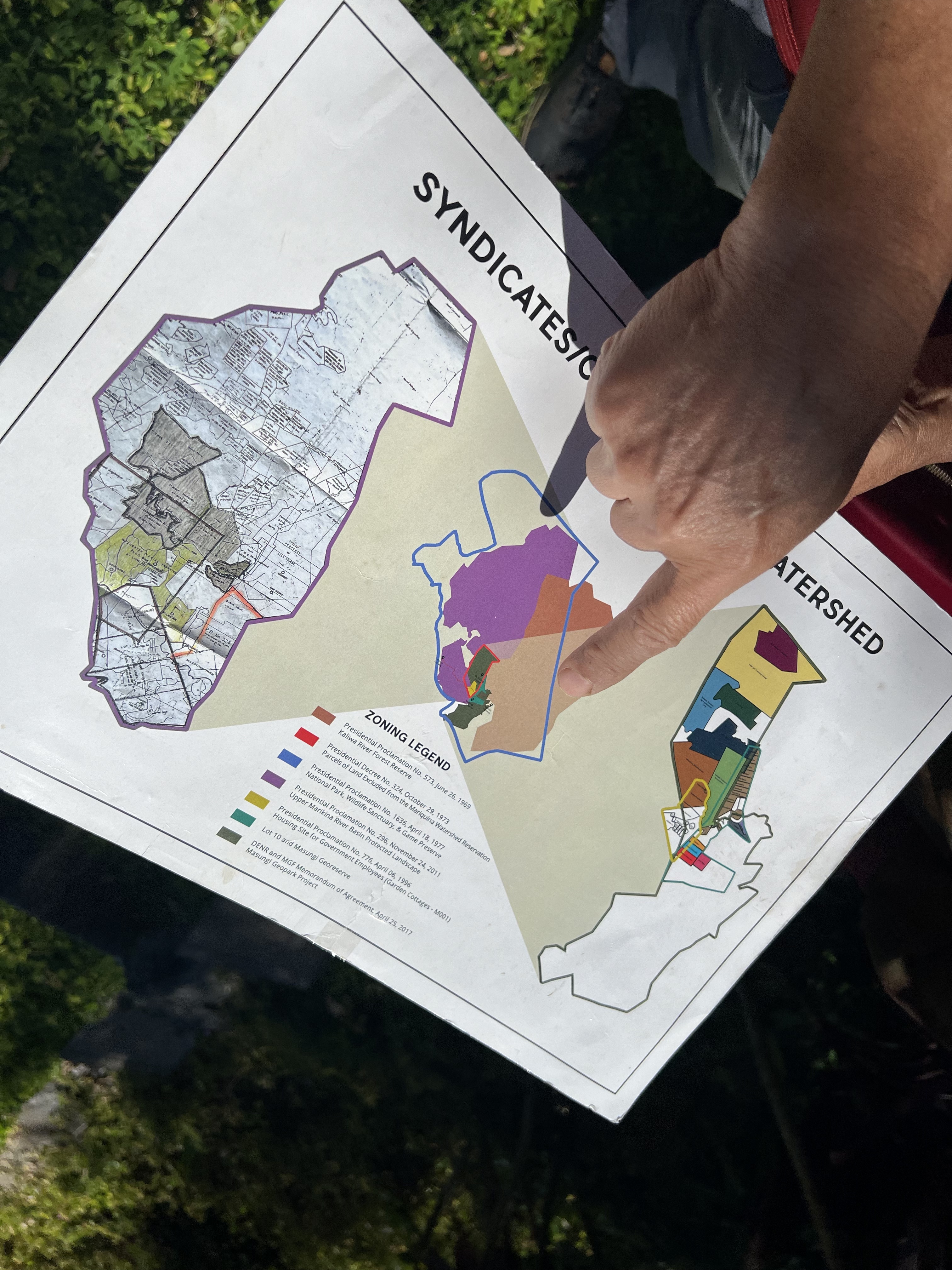
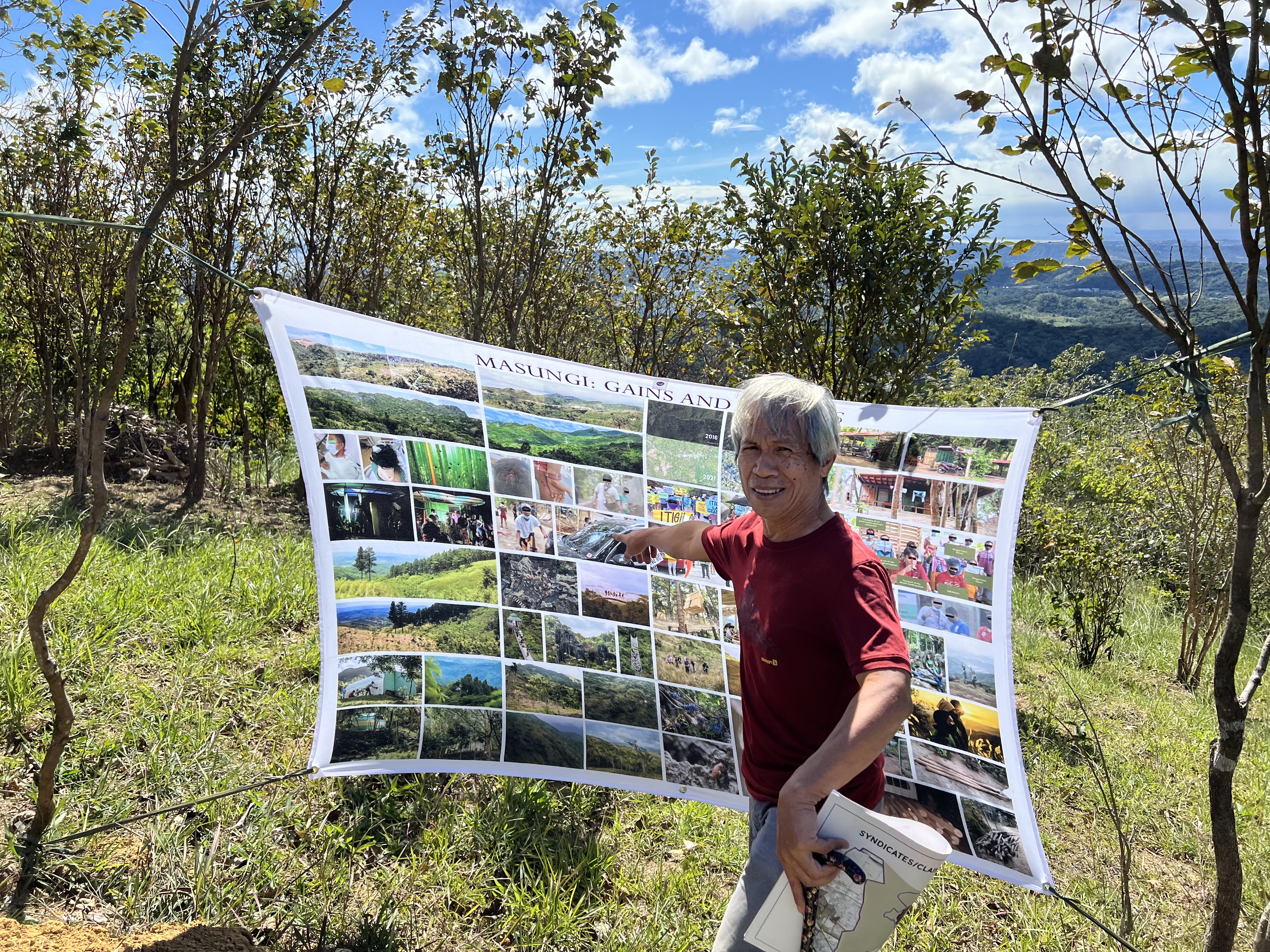
The man telling me this as he sweeps his hand over the vast Upper Marikina Watershed below and around us is Ben Dumaliang. At 68, Ben is exceptionally articulate for a civil engineer, but he needs to be, because he’s no longer just building houses. For almost 30 years, he’s been building the Masungi Georeserve—a 3,000-hectare expanse of mostly forest land on the slopes of the Sierra Madre along the boundary of Tanay and Baras, Rizal.

Masungi sits on the watershed that both nourishes and protects Metro Manila, providing it with fresh water while helping to keep flooding in check—if things like trees and streams are where and how they’re supposed to be. And there’s the problem, that helped a freak downpour like Ondoy become the biblical torrent it turned out to be. 

“Much of this was logged over not too long ago,” says Ben. “We had to reclaim the land from the loggers, the quarry companies, and the land speculators, and then reforest it.”

Today the Masungi Georeserve is about as close to a natural Eden as you can get this close to the city—about 30 kilometers from where I live in Diliman—with lush new growths of Philippine trees, unique plants and animals such as the purple jade vine and the Masungi microsnail, and hundreds of endemic species including 72 kinds of birds.

But it wasn’t always that way, as Ben recalls the georeserve’s unlikely beginning. “This was government land that the Department of Environment and Natural Resources (DENR) intended to use for employee housing back in the 1990s. In 1996, my construction company, Blue Star, won the bidding for the housing project, and we began building roads on the property and making improvements on it. However, the land had been chopped up among various syndicates, and the DENR failed to deliver on its obligation to clear the land of settlers, and after a while people lost interest in living here, and the housing project stalled.”

In the meanwhile, Ben had begun to appreciate the natural beauty of the place, despite its ravaged state, and started developing parts of it—particularly the centrally located Lot 10, which remains the hub of the georeserve. He began taking the land back from its illegal settlers, who included rich and powerful people who had put up cottages in the area.

Almost immediately, he began to get blowback. “Our rangers were shot at and mauled when they tried to do their job, and the police did nothing about it.”

Not surprisingly, Ben says that a group of police generals had apportioned parts of the watershed among themselves, citing the Marcos-issued PD 324 which had declared these lands alienable (conveniently forgetting that PD 324 was effectively repealed by Marcos himself under the Forestry Code aka PD 705 and by Presidential Proclamation 1636 prohibiting tree cutting and dwelling in the watershed). 

In 2015, Ben’s daughters Billie and Ann set up the Masungi Georeserve Foundation, to which Blue Star entrusted the care and management of the area. (Ben is a principal in both entities, and both daughters remain active in the foundation.)

It was in 2017 that the most auspicious turn happened for Masungi. Then newly appointed DENR Secretary Gina Lopez visited the place, liked what she saw—particularly what Ben and his people were doing to restore and conserve the forest—and had a contract drawn up between the DENR and the foundation granting it the right and obligation to replant the georeserve. 

Today sturdy growths of Benguet pine crown the hilltops of the watershed. The georeserve is thick and picturesque with trees, orchids, and returning wildlife. A limited number of ecotourists come every day to hike trails that weave through the sharp karst limestone landscape.

But not far below the pine trees, Sitio San Roque in Baras remains host to a bustling community (that reportedly includes, yes, at least one police general and one high-ranking government official who owns a pool resort, against whom a case had been filed but who was allowed to retire with full benefits). “The syndicates and rogue officials are the root cause of deforestation and environmental degradation,” says Ben. “I fear for my life and my family’s,” he admits. “It’s very easy to die in a place like this.” (For more background information, refer to my fellow columnist Jarius Bondoc’s piece from September 13, 2023, titled “DENR ignoring public appeals to evict watershed landgrabbers.”)

The threats are more than personal. Insanely, the Bureau of Corrections managed to secure 270 hectares in the heart of the reserve to build a new national penitentiary and its headquarters there. The DENR also reportedly agreed for Tanay to build wind turbines on the ridge overlooking Lot 10. Neither project can possibly be good for jade vines, microsnails—and people, for that matter.

Some days, Ben feels like he’s fighting windmills in Masungi—and not just the literal ones, either. He doesn’t understand what he sees as the antipathy of the DENR toward him and the foundation. The DENR wants his contract canceled, ostensibly because he had gotten Sec. Lopez to sign it when she was ill and just before she left office after failing to be confirmed (Ben denies this, saying she was the one who insisted on the contract getting done. “They seem to think I’m getting rich from this, but in fact I’ve been drawing from my own resources for the georeserve,” he explains. The MGF gets no funding from the government and relies on its limited income and on private support for its operations.) DENR Sec. Ma. Antonia Yulo-Loyzaga, he says, has ignored all his letters and requests to meet to thresh out any issues between them.

Nature reserves don’t grow just trees—they breed enemies, few of them natural; most walk on two feet.

(On a rather distressing side note, I have good and trustworthy friends on both sides of this issue messaging me to believe this and not to believe that. For the moment, I’ll have to believe the evidence of my eyes, but to be fair, I invite the DENR to send me their comments, and specifically their answer to this simple question: “What is the Masungi Georeserve Foundation doing wrong?”) 

Qwertyman No. 76: What I Have Learned

Qwertyman for Monday, January 15, 2024

PARDON ME if I wax a bit personal today, as I turn 70, much to my great surprise, coming from a generation that didn’t expect to live past 25. I’ve often noted that in your 20s, you seek purpose and direction; in your 30s, stability in terms of love, family, and work; in your 40s, professional success and serious money; in your 50s, acclaim and reputation; and in your 60s, good health and comfort. Now, on the threshold of my 70s, I find myself accepting and preparing for the inevitable, the average life expectancy of the Filipino male now hovering at 72.

More significantly, my wife Beng and I are also celebrating our 50th anniversary. I’ve never quite resolved if it was a good idea to get married on my birthday—and just my 20th at that—but there was never any doubt that marrying Beng was the smartest decision I ever made, and that waking up beside her every January 15 is the best birthday gift I could ever ask for.

But I’ll spare you the love story, which, like all good love stories, has had its fragile moments. For now, let me share some lessons and insights I’ve learned from surviving the First Quarter Storm, martial law, EDSA, GMA, Ondoy, Yolanda, tokhang, and, for the moment, BBM. They’re by no means complete, and I still have a lot of learning to do in what I hope to be at least another decade of avoiding the lyres up there (or the pitchforks down there). But they’ll serve for now, hopefully to encourage newlyweds and young ones to hang on for the long and bumpy but also often exhilarating ride. 

First, survival matters. Fifty years ago, my comrades and I were all prepared to give up our lives for our cause, but today I’ll have to ask, “Must I?” Heroic self-sacrifice is symbolically important and can inspire others to take personal risks for the greater good, but a genuine and strategic movement for change cannot consist solely of martyrs willing to die in combat; its core must be formed of patient plodders willing and able to undertake the mundane tasks and chores of nation-building within their families and communities. For that one will need to co-exist with evil, if need be, if only to survive it and be able to do better. Co-existence does not necessarily mean surrender or acceptance, merely an affirmation of one’s right to live as well as anybody else. Resistance can take many forms, not all of them fatal; we need to be clever and resourceful in championing the truth, which is often starkly simple and clear but sometimes also just as complicated as the well-fashioned lie. 

Second, tolerance and cooperation are key to every successful relationship, whether it be a marriage or co-existence in a deeply fractured society. But also key to this idea is self-knowledge, which builds self-confidence and a greater willingness to understand and accept the other, and to educate oneself. Many early marriages falter because the protagonists are simply too young, too vulnerable, and still struggling to define themselves. Growing up on one’s own is difficult enough; growing up together is even more challenging, but necessary. I was 20 when I became a husband, and later that year, a father, and didn’t really know how to be either. Thankfully Beng and I had good role models in our own parents, and enough love to work things out and see things through. Eventually, we learned to define ourselves in terms of the other—so that today, for me, no trip is worth taking without Beng, and her joys and successes are mine as well. Forgiving oneself and accepting one’s imperfections are not only as important as acknowledging the other’s, but are prerequisites to mutual self-improvement.

Third, “compromise” is not a bad word, if we are to survive as a nation together and as individual citizens. In our 20s—much surer of our convictions than of our own squishy selves—we viewed the world in black and white, certain that the enemy was out there, was not us or within us, and had to be rejected and battled in all arenas, on all levels. I’ve since learned that life can’t be lived on an all-or-nothing, take-it-or-leave-it basis, and that one has to negotiate with oneself as well as with others to keep whole and sane. An absolutist will never find peace, nor satisfaction, and likely never happiness. Learning to take things as they are—and working from there—can be harder than to merely insist on things as they should be, and to do nothing when they are not. Just as important as highlighting our differences are finding and building on the things we can agree upon—like resistance to foreign encroachment on our territory, which helps clarify our self-image—regardless, though still mindful, of our suspicions of the other’s motives. Opportunistic politics can sometimes be the inadvertent handmaiden of good outcomes.

Fourth, I’ve learned my limitations, and to do my best within my foreshortened horizon. I’ve realized that I can be happy in not trying to do too much, living in the moment, and finding fulfillment in small achievements that bring change and hope to other people. I haven’t given up my dreams for a more just, progressive, and provident society, and will continue to fight for those ideals, but I will choose activities and means that will lead to something I can see and hold (and that others can repeat, improve upon, and grow for the future). Big ideas are great, but small deeds can be just as valuable. I want to make a difference in someone’s life today. 

And finally, there is an afterlife. I frankly don’t know if there’s a heaven or a hell as the colorful posters in my grade-school religion class depicted them, but what I’m sure of from having attended countless funerals is that an important part of that afterlife and of its very proof is the life of those you will leave behind. When you die, others live on; they’ll talk about and even shed tears for you for a few days, and then they’ll move on to more pressing matters like tax amnesties and next Tuesday’s price of gas. Now and then your name will come up over morning coffee or a late-night beer, and the smile, the laugh, the sigh, the wince, or the cuss word that your memory will provoke will say everything about who you were and what your life was all about. I’ll be happy with a smile—maybe a bit regretful, but mostly pleased to have crossed paths with and even to have learned something from me. Mabuhay!

(With many thanks to May Tobias-Papa for the illustration)

Qwertyman No. 75: Trump 2.0

Qwertyman for Monday, January 8, 2024

IN MY column last week, I mentioned the “Trumpian dystopia” threatening to take over the United States and many other rightward-leaning societies and governments around the world. 

A “dystopia” is, of course, a place or a situation where everything has been turned on its head, where the bad has become good and the wrong has become right, and where the things we most feared or abhorred have become the norm. You find this in George Orwell’s 1984, where the government controls everything; younger readers and viewers will relate to Suzanne Collins’ The Hunger Games, where citizens are sacrificed for the Capitol’s entertainment. In other words, it’s social and political hell for those reared in the kind of postwar liberalism that eschews racial discrimination, authoritarianism, gender inequality, and religious intolerance, among other shibboleths.

It’s hard to believe that much of America seems to be marching in lockstep toward that dystopia under a revived Donald Trump, wh0m nearly all polls see as leading the race for the US presidency, which will be at stake in November this year. On this date three years ago, he was squarely in the doghouse in the aftermath of the shockingly violent assault on Congress on January 6 by Trump partisans unwilling to accept that he had lost to Joe Biden in the election. Even his closest allies at that time distanced themselves from his apparent captaincy of that bloody caper, although many of them have returned to his kennel. 

Nearly a full presidential cycle later, he’s back in the Republican saddle, way ahead of a pack of rivals who, save one, have refused to denounce Trump for what he is: the greatest single threat to American democracy because of what he represents (leaving aside foreign tyrants like Vladimir Putin and Kim Jong-un). That, not surprisingly, is President Joe Biden’s exact description of him, so some might say it’s biased, but to remain unbiased against Donald Trump is to lie prostrate in front of a steamroller, begging to be annihilated.

It doesn’t help that the incumbent is 81 years old, palpably slow, avuncular, and whispery where Trump screams into people’s ears (to the delight of many). Their age difference—just four years—isn’t actually all that much, but beyond personalities, it’s a difference in cultures, and perhaps of understanding how politics works in this post-Facebook age, where obnoxiousness has become a virtue and regularity a liability.

Trump thrives on notoriety, parlaying the four indictments involving 91 criminal charges against him—plus the two disqualifications from state ballots—into a kind of a badge of courage, flipping prosecution into persecution. Rather than fracture his base, any attack on Trump (and any attack by him) only seems to consolidate the estimated 30-40% of hardcore Trumpers who now effectively define the Republican party, the tail wagging the dog.

Among the most repugnant (and, by Trumpian logic, among the most attractive) of his recent statements has been his denunciation of undocumented migrants as “poisoning the blood of our country,” specifically mentioning Latin America, Africa, and Asia as the sources of what in other speeches he has called rapists, terrorists, and Covid carriers.

You would think that that kind of Hitlerian rhetoric would galvanize the Hispanic and Asian-American—not to mention the African-American—communities in America against Trump, but no. If anything, his support among these groups seems to be rising, driven ironically enough by his hardline position on immigration, the very same factor that made these minorities possible to begin with.

What I’m interested in is how the Filipino-American community will respond to Trump 2.0, and what that will say of us as a people, albeit as one of many minorities in America’s multiracial society.

There are now about 4 million Filipino-Americans; half of them, 2 million, are voters. (To put this in context, the US population now stands at 336 million, of whom 170 million are voters.) Historically, Filipino-American voters have leaned Democrat, with a majority of them voting for Hillary Clinton and Joe Biden in 2016 and 2020. But a very vocal (though perhaps somewhat less visible, as many people tend to reveal their preferences only in the voting booth) “Filipinos for Trump” movement exists, and if trends persist will likely gain more traction this time around.

In 2020, Filipino pro-Trumpers cited “family, religion, and faith” as the main reasons they were backing him, like many American evangelicals, despite all the evidence to the contrary in Trump’s personal behavior and speech. For many, it all came down to one issue—abortion—the right to which has now been successfully rolled back by the Supreme Court’s conservative majority. This time around, the flashpoint will likely be immigration, a global problem abetted by collapsing economies and repressive regimes. Well-settled minorities such as Filipino-Americans derive a strong sense of entitlement from all the personal sacrifices and legal processes they went through to acquire their citizenship, and feel cheated by migrants scrambling across the border. This kind of single-issue vote—a gross simplification and reduction of values into one criterion—favors demagogues like Trump, who work through two-dimensional posterization.

A more interesting—and more sinister—reading of Trump’s popularity came up in a recent guest essay in the New York Times by Matthew Schmitz, arguing in his title that “The Secret to Trump’s Appeal Isn’t Authoritarianism,” but rather that “Mr. Trump enjoys enduring support because he is perceived by many voters—often with good reason—as a pragmatic if unpredictable kind of moderate” and “a flexible-minded businessman who favors negotiation and compromise.” That logic, while fetching, predictably drew quick rebukes. One reader said: “Thanks, Mr. Schmitz, but we’re already well aware of this. Italians liked Mussolini because he ‘made the trains run on time.’ This is exactly our point. This is how dictatorships happen.”

That brought me back to our own long and continuing affair with despotism, and how sharply simplified populist sloganeering can cut through and cut down on complex reasoning—with devastating consequences for democracy, here and across the Pacific. 

(Photo from colorlines.com)

Qwertyman No. 74: A Church for All Humanity

Qwertyman for Monday, January 1, 2024

YOU NEVER see me write about religion, because I believe it’s an intensely personal thing (albeit with a communal aspect), but I can’t help being surprised and saddened by what seems to me to be the latent homophobia—intentional or otherwise—brought to the surface by Pope Francis’ recent statement allowing Church blessings for same-sex couples. Despite the fact that that statement was heavily qualified—that it wasn’t to be seen as “sanctification,” etc.—it still triggered a violent backlash from conservative Catholics, clergy and lay persons alike, who protested that the edict violates established Church doctrine. 

Some of these objectors are my good friends (and they will remain so, unless they say otherwise). Many among them will proclaim that they’re not homophobic at all, that gay people and couples are among their best friends, and that they’re merely upholding a key tenet of their faith—which just happens to exclude homosexuals from the blessings of the Church, because they’re fundamentally living in sin.

But I can’t see how that attitude—which some might call a holier-than-thouness—advances Christian love and charity. Pope Francis’ halfway gesture is compromised enough as it is, but would still have been a welcome step toward redefining a church that’s tried to keep a stiffly male face—despite the many gay people in its ranks—for millennia.

I grew up a church-going Catholic boy (inevitably for a La Sallista) but stopped going to Mass a long time ago, as a liberal feeling distanced from the Church’s positions on such hot-button issues as birth control, abortion, divorce, and homosexuality, not to mention its too-cozy relationship with authoritarian regimes in many places around the world. 

I do admire and support the efforts of many priests, nuns, and other religious to confront and ameliorate our social problems and fight for justice and freedom. I continue to pray, many times a day and at bedtime, for the sick and the oppressed, and to thank God for my blessings. I never formally studied theology nor the history of religions, but from what I can gather (and here I invite the experts to instruct me) what distinguishes the Catholic Church from others is its emphasis on good deeds as the path to heaven, rather than faith alone. You have to earn your sainthood; it is neither promised nor can it be bought. If so, that appeals strongly to me, as I’m sure it does to others. 

But whenever I think of the Vatican and its hierarchy of old men whose meals are answered for by the alms of billions of the faithful and investments in blue-chip companies and real estate, among others, I remember a side of the Church that depends on its moral authority to survive as both a keeper of beliefs and as a global industry. 

No one is surprised by the sordid financial and sexual scandals that have rocked the Church, as they merely prove that some people who run it are as fallible as anyone else. This is not why I left the Church, which I still want to think of as something transcendent, an idea of community above the mortal men and women who make up its body. What disaffected me was the arrogance of its orthodoxy—in which, among religions, it is hardly alone.

I’ll grant that every religion needs a body of core beliefs, some of which will be non-negotiable; if you don’t like what you see, you’re free to go somewhere else. I understand the dismay of the faithful over “cafeteria-style” religion where you can pick and choose what to practice and what not. But I had thought, perhaps mistakenly, that religions have a stake in inclusivity, in upholding beliefs and values that embrace persecuted minorities (as the Christian church itself once was).

I’ll acknowledge that apostates like me probably have no business lecturing devout believers on matters of doctrine. But this isn’t even about the finer points of doctrine, but rather about the broad strokes of faith and, ultimately, what and who that faith serves. If issues like gay relationships and marriage and divorce are to be the line in the sand that separates the true Church from the false (rather than, say, love of neighbor), then sadly I must stay out (to which the conservative core can say “good riddance,” or otherwise pray for my wayward soul). Exclusionary policies are never just internal matters, because they affect the perception of the excluded; indeed, they affect the excluded, and those who identify with them.

Pope Francis has been the first Pope in a long time to have revived my hope in a Church that finally embraces the idea of an inclusive love of humanity as central to its practice, if not its survival. The closing of minds and hearts in our growing Trumpian dystopia calls for a far more powerful spiritual force to overwhelm the spitefulness gripping much of the world today. I would rather look up to Pope Francis and such other figures as the Dalai Lama—rather than a consistory of ambitious cardinals and bishops—to show the way forward. 

I hope I won’t be alone in suggesting that much more work remains to be done, even beyond Pope Francis, toward such liberative measures as the ordination of women, for the Roman Catholic Church to be not just a church for the 21st century, but for all time, and for all humanity.

(Photo from cnn.com)

Qwertyman No. 72: Bullets to Ballads

Qwertyman for Monday, December 18, 2023

MAYBE IT’S that time of year, when we get all wishful and start asking for things that will likely never come or never happen—like peace on earth and goodwill to men—but it’s the wishing that keeps us human.

Two weekends ago, I had the extraordinary privilege of spending Saturday night and then Sunday morning listening to two different concerts. The first, at Manila Pianos in Magallanes, featured tenor Arthur Espiritu and soprano Stefanie Quintin Avila in a program that brought the audience to its feet and singing along at the end of many encores.

After that wonderful performance, I messaged my deepest thanks to concert producers Pablo Tariman and Joseph Uy, noting that they made “magical interludes like this possible in these stress-filled times. If only all those bombs and bullets in Ukraine and Gaza were music. Fire symphonies, concertos, fugues, and cantatas across the border!”

The next morning, we drove out to Batangas City for another friend’s birthday celebration, which was heralded by a sparkling mini-concert with soprano Rachelle Gerodias and tenor Jonathan Abdon. At lunch that followed, I sat down at a table with a renowned journalist, a composer-performer, and a senator, and we were all breathless with joy at the music we had just experienced. It was the composer who put it best: “How can anyone argue with that?”

Indeed, in a world and at a time prone to argument and conflict, where even the most innocuous remark can ignite scorching disputation, the enjoyment of music seems to serve as a universal balm, a hushing power that creates a pause just long enough for us to remember our better selves—taming fangs, retracting claws, infusing tenderness into the coarsest of sensibilities. As William Congreve put it more than three hundred years ago, “Music hath charms to soothe the savage breast” (not “beast” as it’s often misquoted, although it could apply just as well).

As I’ve noted elsewhere, whenever I think of music as a discipline, what comes to mind is Leonard Bernstein’s description of it as “the only art incapable of malice.” That may or may not be true—music in specific historical contexts such as Nazi Germany and our own martial law has certainly been made to serve the purposes of despotism. 

I recall that in 1980, in particularly disturbing example of music perverted for fascist pleasure, a film titled “Playing for Time” (written by Arthur Miller as an adaptation of the French Jewish singer-pianist Fiana Fenelon’s autobiography The Musicians of Auschwitz) showed how concentration-camp musicians were forced to play to entertain their jailers as well as to stay alive. It still chills me to the bone, as a prisoner under martial law, to hear the New Society anthem “May Bagong Silang” being played anew over the radio as though the past half century never happened.

Still, most people will surely agree that music has wielded a beneficent influence on human life and society, in ways that appeal directly to the heart and mind. 

In my own lectures, whenever I need to reach for metaphorical illustrations of the power of art to compel the human spirit, I turn to music. I advert to composer Dmitri Shostakovich, whose Symphony No. 6 in C Major, which came to be known as the “Leningrad Symphony,” was premiered during the siege of Leningrad by the Germans in July 1942, and became a kind of anthem of Soviet resistance, and to the story of the Berlin Philharmonic persisting in recording Brünnhilde’s Immolation Scene and the finale from Wagner’s Götterdämmerung despite the Allied forces knocking on Berlin’s gates in April 1945 (supposedly you can hear artillery in the background of that recording). 

It may be too romantic to hope that music will waft over the bunkers in Ukraine and Gaza this Christmas season and still the gunfire, however briefly. We’ve all seen that movie and know how it ends, with a renewed barrage of rockets—ordered by stiff-backed men far away from the trenches—drowning out the carols.

But there are other battles being waged much closer to us this season where a little night music might help quell the temptation to savage one another—even across the dinner table. 

I can imagine how many Christmas parties will settle down to drinks and coffee and devolve into a discussion of the Israel-Hamas conflict, and explode quickly into partisan debate over proportionality, Biblical prophecy, Hiroshima, the Holocaust, Vietnam, Zionism, British colonialism, Arab nationalism, Munich, Entebbe, Eichmann, George Soros, anti-Semitism, Netanyahu, 9/11, and the Yom Kippur War (have I missed anything?). Half the world away from the frontlines, I haven’t seen an issue divide Filipinos—at least those who keep abreast of the news—so sharply as this one, which has become a kind of litmus test of one’s faith or humanity.

Much of that acrimony has, of course, been enabled by the Internet and the ease it provides for instant (often unthought) response—a habit we’ve ported over, perhaps unconsciously, into our daily lives.

Against this backdrop, music is a call to order, a shaping of emotions across a roomful of rampant urges, longings, and resentments. We can choose but not control it; the best response to music is one of sublime submission, from which experience we emerge refreshed and ready to be human again. 

A meaningful and peaceful Christmas to us all!

(Image from economist.com)

Qwertyman No. 71: A Breakthrough for Peace

Qwertyman for Monday, December 11, 2023

I HONESTLY didn’t know what to feel when I first read the news that a breakthrough appears imminent in peace negotiations between the Philippine government and the National Democratic Front (and behind it, the Communist Party of the Philippines), whose soldiers and partisans have been at war with each other for over half a century, in one of the world’s longest-running insurgencies.

As a student activist who fought martial law and got imprisoned for it at age 18, I didn’t expect to live past 25 because so many of my friends and comrades were giving up their lives around me in the name of freedom and justice. Instead, in a Forrest-Gumpish turn of events, I survived and even prospered for another 50 years. As I wrote in my introduction to the book SERVE (Ateneo Press, 2023), co-written with 19 other fellow stragglers from what we called the First Quarter Storm, “We celebrated our seniorhood as the ultimate victory” even as “the experience of martial law coded itself into our DNA.” That victory, of course, is a shallow one, considering that the causes we fought for remain as valid and as urgent today, and that the social cancer we sought to excise “had never left, was always there, lying cruelly in wait for a chance to ravage us again—and not only us this time, but our children and grandchildren as well.”

My reaction to the peace talks—and I would guess that of many of my peers as well—was one of joy and relief, but inevitably compounded by some doubt and apprehension. All of these responses, however disparate, have their reasons.

The joy and relief must be paramount because, however we look at it and whatever arguments may be presented by either side, the armed conflict has gone on too long, without truly positive and strategic gains to show for five decades of warfare, at the cost of innumerable lives and massive drains on our resources. This is not to say that those lives were wasted nor that everyone’s goals have been met, but that surely there must be a better way—a more humane and effective way—to resolve our differences and move forward together without having to kill yet another cadre or yet another soldier, both of them probably just farm boys looking to improve their lives. 

Ultimately and simply, it didn’t work as planned—neither the “people’s war” nor the counter-insurgency. (Curiously, they manifest a kind of symbiosis or co-dependency, with one providing the basis for the other.) The Left is as far from seizing State power as we are from achieving a FIBA championship (no matter virtue, skill, or tenacity), and the Right remains essentially as it has always been, unreformed and unrepentant in its monopoly of economic and political power. But the Right seems to have been more clever at shapeshifting, riding on and pandering to the digital consumerism of a new generation and thereby dousing its revolutionary fervor, while the Left has basically stuck to the playbook and rhetoric of 1970s Maoism.

Meanwhile, in the great section between them, the masses of our people remain largely poor and vulnerable, in desperate need of food, housing, work, and education, a significant number of them kept afloat only by the grueling sacrifices of fathers, mothers, and siblings laboring overseas. Some decline has been noted in the incidence of mass poverty in recent decades, but it has been slow and uneven; even moderate economic growth did not necessarily lead to significant poverty reduction. 

We are said to have a rising middle class—estimated by the Philippine Institute of Development Studies at 40 percent of the population—but it is a very fragile one, strongly aspirational in its longing to be rich or be like the rich, but weak in the knees, and easily crushed or co-opted. Those of us in this category spend our lives saving up for the good things and cultivating our composure, only to lose all that in one catastrophic illness or declaration of redundancy.

Politically, as well, I place myself squarely in the middle, never having trusted the Right and its compulsive greed for wealth and power and long having fallen out of love with the Left, which has shown itself to be just as capable of cynical calculation. I declare myself a liberal (with the small “L”), with all of that word’s ambiguities and contradictions. I repose my faith in no party or church or army, but trust my reason (however faulty, and with God’s grace) to lead me to the truth and to the right decisions. I draw strength from knowing, as I saw in the crowds of May 2022, that a huge wellspring of goodness and positive purpose resides in many if not most Filipinos. We cannot and will not let bad politics and bad politicians stop us from doing good, in our families, communities, and eventually our nation.

However fractured our society remains, in the very least we deserve peace, and must agree on peace, so we can banish one of the darkest specters in our national history. No more war; no more political prisoners; no more tokhang. And please, no more Leila de Limas.

But a just and lasting peace will require not only a rejection of violence as conflict resolution. It should also mean strengthening the law and the independence of the judiciary, reducing corruption, and depoliticizing the military and police. It should mean dismantling the broad and expensive State apparatus devoted solely to counter-insurgency, a factor that the National Security Council itself has declared “a dying threat” even as military budgets remain high. Deploy our soldiers to our coastal waters and boundaries, where the real dangers to our national security loom.

The irony of another President Marcos securing the peace has not escaped me, as I’m sure it will perplex others, but I grant that peacemaking will require being able to look beyond the persons for now and focus on the larger goals and processes involved; other reckonings can follow. I’m under no illusion that the GRP and the NDF will sing “Kumbaya” around a campfire and that all will be well thereafter. Neither party comes to the table with clean hands and consciences. Both come with long histories of violence, betrayal, and guilt. There will be more hope than trust to share.

But a peace agreement is not a marriage, with a pledge to love and hold hands no matter what, merely a civil agreement to live under one roof without killing each other and maybe, just maybe, have an occasional cup of coffee or a meal together. 

For this I am willing to suspend my disbelief, and wish all the parties the best of luck, with a silent prayer for this most unlikely and difficult of enterprises. Other battles and debates can follow; let’s end this one first.

Qwertyman No. 69: Tabi Kayo Riyan!

Qwertyman for Monday, November 28, 2023

WHEN THE EDSA busway—a special lane just meant for public utility buses—was inaugurated in June 2020, I was among the many millions of Metro Manila motorists and commuters who breathed a sigh of relief and said, “Finally! Somebody’s come to their senses and did what had to be done.” 

It wasn’t going to banish the traffic problem for good—that burden still lies with our woefully inadequate mass transit system—but it applied a logical solution to a particularly oppressive aspect of our urban existence, the infernal sludge that tossing private cars and public buses into the same slurry produces. The traffic’s still bad in many spots on busy days and hours, but at least you could see some order in disorder. For this driver in his car, I can even find some ironic humor in watching buses speed down their lane while I struggle like a jockey in the middle of the pack to keep a nose ahead of the big SUV sniffing at my flank.

We’ve seen these special bus lanes in use elsewhere—most notably in Jakarta and Bangkok—and they seem to work. (Bangkok’s bus lanes have been around since 1980; Chicago adopted the world’s first bus lane in 1940.) London has set aside about 80 kilometers for 24/7 bus lanes, but some other roads also have designated bus lanes during peak hours; the fines are stiff, going up to as much as P11,000 for an infraction.

Here in Manila, according to the Management Association of the Philippines (MAP), just 550 buses transported as many as 450,000 people a day along EDSA as of December 2022; in its 30 months, the busway accommodated 154 million passengers. That’s a lot of traffic and a lot of people, and the true social benefit of a bus lane isn’t that these buses and their passengers are being shunted aside for our cars to move a little faster, but that those passengers—most of them the workers and wage-earners to whom we owe our other comforts—get to work and get to come home to their families sooner. It’s tacit acknowledgment that their lives are hard enough, and every bit of relief counts. In a sense, it’s social justice in practice. 

But now comes a proposal from the Metro Manila Development Authority (MMDA)—already approved by the Department of Transportation (DOTr), we’re told—to grant exemptions to the President, the Vice President, the Senate President, the Speaker of the House, and the Chief Justice, riding in five-car convoys, to use the bus lanes. Even more, senators and congressmen are also being considered for exemption (emergency vehicles and properly identified government vehicles are already exempted).

It might be argued, at least in theory (since the mischievous will ask for proof), that the big poohbahs have important national business to attend to, requiring their expeditious transport from Point A to Point B. (In Jakarta, only the President and the VP are exempt.)

The same cannot be said for senators and especially congressmen whose business it is to know the situation on the ground and to bring relief to their commonest complaints. Chief among those complaints for millions living in the metropolis is the horrendous traffic, a three-hour immersion in which should be part of every politician’s initiation into public service. 

As even Patricia Evangelista noted in her landmark book, Some People Need Killing, President Noynoy Aquino—for all of his virtues—lacked and almost disdained the common touch. But he understood the fundamental relationship between a leader and his people, and what he may have wanted in empathy, he compensated for in correctness. His proscription against the use of sirens and alarms to open a Moses-like path through traffic for government officials may seem trivial but sent absolutely the right message to citizens for whom “Daang Matuwid” might as well have been just another throwaway slogan. 

Sadly, our “wang-wang” culture—which, as a STAR editorial noted just last week, involves “not just the actual use of sirens and blinkers by VIPs whether in government or in the private sector, but the mindset itself that it’s OK to jump the line and that public officials deserve such VIP entitlements”—has crept back after PNoy, with a vengeance. 

The convoys of black, tinted SUVs with their sirens screaming “Tabi kayo riyan!” have become ubiquitous once again, flaunting the perks of power. The MAP deplored this by stating that “Accommodating convoys of officials demonstrates inconsistency of public policy: favoring the privileged few over the overwhelming majority of the commuters and motorists who deserve an efficient EDSA busway.” I’m sure that you and I have shorter and less Latinate words to say every time one of those convoys brushes past us on EDSA and along that larger avenue we call Philippine society.

That society, for better or for worse, takes its cues from the top. When our presidents behave, we (or most of us, at least) try to walk the straight and narrow; when they steal, their minions feel emboldened if not empowered to fill their own pockets; when their mouths spew obscenities like sewers, rudeness and vulgarity become excusable, and even fashionable.

In the Tang dynasty, the Emperor Taizong was known to be a wise ruler, and even wrote The Zenghuan Executive Guide, a kind of management manual. Among his best practices was the employment of “remonstrants”—as many as 36 of them—whose job was to provide the Emperor with “remonstrances,” to tell him to his face what he was doing wrong. “I often sit quietly and reflect on myself. I am concerned that what I have done may … cause public discontent. I hope to get advice and remonstrance from honest men so that I am not out of touch with the outside world,” Taizong was quoted as saying.

There’s no record of whether the Emperor Taizong’s soldiers pushed other wagons and pedestrians aside on the road to make way for the imperial train, but I suspect not. I just wonder, who will be our Taizong, and who will be his remonstrants?

(Photo from topgear.com.ph)

Qwertyman No. 68: What We Aspire For

Qwertyman for Monday, November 20, 2023

IT WAS a humbling but also uplifting experience to attend the 65th Ramon Magsaysay Awards ceremonies last November 11 at the Metropolitan Theater, in which four new awardees—including Filipino peace negotiator Miriam Coronel-Ferrer—were honored for their contributions to humanity. Long considered Asia’s version of the Nobel Prize and certainly its most prestigious honor, the RMA has now gone to over 300 recipients from all over the world in the fields of government service, public service, community leadership, journalism, literature, and creative communication arts, peace and international understanding, and emergent leadership.

This year’s four laureates represent a wide range of endeavors.

Miriam Coronel-Ferrer (Philippines) exemplified and championed the role of women in peacemaking, leading the negotiations with the Moro Islamic Liberation Front that led to a Comprehensive Agreement on the Bangsamoro. She has since lent her skills and wisdom to peacemaking efforts in East Timor, Cambodia, Afghanistan, Kosovo, and Iraq, among other conflict zones.

Eugenio Lemos (Timor-Leste) mobilized young Timorese to adopt permaculture, a holistic system to create and manage sustainable agrosystems. His approach and methods have been adopted by Timor-Leste’s schools and local governments. Going beyond food security, Lemos emphasizes the need for “food sovereignty,” a country’s ability to produce its own food, with a focus on local, natural, and nutritious food. 

Ravi Kannan (India) set up the Cachar Cancer Hospital and Research Center in one of India’s most remote and poorest regions to bring cancer care to those who could least afford it. Dr. Kannan resolved not just to create a state-of-the-art facility, but also to make it accessible to the poor by offering free treatment, room and board, temporary employment for caregivers, and a homecare program for patients. 

Korvi Rakshand (Bangladesh) began by helping poor Bangladeshi children learn English so they could find gainful employment. His JAAGO Foundation has since expanded to provide free English-language primary and secondary education to 30,000 students in both traditional and online schools, as well as embracing other causes such as women empowerment, children’s rights, and climate change.

One thing stood out in all of these awardees—and, indeed, in those who preceded them as RM laureates. It wasn’t about them. Their backgrounds, their education, their previous honors and awards were hardly even mentioned—and when they were, it was only to suggest that Dr. Kannan could have chosen to pursue a lucrative career as an oncologist in Chennai, and Rakshand could have parlayed his law degree from the University of London into success as a barrister. 

It was all about what they did for others, the public service they performed with quiet dedication, selflessness, and humility. Rakshand would relate that when he got a phone call from RMAF President Susan Afan, his first thought was that he was being called to vet another candidate, not expecting to be told that he was the awardee.

All this made me think more deeply about how the rest of us aspire for honors, by which we almost exclusively mean personal and individual recognition. Indeed, from the grades up, we’re trained to venerate valedictorians, summa cum laudes, board topnotchers, top salesmen, beauty queens, boxing champions, singing sensations, and best actors and actresses. To be one of them is to have achieved meaning in one’s life. Our living rooms and offices have long been excuses for trophy displays, but now social media has done them better by offering a free and wide platform for self-promotion, so that not a day goes by without someone announcing some new achievement.

And why not? I suppose it’s a natural human desire to rise above the herd and be known for something, be it physical beauty, vocal prowess, athletic skill, or mathematical genius. In a world where we’ve become increasingly commodified and homogenized, self-assertion (in many cases—think Instagram—to the point of narcissism) seems mandatory, if only to say “I’m here. I’m good—no, make that, I’m great!”

So we look around at what others are doing and try to do them one better. The Internet has magnified expectations to such unrealistic extents that young people have committed suicide for reasons that people from a hardier generation would have found laughable were they not so tragic. In our quest for recognition—any recognition—we’ve fallen prey to a slew of awards, pageants, and prizes of doubtful value, even paying to play Cinderella for a day and half the night. The awards themselves have become commodified and homogenized.

To be honest, I myself have built up my own little stack of writing prizes, some of them worth more than others. But again, what is “worth” beyond oneself? Like a punch-drunk boxer with a rack of belts, all they show is that I’ve lived a life as a literary combatant, when a writer’s true prize should be the readership of his or her people, perhaps the world. In a society that gives little value to books, or is too poor to buy books, that’s an Olympian challenge. 

The Ramon Magsaysay Awards and what they stand for remind us that while service to others is often thankless and sometimes even dangerous, it’s just as legitimate an aspiration as any other, and one we don’t emphasize enough in our personality-focused culture. Our historians and sociologists will have reasons for why we seem to value kani-kaniya over the tayo, or why the African concept of ubuntu, of finding one’s meaning in community, sounds foreign to many of us. I can only guess that the ruthless demands of surviving and succeeding in a cash-driven society have encouraged us to compete rather than cooperate.

The RM Awards are, of course, also a kind of competition, but one without losers, as everyone nominated has already won in his or her own sphere, has already done good by others. The chosen laureates merely stand for their co-workers, for the ideas and values they represent, and above all for an insistently optimistic and assertive humanity in a world splintered by violence, greed, and intolerance. 

Greatness can be aspired for—I suspect the truly great don’t even think about it—but it cannot be applied for, much less paid for.

Qwertyman No. 66: Beyond Reportage

Qwertyman for Monday, November 6, 2023

IT WAS probably fitting that I finished reading Patricia Evangelista’s highly acclaimed account of “murder in my country,” Some People Need Killing (Random House, 2023), over a holiday devoted to remembering the souls of the departed. I had received a pre-publication review copy from the publisher months ago under a strict embargo not to talk about it until its formal launch. As it happened, it lay under a pile of other books to be read until a flurry of posts and reviews reminded me that it was out in the open, and that the secret—not just the book, but also what it contained—could now be shared.

I can still recall the day—May 15, 2004—while we were celebrating Pahiyas in Lucban when I got the news on my phone that our representative to the English Speaking Union’s annual public speaking competition in London—a bright and pretty wisp of a teenager named Patricia Evangelista—had won the top prize. We were new to the ESU—subsequently we would produce two more global champions—and it was a grand way to announce to the world that we Filipinos could produce more than boxing heroes and beauty queens. Here was 18-year-old Patricia who could think on her feet and speak to issues of international importance, the poster child of Filipino intelligence and audacity, whose command of the English language led her to meeting no less than Prince Philip, the Duke of Edinburgh, in what amounted to a mini-coronation in recognition of her talent.

As magical as that moment was, I can only imagine how, in the months and years following, it must have begun to grate on the young Patricia to be asked to deliver her prizewinning speech in public forums over and over again, like a wind-up doll, and suffer the fate of prodigies who peak too soon. Surely that was just a beginning; surely there was more she could do—had to do—to outlive her Cinderella-like debut in London. 

I would see some of that when she enrolled in my undergraduate Fiction Writing class in UP. I knew who she was and made sure to give her no special treatment—indeed to lean even a little harder on her, knowing she had what it took—but she got a “1.0” all the same, one of the few I ever gave. I can’t claim to have taught her much how to write imaginatively—her own reading had likely primed her for that—but I can’t pretend not to be proud of what she turned out to be, my pride tempered only by fatherly concern.

Today, almost 20 years later, the sometime ingénue returns to the global stage as a hard-bitten, chain-smoking investigative reporter—a “trauma journalist,” in her own words, very possibly one of the world’s best yet again. But there is no real prize, no princely reward, for this kind of distinction, only pain and sorrow which—subdued too many times as a matter of professional discipline—exact their toll on the body and spirit. Patricia has had to suffer that to be able to tell her story as clearly as she could, unimpeded by the hand-wringing and the preachiness that often accompany such exposés of grave misconduct. 

This is not a review of the book’s explosive investigation into the thousands of extrajudicial killings that happened under the Duterte regime—that’s been done very capably by others, and is already the subject of international inquiry. The book will deserve all the journalistic accolades coming its way as an exemplar of excellent reportage. 

I will not even quote from the book, as there are simply too many quotable paragraphs to choose from. Rather, I want to note, from my privileged perspective and for the benefit of younger writers, how Patricia works with language to best serve the truth. Quite apart from its journalistic merits, Some People Need Killing is one of the best textbooks out there for what we now call “creative nonfiction,” a compound of reportage, memoir, history, and fictional technique. Indeed, beyond reportage, the book is a long personal essay in which the author is inextricably part of the story, a significant step away from the impersonal and largely mythic “objectivity” that we associate with traditional journalism.

Probing murder after ghastly murder—sometimes even coming on-scene to prevent one—Patricia is both chronicler and agent, witness perhaps not to the killing itself but to the larger crime of its planning and the exoneration of its perpetrators. Handling the most sensitive and dangerous of material, she draws on more than skill to tell her story; she demonstrates raw courage, an increasingly rare quality among journalists easily seduced and silenced by pragmatism. She names names, which surely will bear consequences both ways. 

I’ve often remarked in my lectures that the most endangered writers in this country are neither the poets nor the novelists, but the journalists who cannot hide behind metaphor and simile to tell the truth. We fictionists make artful lies which governments rarely have the intelligence or the patience to grapple with. Journalists live in the literal world inhabited as well by cops and crooks; what’s interesting is how the flimsy but oft-repeated fictions of “killed while resisting arrest,” so pervasive in this book, emerge from that reality.

Evangelista’s overarching technique is one of narrative restraint, informed by an English major’s awareness of how language and reality shape each other. She constantly parses the perversions of language—how words like disappearsalvageencounterverification, and even her own name assume different uses and meanings over time, in specific contexts. She knows—as I remind my students—that for dramatic effect, less is often more, that short sentences and blunt, single-syllable Anglo-Saxon words rather than the long, Latinate ones favored by lawyers hit closer to the gut and heart.

She is keenly aware of the power of irony—of professed liberals supporting EJK, of a morally ascendant Noynoy Aquino showing little empathy for ordinary folk, of her own journalist-grandfather affixing his signature to a petition supporting the older Marcos, and of communal complicity in the reign of terror. She uses people’s own words against them, quoting from the record. She avoids direct editorializing, or speaking in lofty generalizations like “justice” and “civil liberties,” and instead, in the best noir tradition, sees “sagging two-story tenement buildings (that) opened into dirt roads layered with garbage and last week’s rotten Happy Meal.”

After I had finished the book, I woke up at 4 am from a nightmare about running shirtless down a wet, earthen road. I was lucky. Patricia Evangelista lived through it, and I don’t even know if she’s woken up yet. Have we?

(Image from Rappler.com)