The continuing chronicles of Jose Dalisay Jr., aka Butch Dalisay, a Filipino collector of old fountain pens, disused PowerBooks, '50s Hamiltons, creaky cameras and typewriters, VW spare parts, poker bad beats, and desktop lint.
LONG BEFORE “The Odyssey” became a must-see movie thanks to the tempest of reviews surrounding Christopher Nolan’s highly publicized iMax version (and to get this out of the way, yes, I’ve seen it), it was a must-read book for us as literature majors, alongside its companion epic, the Iliad. I don’t recall whose translation it was we used, very likely Lattimore’s, but like most students, we were reading it for the story, and as these narratives are meant to do, that story stuck in the mind. That’s the function of myth, what I call the eternal past, a kind of memory that feels we’ve all shared in one way or another, even if we were never there, separated by millennia and thousands of miles.
I appreciated the tragic grandeur of the Iliad, which I would bring up in class when I needed to talk about how great heroes fall and about how the epic seems to glorify war and warriors but actually shows how war dehumanizes us. There are many compelling scenes and situations in the Iliad, but I’ve always found the Odyssey more fascinating because, as the Beatles might have put it, it’s a magical mystery tour that takes its hero to every distant shore except, finally, his home, and even when he gets there, it’s no longer what it used to be; home may be a fixed place in the map of the heart but it’s never static, never just as it was.
I’ve often used the character of Odysseus to describe the modern Filipino, especially in my lectures to foreign audiences (just as I would tell Americans that “We were your first Vietnam” to make sure they would sit up and listen). If the Filipino diaspora, in which a tenth of our population has embarked for the farthest corners of the world, isn’t an odyssey of truly epic proportions, then I don’t know what is.
It isn’t the departure that matters as much as the homing instinct—the desire to come home, however long or how far away one has been gone, for whatever reason. I’ve yet to meet a Filipino abroad who didn’t want to come home, at least for a visit. When they can’t, Filipinos do their best to recreate home or some semblance of it wherever they are. One of my most touching discoveries was a bar named “Kabayan” in a remote corner of New Zealand, which was open even in the mornings for Pinoy sailors who happened to drift along.
In that sense, Jose Rizal was an early Pinoy Odysseus, traveling the world a century before his countrymen did so in droves, neither for war nor economic opportunity but for knowledge, a journey brightened by dalliances with this Circe and that Calypso. As did the original, Rizal came home to find the place badly out of joint, in dire need of reform (although “reform” seems a kind description of what Odysseus did to his wife’s suitors). The big difference, of course, is that in Homer, Odysseus emerges scarred but triumphant, reunited with his family, the beneficiary of a peace enforced by the gods; Rizal’s happy interlude in Dapitan, on the other hand, ends with a son who dies soon after birth, his abortive entry into a foreign war, and his arrest and execution in a domestic conflict.
Rizal’s novels left us with the figures of Crisostomo Ibarra and Simoun—both returnees from overseas, the former initially brimming with idealism, the latter consumed by retribution. That they are the same man speaks to the extremes in which we find ourselves pulled today by our politics, misty-eyed with patriotic fervor over Alex Eala and the West Philippine Sea, and yet deeply divided and darkly cynical when brought down to our immediate realities.
A visiting professor and former colleague at UP’s English department, Dr. Gerald Burns, found that from Rizal onward, we Filipinos have produced a tradition of what Burns calls the “repatriate theme” in Philippine fiction, involving a hero-figure who goes for an extended stay abroad, perhaps for study or work or both, and then comes home with a “boon,” some social good picked up from that sojourn, to be shared with one’s people. The balikbayan is full of progressive ideas—could be from that newly minted PhD, or that stint in Silicon Valley, or that research laboratory in Germany—and thinks that he or she can illumine a benighted motherland with knowledge, only to realize that new ideas and their bearers are unwelcome, and that the path to progress and liberation is dark, narrow, and treacherous. There are no gods who will make things easy, punish evil, or rectify wrongdoing. The Pinoy Odysseus comes home to find Penelope defiled or worse, having abandoned him; his house is teeming with reptilian politicians feasting on what remains of his wealth.
The Nolan movie divided audiences and critics with its liberal interpretation of whatever it was that Homer wrote (to sum up my own reaction, I found it entertaining but not particularly enlightening, as I—perhaps from my burdensome position as a writer and reader—kept expecting the script to rise to the occasion). Its best service to us as Filipinos may not be to revive our interest in Western classical mythology—although there’s value in regrounding the present century’s infatuation with Star Wars, Tolkien, and Game of Thrones—but to make us think about our sense of home, and why we keep coming back to a place we sometimes feel should be forsaken. Is our Ithaca worth the long journey across monster-infested lands and hostile oceans? Who and what is it that awaits us at our door?
AS I noted in a Facebook post last week, attending a graduation at the University of the Philippines, as I did last July 5th, always brings a tear to my eye, especially when everyone sings “UP Naming Mahal” at the closing. No matter all the heartaches, disappointments, and challenges we may have gone through in UP as a student, teacher, administrator, and alumnus, and no matter all our disagreements over failed policies, missed opportunities, and misdirected priorities—as an institution, this university of the people remains immutably noble in purpose, an ideal constantly being realized.
More than 5,000 students graduated from Diliman last week, as well as many more thousands in UP’s eight other constituent universities across the country. Thousands came away with honors—raising the question of whether our students have really gotten that much better, or if our standards seem to be getting laxer; the debate goes on, although no one’s taking anything away from the laureates. This was, after all—as UP President Angelo Jimenez noted—the last pandemic batch to graduate, who entered UP in extremely difficult circumstances, tied down to Zoom, without the benefit of campus life for a significant period.
I sat at the grandstand in Quezon Hall as a professor emeritus among the university’s officials and guests, recalling how I had stood on the other side of that amphitheater more than four decades ago, wondering what the future would be like (short answer: 35 more years in UP). I would become a professor, an administrator, and a retiree, as deeply engaged in university affairs as I had been as an activist toting a molotov cocktail (which I never threw) at the Diliman Commune in 1971.
That morning’s guest speaker was former Ombudsman and Justice Conchita Carpio Morales, whose biography I had written, so I was glad to run into her at the processional, and I urged her to give everyone a piece of her famous mind. “I’ll be gentle today,” she told me, smiling. Taking off on this year’s commencement theme of “Gumagalang” or “respectfully,” she spoke on the need for respect of the law at a time of great confusion over who and what to follow.
“In a world increasingly divided by arrogance, intolerance, and indifference, the call to gumalang (respect) is not merely timely, but urgent,” she said. “As a magistrate, it pains me to see lawmakers alleged to be lawbreakers. Rules bent, redefined, or misinterpreted to suit individual or group interests. There is little paggalang for those who have limited or no voice at all. The powerless have become dispensable…. The rule of law is the bedrock of democracy. Sadly, in many parts of the world today, the rule of law is being disregarded…. Unfortunately, what we increasingly see today in many places is the rule of man, where the exercise of power depends less on the law and more on the whims, preferences, or interests of those who hold office.” At the same time, she emphasized that “respect” could not be used as an excuse for authoritarianism, or for stifling contrary voices. (And before you ask, no, I didn’t write or draft those words for her. Nobody writes CCM’s speeches but herself, and if you did, she’d very likely pepper your draft with corrections, as generations of her law clerks well know.)
That was particularly apt in UP, where the commencement ceremonies ended with the customary (by now) lightning rally, and while some slogans sounded rather tired, this year’s emphasis on fighting corruption gave it a particular urgency. UP Diliman’s graduation was taking place on the eve of the opening of the impeachment trial of Vice President Sara Duterte at the Senate, titanic confrontation on both sides of which prominent UP alumni were ranged.
The irony of the moment could hardly be overstated. Historically, UP has been known to be a bastion of dissent, a haven of nonconformists and rebels of all stripes and colors. I often cite the examples of then UP President Rafael Palma’s daughter Fe, who took part in the first documented student protest action in 1933, a boycott prompted by a tuition fee increase, and of President Manuel L. Quezon being lambasted for extravagance by a young hothead named Ferdinand Marcos.
Since the 1960s and 1970s , UP has acquired—inaccurately, I think—a reputation for being a breeding ground of communists, a convenient target for such Red-taggers as the NTF-ELCAC and a good excuse for its billions in funds. (Which reminds me: they should set up an NTF-ELCAC to seek and weed out the corrupt.) People forget that for every Joma Sison we produced a Juan Ponce Enrile; for every Benito Tiamzon a Fabian Ver; for every Lean Alejandro an Alan Peter Cayetano; for every Lorie Barros a Pia Cayetano.
As I emphasize whenever I can, even at the height of student activism, the radical Left was always in the minority in UP as it probably was elsewhere; we were just noisier, better organized, more determined, and literally ready to die for our cause.
What the usual UP narrative also often ignores is the fact that many of us from the Left who survived the First Quarter Storm and martial law moved toward the liberal middle—indeed, some even to the far Right, becoming its ideologues, executors, and apologists.
Surveying this year’s crop of bright and starry-eyed graduates, hundreds of them finishing with high honors, I wondered how many of them would, in the next twenty or thirty years, materially contribute to our people’s well-being, and also how many to its deterioration. I don’t think anyone goes to graduation with malice aforethought, but life has a strange way of shaping and testing character in a way that classrooms simply can’t. As we learned in martial-law prison, sometimes it’s the most seemingly inflexible who prove the most brittle and break.
At the ceremonies, pointed comments were made by some deans presenting their graduates about all the unfinished buildings on campus—the new Faculty Center has been a decade in the making, with the refurbishment of Abelardo Hall and the UP Main Library trailing closely behind. These delays can largely be traced to mismanagement under the old DPWH, a couple of projects possibly even tied to the Discayas.
But it struck me that the truly unfinished building to contemplate is the university itself, in constant reconstruction under pressure from AI, global rankings, and the needs of the people it remains accountable to. Just having marked its 118th anniversary, it could yet be the Sagrada Familia of our national aspirations.
LET’S ASSUME that you’re one of the leaders—if not the Great Leader himself—of the Iglesia Ni Cristo (INC), with 3 million followers at your beck and call. You get word that one of your most prominent members, a sitting senator of the Republic, is going to be charged soon with plunder for admittedly pocketing P75 million in private donations without reporting it either as a campaign contribution or as personal income.
But you don’t bother yourself with the legal niceties of the case; they’re not important. What alarms you is the fact that one of your staunchest protectors—and not just of the INC, but of the Dutertes with which your church has cast its lot—is facing prison. It’s not the legal case, not a technical matter of proving plunder; while the senator himself seems to be taking things in stride, making noises about his willingness to go to jail, you know that it’s more existential than that.
It’s your own power that’s under threat, that’s being tested by the ingrate you helped to seat in the Palace. His presumptive successor, on whom you’ve bet all your marbles, herself stands to be impeached in the Senate for all manner of grave financial wrongdoing. You need your senator’s vote for her to escape the noose. Her once-formidable alliance is thinning by the hour—whether by their own commission (one has had to disappear to save his own neck, another is already in prison, also for plunder) or through deft politicking by unseen hands.
There could be more desertions down the road, as the impeachment trial starts this week. You know these characters; they’ve all come to you for your blessings, your quid for their quo, and you know how fickle allegiances can be, especially under pressure. But you have your own pressure to exert. You need to remind them of that cordial but heavily nuanced conversation in your office, of the vast difference 3 million votes can make in the senatorial tally. (More on this later, but let’s get on with our scenario.) So what do you do?
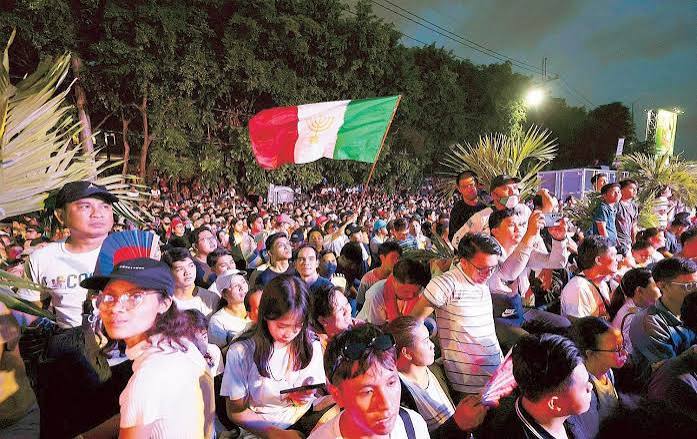
You call the faithful out to the streets for a show of numbers, for the kind of visual impact that the network news and social media tend to magnify. You decide to hold this at the EDSA Shrine among other places for whatever symbolism it might carry, never mind that Mother Mary, so central to the EDSA spirit and experience, holds no special place of honor in INC belief. The night before, your organizers send out text messages ordering your people out to EDSA as early as 5 am; every “lokal” has to be represented. You know that you can rely on what your members have had ingrained into their minds and bodies: unquestioning obedience to authority. (Some of their T-shirts will declare this openly: “Obey and Never Complain”.)
You beam with pride and pleasure as the crowds begin to gather at dawn, catching the drowsy city by surprise. You manage to choke off the city’s busiest and most important highway, convincing yourself and your own people that a day or two’s disruption of work and traffic is a mild inconvenience compared to the issue at hand. Ah, the issue—yes, let’s go with “selective justice,” which is clearly at work in the plunder case they whipped up against the good senator. Why him? Why now? What for?
This was the senator bravely threatening to unmask the biggest crooks in the highest echelons of government—never mind that he himself was now being unmasked for palpably gross misdeeds. You trot out a small parade of notoriously unsavory politicians—but then who else have you got?—to amuse the gathering. Never mind the irony of an Imee Marcos crying “Walang uwian!” at the very place that sent her and her family packing off for Hawaii forty years ago (we don’t know if she stayed the night huddling with the INC masses—or went home as senators are wont to do after their speeches).
Nowhere in this spectacle did God or religion visibly figure—what the INC’s conception of justice was, how the Dutertes and Marcoletas would spread God’s dominion over the earth, how individual INC members (especially senators) were supposed to discern right from wrong except by executive fiat, and how the reported INC practice of cornering certain lucrative government posts after elections fulfills God’s mandate.
Sure, they can fill up streets, and hold parts of a city hostage for a few days. They can make it look like they centrally matter, and perhaps in some swing situations they do, as did the support they allegedly threw behind Bam Aquino last year.
But here’s the bottom line. The INC’s reputed 3 million members comprise voters and non-voters including children. Studies put the real number of voting INC members at less than 1.4 million, and even less in terms of who actually shows up at the polling booths. SWS chair emeritus Mahar Mangahas puts it at “around 5 percent” of all voters.
Do they vote as a bloc? Yes—but not absolutely. The 2016 TV5-SWS Exit Poll showed that 77.2 percent of INC voters supported Rodrigo Duterte. SWS data also indicate that around 20 to 25 percent of INC voters do not vote for church-endorsed candidates. So 75 to 80 percent do vote by command—but whether they do so because of obedience or because the INC tends to endorse popular candidates has yet to be determined. So the discipline and the reliability are there to some extent, but it’s a power that can be easily overstated and just as easily abused.
The greatest damage wrought by the INC in its EDSA excursion was neither to the traffic situation and much less to the case against Sen. Marcoleta. It was to its own image as a religious faith to be taken seriously as such, a body of belief driven by godly wisdom. By consistently supporting morally compromised politicians, it has revealed itself as a political instrument, manipulable and deployable, for reasons and purposes known only to its leaders.
And that’s sad because I do have some INC friends, upright people for whom I have a deep respect, and whom I would be glad to hear from on the issues I raised above. I’ll promise them fair representation in this space—but they’ll have to speak for themselves and not their leaders, to the extent that that’s even possible.
BARELY HAD we wrapped our heads around what happened to lead to the deaths by drowning of the two Ateneo athletes Rene Baterbonia and Divine Adili when we got the news of a mass shooting at the San Jose National High School in Tacloban, Leyte, with two teenagers allegedly responsible for killing three students and injuring many others.
Both events were met with shock and outrage, as was to be expected. Even in the long catalog of evils and misfortunes that we Filipinos have become familiar with, these did not exist. Healthy, star-quality athletes do not suddenly die; Filipino teenagers tied to their cellphones do not bring guns to school and shoot their peers dead. It was as if we had let new and unfamiliar monsters into our fold, and we were eager—indeed adamant—to give them a face, a name, and a motive. At the very least, we needed someone or something to blame, to ease our consciences.
That consternation likely accounts for the plethora of suspicions, accusations, and conspiracy theories that emerged in the wake of these tragedies, ostensibly to throw light on “what really happened” but achieving the opposite effect of leading us even farther away from the truth. I myself have been mighty confused by some of these responses—who said exactly what, where did that come from, etc.—that I turned to AI (yes, I know, something that some of us trust even less than the cafeteria Marites) to help me sort things out; in this instance, I used Claude, which has proven to be a reliable assistant in my nonfiction work. (We can have another debate another time about whether writers like me should even resort to AI—at which I’ll ask if you’ve ever used Google or an electronic calculator, for that matter—but I’m hoping that this present discussion will offer proof enough that there’s room for mechanical assistance in human argumentation.)
Most troubling if not ridiculous of all have been a couple of memes I’ve seen claiming that Rene was beaten up and drowned by his fellow players and that the coaches merely looked on.
These speculations apparently ride on the allegation made by Rene Baterbonia’s mother Rovelyn that her son’s death was no accident—a short step away from claiming that Rene was murdered, as some netizens have chosen to interpret it. But nowhere in her many interviews did Rovelyn clearly and verifiably say that “My son was murdered.” (And neither am I saying that she had no right to claim that had she wanted to, as the most aggrieved party entitled to her darkest fears and suspicions.)
What the record shows is that, based on what she initially heard, she believed that Rene’s arms and legs had been weighted down (subsequently denied by the autopsy results), and that the dangerous exercise had taken place without informed consent (a continuing issue). She also took Ateneo to task for not communicating with her quickly and clearly enough (I think a fair charge). So no, Mrs. Baterbonia never said nor suggested that someone purposely killed her son. She does allege criminal negligence, which many people suspect, and a sorely inadequate response on Ateneo’s part, which I think even Ateneans admit in their heart of hearts.
What muddled this further was the CIDG’s reported statements, made more than a week after the June 9 incident, that the deaths were “not an accident,” apparently contradicting the local police’s initial assessment. That later statement, made by CIDG Director Robert Morico II on June 17 and repeated on June 18, was hedged as a presumption awaiting further evidence. It ultimately recommended, in its June 26 findings submitted to the Department of Justice, that an anti-hazing case should be filed against 11 individuals led by Coach Tab Baldwin, since the team-building activity constituted hazing under dangerous conditions. But “not an accident” resulting in homicide again doesn’t translate to willful murder—or a plot, as the DDS puts it, for Luzon to kill off Mindanao’s finest. It’s now up to the DOJ to move matters forward.
What this tells me is that in the absence of factual information, clearly and promptly disseminated, all kinds of malicious rumors will emerge and easily find sympathetic receptors and transmitters. (I suspect the counter-narratives would have arisen anyway—the trolls have to earn their keep, which means the fact-checkers and truth-sayers have to work at least as hard.)
The same miasma now threatens to engulf the Tacloban shootings, in which two teenagers carrying a .38 revolver and a Glock 9-mm were involved. The Internet was quick to spit out AI-generated pictures of Sens. Kiko Pangilinan and Risa Hontiveros coddling the two suspects, with Sen. Kiko being blamed for his sponsored law setting the bar for criminal responsibility at age 15 (the UN recommends a minimum of 14 years).
There are many other aspects to this case, including that of gun ownership, but let’s focus for now on this age-of-criminal-responsibility thing, which Pangilinan’s DDS detractors want to bring down to 10. Again, to be clear, Kiko stated that the law as it stands doesn’t automatically absolve the juvenile shooters from responsibility; they remain accountable in various ways, and cannot simply be released.
If they used the same AI they used to malign the senators, the DDS propagandists would have discovered that the UK, which does use age 10 as its baseline, has a higher crime rate than other European countries using 14-15. The Nordic countries start at 15 and are among the world’s safest. (North Korea reportedly sets its bar for criminals at 6.)
We seem so eager to establish at what age young offenders can be punished that—as horrendous as the Tacloban shootings were—we forget the far more numerous and grievous crimes committed every day by adults in this country that go unpunished.
In any case, the most sensible response I’ve read to the Tacloban shootings came from a Facebook poster named Raffy Magno, who said that “There is something deeply troubling about a society that is quick to demand the harshest punishment for young people, while celebrating convicted plunderers, tolerating corruption, and rewarding leaders who normalize violence.
“Young people do not grow up in a vacuum. They learn from the values we model, the behavior we reward, and the systems we build around them. Violence rarely begins at the moment it becomes visible. It is often preceded by bullying, social isolation, neglect, untreated trauma, and countless missed opportunities for intervention.
“If we want children to reject violence, then we must also be willing to examine the ways our society excuses, glorifies, and profits from it. We cannot celebrate violence among adults and expect young people to learn a different lesson.”
The call for justice begins with raw and strong emotion, but ultimately it has to be dispensed with cool and thoughtful reason.
I WISH I could say that this is a welcome break or a pleasant diversion from the infernal politics rocking the Senate (which thankfully seems to have settled down, at least for the time being, with the miscreants licking their wounds), but it’s neither pleasant nor a diversion, as it reminds us that real problems remain out there that demand both governmental action and civic awareness to resolve.
As an opinion writer, I receive a fair number of messages requesting that I highlight certain issues and causes, and while many are patently trivial and self-serving enough to easily ignore, some pique my interest because of their strategic implications for our future—not even just ours, but our children’s and grandchildren’s.
One of those messages came from Philip Camara—whom I don’t know and have never met, but who introduced himself as a Zambales resident and Executive Director of the Institute of Area Management (IAM). He had served as the DENR Undersecretary for Field Operations under the late Sec. Gina Lopez, before the mining lobby gutted her appointment.
Philip himself may have been out of a job, but he continued his advocacy in private by founding the Zambales-based IAM, an NGO that promotes “areaism,” an alternative community development framework that emphasizes resource management and governance by geographic area than by sector.
This month, Camara and IAM—along with minor Placida Natividad C. Montefalcon and “generations yet unborn”—filed a petition for a Writ of Kalikasan and Continuing Mandamus before the Supreme Court against the DENR and the Mine and Geosciences Bureau (MGB). The petition also asks for a Temporary Environmental Protection Order (TEPO) for immediate interim relief while the case is pending.
What’s the issue? Philip says that “Living in Zambales—where there are highly destructive watershed-based mines and where the political dynasty acts with impunity in its pro-extractive corporate activity—gave me little choice but to take legal action. This action challenges what we call ‘Sectoral Rationality’—the bureaucratic practice of approving mining and dredging projects based on short-term revenue while assigning a value of ZERO to environmental destruction and public health burdens. Backed by hard 2024 and 2025 scientific data from Zambales, our petition argues that this framework is now explicitly illegal under the new PENCAS law (RA 11995), which mandates natural capital accounting.”
In other words, Philip claims that the DENR and MGB have been approving potentially destructive projects without taking their environmental and health impact into account. This runs contrary to the new Philippine Ecosystem and National Capital Accounting System (PENCAS) Act, signed into law in 2024 to factor the environmental costs and benefits of projects into development planning and align the Philippines with international environmental accounting standards. So when you put up a mine, you don’t think about just how much money it’s going to make for the short term, but also what it’s long-term impact on the environment and the community will be.
The “writ of kalikasan” that the petition is praying for is a Philippine legal remedy for environmental protection, based on the constitutional right to “a balanced and healthful ecology” under Article II, Section 16 of the 1987 Constitution. Created by the Supreme Court in 2010, it’s a pioneering remedy that few other countries have. The idea is to give citizens a fast, powerful tool to stop large-scale environmental damage without getting bogged down in ordinary litigation.
The writ has a scale requirement that comes into play when the environmental harm is large enough to “prejudice the life, health, or property of inhabitants in two or more cities or provinces.” It can’t be invoked for local or isolated environmental damage, like a factory polluting your backyard—it has to cross jurisdictional boundaries, which Camara argues is the case in Zambales, where the contamination and erosion produced by mining reaches out toward Pangasinan.
You don’t even have to be directly affected to be able to file a petition for the writ before the Supreme Court (and yes, such petitions go straight to the SC, bypassing the judicial bureaucracy, in recognition of the writ’s importance). It’s worth noting that the petition is also being made on behalf of “generations yet unborn,” taking a page from the landmark 1990 Oposa v. Factoran case premised on the argument that natural resources such as forests belong not just to the present generation but the future as well. If it agrees, the SC can then compel the respondents (public or private) to stop the damaging activity, protect or rehabilitate the environment, monitor compliance, and submit reports.
The Camara petition rests on the legal notion that the 1995 Mining Act (RA 7942) requires that mineral exploration be “rational” without actually defining what “rational” means, effectively assigning a value of zero to watershed destruction, shoreline collapse, food contamination, public health damage, and harm to future generations. It cites two scientific studies to back up its claims as to the critical nature of this negligence. A 2024 toxicity study in Sta. Cruz, Zambales found nickel enrichment factors, cancer-risk, and hazard values exceeding international safety thresholds, and contamination reaching local rice crops. A 2025 erosion study in San Felipe, Zambales found dredging within the “Depth of Closure” zone, shoreline retreat of about 16 meters per year, and projected losses of ₱3.88 billion by 2030.
There are globally adopted scientific methods and measures in place to establish “rationality.” Leaving it vague and undefined—we hope not intentionally—opens doors to misinterpretation, abuse, and corruption. Far worse, it will destroy the future, with the law standing by in complicit silence and virtual approval, if this loophole remains unplugged.
So thank you, Philip Camara, for bringing this to our attention—but more importantly, I hope it reaches sympathetic ears at the Supreme Court, whose favorable judgment can make a tremendous difference for those “generations yet unborn.”
TALKING ABOUT how memory softens loss in Love in the Time of Cholera, Gabriel Garcia Marquez writes that “He was still too young to know that the heart’s memory eliminates the bad and magnifies the good, and that thanks to this artifice we manage to endure the burden of the past.”
As I’ve discovered from my friends and from people I know, father-son relationships are often fraught with conflict and tension, especially from those childhood and growing-up years when emotions are raw and expectations run high. There’s a host of theories to explain the problem—Oedipal competition, the emotional detachment of fathers, bars set too high, among others—but whatever causes the pain, it tends to linger, until we learn to relinquish our grievances to time and age.
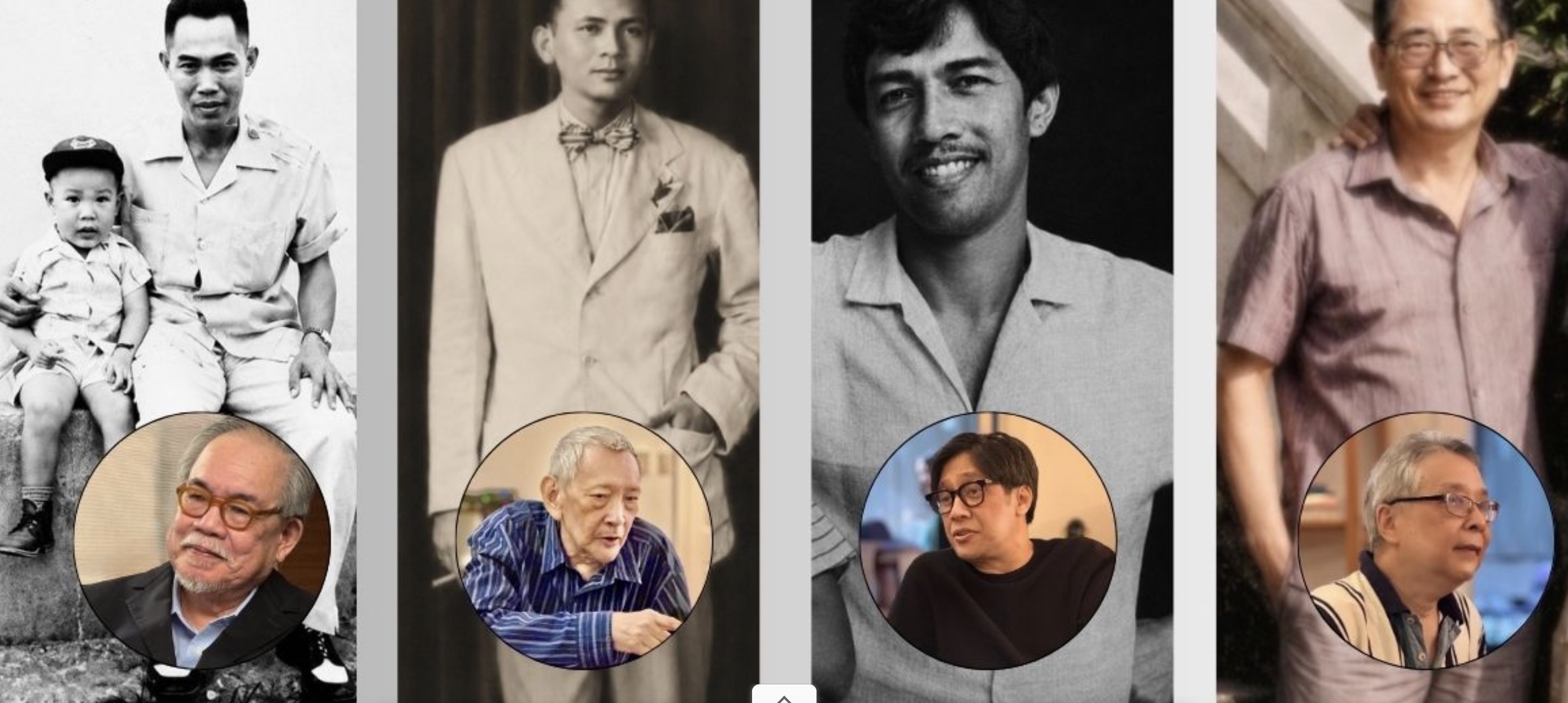
I’ve been more fortunate in my experience, but I’ve asked three writer-friends to share theirs, and to embrace the ghosts of our fathers that will stay with us for the rest of our lives.
Butch Dalisay
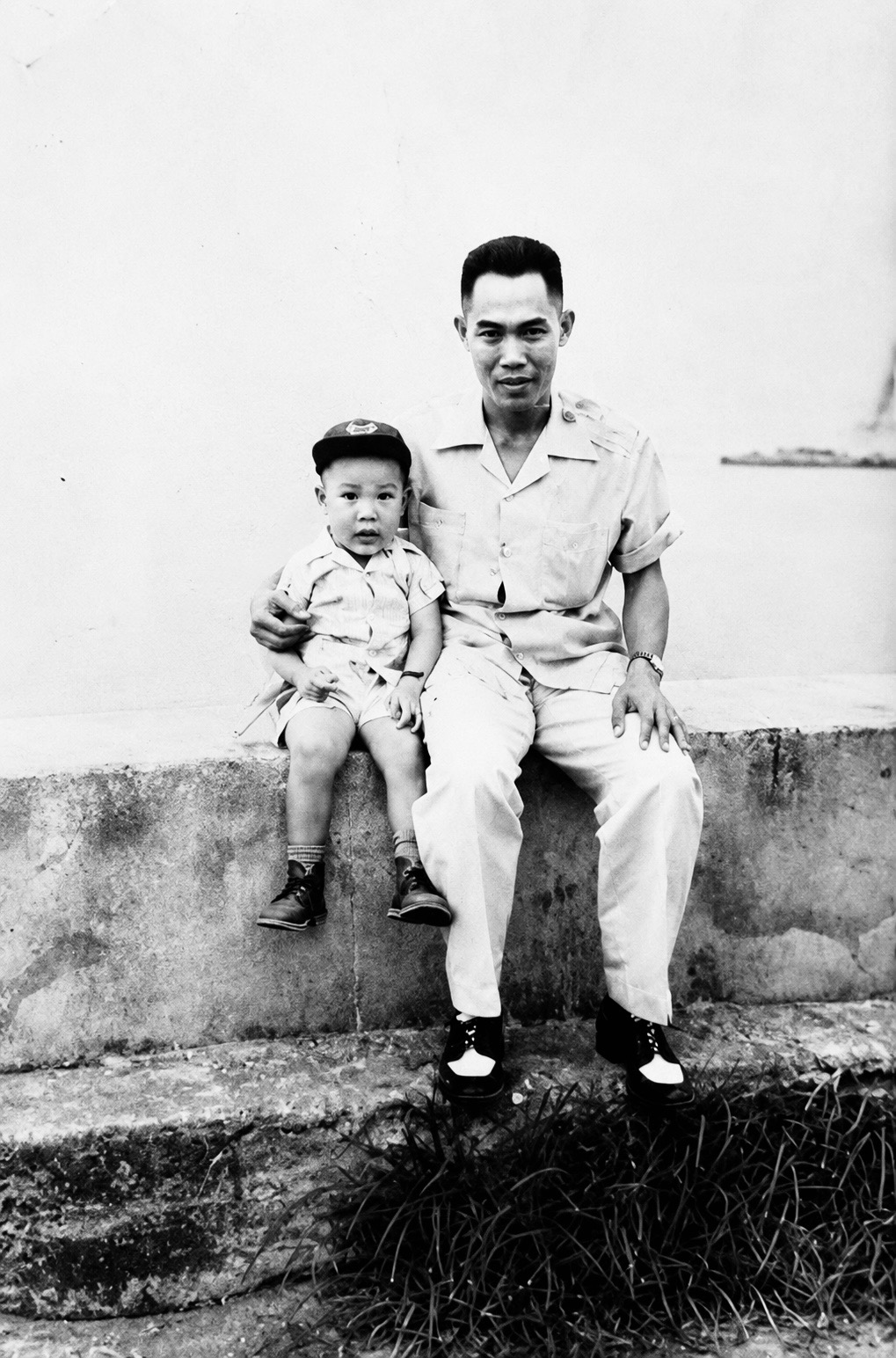
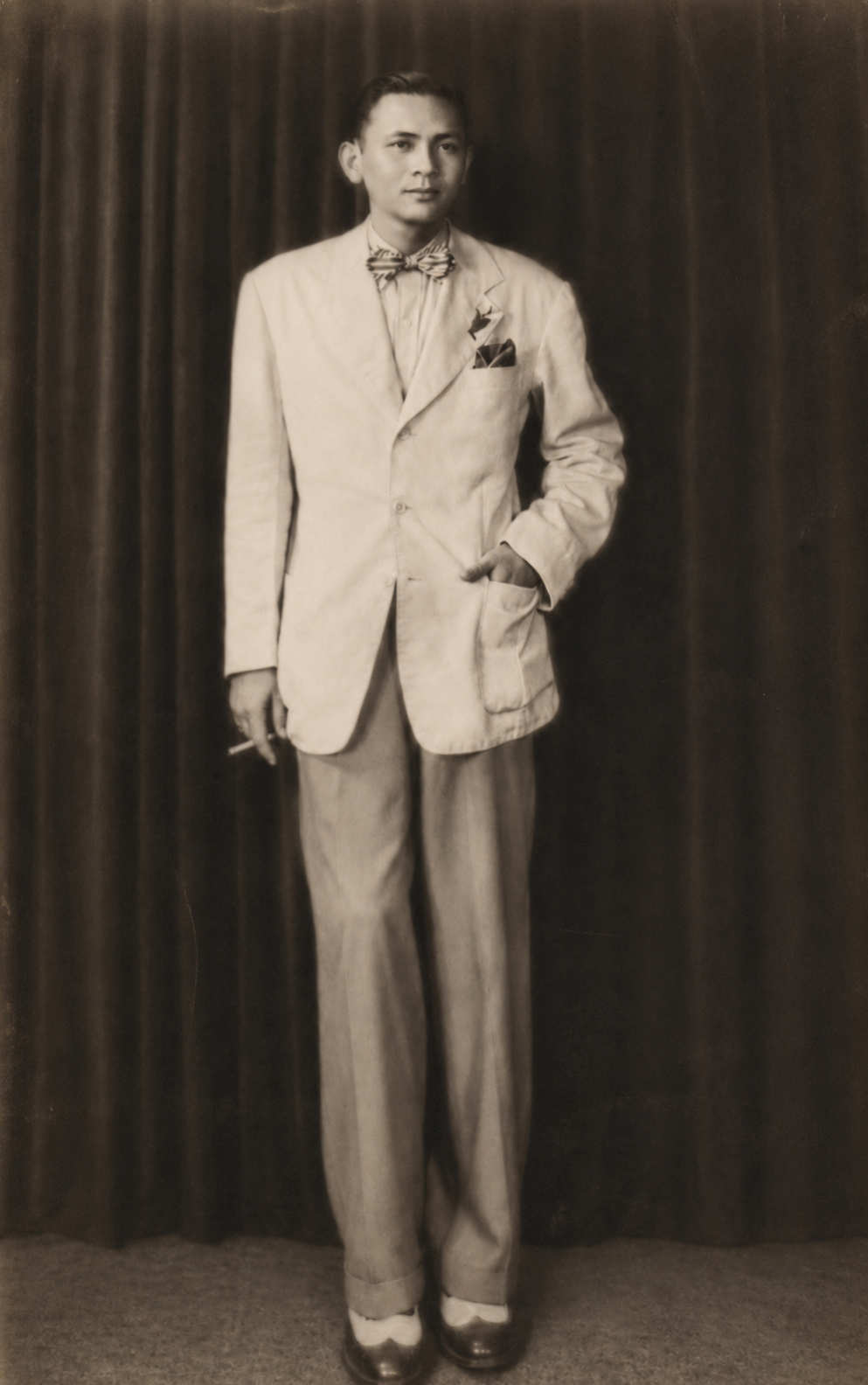
I’ve often written about my dad, Jose Sr., whom I grew up idolizing not just because he was intelligent, but also because he was very resourceful or maabilidad, as they say. He was well known in Romblon to have been the province’s smartest young man at that time. And he would have gone on to a law degree and a distinguished career by everyone’s reckoning, except that his family was poor. And while my mother was someone who came from a family of means in Romblon, shortly after they married and had me, the first of their five children, the family fell on hard times when he lost his job.
He worked for the Motor Vehicles Office. He worked for the Department of Public Works and Transportation as a clerk, but there were very difficult periods when my father took on jobs far beneath his competence. He did not think it beneath him to work, for example, as a barker for jeepneys just to put me and my siblings through school with the help of my mom, who was a postal employee.
I hero-worship him despite the fact that he was deeply flawed. He was a gambler, which probably explains why I’m an avid poker player to this day. I could remember the smell of the pancit that would announce a night of winnings, but more often than not, he would come home quiet early in the morning, and I kind of understood what had happened. Once he brought home a brand-new Singer typewriter to encourage the young writer in me, only to have it vanish when he couldn’t keep up with the installments.
It was my father who introduced me to reading and writing. He was an excellent writer himself, and the governor of Romblon relied on him to write his speeches and to become a kind of secretary and recorder for this and that. It was a role that he would play all throughout his life, even in his old age, as a barangay official, someone who would help people in our village in San Mateo with their paperwork. He introduced me to reading because there were many things to read in the house, Time magazine and Reader’s Digest, and soon books.
He was a gentle, loving man who adored my mom Emy and took good care of us in ways more than money could. My wife Beng and our daughter Demi cherished him. When he died of an aneurysm at age 73 in 1996, I was crushed, and I treasure the times when we meet in my dreams, walking on the shore of our hometown in Romblon.
I owe him the gift of words, which I am now passing on to others.
Krip Yuson
Armando Sison Yuson came from Lingayen, Pangasinan. He tried to be an Air Force pilot before World War 2, but cut out at some point. His father wrote poems in Spanish and Pangasinense, as I’ve been told by writer-friends from the region.
I can’t really share much or anything else about my dad, except that we had a falling out when I was 16, after he became too religious and wanted everyone in the family to pray the rosary every day to start the evening. I couldn’t do it after the first few days, and said so. Nothing he said could change my mind. It broke his heart, and he blamed everyone, including himself, for allowing his firstborn to enter UP after graduation from San Beda, proving his fears right that I had joined an atheist university. My doubts about faith actually began a year earlier, and were resolved when I read Robert Green Ingersoll at the UP library: “Give me the storm and tempest of thought and action, rather than the dead calm of ignorance and faith. Banish me from Eden when you will, but first let me eat of the fruit of the tree of knowledge.”
My dad (called him that because he was an Amboy) and I never became close again. As an early barkadista, I spent more time away from home. He passed away when I was 32. I tried writing a poem on him for almost a year, but gave it up. The following year, 1978, I was on my first week at the International Writing Program in Iowa City when I felt his presence in my Mayflower Apartments room as I was turning in. I recall saying out loud, “Dad, must you follow me here?”
I couldn’t sleep. A poem started in my head, a triplet of a stanza, immediately followed by another, and another. Before my memory could give out on more lines, I got up and started pounding away on my typewriter. The lines followed until I completed the poem. My first experience of automatic writing. When I checked the page in the morning, I decided there was nothing I had to revise. It became one of my most favorite and most anthologized poems. Here it is, written in 1978.
Father (from Sea Serpent, 1980)
Must everything begin and end
with tension, as with father and son,
the memory of games and sins between?
In the hospital I watched your heart
tighten its flutter across a screen, a moth
blipping from breath to breath
and finally arriving at a pinpoint
of dark, the last light a feint
that threw me off your sorry hint.
Entering your deathroom I came
upon a sad peace, bent toward time
And kissed you; you were him.
Pressed your hand and in a wild
appeal to chance thumped a child’s
blow upon your chest, a field
I wanted to revive and roam
upon some more, though the dusk of the dream
hurried me along toward half a home.
Sarge Lacuesta
My father, Amado Lacuesta, Jr. quit his high-profile job at one of the country’s pioneering investment banks to become a full-time screenwriter. I don’t know if it mattered that there were four of us kids and that I was just entering high school. But because of his life decision he showed me a life that was so rare and so special that I felt privileged to be a part of it. I would tag along to his tapings, his shoots, and his brainstorming sessions as his semi-official sidekick. Never mind that it was a school night or that the discussion—or worse, the proceedings—were not really appropriate for someone my age.
It’s been almost 30 years since he died of a heart attack at the age of 49. I was 26—so long ago that I don’t really remember many details of him anymore. That’s more years without him than with him, so that is fair. I am also older now than he ever would have been, and there’s a lot of disconnect between who I am now and the son that I was.
But what has rubbed off on me during our years of father-and-sonhood has stayed, for better or for worse. I am overly critical of others and blind to my own faults like he was. I remember him critiquing a writing exercise I performed for him when I was ten or eleven years old, mainly by laughing at my cliches and tired turns of phrase. I am as idealistic and often as detached from reality as he was. At EDSA, he used his own car—the only car we had—to physically block the path of the tanks that were rumored to roll into White Plains Avenue.
Now I am my own father, in every sense of the phrase: I’ve lost a large part of him, but a large part of him I can’t help but carry around.
Charlson Ong
My father Conrado was a rather laidback fellow whom I think would have been more successful in another time and place. As a second-generation Chinoy born and raised in Binondo, he ended up as a business person—and, in my recollection, a rather reluctant one. He was always too trusting of friends and spent on not a few turkeys, like real estate that disappeared after landslides and high tides. I always thought his passion lay elsewhere.
In hindsight he passed on some opportunities that might have led to bigger prospects but I guess he was never the sort who ‘bore into the money hole’ as the Chinese would have it. He perhaps never had the drive or risk taking personality, content to raise a comfortable middle class family—we were three kids, I was the youngest—with vital help from our mother. There never much issue between us, as I was youngest and when I was born in 1960, my parents were more or less settled. I know he worried for me because of my interests but never interfered with my life choices, I feel he regretted not being able to leave behind enough for me to engage my whims without having to worry about livelihood.
He loved cars and, I’d like to think, singing. He was a very good baritone who took lessons in his younger years with an operatic singer. But he had difficulty with the Italian and French lyrics and eventually gave it up. But some Sundays he would sing Chinese ditties while our mom, a piano major, accompanied. In long drives—before the time of car stereos , cartridges, cassettes, Spotify—during the 1970s and ‘80s, he would sing to himself just to stay wake driving while I pretended to sleep. But the songs embedded themselves into my psyche—romantic ditties of the 1950s and art songs of the 1930s while China waged its war of resistance against Japan and warlords. Whenever requested to sing Chinese songs, I draw on this repertoire of oldies.
He had an innate heart condition we now refer to as “athletes’ heart.” He had a health crisis as a younger man in his 30s but once it passed gave he gave in to his epicurean instincts and a two-pack-a-day smoking habit. By the 1980s he had his first heart attack but there was nothing much the technology of the time could realistically do.
In October 1987 he had his second attack. I was scheduled then for my first trip to China for the premiere of Eddie Romero’s Hari sa Hari—a co-production between the Philippines and China about the Sultan of Sulu and his embassy to the Ming emperor.
I thought my chance to go to China had passed, but my father recovered briefly and sent me on my way—I always felt he wanted me to experience the old country. But shortly after I left he suffered his third attack. This was before the the Internet, so for the week that I was in China I was blissfully unaware that he was fighting for his life.
When I returned, I had to rush to the hospital and upon arriving, I found out he had just passed away. He was 57. I did not witness his final days, but the lore remains that while he was in and out of lucidity, he had some clear moments, and when our plane landed in Manila he was supposed to have uttered—his tongue had receded by then—that ‘They have alit, my youngest is home.’ Until this day I can never recount that tale without tearing up and I was able to mourn him only through some of my later fiction. Still whenever I am bamboozled to sing, willingly or otherwise, I know that his voice is there.
WITH SO much already having been said and posted about last week’s saddest story—the tragic drowning of two Ateneo student-athletes in a training activity far off-campus—it seems pointless to add anything more. But as a former university administrator (with that other big school at the other end of Katipunan Avenue, the University of the Philippines), I feel compelled to think aloud and wonder what we should and could have done had this happened to us across the street.
The Ateneo university administration has been roundly (and I believe fairly) scored for not saying and doing enough in the immediate aftermath of the apparent accident to establish what happened, determine accountabilities, and provide sympathy and support to the bereaved. What drowned in Aurora were more than two boys and their hopes; into the depths went their school’s hard-won reputation for a culture of caring.
Institutional mindsets would reflexively call this “damage control,” but “damage control” sounds profoundly inappropriate and inadequate in these circumstances—the greatest damage done was that to the families of Rene Baterbonia and Divine Adili, and it is permanent and cannot be undone. Even to a people inured by tokhang, the heartrending video of a mother’s grief cuts to the bone.
The damage to the university’s reputation is substantial but, in the thick-skinned way these things go, fleeting and survivable. What people are calling for is justice, and let the damage fall where it may. In an academic universe increasingly driven by global ratings, a university’s reputation should seem to matter more, but where in the statistics do factors like compassion count?
I know how difficult it is for academic bureaucrats to respond to a crushing crisis like this. My old job at UP, aside from teaching English and creative writing, was that of Vice President for Public Affairs, which meant that I was both the university’s spokesperson and shock absorber, the one who had to face the likes of Ka Tunying at seven in the morning to answer questions about all the rich kids in UP, fraternity hazing, communists on campus, and UP’s squatter problem.
It was understood that I was there to help promote and protect the university’s image, at a time when that image was being battered from both right and left, often from critics at the very top of the same government that we were dependent on for our annual budget. For the sake of that budget—which had its own critics—we had to tread a thin line between cooperating with authority and preserving our autonomy and academic freedom, a process fraught with conflict and, yes, sometimes hypocrisy, as when we had to smile in the face of politicians we would otherwise have cursed. While each little and isolated case may have been challenging and disturbing, eventually they all became administrative routine, necessarily tolerable.
But for every institution, there comes a defining moment when more than budgets or reputations are at stake, when its very spirit itself is under question and under threat. That moment seems to have arrived for Ateneo, a great university unlike many others, even unlike UP, founded as it is on Christian and indeed Ignatian principles that include magis or the striving for excellence for God’s greater glory and cura personalis or caring for the whole person. As Fr. Pedro Arrupe, SJ put it, a Jesuit education aims at producing “men and women for others.” UP has its “Serve the People,” but its secular character imposes less of a spiritual and more of a political mission on its community.
This is why the Ateneo administration’s seeming inadequacy of response to the accident, beyond its terse initial announcement, comes as a perplexing disappointment to many, on top of the awful pain and grief caused by the deaths themselves. In the very least, a statement providing more details of what happened, committing to a thorough and impartial investigation, and offering support to the affected families would have eased many initial concerns.
Ultimately an institution’s image is made more by what it does than what it says, but the saying is also part of the doing. I would have arranged an immediate meeting between the Ateneo president and team coach and Rene’s family—and at least by Zoom with Divine’s—for them to personally explain what happened and to make the necessary amends.
Despite efforts to politicize and capitalize on the issue, I myself believe that what happened was a terrible accident, albeit a preventable one, with better foresight. Almost exactly a year ago, I lost a good friend, Don Rodis, to a rogue wave and riptide that pulled him into the waters off Los Cabos in Mexico; one minute he was just strolling on the beach, the next he was gone.
That’s nature at its indifferent and cruelest worst, which, beyond preparing for, we can do little about. Human nature also arises spontaneously, in the shock, grief, and even anger that followed the accident. But human agency is something else—the “what could and should have been done’s,” both before and after the event.
I can imagine, as administrators would have instinctively responded, that Ateneo’s academic and athletic managers first called the lawyers in to find out who was responsible for what and what the university’s liabilities were. It’s a logical institutional reaction, but again Ateneo could have risen above that to show true compassion, which should come instantly and unbidden, without lawyers or preconditions. I have no doubt that the likes of Fr. Flavie Villanueva, Fr. Albert Alejo, or Fr. Robert Reyes would have rushed to and embraced the grieving mother if they could.
(It has been a bad week for Ateneo in more ways. The athletes’ deaths obscured the passing of another prime Atenean talent, the poet and professor Rofel Brion. Rofel once said that “I write mostly about small, ordinary events, and in doing so, I capture them. I hold on to them and never let them go. And this, I guess, is how I pay homage to them.” This was his way of living the Ignatian principle of finding God in the ordinary. )
I have many friends at Ateneo and have even taught there—once as a substitute for the late Prof. Doreen Fernandez when she was unwell, and another time as the holder of its professorial chair in creative writing. While not particularly religious myself, I am a strong believer in its mission and in its products. I appreciate its efforts to diversify and to bring in more poor scholars into its fold.
If Ateneo is as great as its history suggests, it will use this instance to reflect deeply on what it wants to be, and to be regarded as. I have no doubt that with sincere introspection and self-criticism, it will find the best ways to do right by the families of Rene and Divine, to run a fit and humane athletics program, to set the right policies and put the right people in place, and to reassure its community that it has recovered its true Ignatian spirit.
YES, YOU read that right—it’s not a misspelling, just a new word I coined to describe the recent goings-on in the Philippine Senate, with the 13-person majority refusing to show up for work for the second straight day as of this writing. Anyone watching this charade from a foreign perspective—someone without any knowledge of or interest in Philippine politics, like the proverbial Martian—would scratch his/her/its head at this latest turn of events that began with Alan Peter Cayetano and his gang hijacking the Senate leadership on May 11 with the obvious intention of thwarting the impeachment of VP Sara Duterte and saving their own hides. (Update: Sen. Sherwin Gatchalian just got elected Senate President pro tempore on the third day of the majority “boycott,” after Sen. Chiz Escudero showed up and enabled a quorum to resume business. It’s entirely possible that by the time this piece comes out, the “majority” and “minority” I refer to here will have been reversed.)
I had been hoping to move on to another, less inflammatory topic, as much for my relief as yours, but Philippine politics is the gift (at least to opinion writers) that keeps on giving. It’s a sign of the times that my wife Beng—normally a quiet and placid spirit in whom the finest virtues of Buddhist kindness and Christian charity converge—has been spouting forth colorful expletives this past week, even marching to the Senate floor to hold up placards with the likes of Dean Winnie Monsod to demand service with integrity from our senators. That was the first day the majority decided (without telling anyone else) to do a no-show, leaving Beng even more infuriated at the thought of these people being paid P300,000 a month (or P10,000 for that day) on top of multiple perks to do—well, nothing, while impoverished seniors die of exhaustion at the ayuda line.
Indeed not a day goes by without some new cause for aggravation, some insistent reminder of how warped our values have become that many Filipinos can no longer tell right from wrong, and good from bad. Glaring examples are DDS memes equating Sen. Jinggoy Estrada—booked for plunder involving P573 million in kickbacks—with the late Sen. Ninoy Aquino, jailed under martial law for subversion. “We Are All Jinggoy!” proclaims one meme, echoing what we said for Ninoy, “Hindi Ka Nag-Iisa.”
For his part, the Senate majority’s resident antidote to wisdom, Robin Padilla, opines that the cases of Leila de Lima and Bato de la Rosa were different, because the former was linked to drugs, and the latter to their extermination, conveniently forgetting the charges laid out against Bato by the International Criminal Court. In the latest episode of “The World According to DDS,” Senate President and Duterte running mate Alan Peter Cayetano characterizes his patron’s murderous tokhang “war on drugs” as “pro-life.” Duterte stalwart Rodante Marcoleta promises a blockbuster of a hearing by their bogus Blue Ribbon Committee featuring game-changing revelations by 18 “ex-Marines” who then make claims so preposterous that they should each be meted out 5,000 push-ups for poor storytelling. (They can always take it out on their sponsor, who put them up to it.)
That’s how topsy-turvy things have become in our society, of which our senators and their behavior are but representative. They come in tailored suits and ties, in barongs and native dress, in heavy make-up and botox for the cameras, but at their best and sadly also their worst they are not much different from the rest of us who put them there in the first place.
We’re not asking for or even dreaming about a happily unified Senate here, which is both impossible and frankly a danger to democracy. We just want a working and serving one, governed by reason, civility, and the law. If integrity, intelligence, and performance are too much to ask for, can they at least keep quiet, take their paychecks and emoluments, and pose for the media, but otherwise let their colleagues do their job?
Over the next couple of weeks until the impeachment trial begins on July 6, we expect the Senate to come to its senses and to set itself aright, very likely with a new majority formally elected by at least 13 members, to put it beyond all dispute. That will be a relief for a people who may initially have found some entertainment value in the Senate show, but are losing their patience with a dysfunctional institution their taxes are fattening, without getting much in return.
And let’s not delude ourselves into thinking that our problems will vanish with the installation of a new and more reasonable Senate majority, and not even with the impeachment of VP Sara. That’s the big mistake we made at EDSA; in our euphoria, we forgot that changes in leadership are far easier to pull off and to manage than changes in society and in the people themselves. We’ll be happy if and when the level-headed Sen. Sotto wrests back the Senate presidency or the apparent compromise candidate, Sen. Gatchalian, so the old Blue Ribbon Committee can pick up where it left off and resume its hearings on corruption in government, which has been bleeding us dry and which, come to think of it, has been at the root of all this drama.
I earlier said that in its division and divisiveness, the Senate is really us. Those rifts are real, and maybe they can’t be helped. But for what we’re paying them, we can demand of our senators that they not only represent us but be better than us, and show a better and working model of a functioning if divided democracy. Bring sanity back to the Senate, and maybe then we’ll survive.
OVER THE past few weeks, we’ve increasingly despaired over the quality of leadership displayed by the current majority in the Philippine Senate—perceived by many as a hopeless collection of liars, thieves, and opportunists intent only on preserving their power and filling their pockets. The public mood is murderous, and understandably so. Every new session day at the Senate seems to offer only more proof of this majority’s imperviousness to truth, reason, and justice—indeed to any real measure of public accountability.
One has but to look at its nominees to the Blue Ribbon Committee—the Senate body tasked with investigating corruption and the misuse of public funds—to see how absurdly tragicomic things have become, with senators facing a host of related charges themselves now in charge of protecting the national treasury. Ali Baba would feel right at home in this company.
But beneath our collective anger and despair over this situation lies the question: how did we even get here? How did we elect senators who can’t even form a coherent paragraph, who break the law instead of making it, who see and use public office as a family business?
The path to rulership in Philippine politics provides some quick and obvious answers. In this country, you become a senator, congressman, governor, or even president through several well-traveled routes: family, entertainment, and media. Dynastic politics mainly explains why we have four pairs of siblings—the Cayetanos, the Villars, the Ejercito-Estradas, and the Tulfos in the Senate, eight out of 24 senators, although the Tulfos are new in the game, emerging not out some gilded family tree but from that other prodigious birther of instant celebrity, the media.
Long before “influencer” became a buzzword and apparently a profession, the media—both traditional and now the social—groomed not just its favorites but the public as well, projecting style as substance, talk as thought, image as soul. Entertainment has warped our sense of reality even more disastrously, morphing movie stars and sports figures into shapers and enforcers of economic and social policy.
Many of these people enter public office without the foggiest idea of what public administration means and requires, hoping to learn on the job, banking on their popularity and media savvy to carry them through the maze of legislation, the budget process, national security, and social development. Some expect a one-week crash course on Public Ad in UP to sustain them through their new career; all will certainly hire professional help to dress well, look good, and sound sensible (at least in their prepared speeches and press releases). It’s when they’re on their own, responding to questions in front of the microphones whether on the Senate floor or in the corridor outside, that the real vacuousness of the person shows through.
All this leads us to ask what the proper training of a proper politician should be—a question that various civilizations, cultures, and countries have answered differently throughout history. The ancient Greeks were fascinated by and struggled with the idea of the wise and just philosopher king—who, paradoxically, was at best someone not interested in ruling. We’re told that Alexander—long before he became “the Great”—was tutored by Aristotle in rhetoric and philosophy, among other disciplines.
The Romans trained their leaders by having them serve in a series of positions through which they gained practical experience in everything from the law and logistics to war. The Chinese had officials in training master basic Confucian texts and write essays for examinations that tested their moral reasoning. Islamic leaders were forged in studies of statecraft, literature, and the law, emphasizing the accountability of those who ruled to their Maker.
In the West, the great argument was whether over leaders required virtue to govern well; Erasmus said yes, Machiavelli said no. The Jesuits stressed the formation of both spirit and intellect, the English rose up through public school and Oxbridge connections, the Americans relied on self-cultivation. These are all large and loose concepts that could be refined, but what they share is a solid grounding in education, in the adequate preparation of body, mind, and spirit for the rigors of governance and rulership.
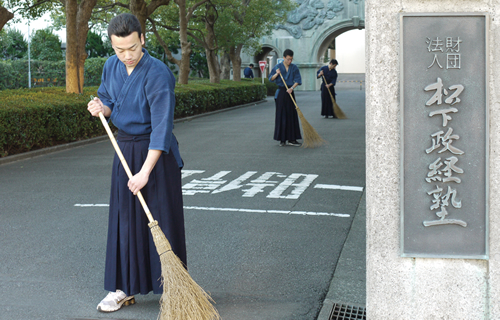
But what impressed me most when I looked back at these past practices was a written conversation I had with an old friend from grade school, Tofi Reyes, who grew up to be an American-educated engineer working in Japan, where he has lived long enough to master its language and culture.
Tofi tells me that “At the Matsushita Institute of Government, students must do ‘Dawn Training’ every morning, consisting of a 3-kilometer run on Chigakasaki Beach to build endurance, after which they spend 45 minutes sweeping, cleaning the campus to build humility. Once a year, the students must do a 100-kilometer trek in the Miura hills, which they must finish within 24 hours to build endurance and teamwork. Before the students analyze policy or economics, they must first study human nature and ethics. Then they learn and practice the Japanese of practice of sunao—which means to cultivate a mind free from prejudice, ego, and emotional bias. In this approach, you consciously pause your inner defense attorney. You listen to the input as raw data first, without instantly attaching labels like ‘right,’ ‘wrong,’ ‘offensive,’ or ‘brilliant.’ They are trained to ask, ‘If I didn’t care about who wins this argument, what is the core truth being said here?’ Then they study human nature and the responsibility of leadership. The tea ceremony (sado) and Zen meditation are also part of the curriculum. Then they dive into international geopolitics, macroeconomic stability, regional revitalization, or educational reform. Students must also experience working as an intern on the factory floor of a manufacturing plant, then work within agricultural communities, then finally as congressional aides in the Japanese Legislature (the Diet). Then they do an overseas internship in the US Congress. Then back in Japan, they must sweep the streets of the town where their school is located. After all that, the school does not grant any diploma, just to keep them humble (and to discourage credentialism). One graduate of the above program is the current Prime Minister Sanae Takaichi.”
I’ll admit to having paused at that mention of a 100-kilometer, 24-hour march for CEOs-in-the-making—surely it was an exaggeration? But no; I looked it up and sure enough it was doable and regularly done, not to encourage competitiveness but rather cooperation, to ensure that everyone in one’s cohort came through.
It’s a little late in the day to send our truant senators back to school—although I’m sure many of us would love to see them take that long hike—but we can still learn, not so much from their mistakes but ours.
When a senator embarrasses himself by flaunting his appalling ignorance without the slightest hint of self-awareness, it is we as a nation who should be embarrassed for having allowed that to happen in the first place. The education of a politician should be preceded by the education of the electorate, which seems even harder to manage.
NEVER IN our political history has a sitting Senate been held in such disrepute, been so reviled in public opinion than over the past two weeks. You’d think that the outrage over the leadership coup couldn’t be topped, but then came the obviously staged shooting and a fugitive’s escape—and then a lady senator’s histrionics over that fake attack.
What sticks in the craw—at least in mine—isn’t even the leadership turnover, or the assisted escape. We saw those coming, and even if we didn’t, they make cynical sense; of course they would do it. What’s extremely galling was having to listen to Pia Cayetano’s pained depiction of herself as a victim in the whole affair, terror-stricken and forlorn.
Even accepting that her fear may have been genuine, she sounded shrill and shallow, peevish and petulant, completely unmindful of the deeper and more harrowing terrors ordinary Filipinos—people without staff, security, bulletproof SUVs, and generous salaries—have suffered, with far more courage and even grace.
Terror and fear are givens in this country. Like many others of my age, I was shot at during the First Quarter Storm—at the Diliman Commune and at any number of rallies disrupted by the police and military. During martial law, I was beaten up as a political prisoner. Later, our home was raided early one morning by military agents hunting down “subversives” they thought were there, and our four-year-old daughter was interrogated by them. They were traumatic at the time, but they were nothing compared to the unspeakable torture my friends and comrades went through, the horrible deaths others suffered, the grief and loss sustained by those left behind.
Multiply that by many thousands, not just under Marcos Sr. but under Rodrigo Duterte, and you’ll know what true terror feels like. Heard shots two doors down the hallway? Scary, yes, but Sen. Pia’s histrionics should have been directed at her mates who failed to warn her of the plan to spring Bato, which evidently at least some of them knew.
Pia Cayetano’s outburst, Robin Padilla’s posturing, Bato de la Rosa’s pop-up show, even Allan Cayetano’s propensity to fall on his knees and raise his arms to heaven—all gestures they had to know would only raise the political temperature—display a skill mastered by politicians, usually those with skeletons to hide: making it all about themselves, employing theatrics and embracing notoriety, effectively deflecting attention from the larger issues at hand.
What we’ve seen is but a preview of the spectacle to come. We can expect even more drama at the impeachment trial itself, on and off the Senate floor. More tears, more swearing, more gnashing of teeth, maybe even a scuffle or two. The public expects it, the theater of the Senate will provide it.
It will become obvious at some point that it will no longer be Sara Duterte on trial, but the Senate itself—its credibility, its viability, and ultimately its utility and necessity as a political institution.
It should probably be clear by now that if we just go by the present numbers, VP Sara Duterte’s impeachment is dead in the Senate, was dead before it even started. More optimistic observers have opined that a conviction remains possible if some senators are persuaded—whether by the evidence or the pressure of public opinion—to change their minds, or even somehow vanish.
I myself think that while a few conversions can be secured, the nine votes needed to keep Sara free and happy are locked in place. The shamelessness with which the current majority pulled off their coup on the eve of the impeachment court’s convening shows that these people are prepared to do anything—to run the country to the ground if necessary—to save their skins and even prosper again under a Sara administration.
We Pinoys have hurtful words for this—walanghiya, kapal-mukha—and they’ve made the rounds of social media many times over, but these people are beyond hurting, impervious to all injury but to their power and their pockets.
These are the robed jurors who will sit through VP Sara’s trial and listen stoically to the litany of evidence detailing her crimes, none of which will matter to them. They will brazen it out to the end, confident that a resurgent Sara will rescue their political fortunes, and that a forgetful people will restore their reputations. They have no respect for the people’s intelligence, expecting us to swallow the preposterousness of these claims:
1. That the timing of the Senate leadership coup had nothing to do with the impeachment trial of VP Sara Duterte;
2. That Allan Peter Cayetano and Co. had no foreknowledge of Bato de la Rosa’s appearance at that key Senate session;
3. That the shooting incident had nothing to do with the escape of de la Rosa from the Senate with the assistance of Robin Padilla;
4. That no one in the Senate majority knew or knows of fugitive de la Rosa’s whereabouts.
And that’s why I can safely predict that no matter what they throw at her at the approaching trial, VP Sara’s hardcore Group of Nine—which will likely remain intact regardless of whether Sen. Sotto et al regain leadership of the Senate, as some expect to happen before too long—will guarantee her acquittal. If they think we can believe these fictions—or worse, don’t give a damn about what we think—then they’ll give Sara (and thereby themselves) a pass. That’s impunity on another level.
Sen. Pia’s flare-up was reportedly provoked by Sen. Risa Hontiveros’ remark that it seemed that “nothing happened”—“walang nangyari”—in the wake of the Senate shooting. “But something did!” Pia insisted.
I hope we can say the same at the end of the impeachment trial, but I’m not holding my breath. Against all my hopes, I’m afraid that walang mangyayari, and there’ll be at least nine senators who won’t be the least bit bothered.