Penman No. 153: Elderly Expressions

IMG_6478

Penman for Monday, June 15, 2015

LAST WEEK’S piece on my memoir-writing workshops must have touched a few sympathetic nerves, because I got a number of messages from my fellow seniors asking about the next workshop, and if and how they could get into it. Sadly, I had to tell them that the workshops I mentioned were put together by special arrangement with Marily Orosa, squeezed into a very tight schedule (it’s insane, but I’m working on eight book projects all at the same time, in various stages of completion). It’s still possible that Marily could arrange another workshop for me before the year ends, but that depends on a lot of factors; if it happens, I’ll let you know.

If you’d like to work with me, the best thing to do would be to enroll for one of my graduate fiction or nonfiction workshop courses at the University of the Philippines, possibly as a non-degree student (which will make admission earlier, if you just want to take this one course); I’ll be teaching fiction writing, Fridays 4-7 pm, when I return from my sabbatical leave this August.

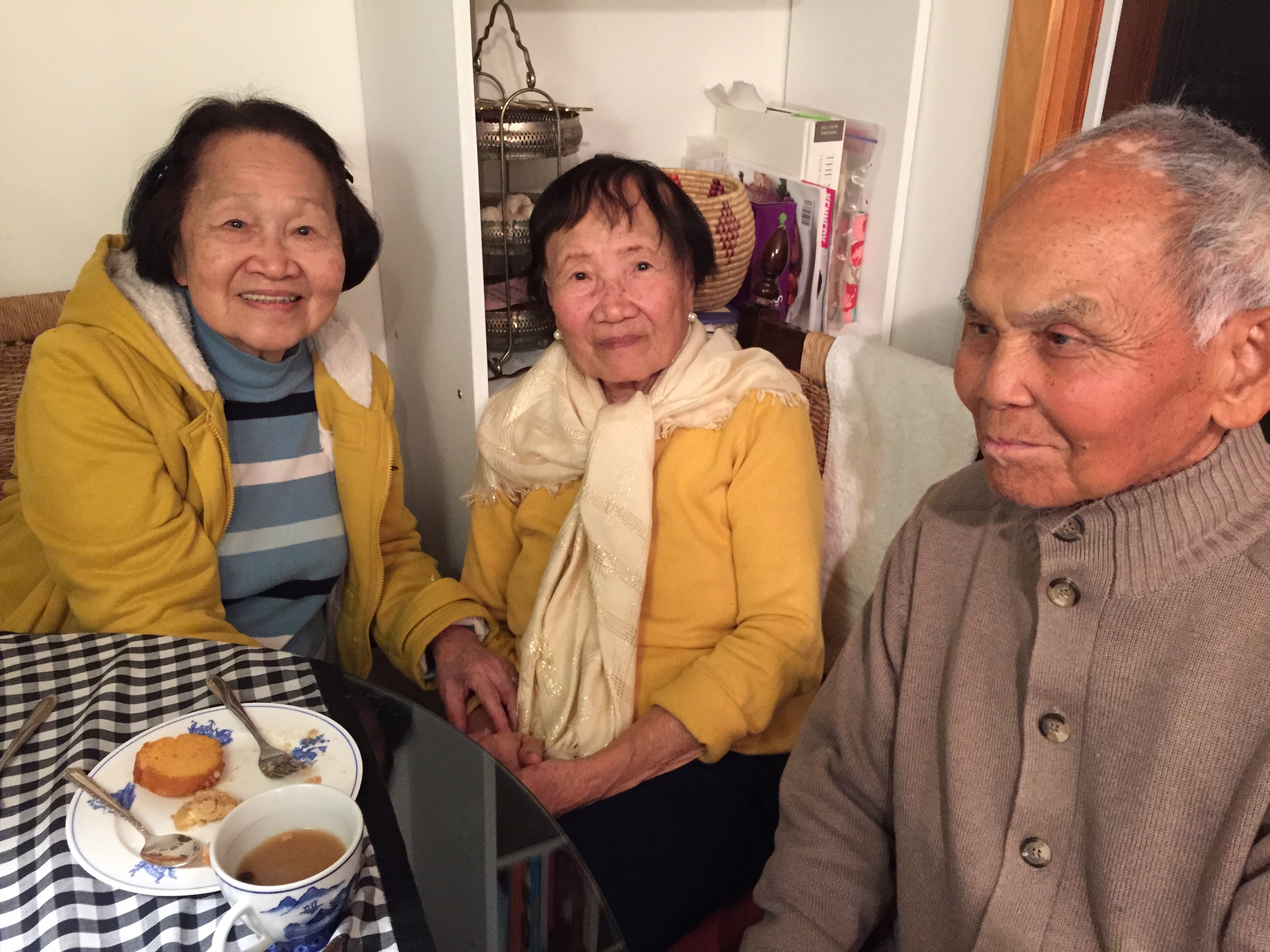
I’ve had quite a few senior students in these workshops—and by “senior” I don’t mean that they’re in their fourth year; more likely they’re in their 65th, and just went back to school for a rejuvenating dip in the waters of academia. In many places, they call this “continuing education,” and the good thing about having seniors in class is that not only do they get educated, but the rest of the class as well (myself included), especially the young ones who can benefit from the rich experiences of their elders.

The “oldies” may not always be up to speed as far as the latest and fanciest literary theories are concerned, but they’ll never lack for stories to tell, and you know that when they talk about things like loss or suffering, or bring up words like “rapture” or “redemption,” they’ve looked at life in the eye and kissed it full on the lips, and said some very sweet hellos and some very hard goodbyes.

This isn’t to say, of course, that older people have a monopoly of wisdom or expertise; some of my younger students have amazed me with both the gravity and the finesse of their work, displaying insights well beyond their years. (Let’s not forget that Jose Rizal wrote and published the Noli in his mid-twenties.) Conversely, I’ve seen mature students, mired in their prejudices and predispositions, unable to get beyond a dull and sightless monotone in their narratives.

But there’s clearly need for more room within our society for elderly expressions—and I don’t mean just more welfare-type laws to benefit seniors and such initiatives, although we’d certainly be happy if there were more support for the aged among us, especially the poor. I mean more coverage and exposure in the media and even in our literature of older characters and their concerns, going beyond stereotypes and easy expectations. (If you haven’t seen “The Second Most Exotic Marigold Hotel,” you should.)

We need more stories, poems, plays, movies, and articles with older Filipinos, their predicaments, and their achievements in focus—handled realistically, minus the aura we customarily accord to doting grandmothers and kindly uncles. Certainly they can be saintly, but seniors can also be just as vicious and as avaricious as people half their age, and why not? (I’m sure we’ve all heard of that filthy-rich aunt or neighbor who refuses to feed her househelp properly and puts a lock on the refrigerator.) Acknowledging people’s weaknesses as well as their strengths is acknowledging the diversity and individuality of humanity, which is incumbent upon every writer to do.

For the past many years, in my undergraduate literature classes (and yes, I’ve always insisted on teaching at least one undergraduate class every semester, so our freshmen and sophomores can know what’s it like to be taught by a senior professor, like I did in my time), I’ve taken up two poems that deal with aspects of aging. One of them is “Stepping Westward” by the late Denise Levertov (a mentor of my friend Fidelito Cortes when he was at Stanford). The poem begins thus:

What is green in me / darkens, muscadine. / If woman is inconstant, / good, I am faithful to / ebb and flow, I fall / in season and now / is a time of ripening.

Here, the speaker or the persona asserts her pride in and her comfortability with her advancing years, likening it to the maturing of good wine (muscadine). She has learned to accept—indeed to embrace—the inevitability of aging and death, as a fruit falls off its stem when it ripens. She also fiercely reserves her right to be inconstant and unpredictable, to change her mind if and when she wants to (Angela Manalang Gloria’s sonnet “Change” provides another terrific variation on this theme). She declares that

There is no savor / more sweet, more salt / than to be glad to be / what, woman, / and who, myself.

The poem closes with a wonderful image of life as a basket of bread to be carried—yes, a burden, but also a blessing to be eaten from.

The other poem is a local one, by Merlie Alunan, and is always a hit in class because of a theme that’s practically become taboo in our conservative society: not just female sexuality, but desire in older and unglamorous women (ie, older than Anne Curtis and Solenn Heussaf). The poem is “Young Man in a Jeepney,” which deals with a typical working woman, probably a housewife in her forties or fifties, who takes a jeepney ride home, clutching her bag to her chest, only to find herself seated beside a sweaty young man. The contact, however innocent, stirs up an ancient longing in her:

“Heat,” I mutter. “It melts / the very bones,” feeling / as I say this, inside me /awakening sweet April.

The unsuspecting young man gets off the jeepney and life goes on:

I do not watch you turn / the corner to the sudden dusk / —but I smile to savor /my sin in secret.

So what is that “sin,” I ask my students, and why does she call it so? Is it, indeed, a sin for a respectable and somewhat dowdy matron—and decidedly one of the lower class, the kind who would not have boy toys or affairs with their amigas’ husbands—to feel desire?

Discussions like these remind us that while many things seems to get simpler with age, both by choice and by necessity, human complexity itself doesn’t diminish over time.

Penman No. 152: Writing the Stories of Your Life

Studio5

Penman for Monday, June 8, 2015

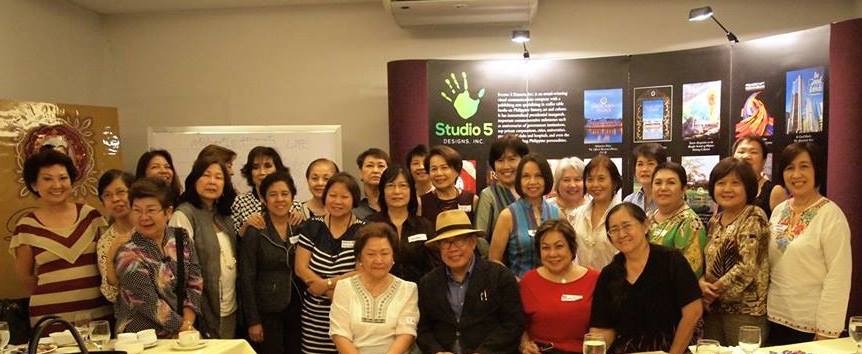
TWICE OVER the past three months, I’ve been giving workshops to medium-sized groups of people in my general age range (let’s put that at 50 to 70), people who came together because they had stories to tell, but needed some guidance on how to tell them. These workshops were arranged by the publisher and writer Marily Orosa, who had come up with very engaging book ideas to which these potential writers could contribute, and who thought that it would be a good idea to have a practicing writer give them a bit of coaching before they plunged into the actual task of writing.

I was glad that Marily put these workshops together, first because I’ve always believed that every person has at least one good story in him or her, and that it’s my job as a writing teacher to get that story out of the person. Second, being a senior myself, I’m happy when older people get an opportunity to express themselves in this obsessively youth-centered world.

Many if not most members of my audience were retirees or approaching retirement after many decades of productive work in their professions. One was a former Cabinet secretary and another a university president, among other luminaries, but in the end, it wasn’t one’s position that mattered as much as one’s experiences, which seniors have in spades.

I couldn’t cram a semester’s worth of lessons into a Saturday afternoon, but I did what I could to give them a framework, an approach, and some tools with which to get their stories out of their memories and onto the digital page. First, we talked about the basic difference between life (their life experience, the raw material) and art (the finished product they were expected to come up with).

What do artists—writers, painters, musicians, and so on—do to and with their materials to make works of art? What do artists see in the things around them that most other people don’t? In this way, we try to get people to see their own lives and experiences as matter to be structured and shaped—not to distort the truth (the object, I think, of all honest art) but precisely to get at it and to bring it out, even if it may not always be pleasant—and indeed much art out there is meant to disturb.

We talk about selection, and how the writer or artist chooses material to use directly in the artwork (the text) and leaves other things out (the context), given that you can’t possibly use everything out there. We talk about how artists work with concrete images and objects to suggest ideas, rather than the grand abstractions that, say, editorial writers and philosophers use.

When we consider life experiences, we then talk about distances in space and time, and about physical and emotional distance. Many participants at these workshops, for example, want to talk about travels they undertook to interesting places, and what I try to do is to get them to write something beyond the verbal equivalent of a posed snapshot in front of the Eiffel Tower or the Golden Gate. A trip to Paris isn’t just ever about Paris, but also, implicitly, about Tagbilaran or Bayombong, wherever it was the narrator or protagonist came from, and it’s that perspective that makes this particular experience of Paris unique.

Writing about the past really involves two protagonists (taking a page from Thomas Larson): the remembered self and the remembering self. Writing about a journey involves not just traversing physical territory, but also that internal space within which the character grows—so the physical journey is always paralleled by an internal, often spiritual, one.

After clarifying these fundamental concepts, I then introduce them to some basic tools of the trade—the elements of fiction which, when carried over to nonfiction, liven up the narrative and make both writing and reading a more engaging experience. We talk about plot, character, theme, point of view, dialogue, description, and setting—how to employ time, how to bring scenes to life, what to say and what to leave out.

I remind them what a lonely and (for most people) unremunerative occupation writing is, but going beyond the money or the lack of it, how important it is to write one’s stories down before the memory deserts or defeats us. It’s especially important for the young to know about how their elders lived and thought. It might take them another 20 years to become receptive readers, but the record will be there, and they’ll be surprised to find, as we ourselves did, how the past anticipated the future in so many ways.

I feel drained at the end of these three-hour workshops, faced with a flood of eager questions, but I also feel elated by all the creative energy I seem to have unleashed among my fellow seniors, and I can only begin to imagine what a touch of art can do to that rich lode of memories lying deep in their many-chambered brains.

Treasures

AND NOW’s as good a time as any to draw attention to the good work done by Marily Orosa’s Studio 5 Designs, which has been in the business of producing not just books but prizewinning ones, lauded both for their design and their substance. I’ve had the pleasure of working with Marily on a couple of coffeetable book projects, most notably De La Salle University’s centennial volume, The Future Begins Here, which I edited and wrote for, and which won a Quill and an Anvil Award (the Quill, Anvil, and National Book Awards are the local publishing and PR industry’s measures of excellence).

Studio 5 has also won NBAs for In Excelsis (The Martyrdom of Jose Rizal) by Felice P. Sta. Maria and The Tragedy of the Revolution (The Life of Andres Bonifacio) by Adrian Cristobal. Malacañan Palace (The Official Illustrated History) by Manuel Quezon III and Jeremy Barns also won a host of local and international awards, as did the magnificent Treasures of the Philippine Wild. Freundschaft/Pagkakaibigan (celebrating 60 years of friendship between Germany and the Philippines) will be included in the prestigious international design annual, Graphis.

Beyond being visual treats, these are all significant books, and their creators and publisher deserve high praise and encouragement.

Penman No. 151: A Workshop in Biography


IMG_7561

Penman for Monday, June 1, 2015

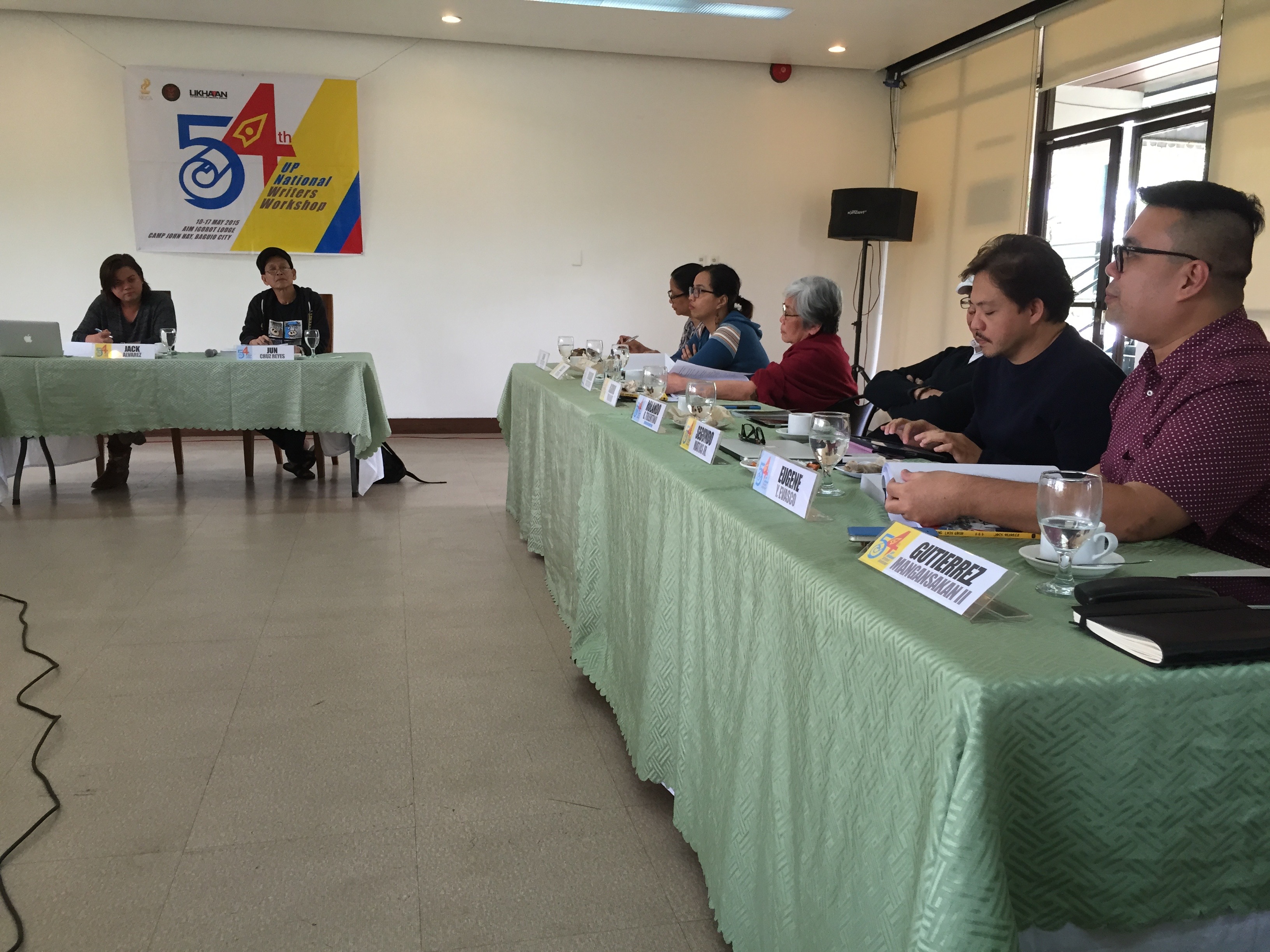
BECAUSE OF my trip to Canada, I was able to attend only one day of this year’s UP National Writers Workshop, which took place from May 10 to 17 in Baguio. I immediately went to work that morning leading a discussion of a biographical project submitted by one of the twelve fellows.

It was a topic I was keenly interested in, because of my own work in biographical writing. (Two of my biographies—A Man Called Tet: The Story of Enrique T. Garcia, Jr. and Edgardo J. Angara: In the Grand Manner—were published and launched recently by Anvil Publishing and the University of the Philippines Press, respectively.) I’m at work on a few more, and if it becomes my lot to be known primarily for my accounts of other people’s lives than for my own fiction, then I can’t complain, having assumed a rather unique responsibility and occupation, among a few others in our writing community.

As a grade-schooler, I devoured biographies in the library, finding that the lives of successful or significant people—whether here or in faraway lands—inspired me to try harder and do more in my own difficult existence. I especially enjoyed the life stories of scientists, explorers, soldiers, artists, and heroes. Of course, these elementary editions were highly simplified, and very likely glossed over the human imperfections—sometimes gross—that these characters possessed, which more mature biographies would reveal if not revel in. No matter; at that time, the overarching greatness of their deeds lent a luminous aura to these characters’ profiles, and I have to believe that I emerged all the richer for reading those books.

The idealization of a life was one issue we discussed at the workshop. There are many kinds of biographies, and I took the occasion to go over a simple classification of these kinds.

On one extreme would be hagiography—literally, writing about saints, and therefore the sunny sanctification of the subject as though everything that he or she did were beyond reproach. On the dark end would be the hostile or malicious biography, written for no other reason than to malign its subject as indelibly as possible, even at the expense of the truth. To its left would be the critical biography—a sober, perhaps scholarly, and more even-handed study of a life, sparing nothing and no one (least of all the subject) in pursuit of the presumptive truth, although these works could also carry their own agenda.

Farther on would come the kind of work that I and some others do on commission, for which I’ve coined the term “sympathetic biography,” a largely positive presentation of a subject’s life—without skirting, however, the major controversies and issues publicly known to involve the subject. Is it the whole truth and nothing but the truth? Realistically, I would expect not, and not because I think my subjects deliberately lie to me, but because it’s in human nature to present the best side of oneself. (I think Dolphy set the bar for searing candor and self-awareness in his autobiography, Hindi Ko Ito Narating Mag-Isa; I can’t imagine politicians or business figures being so open about their private lives.)

A sympathetic biography may be a half-filled glass to many, but it puts something on the table to be seen and seen through. I expect—I would hope—that whatever I write about my subject will be interrogated by more knowledgeable critics and scholars. This is why I urge my clients to be as forthright as possible and to deal with whatever issues they may have been embroiled in, because we live in a highly skeptical environment where questions never cease, especially online.

But to get back to the workshop, we were glad to succeed in our continuing quest for the discovery and encouragement of bright new writing talent across the archipelago. The UP Writers Workshop is different from most others in that it engages mid-career writers—people of proven ability with at least one published book, or major stage or film production to their name. We deal with them less as students than as younger brothers and sisters in the profession.

The critics of writing programs and workshops who think that all they produce are clones and sound-alikes of those teaching these courses should take a look at our roster of fellows and their work. These young writers sound nothing like us, and even after the workshop, they’ll continue working with their own material in their own styles, because we instructors do our best to recognize and preserve the originality of their voices.

The best help we can give them is to provide a response—whether it be a gut reaction or a learned reading that draws on a certain context—from our side of the generational divide, although they get responses as well from their peers, which might just be more useful and valuable to them, coming from people who share their vibe.

This year, we welcomed the following: Jack A. Alvarez (Creative Nonfiction); Armida Mabitad Azada (Poetry); Kristoffer Brugada (Nobela); Resty Cena (Nobela);

Gutierrez M. Mangansakan II (Creative Nonfiction); Isidro T. Marinay (Biography);

Segundo D. Matias Jr. (Kuwentong Pambata); Rhoderick V. Nuncio (Nobela); Will P. Ortiz (Nobela); Benedict Bautista Parfan (Poetry); Charlie Samuya Veric (Poetry); and Eliza Victoria (Fiction). Watch these names, because if you haven’t read or heard about them already, you will soon.

What many don’t realize is what a precious resource we have in these programs and workshops here in our part of the world. Our friends from the region have begun to notice what a liberal and nourishing environment we have for young writers. There’s still patronage and paternalism in the system to be sure—this is Asia, after all—but it’s much less pronounced and potentially stifling than elsewhere. Our tradition is for the younger ones to tell their elders “Up yours!”—until they start putting on the poundage and the gray hairs themselves.

Speaking of writing programs, it was with great alarm and dismay that I received news of the planned closure of one of Asia’s most unique and successful graduate writing programs—the low-residency Master of Fine Arts (MFA) program at the City University of Hong Kong.

The low-residency formula allows students from Hong Kong and around the region to enroll for an MFA and work online with mentors from all over the world, flying in to HK just once or twice a year for intensive workshops and face-to-face interaction. Some Filipinos have gone through the program, and I’ve had the privilege to lecture and to read at a couple of sessions over the years.

The City University administration says that the program costs too much to maintain, but ironically the program turned the corner this year financially, so it can’t be just the money. We wonder if someone up there sees creative writing as a threat to socialism with Chinese characteristics. City U ‘s mandarins should know that Hong Kong’s and China’s prestige and goodwill derive from programs like this—and not from building lighthouses and airstrips in the South China Sea.

Penman No. 150: Looking Eastward in Toronto

IMG_7573 (1)Penman for Monday, May 25, 2015

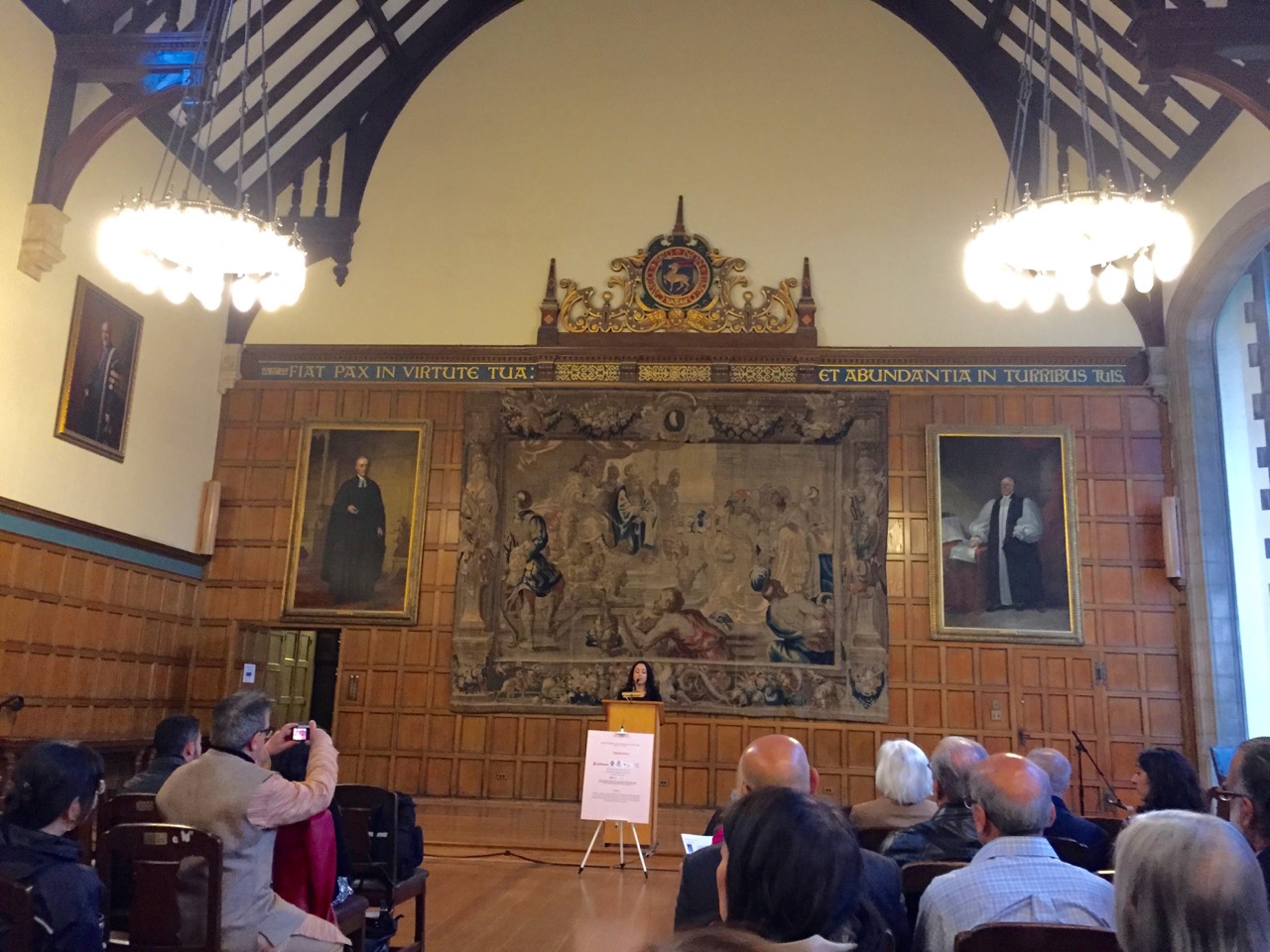
I FLEW out to Toronto in Canada a little over a week ago to take part in that city’s Festival of Literary Arts, possibly the first Filipino author to join that long-running festival, now on its 15th year. Previously, the festival had focused on South Asia (India, Pakistan, Bangladesh, Sri Lanka), but has recently opened itself up to more representation from East Asia, Africa, and the Caribbean, thus my inclusion in this year’s roster of invited writers and speakers.

Over a weekend, from Friday to Sunday (May 15-17), several dozen representatives from these regions and from Canada met in various venues on the scenic campus of the University of Toronto and its environs to tackle issues and problems besetting writers and publishers from outside the global centers. How does a writer from the periphery break through to the center? Or is that “periphery” its own legitimate center? Is yearning for publication and validation in the West a vestige of the colonial mindset, an experience shared by all the countries represented in Toronto?

Aside from these seminal discussions, of course, the meeting was first and foremost a festival, a sharing of the artists’ finest work, and I felt privileged to be introduced to authors and creations I would otherwise have totally missed or blithely ignored. With many of the authors coming from expatriate and postcolonial backgrounds, the offerings were rich and deeply nuanced, the talents outstanding.

Among others, I discovered a major international writer in the festival director, the novelist M. G. Vassanji, who had been born in Tanzania in East Africa, and whose account of his pilgrimage to his ancestral roots across the ocean (A Place Within: Rediscovering India) is a modern classic of creative nonfiction—a sympathetic but unsentimental and often searingly critical chronicle of his encounter with the sprawling reality of India today.

The visit also allowed me to reconnect with some old Filipino friends who had migrated to Toronto and had built new lives there. I was very graciously taken out to a scrumptious dimsum lunch in Toronto’s fabled Chinatown by Patty Rivera and her husband Joe. Patty and I worked together 40 years ago as writers and editors at the National Economic and Development Authority (an unlikely Camelot for young writers and artists under the patronage and protection of then-Sec. Gerry Sicat).

Though trained and still active as an editor and journalist, Patty has since developed into an accomplished and prizewinning poet, with three volumes to her name. Her first collection, Puti/White, was shortlisted for the 2006 Trillium Book Award for Poetry. Patty’s husband Joe, a former Ford executive who also wrote plays in the Philippines, became a lawyer in Canada and then, upon his recent retirement, turned to painting, an avocation in which he demonstrates a most unlawyerly exuberance. I also met and was happy to engage with some Alpha Sigma fraternity brothers led by Amiel “Bavie” de la Cruz, who now runs his own accounting firm in Toronto. IMG_7597 (1) Patty and Joe arranged a reading for me with a large and lively group of Toronto-based Pinoys (including Hermie and Mila Garcia, the moving spirits behind Canada’s longest-running Filipino newspaper, the Philippine Reporter, and expat poet Naya Valdellon); this was held in the very stylish apartment of writer-artist Socky Pitargue, and a great time was had by all as we threshed out the travails of Philippine literature and politics, two deathless topics that occupy me on every one of these overseas sorties. DALISAY_HMG_8056-300x168 Yet another meaningful encounter I had, thanks to the festival organizers, was with two classes of high school students at the Mother Teresa Catholic School in Scarborough, a Toronto suburb with a high concentration of Asian students, including Filipinos. These teenagers had very likely never met a living writer before, let alone a Filipino one, and I was glad to try and show them that we do exist, and that we have something to say. I, too, learned something from their teacher Kathy Katarzyna, who ended our session with a terrific quote from the Canadian poet Leonard Cohen: “There’s a crack in everything…. That’s how the light gets in.”

Many thanks to the Sri Lankan poet Aparna Halpe for taking me to the school. Of course, my thanks wouldn’t be complete without acknowledging the help and support of my sister Elaine Sudeikis and her husband Eddie, who flew in from Washington, DC to join me at the festival and to show me Toronto and a bit of Ontario (most notably Niagara Falls—we walked over to the US side as well for my shortest visit to the US, ever). Ed’s dad Al—all of 92 but still feisty—also gave me a little taste of Lithuania in Toronto.

And the visit would never have happened for me without the recommendation of Prof. Chelva Kanagayakam, an eminent scholar and festival founder whom I’d met in Manila, who tragically died of a heart attack a few months before the festival, on the very day he was inducted into the Royal Society of Canada. I found Toronto itself to be a highly livable and largely safe city (guns are under strict control in Canada), with a vibrant ethnic mix.

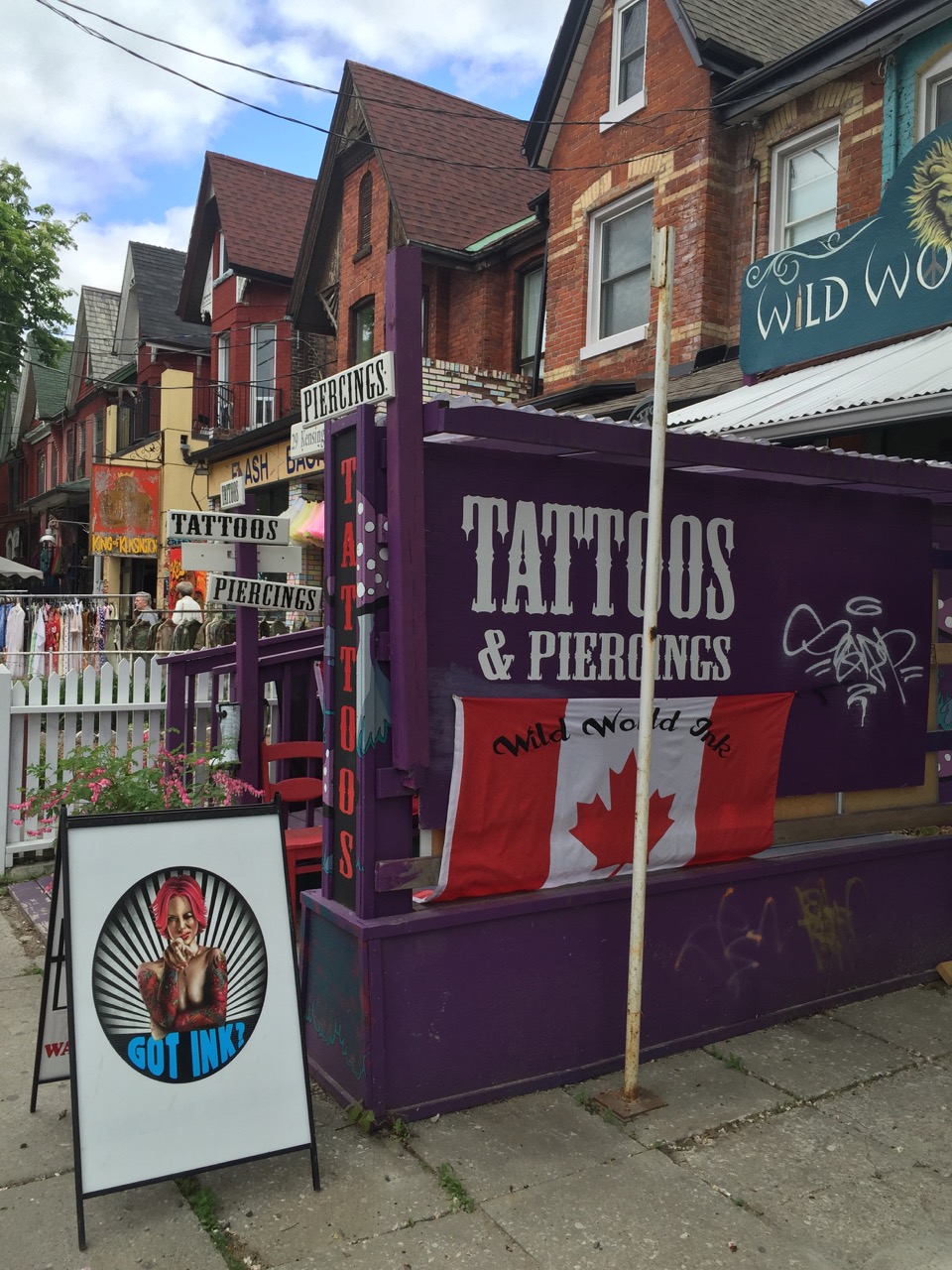
One out of every two Torontonians comes from somewhere else, and Vietnamese, Tibetan, and Puerto Rican restaurants stand cheek-by-jowl beside each other, not to mention a Chinatown noted to be among North America’s best culinary havens. (A Pinoy food store aptly named “Butchokoy” stood a block away from my lovely B&B—a three-storey house from 1853—on Dunn Street.) Victorian structures still in use by the university and the city government contrast sharply with ultramodern architecture in an eclectically energetic skyline. Seekers of the funky and the quirky can have their fill in the city’s counterculture-inspired Kensington Market. IMG_7691 (1) For someone schooled in Americana, this exposure to things Canadian was an interesting re-education—to think, for example, in terms of “Tim Hortons” instead of Starbucks or Seattle’s Best; of “Roots” instead of Gap; of “Hudson Bay” instead of Sears or JC Penney, etc.

But the most useful re-orientation took place for me at the festival itself, in reminding me that we have a lot to learn from South Asia as far as developing readerships in local languages is concerned, among other issues. We Filipinos think we’re well traveled and globally savvy, but we actually don’t get around enough in terms of mixing with our fellow Asians, let alone Africans. We seek out Western—specifically American—tutelage and patronage, often to our own deep disappointment.

It seems ironic that I had to learn this in Toronto—a true cosmopolis like New York—but sometimes you have to stand in the West for a better view eastward.

[Group photo from philippinereporter.com]

Penman No. 146: A Life in the Grand Manner

SEJA2013UPPenman for Monday, April 27, 2015

I’VE BEEN privileged to work with some of the most accomplished and interesting personalities in Philippine politics and business on their biographies—the accounting pioneer Washington SyCip, the brilliantly rebellious Lava brothers, the Marcos-era tycoon Rudy Cuenca, and the political maverick Tet Garcia, among others. This Wednesday, April 29, another biography I wrote—Edgardo J. Angara: In the Grand Manner, published by the University of the Philippines Press—will be launched at the Manila Polo Club, from 3 to 6 pm, and it’s focused on a man who will be remembered for many things in many ways, whose impact on our political, economic, and social life has been far greater than the headlines alone would suggest.

The man now known by many as SEJA (for Senator Edgardo J. Angara) courted consternation and even disdain from many people, including some old friends, when he stood by the embattled Erap Estrada into the last days of the latter’s doomed Presidency. He also confounded many of his own followers when, after leading the opposition, he signed up with Gloria Macapagal Arroyo’s senatorial ticket in 2007. The biography addresses those issues, and more—the Apeco issue in his home province of Aurora, for example, involving the conversion of land claimed to have been the ancestral domain of the Dumagats into an economic zone.

It also sheds light on some little-known but key moments in our political history, such as the peace agreement that Angara was able to negotiate, when he was Agriculture Secretary, with communist rebels in Negros. “That agreement continues to hold,” Ed told me. “It’s the longest-lasting agreement the Philippine government has achieved with insurgents.” The biography also narrates how Angara, still as Agriculture Secretary, was just about to conclude a rehabilitation plan for Camp Abubakar, in close consultation with the MILF leadership. “It would have been a historic breakthrough,” said Angara, “but it was opposed by the military, and ultimately dropped by President Estrada.”

My favorite portions of the biography have to do with his days as UP President, when he threw that famously independent and historically dissident institution into a tizzy by coming in from the cold and applying corporate governance to the academe.

Rumored to have been President Marcos’ choice for the UP job—something Angara strongly denies, attributing his selection to the support of the late Onofre D. Corpuz—Angara stepped into Quezon Hall from out of the blue, “the blue” being ACCRA, the law firm he had set up with some of the brightest young lawyers of his time. Angara would recall that “OD asked me to meet with him in the coffeeshop of the Mandarin. He brought up the UP presidency with me, and I told him that while it was certainly a great honor to be considered for such a lofty academic position, I simply wasn’t prepared for it. My only teaching experience was as a lecturer for two semesters, right after I had returned from Michigan. The School of Business Administration was looking for someone to teach corporation law, and I drove my Beetle from Makati to Diliman to teach my classes.”

His election by UP’s Board of Regents was no cakewalk: Angara faced a formidable and distinguished array of fellow candidates, including Secretary of Justice Vicente Abad Santos, Acting Budget Minister Manuel S. Alba, UPLB Chancellor Emil Q. Javier, Director of the United Nations Fund for Population Activities Rafael M. Salas, incumbent University President Emanuel Soriano, Economic Planning Minister Gerardo P. Sicat, Assemblyman Arturo M. Tolentino, and Assemblyman Ronaldo B. Zamora, among others. It was even rumored that First Lady Imelda Marcos herself was interested in the position.

In the end, the BOR elected the 46-year-old lawyer, and he lost no time wielding the broom—reorganizing and trimming down UP’s tangled and bloated bureaucracy, revamping its academic programs, and securing fiscal autonomy for the university. Some of these measures inevitably made him enemies, but also unlikely allies, such as the staunchly leftist professors Francisco Nemenzo and Roger Posadas.

Known to his colleagues as an irrepressible jokester, University Secretary Mart Gregorio probably wasn’t joking when he recalled a moment when he entered the campus with Angara, who observed a virtual menagerie of farm animals along University Avenue. “He asked me, ‘Why are there so many animals at the university entrance?’ I told him, ‘Ah, Mr. President, that’s the College of Veterinary Medicine. In other universities abroad, you might be welcomed by a beautiful arch or statue. Here we have cows, chickens, and goats.’ And then he asked, ‘What’s that other college there?’ I said, ‘That’s the College of Fisheries, sir.’ He said, ‘Fisheries—but we don’t even have an aquarium here!’ And right there, he said, ‘I think that should be transferred to UP Visayas.’ And it was. ‘Vet Med should be transferred to UP Los Baños.’ And it also was.”

I’m biased, of course, being a UP professor and former university administrator myself, but that’s the kind of anecdote that made this book a pleasure to write. It was also the realization that I was talking to the man responsible for many landmark bills that made a key difference in my own life, among many other millions of Filipinos—the Senior Citizens Act, PhilHealth, the Generics Act, and the creation of the Commission on Higher Education and the National Commission for Culture and the Arts, aside from laws on Agricultural and Fisheries Modernization, the Free High School Act, the creation of TESDA and of a host of financial and educational reforms.

He has been a strong supporter of culture and the arts, and lately has been an avid Hispanist, but Ed’s emergence as a cultural champion came as a surprise to many people—even to Ed himself, who acknowledges that “I don’t even sing or dance, much to the frustration of my wife. I don’t do any artistic work.”

From Con-Con delegate, corporate lawyer, and UP President to senator, Senate President, Agriculture and Executive Secretary, SEJA’s life has certainly been one of the most storied hereabouts. “I will be the first to say that it has been a far from perfect life, fraught with challenge and accident,” he says in his foreword, “but in my 80th year I can only still feel privileged to have lived it the way I did. The title of this book may sound rather immodest—it draws on Justice Holmes’ admonition for the law to be taught and therefore practiced in the grand manner—but I would like to believe that in the end, this is the only standard we can be measured by, as we seek to reshape society itself and our nation’s future.”

See you, I hope, at the book launch.

Penman No. 144: Postscript to the Palancas

Penman for Monday, April 13, 2015

FIRST OF all, let me express my belated thanks to Mrs. Sylvia Palanca Quirino and the Palanca Foundation for responding promptly to our recent appeal for them to reconsider and rescind what many writers thought were rather onerous rules for this year’s Palanca Awards competition. That has happened—we’re basically back to the old rules, which prospective entrants can read on the Palanca website. I do have to remind people to mind the check box on the entry form, where you need to indicate whether you’re giving your express permission for the Foundation to publish your work in full, in case it wins.

We can understand the Foundation’s desire not just to give away monetary prizes for literature as it’s done for over 60 years now, but also to develop a readership for good writing. That’s why it’s important to strike a balance between the authors’ rights to their work and the sponsor’s need to share some of that work with the public for whom it’s presumably being written. As someone who’s come to be associated, and happily so, with the Palanca community, I’m relieved that this little tempest was dealt with expeditiously and reasonably by the Palancas and their lawyers—with the personal and gracious intercession, of course, of Mrs. Quirino.

I should note that both sides came away with the clear understanding that the rules are a work in progress—as are the Palanca awards themselves—as the literary and publishing environment itself continues to evolve in ways no one could have predicted, say, 20 years ago. They will be reviewed and modified as the times require, but meanwhile, it’s back to the old rules (minus the retroactivity provision, which turns out to have been there before with hardly anyone noticing; at least the recent discussion surfaced that). Thanks, too, to other stalwarts in the literary community such as Krip Yuson, Karina Bolasco, and Andrea Pasion-Flores who also worked behind the scenes to help clarify and resolve issues.

On the sidelines, this brouhaha raised some old, perennial questions, mainly from younger writers. For example, I received another message on my blog asking if it’s absolutely important to join the Palancas and win a prize or two to gain literary recognition. My answer has always been, of course not—not absolutely. I’m sure that many accomplished authors never joined the Palancas nor won one of its many prizes; quite a few, both old and young, disdain the idea of joining for their own reasons, chiefly the distastefulness of seeming to curry favor with the literary Establishment.

From a practical standpoint—and I’ve always been a practical man—I have no doubt that a Palanca award or two, or better yet a dozen, can help perk up the CV and gain some attention from editors, publishers, and grant-givers (if that sort of thing is important to you at all, because it may not be and doesn’t have to be, if you’re independent-minded and/or have independent means).

That may sound a bit crass to the idealist, but it’s never really been just about the money—which is appreciable but not all that much in the grand scheme of things. It’s about the inner lift you get from a bit of validation from one’s peers and seniors (and again, if you don’t need or want that validation, feel free to look elsewhere).

And that, too, has practical effects, as the encouraged writer produces more (and, over time, hopefully better) work. Writing is a lonely job; there’s very little popular but credible criticism in this country that deals with contemporary literature, especially of work written by writers 40 and below. With very few readers and critics about, the only quick check you might get on your work could be that prize (ie, from your readership of three judges)—or its absence. It’s a sad thing to note, in a way, but that’s how it is.

Are the Palancas an infallible gauge of literary merit? Of course not. Any juried award involves people, and anything involving people is bound to be subject to human error and bias. You’ll hear ugly stories from some joiners about how they were cheated out of their well-deserved award by narrow-minded judges promoting their own favorites, but absent any direct proof, I’ll have to put this down to the natural quirks of the process. (I do respect the possibility that these plaints aren’t just griping by sore losers, but a reasoned critique of what some see as the ossification of an institution.)

I can’t speak for everyone else, but I’ll just say what it was like for me. When I began joining the Palancas in the mid-1970s, I didn’t know anyone and nobody knew me. I was a college dropout, and hadn’t even gone to a writers’ workshop then. I took my chances, and lost more times than I won. I won a share of second prize the first time I joined, in 1975 when I was 21 (after which I naturally felt like God’s own child), but this was followed by a straight and miserable four-year losing streak.

Whenever I lost, I felt sick to the stomach and couldn’t wait for another year to roll over as quickly as possible. But I didn’t curse the heavens or the judges. After sulking for a week, I went back to my desk—reading writers I could learn from—and wrote more stories and plays (many of them lousy ones for sure, but even bad work strengthens some muscles) and joined and lost and joined again.

At some point, I began winning more often than I lost—yes, that felt good and it got addictive—but when I had won enough, I stopped joining and focused on more important things, like teaching. (Everyone’s free to join and seniorhood shouldn’t prevent anyone from duking it out with the youngsters—hey, we semi-retirees can still write about steamy sex!—but my personal sense is, there’s a time to look for other thrills.)

It comes down to this: one or two or even a whole raft of Palancas won’t make you a writer, or make you as a writer. They’ll give you a helpful leg up and make you feel like a king or a queen for a week—you’ll certainly be the most famous writer in your barangay—but ultimately, the awards will only be as good as you make them, as you parlay them into good, sustained writing and publishing.

Forget those three-person boards of judges and their foibles; worry about the faceless thousands of readers out there you’ll never see, but who will all have something to say about your work (or worse, prove indifferent). At some point, stop worrying about prizes; worry about your next book. That’s what people should best remember you by.

(This year’s competition will close on April 30. Check out www.palancaawards.com.ph for more information.)

[Image from gmanews.tv] 

Penman No. 140: An Oktoberfest for Writers

Penman for Monday, March 16, 2015


FOR THE past several years now, I’ve been actively involved in a regional organization called the Asia Pacific Writers and Translators (APWT), which has shaped up to be the liveliest and most active such grouping that I’ve joined. Writers and literary academics can join any number of professional associations and interest groups all over the world—ranging from the venerable and highly respected PEN to the more academically-oriented Modern Languages Association—and each of them will have their individual qualities and strengths, but nothing has worked quite as well for me as APWT.

The difference, I’ve found, is that this is a network that actually works as a network should—members get to know each other and help each other out on matters of both professional and personal concern; many become good friends, so you can always depend on being able to ring up a fellow writer in every port around the region for tea and sympathy. We meet as an organization once a year—it began in India, but has moved around to Hong Kong, Australia, Thailand, and Singapore. The Filipino delegation to these annual conferences has been increasingly large and substantial. Moreover, these participants are much less the familiar, senior faces like me than new, young, aspiring writers eager to establish their own contacts and networks.

This year, for the first time, APWT will be meeting in Manila, from October 22 to 25. As a member of the APWT Board, I’m helping to spread the word this early so Filipino writers can prepare to join the conference and present proposals for presentations at the conference sessions.

APWT 2015 is being spearheaded by the University of the Philippines’ Department of English and Comparative Literature, headed by its very capable chair, Dr. Lily Rose Tope, with funding from the National Commission for Culture and the Arts. Also providing key support are De La Salle University and the University of Sto. Tomas, with further assistance from the British Council, Ateneo de Manila University, and Anvil Publishing.

For this year’s conference theme, we chose something close to our contrarian hearts: “Against the Grain: Dissidence, Dissonance, and Difference in Asia-Pacific Writing and Translation.” That’s a mouthful, but just think of going “against the grain” or against the current. Like I wrote in a blurb for the conference, “That theme comes out of several centuries of an other-mindedness that seems to come naturally to Filipinos. We’re very agreeable people, but we love to argue, sometimes just for the sake of it, and value freedom of speech above everything else. That makes for a robust if raucous democracy where there are absolutely no taboos or sacred cows.” In other words, in Manila, we can talk about anything in any way we like—which you can’t necessarily say for our more, uhm, circumspect neighbors.

We’re fortunate to have the Sri Lankan-born and now London-based Booker Prize finalist Romesh Gunesekera among our keynote speakers, especially since Romesh grew up in the Philippines, where his father was one of the founders of the Asian Development Bank. APWT 2015 will open and take place for the first two days in UP Diliman, then move to La Salle and UST on its closing day. (On opening night, Anvil will host a launch and poetry reading at the thematically apt Conspiracy bar on Viasayas Avenue.)

Aside from the main plenaries and readings, there will be at least ten breakout sessions for panels on such possible topics as literature in a time of terror; taboo and transgression; writing violence, writing trauma; transmedial translation (writing across disciplines); publishing outside the center; writing within/without/beyond the canon; regional literatures in a global context; the writing life; and translating Westward, translating in-country. We will also have a special “new voices” session and several workshops with renowned international experts.

So let me lead the call for proposals for presentations by interested Filipino authors. By “presentations,” we mean informal but well-thought-out discussions of literary topics of broad interest lasting no more than 10 minutes. APWT is not the venue for long, narrowly focused academic papers; you may wish to present popularized abstracts of such work, if applicable.

At APWT, people don’t read papers; they talk. We value the idea of writers and translators in conversation—among themselves, and with the audience. For this reason, we’ll make sure that the 10-minute limit will be strictly imposed (and I won’t mind wading in and pulling the plug myself), to allow for a longer and livelier Q&A. We will discourage the use of PowerPoint unless absolutely necessary to minimize setup delays and glitches.

By “proposals,” we mean a paragraph or two about your chosen topic, its significance and possible connection to the theme, and the main points you’d like to raise about it. The broader the appeal of the topic and the sharper the edge, the likelier it will be accepted. Proposals sharing a common thread will be grouped together.

Please provide a brief CV (with a high-resolution photograph, if possible) highlighting your background and expertise, as well as your contact information. Direct all submissions and inquiries to apwt2015@gmail.com. (No deadline has been set yet for proposals, but we’ll close the panels when we have enough of them; simple participation will be open until the conference itself.)

We’d also like to remind potential participants that APWT has no funds for the travel and lodging of participants, and has traditionally subsisted on the private initiative of its members, who are strongly encouraged to seek sponsorships for their participation. A modest conference and membership fee will be collected to help sustain the association’s other activities. We can send individual invitations either upon acceptance of your proposal or upon request. For more information about APWT, visit our website at www.apwriters.org.

See you at APWT 2015!


Penman No. 139: Memo to the Palancas

Penman for Monday, March 9, 2015

[THIS JUST IN: Mrs. Sylvia Palanca-Quirino, director-general of the Palanca Awards, called me to announce that the implementation of the copyright rule discussed below will be suspended pending a review to be conducted by the foundation.]

THE PALANCA Awards—the country’s best known and, especially for young writers, still the worthiest literary award to go for—are entering their 65th year this year. I was happy to be reminded of this milestone by an email I recently received from a representative of the Carlos Palanca Memorial Awards for Literature Foundation, which administers the awards. The rules and entry forms, I was told, were now available at http://palancaawards.com.ph/newPalanca/entries.php.

I took a peek at that page—not because I was thinking of joining, something I haven’t done in 15 years since I was inducted into the Hall of Fame—but because I was curious to see what was going on with the Palancas, to which I and hundreds of other Filipino writers owe so much of whatever we’ve made of ourselves and of our work.

For the members of my generation—those of us who began our writing careers under martial law, when there were hardly any publishing venues and free speech was under the gravest threat—the Palancas were a lifeline, engendering the production of good new work, even though much of this would come to light only after 1986.

The Palanca Awards have also been vital to the encouragement and promotion of new writing from the regions and from young writers, for whom special categories have been added. Its biennial prize for the novel—which is up for grabs again this year—is key to the production of new work in this flagship genre, which I’ve argued is really our only way to get our writing known to publishers and audiences overseas.

For all these, the Palanca Foundation and family deserve every Filipino writer’s deep gratitude.

I should note, however, something I spotted in the rules that might be cause for concern. Pardon the long quote, but you’ll see why this should raise eyebrows:

“21. In submitting the Work(s) the contestant and parent/guardian (if applicable) (the “Contestant”) accepts and agrees to the rules of the contest (the “Rules”). In the case of a winning Work or Works, the Contestant further grants and assigns to the Sponsor the concurrent and non-exclusive right to exercise the full copyright and all other intellectual property rights over such Work(s), as well as all intellectual property rights over the Contestant’s previous Palanca Award prize–winning work(s) if any, (collectively, the “Work(s)”), and waives all moral rights over all his or her Palanca Award prize-winning Work(s) in favor of the Sponsor.

“This grant, assignment, and waiver of rights (the “Sponsor’s Rights”), may be exercised by the Sponsor to the extent permitted under existing laws applicable at the time of exercise. The Sponsor’s Rights shall extend to all forms of storage, transmission, dissemination, and communication, presently existing or subsequently created. To the extent permitted by law, the Sponsor’s Rights shall be worldwide, continuous, and may be exercised by the Sponsor for the maximum time allowed by applicable law. In furtherance of education the Sponsor reserves the right to donate copies of individual winning Works or compilations of Winning Work(s) to public and private educational institutions and public libraries.

“To promote Philippine Literature in the modern world of information technology, the Sponsor intends to make the winning entries accessible through the Internet or other electronic media, to serve as a literary archive of the contest. The website or other media to be established for this purpose are intended to be a repository of the award-winning Works, recording the history of the development of Philippine literature over the years through the Palanca Awards. In making the Work(s) thus available to the public, the Sponsor intends purely to promote literary appreciation for and public awareness of such Work(s), and not to commercially exploit the same. Contestants must indicate on the Official Entry Form whether they agree to have their Work(s) posted on the CPMA website and made available for downloading by the public for free in the event that a prize is awarded for the entry; in the absence of any indication in the entry form, it is presumed that the author has agreed to such inclusion of the Work. To encourage use for educational purposes, winning Work(s) shall be posted on the website in their entirety. Should any winning author subsequently instruct the Sponsor in writing to include or remove the Work(s) from the Internet archive, such instruction will be honored and the Work shall be included or removed from the Internet archive within a reasonable time from Sponsor’s receipt of the author’s written instruction. The exclusion of any winning Work or Works from the website shall not constitute a waiver of any of the Sponsor’s Rights.

“The prize money which may be awarded to the Contestant for the Work(s) shall constitute full payment for the Sponsor’s Rights, and shall be in lieu of any royalties or other compensation to the Contestant.”

Please correct me if I’m wrong (and I hope I am), but this this reads to me—and I wonder who else will read the rules so carefully—practically like a blanket waiver or surrender of one’s rights to the present work, including those to one’s previous winning works, as well as e-book rights—to the foundation. Unless you explicitly say no, your winning work could also be published in its entirety online and downloaded.

In this age when Filipino writers have just begun to understand the value of their work as intellectual property and to exercise those rights, this rule could be a deal-breaker for many established authors wanting to join the competition, and a rather onerous imposition on new writers dying to get a break.

Some other Palanca oldtimers like fellow Hall of Famer Krip Yuson and I have had the occasional pleasure of a private lunch with Palanca Awards director-general Sylvia Palanca-Quirino to informally review the rules and update them if necessary. Since Sylvia’s not been too well lately, we haven’t had this privilege, else I would have told her personally what I’m saying now, thinking that this over-claiming of intellectual property rights could have been a well-intentioned oversight meant to facilitate the promotion of Philippine literature.

But since the rules are out there and the competition is now officially open to all, I feel obliged—on behalf of my fellow writers—to go public with this appeal to review and moderate those rules, to make for a competition that’s freer, fairer, and more fun.

(Image from palancaawards.com)

Penman No. 128: Sense by Sondheim

51xVXvpXz-LPenman for Monday, December 22, 2014

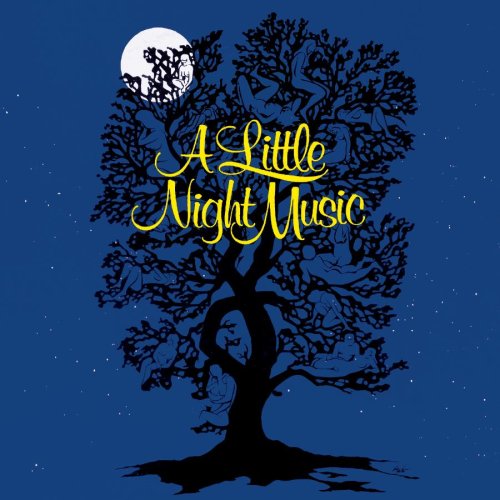
LAST WEEK, I mentioned having twice seen the HBO documentary on the life and work of the Broadway composer Stephen Sondheim, perhaps best known for the song “Send in the Clowns” from his hit 1973 musical A Little Night Music. Directed by James Lepine, Six by Sondheim walks us through the conceptualization and the composition of six of Sondheim’s most important songs: “Something’s Coming” (West Side Story); “Opening Doors” (Merrily We Roll Along); “Send in the Clowns” (A Little Night Music); “I’m Still Here” (Follies); “Being Alive” (Company); and “Sunday” (Sunday in the Park With George).

I’d have to admit that I didn’t know three of these songs; I knew and liked “Something’s Coming” as a big West Side Story fan, and “Send in the Clowns” and “Being Alive” from Barbra Streisand’s Broadway album, but the others were unfamiliar to me, which was just as well, as they were a pleasant discovery of other aspects of Sondheim’s craft.

That craft and the attitude that shaped it was something nurtured by Sondheim from a young age. When his parents broke up, the boy sought a sense of regularity and order, and surprisingly responded well to the routine of a military school. He found a hero in a family friend, the lyricist and librettist Oscar Hammerstein II, to whom he presented his early attempts at composition, only to receive a coldly professional—and cutting—assessment.

That didn’t faze Stephen, who went on to write the lyrics for West Side Story at age 25—and was unhappy about it, wanting to have written the music instead (Leonard Bernstein did). This was one of Sondheim’s (and any aspiring theater person’s) first and most important lessons: when you’re starting out, you learn to play the part you’re given. And Stephen did, exceedingly well: in the documentary, he talks about writing “Something’s Coming” using a succession of baseball metaphors that emphasized forward motion: “cannonballing down through the sky… catch the moon, one-handed catch!”

Sounds like poetry, but Sondheim is very clear about the difference between poetry and songwriting. While some lyrics may be poetic, songs, he says, have to be understood as they are sung; songs have to advance the dramatic situation, and help the listener grasp what’s at stake in the unfolding drama. Readers can go back and mull over the lines of a poem, but a song has to be instantly comprehensible.

Even so, Sondheim doesn’t succumb to the easy rhyme (the kind of song where you know “remember” will be followed by “September”). The words may be simple, but the ideas complex, as in “Being Alive”: “Make me confused / Mock me with praise / Let me be used / Vary my days.” His collaborators and directors like Hal Prince would agree that Sondheim doesn’t go for the simply hummable tune: he challenges norms, uses his music to put people not at ease, but at odds with oneself, as his characters often are.

His approach seems deceptively easy: “I scour the dialogue for lines. Or I might take a title line, then use its inflections to get the rhythm of the melody.” He likes to write lying down, taking a stiff drink now and then to loosen up. His love of word games (“It’s a very short road from the pinch and the punch / to the paunch and the pouch and the pension,” goes one of his lyrics) is mirrored in his collection of vintage board games and puzzles.

Also surprisingly, some of his best songs came as “throwaways” or space fillers, songs written to fill a gap in the drama or to wrap more tension around a character. “Send in the Clowns” was one such song—but here, for all that he maintained about the difference between songwriting and poetry, the poet prevailed. Director Hal Prince had asked Stephen to write the song for the character Desiree, played by Glynis Johns, and Sondheim had initially demurred, believing that the scene was properly the male character Fredrik’s. But he relented after seeing what Hal had in mind, and wrote the song in two days. Glynis would later say that as soon as they heard the first few notes, something stirred in the air and in their bones: they knew that they were hearing the birth of a great song. (The documentary presents it in a lovely montage headlined by Audra MacDonald and featuring, among others, Barbra Streisand, Glenn Close, Patti Labelle, Cher, and Judi Dench.)

But what did “Send in the Clowns” mean? Frank Sinatra, who sang it hundreds of times, professed that he didn’t really know. When I first mentioned the song in this column a few months ago, reader Ivy Cosio wrote in from LA to contribute this interpretation, for which I (and surely many readers and karaoke crooners) can only thank her:

“It’s basically a song of deep regret, irony, even anger but with a reference to the theater rather than the circus. Desiree (an actress) and Fredrik are former lovers who meet again after many years, and after many other men for Desiree. Fredrik is now married, but during a weekend in the country, he and Desiree spend the night together and she realizes that he has always been the one she wanted. She proposes marriage, but Fredrik refuses to be unfaithful. The tables have been turned—now Desiree is at last ‘on the ground’ and Fredrik ‘in midair,’ in love with his young wife. Desiree declares there’s no need to ‘send in the clowns’ to cover up a bad situation: looking at Fredrik, she sings, ‘Don’t bother. They’re here.’ It’s heartbreaking, because the truth is that Fredrik is still in love with Desiree. Stephen Sondheim, in an interview, revealed that the song came together for him when he wrote those two lines. He clarified that he used ‘clowns’ because that call—“Send in the clowns!’—was originally used in the circus to divert the audience’s attention when something went horribly wrong, e.g. when the lion tamer literally lost his head. But he meant it in the context of ‘fools” and for a brief moment considered changing the lyrics. It was a good thing he didn’t, because somehow ‘Send in the Fools’ doesn’t quite cut it!”

If you want to hear the rest of Sondheim and all the music that should go with this piece, look up Six by Sondheim on YouTube, and enjoy what I did.

Penman No. 126: Friendships Old and New

IMG_5878Penman for Monday, December 8, 2014


OUR THREE-MONTH American sojourn has come to a close, and by the time you read this we should be back in Manila, a bit wobbly in the knees but glad to be home. I’ve gained back too much weight—the price to pay for all that scrumptiously greasy diner food and the cold spells that excused me from my daily walks—and I’ve begun to miss my morning tinapa and my suppertime tinola. But I’ve hit my research targets and more, and am eager to hunker down to writing the book that should come out of all this. I know that in a couple of weeks this vacation will be another happy memory, and I’ll be stuck in Christmas traffic on EDSA, sweltering and muttering why the heck I didn’t stay out there for another month or two.

Before that happens, let me thank some very fine people we met during this visit, which apart from the work was marked by new friendships made, existing friendships strengthened, and old friendships revived. I’ve already thanked my interview subjects in a previous piece, but there were others behind the scenes who made this particular journey pleasant and memorable. They include Sonny and Ceres Busa, Nomer and Camille Obnamia, Erwin and Titchie Tiongson, and Jun and Myrna Medina.

They may just be names to those who’ve never met them, and indeed they’re not the kind of A-listers you’d find in the glossy magazines that make virtual libraries of Metro Manila’s beauty salons. Even among Filipino-Americans, just a few names keep recurring in the social registers, either titans of industry or doyennes of fashion—leading one to wonder, where’s everybody else and what are they doing? Surely the rich and famous have no monopoly on everything that’s interesting and important? So let me introduce these friends to the world at large, by way of celebrating the non-celebrity whose quiet deeds lend substance to the sparkle of those better known.

IMG_5703

IMG_6134

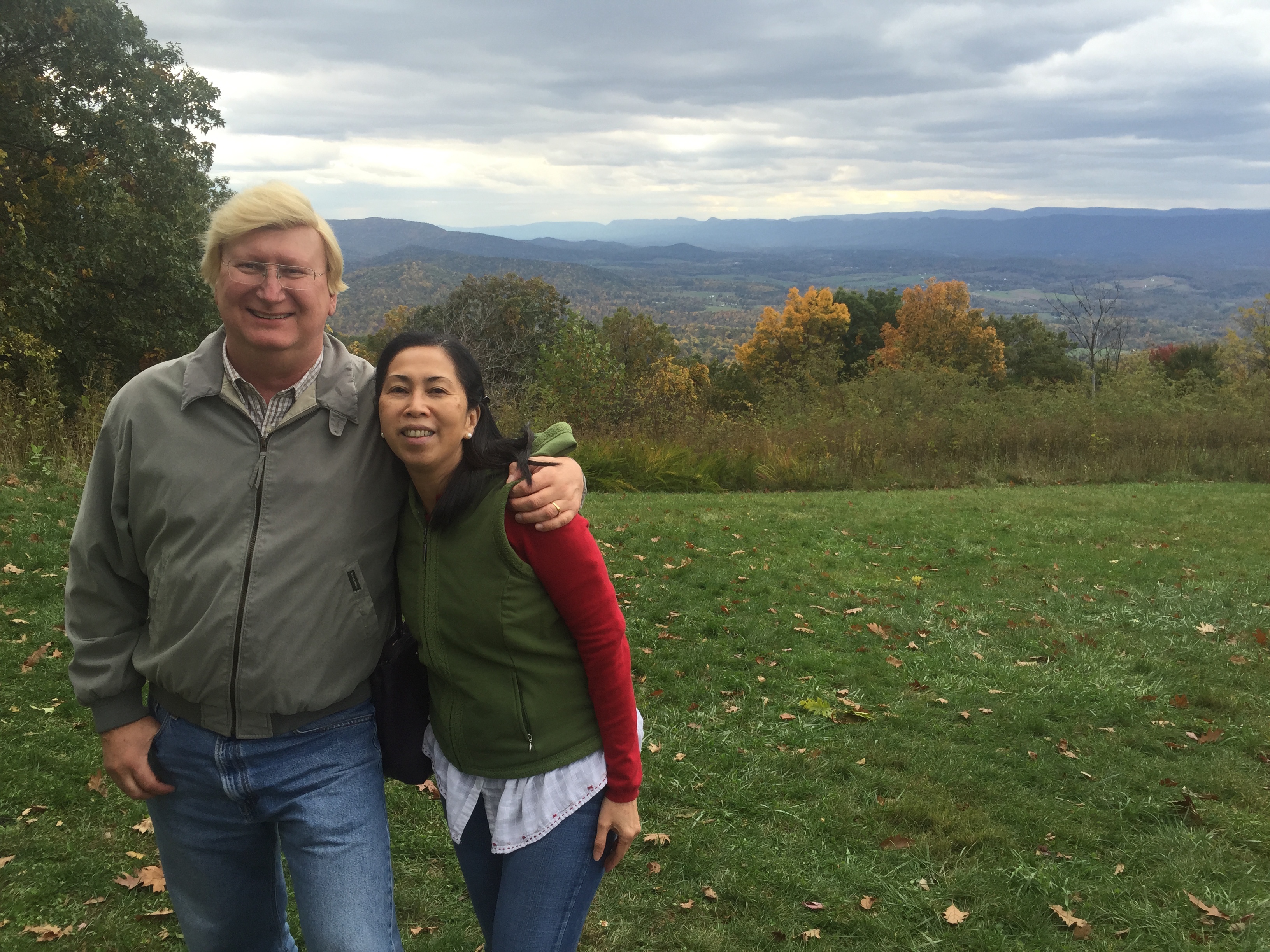
Sonny and Ceres hosted us twice at their postcard-pretty home in Annandale, Virginia and introduced us to the satisfying simplicity of Ethiopian food. The Waray-born Sonny had been a US consul in Addis Ababa, among other places, and his hilarious but spot-on insights into the American mind enlivened our every conversation. Ceres helps oversee a caregiving company for seniors in Virginia, a job eased by her patience and cheerful disposition, of which Sonny is luckily the prime beneficiary.

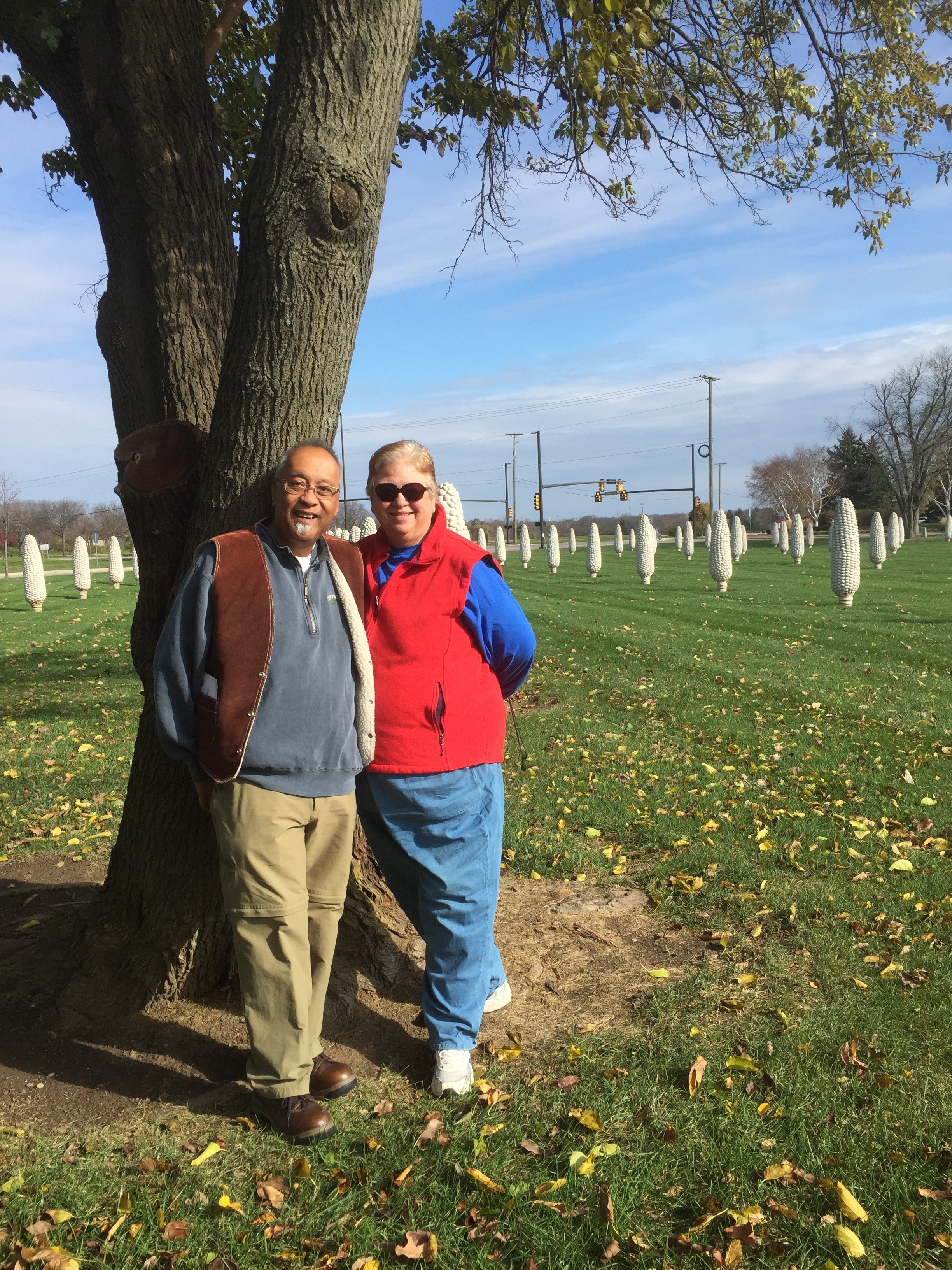
Nomer had been born in Sampaloc, Quezon and joined the Navy, where he met Camille in Hawaii; they’ve settled down in Columbus, Ohio, and our friendship began in the most unlikely circumstances. A committed conservative, Nomer had responded sharply to a column I wrote here years ago on artistic license, and our email conversation turned into a more gentle exchange of ideas and gestures. An expert in government procurement, Nomer had freely offered his counsel to our agencies and opinion-makers many times on ways of curbing corruption, but much to his dismay, his letters didn’t even merit the courtesy of a reply; I sadly felt obliged to tell him why. He and Camille took us into their home in the American heartland, where again I was reminded of the complexity and yet also the civility of much of American society, the challenges of Ferguson notwithstanding.

IMG_5951

As I wrote in this column two weeks ago, Eric and Titchie showed us, through their documentation of the Filipino presence in the capital area, that remembering the past need not be the preoccupation of the old, but has to be a continuing project for future generations to appreciate. A freelance journalist who’s been recognized for her work, Titchie wrote a fascinating article (http://www.oovrag.com/essays/essay2013b-3.shtml) about how a pretty stretch along the Potomac River was inspired by the Luneta, thanks to First Lady Helen Taft, who wanted the new park to mimic what she had seen in Manila, where her husband had served as Governor-General.

IMG_6089

Jun and Myrna Medina are old friends from the early 1970s, married four days after Beng and I got hitched. When I met Jun after being released from martial-law prison, he literally emptied his wallet for me, and later helped me get a job, a favor that in turn allowed me to propose marriage to Beng. Jun had also been a newspaperman and a fellow activist before martial law, but what many of his friends didn’t know was that he had eagerly volunteered to join a group of cadres bound for the Visayas, only to be turned down because his Capampangan origins would have marked him instantly as an outsider and gotten him killed (as, tragically, would befall everyone else in that posse). Another spin of the wheel of life took Jun to America, where he and Myrna have devoted themselves to their charismatic ministry. I hadn’t seen Jun in at least 20 years—only to discover that the Medinas had been living barely ten minutes away from my sister’s place in Centreville, Virginia, my virtual second home.

IMG_6132

Of course, let me add our family—Elaine and Eddie Sudeikis in Virginia, Jana and Senen Ricasio in New York, and Demi and Jerry Ricario in San Diego—to our list of hosts and sponsors (led primarily by the Philippine American Educational Foundation, the Fulbright folks). Other friends new and old like Mitzi Pickard, Reme Grefalda, Susan Brooks, and Moira Madrid-Spahr also contributed their time and attention to my visit.

IMG_5392

IMG_6386

IMG_5240

I was hosted by the George Washington University, and from GWU I have to thank English Department chairman Robert McRuer, creative writing program head Lisa Page, and old Manila hand and law professor Ralph Steinhardt. Ralph helped prosecute the Marcoses in Hawaii for human rights abuses when he was a young lawyer, and I’ll always remember his story about the response of a plaintiff whom he warned against the rigors and the costs of fighting the Marcoses: “I just want to be believed.”

In the end, that’s all we can hope for, and may my forthcoming book be worthy of all these good people’s graciousness and generosity.