Qwertyman No. 156: That Bam-Kiko Thing

Qwertyman for Monday, July 28, 2025

RETURNING SENATORS Bam Aquino and Kiko Pangilinan have been getting roasted online for joining the majority bloc in the incoming Senate, thereby securing important committee chairmanships under the highly unpopular but tough-to-unseat Senate President Chiz Escudero. Despite sympathetic reactions from such opposition stalwarts as former VP and now Naga Mayor Leni Robredo and Sen. Risa Hontiveros, the two have been roundly scored for their decision.

Typical of the outcry was this much circulated post by a friend I deeply admire, the penal and judicial reformer Raymund Narag, who lamented that “They will join the majority. The same majority that excuses corruption as politics, power as protection, and self-interest as national interest. But what they forget is that we voted for them not to play the game. They forget that it was not just about committees, or positions, or so-called influence. It was about principle. We mourn the death of idealism in Philippine politics. But it’s a slow death. Not by assassination, not by defeat, but by compromise. And the executioners are the very people who once called themselves idealists.”

It’s a heavy to charge to lay at the feet of these two men—turncoatism, betrayal, the surrender of idealism, latent hypocrisy—and I can see where the disappointment and dismay are coming from. But with all due respect to my friend Raymund and to those who share his sentiments, I don’t see these dire reversals at all in the choices that Bam and Kiko made, but possibly an interesting and potentially significant maturing of our political culture, especially within the opposition.

It’s true that the Bam-Kiko decision came as a surprise, and that things would have been much clearer, the battle lines much more cleanly drawn, had they sat with Sen. Risa Hontiveros in a true and unflinching albeit tiny minority, duking it out with the majority at every turn, exposing wrongdoing right and left, and remaining unblemished by compromise to the end of their term. We could have remembered them for their impassioned speeches in defense of democracy and justice, tilting against the windmills of the Marcos-Duterte regime.

But I don’t think that’s all or what we elected these two senators for—or was it? As far as I can tell, we voted for them to get things done—the good, the right, and the best things—where they mattered, in their areas of expertise: Bam in education, and Kiko in agriculture. Granted, it may have been secondary to sending a message upstairs that these were the good guys, infinitely much better than the trapos being foisted on us by both the Marcos and Duterte factions, but it was their track record that gilded their credentials.

In case we’ve forgotten or weren’t listening too closely when they were campaigning, Bam Aquino authored 51 laws, including the Universal Access to Quality Tertiary Education Act, the Go Negosyo Act, and the Microfinance NGOs Act. He was also behind the Masustansyang Pagkain para sa Batang Pilipino Act and the No Shortchanging Act of 2016. Kiko Pangilinan, an even more seasoned lawmaker, produced over 150 laws, including the Sagip Saka Act, the Coconut Farmers and Industry Trust Fund Act, and the 105-Day Expanded Maternity Leave Law.

Their acceptance of the agriculture and education chairmanships should help ensure and strengthen their ability to pursue these progressive initiatives further—regardless of how they think about and vote on other issues of national consequence, such as the impeachment of VP Sara Duterte, the national budget, our foreign policy, and constitutional change. 

We have yet to see—as their critics already seem to have foretold—if they will cherish their chairmanships to the extent of abandoning their fundamental principles. Instead I foresee the greater likelihood of the reverse happening: of Bam and Kiko relinquishing their posts should their stay there prove morally untenable. If they were to perform well in their Senate positions, and they were then stripped of their chairmanships for their independent stances, then that still would be more emphatic than if they had never assumed the responsibilities that are also their entitlements, according to their competencies.

But in and of itself, joining the majority bloc—never a firm nor a politically or philosophically cohesive entity in our system of what Shakespeare called “vagabond flags”—should be less of a deal or an issue than it is being made out to be. This “majority,” in any case, seems such a ragtag band that it is almost certain to collapse before the end of the present term.

It probably says more about us as an electorate than about Bam and Kiko when we cast their decision as a “betrayal” of what they were presumably voted for. I’m no political scientist so the experts can explain this better than I can, but it seems to me that we’ve become used to seeing our legislature as a forced marriage of fundamentally incompatible forces—the ruling party (powerful but unintelligent, corrupt, opportunist, cynical, good-for-nothing) and the opposition (weak but progressive, smart, morally upright, idealistic, courageous, media-savvy, and effective). We see the Senate as an arena, a battleground (and often a circus), rather than an office where people are supposed to work, and work together (never mind that some of them are lazy and stupid), achieving results through compromise.

Bam and Kiko just need to prove themselves once more at their jobs and serve the Filipino to the best of their ability, so that when 2028 comes—and whatever their plans may be for that next milestone—they can have a good answer to the basic question that our voters have every right to ask: “So what have you done for me?” It’s a question that the elevated rhetoric of the progressive opposition has sadly often ignored and dearly paid for, almost as if it were beneath consideration. Bam and Kiko need a platform from which to connect corruption to the price of rice, to persistent flooding, to the failure of Filipino children to read at Grade 3. 

Of course, it can be said that that’s exactly what Risa Hontiveros has been doing all by her lonesome—without the benefit of patronage, and with just the chairmanship of the Senate Committee on Women, Children, Family Relations and Gender Equality to her name. She sponsored the passage of the Expanded Solo Parents Welfare Act, the Safe Spaces Act which protects Filipinos, especially women, from gender-based harassment in public spaces, and the Anti-Online Sexual Abuse or Exploitation of Children Law.

Taking another tack but manifesting the same tenacity, Sen. Loren Legarda has survived through many administrations in all kinds of political weather, drawing criticism for that ability, but has remained steadfast in her commitment to protecting the environment, mitigating climate change, and promoting Philippine arts and culture like no other senator nor President for that matter has. 

But for what they’ve already done and could yet do, I think Bam and Kiko deserve our trust. Let’s cut them some slack and give them a chance. We pinklawans aren’t the only voters they’re answerable to.

(Photo from rappler.com)

Qwertyman No. 149: American Idiocracy

Qwertyman for Monday, June 9, 2025

IN HIS controversial but surprisingly popular 1987 book The Closing of the American Mind, the philosopher Allan Bloom lamented what he saw to be the decline of intellectual inquiry in America, indicting its universities for failing their students by promoting “relativism” over the time-honored values embodied by the “Great Books” of Western thought. “The consequences of the abandonment of the quest for the best are far-reaching and destructive,” Bloom intoned. 

Bloom was no flaming liberal; in fact, he was anything but—a true conservative who disdained rock music for its overtly sexual messages and its narcotic effects on the young (imagine what he would have said about TikTok). But his book and its arguments struck a responsive chord in many Americans—half a million of them bought hardcover copies—who were worried that the counterculture that had crept across American society since the tumultuous 196os had weakened it from within and had dulled the blade of American exceptionalism—the rock-solid article of faith that America was, or had to be, No. 1 in everything, because of its unique history and attributes.

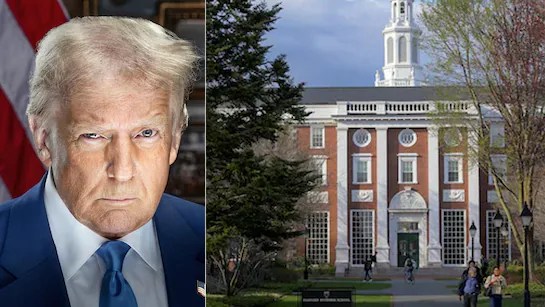
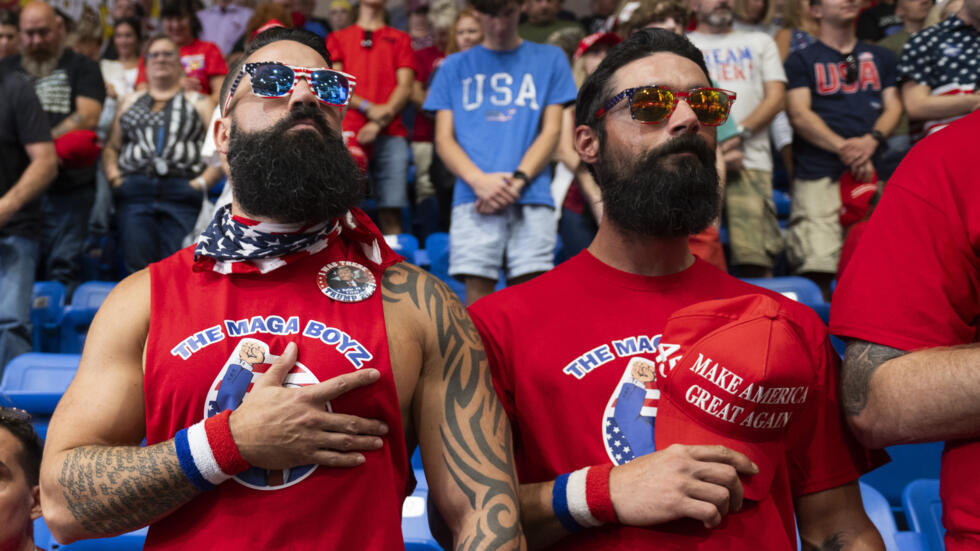
That sounds a lot like “Make America Great Again,” although MAGA wasn’t driven by a longing to study Plato, but by deep-seated, grassroots-level grievances and prejudices. One wonders how Allan Bloom, who died in 1992, would respond to the political situation today, which on the surface mirrors some of his concerns, but only just so: a conservative President has declared war on America’s liberal universities, for all the wrong reasons, leading up to the “far-reaching and destructive consequences” that Bloom bewailed. 

Of course, Donald Trump is no Bloomian or even Reaganite conservative; all he seems to be about is unbridled power and money, and testing the limits to where they can go. “Trumpism” has been described as a mash of nationalism, populism, and industrialism, with a generous dollop of pettiness and egotism. 

Sometime last April, messaging on Truth Social (with a shift key typically gone berserk), Trump attacked Harvard University, claiming that “Harvard is an Anti-Semitic, Far Left Institution, as are numerous others, with students being accepted from all over the World that want to rip our Country apart. The place is a Liberal mess, allowing a certain group of crazed lunatics to enter and exit the classroom and spew fake ANGER AND HATE.” 

Shortly after, he ordered the federal government to withdraw more than $2 billion in funding for research grants to Harvard, and sought to cancel its ability to enroll international students. Trump wasn’t alone in declaring war on American academia. Years earlier, his VP-to-be JD Vance had told the National Conservatism Convention that “Universities in our country are fundamentally corrupt and dedicated to deceit and lies, not to the truth…. We have to honestly and aggressively attack (them).”

Not surprisingly, Harvard and a cohort of other leading universities have fought back, taking the administration’s tack as a frontal assault on academic freedom—and, more strategically, on America’s albeit waning intellectual leadership.

MAGAworld’s anti-intellectualism is interesting, because it draws on a long and dark tradition of tyrants from Franco’s Spain to Pol Pot’s Cambodia waging war on scholars—to cite only the most visibly horrifying examples under which hundreds of thousands of intellectuals were massacred. Mass murder makes the withdrawal of grants and visas seem benign, but they come from the same deep mistrust of critical thinking, contrary opinion, and the alien element. Dictatorships thrive on herd mentality and unquestioning obedience, both anathema to academia.

It’s not as if Trump and Vance never went to good schools. Trump went to Wharton and Vance to Yale Law; whether they learned something worth their tuition is another matter. Political instinct, not intellect, drives these men. 

Right now, that instinct is telling them that culture (or its reversal) is more important than anything else—specifically “woke” culture, the greatest threat to the hegemony of straight white men: civil rights, women’s empowerment, abortion rights, gay and gender rights, minority representation, affirmative action, Black heritage, environmental protection, and internationalism, among other values espoused by the liberal Establishment and its bastions like Harvard. 

The collateral damage of this insane and reckless urge to reshape America in Trump’s own image has included truthfulness, justice, accountability, sound science, and, ironically, America’s own long-term economic and academic well-being. MAGA’s success will be America’s diminution from the intellectual powerhouse that has accounted for more than 70 percent of all Nobel Prize winners (about 30 percent of them immigrants to the US) to the fools’ paradise contemplated in the 2006 movie Idiocracy—a comedy that won’t be so funny when it materializes.

Trump’s insistence on characterizing foreign students as potential terrorists and troublemakers will be particularly counterproductive, as it will banish many of the world’s best young minds to more receptive climates, and erode America’s influence on global thinking. 

That may not necessarily be a bad thing, as it reminds everyone that the US has no monopoly on excellence, and never really did. But as a two-time Fulbrighter who, like thousands of other pensionados to America, look back with gratitude and not a little pride on that opportunity to imbibe not just new knowledge but America at its welcoming best, I cannot imagine anything stupider than this willful squandering of American goodwill and soft power for the price of a few missiles. 

It will not even be Donald Trump & Co. who will pay that price, but generations of Americans down the road who will recall this period of infectious lunacy with bewilderment and regret. They will have no one to blame but their red-capped grandparents, who thought that trusting a despotic dunce with all that power was a bright idea. (And I know how much that statement smacks of the elitism that Trumpers hate, but tell me it isn’t true.)

Qwertyman No. 87: A French Sojourn

Qwertyman for Monday, April 1, 2024

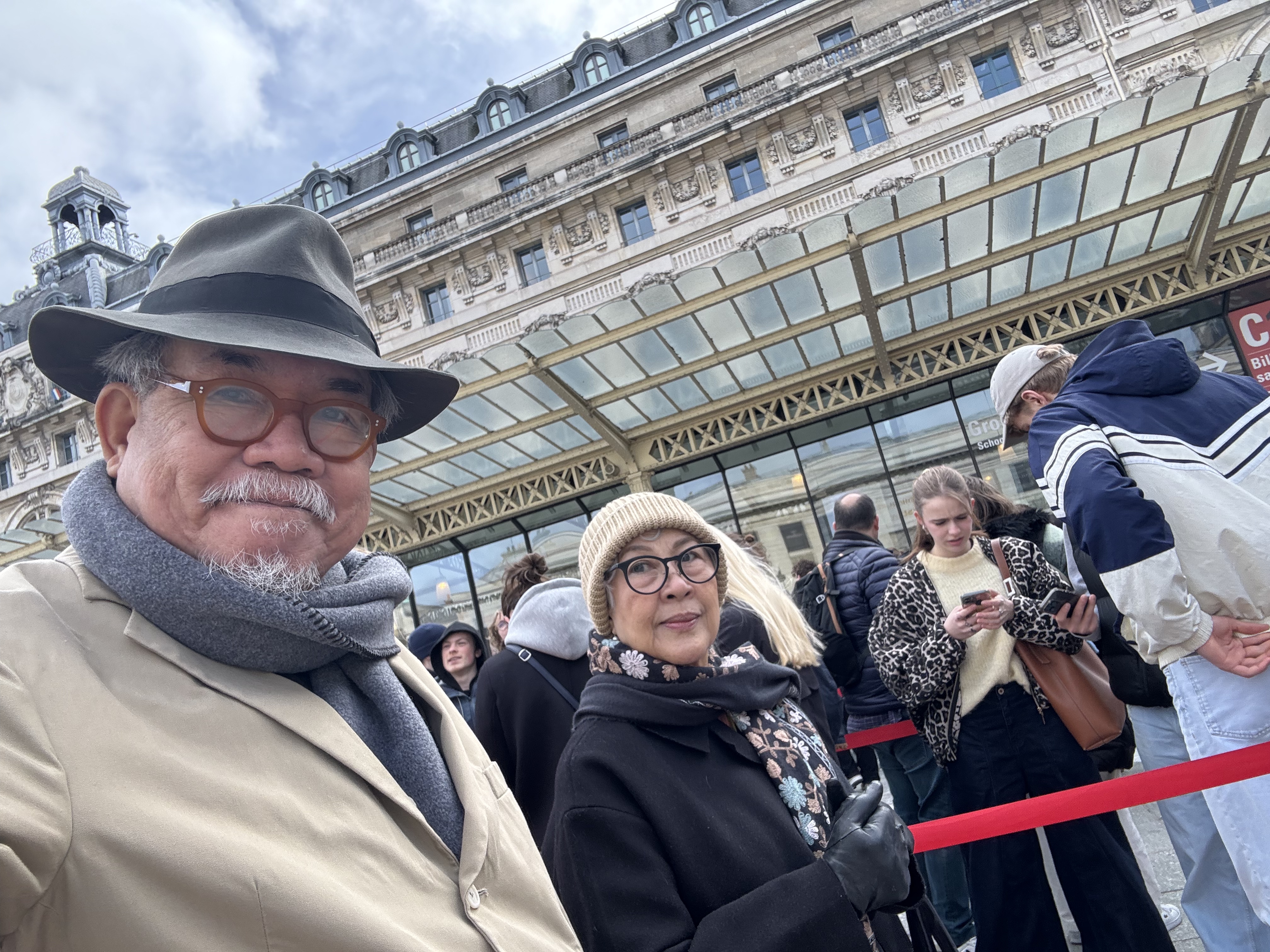
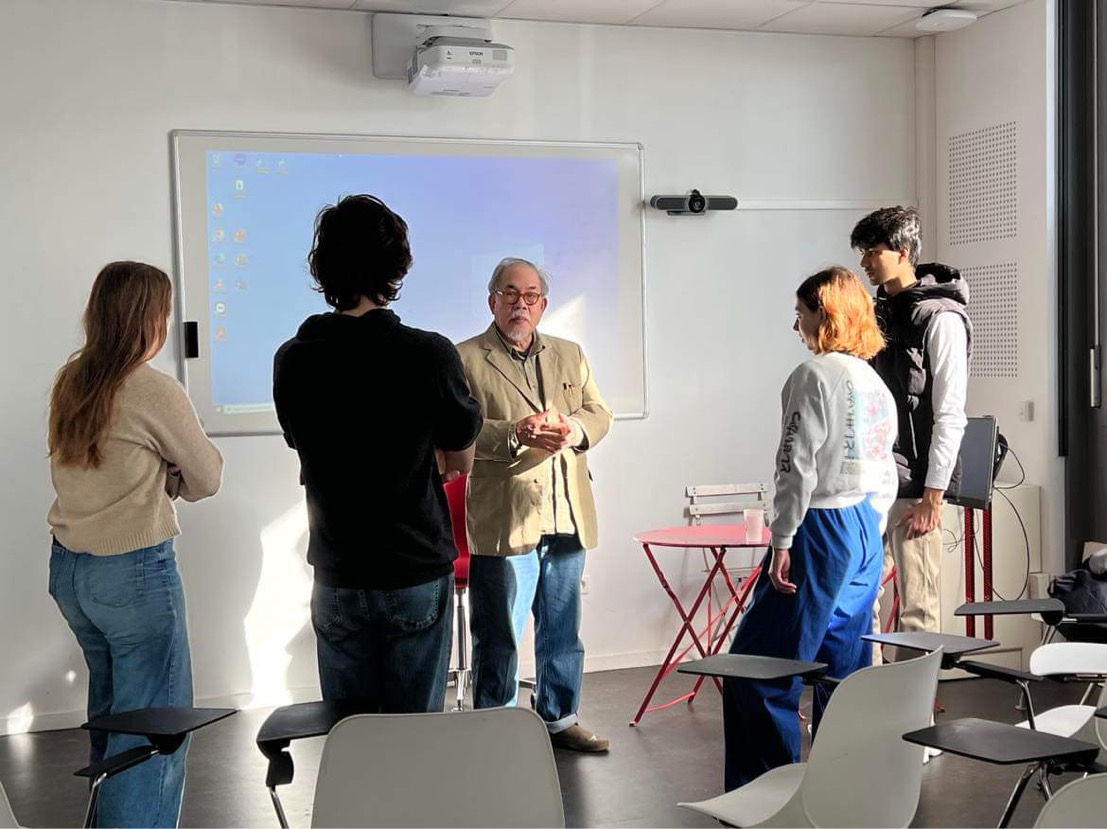
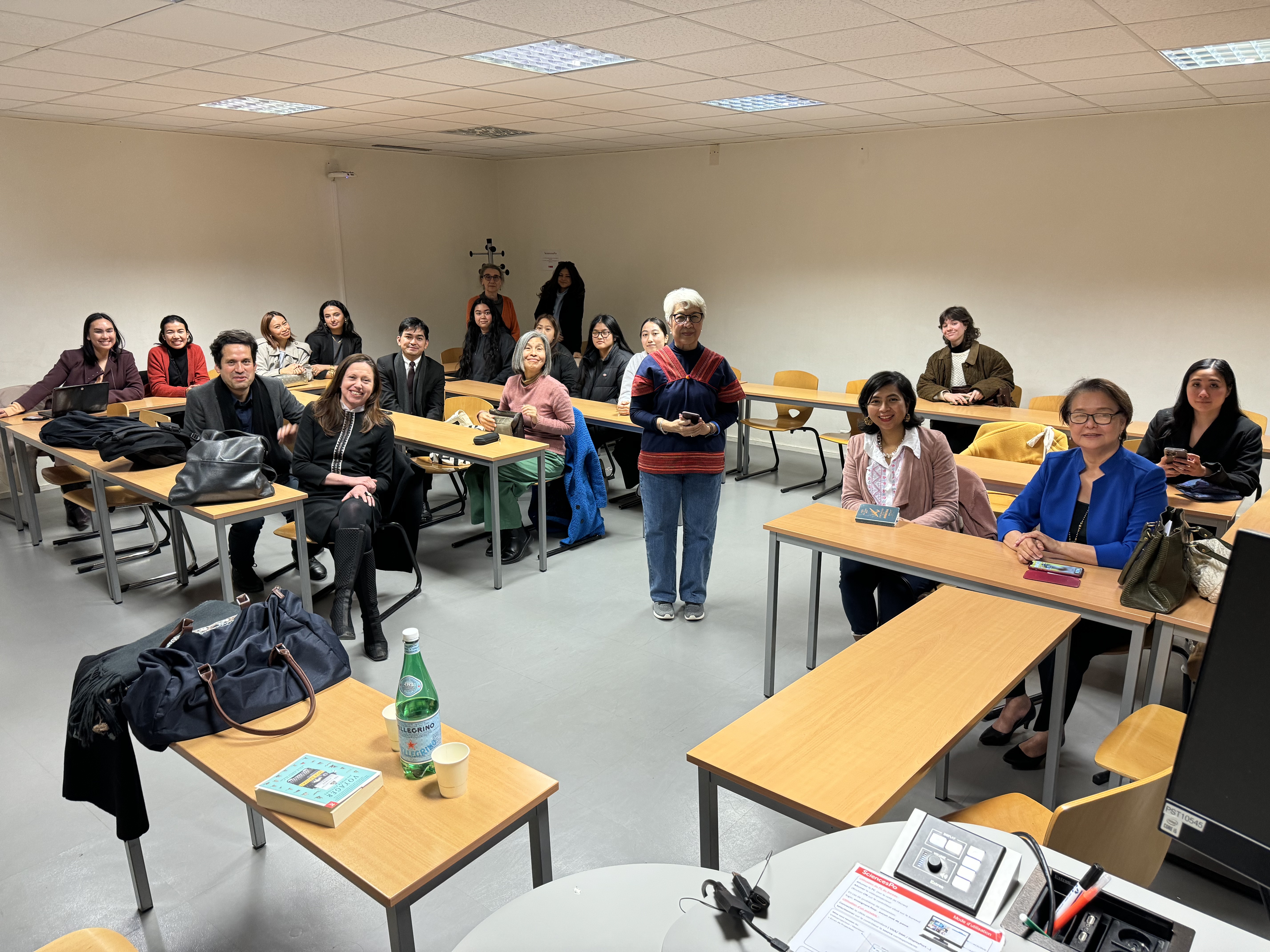
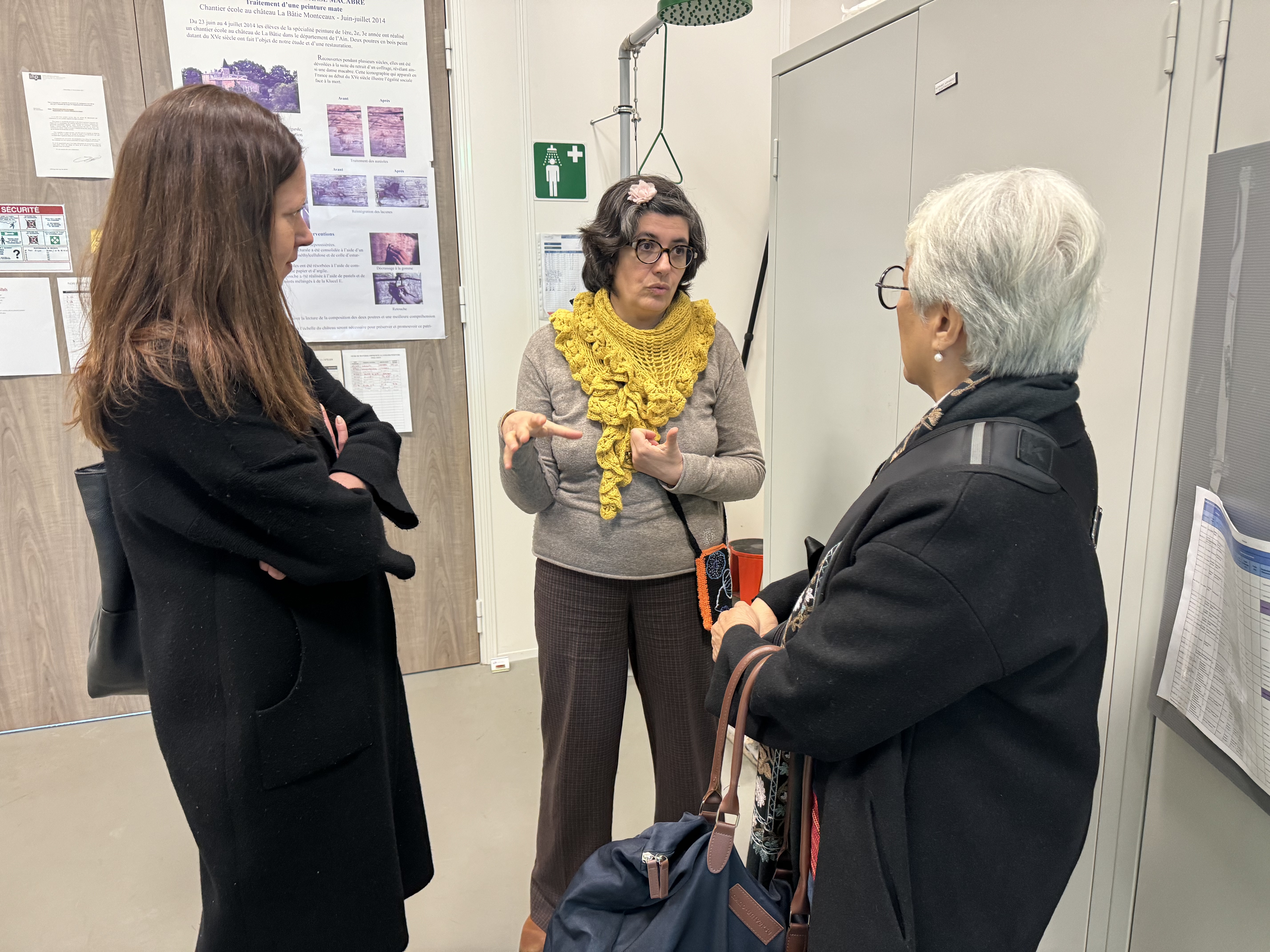
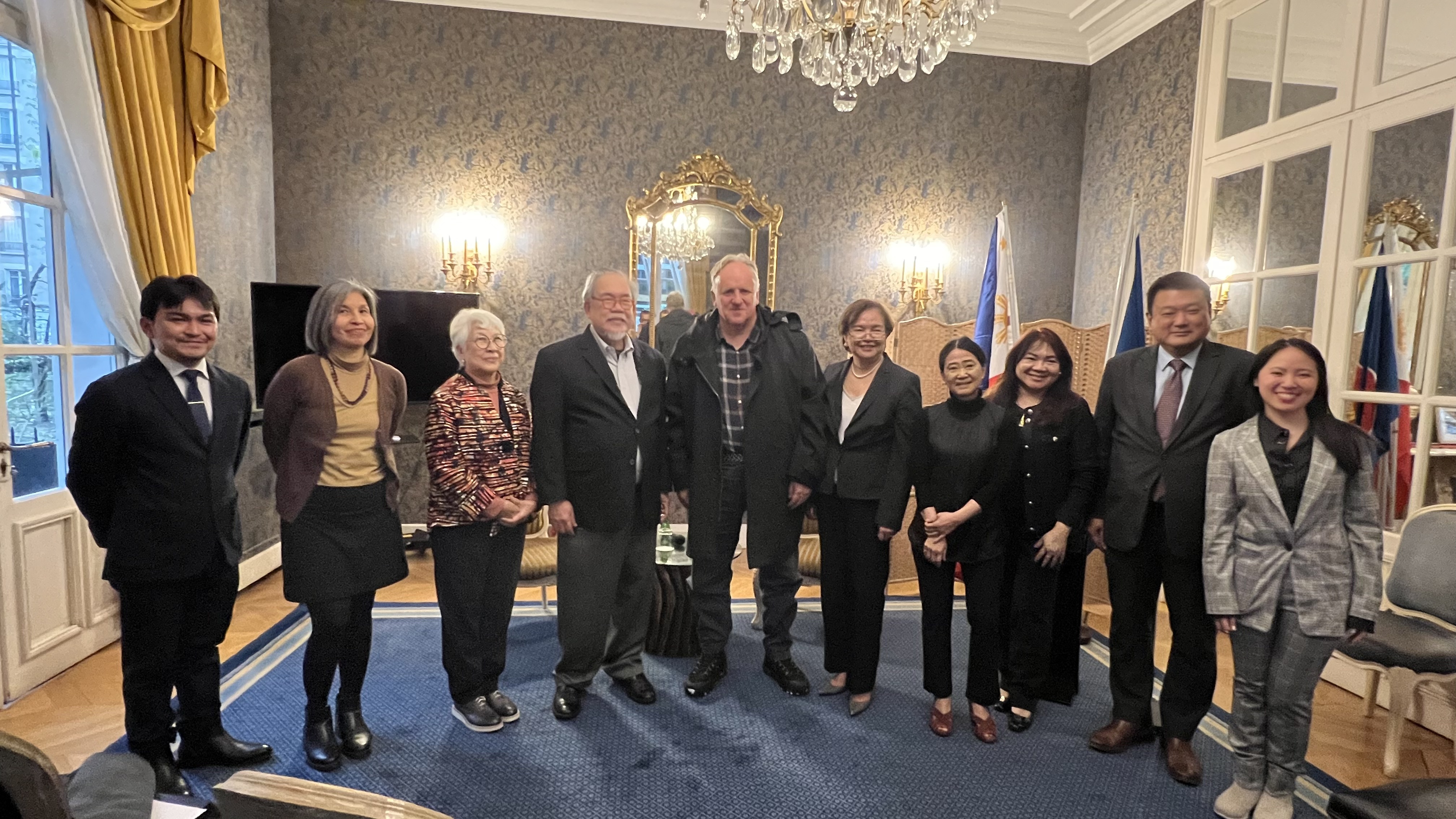
MY WIFE Beng and I were in France last week to give a series of lectures at the invitation of the Paris Institute of Political Studies, better known as SciencesPo. They don’t formally observe Holy Week in France (nor, for that matter, do many Filipinos to whom it’s simply come to mean “long weekend”). So we thought that it was the best time to come over and share some of our insights into Philippine literature, art, and politics with young French students as well as our countrymen in Paris, for whom I and fellow writer Cris Yabes, who’s based in France, gave a special reading at the Philippine embassy.

For those who’ve never heard of it—which won’t be too surprising given our Pinoy fixation on top American and British universities—SciencesPo (pronounced SEE-ansPO) is France’s leading university in the social sciences. It now has 14,000 students spread out over seven campuses across the country. Only 4,000 of those students are undergraduates; the rest are graduate students, including 350 taking their PhD. Unlike our universities, SciencesPo’s undergrads can finish in only three years, with their last year spent abroad. I was told that there are about 20 Filipino students currently enrolled at SciencesPo, and about half of its students come from overseas. As a public research university, SciencesPo is supported by the government through a private foundation, an arrangement that gives it a high degree of autonomy.

Founded in 1872, the university has served as the training ground for France’s political elite, producing five out of France’s eight presidents: Pompidou, Mitterand, Chirac, Hollande, and the incumbent Macron. Marcel Proust studied here for a year, and Christian Dior was a graduate.

With that kind of elite status comes criticism and controversy, and SciencesPo has had its share over the years. Nevertheless, it remains high on the list of desirable universities, especially for students with plans of joining the French civil service, after further studies at the Ecole Nationale d’Administration. (At Inalco, another Fremch university, we were surprised to find eight Filipino-French students studying Filipino for their degree under Prof. Elisabeth Luquin, who studied in UP and speaks Filipino like a local.)

Beng and I gave presentations on the Philippines at SciencePo’s main campus in Paris—a sprawling complex comprising ten buildings in some of Paris’ most precious real estate—and I had an additional three sessions in Le Havre, where SciencePo’s campus focuses on Asian studies. Wherever we went, we could see signs of intellectual and political ferment; like their predecessors at the Sorbonne whom we admired for their militancy 60 years ago, SciencesPo students have protested and rallied over many causes from domestic violence to Gaza.

To be fair, these concerns have occupied much of the rest of France as well. In a country where street protests are a time-honored tradition that have a real bearing on political outcomes, differences of opinion can run deep and long, and controversy stalks nearly every issue, from the wearing of religious headgear to the extension of the retirement age. To “liberté, egalité, fraternité,” we must now add “identité,” the subject of identity so central to political discourse in many countries today, especially those with large and strong immigrant populations like America and France.

“Over the last few years, France has been torn by culture wars—a shift that was less the effect of American concepts imported into French universities, as many on France’s right claim, than of the long-term decline, beginning in the early 1980s, of class politics and alternatives to capitalism. In a post-ideological France, class struggle has been displaced onto the terrain of identity,” noted sociologist Daniel Zamora in an article for Catalyst in 2021. “Despite Macron’s professed disdain for identity politics, his alternative can scarcely be construed as anti-identitarian. Building on what we have in common, Macron argued, meant finding an answer to the question, ‘What does it mean to be French?’”

Identity, at least, was not in question when Cris Yabes and I gave our reading at the Philippine embassy, thanks to the invitation of Ambassador Junever “Jones” Mahilum-West, one of the most amiable, gracious, and artistically inclined ambassadors I’ve ever met. (She was very game as well, happy to hoist an IPA beer with my wife Beng after our talks.) To a fairly sizeable group from the Filipino community in Paris, Cris and I read pieces that had to do with our foreign relations, particularly in my case with our diaspora, which my second novel Soledad’s Sister (which has been published in French by Mercure de France) dealt with. 

In the conversations that followed, I learned that there are around 26,000 documented Filipinos in France, with perhaps just as many existing belowground, most of them domestic helpers. One of them, Zita Cabais, was a victim of human trafficking more than two decades ago, having been enticed to come to Europe with the promise of a visa and a good job. Instead she was brought to Hungary, from where she was led on foot through Europe to finally reach France, whereupon her employer confiscated her passport, effectively holding her hostage. But unlike many other DH’s, Zita fought back, sued her employer, and succeeded. Since legalized, she now works for organizations devoted to fighting human trafficking. (The path to legalization is reportedly shorter in France, but knowing the French language is a prerequisite.)

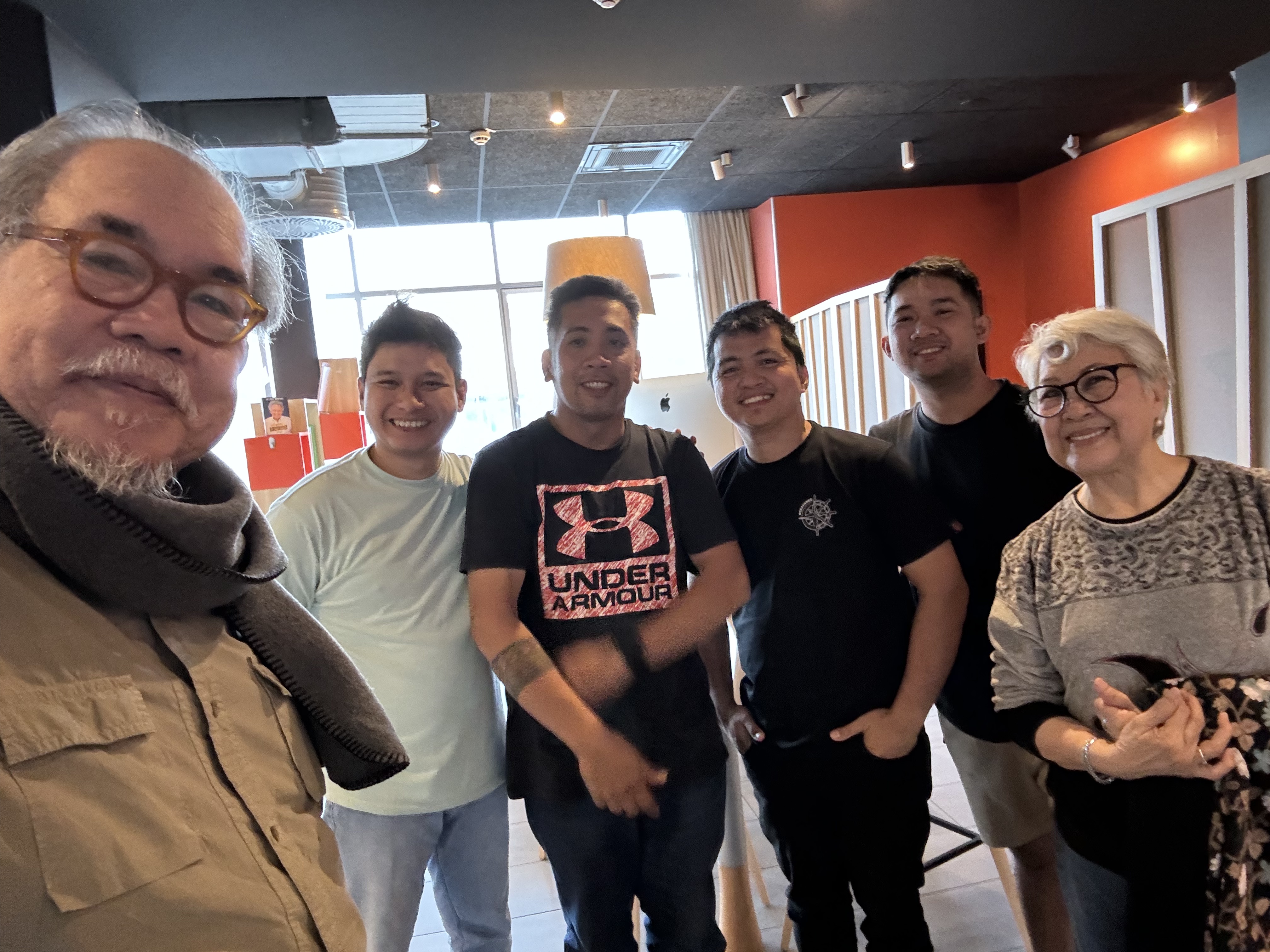
One unexpected highlight of our visit was running into a group of Filipino seamen in our hotel in Le Havre, prior to my lecture. Beng and I had just come down for breakfast when we heard the familiar chatter of Filipinos at a nearby table. We came up to them and introduced ourselves, and we had a lively conversation during which they explained that they were still waiting for their ship to dock because of the bad weather. I’d met and chatted with seamen like them before in Hamburg and in Christchurch, among other places; as a writer and as a Filipino, I take it as a pleasant obligation.

Competition, they said, was driving them to accept shorter four-month stints at sea. “We barely break even, and it’s a tough life at sea, but we have no choice, since our families depend on us.” Part of my lecture that day was going to be about our Filipino notion of the hero as martyr, of Christ-like sacrifice for the common good. I suddenly realized that it was Good Friday. We had our smiling selfies taken, and they seemed proud to stand with UP professors, but it was Beng and I who felt honored to be there with them.

Qwertyman No. 14: An Oppa for Pinoy Culture

Qwertyman for Monday, November 7, 2022

THE HON. Victor M. Dooley was in a quandary once again. He had struggled with his maiden speech, but thanks to the timely assistance of his rumored girlfriend and sometime girl Friday Yvonne Macahiya, he had delivered a brilliant address on “Culture and the Environment: Shared Survival through Values Education,” which the footnotes failed to say had been Yvonne’s term paper for her Political Science 104 class at the Western Aklan Institute of Technology. 

It didn’t matter that most of his esteemed colleagues were absent or nodding off when he gave his speech with all the passion he exuded back when he was “Mr. Disaster,” the TV-radio hero of the typhoon-flooded, the earthquake-shaken, and the fire-singed. When Yvonne’s press release came out, it was just like he had spoken before the UN General Assembly, the world’s grandest stage; never mind that some audiences there weren’t too hot, either. 

“We are the world’s most disaster-prone country not because we are weak,” he said, thumping his fist on the lectern before letting his gaze travel across the gallery to turn up the drama, “but because disasters visit other countries less. The Lord Almighty has brought these disasters upon us to test our faith, to strengthen our spirits, and to breed true champions of the desperate and the dispossessed!” Again he paused for dramatic effect, but all he heard was the snorting of a venerable gentleman from a northern province, dreaming of Lamborghinis landing in his Special Economic Zone.

Still, something from his speech must have registered in someone’s mind—the word “education”?—because Sen. Dooley found himself appointed to the Committee on Basic Education, Arts, and Culture, which to him sounded like the wimpiest assignment anyone could get. He had expected to be named chair of the Committee on Environment, Natural Resources and Climate Change (that went to a real estate developer), or the one on Public Information and Mass Media (that went to a retired general), or to something that could have used his mestizo heritage, like the Committee on Foreign Relations (that went to a Chinoy movie producer). 

Basic education? Other than passing grade school, what did he know about classrooms and curricula? But then the committee also covered Arts and Culture, so, hmmm, maybe that was what they saw in him, his stellar career as a singer-dancer-TV show host, the way the ladies swooned when he winked at them at the end of his “Buchikik” song. Arts and Culture was entertainment, right? It was about keeping people happy, so they could smile through Covid, unemployment, EJKs, 60-1 peso-dollar rates, and P300/kilo pork. 

There wasn’t much he could do about those things—blame it on the pandemic, on Ukraine (he did have some important foreign-policy views: those darned Ukrainians should just have given over some potato fields to the Russians instead of endangering world peace with their silly resistance), and on troublemakers who even won Nobel prizes for having nothing good to say about hardworking despots.

But now, the Hon. Victor M. Dooley had to come up with a program that would leave his indelible mark on Philippine culture, and he convened an ad hoc committee composed of himself, his chief of staff Roy, the indispensable Yvonne, and a special guest who sashayed into the room and planted wet kisses on both of Vic’s cheeks, much to his embarrassment and to Yvonne’s utter surprise. 

“Ms. Terry! I never thought you would respond to my invitation!” 

“Why ever would I not? How long has it been, dearie? The last time  I saw you, you were still a struggling singer trying your best to hold your note—so I held it for you, hihihi.  And look at you now, an honorable Senator of the Republic!”

“And who, may I ask, might you be?” interjected Yvonne.

“Ah! Yvonne, this is Ms. Terry, who sponsored my entry into show business many years ago. I asked him—I mean her, ahaha, we better get our preferred pronouns right, especially after that gender-sensitivity workshop we all had to take—to come and help us devise a program for our country’s cultural revival.”

“Why didn’t you tell me?” said Yvonne. “I could’ve called on some of my National Artist friends—”

“What’s a National Artist?” asked Vic.

“Never mind. Welcome aboard, Ms. Terry—oh, I get it now, mystery herself! I’m Yvonne, the congressman’s Chief Political Affairs Officer. Can we offer you some coffee?”

“If you have low-acid coffee with non-dairy creamer and gluten-free scones, I’d much appreciate it. But I’ll take what you have.”

“Our Chief of Staff here makes an excellent three-in-one and I’m sure he hasn’t finished all the Sky Flakes.” Yvonne cocked an eyebrow at Roy, who slunk away muttering. “Now let’s get down to business. The senator wants a new program with strong popular appeal that will raise our people’s spirits, promote national unity, and put Philippine culture on the global map. You said you have some ideas?”

“I do! Two, in fact. One, boy bands. We should undertake a nationwide search for cute mop-haired boys from the age of six up and train them in a camp for singing and dancing. Two, a cooking competition for girls, who don’t know how to cook anymore. We’ll have regional and then national contests for the best pinakbet, sinigang, and adobo. We can even have a Fil-Am edition, but let’s do it in West Covina so I can visit my cousin there. What do you think?”

“Nice, but I have an even more inspired idea!” said the senator. “To promote our own, let’s ban all Korean shows for a year. Tama na mga K-drama, P-drama naman. Nakakainis na, e!”

Yvonne groaned. “Are you crazy? Do you want to bring the wrath of the BTS Army down on you, not to mention my mama who’s in love with Hyun Bin?” Yvonne turned to their guest. “I like your ideas, Ate! I think you and I will make a great team—between you and me, we can make Vic Dooley the oppa of Philippine culture!”

“Thanks, but what’s an oppa?” asked the senator.

Hindsight No. 8: Who Owes What to Whom

Hindsight for March 7, 2022

A COUPLE of weeks ago, an unattributed article in another newspaper titled “National artists owe it all to Marcos” berated five National Artists—Bencab, Virgilio Almario, Alice Reyes, Ramon Santos, and Ryan Cayabyab—for proclaiming their support for VP Leni Robredo’s presidential bid. They were, said the unnamed writer, ingrates for forgetting the fact that the National Artist Award had been created by Ferdinand Marcos, implying further that they owed their fame and fortune to Manong Ferdie, without whose patronage they would be nobodies hawking their wares at streetcorners. “Prior to his being named national artist in 2006, Cabrera was not as well known as he is today in the national art scene. Today, his paintings sell in the millions of pesos.”

That’s odd because as far as I knew, Bencab, along with the others, was already famous within and outside Philippine artistic circles well before he was proclaimed National Artist. In fact, didn’t he become one because of his impressive body of work? Or did I get it wrong? According to that article, it was the NA Award that made these people, and since Manong Ferdie established it, then, well, they were forever indebted to him for their professional success. That should go as well for such luminaries as Jose Garcia Villa, Vicente Manansala, Amado Hernandez, F. Sionil Jose, Jovita Fuentes, and Atang de la Rama, among many others. 

The article dutifully reminded the reader that “To recall, on 27 April 1972, President Ferdinand Marcos issued Proclamation 1001 creating the Order of National Artist of the Philippines, to recognize outstanding Filipino artists. Under the Marcos proclamation, a national artist is entitled to a cash award of P100,000, a handsome monthly stipend, yearly medical and hospitalization benefits, life insurance coverage, a place of honor in state functions and national cultural events, a state funeral, and burial space at the Libingan ng mga Bayani.”

Wrong. There were no such benefits under that proclamation, only the honorific title. (Go on, look it up.) The emoluments came later, in the form of the aforementioned one-time cash award and a P2,000 monthly stipend, raised much later to P10,000 and then P50,000 (on the government pay scale, equal to about Salary Grade 19, just one grade above sub-professional supervisors). Since National Artists typically get chosen in their 70s or even posthumously, that’s not much of an outlay. 

I would have been more enthralled by Manong Ferdie’s magnanimity if it had been his personal finances that paid for the package. But that was always the people’s money. And even his personal finances had a way of being traced back to some public source.

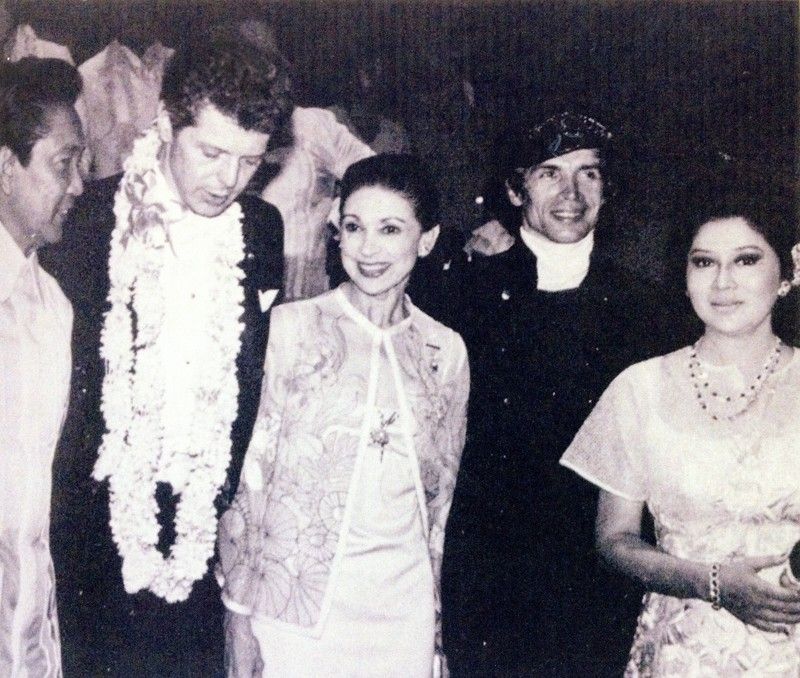
Where else did our taxes go? Why, to the recipients of the CCP International Artist Award, which I’ll bet most of us never even heard of. The book Musical Renderings of the Philippine Nation by Christi-Anne Castro (Oxford University Press, 2011) chronicles how the First Lady instituted this award—which came with an unspecified life pension for such laureates as Van Cliburn and Margot Fonteyn—in June 1973 “as a personal gift from Imelda Marcos as well as a small incentive for international performers to make the long journey to the Philippines to perform at the CCP.”

(Photo from philstar.com)

The article chides “anti-Marcos” creatives for dreaming of becoming National Artists and for accepting its conferment. But since when did the award—or any credible award for that matter—require fealty to its originator or sponsor? Were the victors at the 1936 Berlin Olympics expected to genuflect before Hitler? Should Nobel Prize winners espouse arms sales, as Alfred Nobel once did? 

I don’t dispute the claim that the Marcoses supported the arts and culture through the creation of the Cultural Center of the Philippines, the Folk Arts Theater, and the Manila Film Center, as controversial as they were (and in the case of the Film Center, as tragically ghoulish, with as many as 169 workers’ bodies reportedly entombed in the concrete). Favored artists were set for life. 

But cultural patronage is a PR expense. The art shows decorated and sanitized the regime, and made it appear to whoever cared to look that the Philippines was one big, colorful, glittery stage. For the National Artist Award to be taken seriously, they had to recognize serious artists—even those who weren’t Palace toadies, like Nick Joaquin (who accepted the award in 1976 only on condition that his friend the journalist Pete Lacaba, then in prison after being brutally tortured, be set free). After the Marcoses, the NAA was revived and expanded—the National Scientist and National Social Scientist Awards were also established—but it never quite shook off the stigma of political favoritism. Most notably, in 2009, Gloria Macapagal Arroyo played dagdag-bawas and anointed four of her personal choices NAs, prompting a suit from the real NAs and many other petitioners, which ultimately prevailed. 

If you want to get political about utang na loob, even Rodrigo Duterte acknowledges that it was Cory Aquino who jumpstarted his political career when she appointed him OIC mayor of Davao after EDSA 1 when his mother “Nanay Soling”—among the few staunch anti-Marcos activists in Davao—declined the offer. He later said in an interview that he was not going to dishonor his mother’s memory “by following the persons that she helped shut down.” But then in 2016, against widespread opposition, he allowed Ferdinand Marcos to be interred as a hero. That should have earned him a cache of pogi points with the Marcoses, who then jumped the gun on Inday Sara’s own presidential ambitions—or whatever Tatay Digong had in mind for her—by pushing Junior for No. 1. Of course, my pro-Sara friends (I do keep a handful, for our mutual entertainment) insist that Sara is going her own way and isn’t answerable to her dad. So this puzzle of who-owes-what-to-whom gets more and more difficult to figure out. Does it even matter in Pinoy politics?

And if we’re serious about debt collection, how about the P125 billion in ill-gotten Marcos wealth that the Philippine government still has forthcoming? Sounds more like the Marcoses owe it all to the Filipino people.

Hindsight No. 6: A Cultural Agenda

Hindsight for Monday, February 21, 2022

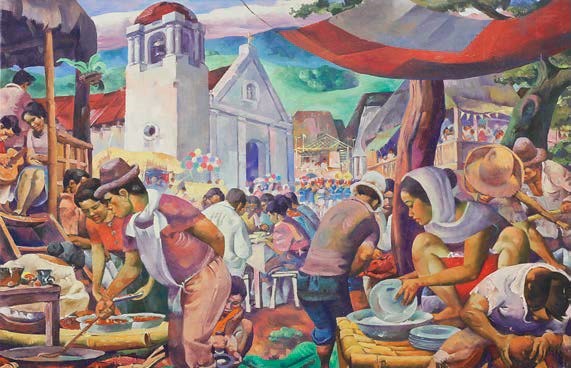
(Botong Francisco’s “Pista sa Angono”)

NOTABLY ABSENT from the platforms of nearly all candidates for the presidency is any mention of culture and the arts as a vital element in our quest of nationhood. Everyone has an opinion about the economy, the pandemic, corruption, peace and order, foreign relations, infrastructure, the environment, and countryside development, but you can hardly hear anyone speak—beyond the usual generalizations and platitudes—about what makes us Filipino, what it means to live as an archipelago with over 100 languages, and why and how we can be so similar in some ways and yet so different in others.

These are all matters of culture, which are often given tangible expression in the arts—the songs that make us weep, the paintings that brighten our walls, the stories that make us wonder about what’s important to us, the dances whose gestures take the place of words. At their best, culture and the arts rehumanize us, remind us of our truest, noblest, and also most vulnerable selves.

Unfortunately, we have been brought up to see them as little more than adornments, passing entertainments, intermission numbers to play in between presumably weightier and more consequential concerns. On an official level, culture has been treated as an adjunct of other ventures such as sports and tourism, culminating in beauty contests and street dances. 

The National Commission for Culture and the Arts (NCCA) and the Cultural Center of the Philippines (CCP) have had active programs for funding the arts and for sponsoring performances and exhibitions, but despite many previous initiatives, efforts to set up a formal Department of Culture to oversee a broader cultural agenda have failed, again because of the low priority accorded to the sector.

Many studies have shown, however, that the arts—transposed into the creative industries that produce cultural products covering everything from books, movies, and TV shows to music, food, advertising, and advertising—create a large economic footprint.

Citing UNCTAD figures, a report commissioned by the British Council some years ago noted that “Depending on how they are defined, the Creative Industries are estimated to represent anywhere from 3% to 12% of global GDP.”

In 2010—the last year for which I have solid figures—copyright-based industries or CBIs contributed more than P660 billion to the economy, according to the Intellectual Property Organization of the Philippines. In GDP terms, the economic contribution of CBIs climbed from less than 5 percent in 2006 to more than 7 percent in 2010. Core CBIs comprising companies in the arts, media, and advertising largely accounted for this surge. A corresponding rise in employment occurred in the sector, from 11 percent of the total number of jobs in 2006 to over 14 percent four years later. Surely these figures have risen much higher since then.

But the most important argument for a clear and strong cultural agenda remains the moral one. Culture is an essential element of national growth and development, as it helps define our national identity and our national interests. Without culture, we have nothing to stand on except our territory. Culture is a dynamic description of our commonalities and differences, without understanding which we will be moving forward blindly, guided only by the political and economic interests of our elites.

That understanding of who we are and why we think and act the way we do should be the end-goal of our education, grounded in an appreciation of our history. But as recent questions have highlighted, the DepEd’s decision to integrate Philippine history into other areas of learning effectively diluted and diffused its teaching in high school, a critical period in the formation of young minds.

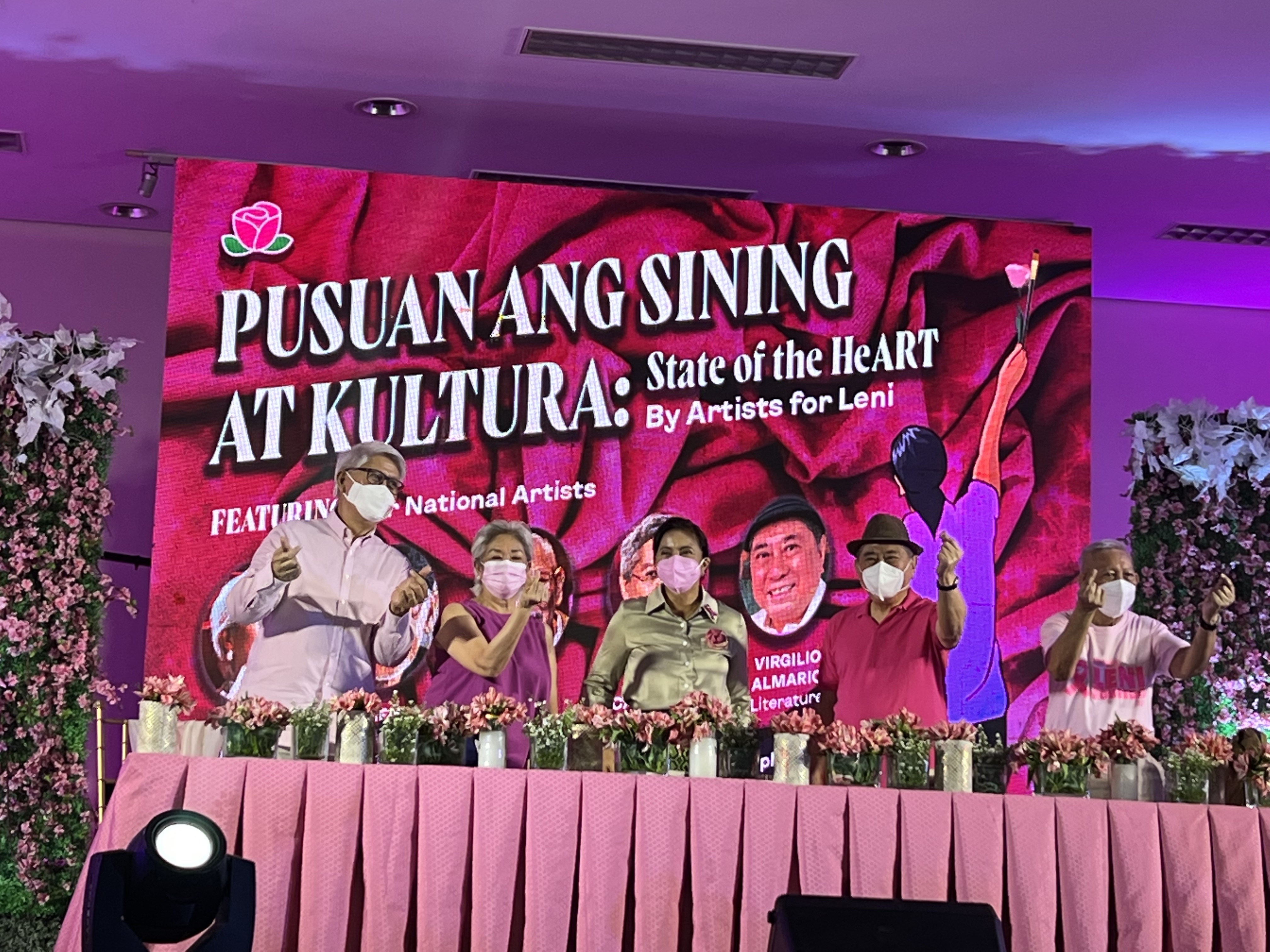
For these reasons, a group of Filipino artists, writers, scholars, and cultural workers have organized the Katipunan sa Kultura at Kasaysayan (KKK) to present the leading presidential candidates with a cultural agenda for the next administration. The key items on that agenda include the promotion of a liberative, creative, and innovative culture; support for the study, appreciation, and critical interpretation of Philippine history; the promotion of cultural and creative industries, and Filipino products; the promotion of democratic education and programs to raise literacy nationwide; and serving the health and welfare interests of cultural workers. (Full disclosure: I work with National Artist Virgilio Almario in this organization.) We presented that agenda to all the leading candidates but heard back from only one, who endorsed it warmly: VP Leni Robredo. We were not surprised.

It’s not surprising, either, that those who understand Filipino culture best are those intent on exploiting its fractures and contradictions. The manipulation of public opinion and political outcomes thrives on knowing how people and groups behave, what emotional levers to pull, and which buzzwords to propagate. 

The confused and fragile state of our culture can be easily seen in how susceptible our people are to fake news. A recent SWS survey showed that 51 percent of Filipinos—every other one of us—find it difficult to tell real news from fake. The traditional sources of what most people have deemed the truth—the government, the Church, the traditional media, the schools, law enforcement, and even scientists—no longer carry the same trustworthiness they used to. Their places have been taken over by social media, cable TV, and micro-networks that can spread disinformation at lightning speed.

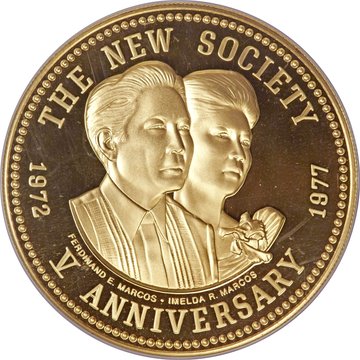
When I heard the New Society theme “May Bagong Silang” being played at Ferdinand Marcos Jr.’s proclamation rally, I recalled how music, theater, and art were harnessed by the martial-law regime to create spectacle, a key instrument of enthrallment and intimidation, from imperial Rome’s circuses to Nazi Germany’s torchlit parades. That’s culture at the service of dictatorship, belying Leonard Bernstein’s claim that music was one art “incapable of malice.” 

I’ve often noted, in my talks on this topic, how ironic it was that the only presidency that put culture and the arts at the forefront was Marcos Sr.’s, and today even the staunchest of Imelda’s critics will grudgingly acknowledge the value of the CCP. But there was an ulterior agenda to that, which makes it even more urgent to promote a culture that will uphold truth, reason, and justice as a basis for national unity, instead of being used as a glitzy curtain to mask wanton murder and thievery.

Penman No. 278: The Wealth Within Us (2)

Lantern

Penman for Monday, November 20, 2017


THE ARTS are the tangible and creative expressions of our culture, and this is where our strength as Filipinos lie—a strength, however, that we should first recognize, recover, and sustain.

We Filipinos have distinct natural cultural advantages. We are a naturally and irrepressibly expressive people, with strong artistic and creative talents and impulses. We think and speak freely, no matter the cost or the consequences. We reject and resist tyranny; we have no taboos, no sacred cows. We sing of love and death in the same breath, we laugh and weep without shame, we create and light up lanterns even in the most difficult and darkest of Christmases.

That freedom and that courage is our strongest cultural resource, the wellspring of innovation and productivity. This is why we have such great artists, writers, musicians, singers, dancers, filmmakers, designers, and artisans.

This brings me to the economic argument, which is that culture is not just an expenditure, but a valuable resource that, properly managed and supported, can reap substantial material benefits for our people, in the form of what have been called “creative industries.”

In 2009, when the Joint Foreign Chambers of the Philippines initiated a focus group discussion on creative industries in the Philippines, they defined the sector as embracing “a wide array of subsectors including advertising, animation, architecture, broadcast arts, crafts, culinary arts, cultural/heritage activities, design, film, literature, music, new media, performing arts, publishing, and visual arts.”

I won’t go into great detail here, but there are many studies—a recent report commissioned by the British Council, among others—that show how vital these creative industries are. According to that report, and citing UNCTAD figures, “Depending on how they are defined, the Creative Industries are estimated to represent anywhere from 3% to 12% of global GDP.”

I noted in a previous forum that in 2010—the last year for which I have solid figures—copyright-based industries or CBIs contributed more than P660 billion to the economy, according to the Intellectual Property Organization of the Philippines. In GDP terms, the economic contribution of CBIs climbed from less than 5 percent in 2006 to more than 7 percent in 2010. Core CBIs comprising companies in the arts, media, and advertising largely accounted for this surge. A corresponding rise in employment occurred in the sector, from 11 percent of the total number of jobs in 2006 to over 14 percent four years later.

In 2014, the DTI and BOI held a series of Trade and Industry Development Updates to present six industry roadmaps, one of which concerned creative industries. In that particular forum, the DTI’s presenter noted that Singapore and Thailand led ASEAN in creative exports, and while our creative industries have grown, we were a net importer of creative goods as of 2008, with books and movies apparently accounting for the bulk.

This reminds me that in that conference of Asian writers and translators that I attended a couple of weeks ago in Bali, it was reported that Asia is now the world’s biggest producer of books, movies, and games. But that’s an Asia dominated by China, Japan, Korea, and India. The question is, how can we Filipinos and Southeast Asians partake of that boom? First, of course, by strengthening those industries in our countries.

There seems to be a greater awareness on the Philippine government’s part of the economic utility of our artistic talent. In 2012, for example, RA 10557 was passed to promote a “national design policy” highlighting “the use of design as a strategic tool for economic competitiveness and social innovation.”

It’s heartening to note that Chapter 7 of the Philippine Development Plan for 2017-2022 is devoted to “Promoting Philippine Culture and Values,” in which it is acknowledged that “The current governance framework for cultural development has been inadequate in addressing the concerns of the sector.” The plan contains salient proposals for using and promoting cultural values to promote the common good and identifies key legislative measures to achieve full cultural development, including the long-overdue establishment of a full-scale Department of Culture that will not be a mere adjunct of education, sports, or tourism.

But we remain a long way from translating policy into action. As with most things cultural, the first transformation has to take place in the mind—more specifically, in the mindsets of our leaders.

Only now, in preparation for this talk, did I become aware of the ASEAN Socio-Cultural Community and of its noble concerns which include human development, social welfare and protection, social justice, and so on. But only at the very end of its “scorecard” report does it deal with “Building ASEAN Identity” and promoting cultural creativity and industry—talking, for example, about networking among small and medium-sized cultural enterprises of SMCEs around the region.

It’s rather sad in a way to speak of culture as a business, but if that’s what it takes to wake people up to the wealth within them, then by all means, let’s draw on our hearts and imaginations to showcase the best of what we can be, and inspire ourselves in the process toward a stronger sense of nationhood and of regional community.

Penman No. 277: The Wealth Within Us (1)

35092804316_00f878c388_k

Penman for Monday, November 13, 2017


THIS ASEAN week and next, I’m sharing excerpts from a short paper I presented at a conference on ASEAN Leadership Amid a New World Order that took place last November 8 at the Shangri-La Makati, under the auspices of the Stratbase ADR Institute and the Asia Society. Ours was a panel on ASEAN cultural cooperation, and I spoke as a writer and academic engaged in regional networking.

As a creative writer and professor of literature, I’ve had many opportunities over these past 25 years to meet and mingle with my Southeast Asian counterparts in various conferences.

Until recently, there weren’t too many of these regional networks for writers and artists to get together, but today, some formal networks are in place. In my field, for example, the Asia Pacific Writers and Translators or APWT—which held its tenth annual conference just two weeks ago in Bali—has been very active in making connections between writers, translators, teachers, scholars, and publishers around the region. APWT goes well beyond Southeast Asia to include China, Japan, Korea, India, and even the United States and the UK, and very recently its major sponsor has been Australia, which is seeking to expand its Asian footprint.

I’m sure that similar associations exist in the other arts—in theater, music, and dance, for example. But let me use these writers’ gatherings as an illustration of the challenges and opportunities we Filipinos face on the cultural front.

Cultural cooperation presumes an awareness of each other’s culture. The problem is, there’s very little of that kind of connection, people to people, around the region, or at least between us and the rest of the region. Chalk it down to the fact that we have been separated from the rest of Southeast Asia by geography, by history, by language, and by religion. Scholars, writers, and artists—and let’s add OFWs—should of course have a deeper understanding of regional cultures, but that’s their job.

And even so, at nearly every regional conference I’ve attended, I’m acutely reminded of how out of the loop we Pinoys are—out of the Sinic loop up north, out of the Indic loop out west, out of the Malay loop down south, and out of the Commonwealth loop to which many of those countries belong. Having cast our lot with America and English, we find little in common with most everybody else, beyond the color of our skin and our shared legacy of colonialism.

Ironically, cultural commonalities and exchanges of a kind do happen around the region, and even around Asia—largely as a result of globalization, the Internet, satellite TV, and their impact on youth and pop culture. Witness the spread of K-Pop, anime, rap, telenovelas, and anything from Hollywood, especially the Marvel and DC universe.

But while these influences have arguably injected new vitality into traditional cultures and media, they have also, to a significant extent, contributed to the homogenization of those cultures, and to the forgetting or even obliteration of traditional knowledge, leaving our youth in a cultural limbo, divorced and alienated from the common experience of their own people.

Consider this: young urban Filipinos don’t consider agriculture as a career option, don’t like to eat fish unless it’s imported salmon, have no idea where or what Quiapo is, see Mindanao as another country, and know more about Japanese manga and Star Wars than they do about our heroes. Their world-view is shaped by Facebook and Netflix and spread by Twitter and Instagram, and not by direct immersion in their societies, much less by the societies around them. Indeed the fashionable thing today is to propose that the very idea of “nation” is a thing of the past, even as the rabidly resurgent nationalisms of some of our neighbors reveal that to be a precarious fantasy.

Clearly this indicates a failure of education, but as we all know, subjects related to culture and history have increasingly been relegated to the back rows of our curricular priorities in favor of science, technology, and mathematics. As a graduate myself of the Philippine Science High School and an abortive engineer and economist, I have no quarrel with pushing those competencies in the name of competitiveness and national development.

But there are also powerful arguments to be made for supporting cultural programs and endeavors instead of diminishing them. I will focus on two: what I will call the moral argument, and the economic argument.

The moral argument is that culture is an essential element of national growth and development, as it helps define our national identity and our national interests. Without culture, we have nothing to stand on except our territory. Cultural cooperation begins at home, first of all with an awareness of what culture is and how it can not only explain but enhance human life.

Culture is a dynamic description of our commonalities and differences, without understanding which we will be moving forward blindly, guided only by the political and economic interests of our elites.

Politics and economics may dominate the news and people’s consciousness, but many of our problems are cultural in nature—indeed, our politics and economics are significantly shaped by culture, from the ascendancy of Rodrigo Duterte to the conflict in Marawi.

The problem is that we often see culture as little more than entertainment, a musical interlude between presumably more important matters. Even overseas, Filipinos think of culture as the obligatory pancit and tinikling on June 12—not the underlying reason why there are hundreds of Filipino organizations in Southern California alone but few major statewide Fil-Am political leaders. (More next week)


Penman No. 253: Wealth You Can’t Buy

IMG_1773Penman for Monday June 5, 2017


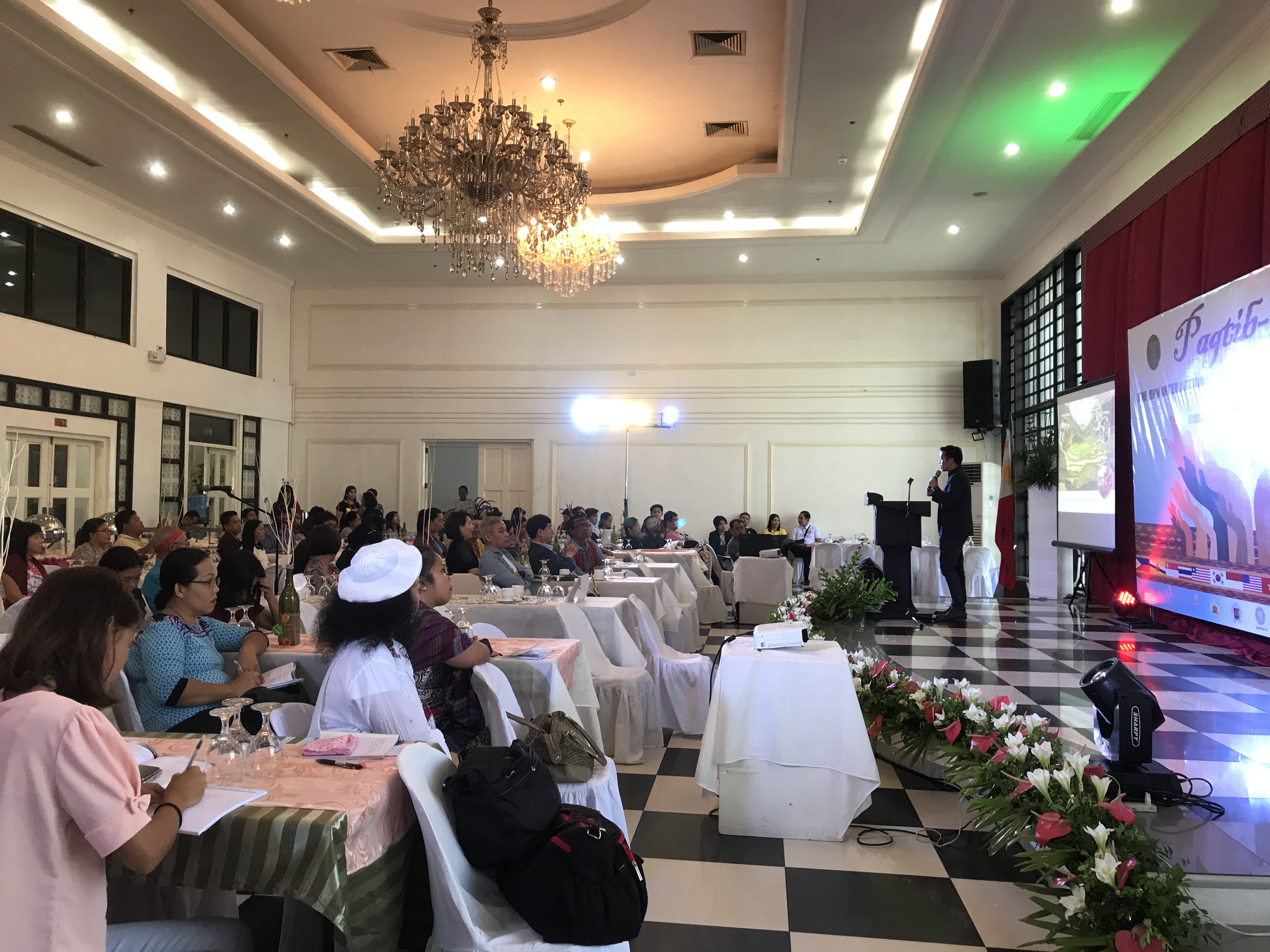
BENG AND I flew down to Iloilo City two weeks ago—she to hold a workshop on art restoration at the University of San Agustin, and I to attend Pagtib-ong, an International Conference on Intangible Heritage organized by the University of the Philippines Visayas at Casa Real—so it was a culture-heavy weekend, but happily so.

And what, exactly, is “intangible heritage”? Simply put, it’s wealth you can’t buy, of the cultural kind—the songs, stories, dances, traditions, practices, and beliefs of people, especially of those outside the increasingly homogenized and globalized mainstream. At a time when we’re all watching (and paying for) the same shows on Netflix and having the same Americano at Starbucks, younger Filipinos are fast losing touch with their own cultural roots. “Pagtib-ong” means “putting on a pedestal,” so this time and for a change, it’s our intangible heritage taking center stage.

UP President Danilo Concepcion framed the context well in his message that I read for him: “As nations and societies modernize and move deeper into the 21st century, the emphasis on material growth becomes even more pronounced, often obscuring all other considerations. Those considerations include intangible heritage—the cultural threads that bind not just people together but the past and the present, and indeed the present to the future. Our intangible heritage speaks to the very soul of our cultural community. It may not have much monetary value, if at all, but it is priceless in terms of containing, preserving, and propagating the values we seek to transmit from one generation to the next.”

Politicians will wonder how studying folk songs, kitchen practices, and the vocabulary of obscure languages can be important to national development, and it will be for us—both as scholars and cultural advocates—to show them how and why. Gatherings of scholars such as Pagtib-ong are rare and valuable, but we should also learn how to translate and communicate the significance of these events and their implications for our societies to a larger audience.

Just to give you an idea of what went on at Pagtib-ong, I’ll give you a sampler from the talks of the scholars who presented their research at the conference, and note the Asian and Filipino values and practices that I culled from their work.

Harmony. Pham Thai Tulinh of Lu TuTrong Technical College in Vietnam, the granddaughter of a general and a poet, had this to say about “QuanhoBac Folk Songs”: “The women traditionally wear distinctive round hats and scarves, while the men wear turbans, umbrellas and tunics. The Quanho folk songs are always performed voluntarily in groups of male or female (singers)…. A group of females from one village sings with a group of males from another village with similar melodies, but different lyrics, and always with alternating tunes. In each group, one person sings the leading tune and another sings a secondary part, but the two should be in perfect harmony at the same timbre.”

IMG_0920

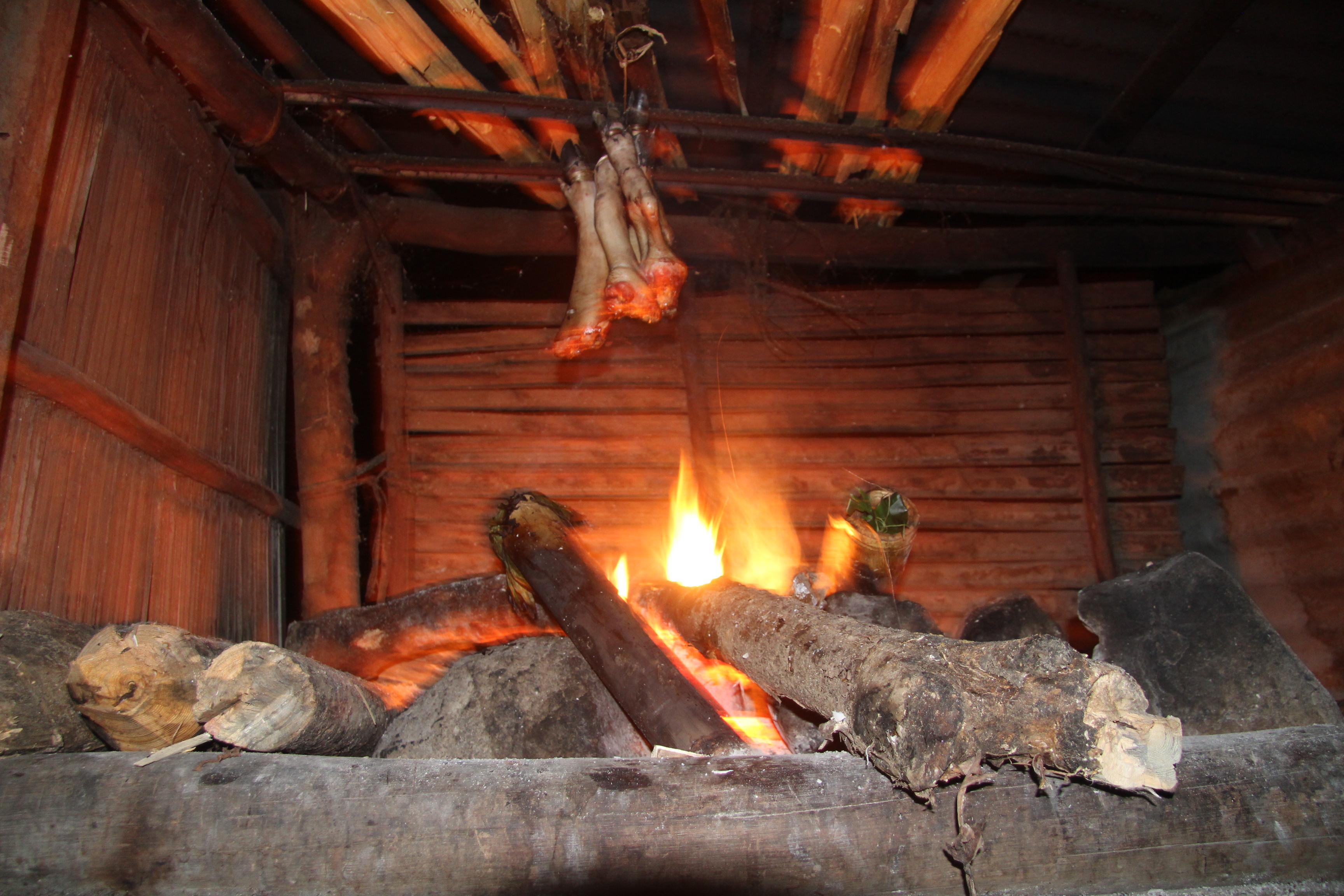
Continuity. Anna Razel L. Ramirez of the University of the Philippines Visayas reported on “Dungkulan: The Eternal Fire”: “A dungkulan is a large piece of wood that provides kitchen fire and ensures that an ember is always available to start a fire in the absence of matchsticks…. More than a fire starter for food, dungkulans are significant in the lives of people in the countryside and in the mountain areas. It is the source of warmth at nighttime, a reliable source of coffee on cold mornings; a steady source of warm water for health emergencies; and what many others need from that slow burning log that sustains the dapug and the lives of the people attached to the dungkulan.”

Conversation. Jose R. Taton Jr. of the Philippine Women’s University spoked on “Talda for Mixed Chorus”: “The talda is one of the various forms of musical repartee practiced by the Panay Bukidnon of Central Panay. Considered as a tukod-tukod (creative invention) tradition, it involves a dynamic altercation of deep sentiments of longing and love from singers who actively and spontaneously stream words (gina-gato) using metaphorical and figurative language. It is sung at leisure at any occasion, and the length of the musical conversation varies depending on the conscious and willful response of both parties.”

There were dozens more of these fascinating talks on the menu—I was especially taken by a lecture on Panay’s fabled golden boats by Dr. Alicia Magos, herself a legend in folklore studies, because it reminded me of the golden boat with my grandfather’s name emblazoned on it, reported to have been seen in Romblon off Calatong, our own enchanted mountain—but alas, we all had to return to our more tangible existences.

Many thanks and congratulations to UPV Chancellor Dr. Rommel Espinosa and Conference Chair Prof. Martin Genodepa for reaffirming the position of both the Visayas and intangible heritage in our cultural and social maps.

IMG_1758


Penman No. 209: Coming: An American Museum of Philippine Art

OnglaoStudy1.jpg

Penman for Monday, July 25, 2016


AS YOU read this, I’ll be winging home with my wife Beng from California where we’ve spent the past two weeks engaged in a pioneering project that should bring the best of Philippine art to a broader American audience, if ongoing plans work out over the next few years.

Have you heard of the American Museum of Philippine Art? Probably not, since it’s still something of a pipe dream, but some people on both sides of the Pacific are blowing very hard on their pipes to make it happen. Those people include businessman Raffy Benitez, president of the Quezon City-based Erehwon Arts Center, and University of the Philippines professor and art expert Dr. Reuben Cañete, who developed the idea late last year after Erehwon’s successful involvement in a binational mural project at Chicago’s Field Museum sponsored by the John D. and Catherine T. MacArthur Foundation through Dr. Almira Astudillo-Gilles, a Chicago based Fil-Am writer and cultural advocate.

I reported on that project in this column last November 25, noting the warm response received by the participating Filipino and Filipino-American artists for their works—two murals, one at Erehwon and another at the Field—depicting the flows of Philippine culture and history from pre-Hispanic times to the present.

That positive experience encouraged Raffy and Reuben to conceive of a bigger and more enduring project that would bring Philippine art even closer to Americans—not just the huge and broadly dispersed Filipino community in the US, but the American public at large. Raffy and Reuben noted that the Mexicans and the Chinese, among other immigrant groups in America, both had their art museums, but that Filipinos—among the largest and fastest-growing minorities in America—did not.

Reuben recalled the long tradition of Filipino artists going over to the US to study and to work—such as Guillermo Tolentino, Victorio Edades, and Alfonso de Ossorio, among others—and observed that while strong cultural ties remained between the two countries, the connection was overwhelmingly one-way, with Philippine art (and music and literature, for that matter) being little known and appreciated in the US.

“In this age of globalization, art is now a global commodity that is exhibited and collected by various international venues, such as Art Basel Miami. Philippine Art, both in its historical as well as contemporary manifestations, must now be aggressively promoted in the United States, which is a major area of collection and promotion of global art,” Dr. Cañete would say in a concept paper on AMPA.

Karlota I. Contreras-Koterbay, a prizewinning Fil-Am sculptor and Director of the Slocumb Galleries at East Tennessee State University, agrees, writing that “There is a rich and dynamic art practice by Filipino-Americans in the US. However, there is a huge discrepancy in the visibility and recognition with regards to the idea and form of ‘Philippine Art’.

“The Philippines is the second highest Asian country whose citizens migrate to the US. The Filipinos have a long, complex history of immigration and residency in America, yet ‘Philippine Art’ is not as accessible nor recognizable in popular culture nor in the global art world. This statement does not claim that there is lack of talent nor creativity; on the contrary, there are thriving communities of artists, art groups and cultural workers who are making a difference in their respective locales, as well as receiving recognitions for their work in the field of arts.”

To take the first steps toward turning vision into reality, Raffy, Reuben, Beng, and I flew to LA to meet up with some prominent Filipino-American community leaders and artists to set up a foundation that would start the spadework on the museum. The American Museum of Philippine Art Foundation, Inc. (AMPAFI) was formally launched July 12 at the Holiday Inn in Diamond Bar, California, in a day-long meeting attended by a couple of dozen participants from all over the US.

Raffy Benitez will serve as chairman and president, and Reuben and I are joining him on the board, but we know that this project can’t be run from Manila, so the directors will also include art curator Karlota Contreras-Koterbay, physician Jose Botor Regullano, and engineer Ricardo Real Almonte. The officers include Fil-Am standouts Rafael Maniago, Art Zamora, Sal Budz Floriano, Rosie Vinluan Muñoz, Connie Buenaventura, Daniel Gutierrez Bassig, Dennis Martinez, Bobby Halili, Jess Española, Jun Sison, Ninette Tenza Umali, Ernan Ebreo, and Bernadette Escalona-Cooper. During the launch, a group of Fil-Am Artists headed by Paeng Maniago also rolled out a mural that they had executed to celebrate the occasion.

AMPAFIFound.jpg

We all realize that this project will take many years, enormous resources, and tremendous effort and optimism to realize. (Being Filipinos, we expect a lot of naysaying, and I’ve been Raffy’s chief buzzkiller whenever I think someone needs to pull his feet back to earth, but I have to admire the man’s guts and what he’s done at Erehwon, which you can preview here: http://erehwonartfoundation.org.) The museum as Raffy and Reuben envisage it is a mini-CCP, with enough spaces for exhibitions and performances (and even classes in Pinoy cooking), and the renowned architect Conrado Onglao was motivated and generous enough to contribute a prospective design for the building. That may be years down the road, but in the meanwhile, AMPAFI is taking early and doable steps toward building a countrywide arts community—a virtual museum, as it were—in cooperation with other groups such as Bernadette Escalona-Cooper’s Silicon Valley-based Global Artists’ Creative Collaboration for Empowerment (GACCE), whose leaders also attended the launch.

Karlota reports that “Our first two official projects are: ‘Nandito N Ako’ by 11 emerging Filipinx artists from the School of Art Institute of Chicago (SAIC) and possible community mural headed by NY-based artist Art Zamora with the Phil-Am organization and ETSU organized by Slocumb Galleries in the Northeast. This will be early October 2016 in time for Filipino Heritage Month. Also on the same month on the West Coast is the proposed Indie Film Showing in LA by special committee on fundraising head Ernan Ebreo. Both are curated programming for awareness campaign and fundraising efforts.”

(Wait a minute, did I read “Filipinx?” Indeed I did—and this trip was the first time I encountered the term myself, which seems to be gaining currency among young Fil-Ams, who define “Filipinx”—which I’ve heard pronounced as “Filipinics”—as an effort “to make the community more inclusive—we changed the O in ‘Filipino’ to an X to remain gender-neutral and recognize all genders that exist in the Filipinx community. There’s apparently been a lot of debate on this issue, which we’ll deal with some other time.)

The AMPA website is up at http://www.ampafi.org. Contributions and donations are, of course, very welcome, but more than that, we need goodwill, prayers, and strength of spirit to see this vision through. Mabuhay at salamat sa lahat!

AMPALogo2.jpg