Qwertyman No. 140: The City of Stories

Qwertyman for Monday, April 7, 2025

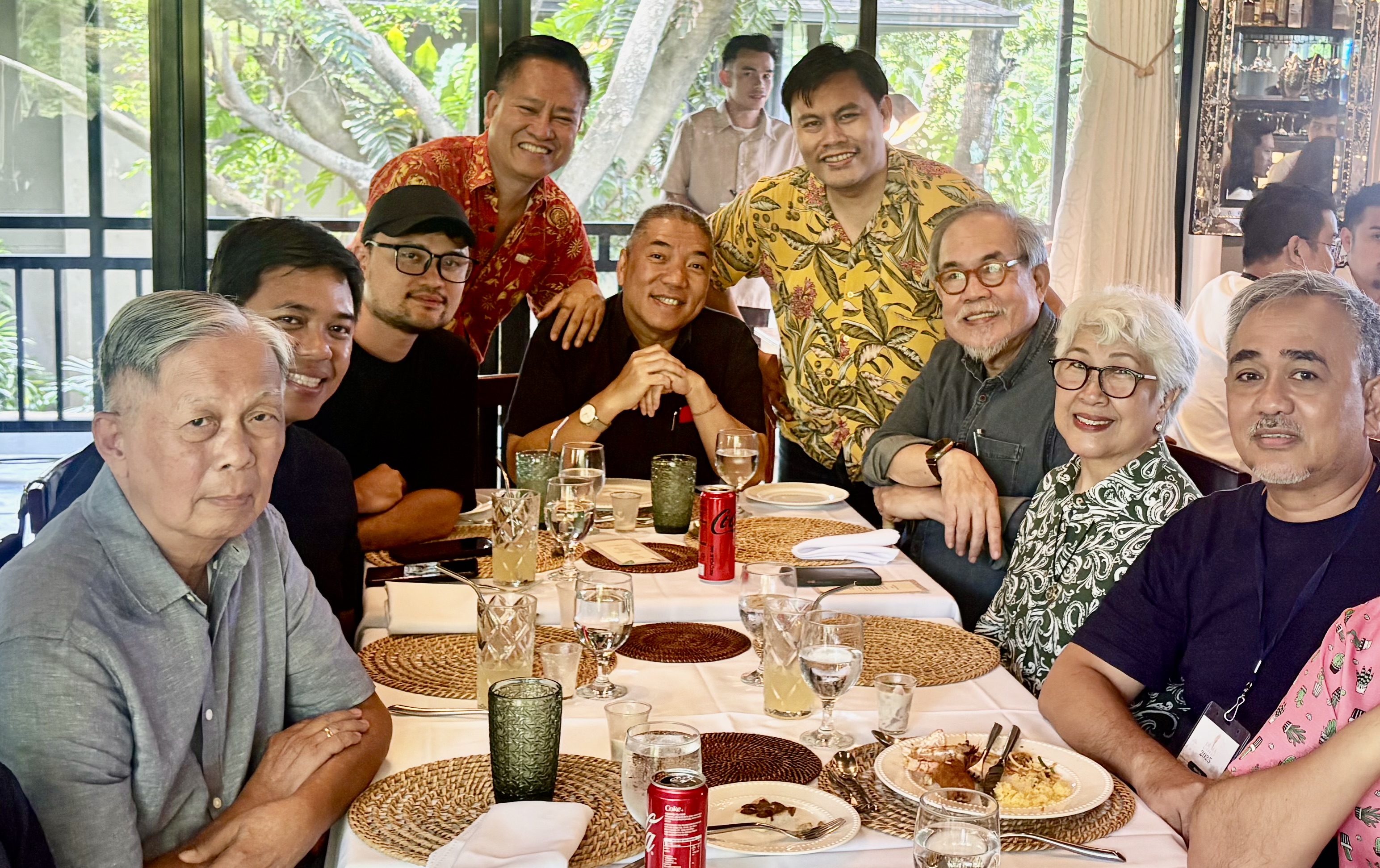
THIS PAST weekend, I was down in Dumaguete City with National Artist for Literature Resil Mojares, historian Ambeth Ocampo, and scores of other writers for the 2nd Dumaguete Literary Festival. At my age, I’ve frankly tired of going to literary festivals, conferences, and workshops, preferring to work quietly at home—Dr. Mojares apparently feels the same way—but we couldn’t resist the allure of Dumaguete, a city central to the development of Philippine postwar literature, and always well worth visiting on its own for its gentle charms.

I personally have much to thank Dumaguete for, for what it contributed to my own budding literary and academic career. Early in 1981, shortly after I had returned from my first visit to the US, I received an invitation from Dr. Edilberto Tiempo to join the Silliman Writers Workshop which he and his wife Edith—the poet and future National Artist—had started two decades earlier upon their own homecoming from America. 

I had dropped out of college for a decade by then, and was working at NEDA, which had sent me to the US for an observation tour. What that trip to the American Midwest—mainly the campus of Michigan State in East Lansing—did for me was to rekindle my interest in learning. Dr. Tiempo’s invitation could not have come at a better time: a summer devoted to talking about poetry and fiction at Silliman University felt dreamlike, and by the time the workshop ended, my head spinning with magical lines from Robert Graves, I had resolved to quit my job, go back to UP, and just study, write, and teach for the rest of my life. And that’s what happened.

I wasn’t alone in that kind of transformative experience; as the country’s oldest writers’ workshop, the Silliman summer workshop became a virtual rite of passage for young writers, especially in English (some writers in Filipino have also attended, with works in translation). Silliman itself (older than UP by several years) has produced many of the Philippines’ finest writers, aside from the elder Tiempos—among them Ricaredo Demetillo, Aida Rivera-Ford, Merlie Alunan, Leoncio Deriada, Cesar Ruiz Aquino, Elsie Coscolluela, Rowena Tiempo-Torrevillas, Marjorie Evasco, Lakambini Sitoy, Artemio Tadena, and Myrna Peña-Reyes. It also has a strong performing arts tradition, contributing the likes of National Artist Eddie Romero, Gilopez Kabayao, Amiel Leonardia, Junix Inocian, and Elmo Makil, among others.

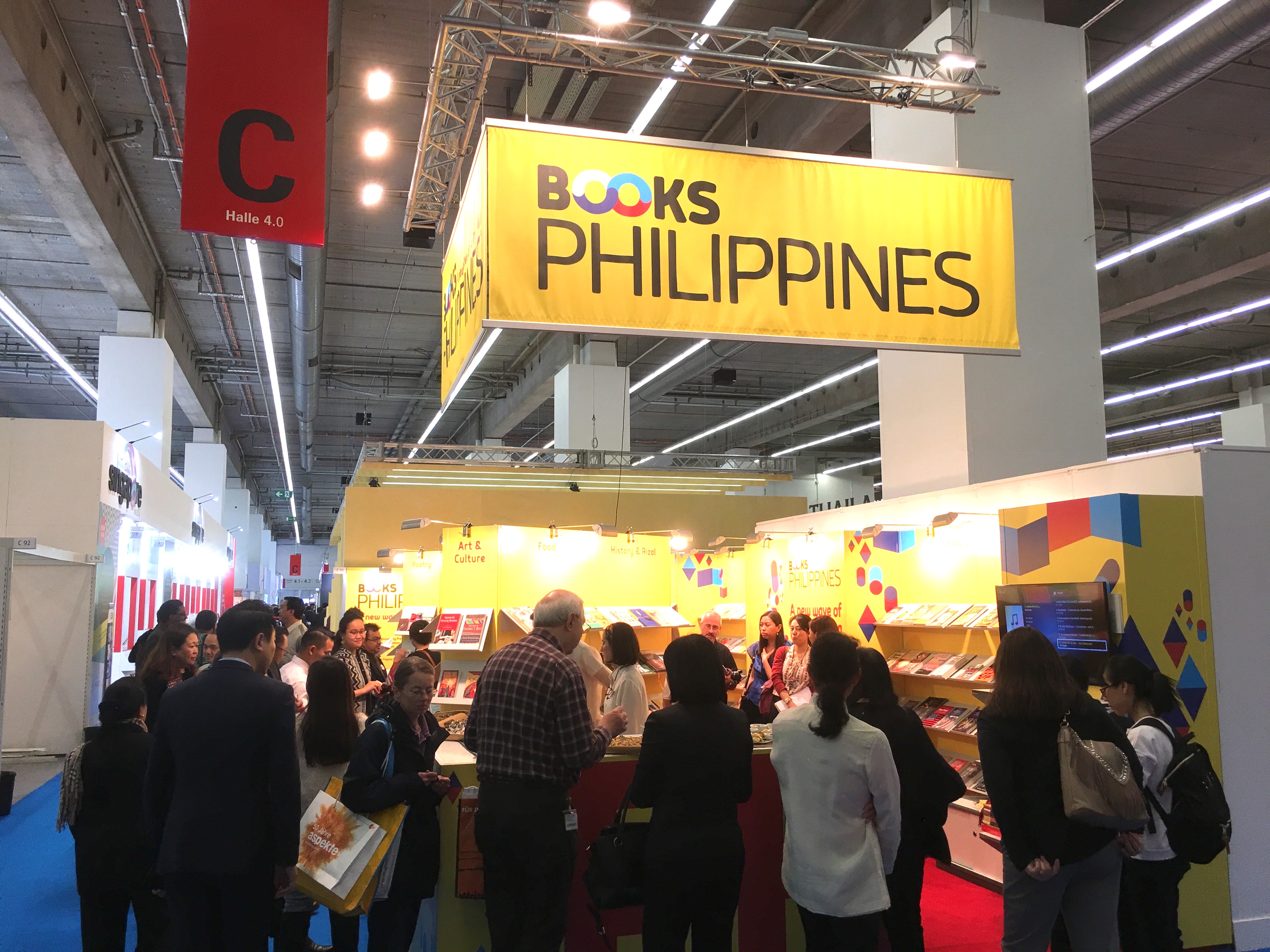
For all these, Dumaguete has been formally nominated to be designated as a UNESCO City of Literature—one of many such distinctions listed under UNESCO’s Creative Cities Network program that was launched in 2004 to recognize and celebrate cities around the world—350 of them form more than 90 countries to date—for their signal achievements in Crafts & Folk Art, Design, Film, Gastronomy, Literature, Music, and Media Arts. So far, 53 cities in 39 countries have been named Cities of Literature—among them Barcelona, Heidelberg, Iowa City, Lahore, and Norwich. (Iloilo has already been named a City of Gastronomy, and Quezon City is vying to be designated a City of Film.) With the Philippines serving as this year’s Guest of Honor at the Frankfurt Book Fair, Dumaguete’s recognition as a UNESCO City of Literature will raise our global cultural profile even higher, and let the Philippines be known for more than Boracay, Manny Pacquiao, and Imelda’s shoes.

Leading that charge for Dumaguete is Silliman University literature professor Ian Rosales Casocot, one of our best fictionists and co-director of the festival with Gayle Acar. Working with the Dumaguete City government, the Department of Trade and Industry, and the Buglas Writers Guild which Ian heads, Ian notes that aside from developing writers, “Dumaguete itself has been a constant subject of many literary works, from novels to poetry, from essays to plays. It is high time that Dumaguete is recognized for its role in shaping literature in our corner of the world.” The well-attended Dumaguete Literary Festival, now on its second edition, offers proof positive of that city’s continuing centrality to our literary life and culture. 

We had been invited to share our views on various aspects of Philippine literature in this age of artificial intelligence. I joined a panel of writers dedicated to that specific topic—or, as they put it, “Can AI Win a Nobel Prize for Literature?”—which happened to be something I’ve given much thought to.

Understandably, there’s been a lot of fear and anxiety—even outright hostility—generated by the emergence of AI in nearly every aspect of human life and society. Studio Ghibli’s Hayao Miyazawa, for example, has forsworn the use of AI in his work, calling it “an insult to life itself.” While it has been hailed for its contributions to such fields as medicine and criminology—shortening diagnostic procedures and sharpening digital forensics—AI’s application to less mechanical endeavors is more fraught with both ethical and technical questions. 

In previous lectures and again in Dumaguete, I showed how—at this point—AI poses little threat to the writer of truly good and imaginative literature, by yielding execrable responses to such prompts as “Write a paragraph about a summer night in Spanish Manila in the style of Nick Joaquin.” It’s worth a laugh, but I’m not sure how long we’ll be laughing; AI’s present ineptitude simply means it has a lot to learn—and it will, with the kind of training it’s being fed off our books, our texts, our manner of writing. It will only be a matter of time—I’d say less than a decade—before AI can mimic the best of global writing. For me, the best response is neither to hate nor to ignore it, but to understand it and employ it for helpful uses we have yet to find. (We’re already tapping AI every time we use Google, and no one seems to mind.) It should even be possible for authors to creatively interact with AI in what I’m calling a game of prompts.

What we can reasonably certain of is that while literary styles can be copied, the human imagination is far richer and stranger than we think. AI tends to homogenize; the good creative writer strives to be unique. Like Dumaguete, there’s a whole city, a labyrinthine cosmopolis, of stories in every writer’s mind to be discovered and explored.
Qwertyman No. 45: Onward to Frankfurt?

Qwertyman for Monday, June 12, 2023

IF YOU were at the Philippine Book Festival (PBF) that took place at the World Trade Center earlier this month, you would have been surprised to find how many Filipinos were writing, publishing, selling, buying, and reading books. A project of the National Book Development Board (NBDB), the PBF was the first such event devoted solely to locally produced books—as opposed to, say, the Manila International Book Fair (MIBF) in September, which is open to books and publications from overseas. The NBDB wisely decided to showcase our homegrown literary talents—not only from Manila, and not only from my generation of old fogeys, but from all over the country, and writers of all persuasions and ages (as young as fourteen!).

We Pinoys have become so immersed in Netflix, YouTube, and social media that many of us have forgotten about reading, and what a good book can do for one’s mind and soul. We want everything delivered to us in short sentences—even in acronyms or, if possible, in memes—because long paragraphs (and, God forbid, pages) can only mean a waste of our precious time (which is, of course, best spent posting what we last ate on Instagram, and critiquing someone’s OOTD). Whether fiction or nonfiction, books challenge us to carry ideas through to the limits of our reason and imagination. The difference between a good meme and a good book can be that between wit and wisdom—between the bubbles that rise to the top of your champagne and the notes that linger on your tongue and senses long after you’ve put your drink down.

And despite the death knells that have been tolled for publishing and reading in this country, the droves of people who flocked to the PBF and the MIBF show otherwise; as I’ve noted elsewhere, more new authors and publishers are emerging across various genres and languages than ever before, spurred by writing programs and workshops, new technologies, and more exposure for Filipino writers in international markets.

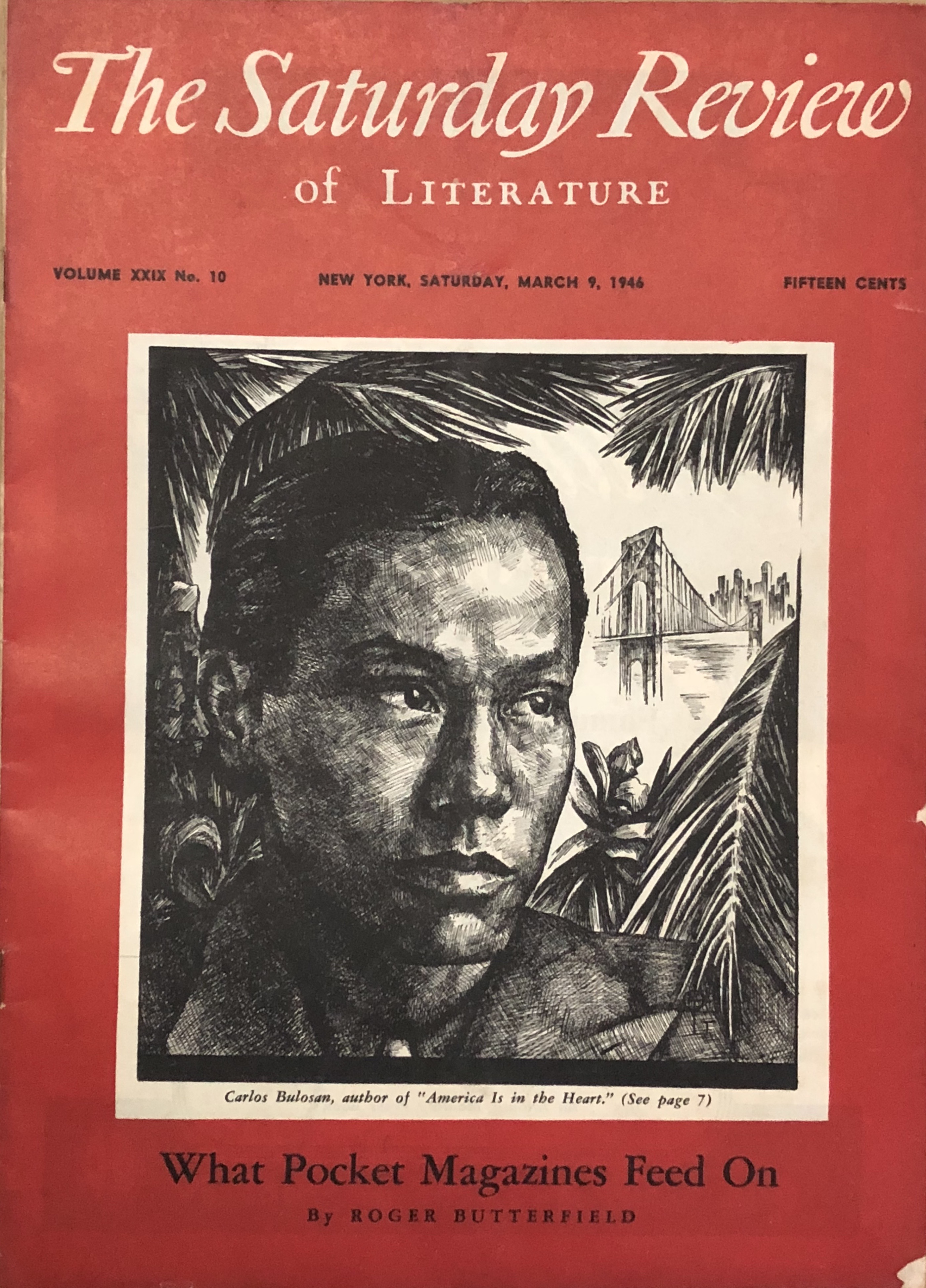
That last note—the emergence of Philippine writing in the global consciousness—has been a long time coming. We’ve had, of course, writers who’ve been published abroad, most notably Jose Rizal and the late National Artist F. Sionil Jose. In America, both expatriate and US-born writers such as Gina Apostol, Ninotchka Rosca, Jessica Hagedorn, Eric Gamalinda, Zach Linmark, and Brian Ascalon Roley have made important inroads into publishing, some with mainstream publishers. Of course, they were preceded by the likes of Carlos Bulosan, Jose Garcia Villa, NVM Gonzalez, and Bienvenido Santos, in a time when getting published in America seemed to be the apex of a literary career. We’re way past that now, having found our own voice and our own readers right here at home. 

I’ve often remarked that I’d rather be read by 10,000 Filipinos than 100,000 Americans, but I may have spoken too soon, as even those 10,000 Pinoys willing to buy and read a serious novel can be hard to round up. Therein lies the irony: we’re happy to write and publishers seem happy to publish, and the high attendance at the PBF could be a sign that things are changing, but creating a critical mass of local readers for literature remains a struggle. 

Even in America, where we imagine that almost four million Filipinos should be able to clear out an edition of 5,000 books without any trouble, that simply doesn’t happen. I suspect that that’s because we’ve never really been a book-reading culture, unlike the Japanese and the Indians, and the easy availability of entertainment on Netflix and Tiktok just aggravates the situation. (A more disturbing possibility is that our writers still haven’t learned to write the kind of stories with the kind of treatment that Filipino readers—and there are also many kinds of them—expect, without sacrificing literary “quality,” whatever that means. In my old age, this is what I’m aiming for—to give my readers stories that they’d want to see turned into movies.) 

There’s no doubt that we’re producing materials of high literary value—in English, Filipino, and our regional languages; we saw that in the PBF and we see it in our classes and workshops all the time. These works deserve to be shared with a broad audience—not just here, but overseas, where the Chinese, the Japanese, the Koreans, the Indonesians, and the Vietnamese have already made a name for themselves in the publishing world. 

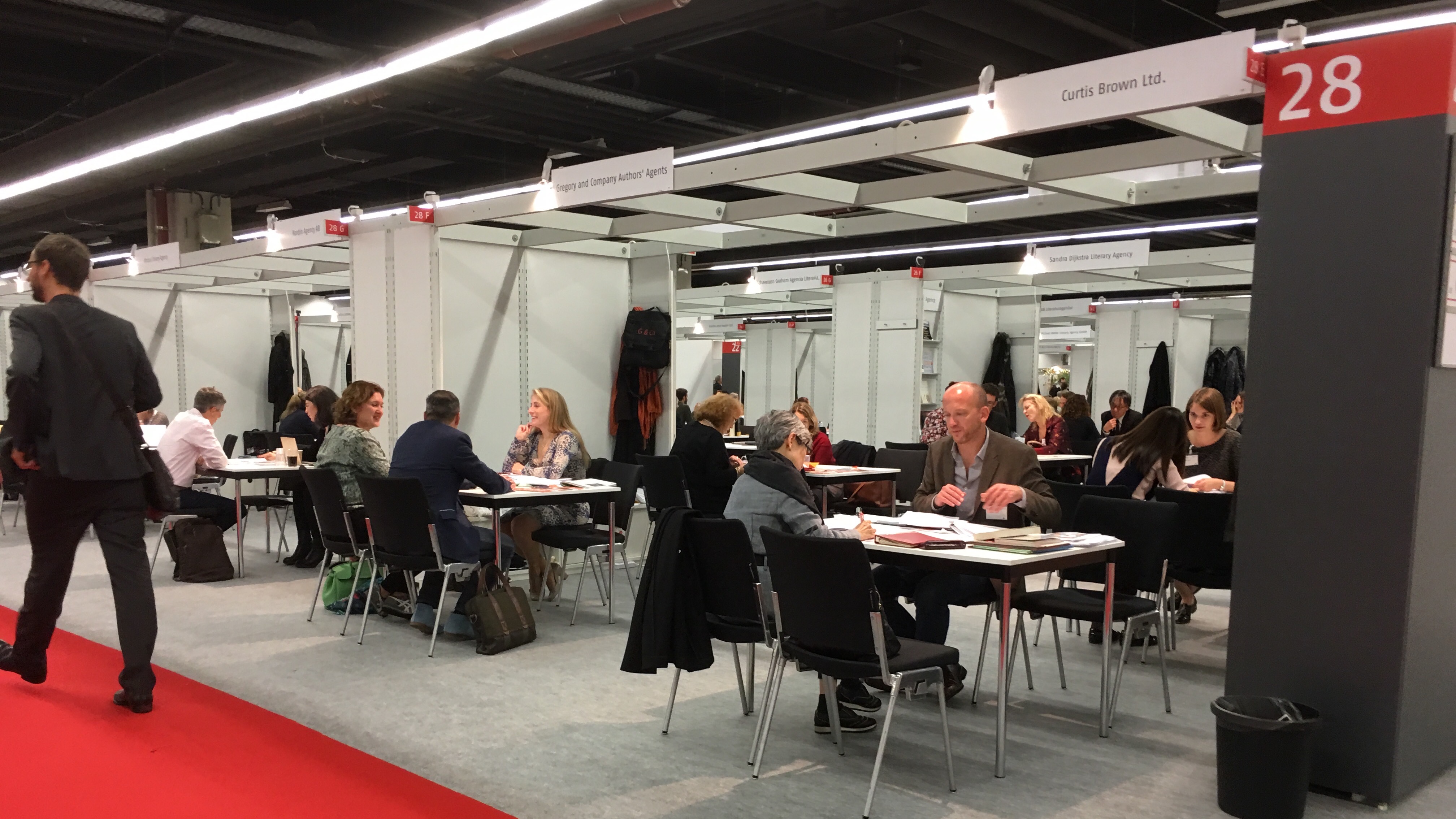
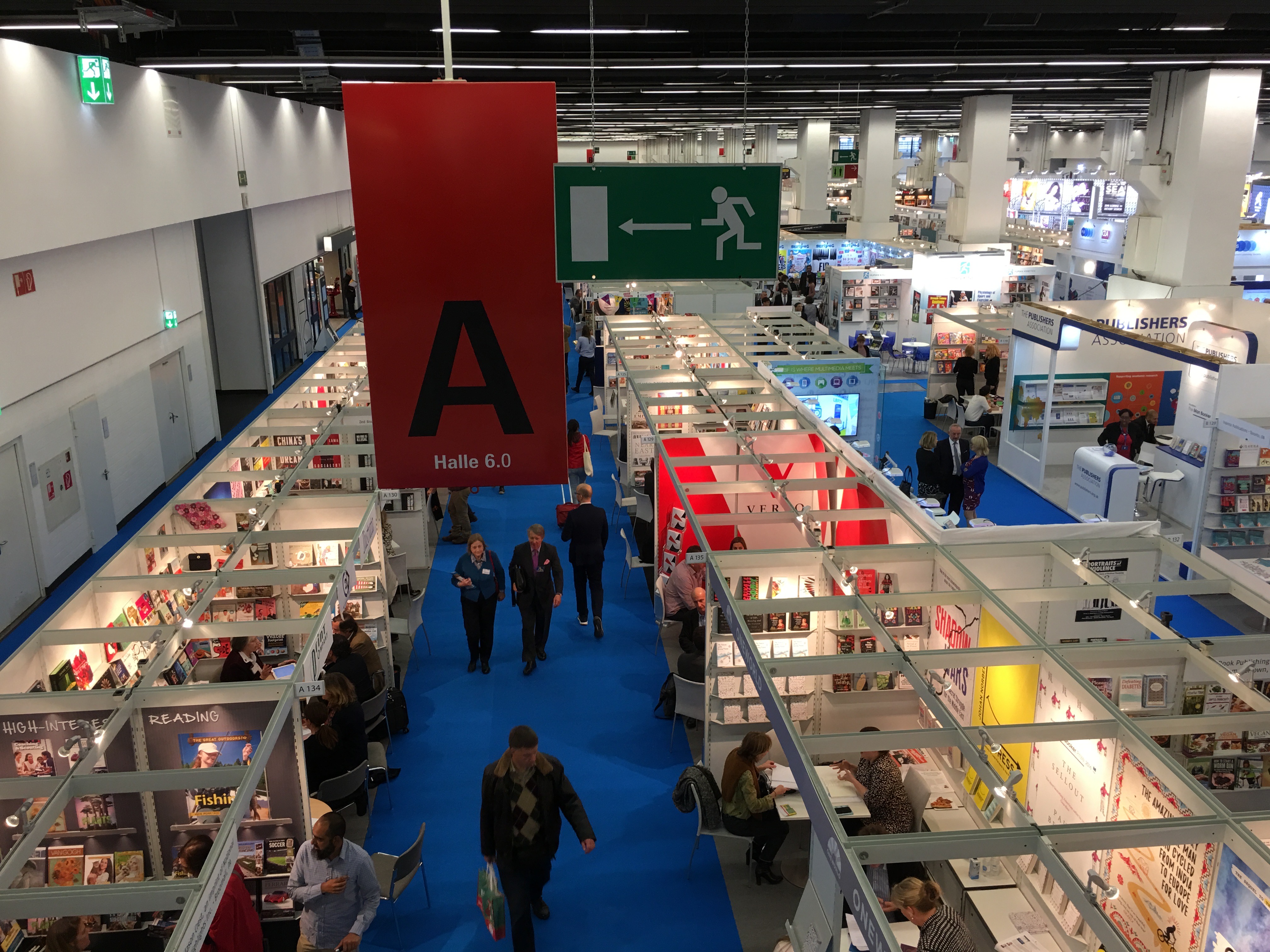
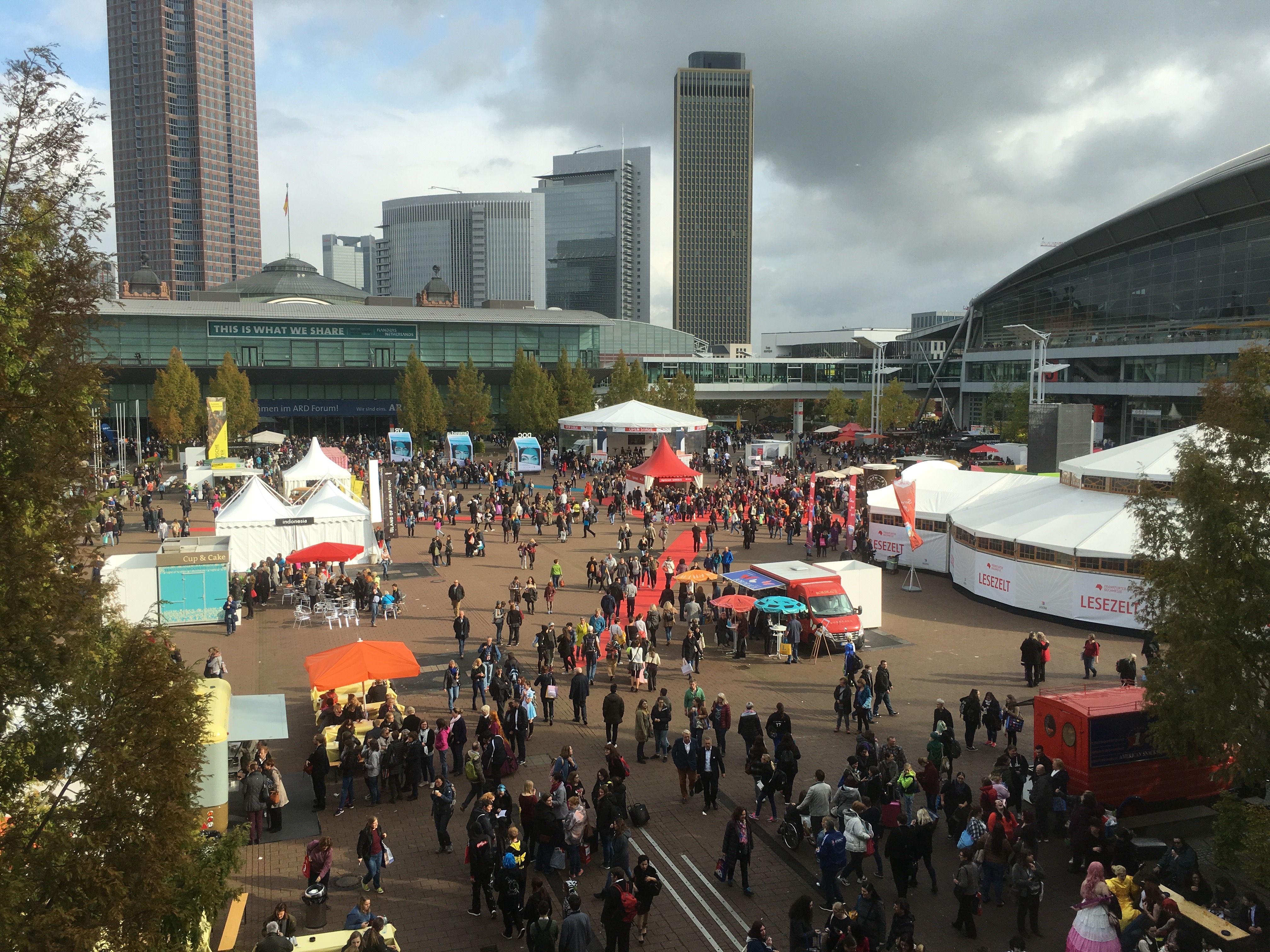
But that takes a network we still have to familiarize ourselves with and learn how to navigate—a network of translators, literary agents, editors, publishers, and booksellers largely unknown and therefore closed to us. We’re not totally clueless. Through the NBDB and local publishing stalwarts such as Karina Bolasco (just recently retired from the Ateneo Press and the founder of Anvil Publishing before that) and Andrea Pasion-Flores (our very first international literary agent, now owner of Milflores Publishing and president of the Book Development Association of the Philippines), the Philippines has been represented over the past few years in such major events as the annual Frankfurt Book Fair, the world’s largest such market of authors, publishers, and agents.

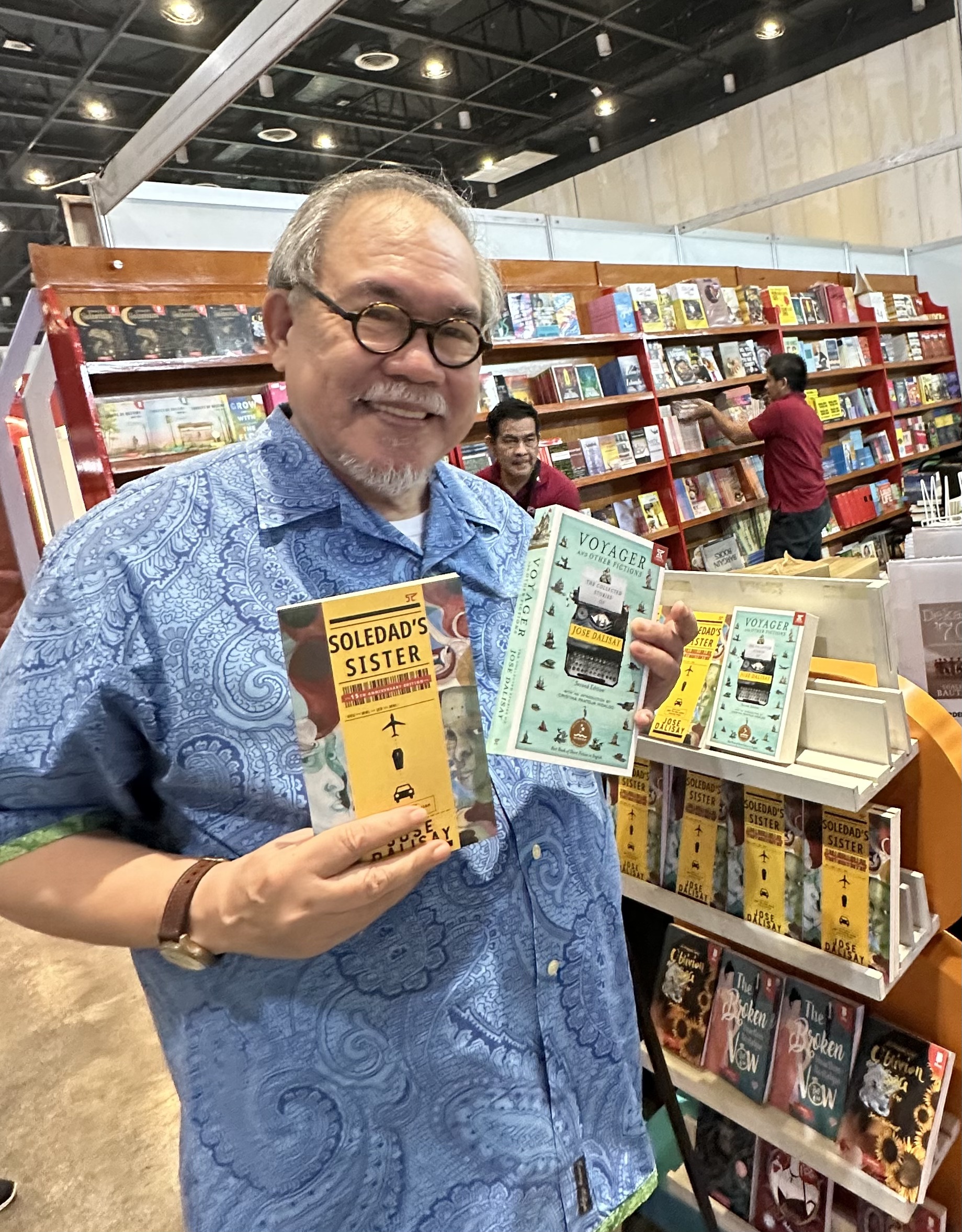
Not meaning to be immodest, thanks to my agents and publishers, I myself have benefited from this kind of exposure, having sold my second novel Soledad’s Sister in last year’s FBF into a German translation and edition, which just came out; before that, it had already been translated into and published in Italian and French, aside from an American edition. Imagine what that network could do for the rest of our writers.

This brings me to an idea whose time, I strongly believe, has come: focal representation in a forthcoming Frankfurt Book Fair as a “guest of honor,” a position reserved for a country wishing to showcase the best of its literary talent across all genres (two years ago it was Canada, followed by Slovenia). This has to be accompanied by a strong effort in translation—from the regional languages to English, and from English to other international languages like Spanish and French, perhaps even Chinese. It will take much planning and a sizeable budget, but as our recent forays into the Venice Biennale have shown on behalf of our leading artists, with the right cultural leadership and vision, it can be done.

Penman No. 451: A Harvest of Books

Penman for Sunday, June 4, 2023

IF YOU’RE reading this on this Sunday morning, then it’s not yet too late for you to find a cab and get yourself over to the World Trade Center in Pasay City to catch the last day of the Philippine Book Festival, and have your favorite Filipino authors sign their books for you.

Organized by the National Book Development Board (NBDB) in partnership with the National Library and other agencies and organizations, the PBF will showcase the best of new Philippine writing and publishing, with the bonus of having most of the authors around for signings, chats, and the now-obligatory selfies.

Since the Internet took off thirty years ago, people have been declaring that “Books are dead!” (And even before that, “The Author is dead!”—although, of course, not quite in that almost literal sense). Well, guess what—both are very much alive, whole new generations of them, as if the Internet never happened. I don’t have the hard figures to show—I’m sure the NBDB has them—but just from what I’ve seen at the past Manila International Book Fairs (the next one of which will be held in September), there’s much more new writing and publishing happening now than there was before the Internet. 

There are many drivers for that, one of which has to be the proliferation of writing programs and workshops, whose graduates really succeed only when they come out with books. (Like I often remind Creative Writing grad students who take forever to “perfect” their thesis projects, “You’re writing for no more than five readers—your dissertation committee—and when you’re done, your thesis will be sitting on a solitary shelf. Just do what you need to pass the damned defense and focus on producing your first book out of that draft! Your real examiners will be your readers.”) 

Another factor is the growth of the publishing industry, which has become much more diversified in terms of ownership, material, and audience. The long years of martial law drove much creative output underground, so to speak, with few available venues for literary publishing and only competitions like the Palancas providing incentives for continued production. (On the other hand, the government presses kept churning out books on the First Couple’s abounding wisdom.) Post-EDSA, the pent-up dam broke, and literature flourished, but still hardly on the scale we’re seeing today.

I suspect that’s because many new players have gone into publishing, finding niche markets for everything from religious and self-help books to graphic novels and high-end coffee-table books. Among these, I’d count Milflores Publishing, founded by the late Tony Hidalgo and now in the hands of the very capable Andrea Pasion-Flores. Balangay Books, focused on local literature, has been opening doors for new young authors, and belongs to the Indie Pub Collab PH, a group of independent publishers. Down south, Savage Mind Bookshop and the Ateneo de Naga University Press have made great strides in literary publishing not just in the Bicol region but well beyond. Emerging in the wake of the Pink Revolution, San Anselmo Publications has made a name for itself as a purveyor of progressive thought. A recent visit to OMF Literature’s bookshop and office along Boni Avenue showed me how Christian literature is flourishing, attracting both new authors and readers. 

Let’s not forget self-publishing, which with such new technologies as print-on-demand and e-books has outgrown the stigma of “vanity” publishing and has produced both commercial and critical successes. While overall quality remains highly variable, the free Internet has empowered and enabled a new generation of young people to feel like they can become “writers” by posting on such sites as Wattpad—and some of them will be. (The irony here is that, as on Amazon, writers who succeed in their e-book debuts then get picked up by publishers of physical books.) Professional design and editorial outfits such as Studio 5 and Perez NuMedia also exist to help individuals and institutions turn their ideas into prizewinning books.

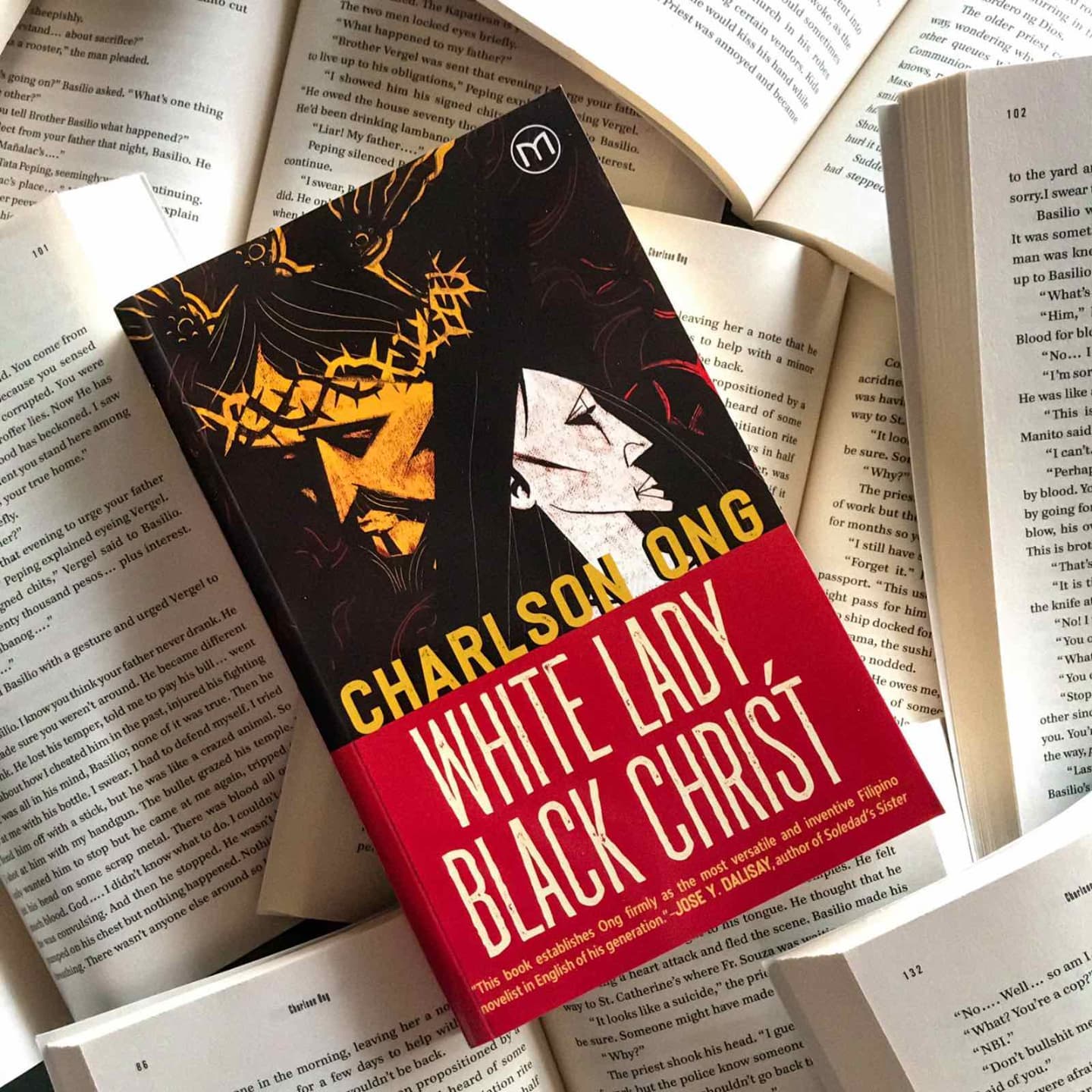
And then of course the long-established big-name publishers and academic publishers are still around: Anvil Publishing, UP Press, Ateneo de Manila University Press, UST Publishing House, and the University of San Carlos Press, among others. Vibal Publishing has produced impressive and sumptuously printed historical books—as has, let’s not forget, the National Historical Commission. They remain the publishers of choice for what might generally be considered prestigious but non-commercial projects, although their marketing savvy has vastly improved, from book design to distribution (much of the bookselling has moved online, to Shopee and Lazada). But since the wait at these publishing houses tends to be long, even established Filipino authors like novelist Charlson Ong (White Lady, Black Christ) have gone with such alternatives as Milflores (as did I, in its previous incarnation), which can often provide speedier results with no sacrifice of quality.

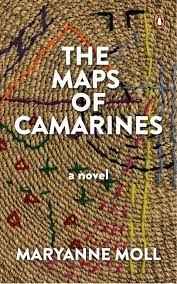
One more thing: more Filipino authors have begun to get published and noticed abroad, beyond America. Note the recent publication of Ulirát: The Best Contemporary Stories in Translation from the Philippines, edited by Tilde Acuña et al., and the South Africa-based Jim Pascual Agustin’s Waking Up to the Pattern Left by a Snail Overnight, both by Gaudy Boy in Singapore. Singapore is also where Penguin Random House SEA is based, and from where it published Danton Remoto’s novel Riverrun and his book of stories The Heart of Summer(aside from his translations of our classic works in Filipino), and Maryanne Moll’s novel The Maps of Camarines. I’m also happy to report that my novel Soledad’s Sister just came out in a German hardcover edition (as Last Call Manila) from Transit Buchverlag, following earlier editions in Italy, France, and the US. A 15th-anniversary edition of the novel, along with a new edition of my Voyager collected stories, are on sale at PFB—as are almost all of the books I mentioned here, with their authors on hand to sign them.

So wait no further and grab that ride to the WTC, for your share of this bountiful harvest of Filipino books. (Did I say that entrance is free?)

Penman No. 328: Writers for Peace

GwangjuPic.png

Penman for Monday, 19 November 2018


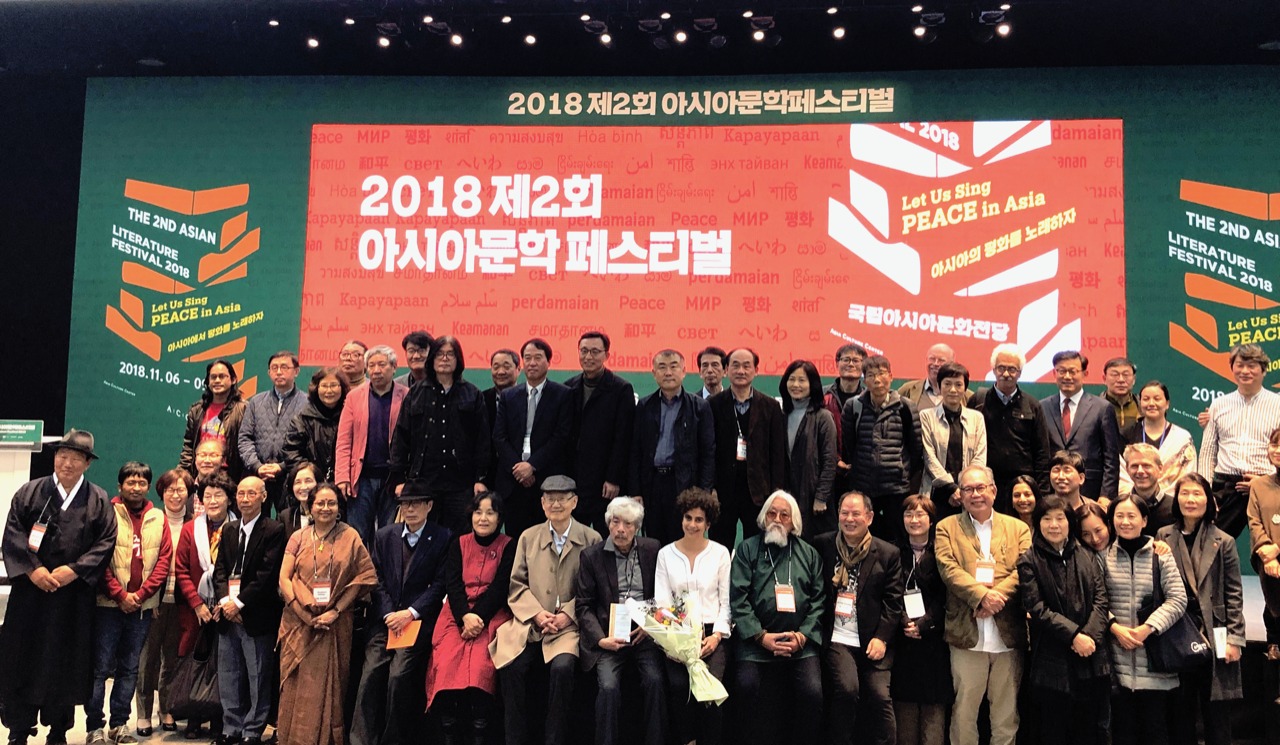
TO FOLLOW through on my initial report last week on the 2ndAsian Literature Festival in Gwangju, South Korea from November 6 to 9, it was an exhilarating and enlightening experience to be among fellow Asian writers getting together to wield literature as a weapon of peace.

I’ve been to many international literary festivals and conferences, but inevitably these gatherings—even those held in Asia—have tended to focus on Western writers and their concerns. For a while back there, the Man Asian Literary Awards, which culminated in a gala ceremony in Hong Kong, drew some special attention to contemporary Asian writing, but that fledgling effort folded up too soon. The Asia Pacific Writers and Translators (APWT), which will be holding its annual conference in Australia a few weeks from now, is arguably the region’s largest and most active literary network, but with so many topics on offer and so many attendees, it’s hard to keep your eyes and minds on one thing at any one time.

The Gwangju meeting felt just right, bringing together 11 writers from outside Korea to meet and interact with about the same number of their Korean counterparts. I was privileged to be the first Filipino to be invited to this young festival, which was headlined last year by 1986 Nobel Prizewinner Wole Soyinka. This year, the prolific and immensely talented Chinese novelist Yan Lianke, winner of the Franz Kafka Prize, led the delegates, who also included the Mongolian poet Damdinsuren Uriankhai, the first winner of the Asian Literature Award, which is given out at the festival.

Why Korea? Because—even as it globally exports kimchi, Koreanovelas, cellphones, and K-Pop—Korea (at least the southern part of it) is seeking to strengthen its cultural connections to the world at large, by exposing its people to cultural and literary movements from the outside, especially from beyond the Eurocentric zone. Among the key agents of this pivot is the publisher and editor Kim Jae-yong, a professor of modern Korean literature and world literature at Wonkwang University in Iksan, supported by the likes of Prof. Sohn Sukjoo from Dong-a University in Busan. Last year, it was also Prof. Kim and Prof. Sohn who brought another group of writers, including myself, to Jeju to discuss how our literatures were emerging out of the Western shadow.

The Gwangju event was less a conference than an intense but still festive sharing of experiences and responses to the many threats to peace, freedom, and justice around the world today, especially in Asia. As the festival chair Prof. Paik Nak-chung put it, “Particularly, 2018 is a special year when the journey towards denuclearization and lasting peace on the Korean Peninsula began as the leaders of the two Koreas met in Panmunjom and in Pyongyang. The festival urges Asian writers to carry on the spirit of peace on the Korean Peninsula to sublimate Asia’s wounds through literature.”

Writers, of course, are neither politicians nor diplomats (despite Shelley’s generous attribution of poets as the “unacknowledged legislators of the world”). Much of what we write inevitably has political content and intent, but governments don’t listen to writers (and would, in fact, shut down the teaching of language and literature as superfluities, like our magistrates did last week). We agreed, therefore, that our approach has to be direct to our peoples and audiences, to resensitize them to their humanity; freedom and justice are prerequisites to any kind of real and lasting peace, and these in turn are premised on the worth of the individual, which literature can help establish.

It was a great honor to share the company of the likes of Bao Ninh, a Vietnamese novelist who had fought the Americans during the war and had once found just himself and a comrade left alive in their platoon after a bloody encounter. His novel Sorrows of War is a poignant reflection on the fruitlessness of war, and the man’s quiet but fervent advocacy persuaded us (with me as one of the jurors) to award him the Asian Literature Award for this year. Another writer I got along very well with was the Taiwanese novelist Syaman Rapongan, a champion of his Tao tribe from Taiwan’s Orchid Island, who gave up a professorship in anthropology to pursue his true passions, writing and seafaring; “The ocean is a poem we cannot recite to the end,” one of his works memorably begins. The bestselling Korean novelist Sim Yungkyung, a molecular biologist by training, also became a good friend, and with our very capable guide Ms. Kim Hye Ji, my wife Beng and I saw the best of Korean culture and hospitality that week.

Not incidentally, the Asian Literature Festival was organized and sponsored by Korea’s Ministry of Culture, Sports, and Tourism through Gwangju’s impressive Asian Culture Center (ACC), which should be a model for other countries to emulate. But the best service of festivals like this is to remind writers—especially writers of conscience—that as solitary and sometimes as disheartening as their work can be, they are not alone, and are appreciated.

Penman No. 266: The Pinoy Film Family

patay-na-si-hesus-movie-poster.jpg

Penman for Monday, August 28, 2017


LIKE MANY Filipinos, I really should see more locally made movies than the Hollywood and Netflix confections that have become our staple entertainment. That statement’s even more ironic in my case, having scripted about two dozen movies, mostly for the late Lino Brocka, between 1978 and 2003.

I missed out totally on this year’s Cinemalaya offerings because of a toxic schedule at work—I tried to catch Respeto on its last day only to find all the tickets sold out—so I made sure to make time for the Pista ng Pelikulang Pilipino the following week. I suppose I more than made up by managing to see four of the PPP entries over as many days: Patay Na si Hesus, Pauwi Na, Birdshot, and Hamog, in that order.

I might have chosen these movies because I’d heard good things about them, but I also wanted to see how they represented the Filipino family—for me an eternally fascinating subject, even from the days when Lino and I explored its complexity in such films as Tahan Na, Empoy and Inay. Filipino society (and politics, for that matter) is nothing if not about family, which seems inextricably connected to our struggles for survival—we survive for family, and also because of it.

Directed by Victor Villanueva, Patay Na si Hesus has a long-estranged wife and now a widow, Iyay (Jaclyn Jose), drive her ragtag family in a minicab from Cebu to Dumaguete to attend the wake of her husband Hesus. Along the way and at the wake itself all manner of misadventure happens: a nun liberates herself, a lesbian relationship crumbles, a boy with Down Syndrome seems to get lost but actually finds his way, a coffin collapses, and a dog dies (curiously—and sorry for the spoiler—the three dogs in three of these movies all die). The dog’s demise has all the characters wailing and shedding the tears they couldn’t muster for the absent dad.

Pauwi Na is another family-on-the-road movie, with Mang Pepe (Bembol Roco) and his wife Remy (Cherry Pie Picache)—crushed by eking out an existence in the slums—transporting their brood back to the Pinoy fantasy of a paradaisical province, not by train or bus but by pedicab. Director Paolo Villaluna’s project is a long and laborious journey that ends in tragic loss, but the family’s dogged faith in a better life elsewhere infuses the film with both power and poignance. Mang Pepe is every Filipino tatay who’s gone the extra mile—many miles—to put food on the table and bring a smile to his family’s faces. (I’ll admit to having teared up remembering my own father, a highly intelligent man who wanted to become a lawyer but never quite got the right breaks, and who at one point had to work as a jeepney barker just to tide us over.)

Directed by Mikhail Red, Birdshot juxtaposes the coming-of-age of young Maya (Mary Joy Apostol) with the brutishness and brutality of political power in the rural hinterlands. The endangered eagle that she shoots dead is precious, but it’s hardly the most grievous loss the place suffers, although there’s little official interest in investigating the bigger crimes.

Hamog is set in another jungle—the bowels beneath and around Guadalupe Bridge, in the city’s slums and tenements where street urchins become almost feral in their predation. The movie is actually a diptych, an exploration of two lives—Rashid’s and Jinky’s—and it opens doors to what to most Filipino viewers would be unusual relationships (a Muslim man with several wives, a woman with a husband and a lover under one roof). While doubtlessly powerful, the narrative needed, I felt, a bit of rounding out, even assuming that its director Ralston Jover precisely wanted to make a point of leaving ends loose, as life often happens.

I’ve already mentioned the 100% mortality rate for canines in these scripts; another interesting parallel was the appearance of phantoms—Jesus Christ, a shadowy forest figure, Supergirl—in three of the films, which seemed more organic and necessary in Pauwi Na but too deliberately cinematic a touch in Birdshot and Hamog.

Their minor flaws aside, all four movies were well worth my time and money, and I was glad to see full houses for a couple of them, and appreciative audiences who clapped as the credits rolled. For someone who’s been out of the film industry for a while, it was heartening to witness such a wealth of new young talent—both on the directorial and acting sides (Chai Fonacier, who appears in the two road movies, has a great future ahead of her)—emerging to take over from the likes of Brocka, Bernal, de Leon, and the other masters of that generation. If I were to hand out my own awards just among these four, I’d give the top prize to Patay Na si Hesus, for its refreshing quirkiness and dark comedy.

What struck and impressed me from a writer’s perspective was the non-linearity of the plots and the moral ambiguity of the characters and situations—a far cry from, say, Brocka, in whose movies it was always clear who the villain was, and why.

Most important, of course, was to see how the Pinoy nuclear family had morphed in response to changing times—to nontraditional sexuality, to absentee parents, to the pressure to survive—and yet also to see the love and affection in it undiminished and even intensified by need. Bravo!


Penman No. 239: A Pinoy Pangalay in Hyderabad

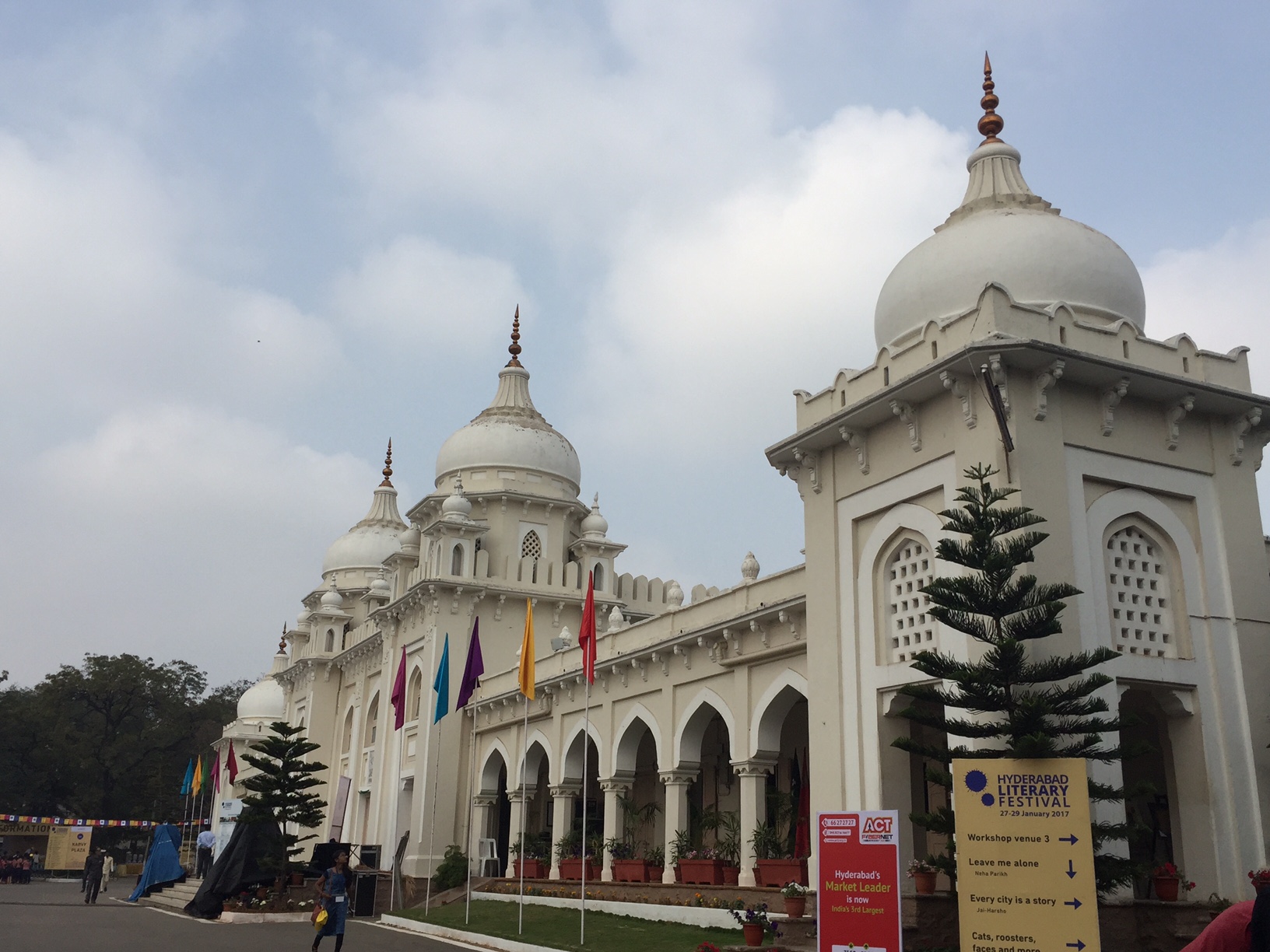
hyderabad-literary-festival-venue

Penman for Monday, February 20, 2017


I’M GOING to turn over most of my column this week to a colleague at the UP Institute of Creative Writing, the playwright and essayist Luna Sicat Cleto, whom I commissioned (badgered is the more appropriate word, since I’m not paying her anything more than my deepest thanks) to do a report on a recent mission that she and a group of Filipino writers undertook in Hyderabad, India.

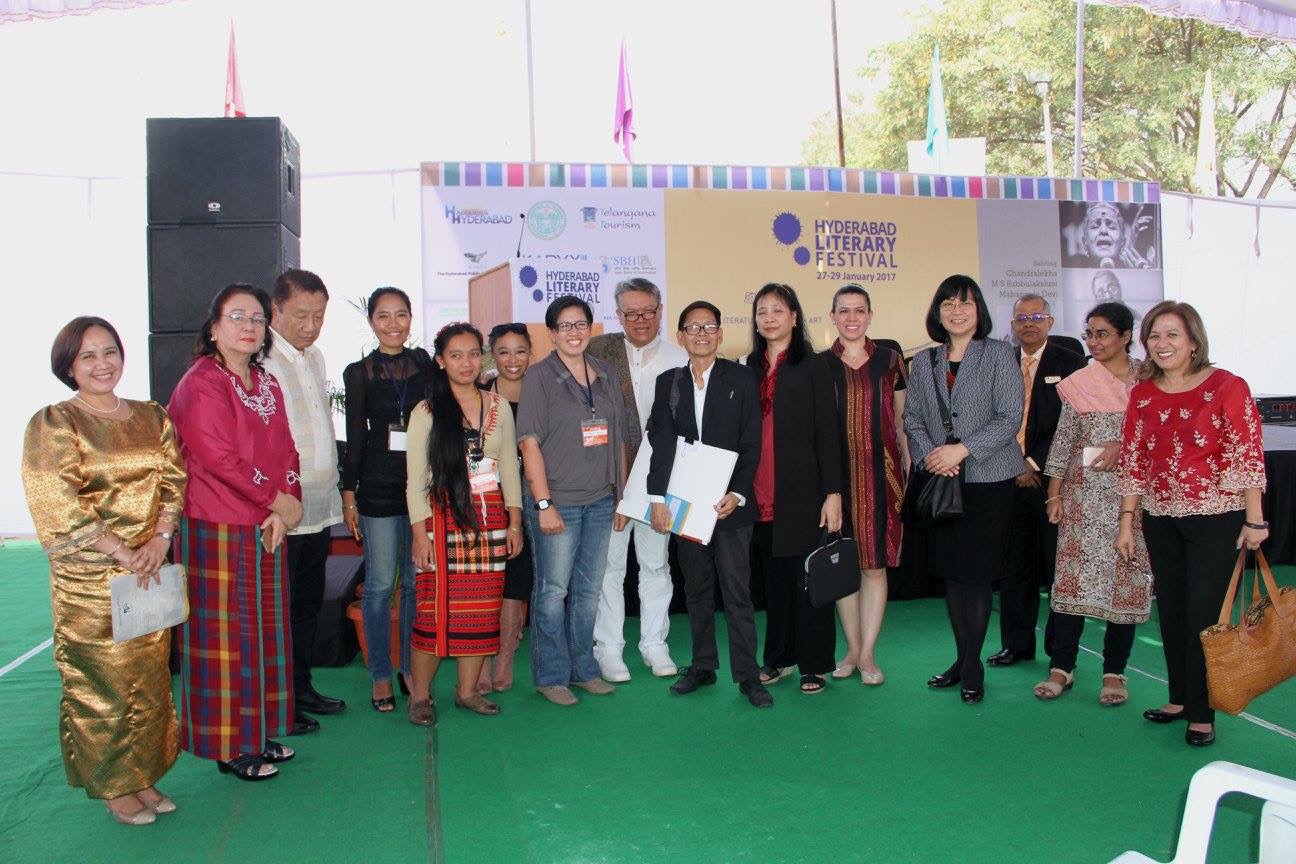
The original invitation to attend the Hyderabad International Literary Festival and organize a delegation as a “guest nation” had been sent to me, but since I couldn’t work it into my schedule, I asked performance poet and Philippine High School for the Arts director Vim Nadera to put together and lead a troupe of Filipino writers and artists. And what a delegation it turned out to be. With Vim went fellow writers Jun Cruz Reyes, Victor Sugbo, Luna Sicat Cleto, Jeena Rani Marquez, Christine Godinez Ortega, Hope Sabanpan-Yu, and Neila Balgoa. Spoken word poet Kooky Tuason also came along, as did Ifugao poet Dumay Solinggay. Dance and music were represented by Cecilia Artates and Marty Tengco. Let’s hear the rest from Luna:

“According to Dr. T. Vijay Kumar, Professor of English at Osmania University in Hyderabad, the Philippine delegation was the biggest group they had received so far, having hosted five nations since it began in 2010. The other four were Germany, France, Ireland, Poland, and Singapore.

“Dr. Kumar, alongside the novelist Pranesh Prasad, had encouraged the attendance of the Filipino writers. Prasad graced the Iligan workshop in 2013 as guest writer and also attended the Asia Pacific Writers and Translators Conference in Manila in 2015.

Since then he has felt a strong affinity with Filipinos. Prasad was happy with the performance of the delegation, saying that ‘I think we achieved our goal of creating awareness about Philippines in India, given the number of newspapers that covered your participation and all the people contact that has resulted. It bodes well for India-Philippines cultural relations.’

“Prasad’s observation was echoed by Jun Cruz Reyes, who felt that it was refreshing to read about the convergence of so many talents and minds in the festival, which was not limited to the literary field alone. Topics as diverse as politics, history, sports, and popular culture were taken up in parallel sessions. While some German industrial designers discussed the sustainable technology of chai shops, a Mumbai-based young entrepreneur talked about Instagram ruminations, while another focused on the Indian graphic novel. There were talks given by poet laureates Ashok Payjevi alongside investigative journalists like Josy Joseph and Harsh Mander, and discussions of translations of the Bhagavad Gita and Tamil stories alongside debates about the effects of the partition and human trafficking. Particiapns got to see martial-arts demonstrations of the shilambam as well as India’s latest art films. The plurality of HILF is based on its inclusive ethos: it is multilingual and multidisciplinary, and the multiple speakers—writers, artists, scholars, filmmakers, journalists, publishers—represent a wide range of creative fields. Hyderabad has been described as a ‘teeming urban masala of color and commerce,’ and indeed the city evokes the ancient prosperity of its Mughal past, alongside its twin reputation as a Silicon Valley of India.”

Luna adds that “Indeed, it is fortuitous that the Philippines was invited now, while both countries are assessing their relative positions in the global literary and cultural scene. It also became a chance to rediscover the bonds between India and the Philippines, evident in the many words from Sanskrit that are in the Filipino’s vocabulary: budhi, guro, and diwata, among others. While India has a strong tradition of writing in English because of the colonial legacy of British education, the Philippines also has a strong contingent of Filipino writers in English. India’s raucous democratic plurality in religion and politics is echoed in the Philippines’ plurality of religion, politics, cultural traditions and languages. The many languages of India are celebrated in the Hyderabad International Literary Festival, and for this year, its focus was on the Tamil language. One artist, the great Indian dancer Leela Samson, who performed in ‘Past Forward,’ said that it is about time that India listened to its many voices, and let the major languages of India be the conduits of thoughts and ideas.

“Samson’s sentiments were echoed in the Philippine delegation’s performance, aptly titled ‘Philippine Pangalay: Karmic Harvest.’ Vim Nadera strutted onstage, dressed in an all-white suit complete with an American flag tie. Channeling Donald Trump and the doomsday rhetoric of born-again speakers, he pronounced that he was dedicating his performance to the memory of National Artist Francisco Arcellana. ‘Close all open things, Lord/Open all closed things,’ Nadera intoned, appropriating Elvis’ crotch choreos with riffs from the musical Hair. The crowd was energized. He then introduced Jeena Marquez, who performed a powerful dramatic monologue based on Rizal’s epilogue in El Filibusterismo, a re-enactment of Maria Clara’s leap to death as witnessed by two civilians. Romancing Venus was the next act, which featured Tuason’s slapshock verbal performance, enhanced by Tengco’s drumming and Artate’s pangalay. But the real star of the delegation was Dumay Solinggay, who channeled the anguish of epic chanters with her poignant chorus of  ‘We must remember, we must remember…’ Solinggay did not only echo the trauma of the postcolonial subject, who may feel trapped in identities and names arbitrarily assigned, in specific situations like the call-center agents or the inevitable loss of memory in the fast pace of urban life. When she danced at the last part of her ensemble, her body resembled the paroxysm of the chanters in a trance.”

What can I say? I wish I’d been there with them in Hyderabad. The name alone sounds like magic, and I’m sure the place and the experience were every bit just that.

philippine-delegation-with-ambassador-daza-from-hope-yu

(Photos by Jeena Marquez and Hope Yu)

Penman No. 225: Sayang in Singapore

IMG_9764.jpg

Penman for Monday, November 11


TO US Filipinos, sayang has one meaning and one meaning only: a regrettable loss, something that causes us to shake our heads or hold our palms to our hearts and say, “Oh, that’s too bad.” But elsewhere in the region, from some sultry corner of which the word worked its way up our archipelago, sayang means that and more: the love which may have been that which was lost, love as both a noun and a verb, or even an endearment, depending on the nuances of its intonation. So love and loss—the former all too often trailed by the latter—coexist in this wonderfully complex word, through which we Filipinos can at least claim some vestigial connection to the heart of Asia.

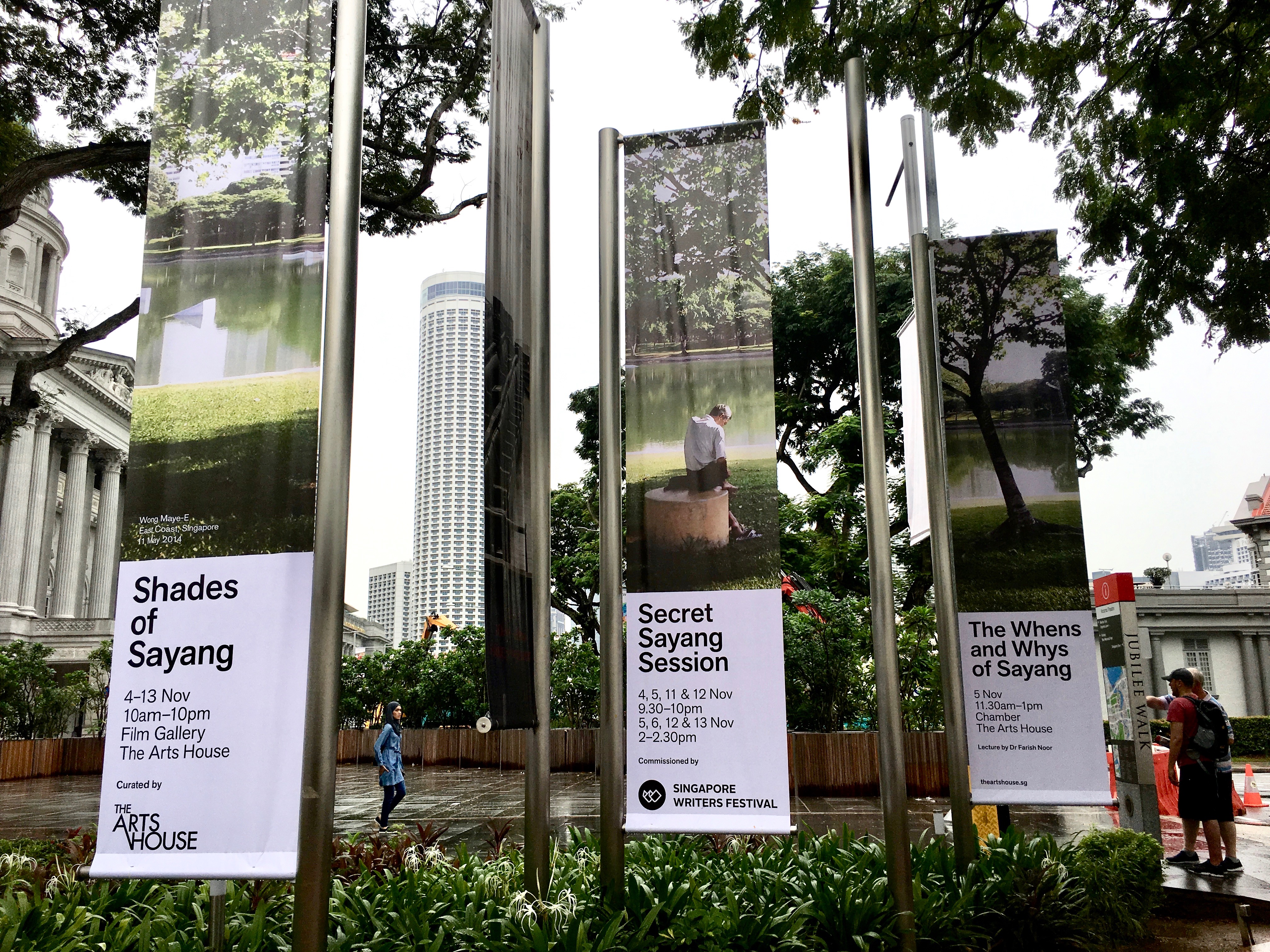
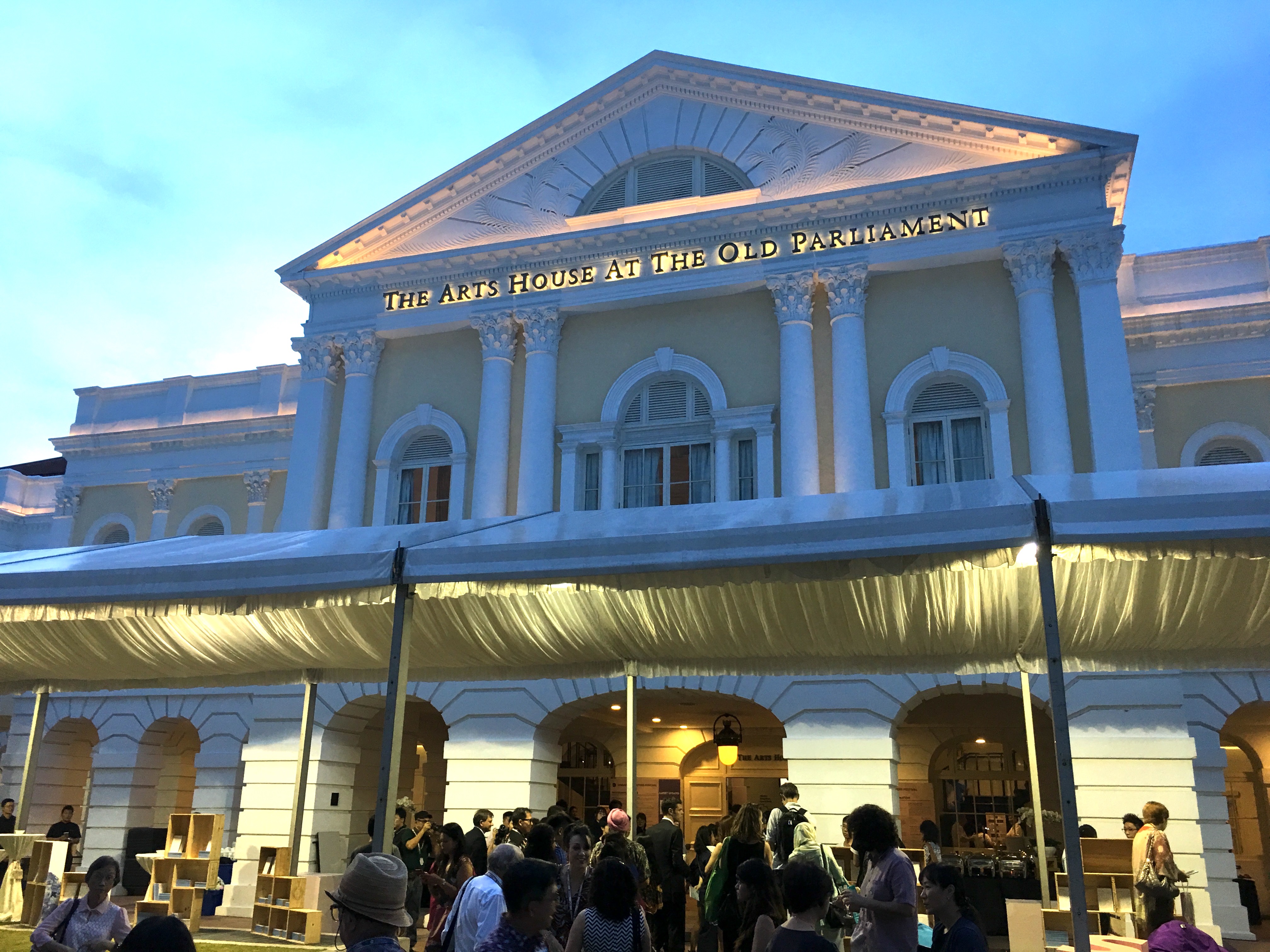
Sayang was very much on people’s lips in Singapore last week—you would have thought a lovefest was going on, and in a sense, it was. But the love was for books and literature, the occasion being the Singapore Writers Festival, which I was visiting for the third time after a hiatus of five years. Sayang had been chosen as the festival’s theme, and the word was festooned against a suitably floral backdrop all over the Arts House area where most of the festival events took place.

IMG_9754.jpg

Now on its 19th edition, the SWF began in 1986 as a biennial event, but it has since become a fixture on the regional cultural calendar (alongside the Singapore Arts Festival), cementing the city-state’s reputation—like its iconic Merlion—as the fountain of artistic endeavor in this part of the world. (I know what you’re thinking: “Shouldn’t that be us, the Philippines, with our long tradition of cultural expression and our bountiful artistic talents?” But I’ll tell you what festival director Yeow Kai Chai—himself a poet and journalist—told me over lunch: “I can’t believe you Filipinos have yet to establish a Department of Culture!”)

It was clear, from the minute I stepped out into Changi’s arrival area, that the National Arts Council, under Singapore’s Ministry of Culture, had once again pulled all the stops to guarantee a pleasant and efficiently managed experience for all SWF attendees, expected to number about 20,000. I was here as a journalist on coverage for the Star (I had attended the SWF as a participant in 2008, and returned to cover it in 2011) and I knew what to expect, but like they say, you never cross the same river twice, and this year’s festival offered a steady stream of 300 events spread out over ten days from November 4 to 13. There were over 300 official participants registered, with a hundred of them coming from overseas.

That makes the SWF one of the world’s largest and longest festivals of its kind, if not probably the most multilingual one, with its support for literature not just in English but also in Bahasa, Chinese, and other Asian languages. According to Yeow, the goal was to be as inclusive as possible in the SWF’s programming, going so far as to offer facilities for the hearing-impaired.

The fullness of the festival programme required selectivity, so I cherry-picked my way through the three days of my stay there, paying special attention to literary developments in Singapore itself. I’ve often remarked—most recently at a reading in Diliman featuring authors brought over by Ethos Books, one of Singapore’s most energetic presses—that the Philippines and Singapore have enjoyed a longstanding “bromance” going down the generations: between F. Sionil Jose and Edwin Thumboo, for example, followed by Krip Yuson and Kirpal Singh, then Joel Toledo and Alvin Pang, to name a few. We’ve published books together; not too long ago, Isabel Mooney and Lily Rose Tope worked with their Singaporean academic counterparts to edit a landmark anthology of Southeast Asian writing in English. So I wanted to see where things were at.

IMG_9762.JPG

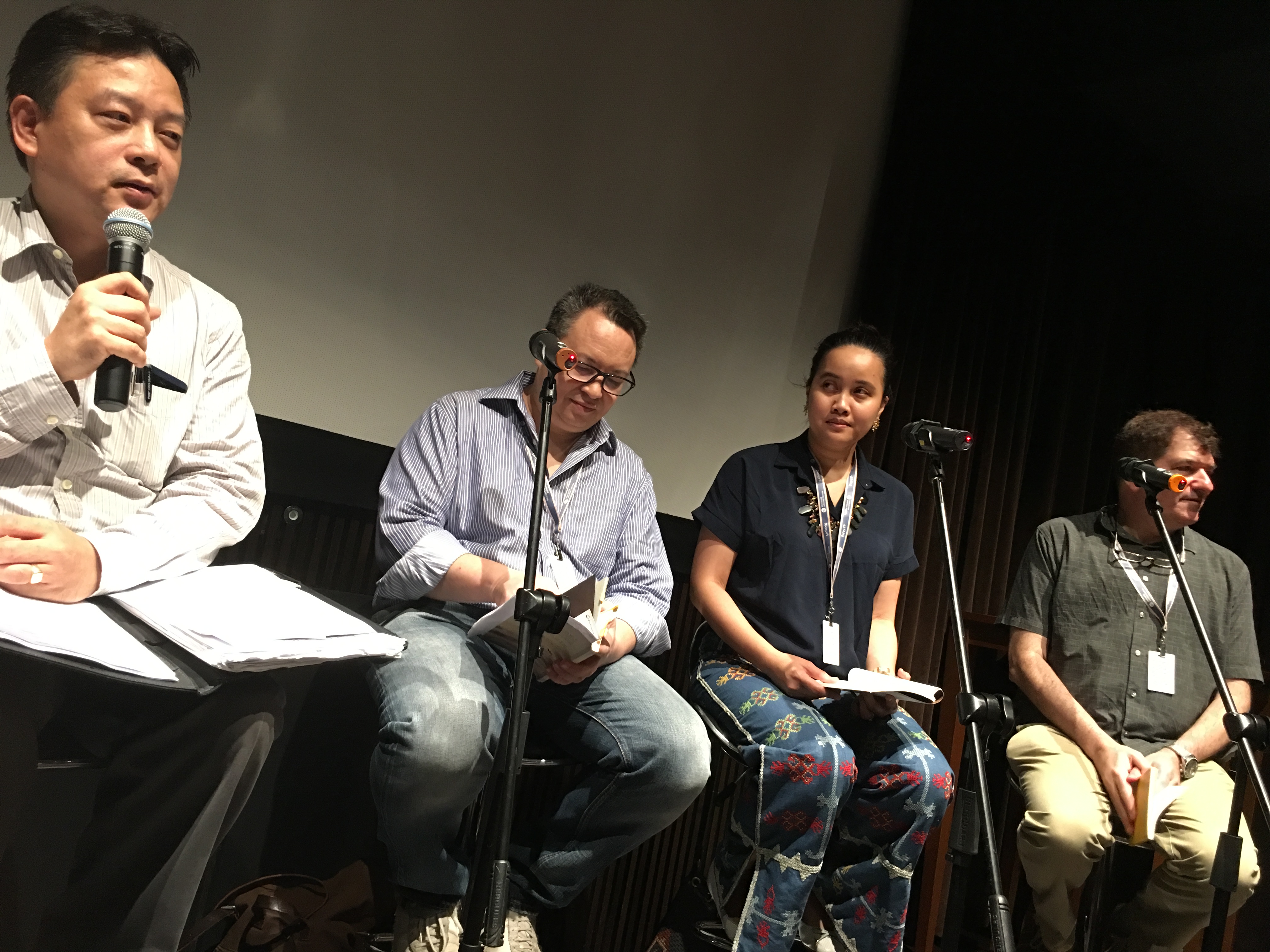
The first session I attended addressed the diasporic element in Singaporean literature—but unlike our exodus of workers and writers to the far reaches of the planet, this diaspora was inbound, and a voluntary one. Moderated by the Filipino expat poet Eric Tinsay Valles, the panel comprised the Eurasian short story writer Jon Gresham, who had come to Singapore via the UK and Australia; the Filipino fictionist and diplomat Cathy Torres, who had moved from her posting in Singapore to Germany; and the American creative nonfiction expert Robin Hemley, who’s married to a Filipina and who now teaches in Singapore.

They discussed how, in the words of Eric, the diaspora could be “a creative space” within which the experience of estrangement could create some positive value. Being away from one’s home, the three agreed, made new impressions and expressions possible. The writer’s struggle to adjust and adapt was in itself the story. Jon spoke about how “It isn’t so much about roots as routes—the journey, the getting there” for the diasporic writer. Adverting to the title story of her debut collection, Mariposa Gang and Other Stories, Cathy observed how “Diasporic stories are like butterflies. They may look alike but no two are truly the same. I try to catch them and send them out into the world.”

But the it was the keynote talk by Farish Noor, a Malaysian political scientist and historian who’s become something of an intellectual rock star in the region, that both charmed and alarmed the packed chamber where the Singaporean parliament used to meet. Dr. Noor introduced his talk thus:

“How a word can have multiple meanings at the same time, and have their meanings change over time, is an interesting mirror to the unfolding of history. This lecture looks at one word in particular, sayang, charting its path of adaptation from pre-colonial and colonial histories to the post-colonial present; and considering how the changes in its meanings and applications—from fables to novels to cinema and pop culture—tells us more about ourselves, like how our own sensibilities and worldviews have evolved, leading to the postmodern present which we inhabit today. The word remains the same, but do we sayang today as our ancestors did?”

Looking back on how concepts of love evolved over time in the region—including love across species in folklore, and love for the colonial master—Farish noted how “Words are what we have left of the past, and the past is far more complicated—more rich, more deep—than the present. Today, in the age of Facebook, ‘love’ has been reduced to clicking a ‘Like’ button.”

During his turn in the chamber, Singapore’s unofficial poet laureate Edwin Thumboo looked back on a lifetime of literature in his country thus: “Young poets no longer write about nation because the nation has been constructed for them. It’s no longer a problem….. It’s so easy now to get published but I don’t think there’s enough revision going on. People are anthologizing like mad. Be patient. Always think you can do better.”

The renowned American critic Marjorie Perloff spoke at the last event I attended, and she closed SWF 2016 for me with a rousing challenge: “Avant-garde poetry has crossed the boundaries between the verbal and the visual, but poetry hasn’t changed in 70 years the way painting and music have. We need another kind of revolution!”

Many thanks again to my hosts and to my SWF friends—it was all sayang and yet no sayang for me this past weekend. In a coming column, I’ll digest two interviews I conducted with Singaporean poet Aaron Lee and our very own Eric Tinsay Valles on what it’s like to be a poet in Singapore.

Penman No. 198: Mind-blowers and Eye-openers

IMG_8289.jpg

Penman for Monday, May 2, 2016


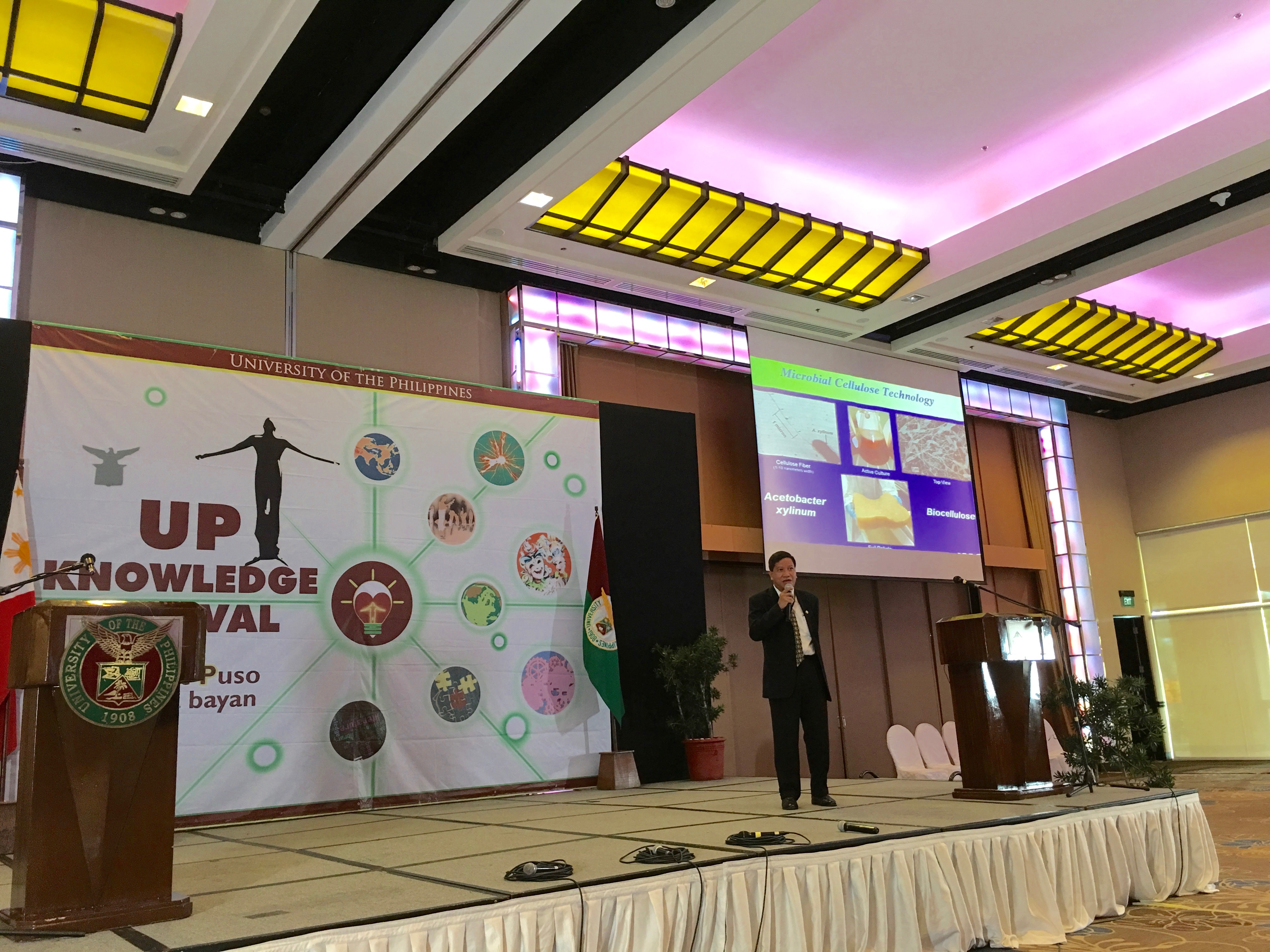
THE FIRST-EVER Knowledge Festival held by the University of the Philippines in Tagaytay City a couple of weekends ago proved true to its promise and offered mind-blowing, eye-opening discoveries galore, shoring up not only UP’s reputation as the country’s leading university but also that of the Filipino genius as a whole.

Part academic conference and part science fair, the festival brought together over 200 of UP’s top scientists and artists from the university’s many campuses all over the country to showcase the best and most promising products of their ongoing research. The festival also featured talks by experts on key academic and research issues (I excerpted my own keynote here last week), and presented the university’s expansion plans and the latest publications of the UP Press. A roundtable with members of the media had UP President Alfredo E. Pascual exchanging views with some of the country’s top journalists on future directions in Philippine higher education.

But it was the exhibits themselves that formed the living heart of the festival. Most were focused on science and technology, but UP’s most advanced endeavors in the arts, education, and mass communications were on display as well. What unified them was the element of interdisciplinarity, of crossing traditional academic turfs and boundaries to arrive at better solutions to age-old problems, or better products for the 21st century. Most of the projects were being financed by the university’s Emerging Interdisciplinary Research fund (EIDR), an ambitious program which has funneled many hundreds of millions of pesos into projects cutting across disciplines and with a positive impact on the government’s Key Result Areas (KRAs).

(I know—I get fidgety myself whenever I step on the road to Acronymia, but like I said in the open forum after my talk, artists—especially those in public life—have to learn to speak bureaucratese and to do the math if they want to engage outside their comfort zones, which is also key to getting grants.)

The exhibits were organized into six clusters: (1) agri/aquaculture, food, and nutrition; (2) health and wellness; (3) disaster risk management and climate change; (4) energy, environment and ecotourism; (5) technology, new materials and other products; and (6) progressive teaching and learning.

As a frustrated scientist (I entered UP as an Industrial Engineering major fresh out of Philippine Science High), I’m always fascinated by what goes on in S&T, and touring the science booths gave me an overview of the research and development in the field within UP. Among the dozens of projects on show, I lingered longest on a few: an analysis of the use of Twitter to keep track of typhoon events; the development of the Philippine Scientific Earth Observation Microsatellite (better known as Diwata-1, which is now in orbit) for disaster risk reduction; an ecosystem assessment of Laguna de Bay, a study aimed at finding ways to revive a dying lake; and a study on the use of microbes from shipworms (tamilok) as potential sources of enzymes for biofuel production. (I’ve had tamilok wriggling down my gullet on a dare during trips to Palawan, where they’re a delicacy, and I’d happily give them up to biofuels.)

In the health and wellness cluster were a flurry of projects ranging from a dengue detection kit to the development of best-practice guidelines for the better management of prevalent community diseases and the use of social media for promoting healthcare. In agriculture, a product called BioN promised to replace 30-50% of chemical fertilizers while increasing yields by 11%, keeping plants “healthy and green even in drought and in the presence of pests.”

Although it was a tucked away in a corner of the learning cluster, what especially caught my eye was a little black box called VISSER—short for “Versatile Instrumentation System for Science Education and Research,” a highly portable science kit which can do over 120 experiments in biology, chemistry, physics, engineering and environmental science. As it turned out, VISSER had been developed by a team headed by a fraternity brother of mine, physicist Dr. Giovanni Tapang, originally with some support from the University of Maryland. The argument for VISSER is compelling: more than a third of the country’s 13,000 high schools—catering to about 7 million students—have no labs, and of those that do, only 2,800 have access to digital tools. The VISSER kit isn’t cheap at over P40,000 per unit—about the price of a laptop—but its potentials are huge, with a total market value estimated at almost P60 billion. It isn’t just good science, but good business as well for technopreneurs.

And speaking of technopreneurship, few Pinoys can be more inspiring than Dr. Gonzalo “Al” Serafica, a much sought-after consultant on technology commercialization who also spoke in Tagaytay on how he developed new uses for microbial cellulose—known to most of us as the lowly nata de coco—for the global medical market as brain patches and artificial skin. A chemical engineer and also a PSHS alumnus like Dr. Tapang, Al Serafica holds 10 US and 20 international patents and co-founded Xylos Corporation in 1996, proving that crossing over from the lab to the boardroom isn’t only possible but, in many cases, necessary.

On the whole, the Knowledge Festival offered ample proof that with the right support and incentives, Filipino scientists, artists, and researchers can be right up there with their international counterparts, but we have a lot of catching up to do. As a UP study notes, we spend about half of what our ASEAN neighbors spend on education, and even less on R&D. But just showing ourselves what’s possible is a good start, and UP will soon be touring key exhibits not just around the UP system but to other universities as well.

And UP itself will keep growing, as I was mighty impressed to see in the display that featured ongoing and upcoming expansion projects: the UP Clark Green City that will include, among others, a new College of the Natural Environment and College of Designed Environments; the soon-to-open UP Bonifacio Global City that will host classes in law, engineering, business, architecture, labor and industrial relations, urban and regional planning, statistics, and distance education; the UP Professional Schools-South Road Properties in Cebu; the Philippine Genome Center in Diliman; the new UP Diliman Sports Complex rising out of the rubble of the old track oval; and an upcoming UP Cavite incubator campus.

If we can shoot satellites up into the cosmos and turn a coconut dessert into brain implants, you’d have to believe that the sky’s the limit for the Filipino genius—as long as we don’t get sidetracked by personality politics and medieval mindsets.

timpeake-20160427-diwata-1-deployment-001_FD3086695C6E4EA699A3E0129B0153AD.jpg

[Diwata-1 photo courtesy of ESA/Tim Peake]

Penman No. 150: Looking Eastward in Toronto

IMG_7573 (1)Penman for Monday, May 25, 2015

I FLEW out to Toronto in Canada a little over a week ago to take part in that city’s Festival of Literary Arts, possibly the first Filipino author to join that long-running festival, now on its 15th year. Previously, the festival had focused on South Asia (India, Pakistan, Bangladesh, Sri Lanka), but has recently opened itself up to more representation from East Asia, Africa, and the Caribbean, thus my inclusion in this year’s roster of invited writers and speakers.

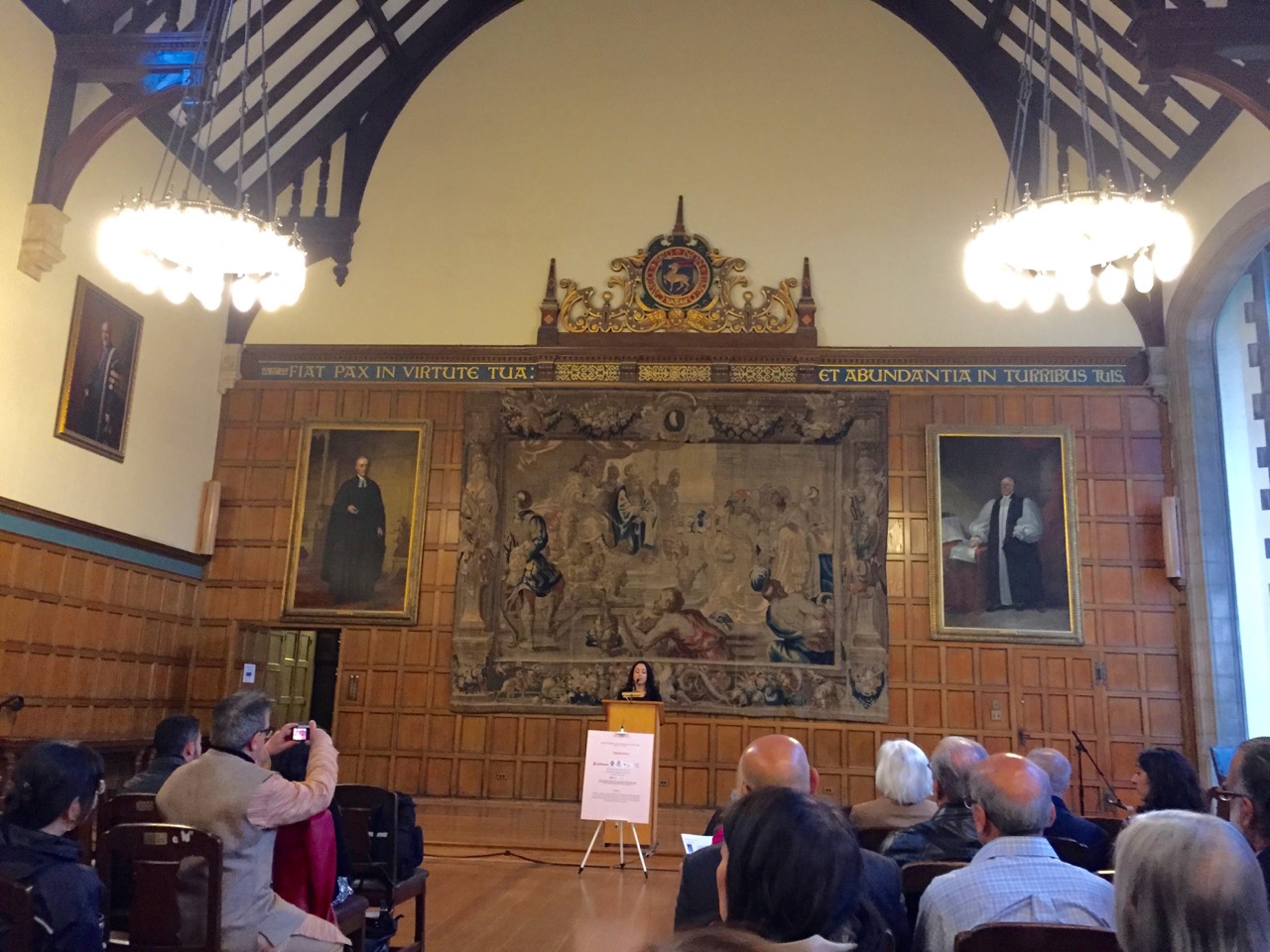
Over a weekend, from Friday to Sunday (May 15-17), several dozen representatives from these regions and from Canada met in various venues on the scenic campus of the University of Toronto and its environs to tackle issues and problems besetting writers and publishers from outside the global centers. How does a writer from the periphery break through to the center? Or is that “periphery” its own legitimate center? Is yearning for publication and validation in the West a vestige of the colonial mindset, an experience shared by all the countries represented in Toronto?

Aside from these seminal discussions, of course, the meeting was first and foremost a festival, a sharing of the artists’ finest work, and I felt privileged to be introduced to authors and creations I would otherwise have totally missed or blithely ignored. With many of the authors coming from expatriate and postcolonial backgrounds, the offerings were rich and deeply nuanced, the talents outstanding.

Among others, I discovered a major international writer in the festival director, the novelist M. G. Vassanji, who had been born in Tanzania in East Africa, and whose account of his pilgrimage to his ancestral roots across the ocean (A Place Within: Rediscovering India) is a modern classic of creative nonfiction—a sympathetic but unsentimental and often searingly critical chronicle of his encounter with the sprawling reality of India today.

The visit also allowed me to reconnect with some old Filipino friends who had migrated to Toronto and had built new lives there. I was very graciously taken out to a scrumptious dimsum lunch in Toronto’s fabled Chinatown by Patty Rivera and her husband Joe. Patty and I worked together 40 years ago as writers and editors at the National Economic and Development Authority (an unlikely Camelot for young writers and artists under the patronage and protection of then-Sec. Gerry Sicat).

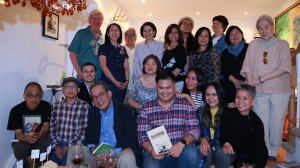
Though trained and still active as an editor and journalist, Patty has since developed into an accomplished and prizewinning poet, with three volumes to her name. Her first collection, Puti/White, was shortlisted for the 2006 Trillium Book Award for Poetry. Patty’s husband Joe, a former Ford executive who also wrote plays in the Philippines, became a lawyer in Canada and then, upon his recent retirement, turned to painting, an avocation in which he demonstrates a most unlawyerly exuberance. I also met and was happy to engage with some Alpha Sigma fraternity brothers led by Amiel “Bavie” de la Cruz, who now runs his own accounting firm in Toronto. IMG_7597 (1) Patty and Joe arranged a reading for me with a large and lively group of Toronto-based Pinoys (including Hermie and Mila Garcia, the moving spirits behind Canada’s longest-running Filipino newspaper, the Philippine Reporter, and expat poet Naya Valdellon); this was held in the very stylish apartment of writer-artist Socky Pitargue, and a great time was had by all as we threshed out the travails of Philippine literature and politics, two deathless topics that occupy me on every one of these overseas sorties. DALISAY_HMG_8056-300x168 Yet another meaningful encounter I had, thanks to the festival organizers, was with two classes of high school students at the Mother Teresa Catholic School in Scarborough, a Toronto suburb with a high concentration of Asian students, including Filipinos. These teenagers had very likely never met a living writer before, let alone a Filipino one, and I was glad to try and show them that we do exist, and that we have something to say. I, too, learned something from their teacher Kathy Katarzyna, who ended our session with a terrific quote from the Canadian poet Leonard Cohen: “There’s a crack in everything…. That’s how the light gets in.”

Many thanks to the Sri Lankan poet Aparna Halpe for taking me to the school. Of course, my thanks wouldn’t be complete without acknowledging the help and support of my sister Elaine Sudeikis and her husband Eddie, who flew in from Washington, DC to join me at the festival and to show me Toronto and a bit of Ontario (most notably Niagara Falls—we walked over to the US side as well for my shortest visit to the US, ever). Ed’s dad Al—all of 92 but still feisty—also gave me a little taste of Lithuania in Toronto.

And the visit would never have happened for me without the recommendation of Prof. Chelva Kanagayakam, an eminent scholar and festival founder whom I’d met in Manila, who tragically died of a heart attack a few months before the festival, on the very day he was inducted into the Royal Society of Canada. I found Toronto itself to be a highly livable and largely safe city (guns are under strict control in Canada), with a vibrant ethnic mix.

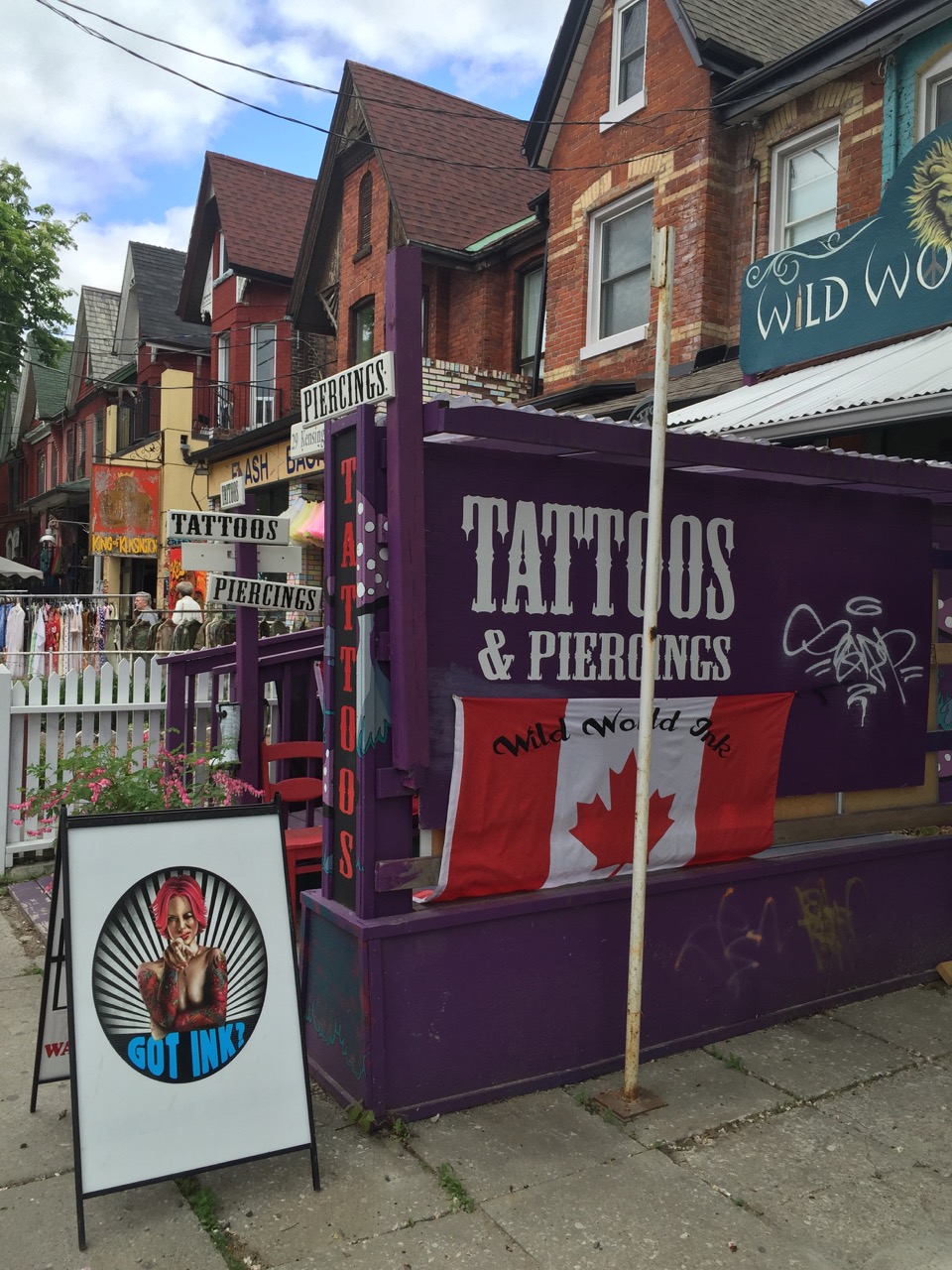
One out of every two Torontonians comes from somewhere else, and Vietnamese, Tibetan, and Puerto Rican restaurants stand cheek-by-jowl beside each other, not to mention a Chinatown noted to be among North America’s best culinary havens. (A Pinoy food store aptly named “Butchokoy” stood a block away from my lovely B&B—a three-storey house from 1853—on Dunn Street.) Victorian structures still in use by the university and the city government contrast sharply with ultramodern architecture in an eclectically energetic skyline. Seekers of the funky and the quirky can have their fill in the city’s counterculture-inspired Kensington Market. IMG_7691 (1) For someone schooled in Americana, this exposure to things Canadian was an interesting re-education—to think, for example, in terms of “Tim Hortons” instead of Starbucks or Seattle’s Best; of “Roots” instead of Gap; of “Hudson Bay” instead of Sears or JC Penney, etc.

But the most useful re-orientation took place for me at the festival itself, in reminding me that we have a lot to learn from South Asia as far as developing readerships in local languages is concerned, among other issues. We Filipinos think we’re well traveled and globally savvy, but we actually don’t get around enough in terms of mixing with our fellow Asians, let alone Africans. We seek out Western—specifically American—tutelage and patronage, often to our own deep disappointment.

It seems ironic that I had to learn this in Toronto—a true cosmopolis like New York—but sometimes you have to stand in the West for a better view eastward.

[Group photo from philippinereporter.com]