Qwertyman No. 147: Literature Has Many Flags

Qwertyman for Monday, May 26, 2025
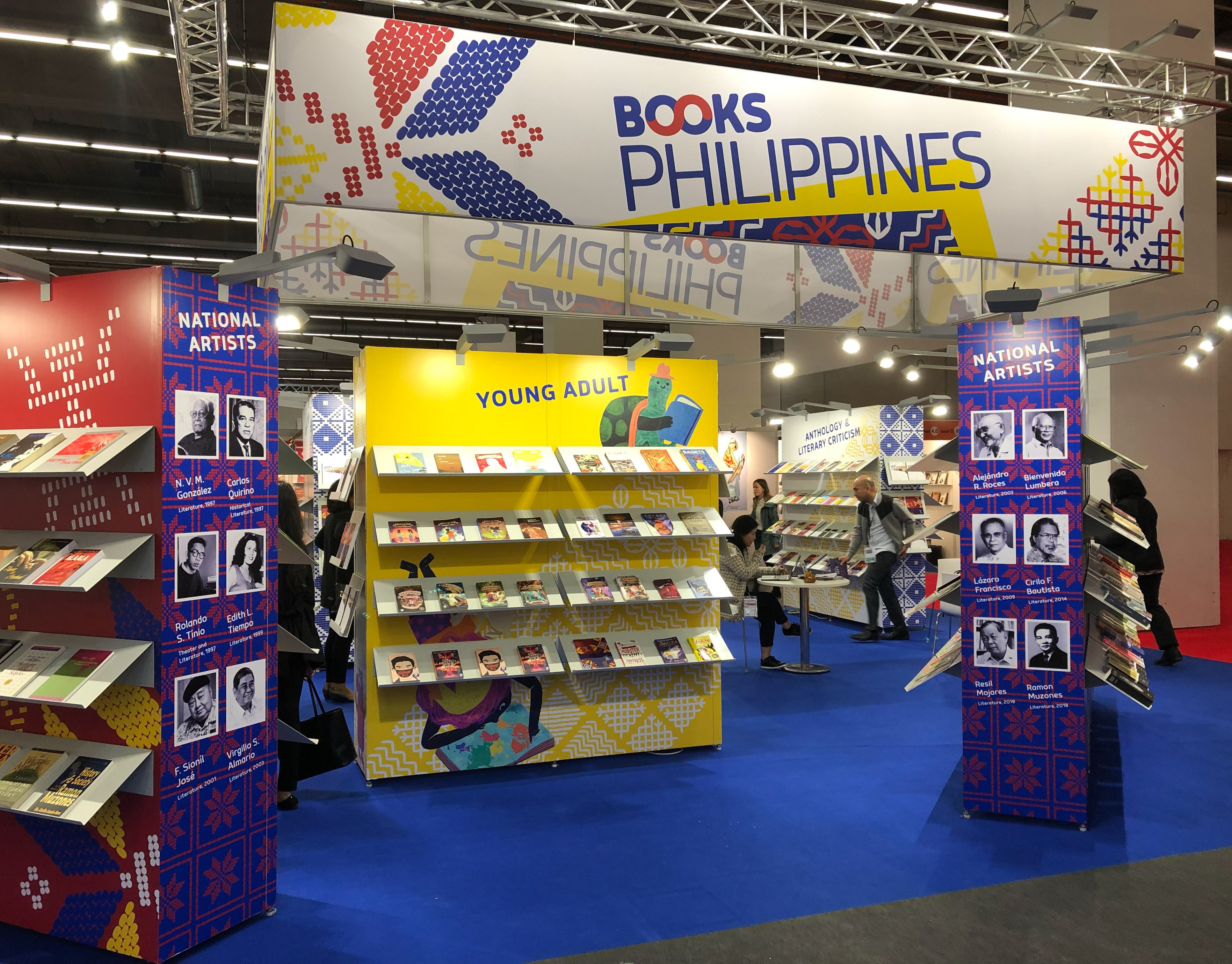
IT WILL be a tempest in a teapot to most Filipinos still caught up in the aftermath of the midterm elections, a topic of interest to a limited few, but I’m bringing it up this week because it’s important enough for larger reasons.

The Philippines will be Guest of Honor (GOH) at this October’s Frankfurt Buchmesse (FBM), the world’s oldest and largest book fair. Being GOH means that the Philippines—its literature, culture, history, and politics—will be foregrounded in Frankfurt, through the dozens of writers, thousands of books, and the many exhibits and presentations that will be brought over to the FBM, through the combined efforts of the National Book Development Board (NBDB) and the National Commission for Culture and the Arts (NCCA), among other organizations. 

Much of the groundwork for this initiative, which began well before the pandemic, was laid by Sen. Loren Legarda, the principal advocate of arts and culture in the Senate. GOH status is an honor given every year to a different country, but it doesn’t come free; the project involves hundreds of millions of pesos, which its proponents see as a worthwhile investment in raising the global profile of the Philippines through its culture and expanding the international market for Philippine books and authors. The past two years have seen intensive efforts made by the NBDB and the Philippine GOH Committee to prepare the program, select the delegates, and arrange the logistics for our historic participation in October at the FBM.

Comes now a move, led by some prominent Filipino writers and activists, to boycott the FBM for various reasons, including what some see as the government’s misplaced priorities in funding our GOH participation, but primarily in protest of the FBM’s alleged support for Israel in its war in Gaza, and also of Germany’s complicity as an Israeli ally in that conflict. At the moment, it hasn’t gained much traction, but I wouldn’t be surprised if, in the intervening months between now and October, it gathers some steam—likely not enough to stop us from going, but enough to cause some dismay and dissension within our ranks.

I’m not in favor of this boycott, for reasons I’ll shortly explain, but first, full disclosure: I have been formally invited to attend the FBM as a delegate, and have accepted the invitation; I will be involved in several events—a launch of the new Spanish translation of my second novel Soledad’s Sister, several book readings, and possibly some panel discussions. All my expenses will be answered for. This will be my third (and at my age, likely my last) participation at the Frankfurt book fair, as an author whose books have been translated into Italian, French, German, and Spanish editions. In other words, I have a vested interest in going to Frankfurt. (To those who have never been to the FBM, it is no junket; expect long hours manning the booths, talking to people, selling book rights, and walking kilometers of hallways on the enormous fairgrounds. Frankfurt is not a particularly scenic city, although a side trip to nearby Heidelberg and its Rizal connections will be a welcome break.)

Some readers might find the connection between the FBM and Gaza tenuous and the call for a boycott bewildering, but it does have some basis worth serious consideration. The relationship between Germany and Israel, or the Germans and Jews, is long and complex (highlighted by the Holocaust before Israel even came to be, and the 1972 Munich Olympics massacre, among others), but the immediate trigger for the outcry was the FBM’s controversial cancelation of an awards ceremony for the celebrated Palestinian writer Adana Shibli in the immediate wake of Hamas’ attack on October 7, 2023. 

The outrage is justifiable and widely shared. In this column and other media, I myself have written against Israel’s assault on the Palestinian people (see “The Country I Wanted to Love,” from April 19, 2024), as have many other commentators. Indeed, I know of very few Filipino writers who have cheered the onslaught on—typically those holding orthodox Catholic views upholding Israel as God’s chosen nation. 

Israel’s relentless pounding of Gaza, resulting in the wanton slaughter of innocents, has long outlived its excuse of neutralizing Hamas. It is genocidal butchery by any standard, this calculated starvation of Gaza’s remaining residents, the killing of aid workers, and the mechanical attribution of atrocities to “operational errors.” Netanyahu’s encouragement of Trump’s crass and bizarre proposal to depopulate Gaza so he can turn it into “the Riviera of the Middle East” reveals the utter moral depravity of these two men. 

Israel’s barbarism in its campaign of terror and annihilation has now exceeded Hamas’ own (yes, unlike many protestors, I hold Hamas accountable for its own brutality—something that will surely not endear me to the far Left on this issue). Those of us who study Elizabethan revenge tragedy know this only too well: the line beyond which the revenger no longer seeks justice but mindless retribution, and becomes a horrifying, blood-soaked caricature of the very object it opposes.

The question for us writers is: will any of this be helped by withdrawing our participation from one of the world’s largest (if arguably not freest) exchanges of ideas through books? Will we prevent ourselves at Frankfurt—should the need and opportunity arise—from expressing our opinions on Gaza, among a host of other global issues concerning human rights? (Current German rules restrict financial support to artists seen as anti-Israel, especially those identified with the Boycott, Divest, and Sanctions movement or BDS, among other repressive measures.)

My answer is no. I stand for peace and justice for both the Palestinian and Israeli people—indeed, for all oppressed peoples of the world, including our own. But divesting ourselves of a historic opportunity to express our collective resistance to injustice—not just in Gaza or over this one issue, no matter how pressing, will only be counter-productive. Unless it catches fire (other prominent authors elsewhere, as in Indonesia—which was GOH some years ago—have expressed support), a symbolic boycott will be as deafening and as consequential as a tree falling in the forest.

In the end, this will come down to an individual act of conscience, however one decides, for which we must reserve our respectful acceptance. Whether one goes or stays, one’s reasons or motives have to be clear, so the gesture will not be wasted. I will go to Frankfurt proudly, with neither guilt nor shame, to speak about our people and our struggles for freedom through my books. Engagement, not withdrawal, will be the best service writers can perform for their country and for all oppressed and silenced people everywhere. 

Politicians like to wave one flag—Filipino, American, Israeli, Palestinian. Literature, like all art, has many flags: peace, justice, freedom, equality, truth, love, beauty, and harmony. Let all these fly in Frankfurt.

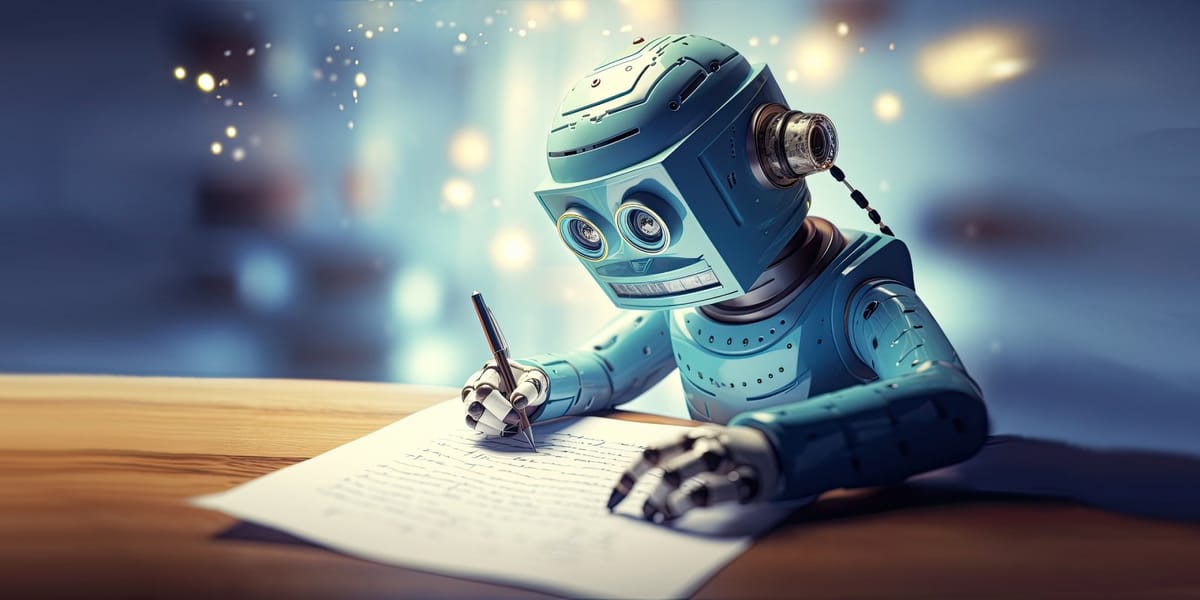
(Image from Studio Dialogo)

Qwertyman No. 143: I or AI?

Qwertyman for Monday, April 27, 2025

I’VE RECENTLY been asked to talk about literature in the time of artificial intelligence (AI) in a couple of conferences in Dumaguete and Manila. What that tells me is that, with AI’s emergence and growing popularity, there’s been much uncertainty, anxiety, and fear—even outright hostility—generated by the seemingly unstoppable intrusion of artificial intelligence not just into literature but into almost every aspect of human life and society. As I’ve said before, depending on how you see and use it, AI is either God’s gift to humanity or the destroyer of civilizations. 

While it has been hailed for its contributions to such fields as medicine and criminology—shortening diagnostic procedures and sharpening digital forensics—AI’s application to less mechanical endeavors is more fraught with both ethical and technical questions. Studio Ghibli’s Hayao Miyazawa, for one, has forsworn the use of AI in his work, calling it “an insult to life itself.” 

For writers and other creatives, the big questions are: Will and can AI replace the author? Is AI capable of artistic imagination? Should writers, publishers, and readers feel threatened by its future development? Might there be a positive role for AI in literary creation? 

Now, we can be very brave and declare that the worst piece of writing or art done by a human is still better than the best of what AI can produce. I’ve heard many authors proudly insist that “AI can never replace me!” But do you honestly think that’s true, and will the readers of the future—say, the consumers of popular fiction—care? The sobering fact is that there is so much bad art and bad writing done by real humans that it shouldn’t be too hard to artificially produce something better, for which people will gladly pay. 

I know that this will strike some of us as being crassly commercial, but it would be naïve to deny that much of what know to be culture today has been commodified—produced and sold as entertainment, whether it be a book, a movie, a concert, a computer program, or the hardware with which to access them. These are all media in which AI is already playing an increasingly important role—initially, perhaps, merely as a facilitator, a simplifier of complex or difficult tasks, or as an aid to the imagination, but also as a co-creator or collaborator, such as in the generation and animation of images. 

Given the fact that most of us produce art to sell—and why shouldn’t we, especially when we promote the idea of “creative industries”—the entry of AI into our thought processes and methods of work could be a matter of survival for many. The question is, will it improve the mediocre, or degrade the excellent? Can we excel without it, or because of it?

Early AI’s clumsy mistakes or “hallucinations” are worth a laugh, but I’m not sure how long we’ll be laughing; AI’s present ineptitude simply means it has a lot to learn—and it will, with the kind of training it’s being fed off our books, our texts, our manner of writing. It will only be a matter of time—I’d say less than a decade—before AI can mimic the best of global writing especially as literary texts get digitized and tossed into the meatgrinder, until it can produce a decent if not impressive approximation of certain styles and approaches. 

(For AI professionals, the next phases of the AI revolution will move into Artificial General Intelligence or AGI, at which point AI can match human intelligence, and ASI or Artificial Super Intelligence, when AI becomes self-aware enough to improve and replicate itself without human intervention and possibly beyond human control. These scary scenarios will not take, they say, a century to happen—some experts predict that AGI could be realized as early as 2027.)

What’s going for us is that while literary styles can be copied, the human imagination is far richer and stranger than we think. AI tends to homogenize; the human artist strives to be unique. Even so, researchers are already talking about algorithmic imagination and experimental humanities as “true collaborations with culture machines.”

Given that it’s inescapable, I propose that instead of fearing it, ignoring it, or maligning it as I’m sure many of us are inclined to do, we study AI and use for what it might be able to offer in aid of the imagination—as unsettling or unappetizing as that proposition sounds.

We’re already tapping AI every time we use Google, and no one seems to mind. I don’t mind admitting that I have used AI—not in fiction but in creative nonfiction or CNF, specifically in writing the biography, where I ask AI to summarize and organize biographical material that I would have eventually found on my own, anyway—in days rather than seconds. 

I suspect that the use of AI in CNF is much less troubling for writers and theorists than its employment in, say, writing the novel or the poem, which we have been trained to think of as more personal, more “us,” than nonfiction. We will yield CNF to AI, but draw the line at fiction and poetry, where we feel we should resist the intrusion of the beast or the machine into the recesses of our imagination. 

I wonder, however, how long this fortress will hold, or what the first crack in the wall will be, if it isn’t there already. I’m pretty sure that somewhere out there, a plodding novelist is already using AI to chart a tree of plot possibilities—What will happen if Maria marries Oscar? What if they decide to live in Davao instead of Baguio? And so on. I wouldn’t do this myself, because the fun of writing for me is in working out the future of my characters in my head. 

And then again I write fiction for the love of it—unlike almost all other kinds of writing that I do for a living. But if I were a novelist under contract to produce a novel a year, I’m not so sure that I wouldn’t seek AI’s help to lighten my load and get the job done. So is AI OK for money but not for love? Is that what it all comes down to?

So right now we have many more questions than answers, and at the pace the world is changing, most answers we come up with will soon be obsolete anyway. But the basic questions will remain, the most vital of which could be, when we say “I am,” is that “I” me, or is it AI speaking?

Qwertyman No. 140: The City of Stories

Qwertyman for Monday, April 7, 2025

THIS PAST weekend, I was down in Dumaguete City with National Artist for Literature Resil Mojares, historian Ambeth Ocampo, and scores of other writers for the 2nd Dumaguete Literary Festival. At my age, I’ve frankly tired of going to literary festivals, conferences, and workshops, preferring to work quietly at home—Dr. Mojares apparently feels the same way—but we couldn’t resist the allure of Dumaguete, a city central to the development of Philippine postwar literature, and always well worth visiting on its own for its gentle charms.

I personally have much to thank Dumaguete for, for what it contributed to my own budding literary and academic career. Early in 1981, shortly after I had returned from my first visit to the US, I received an invitation from Dr. Edilberto Tiempo to join the Silliman Writers Workshop which he and his wife Edith—the poet and future National Artist—had started two decades earlier upon their own homecoming from America. 

I had dropped out of college for a decade by then, and was working at NEDA, which had sent me to the US for an observation tour. What that trip to the American Midwest—mainly the campus of Michigan State in East Lansing—did for me was to rekindle my interest in learning. Dr. Tiempo’s invitation could not have come at a better time: a summer devoted to talking about poetry and fiction at Silliman University felt dreamlike, and by the time the workshop ended, my head spinning with magical lines from Robert Graves, I had resolved to quit my job, go back to UP, and just study, write, and teach for the rest of my life. And that’s what happened.

I wasn’t alone in that kind of transformative experience; as the country’s oldest writers’ workshop, the Silliman summer workshop became a virtual rite of passage for young writers, especially in English (some writers in Filipino have also attended, with works in translation). Silliman itself (older than UP by several years) has produced many of the Philippines’ finest writers, aside from the elder Tiempos—among them Ricaredo Demetillo, Aida Rivera-Ford, Merlie Alunan, Leoncio Deriada, Cesar Ruiz Aquino, Elsie Coscolluela, Rowena Tiempo-Torrevillas, Marjorie Evasco, Lakambini Sitoy, Artemio Tadena, and Myrna Peña-Reyes. It also has a strong performing arts tradition, contributing the likes of National Artist Eddie Romero, Gilopez Kabayao, Amiel Leonardia, Junix Inocian, and Elmo Makil, among others.

For all these, Dumaguete has been formally nominated to be designated as a UNESCO City of Literature—one of many such distinctions listed under UNESCO’s Creative Cities Network program that was launched in 2004 to recognize and celebrate cities around the world—350 of them form more than 90 countries to date—for their signal achievements in Crafts & Folk Art, Design, Film, Gastronomy, Literature, Music, and Media Arts. So far, 53 cities in 39 countries have been named Cities of Literature—among them Barcelona, Heidelberg, Iowa City, Lahore, and Norwich. (Iloilo has already been named a City of Gastronomy, and Quezon City is vying to be designated a City of Film.) With the Philippines serving as this year’s Guest of Honor at the Frankfurt Book Fair, Dumaguete’s recognition as a UNESCO City of Literature will raise our global cultural profile even higher, and let the Philippines be known for more than Boracay, Manny Pacquiao, and Imelda’s shoes.

Leading that charge for Dumaguete is Silliman University literature professor Ian Rosales Casocot, one of our best fictionists and co-director of the festival with Gayle Acar. Working with the Dumaguete City government, the Department of Trade and Industry, and the Buglas Writers Guild which Ian heads, Ian notes that aside from developing writers, “Dumaguete itself has been a constant subject of many literary works, from novels to poetry, from essays to plays. It is high time that Dumaguete is recognized for its role in shaping literature in our corner of the world.” The well-attended Dumaguete Literary Festival, now on its second edition, offers proof positive of that city’s continuing centrality to our literary life and culture. 

We had been invited to share our views on various aspects of Philippine literature in this age of artificial intelligence. I joined a panel of writers dedicated to that specific topic—or, as they put it, “Can AI Win a Nobel Prize for Literature?”—which happened to be something I’ve given much thought to.

Understandably, there’s been a lot of fear and anxiety—even outright hostility—generated by the emergence of AI in nearly every aspect of human life and society. Studio Ghibli’s Hayao Miyazawa, for example, has forsworn the use of AI in his work, calling it “an insult to life itself.” While it has been hailed for its contributions to such fields as medicine and criminology—shortening diagnostic procedures and sharpening digital forensics—AI’s application to less mechanical endeavors is more fraught with both ethical and technical questions. 

In previous lectures and again in Dumaguete, I showed how—at this point—AI poses little threat to the writer of truly good and imaginative literature, by yielding execrable responses to such prompts as “Write a paragraph about a summer night in Spanish Manila in the style of Nick Joaquin.” It’s worth a laugh, but I’m not sure how long we’ll be laughing; AI’s present ineptitude simply means it has a lot to learn—and it will, with the kind of training it’s being fed off our books, our texts, our manner of writing. It will only be a matter of time—I’d say less than a decade—before AI can mimic the best of global writing. For me, the best response is neither to hate nor to ignore it, but to understand it and employ it for helpful uses we have yet to find. (We’re already tapping AI every time we use Google, and no one seems to mind.) It should even be possible for authors to creatively interact with AI in what I’m calling a game of prompts.

What we can reasonably certain of is that while literary styles can be copied, the human imagination is far richer and stranger than we think. AI tends to homogenize; the good creative writer strives to be unique. Like Dumaguete, there’s a whole city, a labyrinthine cosmopolis, of stories in every writer’s mind to be discovered and explored.

Penman No. 473: New Light on (and from) the Philippine Short Story

Penman for Sunday, April 6, 2025

FEW MAY have noticed, but this year, 2025, marks the centenary of what has been widely acknowledged to be our first classic short story in English, Paz Marquez Benitez’s deathless “Dead Stars.”

As I’ve often observed as both a writer and teacher of Philippine literature, there’s probably no literary form more popular among Filipinos than the short story and its predecessors—myths, legends, folktales, and such stories that draw on the power of narrative to tell and teach us something about human life. 

A lot of this has to do with the fact that people and cultures everywhere have made use of stories to make sense of things—to establish causality in human actions—often as a way of prescribing and also proscribing certain behaviors. Stories were there to learn from, like the biblical parables, Aesop’s fables, and the creation myths. The more exciting and entertaining the stories were, the easier the learning happened. Even the mere recognition of oneself in a story that could have taken place a thousand years ago in a place across the planet makes our lives seem more meaningful.

In the Philippines—as it did in the West, where the modern short story took form—the short story was a staple of prewar weekly magazines like the Sunday Tribune, where a story written by an American author would be matched by a local story during what our early literary scholars like Leopoldo Yabes would call our period of apprenticeship. This was in English, but the short story in Filipino (then Tagalog) and other Philippine languages had developed even earlier, and continued (as it continues) to explore new forms and material.

Why the short story and not the novel? That’s another long discussion to be had, and I’ve addressed it in a lecture titled “Novelists in Progress,” but the short of it is that, well, we Pinoys like things in small doses (think Nick Joaquin’s “heritage of smallness”), and the short story satisfies our craving for a touch of fiction and fantasy in our ordinary lives. We’re not marathoners, but great sprinters; we’re not summiteers or navel-gazers, but masters of the street and alley. 

And so, over the past century, important anthologies of the Philippine short story have been published, tracking the development of the genre and its practitioners, from Yabes’ landmark Philippine Short Stories 1925-1940 (a project continued by Gemino Abad for 1956-2008) to Isagani Cruz’s Best Philippine Short Stories of the Twentieth Century (2000). Outside of English, Mga Agos sa Disyerto edited by Efren Abueg came out in 1964, proclaiming new directions for Tagalog short fiction, and the much-needed Ulirat: Best Contemporary Stories in Translation from the Philippines was published in 2021, edited by Kristine Ong Muslim.

But the 21st century is now a quarter of the way through, and just in these past two decades or so, a fresh bumper crop of brilliant new stories has built up, awaiting harvest.

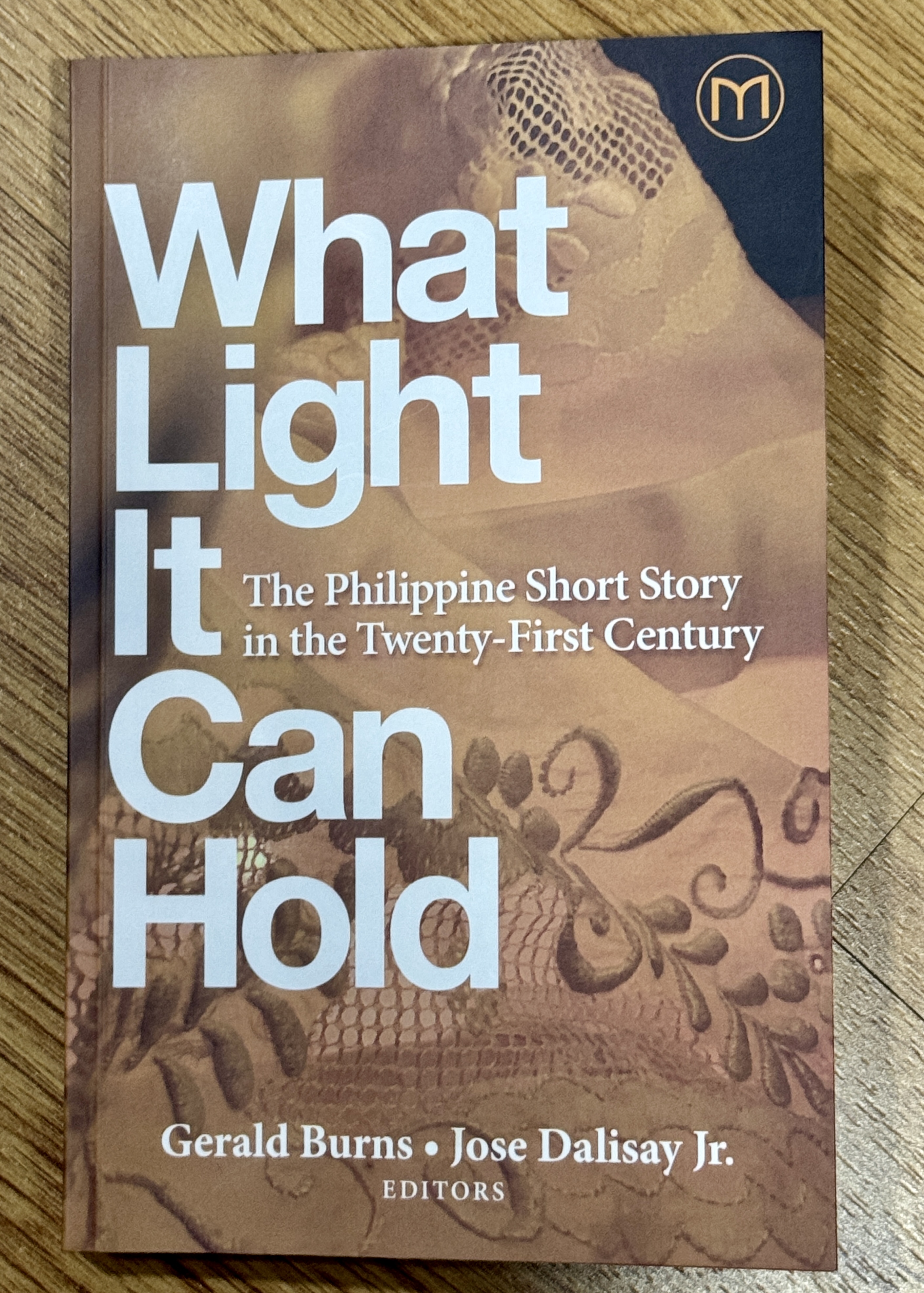
Five years ago, an American friend named Gerald “Jerry” Burns—a fellow academic and a scholar of Philippine literature in English, now Emeritus Professor at Franklin Pierce University in New Hampshire—decided to do just that: review the best of the newest Philippine short stories and produce a selection with which to introduce them to the world. He needed a collaborator, and having worked with Jerry earlier when he was a Fulbright professor at our English department in UP, I agreed to co-edit the volume with him. Because of our backgrounds, our stories would be mainly those written in English (and the excellent Ulirat had already covered much more ground in the other Philippine languages than we ever could) but Jerry wisely insisted that we should have at least some representation of non-English stories in translation in the book, if only to lead the reader to explore more in Ulirat.

The selection process was predictably long and bruising, with all the political, aesthetic, and practical considerations that go into anthologizing, but in the end we came up with 18 stories written by both familiar and fresh names, from within and beyond the Philippines, including the diaspora: Dennis Andrew Aguinaldo, Dean Francis Alfar, Mia Alvar, John Bengan, Ian Rosales Casocot, Richard Giye, Vicente Groyon, Ino Habana, Carljoe Javier, Monica Macansantos, Perry Mangilaya, Doms Pagliawan, Ma. Elena Paulma, John Pucay, Anna Sanchez, Larissa Mae R. Suarez, Lysley A. Tenorio, and Socorro Villanueva. We also found an agreeable and supportive publisher, Milflores Publishing, fortuitously run by Andrea Pasion-Flores, herself a fine fictionist who understood the need for a new anthology like this, especially on the threshold of the Philippines’ participation as Guest of Honor in this year’s Frankfurt Buchmesse.

The book’s title, What Light It Can Hold: The Philippine Short Story in the Twenty-First Century, was suggested to Jerry by an encounter with the piña weavers of Kalibo, Aklan, and a caption he saw that said: “How fragile a single thread of piña is, how delicate, but look how much light it can hold.” He explains that “What Light… is intended to recognize the limited capacity of the Philippine short story in this period to offer any widespread or definitive illumination of the nation’s life and culture. At the same time, a more expansive understanding of that title is possible. For the short story, as will be suggested in the next pages, is a signature Philippine product, too. And these slender narratives, fashioned by their makers with a skill, patience, and devotion comparable to the piña weavers’, bring what light they can hold to vital areas of contemporary Philippine and larger human experience.”

No anthology project will be without its perceived failures and omissions, and Dr. Burns and I remain fully open to criticism in that respect. But we believe the sympathetic reader still stands to profit from both the selections and the introduction, penned largely by Jerry, that makes salient observations on the changes that have taken place in this most favored literary form of ours over the past century. Happy reading! (What Light It Can Hold is available on Lazada and Shopee.)

Penman No. 468: A Game of Prompts

Penman for Sunday, November 17, 2024

I WAS in Dumaguete recently for a seminar organized by the Intellectual Property Office of the Philippines to encourage local authors and publishers to break out into the international market, following through on our participation at the Frankfurt Book Fair. I was asked to talk about “The Future of Literature,” but I chose to turn that around and talk instead about the literature of the future.

Taking off from the challenges and opportunities posed by artificial intelligence, I put forth a series of “provocations” that writers and publishers could think about. Let me share part of what I said:

My first provocation: the literature of the future, or some part of it, will be a game of prompts: not just or not mainly to copy existing writers, but to produce results that will be a hybrid of the author’s creativity in prompt-making and AI’s selectivity, drawing from its enormous stock of possible responses. This will be writing as a form of play, of co-authorship between man and machine.

Following through from this is Provocation No. 2: Expect the growth of the literature of hybridity—of more crossovers from one genre or form to another, from one language to another, from one sensibility to another. This is by no means new and has been happening for some time now, but there will be an even greater and more deliberate blurring of traditional boundaries, more experimentation.

To some extent, that will be because—and here’s Provocation No. 3, and to use this generation’s favorite trigger-word—there will be less gatekeeping. Or, if not less, then more resistance to or disregard of it. There will be more independent publishing and self-publishing to counter the influence of traditional publishing houses. But this free-for-all will also likely lead to a general decline of standards, as writers forgo the services of editors and the critical evaluations of quality- and market-minded publishers.

Provocation No. 4: The big novel will survive, simply because of the power of inertia, and because there will always be a need for something as capacious to contain and possibly comprehend the ever-growing complexity of human life. Our exposure to the international market at the Frankfurt Book Fair will also provide more impetus to the production of novels, something at which we Filipinos have not been particularly good at, historically speaking. 

On the other hand—Provocation No. 5—there will be a general shortening and simplification of form, as writing seeks to approximate the meme, or Tiktok. I don’t know exactly how this will happen, or what form it will take, but when I look at the frankly scary popularity of Lang Leav, I worry that people will see that kind of poetry as the new standard. Of course Emily Dickinson was just as short if not even shorter 150 years ago; she would have made a fine poet for our time.

Given what the world is going through, and the even bleaker future humanity faces, I propose—Provocation No. 6—that the literature of the future will be one of survival, of coping, of enduring. I have recently been advocating the need to produce a literature of hope, but that will be a difficult ask for young writers just trying to keep their heads above the water, and more understandably concerned with this life than with anything that may follow. Science fiction and fantasy will always go over the visible horizon, anticipating a distant future albeit in often dystopian terms, but for most, it will be the literature of next week.

And in that increasingly diminishing and threatening universe—Provocation No. 7—when our precious selves are all we have left to cling to, the literature of “I am,” the first-person narrative, and the politics of identity will prevail. When we no longer trust the government, business, education, our parents, the Church, and even God, and on the verge of losing control of our own petty lives, we will desperately fight to be recognized, acknowledged, and maybe even loved. We will leave nations and societies to the editorialists and social scientists; in fiction and poetry, we will seek solace and sense.

Let me just say a few words about the Frankfurt Book Fair, the 2024 edition of which I and some of us here attended last month. As you know, the Philippines will be Guest of Honor next year, which will do much to project the visibility of Philippine literature overseas. Even this year, many gains were already achieved by our writers and publishers, with dozens of deals signed for the translation and publication of our books in foreign markets.

Post-Frankfurt, Filipino writers will think of writing for the world—not necessarily in English although that’s always an option, but through translation, which will be the great equalizer. The huge surge in translation coming out of Frankfurt—not just from Filipino to English but from our other Philippine languages, including English, to other global languages—will forever change our literary culture, which has traditionally and quite unfairly favored our writers in English when it comes to recognition beyond our shores.

Also, and this may be a controversial point, I’ve long had this suspicion—and maybe Frankfurt proves it—that the rest of the world doesn’t really care about (because it doesn’t know about nor understand) the differences between Tagalog, Iluko, Bikol, and Cebuano etc. literature. When we reach foreign readers in translation, we’re all Filipino—and only Filipino—just as African or Indian literature  appear to us as cultural blocs rather than deeply variegated constructs. This has its positives and negatives, but I tend to lean on the positives, which are a reminder that our literature helps define a cohesive national experience and identity above the regional and ethnic markers otherwise so precious to us.

In one of my sessions in Frankfurt, I was asked a question, to which I replied: “I will always be more optimistic about literature than politics.” Given what has just happened in America, and what that will mean for the rest of the world, I have to believe this even more than ever.

Qwertyman No. 121: Fame, Fortune, and the Filipino Writer

Qwertyman for Monday, November 25, 2024

CREATIVE WRITERS don’t earn much in this country, unless they lend their talents to someone else, for far less literary reasons than writing a novel or a collection of poems. A senator might need to deliver an important speech to an international audience; a taipan might be marking a milestone like a 75th birthday, and fancy having his biography written; a conglomerate might want to have its history written and published, to trumpet its accomplishments and contributions to society. 

For all these, many novelists, poets, and essayists will drop their pens and exchange their metaphors for the plainer but more remunerative prose of public relations. I know I have; I’m one of these people for whom writing isn’t just an art but a profession, a means of livelihood, a trade I’m grateful to be able to ply instead of hauling gravel or fixing carburetors. 

I’ve been writing for a living since I dropped out of college and became a newspaper reporter at eighteen, and I’ve been at it ever since, even throughout my whole other life as an academic (yes, I went back to school and got all the right degrees just so I could teach). At seventy, I’m still working on three or four simultaneous book projects for clients, with my own third novel in the back burner. (I’ve already drawn the line at seventy; after these, no more, so I can focus on my own work, and live modestly off my professor’s pension.)

I daresay, however, that most Filipino writers don’t operate like this, either because they can’t (you have to park your ego at the door and be extremely adaptable) or they won’t (for some, writing for money is selling your soul, although you can always say no to jobs and clients you don’t like, as I have). So creative writers have to keep day jobs like teaching or lawyering or newswriting and editing, and tap away at their magnum opuses on the side.

Why do they even bother? It’s not as if they’re hoping to write novels that will become bestsellers, make them millions, and get sold to Hollywood or Netflix. Ours is also a culture and society not known for buying and reading books, unlike, say, the Japanese whose faces you’ll find buried between pages on the Tokyo subway. In a country of around 115 million people, a new book will still typically be published in a first (and likely only) print run of 1,000 copies, which will probably take a year to sell out, if ever (Filipino relatives and friends also expect to be given free signed copies, which they won’t even read).

So again, what are we writing for? Perhaps thanks to Jose Rizal (who, let’s not forget, was shot for what he wrote), to be a writer still carries with it an aura of honor and fame, the suggestion of some extraordinary talent, a special way with words. We may not pay or read our writers, but w e admire them, maybe because they seem to know something most people don’t, like saying “I love you” in enchanting ways, or drafting convincing letters and papers, or even just fancy words like “somnolent” and “adumbrate.” There’s some glory to be won in writing—maybe even a little cash, if you know how to market yourself.

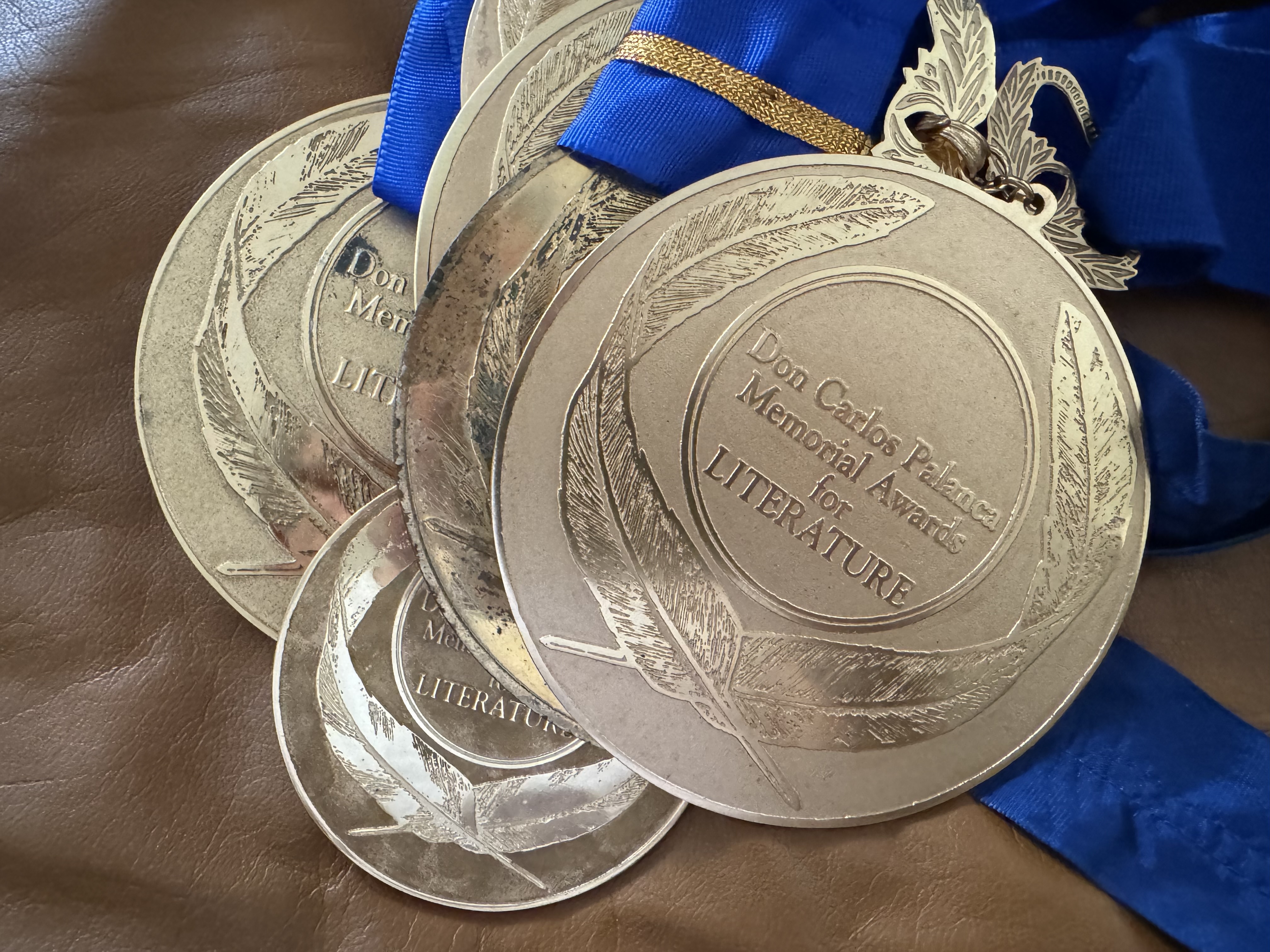
Last Friday, at the PICC, many of the country’s best writers got together to bask in that shared glory. In one of the highlights of the literary year, 54 authors were feted at the 72nd edition of the Carlos Palanca Memorial Awards for Literature. Begun in 1950 and faithfully and generously endowed by the Palanca family, the Palancas are the country’s longest-running and most prestigious literary competition, and for the past seven decades (almost uninterrupted except for the pandemic) have heralded the emergence of our finest writers—in English, Filipino, and more recently our other major Philippine languages.

According to the foundation that oversees the awards, this year’s competition drew in 1,823 entries in 22 categories, with 60 winning works produced by 54 writers. New winners outnumbered previous ones by 31 to 23, a good sign of new talent emerging—and not just new but young. Five winners were 20 and below, the youngest being only 14 years old (and the oldest 78). That’s quite a range, which tells us that the future of Philippine literature is safe and strong.

I myself won my first Palanca when I was 21, and of course I thought I was God’s gift to literature—until I lost for the next four years straight. I probably learned more from those losses than from my lucky win, and as I grew older the writing became more important than the winning, but the incentives—a little of both fame and fortune—that the Palancas provided never diminished in their attractiveness, especially during the martial law years when there was very little publishing going on.

You certainly don’t have to join the Palancas or win one to gain a literary reputation, and the value of such awards can easily get overblown, such as when egos get the better of writers starved for attention. Ultimately prizes don’t count nearly as much as publication, and all those honors will be meaningless until and unless one’s books are read, understood, argued about, and maybe even cherished. (With the Philippines poised to become Guest of Honor at next year’s Frankfurt Book Fair, we can expect the global readership for Filipino works to increase, and international publication will be a new goal for our writers to aspire for.)

Not everyone who writes for a living can win a Palanca, but not everyone who wins a Palanca can make a living out of writing, either. I’m blessed and thankful to have been able to do both, but at this point in my life I’ve come to realize that even more than seeking fame or fortune, a writer’s greatest mission is to tell and spread the truth, in that moving and memorable form only art can deliver.

Qwertyman No. 115: Why I Teach

Qwertyman for Monday, October 14, 2024

LAST OCTOBER 5, we marked World Teachers Day—not one of our most popular or noisiest holidays (it isn’t even an official one), but one that gives us pause to remember some of the most important people in our young lives. I taught for 35 years before I retired in 2019, and I still teach one writing subject every semester as professor emeritus, so I suppose I wanted to be that “VIP” in someone’s life. 

When we teach writing—and not even creative writing, but composition—to freshmen, we take young people by the hand and help them make sense out of their lives and their ideas, such as they are. The term “composition” applies as much to the writer as to the text: one composes oneself, drawing out the essentials and leaving out the dross. Creative writing pushes that process one step farther, by turning to the imagination instead of one’s limited experience for material and insight. 

The creative writing teacher’s task is not only to encourage but also to guide and to train that imagination, sparing the student from having to reinvent the wheel but affording him or her the thrill of self-discovery. 

It’s an inarguably fine and noble mission. On the other hand, and in economic terms, the teaching of creative writing is brutally inefficient. In a typical workshop class of 20 people, an instructor would be fortunate to find two or three with real talent—an aptitude for language, a maturity of insight, a stylistic flair. Among those, far fewer will have the discipline and perseverance to write and write well for life.

So why should we even persist, or expend public funds to produce boatloads of people who will probably never write the kind of line you will mumble in your half-sleep, or will cry out to the heavens in your most painful or most euphoric moment?

For one, because producing good creative writers is like mining for precious stones, where a ton of ore might have to be torn out of the earth and sifted through to produce one small jewel-grade rock, which has yet to be cut and shaped by expert hands. 

We must also persist in teaching creative writing because the production of new literature reinvigorates and replenishes our imagination as a people, our imagination of ourselves. It is that imagination, however dark, that gives us hope and makes reality endurable. The truth of numbers—of GDP and ROI and per capita income and population growth rates—is important (I’ve often remarked what a terribly innumerate society we are); but it is a limited and even sometimes deceptive truth that barely begins to tell our story. History does this, but without much latitude for pure conjecture. As in painting and the other arts, creative writers have often simply done, and done first, what critics and theorists would later describe and systematize. Creative writing is a breath of intuition caught on paper.

But I also teach creative writing in the conviction that every student—no matter the person’s background—has at least one good story to tell, and that it is our task as teachers to release that story. Most of my students may come to my classes merely to pass the time, or fulfill a requirement, or satisfy a craving for some critical attention; many may never write another story in their lives. But I want them to come out appreciating and respecting the liberative and ameliorative power of art—which is a fancy way of saying that, for those of us who will never be mistaken on the street for Brad Pitt or Superman, here we can be and do anything, for as long as we make artistic sense.

As K. Patricia Cross, professor emerita of higher education at Berkeley, reminds us, “The task of the excellent teacher is to stimulate ‘apparently ordinary’ people to unusual effort. The tough problem is not in identifying winners: it is in making winners out of ordinary people.”

Anyone can write anything, but not everyone can be a writer. By the same token, not every writer can be a teacher. People who have no problems stringing seamless paragraphs of compound-complex sentences can’t give a lecture or an exercise worth an ATM receipt. It takes a different sensibility—and, yes, another set of talents (or what I call a whole bunch of P’s—preparation, perseverance, patience, and passion)—to teach well and to endure in the classroom.

I feel passionate about teaching in UP and in this country, and in giving back to them, through my students, what they have given me. But teaching is not a word I often say in the same breath as love. I cannot honestly say that I love teaching, in the sense of wanting to do it for most of my waking hours, or missing it terribly when I’m doing something else. Teaching is one of the most exhausting jobs you can get. The job doesn’t begin or end in the classroom; it just happens there.

Every time I step into a classroom, I pause at the doorway to expel a deep sigh and collect my thoughts, wondering if I have enough to sustain a 90-minute performance. As the American novelist Gail Godwin famously said, “Good teaching is one-fourth preparation and three-fourths theatre.” Indeed I spend the last ten minutes before class writing a script in my head: I will say this; I will do this; I will bring these props and use them at some point; I will ignite an argument; I will leave them with a question that will buzz in their ears for a week. Even bad stories can be turned to great lessons; where’s the teaching point? How can I say it without crushing or diminishing the person? 

It doesn’t always work—sometimes I simply collapse into my chair and count away the minutes—but we all attempt some variation of this drill. Basically, we are saying: I will do my best to make this day worth their time and mine. It’s what they expect; it’s what I promised.

It is not love but duty that drives me to teach—although duty, perhaps, can also be a form of love; a love not of the thing itself but of some larger principle. That principle to me is service—service to country, people, university, and service to the great and truly free republic of the imagination.

“How do you know that what you’re doing matters?” I was asked once. “How can you tell if you’re making a difference?” My answer was, I don’t know, I can’t tell. But for a teacher, the only distinguished achievement that counts is the quality of one’s students. You are distinguished by their achievement, and in this sense, I have been distinguished aplenty.

Qwertyman No. 97: The City That Works

Qwertyman for Monday, June 10, 2024

I WAS back last week in the city of Kaohsiung in Taiwan with a group of writers from the University of the Philippines Institute of Creative Writing, at the invitation of Dr. Eing Ming Wu of the Edu-Connect Southeast Asia Association, an education NGO seeking to establish stronger ties between Taiwanese universities and their counterparts south of Taiwan. We were there to meet with our literary and academic counterparts, but also to acquaint ourselves with contemporary Taiwanese society and culture. What we found along the way was a city and a government that works—a model we have much to learn from.

It was my second time in Kaohsiung and my sixth in Taiwan since my first visit in 2010, but those earlier sorties were either for tourism or for attending meetings and conferences, so we never really got to immerse ourselves in the place and its people. This time, Dr. Wu made sure that we went beyond casual handshakes and pleasantries with city and university officials to engage our hosts in in-depth conversations.

The first thing that usually strikes visitors about Taiwan is how modern it looks, especially when flying in through Taipei—the High Speed Rail (HSR), the wide roads, the skyscrapers (think Taipei 101, once the world’s tallest), the late-model cars. For quick comparisons, consider this: Taiwan’s population, at 24 million, is about a fifth of ours; in terms of land area, we are almost ten times larger; its nominal per capita GDP, however, is almost ten times larger than ours at US$35,000. Not surprisingly, Taiwan now ranks around 20th in the world in terms of its economic power.

That power came out of decades of dramatic transformation from an agricultural to a highly industrialized economy, starting with massive land reform and the adoption of policies that spurred export-driven growth. Industrialization itself went through key phases from the production of small, labor-intensive goods to heavy industry, electronics, software, and now AR/VR and AI tools and applications.

At a briefing at the Linhai Industrial Park by Dr. Paul Chung, a US-trained engineer who was one of the architects of this economic miracle, we learned how Taiwan built up the right environment for economic growth through such strategies as the creation of industrial parks (there are now 67 of them covering more than 32,000 hectares, with 13,000 companies employing 730,000 people and generating annual revenues of more than US$260 billion—almost eight times what all our OFWs contribute to the economy). The Taiwanese government has also implemented a one-stop-shop approach to investments, bringing together the approvals of many ministries and local governments under one roof.

Consistently, in modern times, the private sector has led the way forward, with the government acting as facilitator. This was much in evidence in Kaohsiung, Taiwan’s southern industrial hub that was, until relatively recently, a virtual cesspool, the prime exemplar of industrialization gone amuck. A strategic seaport, Kaohsiung grew out of the need to export Taiwanese sugar during the Japanese occupation (1895-1945); the sugar industry gave rise to railways that went far up north to Keelung and became the backbone of the country’s transport system. After the war, the Kuomintang who displaced the Japanese did little to improve things until a visionary mayor undertook reforms that cleaned up the place. Industry also achieved important synergies by adopting policies toward carbon neutrality and reducing waste—for example, one company’s blast furnace slag is being used to pave roads, and harmful carbon monoxide emissions have been rerouted as inputs to chemical companies.

Kaohsiung today is a city of 2.8 million people, a showcase of how runaway industrialization and urban blight can be reversed through good governance and political will. “People need responsible, responsive, and accountable government,” says Dr. Wu, a public-administration expert who worked for 15 years with five Kaohsiung mayors and who now serves as a visiting professor at UP’s National College of Public Administration and Governance (NCPAG). 

A longtime visitor to the Philippines, Dr. Wu has made it his personal mission to promote Philippine-Taiwanese people-to-people relations—a concept he calls “taiwanihan”—in the conviction that the two countries have much to learn from each other and form a natural geographical, economic, and cultural partnership. “We are each other’s closest neighbor,” Wu says. “Taipei is 96 minutes away by train from Kaohsiung, but Kaohsiung is only 90 minutes away by air from the Philippines.” 

Wu and his colleagues at NCPAG have been exploring the possibilities of developing a corridor of cooperation between Southern Taiwan and Northern Philippines, given their proximity. “We have the technology, you have the resources like biomass,” he adds, pointing out as well that taiwanihan doesn’t just mean a one-way relationship, but that the Philippines can also assist Taiwan with its growing needs, such as engineering talent and manpower. Some 8,000 Filipinos now work in Taiwanese factories, but Taiwan’s demand for highly skilled workers will only get higher as it moves into the next phase of its development, which will be heavily dependent on AI.

Artificial intelligence already takes care of many of Kaohsiung’s more mundane needs such as remote traffic monitoring and even the paid parking of vehicles, which has been outsourced by the government to a private entity. “We buy services, not things,” explains Dr. Wu. “The government provides the land for the parking, the private sector supplies the technology and the hardware. This is our version of public-private partnership: the government listens to the private sector, which can use the city as its lab.” 

E-governance and decentralization led us to an unusual sight: we visited City Hall on a weekday and saw very few people in the lobby, unlike its Philippine counterparts. That doesn’t mean that government is distant from the citizens, as a “1999” complaints center receives and fields calls online or in person, employing the disabled to man its booths. 

And even as AI has taken the forefront, it was abundantly clear that human intelligence and human priorities remained important. Good community governance, for one thing, was key to clean and peaceful neighborhoods (their village officials are appointed rather than elected, eliminating vote-buying). Their libraries alone show how and why the Taiwanese are succeeding: they not only have hundreds of thousands of books available to their citizens, but they have innovations such as the “Adopt-a-Book” program by which you borrow a book just based on a previous reader’s recommendation, and books in both Braille and regular text, so that sighted readers can read along with the blind and enjoy a story together. A city that goes that far to meet its people’s needs can’t fail.

Penman No. 462: Exit This Gatekeeper

Penman for May 5, 2024


INDULGE ME this bit of self-reflection, which I suppose will also speak for many writers of my generation. After much thought, I have decided that I will no longer be judging literary competitions, having just completed my last one.

My first reason is that I’m 70, a good age at which to pause and plan out the rest of my life, however long or short that may be. (The life expectancy of a Filipino male today is 72, although actuarial science seems to think that if you’ve come this far, you’ll likely hang around for another ten years.)

There are just a few things I want to devote that time to—primarily, to write my own books (not books for others, so I’m also announcing that upon completion of my current commitments, I will desist from seeking or accepting book commissions—unless I fall into grave and sudden need.) I want to travel more with Beng and Demi while we can, look after Buboy’s growth, play poker all night twice a week, and enjoy my strange hobbies. I’ll teach for as long as I can—I’m enjoying my undergraduate class right now—but will limit my participation in workshops, conferences, festivals, seminars, etc. to the few I am committed to, like the UP Writers Workshop. 

Judging competitions doesn’t seem that much work (unless you’re a judge looking at over 100 stories) and of course it’s a signal honor to be asked to help pick the best of new writing. It remains a tremendous responsibility and privilege to be thankful for. You get to go up a stage, say some nice things about literature and writers, receive a modest fee, and feel somewhat useful and relevant. That’s all well and good.

When I transitioned from being an active literary combatant (that’s how many of us felt back then, with the likes of Rene Villanueva and Ed Maranan breathing down your neck) to a judge after getting my Palanca Hall of Fame plaque in 2000—I never joined a contest after that—I felt that I had turned a corner and found a kind of inner peace. It wasn’t that I had nothing more to prove; one illusion that local literary competitions encourage in the young is that winning them is the be-all and end-all of writing, when all they are is a formal pat on the back to get you started. The true challenge for the young or beginning writer is not to win prizes but to write and publish books that will be read and appreciated by others, that hopefully will matter, that will outlive you, that for better or worse you will be remembered for and remembered by; publication is the ultimate prize, readership the ultimate validation. So I went on to write books, teach, have fun, and discover wonderful things outside of writing and literature (yes, there are such bright and shiny marvels). 

Judging competitions seemed to be a good way of keeping a foot in  the door, so I’ve been doing a lot of that, also as a kind of payback for all the people before me who took their time to recognize and reward my efforts with a prize. At some point, I realized that the foremost reason I kept joining and judging the Palancas was because I wanted to be there on Awards Night, to enjoy the company of writers I admired (the piano-playing Greg Brillantes being one of them), and to feel good about being a writer on the one night of the year that they took center stage. The great luck of Hall of Famers is that they can now attend all the Awards Nights they want without having to work for it—so I won’t.

The most important reason is that I’ve already read enough, perhaps too much, for far too long, and it’s no longer healthy for me or for those I may be judging. Our literary community certainly doesn’t lack for younger people who can do this job as well as if not better than I can.  I’m still and always delighted to see brilliant new work emerge from the pile, but it’s getting harder—more laborious, more fatiguing, and ultimately more disheartening to be asking, “ls this the best they can do? Don’t people know what a good story is anymore?” Or have I become the problem?

The word “gatekeeping” has been going around much lately, evoking the image of a surly senior (a Boomer, for sure), out of touch and out of step, insisting that his students and young writers should write like him or like Hemingway, playing favorites, and slamming the door shut on entire genres he doesn’t like or understand. That sounds a lot like me, except that I’ve never expected or driven my students to write like me; they come to my classes with their own experiences, their own material, their own talents and insights, and  the best of them have written stories that are nothing like mine, except perhaps that they’re realist, because that’s the kind of fiction I best know and teach. I’ve always been open to other forms and genres, even if I hardly write in them (I think I’ve tried everything at least once), because the world would be a terribly boring place if we all wrote about everything the same way. Think of much of the political rhetoric going around these days, no matter which flag is being waved: labels and slogans—the shorthand of groupthink—have replaced and diminished personal narrative and reasoning. (As if people will care when you die if you were “correct” all the time; they will ask if you were good and kind.) This is also why I have long resigned from anything resembling organized ideology or religion, whose avatars often seem so, so sure of themselves and of what they’re saying to the point of arrogance. 

I value the doubt and ambiguity, the constant self-questioning (what can we be capable of, despite ourselves?) that are fiction’s domain. Fiction humbles us by exposing our infirmities, but it also exalts us by offering the possibility of redemption.

In the end, what I have always looked for in a prizewinning story, aside from being exceptionally well-written (smooth and stylish when it needs to be, tough and visceral when it needs to be) is that it be moving and memorable. It should burn a hole and leave a scar in my heart, my guts, and my memory. I can enjoy clever and inventive stories as much as anyone else, but if it’s a passing amusement, like a joke, it won’t leave much behind. Some of the most memorable stories I’ve  come across weren’t even what you’d call grand in a sonorous or elaborate way. They took place in small places within relatively short periods of time, and involved ordinary people in situations that brought out their extraordinariness (by which I don’t mean some blinding heroism, but a part of them, dark or light, they didn’t even know was there).

Too many of the thousands of stories I’ve had to read over the years have been poorly written, dull, and forgettable. That’s not even a complaint, just par for the course for any kind of open literary competition here or anywhere else. People can’t be blamed for hoping and trying with their graceless prose, and I’m sure that many have nursed precious ambitions of being published and read. Not to be snarky, but the problem here really isn’t so much a lack of writing talent than of self-awareness, the kind of honesty and humility that will tell you, in your heart of hearts, that you will never be a nuclear scientist or an F-1 driver. Unfortunately, literary self-awareness can happen only when one has a sense of what truly good writing is. 

But could it possible that I myself have fallen so far behind that I can no longer recognize the new “good,” or apply the “new standards,” whatever they may be? Could my notions of “good fiction,” however liberally applied, be standing in way of some young genius’ debut?

I’ll be holding on to those notions, but now only for myself. I’m not urging my fellow seniors to do the same; we all operate on different clocks and their patience could be longer than mine. Some might say “Good riddance” and the feeling could be mutual, but I depart this task with a light and happy heart, looking forward to producing new work that will be judged by others.

Email me at jose@dalisay.ph and visit my blog at www.penmanila.ph.

Qwertyman No. 87: A French Sojourn

Qwertyman for Monday, April 1, 2024

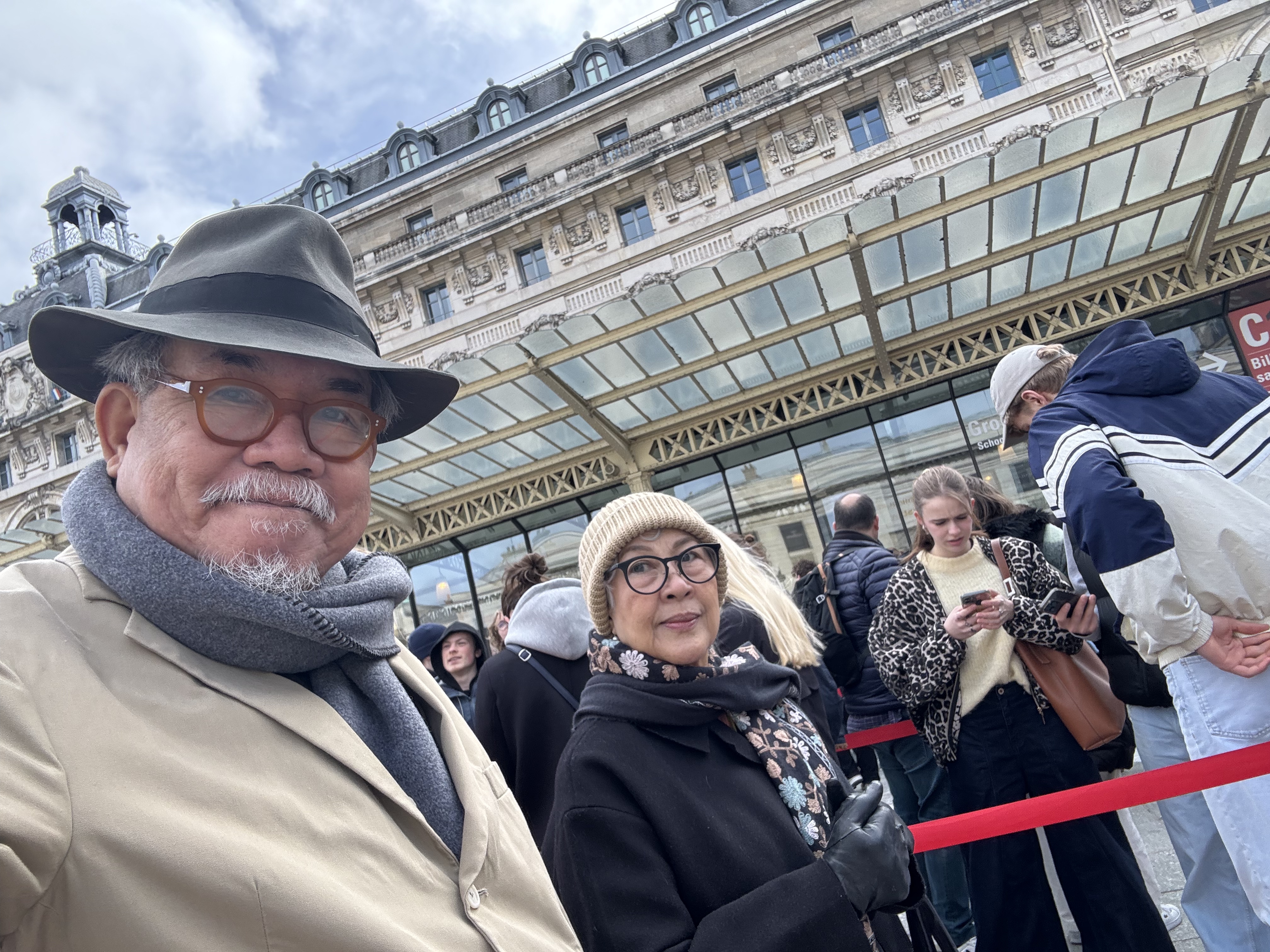
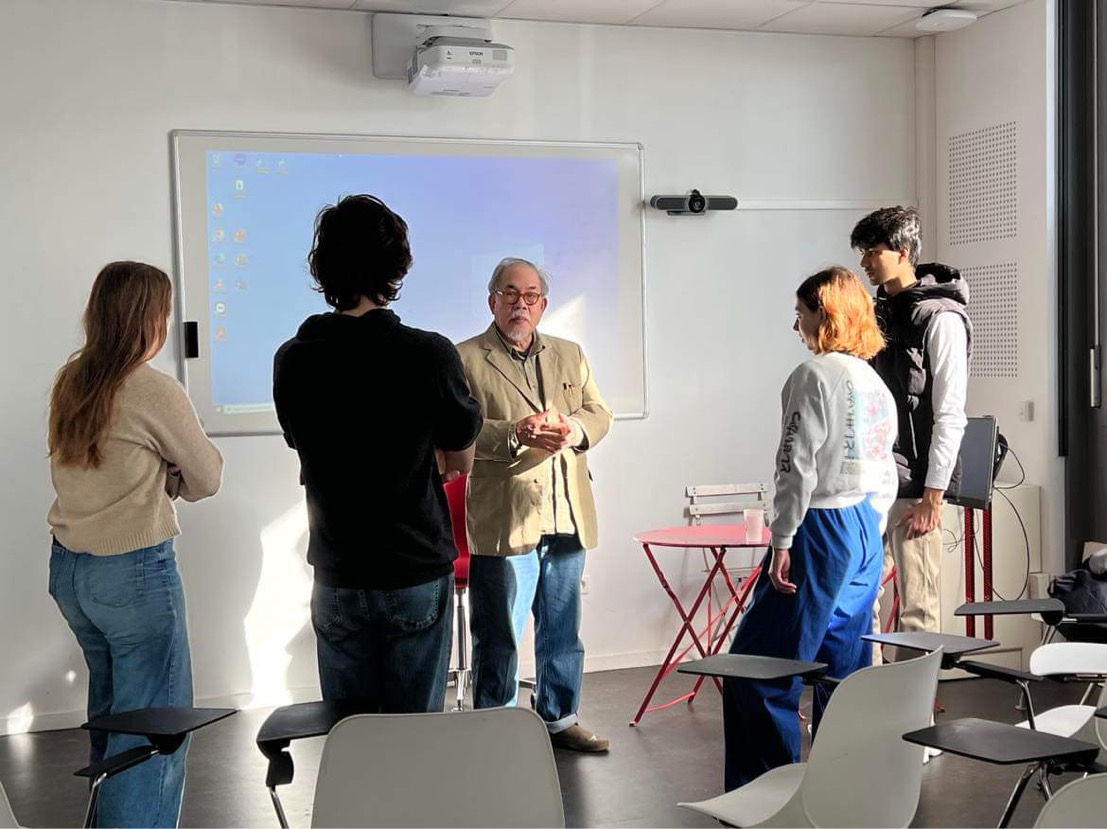
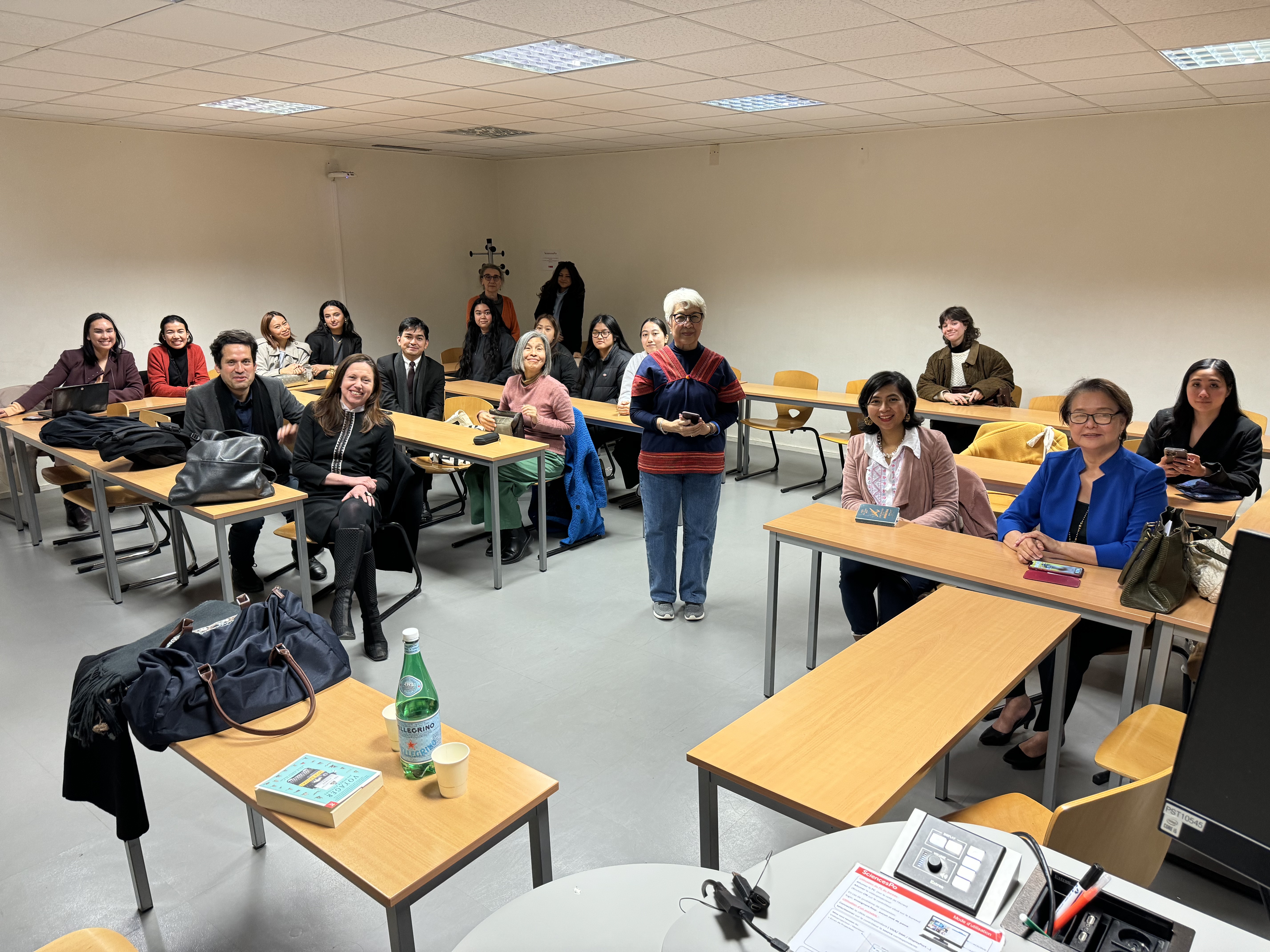
MY WIFE Beng and I were in France last week to give a series of lectures at the invitation of the Paris Institute of Political Studies, better known as SciencesPo. They don’t formally observe Holy Week in France (nor, for that matter, do many Filipinos to whom it’s simply come to mean “long weekend”). So we thought that it was the best time to come over and share some of our insights into Philippine literature, art, and politics with young French students as well as our countrymen in Paris, for whom I and fellow writer Cris Yabes, who’s based in France, gave a special reading at the Philippine embassy.

For those who’ve never heard of it—which won’t be too surprising given our Pinoy fixation on top American and British universities—SciencesPo (pronounced SEE-ansPO) is France’s leading university in the social sciences. It now has 14,000 students spread out over seven campuses across the country. Only 4,000 of those students are undergraduates; the rest are graduate students, including 350 taking their PhD. Unlike our universities, SciencesPo’s undergrads can finish in only three years, with their last year spent abroad. I was told that there are about 20 Filipino students currently enrolled at SciencesPo, and about half of its students come from overseas. As a public research university, SciencesPo is supported by the government through a private foundation, an arrangement that gives it a high degree of autonomy.

Founded in 1872, the university has served as the training ground for France’s political elite, producing five out of France’s eight presidents: Pompidou, Mitterand, Chirac, Hollande, and the incumbent Macron. Marcel Proust studied here for a year, and Christian Dior was a graduate.

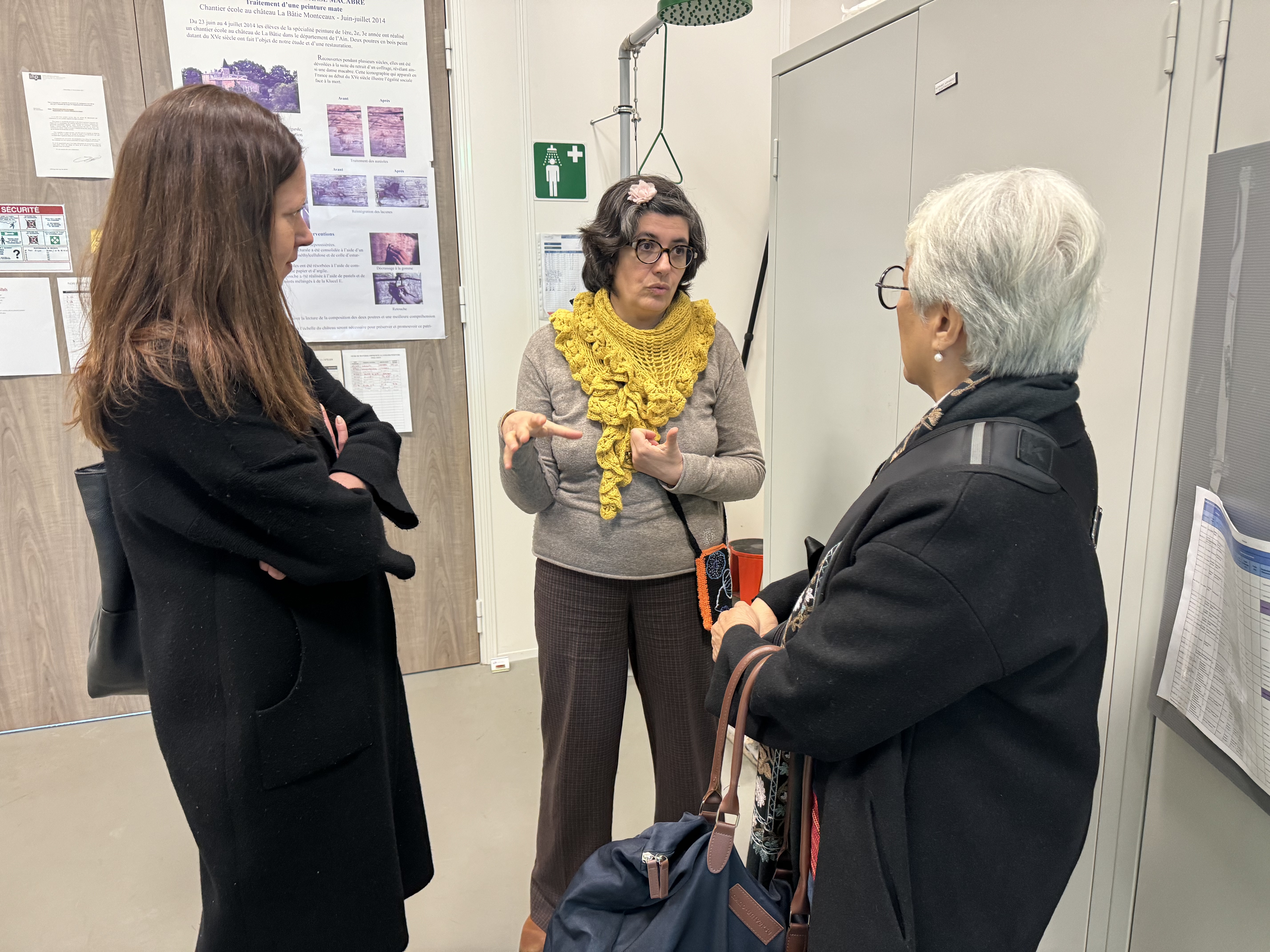
With that kind of elite status comes criticism and controversy, and SciencesPo has had its share over the years. Nevertheless, it remains high on the list of desirable universities, especially for students with plans of joining the French civil service, after further studies at the Ecole Nationale d’Administration. (At Inalco, another Fremch university, we were surprised to find eight Filipino-French students studying Filipino for their degree under Prof. Elisabeth Luquin, who studied in UP and speaks Filipino like a local.)

Beng and I gave presentations on the Philippines at SciencePo’s main campus in Paris—a sprawling complex comprising ten buildings in some of Paris’ most precious real estate—and I had an additional three sessions in Le Havre, where SciencePo’s campus focuses on Asian studies. Wherever we went, we could see signs of intellectual and political ferment; like their predecessors at the Sorbonne whom we admired for their militancy 60 years ago, SciencesPo students have protested and rallied over many causes from domestic violence to Gaza.

To be fair, these concerns have occupied much of the rest of France as well. In a country where street protests are a time-honored tradition that have a real bearing on political outcomes, differences of opinion can run deep and long, and controversy stalks nearly every issue, from the wearing of religious headgear to the extension of the retirement age. To “liberté, egalité, fraternité,” we must now add “identité,” the subject of identity so central to political discourse in many countries today, especially those with large and strong immigrant populations like America and France.

“Over the last few years, France has been torn by culture wars—a shift that was less the effect of American concepts imported into French universities, as many on France’s right claim, than of the long-term decline, beginning in the early 1980s, of class politics and alternatives to capitalism. In a post-ideological France, class struggle has been displaced onto the terrain of identity,” noted sociologist Daniel Zamora in an article for Catalyst in 2021. “Despite Macron’s professed disdain for identity politics, his alternative can scarcely be construed as anti-identitarian. Building on what we have in common, Macron argued, meant finding an answer to the question, ‘What does it mean to be French?’”

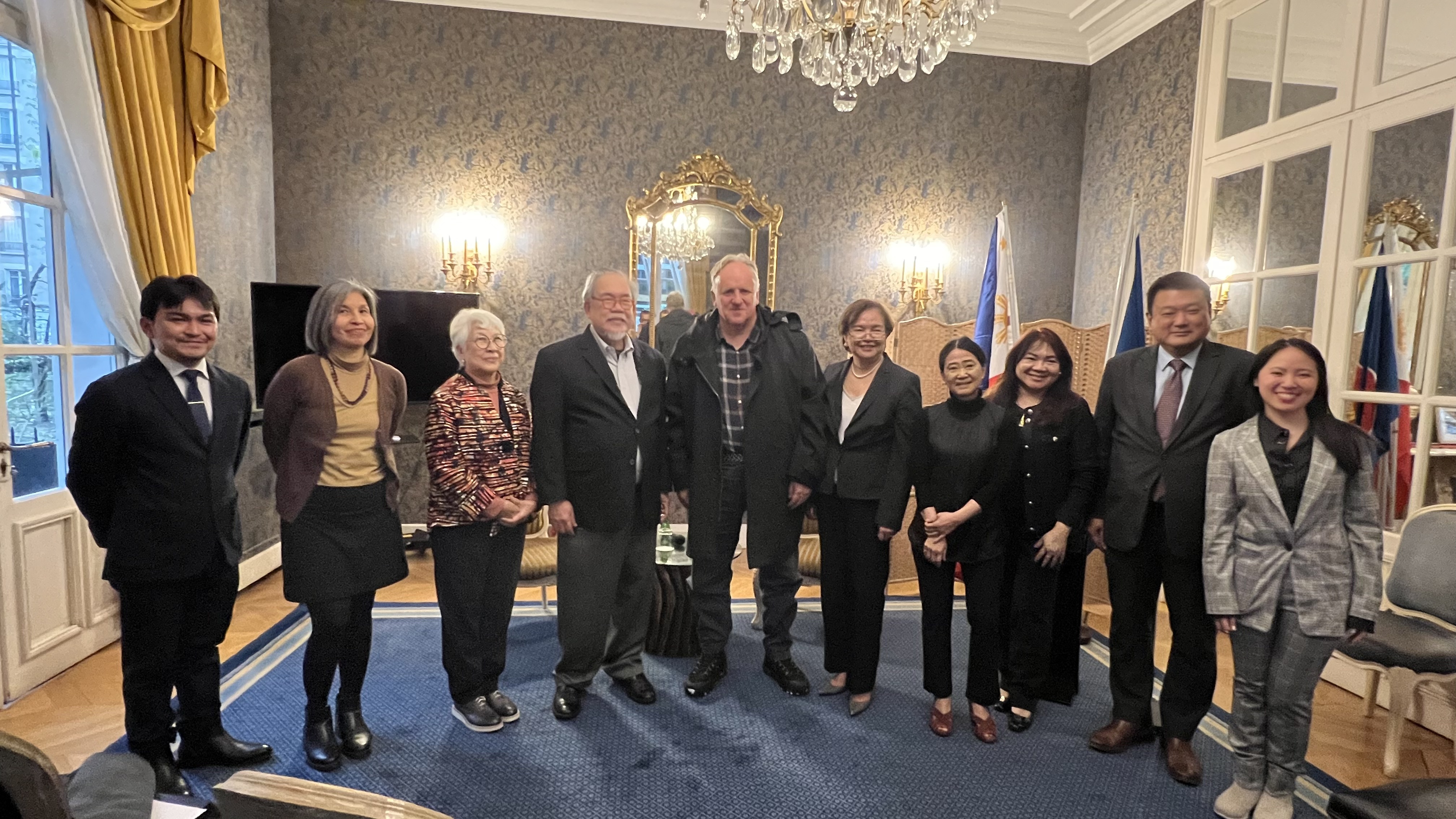
Identity, at least, was not in question when Cris Yabes and I gave our reading at the Philippine embassy, thanks to the invitation of Ambassador Junever “Jones” Mahilum-West, one of the most amiable, gracious, and artistically inclined ambassadors I’ve ever met. (She was very game as well, happy to hoist an IPA beer with my wife Beng after our talks.) To a fairly sizeable group from the Filipino community in Paris, Cris and I read pieces that had to do with our foreign relations, particularly in my case with our diaspora, which my second novel Soledad’s Sister (which has been published in French by Mercure de France) dealt with. 

In the conversations that followed, I learned that there are around 26,000 documented Filipinos in France, with perhaps just as many existing belowground, most of them domestic helpers. One of them, Zita Cabais, was a victim of human trafficking more than two decades ago, having been enticed to come to Europe with the promise of a visa and a good job. Instead she was brought to Hungary, from where she was led on foot through Europe to finally reach France, whereupon her employer confiscated her passport, effectively holding her hostage. But unlike many other DH’s, Zita fought back, sued her employer, and succeeded. Since legalized, she now works for organizations devoted to fighting human trafficking. (The path to legalization is reportedly shorter in France, but knowing the French language is a prerequisite.)

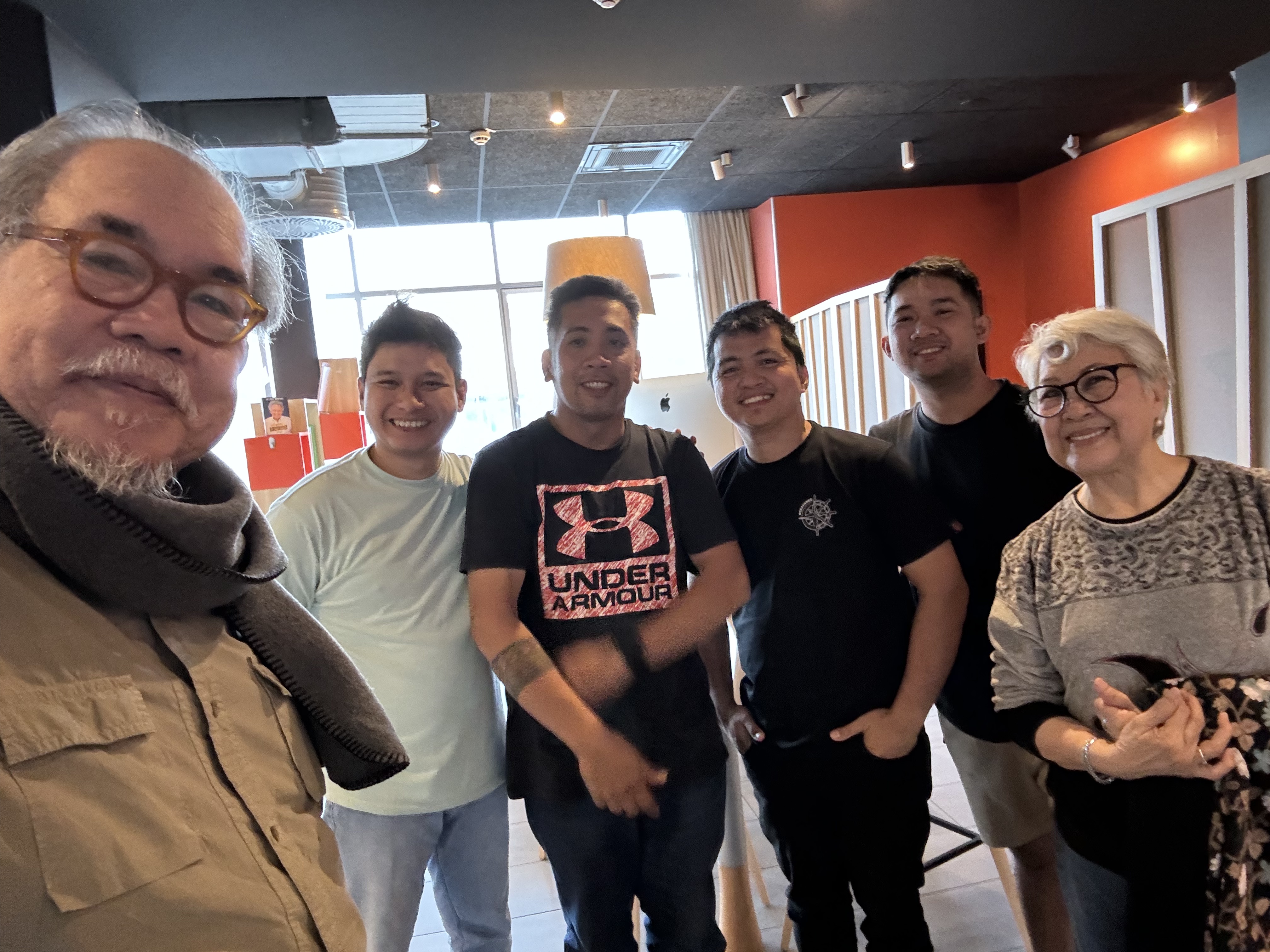
One unexpected highlight of our visit was running into a group of Filipino seamen in our hotel in Le Havre, prior to my lecture. Beng and I had just come down for breakfast when we heard the familiar chatter of Filipinos at a nearby table. We came up to them and introduced ourselves, and we had a lively conversation during which they explained that they were still waiting for their ship to dock because of the bad weather. I’d met and chatted with seamen like them before in Hamburg and in Christchurch, among other places; as a writer and as a Filipino, I take it as a pleasant obligation.

Competition, they said, was driving them to accept shorter four-month stints at sea. “We barely break even, and it’s a tough life at sea, but we have no choice, since our families depend on us.” Part of my lecture that day was going to be about our Filipino notion of the hero as martyr, of Christ-like sacrifice for the common good. I suddenly realized that it was Good Friday. We had our smiling selfies taken, and they seemed proud to stand with UP professors, but it was Beng and I who felt honored to be there with them.