Link

IMG_9635.jpg

Penman for Monday, November 17, 2016


IT WASN’T on the official itinerary, but I have to report that the personal highlight of our recent participation at the Frankfurt Book Fair didn’t happen at the fair itself, or even in Frankfurt, but about an hour and a half away by train and bus. This was a plan that a few of us had hatched even before we left Manila: we’d do our jobs and put in our hours in the Philippine booth, then take a day off in pursuit of a pilgrimage that any Pinoy in Frankfurt shouldn’t forgo: a visit to Jose Rizal’s haunts in Heidelberg and neighboring Wilhelmsfeld.

I’ve been a lifelong fan of Pepe, not just for his writing skills and love of country (I won’t mention his charming ways with the ladies) but also his wanderlust which made him, in my book, the first truly global Filipino. Considering that he didn’t live very long, he was still able to do more and see more than most of us do in a full lifetime. The intensity of that life and the excellence he sought at every turn have been enduring inspirations for me, and I’ve realized that sometimes by design and sometimes by serendipity, I’ve been tracking his footsteps around the world.

In 2009, my wife Beng and I, along with our daughter Demi and her husband Jerry, had booked ourselves into the Palace Hotel on Market Street in San Francisco, where it took a waiter (a fellow Pinoy, of course) to inform us that Rizal had stayed there during his only visit to America in May 1888, an event commemorated by a marker just outside the hotel, which we had missed.

PalaceHotel.jpg

Two years later, Beng and I visited Rizal’s well-kept shrine in Dapitan, where he had spent four fruitful years in exile before being transported back to Manila. How poignant it must have been to catch the sunset along the bay with Josephine Bracken, inflamed and torn by two of the strongest passions to afflict any writer—love and revolution.

Dapitan.jpeg

And then in 2014, again with Beng, Demi, and Jerry, I sought out some of Rizal’s locales in Spain, from Plaza Mayor in Madrid to the Castell de Montjuic in Barcelona, where Rizal had been detained before being shipped back to Manila for trial and eventual execution. (The castle has designated a room, Sala Rizal, in his honor and in memory of the many political prisoners who had spent time in that place—ironically, one of the best spots from which to appreciate the city’s beauty.)

Montjuic.jpg

There was no question, therefore, that I would make that sortie to Heidelberg, given the once-in-a-lifetime opportunity. Five other sojourners made up our group: National Artist Virgilio “Rio” Almario and his wife Lyn, their daughter Ani and her husband, the geologist CP David, and the poet and Inquirer staff writer Ruey de Vera. Lyn and Ani were attending the book fair on behalf of Adarna House and the Book Development Association of the Philippines, but we all agreed that a visit to Heidelberg was well worth a day off.

Rizal had stayed in various places in Heidelberg and Wilhelmsfeld for much of 1886, marking his 25th birthday there, studying ophthalmology with tutors like Dr. Otto Becker while improving his command of German. When he moved to Wilhelmsfeld—a 12-kilometer walk through the forest that Rizal essayed and even today a 30-minute bus ride from downtown Heidelberg—Rizal boarded with Pastor Karl Ullmer and his family, and it was there that he completed the manuscript of Noli Me Tangere (a feat that, achieved at 25, still astonishes me when I consider the juvenilia most of us still produce at that age).

Rio Almario had visited Heidelberg once before but not Wilhelmsfeld, and the rest of us were total newcomers to the area (I had traveled around Germany and reported on it extensively in 2004, but hadn’t gone this far). So it was with giddy enthusiasm that we assembled at the Frankfurt Bahnhof and boarded the 9:20 train to Heidelberg. About an hour later, we were in Heidelberg, where we made a beeline for the information kiosk just outside the train station to buy bus tickets to Wilhelmsfeld. “Filipinos?” asked a clerk at the kiosk, apparently familiar with posses of brown-skinned Asians asking about Jose Rizal, and he whipped out a xeroxed guide to Rizal’s known habitations in Heidelberg and Wilhelmsfeld. There were about six of these sites in Heidelberg alone, so we decided to go for Wilhelmsfeld first, given our limited time.

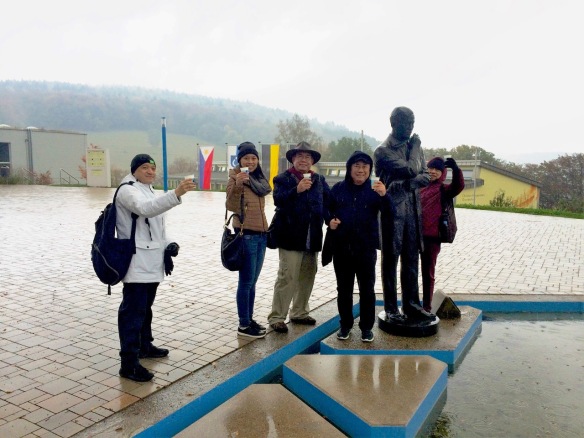
After a pleasant ride along the Neckar River and the lovely autumn scenery (punctuated only by an unexpected stop during which two European bison appeared fairytale-like out of the woods), we reached Wilhelmsfeld, which announced itself in a most unusual way, with a Filipino flag flying abreast of its German counterpart in front of the Rathaus, or town hall (Wilhelmsfeld and Calamba are sister cities). We were in search specifically of the statue that sculptor Anastacio Caedo had made of Rizal in a special park devoted to him. An initial query led us astray, to the wrong church and into a drizzle of hail (magical story elements we couldn’t have invented to accentuate our pilgrim status), until a kind lady pointed us in the right direction.

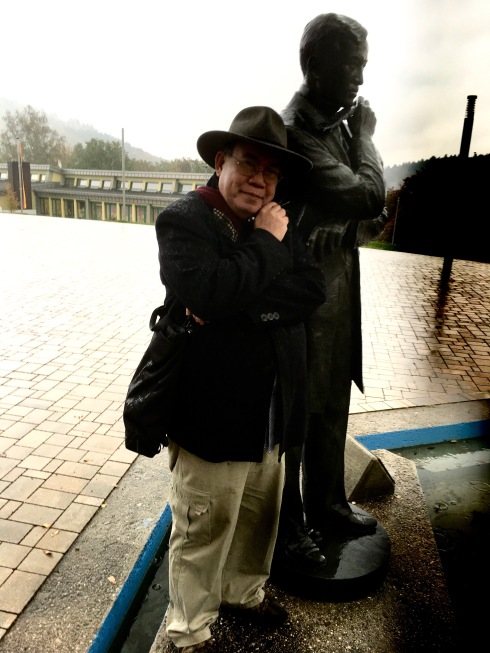
Many shuddering steps later, we arrived at a park overlooking the valley, in the center of which stood Rizal’s figure, easily a foot larger than life, as it deserved to be. We celebrated by opening a bottle of Potsdamer beer which CP had brought along for the occasion, and raising a toast to the great wanderer who had preceded us by 130 years but who yet challenged us, as it were, to write a Noli for our own times. After lunch back in Heidelberg, we prepared for another long trek to find his clinic at Bergeimherstrasse, only to realize that we had gotten off on exactly that street, and were only steps away.

Wilhelmsfeld.JPG

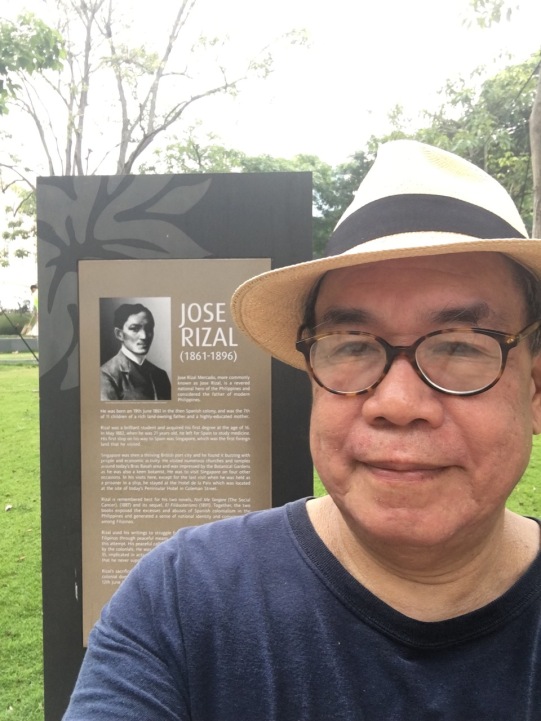
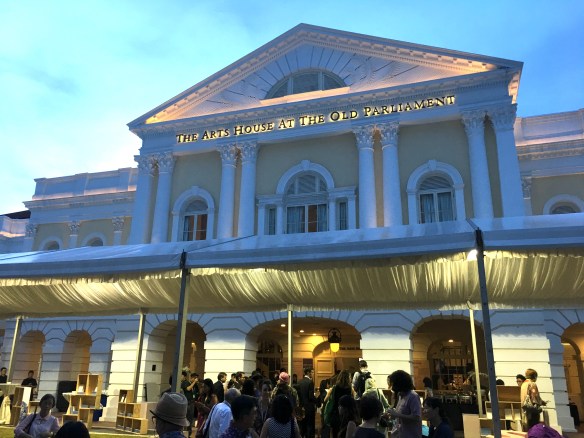
Weeks later, a totally unexpected bonus followed. I was in Singapore covering the Writers Festival when fictionist Cathy Torres—a diplomat who was serving with the Philippine Embassy in Berlin after a stint in Singapore, and had also joined us in Frankfurt—casually mentioned to me that Rizal had taken note in his letters of the black elephant statue beside the old Parliament House where the festival was being held. As it turned out, Rizal had visited Singapore four times—the first time in 1882, on what also happened to be the 21-year-old’s first trip abroad. The tip prompted me to look up Rizal’s Singaporean connections—immortalized in a marker near the Cavenagh Bridge, beside the likes of Ho Chi Minh, Jawaharlal Nehru, and Deng Xiaoping—but what floored me was discovering that he had once stayed at the old Hotel de la Paix at the corner of Coleman and Hill Streets—long gone, but since replaced by the Peninsula-Excelsior Hotel, where I was staying. I felt like I was no longer following Rizal, but he was following me.

IMG_9813.jpeg

In Dapitan, he had written: “I left, scarcely a youth, my land and my affections, and vagrant everywhere, with no qualms, with no terrors, squandered in foreign lands the April of my life.” If this was squandering one’s youth, what a glorious waste it was.


Penman No. 225: Sayang in Singapore

IMG_9764.jpg

Penman for Monday, November 11


TO US Filipinos, sayang has one meaning and one meaning only: a regrettable loss, something that causes us to shake our heads or hold our palms to our hearts and say, “Oh, that’s too bad.” But elsewhere in the region, from some sultry corner of which the word worked its way up our archipelago, sayang means that and more: the love which may have been that which was lost, love as both a noun and a verb, or even an endearment, depending on the nuances of its intonation. So love and loss—the former all too often trailed by the latter—coexist in this wonderfully complex word, through which we Filipinos can at least claim some vestigial connection to the heart of Asia.

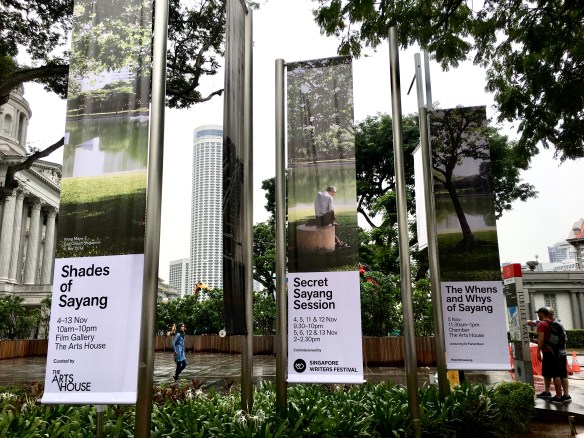
Sayang was very much on people’s lips in Singapore last week—you would have thought a lovefest was going on, and in a sense, it was. But the love was for books and literature, the occasion being the Singapore Writers Festival, which I was visiting for the third time after a hiatus of five years. Sayang had been chosen as the festival’s theme, and the word was festooned against a suitably floral backdrop all over the Arts House area where most of the festival events took place.

IMG_9754.jpg

Now on its 19th edition, the SWF began in 1986 as a biennial event, but it has since become a fixture on the regional cultural calendar (alongside the Singapore Arts Festival), cementing the city-state’s reputation—like its iconic Merlion—as the fountain of artistic endeavor in this part of the world. (I know what you’re thinking: “Shouldn’t that be us, the Philippines, with our long tradition of cultural expression and our bountiful artistic talents?” But I’ll tell you what festival director Yeow Kai Chai—himself a poet and journalist—told me over lunch: “I can’t believe you Filipinos have yet to establish a Department of Culture!”)

It was clear, from the minute I stepped out into Changi’s arrival area, that the National Arts Council, under Singapore’s Ministry of Culture, had once again pulled all the stops to guarantee a pleasant and efficiently managed experience for all SWF attendees, expected to number about 20,000. I was here as a journalist on coverage for the Star (I had attended the SWF as a participant in 2008, and returned to cover it in 2011) and I knew what to expect, but like they say, you never cross the same river twice, and this year’s festival offered a steady stream of 300 events spread out over ten days from November 4 to 13. There were over 300 official participants registered, with a hundred of them coming from overseas.

That makes the SWF one of the world’s largest and longest festivals of its kind, if not probably the most multilingual one, with its support for literature not just in English but also in Bahasa, Chinese, and other Asian languages. According to Yeow, the goal was to be as inclusive as possible in the SWF’s programming, going so far as to offer facilities for the hearing-impaired.

The fullness of the festival programme required selectivity, so I cherry-picked my way through the three days of my stay there, paying special attention to literary developments in Singapore itself. I’ve often remarked—most recently at a reading in Diliman featuring authors brought over by Ethos Books, one of Singapore’s most energetic presses—that the Philippines and Singapore have enjoyed a longstanding “bromance” going down the generations: between F. Sionil Jose and Edwin Thumboo, for example, followed by Krip Yuson and Kirpal Singh, then Joel Toledo and Alvin Pang, to name a few. We’ve published books together; not too long ago, Isabel Mooney and Lily Rose Tope worked with their Singaporean academic counterparts to edit a landmark anthology of Southeast Asian writing in English. So I wanted to see where things were at.

IMG_9762.JPG

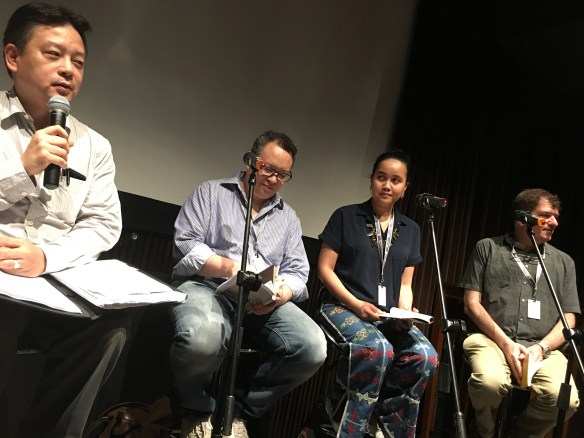
The first session I attended addressed the diasporic element in Singaporean literature—but unlike our exodus of workers and writers to the far reaches of the planet, this diaspora was inbound, and a voluntary one. Moderated by the Filipino expat poet Eric Tinsay Valles, the panel comprised the Eurasian short story writer Jon Gresham, who had come to Singapore via the UK and Australia; the Filipino fictionist and diplomat Cathy Torres, who had moved from her posting in Singapore to Germany; and the American creative nonfiction expert Robin Hemley, who’s married to a Filipina and who now teaches in Singapore.

They discussed how, in the words of Eric, the diaspora could be “a creative space” within which the experience of estrangement could create some positive value. Being away from one’s home, the three agreed, made new impressions and expressions possible. The writer’s struggle to adjust and adapt was in itself the story. Jon spoke about how “It isn’t so much about roots as routes—the journey, the getting there” for the diasporic writer. Adverting to the title story of her debut collection, Mariposa Gang and Other Stories, Cathy observed how “Diasporic stories are like butterflies. They may look alike but no two are truly the same. I try to catch them and send them out into the world.”

But the it was the keynote talk by Farish Noor, a Malaysian political scientist and historian who’s become something of an intellectual rock star in the region, that both charmed and alarmed the packed chamber where the Singaporean parliament used to meet. Dr. Noor introduced his talk thus:

“How a word can have multiple meanings at the same time, and have their meanings change over time, is an interesting mirror to the unfolding of history. This lecture looks at one word in particular, sayang, charting its path of adaptation from pre-colonial and colonial histories to the post-colonial present; and considering how the changes in its meanings and applications—from fables to novels to cinema and pop culture—tells us more about ourselves, like how our own sensibilities and worldviews have evolved, leading to the postmodern present which we inhabit today. The word remains the same, but do we sayang today as our ancestors did?”

Looking back on how concepts of love evolved over time in the region—including love across species in folklore, and love for the colonial master—Farish noted how “Words are what we have left of the past, and the past is far more complicated—more rich, more deep—than the present. Today, in the age of Facebook, ‘love’ has been reduced to clicking a ‘Like’ button.”

During his turn in the chamber, Singapore’s unofficial poet laureate Edwin Thumboo looked back on a lifetime of literature in his country thus: “Young poets no longer write about nation because the nation has been constructed for them. It’s no longer a problem….. It’s so easy now to get published but I don’t think there’s enough revision going on. People are anthologizing like mad. Be patient. Always think you can do better.”

The renowned American critic Marjorie Perloff spoke at the last event I attended, and she closed SWF 2016 for me with a rousing challenge: “Avant-garde poetry has crossed the boundaries between the verbal and the visual, but poetry hasn’t changed in 70 years the way painting and music have. We need another kind of revolution!”

Many thanks again to my hosts and to my SWF friends—it was all sayang and yet no sayang for me this past weekend. In a coming column, I’ll digest two interviews I conducted with Singaporean poet Aaron Lee and our very own Eric Tinsay Valles on what it’s like to be a poet in Singapore.

Penman No. 224: Fantastic, Frenetic Frankfurt (2)

IMG_9577.JPG

Penman for Monday, November 7, 2016


GOING TO the Frankfurt Book Fair was a great opportunity to renew old friendships and make new ones within both the global and Philippine publishing community. While we authors count publishers among our closest and most valuable friends, I realized in Frankfurt that we really don’t talk about their side of the business that much, as engrossed as we often are by our own fabulations.

I was particularly happy to finally meet Renuka Chatterjee, who had been India’s premier literary agent when she worked for the big Osian’s cultural conglomerate in New Delhi. As my first literary agent, Renuka had been instrumental in getting my second novel, Soledad’s Sister, translated and published in Italy; but more than that, she guided me through my first textual revisions, through which I began to learn how international publishing worked. When Osian’s shut down its literary operation, I passed on to another very capable agent in New York, and Renuka eventually joined another leading publishing house in India, Speaking Tiger. We had corresponded by email over the years, but Frankfurt gave us an excuse and a venue for a long-overdue face-to-face.

Another acquaintance lost and found was the dynamic and groundbreaking Malaysian publisher Amir Muhammad, whom I had first met at a conference in Penang in 1992; Amir gifted me with a new trilogy of Southeast Asian stories he had just published, featuring the works of some of our best young Filipino authors. (Those books—like many others I’ve gathered on my travels—are now lodged at the Gonzalo Gonzalez Reading Room in UP, where we keep a repository of contemporary Southeast Asian literature.) Indeed, and not surprisingly, the Malaysians became the Philippine delegation’s best buddies at the fair; we frequented their booth to partake of the nasi lemak and to trade notes on the writing life. The Indonesians were equally hospitable, and our troop of visitors enjoyed a chat and the inevitable selfie with their star, the novelist Eka Kurniawan, whose Man Tiger made the 2016 Man Booker International Prize long list.

IMG_9554.JPG

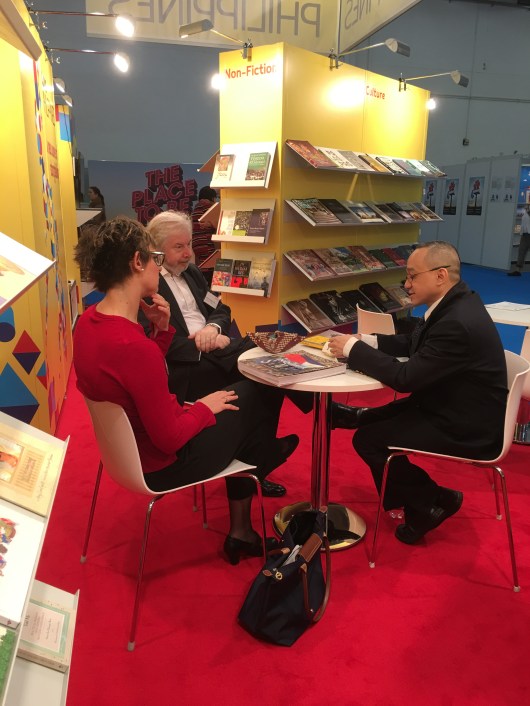
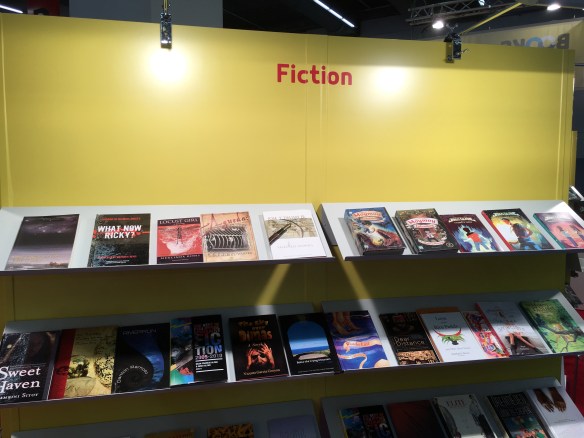
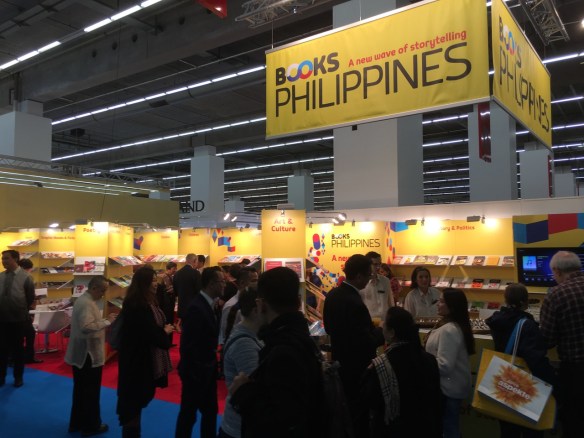
Neither were the long hours at our own booth wasted, as a steady stream of visitors curious about our books and our culture came by to browse, to converse, and to do business. Business, after all, was what most people went to the book fair for, and while some of us minded the store, our delegates were often out meeting with their counterparts from the US, the UK, Europe, and the rest of Asia. (I had a very productive conversation with a gentleman from Montenegro who runs a kind of global blog of blogs—expect “Penman” to appear there soon, but only after it’s published here, of course.)

IMG_9583.JPG

It was the Ateneo University Press’ new boss Karina Bolasco’s third straight year at the fair, which she had previously attended representing Anvil Publishing. University presses don’t generally look at their books as profit-makers, reducing the financial pressure somewhat, but Karina still had a full schedule of meetings with academic publishers, especially longtime Philippine partners such as the University of Wisconsin Press. “Our job is to negotiate for reprint rights,” Karina told me. “We try to find material already published abroad that will be interesting to Filipino readers, and we also offer other presses the rights to reprint Filipino works with a global appeal.”

One of the most visited displays in the Philippine booth this year was that of Mandaluyong-based OMF Literature, Inc., which has published religious and inspirational books since 1957. OMF CEO Alexander Tan told me that their market was big and growing—extending even to OFWs in the Middle East—and that it had developed its own local stars such as pastor Ronald Molmisa, who draws huge crowds to his lectures on love and relationships. “I realized that by breaking the rules and letting people like Ronald use Taglish in their books, we could reach more readers,” Alex said.

On the other hand, literary agents like Andrea Pasion-Flores, who now works with the Singapore-based Jacaranda agency, assume the task of representing Filipino authors abroad and finding publishers to buy their works (and who then assign editors to work closely with the authors on revising their text for publication). Andrea—an accomplished author in her own right who also happens to be a lawyer and the former executive director of the National Book Development Board—is the first and, so far, the only literary agent working actively in the Philippines. Jacaranda has already sold the rights for such distinguished Filipino writers as the late Nick Joaquin, Charlson Ong, Isagani Cruz, and Ichi Batacan (whose Smaller and Smaller Circles will be a movie soon).

IMG_9563.jpg

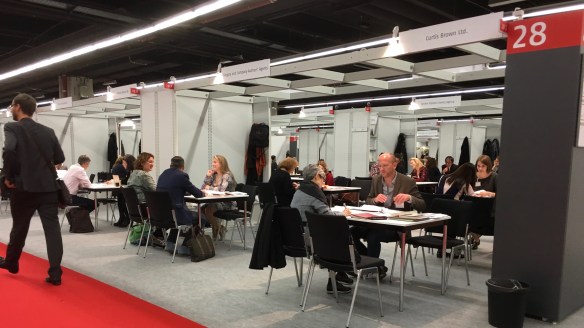
Andrea and her Jacaranda colleagues Jayapriya Vasudevan and Helen Mangham spent long working days in Frankfurt at the exclusive Literary Agents section upstairs, which only registered agents (who paid a hefty price for table space) and publishers could theoretically access. But Andrea secured a pass for me so I could observe the frenetic 30-minute “speed-dating” sessions that took place in hundreds of cubicles. “You’re probably the only author in this room,” Andrea told me. When I asked her what international publishers were looking for from Filipino authors, her response was quick and to the point: “The big novel, more genre fiction, and more high-quality literary fiction—and less ego, please, as Filipino authors generally aren’t used to revising their work!”

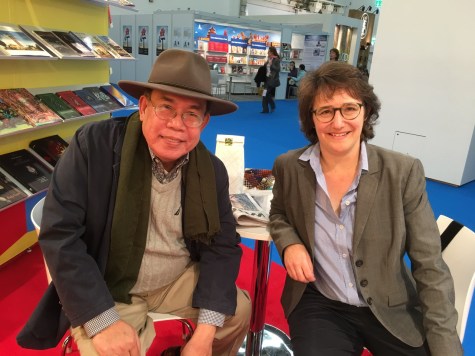
Back downstairs the next day, my companions at the Philippine booth were surprised to see me in animated conversation in Filipino with a Caucasian lady, whom I was happy to introduce to everyone. Our visitor was Annette Hug, a novelist and translator who had come from her home in Zurich to meet with me and with her publisher at the book fair. Annette—who took her MA in Women’s Studies in UP and regularly practices her Filipino with an OFW friend—had just translated a piece I had published last month in the Philippine edition of Esquire magazine, a piece on extrajudicial killings that had somehow gone viral; Annette’s translation had come out that same day in a Swiss newspaper and she brought me my copies, fresh off the press. But apart from that sad topic, Annette had also just published a novel in German, Wilhelm Tell in Manila, based on Jose Rizal’s work on that Swiss hero’s life, and the UP Press will now explore the possibility of publishing a translation of her novel in the Philippines.

IMG_9597.jpeg

Another visitor was children’s book author and Palanca Hall of Famer Eugene Evasco, who just happened to be in Munich on a three-month research fellowship, so he took the three-hour train ride to Frankfurt to visit the fair and to take in the mind-blowing displays at the children’s literature section.

Of such providential encounters, magnified into the thousands, was the Frankfurt Book Fair made, and while I was there less on business than as a roving cultural ambassador of sorts, I was glad and privileged to tick another item off my bucket list. I’ve run out of space to talk about an excursion some of us took to trace the footsteps of that quintessential Filipino writer, Jose Rizal, in nearby Heidelberg, so I’ll save that for another column soon.

IMG_9567.JPG

Penman No. 223: Fantastic, Frenetic Frankfurt (1)

IMG_9550.jpeg

Penman for Monday, October 31, 2016


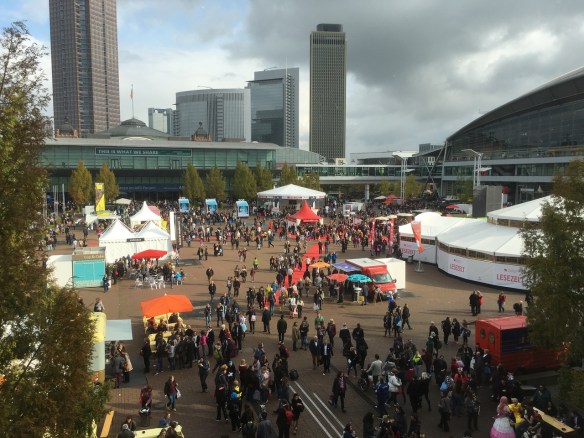
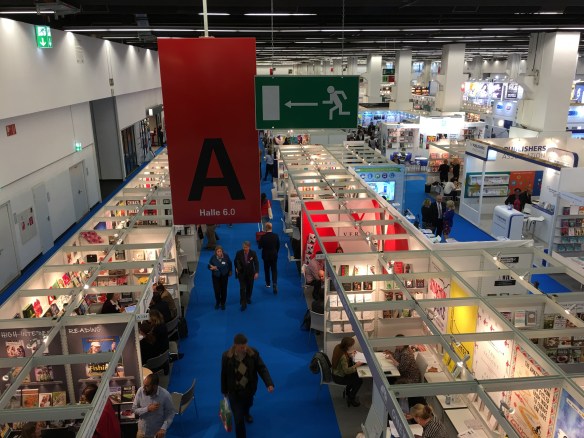
I’VE BEEN to mammoth meetings before—the Modern Languages Association in Chicago, MacWorld in San Francisco, Comic-con in San Diego, for instance—but nothing comes close to the Frankfurt Book Fair in size and scope. Covering over ten hectares of exhibition space spread out over several buildings and many floors, it’s certainly the world’s biggest and best-known book fair, gathering participants from nearly 200 countries.

Unlike author-focused literary festivals, the vast majority of those participants are publishers, booksellers, editors, literary agents, and printing industry representatives, all looking to make a pitch and a sale of their wares across the globe. That globe may have been made much smaller by the Internet, but nothing still beats a face-to-face transaction with one’s possible partners, and that’s where a book fair like Frankfurt’s comes in, as a week-long physical marketplace where the world’s publishers, from the biggest to the smallest ones, all go.

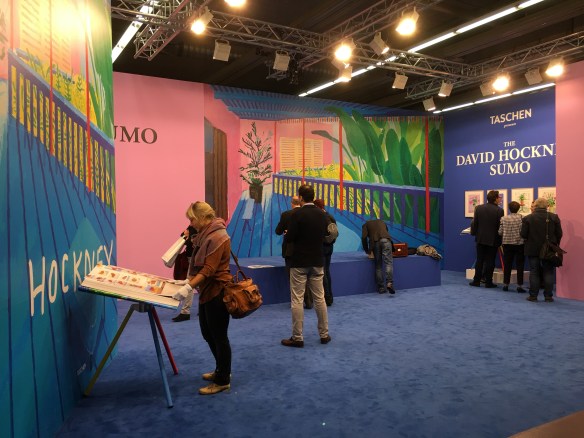
Inevitably a few writers and artists stray into the mix (we spotted David Hockney through a crack in the wall being interviewed at the Taschen booth by German TV), and this year I was one of those lucky few, with some help from the National Commission for Culture and the Arts and the University of the Philippines. Spearheaded by the National Book Development Board and invaluably assisted by the prime advocate of culture and the arts in the Senate, Sen. Loren Legarda, the Philippines expanded and upgraded its representation at FBF 2016, with a much larger booth and an impressive array of books from all our major commercial and academic publishers. The NCCA also sponsored one of our top graphic artists, Manix Abrera, and it didn’t hurt that National Artist Virgilio Almario came along in his private capacity to accompany his wife Lyn and daughters Asa and Ani who were representing Adarna Books and the Book Developers Association of the Philippines.

IMG_9720.jpeg

While Filipinos have attended the FBF in dribbles for some time now, it was only this year that we went all out, helped incalculably by our bigger booth. Last year, publishers had to chip in P100,000 each to rent a tiny plot of real estate at the fair, which starts at 400 euros per square meter. Sen. Legarda’s timely intervention meant that publishers could put their rental money into bringing more representatives and more books, and our 2016 delegation hit a historic high at over 40 members.

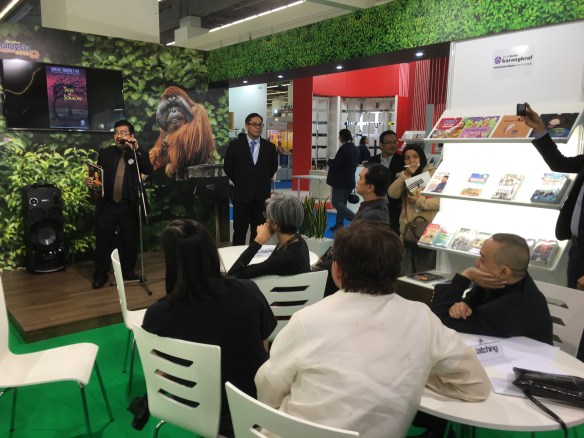
Though not yet quite the pavilion that countries like China and Singapore could afford, our corner booth was colorful and visually attractive—a plus in a fair with thousands of such offerings, all competing for the passing viewer’s eye. Through the Ateneo University Press (now headed by Karina Bolasco, formerly of Anvil Publishing), the Philippines also had another albeit smaller booth in another hall as part of the FBF’s invitational program, an affirmative-action project that brings in and sponsors selected publishers from developing countries. Predictably, China’s exhibit occupied a whole city block (for the price of which they could have gotten a better English editor for their signs, which proclaimed “Chinese Publication”).

On the other end of publishing pomp and circumstance, the FBF annually invites and celebrates a Guest of Honor, and this year it was the Netherlands and Flanders, which decked out an enormous hall as a haunting landscape reminiscent of the Dutch flatlands. The Guest of Honor status focuses attention not only on that country’s literature but its entire culture and society, providing an opportunity to put one’s best foot forward (Dutch royalty attended the opening ceremonies, lending a touch of glamor to the event—and ratcheting up security for everyone). The Guest of Honor also gets to choose a theme for its exhibit, which this year was “This Is What We Share” (last year, New Zealand—on the other side of the world, for Europeans—whimsically chose “While You Were Sleeping”). My fancy tickled, I asked what the Philippines needed to be named Guest of Honor—one can both apply or be invited—and received an unequivocal answer: “Millions of dollars.” I shut up.

Its cultural import aside, the book fair means big business for Frankfurt, which, in partnership with the private sector, leases out the fair grounds to such clients as the publishers’ association which directly runs the book fair; at other times the venue hosts other big events such as automotive fairs and a forthcoming Justin Bieber concert. Last year the FBF brought in 250,000 participants, a figure the organizers expect to rise to 280,000 in 2016.

IMG_9573.JPG

This year’s edition of the Frankfurt Book Fair is officially the 68th, but it traces its lineage much farther back to medieval times, when friars traded pages of illuminated Biblical manuscripts. There’s still a special section of the FBF devoted to the antiquarian trade, to which I gravitated naturally, being interested in all things ancient. Other than this parchment-heavy and leather-bound corner, the FBF dwells and thrives on nothing but new, newer, and newest—new books, new ideas, new authors, new media, new technologies, new markets, new connections, new networks.

Exhibits are grouped by geographic region, by language, and by theme, so one has to roam far and wide to get the full scale of things and to zero in on specific interests. Much of the business at Frankfurt, however, is pre-planned; with table space at a premium, publishers and agents would have emailed each other months or weeks in advance to set up meetings for specific dates and times in Frankfurt.

IMG_9584.JPG

The publishers of so-called “trade books”—novels, cookbooks, children’s books, etc. aimed at the general public—showcase their works to attract attention from international publishers and booksellers who may want to translate them into another language, or to sell the books on consignment in other countries. Academic publishers—this year we were represented by the UP Press, Ateneo de Manila University Press, and UST Press—negotiate among each other for reprint rights, which can make costly works more easily available to local readers.

Led by NBDB Chair Neni Sta. Romana-Cruz, the Philippines launched its exhibit with a reception at its booth on the fair’s formal opening on October 19, a well-attended event graced by Ambassador Melita Sta. Maria-Thomeczek (who was happy to recall that she had once been an employee in Rio Almario’s Adarna Books and had been a student of Rio’s wife Lyn at Maryknoll) and by First Secretary and Consul Cathy Rose Torres, who herself happens to be a prizewinning fictionist. The reception was catered by Maite Hontiveros, who laid out a scrumptious spread that featured lumpia, spoonfuls of adobo on rice, mango juice, and Philippine chocolate, which were clearly a hit among our foreign guests.

IMG_9536.jpg

Filipino books, of course, remained on top of the menu, and for the next week, we took turns at the booth to entertain visitors and book buyers from other countries, while occasionally slipping out to survey the vast array of exhibits and inevitably to marvel at the scope, vitality, and quality of global publishing in the 21st century. I came away even more convinced that culture is a global battleground, and that books are weapons—of mass instruction, if you will.

Next week, I’ll share the highlights of my conversations with key people at the book fair, and report on retracing Rizal’s footsteps in Heidelberg.

IMG_9564.JPG

Flotsam & Jetsam No. 47: Fountain Pen Day Nov. 5-6 at SM Aura

I1Ptaxz.jpg

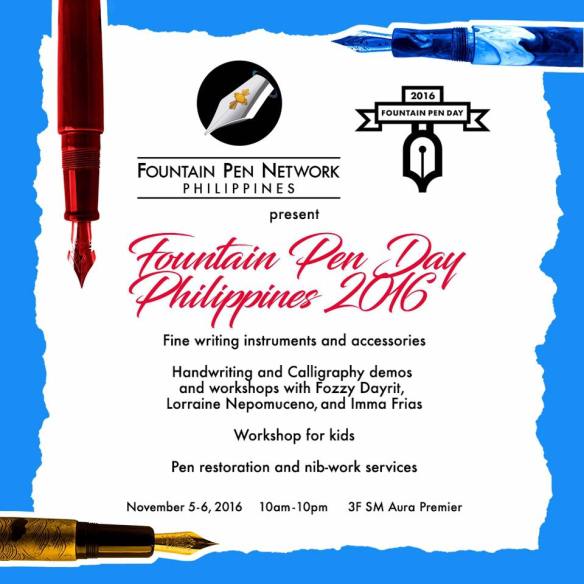
 IN CELEBRATION of Fountain Pen Day—marked globally every first Friday of November—Manila’s foremost dealers of pens and inks will set up shop on November 5 and 6 at SM Aura Premier in Bonifacio Global City near Toby’s Estate on the 3rd floor.

Scribe Writing Essentials, Pen Grafik, Everything Calligraphy, Faber Castell, National Book Store, and Lamy will be showcasing some of the finest brands of pens and inks from Europe, the United States, and Asia.

Handwriting workshops have also been lined up over the weekend. Kids wanting to discover the joy of handwriting can sign up for demonstrations guided by children who themselves use fountain pens for writing and illustration. Local pen restorers and nibmeisters will be present to tune, repair, and appraise pens. Pen lovers wishing to learn more about both vintage and modern pens can pick the brains of seasoned collectors, and students of the ornamental word can interact with expert calligraphers.  An art exhibit will feature works rendered in pen and ink by some of the country’s best artists. (Some of my best vintage pens will be on display, as will those of other FPN-P members.)

9461223955_cfe9b4d40b_o.jpg

Fountain Pen Day was started in 2012 by American pen collector Cary Yeager. In the Philippines, the Fountain Pen Network-Philippines (www.fpn-p.org) organizes this festival. With over 2,000 members in its Facebook group, FPN-P is a diverse community bound by a shared love for the written word in an increasingly digital age. Its members include writers, lawyers, doctors, teachers, artists, tech professionals, civil servants, and students.

Fountain Pen Day Philippines 2016 is also made possible by the support of SM Aura Premier, PNB Savings Bank and Asia Brewery. For more updates on Fountain Pen Day, go to Instagram and follow @fountainpenday and @fpnph, or interact using hashtag #fpdph2016.

Penman No. 222: An Education for the Well-Rounded Filipino

1094625733_b065e8bc1c_z

Penman for Monday, October 24, 2016


IN A few weeks’ time, several hundred professors at the University of the Philippines’ Diliman campus will gather together for an important vote on UP Diliman’s General Education program—long seen to be the hallmark of a UP education. It’s important because what happens there will determine, to a great extent, what “tatak UP” will mean for the next generation or two, and what being “the national university,” as its charter defines it, entails as far as the quality and the breadth of its offerings are concerned.

The raging battle seems to be over how many units (or class-hours a week) to allot to General Education subjects, which have traditionally covered basic and compulsory courses in such areas as language (English and Filipino), history, math, science, and philosophy.

There’s a menu of options on the table, ranging from a formidable 45 units to a scant 21, and an emerging compromise of 30-36 units in between; the mix of courses in these totals is also under negotiation. Those who want more want to ensure that every UP undergraduate—whether he or she plans to become a lawyer, an engineer, a surgeon, or a painter—can talk intelligently as a well-rounded citizen about the Katipunan and mitosis and perspective and Sophocles and interstellar travel. Those who prefer less want students to graduate from their programs sooner, for UP to remain competitive with other schools, and suggest that students can imbibe some GE skills both from their K-12 add-ons and from their higher-level classes.

I don’t mind saying that I put myself squarely on the 30+ side. We can’t keep complaining that young Filipinos can’t write or speak in proper sentences or don’t know who Apolinario Mabini was—without doing enough to fix the problem, given the chance. Sure, some of these learning points can be addressed in senior high; but subjects like History, English, and Philosophy will still be different when taught in UP’s staunchly secular context and pitched as adult concerns.

But never mind me—let’s give a listen to one of our most accomplished writers, the Leyte-born but now New York-based Gina Apostol, whose novels have won the 2013 PEN America/Open Book Award and National Book Awards in the Philippines. Some time ago, Gina wrote UP Diliman Chancellor Michael Tan to plead for the strengthening of UP’s GE program, and I got her permission to quote from that letter here:

I am writing as a graduate of the UP English department, 1980-1984, a former teacher at the department, and as a novelist whose work has been indelibly shaped by my education at UP—in particular, by its General Education program, to which I look back daily in my own work as a teacher and a writer.

My three published novels owe their genesis to that program. My current novel, William McKinley’s World, about the Philippine American War, began in a PI 101 class in a classroom at Palma Hall Annex, where my professor taught me about a war I never knew about.

In those first two years at UP, I learned to think. The General Education program made me into a writer. I went to a private high school in Leyte that certainly taught me well (arguably just as rounded as the current K-12 program); but I needed the General Education program at UP to make me whole—a critical consumer, a nationalist thinker, a global reader, and finally, it gave me ground to think honestly and seriously about what education means, it gave breadth of thought to allow me to become who I am—a novelist whose work is absolutely grounded in the questions that UP had asked of me in my first two years at the school.

It is my misfortune (though some call it luck) that I have ended up teaching in the States, living among an extremely lucky group of students: the wealthy enclave of Manhattan’s private schools. But every day, teaching my very privileged, very wealthy students who can enroll in any school they want, I can compare what they have to my education at Diliman, and I am daily impressed by the foundational, long view of knowledge grounded in the breadth of UP’s General Education curriculum.

My experience as an educator and an artist here in America is that the education I gained at the University of the Philippines is equal to and (given the state of America) too often exceeds the quality of education abroad. This is true of my fellow alumni who come to America: we understand how well we were prepared.

I cannot underline this enough: I know that UP provided me with an incalculable, a priceless education. I am writing to state emphatically that the General Education program at UP should be enriched, not reduced.

Even today, having been to and taught at several schools considered the best of their kind in America—so acculturated and mired in the world of the privileged as I am here in America—every day, in my classroom, I still marvel at the amazing comprehensive education I got at the University of the Philippines.

Here in Manhattan, these kids are killing themselves to get into colleges with the kind of education I got at UP. My own daughter went to the University of Chicago, and I will say that I was proud (and fascinated) to know my education as a freshman and sophomore was equal to her own rigorous coursework in the General Education program of the University of Chicago, where highly able freshmen have to go through the GE program. As you know, Chicago’s program still stands as a beacon of higher education in America today.

At UP, as my daughter was at Chicago, I was required to take philosophy, maths, history, sciences, and four rigorous courses in English that made me read across cultures (the stories of Akutagawa and D.H. Lawrence, Marquez and Achebe)—to read across time (Machiavelli and Madariaga, Rizal and Homer)—and to read across disciplines. I noted that just as at the UP in my time, the University of Chicago does not stint its students—my daughter was required to do the full two years of humanities reading before she did her majors, reading Hegel and Homer as a freshman and sophomore, as I was asked to do in Diliman. In my case, much of the knowledge that has stayed with me came in one packet (Dadufalza’s primer). The way UP taught its students to think then remains an incalculable benefit, equal to the best in America.

I repeat: I learned to think at UP, and the General Education curriculum made me into a novelist. It made me into a writer who can hold her own anywhere. It distresses me to think that the university will fail even one child, one student from the provinces, like me, who arrives at the university not knowing exactly who she could be—but now without the bulwark of its tough and extended humanities curriculum to point her to the myriad possibilities that creates not only engineers but also artists, not only scientists but also philosophers. The rigorous General Education program of UP is a boon to the country.

UP should strengthen its GE curriculum, not reduce it.

Please let me know how we, alumni across the world, can help to strengthen our alma mater. We love UP, we love our education, we would love to help.

Gina Apostol, AB English 1984


Penman No. 221: Teaching the Millennials

L1090932.JPG

Penman for Monday, October 17, 2016


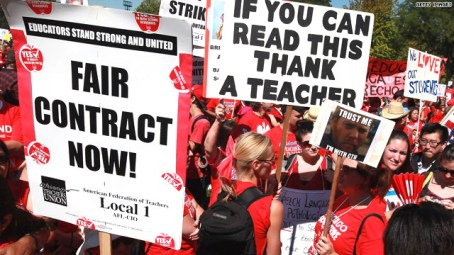
THERE WERE no marching bands, greeting cards, or fireworks to mark the event, but World Teachers’ Day was celebrated last October 5. As unofficial or secular holidays like Mothers’ or Grandparents’ Day go, it’s a relatively new one, proclaimed by UNESCO in 1994 to draw attention to the key role teachers play in molding the citizens of every country. My calendar shows that I did nothing remarkable that Wednesday, my day off from teaching, so I very likely spent it on a foot-massage-movie-and-dinner date with Beng. But surely teaching would have crossed my mind, as it does every day, because we keep preparing for our next class even in our idle hours, wondering how we can make our students’ encounters with us more interesting and memorable.

I’ve been thinking about teaching a lot more lately, first because of the recent deaths of some valued mentors and colleagues. Just over the past month, our department lost two of its stalwarts—Professors Sylvia Ventura and Magelende “May” Flores. I’ve written quite a bit in this corner about Sylvia, my Shakespeare teacher, who fired up my enthusiasm for Elizabethan drama and poetry. May was an English-language specialist and textbook author, a sweet, imperturbable lady with a caring smile for everyone. (Continuing the tradition, May’s son Emil also teaches with the department and has become one of our prime experts on science fiction and creative nonfiction.)

The second reason is my own impending retirement, less than three years hence. It’s hard to believe that it’s been more than three decades since I gave up my PR job at a government agency to devote the rest of my life—as I told myself then—to studying, writing, and teaching. I never did become much of a scholar—I guess I did become the writer I wanted to be—but even this close to the end of an active career, the teacher in me is still a work in progress.

That’s because every teaching day is a new performance, even if—like it would be for a theater actor—the script may essentially be the same for courses you’ve taught for years. Every new batch of students brings with it a new mix of challenges—even, over the decades, a generational drift to adjust to. For example, a teacher can’t simply blame millennials for their lack of a historical memory, which we helped create; I try to get them interested in the past not for the past’s sake, but to show them how an appreciation of the past can help their future.

Teachers, in other words, have to keep learning about their students and their interests, so lessons remain fresh and relevant, rather than boring incantations regurgitated from ages past. We need to relate the lesson to the student’s present realities, which may seem daunting if you’re talking about, say, a 19th-century short story about the French bourgeoisie, but which can be done with a little imagination (in this case, I’d begin by talking about the Filipino middle class and its aspirations—“Where do you see yourself ten years from now?”).

But as vital as it is to connect directly with millennials, it’s just as important to remind them that there are many things in this world that may seem to have little or nothing to do with them that will still affect their lives—in other words, that we’re still motes in the grand scheme of things, and that Nature can be profoundly indifferent to our noisome plaints and woes.

That’s a harder lesson to impart, even to older students—to any person who hasn’t encountered something much larger than himself or herself, like a World War, or martial law, or a terrorist attack. In a me-centered universe, no one wants to feel disempowered, so I then have to challenge them into getting out of themselves and enlarging the sphere of personal actions they can take to improve not only their own future, but also that of their fellowmen.

Back when we ourselves were freshmen and sophomores in the early 1970s, this message came down to us in the exhortatory slogan “Serve the people!” Exactly how seemed a lot simpler to figure out back then, when a predatory dictatorship was looming over everything and everyone (a dreadful specter I thought I’d escaped forever). Today a young person’s options are far richer and more complex, with all manner of personal advocacies, NGOs, weekend CSR programs, and Facebook groups competing for one’s political attention.
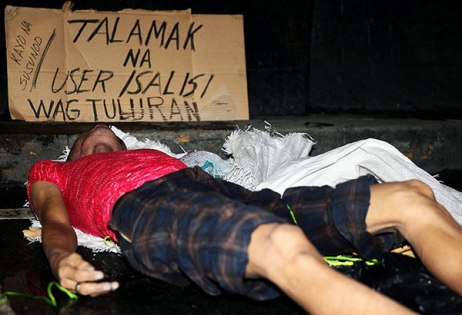
But whatever the chosen means may be, the overriding need for building empathy remains, for leading young urban, middle-class Filipinos to see, to appreciate, and to grow their stake in a future that they share with the millions of others who live unlike them, many without the opportunities that they enjoy. We can’t truly be a nation—much less a Christian one—if we continue to dismiss the bullet-riddled bodies of the poor as trash because we find nothing in common with them.

A teacher’s job is to help students draw the line between two points, including and especially the most seemingly disparate ones. That includes the line between teacher and student, between student and student, and between student and society. If that’s all I’ve done these past three decades, I can retire happy.


AND NOW for something liberative. According to the exhibit notes, “Ebarotika! (You are Erotic, Eve) follows the story of Eve who dared venture into the forbidden. Her defiant act opened knowledge’s connection with sexuality, the knowledge of one’s sexual and erotic desire. But it also resulted in shame and punishment. Thus, many of us cover and hide our sexual and erotic life. Those who are bold enough to come into the open are subjected to stigma, discrimination, and death. Sexuality and the erotic are a source of life, joy, and pleasure. They are not objects of fear, horror, and anxiety. They must be opened, shared, and celebrated instead of being censored, concealed, and criminalized.”

Curated by Lia Torralba, Ebarotika! features 19 Kasibulan artists: Yasmin Almonte, Lot Arboleda, Chie Cruz, Cecil de Leon Escobar, Imelda Cajipe Endaya, Anna Fer, Lorna Fernandez, Kristin Garanchon, Lorna Israel, Amihan Jumalon, Nina Libatique, Eden Ocampo, Jonabelle Operio, Fel Plata, Rebie Ramoso, Benay Reyes, Doris Rodriguez, Christine Sioco, and Lia Torralba.

It opened last Saturday, but will run until November 23 at the Sining Kamalig Art Gallery located on the Upper Ground Floor of Ali Mall in Cubao, Quezon City. See you there!


Penman No. 220: Viva Visayan Artists

Kat1.jpg

Penman for Monday, October 10, 2013


JUST LIKE the city itself, which has undergone a refreshing makeover these past few years under the watchful eye of its chief political patron, former Senate President Franklin M. Drilon, Iloilo’s artists have been brimming with a new vitality that art lovers beyond the region have begun to appreciate.

I know that, because a few months ago, my wife Beng—herself an Ilongga artist and conservator who’d gone briefly back to Iloilo on family business—came home with the news that while in Iloilo, she had found and purchased a large painting by one of the city’s brightest young talents. The word “large” pricked my ears because it somehow sounded like “expensive” to me, but then she said she was paying for it herself, so I asked no further.

But I had to find out who the artist was, and Beng—who regularly tends to Amorsolos, Manansalas, Botongs, and Ocampos in her line of work—began gushing like a fangirl about a young painter she’d met while touring the Iloilo art scene with her old friend Rock Drilon. Rock, himself a painter of no mean stature (a recent exhibit at West Gallery displayed a penchant for organic, microbial forms), has been based in his home city for many years now, and has been a guru of sorts to younger artists there. So it was Rock who took Beng around to introduce her to his wards and their work, which was how this haunting painting of a young woman in white drapery found its way to our home in Quezon City. (It was too large to fly home with Beng and had to be professionally packed and shipped; I didn’t get to see it until months later.)
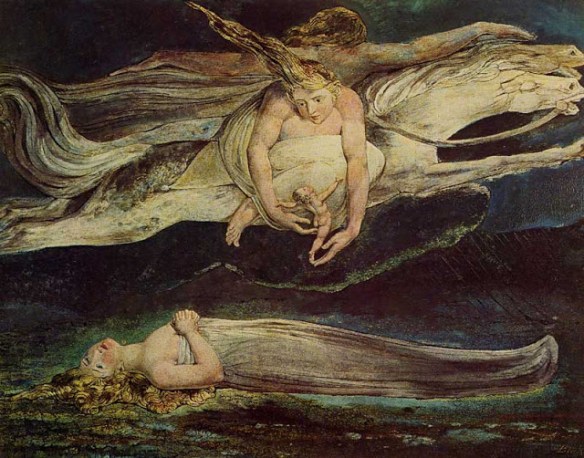
That’s when I first heard of Kat Malazarte, whose first solo exhibit Beng had seen at Casa Real de Iloilo, where Beng’s chosen work titled “Purity” (an apt choice for anyone surnamed Dalisay) had been the centerpiece. Just 20 at the time, she had already won the Vision Petron National Student Art Competition in 2015 for her video entry “Tingnan nang Malapitan, Damhin nang Malaliman” (Examine Closely, Feel Deeply). Indeed there’s a classical composure and pensiveness to Kat’s work, uncommon in artists of her age more prone to wanton kineticism. Her self-avowed themes of “purity, innocence, chastity, modesty, inner silence, contemplation, and state of nothingness” are monastic notions one might associate more closely with a nunnery (Kat’s a Fine Arts cum laude graduate of the University of San Agustin), and her subject’s luminous hands might have been rendered by a Renaissance master.

IMG_9403.JPG

So it was with much delight that Beng dragged me a couple of weekends ago to a three-day show at the Gallery at A Space on Legazpi Street in Makati, where a unique concept was being tried out by a pair of young and enterprising creatives, Karen Nomorosa and Prim Paypon. On show were the works of none other than Kat Malazarte and another rising Ilonggo star, the sculptor Harry Mark Gonzales. Dedicated to the theme of “The Quiet Strength of a Woman,” the show of Kat’s paintings and Harry’s sculptures proved a perfect pairing—much like the show’s instigators themselves, who both have outstanding corporate and science backgrounds (both are summas—she in CS, he in Biology) but who’ve taken on the more daunting challenge of promoting Filipino art through their startup venture, Curious Curator.

Kat Malazarte.JPG

“Curious Curator was conceptualized in order to help budding and potential artists from outside Metro Manila, especially from the Visayas and Mindanao, penetrate the mainstream art scene,” said Karen and Prim. “Keeping the welfare of the artist front and center, Curious Curator manages the financial, marketing and sales aspect of the collaboration so that the artist can focus on the creation process. Curated and conceptual art exhibitions are held in non-traditional venues to reach a wider audience. This enables the startup to promote the evolving Filipino artistry while diversifying and simplifying ways that budding art collectors can secure original but affordable art pieces.”

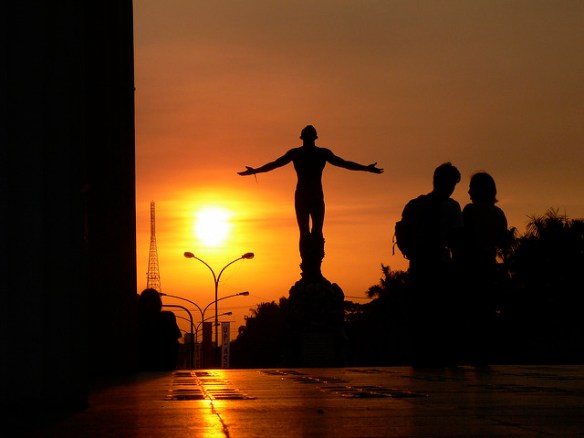
The two-person exhibit at A Space realized that mission. While we had already seen Kat’s work, Harry’s cold-cast marble figures, more than vaguely reminiscent of Henry Moore’s sinuous women, were another revelation. Coming from a background in IT and with a large brood of siblings to help support (he once drove a sikad around the city), this carpenter’s son put his faith in his vision and his hands, and began sculpting pieces that quickly won local collectors over. The self-taught artist won a Metrobank Art and Design Excellence Award in 2007 for a terracotta sculpture he crafted to protest an oil spill in Guimaras. “My main inspiration for these pieces is my mother,” he told me as we surveyed his pieces, whose exaggerated torsos suggested an overflowing fullness of all good things.
harrymark640.jpg

It was too bad the show ran for only three days, from September 30 to October 2, but with rentals at a premium, Karen and Prim have had to be more creative in their marketing, aggressively promoting the featured artists and their work online and selling a good number of them even before the show opened.

As for myself, I got the best part of the deal when Beng generously agreed to lend me Kat’s signature work “Purity” to hang in my new office at the UP Institute of Creative Writing (after the Faculty Center fire last April, we’ve found a new home in Room 3200 of Pavilion 3 at Palma Hall in Diliman).

But there are even more exciting events on the Iloilo art calendar to look forward to, chiefly the Visayas Islands Visual Arts Exhibit and Conference (VIVA Excon) which will be held from November 17 to 21 in Iloilo City. The event will take place in four different venues: the University of the Philippines Visayas (UPV) Art Gallery for the Garbo Sa Bisaya Awardees Exhibit; the Museo Iloilo for the Romeo Tabuena Tribute Exhibition; the UPV Auditorium for Turns in Form (Curated Contemporary Art from the Visayas); and the Visayas Art Fair.

VIVA Excon will also feature lectures on contemporary art practices, talks by artists, and workshops; an art conservator named June Poticar Dalisay, aka Beng, has been invited to talk about art conservation and restoration, and I’m going to do my darnedest best, my schedule permitting, to tag along. Left to herself, Beng just might drag home another local discovery—not that I’d mind too much.


Penman No. 219: The Chase and the Company

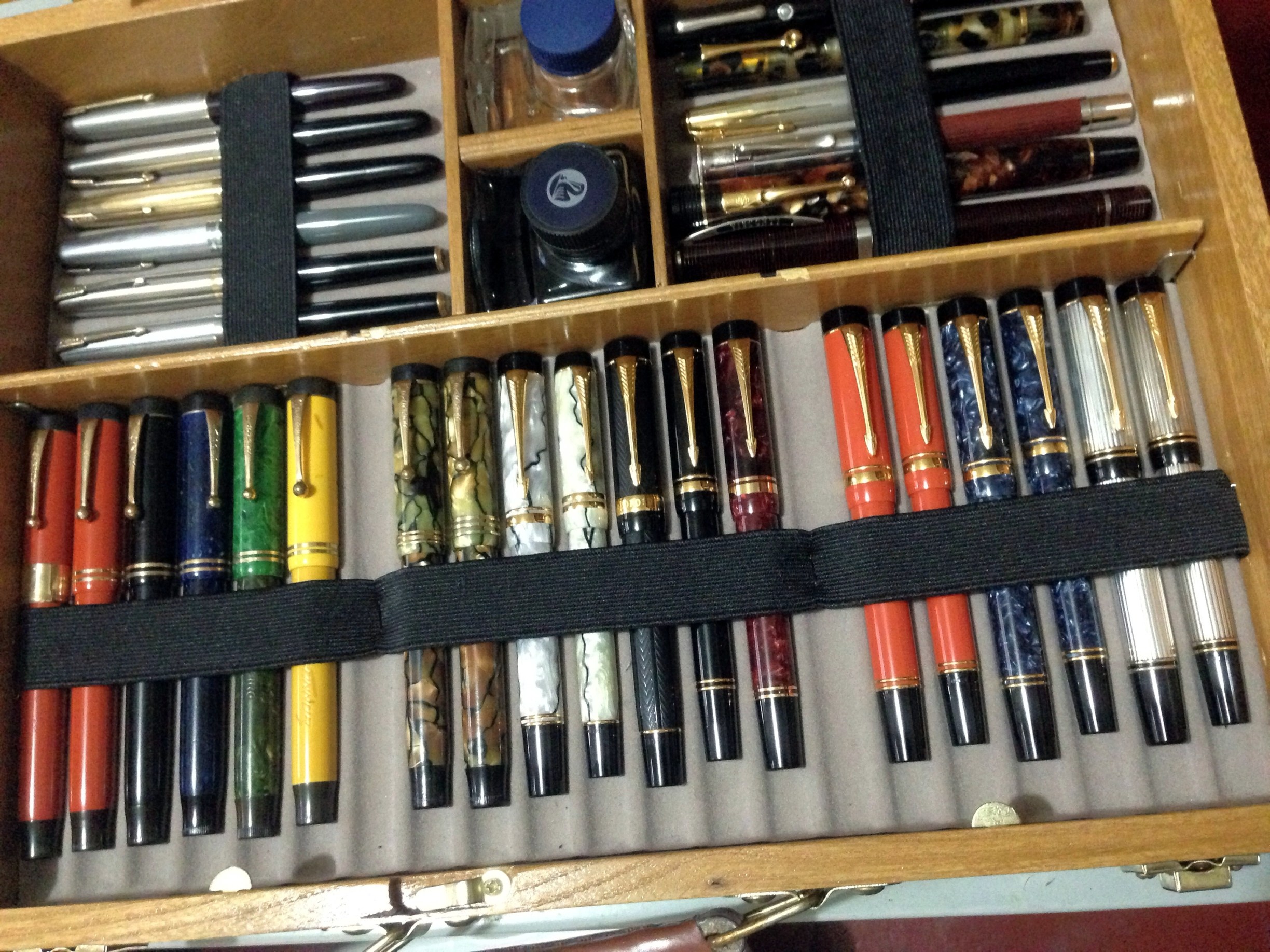
Pens3.jpg

Penman for Monday, October 3, 2016


THERE COMES a time in every collector’s life when he or she realizes that the road has suddenly ended—that there’s hardly anything more to be found, no further byway to be explored. It’s a sad acknowledgment but also in some ways a relief, knowing that one’s disposable income (and better yet, one’s savings) can go to more prosaic but in all likelihood more practical objects—a roof repair, or new tires for the car, or a larger fridge, all long overdue.

None of those, of course, will quite compare with the gleam of a 1786 Carolus III dos reales or an early edition of the Noli or Fili, or a 1950s Mercedes 180 (nothing too special, just one of my favorites) tucked away in an old garage. Or, in my case, a 1936 Wahl Eversharp Coronet, widely upheld to be the “acme of Art Deco pen design.” I’ve lusted after a Coronet in more than 30 years of pen collecting, even keeping a picture of it in my burned-out Faculty Center office, and maybe came close to acquiring it once. But like all “grail” pens, it remained a wisp of a dream, within tantalizing sight but always beyond one’s feeble grasp.

I knew I’d come to the end of my collecting road when the thought struck me the other day that if a Coronet were to be offered to me tomorrow for a reasonable price, I would probably smile and politely decline, preferring to keep it a pretty phantom forever. If I actually held it in my hand it might seem dull and stale, its Pyralin inserts (whimsically described as “Dubonnet red”) somehow lacking in the fire of fantasy.

Come to think of it, I’ve bought only two or three pens over the past three months—at least one of them for resale—when I used to acquire one almost every week. At its peak three or four years ago, my collection of vintage and modern pens numbered more than 300, ranging from the 1890s to the present and representing many of the best pens of every period (excepting the Coronet), by brand and model. It was a collection put together over many years of patient pursuit, of moving up from one model to the next tier, of selling five average pens to buy a first-rate one, of foregoing ampler lunches in my grad-school days in the American Midwest to be able to afford mid-range Parker Duofolds, Vacumatics, and 51s.

Some of those early buys turned out to be bargains and lifetime keepers. Back in 1987, I agonized for a week over whether to purchase an ebony Wahl Eversharp Doric from 1934—another Art-Deco icon, with a 12-sided cap and barrel and a latticed cap band—for the princely sum of $28. Thankfully beauty won over economy and I still keep the Doric, now easily ten times its purchase price.

Another classic I found at a Milwaukee antique shop in 1990 for a small fraction of its true value was a Parker Duofold Senior in Mandarin Yellow, a large fat pen from the mid-1920s, much sought after for the rarity of its color. Bought for $68, I had to resell it a year later for $380—still well below what it would fetch today—when I was living on turkey backs and trash fish on my meager stipend. And how can I forget the gorgeous 1938 Parker Vacumatic Oversize in burgundy red which I found in Edinburgh in 1994 and based my “Penmanship” story on?

It was stories like these that kept my interest in collecting alive, almost as much as the pens themselves, the remaining 150 or so of which I can’t possibly all use and learn to love, even if I rotated them every other day. I still value my best pens as marvels of both art and engineering, which also just happen to lay exquisitely shaded lines and whorls of glorious ink on fallow paper.

I suppose the end began a couple of years ago, when I turned 60. I started selling pens from my collection—even pens I had kept for over 25 years—to allow the members of our pen club, especially our millennial newbies, the privilege of owning and writing with something their grandparents may have used. That’s also when I began using my best pens, like the Montblanc Agatha Christie, on a regular basis—a bit like driving a Rolls to the 7-11—but my reasoning was, as we UP people like to say, if not now, when? What might have been ostentation at age 35 can now only be fondness in a senior, and the silver-snake-clipped Agatha gives me sublime pleasure even in the pocket, and many times more so when I sign my name—even on office forms—with its double-broad stub nib and sepia ink.

Such, I think, are the pleasures of aging, when one turns from sheer accumulation to discernment, and to the dawning acceptance of the finitude of all things, including and especially material objects, no matter how lovely and intricate and painstakingly acquired, be they pens, cars, watches, or Persian carpets.

Whereas I used to check eBay literally a dozen times a day (employing a special search term to ferret out the most desirable vintage pens), today I hardly blink when, say, a 1928 Parker Big Red sails under my nose for less than $100—let someone enjoy the bargain, as I’ve done myself many times. It was the hunt that kept me in the game, but I’ve learned that spotting the target but letting someone else take the shot could be just as satisfying.

In what was likely my last big pen adventure, a few months ago, I found another of my “grail” pens—the much-coveted Montblanc Ernest Hemingway from 1992—being sold online for about half its usual price (if you really want to know how much these babies cost, try Google). The seller was in Malaysia—reason, perhaps, for Western buyers suspicious of anything too far East to shy away, but to me a heaven-sent circumstance.

19408949056_7cabfd53d3_z.jpg

I closed the deal (drawing deeply on my savings, but what the heck, a Hemingway appreciates better than a time deposit) and, in a moment of inspiration, I did some quick computing and figured that it was only marginally more expensive and a lot safer to fly out to KL on a budget fare and pick up the pen personally the next day than to entrust everything to PayPal and a courier service. And that’s what I did. I always enjoy KL for whatever excuse takes me there, but I daresay no Argonaut ever crossed the South China Sea just to pick up an orphaned Hemingway and bring it home. (To be honest, it’s my second Hemingway—I use the other one, the gift of a generous friend, exclusively to grade student papers, in a bright orange ink.)

Over the next few years, I’ll be trying to bring down my remaining stash to an absolute core of about two dozen pens, which will be our daughter Demi’s inheritance from me (sorry, anak, no tracts of sugarland or bubbleback Rolexes here). They won’t necessarily be the most expensive pens—Demi can sell those off, if I don’t—but the ones most laden with story, blobbing like ink at the very top of the nib, eager to be disgorged. It’s been a privilege playing steward to these fine shapers of fine words, and I may miss the chase but not yet the company.

Penman No. 218: History and Irony

11884866_supreme-court-extends-status-quo-ante-order_e9546b1e_m.jpg

Penman for Monday, September 26, 2016


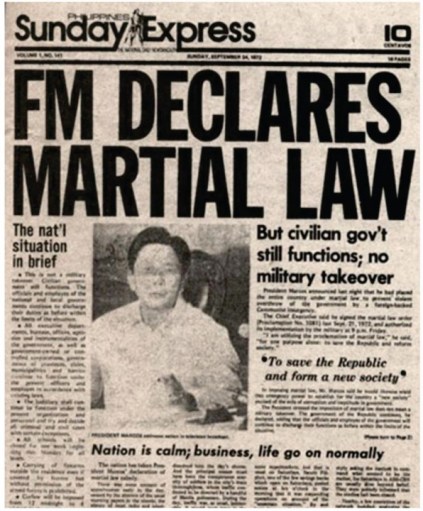
I’D NEVER heard of Ramon Cualoping III and Marco Angelo Cabrera until their names were linked to the recent flap involving the use of no less than the Official Gazette in an apparent effort to sanitize the memory of Ferdinand E. Marcos by removing any reference to martial law—you know, the martial law that Marcos invoked to impose his dictatorial rule on his people from 1972 until he was deposed by a popular revolt in 1986. (Yes, he technically lifted martial law in 1981 but he continued to rule with a rubber-stamp legislature.)

Some Googling revealed that Cualoping was an Ateneo Communication Arts graduate, batch 2004, while Cabrera graduated from San Beda in 2013 and interned briefly with the Department of Foreign Affairs; he had also worked for Sen. Bongbong Marcos. Those are both fine backgrounds for jobs at the Presidential Communications Operations Office—just the kind of posting on which many young writers and lawyers aspiring for a political future have cut their teeth—and I can surmise from the dates provided that Messrs. Cualoping and Cabrera must be in their mid-30s and mid-20s, respectively—too young, therefore, to have personally known what the Gazette expunged.

In the interest of full disclosure, I was a government propagandist myself at an even younger age—19, fresh out of martial law prison. Having dropped out of UP and having worked for the Philippines Herald and Taliba just before martial law, I got a job with the PR section of the National Economic and Development Authority. The irony of going from writing incendiary flyers to trumpeting such new government projects as Pantabangan Dam wasn’t lost on me. But I was getting married and needed a job, and all the old media jobs were gone save for the Express and the Bulletin, so I was thankful for whatever came my way. (I would much later write hundreds of speeches for FVR, among other Presidents and political clients—mostly to pay the rent, occasionally for the sheer privilege—so don’t look at me as some crusading journalist.)

I don’t know what drove Messrs. Cualoping and Cabrera to the Palace; I’m assuming their motives were loftier than mine. I also don’t know what made them officially forget (hey, it’s the Official Gazette, right?) that FM declared martial law. I suspect they knew what happened, but chose to ignore the most salient fact about Marcos’ life, for reasons only they can tell. To his credit, Communications Secretary Martin Andanar effectively reprimanded his staff for the deliberate oversight and corrected the record.

I’ll leave further chastisement of these two gentlemen to the netizens who broke the story. From one PR pro to another, what I can tell them is this: I understand the job you have to do and even your private allegiances, but there are things—very big things much bigger than yourselves—that you just can’t sweep under the rug. Denying martial law or its disastrous effects on our society and economy is like telling Jews that the Holocaust never happened, or was actually a good thing. I salute you for your cheek, but what on earth were you thinking?

There’s a book I’d like to recommend to these two, one which I and a dozen other writers—all students during martial law—put out four years ago on the 40th anniversary of Proclamation 1081, titled Not on Our Watch: Martial Law Really Happened, We Were There. (For more on that book, see here: http://www.philstar.com/sunday-life/806191/lest-we-forget.) I wasn’t too enamored of the long title at that time, but now I appreciate the emphatic clarity of the thing; it’s just the sort of book martial law amnesiacs and deniers need to read.

16136602._UY475_SS475_.jpg

But even as we review history, there’s one thing that seems to have escaped many: the current debate about how to look at martial law and where to bury Ferdinand Marcos isn’t about the past; it’s about the future, and what kind of people we are and want to be.

I know that millennials tend to get beat up on because they don’t know enough about martial law, which is hardly their fault since we didn’t teach them enough about it. But it isn’t just them. When people my age express bewilderment over how Bongbong Marcos came so close to becoming Vice President despite his dad’s misdeeds, and how the Marcoses have survived so handsomely, I have to remind them that even under martial law, those of us who opposed Marcos were in the distinct minority. Most Filipinos supported martial law, actively or passively, or it wouldn’t have lasted so long. Like the Germans who supported Hitler, most Filipinos stood by while we faced the truncheons and firehoses—and even applauded 1081, early on, as the antidote to Communism (1972’s “war on drugs”). So what should we be so surprised about?

That’s why I’ve never referred to EDSA 1 as a revolution, because it wasn’t one in terms of changing anything fundamental in the structures and workings of our society. It was a popular uprising, a street revolt led by another faction of the ruling class, with broad support from the metropolitan middle class. That doesn’t mean I didn’t feel euphoric that February, and I still get teary-eyed when I remember the moment; I guess the poignancy comes from knowing what came afterward.

I have no doubt that if the Palace incumbent were to declare martial law today for whatever reason, a majority of Filipinos would support him, although a noisy few of us would be up in arms. Martial law ca. 1972 was also like that, and remained popular for many more years, especially among amoral businessmen who sang its praises until it hit them in the pocket. And then it all went downhill.

Contrary to what you might expect, I don’t see Marcos as a one-eyed ogre, but rather as a calculating Macbeth, keenly aware of his actions and perhaps even troubled by them. In my own turn with revisionism, I’ve even managed to convince myself—as I told the BBC in a recent interview on EDSA (a part which never got aired for lack of time)—that Ferdinand Marcos may have done us a final act of kindness by leaving without ordering a bloodbath. It’s an arguable notion (one I wouldn’t put on the Official Gazette) and it doesn’t change the fact that his regime took what it could until we bled, but as a fictionist and playwright, I like to imagine characters to be more complex than they seem.

A couple of years ago, at a cultural function in Quezon City, Mrs. Marcos preceded me by a few steps down a narrow staircase. She was clearly having a hard time navigating the stairs, and she looked back at me apologetically to say, “Hijo, I’m very sorry I’m keeping you.” I smiled and said, “It’s all right, Ma’am, please take your time.” I felt amused and strangely triumphant.

History is sometimes best seen as a series of comic and tragic ironies, which straight journalism and certainly government tabloids can’t dispense. Come to think of it, who gives a hoot about the Official Gazette? If you want to lie and get away with it, try fiction. I’d be happy to see Messrs. Cualoping and Cabrera in my graduate workshop.