Penman No. 133: Revolution in the Time of Facebook

B75xPtWCIAEFJJ4Penman for Monday, January 26, 2015


I’M BACK in the US for a few weeks, to give a series of lectures on Philippine culture and politics as a Pacific Leadership Fellow with the Center on Emerging and Pacific Economies at the School of International Relations and Pacific Studies (IR/PS) of the University of California, San Diego. The PLF is a post usually reserved for senior government officials and business leaders engaged in economic and political affairs, and it’s the first time they’re bringing over someone from the humanities; some years ago, I was preceded in this fellowship by former Central Bank Governor and NCCA Chairman Jimmy Laya.

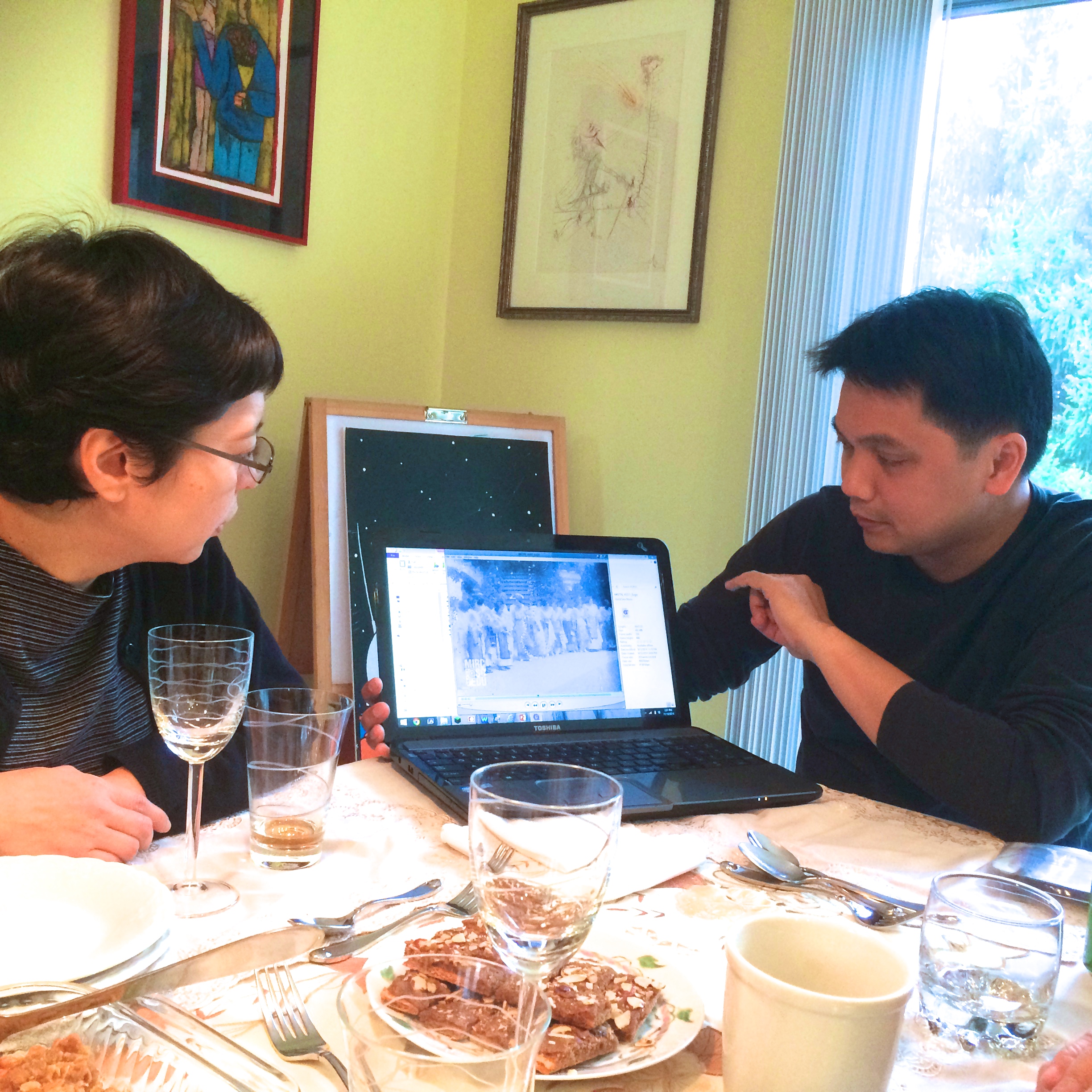
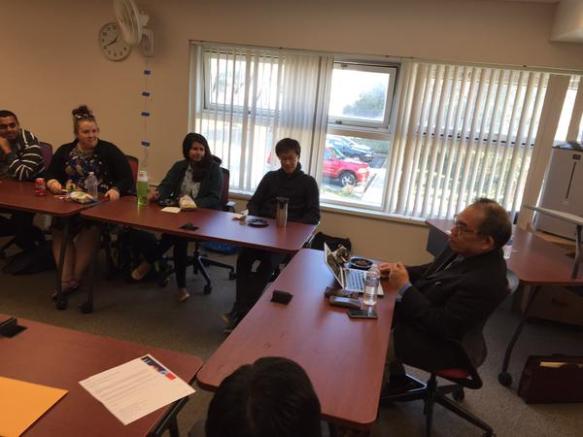
I have a major talk coming up this week on the ponderous topic of “Democracy and Cultural Expression: Confronting the Challenge of Modernization in the Philippines,” but last Wednesday, I sat down with a group of graduate students from IR/PS for a more personal chat. The general topic was “The Youth and Social Reform,” and I decided to share some of my experiences as a former student activist in the 1970s and to observe how protest movements and actions have changed since then.

I began by talking about the First Quarter Storm—our own version of Tiananmen, to use a metaphor more familiar to my audience, and the subject of my current research—my arrest and imprisonment in 1973, and the novel that I wrote about that experience. I recalled the many friends and comrades I lost, remarking on the ironic truth that “If I hadn’t been arrested that cold January evening, I probably wouldn’t be here, or be writing novels; I’d very likely have long been dead,” because I would have gone up to the hills and, being totally unprepared for the life of a guerrilla, would have made an easy target for the military. Here’s part of the rest of my short talk:

It would be nice to think that these horrors belong to the distant past, that the world has become more civilized in this new century of Facebook and social media. Indeed, authors like Steven Pinker (The Better Angels of Our Nature: Why Violence Has Declined) have argued that the world is actually a much safer place today than it was centuries ago, in terms of casualties of war and homicides, among other indices. That may be statistically true, but our street-level perception must surely be different.

It may be bright and sunny here in Southern California, but the world is full of dark and dangerous corners where bombs get strapped to ten-year-old girls who then get blown up in public places. I didn’t even need to tell you that, because it’s all over the evening news, before it all too quickly—and with much relief—gets brushed aside by the latest antics of Kim Kardashian and the latest gadgets from the Consumer Electronics Show. And why not? It seems grossly unfair in a way to be burdened by the misdeeds of others, by the ideological and ethical quandaries of a world one didn’t create, or even wanted to be a part of.

I’m not suggesting that young people today necessarily have it easier. Each generation has to confront its own demons, and those demons can be as large and as fearsome as you want them to be. You don’t have to live in Afghanistan with the Taliban or in Nigeria with the Boko Haram or in the Philippines with the Abu Sayyaf to know what terror is; you could be living in LA, New York, Columbine, or Ferguson to understand what fear or loss or danger means. In other words, we can never trivialize what other people may be going through.

But in another sense, youth and student activism today is rather different from what it was in my time, in my place. Today, people can pick their causes, instead of taking on the whole world. The starting point is the self, and what the self needs or wants, in a social and cultural climate that’s keenly focused on the here and now, with a very short attention span. Facebook promotes the self; Twitter and Instagram capture the unfolding present. We respond instantly to what we see, and do not necessarily work out of a comprehensive agenda for regime or global change. We don’t seek to save the world, but parts or aspects of it we care strongly about, whether it be whales and redwood trees or indigenous peoples or immigration reform or renewable energy.

In the Philippines, I’ve long maintained that the Communist Party lost much of the ground it had held back in the 1970s and 1980s not so much because of the success of the Philippine military on the battlefield, or even because of the collapse of the Soviet Union and its satellites, but because of the emergence of workable options for idealistic young people desiring social and political change, not necessarily by violent means. With almost 70,000 registered NGOs, Filipinos have a lot of causes to choose from.

For my generation, for all its flaws, we had only Marxism, which gave us a comprehensive world-view. Even though we felt in constant danger, that danger in itself was a comfort, an odd assurance or validation that we were on the right path, doing the right thing. It’s chilling to think that, while they may be very different in many ways, the young men and women joining ISIS today may be moved by a kindred spirit. There’s a frightening coherence and consistency to extremism, an inexorable logic strange to everyone else.

I ultimately opted out of Marxism because while we were convinced that everything was political, I came around to realizing that politics wasn’t everything. Also, as a creative writer, I could no longer abide by the need to observe the Party line.

What have I learned from all that?

First, compromise can be good and necessary. Second, I would not ask others to do what I could not do myself. Third, silence and reflection can result in better outcomes than strident shouting. Fourth, despair or cynicism is easy; hope is more difficult, and therefore the worthier challenge.

Indeed the darker aspects of life have never surprised me. It came as a deep disappointment to find comrades breaking under torture or other forms of duress, or even embracing outright betrayal for comfort and coinage—but that did not surprise me. It may have seemed very strange when I myself took up a job with the government shortly after my release from prison—but that, too, was almost inevitable, since all the old media offices had been shut down and the only real employer in town was the government. When people take the path of least resistance and adjust to new conditions to survive, I can understand that, having done it myself.

What keeps surprising me is courage, hope, goodness, and perseverance, which seem such old-fashioned notions but such necessary imperatives in these times. One no longer has to die for the things one values, but to live for them.

Even though, unlike most of my countrymen, I stopped going to church many years ago in protest of the Catholic Church’s position on many social issues, I was deeply moved, almost to tears, by the recent visit of Pope Francis to the Philippines, particularly to the areas ravaged by Typhoon Haiyan. His affection for the poor was palpable, but equally moving was the strength and faith manifested by the poor—one young woman who had lost her right arm in the storm had walked many miles to see him, and what she said with a smile stuck with me: “I am often sad, because I cannot find a job, but life cannot be all sadness all the time.”

For your generation, in your time and in your place, you will have to find your own pathways to social reform, which may have to begin, first of all, with a clarification of your own goals, although a deeper personal transformation will surely take place within the process of social engagement itself. Studying for professional success cannot ever be a bad thing; but it can only be better when all that sharpness of intellect can mean something to the lives of others.
Penman No. 131: Museums and Musicals (Part 2)

IMG_5928Penman for Monday, January 12, 2015


LAST WEEK I wrote about museums as a popular form of American entertainment and education, reporting in particular on my encounter with the MacArthur Memorial in Norfolk, Virginia. Musicals are arguably no less educational, except that they educate the heart and spirit rather than the mind.

There seems to be something fundamentally silly about people suddenly breaking into song in moments of high tension (in Bollywood, of course, they’d start shimmying and shaking), but the truth of the matter is (and the magic of the musical is) that it feels just right, and that the characters are singing exactly what we’re feeling. When Nancy sings “As Long as He Needs Me” in “Oliver” or when Tuptim and Lun Tha bewail their lot in “We Kiss in a Shadow” in “The King and I,” we absolutely understand what’s going on, and root even for the most ill-fated love.

Sometimes silliness is pure fun: who could have resisted Mary Poppins (except her famously persnickety creator, P. L. Travers) trilling “Supercalifragilisticexpialidocious”? Some songs just give you a lift to sing, like “On the Street Where You Live” from “My Fair Lady,” “Till There Was You” from “The Music Man,” and “The Impossible Dream” from “Man of La Mancha.”

And then there are those rare and very strange moments when a song from a musical just walks into your life, providing the perfect refrain for the occasion. This happened to me 40 years ago, as I waited outside the maternity ward while Beng was giving birth; at that very instant, as if on cue, a song came on over the PA system, and it was the “My Boy Bill Soliloquy” from “Carousel,” where the expectant father wonders what it would be like if the son he expects turns out to be a girl… as our Demi was.

I don’t know what it was that drew me to musicals when I was a young boy growing up in Pasig, except the long hot summer afternoons better spent in a cool dark moviehouse than under a tin roof at home. Ours was a moviegoing family, and I’d already seen “South Pacific,” “The King and I” and “West Side Story” in some theater downtown on Avenida Rizal, but the musical that got me hooked—maybe because it coincided with the onset of puberty—was “The Sound of Music.” What this chaste production full of nuns and Nazis had to do with adolescence could be answered by the doe-eyed Brigitta, aka Angela Cartwright, who was Penny in “Lost in Space”; of course I also nursed a crush on Julie Andrews, but she could’ve been my mom. I watched “The Sound of Music” six, seven times until I could recite the libretto and sing the songs by heart. (For fans of “The Sound of Music,” there’s a very interesting story about the writing of the song “Edelweiss” here: http://www.steynonline.com/6683/edelweiss.)

Prurient considerations aside, the old-fashioned Broadway musical (which we Pinoys got in the movie version) had something going for it that Westerns, thrillers, and spy movies hardly ever did: an insistent optimism, even in the darkest and direst of circumstances. “West Side Story” doesn’t end with just a death; it ends with the song “Somewhere,” and a plaintive hope for “peace and quiet and open air;” “Carousel” ends with the redemption of the likeable scoundrel Billy Bigelow, promising that “You’ll Never Walk Alone.” (Billy may have gone to heaven, but critics gave “Carousel” hell for changing the ending of the original play on which it had been based.) “Camelot” was probably the first musical I saw that didn’t come with a happy ending, but even Lerner and Loewe couldn’t possibly undo centuries of Arthurian lore.

In a time of AIDS, 9-11, tsunamis, and ISIS, the darkening of the American musical was probably inevitable if not mandatory. One of art’s most necessary functions is to provide relief to the distressed even by the mere recognition and reflection of pain, and today’s less melodic, more dissonant musicals do that, acknowledging that rainbows don’t come with pots of gold, and may not even come at all after a long day’s rain.

I watched my first live Broadway musical—Fats Waller’s “Ain’t Misbehavin’,” which was actually more of a revue—in 1980, from behind a post, the cheapest seat in the house. Since then I’ve been able to afford a few seats with a view, though not by much; as I reported in this corner a couple of years ago, my happiest hours in the musical theater came not on Broadway but in Melbourne, during a rousing Australian production of “South Pacific” that I watched from the topmost row where I sat all by my lonesome, to the amused consternation of the ushers, who urged me to move on down after the lights had dimmed. But I declined, because where I was, I could merrily sing along to “Dites-moi, Pourquois” and “There Is Nothing Like a Dame.” Having outgrown Angela Cartwright, I now rank “South Pacific” my most favorite of musicals, with “West Side Story” a close second (Beng has a soft spot for “The King and I,” and never fails to cry when Mongkut dies).

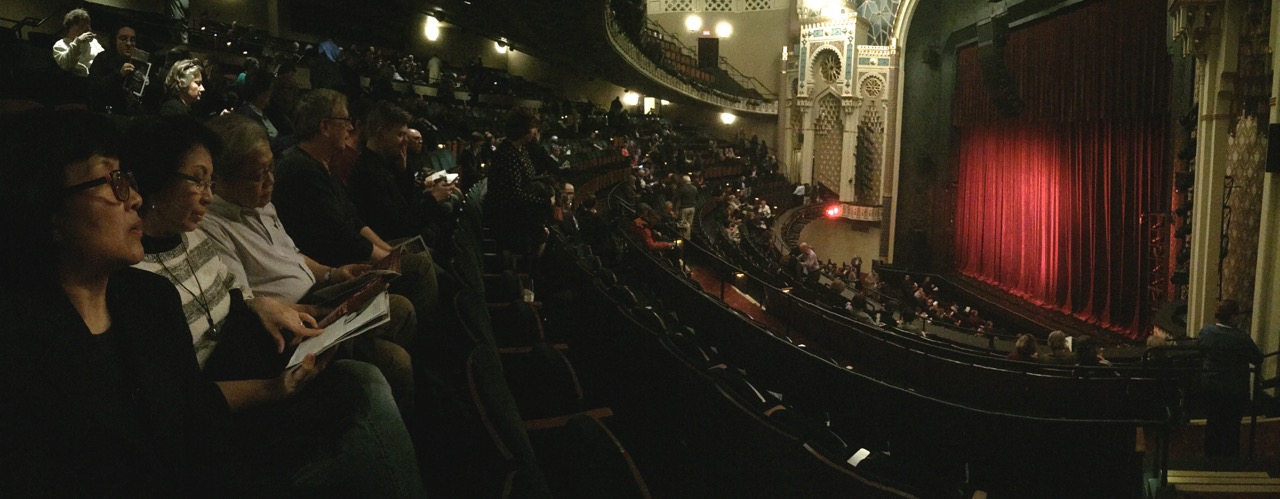
On this most recent trip to the States, we caught “Evita” (my third favorite) at the Kennedy Center in DC and a trio of shows in New York: “From Burlesque to Broadway,” a revue of an art form that I wish I’d seen at a more responsive age; “The Bandwagon,” the revival of a forgotten art-about-art opus with three showstoppers (“You and the Night and the Music,” “That’s Entertainment,” and “Dancing in the Dark”) and, finally, the Rockettes Christmas Special, classic Americana.

We stepped out of the theaters freezing in the cold but warm and dizzy with song, fortified against the inevitable anxieties and disappointments of another day.


[Images from flixster.com, childstar.com, musicalheaven,com, and amazon.com]

Penman No. 130: Museums and Musicals (Part 1)

Penman for Monday, January 5, 2015


IF THERE’S anything in America I keep returning to—aside from the flea markets and antique shops—it’s the two things I consider to be among the country’s prime cultural resources: its museums and its musical theater.

Both are, at heart, forms of popular entertainment. While museums are arguably more educational, the first American museums, we’re told, began as collections of curiosities that attracted entrepreneurs like the showman P. T. Barnum, who bought up bizarre objects and juxtaposed them with such live attractions as bearded ladies and exotic animals. The American musical, on the other hand, descended from burlesques and operettas imported from Europe, livened up by chorus girls and minstrel songs, until (notes theater historian Mark Lubbock) Oscar Hammerstein II and Jerome Kern came up with Show Boat in 1927 and refashioned the musical as a play unto itself, beyond the pastiche of production numbers that it had been.

I suppose I should be adding “major-league sports” to this list. The NBA is, after all, one of America’s biggest exports, with a global cultural impact that extends far beyond the ballgame itself. As a graduate student in Milwaukee, I spent whole Saturday afternoons enjoying double-headers at the baseball park, and I once cut a class in Shakespeare to watch Michael Jordan pull off a last-second three-pointer to beat the hometown Bucks (and despite being Bucks fans, we all stood up and cheered). And then there’s Hollywood, America’s mammoth fantasy machine.

But sports and movies can now be had on satellite TV and even your iPhone. Museums and musicals—I’m thinking Broadway and off-Broadway here—are still best experienced live, despite the likely availability of much of the material online or on DVD. Many Americans themselves apparently agree. A 2008 article that came out on National Public Radio reveals an interesting statistic: the total combined attendance for all major-league sports (basketball, baseball, football, and hockey) that year was estimated at around 140 million, against the estimated attendance at American museums, pegged at 850 million.

I landed in Washington, DC on my first American visit 35 years ago, and I’ve been returning to the Smithsonian Institution ever since, looking at but never tiring of the same old things: Abraham Lincoln’s hat, George Washington’s dentures, the Hope Diamond, the Space Shuttle, the giant squid. Every pilgrimage to the Smithsonian (and, in London, to the British Museum) transforms me into a wide-eyed boy, seized by the collar and shaken into speechlessness by the majesty of history.

On this last sojourn, as I reported last week, a visit to the exhibition of historic signatures at the National Archives Museum proved to be one of the highlights of our museum-hopping. But we visited other equally arresting exhibits, most notably the MacArthur Memorial Museum in Norfolk, Virginia.

I’d always been fascinated by this monumental figure—who, like many monuments, came with more than a deep fissure or two. I was born too late to appreciate him as the liberator of occupied Philippines, but I’d always nurtured a vague memory of going to the Luneta as a boy to see him, one 4th of July, a day of floats and big horses. I later suspected that memory to be false, until I confirmed, online, that MacArthur had indeed made one last sentimental journey to the Philippines in July 1961, when I was seven.

Norfolk seems an odd place for a MacArthur Memorial; it’s a Navy town, and he was an Army man through and through, and West Point—where he had served as superintendent—would have been far more logical. But his mother’s family was rooted in Norfolk, and Douglas himself would have been born there had not his father Arthur, himself an Army officer, been assigned to Little Rock, Ark., where Douglas was born in 1880.

Some things surprised me at the MacArthur museum: first of all, the discovery that it was also his and his second wife Jean’s resting place. The first thing you notice upon entering the memorial, flanked by rows of flags from various campaigns (Bataan, Corregidor, Leyte, Lingayen, and Manila are prominently cited), is the sunken crypt in which the two tombs lie side by side. Second, I was struck by the number of Philippine items and references in the place—perhaps logically so, because even Arthur himself had been a general in the forces that occupied Manila in 1898.

Third—although I should have expected this—there was absolutely no mention of Isabel Rosario “Dimples” Cooper, the Scottish-Filipino actress who became Douglas’ girlfriend in between his marriages (his first wife, Louise Cromwell Brooks, had been a socialite). A fourth discovery was of interest only to this hardcore fountain-pen collector: the famous Parker “Big Red” Duofold, already an iconic pen when MacArthur reportedly used one to sign Japan’s surrender papers with on the Missouri, turned out to be a smaller lady’s version loaned to him by Jean.

There were recordings of his speeches, and I listened closely. MacArthur spoke famously simple words. His “I shall return” pledge ranks among the most familiar of rhetorical refrains; less known but equally moving was his farewell to West Point, two years before his death in 1964: “When I cross the river, my last conscious thoughts will be of The Corps, and The Corps, and The Corps.” But the verbal simplicity came out of a complex man, one who could fearlessly take on what he saw to be the communist colossus (and be sacked for his perceived recklessness in Korea by President Truman) but who was, by many biographical accounts, a mama’s boy.

It was, all told, a most impressive exhibition, amplifying a figure already larger than life to begin with. I suppose my biggest surprise was my own continuing fascination with this Big White Man, in the way that I’ve often wondered about the postcolonial (or should that be neocolonial) chic we attach to names like “McKinley” and “Rockwell,” especially when they involve high-priced property.

Those of us who luckily came too late to experience the horrors of the Second World War can argue all day about the moral wrongs of American imperialism and the self-serving designs of America on the Pacific—and would very probably be right. But in these days of tension in the South China or West Philippine Sea, we might end up wishing a MacArthur were around to do what no pragmatic politician in Washington or Manila today would imagine doing.

Next week, the musicals.

Flotsam & Jetsam No. 45: I Love My Pig

THERE’S SOMETIMES a thin line between handicraft and fine art, and I think that this wooden pig I picked up yesterday from a souvenir shop in Puerto Princesa, Palawan may have crossed that line.


It stood all by itself in a roomful of pretty and exquisitely carved objects, but something about its form appealed to me, even the roughness of its finish—that long rise up its spine and then the precipitous drop down its snout, which ends up as solid as a fifth foot, and here and there the little lumps and undulations suggesting bone and muscle.

It was when I lifted it that I knew I had to have it—it’s one hefty porker, having been carved out of ipil (Intsia bijuga), a local hardwood. My hands wrap nicely over its back and belly. This is one pig that’ll be rooting on my desk for a long time.

Penman No. 129: Autographs and Memories

Jose_Rizal's_signaturePenman for Monday, December 29, 2014


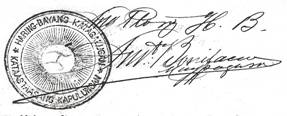
WE AFFIX our signatures to documents everyday—to checks, memoranda, requests, receipts, and felicitations—with nary a thought to where those signatures will go, those hurried scribbles that say “I was here,” “I saw this,” or “I caused this,” and, therefore, “I matter.” For most of us, those signatures will go the way of the documents that occasioned them—to some vault, shredder, or rubbish heap—their practical purposes having been served, and bearing no other value otherwise. That is, unless you’re a George Washington, or a Paul McCartney, or a Princess Diana; and then you might sign a table napkin and turn that into pile of dollars.

I’ve always been fascinated by signatures and autographs (the commonly held difference being that signatures meet legal requirements, while autographs satisfy emotional needs). My earliest model, of course, was my father’s signature, written with that flourish typical of his generation, with an understandable hint of self-magnification. Impressive signatures took time and care to practice and to write, so my father’s attention to his own left me awed and respectful. Even if he was only a clerk in his office, he signed his name as presidents did.

Mine, alas, is completely undistinguished—illegible, to be more accurate, something once likened by a curious onlooker to a paper clip pulled from both ends. I know that some people seek to cultivate a mystique by designing unreadable signatures, but I never meant to, and find the practice pretentious. My father’s signature seemed larger than life, but before and beyond anything else, it proclaimed his name, which (especially in this avatar- and alias-driven present) is probably the most honest thing you can do.

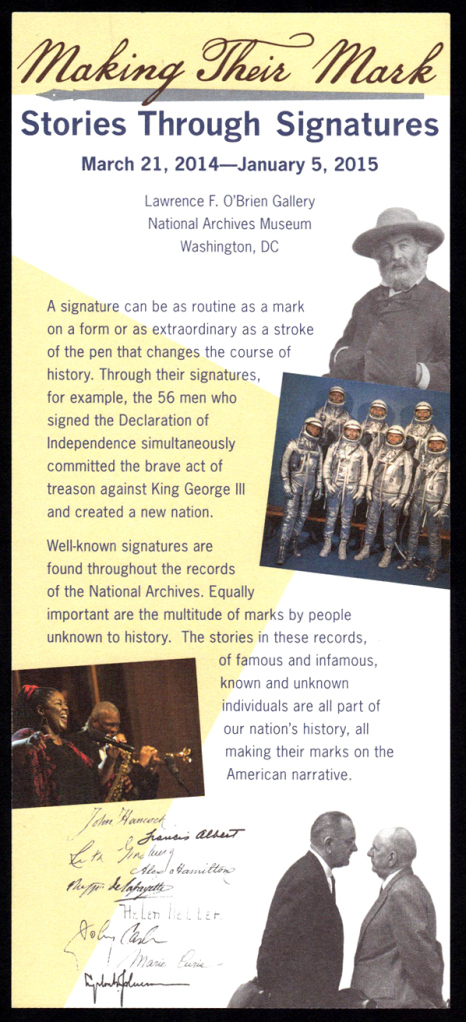
I had these thoughts in mind when—among the last things we did before flying home from Washington—I took Beng to a very special exhibition at the National Archives Museum on “Making Their Mark: Stories Through Signatures” (still on until January 5). It promised to showcase the signatures of both prominent and obscure figures and their contributions (positive and otherwise) to the shaping of history, and the exhibition did not disappoint. Being something of a history buff and museum rat, I had previously come across the most well-known ones in facsimile and in other exhibits—Washington, Jefferson, Lincoln, Kennedy, and, of course, John Hancock—but here was an opportunity to appreciate them in context, appended to actual documents that should have, but not always, mattered.

ArchivesCard

Albert Einstein’s ends a long letter passionately—and, in hindsight, poignantly—arguing for the peaceful use of nuclear energy. Adolf Hitler’s—accompanying a large sheet attesting to his marriage to Eva Braun—is surprisingly small. Another unexpected twist comes courtesy of the poet Ezra Pound, who can masterfully edit his friend TS Eliot and yet, it turns out, can barely spell, as when he pleads in 1914 with the American consul in London on behalf of his fiancée, and here I quote him verbatim: “As an american about to mary and english woman, I write to you….” The Hopi Indians petition for their land in 1894, signing their names as pictographs of rainclouds, fish, and birds. Their voices are as lost and as forgotten as the letters of ordinary citizens writing to the President for various causes, none more futile than an appeal by the children of convicted spies Julius and Ethel Rosenberg for their parents’ lives to be spared.

As we left the museum, Beng and I wondered aloud why we couldn’t come up with a similar exhibition of historic signatures—say, of our national heroes and National Artists and National Scientists—by way of introducing our younger citizens to the story of our nation, as told by individuals in letters and other interesting and important memorabilia. This is, of course, a generation that writes messages, not letters; that tweets, not corresponds. The value of a signature—think of Manny Pacquiao’s on a boxing glove, or a porn star’s on a T-shirt—is what it will fetch on eBay.

Bonifacio

Some people collect autographs for fun and profit, and like any hobby involving demand and supply, a thriving business has grown around the pursuit and acquisition of scarce signatures, especially from people who will never write another one. Sometimes context is everything; a woman who got JFK to sign her newspaper just before he boarded that fateful car in Dallas made $30,000 out of that grim memento. The most sought-after signatures today, according to one listing on the Web, are those of the Beatles, the Apollo 11 crew, Marilyn Monroe, and—no, not JFK, or Churchill, or Hitler, who all follow this curious entry—the Sex Pistols with Sid Vicious. For what it’s worth, George Washington remains the star of the show, his signature on the Acts of Congress earning that book’s owner close to $10 million because of the confluence of the man and the material.

I’d be happy to run into a sheaf of yellowing papers at an antique shop or an old library and to find these signed by Rizal, Bonifacio, Juan Luna, Gregorio del Pilar, Paz Marquez Benitez, Angela Manalang-Gloria, Manuel Quezon, Jose Garcia Villa, Botong Francisco, or some such person. I doubt that I’ll be ever so lucky, precisely because we don’t value old books, especially those that have been scribbled on. As a literary tourist of sorts, I’ve been fortunate to have books signed by Joseph Heller, Kazuo Ishiguro, JM Coetzee, Junot Diaz, Frank McCourt, and Edward Jones, among others, but I’d trade most of them for any one of the above.

Quezon

Because our daughter Demi still understands what documents mean, she will be inheriting—aside from a trove of leaky pens—a passel of books and letters signed by many of our finest writers, her dad’s friends and mentors. I’ve been quite shameless about soliciting these signatures and autographs, fully expecting that the time will come, sooner than later, when our scrawls will be replaced by digital thumbprints, already a reality with Apple’s TouchID.

Maybe that’s how digital books will be signed in the future—with the press of a thumb or a forefinger on a touchpad—and it will simplify my life as an author, but take me even farther away from the verifiable veracity of the written word, and the written name.

Penman No. 128: Sense by Sondheim

51xVXvpXz-LPenman for Monday, December 22, 2014

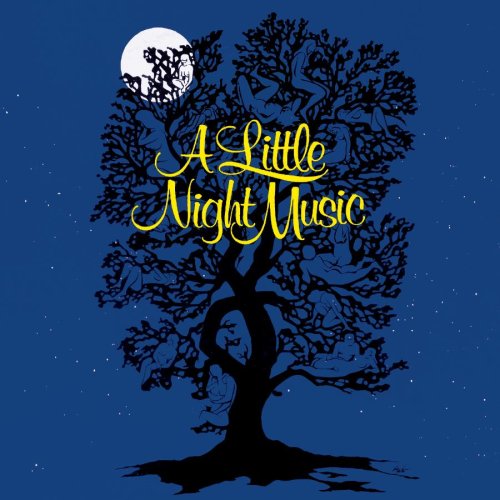
LAST WEEK, I mentioned having twice seen the HBO documentary on the life and work of the Broadway composer Stephen Sondheim, perhaps best known for the song “Send in the Clowns” from his hit 1973 musical A Little Night Music. Directed by James Lepine, Six by Sondheim walks us through the conceptualization and the composition of six of Sondheim’s most important songs: “Something’s Coming” (West Side Story); “Opening Doors” (Merrily We Roll Along); “Send in the Clowns” (A Little Night Music); “I’m Still Here” (Follies); “Being Alive” (Company); and “Sunday” (Sunday in the Park With George).

I’d have to admit that I didn’t know three of these songs; I knew and liked “Something’s Coming” as a big West Side Story fan, and “Send in the Clowns” and “Being Alive” from Barbra Streisand’s Broadway album, but the others were unfamiliar to me, which was just as well, as they were a pleasant discovery of other aspects of Sondheim’s craft.

That craft and the attitude that shaped it was something nurtured by Sondheim from a young age. When his parents broke up, the boy sought a sense of regularity and order, and surprisingly responded well to the routine of a military school. He found a hero in a family friend, the lyricist and librettist Oscar Hammerstein II, to whom he presented his early attempts at composition, only to receive a coldly professional—and cutting—assessment.

That didn’t faze Stephen, who went on to write the lyrics for West Side Story at age 25—and was unhappy about it, wanting to have written the music instead (Leonard Bernstein did). This was one of Sondheim’s (and any aspiring theater person’s) first and most important lessons: when you’re starting out, you learn to play the part you’re given. And Stephen did, exceedingly well: in the documentary, he talks about writing “Something’s Coming” using a succession of baseball metaphors that emphasized forward motion: “cannonballing down through the sky… catch the moon, one-handed catch!”

Sounds like poetry, but Sondheim is very clear about the difference between poetry and songwriting. While some lyrics may be poetic, songs, he says, have to be understood as they are sung; songs have to advance the dramatic situation, and help the listener grasp what’s at stake in the unfolding drama. Readers can go back and mull over the lines of a poem, but a song has to be instantly comprehensible.

Even so, Sondheim doesn’t succumb to the easy rhyme (the kind of song where you know “remember” will be followed by “September”). The words may be simple, but the ideas complex, as in “Being Alive”: “Make me confused / Mock me with praise / Let me be used / Vary my days.” His collaborators and directors like Hal Prince would agree that Sondheim doesn’t go for the simply hummable tune: he challenges norms, uses his music to put people not at ease, but at odds with oneself, as his characters often are.

His approach seems deceptively easy: “I scour the dialogue for lines. Or I might take a title line, then use its inflections to get the rhythm of the melody.” He likes to write lying down, taking a stiff drink now and then to loosen up. His love of word games (“It’s a very short road from the pinch and the punch / to the paunch and the pouch and the pension,” goes one of his lyrics) is mirrored in his collection of vintage board games and puzzles.

Also surprisingly, some of his best songs came as “throwaways” or space fillers, songs written to fill a gap in the drama or to wrap more tension around a character. “Send in the Clowns” was one such song—but here, for all that he maintained about the difference between songwriting and poetry, the poet prevailed. Director Hal Prince had asked Stephen to write the song for the character Desiree, played by Glynis Johns, and Sondheim had initially demurred, believing that the scene was properly the male character Fredrik’s. But he relented after seeing what Hal had in mind, and wrote the song in two days. Glynis would later say that as soon as they heard the first few notes, something stirred in the air and in their bones: they knew that they were hearing the birth of a great song. (The documentary presents it in a lovely montage headlined by Audra MacDonald and featuring, among others, Barbra Streisand, Glenn Close, Patti Labelle, Cher, and Judi Dench.)

But what did “Send in the Clowns” mean? Frank Sinatra, who sang it hundreds of times, professed that he didn’t really know. When I first mentioned the song in this column a few months ago, reader Ivy Cosio wrote in from LA to contribute this interpretation, for which I (and surely many readers and karaoke crooners) can only thank her:

“It’s basically a song of deep regret, irony, even anger but with a reference to the theater rather than the circus. Desiree (an actress) and Fredrik are former lovers who meet again after many years, and after many other men for Desiree. Fredrik is now married, but during a weekend in the country, he and Desiree spend the night together and she realizes that he has always been the one she wanted. She proposes marriage, but Fredrik refuses to be unfaithful. The tables have been turned—now Desiree is at last ‘on the ground’ and Fredrik ‘in midair,’ in love with his young wife. Desiree declares there’s no need to ‘send in the clowns’ to cover up a bad situation: looking at Fredrik, she sings, ‘Don’t bother. They’re here.’ It’s heartbreaking, because the truth is that Fredrik is still in love with Desiree. Stephen Sondheim, in an interview, revealed that the song came together for him when he wrote those two lines. He clarified that he used ‘clowns’ because that call—“Send in the clowns!’—was originally used in the circus to divert the audience’s attention when something went horribly wrong, e.g. when the lion tamer literally lost his head. But he meant it in the context of ‘fools” and for a brief moment considered changing the lyrics. It was a good thing he didn’t, because somehow ‘Send in the Fools’ doesn’t quite cut it!”

If you want to hear the rest of Sondheim and all the music that should go with this piece, look up Six by Sondheim on YouTube, and enjoy what I did.

Penman No. 127: Some Inflight Education

IMG_0231Penman for Monday, December 16, 2014


ONE OF the things I like about flying is the onboard fun that I can look forward to—the movies and the music, to be more specific. At my age, and with all the mucking about that I’ve done, I should be sick of these things and ply myself insensible with the free beer or wine somewhere between Anchorage and Nagoya, but the honest truth is, I’m not. I’m eager for entertainment, which is the only way I can forget the fact that I’m going to be up in the air for the better part of a 24-hour day. I don’t have a fear of flying; it’s boredom I can’t abide.

Being up there means that I can catch up on all the movies I never saw and didn’t even know existed. Beng and I almost always take in a movie after our weekly foot massage (such is life in the 60s), but we’re slaves to what’s out there, and not being too much of a cinephile I’m positive I’m missing out on the good stuff by sticking to the mall fare.

That changed last week when I flew home from Dulles airport outside of Washington, DC to Terminal 3 on the fringes of Pasay—a distance of 8,548 miles, according to Google. That meant 11:30 hours of self-amusement to contemplate, but I think I hit the jackpot—a trifecta in sporting terms—by watching three great movies on one long trip (I actually saw four, but I don’t think Hercules: The Thracian Wars is going to win the Palme D’Or).

I can’t get enough of documentaries, and I actually watched this one twice—the first time on the inbound flight last September, and again coming home. It was an HBO special titled Six by Sondheim, about the life and work of the lyricist-composer perhaps best known for that song everyone loves to sing but nobody really seems to understand, “Send in the Clowns.” (Reader Ivi Avellana-Cosio finally made sense of it for me.)

I just enjoyed the presentation the first time I saw it, but this second time, I was furiously scribbling away on my notebook with a fountain pen in the half-light, as Stephen Sondheim spoke about the creative process behind six of his best songs. Anytime you see me taking notes, it has to be that good, so I’m going to save the best of Sondheim for another column, which the material richly deserves. But just for starters, this was the man who wrote the lyrics and libretto for West Side Story when he was 25—a task he chafed at, wanting to do the music instead—but it proved to be a great learning experience, and Sondheim would go on to become a master teacher himself, like his mentor Oscar Hammerstein II and West Side Story collaborator Leonard Bernstein.

It was Bernstein, come to think of it, who once said that “Music is the only art incapable of malice,” which makes a good segue to my second choice, a film suffused with malice but whose central character, played by the Briton Tom Hardy, exudes an odd naivete. I’ll spare you the spoiler, but The Drop is as quiet and as deliberate a murder mystery as they come. Set in a bar in Brooklyn, The Drop has no car chases, no photogenic panoramas, and co-star Noomi Rapace puts it best when she squirms and says “I don’t want to be here.” We don’t, either, but we can’t help staying and looking, because we fear for the safety and the happiness of our unlikely hero, a quietish bartender who seems intent only on saving damsels and dogs in distress—at least until he draws a severed arm out of a bag; but I’ve already said too much.

And Tom Hardy makes a good segue to the last item on my playlist, which I watched on the Tokyo-Manila leg. He doesn’t appear in it, but is quoted—or I should say more than quoted, because we hear his voice again, speaking like a head in a paper bag, coming out of the mouth of someone who looks nothing like Tom Hardy, the British comedian and mimic Rob Brydon.

The movie was the rather tepidly titled The Trip to Italy, and the only reason I bothered to click on it was because I mistook it for a travelogue that would take me back to some postcard-worthy renditions of Tuscany and Umbria. Of course—away from the neorealism of Fellini and his crew—nearly anything in Italy is worth a postcard and indeed a book. That’s the burden of Brydon and his fellow comedian and travel companion Steve Coogan, who get sent on assignment as their real selves to trace the footsteps of Byron and Shelley in Italy while feasting on veal and artichokes and an endless parade of smart brunettes.

It’s a road movie and a buddy movie all at once, but it’s not Easy Rider or Butch Cassidy and the Sundance Kid. Real men don’t tool around the countryside in a Mini Cooper, twirling pasta on their forks while quoting the Romantics (“romantic poetry” to most guys comes with a small “r” and is best represented by Kenny Rogers and Michael Bolton).

The Trip to Italy is the kind of talky romp that fans of that taciturn trio of Seagal, Stallone, and Schwarzenneger would absolutely hate. Ninety percent of the movie is conversation—make that intelligent, hilariously intelligent conversation, and 50 percent of that 90 percent is comic impersonation, with the two guys doing their irrepressible impressions of Michael Caine and Marlon Brando, making Coogan and Brydon the Dwayne Johnson and Vin Diesel of roadside repartee. But for all the silly banter, there’s a poignance that underscores this movie that seems to be going nowhere, except deeper and deeper into the male psyche.

I thought I was up there for a load of entertainment, but instead I got a dose of inflight education. I can think of far worse ways of killing time.

(Posters from imdb.com and wegotthiscovered.com)

Penman No. 126: Friendships Old and New

IMG_5878Penman for Monday, December 8, 2014


OUR THREE-MONTH American sojourn has come to a close, and by the time you read this we should be back in Manila, a bit wobbly in the knees but glad to be home. I’ve gained back too much weight—the price to pay for all that scrumptiously greasy diner food and the cold spells that excused me from my daily walks—and I’ve begun to miss my morning tinapa and my suppertime tinola. But I’ve hit my research targets and more, and am eager to hunker down to writing the book that should come out of all this. I know that in a couple of weeks this vacation will be another happy memory, and I’ll be stuck in Christmas traffic on EDSA, sweltering and muttering why the heck I didn’t stay out there for another month or two.

Before that happens, let me thank some very fine people we met during this visit, which apart from the work was marked by new friendships made, existing friendships strengthened, and old friendships revived. I’ve already thanked my interview subjects in a previous piece, but there were others behind the scenes who made this particular journey pleasant and memorable. They include Sonny and Ceres Busa, Nomer and Camille Obnamia, Erwin and Titchie Tiongson, and Jun and Myrna Medina.

They may just be names to those who’ve never met them, and indeed they’re not the kind of A-listers you’d find in the glossy magazines that make virtual libraries of Metro Manila’s beauty salons. Even among Filipino-Americans, just a few names keep recurring in the social registers, either titans of industry or doyennes of fashion—leading one to wonder, where’s everybody else and what are they doing? Surely the rich and famous have no monopoly on everything that’s interesting and important? So let me introduce these friends to the world at large, by way of celebrating the non-celebrity whose quiet deeds lend substance to the sparkle of those better known.

IMG_5703

IMG_6134

Sonny and Ceres hosted us twice at their postcard-pretty home in Annandale, Virginia and introduced us to the satisfying simplicity of Ethiopian food. The Waray-born Sonny had been a US consul in Addis Ababa, among other places, and his hilarious but spot-on insights into the American mind enlivened our every conversation. Ceres helps oversee a caregiving company for seniors in Virginia, a job eased by her patience and cheerful disposition, of which Sonny is luckily the prime beneficiary.

Nomer had been born in Sampaloc, Quezon and joined the Navy, where he met Camille in Hawaii; they’ve settled down in Columbus, Ohio, and our friendship began in the most unlikely circumstances. A committed conservative, Nomer had responded sharply to a column I wrote here years ago on artistic license, and our email conversation turned into a more gentle exchange of ideas and gestures. An expert in government procurement, Nomer had freely offered his counsel to our agencies and opinion-makers many times on ways of curbing corruption, but much to his dismay, his letters didn’t even merit the courtesy of a reply; I sadly felt obliged to tell him why. He and Camille took us into their home in the American heartland, where again I was reminded of the complexity and yet also the civility of much of American society, the challenges of Ferguson notwithstanding.

IMG_5951

As I wrote in this column two weeks ago, Eric and Titchie showed us, through their documentation of the Filipino presence in the capital area, that remembering the past need not be the preoccupation of the old, but has to be a continuing project for future generations to appreciate. A freelance journalist who’s been recognized for her work, Titchie wrote a fascinating article (http://www.oovrag.com/essays/essay2013b-3.shtml) about how a pretty stretch along the Potomac River was inspired by the Luneta, thanks to First Lady Helen Taft, who wanted the new park to mimic what she had seen in Manila, where her husband had served as Governor-General.

IMG_6089

Jun and Myrna Medina are old friends from the early 1970s, married four days after Beng and I got hitched. When I met Jun after being released from martial-law prison, he literally emptied his wallet for me, and later helped me get a job, a favor that in turn allowed me to propose marriage to Beng. Jun had also been a newspaperman and a fellow activist before martial law, but what many of his friends didn’t know was that he had eagerly volunteered to join a group of cadres bound for the Visayas, only to be turned down because his Capampangan origins would have marked him instantly as an outsider and gotten him killed (as, tragically, would befall everyone else in that posse). Another spin of the wheel of life took Jun to America, where he and Myrna have devoted themselves to their charismatic ministry. I hadn’t seen Jun in at least 20 years—only to discover that the Medinas had been living barely ten minutes away from my sister’s place in Centreville, Virginia, my virtual second home.

IMG_6132

Of course, let me add our family—Elaine and Eddie Sudeikis in Virginia, Jana and Senen Ricasio in New York, and Demi and Jerry Ricario in San Diego—to our list of hosts and sponsors (led primarily by the Philippine American Educational Foundation, the Fulbright folks). Other friends new and old like Mitzi Pickard, Reme Grefalda, Susan Brooks, and Moira Madrid-Spahr also contributed their time and attention to my visit.

IMG_5392

IMG_6386

IMG_5240

I was hosted by the George Washington University, and from GWU I have to thank English Department chairman Robert McRuer, creative writing program head Lisa Page, and old Manila hand and law professor Ralph Steinhardt. Ralph helped prosecute the Marcoses in Hawaii for human rights abuses when he was a young lawyer, and I’ll always remember his story about the response of a plaintiff whom he warned against the rigors and the costs of fighting the Marcoses: “I just want to be believed.”

In the end, that’s all we can hope for, and may my forthcoming book be worthy of all these good people’s graciousness and generosity.

Penman No. 125: A Date with the Doctrina

1024x1024-1510204Penman for Monday, December 1, 2014


NO VISIT to Washington, DC would be complete without looking into the Library of Congress, which stands behind the US Capitol, perhaps in a symbolic juxtaposition of knowledge and power. The library was, in fact, originally lodged with the Congress, but had to be rebuilt when British troops sacked and burned the Capitol in 1814, starting with the wholesale purchase of Thomas Jefferson’s personal collection of almost 7,000 books for about $24,000.

The LOC has come a long way since then; Jefferson’s volumes are still on display, but they have been joined by 36 million more books, not to mention more than 120 million more non-book items such as photographs, manuscripts, recordings, and sheet music. It’s easily the world’s largest library, adding some 12,000 new items to its roster every day, largely because of the copyright registration process. According to the LOC, half of its collections are in languages other than English—about 480 languages all in all, including nearly 3 million items from Asia.

A simple search of the LOC collections shows that there are more than 40,000 items here related to the Philippines (including, should you want to hear it, a recording of William Howard Taft talking about the Philippines shortly before he became President in 1909). The LOC has early editions of Jose Rizal’s Noli and Fili, which, along with other important Rizaliana, were put on special display at the Asian Reading Room in 2011 to commemorate Rizal’s 150th birth anniversary.

Last week, thanks to the combined efforts of the Filipino-American community in Washington and former LOC librarian and Fil-Am activist Reme Grefalda, I had the once-in-a-lifetime opportunity to see the crown jewel of the LOC’s Philippine holdings—the only known copy in the world of the 1593 Doctrina Christiana, the first book published in the Philippines.

The Doctrina is essentially a catechism, a collection of common prayers, including the Lord’s Prayer and the Hail Mary. Being basic prayer books, there had been other Doctrinas published earlier in other countries. The Philippine version was put together by Fray Juan de Plasencia, a Franciscan friar who helped found many Philippine towns, including Antipolo, Lucban, Meycauayan, and Tayabas. In 1585 he wrote King Philip II of Spain that he had already written several religious and scholarly books that could help spread the faith in the islands—including the Doctrina and studies of the Tagalog language—and asked for royal assistance in funding their publication.

But the good friar died in 1585, and it wouldn’t be until some years later, in 1593, when we see Governor General Gomez Perez Dasmariñas writing the King to present him with copies of the Doctrina in two versions—Tagalog and Chinese—and to explain that he had granted a license for the printing of these books (under Dominican auspices) because of their great value to the evangelization effort. And then, so the story goes, all copies of the Doctrina vanish, until the Tagalog one reappears—presumably the royal copy—in Paris in 1946, where it’s bought by an American dealer, who then resells it along with many other books in a lot to the American book collector and onetime Sears Roebuck chairman Lessing J. Rosenwald (1891-1979), who then bequeaths his collection, including the Doctrina, to the Library of Congress upon his death.

IMG_6183

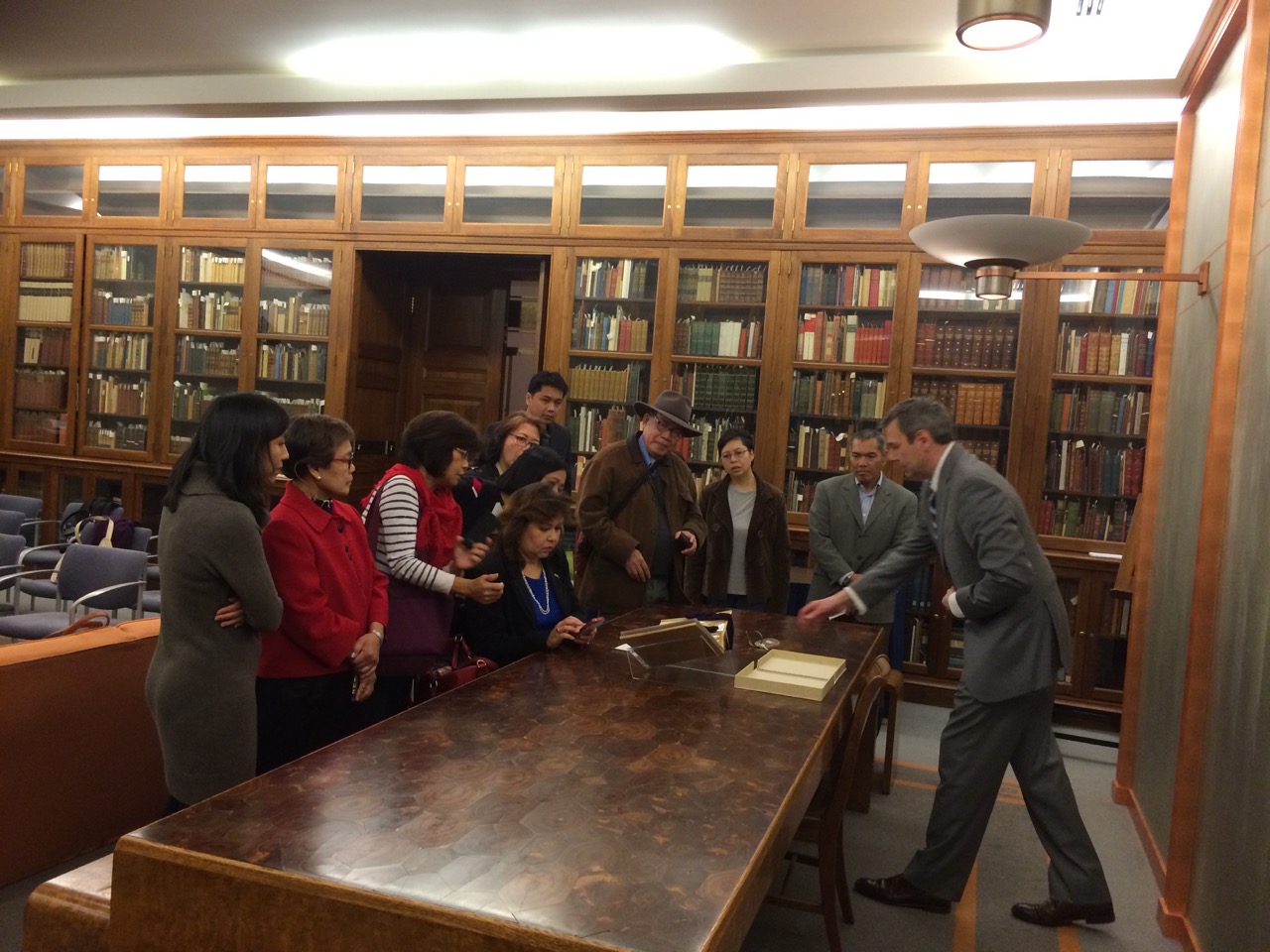
So the LOC’s copy, as far as we know, is the only one of its kind, and it was with great anticipation that Beng and I joined a group of ten Filipino and Filipino-American scholars and advocates who were kindly admitted by the LOC’s Rare Books Division to a private viewing of the Doctrina, with LOC librarian Eric Frazier doing the honors. (While waiting for our appointment, we had taken in a few of the LOC’s other prime offerings including the Gutenberg Bible, which is on permanent display near the stupendous main lobby that welcomes visitors, and the Magna Carta, on loan from the Lincoln Cathedral.)

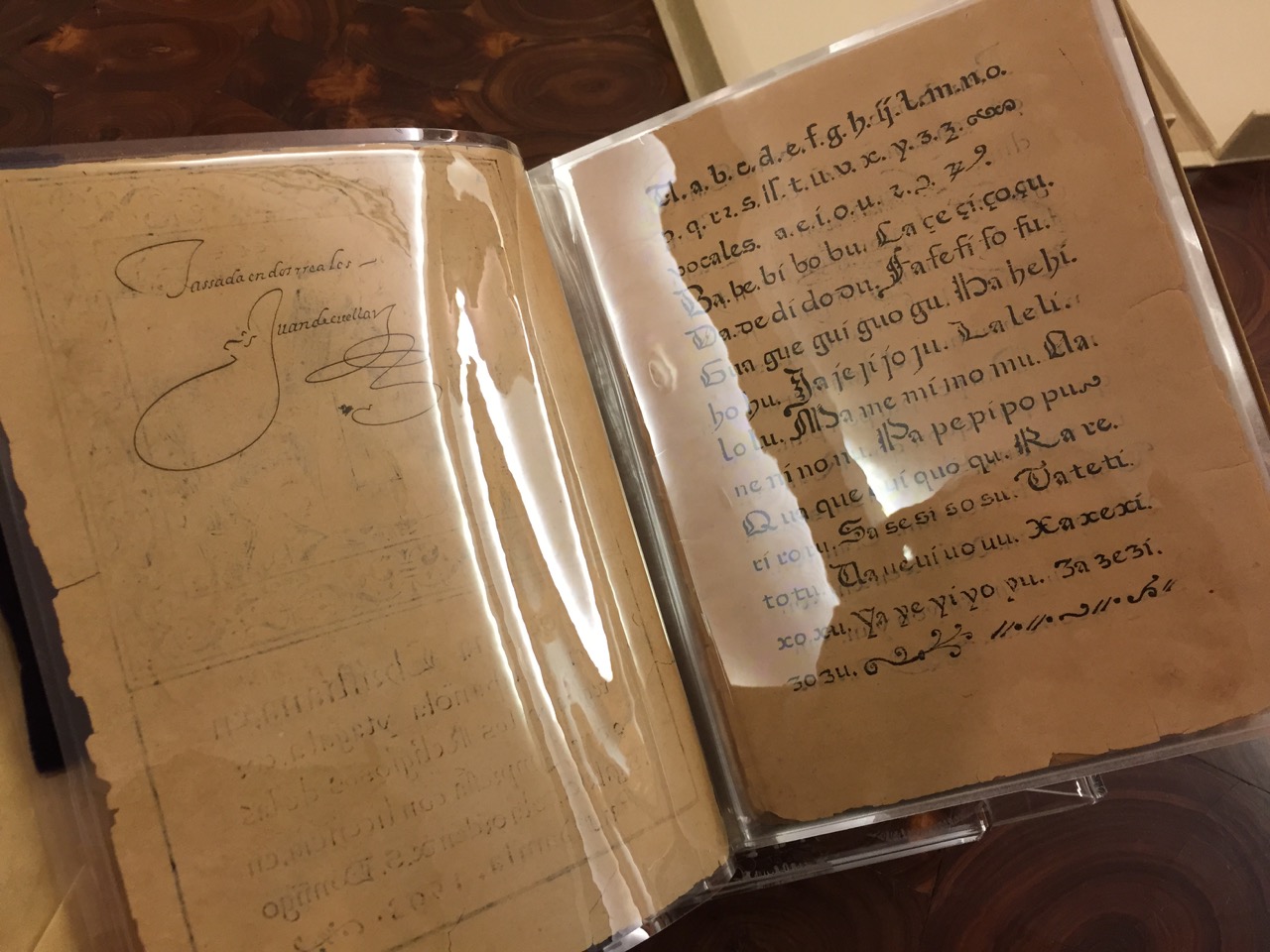
I should’ve read up more on the Doctrina before we went up there, but I was surprised by two things I realized only when I saw the book up close: its relatively small size, and the fragility of its paper. It’s only about 9 by 7 inches, not much bigger than a contemporary textbook. It was a further surprise to hear Eric say that “As far as I know, among the millions of books we have at the LOC, this is the only one whose every page is sheathed in Mylar.”

IMG_6150

I had asked Eric about the condition of the book and the paper, having seen and even handled other books from the 1600s (many of which, printed on stout, crisp linen paper, look good as new, and have survived in much better shape than the acid-lined paper of the 1800s and 1900s). The Doctrina, as it turns out, was printed xylographically—like a woodblock with the letters carved out—on mulberry paper (other sources say rice paper, although that term may have covered other papers made from mashed material). I’m not a professional historian, so I stand to be corrected on these presumptive facts by people who know vastly more about the Doctrina Christiana and about the history of books than I do (two immediately come to mind, our foremost book historians: Dr. Von Totanes and Dr. May Jurilla).

It was with the greatest of care and respect that we flipped those pages, and we saw what generations of the faithful must have seen (that is, if they saw the book at all): a syllabary, followed by prayers and other articles of faith, presented in Spanish, Tagalog, and baybayin, that pre-Hispanic script that survives in our consciousness only in the Katipunan “ka.” What’s remarkable is how fundamentally familiar the text of the prayers is: “Aba guinoo Maria matoua cana, napopono ca nang gracia. ang panginoon dios, ce, nasayyo. Bucor cang pinagpala sa babaying lahat….”

And so it went, a cry of praise and supplication across the ages, come to life again at our trembling fingertips.

I can only hope that, perhaps through an arrangement with a responsible Philippine institution, the Doctrina can be brought back to the Philippines for a special exhibition (the forthcoming Papal visit would have been the perfect occasion), or at least that more Filipinos in the US could see it, along with the other Philippine holdings at the LOC. It does take time and effort to arrange for a viewing, but in the meanwhile, the full digital copy of the book, provided by the LOC, can be found here: http://tinyurl.com/knpzkn5. For more information on the Doctrina Christiana and this particular copy, see the notes of Project Gutenberg editor Edwin Wolf at http://tinyurl.com/p6uqlvr.

Penman No. 124: Pinoys on the Potomac

cropped-logo-rizal-washington8Penman for Monday, Nov. 24, 2014


ERWIN TIONGSON and his wife Titchie are in their early 40s, successful professionals and the parents of young sons; they live in Fairfax, Virginia, a pleasantly wooded suburb just outside of Washington, DC. An Atenean from Nueva Vizcaya, Erwin teaches Econometrics at Georgetown University, while Titchie, a prizewinning writer, has chosen to stay at home to look after the children. Outwardly they might seem to be just another Filipino couple living the good American life, steadfastly focused on the present and the future. But their true passion inclines elsewhere, as Beng and I would discover in one of the most fascinating encounters we’ve had in our current American sojourn.

I’d first heard about Erwin from another new Fil-Am friend, Sonny Busa, a retired Marine, a former consul and instructor in international relations at West Point. (Sonny, in turn, had been introduced to me by upstate-NewYork-based Sharon Delmendo, who has done a lot of research on Philippine-American relations—so now you see how the academic circuit works.) Sonny had mentioned to me that there was a Filipino in the community who had taken it upon himself to chronicle the history of the Philippine presence in Washington and the surrounding area—more than a century of visits and residencies by Filipino politicians, diplomats, writers, artists, musicians, and other personages whose life and work, in one way or another, drew them to the American capital.

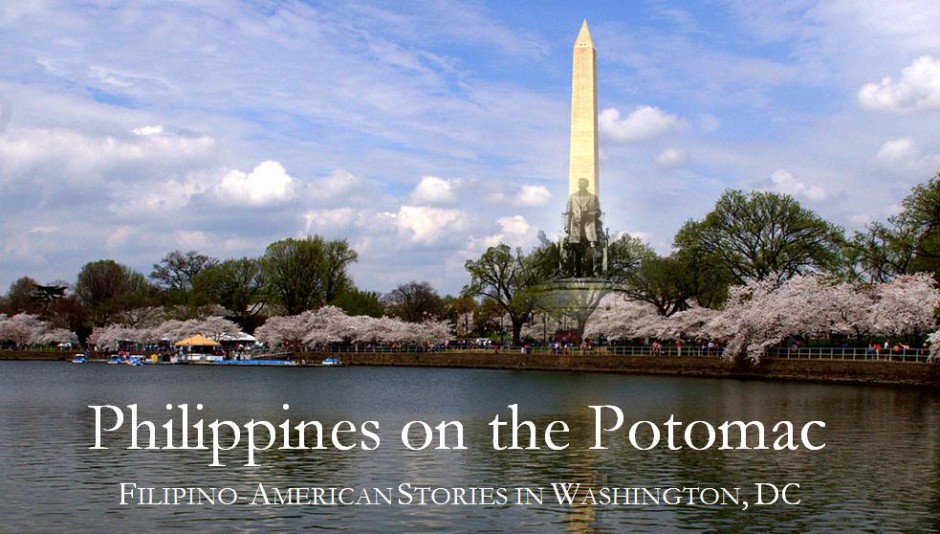
That’s how I found the website that contained all this information—a WordPress site titled “Philippines on the Potomac: Filipino-American Stories in Washington, D.C.” (https://popdc.wordpress.com). If you’ll take a minute to click on that link, you’ll discover what I did, with a child’s wonderment at the entrance of a carnival: short articles and accompanying photographs tracing the connections between Filipinos and Washington, DC.

As might be expected, the big political figures, especially those from the Commonwealth and postwar period, dominate the reportage: Manuel L. Quezon, Carlos P. Romulo, Sergio Osmeña, Manuel Roxas, and Jose Abad Santos. But cultural luminaries are also well represented: Juan Luna, Jose Garcia Villa, Juan Arellano, Enya Gonzalez, Fernando Amorsolo, and Bienvenido Santos, among others.

Quezon had served as Resident Commissioner—effectively our ambassador—in Washington until 1916, and when he went to the US on his wartime exile and died in New York in 1944, it was at the Cathedral of St. Matthew the Apostle in Washington—not too far from where our embassy now sits—where his funeral mass was held prior to his interment at Arlington (less than 20 years later, John F. Kennedy would follow the same route; MLQ’s remains were moved to the Philippines after the war, and now lie at the Quezon Memorial).

Carlos P. Romulo and his family lived in a home on Garfield Street for 16 years, CPR having served in many capacities, from aide de camp to Gen. Douglas MacArthur to Resident Commissioner, ambassador, and president of the United Nations General Assembly. (One of the website’s most remarkable images has an old sepia photograph of the Romulos superimposed exactly over the same spot in front of the present house, which has barely changed.)

The site provides a treasure trove of other historical facts—including, inevitably, tidbits of information that serious scholars might dismiss as trivia, but which enthusiasts like me can’t get enough of. The sculptor and National Artist Guillermo Tolentino, for example, once worked as a waiter in Washington, and somehow managed to meet President Woodrow Wilson and to present him with the gift of a small statue, which Wilson kept in his room until his death; Wilson later helped Tolentino get a scholarship to art school. We also learn that Juan Luna and Felipe Agoncillo went to Washington in 1899 to campaign against the Treaty of Paris, and stayed at the Arlington Hotel, where they were spied upon by the Secret Service. (All these stories are properly attributed and referenced, by the way.)

Better than just poking around the website, the Tiongsons invited us to lunch and show-and-tell, and I couldn’t wait. Learning of my current affiliation with the George Washington University, Erwin had pointed me to an article written by CPR’s granddaughter Liana relating how Romulo had coached a debating team from the University of the Philippines in an engagement with the GWU team, over this issue: “Resolved, That the Philippine Islands should be granted immediate and complete independence.” The debate took place on April 18, 1928 at GWU’s Corcoran Hall. “UP won,” said Erwin. “It was the team’s fifth victory, after defeating Stanford, California, Utah, and Colorado. The team would go on to defeat all their other opponents—a total of 14 universities, if I remember correctly.”

Tiongsons

Even more interesting were the personal stories that Erwin and Titchie shared with us (after a sumptuous lunch of home-made corned beef and baked salmon, which all by itself was well worth the Sunday visit). I can’t go too deeply into the details now, but Beng and I were thrilled to share Erwin’s elation over his most recent discovery, a book that had been inscribed by Maximo Kalaw, MLQ’s private secretary, to a “Nina Thomas”—who turned out to be the American lawyer the young Quezon had been engaged to (he broke off the engagement after being advised that marrying an American was political suicide). Erwin made contact with Nina’s heirs in Virginia; she never married, but she passed on Quezon’s monogrammed walking stick and their engagement ring to her niece.

Erwin also showed us a movie poster from 1946 of Anna and the King of Siam, featuring Rex Harrison, Irene Dunne, and a little-known actress named “Chabing”—who turned out to be Isabel Rosario “Dimples” Cooper, Douglas MacArthur’s girlfriend (not mistress) between marriages; after MacArthur left her, she resumed her film career (she was notable for having recorded the first on-screen kiss in Philippine movies in 1926), assuming the single name “Chabing,” whose filmography you can look up on IMdb.

It was also a treat to listen to a radio recording of Jose Garcia Villa, made in the 1950s, of him reading his “Lyric 17” (1942) which famously begins with “First, a poem must be magical….” Most moving was the 20-minute documentary of President Quezon’s funeral—directed by no less than the renowned director John Ford—that Erwin had magically retrieved from somewhere in the many university libraries, archives, and museums that he still haunts in search of fugitive Filipiniana. He has begun a collection of war correspondence from the early 1900s and the Second World War; one 1902 letter poignantly retained a swatch of jusi, which the wife of an American official in Iloilo wanted her folks to see.

We could have stayed there the whole day, reveling in our memories of the grand old men of Philippine letters—NVM Gonzalez, Ben Santos, Nick Joaquin, Manuel Viray; I shared my own little adventures in cultural retrieval. But Beng and I had sadly had to trundle out again into the autumn chill, warmed by our imaginations, and in my ears rang a line from Viray’s poem about his old house in Washington, on Cathedral Avenue, which the Tiongsons had also located: “A streak of light aslant / On the screen door creeps up the line of dusty books.”