Penman No. 152: Writing the Stories of Your Life

Studio5

Penman for Monday, June 8, 2015

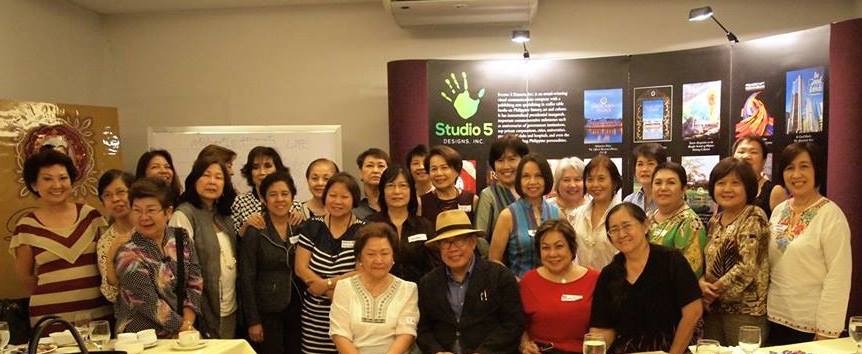
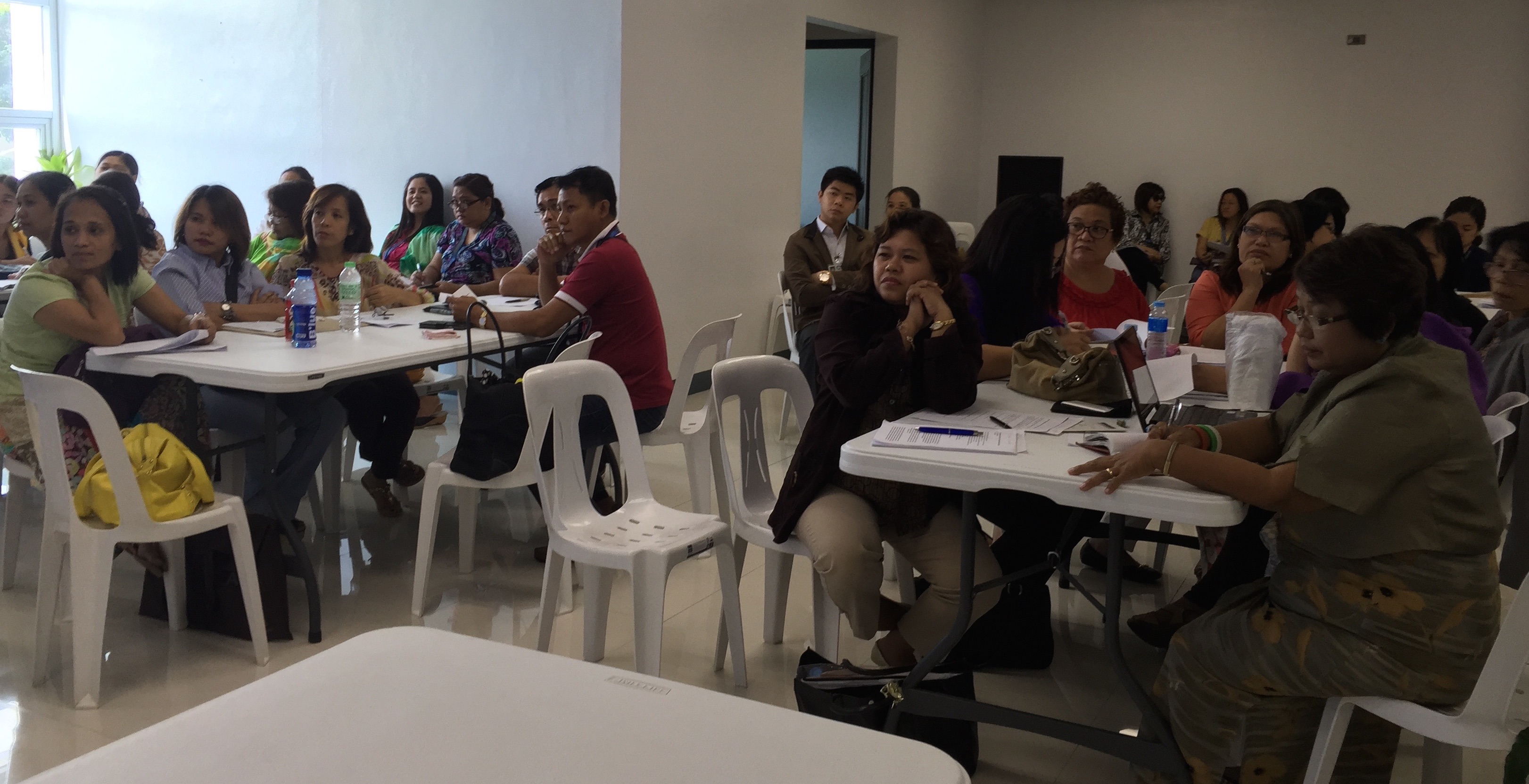
TWICE OVER the past three months, I’ve been giving workshops to medium-sized groups of people in my general age range (let’s put that at 50 to 70), people who came together because they had stories to tell, but needed some guidance on how to tell them. These workshops were arranged by the publisher and writer Marily Orosa, who had come up with very engaging book ideas to which these potential writers could contribute, and who thought that it would be a good idea to have a practicing writer give them a bit of coaching before they plunged into the actual task of writing.

I was glad that Marily put these workshops together, first because I’ve always believed that every person has at least one good story in him or her, and that it’s my job as a writing teacher to get that story out of the person. Second, being a senior myself, I’m happy when older people get an opportunity to express themselves in this obsessively youth-centered world.

Many if not most members of my audience were retirees or approaching retirement after many decades of productive work in their professions. One was a former Cabinet secretary and another a university president, among other luminaries, but in the end, it wasn’t one’s position that mattered as much as one’s experiences, which seniors have in spades.

I couldn’t cram a semester’s worth of lessons into a Saturday afternoon, but I did what I could to give them a framework, an approach, and some tools with which to get their stories out of their memories and onto the digital page. First, we talked about the basic difference between life (their life experience, the raw material) and art (the finished product they were expected to come up with).

What do artists—writers, painters, musicians, and so on—do to and with their materials to make works of art? What do artists see in the things around them that most other people don’t? In this way, we try to get people to see their own lives and experiences as matter to be structured and shaped—not to distort the truth (the object, I think, of all honest art) but precisely to get at it and to bring it out, even if it may not always be pleasant—and indeed much art out there is meant to disturb.

We talk about selection, and how the writer or artist chooses material to use directly in the artwork (the text) and leaves other things out (the context), given that you can’t possibly use everything out there. We talk about how artists work with concrete images and objects to suggest ideas, rather than the grand abstractions that, say, editorial writers and philosophers use.

When we consider life experiences, we then talk about distances in space and time, and about physical and emotional distance. Many participants at these workshops, for example, want to talk about travels they undertook to interesting places, and what I try to do is to get them to write something beyond the verbal equivalent of a posed snapshot in front of the Eiffel Tower or the Golden Gate. A trip to Paris isn’t just ever about Paris, but also, implicitly, about Tagbilaran or Bayombong, wherever it was the narrator or protagonist came from, and it’s that perspective that makes this particular experience of Paris unique.

Writing about the past really involves two protagonists (taking a page from Thomas Larson): the remembered self and the remembering self. Writing about a journey involves not just traversing physical territory, but also that internal space within which the character grows—so the physical journey is always paralleled by an internal, often spiritual, one.

After clarifying these fundamental concepts, I then introduce them to some basic tools of the trade—the elements of fiction which, when carried over to nonfiction, liven up the narrative and make both writing and reading a more engaging experience. We talk about plot, character, theme, point of view, dialogue, description, and setting—how to employ time, how to bring scenes to life, what to say and what to leave out.

I remind them what a lonely and (for most people) unremunerative occupation writing is, but going beyond the money or the lack of it, how important it is to write one’s stories down before the memory deserts or defeats us. It’s especially important for the young to know about how their elders lived and thought. It might take them another 20 years to become receptive readers, but the record will be there, and they’ll be surprised to find, as we ourselves did, how the past anticipated the future in so many ways.

I feel drained at the end of these three-hour workshops, faced with a flood of eager questions, but I also feel elated by all the creative energy I seem to have unleashed among my fellow seniors, and I can only begin to imagine what a touch of art can do to that rich lode of memories lying deep in their many-chambered brains.

Treasures

AND NOW’s as good a time as any to draw attention to the good work done by Marily Orosa’s Studio 5 Designs, which has been in the business of producing not just books but prizewinning ones, lauded both for their design and their substance. I’ve had the pleasure of working with Marily on a couple of coffeetable book projects, most notably De La Salle University’s centennial volume, The Future Begins Here, which I edited and wrote for, and which won a Quill and an Anvil Award (the Quill, Anvil, and National Book Awards are the local publishing and PR industry’s measures of excellence).

Studio 5 has also won NBAs for In Excelsis (The Martyrdom of Jose Rizal) by Felice P. Sta. Maria and The Tragedy of the Revolution (The Life of Andres Bonifacio) by Adrian Cristobal. Malacañan Palace (The Official Illustrated History) by Manuel Quezon III and Jeremy Barns also won a host of local and international awards, as did the magnificent Treasures of the Philippine Wild. Freundschaft/Pagkakaibigan (celebrating 60 years of friendship between Germany and the Philippines) will be included in the prestigious international design annual, Graphis.

Beyond being visual treats, these are all significant books, and their creators and publisher deserve high praise and encouragement.

Penman No. 151: A Workshop in Biography


IMG_7561

Penman for Monday, June 1, 2015

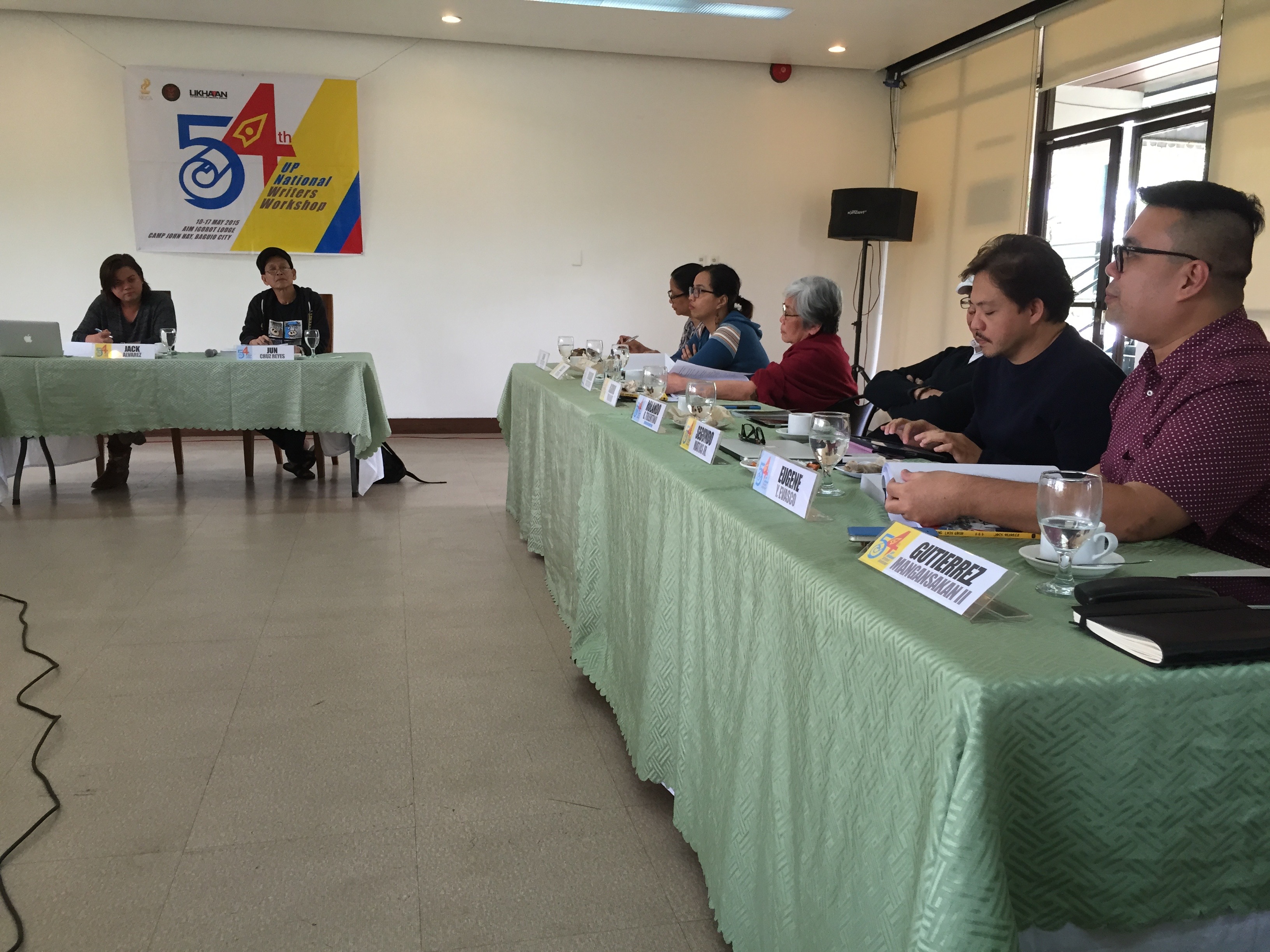
BECAUSE OF my trip to Canada, I was able to attend only one day of this year’s UP National Writers Workshop, which took place from May 10 to 17 in Baguio. I immediately went to work that morning leading a discussion of a biographical project submitted by one of the twelve fellows.

It was a topic I was keenly interested in, because of my own work in biographical writing. (Two of my biographies—A Man Called Tet: The Story of Enrique T. Garcia, Jr. and Edgardo J. Angara: In the Grand Manner—were published and launched recently by Anvil Publishing and the University of the Philippines Press, respectively.) I’m at work on a few more, and if it becomes my lot to be known primarily for my accounts of other people’s lives than for my own fiction, then I can’t complain, having assumed a rather unique responsibility and occupation, among a few others in our writing community.

As a grade-schooler, I devoured biographies in the library, finding that the lives of successful or significant people—whether here or in faraway lands—inspired me to try harder and do more in my own difficult existence. I especially enjoyed the life stories of scientists, explorers, soldiers, artists, and heroes. Of course, these elementary editions were highly simplified, and very likely glossed over the human imperfections—sometimes gross—that these characters possessed, which more mature biographies would reveal if not revel in. No matter; at that time, the overarching greatness of their deeds lent a luminous aura to these characters’ profiles, and I have to believe that I emerged all the richer for reading those books.

The idealization of a life was one issue we discussed at the workshop. There are many kinds of biographies, and I took the occasion to go over a simple classification of these kinds.

On one extreme would be hagiography—literally, writing about saints, and therefore the sunny sanctification of the subject as though everything that he or she did were beyond reproach. On the dark end would be the hostile or malicious biography, written for no other reason than to malign its subject as indelibly as possible, even at the expense of the truth. To its left would be the critical biography—a sober, perhaps scholarly, and more even-handed study of a life, sparing nothing and no one (least of all the subject) in pursuit of the presumptive truth, although these works could also carry their own agenda.

Farther on would come the kind of work that I and some others do on commission, for which I’ve coined the term “sympathetic biography,” a largely positive presentation of a subject’s life—without skirting, however, the major controversies and issues publicly known to involve the subject. Is it the whole truth and nothing but the truth? Realistically, I would expect not, and not because I think my subjects deliberately lie to me, but because it’s in human nature to present the best side of oneself. (I think Dolphy set the bar for searing candor and self-awareness in his autobiography, Hindi Ko Ito Narating Mag-Isa; I can’t imagine politicians or business figures being so open about their private lives.)

A sympathetic biography may be a half-filled glass to many, but it puts something on the table to be seen and seen through. I expect—I would hope—that whatever I write about my subject will be interrogated by more knowledgeable critics and scholars. This is why I urge my clients to be as forthright as possible and to deal with whatever issues they may have been embroiled in, because we live in a highly skeptical environment where questions never cease, especially online.

But to get back to the workshop, we were glad to succeed in our continuing quest for the discovery and encouragement of bright new writing talent across the archipelago. The UP Writers Workshop is different from most others in that it engages mid-career writers—people of proven ability with at least one published book, or major stage or film production to their name. We deal with them less as students than as younger brothers and sisters in the profession.

The critics of writing programs and workshops who think that all they produce are clones and sound-alikes of those teaching these courses should take a look at our roster of fellows and their work. These young writers sound nothing like us, and even after the workshop, they’ll continue working with their own material in their own styles, because we instructors do our best to recognize and preserve the originality of their voices.

The best help we can give them is to provide a response—whether it be a gut reaction or a learned reading that draws on a certain context—from our side of the generational divide, although they get responses as well from their peers, which might just be more useful and valuable to them, coming from people who share their vibe.

This year, we welcomed the following: Jack A. Alvarez (Creative Nonfiction); Armida Mabitad Azada (Poetry); Kristoffer Brugada (Nobela); Resty Cena (Nobela);

Gutierrez M. Mangansakan II (Creative Nonfiction); Isidro T. Marinay (Biography);

Segundo D. Matias Jr. (Kuwentong Pambata); Rhoderick V. Nuncio (Nobela); Will P. Ortiz (Nobela); Benedict Bautista Parfan (Poetry); Charlie Samuya Veric (Poetry); and Eliza Victoria (Fiction). Watch these names, because if you haven’t read or heard about them already, you will soon.

What many don’t realize is what a precious resource we have in these programs and workshops here in our part of the world. Our friends from the region have begun to notice what a liberal and nourishing environment we have for young writers. There’s still patronage and paternalism in the system to be sure—this is Asia, after all—but it’s much less pronounced and potentially stifling than elsewhere. Our tradition is for the younger ones to tell their elders “Up yours!”—until they start putting on the poundage and the gray hairs themselves.

Speaking of writing programs, it was with great alarm and dismay that I received news of the planned closure of one of Asia’s most unique and successful graduate writing programs—the low-residency Master of Fine Arts (MFA) program at the City University of Hong Kong.

The low-residency formula allows students from Hong Kong and around the region to enroll for an MFA and work online with mentors from all over the world, flying in to HK just once or twice a year for intensive workshops and face-to-face interaction. Some Filipinos have gone through the program, and I’ve had the privilege to lecture and to read at a couple of sessions over the years.

The City University administration says that the program costs too much to maintain, but ironically the program turned the corner this year financially, so it can’t be just the money. We wonder if someone up there sees creative writing as a threat to socialism with Chinese characteristics. City U ‘s mandarins should know that Hong Kong’s and China’s prestige and goodwill derive from programs like this—and not from building lighthouses and airstrips in the South China Sea.

Penman No. 150: Looking Eastward in Toronto

IMG_7573 (1)Penman for Monday, May 25, 2015

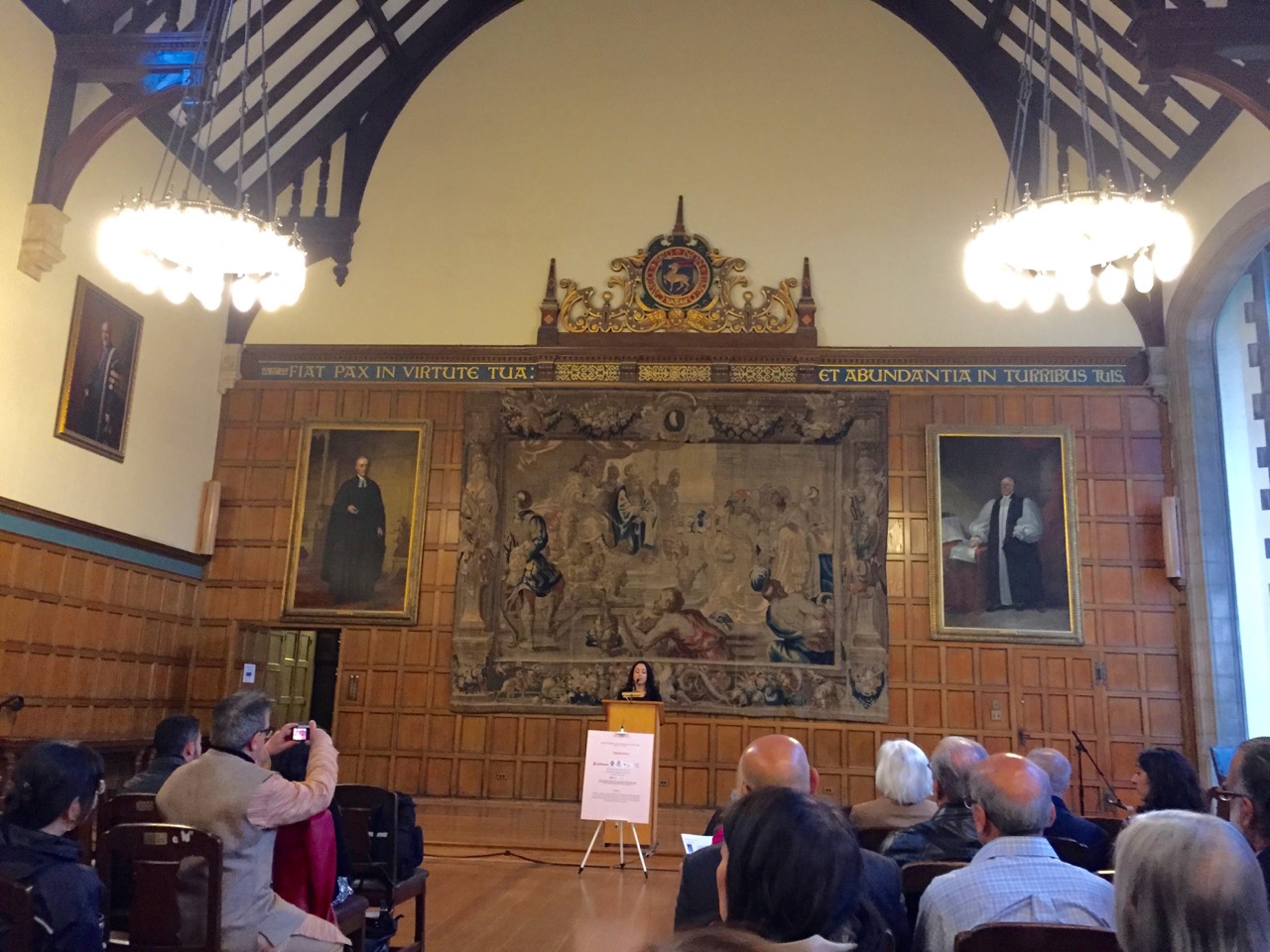
I FLEW out to Toronto in Canada a little over a week ago to take part in that city’s Festival of Literary Arts, possibly the first Filipino author to join that long-running festival, now on its 15th year. Previously, the festival had focused on South Asia (India, Pakistan, Bangladesh, Sri Lanka), but has recently opened itself up to more representation from East Asia, Africa, and the Caribbean, thus my inclusion in this year’s roster of invited writers and speakers.

Over a weekend, from Friday to Sunday (May 15-17), several dozen representatives from these regions and from Canada met in various venues on the scenic campus of the University of Toronto and its environs to tackle issues and problems besetting writers and publishers from outside the global centers. How does a writer from the periphery break through to the center? Or is that “periphery” its own legitimate center? Is yearning for publication and validation in the West a vestige of the colonial mindset, an experience shared by all the countries represented in Toronto?

Aside from these seminal discussions, of course, the meeting was first and foremost a festival, a sharing of the artists’ finest work, and I felt privileged to be introduced to authors and creations I would otherwise have totally missed or blithely ignored. With many of the authors coming from expatriate and postcolonial backgrounds, the offerings were rich and deeply nuanced, the talents outstanding.

Among others, I discovered a major international writer in the festival director, the novelist M. G. Vassanji, who had been born in Tanzania in East Africa, and whose account of his pilgrimage to his ancestral roots across the ocean (A Place Within: Rediscovering India) is a modern classic of creative nonfiction—a sympathetic but unsentimental and often searingly critical chronicle of his encounter with the sprawling reality of India today.

The visit also allowed me to reconnect with some old Filipino friends who had migrated to Toronto and had built new lives there. I was very graciously taken out to a scrumptious dimsum lunch in Toronto’s fabled Chinatown by Patty Rivera and her husband Joe. Patty and I worked together 40 years ago as writers and editors at the National Economic and Development Authority (an unlikely Camelot for young writers and artists under the patronage and protection of then-Sec. Gerry Sicat).

Though trained and still active as an editor and journalist, Patty has since developed into an accomplished and prizewinning poet, with three volumes to her name. Her first collection, Puti/White, was shortlisted for the 2006 Trillium Book Award for Poetry. Patty’s husband Joe, a former Ford executive who also wrote plays in the Philippines, became a lawyer in Canada and then, upon his recent retirement, turned to painting, an avocation in which he demonstrates a most unlawyerly exuberance. I also met and was happy to engage with some Alpha Sigma fraternity brothers led by Amiel “Bavie” de la Cruz, who now runs his own accounting firm in Toronto. IMG_7597 (1) Patty and Joe arranged a reading for me with a large and lively group of Toronto-based Pinoys (including Hermie and Mila Garcia, the moving spirits behind Canada’s longest-running Filipino newspaper, the Philippine Reporter, and expat poet Naya Valdellon); this was held in the very stylish apartment of writer-artist Socky Pitargue, and a great time was had by all as we threshed out the travails of Philippine literature and politics, two deathless topics that occupy me on every one of these overseas sorties. DALISAY_HMG_8056-300x168 Yet another meaningful encounter I had, thanks to the festival organizers, was with two classes of high school students at the Mother Teresa Catholic School in Scarborough, a Toronto suburb with a high concentration of Asian students, including Filipinos. These teenagers had very likely never met a living writer before, let alone a Filipino one, and I was glad to try and show them that we do exist, and that we have something to say. I, too, learned something from their teacher Kathy Katarzyna, who ended our session with a terrific quote from the Canadian poet Leonard Cohen: “There’s a crack in everything…. That’s how the light gets in.”

Many thanks to the Sri Lankan poet Aparna Halpe for taking me to the school. Of course, my thanks wouldn’t be complete without acknowledging the help and support of my sister Elaine Sudeikis and her husband Eddie, who flew in from Washington, DC to join me at the festival and to show me Toronto and a bit of Ontario (most notably Niagara Falls—we walked over to the US side as well for my shortest visit to the US, ever). Ed’s dad Al—all of 92 but still feisty—also gave me a little taste of Lithuania in Toronto.

And the visit would never have happened for me without the recommendation of Prof. Chelva Kanagayakam, an eminent scholar and festival founder whom I’d met in Manila, who tragically died of a heart attack a few months before the festival, on the very day he was inducted into the Royal Society of Canada. I found Toronto itself to be a highly livable and largely safe city (guns are under strict control in Canada), with a vibrant ethnic mix.

One out of every two Torontonians comes from somewhere else, and Vietnamese, Tibetan, and Puerto Rican restaurants stand cheek-by-jowl beside each other, not to mention a Chinatown noted to be among North America’s best culinary havens. (A Pinoy food store aptly named “Butchokoy” stood a block away from my lovely B&B—a three-storey house from 1853—on Dunn Street.) Victorian structures still in use by the university and the city government contrast sharply with ultramodern architecture in an eclectically energetic skyline. Seekers of the funky and the quirky can have their fill in the city’s counterculture-inspired Kensington Market. IMG_7691 (1) For someone schooled in Americana, this exposure to things Canadian was an interesting re-education—to think, for example, in terms of “Tim Hortons” instead of Starbucks or Seattle’s Best; of “Roots” instead of Gap; of “Hudson Bay” instead of Sears or JC Penney, etc.

But the most useful re-orientation took place for me at the festival itself, in reminding me that we have a lot to learn from South Asia as far as developing readerships in local languages is concerned, among other issues. We Filipinos think we’re well traveled and globally savvy, but we actually don’t get around enough in terms of mixing with our fellow Asians, let alone Africans. We seek out Western—specifically American—tutelage and patronage, often to our own deep disappointment.

It seems ironic that I had to learn this in Toronto—a true cosmopolis like New York—but sometimes you have to stand in the West for a better view eastward.

[Group photo from philippinereporter.com]

Penman No. 149: Advice to Freshmen

Penman for Monday, May 18, 2015

AFTER LAST week’s piece on “Why I’m not on Facebook,” I thought I should add or clarify that I’m not entirely off the grid, Web-wise. I do choose the websites or forums I frequent (and in case you’re wondering, I’ll explain the difference between forums and fora one of these days), to make sure that I deal only with things and people I’m truly interested in. For over a decade now, I’ve moderated the Philippine Macintosh Users Group (www.philmug.ph), and more recently the Fountain Pen Network-Philippines (www.fpn-p.org); now and then you’ll also find me at the Philippine Watch Club (www.philippinewatchclub.org). I keep a blog at www.penmanila.ph, and send out an occasional tweet, usually about my poker fortunes and misfortunes, from @penmanila.

It was on one of these sites—Philmug, which has grown to become one of the world’s most active Apple user groups—that I came across a thread I’m tapping for my topic today. While Philmug is the place to talk about anything and everything Apple, it’s also a community that can spark very lively discussions about such motley topics as Manny Pacquiao, Manila traffic, where to stay in Hanoi, and what SIM cards to get in Europe. One such “offline” thread that perked my interest last week was one titled “College freshman tips,” started by a young member about to enter college. Was there anything, he asked, that his elders could tell him about college life?

It’s a thread that’s grown to ten pages long the last time I looked, and predictably, many Muggers (as Philmug members call themselves) recited that age-old mantra that all college freshmen know by heart (and sophomores even better): “Party hard, study harder!”

Other suggestions were more specific:

  1. Join student organizations and socialize, but choose which ones you’ll be joining wisely. These “orgs” could become networks for life, for both friendships and professional contacts.
  2. Avoid fraternities and such groups that employ physical initiation and advocate violence. You’re in college to study—not to maim or be maimed by other people.
  3. Get out of your comfort zone, and be a little more adventurous. Make friends with people who may be totally unlike you. That’s where a lot of learning happens—in knowing about how other people live and think.
  4. Manage your resources well—your budget and time, most especially. Learn how to take care of yourself, and consider taking a student job, both to earn and to learn some professional working habits.
  5. Master the freshman basics: the campus map, how to take notes, who the best (not necessarily the easiest) teachers are.
  6. Don’t confuse a college diploma with education. A lot of learning takes place outside the classroom.
  7. Don’t believe everything you hear, even from your professors. Learn how to argue, and argue well.
  8. Never plagiarize. It’ll never be worth it.
  9. Don’t be afraid to fail. Go ask a girl out if you really like her. Failure is part of learning.
  10. Don’t try to do everything in your freshman year. You’ll find yourself being pulled in so many directions that it’s easy to lose focus. Map out a clear and unimpeded path to your sophomore year.

Some other suggestions were a bit more unusual, although no less practical. “Always sit beside a female classmate and you will never regret college life, because they are lifesavers (and your immediate supply of pens, paper, books, assignments, and exams),” proposed one member (who now just happens to be one of our smartest cops in the PNP). “They smell better than boys,” another member, a retired pharmaceuticals executive, agreed.

And what did I say? Quite a bit, but among them was, “Don’t bother playing mind games with your professor (as in ‘I’m smarter than this guy, and I’m going to prove it’). You will lose; even if you are smarter than your prof, you will lose… Learn how to argue and come across as being smart without being snarky. I’m a very gentle prof myself, but nothing makes me happier some days than to give some smartypants a dose of his own medicine.”

Now, of course, like many 16- and 17-year-olds, I didn’t follow all this sound and sage advice I’m giving and hearing.

In my freshman year in UP in 1970-71, I (1) joined a frat and got beaten black and blue; (2) joined a militant student organization and went to dozens of rallies, many of them violent; (3) joined the staff of the Philippine Collegian, the student newspaper; (3) met (and lost) my first girlfriend, and did what boys and girls do; (4) got a 1.0 in English and a 5.0 in Math (for absenteeism—I was a Philippine Science high grad and arrogantly thought that Math 17 was beneath me); (5) shifted courses, from Industrial Engineering to Journalism, I think; and (6) went up to the mountains of Quezon and Bulacan to do “mass work.” It was, to say the least, an interesting year.

Within another year or so, I would drop out and divide my time between my activism and a job as a newspaper reporter (I may have been the youngest regularly-employed newspaper reporter of my time, at 18); also at 18, I was in martial law prison; by my 20th birthday, I was married, and became a father before I turned 21.

Not surprisingly, it took me forever to get back to school and finish. I resumed my undergrad studies at age 27, and graduated with my AB in English, cum laude (you could still get honors then even with a failing mark if it wasn’t in your major—I had shifted to English by then—and if your GWA could sustain it) at age 30. I made up for lost time by finishing my Master’s by 34, and my PhD by 37. Some of us like to hurry… and then to take our time… and then to hurry again.

I suppose my ultimate advice to freshmen is just to hang in there and don’t do anything stupid like get killed before turning 20, unless you’re doing it for God and country. But don’t stay too safe, either, because the best things you’ll be learning from will be your most grievous mistakes. One of the wisest things I ever heard came from a friend, now departed, spoken over beer and stale cigarettes at 2 in the morning: “Everyone should be entitled to one big mistake.” Or, as my professor in German once put it, “Ein Fehler ist kein Fehler”—one mistake is no mistake.

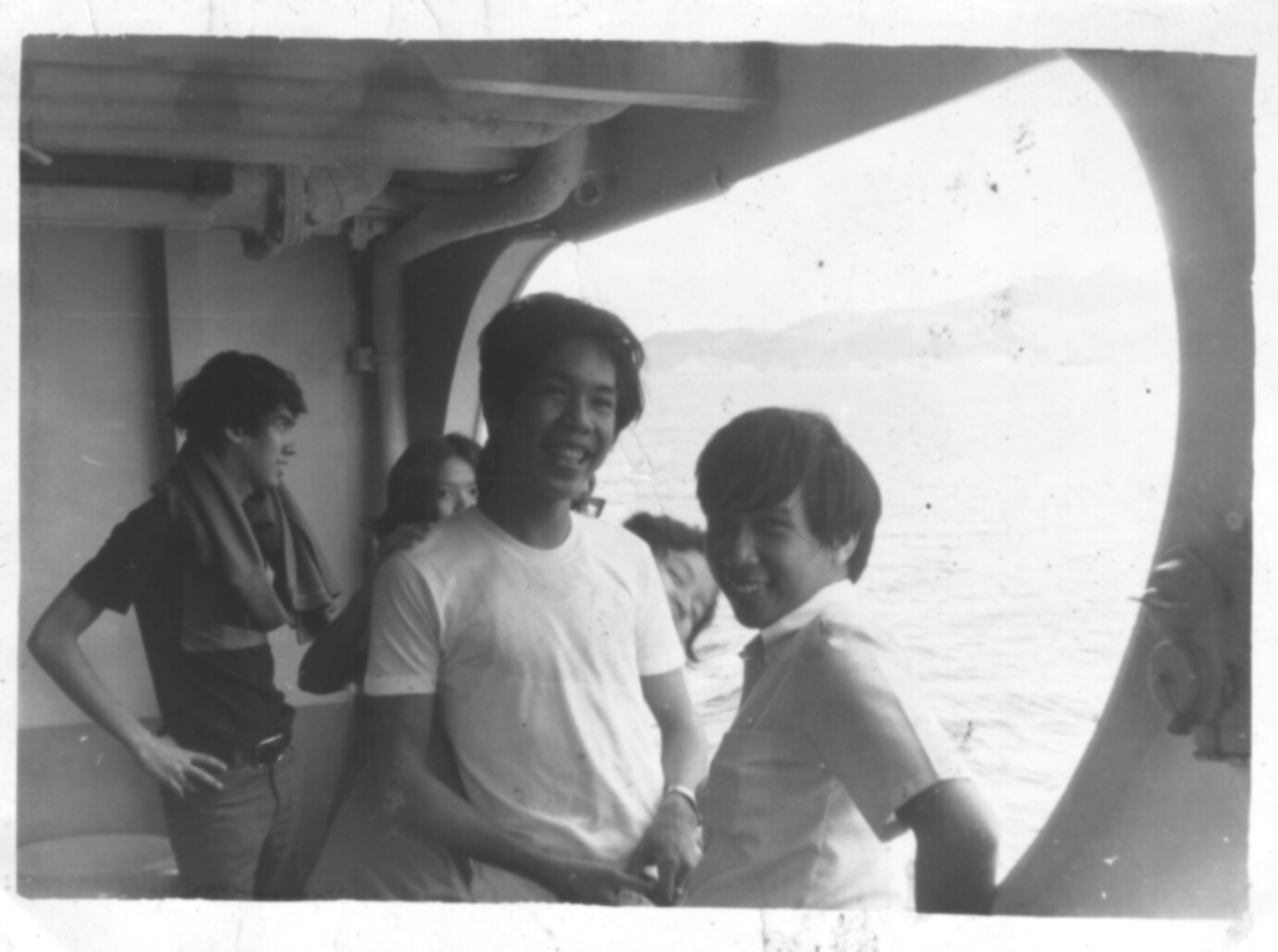
We made a few, and have survived and maybe even prospered despite and because of them. For a Thursday throwback, I posted a picture in that thread of myself as a lanky freshman, beside activist leader and fellow PSHSer Rey Vea (now president of Mapua University), on a boat to a CEGP convention in Dumaguete ca. 1970. My only question was, where did all that hair and leanness go?

1971

Penman No. 146: A Life in the Grand Manner

SEJA2013UPPenman for Monday, April 27, 2015

I’VE BEEN privileged to work with some of the most accomplished and interesting personalities in Philippine politics and business on their biographies—the accounting pioneer Washington SyCip, the brilliantly rebellious Lava brothers, the Marcos-era tycoon Rudy Cuenca, and the political maverick Tet Garcia, among others. This Wednesday, April 29, another biography I wrote—Edgardo J. Angara: In the Grand Manner, published by the University of the Philippines Press—will be launched at the Manila Polo Club, from 3 to 6 pm, and it’s focused on a man who will be remembered for many things in many ways, whose impact on our political, economic, and social life has been far greater than the headlines alone would suggest.

The man now known by many as SEJA (for Senator Edgardo J. Angara) courted consternation and even disdain from many people, including some old friends, when he stood by the embattled Erap Estrada into the last days of the latter’s doomed Presidency. He also confounded many of his own followers when, after leading the opposition, he signed up with Gloria Macapagal Arroyo’s senatorial ticket in 2007. The biography addresses those issues, and more—the Apeco issue in his home province of Aurora, for example, involving the conversion of land claimed to have been the ancestral domain of the Dumagats into an economic zone.

It also sheds light on some little-known but key moments in our political history, such as the peace agreement that Angara was able to negotiate, when he was Agriculture Secretary, with communist rebels in Negros. “That agreement continues to hold,” Ed told me. “It’s the longest-lasting agreement the Philippine government has achieved with insurgents.” The biography also narrates how Angara, still as Agriculture Secretary, was just about to conclude a rehabilitation plan for Camp Abubakar, in close consultation with the MILF leadership. “It would have been a historic breakthrough,” said Angara, “but it was opposed by the military, and ultimately dropped by President Estrada.”

My favorite portions of the biography have to do with his days as UP President, when he threw that famously independent and historically dissident institution into a tizzy by coming in from the cold and applying corporate governance to the academe.

Rumored to have been President Marcos’ choice for the UP job—something Angara strongly denies, attributing his selection to the support of the late Onofre D. Corpuz—Angara stepped into Quezon Hall from out of the blue, “the blue” being ACCRA, the law firm he had set up with some of the brightest young lawyers of his time. Angara would recall that “OD asked me to meet with him in the coffeeshop of the Mandarin. He brought up the UP presidency with me, and I told him that while it was certainly a great honor to be considered for such a lofty academic position, I simply wasn’t prepared for it. My only teaching experience was as a lecturer for two semesters, right after I had returned from Michigan. The School of Business Administration was looking for someone to teach corporation law, and I drove my Beetle from Makati to Diliman to teach my classes.”

His election by UP’s Board of Regents was no cakewalk: Angara faced a formidable and distinguished array of fellow candidates, including Secretary of Justice Vicente Abad Santos, Acting Budget Minister Manuel S. Alba, UPLB Chancellor Emil Q. Javier, Director of the United Nations Fund for Population Activities Rafael M. Salas, incumbent University President Emanuel Soriano, Economic Planning Minister Gerardo P. Sicat, Assemblyman Arturo M. Tolentino, and Assemblyman Ronaldo B. Zamora, among others. It was even rumored that First Lady Imelda Marcos herself was interested in the position.

In the end, the BOR elected the 46-year-old lawyer, and he lost no time wielding the broom—reorganizing and trimming down UP’s tangled and bloated bureaucracy, revamping its academic programs, and securing fiscal autonomy for the university. Some of these measures inevitably made him enemies, but also unlikely allies, such as the staunchly leftist professors Francisco Nemenzo and Roger Posadas.

Known to his colleagues as an irrepressible jokester, University Secretary Mart Gregorio probably wasn’t joking when he recalled a moment when he entered the campus with Angara, who observed a virtual menagerie of farm animals along University Avenue. “He asked me, ‘Why are there so many animals at the university entrance?’ I told him, ‘Ah, Mr. President, that’s the College of Veterinary Medicine. In other universities abroad, you might be welcomed by a beautiful arch or statue. Here we have cows, chickens, and goats.’ And then he asked, ‘What’s that other college there?’ I said, ‘That’s the College of Fisheries, sir.’ He said, ‘Fisheries—but we don’t even have an aquarium here!’ And right there, he said, ‘I think that should be transferred to UP Visayas.’ And it was. ‘Vet Med should be transferred to UP Los Baños.’ And it also was.”

I’m biased, of course, being a UP professor and former university administrator myself, but that’s the kind of anecdote that made this book a pleasure to write. It was also the realization that I was talking to the man responsible for many landmark bills that made a key difference in my own life, among many other millions of Filipinos—the Senior Citizens Act, PhilHealth, the Generics Act, and the creation of the Commission on Higher Education and the National Commission for Culture and the Arts, aside from laws on Agricultural and Fisheries Modernization, the Free High School Act, the creation of TESDA and of a host of financial and educational reforms.

He has been a strong supporter of culture and the arts, and lately has been an avid Hispanist, but Ed’s emergence as a cultural champion came as a surprise to many people—even to Ed himself, who acknowledges that “I don’t even sing or dance, much to the frustration of my wife. I don’t do any artistic work.”

From Con-Con delegate, corporate lawyer, and UP President to senator, Senate President, Agriculture and Executive Secretary, SEJA’s life has certainly been one of the most storied hereabouts. “I will be the first to say that it has been a far from perfect life, fraught with challenge and accident,” he says in his foreword, “but in my 80th year I can only still feel privileged to have lived it the way I did. The title of this book may sound rather immodest—it draws on Justice Holmes’ admonition for the law to be taught and therefore practiced in the grand manner—but I would like to believe that in the end, this is the only standard we can be measured by, as we seek to reshape society itself and our nation’s future.”

See you, I hope, at the book launch.

Penman No. 127: Some Inflight Education

IMG_0231Penman for Monday, December 16, 2014


ONE OF the things I like about flying is the onboard fun that I can look forward to—the movies and the music, to be more specific. At my age, and with all the mucking about that I’ve done, I should be sick of these things and ply myself insensible with the free beer or wine somewhere between Anchorage and Nagoya, but the honest truth is, I’m not. I’m eager for entertainment, which is the only way I can forget the fact that I’m going to be up in the air for the better part of a 24-hour day. I don’t have a fear of flying; it’s boredom I can’t abide.

Being up there means that I can catch up on all the movies I never saw and didn’t even know existed. Beng and I almost always take in a movie after our weekly foot massage (such is life in the 60s), but we’re slaves to what’s out there, and not being too much of a cinephile I’m positive I’m missing out on the good stuff by sticking to the mall fare.

That changed last week when I flew home from Dulles airport outside of Washington, DC to Terminal 3 on the fringes of Pasay—a distance of 8,548 miles, according to Google. That meant 11:30 hours of self-amusement to contemplate, but I think I hit the jackpot—a trifecta in sporting terms—by watching three great movies on one long trip (I actually saw four, but I don’t think Hercules: The Thracian Wars is going to win the Palme D’Or).

I can’t get enough of documentaries, and I actually watched this one twice—the first time on the inbound flight last September, and again coming home. It was an HBO special titled Six by Sondheim, about the life and work of the lyricist-composer perhaps best known for that song everyone loves to sing but nobody really seems to understand, “Send in the Clowns.” (Reader Ivi Avellana-Cosio finally made sense of it for me.)

I just enjoyed the presentation the first time I saw it, but this second time, I was furiously scribbling away on my notebook with a fountain pen in the half-light, as Stephen Sondheim spoke about the creative process behind six of his best songs. Anytime you see me taking notes, it has to be that good, so I’m going to save the best of Sondheim for another column, which the material richly deserves. But just for starters, this was the man who wrote the lyrics and libretto for West Side Story when he was 25—a task he chafed at, wanting to do the music instead—but it proved to be a great learning experience, and Sondheim would go on to become a master teacher himself, like his mentor Oscar Hammerstein II and West Side Story collaborator Leonard Bernstein.

It was Bernstein, come to think of it, who once said that “Music is the only art incapable of malice,” which makes a good segue to my second choice, a film suffused with malice but whose central character, played by the Briton Tom Hardy, exudes an odd naivete. I’ll spare you the spoiler, but The Drop is as quiet and as deliberate a murder mystery as they come. Set in a bar in Brooklyn, The Drop has no car chases, no photogenic panoramas, and co-star Noomi Rapace puts it best when she squirms and says “I don’t want to be here.” We don’t, either, but we can’t help staying and looking, because we fear for the safety and the happiness of our unlikely hero, a quietish bartender who seems intent only on saving damsels and dogs in distress—at least until he draws a severed arm out of a bag; but I’ve already said too much.

And Tom Hardy makes a good segue to the last item on my playlist, which I watched on the Tokyo-Manila leg. He doesn’t appear in it, but is quoted—or I should say more than quoted, because we hear his voice again, speaking like a head in a paper bag, coming out of the mouth of someone who looks nothing like Tom Hardy, the British comedian and mimic Rob Brydon.

The movie was the rather tepidly titled The Trip to Italy, and the only reason I bothered to click on it was because I mistook it for a travelogue that would take me back to some postcard-worthy renditions of Tuscany and Umbria. Of course—away from the neorealism of Fellini and his crew—nearly anything in Italy is worth a postcard and indeed a book. That’s the burden of Brydon and his fellow comedian and travel companion Steve Coogan, who get sent on assignment as their real selves to trace the footsteps of Byron and Shelley in Italy while feasting on veal and artichokes and an endless parade of smart brunettes.

It’s a road movie and a buddy movie all at once, but it’s not Easy Rider or Butch Cassidy and the Sundance Kid. Real men don’t tool around the countryside in a Mini Cooper, twirling pasta on their forks while quoting the Romantics (“romantic poetry” to most guys comes with a small “r” and is best represented by Kenny Rogers and Michael Bolton).

The Trip to Italy is the kind of talky romp that fans of that taciturn trio of Seagal, Stallone, and Schwarzenneger would absolutely hate. Ninety percent of the movie is conversation—make that intelligent, hilariously intelligent conversation, and 50 percent of that 90 percent is comic impersonation, with the two guys doing their irrepressible impressions of Michael Caine and Marlon Brando, making Coogan and Brydon the Dwayne Johnson and Vin Diesel of roadside repartee. But for all the silly banter, there’s a poignance that underscores this movie that seems to be going nowhere, except deeper and deeper into the male psyche.

I thought I was up there for a load of entertainment, but instead I got a dose of inflight education. I can think of far worse ways of killing time.

(Posters from imdb.com and wegotthiscovered.com)

Penman No. 118: To Teach Is to Persist

To-teach-is-to-persist-Penman-Butch-DalisayPenman for Monday, October 13, 2014


SOMEONE REMINDED me that World Teachers’ Day was celebrated earlier this month, on October 5. I forgot about it because I was—I am—overseas, on sabbatical leave until mid-2015. In our department at the University of the Philippines, we normally get just one sabbatical leave over the course of our teaching career, and typically, professors take it a few years before retirement. I’m five years away from that crossroads, so this is a good time to be away from the classroom and to recharge, which is what the sabbatical leave was originally designed for.

Wikipedia tells us that “Sabbatical (from Latin sabbaticus, from Greek sabbatikos, from Hebrew shabbat, i.e., Sabbath, literally a ‘ceasing’) is a rest from work, or a break, often lasting from two months to a year. The concept of sabbatical has a source in shmita, described several places in the Bible (Leviticus 25, for example, where there is a commandment to desist from working the fields in the seventh year). In the strict sense, therefore, a sabbatical lasts a year.”

This sabbatical, however, is shaping up to be anything but a vacation, or a rest break. I may be cool and dry in an America turning pretty with the onset of autumn, but my workload is as tropically toxic as ever, with several books to complete, columns and articles to write, faculty advising duties to perform, and sundry interests—totally and thankfully unscholarly—to pursue.

I do get a respite from the classroom, but, perhaps ironically, that’s the part of teaching I miss the most. As we celebrated World Teachers Day, I also realized that I was marking my 30th year of teaching this November, and I asked myself what three decades of teaching have taught me. After some reflection, it came down to this: to teach is to persist in the perfection of our humanity and our citizenship. That sounds awfully grand to the point of being pompous and pretentious—don’t we, after all, just grab a book, drag our feet to class, and preach bunkum for an hour to a roomful of people with the pulse rate of zombies to earn our lunch and gas money?

There are, of course, many days just like that in a teaching career, days that blur one into the other until the end of yet another semester. And at some point, it’ll get to you: your speech starts slurring and your eyes get glassy, and you can’t wait until the bell rings or the hour hand moves; you had a long rough night, the car needs new tires, the bills are piling up, your thoughts keep drifting back to Paris or Palawan, and the last thing you or your students want to talk about is disease and social order in William Carlos Williams’ “The Use of Force.”

Maybe ten years ago, I had such a day at the very start of the semester, and without realizing it, I must have been so bleary-eyed that I gave off the impression of not quite being there. To my great shock and dismay, one student later blogged about her disappointment with what she had seen; she had expected a stirring performance from her professor on Day One. It was a wake-up call, and I woke up; I promised that student that I would do my best to live up to her expectations, and I hope I did; we’re good, and she’s since gone on to a promising career in writing.

What I became acutely aware of then was that every teaching day is a performance, not unlike a show a professional actor studies and rehearses for, with the additional challenge that one simply doesn’t repeat the previous show, but keeps adding to it, improvising when possible to adapt to changes in the composition and the mood of every audience. I mutter my first lines to myself on the steps up to my classroom, ticking off the day’s main points and questions in my head; I take a deep breath, step into the door, flash a brief smile, and the day begins. And like the pro I have to be, I’ve learned to take care of myself, so I can teach well—to stay healthy, to sleep well (especially before a class day), and to think of something new to say or to bring to the next class.

So we all have our bad days, but it’s precisely on days like these when we need to remind ourselves of what a tremendous opportunity we have to make this Tuesday or Wednesday one of the most memorable in our young charges’ lives, through something we say, an idea or an experience we share, that will turn a key and open a door in their minds. Only in teaching can an ordinary, even a boring, day suddenly become indelibly special, with nothing more than thoughts and words—and the teacher’s persistence and faith in every student’s potential for transformation into someone more aware, more human, more Filipino. Perfectability? It’s more about the effort than the goal—and I’m sure that whatever we do for our students, we teachers do for ourselves as well.


SPEAKING OF teaching, my department has asked me to invite all teachers and students interested or involved in translation issues to attend the 6th Asian Translation Traditions Conference (ATT6) to be held October 23-25, 2014 at the University of the Philippines, Diliman, Quezon City.

The official flyer says that “The rationale for the ATT series is to challenge the Eurocentric emphasis of Translation Studies, which is largely due to the “unavailability of reliable data and systematic analysis of translation activities in non-European cultures” (Hung and Wakabayashi 2005). The ATT series was initiated by Professor Eva Hung of Hong Kong in 2002. A small but successful workshop was held in London that same year, followed by well-attended international conferences in India, Turkey, Hong Kong, and the United Arab Emirates. It is hoped that ATT6 will lead to theorizing on translation and developing methodologies on translation arising from the specific historical and contemporary contexts of Asia.”

Hmmm, I think that needs to be translated: this conference will explore the theory and practice of translation in an Asian context. For more details, please visit http://asiantranslation6.up.edu.ph/.

{Illustration by Igan D’Bayan of the Philippine Star.)

Penman No. 112: Exercises for the Editorially Minded

Penman for Monday, September 1, 2014


TO MY pleasant surprise, last week’s piece on what editors do drew a stream of positive responses—I never imagined that so many readers would find the thankless and dimly illuminated job of editing so fascinating—but my biggest surprise after the column came out was to realize that I’d already written not just one but two columns on editing, back in 2010. Thankfully, I didn’t repeat myself too much, and since I’ve already written dozens of pieces on, say, fiction and nonfiction, I don’t see why I can’t do a fourth one on editing, focusing this time on how an editor thinks or should think.

But before I go one step further into the trenches, let me just point out another important fact about the editor’s job. Particularly in a journalistic context, where some element of public interest is presumably involved (as opposed to literary publishing, which comes down to very personal tastes), “editing” involves much more than dotting I’s or finding better substitutes for problem words. Editing in journalism inevitably involves matters of policy—the publication’s policy in respect of the treatment of, say, political and social issues. What newspaper and magazine editors worry or should worry about are spelled out in a textbook titled Creative Editing by Bowles and Border (Wadsworth, 2000), which says, in a chapter on Situational Ethics:

“Copy editors are likely to be concerned with decisions involving the writing, editing and production processes: Is the use of profane language or obscene photographs ever justified? When? Are the implicit biases of the editor or the newspaper as a cultural institution evident in the selection of 
stories and photos? Should they be? Do certain people groups or institutions receive more play than others? Conversely, are some people groups or institutions ignored? Are headlines and captions fair and accurate? Are stories edited to eliminate bias and opinion? Are subjective words or words suggesting a viewpoint 
given thoughtful consideration?

“Managing editors and other senior editors are likely to be concerned with questions of policy: Should victims of crimes be identified? If so, when? In stories about rape? About incest? About battering? In stories involving juveniles? Should suspects in crimes be identified? If so, when? At their arrest? When they are charged? At the time
of trial? Should the cause of death be listed in obituaries involving victims of suicide or AIDS? Who in the newsroom should know the identity of confidential sources? Just the reporter? The supervising editor? The managing editor? The publisher? If a reporter pledges confidentiality to a source, are editors
bound by the same promise? How involved should newsroom employees be in writing and editing special sections that promote 
consumer products? How should corrections and clarifications be handled?”

Frankly, when I contemplate questions like these, I’m glad to be in the classroom rather than the newsroom, knowing how tricky these situations can get. It would seem that they should have clear and easy answers, but they rarely do, especially given the realities of Philippine publishing and politics—but that’s a story for another day.

Today, let’s do something more elementary—elementary enough to be among the very first exercises I give my students in CW198, Professional Writing. (I don’t care if my future students see this here, because they’ll still be hard put to cough up the answers. As all my students know, I always give open-book exams.) You might know if you have an editor lurking inside you if you can do these exercises reasonably well. Just for fun, I’ll respond to the first 10 responses emailed to me—if you don’t hear back from me, that means you were No. 11.

The first exercise has to do with the bane of Filipinos who love English too much, to the point of using 30 words where three will do, and of using a P1,000 word where a five-peso one will do. Cut. Simplify. Ruthlessly.

The second exercise is rather more advanced, and involves matters of judgment, nuance, and vocabulary—in other words, style. This is something that an editorial or opinion writer (which I was, way back when) would specialize in. I tell my students that they can express the same idea in three ways—nice, neutral, and nasty—depending on their specific purpose. I don’t mean for anyone to be nasty, of course, but just like learning karate or shooting, you never know when you might need it. Let’s have some fun!

I. Wordiness: Simplify and shorten the following sentences without changing their meaning.

  1. I managed to traverse the thoroughfare without jeopardizing my safety.
  2. The people of the Philippines have a great liking for festive occasions.
  3. Society as a whole, as well as the individual persons in it, should practice the virtue of honesty.
  4. In my personal opinion, it is my idea that a prohibition on pistols, revolvers and rifles should be implemented.
  5. His actuations produced a profound surprise in the very depths of me.
  6. We have insufficient information with regard to this state of events.
  7. Let us satisfy the requirements of our bodies for nourishment.
  8. The outbreak of hostilities was within the realm of possibility.
  9. I give you my permission to continue doing whatever it was you were doing.
  10. He was a uniformed enforcer of the law.

II. Modulation: Rewrite the following statements in the “nice-normal-nasty” modes, as required:

  1. (neutral) The Philippines is a country whose people are predominantly poor. (turn into nice and nasty)
  1. (nice) Heroic overseas workers contribute greatly to the health of the Philippine economy. (turn into neutral and nasty)
  1. (nasty) Your proposal is almost totally bereft of intelligence and originality, and is unacceptable in its present form. (turn into neutral and nice)

Penman No. 107: Small Loans for Big Dreams

WS-Butch-1Penman for Monday, July 28, 2014


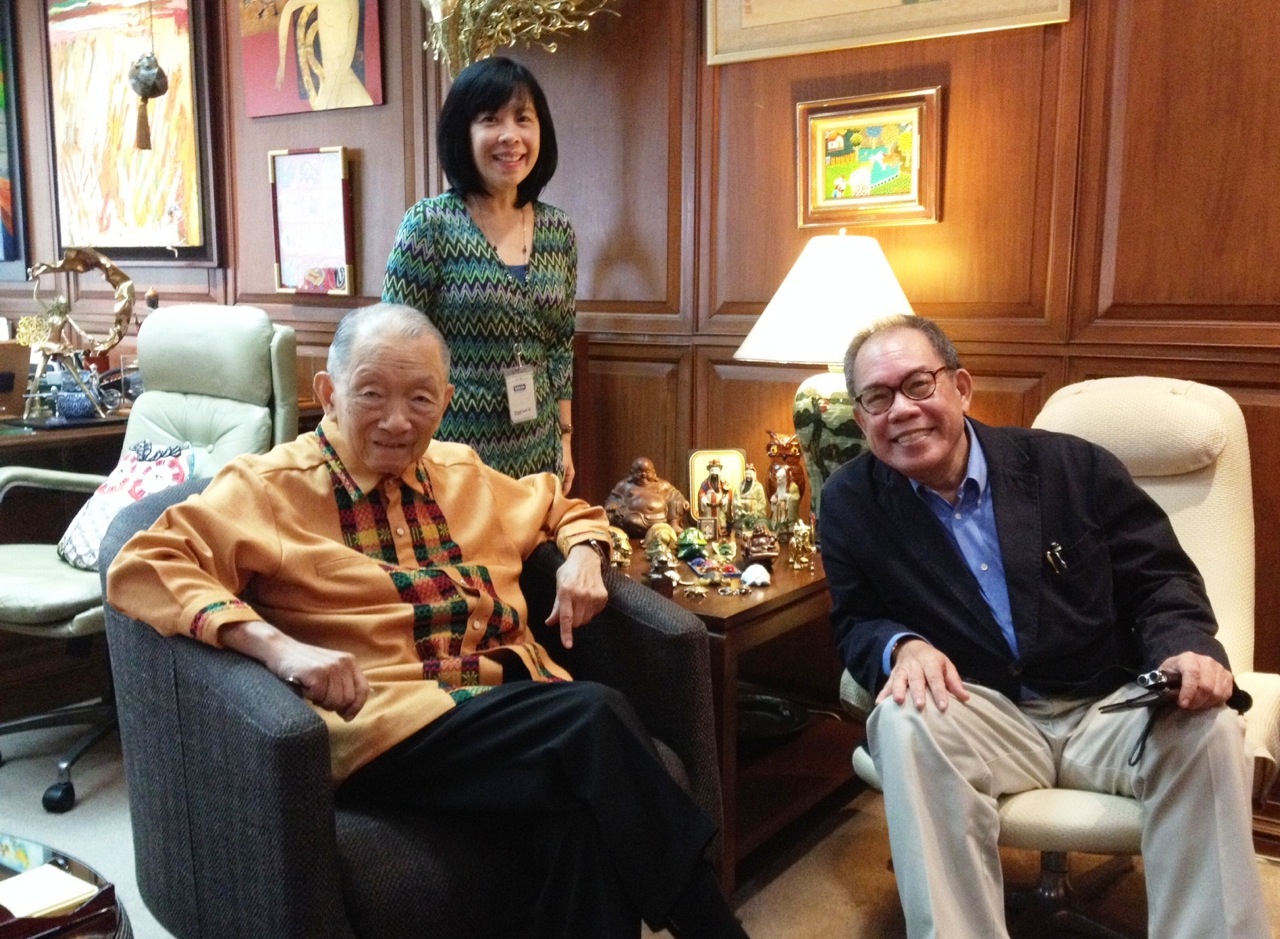
IT HAD been a few years since I last sat down for a chat with the accounting and business guru Washington SyCip, whose biography (Wash: Only a Bookkeeper, published in 2009) I had been privileged to write, so I was only too happy to oblige when our mutual friend Marlu Balmaceda asked if I could spend some time last week to shoot the breeze with Wash.

Both Wash and I had aged a bit since we started working on his book back in 2006—I more so than he, who last month turned 93. Having just gotten my senior card in January, I’ve been feeling entitled to some relaxation, but Wash SyCip was right at his desk in his old 14th floor office where I last saw him, working away, surrounded by a growing menagerie of owls, turtles, and roosters, the gifts of friends. On the wall was a Chinese painting of a dignitary, perhaps the Emperor himself, seeking the counsel of a wizened turtle. Wash caught me looking at it and told me what the turtle’s sage advice was: “Take it easy.”

As cool and dapper as he is, Wash makes it look like he’s taken it easy all his life, but I know for a fact—having chronicled that life—that it just isn’t so. No slouch could’ve put up and sustained what became the regional accounting giant SGV.

But this time, Wash wasn’t talking about himself, but about a new program for education that he and a friend began three years ago, called the Zero Dropout Education Scheme, which seeks to put and keep poor Filipino kids in school. “The country’s biggest problem remains poverty and the wide gap between the rich and the poor,” Wash says. “For me, education is key to alleviating poverty, but ironically, the poorer you are, the more children you have, so half go to school and half don’t. Those who don’t will stay illiterate, and will be resigned to poverty all their lives.”

Seeing that illiteracy still afflicted millions of Filipinos, Wash resolved to do something about it and committed US$1 million of his own money to a fund aimed at the problem. Helping him along was his friend, the Armenian-American businessman and philanthropist Paul Kazarian, who pledged to match Wash’s contribution dollar for dollar. But even with that funding, Wash was modest and realistic enough to know that he couldn’t do the job by himself. “I don’t really know the poor, and how best to reach them,” he admits. “So I got in touch with CARD-MRI, which has been a leader in Philippine microfinance, to help us out.” Radiowealth Finance Corporation has also geared its CSR program toward the Zero Dropout scheme, and committed to provide P30 million.

The Center for Agriculture and Development-Mutually Reinforcing Institutions or CARD-MRI goes all the way back to 1986 when Dr. Jaime Aristotle Alip and 14 other rural development practitioners got together to set up CARD specifically to help empower women in poor communities. In 2008, it received the Ramon Magsaysay Award for Public Service. “With over 1,400 units all over the country, CARD had a network in place we could tap for our program,” Wash says.

Initially available to CARD members, the Zero Dropout scheme offers small renewable loans ranging from P1,500 to P3,000, at a monthly interest rate of 1 percent. “Basic education may be free,” Wash acknowledges. “But families still need money for school supplies, slippers, clothes, and other expenses. That’s where we come in. We’d like to provide not just the money, but an easy way of getting it, with as little red tape as possible.”

As of March this year, the program had supported over 46,000 students through loans totaling over P160 million, out of which P130 million in principal and P6.5 million in interest has already been paid back. They expect to hit 100,000 beneficiaries by year’s end.

While most beneficiaries come from Region IV-A (the Calabarzon area), the program has expanded to the ARMM in Mindanao, where the dropout rates are the highest. Typical beneficiaries include Lucena native Lilia Fernandez, a mother of nine who works as a manicurist alongside her husband, a construction worker; her son Erick dreams of becoming an engineer.

Unlike the government’s conditional cash transfer program, which gives cash direct to poor beneficiaries, Zero Dropout is a loan program. “They repay the loan through microfinance, by increasing their income with a loan for a store, a tricycle, and so on,” adds Wash.

If you think poor borrowers can’t or won’t repay their loans, think again. CARD has made a name for itself making sure its system works, basically because it’s led by people from the very grassroots it serves. Wash tells this story: “I had CARD’s management people over for dinner at my house once, and discovered that none of them were from Makati or Manila. They were all from the rural areas, and they were mostly women, very bright women. I was very impressed with their dedication. CARD knows its clientele. It works with groups of 20 women who guarantee each other. I’ve attended meetings with these groups and I can see that our poor communities are full of people with initiative and drive.”

I came away most impressed by an incident that Wash related: “When Yolanda hit, 8,000 students under the program were affected in Leyte and other places. My first reaction was to cancel their loans, as the least we could do to help. But Dr. Alip said, Wash, no—the poor are more honest than the rich. And as reconstruction took off, the loans also began to be repaid, even if the borrowers had lost their homes.” If that’s not inspiring—in the context of billions lost to crooks and scammers—I don’t know what is.

Penman No. 102: The Cream of the Crop

2014FulbrightPenman for Monday, June 23, 2014


A FEW weeks ago, I was happy to attend a pre-departure orientation seminar for this year’s US-bound batch of Fulbright and Hubert Humphrey scholars. I’ve been to quite a few of these PDOs over the past decade or so, and normally I’d be there up front, giving one of the orientation talks.

I’m usually the closer at these seminars, my task being to remind our scholars to enjoy their stay in America and to learn all they can—and then to come home and serve their people. “Love America all you please,” goes my spiel, “but never forget where your home is, which is here—not even here in 21st century Makati, but in those parts of our country which languish in the 20th and even the 19th century. We go to the great schools of America not just to improve our lives but theirs—those Filipinos who cannot even read, or are too hungry and tired from work to read.”

Last month, I sat in the audience on the listening end, having been privileged with a Fulbright grant—again, after my first one nearly 30 years ago, when I left for the US to do my master’s at Michigan and my PhD at Wisconsin before returning in 1991. This September, if all goes well, I’ll be leaving for Washington, DC to do advanced research in connection with my ongoing book project on the First Quarter Storm, specifically to seek out American perceptions of and experiences with martial law in the Philippines, and also to interview Filipino-American activists from that period.

The Philippine-American Educational Foundation, headed by the very capable and amiable Dr. Esmeralda “EC” Cunanan, actually administers or acts as a conduit for several distinct scholarship programs that fall loosely under the “Fulbright” rubric, named after the late Sen. William J. Fulbright, who saw educational exchanges as the best way to promote international cooperation and understanding between America and the rest of the world. (The Fulbright program also sends out American scholars for studies abroad.) Indeed, as I often tell my American friends, one Fulbright scholarship will probably cost a hundredth of and produce a thousand times more enduring goodwill than one bomb. For us Filipinos, this is the pensionado concept brought over into a new century, with the important difference that our learning is no longer meant to serve American ends, but ours.

A scan of this year’s batch of outgoing scholars offers great hope for the future. Chosen from many hundreds if not thousands of applicants after rigorous evaluations and interviews, they represent truly the cream of the crop, and I felt honored to be in their company.

The so-called “classic” Fulbright scholars—those going for their master’s and PhD degrees—include the likes of Lisa Decenteceo of UP Diliman, who’s going for her PhD in Musicology at the University of Michigan in Ann Arbor (yay, go Blue!); Neil Andrew Mijares of the University of San Carlos, who’s doing an MA in Urban and Regional Planning at the University of Iowa; and Ramjie Odin of Mindanao State University-Maguindanao, who’s entering the PhD program in Fisheries and Allied Aquaculture at Auburn University.

Among my three fellow “senior” postgraduate scholars, despite the fact that she looks young enough to pass for an undergrad, is Marites Sanguila of Father Saturnino Urios University in Butuan, who’ll be going to the University of Oklahoma to undertake advanced research in “Species Diversity and Survival in a Changing Environment: Developing a New Center for Biodiversity Conservation.”

For many years now, there’s also been a special Fulbright program focused on agriculture, the Philippine Agriculture Scholarship Program for Advanced Research, which was set up at the initiative of then Agriculture Secretary Edgardo J. Angara to improve our agricultural expertise. This year’s nine grantees include Ma-Ann Camarin of MSU-Marawi who’s going to another MSU, Mississippi State University, to do doctoral dissertation research on (hold your breath) “Disease Surveillance and Study on the Bacterial Flora of Freshwater Prawn (Machrobrachium rosenbergii) as Biological Control Against Pathogenic Bacteria.” Meanwhile, Shirley Villanueva of the University of Southeastern Philippines in Tagum is going to the University of California-Davis to conduct research on the “Genetic Diversity of Native Chicken Groups in the Davao Region.”

Among the two US-ASEAN Visiting Scholars will be Jay Batongbacal of UP, one of our foremost legal experts on maritime law, who’ll be studying issues related to current disputes in the South China Sea. The three Hubert Humphrey fellows—all accomplished professionals in mid-career—include a PNP major and former Pasay City precinct commander, Kimberly M. Gonzales, who’ll be looking into public policy and administration concerns at the University of Minnesota.

To help Americans—especially Fil-Ams—learn Filipino, the Fulbright program is sending out three Foreign Language Teaching Assistants, who include Edward Nubla from the University of St. La Salle in Bacolod; he’ll be on his way to Skyline College in San Bruno, California. Lastly, four Filipino undergraduates will soon be spending a year on a US campus, thanks to the Fulbright program. They include Michiko Bito-on of Silliman University in Dumaguete, who’s taking up Mass Communications.

It’s heartening to see the diversity not only in these scholars’ expertise and concerns but also in their representation of all corners of the archipelago, ensuring that the Fulbright experience is shared not only by the usual suspects like me from Manila’s academia, but by bright young minds from north, south, and center.


SPEAKING OF the Filipino presence overseas, a big cultural event will take place in Hong Kong over this weekend, thanks to the efforts of the poet and scholar Armida M. Azada, who’s been based there for many years now.

On Friday, June 27, 5:30-7:00 pm, Mida will sit in conversation with visiting Filipino writers Joel Toledo, Charms Tianzon, and Daryll Delgado in a symposium on new Philippine writing titled “Our Words, Other Worlds,” at the Amenities Building, Lingnan University. The next day, at noon, Mida’s new book of poems, Catalclysmal: Seventy Wasted Poems will be launched at the 7th Floor of Hong Kong City Hall in Central. Earlier that morning, from 10:30 to 12 noon in the same venue, a free writing workshop will be held for Pinoy helpers and HK-Pinoy youth. On Sunday the 29th, from 6 to 7:30 pm, a poetry reading by Filipino writers and their friends will be held on the first floor of DB Plaza Terrace near Dymocks in Discovery Bay.

This is a wonderful thing that Mida Azada—a gifted poet who was a colleague at the UP Department of English before she moved to Hong Kong and the UK—is doing not just for herself but for her fellow Filipinos in the diaspora. As prizewinning poet Joel Toledo puts it in his endorsement of Mida’s new collection, “Cataclysmal is a collection of haunts and visitations. The poems here flit in and out of the Philippine archipelago, travelling to London, Hong Kong, and New York without losing touch of a Filipino rootedness. The poet’s concerns stray and meander from the personal and cathartic to the phenomenal and ultimately global. But Azada’s voice is keen and focused, filtered on the page by a careful attention to language. One may argue that this is the poetics of the expatriate ruminating on both the post-modern and post-colonial. Yet at the heart of this collection is fierce integrity, a resonant ‘I’ persona that won’t flinch. Here are poems that both strain to capture the fleeting and restrain from exoticizing the past. The poet Fanny Howe once wrote, “Double the beautiful/because they are so little.” While phenomena can sometimes be indeed cataclysmal, the hurtful is never wasted—so long as poems remember and reconstruct and, in time, recollect the sorrows, parse them into bliss.”

Mida, Joel, Charms, Daryll, and the other fine, memorable voices of their generation—they too are the cream of the crop.