Qwertyman No. 8: The Secret

(Photo from dreamstime.com)

Qwertyman for Monday, September 26, 2022

“LOLO, LOLO, was martial law really bad? We took it up in class today!”

“Bad? Said who?”

“Our teacher, Ms. Landicho. She said that awful things happened back then that people have forgotten about.”

“How old is this—Ms. Landicho?”

“Oh, maybe in her thirties? She’s just about to be married—to Mr. Arnaldo, our Physics teacher! We’d been teasing her about it for months!”

“In her thirties? Then how would she know what the heck happened under martial law? She wasn’t even born then.”

“Were you around then, Lolo?”

“Of course I was. I’m seventy-three now, so fifty years ago I was a young man. I had just left my first job because my boss was a tyrant! So I moved to another bank and that’s where I met your Lola Auring, whom I would marry two years later. If I hadn’t made that move, you wouldn’t be here!”

“Was that the bank you now own?”

“The bank we own, hijo! That’s why I want you to go to Wharton after college. I’ll be there for your graduation, and then I’ll give you the keys to that Mercedes G you’ve always wanted—”

“Really, Lolo? But that’s at least ten years away! Golly, a Mercedes G….”

“I remember, my first car was a used and beat-up Datsun Bluebird that your Lola Auring wouldn’t even step into until I got it fixed, because the door kept opening on her side, hahaha! I spent half-a-month’s salary just replacing that door. Oh, the things we went through….”

“Ms. Landicho said her lolo died under martial law….”

“So? So did a lot of people. People die all the time—of heart attacks, diabetes, even slipping in the bathroom can kill you, like my friend Pepito—”

“She said her lolo was arrested by the soldiers, and then they tortured him and dumped his body under the mango trees in Cavite.”

“Well—he must have done something to deserve that. You go against the government, what do you expect? There was a war with the communists going on. War is ugly, wherever you go. Was that was your teacher said about martial law being bad? Did she also say how many crimes and strikes were averted, how clean, peaceful, and orderly everything was, with people following the law?”

“She said her lolo did nothing wrong—”

“Of course she’d say that. Nobody’s lolo does anything wrong—right, hijo? Haha.”

“Yes, Lolo!”

“I did all the right things. I stayed out of trouble, focused on getting my life and my future together, on raising my family and raising my income. And then I went into business for myself, so nobody could boss me around. I showed everyone what I was capable of. I didn’t care about what everybody else was doing. You listen well, hijo. In this world, you take care of yourself first, and then your family next. If you can’t take care of yourself, you can’t take care of your family.”

“You’ve always taken good care of us, Lolo. Papa always tells me, if not for you, I’d be taking the bus or the jeep to a public school—”

“Like I had to, at your age! We were poor as rats and sometimes I went to school with nothing but gas in my stomach. I made sure your papa never went through that. That’s why I had to succeed.”

“Mama also says that if not for the President, you wouldn’t have succeeded. She says that you worked for people who worked for the President—”

“Is that what she said? I have to talk to your mother one of these days. There’s a lot that woman will never understand. There’s a lot that women will never understand. What you have to do to keep yourself and your family afloat. Instead of gratitude, you get questions, questions, questions—”

“What did you do for the President, Lolo? I want to know! Was it a big job, a secret mission, something nobody else could do?”

“Well, I guess you could say, all of the above! Remember, I was still a very young man. But I realized—and my bosses did, too—that I was very good with numbers. And secrets! They could trust me with their lives. But shhhhhh, don’t tell anyone!”

“Like what kind of secrets, Lolo?”

“If I told you, then it wouldn’t be a secret anymore, would it?”

“Awww, Lolo, I promise not to tell anyone! You can trust me—like they trusted you!”

“Well…. All right. Since it’s been a long time and since the President himself is gone, I suppose I can share a secret with you—but just one secret, okay? And this will remain a secret between the two of us—never tell your mama or papa.”

“Okay! Cross my heart and hope to die! What’s the secret, Lolo?”

“I… took… care… of… the… President’s… money. There was a lot of it. I had to collect it and send it safely abroad.”

“Why you? Did you carry it in a bag? Couldn’t the Air Force or the Navy do that?”

“Hahaha, it’s not that simple, hijo, a 747 wouldn’t have been enough to carry everything! He had to keep it abroad because—there were bad people here who were after it. So I was sent on secret missions to make sure everything was okay…. I went to Hong Kong, to the United States, to Switzerland. I loved Switzerland most of all—oh, to be in my thirties again and to watch the fountain at Lake Geneva at sunset. Le Jet d’Eau est tres beau!”

“So that’s where you learned French!”

“Juste un peu, mon garçon! If she were still here, I would have loved to take your Lola Auring there again. You must go to Geneva—after Wharton!”

“Lolo—Ms. Landicho said—she said the President stole a lot of money—”

“Wha—I pay so much for that school and they tell you this? Your teacher keeps saying things she knows nothing about! I was there! I saw no stealing! And let me tell you something—even if I did, presuming I did, it was none of my business. Making money was his business, keeping it safe was mine. That’s called compartmentalization. Remember that word—compartmentalization! You put everything in its box, just worry about the things you should worry about, and you’ll be all right. Understood? Comprenez vous?”

“Yes, Lolo…. So I’ll put the lolo I know in one box, and then my secret lolo in another box….”

“They’re one and the same person.”

“That, Lolo, will be my secret.”
Qwertyman No. 7: No Garage, No Car

Qwertyman for Monday, September 19, 2022

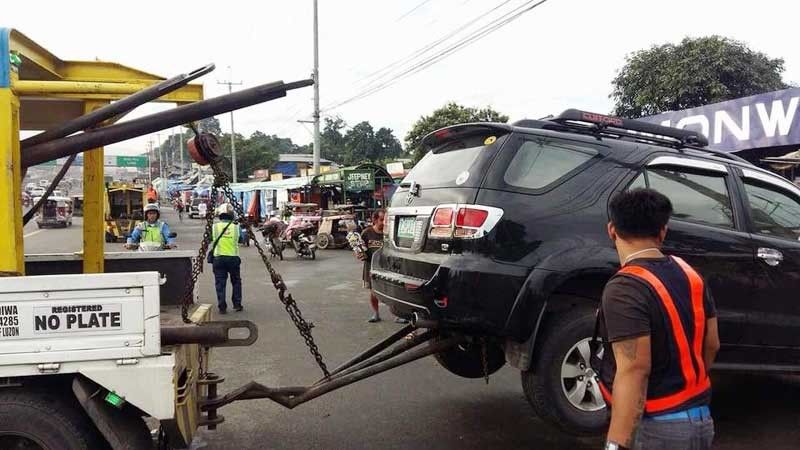
(Photo from philstar.com)

JHUN-JHUN COULD barely contain himself as he stepped into the house dangling a pair of shiny keys before him. His mother looked at him; his father saw the keys. Either way, his entrance spelled trouble. They saw him for just once or twice a month at most since he moved out to a rented studio in Taguig—to experience, he announced, independent living, now that he had reached the ripe old age of twenty-three. 

“Independence,” of course, had a tiny asterisk attached to it, which was the rent paid by his parents for the place, which he promised to assume as soon as he received his promotion to unit manager. That was three years ago. He had spent his bonuses on furnishing the pad with a La-Z-Boy, a 66-inch TV, bladeless fans, air purifiers, and such other man-cave must-haves as a revolving liquor dispenser and a vintage Star Wars poster. 

“To what do we owe this visit?” said his mom in her nervous, high-pitched voice. She was going to day “the pleasure of” but decided not to lie.

“Didn’t you hear it? Didn’t you hear me coming?” Jhun-Jhun said, still jingling his keys.

“I thought I heard the garbage truck arrive,” said his dad. “Yesterday it came too early and we missed it, and now it’s almost an hour late—”

“No, Dad—you mean you heard the honking? That was no garbage truck, that was me! I was trying to get your attention!”

“You’ve been doing that, son, since you were born. What honking? Did you ask your cab driver to honk so we’d go out and pay your fare?”

“Oh, no, no, no cab driver! That was me—in my car. I wanted to show you my new car! Look, Mom, Dad—it’s out there—right in front of our gate!”

More out of fear than anything, the parents rushed to the window, and saw a shiny new car in a migraine-inducing electric blue on the street. 

“Isn’t it lovely? It’s called the Riva Riviera, a 2.0-liter crossover with Bluetooth, USB, rear parking sensors, etc. And the best part of it is—you won’t believe this, Dad, Mom—I got it because, well, because your son is now a unit manager! Finally! You’ll be so proud!”

“You got a promotion—and they gave you a car? Why—congratulations, son, I’m so proud of you!” His mother sighed in relief, and he opened his arms wide to hug her.

“No kidding!” said the disbelieving dad.

“Thanks, Mom, thanks, Dad!” Then he stepped back a bit and added, “Well, they didn’t really give it to me—I mean, I earned it, I’m earning it, I’ll pay for it—over the next five years—”

“What, you bought a new car on an installment plan? Will your raise even cover the monthly payments?” His dad was turning red in the face, but his mom was turning white.

“It will! I mean—I expect another promotion in one, two years, and by the time the 60 months are over, who knows, I might even be an assistant VP!”

“But what do you need a new car for—or even an old one? You live three blocks away from your office in that expensive condo that your mother and I are paying for, which brings up the question, weren’t you supposed to pay for your place when you got a raise?”

“But, Dad—it’s not like I’m going to be in that studio forever—or that job—I mean, it’s a dynamic, disruptive world we’re living in, I could be assigned to Makati or Vertis North, who knows? Don’t worry, I’ll take care of everything when I become AVP. I’ll get electric wheelchairs for both of you, take you out to an all-you-can-eat lunch on weekends, bring you to the seawall so we can watch the sunset together—”

“I don’t want to watch the sunset, with you or with—with Juan Ponce Enrile! I’m only 56, and I’m still working like hell because instead of you contributing to the family budget, we have to contribute to yours!”

“Dad, stop it! You know I get seizures when you scream at me like that. The last time this happened, I was in the hospital for ten days—”

His mother covered her face with her hands, like she was about to cry, and Jhun-Jhun held her to console her. “Don’t cry, Mom! I’ll be all right—”

“I hope you will be, son, because we had to sell my bridal jewelry to pay for that hospital stay!”

“Have you registered your car?”

“The dealer will, soon. Why?”

His dad smirked triumphantly. “Better give them back those keys. There’s a new law that says ‘no garage, no car.’ You don’t have parking space in your condo. So where will your Revo—”

“It’s not a Revo, Dad, it’s a Riva!”

“Where will your Rover sleep? Any vehicle left on the street will be towed away on sight!”

Jhun-Jhun looked at his car, gleaming in the sunlight just outside the gate. Inside the gate, in the old driveway, was the fifteen-year-old sedan his dad had used to bring him to school, and which he still drove to work. “Well, I’m thinking—maybe I could park it here? In our driveway?”

“What? There’s space for only one car, and it’s taken.”

“Wait,” said his mother, touching his arm. “If you park your car here, does that mean you’ll come home? I’ve kept your old room exactly as you left it, you know? Oh, I’ve prayed every night for your return! And imagine the money we could save by not having to pay your rent!”

“Wait!” said his dad. “And where’s my car supposed to go?”

“Oh, let’s think about that some other time!” his wife said, shushing him. “You can give it to Torio in the province, he can use it for buying chicken feed and bringing the fryers to market. And Jhun-Jhun can drive you to work and pick you up in the afternoons, just like you used to do for him when he was a little boy. What’s important is, we can be one loving family again, together, forever—ohhh, I never thought I would live to see this day!”

Father and son looked askance at each other, like something had gone terribly wrong. Mother’s eyes had settled on the Virgin Mary at her altar.

A heavy thud and the crunch of metal broke the spell, followed by a loud horn. They rushed to the window. The garbage truck had arrived and had smashed into the Riva’s rear. Jhun-Jhun felt faint, and the keys fell out of his hand, but nobody heard the noise they made when they hit the floor.

Penman No. 442: Yes, You Cane!

Penman for Sunday, September 4, 2022

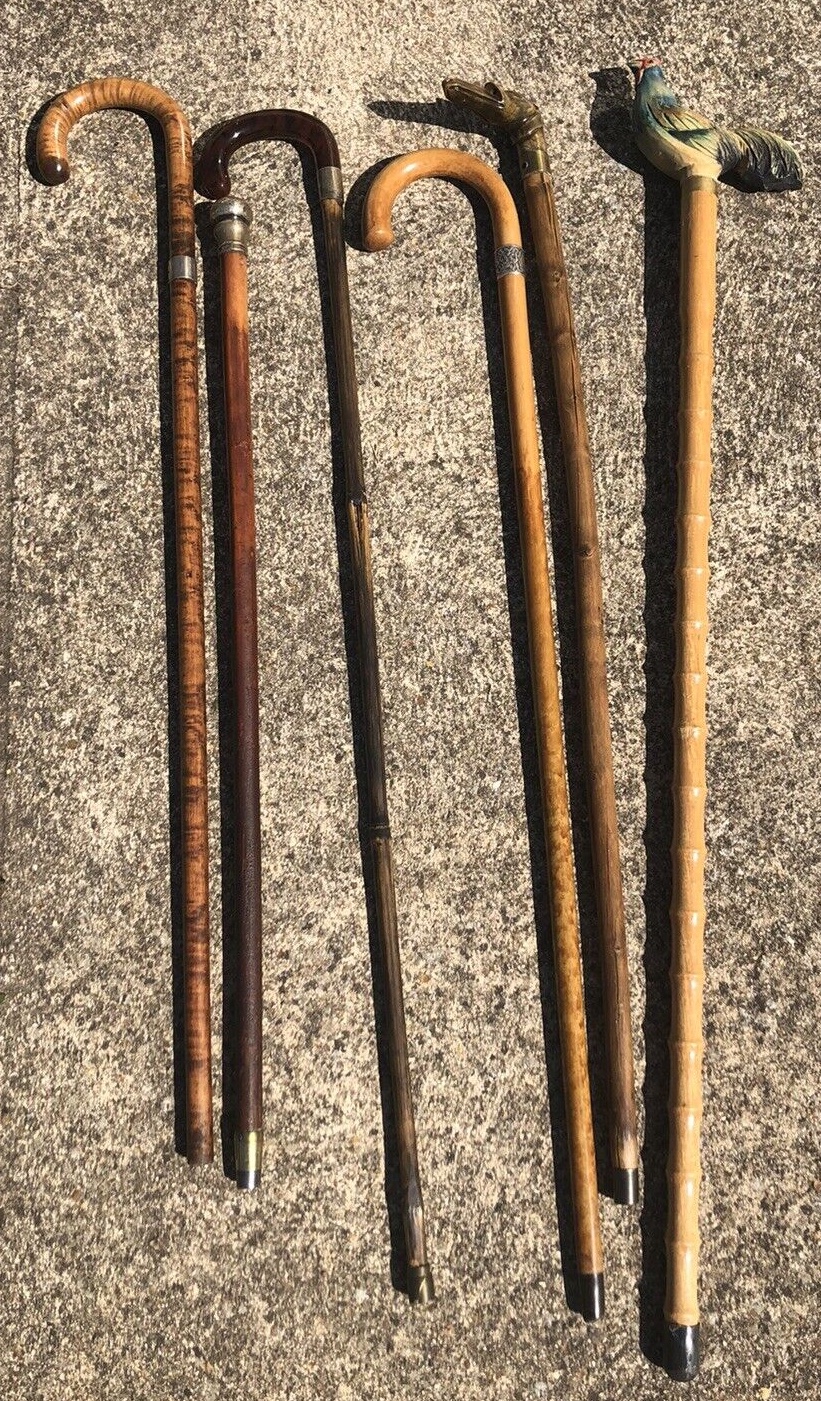
AS IF I didn’t have enough junk filling up every corner of the house, I’ve lately gone on another collecting binge, for which the only justification I can offer is that, well, it’s age-appropriate. 

I’m talking about collecting canes and walking sticks (we’ll use those terms interchangeably for this article, although there are technical differences between them), accessories we now associate with the onset of decrepitude or some other infirmity. I’m not quite there yet—although, at 68, I should need no excuse for carrying a cane, especially for my periodic attacks of gout—but I thought it prudent to prepare now for the inevitable, and acquire artful and functional canes while I’m still sentient enough to know between wood and plastic.

I’m not sure when this newfound diversion began for me. I’d been using the familiar, adjustable metal canes you can buy at drugstores for my gout, which Beng has also leaned on for her arthritis. At some point—as with my other follies—I must have said to myself, “If I’m going to carry this around all day, it might as well be nice. No, forget nice, it might as well be grand!”

And so began my hunt—online, in Japan-surplus shops, and wherever else you can find them—for the perfect cane, which, as soon as you say it, you realize is an impossibility, because the next one is always going to be better, or at least different.  That’s just how it is for collectibles, and how my few working fountain pens grew to 400 at one point (now trimmed down to a more modest 150). 

To bring some reason into this passion, let’s go back to the utilitarian roots of walking sticks and canes, supposedly in the long sticks or poles that shepherds carried to protect themselves and their flocks from predators like wolves. The same sticks were used as walking aids, to climb up hills and mountains with, as well as for taking measurements. By the 1500s, with the use of cane for the shafts, the word “cane” entered popular usage.

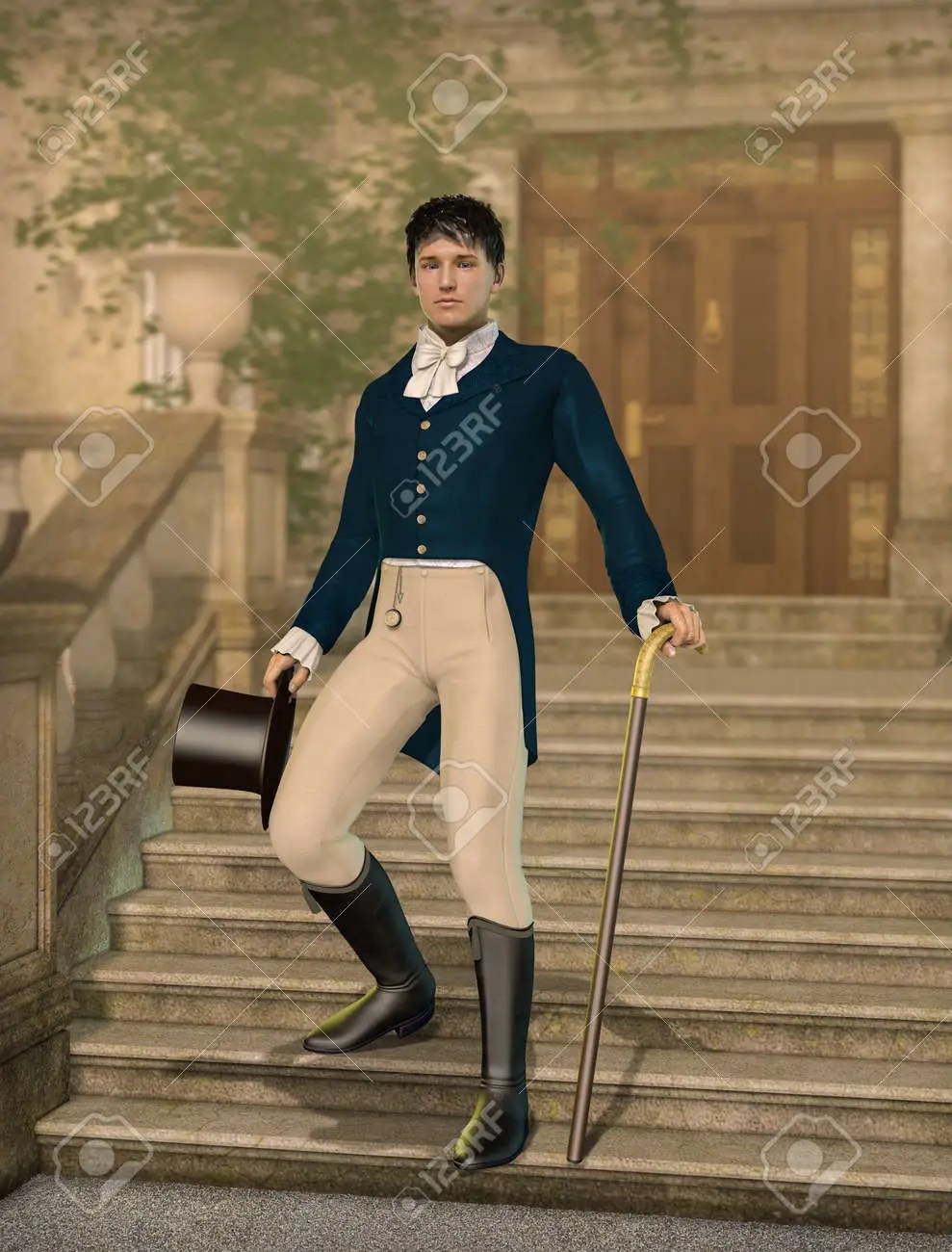
Meanwhile, beyond saving you from a bad fall, these wooden sticks found a new and loftier purpose in the hands of men (and some women) who ruled over vast kingdoms and had to show something for it. They became scepters for emperors, kings, and queens—bishops also took to holding even longer staffs—and as such had to look the part, acquiring embellishments of silver, gold, and precious gemstones. When you had to say something like “Off with his head!”, it seemed more convincing to do it with an upraised stick. Moses, of course, had the most potent rod of all, good for getting water out of rocks and for smiting down the detested Amalekites. 

(Image from 123rf.com)

All that pomp and pageantry associated with carrying sticks must have rubbed off on the bourgeoisie, who took to canes as fashion accessories, one more way of showing (or showing off) how prosperous and important one was. Carrying a cane didn’t mean you were lame; to the contrary, it suggested that you wielded power as a bona fide member of the gentry. Genteel ladies had their own versions, some of which had secret compartments for perfumes, combs, fans, and even mirrors; the men liked theirs with swords, knives, and guns—these multipurpose sticks were called “system” canes.

In the London of the 1700s, according to one history of canes, “A gentleman had to procure licenses for the privilege of carrying canes. It was expected that they would abide by certain rules or risk loss of the privilege. The authorities actually policed rules for canes and walking sticks vehemently. It was considered an extreme violation of manners to carry a walking stick under one’s arm, to brandish it in the air, drag it on the ground or to lean on it while standing.”

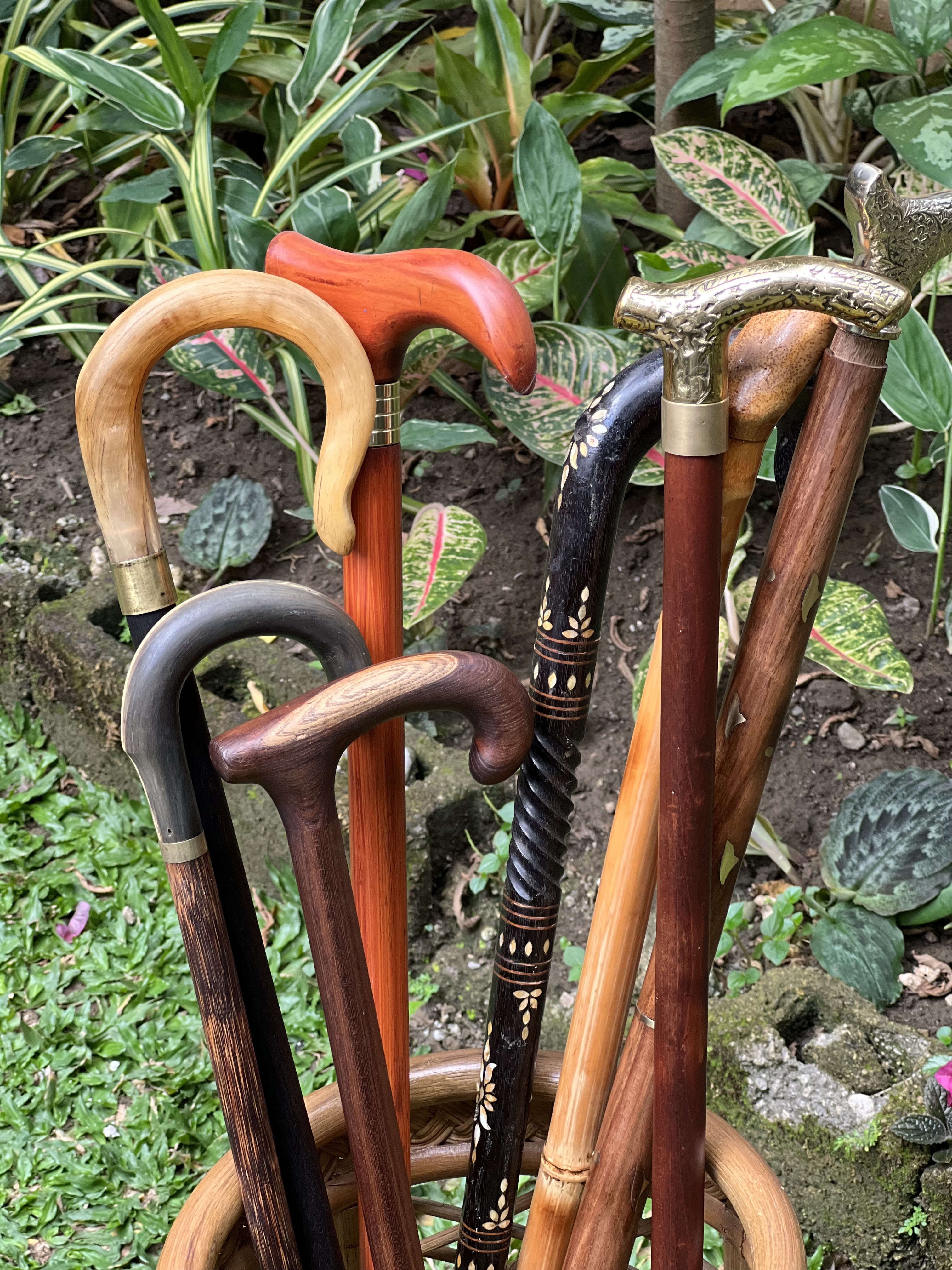
Thankfully today no such licenses are required, and the etiquette of canes is observed mainly in the breach. Canes are back to being the implements of the sick and the aged, and eyebrows will rise if you appear on the street or in your workplace sporting an antique derby (a popular style with a short wavy handle) or a shillelagh (a cane made from a rough piece of wood with a knob on top).

As a senior, I consider myself exempted from all licenses, excuses, and medical prescriptions in this regard. I collect canes because, like my pens, they’re both tools and works of art, relics from an age of manners and elegance. That they’re out of fashion is an even bigger plus, because it means very few other people want them, and their prices will be reasonable. 

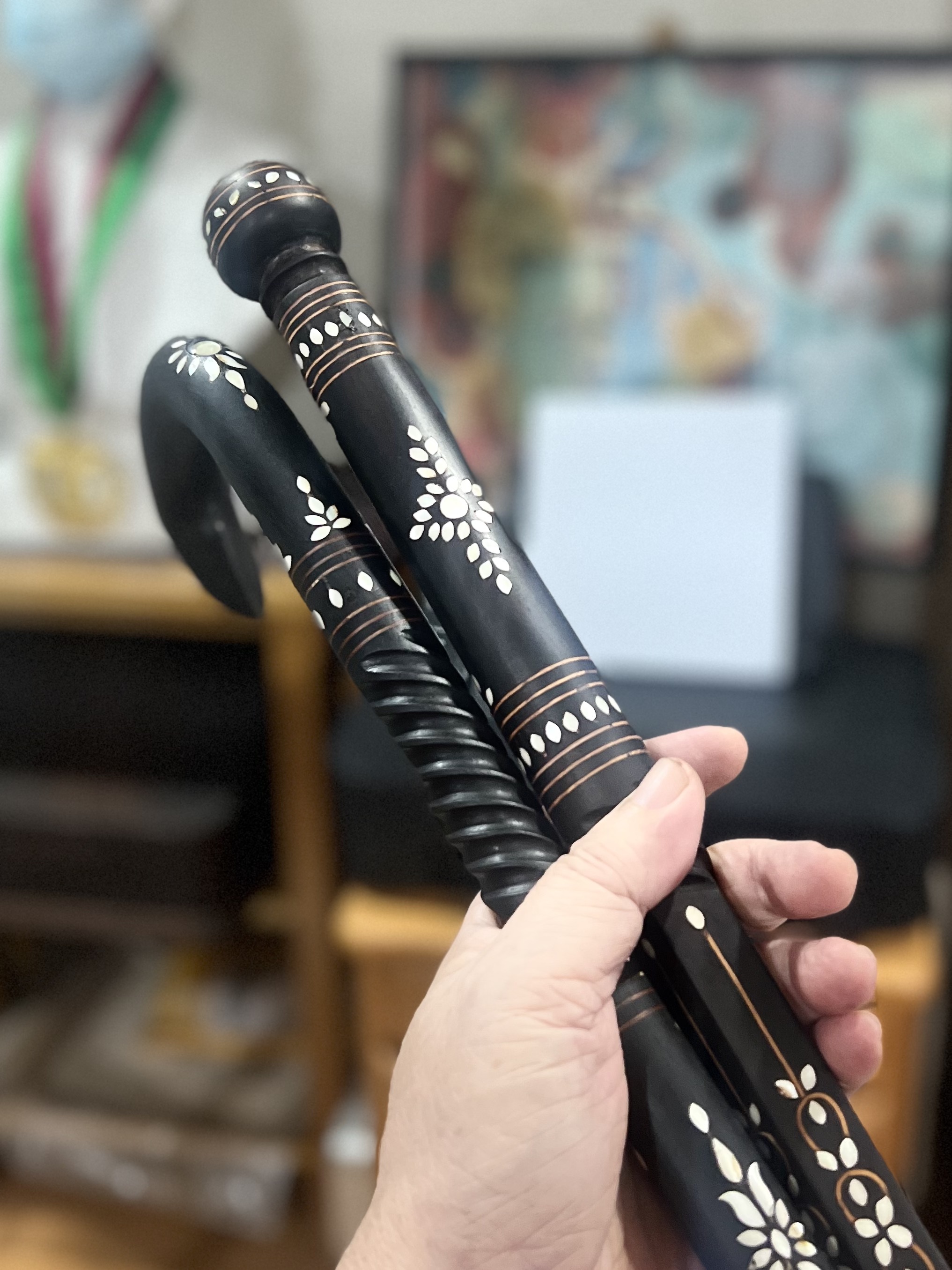
The Philippines is a great place to start collecting canes, because we have very fine antique and vintage ones, made of kamagong or some other hardwood, intricately carved with mother-of-pearl inlays. Some others have silver pommels, handles, bands, and ferrules (the metal caps at the tips) and fine repoussé (hammered) work on the silver. Japanese canes often come in bamboo, which can be very expressive at their bent handles. 

What I’ve looked for outside of our region are canes from Europe and the US, which employ horn, silver, brass, and other materials for their handles, which can be elaborately carved and decorated with animals, skulls (not my thing), and whatever floats the owner’s boat. Vintage canes can also come with bands or badges that denote provenance, such as the owner’s monogram or his military service. There are many websites online devoted to this hobby, and eBay is always a rich source for canes (new but vintage-style ones made in India can be had for not too much). It’s important, by the way, to trim your canes down to size—your hand should be just resting lightly over the handle beside you—not bent upward or reaching down. I do this myself with a hacksaw, and use one of those rubber plugs sold in True Value for chairs to cap the bare tip.

I’m not waiting for my next bout with gout to enjoy my walking sticks. Having resumed my walks around the UP campus, I’ve found that carrying a cane not only supports me but improves my balance and rhythm (I swing it out in front of me like a pendulum). Beng, who needs them more (and who has her own mini-collection), has also discovered that being a cane-carrying senior has its advantages: people are more courteous, service is faster, and seats miraculously appear. I’ll try that the next time we fly!

Qwertyman No. 4: Subversive Sisters Having Fun

Qwertyman for Monday, August 29, 2022

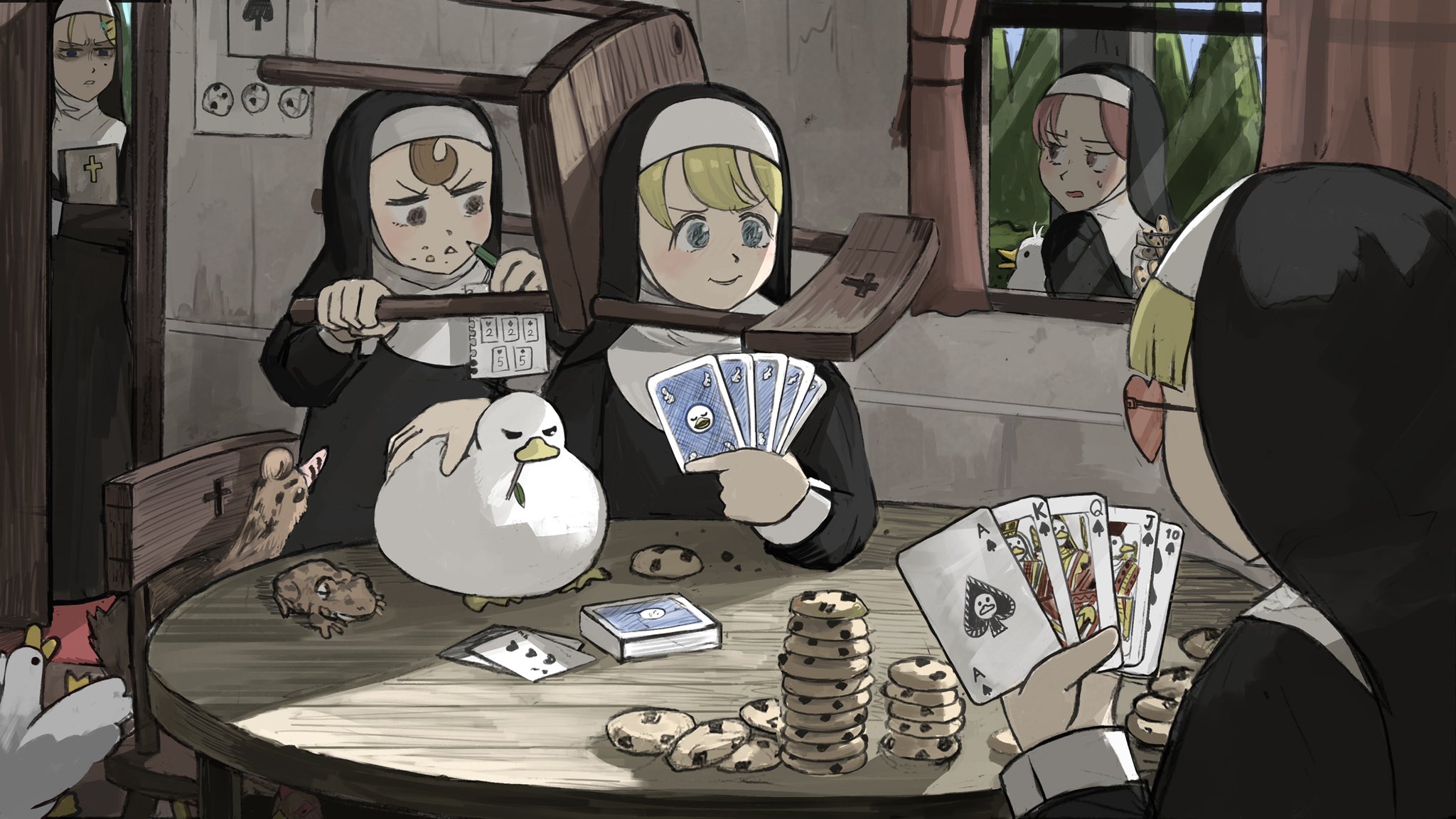
(Image from danbooru.donmai.us)

“WHY IS IT,” asked Sister Edwige as she threw a couple of green chips into the pot to call Sister Augustinha’s raise, “that every time we nuns have a little bit of fun, someone out there screams like we were indulging ourselves in some carnal revelry?”

“Sister Edwige!” said Sister Loreto, as she put her hand on her cheek, a sure tell that she had some pretty valuable cards in the hole, like a pair of jacks or an ace-king. “People might think that you—that we actually knew what you were talking about!”

“It’s no crime to know what we’re not supposed to be doing,” said Sister Edwige, who was wondering whether Sister Loreto was going to reraise, or was going to play it dumb, like she held the lowest pair. Some sisters were so transparent, which was why they chose to play Scrabble or bake muffins during their recreation hour instead of facing the likes of Sister Edwige at Texas Holdem, but with Sister Loreto, even letting on that she had a superior hand when she very possibly did not was part of the game. “Crafty” was the word for her, Edwige decided, something not necessarily malicious but with the possibility of being so.

“So are you going to call or fold?” Sister Augustinha said, annoyed that Edwige apparently didn’t feel threatened enough by her raise, and that Loreto might even move all-in.

“I’ll… just call,” Loreto said, whereupon the remaining sister, Sister Maryska, tossed her cards down, sensing imminent disaster. Acting as the dealer, Maryska drew the turn card—the king of clubs—eliciting a groan of agony from the playacting Loreto.

“Do you think it’s possible they’ll haul us off to prison and then try us for witchcraft, like they did in the old days?” asked Edwige with a chuckle.

“But whatever for?” said Maryska. In a previous life, she had been a nursery-school teacher, but had chosen to enter the order when the Virgin Mary appeared to her from a kaimito tree. “Everything we’ve done has been for the greater glory of God, hasn’t it?”

“Check!” said Sister Augustinha.

“Check!” said Sister Edwige.

“Hmmm…. Let’s make a tiny bet, shall we? Say, two hundred? Just to keep things exciting?” Sister Loreto ever so slightly pushed two even stacks of chips into the pot.

“Two hundred!” said Sister Maryska! “Why, that’s more than I can spend in a week on cookies and three-in-one coffee!”

“It’s only play money, Sister Maryska,” said Augustinha dryly. “It’s not like you or anyone here will starve to death if she makes a dumb call—which I’m not doing!” She folded her hand. “This is pretend-poker. We’re pretending that we’re escaped convicts disguised as nuns, that we stole these habits from a convent’s clothesline, and since our funds are running low and our runaway car is out of gas, we have to stake everything on a game of poker at the local bar, against the woman they know as… Madame Stolichnaya, a retired pediatric nurse and reputed mistress of the Master Demon himself, Dom Athanasius.” A shiver swept the table as Augustinha’s voice descended into a raspy whisper.

“Oooh, that’s exciting!” said Sister Maryska. “Tell us more! What did we do to become prison convicts?”

Before she joined the nunnery, Augustinha had been part of an avant-garde theater group known for its complete lack of inhibitions onstage and offstage, and it was rumored among the novices peeling potatoes in the kitchen that Augustinha had led a blissfully debauched life, complete with boyfriends, banned substances, and (dare they say it) aborted babies. That she was now one of the order’s most devout and dedicated sisters—the one who bathed lepers and tended to terminal patients—could not dispel the impression that she knew more about life than one was reasonably entitled to. 

“I fold!” said Sister Edwige, finishing the hand and letting Loreto scoop up the pot. “I think Sister Augustinha’s game is more fun. Let’s play that instead!”

“Awww, just when I was winning!” said Sister Loreto, pouting at her suddenly worthless chips. 

“Did we rob a bank?” asked Maryska. “Did someone get killed?”

Loreto said, “What do we know about robbing banks? Even if we did get some money, what would we have used it for? We made a vow of poverty—” 

“No, no,” said Edwige, “we didn’t make any vows, we’re not sisters, although we later pretend to be so. We’re villains, we like money, we like spending it on cars, houses, perfumes, vacations to Paris—” 

“Men? Did we spend on men?” asked Loreto.

“I don’t even know what it means to spend on men,” sighed Maryska. “Does that mean you—you buy them nice things, like watches and shoes and iPhones—”

“Or you can just buy them,” said Augustinha with a shrug.

“Really? For what?” said Maryska.

Edwige laughed. She had three brothers—an airline pilot, a cryptocurrency trader, and a police captain—all of whom had been left by their wives and girlfriends for various reasons. “So you can keep them as pets, snuggle up to them on rainy days, smell their body hair—”

“Ewww, I don’t even want to think about, please, please, take that thought away!” said Loreto, shaking her hands in the air. “No wonder we got caught! We had all of these impure thoughts! We robbed a bank so we could get and do all of these nasty things!”

“Technically, the bank robbery alone was enough to land us in jail. The motive doesn’t matter. We could’ve robbed a bank to give its money away to the poor. We’d still be criminals in the eyes of the law,” said Augustinha.

“It must be fun to be bad—sometimes,” said Sister Maryska, looking out into the garden, where other sisters were watering the begonias and watching the clouds turn pink.

“Do people even know what bad means anymore?” said Sister Edwige. “Or good, for that matter?”

Sister Loreto shuffled the deck of cards and said, “Let’s play another hand! And somebody close that window—I can feel a chill coming.”

Hindsight No. 29: Mr. Kapwa

Hindsight for Monday, August 1, 2022

THE HONORABLE congressman tried to scream when he saw the motorcycle dart out from the huddle of cars and trucks ahead, too quickly and too late for his driver Pol to brake or swerve, and the Lexus hit the rider broadside, sending man and machine into a deathly spin on the avenue. Immediately this was followed by the screech of other vehicles trying to avoid the fallen rider. 

No sound had come out of Leonilo’s mouth but he was hearing a shriek, and he realized it was his wife Henrietta with her hands over her eyes, as if refusing to see what had just happened outside. Pol sat frozen, gripping the steering wheel, wondering which was worse: possibly killing a man or displeasing his master.

That day had begun with Leonilo and Henrietta having breakfast by the swimming pool—Henrietta had decided that their interiors needed a makeover, especially now that her husband had been named one of the House’s deputy speakers, and the new paint was still drying in their dining room. Leonilo had wanted them to move to a hotel during the renovation, but Henrietta was too mistrustful of their staff to leave her wardrobe and jewelry behind. She had been known to plant a cheap earring or a bar of Hershey’s in the kitchen or one of the bathrooms as a test, and they had always been returned to her until the chocolate had gone moldy, but she remained convinced that everyone was out to defraud her of her rightful possessions.

“I need a new bag,” she had told him, adding a dollop of whipped cream to her coffee and then a sprinkle of cinnamon. That and a sliver of toast would be breakfast for her, while he dug into his beef tapa, eggs, and fried rice. She knew she had married the son of a stevedore, but since he now owned a shipping company, he could eat with his bare hands as far as she was concerned. He had done that, in fact, throughout his campaign, supporting his claim to being “Mr. Kapwa.”

“You already have more bags than there are days of the year,” he said, chewing on his tapa. 

“I already brought the Birkin to the SONA. It was in all the papers. There’s a new one out in ostrich—”

“I can’t tell an ostrich from a pig when they’re skinned,” he said, annoyed at being burdened with so mundane a matter. His mind was on his pet bill. It was certain to gain support among his colleagues and mark him as a man worthy of their highest consideration, possibly even the Speakership, come the next vacancy. It was a bill “to criminalize the malicious criticism of public officials and law enforcers, through direct or indirect means, such as by editorial commentary or ridicule, whether in print, on broadcast media, or on the Internet, such malicious criticism being intended to diminish the public’s trust and confidence in their elected and designated representatives, promote divisiveness and subversion, and impede the government’s development programs.” All government officials were rapacious crooks, if you believed the videos.

“You don’t have to,” Henrietta said. “You’ll see it when it gets here—they promised to deliver it before noon. I can’t wait to bring it to the party! I’m sure no one else has this yet. You have to be on their priority list for months!” She had chosen a reputedly sustainable Stella McCartney outfit with pants to go with the bag, and had practiced her posing. The Speaker’s wife was throwing a party, and the President was expected to drop by.

The crowds were already gathering around the injured rider and the Lexus. Pol had finally stepped out to see if the man was alive. Surely everyone could tell who was at fault. Pol berated the fellow. “Didn’t you hear the wang-wang? How stupid can you get?” On ordinary days they would have had a police escort with more sirens and blinkers, but on weekends they were in short supply.

Henrietta was hyperventilating in the back seat, clutching her ostrich bag to her chest. “St. Christopher, pray for us,” she kept saying, as if they were the victims. Beside her, Leonilo sat fuming, knowing they were already an hour late, and instead of chit-chatting with the President and telling him all about his brilliant idea—with 33 other Deputy Speakers to contend with, visibility was key—he was stuck in traffic with a hysterical wife and a PR disaster brewing quickly. “If we didn’t have to wait for that stupid bag”—it had been delivered at 4 pm, after frantic phone calls—“this wouldn’t have happened!” 

Leonilo noticed that several onlookers had their cellphone cameras trained on him, while another was clearly shooting his license plate, all of it fodder for tonight’s YouTube and tomorrow’s broadcasts. He then saw that the rider was getting up, shaken and battered but in one piece. Instinctively he sprang out of the car in his size 54 Brioni blazer and rushed over to the rider who was still gathering his wits about him. The cameras trailed Leonilo’s every move. From somewhere came the squawk of an approaching motorcycle cop. 

Leonilo brushed his driver aside and made a show of checking the man’s bruises. Blood streamed out of the rider’s nose and a drop trickled onto Leonilo’s Ferragamo loafers, horrifying everyone. Even the injured rider gasped at the red blob. “I’m sorry—sir!” Pol dove for the shoe and wiped off the spot with his hankie. 

“It’s nothing,” Leonilo said, pulling out his silk Aquascutum and giving it to the rider to mop up the nosebleed. “I’m just glad you’re okay—but we need to get you to a doctor.” He looked straight into a raised Oppo camera and said, “It’s the least Mr. Kapwa can do.” People began clapping. “Pol, take this man to the car, and bring him to the hospital.” Henrietta shrieked again when she saw Pol dragging a bloody mess to the car, and jumped out. “What the hell are you doing?”

Leonilo bent over the fallen Skygo, lifted it up, and straddled it with the look of a cowboy in the heart of the badlands. He called to Henrietta and said, “Get on behind me.” She held up the Birkin and said, “What? Are you crazy? Ride that thing?”

He fired up the engine; these cheap Chinese motorbikes seemed meant to be banged up. A motorcycle cop appeared and saluted the congressman. “Sir! What happened? Can I help?”

“Clear the way,” Leonilo said. “We’re late to the party.” As Henrietta clambered, whining, onto the back seat, Leonilo stared ahead—at their dramatic entrance, at the viral videos, at the inevitable interviews on radio and TV, at the limitless horizon. Behind him, Henrietta wondered how she could hold on to both her husband and her bag.