Penman No. 157: Dandy Doodles

14100168582_2191dbaffc_zPenman for Monday, July 13, 2015

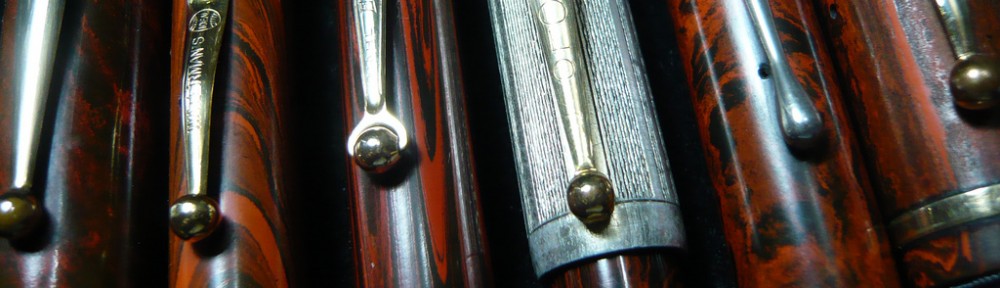
YOU’LL UNDERSTAND if I’m mighty proud of my fountain pen collection, built up painstakingly over the past 30 years. Now numbering about 200, it contains some of the world’s rarest and most desirable vintage and modern pens, and I’m still upgrading it, bringing down the numbers while raising the quality, hoping to downsize it to about 30 of the very best that I can pass on to our daughter Demi not too long from now.

At least that’s the press release. What I’m not saying, and what I’m not too proud of, is how awful my penmanship is, a trail of chicken tracks worthy at best of a Bic ballpoint. We have members in our fountain pen club like advertising executive Leigh Reyes and designer Fozzy Dayrit who can carve out whole new careers as professional calligraphers should they want to, so artfully do they put nib to paper. Oafs like me just wear our pens like others might sport brooches and hats, as body décor to look more substantial and interesting, especially as our other charms wane with age.

The fact is, I can’t write more than half a page of anything with a fountain pen before my fingers start crimping with fatigue, more accustomed as they’ve become to tapping on a keyboard with whispery ease. The saddest part of the story is, the only time my fountain pens get any real exercise is when, joylessly, I have to write out checks to pay for the credit cards and the utility bills.

It’s not as if fountain pens are alien, certainly not to me. We used them as grade-school kids in La Salle, where we also wrote loopy letters for Penmanship class, and where an inkstain on one’s shirtfront was just a blue badge of honor (or so I told myself, to mitigate the embarrassment). But as the world has since moved from writing in cursive to block letters, and from the pen to the computer, our writing muscles have atrophied, and the feathery Fs and coily Qs that garnished our forebears’ documents are a barely legible memory.

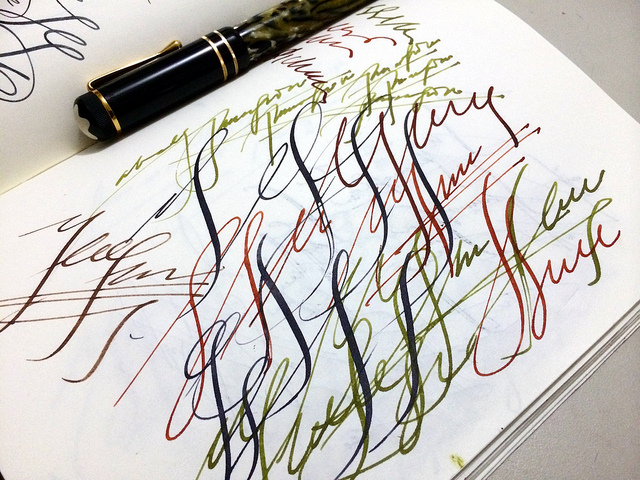
So how do I derive pleasure from my pens beyond the sheer, avaricious thrill of ownership? When the day comes to cart away my papers and my trash, they’ll find stacks of well-used notepads in my drawers and cabinets, and the nosy rummager might well imagine discovering some private snippets, or passages from an unfinished novel, among my scribbles. I hate to disappoint the snoops, but they’ll find nothing of the sort; instead, all they’ll come across will be a trail of doodles—page after page of doodles in every color of ink and width of nib. And that’s going to be the big dark secret out of my bag: I buy fancy pens not to craft great literature with, but just to doodle all day, wasting time, ink, and paper on nothing grander than the pursuit of pointless happiness.

My dictionary defines “doodle” as “To draw or sketch aimlessly, especially when preoccupied,” which isn’t too far from Wikipedia’s take on it, which sees a doodle as “a drawing made while a person’s attention is otherwise occupied.”

Here we see that the key idea behind doodling is distraction: you’re thinking about something but don’t really want to think about it, so you do something else, and if there’s a pen in your hand, that pen will have a mind of itself and start making squares and circles and lines that lead nowhere and everywhere. In my case, I know exactly what it is I’m running away from: work! I’m so drowning in book projects that I have no proper business doing anything else—not even writing a column like this—but it’s when things get tough that the doodles get going.

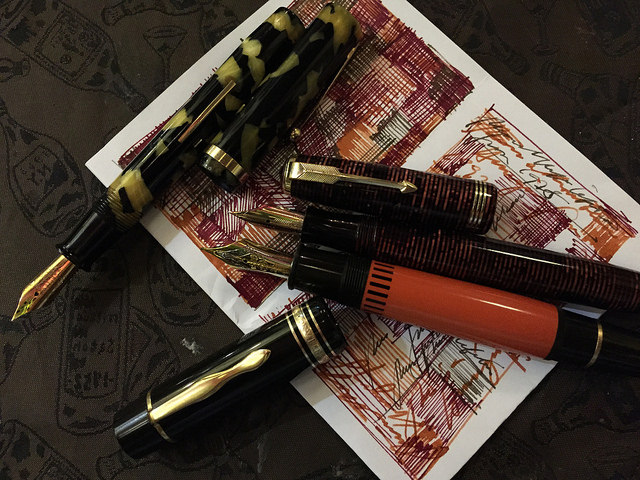
I’m sure that psychologists have a perfect explanation for this, but I’m convinced that there’s a symbiotic relationship between work and distraction, and that doodling actually helps me get my work done by letting me relax while my brain processes headache-inducing conundra like “How can we pass an anti-dynasty bill when 14 out of our 24 senators belong to a dynasty?” You’ll agree that it’s more fun to deal with questions like “Hmm, should I go with the Rohrer & Klingner Sepia in the Montblanc Oscar Wilde or the Diamine Oxblood in the Parker Vacumatic? Heck, let’s do both!”

To some others, doodles are more serious business—or at least halfway-serious, as the Google Doodles illustrate. You may not have heard of them as such, but you’ve surely seen them if you’ve ever used Google, because they’re the quirky, funny, topical drawings that periodically festoon the Google landing page to mark an anniversary, a birthday, or some other cause for celebration.

Googling around, I discovered that there’s actually something called the Doodle Arts Magazine (www.doodleartsmagazine.com), which happens to be Philippine-based. The people behind the website organized Doodle Fest 2015 a few months ago, and you can still catch the artwork online. If you want to see how good doodle art can get all around the world, have a look at http://www.creativebloq.com/illustration/doodle-art-912775.

Me, I’m happy with my squiggles and X’es and endless iterations of “This is a 1928 Duofold” and “This is a Sheaffer Balance” and “This is Carlo Collodi ink” and “This is a fine pen.” Maybe if I wrote something more sensible like “I come from a country without snow and without raspberries,” I could get another novel going and done in no time, but that sounds too much like real work, which apparently was never what these glorious pens and inks were meant to do.
19237231981_7d296c415f_z

Penman No. 156: Why I’ll Never Become Ambassador

Penman for Monday, July 6, 2015

IN MY early middle age, around 40, I nursed an ambition of becoming an ambassador, an official representative of the Republic of the Philippines. Some of my friends and schoolmates were on their way to becoming one—Vicky Bataclan, now in Belgium, and Libran Cabactulan, now at the UN, were just two of them—and I imagined that I might carve out a new career in my seniorhood in the grand tradition of writer-diplomats such as Pablo Neruda, Octavio Paz, and our own Manuel Viray and S. P. Lopez. I’ve met a few real and truly worthy ambassadors and have been much impressed by their demeanor—Cesar Bautista, Delia Albert, and Joey Cuisia, for example.

With a background in literature and economics, and having written a slew of speeches for Presidents, senators, and CEOs, I thought that I had acquired enough political savvy and possessed the language to be able to craft an intelligent and suitably tart or nuanced response to any issue from island-grabbing in the West Philippine Sea to the Chinese in all of us. I also happen to like wearing suits and to be driven around, and I can say “Good morning” in six languages, so I have the externals covered. If I were serious about my ambassadorial plans two decades ago, all I needed to do (if I didn’t want to go the career route and take the FSO exams) was to hitch my wagon to some political star, which is apparently how one too many stragglers like me get to be called “Ambassador” for life, their diplomatic skills be damned.

But I suppose I’ve always had at least two strikes going against my being posted to some swanky European capital: my incipient misanthropy, and my culinary incorrectness.

The older I get, the more reclusive I tend to be, shying even farther away from the frenzy of Facebook and the emoji-enabled spontaneity of many online “friendships.” It’s not that I actively dislike people; I think most strangers will find me friendly, and I warm up easily once we get a real conversation going. (With the exception, I must say, of telephone conversations; having grown up without a phone, I have always disliked—loathed would be the better word—talking on the phone, especially for anything longer than three minutes.)

It’s just that, past 60, I’ve come to seek out human company less and less, preferring to keep to myself and family, and a few close friends who wouldn’t mind not hearing from me for months or years and picking up where we left off, which is my gauge of a true friendship. Over the past five years or so, I’ve become such a homebody (my poker nights excepted) that Beng feels like she has to ask me now and then, “Don’t you have any friends?” She means, of course, people other than herself, because she knows that I’ve been perfectly happy to just have her for company, at home or on the road, and that, in our sixties, our need and desire to socialize as a couple has diminished considerably.

Beng compensates for this by being a Facebook fiend, and aside from her snoring bedmate, Facebook’s the first thing she sees in the morning and the last thing she sees at night. Like I wrote here not too long ago, I’m not even on FB, and obstinately stay out of it, because I think it’s cheapened the meaning of “friend.”

Diplomacy, of course, requires not only meeting with a lot of people, but people you hate, and who very likely feel likewise—sort of like the online world, only it’s face to face. Now, I can fake pleasantness as well as anyone else—except maybe Beng, who’d lose our house and car at poker within five minutes—but I know, from practice, that while they say it takes just 17 muscles to smile and 42 to frown, smiling can be a lot more tiring than frowning, especially if you don’t mean it.

The more important reason I’ll never head an embassy is the mess I would likely make of our foreign relations by my equally boneheaded refusal to acquire a more catholic or at least a more cosmopolitan palate, despite Beng’s entreaties for us to try menus more complicated than Chow King’s. Nothing flusters me more than the prospect of “fine dining.” (I recall how, many years ago, I begged off from joining a very exclusive and epic feast prepared by ten of Manila’s top chefs—much to the dismay of a fellow professor who had wangled the invitation—precisely because all that good food would have been wasted on me.)

That’s also why I’ve declined dinner invitations, especially from people I don’t know or who don’t know me and my curious preferences, to spare us the mutual embarrassment of my shying away from anything with cheese, or oregano (I can sniff out one part in a million), or the aforementioned curry, which effectively leaves out much of Italian, French, Greek, Indian, and Mexican cuisine. No pizzas, thank you! But I’ll take pancit, lechon, adobong pusit, Ligo sardines, chicken mami, and KFC anytime—I’m actually easy to please.

Ambassadors should be able to eat anything with anyone, and not just gorge like a hungry peon (someone called my rice-and-pancit combo “pagkaing obrero”) but dine intelligently, knowledgeably, with the ability to make off-the-cuff remarks like “Don’t you just love the tanginess and the fruitiness of this Dréan d’Auvergne? It’s a bit more complex than the St. Nectaire, don’t you agree?” (Thanks to cheesenotes.com for the technical details.)

The only place I can imagine not having this culinary quandary would be China—where I’ve gone pretty often because, as I told Beng, I was sure to find a lot of yummy Chinese food there—but I’d hate to tell my Chinese hosts what I really thought of the nine-dash line, and I’d hate to have to explain, on the rebound, why bright kids with Chinese names can create such a fuss on Pinoy Facebook.

Penman No. 155: Writing Virtual Reality

Penman for Monday, June 29, 2015
I WAS surprised to receive a text message the other week from a former student, Dada Felix, herself a prizewinning short story writer. Dada told me that she’d just heard from another acquaintance who was now working in Saudi Arabia, and who’d written her about the sandstorms in that country. “It was just as you described it in your novel Soledad’s Sister,” Dada said.

I thanked Dada for the compliment—and I took it as a compliment, because while a third of that novel takes place in Saudi Arabia, I’d never been to that country—not before I wrote the novel in the early 2000s, and not since. In fact, I had to look back at my manuscript—it’s funny how little you retain in your head of your own work after a few years, except perhaps for specific passages—to see what exactly I had written. I found this:

“Seven weeks after Soledad arrived, a sandstorm blew in from the east, a dark, mountainous reddish-brown cloud that rolled over the city with a great cavernous howl, obscuring and blistering everything in its path. She had just stepped back into the servants’ dormitory from giving Amina a bath, and all the girls were rushing to seal the doors and windows with towels. Still unused to the voluminous abaya, Soledad fought with herself to move as quickly as the others…. As the sandstorm blew around them, making the glass in the windows sing but striking terror in the hearts of the foreign maids and workers in the compound as it raked and scoured everything in its path, Meenakshi’s lightness of mood seemed even more out of place. When Soli cowered in a corner near her bunk, holding on to her knees, Meenakshi crept up to her and whispered, ‘He wants me to meet him tonight, in the harbor, near the fountain.’

“.… Around them the wind had miraculously fallen to a hush; the sandstorm had left as quickly as it had arrived, spending its force at the water’s edge, and people began reopening the windows cautiously to look up at the sky, which was still a murky brown but through which patches of blue were beginning to show.”

I remembered that I wrote in that scene to introduce some visual drama, and also to create a contrast between the fierceness of the storm and the almost casual decision the girls make that would change their lives forever.

But what looking back at my own text truly reminded me of was how often, in the course of writing fiction and even nonfiction, I had to recreate factual scenes based on research and my imagination. This will happen quite often to anyone dealing with historical material, or anything that happens outside his or her personal experience.

Research, of course, is invaluably helpful. When I wrote the biography of accounting pioneer Washington SyCip (who incidentally turns 94 tomorrow—happy birthday, Wash!), I chose to start the narrative at a crucial turning point in his youth, when he was returning to the Philippines in mid-1945 after serving as a codebreaker with the US Army, and his ship steamed in to Manila Bay. I had to ask myself, what would Wash have seen, standing on the deck of that ship? I consulted several sources to reconstruct the likely scene:

“In the city’s oldest section, within the stone walls of Intramuros, an entire procession of churches—the Manila Cathedral, Lourdes, Santo Domingo, San Francisco, San Ignacio—had crumbled to the ground; only San Agustin remained. Of the city’s many universities and colleges, only two colleges—Letran and Sta. Rosa—withstood the bombs and the artillery. The City Hall, the Post Office building, and the Metropolitan Theater were all vacant hulks, their bone-white shells pockmarked in thousands of places by sustained bombardment between February and March 1945.”

That kind of factual rendition isn’t too difficult to achieve, so I tried to get beyond the physical into something more internal—Wash had been told, mistakenly, that his father had been killed by the Japanese, and he was brimming with anxiety—so I followed up that description thus:

“The man on board the Navy ship was too far to see these details for himself, but the strange concavity of what had been the metropolitan skyline, the impression of a body supine and overrun by tubercular rot, and the brooding silence that waited across the bay would have encouraged his worst fears.”

Strangely enough, this was a scene—steaming into Manila Bay—that I had already rehearsed some 25 years earlier, in a novella titled Voyager, set in the 1880s, when a steamship arrives from Hong Kong, carrying a Spaniard who has just killed a compatriot on the voyage to protect a Filipino revolutionary. An officer of the law, he has seen the best and the worst in men—himself most of all—and projects this duality of vision onto the unfolding panorama before him, in the novella’s closing scene:

“And now, in an afternoon of dolphins and rainbows playing above the water, we return to the wide-open arms of Manila Bay, the home of Spain and the throne of God on this side of the earth, the ramparts of its forts rising proudly into the sky, and yet anchored to the earth by dungeons, tunnels, pipes hissing with the force of sewage seeking to be expelled. Below the great Cathedral are catacombs I have yet to visit. Across the street, in Fort Santiago, is a flight of steps that leads down to a room of solid stone, with a solitary window offering a view of the river through the iron; when the tide rises, both view and viewer go in a muddy froth. This is where and how the City holds the secrets that keep it alive, where God, I must believe, now and then deserts His pigeoned domes to visit.”

I had to imagine much of that, this being the time before computers and Google, and when I had scant time for and access to libraries, as a working stiff outside of academia. Years later I would read a contemporaneous account that pretty much validated what I had made up.

Do I always get it right? Heck, of course not. These forays into virtual reality are inherently risky—you’re guessing half the time, and all it takes is one small but noticeable mistake to ruin the seamlessness of the effect. There’s a long list out there of factual boo-boos poets and novelists have made—not that it matters much to their unsuspecting readers.

But not all readers can be so easily seduced by fluid prose. It took an Indonesian professor who had flown to and from Saudi Arabia to gently, almost apologetically, inform me that I had my time zones all wrong in my opening scene in Soledad’s Sister—the same work that Dada praised for what seemed to be its uncanny accuracy—that a plane flying eastward from Jeddah would have flown behind the daylight clock rather than ahead of it. I thanked her profusely, and made a note to correct that in future editions of the book.

(Image from alarabiya.net)

Penman No. 154: Teaching English to Filipinos

NEU

Penman for Monday, June 22, 2015

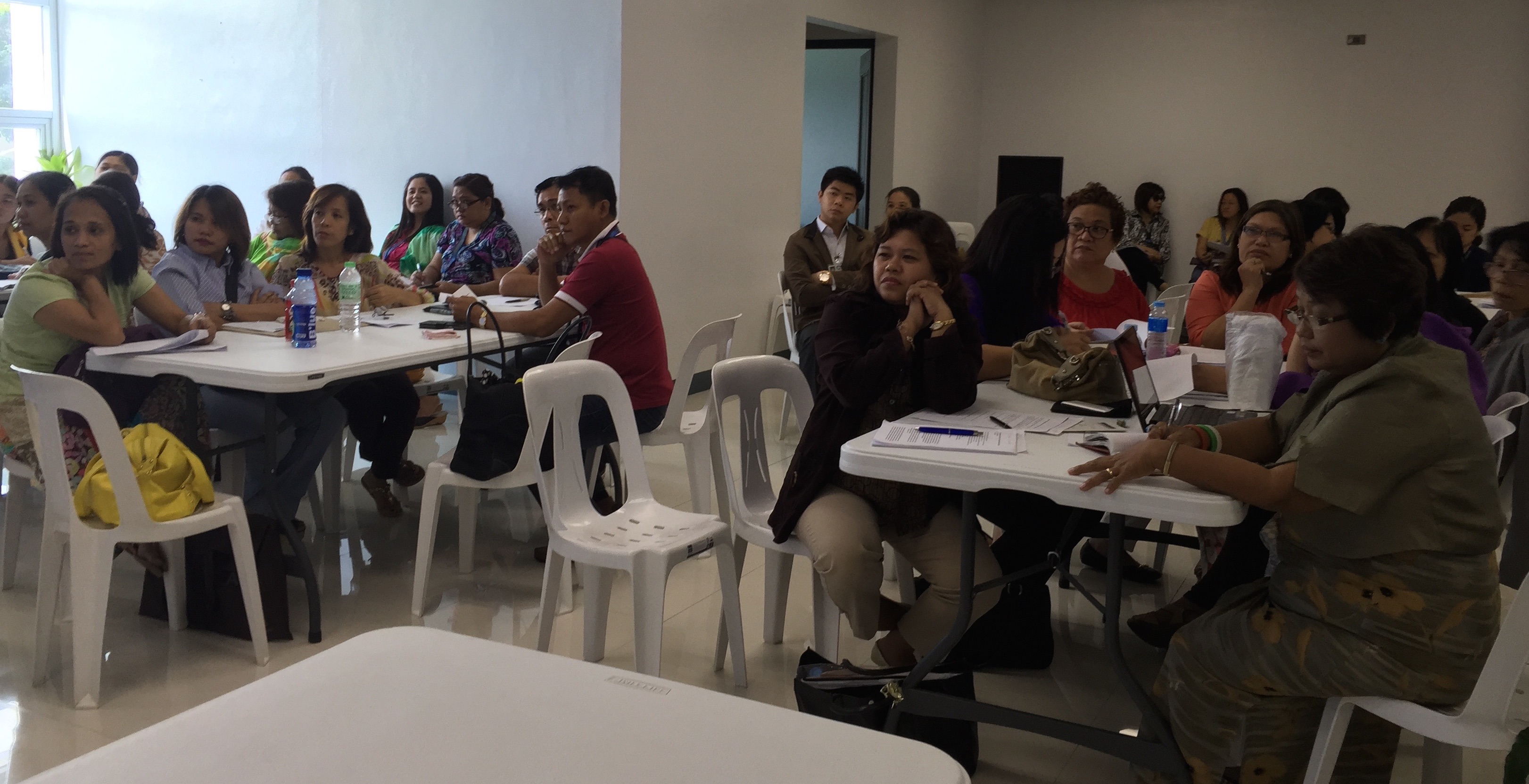
I HAD a great time last week with the English faculty of New Era University in Quezon City, who had invited me to speak at their three-day workshop on “Enhancing English Teaching Practices.” For three days, I met with a very lively group of about 30 to 40 college and high school teachers of English, talking about writing, reading, and teaching the language in today’s Filipino classroom.

I was backstopped in these discussions by the young and very sharp Ms. Cyndriel “CY” Meimban, who had taken her high school at New Era before doing an English degree with us at the University of the Philippines and then a master’s in Education at Arizona State U. CY—who also just happens to be the daughter of an old friend and fellow Fulbrighter, Dr. Adriel Meimban—took a break from her teaching duties at Northern Arizona University to help out her fellow teachers at NEU.

It was my first visit to the NEU campus near Commonwealth Avenue, which was rather ironic because we’ve lived on the UP campus just across that avenue for the past ten years. The NEU is part of the Iglesia ni Cristo complex and is run by the church, although I was pleasantly surprised to find that it’s open to all faiths. There’s a substantial Muslim population in that very area, for example, and many students from that community attend New Era.

We held our workshop in the new Professional Schools building, which housed NEU’s colleges of Law and Medicine, among others; more prominently, along Commonwealth Avenue, the College of Evangelical Ministry which Dr. Meimban (a former president of NEU) now heads trains young INC ministers, including about a hundred students from overseas—Filipino-Americans and Filipino-Europeans, among many others; I was surprised to be addressed by a young black man from South Africa in perfect Filipino. I was, in other words, in a very rich cultural and linguistic environment, in which language is used not just to express oneself or get jobs but to propagate the faith.

Otherwise, the workshop attendees voiced the same problems I’ve heard elsewhere: a clear decline in English proficiency not just among students but teachers as well; the lack of new materials in the syllabi, particularly in literature classes, as well as teaching guides for these materials; and the persistence of outdated approaches to the reading and teaching of literature and of English itself.

I began my presentation with something I always emphasize when I teach English in UP, especially in my American Literature class: we study and teach English not because we want to be Americans, British, or some other Anglophone people, but to become better Filipinos. We learn English and study other literatures in English to gain insights into and understand how these other societies operate and how certain human values and truths transcend national and social boundaries. Thereby, we should lose our unfamiliarity with and our awe of the foreign, empowering ourselves as citizens of the world.

I did a module on creative writing—focusing on fiction and nonfiction—as a way of showing teachers how writers think and work, so they can themselves become writers or at least understand what writers do and how they do it. In reading and teaching literature, I went over several poems and stories, and asked my audience to draw up a list of questions that could or should be raised about the text beyond “What’s the moral lesson?”

I emphasized the importance of considering and discussing form and technique as much as content and meaning as a way of seeing how language works, on the level of the sentence or even the word. I argued for the enjoyment of language for its own sake—in effect, for the study of literature as an exercise in pleasure as much as in education.

The problem with too many literature classes is that they’re taught as anything but literature—as philosophy, as religion, as politics—rather than as the imaginative play on words that lies at the heart of literature. When teachers march into class and declare, “Class, this is what this poem means, and believe me because I’m the absolute authority on it,” students and even teachers miss out on the fun of discovery, of teasing out sense from seeming chaos.

Inevitably, the question of a “language policy” came up. Would students benefit from the imposition of an “English-only” policy? Was it all right (or was it criminal) for a teacher of English to resort to Filipino when teaching English, or literature in English?

I went out on a limb here—and I’m sure that what I’ll say here will turn many a reader livid with consternation and disgust—but I said that, even as a former chair of the UP English Department, I’ve always been opposed to an English-only policy, because it’s silly and it simply doesn’t work.

We study English—and try to master it—because it serves us well in communication and in business, especially in a global sense, but to deliberately throttle our use of other languages (of which we have an enormous wealth) in the notion that it will somehow make us better users and speakers of English is downright stupid. I’ve yet to meet someone who now speaks and writes perfect English by having paid 5 centavos for every Filipino word he or she used. Most writers of my generation are happily bilingual or even trilingual, and we don’t get our languages or linguistic registers mixed up; what’s key is appropriateness—which language and which register is best for which occasion?

I would even argue that code-switching from English to Filipino can work in the teaching of English, and especially of literature in English, if it relaxes the non-Anglophone student and allows him or her to speak—and even to make a mistake, which should also be encouraged (and gently corrected) without too heavy a penalty. Patience and understanding, rather than force and sheer authority, have always gotten me better results in the classroom. I hope my colleagues in New Era University got a taste of that treatment, and that they enjoyed the experience.

Penman No. 153: Elderly Expressions

IMG_6478

Penman for Monday, June 15, 2015

LAST WEEK’S piece on my memoir-writing workshops must have touched a few sympathetic nerves, because I got a number of messages from my fellow seniors asking about the next workshop, and if and how they could get into it. Sadly, I had to tell them that the workshops I mentioned were put together by special arrangement with Marily Orosa, squeezed into a very tight schedule (it’s insane, but I’m working on eight book projects all at the same time, in various stages of completion). It’s still possible that Marily could arrange another workshop for me before the year ends, but that depends on a lot of factors; if it happens, I’ll let you know.

If you’d like to work with me, the best thing to do would be to enroll for one of my graduate fiction or nonfiction workshop courses at the University of the Philippines, possibly as a non-degree student (which will make admission earlier, if you just want to take this one course); I’ll be teaching fiction writing, Fridays 4-7 pm, when I return from my sabbatical leave this August.

I’ve had quite a few senior students in these workshops—and by “senior” I don’t mean that they’re in their fourth year; more likely they’re in their 65th, and just went back to school for a rejuvenating dip in the waters of academia. In many places, they call this “continuing education,” and the good thing about having seniors in class is that not only do they get educated, but the rest of the class as well (myself included), especially the young ones who can benefit from the rich experiences of their elders.

The “oldies” may not always be up to speed as far as the latest and fanciest literary theories are concerned, but they’ll never lack for stories to tell, and you know that when they talk about things like loss or suffering, or bring up words like “rapture” or “redemption,” they’ve looked at life in the eye and kissed it full on the lips, and said some very sweet hellos and some very hard goodbyes.

This isn’t to say, of course, that older people have a monopoly of wisdom or expertise; some of my younger students have amazed me with both the gravity and the finesse of their work, displaying insights well beyond their years. (Let’s not forget that Jose Rizal wrote and published the Noli in his mid-twenties.) Conversely, I’ve seen mature students, mired in their prejudices and predispositions, unable to get beyond a dull and sightless monotone in their narratives.

But there’s clearly need for more room within our society for elderly expressions—and I don’t mean just more welfare-type laws to benefit seniors and such initiatives, although we’d certainly be happy if there were more support for the aged among us, especially the poor. I mean more coverage and exposure in the media and even in our literature of older characters and their concerns, going beyond stereotypes and easy expectations. (If you haven’t seen “The Second Most Exotic Marigold Hotel,” you should.)

We need more stories, poems, plays, movies, and articles with older Filipinos, their predicaments, and their achievements in focus—handled realistically, minus the aura we customarily accord to doting grandmothers and kindly uncles. Certainly they can be saintly, but seniors can also be just as vicious and as avaricious as people half their age, and why not? (I’m sure we’ve all heard of that filthy-rich aunt or neighbor who refuses to feed her househelp properly and puts a lock on the refrigerator.) Acknowledging people’s weaknesses as well as their strengths is acknowledging the diversity and individuality of humanity, which is incumbent upon every writer to do.

For the past many years, in my undergraduate literature classes (and yes, I’ve always insisted on teaching at least one undergraduate class every semester, so our freshmen and sophomores can know what’s it like to be taught by a senior professor, like I did in my time), I’ve taken up two poems that deal with aspects of aging. One of them is “Stepping Westward” by the late Denise Levertov (a mentor of my friend Fidelito Cortes when he was at Stanford). The poem begins thus:

What is green in me / darkens, muscadine. / If woman is inconstant, / good, I am faithful to / ebb and flow, I fall / in season and now / is a time of ripening.

Here, the speaker or the persona asserts her pride in and her comfortability with her advancing years, likening it to the maturing of good wine (muscadine). She has learned to accept—indeed to embrace—the inevitability of aging and death, as a fruit falls off its stem when it ripens. She also fiercely reserves her right to be inconstant and unpredictable, to change her mind if and when she wants to (Angela Manalang Gloria’s sonnet “Change” provides another terrific variation on this theme). She declares that

There is no savor / more sweet, more salt / than to be glad to be / what, woman, / and who, myself.

The poem closes with a wonderful image of life as a basket of bread to be carried—yes, a burden, but also a blessing to be eaten from.

The other poem is a local one, by Merlie Alunan, and is always a hit in class because of a theme that’s practically become taboo in our conservative society: not just female sexuality, but desire in older and unglamorous women (ie, older than Anne Curtis and Solenn Heussaf). The poem is “Young Man in a Jeepney,” which deals with a typical working woman, probably a housewife in her forties or fifties, who takes a jeepney ride home, clutching her bag to her chest, only to find herself seated beside a sweaty young man. The contact, however innocent, stirs up an ancient longing in her:

“Heat,” I mutter. “It melts / the very bones,” feeling / as I say this, inside me /awakening sweet April.

The unsuspecting young man gets off the jeepney and life goes on:

I do not watch you turn / the corner to the sudden dusk / —but I smile to savor /my sin in secret.

So what is that “sin,” I ask my students, and why does she call it so? Is it, indeed, a sin for a respectable and somewhat dowdy matron—and decidedly one of the lower class, the kind who would not have boy toys or affairs with their amigas’ husbands—to feel desire?

Discussions like these remind us that while many things seems to get simpler with age, both by choice and by necessity, human complexity itself doesn’t diminish over time.

Penman No. 152: Writing the Stories of Your Life

Studio5

Penman for Monday, June 8, 2015

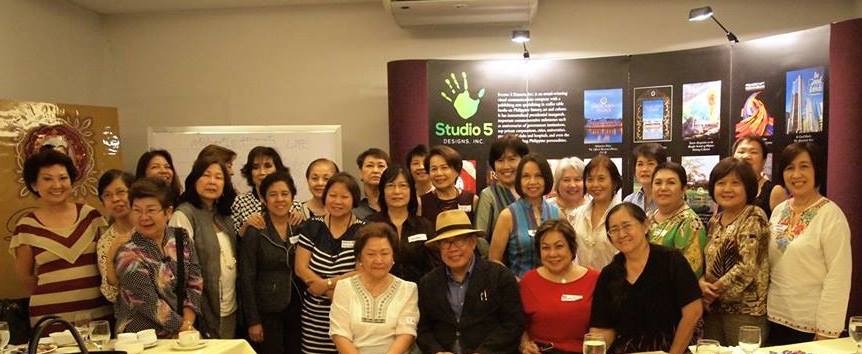
TWICE OVER the past three months, I’ve been giving workshops to medium-sized groups of people in my general age range (let’s put that at 50 to 70), people who came together because they had stories to tell, but needed some guidance on how to tell them. These workshops were arranged by the publisher and writer Marily Orosa, who had come up with very engaging book ideas to which these potential writers could contribute, and who thought that it would be a good idea to have a practicing writer give them a bit of coaching before they plunged into the actual task of writing.

I was glad that Marily put these workshops together, first because I’ve always believed that every person has at least one good story in him or her, and that it’s my job as a writing teacher to get that story out of the person. Second, being a senior myself, I’m happy when older people get an opportunity to express themselves in this obsessively youth-centered world.

Many if not most members of my audience were retirees or approaching retirement after many decades of productive work in their professions. One was a former Cabinet secretary and another a university president, among other luminaries, but in the end, it wasn’t one’s position that mattered as much as one’s experiences, which seniors have in spades.

I couldn’t cram a semester’s worth of lessons into a Saturday afternoon, but I did what I could to give them a framework, an approach, and some tools with which to get their stories out of their memories and onto the digital page. First, we talked about the basic difference between life (their life experience, the raw material) and art (the finished product they were expected to come up with).

What do artists—writers, painters, musicians, and so on—do to and with their materials to make works of art? What do artists see in the things around them that most other people don’t? In this way, we try to get people to see their own lives and experiences as matter to be structured and shaped—not to distort the truth (the object, I think, of all honest art) but precisely to get at it and to bring it out, even if it may not always be pleasant—and indeed much art out there is meant to disturb.

We talk about selection, and how the writer or artist chooses material to use directly in the artwork (the text) and leaves other things out (the context), given that you can’t possibly use everything out there. We talk about how artists work with concrete images and objects to suggest ideas, rather than the grand abstractions that, say, editorial writers and philosophers use.

When we consider life experiences, we then talk about distances in space and time, and about physical and emotional distance. Many participants at these workshops, for example, want to talk about travels they undertook to interesting places, and what I try to do is to get them to write something beyond the verbal equivalent of a posed snapshot in front of the Eiffel Tower or the Golden Gate. A trip to Paris isn’t just ever about Paris, but also, implicitly, about Tagbilaran or Bayombong, wherever it was the narrator or protagonist came from, and it’s that perspective that makes this particular experience of Paris unique.

Writing about the past really involves two protagonists (taking a page from Thomas Larson): the remembered self and the remembering self. Writing about a journey involves not just traversing physical territory, but also that internal space within which the character grows—so the physical journey is always paralleled by an internal, often spiritual, one.

After clarifying these fundamental concepts, I then introduce them to some basic tools of the trade—the elements of fiction which, when carried over to nonfiction, liven up the narrative and make both writing and reading a more engaging experience. We talk about plot, character, theme, point of view, dialogue, description, and setting—how to employ time, how to bring scenes to life, what to say and what to leave out.

I remind them what a lonely and (for most people) unremunerative occupation writing is, but going beyond the money or the lack of it, how important it is to write one’s stories down before the memory deserts or defeats us. It’s especially important for the young to know about how their elders lived and thought. It might take them another 20 years to become receptive readers, but the record will be there, and they’ll be surprised to find, as we ourselves did, how the past anticipated the future in so many ways.

I feel drained at the end of these three-hour workshops, faced with a flood of eager questions, but I also feel elated by all the creative energy I seem to have unleashed among my fellow seniors, and I can only begin to imagine what a touch of art can do to that rich lode of memories lying deep in their many-chambered brains.

Treasures

AND NOW’s as good a time as any to draw attention to the good work done by Marily Orosa’s Studio 5 Designs, which has been in the business of producing not just books but prizewinning ones, lauded both for their design and their substance. I’ve had the pleasure of working with Marily on a couple of coffeetable book projects, most notably De La Salle University’s centennial volume, The Future Begins Here, which I edited and wrote for, and which won a Quill and an Anvil Award (the Quill, Anvil, and National Book Awards are the local publishing and PR industry’s measures of excellence).

Studio 5 has also won NBAs for In Excelsis (The Martyrdom of Jose Rizal) by Felice P. Sta. Maria and The Tragedy of the Revolution (The Life of Andres Bonifacio) by Adrian Cristobal. Malacañan Palace (The Official Illustrated History) by Manuel Quezon III and Jeremy Barns also won a host of local and international awards, as did the magnificent Treasures of the Philippine Wild. Freundschaft/Pagkakaibigan (celebrating 60 years of friendship between Germany and the Philippines) will be included in the prestigious international design annual, Graphis.

Beyond being visual treats, these are all significant books, and their creators and publisher deserve high praise and encouragement.

Penman No. 151: A Workshop in Biography


IMG_7561

Penman for Monday, June 1, 2015

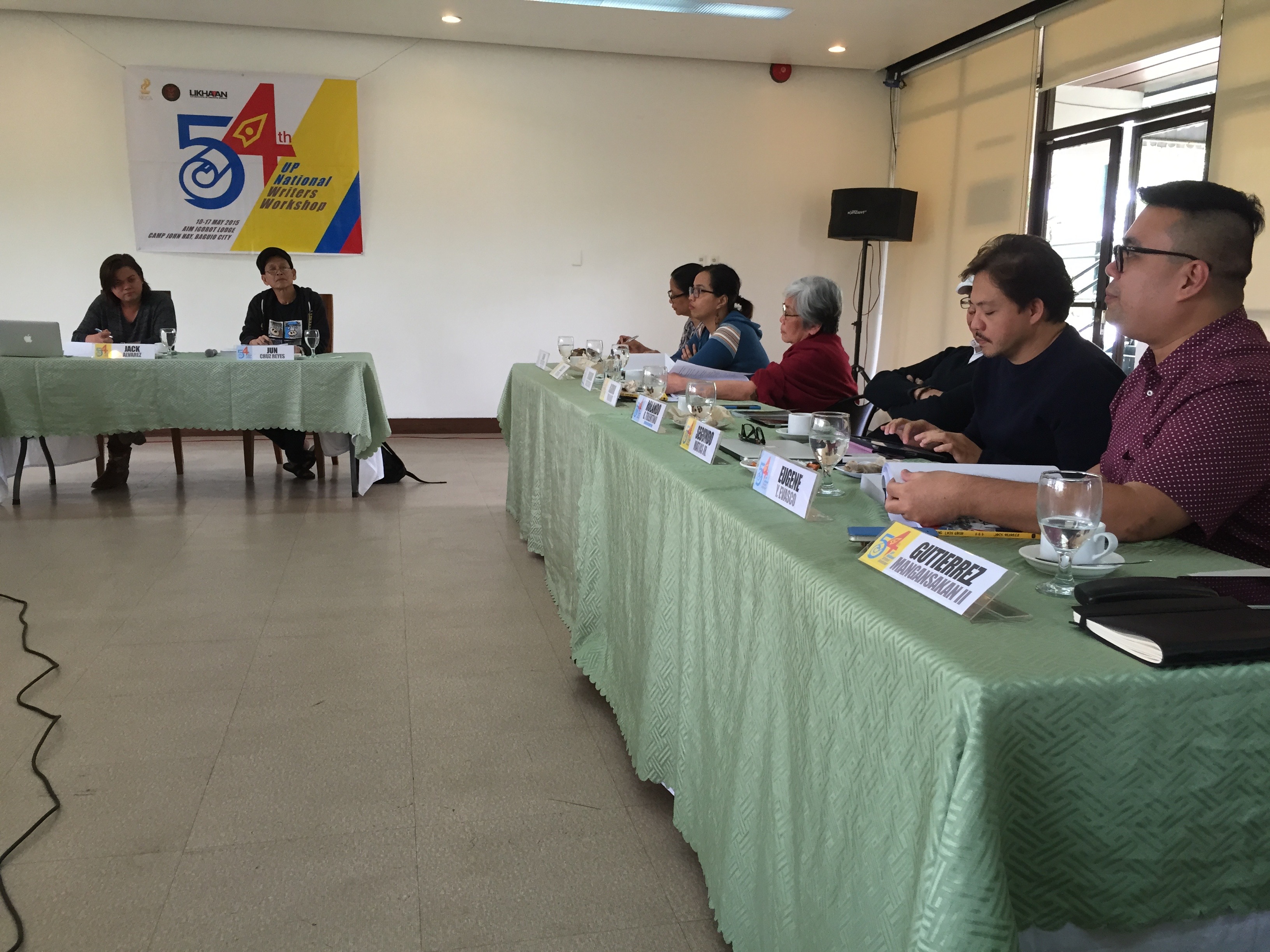
BECAUSE OF my trip to Canada, I was able to attend only one day of this year’s UP National Writers Workshop, which took place from May 10 to 17 in Baguio. I immediately went to work that morning leading a discussion of a biographical project submitted by one of the twelve fellows.

It was a topic I was keenly interested in, because of my own work in biographical writing. (Two of my biographies—A Man Called Tet: The Story of Enrique T. Garcia, Jr. and Edgardo J. Angara: In the Grand Manner—were published and launched recently by Anvil Publishing and the University of the Philippines Press, respectively.) I’m at work on a few more, and if it becomes my lot to be known primarily for my accounts of other people’s lives than for my own fiction, then I can’t complain, having assumed a rather unique responsibility and occupation, among a few others in our writing community.

As a grade-schooler, I devoured biographies in the library, finding that the lives of successful or significant people—whether here or in faraway lands—inspired me to try harder and do more in my own difficult existence. I especially enjoyed the life stories of scientists, explorers, soldiers, artists, and heroes. Of course, these elementary editions were highly simplified, and very likely glossed over the human imperfections—sometimes gross—that these characters possessed, which more mature biographies would reveal if not revel in. No matter; at that time, the overarching greatness of their deeds lent a luminous aura to these characters’ profiles, and I have to believe that I emerged all the richer for reading those books.

The idealization of a life was one issue we discussed at the workshop. There are many kinds of biographies, and I took the occasion to go over a simple classification of these kinds.

On one extreme would be hagiography—literally, writing about saints, and therefore the sunny sanctification of the subject as though everything that he or she did were beyond reproach. On the dark end would be the hostile or malicious biography, written for no other reason than to malign its subject as indelibly as possible, even at the expense of the truth. To its left would be the critical biography—a sober, perhaps scholarly, and more even-handed study of a life, sparing nothing and no one (least of all the subject) in pursuit of the presumptive truth, although these works could also carry their own agenda.

Farther on would come the kind of work that I and some others do on commission, for which I’ve coined the term “sympathetic biography,” a largely positive presentation of a subject’s life—without skirting, however, the major controversies and issues publicly known to involve the subject. Is it the whole truth and nothing but the truth? Realistically, I would expect not, and not because I think my subjects deliberately lie to me, but because it’s in human nature to present the best side of oneself. (I think Dolphy set the bar for searing candor and self-awareness in his autobiography, Hindi Ko Ito Narating Mag-Isa; I can’t imagine politicians or business figures being so open about their private lives.)

A sympathetic biography may be a half-filled glass to many, but it puts something on the table to be seen and seen through. I expect—I would hope—that whatever I write about my subject will be interrogated by more knowledgeable critics and scholars. This is why I urge my clients to be as forthright as possible and to deal with whatever issues they may have been embroiled in, because we live in a highly skeptical environment where questions never cease, especially online.

But to get back to the workshop, we were glad to succeed in our continuing quest for the discovery and encouragement of bright new writing talent across the archipelago. The UP Writers Workshop is different from most others in that it engages mid-career writers—people of proven ability with at least one published book, or major stage or film production to their name. We deal with them less as students than as younger brothers and sisters in the profession.

The critics of writing programs and workshops who think that all they produce are clones and sound-alikes of those teaching these courses should take a look at our roster of fellows and their work. These young writers sound nothing like us, and even after the workshop, they’ll continue working with their own material in their own styles, because we instructors do our best to recognize and preserve the originality of their voices.

The best help we can give them is to provide a response—whether it be a gut reaction or a learned reading that draws on a certain context—from our side of the generational divide, although they get responses as well from their peers, which might just be more useful and valuable to them, coming from people who share their vibe.

This year, we welcomed the following: Jack A. Alvarez (Creative Nonfiction); Armida Mabitad Azada (Poetry); Kristoffer Brugada (Nobela); Resty Cena (Nobela);

Gutierrez M. Mangansakan II (Creative Nonfiction); Isidro T. Marinay (Biography);

Segundo D. Matias Jr. (Kuwentong Pambata); Rhoderick V. Nuncio (Nobela); Will P. Ortiz (Nobela); Benedict Bautista Parfan (Poetry); Charlie Samuya Veric (Poetry); and Eliza Victoria (Fiction). Watch these names, because if you haven’t read or heard about them already, you will soon.

What many don’t realize is what a precious resource we have in these programs and workshops here in our part of the world. Our friends from the region have begun to notice what a liberal and nourishing environment we have for young writers. There’s still patronage and paternalism in the system to be sure—this is Asia, after all—but it’s much less pronounced and potentially stifling than elsewhere. Our tradition is for the younger ones to tell their elders “Up yours!”—until they start putting on the poundage and the gray hairs themselves.

Speaking of writing programs, it was with great alarm and dismay that I received news of the planned closure of one of Asia’s most unique and successful graduate writing programs—the low-residency Master of Fine Arts (MFA) program at the City University of Hong Kong.

The low-residency formula allows students from Hong Kong and around the region to enroll for an MFA and work online with mentors from all over the world, flying in to HK just once or twice a year for intensive workshops and face-to-face interaction. Some Filipinos have gone through the program, and I’ve had the privilege to lecture and to read at a couple of sessions over the years.

The City University administration says that the program costs too much to maintain, but ironically the program turned the corner this year financially, so it can’t be just the money. We wonder if someone up there sees creative writing as a threat to socialism with Chinese characteristics. City U ‘s mandarins should know that Hong Kong’s and China’s prestige and goodwill derive from programs like this—and not from building lighthouses and airstrips in the South China Sea.

Penman No. 150: Looking Eastward in Toronto

IMG_7573 (1)Penman for Monday, May 25, 2015

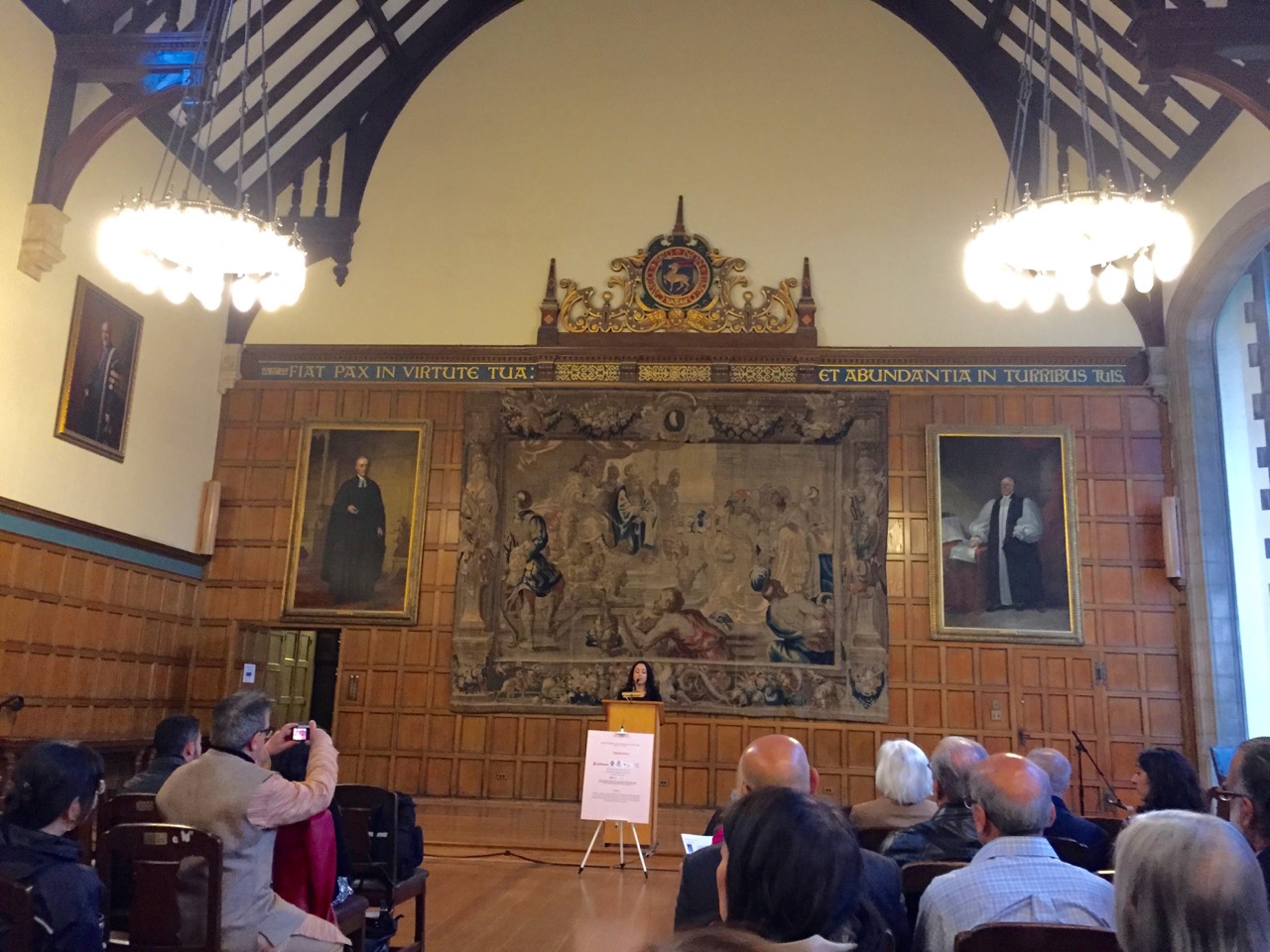
I FLEW out to Toronto in Canada a little over a week ago to take part in that city’s Festival of Literary Arts, possibly the first Filipino author to join that long-running festival, now on its 15th year. Previously, the festival had focused on South Asia (India, Pakistan, Bangladesh, Sri Lanka), but has recently opened itself up to more representation from East Asia, Africa, and the Caribbean, thus my inclusion in this year’s roster of invited writers and speakers.

Over a weekend, from Friday to Sunday (May 15-17), several dozen representatives from these regions and from Canada met in various venues on the scenic campus of the University of Toronto and its environs to tackle issues and problems besetting writers and publishers from outside the global centers. How does a writer from the periphery break through to the center? Or is that “periphery” its own legitimate center? Is yearning for publication and validation in the West a vestige of the colonial mindset, an experience shared by all the countries represented in Toronto?

Aside from these seminal discussions, of course, the meeting was first and foremost a festival, a sharing of the artists’ finest work, and I felt privileged to be introduced to authors and creations I would otherwise have totally missed or blithely ignored. With many of the authors coming from expatriate and postcolonial backgrounds, the offerings were rich and deeply nuanced, the talents outstanding.

Among others, I discovered a major international writer in the festival director, the novelist M. G. Vassanji, who had been born in Tanzania in East Africa, and whose account of his pilgrimage to his ancestral roots across the ocean (A Place Within: Rediscovering India) is a modern classic of creative nonfiction—a sympathetic but unsentimental and often searingly critical chronicle of his encounter with the sprawling reality of India today.

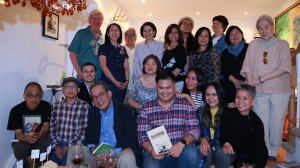
The visit also allowed me to reconnect with some old Filipino friends who had migrated to Toronto and had built new lives there. I was very graciously taken out to a scrumptious dimsum lunch in Toronto’s fabled Chinatown by Patty Rivera and her husband Joe. Patty and I worked together 40 years ago as writers and editors at the National Economic and Development Authority (an unlikely Camelot for young writers and artists under the patronage and protection of then-Sec. Gerry Sicat).

Though trained and still active as an editor and journalist, Patty has since developed into an accomplished and prizewinning poet, with three volumes to her name. Her first collection, Puti/White, was shortlisted for the 2006 Trillium Book Award for Poetry. Patty’s husband Joe, a former Ford executive who also wrote plays in the Philippines, became a lawyer in Canada and then, upon his recent retirement, turned to painting, an avocation in which he demonstrates a most unlawyerly exuberance. I also met and was happy to engage with some Alpha Sigma fraternity brothers led by Amiel “Bavie” de la Cruz, who now runs his own accounting firm in Toronto. IMG_7597 (1) Patty and Joe arranged a reading for me with a large and lively group of Toronto-based Pinoys (including Hermie and Mila Garcia, the moving spirits behind Canada’s longest-running Filipino newspaper, the Philippine Reporter, and expat poet Naya Valdellon); this was held in the very stylish apartment of writer-artist Socky Pitargue, and a great time was had by all as we threshed out the travails of Philippine literature and politics, two deathless topics that occupy me on every one of these overseas sorties. DALISAY_HMG_8056-300x168 Yet another meaningful encounter I had, thanks to the festival organizers, was with two classes of high school students at the Mother Teresa Catholic School in Scarborough, a Toronto suburb with a high concentration of Asian students, including Filipinos. These teenagers had very likely never met a living writer before, let alone a Filipino one, and I was glad to try and show them that we do exist, and that we have something to say. I, too, learned something from their teacher Kathy Katarzyna, who ended our session with a terrific quote from the Canadian poet Leonard Cohen: “There’s a crack in everything…. That’s how the light gets in.”

Many thanks to the Sri Lankan poet Aparna Halpe for taking me to the school. Of course, my thanks wouldn’t be complete without acknowledging the help and support of my sister Elaine Sudeikis and her husband Eddie, who flew in from Washington, DC to join me at the festival and to show me Toronto and a bit of Ontario (most notably Niagara Falls—we walked over to the US side as well for my shortest visit to the US, ever). Ed’s dad Al—all of 92 but still feisty—also gave me a little taste of Lithuania in Toronto.

And the visit would never have happened for me without the recommendation of Prof. Chelva Kanagayakam, an eminent scholar and festival founder whom I’d met in Manila, who tragically died of a heart attack a few months before the festival, on the very day he was inducted into the Royal Society of Canada. I found Toronto itself to be a highly livable and largely safe city (guns are under strict control in Canada), with a vibrant ethnic mix.

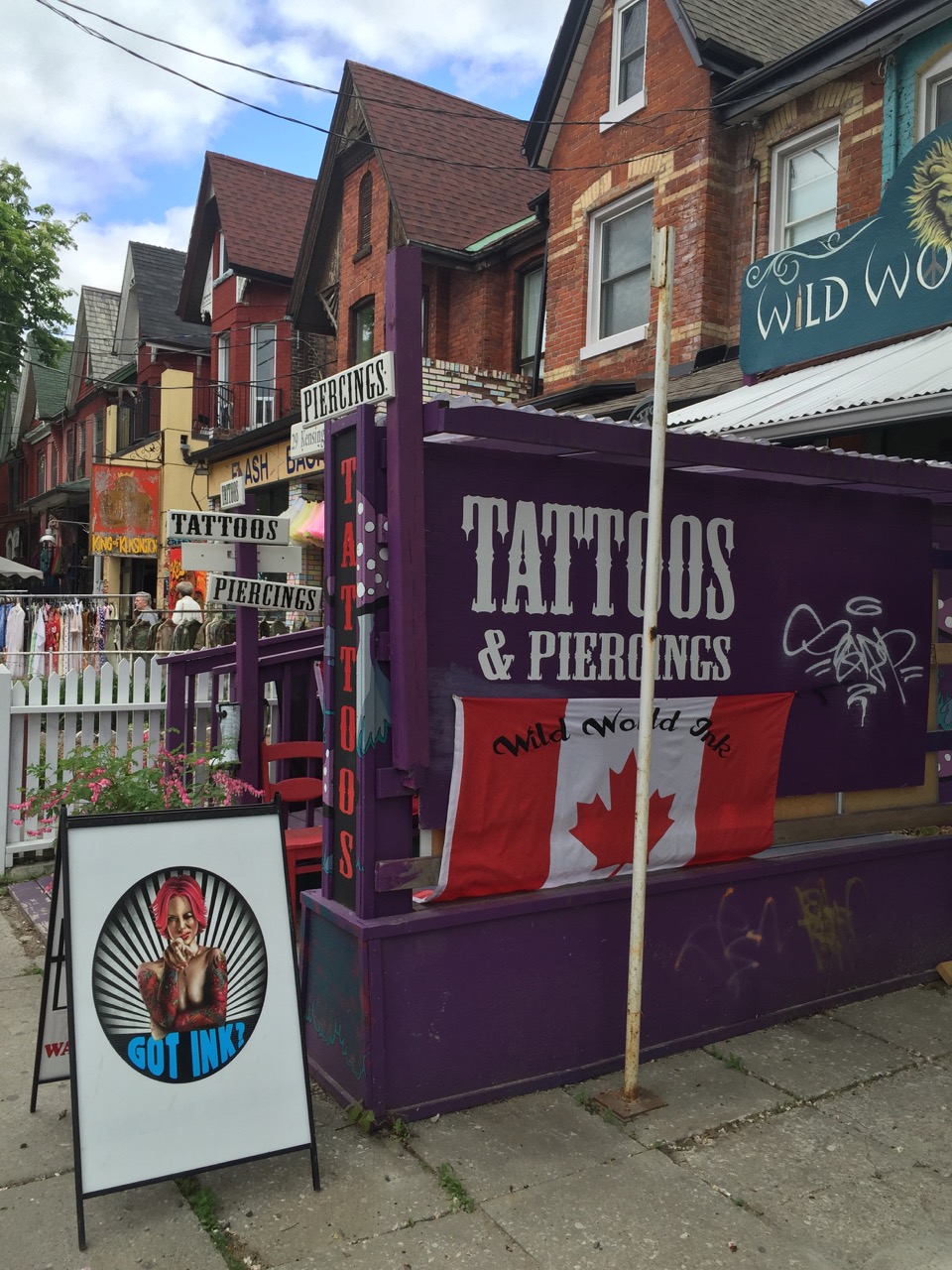
One out of every two Torontonians comes from somewhere else, and Vietnamese, Tibetan, and Puerto Rican restaurants stand cheek-by-jowl beside each other, not to mention a Chinatown noted to be among North America’s best culinary havens. (A Pinoy food store aptly named “Butchokoy” stood a block away from my lovely B&B—a three-storey house from 1853—on Dunn Street.) Victorian structures still in use by the university and the city government contrast sharply with ultramodern architecture in an eclectically energetic skyline. Seekers of the funky and the quirky can have their fill in the city’s counterculture-inspired Kensington Market. IMG_7691 (1) For someone schooled in Americana, this exposure to things Canadian was an interesting re-education—to think, for example, in terms of “Tim Hortons” instead of Starbucks or Seattle’s Best; of “Roots” instead of Gap; of “Hudson Bay” instead of Sears or JC Penney, etc.

But the most useful re-orientation took place for me at the festival itself, in reminding me that we have a lot to learn from South Asia as far as developing readerships in local languages is concerned, among other issues. We Filipinos think we’re well traveled and globally savvy, but we actually don’t get around enough in terms of mixing with our fellow Asians, let alone Africans. We seek out Western—specifically American—tutelage and patronage, often to our own deep disappointment.

It seems ironic that I had to learn this in Toronto—a true cosmopolis like New York—but sometimes you have to stand in the West for a better view eastward.

[Group photo from philippinereporter.com]

Penman No. 149: Advice to Freshmen

Penman for Monday, May 18, 2015

AFTER LAST week’s piece on “Why I’m not on Facebook,” I thought I should add or clarify that I’m not entirely off the grid, Web-wise. I do choose the websites or forums I frequent (and in case you’re wondering, I’ll explain the difference between forums and fora one of these days), to make sure that I deal only with things and people I’m truly interested in. For over a decade now, I’ve moderated the Philippine Macintosh Users Group (www.philmug.ph), and more recently the Fountain Pen Network-Philippines (www.fpn-p.org); now and then you’ll also find me at the Philippine Watch Club (www.philippinewatchclub.org). I keep a blog at www.penmanila.ph, and send out an occasional tweet, usually about my poker fortunes and misfortunes, from @penmanila.

It was on one of these sites—Philmug, which has grown to become one of the world’s most active Apple user groups—that I came across a thread I’m tapping for my topic today. While Philmug is the place to talk about anything and everything Apple, it’s also a community that can spark very lively discussions about such motley topics as Manny Pacquiao, Manila traffic, where to stay in Hanoi, and what SIM cards to get in Europe. One such “offline” thread that perked my interest last week was one titled “College freshman tips,” started by a young member about to enter college. Was there anything, he asked, that his elders could tell him about college life?

It’s a thread that’s grown to ten pages long the last time I looked, and predictably, many Muggers (as Philmug members call themselves) recited that age-old mantra that all college freshmen know by heart (and sophomores even better): “Party hard, study harder!”

Other suggestions were more specific:

  1. Join student organizations and socialize, but choose which ones you’ll be joining wisely. These “orgs” could become networks for life, for both friendships and professional contacts.
  2. Avoid fraternities and such groups that employ physical initiation and advocate violence. You’re in college to study—not to maim or be maimed by other people.
  3. Get out of your comfort zone, and be a little more adventurous. Make friends with people who may be totally unlike you. That’s where a lot of learning happens—in knowing about how other people live and think.
  4. Manage your resources well—your budget and time, most especially. Learn how to take care of yourself, and consider taking a student job, both to earn and to learn some professional working habits.
  5. Master the freshman basics: the campus map, how to take notes, who the best (not necessarily the easiest) teachers are.
  6. Don’t confuse a college diploma with education. A lot of learning takes place outside the classroom.
  7. Don’t believe everything you hear, even from your professors. Learn how to argue, and argue well.
  8. Never plagiarize. It’ll never be worth it.
  9. Don’t be afraid to fail. Go ask a girl out if you really like her. Failure is part of learning.
  10. Don’t try to do everything in your freshman year. You’ll find yourself being pulled in so many directions that it’s easy to lose focus. Map out a clear and unimpeded path to your sophomore year.

Some other suggestions were a bit more unusual, although no less practical. “Always sit beside a female classmate and you will never regret college life, because they are lifesavers (and your immediate supply of pens, paper, books, assignments, and exams),” proposed one member (who now just happens to be one of our smartest cops in the PNP). “They smell better than boys,” another member, a retired pharmaceuticals executive, agreed.

And what did I say? Quite a bit, but among them was, “Don’t bother playing mind games with your professor (as in ‘I’m smarter than this guy, and I’m going to prove it’). You will lose; even if you are smarter than your prof, you will lose… Learn how to argue and come across as being smart without being snarky. I’m a very gentle prof myself, but nothing makes me happier some days than to give some smartypants a dose of his own medicine.”

Now, of course, like many 16- and 17-year-olds, I didn’t follow all this sound and sage advice I’m giving and hearing.

In my freshman year in UP in 1970-71, I (1) joined a frat and got beaten black and blue; (2) joined a militant student organization and went to dozens of rallies, many of them violent; (3) joined the staff of the Philippine Collegian, the student newspaper; (3) met (and lost) my first girlfriend, and did what boys and girls do; (4) got a 1.0 in English and a 5.0 in Math (for absenteeism—I was a Philippine Science high grad and arrogantly thought that Math 17 was beneath me); (5) shifted courses, from Industrial Engineering to Journalism, I think; and (6) went up to the mountains of Quezon and Bulacan to do “mass work.” It was, to say the least, an interesting year.

Within another year or so, I would drop out and divide my time between my activism and a job as a newspaper reporter (I may have been the youngest regularly-employed newspaper reporter of my time, at 18); also at 18, I was in martial law prison; by my 20th birthday, I was married, and became a father before I turned 21.

Not surprisingly, it took me forever to get back to school and finish. I resumed my undergrad studies at age 27, and graduated with my AB in English, cum laude (you could still get honors then even with a failing mark if it wasn’t in your major—I had shifted to English by then—and if your GWA could sustain it) at age 30. I made up for lost time by finishing my Master’s by 34, and my PhD by 37. Some of us like to hurry… and then to take our time… and then to hurry again.

I suppose my ultimate advice to freshmen is just to hang in there and don’t do anything stupid like get killed before turning 20, unless you’re doing it for God and country. But don’t stay too safe, either, because the best things you’ll be learning from will be your most grievous mistakes. One of the wisest things I ever heard came from a friend, now departed, spoken over beer and stale cigarettes at 2 in the morning: “Everyone should be entitled to one big mistake.” Or, as my professor in German once put it, “Ein Fehler ist kein Fehler”—one mistake is no mistake.

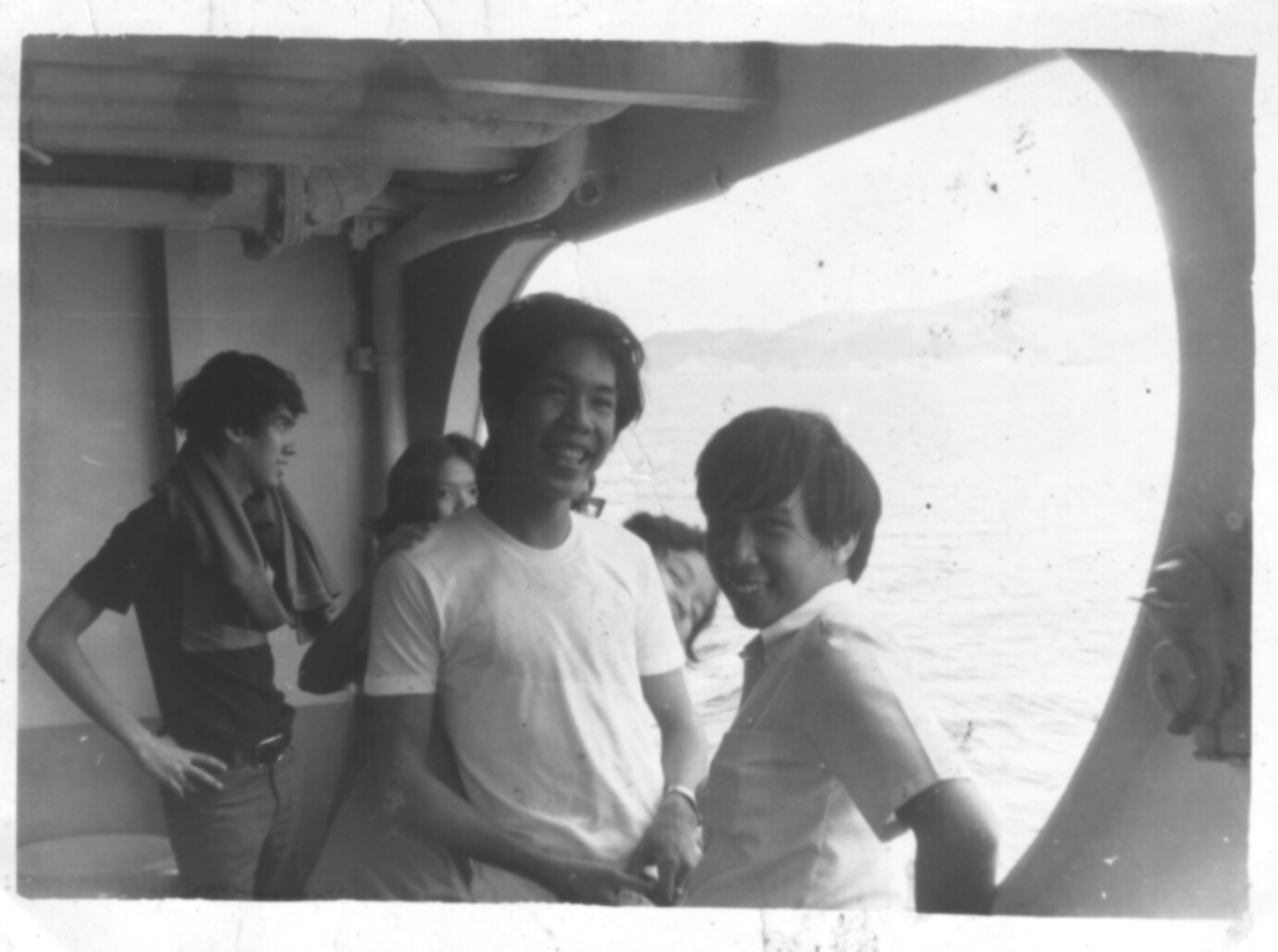
We made a few, and have survived and maybe even prospered despite and because of them. For a Thursday throwback, I posted a picture in that thread of myself as a lanky freshman, beside activist leader and fellow PSHSer Rey Vea (now president of Mapua University), on a boat to a CEGP convention in Dumaguete ca. 1970. My only question was, where did all that hair and leanness go?

1971

Penman No. 148: Why I’m Not on Facebook

Penman for Monday, May 11, 2015

FOR THE umpteenth time, last week, another person asked me, with profound astonishment, why I wasn’t on Facebook. I told him that, in my seniorhood, I wanted to lead a quiet and peaceful life, and that Facebook was antithetical to that ambition.

From what I hear, Facebook is this century’s Colosseum, and that a fracas on Facebook can be far more entertaining than the event in real life. I knew that it had been a busy week, to say the least, on that website (or, I should say, in those millions of websites). There was that “literary tempest” that my fellow STAR columnist Scott Garceau adverted to in a recent piece, the Pacquiao-Mayweather fight, and the Save-Mary-Jane-Veloso movement, among other contentious causes.

I learned about these things not because I’m on Facebook, but because my wife Beng is. She’s up in bed before me every morning, pecking away at her iPhone in the gathering light, responding to the planetary call for “likes” and “tags” and “status updates” and whatever else goes on in the FB universe. When she senses me stirring awake, she gives me the lowdown on the state of the world, leaving the less interesting and less important matters to CNN and the BBC.

That world would be much happier and more peaceful if more of humanity were like my bedmate, but it’s not. “Avoid loud and aggressive persons, for they are vexatious to the spirit,” counsels the albeit apocryphally attributed Desiderata—which is as good as saying, avoid Facebook, for it is the Republic of Vexation, the domain of loud and aggressive persons who would like nothing better than to get a rise out of you and spoil your day.

Of course I’m told it also exists for friendship and global harmony—the spirit in which Beng and some of her friends upload quotations from the Dalai Lama and such peaceable people—but I’m convinced that they’re in the distinct minority, for which a separate Facebook might as well exist. While we’re at it, let’s do a bit of taxonomy and map out the possible sub-Facebook realms out there, the establishment of which could lead to a more tolerable era of co-existence all around.

Facebook Lambs (or should that be Facebook Koi, for a more Asian touch?) could include everyone like Beng—the tree-huggers, the lifesavers, the Kumbaya singers, the people who will find goodness in the worst of places. Easy to please, they’re also easy to hurt, and when they hurt, they bleed.

Facebook Monkeys do what monkeys do: screech and thump their chests a lot, to say: “Look at me and at what I’m doing! Am having XXX brand of cornflakes and YYY brand of yogurt for breakfast, folks, and here’s five pics to prove it! Isn’t that interesting???”

Facebook Vipers do what vipers do: strike and bite at anything that moves, especially anything that gets within a whisker of their precious scales. Some days I imagine Facebook brimming with reptilian malice, filling me as well with illiquid emotions, until Beng pulls me over to show a child singing a heavenly carol on her FB page.

So why do I shun FB? (I’ve been told, by the way, that there’s a “Butch Dalisay” FB page, but I have nothing to do with it, and have no idea what it contains.) I’ve been asked this question many times before, and my serious and rather ironic answer has always been that I can’t abide using the word “friend” for people who really aren’t that. I do believe that one of the worst things that Facebook has done to language and to human relationships has been to cheapen the meaning of “friend” and, corollarily, introducing the notion of “unfriending” someone with a keypress, just like that.

I still prefer to make my friends over coffee, on a bus or a boat trip, laughing at the same silly movie, pulling for the same desperate cause, arguing the merits and demerits of some poem or passage of prose. And when you stop being my friend, I won’t even waste a sliver of bandwidth on it; a cosmic silence is all you’ll get (although my deepest friendships can endure years of stasis).

I said “ironic,” because it’s a bit odd that I find myself arguing for more human contact when, at this stage of my life, I actually want and seek less of it for myself. I’m not misanthropic, but I feel happy to keep company with just a very few people I can trust and relax with, mainly family. I hardly attend parties or big social events unless required to do so by work or inescapable obligation. I dread making and taking phone calls, especially any call beyond three minutes. (You’ll best get a response from me by email.)

But never mind me; I do recognize Facebook’s matchless utility for most people. I know that serendipitous connections can be made online that would have been impossible otherwise, and if you’re tracking down that crush you last saw in the 1970s—or 50 pounds in the blissful past—there’s nothing like FB to make that happen. Like a loaded gun, Facebook all by itself isn’t evil; it’s people who are, or can be, and FB is just another enabler of the dark side, as well as of its sunnier converse.

So it’s not even the malice I’m evading, because you’ll find that elsewhere anyway, or perhaps I should say, it’ll find you. It’s more likely the way Facebook—in all its goodness and badness, for better or for worse—can take over people’s lives, basically by engrossing them in the issues of the day (as in this hour, this minute) rather than troubling them with historical hindsight and such corn. (And who needs a lengthy editorial and well-considered opinion when you can offer up your precious gut feelings, along with your barangay’s, as a workable and certainly more credible substitute?)

There’s a facebookhaters.com, but I don’t see myself signing up with those folks. Facebookhaters.com is completely serious but unironic—I can just see it devising and promoting a 12-step withdrawal program—which isn’t the way to grapple with a hyper-sophisticated Hydra like FB.

I can’t and don’t actively hate Facebook, knowing how vital it is to the lives of millions; what would I do with Beng all those hours she won’t be on FB? As it is, I can play poker all night, knowing she’ll never be alone and idle, as long as she has her phone (a tip for spouses—get your mate an unlimited data connection, and you’ll never have to babysit them again). That’s one thing to thank FB for.