Qwertyman No. 89: The Country I Wanted to Love

Qwertyman for Monday, April 15, 2024

FOURTEEN YEARS ago, I received a writing assignment that any journalist would have jumped at: to go with other media representatives on a week-long visit to Israel and to report on our observations. Although the trip was sponsored by the Israeli government, and therefore clearly a PR initiative, we were under no instructions as to what to write about, or how. Of course there were implicit or effective restrictions: our itinerary did not include visits to Gaza, the West Bank, or other Palestinian-controlled areas, and we had no interviews with Palestinians (interestingly, one of our companions, ABS-CBN’s Uma Khouny, was half-Filipino and half Arab-Israeli). 

As expected, we saw the best of Israel, the sites that any “Holy Land” tour would have included: the Temple Mount, the Holy Sepulchre, the Wailing Wall, the Dead Sea, Masada, the bazaars, and so on. We also visited a kibbutz and marveled at how its inhabitants could coax so much life and verdure out of barren desert. We were brought to a state-of-the-art facility where we drove an Israeli-made, 100%-electric car around a track (this was in 2010, mind you). Just outside Tel Aviv, we met children at a hospital where they had heart operations they couldn’t have afforded or gotten otherwise; these children included Palestinians, Angolans, Chinese, and yes, a Filipino. We watched  vibrant performances of contemporary Israeli dance and music. We were moved close to tears by a visit to the Holocaust exhibits at Yad Vashem.

We left deeply impressed by the Israel we had seen and experienced, and I reported as much in two “Penman” columns for the STAR. We were aware that we had not seen everything on our carefully curated tour, and we understood that there were simmering tensions behind the high walls that were rising all over the place to block off zones that the government might have considered unsafe, but there was a time for every story, and this time was our hosts’.

Israel did not even need to invite me to gain my sympathy. Like many Catholic boys in the 1960s, I grew up steeped in the belief that the Jews were God’s chosen people—why else would he have delivered them out of Egypt (a scene replayed over and over again in Technicolor on Holy Week) to the Promised Land? I read Leon Uris’ Exodus and enjoyed the movie version with its memorable theme, “This Land Is Mine.” I learned to sing “Hava Nagila,” and so did you.

Over the next decades I would watch countless documentaries on the Mossad and its exploits in capturing Adolf Eichmann, freeing the hostages at Entebbe, going after the leaders of Black September in the wake of the Munich Olympics massacre, and gathering intelligence leading to the Yom Kippur War. The eye-patched Moshe Dayan and the grandmotherly Golda Meir were both cinematically compelling. More than biblical heroes, Israelis and Jews represented the finest of human qualities—tenacity, ingenuity, resolve, courage, and imagination. Even beyond Israel, who could argue with the brilliance of Isaac Bashevis Singer, Jascha Heifetz, Woody Allen, Barbra Streisand, and Marc Chagall? Never mind the Rothschilds and the Shylocks.

But now much of that luster has tragically vanished, lifted like so much vapor, in the wake of Israel’s invasion of Gaza and its horrific toll on human life. 

Like most onlookers from afar, I was appalled and outraged by Hamas’ attack on Israeli communities and citizens last October 7; subsequent reports of rapes and executions showed these assaults to have been premeditatedly barbaric, calculated to sow fear and terror in the enemy. No matter the history behind them, no matter the grievances that may have led to their unleashing, the violence committed especially against innocent civilians was brutish and repulsive.

Israel may have gained the moral high ground at that point in its pledge to avenge the victims, recover the hostages, and destroy Hamas, but it soon lost that superiority in its disproportionately savage invasion of Gaza. All its claims to sophistication and efficiency in waging war—the kind of surgical operation on display at Entebbe and elsewhere—went out the window in air strikes that have killed thousands of Palestinian civilians, including hapless children; even those who miraculously survive will forever bear the scars and trauma of this assault. To “weed out” Hamas, Netanyahu’s Israel has chosen to flatten and to destroy the whole garden. And as if the world were not watching, an Israeli commander even declared on TV that “There is no famine in Gaza.” 

This has gone far beyond “an eye for an eye, a tooth for a tooth.” The Israelis have claimed buckets of Palestinian eyes and teeth for every one lost to an Israeli. They have exceeded even the Roman practice of decimation, by which every tenth man in a cohort was executed in punishment for the offenses of the lot; instead, ten Palestinians seem to have suffered for every Hamas member deemed at fault for the October 7 attack (the actual kill ratio has been 30 to 1). The supreme irony of it is that Israel has merely guaranteed that Hamas’ age-old causes and resentments will live on, and even prosper with global sympathy for Palestinian self-determination, as may have been Hamas’ game plan all along.

Of course, the State of Israel does not need our admiration and affection, and we understand that it is engaged in an existential fight for its life on many fronts, as it has been since its inception in varying degrees of intensity; the same can now be said for the Palestinians. My opinion as a distant Filipino commentator will change nothing (except perhaps preclude me from further invitations to deplane at Ben-Gurion airport). I realize that what I am saying here will please neither side of this conflict and their partisans, and I expect to receive mail to insist that I failed to see this and that and to justify the ferocity of their actions. I know that we are no longer watching a movie with a billowing theme song and clear heroes and villains. 

But I suspect I am not alone in expressing my great sadness over the turn taken by a country I wanted to love. I can only take refuge in thinking that not all Israelis are Netanyahus, and not all Palestinians are Hamas. “Vengeance is mine, saith the Lord.” I wonder if that line from Deuteronomy has its equivalent in the Torah, or the Koran for that matter.

Penman No. 461: A Parisian Interlude

Penman for Sunday, April 7, 2024

WHY IS it that just when you think you’ve begun to figure out a foreign city’s transport system, it’s time to come home? That happened again barely two weeks ago when my wife Beng and I flew to France for some speaking engagements in Paris and Le Havre. We were there for work, not tourism, and more work waited for us as well back home, so we couldn’t stay for as long as we would have wanted to. We’d been to Paris three times before and had done the obligatory Louvre and Eiffel Tower visits, but it almost seems criminal not to linger and loiter around such a beautiful city.

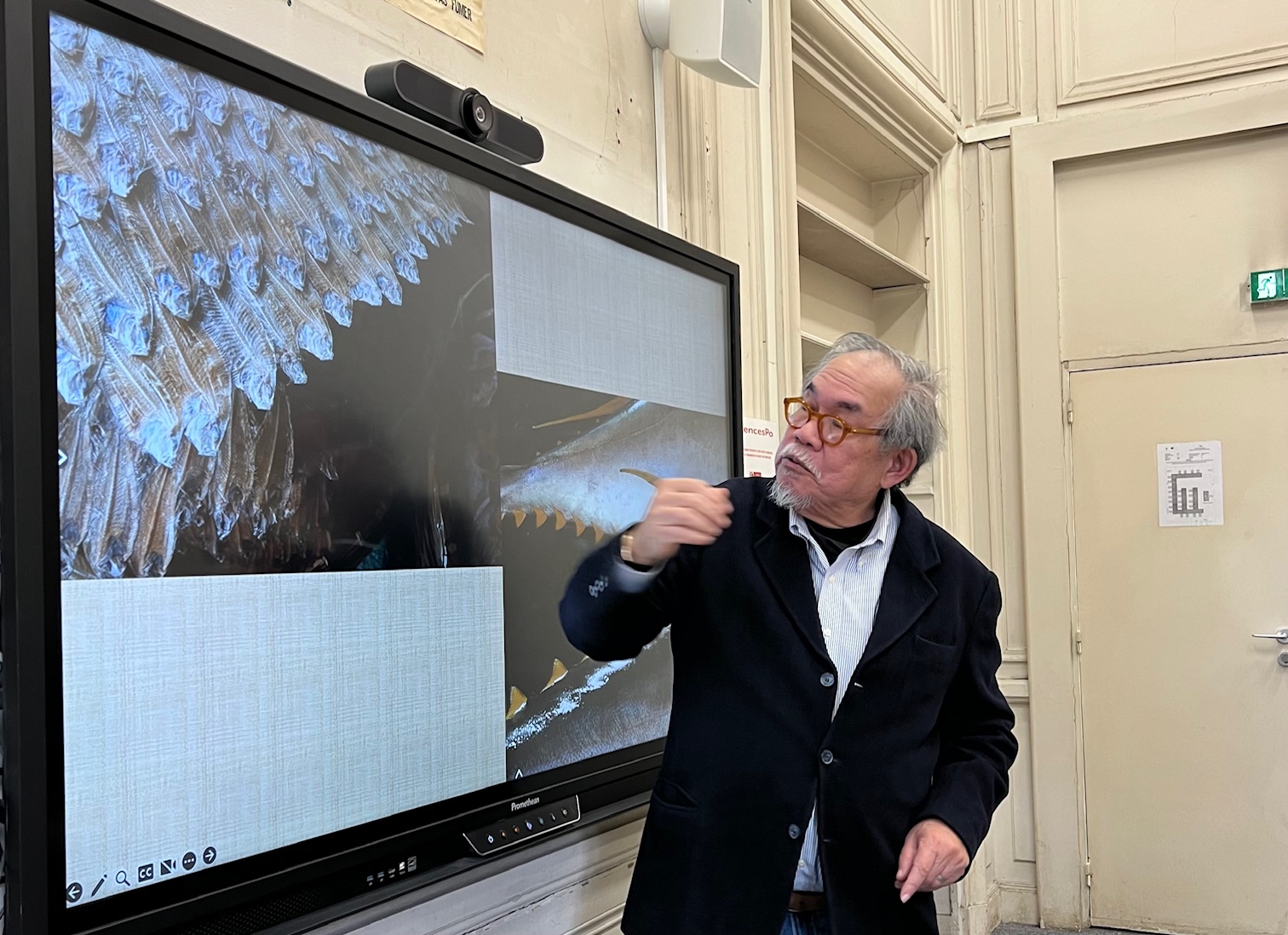
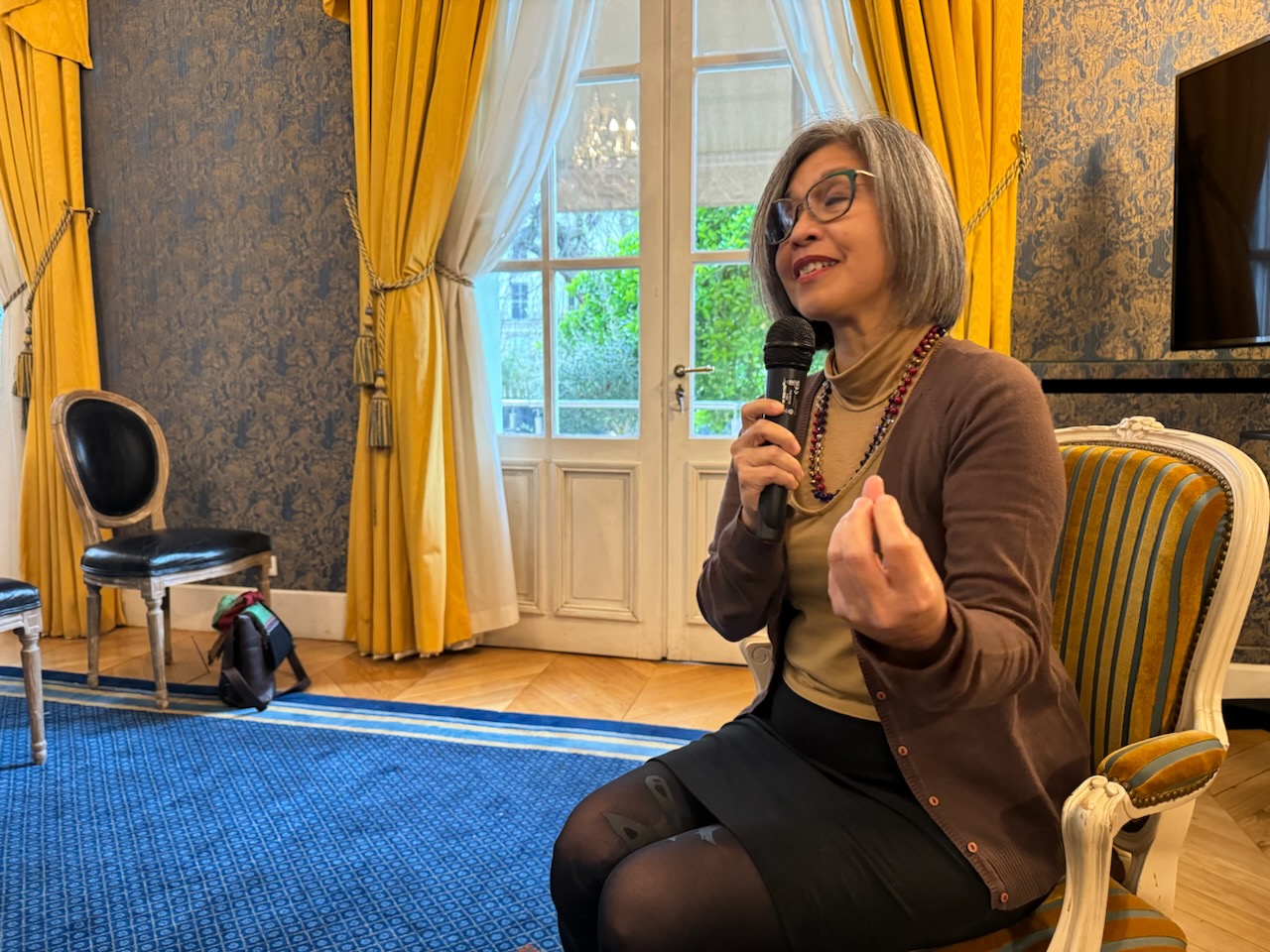
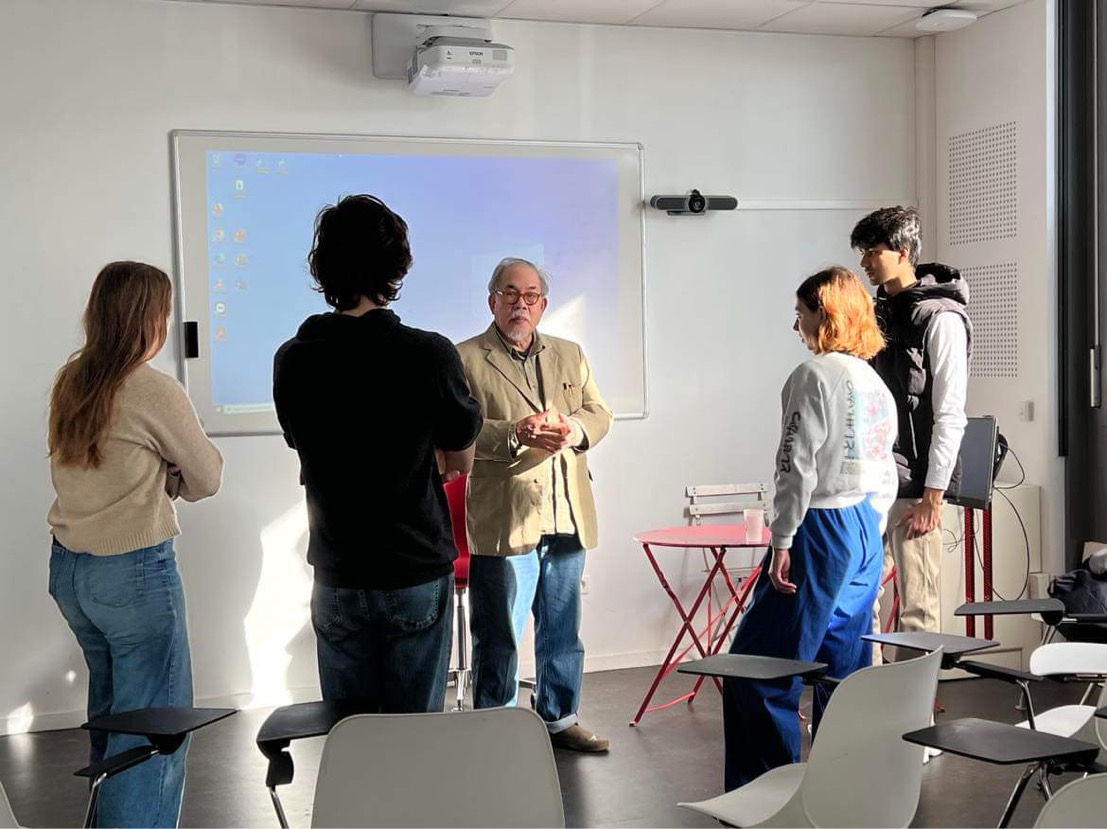
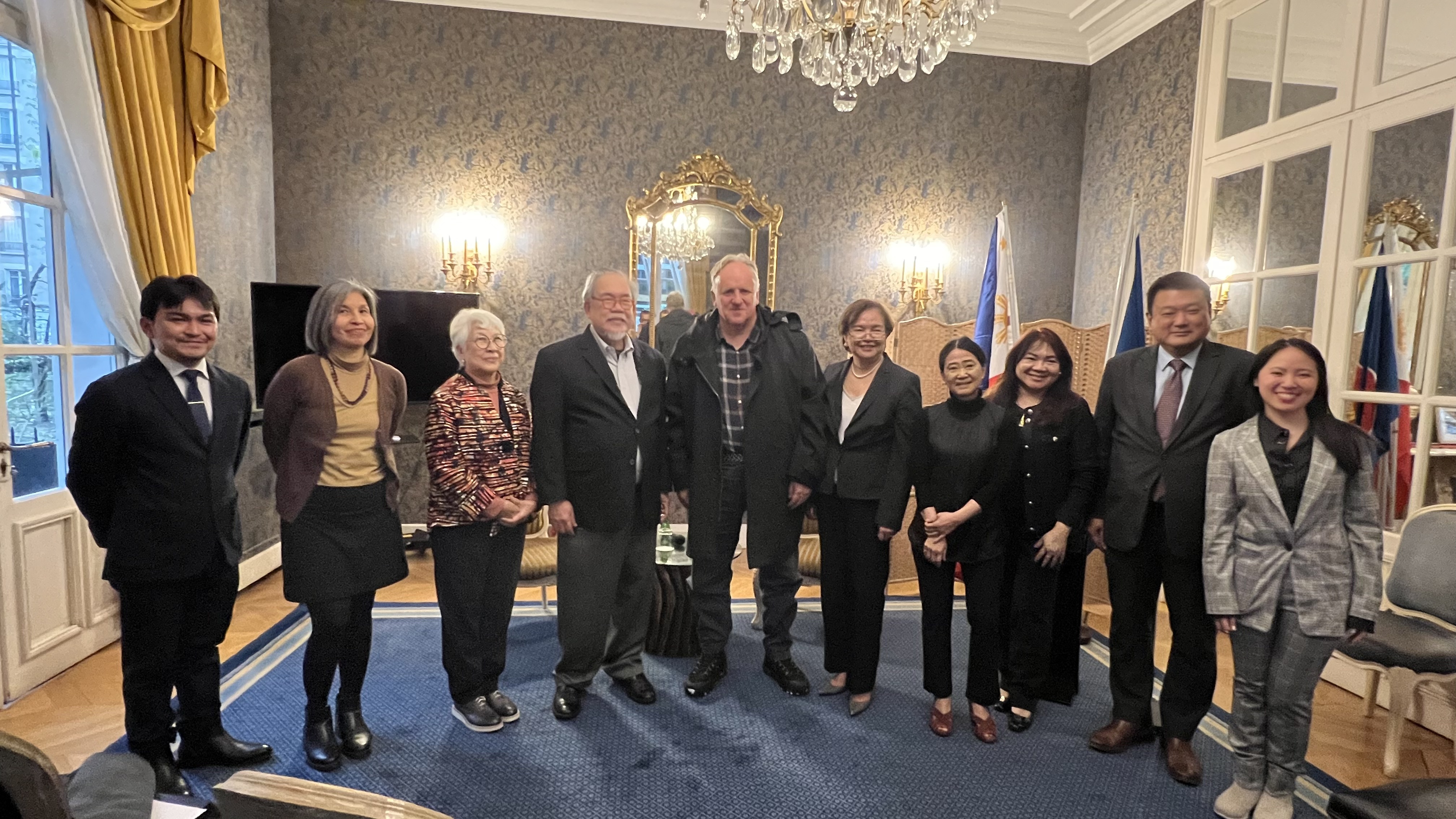
We were there at the invitation of SciencesPo, France’s leading social sciences university, for a series of talks on Philippine literature and art. Along with France-based writer Criselda Yabes, I gave a reading as well at the Philippine embassy in Paris at the behest of our most gracious ambassador, Mme. Junever “Jones” Mahilum-West, an avid amateur painter and supporter of Philippine culture. Our host at SciencesPo, Dr. Pauline Couteau, also arranged some events for us at their campus in Le Havre and sponsored a special screening of Lino Brocka’s classic “Maynila sa mga Kuko ng Liwanag” at the Entrepot Theater in Paris.

It was a hectic week that left these footloose septuagenarians exhausted but exhilarated at the same time, warmed up in France’s unseasonably chilly weather (often falling below 10C) by the enthusiasm of our new friends, both French and fellow Filipinos. 

Again, however, we had a sweet problem to deal with even before we flew to Paris: with such little time left on our schedule for more casual diversions, what places or experiences would we put on top of our list for our relaxation and amusement, given Paris’ almost inexhaustible offerings of wonder and delight?

Anthony Bourdain, bless his soul, famously advised short-term visitors to Paris not to make a mad dash to try and see everything all at once, but to just relax, have coffee, imbibe the neighborhood culture, stay in bed (and for those able and inclined, make love). Beng and I recalled, with both fondness and regret, how we had first seen Paris a quarter-century earlier from the back of a bus on a 99-pound budget tour from our base then in Norwich, England. The bus went by the city’s landmarks so fast that Beng missed Rodin because she was in the on-board restroom then. Subsequent visits afforded us a bit more time to see the Mona Lisa (of course) and to go up the Eiffel Tower (of course) but our happiest memories came, as Bourdain suggested, from just walking in the city gardens and along the Seine.

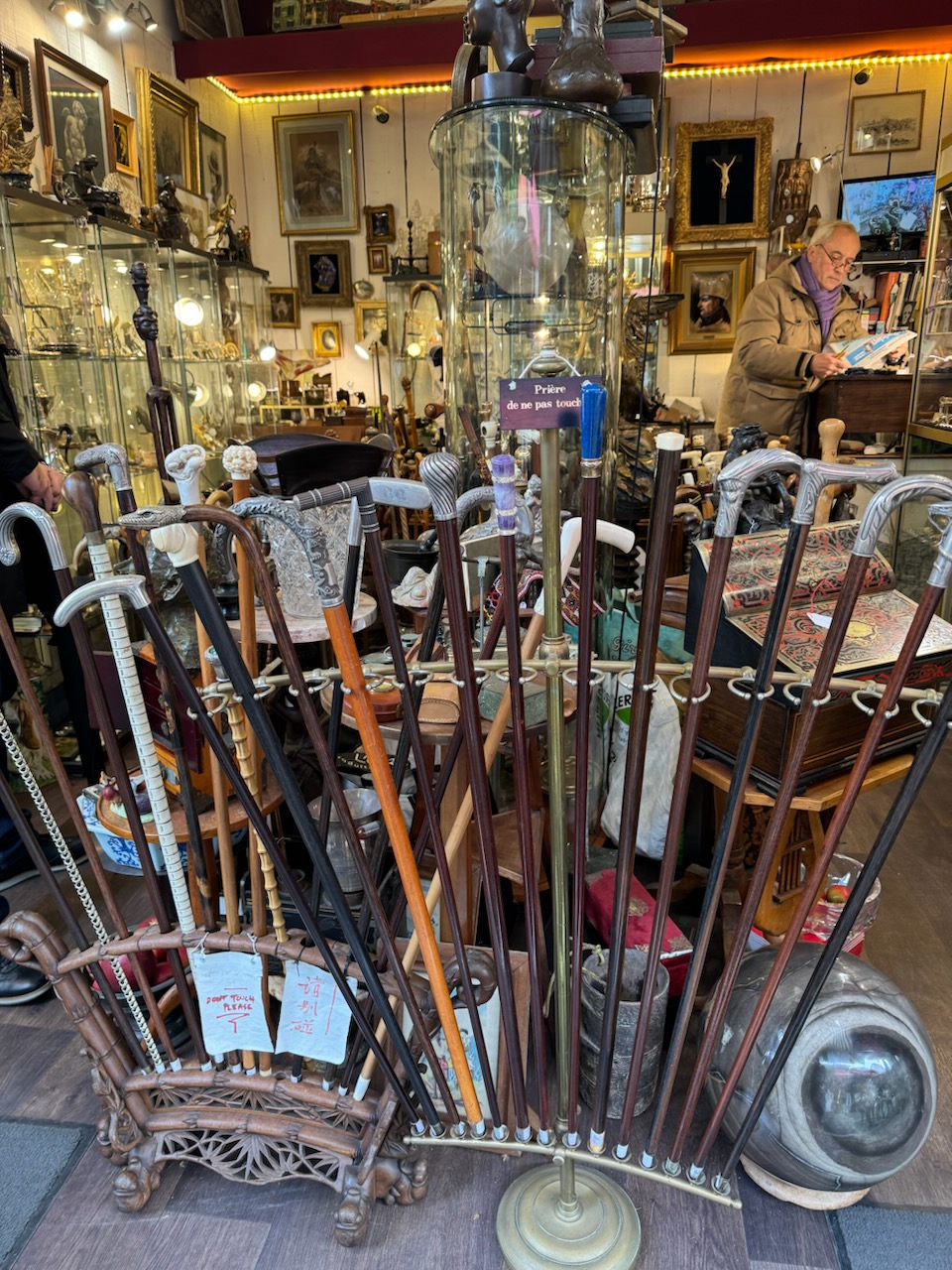
This time, we decided to do just two things with our limited free time: visit one museum, and hit the flea markets. This follows a pattern that Beng and I have observed over decades of traveling together, from Amsterdam, Barcelona, and London to New York, Tokyo, and Shanghai. The museums capture and preserve the glory of the past, and if you’re lucky, rather than pay for made-in-China miniatures at the museum gift shop, you can find some genuine article from that past in the flea market. 

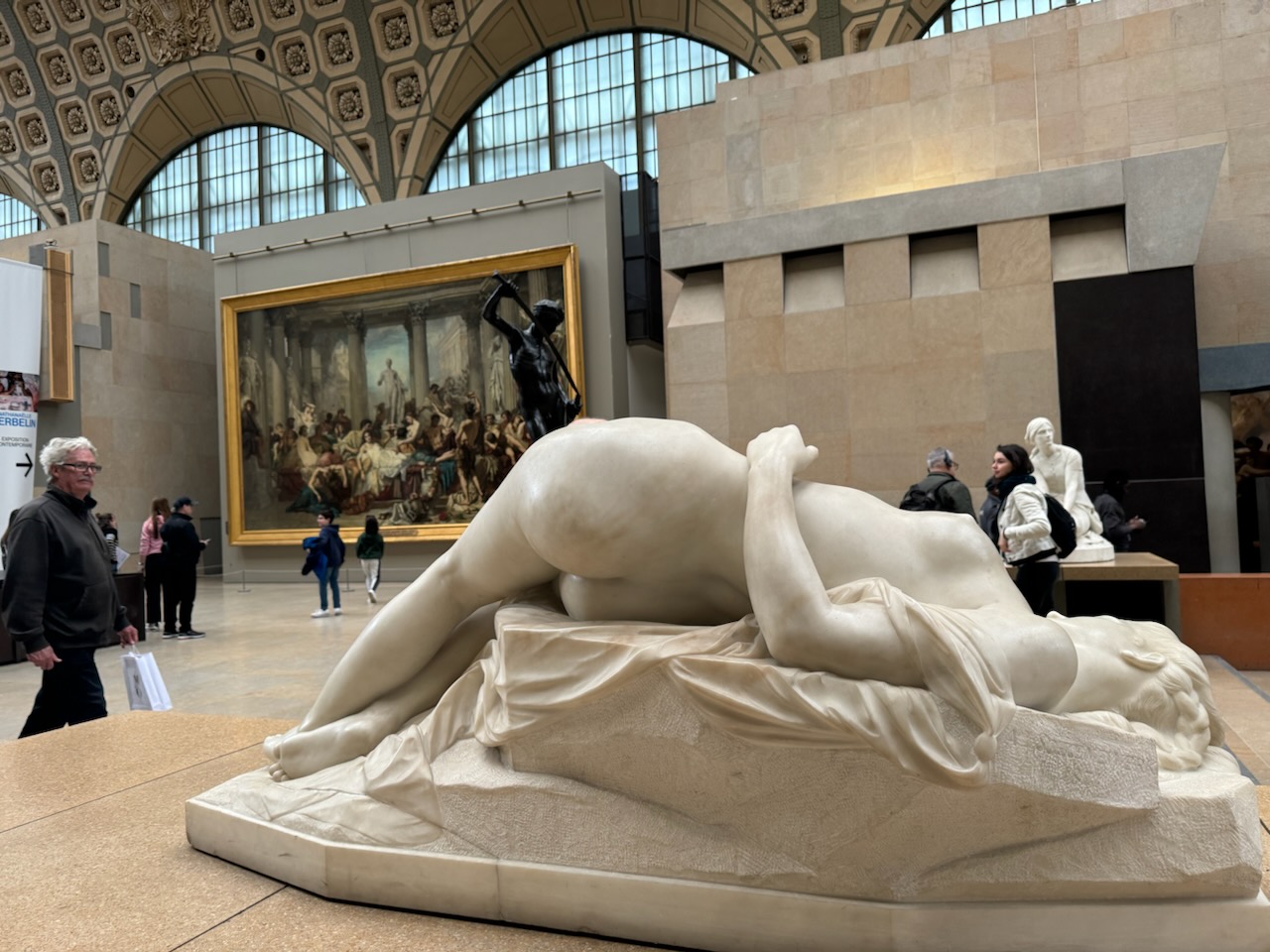
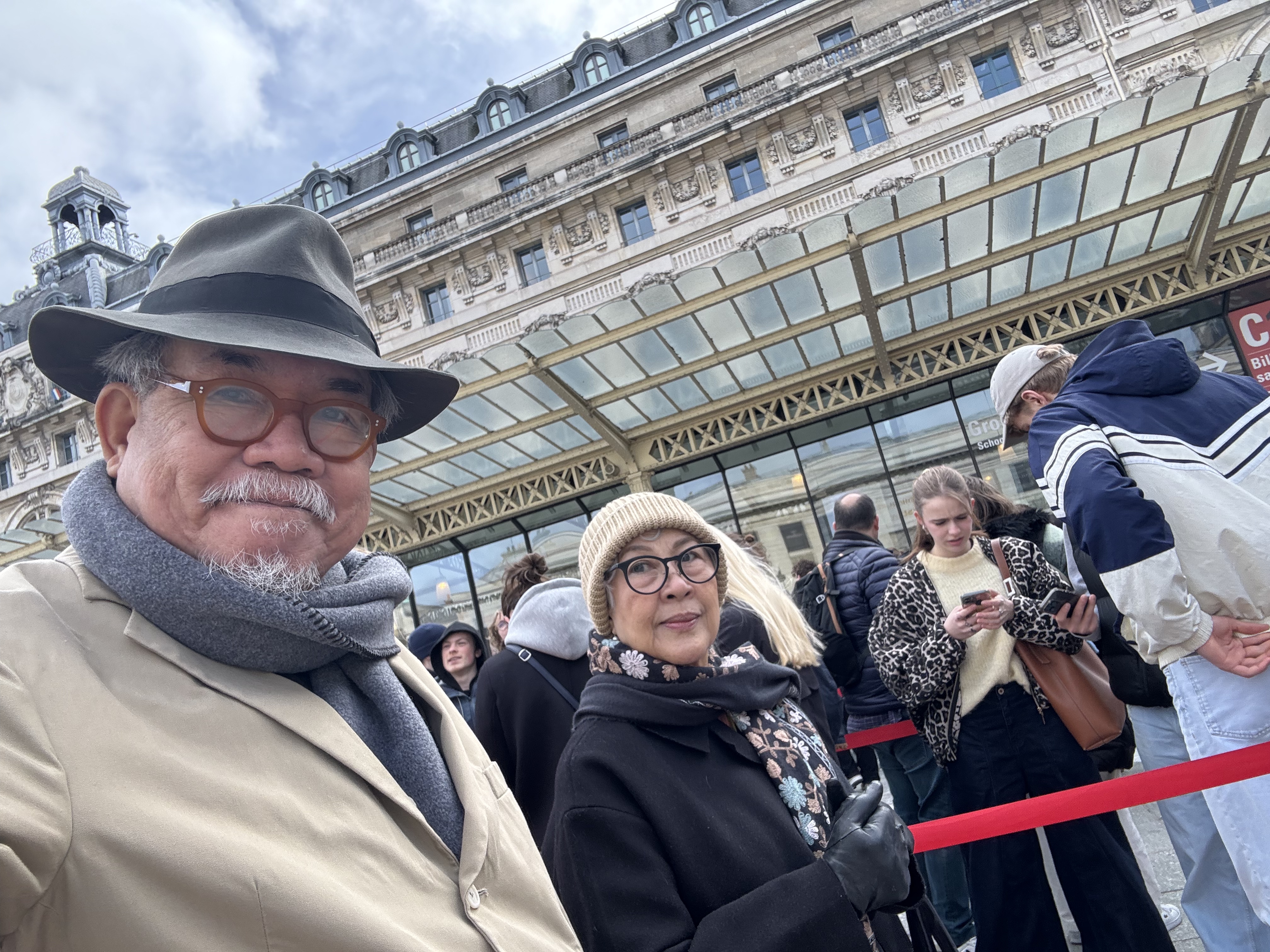
Our choice of museum was easy: Paris has dozens of fantastic museums—and you’ll never, ever finish the entire Louvre in one visit—but the great one we’d never been to was the Musée d’Orsay, the former train station that’s become France’s cathedral of Impressionism. Finally, this time, in the few hours we had just before boarding the train to Le Havre, we managed to step into the Musée d’Orsay, and what a divine experience e that was, to find room after room filled by the masterworks of Renoir, Monet, Manet, Seurat, Degas, Redon, Courbet, and so on, like walking into a book of pictures. 

Understandably, hundreds of other people had the same idea, so the best time to visit may have been after 6 pm—the museum closes at 9:45—when admission rates are also cheaper. Not a few friends have remarked that they found the Musée d’Orsay much better than the Louvre, perhaps because of its relative compactness and its delivery of proven crowd-pleasers in its collection.

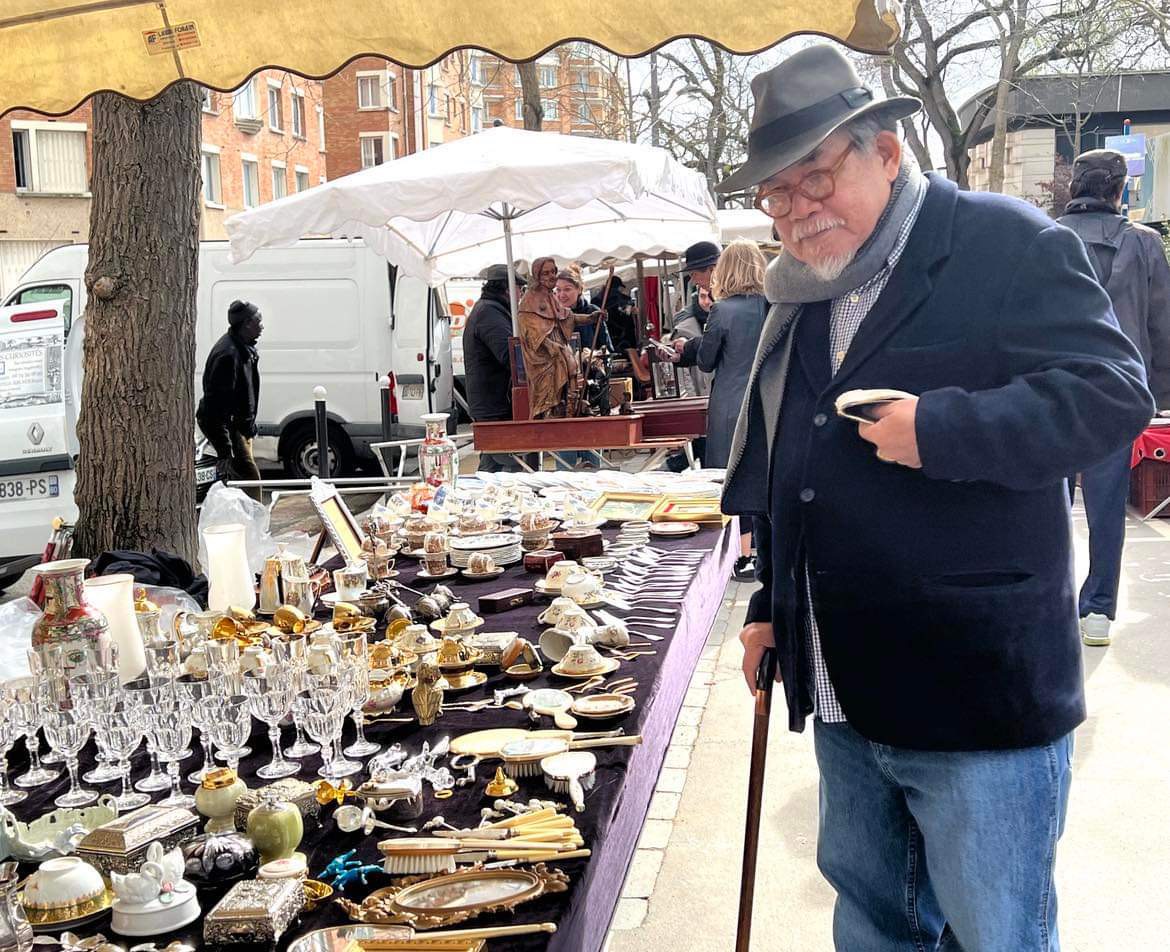
Our flea-market sorties proved just as wondrous, with the additional thrill of unpredictability, as each table will be different from the one before it and you need a quick, trained eye to spot the jewel in the junkyard. As flea-market addicts from decades back when we used to scour the yard sales and antique barns of the American Midwest for things we could drag home, Beng and I have developed a routine of scan-and-scrutinize, looking for our respective grails (old fountain pens for me, old bottles and costume jewelry for her).

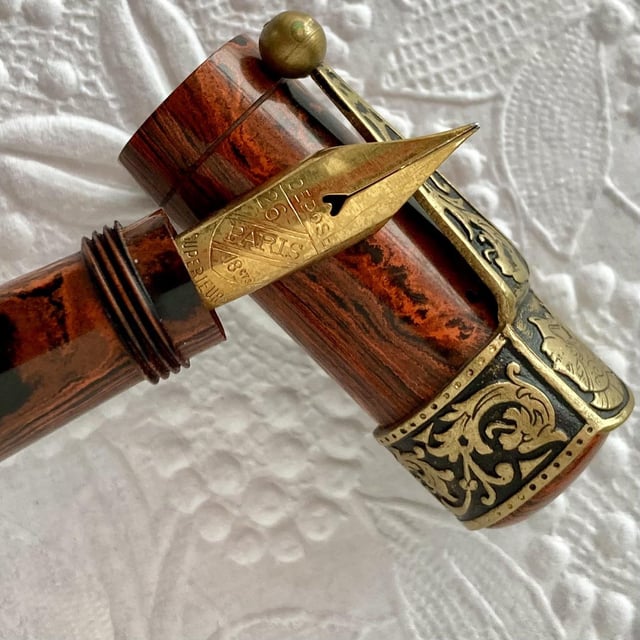
We were lucky to be billeted near our first flea market, the one at Porte de Vanves, which has about a hundred dealers strung along a large city block selling all manner of goodies from 18th-century books and Christofle silverware to walking sticks and paintings. I searched in vain for that lost Juan Luna and that stray copy of the Fili (which Rizal finished in Paris), but the flea-market gods blessed me instead with an early 1900s “safety” fountain pen sheathed in gold, perfect in every way, lying all by its lonesome on a table of bric-a-brac. “Combien, madame?” I asked in my schoolboy French, my throat dry with anticipation. “Cinquante euros,” she said; it was easily worth five times that, but I gathered up all my courage and countered, “Quarante?” “Okay,” she said, “A quick “Merci!” and 40 euros later, I was a happy boy with a new toy—what could be a better memento of this short trip than a gorgeous century-old pen with the word “Paris” on its 18-carat nib?

Of course, this luck was not to be repeated on our visit to the big flea market of St. Ouen in Clignancourt—reputedly the largest of its kind in the world—a few hours before boarding the plane back for home, but we rewarded our labors with a late lunch in a Chinese restaurant. After a week of French cuisine, immersed in the grandeur of French art and culture, huge platefuls of Cantonese fried rice sounded just about right. It was as if we were being told, “You’ve had your Parisian interlude and your souvenirs, it’s time to go home.” Au revoir!

Qwertyman No. 87: A French Sojourn

Qwertyman for Monday, April 1, 2024

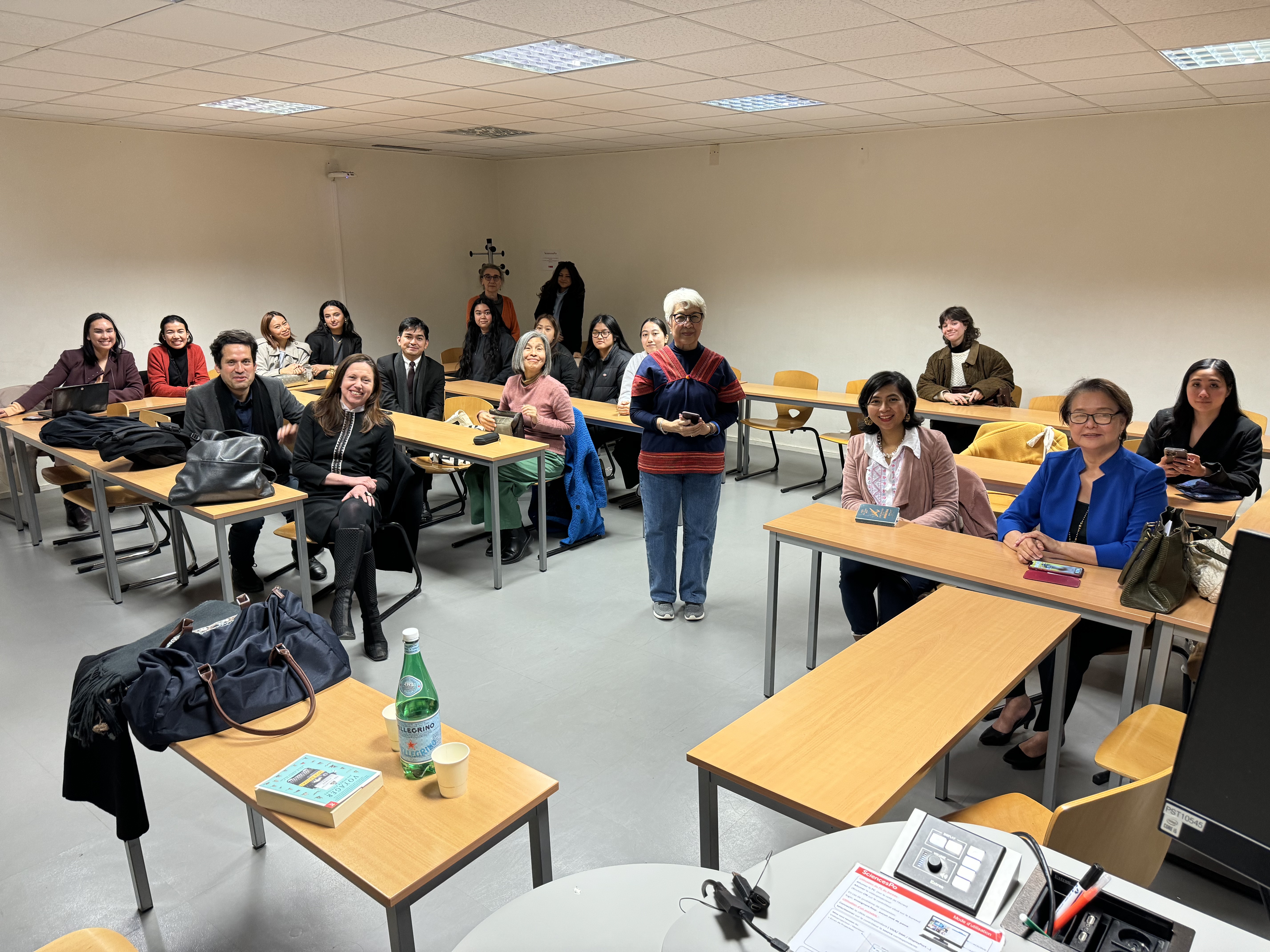
MY WIFE Beng and I were in France last week to give a series of lectures at the invitation of the Paris Institute of Political Studies, better known as SciencesPo. They don’t formally observe Holy Week in France (nor, for that matter, do many Filipinos to whom it’s simply come to mean “long weekend”). So we thought that it was the best time to come over and share some of our insights into Philippine literature, art, and politics with young French students as well as our countrymen in Paris, for whom I and fellow writer Cris Yabes, who’s based in France, gave a special reading at the Philippine embassy.

For those who’ve never heard of it—which won’t be too surprising given our Pinoy fixation on top American and British universities—SciencesPo (pronounced SEE-ansPO) is France’s leading university in the social sciences. It now has 14,000 students spread out over seven campuses across the country. Only 4,000 of those students are undergraduates; the rest are graduate students, including 350 taking their PhD. Unlike our universities, SciencesPo’s undergrads can finish in only three years, with their last year spent abroad. I was told that there are about 20 Filipino students currently enrolled at SciencesPo, and about half of its students come from overseas. As a public research university, SciencesPo is supported by the government through a private foundation, an arrangement that gives it a high degree of autonomy.

Founded in 1872, the university has served as the training ground for France’s political elite, producing five out of France’s eight presidents: Pompidou, Mitterand, Chirac, Hollande, and the incumbent Macron. Marcel Proust studied here for a year, and Christian Dior was a graduate.

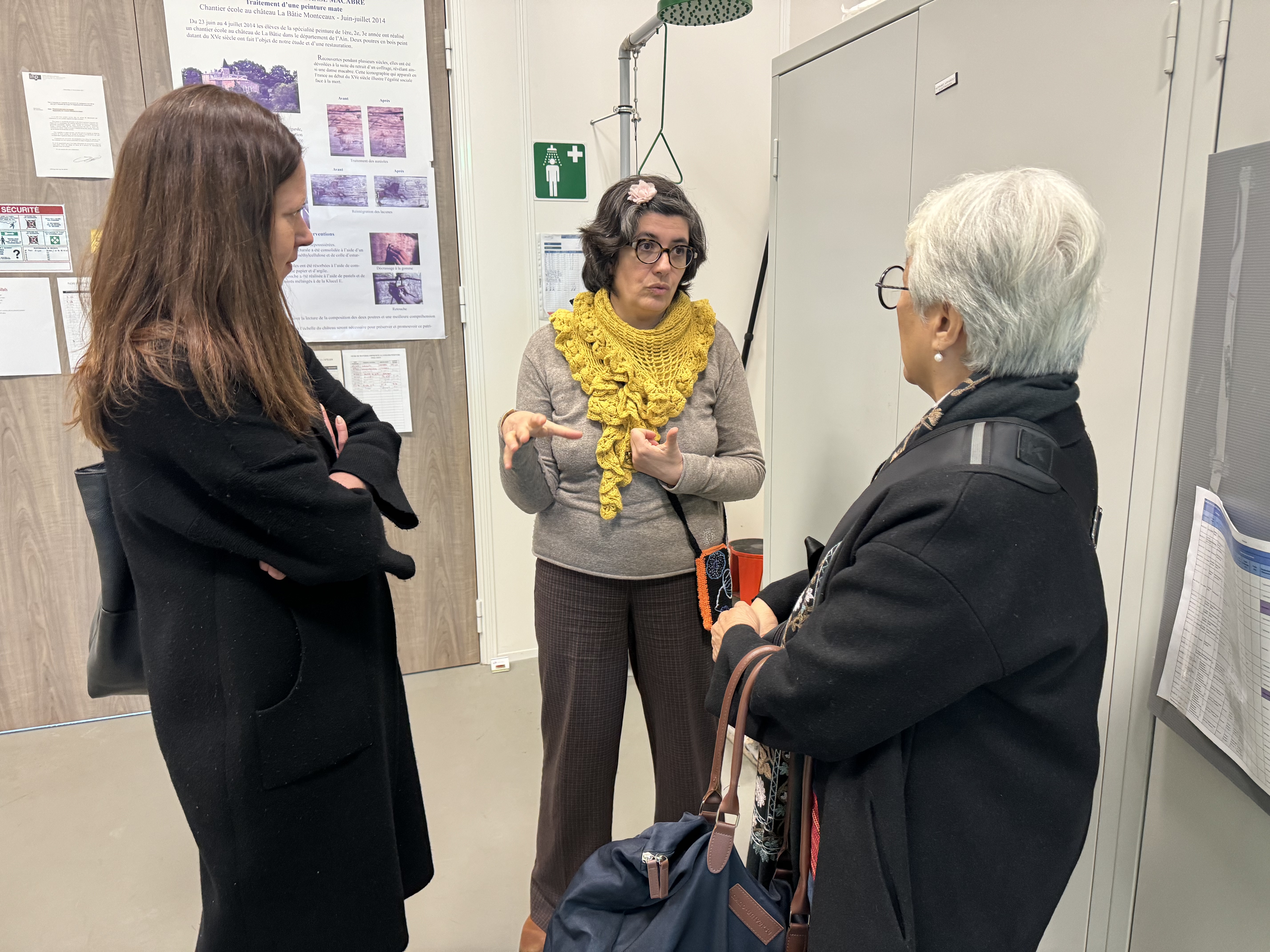
With that kind of elite status comes criticism and controversy, and SciencesPo has had its share over the years. Nevertheless, it remains high on the list of desirable universities, especially for students with plans of joining the French civil service, after further studies at the Ecole Nationale d’Administration. (At Inalco, another Fremch university, we were surprised to find eight Filipino-French students studying Filipino for their degree under Prof. Elisabeth Luquin, who studied in UP and speaks Filipino like a local.)

Beng and I gave presentations on the Philippines at SciencePo’s main campus in Paris—a sprawling complex comprising ten buildings in some of Paris’ most precious real estate—and I had an additional three sessions in Le Havre, where SciencePo’s campus focuses on Asian studies. Wherever we went, we could see signs of intellectual and political ferment; like their predecessors at the Sorbonne whom we admired for their militancy 60 years ago, SciencesPo students have protested and rallied over many causes from domestic violence to Gaza.

To be fair, these concerns have occupied much of the rest of France as well. In a country where street protests are a time-honored tradition that have a real bearing on political outcomes, differences of opinion can run deep and long, and controversy stalks nearly every issue, from the wearing of religious headgear to the extension of the retirement age. To “liberté, egalité, fraternité,” we must now add “identité,” the subject of identity so central to political discourse in many countries today, especially those with large and strong immigrant populations like America and France.

“Over the last few years, France has been torn by culture wars—a shift that was less the effect of American concepts imported into French universities, as many on France’s right claim, than of the long-term decline, beginning in the early 1980s, of class politics and alternatives to capitalism. In a post-ideological France, class struggle has been displaced onto the terrain of identity,” noted sociologist Daniel Zamora in an article for Catalyst in 2021. “Despite Macron’s professed disdain for identity politics, his alternative can scarcely be construed as anti-identitarian. Building on what we have in common, Macron argued, meant finding an answer to the question, ‘What does it mean to be French?’”

Identity, at least, was not in question when Cris Yabes and I gave our reading at the Philippine embassy, thanks to the invitation of Ambassador Junever “Jones” Mahilum-West, one of the most amiable, gracious, and artistically inclined ambassadors I’ve ever met. (She was very game as well, happy to hoist an IPA beer with my wife Beng after our talks.) To a fairly sizeable group from the Filipino community in Paris, Cris and I read pieces that had to do with our foreign relations, particularly in my case with our diaspora, which my second novel Soledad’s Sister (which has been published in French by Mercure de France) dealt with. 

In the conversations that followed, I learned that there are around 26,000 documented Filipinos in France, with perhaps just as many existing belowground, most of them domestic helpers. One of them, Zita Cabais, was a victim of human trafficking more than two decades ago, having been enticed to come to Europe with the promise of a visa and a good job. Instead she was brought to Hungary, from where she was led on foot through Europe to finally reach France, whereupon her employer confiscated her passport, effectively holding her hostage. But unlike many other DH’s, Zita fought back, sued her employer, and succeeded. Since legalized, she now works for organizations devoted to fighting human trafficking. (The path to legalization is reportedly shorter in France, but knowing the French language is a prerequisite.)

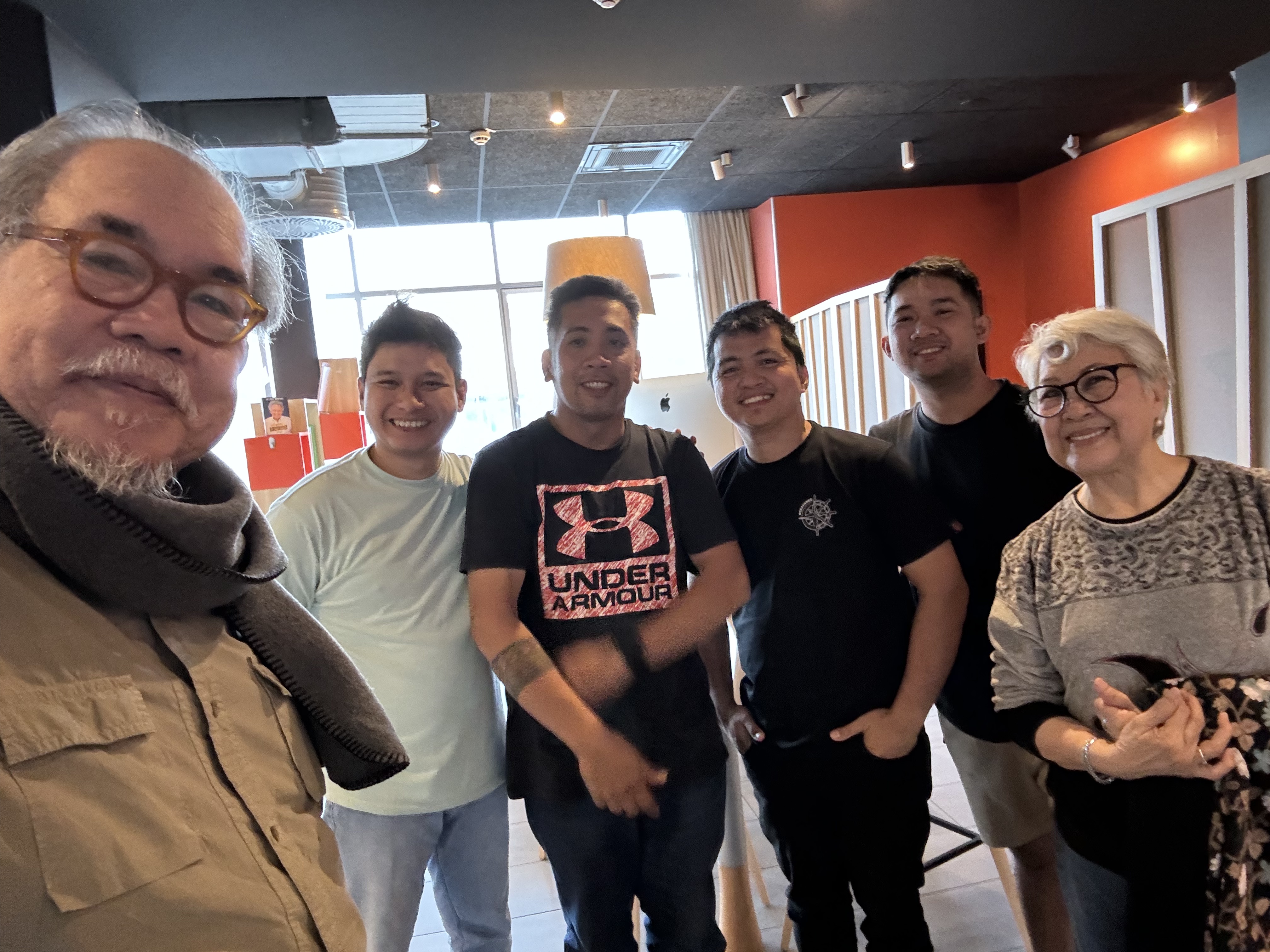
One unexpected highlight of our visit was running into a group of Filipino seamen in our hotel in Le Havre, prior to my lecture. Beng and I had just come down for breakfast when we heard the familiar chatter of Filipinos at a nearby table. We came up to them and introduced ourselves, and we had a lively conversation during which they explained that they were still waiting for their ship to dock because of the bad weather. I’d met and chatted with seamen like them before in Hamburg and in Christchurch, among other places; as a writer and as a Filipino, I take it as a pleasant obligation.

Competition, they said, was driving them to accept shorter four-month stints at sea. “We barely break even, and it’s a tough life at sea, but we have no choice, since our families depend on us.” Part of my lecture that day was going to be about our Filipino notion of the hero as martyr, of Christ-like sacrifice for the common good. I suddenly realized that it was Good Friday. We had our smiling selfies taken, and they seemed proud to stand with UP professors, but it was Beng and I who felt honored to be there with them.

Qwertyman No. 85: Epilogue to a Novel

Qwertyman for Monday, March 18, 2024

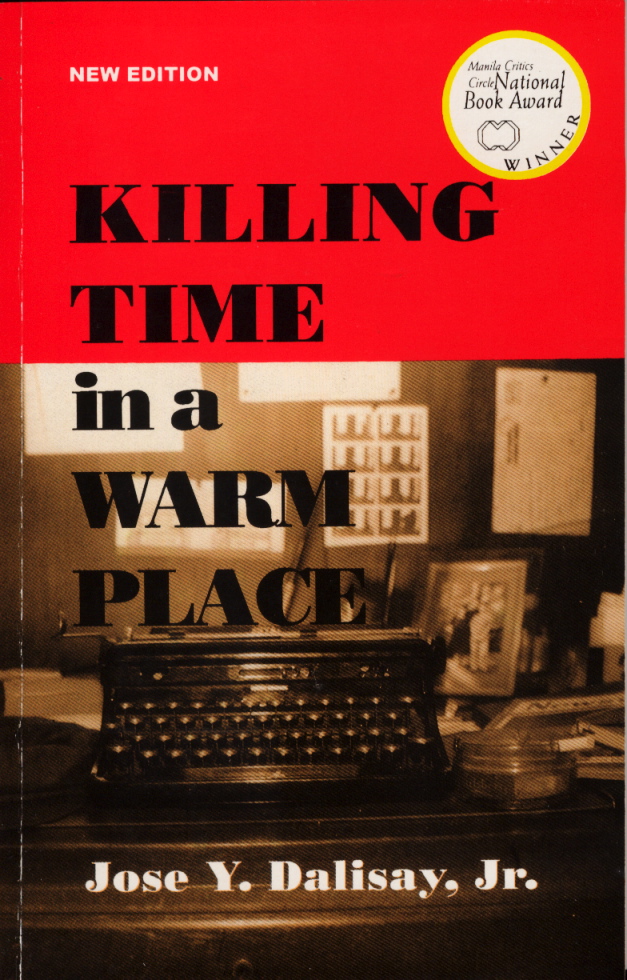
IT WAS in 1986, shortly after EDSA and my arrival in the US for my graduate studies, that I began thinking about what would eventually become my master’s thesis and my first novel, Killing Time in a Warm Place. It was published by Anvil in 1992 when I came home to resume teaching after completing my PhD. 

For those who’ve never heard of it, the novel is a semi-autobiographical account of coming of age during the Marcos years, from the point of view of a Filipino who makes the traditional journey from island to metropolis to the world at large, becoming, in the process, a kind of political chameleon. 

I had sent the first draft directly to several US publishers—my first try at getting a book published abroad—and one of them, Alfred Knopf, responded. They were interested, they said, but they needed some revisions. I knew very little about the book publishing industry then; I had no agent, wasn’t sure what lay ahead, and was in a hurry to see my book out, so I passed on Knopf—which turned out to be a titan in literary publishing—and went with Anvil, which had barely just opened.

I haven’t regretted that decision, although the Knopf deal, had it pushed through, would have been a tremendous break, not just for myself but for Philippine literature as a whole. I could understand that after EDSA, US publishing was hungry for books from and about the Philippines, so that opportunity was there, but I was also impatient to be read as a novelist by my fellow Filipinos, after having written short stories and plays. 

Anvil published the book in many printings and editions over the next two decades, as it got on the syllabi of college teachers who were looking for a novel in English on martial law, alongside Lualhati Bautista’s iconic Dekada 70. This has been my greatest reward and satisfaction from this book—knowing that somehow, it helped some of my countrymen understand what they went through.

It took a while for the novel to gain some traction overseas. In 2010, it was published in the US by Schaffner Press in a dual edition with my second novel, Soledad’s Sister. In 2012, it was translated into Spanish by Maria Alcaraz and published in Barcelona by Libros del Asteroide under the title Pasando el rato en un pais calido.
A few months ago, I received the happy news from my publisher Anvil that Killing Time was being picked up by the German publisher of Soledad’s Sister, which had apparently been doing well in the German market. So now the book is being translated into German, hopefully for a launch by Transit Verlag in time for the Frankfurt Book Fair this October, leading up to our big Frankfurt Guest of Honor year in 2025.

But I didn’t write this column just to tell you about the story of a book—rather, I wanted to say something about the story of its story.

In a message to Anvil a few days ago, my German publisher requested that I write a short epilogue to the novel, given that it’s been more than 30 years since it first came out, and that many things have happened since to the world and the Philippines—the Internet, Trump, and fake news, among others. 

So I sat down and wrote the short piece below, which I’m sharing with you since it’s highly unlikely that you’ll come across, or understand, the German translation of this epilogue if and when the new edition comes out. Here goes:

I began writing this novel in 1986, shortly after the downfall of the Marcos regime. That happened because of a massive uprising in Manila’s streets that made headlines and became a kind of model for peaceful anti-authoritarian movements worldwide. I proudly took part in that revolt, and felt the euphoria of liberation after more than a decade of martial law. It was a moment I would often return to and savor as the Iron Curtain fell and as various and largely non-violent revolutions took place elsewhere, including the Arab Spring.

I thought then that the best thing I could do was to write a novel that would try and explain how and why people fell under the spell of a dictatorship, as they did under Nazi Germany—not sparing myself, having been complicit in its later actions as an employee of the regime. I wrote it—in English—in America, mainly to fulfill my graduate school requirements, but also to celebrate our hard-won victory and share the good news with the world.

Almost four decades later, the seemingly unthinkable has happened: the right is back in power, not only in the Philippines but in many places we had thought to be reformed democracies. The optimism sweeping the planet toward the end of the 20th century has given way to a darkening horizon, a hardening of hearts, a closing of minds. Our most basic freedoms and values are under stiff and unrelenting assault, from forces we now realize had never really been vanquished but had merely been lying in wait, biding their time, seeking an opportunity for revival amidst the excesses of late capitalism.

And once again I am hearing the siren song of despotism, and see the eyes of people glazing over in the desperate desire for quick relief from their troubles, for quick salvation. I hear the march of boots, to which many young citizens—their ears plugged by loud music—seem indifferent. Even among many of their elders is a renascent yearning for the simple discipline of strongman rule.

I see all these and I wonder if I should write a sequel, an update for the new century, but what would be the point of repetition? My novel was supposed to be about the past. Why is it so suddenly pertinent again?

Penman No. 460: The Fil-Canadians Speak

Penman for Sunday, March 10, 2024

WE’VE BECOME quite familiar by now with the writings of our Filipino-American brethren across the Pacific, thanks to the success of such breakthrough works as Jessica Hagedorn’s Dogeaters, Ninotchka Rosca’s State of War, R. Zamora Linmark’s Rolling the R’s, Marivi Soliven’s Mango Bride, and Gina Apostol’s Insurrecto, and to the bridging efforts of such literary stalwarts as Luis Francia, Alfred Yuson, and Cecilia Manguerra Brainard. Of course, they had many antecedents, going back to at least Carlos Bulosan, followed by Jose Garcia Villa, Bienvenido Santos, NVM Gonzalez, and Alberto Florentino, among many other expatriates. 

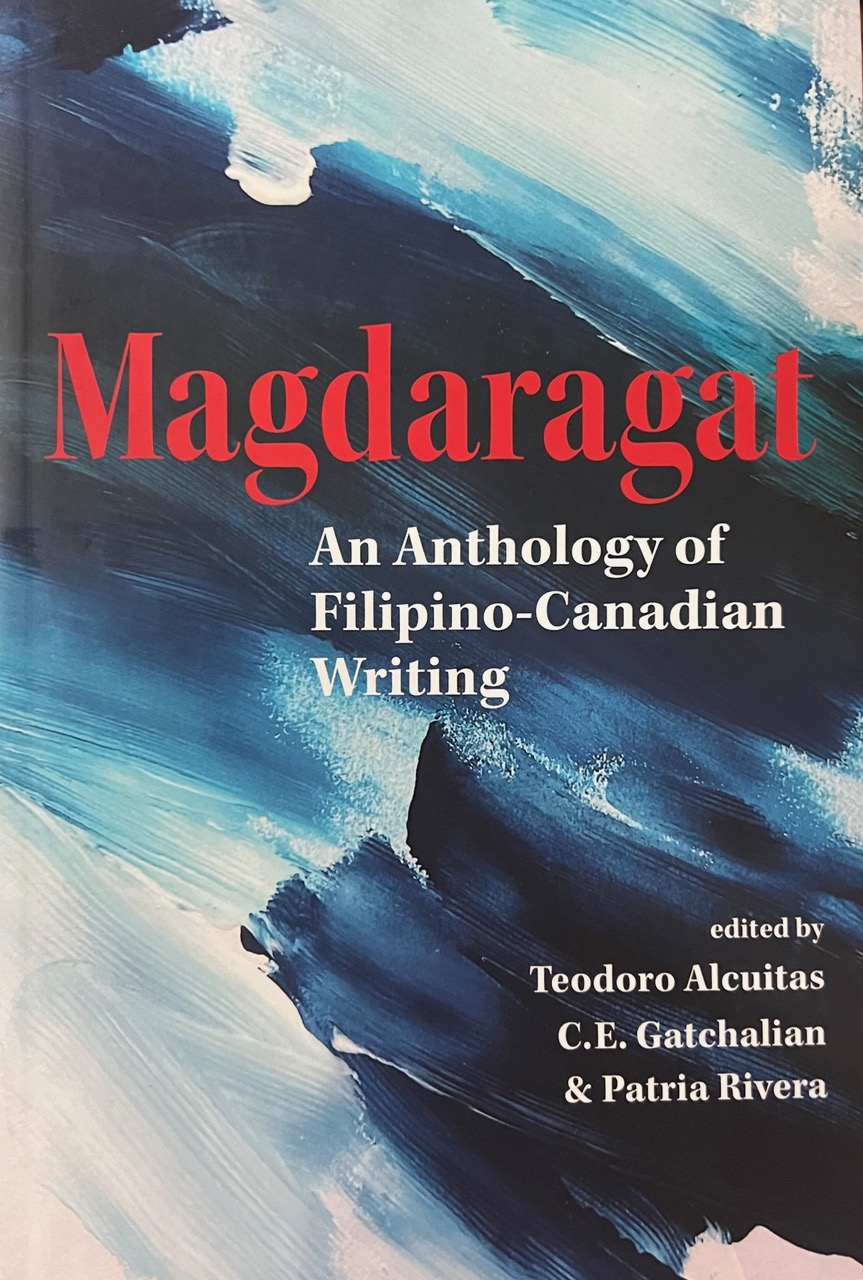
But hardly a whisper has been heard from our Filipino-Canadian cousins, as if their experience—whatever it’s been—were simply an extension or an echo of their southern compatriots, with no distinguishing qualities. There’s a reason for that, which we’ll get into shortly, but first let me announce, with both joy and relief, that the long silence is over. Filipino-Canadian literature is introducing itself to the world—and to us in particular—with the publication of the landmark Magdaragat: An Anthology of Filipino-Canadian Writing (Toronto: Cormorant, 2023), edited by Teodoro Alcuitas, C. E. Gatchalian, and Patria Rivera.
I was first alerted to this hefty 390-page volume by one of the editors, Patty Rivera, an old friend from way back who developed into a fine, prizewinning poet when she, her husband Joe, and their family migrated to Canada decades ago. Arriving in Canada in late July 1987, Patty recalls that moment pregnant with both hope and not a little dread that every FOB immigrant seems fated to step into: 

“The air steamed with purpose when summer meant another life to live. From every corner, a mirror to reflect on. Outside our window, the children’s park, though trees, appeared bruised from the dark slits on the windowpanes. Thorny Vineway. Did our new street name augur of tomorrows yet to come? Would our life in this new country lead to a path laid with thorns? We were young at the time, and everything looked promising. We were alive in this new country and were no longer afraid, the years in the future distant and to be savored. We were ready to be every person we chose or wanted to be.”

Today there are nearly one million Filipinos in Canada, which itself is inching close to 40 million. Some years ago, Filipinos edged out the Chinese as the largest group of immigrants in Canada. Many are highly educated, and many work in health care, leading perhaps to a kind of stereotyping of the Fil-Can as caregiver. To be fair, that’s probably how we home-based Pinoys ourselves imagine our Canuck brethren to be, followed inevitably by “Now why did they go to Canada and not America?”

Magdaragat’s editors try to answer that: “It’s the American Dream, after all, that Filipinos chase; Canada is the consolation prize if America, for whatever reason, doesn’t pan out. While, according to historical records, the first Filipinos arrived in what would eventually become the United States in 1587, Filipinos didn’t arrive on Canadian shores (Bowen Island, BC, to be exact) until close to three centuries later, in 1861. In addition, Canada’s population is a tenth of the United States’. Filipino-Canadian history is, thus, of a smaller scope than Filipino-American history. But within that scope are issues unique to Filipinos in Canada that makes Fil-Can history a distinct subject in its own right, not merely an ancillary of Fil-Am history.”
There are, we discover, subtle but important nuances to the Filipino-Canadian experience:

“Another, more insidious, survival issue Filipinos in Canada have to navigate: the passive-aggressive racism of white Canadians. The brazenness of white American racism is well documented (and spotlighted and hyper scrutinized because of the United States’ status as an imperial power); in contrast, white Canadian racism often slips under the radar because it is more typically characterized by microaggressions. The favorite Canadian refrain vis-à-vis racism—‘We’re not as bad as Americans’—constitutes what might be called “maple-washing”: the relentless washing over of all instances of Canadian racism with the claim that it’s still not as horrible as what has transpired in the United States. Accordingly, the racism Filipinos in Canada experience—and which makes its way into some of the pieces in this anthology—is more insidious than its American counterpart and is characterized by shocking ruptures in a strenuously maintained politesse.”

But what about the literature of that experience? Magdaragat provides ample and eloquent proof of the Filipino-Canadian’s desire to reconnect with the homeland while charting their own course in the new country, as this passage from Deann Louise Nardo’s “Where Do You Come From” illustrates:

“I come from dirt and sand, the scribbled writing of an ancestor in a trance, the sound of droplets on skylights, unopened buds on trees, and the sleep dust in my mama’s eyes. I come from cacao beans and the callouses on fishermen’s hands, the arthritic crackle of my grandmother’s hands as she tends to the garden and mends nets. I come from the silver iridescence of stretch marks, the swirl pattern inside tree barks, the razor-thin whiskers of cats, and eerie creaking of Maplewood floors. I come from lengthwise half-cut bamboo wall sheathing, river mud and buried shards of broken glass, of broken tsinelas and confused roosters singing tik-ti-la-ok at three in the morning.”

There’s a long story by Nathalie de los Santos that alone may be worth the price of the book for its sweeping, multigenerational narrative of the immigrant experience from Bohol to New Brunswick, and from Filipino to Filipinx. The young Kay laments that “Even my relatives can be like this, they remind me how I’m not Filipino enough when I don’t know something about our culture. But then some people here believe I’m not Canadian just by looking at me. When I’m asked, ‘Where you from?’ it implies that. Who am I then?… But, maybe all of this is coming from the same place of hurt?” 

The Fil-Cans have spoken, and theirs are voices worth listening to.

Qwertyman No. 77: Taylor Swift 101

Qwertyman for Monday, January 22, 2024

THERE WAS a lot of snickering around the local Internet a couple of weeks ago when the University of the Philippines announced that it was going to offer a course on the American megastar Taylor Swift. “Why???” seemed to be the most common hair-trigger response, expressing consternation over the need or rationale for such a course. “This is where your taxes go,” lamented another netizen.

The clear suggestion was that spending a semester—that’s 16 weeks—on a pop phenomenon like Taylor Swift was a grandiose and frivolous waste of teaching time and people’s money, scarce resources better allocated to studying worthier topics like, say, Gomburza, the South China Sea, endemic species, and sovereign wealth funds. (Not incidentally, all these other topics are already covered in other UP courses, so no one need worry that they’re being sacrificed for in-depth analyses of “Cruel Summer” or “You Need to Calm Down.”)

Before we go any further, I have to declare that I’m no Swiftie, as her adoring fans call themselves, and I had to look up and listen to those two titles I just mentioned. At my age, my idea of a diva I’d pay good money to listen to is Barbra Streisand, Laura Fygi, Lisa Ono, and Dionne Warwick, none of them below 60. I have to admit that the only Swift song I was aware of before she exploded into global stardom was “You Belong with Me,” which my then-teener niece Eia used to bounce her head to (an effect that, I’ve since discovered, many Swift pieces tend to induce). 

Still, my instinctive reaction to the announcement of the UP Swift course wasn’t “Why?” but what I suppose is the academic’s default of “Why not?” When I looked into how the course was going to be taught by its instructor—Cherish Aileen Brillon, a mass communications specialist who had previously published a paper on, among others, “Darna and Intellectual Property Rights”—I could see that this wasn’t going to be just party time for 15 kids listening through Taylor Swift’s ten albums (yes, I counted) over a semester, but serious study connecting material from the singer’s songs and of course from her life as a 21st century celebrity to our reception of her and whatever she represents, as Filipinos. 

The course—an elective under the BA Broadcast and Media Studies program of the Colle of Mass Communication—will focus on “the conception, construction, and the performance of Taylor Swift as a celebrity and how she can be used to explain our and, of course, media’s relationship with class, politics, gender, race, and fantasies of success and mobility…. Gender should be part of the discussion because Taylor is a woman operating in a highly patriarchal and misogynist entertainment industry,” Brillon told the STAR in an earlier interview. “Transnationality is also a large part of the discussion,” she added, defining the term as a “media-driven flow of goods, products and services from various nations” in this globalized age. “Celebrities have always been transnational anyway. The class will look into the transnationality of Taylor and how Filipinos are appropriating their relationships with celebrities.” 

If you know anything about what’s being taken up in universities worldwide today as media and cultural studies, that mouthful I quoted above is heavy-duty academic work of the kind I myself may not be too keen to undertake, but the results of which I’d be deeply interested to find out. And that because there’s nothing more pervasive and influential in our world today than the media, which includes the Internet, TV, radio, and newspapers, plus all the advertising, the tweets, the Facebook feeds, the Spotify music, and the Amazons, Lazadas, Shopees, and eBays you find in them. How the media draws our attention and often subliminally persuades us into buying certain products and ideas can’t be worthier of academic research and investigation. 

And it’s not as if this hasn’t been done before. New York University, Stanford, Arizona State University, the Berklee College of Music, Rice University, UC Berkeley, the University of Florida, the University of Delaware, and Brigham Young University are among the American universities offering Taylor Swift courses from different approaches ranging from the music itself to social psychology, marketing, and literature.

So, okay, they’re Americans—why us Filipinos? Because the singer has a huge Pinoy fan base, despite the slight that local Swifties felt when she left the Philippines out of her 2024 Southeast Asian “Eras” tour, for which well-heeled Pinoys then rushed online to book expensive ticket packages for her shows in Singapore. (She’s been here twice before, in 2011 and 2014.)

But never mind Taylor Swift. Back in 1995, scholars attending the first International Conference on Elvis Presley at the University of Mississippi’s Center for the Study of Southern Culture got academia “all shook up,” according to reports, with papers bearing titles like “A Revolutionary Sexual Personae: Elvis Presley and the Acquiescence of Black Rhythms,” which discussed sensuality and spirituality in Elvis’s acts.

And then, of course, there are all the college courses on Frank Sinatra at Suffolk University, and on the Beatles at MIT and Oxford, among many other places. At Carnegie Mellon University, flautist and Prof. Stephen Schultz alternates teaching 18th-century Baroque music with a class on the Beatles; guess which class attracts 200 students a semester.

I’m sure that, despite these precedents and rationales, there will remain many skeptics who’ll still believe that all this academic mumbo-jumbo is just an excuse for both professor and student to kill an hour and a half doing nothing but nodding their heads to pop tunes and chatting about which song’s lyrics were cooler. (Don’t be too surprised, but that’s also basically what happens when we discuss poetry and fiction, sans the rhythmic nodding.)

But then you could be talking about Taylor Swift and her songs—or you could be talking about how Adolf Hitler and his deadly message were packaged and sold to the German people, not to mention Donald Trump and other despots closer to our time and place. This is what media and cultural studies are ultimately about—the power of media and other cultural forces to shape our minds, our purchases, our votes, and therefore our history. 

Perhaps our students can even learn more from a semester of Taylor Swift, BTS, and Justin Bieber than the Shakespeare they’ll merely turn to AI to write papers on. Like I told one naysayer, “We keep studying history, religion, law, etc., and yet we seem to learn nothing—just look at how a former human rights lawyer suddenly justifies EJKs.” So there may yet be more to Taylor Swift 101 than meets the eye. As another Swift—Jonathan—put it, “Vision is the art of seeing what is invisible to others.”

(Image from Sky News)

Penman No. 458: An Artist in Leather

Penman for Sunday, January 7, 2024

FEW WILL remember this, but one of the very first things I wrote about when I began this column for the STAR back in mid-2000 was my passion for leather. By that I mean good, well-crafted leather briefcases, bags, watch straps, and such accessories beloved of both men and women seeking a timeless alternative to today’s synthetics. There’s still nothing like leather to suggest authenticity, tradition, pedigree, and care—care because it requires skillful crafting as well as devoted maintenance by its user.

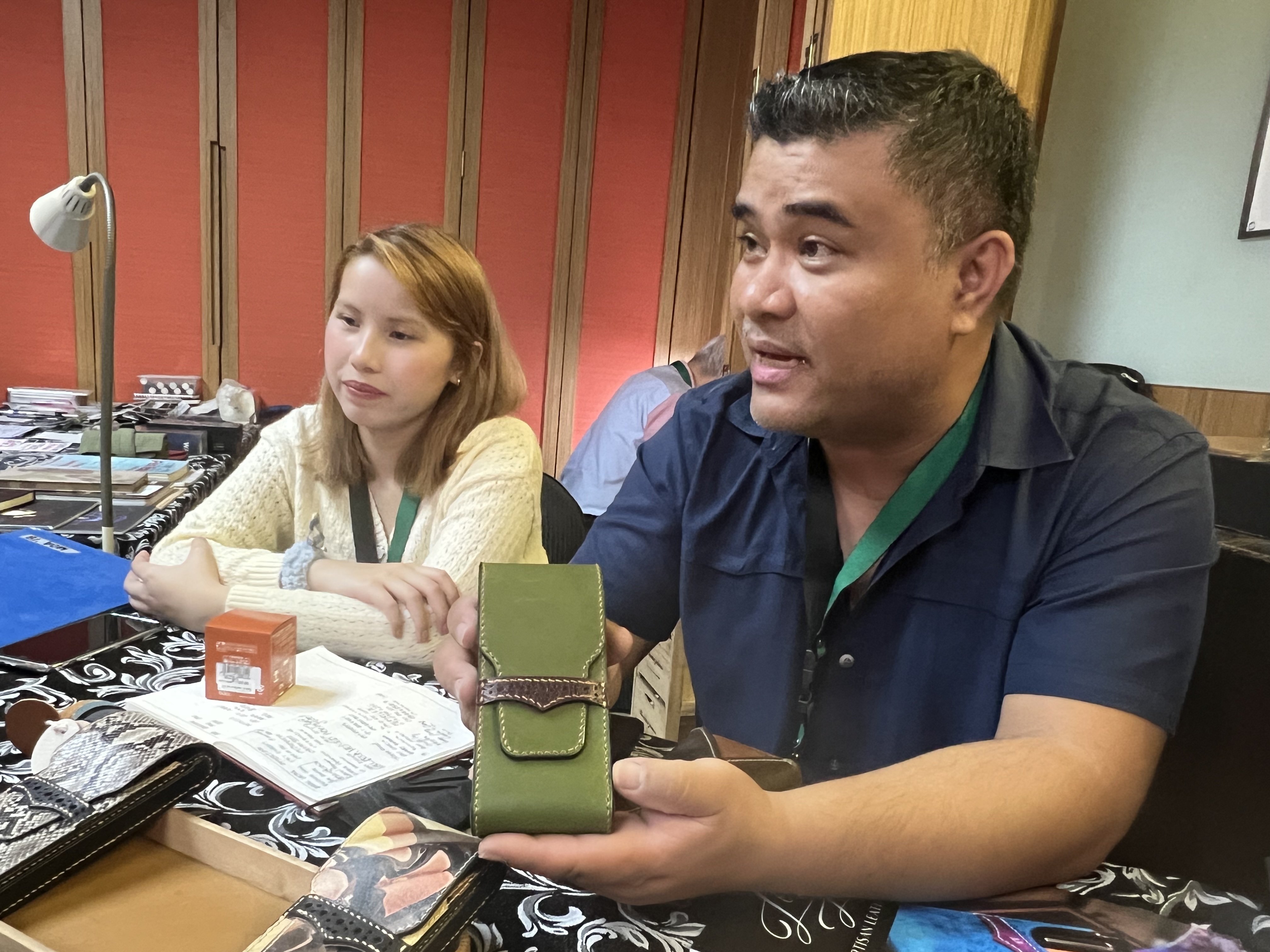
All these came to mind when I first met Raymund Nino Bumatay, who goes by the trade name “Amon Ginoo,” at the Manila Pen Show last March, where he introduced his Leather Luxe line of luxury pen cases. At my age, and having seen quite a bit of what’s out there, I’m a difficult man to please, but Amon’s work ticked all the boxes (except perhaps one—affordability, which we’ll get to later), particularly the quality and craftsmanship that connoisseurs demand. He catered to a highly specialized clientele, so I wanted to know how he could merge art and business and succeed on both counts. 

Amon was engaged in graphic design and marketing when the pandemic hit, hitting his profession badly. Over the long lockdowns, he began thinking of ways to both express himself creatively and make some money. That was when the idea of making leather cases for fountain pens came to him, spurred on by instructional YouTube videos. Why pens?

“I have been a fountain pen enthusiast since 2015,” Amon told me. “I started out with a simple and reliable Lamy Safari that’s still with me, and while journaling and writing were a common pastime during the lockdowns of 2020, I yearned to make something by hand that would house my humble fountain pen collection. This was why the very first and noteworthy leathercraft that I successfully completed was a fountain pen case.”

Amon, it must be said, is but one of a new generation of fountain pen collectors and users, among whom Filipinos now rank among the world’s largest and most enthusiastic communities. The Fountain Pen Network-Philippines (FPN-P), which I helped found in 2008, began with 20 members but now counts more than 13,000 in its Facebook group, most of them successful young professionals between 30 and 45, along with more senior CEOs, Cabinet undersecretaries, topnotch lawyers and doctors, and aging professors like me. 

This was Amon’s ready-made market. Most people will do with just one pen that they’ll typically clip into their breast pocket or toss into a bag, but for fanatical collectors who amass hundreds of pens and carry a dozen of them around to pen meets, good cases are de rigueur. For everyday use, a three-pen leather case is normal. 

Amon wouldn’t be alone in supplying this market. Aside from imports, some other local artisans have been making quality pen cases. But Amon’s are on a whole other level, employing the choicest leather and featuring exquisite and even bespoke designs, which account for their premium pricing. His cases are, to put it plainly, truly world-class.

First, of course, he had to learn his craft. “After making a couple of leather fountain pen cases with one of my daughters, my wife asked what I was planning to do with all those prototypes. I explained that those were just practice pieces that I wanted to perfect and play around with. She insisted that I sell them so I could make this venture sustainable. My wife urged me to start branding these handmade pieces, saying they would serve as great homes for the pen collections of other enthusiasts. It took me a year and a half to muster the courage to finally put a brand to the craft I started and to begin offering my goods to FPN-P members. Thus was LeatherLuxePh born.” 

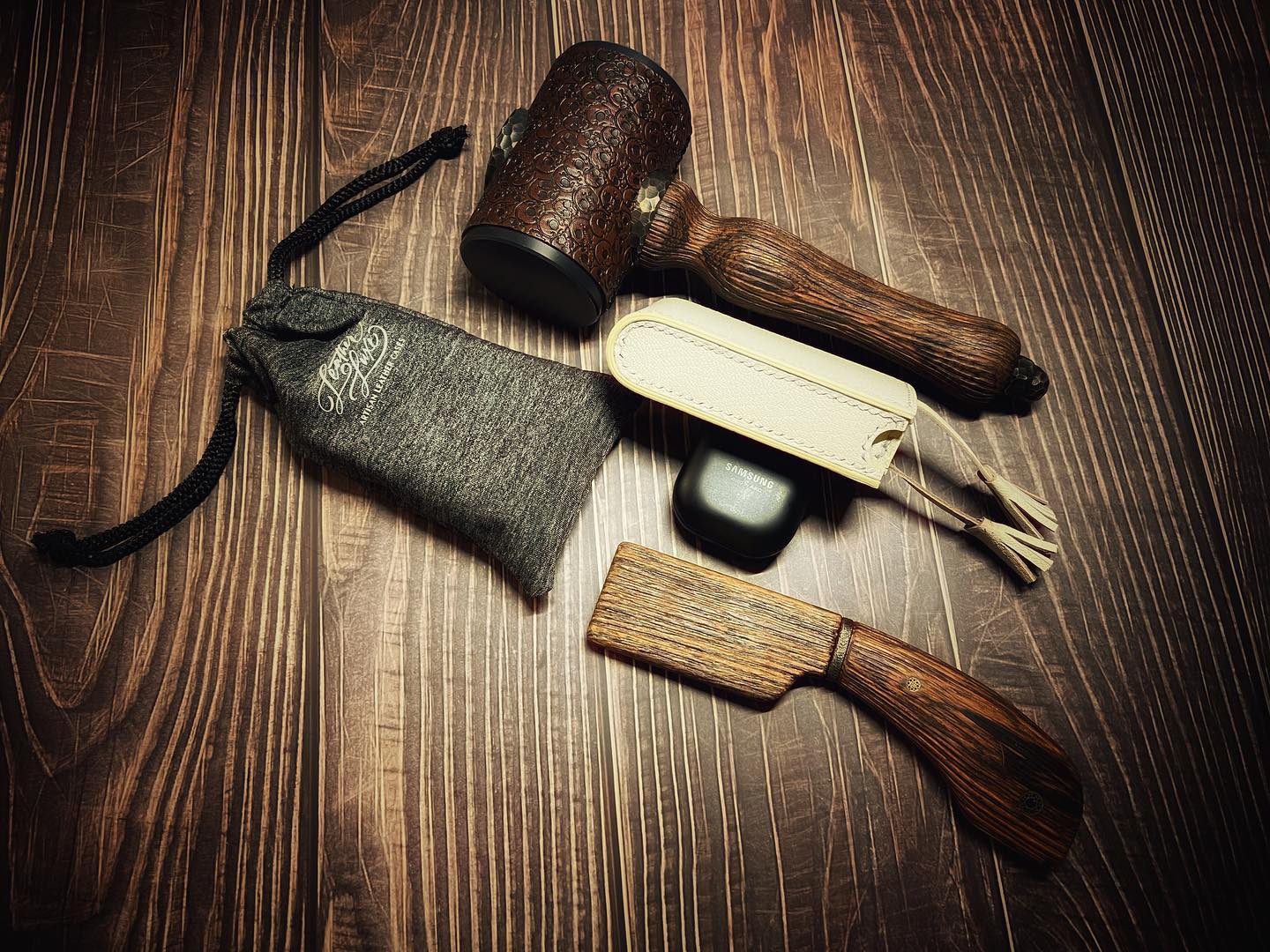
He was soon spending long hours trying out new methods and designs, aside from amassing leathercrafting tools from around the region and from Europe. And then there was the key aspect of the leather itself. “When I was just starting, I got my leather from Marikina, but when things began to get serious, I had to resort to Italian and French leather, sourced from distributors in Singapore, South Korea, and Hong Kong. I’ve also sourced leather from Brazil and Indonesia.” Aside from top-grade hides, he also uses exotic leathers such as snakeskin, ostrich, and stingray. “Each pen case is meticulously handcrafted, handstitched, and assembled by hand. The hand stitching alone needs a calm and steady hand, but I find it relaxing. We have spared no expense in choosing the best leathers, tools and supplies available and continually reach out to our clients to be able to share in their experience and further improve on what we have started.”

Amon found a receptive audience among FPN-P’s advanced collectors, whose five- or even six-figure Montblancs and Nakayas couldn’t just be carried around in pedestrian plastic or cardboard boxes. Among Amon’s repeat clients is CEO Jun Castro, who says that “I need a pen case for my big pens. Normal size pen cases would not fit them or be too tight to easily take them out.” Amon, who is based in Baguio, would even come down to work with clients to make sure he meets their very specific needs.

Of course, I had to ask Amon if he planned to expand LeatherLuxePh’s line beyond fountain pen cases, given the narrow niche it occupies. Yes, he says—but not too far from his base that he would compromise quality. “I’ve noticed that most Pinoy leathercrafters flock to bags, wallets, belts, and the like. New entrants usually resort to pricing that tends to undermine the artisan side of the craft. We decided to focus on pen cases precisely because very few of us do it. But we’ll venture into related items such as leather covers for journals and even a traveler’s kit for fountain pen enthusiasts. We’ll also tap the international fountain pen market this 2024 as a proud Pinoy brand.”

The upcoming 2024 Manila Pen Show on March 16-17 should be the perfect venue for LeatherLuxePh’s new products and designs. Can’t wait to see what this artist in leather comes up with next! (Meanwhile, check out LeatherLuxePh on FB and IG.)

Qwertyman No. 72: Bullets to Ballads

Qwertyman for Monday, December 18, 2023

MAYBE IT’S that time of year, when we get all wishful and start asking for things that will likely never come or never happen—like peace on earth and goodwill to men—but it’s the wishing that keeps us human.

Two weekends ago, I had the extraordinary privilege of spending Saturday night and then Sunday morning listening to two different concerts. The first, at Manila Pianos in Magallanes, featured tenor Arthur Espiritu and soprano Stefanie Quintin Avila in a program that brought the audience to its feet and singing along at the end of many encores.

After that wonderful performance, I messaged my deepest thanks to concert producers Pablo Tariman and Joseph Uy, noting that they made “magical interludes like this possible in these stress-filled times. If only all those bombs and bullets in Ukraine and Gaza were music. Fire symphonies, concertos, fugues, and cantatas across the border!”

The next morning, we drove out to Batangas City for another friend’s birthday celebration, which was heralded by a sparkling mini-concert with soprano Rachelle Gerodias and tenor Jonathan Abdon. At lunch that followed, I sat down at a table with a renowned journalist, a composer-performer, and a senator, and we were all breathless with joy at the music we had just experienced. It was the composer who put it best: “How can anyone argue with that?”

Indeed, in a world and at a time prone to argument and conflict, where even the most innocuous remark can ignite scorching disputation, the enjoyment of music seems to serve as a universal balm, a hushing power that creates a pause just long enough for us to remember our better selves—taming fangs, retracting claws, infusing tenderness into the coarsest of sensibilities. As William Congreve put it more than three hundred years ago, “Music hath charms to soothe the savage breast” (not “beast” as it’s often misquoted, although it could apply just as well).

As I’ve noted elsewhere, whenever I think of music as a discipline, what comes to mind is Leonard Bernstein’s description of it as “the only art incapable of malice.” That may or may not be true—music in specific historical contexts such as Nazi Germany and our own martial law has certainly been made to serve the purposes of despotism. 

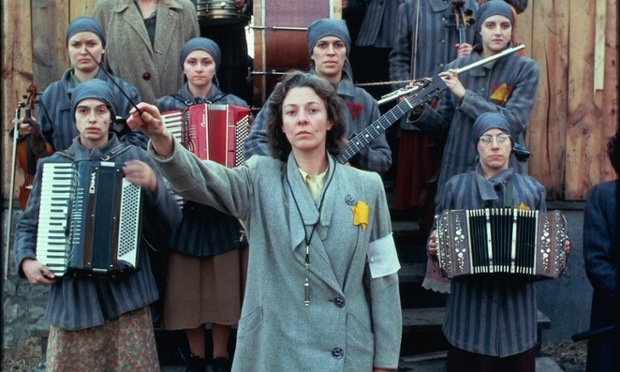
I recall that in 1980, in particularly disturbing example of music perverted for fascist pleasure, a film titled “Playing for Time” (written by Arthur Miller as an adaptation of the French Jewish singer-pianist Fiana Fenelon’s autobiography The Musicians of Auschwitz) showed how concentration-camp musicians were forced to play to entertain their jailers as well as to stay alive. It still chills me to the bone, as a prisoner under martial law, to hear the New Society anthem “May Bagong Silang” being played anew over the radio as though the past half century never happened.

Still, most people will surely agree that music has wielded a beneficent influence on human life and society, in ways that appeal directly to the heart and mind. 

In my own lectures, whenever I need to reach for metaphorical illustrations of the power of art to compel the human spirit, I turn to music. I advert to composer Dmitri Shostakovich, whose Symphony No. 6 in C Major, which came to be known as the “Leningrad Symphony,” was premiered during the siege of Leningrad by the Germans in July 1942, and became a kind of anthem of Soviet resistance, and to the story of the Berlin Philharmonic persisting in recording Brünnhilde’s Immolation Scene and the finale from Wagner’s Götterdämmerung despite the Allied forces knocking on Berlin’s gates in April 1945 (supposedly you can hear artillery in the background of that recording). 

It may be too romantic to hope that music will waft over the bunkers in Ukraine and Gaza this Christmas season and still the gunfire, however briefly. We’ve all seen that movie and know how it ends, with a renewed barrage of rockets—ordered by stiff-backed men far away from the trenches—drowning out the carols.

But there are other battles being waged much closer to us this season where a little night music might help quell the temptation to savage one another—even across the dinner table. 

I can imagine how many Christmas parties will settle down to drinks and coffee and devolve into a discussion of the Israel-Hamas conflict, and explode quickly into partisan debate over proportionality, Biblical prophecy, Hiroshima, the Holocaust, Vietnam, Zionism, British colonialism, Arab nationalism, Munich, Entebbe, Eichmann, George Soros, anti-Semitism, Netanyahu, 9/11, and the Yom Kippur War (have I missed anything?). Half the world away from the frontlines, I haven’t seen an issue divide Filipinos—at least those who keep abreast of the news—so sharply as this one, which has become a kind of litmus test of one’s faith or humanity.

Much of that acrimony has, of course, been enabled by the Internet and the ease it provides for instant (often unthought) response—a habit we’ve ported over, perhaps unconsciously, into our daily lives.

Against this backdrop, music is a call to order, a shaping of emotions across a roomful of rampant urges, longings, and resentments. We can choose but not control it; the best response to music is one of sublime submission, from which experience we emerge refreshed and ready to be human again. 

A meaningful and peaceful Christmas to us all!

(Image from economist.com)

Penman No. 457: The Actor as Painter

Penman for Sunday, December 3, 2023

A FEW months ago, I had the good fortune of coming into ownership of four watercolors by Juan Arellano (1888-1960), the famous architect of such landmarks as the Metropolitan Theater, the Post Office Building, and the Legislative Building (now the National Museum). Less known to many was that Arellano’s first love was painting, and it was a passion he pursued throughout his life. 

My inquiries into the background of my paintings led me to cross paths—initially online—with Juan’s grandson Raul Arellano, who turned out to be an accomplished painter in his own right. Born in Cagayan de Oro, Raul has been based for almost 30 years now in the United States, but he has recently been returning to the Philippines more often. When, one day, he messaged me to ask if we could meet up, I said yes, eager to learn what he could recall of his grandfather but also to get to know him and his art. 

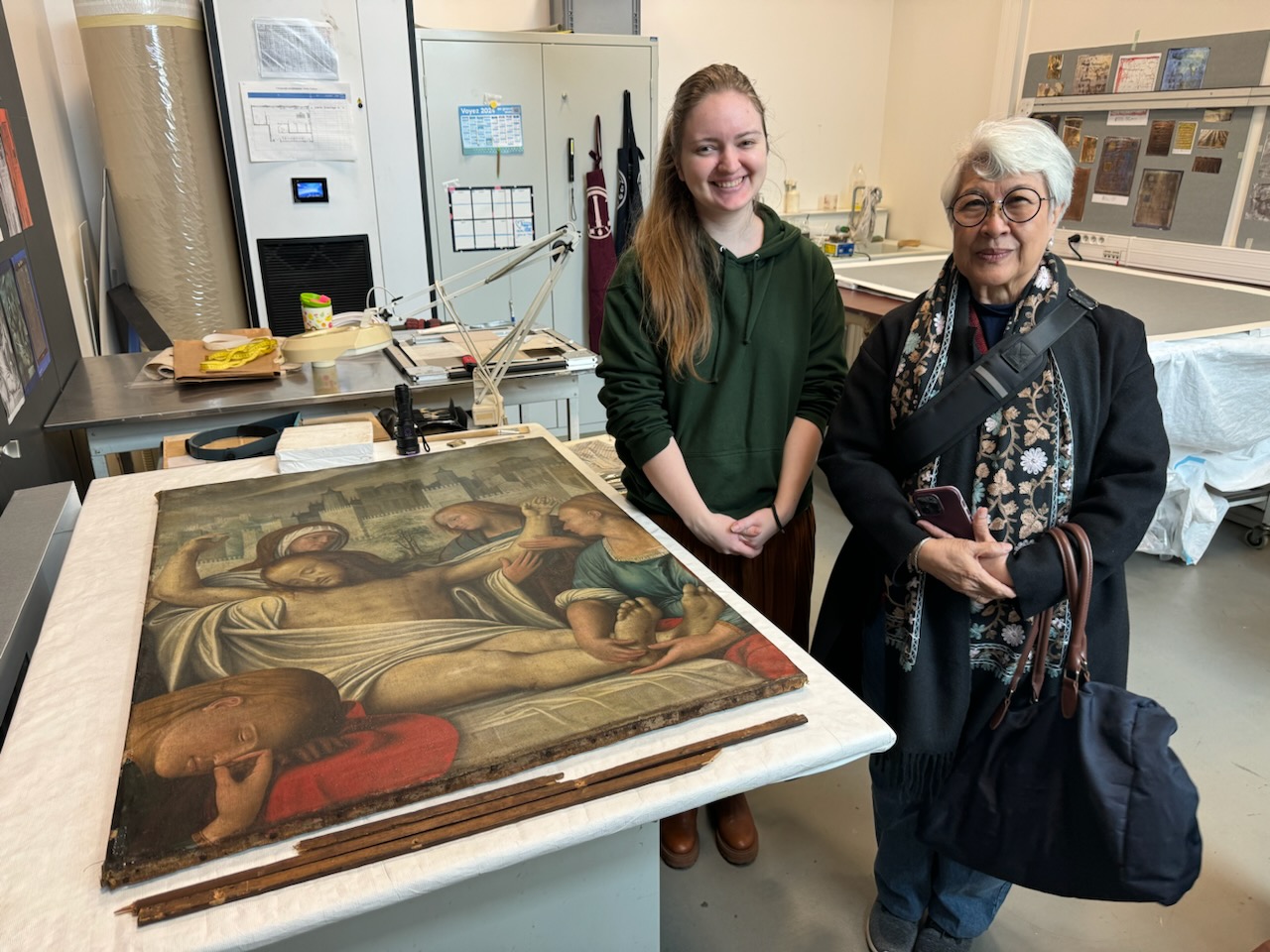
I’m by no means an art critic, but my wife Beng (a professional art conservator and watercolorist) and I are museum rats and enjoy both traditional and modernist art, and peek into the local art scene when we can. There’s a lot of brilliance and energy out there to be sure, but also much safe and tiresome repetitiveness from artists who’ve settled on a commercial formula, such that their work no longer exudes emotional power. Many young painters—like their writing counterparts whom I meet at workshops and teach in school—also seem to think that the only worthy subject is death and despair, which invariably means dark canvases devoid of any suggestion of wonder and mystery, let alone delight.

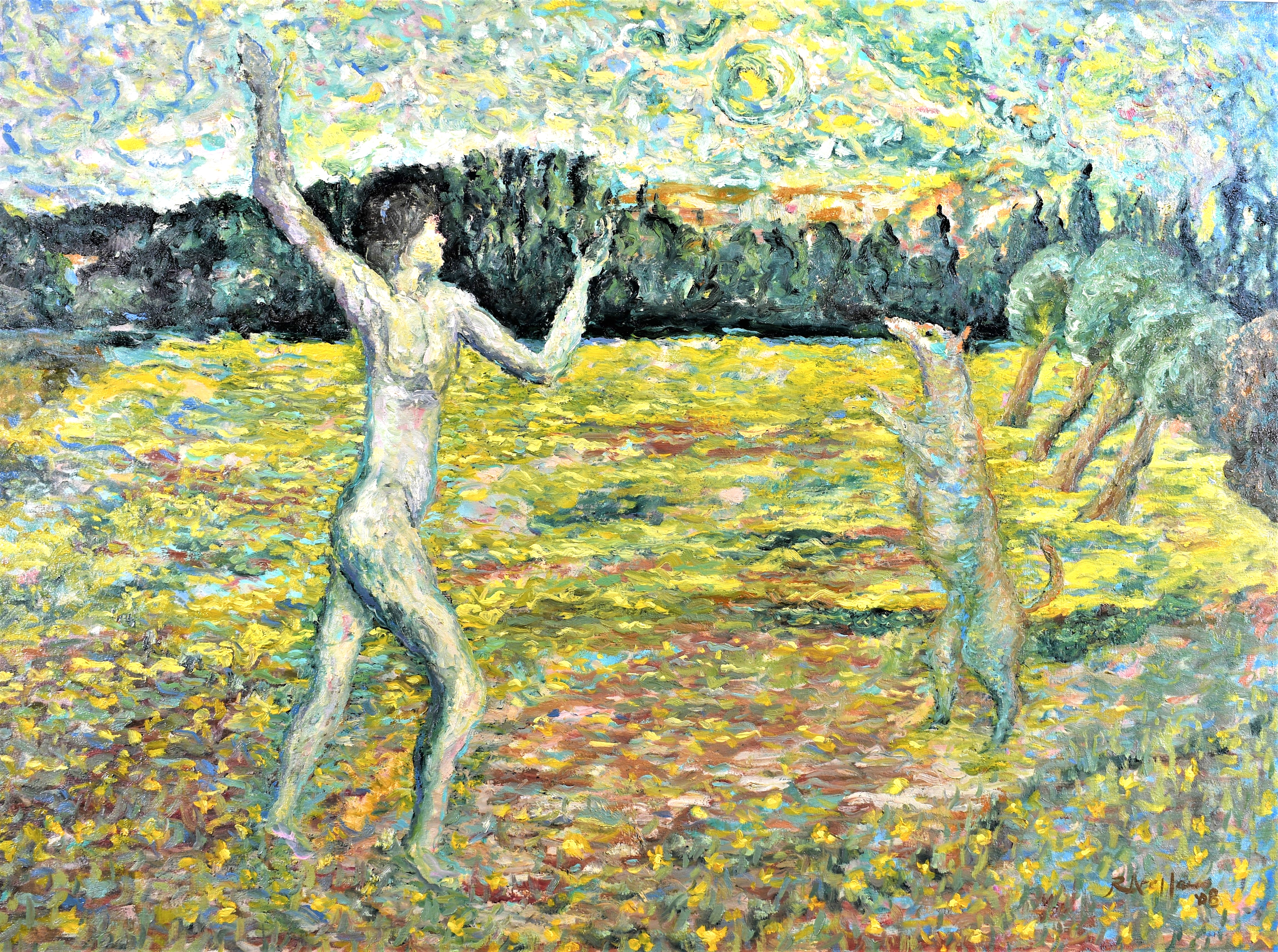
When I saw Raul’s work online, even before we met, what leapt out at me was exactly what I found missing in many others—an element of metaphysical magic, fantastical but relatable, the kind of paintings you want to return to over and over again. I saw flashes of Henri Rousseau, Van Gogh, and William Blake, among others, but it was still all him—not his grandfather, for sure—trying to tell me something I hadn’t really thought much about before.

As it turned out, Raul never met his grandfather, who died five years before Raul was born in 1965 (Raul’s father was Juan’s third son Cesar). All he has of him is a self-portrait—and, of course, a passion for art that runs in the family; his cousin Carlos or “Chuckie,” the son of architect Otilio, was a formidable art patron and collector; Chuckie’s younger sister Agnes remains one of the country’s leading and most imaginative sculptors; Cesar’s brother Salvador or “Dodong” Arellano became a well-known painter of horses and game fowl in California.

Raul’s path to painting was neither straight nor easy. His first great obsession was acting, to the point of becoming a resident actor of Tanghalang Pilipino at the Cultural Center of the Philippines, playing a smoldering Tony Javier in a production of Nick Joaquin’s “Portrait of the Artist as Filipino.” “We were trained in method acting,” says Raul, “and it got to the point that I became so immersed in my character that other people on the set found it unnerving.” He would go on to act in the movies, in the crime drama Akin ang Puri(1996) directed by Toto Natividad, Batang West Side (2001) directed by Lav Diaz, and Himpapawid (2009) directed by Raymond Red. Of his performance in Himpapawid, reviewer Jude Bautista noted that “Raul Arellano as the main character is able to show the frustrations of the common man without going over the top. There is a quiet intensity in his performance.”

That intensity had been brewing in Raul the person for some time, leading to and compounded by domestic problems. In 1995, he took the opportunity to go on a film fellowship at the Art Institute of Chicago. The Midwest was too cold so he later moved to California, and quickly realized what all dreamseekers in LA wake up to: that he had to start all over again at the bottom rung of the ladder. “I swept floors. I learned how to operate a forklift. When the big steel container that you’re lifting comes crashing to the ground, you can feel the jolt running down your spine. I was in a lot of pain, but I kept on. When I left, my boss was very sorry to lose me.”

He set up a business restoring American muscle cars. “I had a Russian mechanic, but I took care of the interiors myself. I specialized in Mustangs—you could show me a Ford screw and I could tell you the year and model it came from. I had a fastback Mustang but my best sale was a Shelby Cobra.” But again another personal crisis blew up and he enrolled in a community college to study painting. He left school once he felt he had learned enough about the history, the theory, and the techniques of art to express himself. “Something in me was always wanting to come out, and I found that release in painting. I had no models or artists I looked up to. I just wanted to express myself, to work from my subconscious. I found that I could work best in a cemetery, because it was so peaceful. I still like working in the open, in plein air.”

The lure of painting proved irresistible. He worked in oils, and one of his favorite paints was lead white, popularly used in the past for its visual qualities and permanence. However, it was banned in the 1970s because of the danger of lead poisoning—a danger Raul was well aware of but embraced. “I found a stash of old paint and bought it all up. I was inhaling it every day and I could feel it doing strange things to my head.”

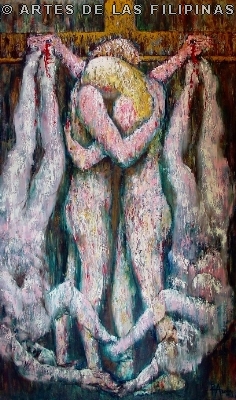
He returned to Manila every now and then and even resumed acting, but the death of a close friend shook him up badly. “I was all set to come out with an exhibit of traditional, representational paintings, but I was overcome with grief over the loss of my friend, and I just had to express that feeling in my work. So I put all my old work aside and began ‘Crucifixion.’” That work is one of his most impressive and a personal favorite, painted in 2004 at the outbreak of the war in Iraq.

(Image from artesdelasfilipinas.com)

Today Raul spends time in a small farm in Batangas, enjoying quick sketches in the sylvan scenery, and contemplating the possibility of exhibiting in his homeland. With him having gone from peace to pain, from calm to conflict and back again, one can only wonder what new work will emerge from this phase of his life. I find myself wishing for his playfulness to return, but that of course depends on what Raul Arellano is feeling inside.

(More here on Raul Arellano: https://artesdelasfilipinas.com/archives/85/the-art-and-thought-of-raul-arellano-original-)

Penman No. 456: A Pocket of Peace and Quiet

Penman for Sunday, November 5, 2023

ROXAS CITY, the capital of Capiz, is proud to declare itself the “Seafood Capital of the Philippines” as well, but I didn’t even know that when I booked a flight for me and my wife Beng last month to spend a few days in Roxas. I still had a few “super passes” I’d bought a bunch of from an airline promo last year and they were expiring soon, so as Beng and I are wont to do, we decided to pick a place on that airline’s list of destinations, one where we’d never been before. It would help that Beng was Ilongga, and having been married to her for almost 50 years, I could understand Hiligaynon, so getting around would be no problem. The “seafood capital” tag popped up when I googled “Roxas City” for ideas about where to go and what to do—that was the clincher for me, the scourge of crabs, shrimp, scallops, and all aquatic arthropods. 

An hour-long plane ride from Manila deposited us in Roxas City’s airport, which has the advantage of being a short tricycle ride away from downtown. 

For our “hotel,” I picked out, online, a place called the Olive Hostel, which proved to be an adventure on its own. At just over 1K a night with free breakfast and within walking distance of Western civilization, it seemed just right for Beng and me, who don’t insist on five-star luxury. If you’ve ever wondered what it’s like to live in a container, well, we found out. It literally was built out of steel containers piled on top of each other, with doors and windows cut out. But don’t get me wrong: it was all very capably and tastefully done, and as tiny as our quarters were, it was actually quite cozy; the bathrooms were immaculately clean and the wi-fi was strong. There was no TV, but we made up for that by watching Netflix on my laptop, perched on my tummy. (Beng and I are used to tiny hotels in HK, Japan, and Korea; I’m usually claustrophobic, but I don’t feel that with Beng beside me.) 

The Olive Hostel’s grounds were, by contrast, spacious and very well maintained, lovely especially in the evening. For those seeking more traditional lodgings, the President’s Inn downtown comes highly recommended. Among the city’s newest and most modern hotels, three—the Veronica, the Urban Manor, and the Islands—can be found in Pueblo de Panay township.

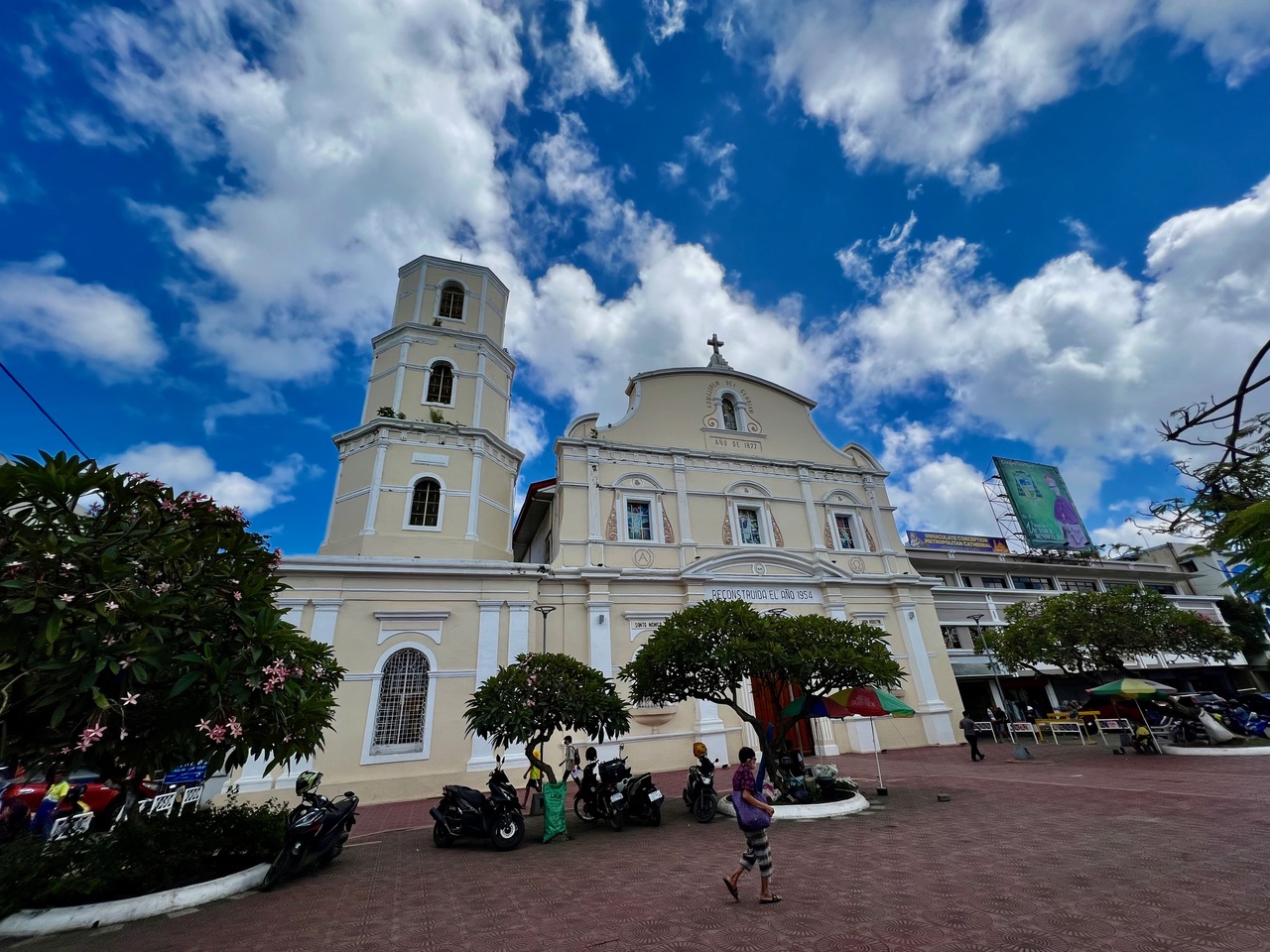
Roxas City has one of the prettiest and cleanest plazas I’ve seen around the country, small but the very picture of what a plaza has always been in our provincial imaginations, with City Hall, the church, and a park with a bandstand beside a river.

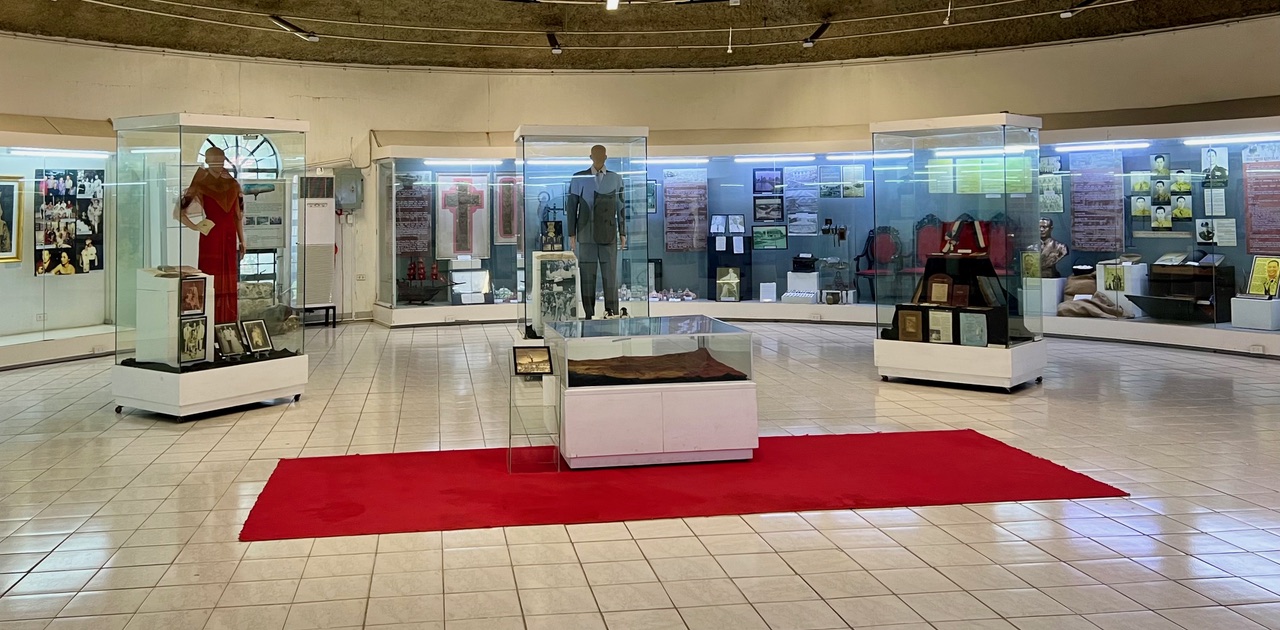
To one corner stands the Panublion Museum, a cleverly repurposed water tank that showcases highlights of Capiznon history and culture. Managed by its very capable director, Cheryl Anne del Rosario, Panublion features the personal memorabilia of the city’s favorite son, President Manuel A. Roxas, including the flag flown at the July 4, 1946 inaugural of Philippine postwar independence. (President Roxas’ ancestral home is not too far away and is open for public viewing, but was closed on the day we toured the city.)

The museum also showcases the tools and finery of the province’s and island’s indigenous peoples. Most captivating were the exhibits  featuring Capiz’s two female National Artists—Jovita Fuentes for Music and Daisy Avellana for Theater. Fuentes’ golden gown contrasted sharply with the suit of armor worn by Avellana as Joan of Arc. Entrance to the museum is free, but donations are welcome. 

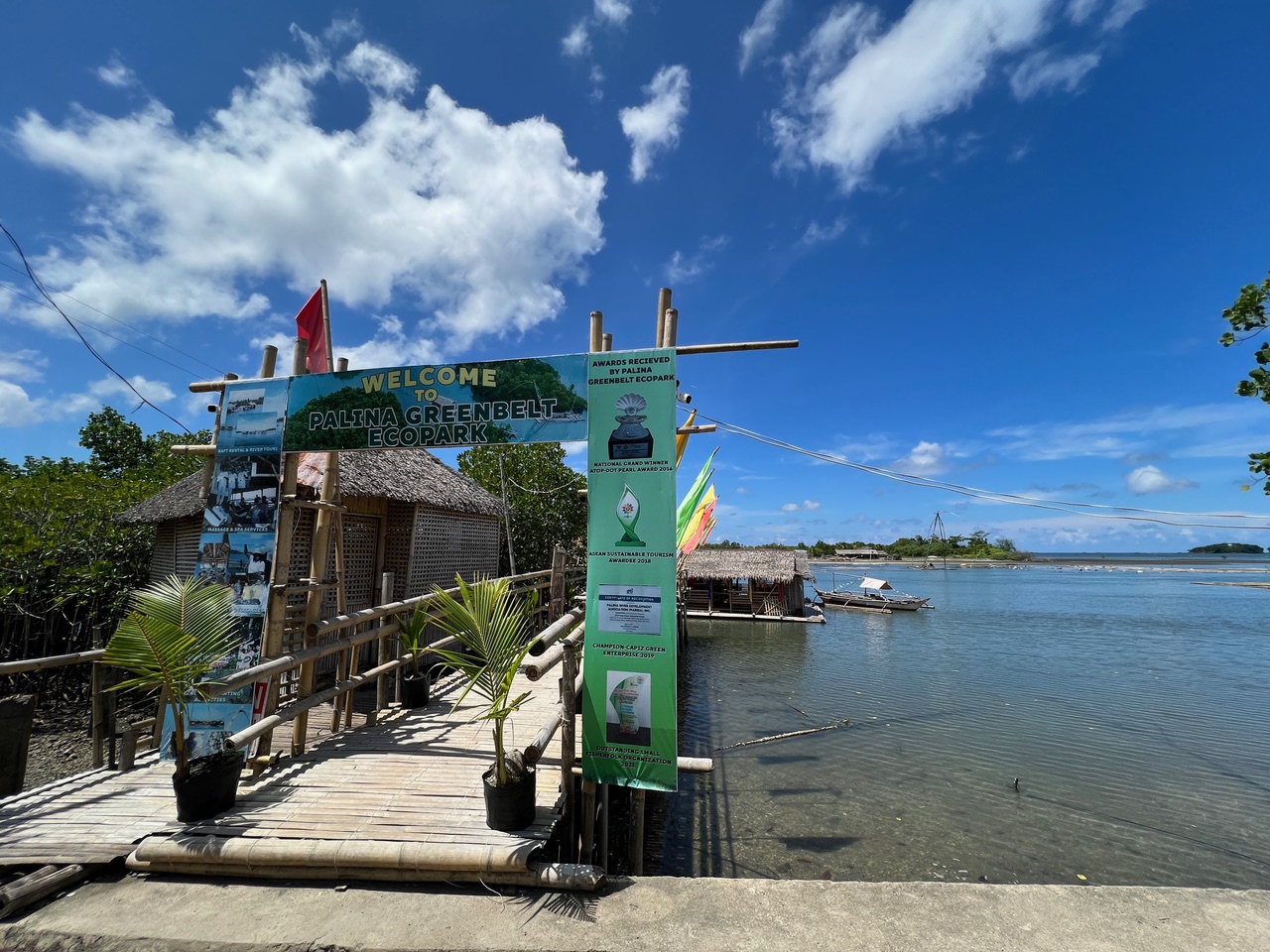
On our first night we walked out to a neighborhood restaurant where the chicken inasal was P108 with unlimited rice and a surprisingly good fruit drink, plus lomi at P68. We had the obligatory seafood lunch in one of the many restaurants along Baybay (literally, the beach), but much more charming and restful was a similar lunch on a bamboo raft on the river at the Palina Greenbelt Ecopark, normally part of a lazy cruise (the tide was too low when we arrived for any cruising, but the scenery was enough to soothe the senses).

Roxas has no shortage of malls for the urban dweller. The usual suspects—SM, Gaisano, CityMall—line the main highway downtown. Its equivalent of Metro Manila’s BGC is the 670-hectare Pueblo de Panay township, a residential and commercial development project master-planned by a Singaporean company and offering the most modern facilities and amenities to Capiz’s and Panay’s rising middle class. 

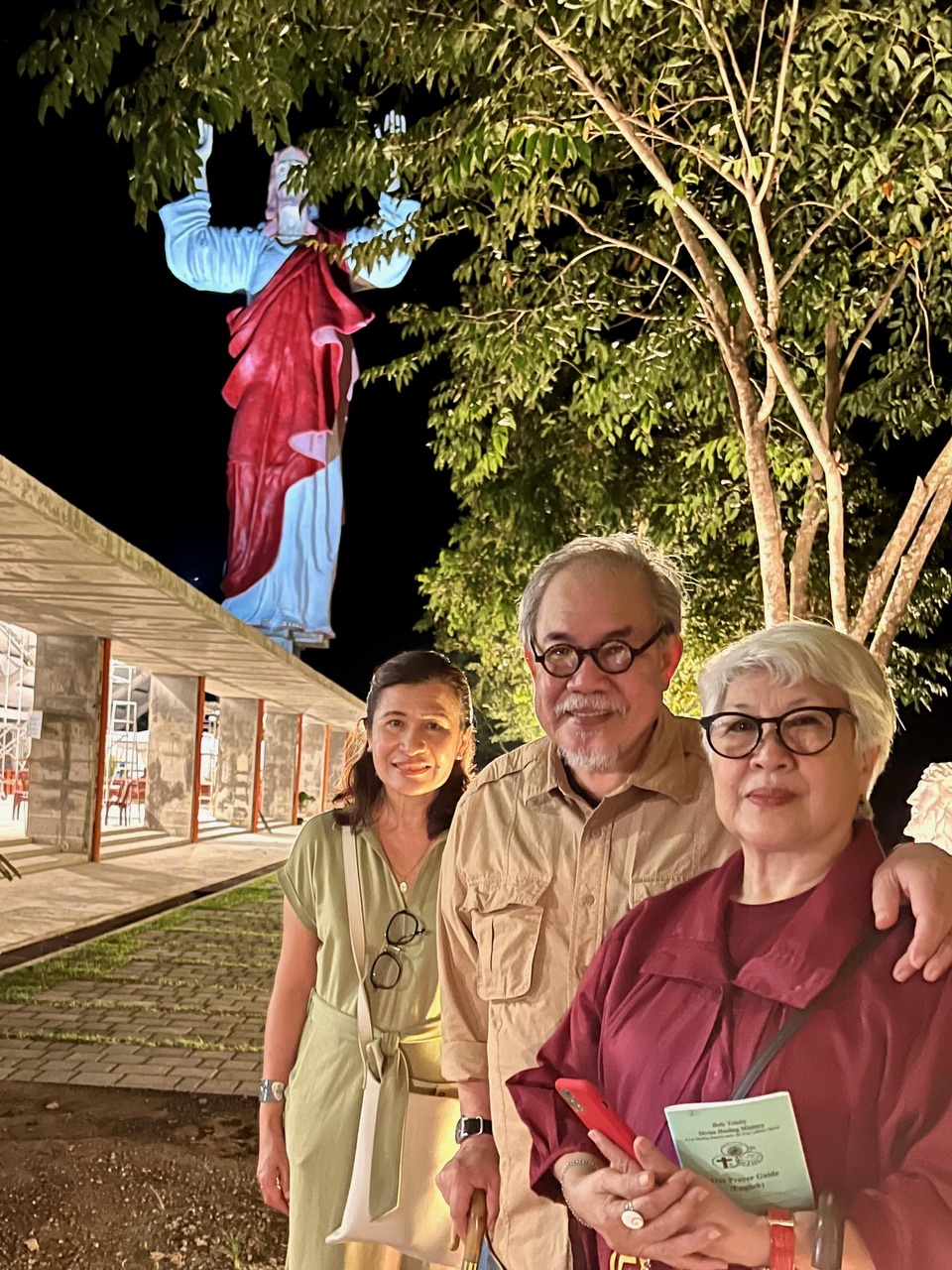
A mutual friend—the peripatetic Susan Claire Agbayani—introduced us to Hariette Ong Banzon and her husband Peter, the couple behind the Pueblo, who invited us to dinner at Cafe Terraza, their hilltop restaurant offering a panoramic view of the city far below. But before dinner, Hariette made sure to bring us to see the project dearest to her heart and now one of the city’s—indeed the island’s—most remarkable landmarks: the 132-foot statue of the Sacred Heart of Jesus, which Harriette commissioned following the miraculous cure of a relative. Hariette and Peter—incidentally both fellow PSHS alumni, so we had other memories to share—are people of faith and conscience, reflecting their values in their optimism about Roxas City’s prospects and the way they run their business.

For all the things we seek in this troubled world—a pocket of peace and quiet, good food, rejuvenation of body and soul, and friendly people—Roxas City has much to offer, and we can only give it our ultimate accolade: “We’ll be back!”