Qwertyman No. 36: A Tourist in Taiwan

Qwertyman for Monday, April 10, 2023

MY WIFE Beng and I visited Taiwan with friends on a five-day holiday just before Holy Week, and returned home dog-tired but deeply impressed by what we had seen: a country not just surviving but staunchly moving forward, progressive and optimistic, despite living under the constant threat of invasion by its hulking neighbor and self-declared owner, China.

It was my fourth visit to Taiwan and my wife’s second, so we had witnessed the island’s wonders before. But we went back—this time with friends who had never been there—precisely because it had much to offer as a vacation spot. For me, Taiwan has largely been about food (especially the beef-brisket noodles and fruits like the giant atis and cherimoya), technology (like the exhilarating 3D I-Ride it has exported to Hollywood), and culture (exemplified by the legendary jadeite cabbage at the National Palace Museum). Economists and political scientists will surely have much more to look for and investigate in Taiwan, but my unsophisticated cravings were fully satisfied. 

The tourist in me observed that Taiwan had achieved First-World status, with elevated expressways, high-rise housing, clean waterways, and extensive transport networks. Taipei’s shops were open past 10 pm, catering to a busy nightlife. We took a day trip out to visit the Chimei Museum in Tainan, and boarded the High Speed Rail that zoomed down the island’s west coast at 236 km/h. Despite Taiwan’s high level of industrialization, the countryside remained lush with forests and greenery, and Taipei’s streets were litter-free. True, there were homeless people gathered around Taipei’s Main Station, living out of shopping carts and camping tents, but we had seen far worse in New York and San Diego. Some old-school courtesies persisted: on the subways and buses, younger riders still stood up to yield their seats to seniors.

That said, it was hard for me to shake off the feeling that we were experiencing an ephemeral pleasure. As we took a bridge over a river in Taipei, and reveled in the vista of a thoroughly modern city rising from its ancient roots as a Spanish trading outpost, I remarked to Beng, half-facetiously, that a few Chinese bombs could pulverize all that. China, I said, could “Ukrainize” Taipei, and blow the 101-storey Taipei 101 building, the National Palace Museum, the Shilin Night Market, and all the other attractions we associate with this city into smithereens. Beng said that I shouldn’t be making such horrible jokes, but I had to wonder how much of what I said was indeed a joke and how much of it was dire possibility.

The threat is certainly there—and has been there since 1949, when Chiang Kai-Shek’s losing Nationalist forces retreated to the island, took it over, and turned it into a thorn in Communist China’s side. China has repeatedly used shows of force around Taiwan to demonstrate its readiness and capability to employ “resolute and forceful measures to defend (its) national sovereignty and territorial integrity,” and while no explosively significant confrontations have taken place, China’s saber-rattling has only grown louder, provoked by presumptive American guarantees to help defend Taiwan in the event of a Chinese attack, and possibly emboldened by Russia’s invasion of Ukraine. (The US, of course, has been rattling its own sabers, particularly with the acquisition of more basing rights in the Philippines.)

You’d think that the specter of invasion would switch Taiwan into full military mode, with air-raid drills and sirens and tanks and soldiers in the streets, but no. When we were there, it was business as usual, with no sense of urgency, even as Taiwanese President Tsai Ing-Wen met with US House Speaker Kevin McCarthy in California, raising the cross-straits temperature further.

Taiwan-watchers such as David Sacks, whose post was republished by the influential Council on Foreign Relations last November, have warned against complacency, especially in the wake of Russia’s Ukrainian misadventure. According to Sacks, “Despite these growing worries and initial steps, actions remain far below where they need to be to deter China and respond to potential Chinese aggression. The increases to Taiwan’s defense budget over the past six years are commendable, but at 2.4 percent of gross domestic product (GDP), it is still well below where it needs to be…. While there is a recognition that the civilian population will need to play a large role in defending the island, the conversation about how to reform Taiwan’s reserve force is still in its infancy, with little consensus on what its role should be. Taiwan’s military lacks the munitions it would need to withstand an initial Chinese assault and its military services continue to pursue legacy platforms such as fighter jets and large naval vessels that will have little utility during a conflict. It is far from certain that there is buy-in across the military for adopting an asymmetric defense strategy.

“Beyond the military realm, Taiwan needs to do much more to increase the resilience of its society and decrease its reliance on trade with China…. Over 40 percent of Taiwan’s exports go to China or Hong Kong. While there is wide agreement that this is a major vulnerability, there is a certain amount of defeatism, with few ideas of how to reduce this dependence without massive government intervention.

“While the government is taking steps (albeit insufficient) to address the growing threat China poses, there is a worrying gap between officials and the public. Opinion polls reveal that Taiwanese people are not concerned about an invasion and believe war is unlikely in the next decade…. Understandably, most want to focus on improving their lives. There is a fine line, however, between stoicism and complacency.”

Is this a fatalism that we Filipinos seem to share? If China attacks Taiwan, can the Philippines be next, and what will we or can we do about it? (In my admittedly  pedestrian view, China has no need for a military invasion of the Philippines—which will be costly and troublesome, given our geography—so long as it achieves full control of the South China Sea. It will be cheaper and easier to subvert and suborn the government, if it wants pro-China policies to prevail.)

I was glad to be just a tourist in Taiwan, enjoying my cherimoya, instead of being a defense analyst pondering the medium term—or, for that matter, being a local fruit seller who might one day find a gaping hole where the orchard used to be.

(Photo from thetimes.co.uk)
Qwertyman No. 34: America the Paradox

Qwertyman for Monday, March 27, 2023

“AMERICA THE Paradox” was the title of an undergraduate paper I wrote on Carlos Bulosan for my class in Philippine literature, in which I observed—as many had done before me—that Bulosan felt deeply conflicted by the two faces that he kept seeing in America. On the one hand, it was the mother with open arms, calling out to the world’s orphans, and accepting of all brave and enterprising spirits. On the other hand, it was the hard fist of racism, viciously averse to all complexions other than white. 

Bulosan arrived in Seattle in 1930, a time of great economic turmoil, and he soon found himself fighting for the exploited poor, becoming a labor organizer and writing radical poetry. He would remain poor for the rest of his short life, despite achieving some degree of literary celebrity following the success of his semi-autobiographical 1946 novel America Is in the Heart. He died of tuberculosis in Seattle in 1956, never having been able to come home. I was so moved by Bulosan’s travails that I gifted our daughter with a signed first edition of his novel as her wedding present, and paid my respects at his grave when I visited Seattle some years ago.

Last Thursday, March 23rd, I joined several hundred other guests for dinner at the Sofitel to celebrate a joyful event: the 75th anniversary of the Fulbright program in the Philippines. Over that period, the Fulbright program, which selects and sends scholars from all over the world to study in the US, has sponsored over 3,000 Filipino scholars and 1,000 American scholars coming to the Philippines. The Philippines—through the Philippine-American Educational Foundation (PAEF)—has the longest-running Fulbright program in the world, dating back to March 23, 1948, hence last week’s big commemoration.

It isn’t hard to see why Sen. J. William Fulbright believed that such a scholarship program was a good idea then, with the Cold War brewing and America projecting itself as the champion of the Free World. For the Philippines, it was a continuation of the prewar practice of sending pensionados to the US, thereby ensuring a cohort of Filipino intellectuals and administrators sympathetic to the American cause.

I myself went out on a Fulbright twice—in 1986, for my MFA at Michigan and then my PhD at Wisconsin, and then in 2014 as a senior scholar at George Washington University. It would be an understatement to say that the Fulbright—especially that first five-year stint—was life-changing for me. The learning was exhilarating, but the living—away from home and family—was fraught with pain.

Still, we Fulbrighters had it much better than Bulosan. Most of our expenses were borne by the American taxpayer (although, because of a budget crunch, I had to teach and also to work part-time as a cook, cashier, and busboy at a Chinese takeout). Our return home was guaranteed (indeed, legally mandated). Most of us enjoyed the hospitality and support of new Fil-Am and American friends. 

Although here and there we had the inevitable brush with racism, we saw America in the best possible light, as a source of knowledge and of the democratic spirit. Arriving in Michigan just after EDSA 1986, I too was seen as living proof of the long and beneficial reach of America’s cultural influence: I could speak English like they did, and (mild boast coming) could write at least as well if not better than they did. 

I recall how, in one Shakespeare class, I was the only one who could explain the difference between “parataxis” and “hypotaxis,” and how, in another class, our professor wrote up a long sentence from one of my stories on the board to demonstrate “Jose’s perfect command of punctuation.” But all that was presumably because of my Americanized education—not even in America, but in the Philippines, where we had seemingly prepared all our lives to come to America, only to find ourselves more indoctrinated than many Americans. (I had memorized all the state capitals in grade school in La Salle, confounding my American friends at Trivial Pursuit.)

Ironically, I also belonged to the First Quarter Storm generation that railed against “American imperialism,” that learned about our colonial exploitation and about the primacy of American self-interest in its transactions with the world. We rallied at the US Embassy against the war in Vietnam and against the US bases in the Philippines. We denounced Ferdinand Marcos as an American puppet, and saw Washington’s hand in every instance of political mayhem around the globe. Where did all that militancy go? Was a scholarship to Hollywood enough to negate these accusations?

Seated at that Fulbright dinner and listening to the speakers extolling our special relationship with America, I thought about Bulosan, the FQS, my Fulbright experience, our daughter in California, my teaching of American literature, and such recent issues as EDCA and the Chinese presence in our territorial waters to sort out my emotions. 

The America that had been such a paradox for Bulosan remains, in many ways, a chimera for us today—speaking with moral authority against the Russian invasion of Ukraine, and yet still enamored in many places of Trumpian demagoguery; espousing peace and human rights while allowing assault rifles on its streets; and promoting education and global literacy while hosting the world’s biggest engines of disinformation. We want to believe in the America that believed in us, although the cynical can argue that “believed” should be taken as “invested,” of whose efficacy this column offers ample proof. 

In the end, I reminded myself of what I tell my students: (1) The American government and the American people are not necessarily the same; (2) The American people are many peoples; there is no single, monolithic America; (3) We study America and its literature not to become Americans, but to be better Filipinos; and (4) We often take the terms “America” and “American” in an ideal or idealized sense, a compound of expectations and aspirations shaped by Abraham Lincoln, Hollywood, cable TV, and Spotify.

We went to America not just to study there, but to study America, and that study continues. 

(Image from pacforum.org)

Qwertyman No. 28: Catching Fluffy

Qwertyman for Monday, February 13, 2023

(Disclaimer: Our story today has nothing to do with the recent capture and deportation of the Japanese criminal mastermind known as “Luffy,” for which we congratulate our brave and vigilant law enforcers, although I have to admit to being inspired by that diabolically fearsome alias.)

HIS PHONE rang at the worst possible time. The chief of the Metropolitan Investigation Division was just about to reach the climax of his story—the ladies around him all open-mouthed and wide-eyed in anticipation—when the Tiktok “Moonlight” song, which he had been using as his ringtone, broke the spell, instantly sending some of the girls into their habitual gyrations.

“Chief!” exclaimed Melanie, his special girl in the club, “I didn’t know you liked that song! You’re so cool! Come, let’s dance!” She took his free hand and tried to drag him to the dancefloor, but he resisted. It was unusual for Chief Tiny (short for “Agustin”) to resist Melanie’s persuasions, but she could see from his look that this was something serious.

Chief Tiny had spotted the name on the call—Bungi, his lead investigator—and he knew that Bungi knew not to call him at this hour for any reason less than to report the mysterious sighting of a bearded man walking on the waters of Manila Bay. If this was just to tell him that his wife was at the station looking for him again, for which Bungi was supposed to have had a dozen excuses at his disposal, why, he was going to make sure Bungi was demoted to jail guard in charge of sanitation. Tiny was especially annoyed because he had been trying to impress the girls with his story of how he had found and captured Don Waldo—the country’s most notorious drug and gambling lord, compadre to this senator and that congressman, master of a reputed harem of 100 women, and ruthless widow-maker dozens of times over. Tiny had geo-located him through the Facebook feeds of his then girlfriend, the previous year’s Ms. Matabungkay, and had negotiated his peaceful surrender, much to everyone’s relief. Of course, he wasn’t going to tell them that Don Waldo posted bail one hour after he was arrested, and that the two men had exchanged winks at the station after the media photographers had had their fill. It was all part of his standard MO: catch the bad guy, work out a deal, and let him off the hook on some technicality. 

“Boss,” said Bungi in a whisper over the phone, “we found him—Fluffy.”

“Fluffy!” Tiny screamed with all his 250 pounds, jolting everyone. “Are you sure it’s him, the Fluffy, ourFluffy?”

“Yes, sir. Of course they call him ‘Fruffy’ in Japanese, but I saw him myself—absolutely no doubt he’s our man.”

As Chief Tiny continued to chat with his caller, Melanie shrank back into her seat beside the chief, trying to catch as much of the conversation as she could while collecting her own thoughts. She knew this man called “Fluffy”—personally, professionally, biblically, in all kinds of ways. When the chief wasn’t around, Fluffy took his place in her private quarters, in a condo overlooking the Pasig River, from the other side of which she had triumphantly risen. Initially there had been a language problem—his vocabulary would have been considered coarse even in Japan—but what they needed to communicate did not require too many hand-signs. What didn’t need explaining was his nickname, made obvious by the two clumps of steel-woolly hair on his head, like a poodle.

From his Pinoy bodyguard, Melanie learned that Fluffy ran an extensive Japanese mafia in the Philippines, which controlled the distribution of everything from fake Japanese car parts, Ebisu dolls, Voltes V figurines, and ramen noodles. They competed with an equally vicious Korean mafia engaged in pushing fake Korean car parts, BTS coffee mugs, CLOY T-shirts, and kimchi, as well as a Chinese mafia flooding the market with fake American, European, and everyone-else’s car parts, imported galunggong, POGO workers, and tikoy. Sometimes the rivalry got too hot and blood was spilled on Manila’s streets, giving Chief Tiny unnecessary headaches that required a few hours with Melanie to cure. But now Melanie herself felt the onset of a massive migraine: if her two patrons found out about the other and their common interest, then all hell would break loose.

“Sorry, girls, but I have to go,” Chief Tiny announced, getting to his feet. “I have to catch a master criminal.” With that, he gave Melanie a quick hug, and hurried off.

Melanie had to think fast. Chief Tiny made her feel protected—not only when he encircled her in his ham-like arms, but more importantly when she or her friends ran into trouble or needed a big favor like a police escort for a relative’s funeral. Fluffy was strange but sweet, gifting her with exotic desserts like green tea cookies and mochi; she was scared but also thrilled by his insistence that she take on his tattoos. Whom would she choose? She thought of sending Chief Tiny an anonymous text message telling him where Fluffy was, but then they already knew that. She thought of sending Fluffy another message to tell him that Chief Tiny was on his way to get him, but if he ran away then that would only prolong her own predicament. She decided to let fate take its course and to stick by whoever survived. Meanwhile, she wasn’t going to waste her time, and moved on to the next cubicle to make the acquaintance of a Korean gentleman who reminded her of that oppa Gong Yoo.

Two hours later, Melanie and her new partner were happily warbling BTS’ “Butter” on the videoke: Smooth like butter, like a criminal undercover / Gon’ pop like trouble breaking into your heart like that, ooh!”Suddenly she heard two all-too-familiar voices from the other side.

“You’re very hard to catch, Mr. Fluffy! You’re very good!”

“No, Mr. Tiny, you’re better because you caught me, haha!”

“Next time, don’t hide under the table, haha! That’s the first place we look!”

“Thank you for not shooting me, haha!”

“How can we be friends if I shoot you, haha! Now, let’s have a good time—I will introduce you to my very pretty girlfriend!”

“You also have a very pretty girlfriend, also here? Me, too! But my girlfriend is prettier, haha!”

The Korean gentleman in the next cubicle was perplexed. “Melanie! Where you go? Why you hiding under the table?”

(Photo from bbc.com)

Qwertyman No. 19: The Real Maria Ressa

Qwertyman for Monday, December 12, 2022

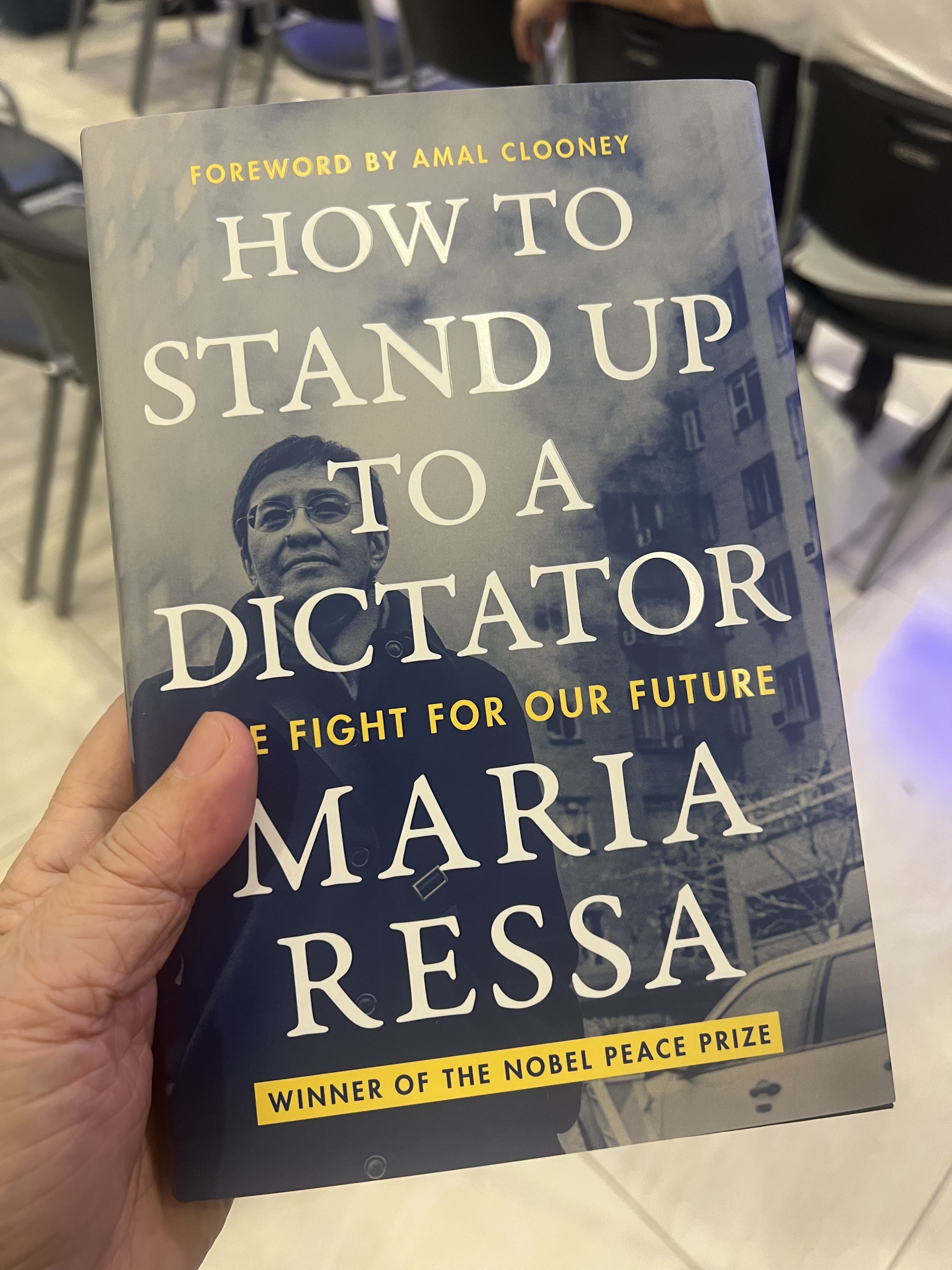
I WAS very honored to speak last Saturday at the launch of Maria Ressa’s new book, How to Stand up to a Dictator: The Fight for Our Future (Harper, 2022). I’d read an advance copy of it a couple of weeks ago, and to cut to the chase, if you’re thinking of buying a book to read for the holidays or to gift to friends, look no further. This book, for me, is among the year’s best in nonfiction.

I have to emphasize that word—nonfiction. As we all know we live in times when fiction has taken over as the most influential form of human discourse, particularly in the political arena. As a practicing fictionist, I should be happy about that, but I’m not and I can’t be, because so much of it is bad fiction, crudely written—and surprisingly, infuriatingly effective, at least with a certain kind of reader. 

Maria’s book cuts through all that. It’s undisguised, old-fashioned, in-your-face truth-telling, told in the same voice and tone we’ve become familiar with over the years of listening to her reportage over CNN. I’m sure that, like me, many of you wondered the first time you heard her: “Who was this little brown-complexioned woman speaking with an American accent?” She looked Filipino, but how come we’d never seen her before?

This was all before she rose to prominence—some would say notoriety—as the moving spirit behind Rappler, and subsequently to global fame as a Nobel Prize winner for Peace. We identified with her travails, shared her anger and sadness at the abuse she has received, and rejoiced in her victories, whether in the courts or in the larger sphere of public opinion. 

But how well do we really know Maria Ressa, and whatever drives her to be who and what she is? This book takes us to the person behind the phenomenon, and answers many questions we may have had about her and her stubborn advocacies.

The book’s title sounds like that of an instruction manual—which it is, and also is not, being part autobiography, part journalism, and part testimonial. As a manual for freedom fighters, it emphasizes the need for collaborative and collective action against seemingly insurmountable forces. Those forces now include the Internet, which, as Maria documents with both precision and profound dismay, has morphed from a medium that once held all kinds of liberative promises into a medium for mass deception and targeted assault. She draws her counsel not from some esoteric guru or academic paradigm, but from some very basic values that have informed her own life—the Honor Code she followed in school, and the Golden Rule.

“That’s what I lay out in this book,” she says, “an exploration into the values and principles not just of journalism and technology but of the collective action we need to take to win this battle for facts. This journey of discovery is intensely personal. That’s why every chapter has a micro and a macro: a personal lesson and the larger picture. You will see the simple ideas I hold on to in order to make what have—over time—become instinctive but thoughtful decisions.”

It’s this constant back-and-forth between the personal and the political—and at some point they become inextricably fused—that forms the fiber of Maria’s narrative and gives it strength. Her convictions are grounded in personal experience; they have not been paid for—as the hacks in the journalistic trade will allege, seeking to bring her down to their own level—except in the coin of personal suffering under the constant threat of imprisonment and violence.

But we learn from this book that trauma is nothing new to Maria. (We also learn that Maria Ressa wasn’t the name she was born into, but to find out her birth name, you’ll have to buy the book.) From her abrupt relocation from Manila to America at the age of ten, to her journalistic immersion in the horrors of conflict and disaster in Indonesia and Ormoc, the book chronicles Maria’s quest for truth, meaning, and purpose in her life, and that of others. She stresses the importance of remembering the past to make sense of the present, quoting TS Eliot’s phrase, “the present moment of the past.”

And so can we, she seems to suggest, even in these times of high anxiety, when we can see the vultures hovering over such once-sacrosanct treasures as our pension funds, while billions more go to feed the dogs of an increasingly untenable counter-insurgent war. The big words we have become used to tossing around—truth, freedom, reason, justice, democracy—they all come down to a personal choice to do the right thing, and the courage to do it. 

Nowhere is this matter of choice more evident than in the fact that Maria is here in the Philippines, having willfully subjected herself to our brand of justice, however imperfect it may be, instead of escaping to the safety of America or another haven, which her dual citizenship if not her celebrity can certainly afford her. She will see her own story through to the end, in the locale where it matters, among the people to whom it matters most.

I’ve often remarked, as a creative writer and professor of literature, that in this country, the writers most in danger of political persecution and retribution are really not fictionists or poets like me. Not since Rizal has a Filipino novelist been shot dead for what he wrote. For sure, we have lost many brilliant writers to the struggle for freedom and democracy—Emman Lacaba, and most recently Lorena Tariman and her husband Ericson Acosta. But they were killed by the State not for what they wrote—the State is illiterate when it comes to metaphor—but for what they allegedly did.

Rather, the most imperiled writers in the Philippines as in many other places are the journalists who speak the language of the people and of their plaints in terms too clear to ignore. They could be radio announcers like Percy Lapid, or the victims of wholesale murder in Maguindanao, or high-profile and exemplary targets such as Maria Ressa. It would have been easy for her to lash back at her critics and tormentors with the same viciousness. But, she says, “I will not become a criminal to fight a criminal. I will not become a monster to fight a monster.”

That, too, is a difficult choice, and one I am sure we are often tempted to cast aside. But Maria’s equanimity in the face of savagery shames us back into our better selves. It will be that kind of quiet resolve that we will need to survive and prevail. After all, we survived martial law. We can survive this regime—with agility, patience, and courage. But don’t take my word for it. Read Maria’s book to know that we can, and why we must.

Qwertyman No. 17: A Crying Boy

Qwertyman for Monday, November 28, 2022

WE ALL cheered two weeks ago when nine-year-old Bince Rafael Operiano—a boy from Oas, Albay—came home with medals from the 6th Eastern Asia Youth Chess Championship in Bangkok, Thailand, where he finished on top of the Under-10 category and sixth overall. 

But then we were saddened by the news that Bince had had to struggle not just with his opponents in the early rounds, where he lost, but also with loneliness, because his father was not around, having had to wait for his plane ticket from the Philippine Sports Commission (PSC). Bince was said to have been crying. Fortunately, according to Albay Rep. Fernando Cabredo, Bince’s father caught up with Bince just in time to cheer him on to victory. 

So all’s well that ends well, right? Not according to an anonymous “Grandmaster” (possibly an alias) who posted on Viber that things were even more complicated than that. This “GM” alleged that Bince’s parents had received donations for the kid, but that the money had been spent on paying off debts and other expenses. The Operianos, he said, were “making drama” to raise even more money; Bince, he added, wasn’t even that great a player, and that other Filipinos had performed even better in the tournament, to much less publicity. 

I don’t know who “Grandmaster” is, or if he is even a real GM (we now have at least ten Filipino GMs on record, all of them male, which is why I’m defaulting to “he/him”); the post strongly suggests that he’s someone on the inside, in the know, the guy with the goods.

All right, that he may be. But even assuming that everything he says is true, my question is, so what? The journalists (and the “Mariteses”) in us might respond to the possibility that the boy and his story are being manipulated for money with dismay if not righteous outrage, and demonize the parents for their greed, or for being what we Pinoys would call “mukhang pera.”

But honestly, who isn’t “mukhang pera” in this society of ours, where profit-seeking—quite often at someone else’s expense—has become the accepted norm? Of course, when developers buy farmland on the cheap from desperate farmers, they don’t get called out for being “mukhang pera”; they might even get voted to high public office. When someone secures an apologetic write-off for billions in unpaid taxes, that’s not being “mukhang pera.” When favored government offices get billions in “intelligence funds” with nary a question, that’s just business as usual, nothing to do with “mukhang pera.”

But let’s get back to Bince and his story. Clearly the family was in dire straits, or they wouldn’t have used whatever cash they raised to pay off debts. Clearly the father wanted to accompany his son, or he wouldn’t have followed him to Bangkok, albeit too late for the opening round. Someone out there will almost surely berate them for not handling their donations “responsibly,” and they could be right, but poverty and sudden money can addle the mind and one’s priorities (so can huge wealth, for that matter).

These are matters of adult concern. I suggest that it will be better and more fair to put ourselves in young Bince’s shoes. You’re nine years old in a foreign country, probably on your first plane ride overseas. You know some people on your team and you know how to play chess, but everything else is strange and bewildering. You’re looking at your chessboard and at your opponent who’s just as old as you are—the two of you should be playing in the sun outside but you’re here to demolish him or her. The other kids have their parents watching on from the gallery, and you can see your opponent’s eyes dart now and then to his or her parent, for comfort if nothing else. After the game, they will share hugs, maybe even an ice cream, and tour a mall. 

You think of Papa, whom you left at the airport. He promised he’d follow, but there’s still no sign of him, and you panic; you feel like crying but you can’t do that while you’re playing. Your opponent can feel your distress and seems torn between pitying you, or killing you outright. He/she moves his/her rook to c4 and you know you’ve lost. You quickly shake hands like you’ve been trained to do, then you run away and go to a corner and cry. It doesn’t bother you anymore that some people can see you crying. They probably think you’re just a sore loser. You want to tell them, it’s not the game, it’s Papa, I miss Papa, and Mama, and our home in Oas. I know they told me not to think about them too much, I know I shouldn’t, but I can’t help it, I really tried. Please don’t get angry with me. I’ll do better when I see Papa, I promise.

That’s the issue, from Bince’s point of view. Whatever other people may be making of his case is beyond him, and should be. As he grows older, he’ll begin to feel and understand the real pressures he’s under—to succeed for his family’s and country’s sake, with little support; he will have to get used to being alone. 

Some will say, that’s par for the course, that’s the way champions are made; you forge them like steel in the hottest of fires. His very hardship will be the source of his power. But still I have to ask, must it always be this way for the children of the poor? As fortunate as the Operianos may be to even have the option, why must Bince see sport as a way out of poverty than just a wonderful game to play? 

But to end on a happy note, let’s report as well (with thanks to Rappler for the data) that Christian Gian Karlo Arca topped the Under-14 and gained a Master title; Lexie Grace Hernandez won the Under-18 crown and took a Woman International Master title while April Joy Claros placed second but was the top Under-16 player, winning a Woman Master title and one Woman International Master norm. Jemaicah Mendoza topped the girls’ Under-12, and won a Woman Master title. (Bince is supposed to get a Master title when he turns ten.) May the best of futures come to you all.

Qwertyman No. 14: An Oppa for Pinoy Culture

Qwertyman for Monday, November 7, 2022

THE HON. Victor M. Dooley was in a quandary once again. He had struggled with his maiden speech, but thanks to the timely assistance of his rumored girlfriend and sometime girl Friday Yvonne Macahiya, he had delivered a brilliant address on “Culture and the Environment: Shared Survival through Values Education,” which the footnotes failed to say had been Yvonne’s term paper for her Political Science 104 class at the Western Aklan Institute of Technology. 

It didn’t matter that most of his esteemed colleagues were absent or nodding off when he gave his speech with all the passion he exuded back when he was “Mr. Disaster,” the TV-radio hero of the typhoon-flooded, the earthquake-shaken, and the fire-singed. When Yvonne’s press release came out, it was just like he had spoken before the UN General Assembly, the world’s grandest stage; never mind that some audiences there weren’t too hot, either. 

“We are the world’s most disaster-prone country not because we are weak,” he said, thumping his fist on the lectern before letting his gaze travel across the gallery to turn up the drama, “but because disasters visit other countries less. The Lord Almighty has brought these disasters upon us to test our faith, to strengthen our spirits, and to breed true champions of the desperate and the dispossessed!” Again he paused for dramatic effect, but all he heard was the snorting of a venerable gentleman from a northern province, dreaming of Lamborghinis landing in his Special Economic Zone.

Still, something from his speech must have registered in someone’s mind—the word “education”?—because Sen. Dooley found himself appointed to the Committee on Basic Education, Arts, and Culture, which to him sounded like the wimpiest assignment anyone could get. He had expected to be named chair of the Committee on Environment, Natural Resources and Climate Change (that went to a real estate developer), or the one on Public Information and Mass Media (that went to a retired general), or to something that could have used his mestizo heritage, like the Committee on Foreign Relations (that went to a Chinoy movie producer). 

Basic education? Other than passing grade school, what did he know about classrooms and curricula? But then the committee also covered Arts and Culture, so, hmmm, maybe that was what they saw in him, his stellar career as a singer-dancer-TV show host, the way the ladies swooned when he winked at them at the end of his “Buchikik” song. Arts and Culture was entertainment, right? It was about keeping people happy, so they could smile through Covid, unemployment, EJKs, 60-1 peso-dollar rates, and P300/kilo pork. 

There wasn’t much he could do about those things—blame it on the pandemic, on Ukraine (he did have some important foreign-policy views: those darned Ukrainians should just have given over some potato fields to the Russians instead of endangering world peace with their silly resistance), and on troublemakers who even won Nobel prizes for having nothing good to say about hardworking despots.

But now, the Hon. Victor M. Dooley had to come up with a program that would leave his indelible mark on Philippine culture, and he convened an ad hoc committee composed of himself, his chief of staff Roy, the indispensable Yvonne, and a special guest who sashayed into the room and planted wet kisses on both of Vic’s cheeks, much to his embarrassment and to Yvonne’s utter surprise. 

“Ms. Terry! I never thought you would respond to my invitation!” 

“Why ever would I not? How long has it been, dearie? The last time  I saw you, you were still a struggling singer trying your best to hold your note—so I held it for you, hihihi.  And look at you now, an honorable Senator of the Republic!”

“And who, may I ask, might you be?” interjected Yvonne.

“Ah! Yvonne, this is Ms. Terry, who sponsored my entry into show business many years ago. I asked him—I mean her, ahaha, we better get our preferred pronouns right, especially after that gender-sensitivity workshop we all had to take—to come and help us devise a program for our country’s cultural revival.”

“Why didn’t you tell me?” said Yvonne. “I could’ve called on some of my National Artist friends—”

“What’s a National Artist?” asked Vic.

“Never mind. Welcome aboard, Ms. Terry—oh, I get it now, mystery herself! I’m Yvonne, the congressman’s Chief Political Affairs Officer. Can we offer you some coffee?”

“If you have low-acid coffee with non-dairy creamer and gluten-free scones, I’d much appreciate it. But I’ll take what you have.”

“Our Chief of Staff here makes an excellent three-in-one and I’m sure he hasn’t finished all the Sky Flakes.” Yvonne cocked an eyebrow at Roy, who slunk away muttering. “Now let’s get down to business. The senator wants a new program with strong popular appeal that will raise our people’s spirits, promote national unity, and put Philippine culture on the global map. You said you have some ideas?”

“I do! Two, in fact. One, boy bands. We should undertake a nationwide search for cute mop-haired boys from the age of six up and train them in a camp for singing and dancing. Two, a cooking competition for girls, who don’t know how to cook anymore. We’ll have regional and then national contests for the best pinakbet, sinigang, and adobo. We can even have a Fil-Am edition, but let’s do it in West Covina so I can visit my cousin there. What do you think?”

“Nice, but I have an even more inspired idea!” said the senator. “To promote our own, let’s ban all Korean shows for a year. Tama na mga K-drama, P-drama naman. Nakakainis na, e!”

Yvonne groaned. “Are you crazy? Do you want to bring the wrath of the BTS Army down on you, not to mention my mama who’s in love with Hyun Bin?” Yvonne turned to their guest. “I like your ideas, Ate! I think you and I will make a great team—between you and me, we can make Vic Dooley the oppa of Philippine culture!”

“Thanks, but what’s an oppa?” asked the senator.

Penman No. 439: New Looms for Old

Penman for Sunday, June 5, 2022

WHEN WE first met Dr. Analyn “Ikin” Salvador-Amores at the University of the Philippines Baguio five years ago, she was already the director of the new and fascinating Museo Kordilyera that had just opened to showcase the culture of the northern highlands. Ikin graciously took Beng and me on a tour of the exhibits, which UPB had painstakingly put together from its own collections and from the donations of such patrons as National Artist and Baguio resident Bencab. 

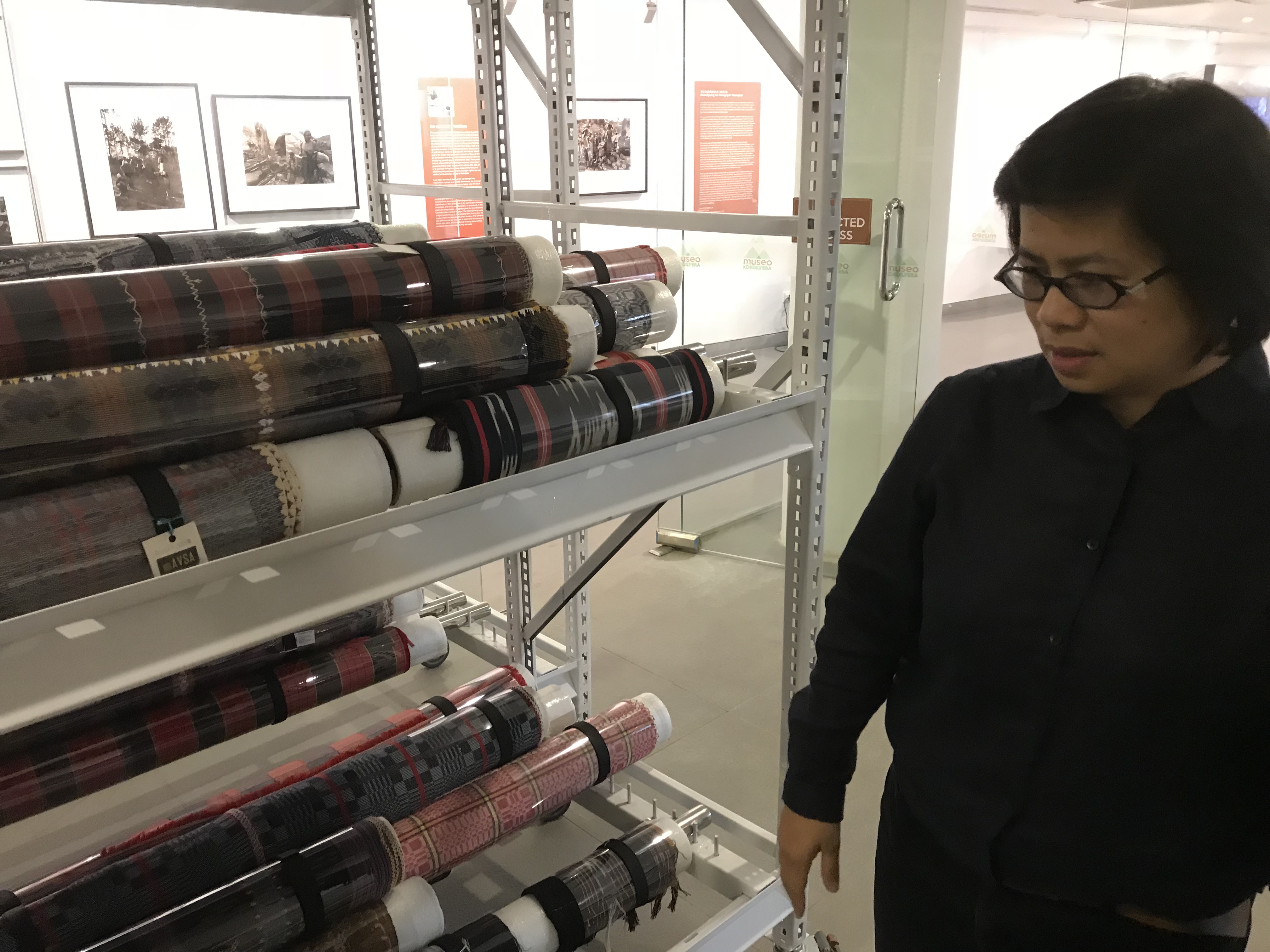
But going beyond what was on display, Ikin brought us to the museum’s laboratory—research is the other important part of its mandate—to show us their growing collection of rare Philippine textiles. Some of these were a century old, retrieved and repatriated from collections abroad by Ikin herself, or donated by collectors. This, she indicated, was going to be a vital aspect of the Museo Kordilyera’s mission—to gather and preserve the threads of the past for the appreciation of new generations of Filipinos. 

Indigenous textiles have a long history in the Philippines, having been woven long before the Spanish came—indeed, more than a millennium before the Christian era. They were used for clothing and also for ceremonial purposes such as the burial of the dead. They come in a wide range of materials, designs, and uses, from the abel and Bontoc of the north to the hablon and piña of the Visayas and the Yakan and tinalak weaves of the south, among many others. Using local fibers and dyes, native weavers employ hand looms to turn their traditional designs—animals, celestial objects, humans, deities, and geometric shapes—into not just functional clothing but works of art and visual bearers of their tribe’s or community’s culture.

But these traditional weavers and their products are under threat from many factors, and unless proper and timely intervention is undertaken, cultural advocates like the Oxford-trained Dr. Salvador-Amores worry that they could decline further if not vanish in this digital century. She points to four major reasons for this decline: the advanced age of master weavers and the lack of young people willing to take their place; the scarcity of materials for weaving such as cotton; new technology, cheaper mass-produced substitutes, even fake “ethnic” fabrics; and ready-to-wear clothes and ukay-ukay, reducing demand for traditional textiles.

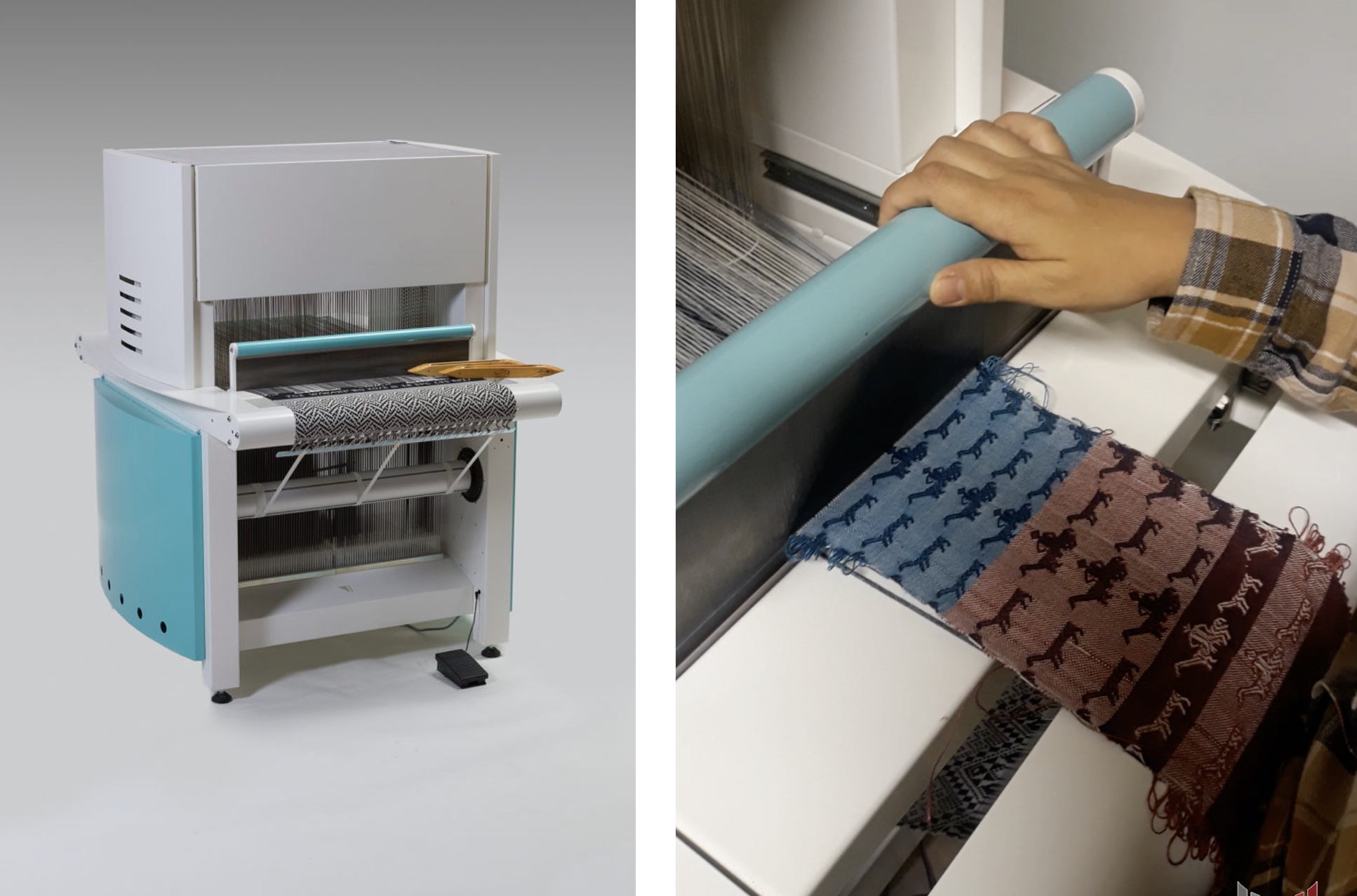
Enter the Cordillera Textiles Project or CordiTex, which Ikin is also directing, aimed at finding and employing new technology to revive the ancient art of weaving and train and engage a new generation of weavers. The technology comes in the form of the Universal Testing Machine that analyzes the internal and external characteristics of Cordillera textiles so they can be technically described, and the digital loom, which—with the help of software—can recreate old designs and fabrics, especially those that weavers can no longer make, and assist those weavers in doing them on their traditional backstrap or foot looms.

Before the machines come into the picture, however, much research has to be done. CordiTex is a multidisciplinary endeavor, involving anthropology, ethnobotany, ethnomusicology, ethnomathematics, physics, chemistry, ergonomics, economics, and geography. (I’ll bet some of us didn’t even realize these disciplines existed. And if we wonder why “ergonomics” is important in weaving, it’s because weavers often suffer from musculoskeletal problems of the neck, shoulders and lower back; strain from incorrect posture; and chronic lower back problems.)

Ikin’s team has conducted research not just in the Cordillera region, but also in weaving collections in the US, Germany, and Austria, where samples gathered a century ago by expeditions to the Philippines are kept. In the US, for example, much material and information can be found at the Museum of Anthropology at the University of Michigan, the Field Museum in Chicago, the American Museum of Natural History, and the Newberry Library.

Mathematical symmetry analysis figures out the math behind traditional designs so they can be rendered into formulas, followed by 3-D modeling, to take the physical properties and the weaving structures of the fibers into account. 

Now enter the digital loom—the Thread Controller 2 or TC2—a machine designed, developed and made by Digital Weaving Norway (DWN) to turn design ideas into woven fabrics. Rolled out in 2012, the TC2 is a hand-operated electronic jacquard loom, capable of producing both traditional and contemporary weaves for industrial and artistic purposes. The University of the Philippines has acquired two of these machines—one for UP Baguio, and another for the College of Home Economics in UP Diliman. Six researchers from UP led by Ikin went to DWN to study the use of the machines, and workshops have since been conducted in Baguio and Diliman, assisted by a visiting expert from DWN, to introduce the TC2 and its technology to local weavers and researchers.

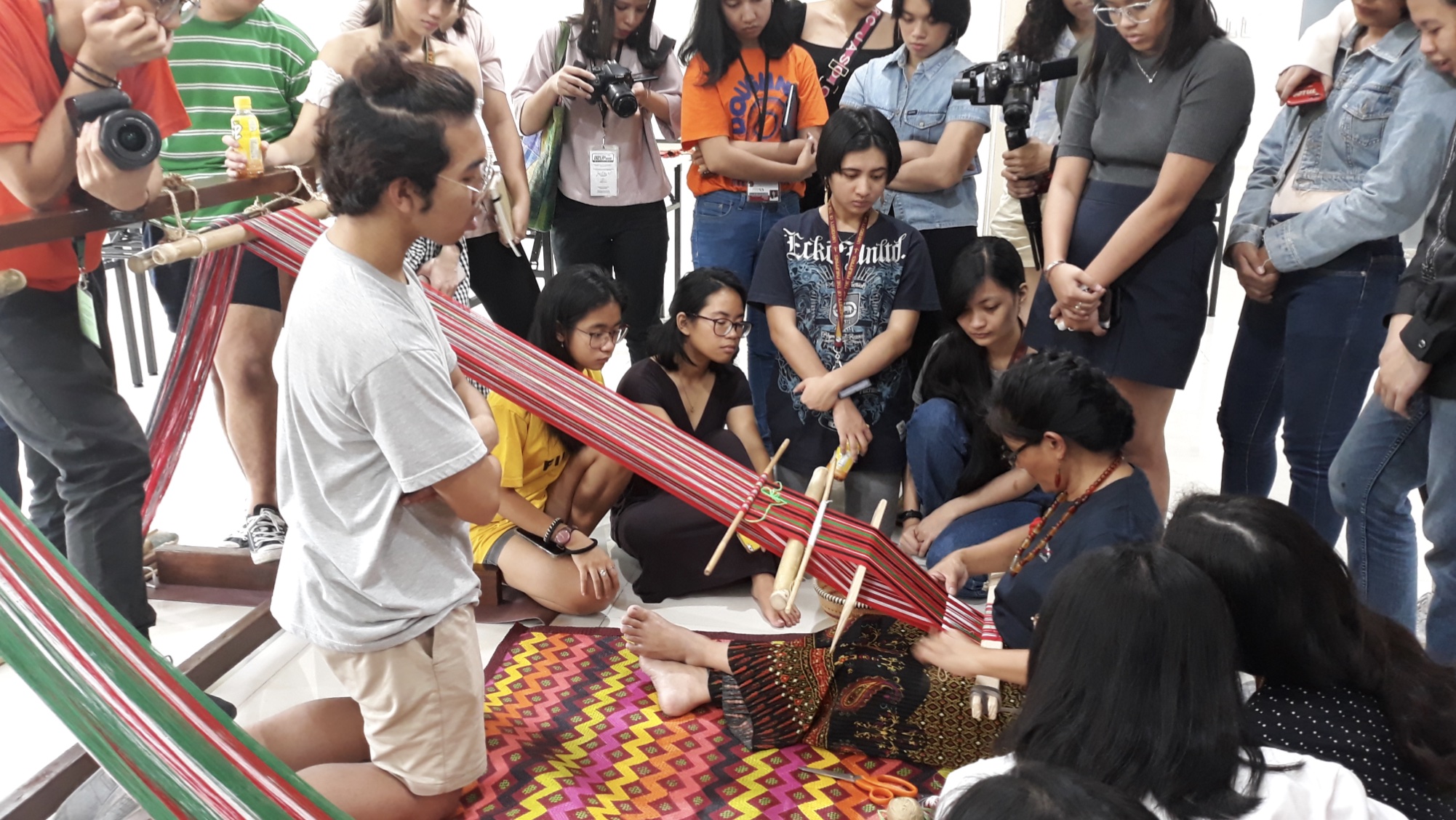
Dr. Salvador-Amores is emphatic that their work in CodiTex is not aimed at replacing hand looms. “While CordiTex can now replicate and reconstruct traditional extant textiles through digitization and digital loom weaving, we are doing this so that the younger generation can re-weave these in their traditional looms,” she said. “Hopefully this will empower local weavers, engender ethnic identity, and sustain Cordillera weaving.”

The next time you visit Baguio, take a side trip to the Museo Kordilyera to see what the fuss is all about. You might get lucky and catch Ikin—or if not, then her pioneering book Tapping Ink, Tattooing Identities: Tradition and Modernity in Contemporary Kalinga Society (UP Press, 2014), yet another fascinating topic altogether.

(Photos courtesy of Analyn Salvador-Amores)

Penman No. 431: Restoring a Binondo Landmark

Penman for Monday, January 3, 2021

THERE’S A charm and a mystery to old Manila’s Binondo district that even casual passersby can’t miss, an appeal compounded of centuries of history, commerce, and the daily lives of one of the country’s most industrious and yet also least understood communities, the Chinese Filipinos (the usage Teresita Ang See advocates over “Filipino Chinese,” given that the second term denotes their political and geographical home). 

Having been established in 1594 by the Spanish as a settlement for Catholic Chinese, Binondo (among other contiguous districts) became the world’s oldest Chinatown, evolving down the centuries into one of Manila’s most thriving business centers and choicest real estate locations. Here, all within hailing distance of the 425-year-old Binondo Church, hardware shops selling everything from portable generators and electrical equipment to automotive spare parts and screws of all sizes stand cheek-by-jowl with seafood restaurants and, inevitably, banks.

One of those banks has been an economic and cultural landmark not just in Chinatown but in the country’s history for a century now, and the restoration of its old Binondo headquarters is a fitting capstone to the bank’s centennial celebration.

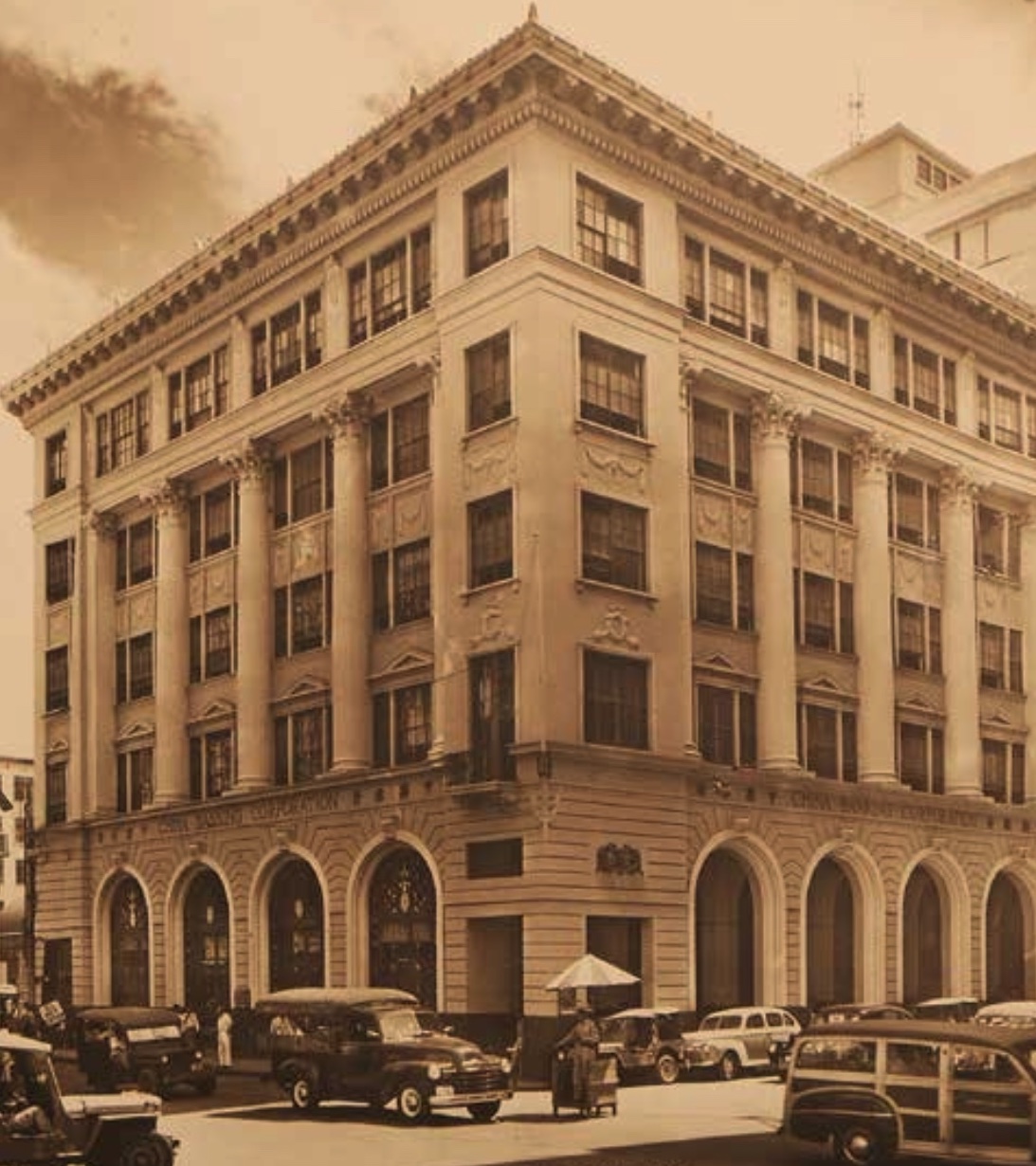
The bank is none other than China Bank, which set up shop in 1920 in the same general neighborhood—at No. 90 Calle Rosario (now Quintin Paredes St.). It didn’t take too long before the bank realized that it needed more space for its growing business, and by 1924, it had moved into its newly built, five-story (later extended to seven) building at the corner of Juan Luna and Dasmariñas streets. It had been designed by the German architect Arthur Julius Niclaus Gabler Gumbert in the Neoclassical style then in vogue, with Beaux-Arts touches. Later known as the Binondo Business Center, the building served as the bank’s head office until 1969, when China Bank moved its key operations to Makati.

No one could have walked up to that building pre-war and remained unimpressed. It was the physical manifestation of China Bank’s high ambitions, but grounded in the realities and challenges of operating in an environment that in some ways remained suspicious of if not hostile to Chinese businessmen. The young visionary Dee C. Chuan, already a lumber magnate in his twenties, was quoted to have said around 1911 that “Many Chinese known by their countrymen to be worth half a million pesos are unable to get credit from the present banks.” 

The answer was to form China Bank, with the help of such highly respected co-founders as Guillermo Cu Unjieng, Carlos Palanca, and Albino SyCip; it was to be a bank that would combine Eastern values with Western banking know-how and cater to the underserved community of Chinese businessmen and entrepreneurs in the Philippines, many of whom would move on to be become taipans in their own right. And from early on, through the Depression and the Second World War, the bank relied on its close relationship with its clients—among whom xinyong or word of honor was paramountly important—to retain their business, paying off its obligations even when other banks had defaulted on theirs. A century later, China Bank has moved far beyond its Chinese-Filipino niche market to serve a much broader public, achieving its target milestones of P1 trillion in assets and P100 billion in capital by the end of 2020. 

But the bank didn’t want to celebrate its centennial just by counting its money. According to China Bank SVP and Centennial Committee chairman Alex C. Escucha, as early as 2016, the bank’s leadership under its chairman Hans Sy had already decided that the restoration of the old Binondo headquarters would be the centerpiece of their centennial. 

Not only would the building undergo a thorough and historically authentic renovation led by Architect Manuel Noche, former secretary of the Heritage Conservation Society; a bank museum would also be built, curated by Marian Pastor Roces, for the public to appreciate the business and culture of banking through memorabilia, art, and mementoes. Sonia Olivares Santiago & Associates and Maja Olivares-Co would work on the contemporary design aspects of the Binondo branch. This was realized last December 21 with the unveiling of two historical markers for the restored Binondo Heritage Center and the China Bank Museum by the National Museum and the National Historical Commission of the Philippines.

The bank also published a comprehensive coffee table book, 100 Years of Trust: The China Bank Story, a substantially new version of its 90th-anniversary book written by the late Raul Rodrigo, updated by his wife Nancy Pe Rodrigo; edited by me, with the invaluable assistance of Alex Escucha (the bank’s encyclopedic institutional memory), Ann Ducanes, and Hershey Villegas, among others; and handsomely designed and produced by Perez NuMedia. 

But it’s the Binondo Heritage and Restoration Project that the general public will likely appreciate the most, because it visibly connects past with present and shows the way forward for institutions with similar forms of heritage to protect. At a time when cultural treasures and landmarks are being demolished wholesale to make way for new malls and condos, China Bank proves that history can be a continuing concern (in all its decades of operation, the Binondo office never stopped being a bank). What’s needed is vision and commitment, which China Bank Chairman Hans Sy and President William Whang have proven to have in abundance.

Penman No. 428: Wenchworld

Penman for Monday, November 22, 2021

OKAY, SO The X-Files assured us “The truth is out there,” CSI showered us with “epithelials” and impressed “blunt force trauma” into our noggins, Narcos made it cool to be a “patron,” and The Blacklist (or what I’ve seen of this nine-season, 178-episode epic so far) keeps sending us back to the “post office” or some other “black site.” K-drama, on the other hand, will forever be memorable to me for its wanton use of the word “wench.”

I’m not confessing that I’m a K-drama addict—for that, you can indict my wife Beng, who also happens to be my bedmate, which means that whatever she watches, so must I. Vicariously, therefore, I have learned that it is possible in the K-Universe to go back and forth between North and South Korea by parachute or tunnel, and even to go back and forth between Joseon and the present by holding on to a pretty girl and falling over; that a family’s most precious heirloom, on which everyone’s happiness depends, can be its secret kimchi recipe; that tall and tiny hats maketh the man; that Korean mafiosi travel with at least 300 OOTDs, to be worn just once—plus, of course, someone to keep them immaculately pressed; and that kissing in the rain is better than kissing under energy-saving light bulbs.

But most of all, the K-Universe is peopled by men (half of whom seem to be “unfilial sons”) and women (the younger half of whom are “saucy wenches”). It’s the “wench” part that gets me, because it’s a word I haven’t heard since I was slogging through my grad-school classes in Elizabethan Drama more than thirty years ago. 

Most famously, of course, in Shakespeare’s The Taming of the Shrew, Petruchio woos the intemperate Katherine: “Why, there’s a wench! Come on, and kiss me, Kate!” From Love’s Labours Lost, we get “The tongues of mocking wenches are as keen / As is the razor’s edge invisible.” The word is all over English in the 1500s and 1600s, embedded in Shakespeare and his contemporaries; Christopher Marlowe, in The Jew of Malta, has his character Barabas trying to brush away his sinful past when he is accused of fornication: “But that was in another country, and besides the wench is dead.”)

While we’re in this sort-of-scholarly mode, let’s look up “wench” to see what it was supposed to mean then. Etymonline.com gives us this block of information: 

“Late 13c., wenche ’girl, young woman,’ especially if unmarried, also ‘female infant,’ shortened from wenchel ’child,’ also in Middle English ‘girl, maiden,’ from Old English wencel, probably related to wancol ’unsteady, fickle, weak,’ from Proto-Germanic *wankila- (source also of Old Norse vakr’child, weak person,’ Old High German wanchal ’fickle’), from PIE *weng- ’to bend, curve’…. The wenche is nat dead, but slepith. [Wyclif, Matthew ix.24, c. 1380]. In Middle English occasionally with disparaging suggestion, and secondary sense of ‘concubine, strumpet’ is attested by mid-14c. Also ‘serving-maid, bondwoman, young woman of a humble class’ (late 14c.), a sense retained in the 19c. U.S. South in reference to slave women of any age. In Shakespeare’s day a female flax-worker could be a flax-wenchflax-wife, or flax-woman.”

Perhaps more helpfully, vocabulary.com tells us that “Wench used to mean young girl, so if you find someone describing a lovely wench in Shakespeare, it means a lovely girl. Wench comes from Middle English, and was a common word for girl, child, or servant. Over time it came to mean mainly serving girls, as in a bar wench, who serves drinks at a tavern. Eventually it came to mean prostitute. If you find wench in a love poem from the 16th century, think of it as an informal version of maiden. But if someone called you a wench last week, you should be insulted.”

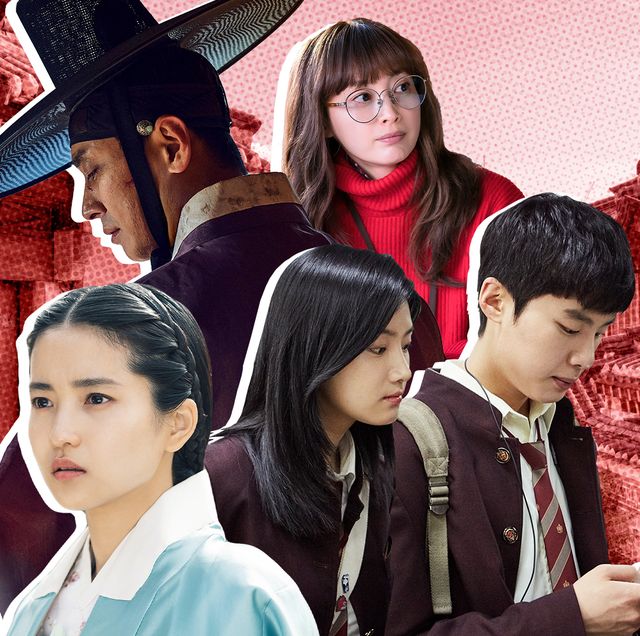
Now, in the K-Universe, the use of “wench” transcends centuries, being equally useful in the period of the Three Kingdoms as it was under the Joseon dynasty, under Japanese annexation, and after the Korean War. (At a certain point, when you’ve watched hundreds of hours of K-drama—only because your wife is watching, mind you—you become something of an expert on Korean history, politics, and culture. I’ve even developed a taste for japchae, which I like to think of as Korean sotanghon.) It’s entirely possible for a Gangnam goon to call a confederate on his Samsung phone to say “Get rid of that insufferable wench!”

All that is probably because the Official Association of K-Drama Translators, at a crucial conference in Jeju, sat down to take up the word nyeon (“a term that refers to a female person in a degrading/derogatory manner”), with partisans debating fiercely between “bitch” and “whore.” The argument entered its second day, with tempers flaring and steel chopsticks dangerously stabbing the air, until the revered Dr. Sung Hyun-Lee, a fruit grocer by day and Confucian scholar and acupuncturist by night, woke up from his soju-assisted meditation and proposed the word “wench.” He had come across the word while watching Pirates of the Caribbean, and thought it perfect to describe a passing ship in the night.

Since all K-drama heroines can be wenches (as long as they have doe eyes, porcelain skin, and wispy hair—but wait, doesn’t that sound like all K-boys as well?), “wench” seems to have lost its pay-for-play connotations on Netflix, and now simply means “any pretty and young Korean woman who attracts and then annoys a nasty man—a cruel Joseon prince, a North Korean general, or a Seoul crime boss.” Problem solved.

Penman No. 425: Red Light, Green Light

Penman for Monday, October 11, 2021

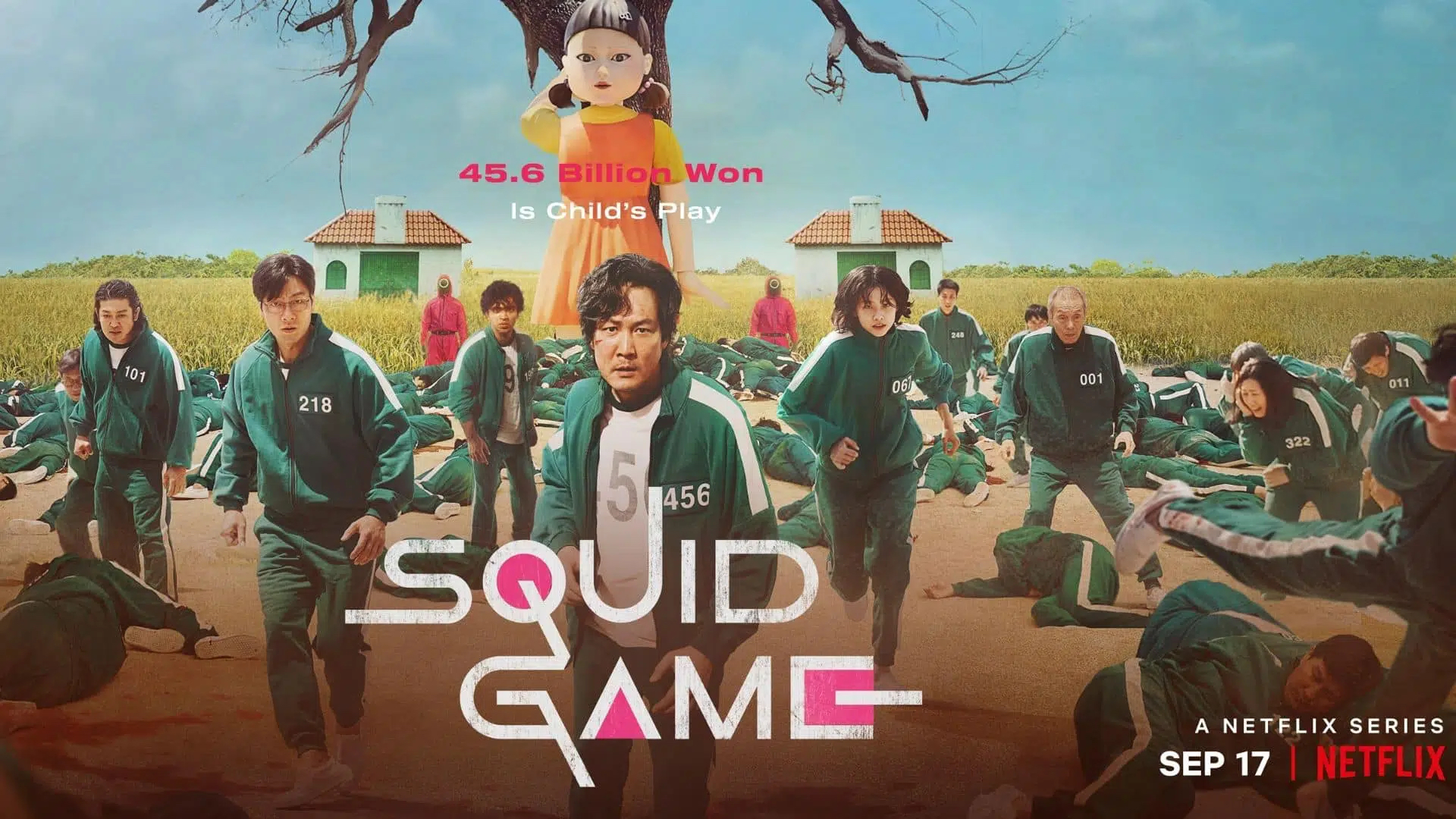
THOSE OF you who smiled when you read the title know what I’m talking about: none other than Squid Game, which is set to become the most viewed Netflix production of all time.

I’m still groggy from two nights of binge-watching, after making sure that my wife Beng was already asleep. She’s a Korea-novela fan—and I guess you can call me a reluctant convert, having little choice but to follow the travails of star-crossed lovers getting wet in the rain, slurping ramyeon, or running slow-motion into each other’s arms on a beach at sunset. But for some reason, Beng likes romance, not gore, and she steadfastly refused to reciprocate my constancy by watching Squid Game with me. 

She can’t understand it when I explain that violence relaxes me, releases the lion in my pussycat, exhausts my latent desire to pulverize my enemies and split a few skulls, and leaves me refreshed for another day of, well, typing. Beng’s favorite expression—which she uses several times a day, usually when watching the news or some TV drama, or when we’re driving past a mangy dog—is “Kawawa naman!” If she were a street in UP Village, it would be “Mahabagin.” 

That’s why, you see, she couldn’t possibly get through even one episode of Squid Game. The violence hadn’t even begun—Gi-Hun was just getting warmed up as the quintessential loser, trying to play good dad to his 10-year-old daughter—when I heard Beng mutter her first “Kawawa naman!” Rather than subject myself to a night-long litany of laments for pitiful souls, I agreed to switch channels and watch contestants try to outdo each other in applying hideous makeup onto hapless models. Beng couldn’t see me wincing in the dark, my tender aesthetics feeling the vicious assault of mascara wands and lipstick applicators.

But let’s get back to the show. After its release less than a month ago, Squid Game became a global sensation in no time at all, and it’s easy to see why. Even the venerable Washington Post intones that “Squid Game (is) much more than a gory dystopian thriller. It’s a haunting microcosm of real life, unpacking the many implications of inequality, which has in some way drawn each of the players to this battle for their lives.” 

Parents will be horrified to find that their kids can buy Squid Game soldier outfits online, complete with black masks and pink track suits, submachine guns optional. (When I clicked the link, I got a message saying “Sorry! This product is no longer available.” That can mean only one of two things: first, that the seller developed a conscience and pulled the item out, or second, that stocks were sold out—you win a prize of a trip to Busan if you guess the correct answer.)

So let’s get this clear, especially if you’re thinking of gathering the family around the TV for some quality time watching people’s shirts turn a splotchy red: Squid Game isn’t for kids, okay? The whole point of it is that it wants people to think they’ll be playing kids’ games—which is true, except that (this is hardly a spoiler now, after all the publicity), the losers die.

I’m not going to go into the kind of sociological soul-searching that will be the stuff of dissertations over the next five years, with titles like “Competition Theory: Neoliberalism, the State, and Squid Game in the Philippines, 2016-2022.” (If you want an honest-to-goodness, semi-academic chat about the show, the UP Korea Research Center will be hosting an online forum on Squid Game on Friday, October 15, at 3:30 pm.) 

I’m tempted more by the idea of staging our version of the game here, with life’s “winners” instead of losers as players, for a change. The reward will be—let’s see, what might the rich and powerful still want that they don’t already have? More money? Too easy; they have enough stashed away in the British Virgin Islands (legally, mind you—they did nothing wrong) to last three lifetimes. More happiness? Which means what—more likes on Instagram, more cover shots in the glossies, Ivy League placements for the kids, one mistress more, a new Lamborghini Huracan, another Patek Philippe, a new calling card saying “Senator of the Republic,” or something even loftier? Eternal life? Some families already have that—35 years after EDSA, you-know-who are still around.

How about this: the prize will be absolution for one’s sins, which technically will qualify one for entry into heaven, no matter what terrible things one may have done in life—stolen billions, murdered thousands, lied 90 percent of the time, cursed God and half the saints, you supply the rest. 

It could be voluntary, of course, because most of the players we’d like to nominate will never admit to sinning nor to needing forgiveness; they have willfully accepted damnation, and their choice must be respected. But I think it will be more fun if, in the 2022 elections, we took a special poll to vote for 456 politicians, public officials, generals, bigtime drug lords, profiteers, car-loving pharmaceutical executives, troll masters, and other crooks to constitute the players. 

How thrilling it would then be to put on a black mask, look over the track-suited multitude, appreciate the anxiety in their puzzled faces, and announce: “Green light!… Red light!” Boom. Boom. Boom. Sorry, Beng, hindi sila kawawa, and I could watch this all day.