Penman No. 473: New Light on (and from) the Philippine Short Story

Penman for Sunday, April 6, 2025

FEW MAY have noticed, but this year, 2025, marks the centenary of what has been widely acknowledged to be our first classic short story in English, Paz Marquez Benitez’s deathless “Dead Stars.”

As I’ve often observed as both a writer and teacher of Philippine literature, there’s probably no literary form more popular among Filipinos than the short story and its predecessors—myths, legends, folktales, and such stories that draw on the power of narrative to tell and teach us something about human life. 

A lot of this has to do with the fact that people and cultures everywhere have made use of stories to make sense of things—to establish causality in human actions—often as a way of prescribing and also proscribing certain behaviors. Stories were there to learn from, like the biblical parables, Aesop’s fables, and the creation myths. The more exciting and entertaining the stories were, the easier the learning happened. Even the mere recognition of oneself in a story that could have taken place a thousand years ago in a place across the planet makes our lives seem more meaningful.

In the Philippines—as it did in the West, where the modern short story took form—the short story was a staple of prewar weekly magazines like the Sunday Tribune, where a story written by an American author would be matched by a local story during what our early literary scholars like Leopoldo Yabes would call our period of apprenticeship. This was in English, but the short story in Filipino (then Tagalog) and other Philippine languages had developed even earlier, and continued (as it continues) to explore new forms and material.

Why the short story and not the novel? That’s another long discussion to be had, and I’ve addressed it in a lecture titled “Novelists in Progress,” but the short of it is that, well, we Pinoys like things in small doses (think Nick Joaquin’s “heritage of smallness”), and the short story satisfies our craving for a touch of fiction and fantasy in our ordinary lives. We’re not marathoners, but great sprinters; we’re not summiteers or navel-gazers, but masters of the street and alley. 

And so, over the past century, important anthologies of the Philippine short story have been published, tracking the development of the genre and its practitioners, from Yabes’ landmark Philippine Short Stories 1925-1940 (a project continued by Gemino Abad for 1956-2008) to Isagani Cruz’s Best Philippine Short Stories of the Twentieth Century (2000). Outside of English, Mga Agos sa Disyerto edited by Efren Abueg came out in 1964, proclaiming new directions for Tagalog short fiction, and the much-needed Ulirat: Best Contemporary Stories in Translation from the Philippines was published in 2021, edited by Kristine Ong Muslim.

But the 21st century is now a quarter of the way through, and just in these past two decades or so, a fresh bumper crop of brilliant new stories has built up, awaiting harvest.

Five years ago, an American friend named Gerald “Jerry” Burns—a fellow academic and a scholar of Philippine literature in English, now Emeritus Professor at Franklin Pierce University in New Hampshire—decided to do just that: review the best of the newest Philippine short stories and produce a selection with which to introduce them to the world. He needed a collaborator, and having worked with Jerry earlier when he was a Fulbright professor at our English department in UP, I agreed to co-edit the volume with him. Because of our backgrounds, our stories would be mainly those written in English (and the excellent Ulirat had already covered much more ground in the other Philippine languages than we ever could) but Jerry wisely insisted that we should have at least some representation of non-English stories in translation in the book, if only to lead the reader to explore more in Ulirat.

The selection process was predictably long and bruising, with all the political, aesthetic, and practical considerations that go into anthologizing, but in the end we came up with 18 stories written by both familiar and fresh names, from within and beyond the Philippines, including the diaspora: Dennis Andrew Aguinaldo, Dean Francis Alfar, Mia Alvar, John Bengan, Ian Rosales Casocot, Richard Giye, Vicente Groyon, Ino Habana, Carljoe Javier, Monica Macansantos, Perry Mangilaya, Doms Pagliawan, Ma. Elena Paulma, John Pucay, Anna Sanchez, Larissa Mae R. Suarez, Lysley A. Tenorio, and Socorro Villanueva. We also found an agreeable and supportive publisher, Milflores Publishing, fortuitously run by Andrea Pasion-Flores, herself a fine fictionist who understood the need for a new anthology like this, especially on the threshold of the Philippines’ participation as Guest of Honor in this year’s Frankfurt Buchmesse.

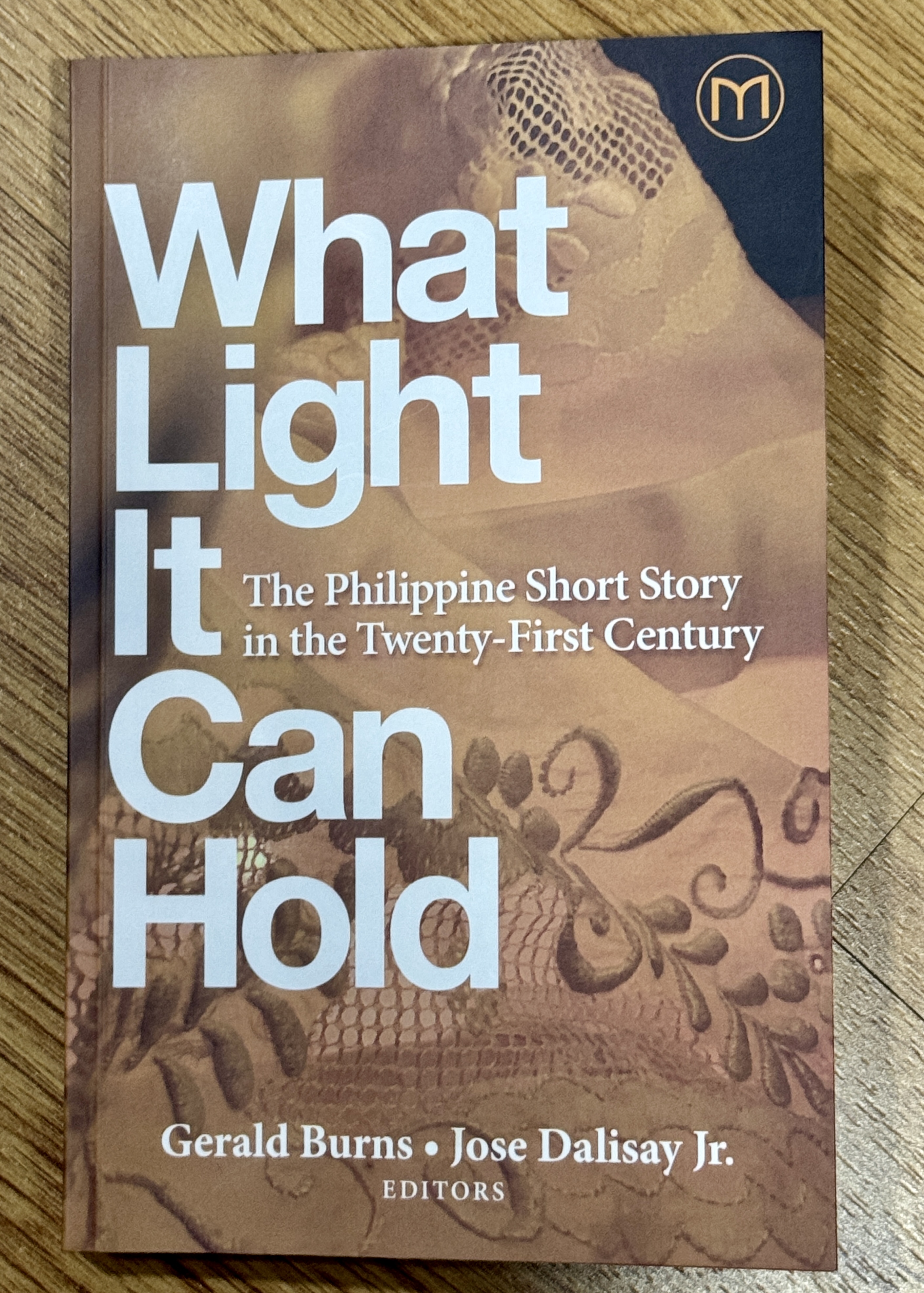
The book’s title, What Light It Can Hold: The Philippine Short Story in the Twenty-First Century, was suggested to Jerry by an encounter with the piña weavers of Kalibo, Aklan, and a caption he saw that said: “How fragile a single thread of piña is, how delicate, but look how much light it can hold.” He explains that “What Light… is intended to recognize the limited capacity of the Philippine short story in this period to offer any widespread or definitive illumination of the nation’s life and culture. At the same time, a more expansive understanding of that title is possible. For the short story, as will be suggested in the next pages, is a signature Philippine product, too. And these slender narratives, fashioned by their makers with a skill, patience, and devotion comparable to the piña weavers’, bring what light they can hold to vital areas of contemporary Philippine and larger human experience.”

No anthology project will be without its perceived failures and omissions, and Dr. Burns and I remain fully open to criticism in that respect. But we believe the sympathetic reader still stands to profit from both the selections and the introduction, penned largely by Jerry, that makes salient observations on the changes that have taken place in this most favored literary form of ours over the past century. Happy reading! (What Light It Can Hold is available on Lazada and Shopee.)

Penman No. 472: Manila Pen Show at Manila Pen

Penman for Sunday, March 9, 2025

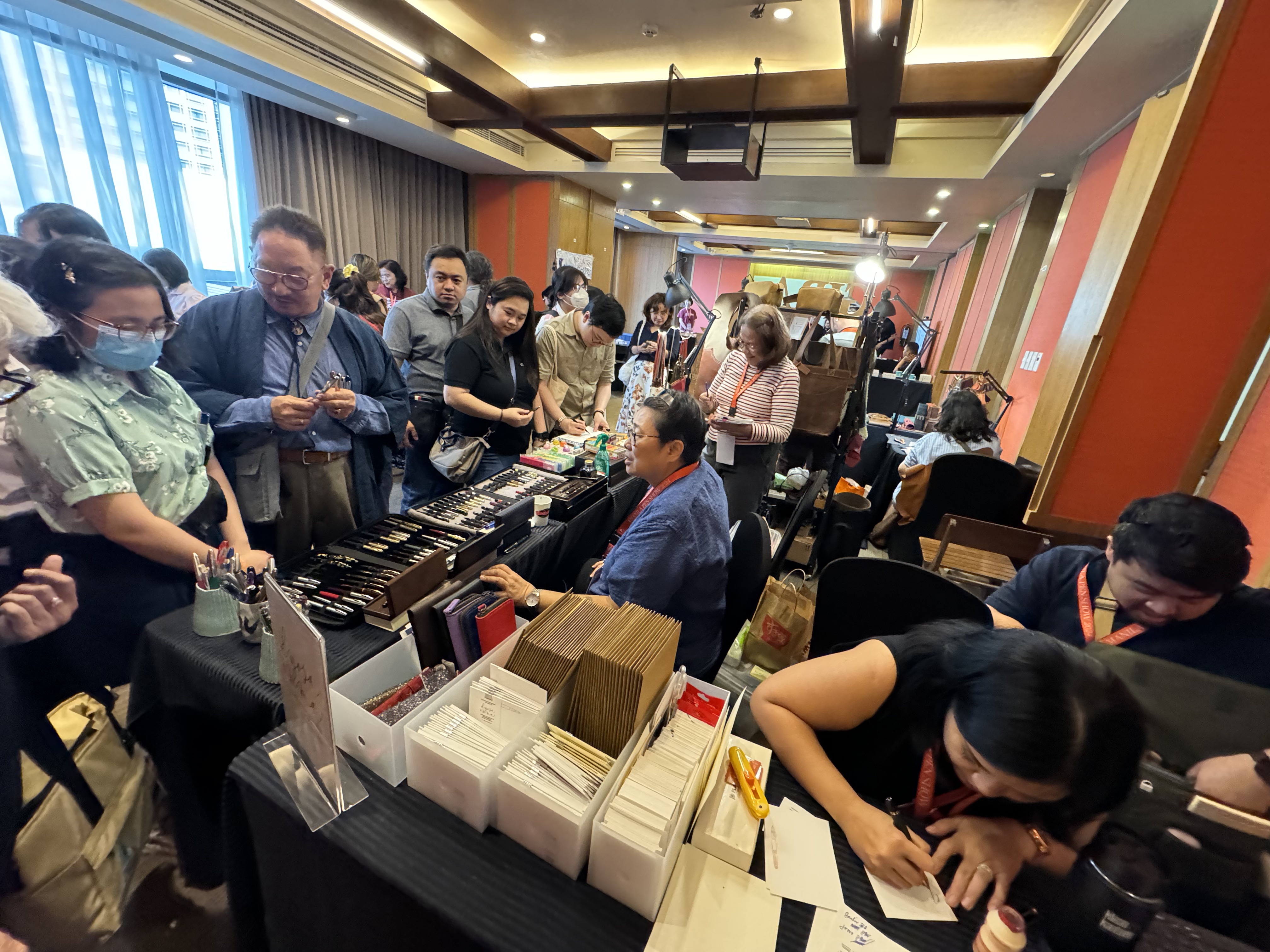
FOR A group that began in our Diliman front yard with less than 20 people almost 17 years ago, the Fountain Pen Network-Philippines (FPN-P) has come an awfully long way. With over 14,000 members online, meeting physically by the dozens in regular “pen meets” held in hapless cafes and restaurants, and thousands more informal recruits among families and friends, FPN-P should really register soon as a partylist devoted to “spreading the joy of handwriting with fountain pens.” We have active chapters in Baguio, Bacolod, and Davao, among other places; quite a few members even reside abroad but keep in regular touch through the group’s FB page.

As I’ve often written here before, the allure of fountain pens lies in their rediscovery by digital natives as a means of self-expression—of recovering one’s uniqueness in a universe homogenized and anonymized by computer code. Our ranks include Supreme Court judges, Cabinet undersecretaries, artists, professors, doctors, and lawyers, but most of our members are young professionals in their twenties and thirties for whom writing in cursive is itself an adventure. There are probably hundreds of thousands of pen fanciers (as they used to be called) around the world, mainly in the US and Europe, but what distinguishes FPN-P is its youthful vibe and the infectious fanaticism of its members.

Some fall in love not just with the pens but with penmanship itself, and become calligraphers. Others grow enamored of inks and papers of a bewildering assortment—inks that shimmer and sheen, combining lustrous gold with a deep oceanic blue, and papers that range from silken smoothness to almost parchment-like toughness.

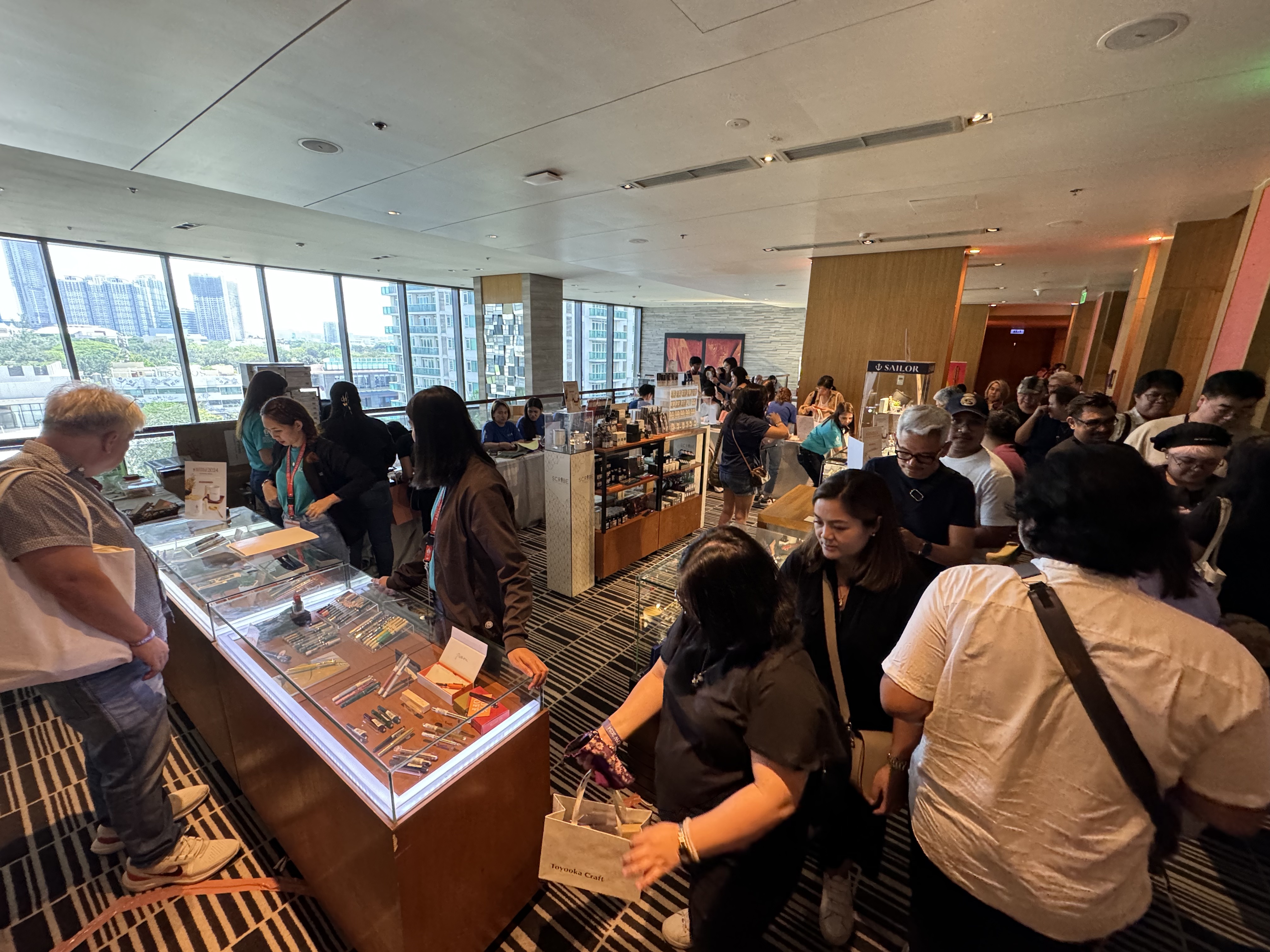
Next weekend, hundreds of these penfolk (and the general public) will converge at the 5th Manila Pen Show that will be taking place March 15 and 16 at—fittingly enough—the Peninsula Manila. 

Top pen makers and dealers from Japan, Hong Kong, Singapore, and Malaysia have been coming to the MPS, attracted and impressed by the level of sophistication—and the deep pockets—of Filipino pen collectors. While the MPS has pens for everyone at every price point—from the low hundreds for students to six figures for the big guns—Filipino pen collectors and users at any level have been known for their deep knowledge and obsessive familiarity with all aspects of the hobby. 

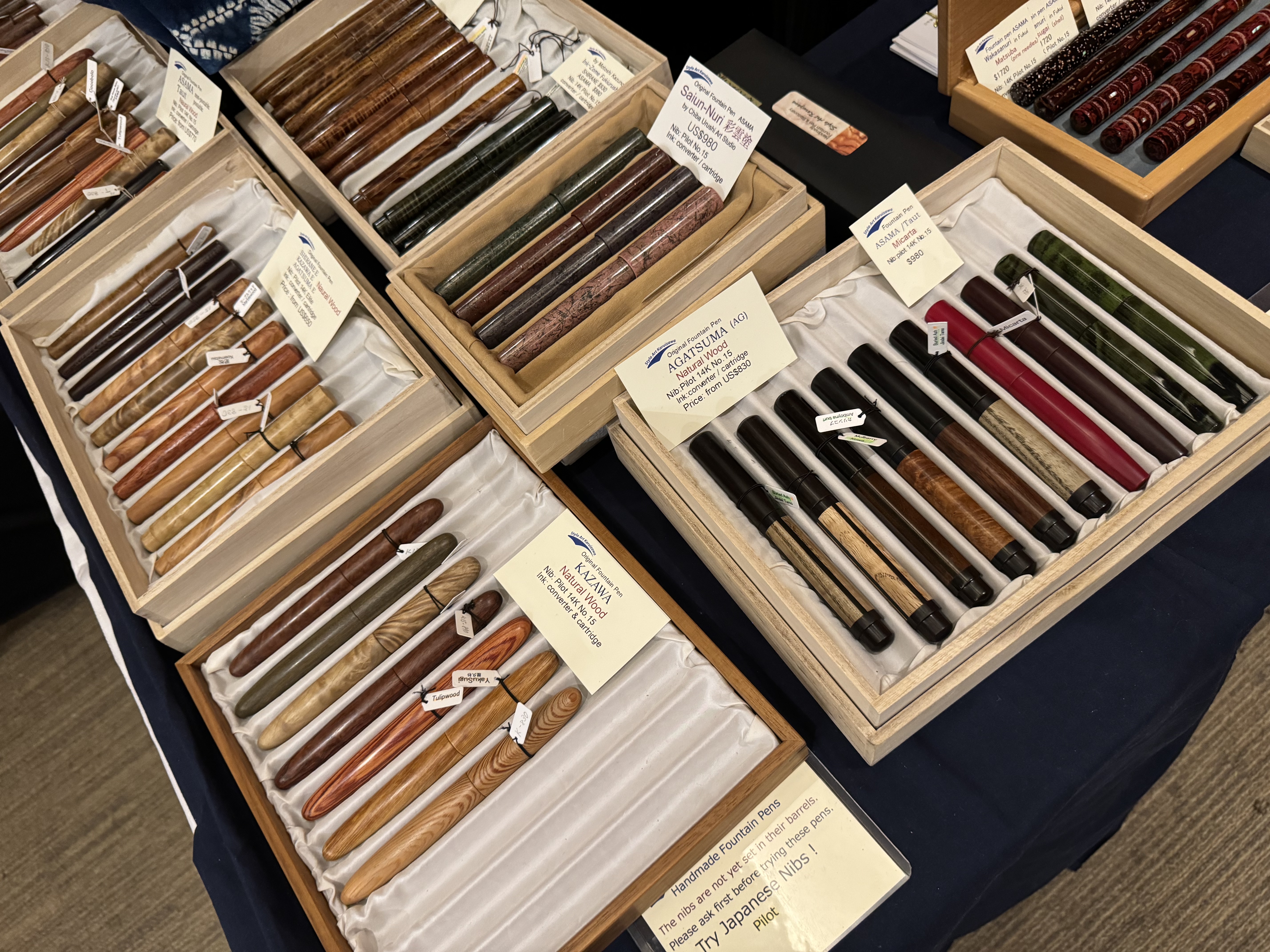
They can tell you how Japanese artisans produce the various kinds and textures of urushi resin that renders pen surfaces impermeable to even acid. They can discuss minuscule but hundred-dollar differences in Parker Vacumatics from the 1930s, or argue passionately for vintage Pilot Myus and exotic inks like the perfume-scented De Atramentis.

This year’s MPS will not only bring sellers of pens and assorted writing paraphernalia, but also feature workshops and panel discussions on topics ranging from nature journaling and nib care to Art Nouveau and Deco pens (and, most intriguingly, “Your Pen and Your Brain: A Love Story,” to be conducted by Gang Badoy Capati). A group of advanced collectors will discuss the finer points of pen connoisseurship (including that point when pens stop just being writing instruments but become jewelry or even art). 

I’ll be on the Art Nouveau and Deco panel, but this time, instead of discussing pens (which others will do this time, all of them experts at particular models and periods), I’ll talk about the peripherals and accessories of the writing trade—the desk pen sets, inkwells, and ink blotters of the kind you would have seen in a typical office desk of the 1930s. 

As with past Manila Pen Shows, nibmeisters or professional pen repairmen will be around to fix that Montblanc nib you dropped on the kitchen floor or your Lolo’s gunked-up Sheaffer that’s been lying in a drawer since he died. One thing most people don’t realize is that most pens, no matter how old, can be fixed (I myself routinely revive 100-year-old Parker Duofolds among other vintage pens in my workshop—you’ll need some special skills and parts, but it’s not rocket science).

You don’t have to be an FPN-P member or even a current fountain pen user to come and enjoy the show. Indulge your curiosity and feel free to see, touch, and test the pens on display (with the exhibitor’s permission, of course, as some pens may require very careful handling). Most sellers will take credit cards or online payment. There will be a modest charge for entry and for the presentations, but all funds raised will be donated after expenses to the Save the Children Philippines, FPN-P’s sponsored charity for the past MPSes. You can find more details about the show at https://manilapenshow.helixpay.ph.

(Image thanks to Raph Camposagrado)

Penman No. 471: A Promise to Keep

Penman for Sunday, February 9, 2025

Now and then we come across stories of foreigners who fall under the spell of the Philippines so completely that wherever else they go, the Philippines and its panoply of wonders—its mangoes, its waters, its sunsets, and above all its smiling people—stay with them, urging them to return, in spirit if not in person.

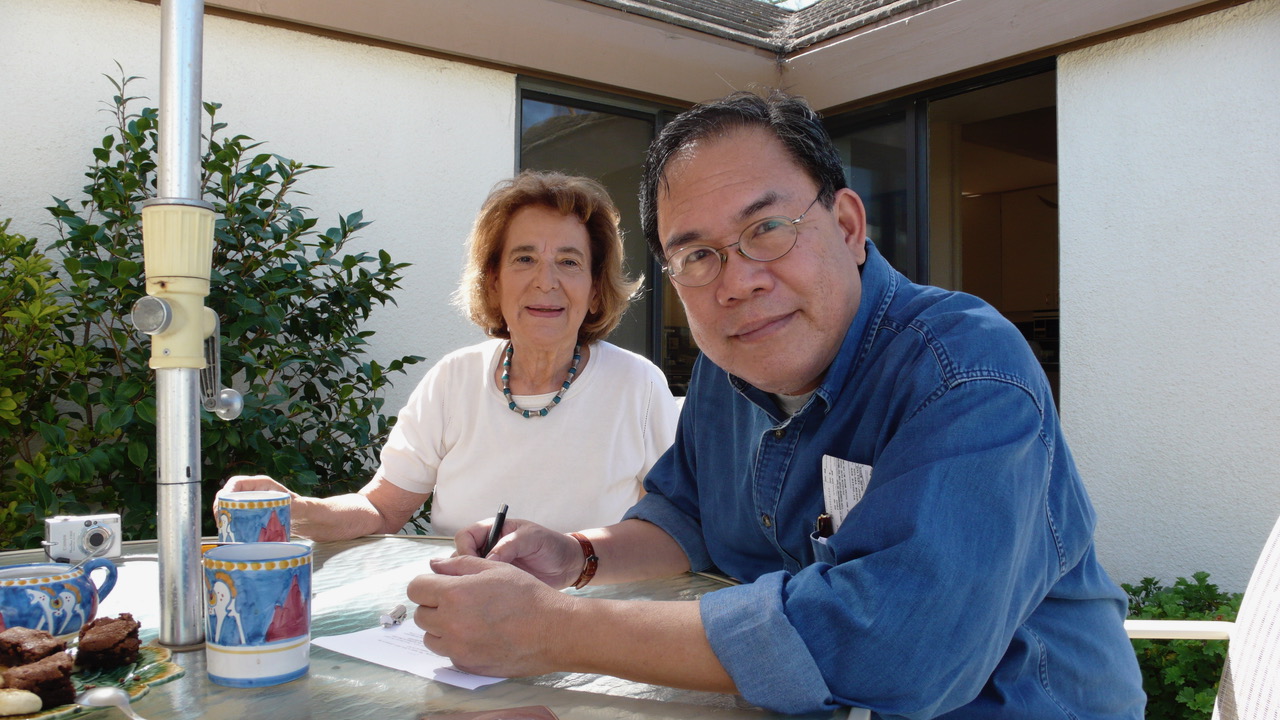
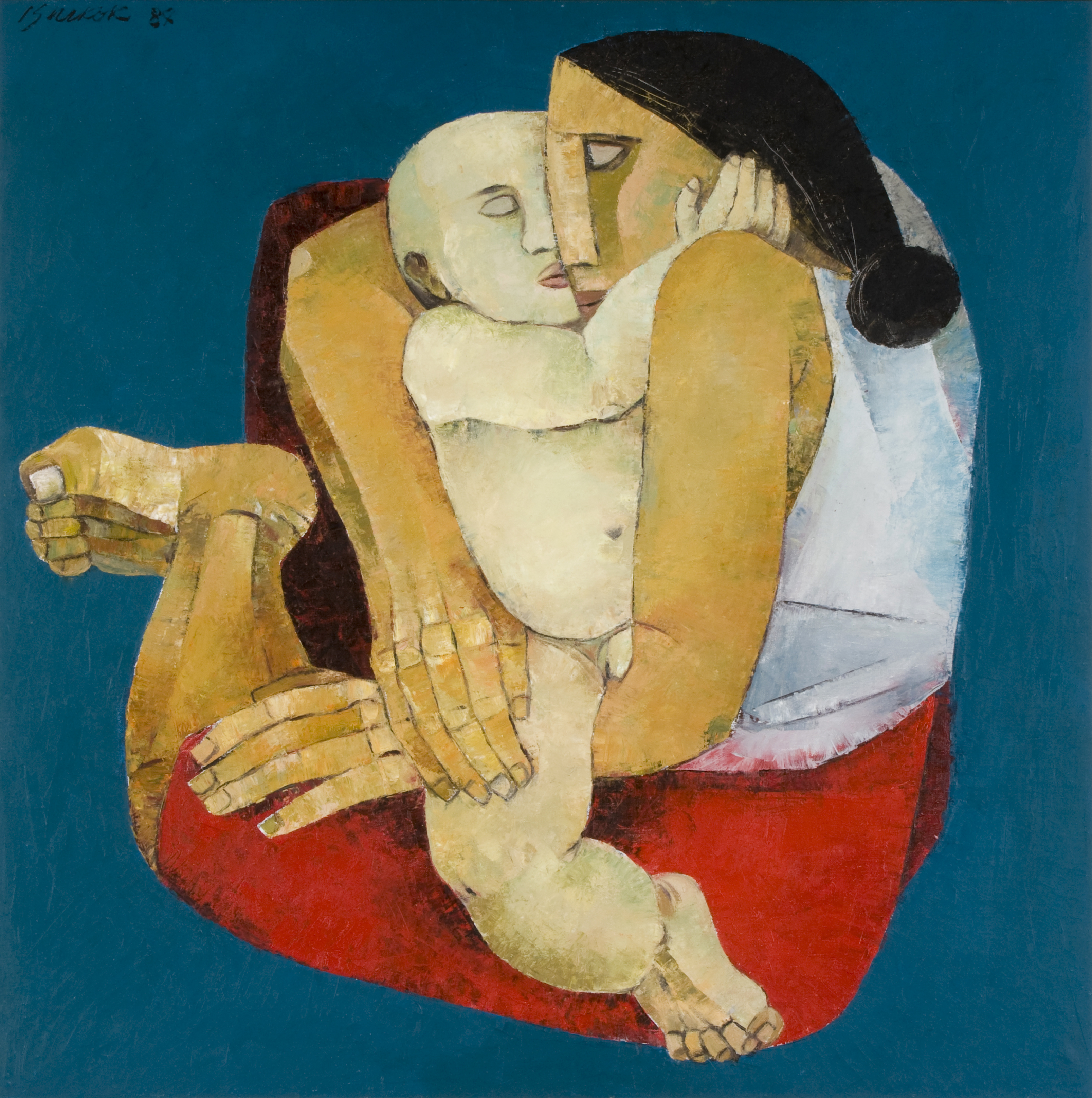
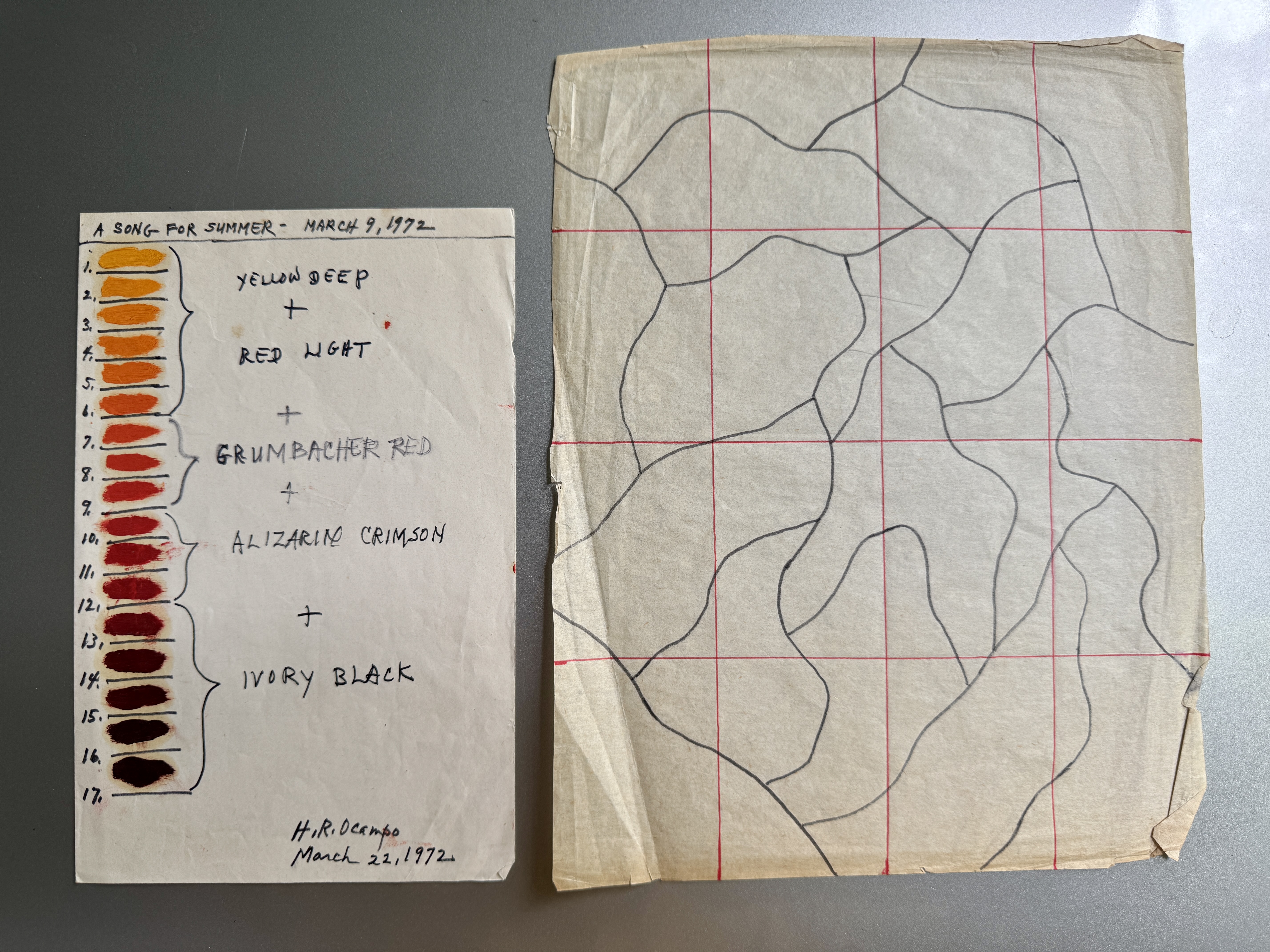
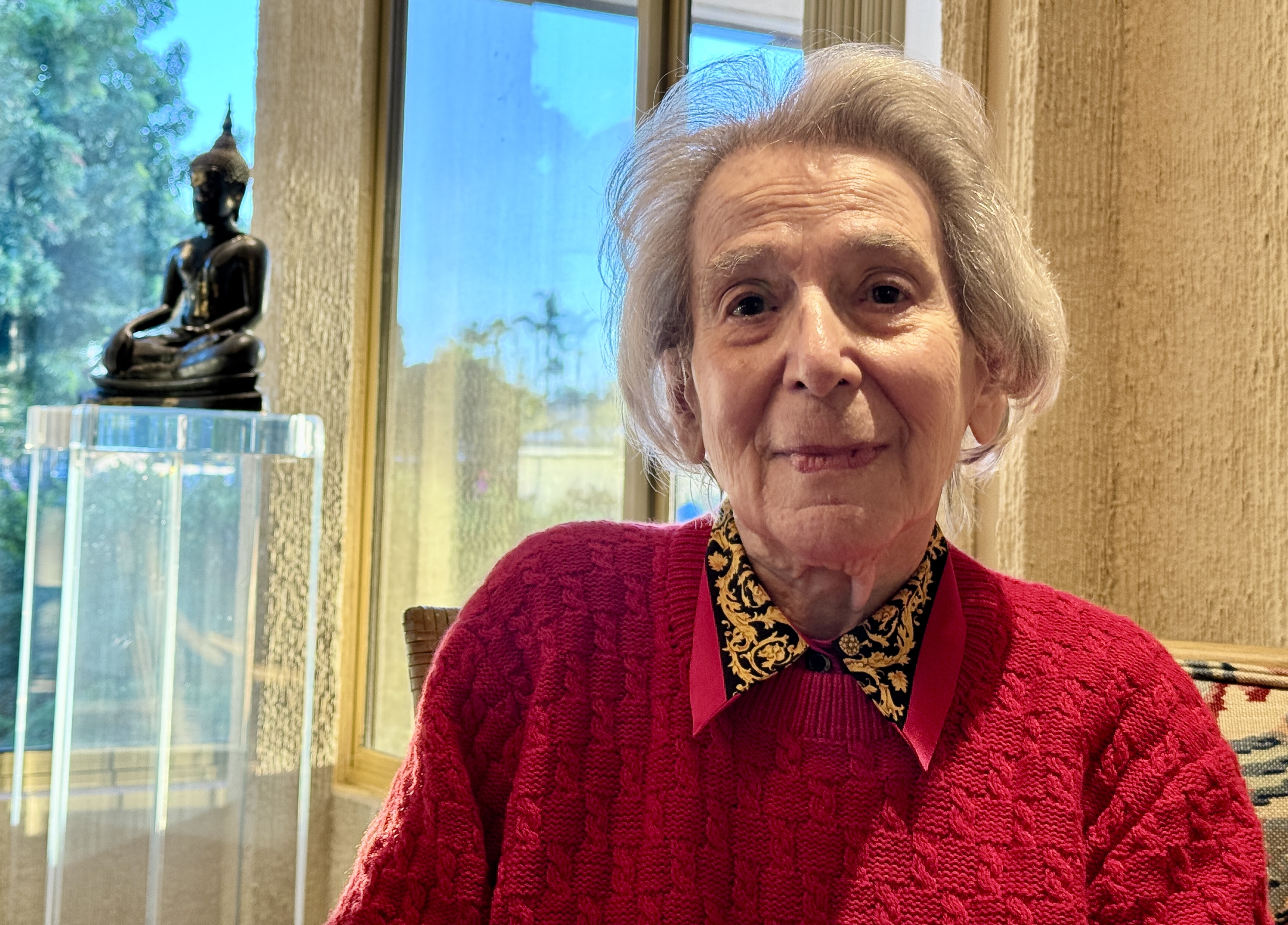
One such visitor was my good friend Julie Hill, who with her late husband Arthur first came to Manila in 1968 on a mission to help improve Philippine education, among other concerns. Almost six decades later, after having traveled the world and settled in America, Julie’s thoughts and affections remain bonded to this country and to its future. In the twilight of her life, she has decided to gift poor but bright young Filipinos with a life-changing opportunity to study at the University of the Philippines, from the forthcoming sale at auction of two paintings by National Artists HR Ocampo and Ang Kiukok.

Born in Alexandria, Egypt to Greek parents, Julie Hill went on to a fulfilling life in the United States and around the world with Arthur, who represented the Ford Foundation in the Philippines. Forced to leave Egypt when Nasser took over, Julie found a scholarship for her master’s degree in chemistry at the University of Minnesota. There she met Arthur, an Australian taking his PhD in Education and Mathematical Statistics. 

The two fell in love, married, and embarked on a lifelong adventure around the world—to Western Samoa, Thailand, Indonesia, and Afghanistan, where Arthur’s expertise in education and agricultural development was much sought after. Arthur passed away in 2002, but Julie went on to her own career as an international marketing executive for Lucent and later AT&T. Since retiring at their home in Rancho Sta. Fe, California, she has written and published five books of travel and memoirs—all of which I edited after being introduced to her by our mutual friend Jimmy Laya, turning our business connection into a long and dear friendship.

From the first of those books, A Promise to Keep (2003), come many vivid impressions of a country and society transitioning to modernity, troubled but brimming with energy and promise. Arthur got busy working with UP and the International Rice Research Institute, among others, and the Hills became good friends with the rising technocrats of the time—Cesar Virata, Gerry Sicat, and Jimmy Laya. It was Laya—who remains close to Julie—who introduced her to the local art community.

“The art scene was vibrant,” Julie would write. “Manila, a centuries-old entrepot, was rich in art and culture, and we were privileged to visit many private art collections….

“Art galleries flourished. A self-exiled painter stormed into town and set new price ceilings. The audience increased. So did the column inches devoted to art in the newspapers and magazines….

“The Luz Gallery in Makati was run by Arturo Luz, a leading painter, known for his high standards of professionalism. His gallery gained the trust of the public and the artists. The Solidaridad gallery and bookshop was located in Ermita, run by novelist Frankie Sionil Jose. Solidaridad was the middle ground between the established artists exhibiting at Luz and smaller galleries where new talent was championed. You could find superb examples of prints, drawings, miniatures, relief metal sculptures, collage, photographs, and paintings all over Manila.

“We were interested in meeting the artists and visiting their studios, but were reluctant to pay the gallery prices. If we liked the work of a particular artist, why not buy directly from him or her? This was how we searched for and found the home of Hernando Ocampo.”

“Hernando Ocampo was a pure abstract expressionist with a daring originality in his paintings. His work was unmistakably Filipino, ascribing this national character to his unique, tropical colors. A typical Ocampo painting is not unlike a honeycomb, a complex weave of color and tone with each individual cell suggesting a large, more real life form. His work is tropical and warm and suggestive of symmetry. The colors and shapes seem to dance before the eyes. His home in Maypajo was a mecca for friends, admirers, and collectors. He had an open house on Sundays. Good food and hard and soft drinks were ready for guests. Visiting Ocampo, we felt welcomed not only by the artist but also by his family. We commissioned a painting. Sketches were drawn; we followed the progress of our painting with our weekly Sunday visits, and sampled the wonderful pancit, that ubiquitous Filipino noodle dish, that was offered. We photographed the progress of his work. He completed the ‘Song of Summer’, a mastery of color in 17 different shades of red. It would hang proudly in our home in California, and continue to provide intense, pleasurable excitement, another reminder of our times in the Philippines.” (Note: Ocampo’s sketch and color guide for the painting will go with the artwork at auction.)

The Hills left Manila for Indonesia shortly after martial law, but on a return visit in the early 1980s, their old friends at the Ford Foundation presented them with another painting by another Filipino master, Ang Kiukok.Julie recalls seeing several works by accomplished Filipino painters in the foundation office, purchased back when they were far more affordable, and this may have been one of them. Like the Ocampo, it traveled with the Hills around the world all the way to Rancho Sta. Fe, where I have been visiting Julie over the years (our daughter Demi conveniently lives nearby in San Diego).

It was during our most recent visit there that Julie brought up the idea of donating her two paintings for the benefit of poor UP students. A lifelong but quiet supporter of students as far away as Mindanao and a staunch believer in the transformative power of education, Julie also honored me by anonymously (but no more) endowing the Jose Y. Dalisay Jr. Professorial Chair in Creative Writing at UP, over my embarrassed pleas to put it in her name.

This time, she wants the money to go to UP’s poorest—specifically, those exceptionally bright and mainly provincial students who, against all odds, pass the UPCAT but fail to enroll, lacking the means to afford the cost of living on a UP campus. We’ll need to work out the mechanics, but this will go much farther than professorial chairs in changing Filipino lives.

“I had a privileged education in Alexandria and was fortunate to receive a scholarship for my graduate education in America,” Julie says. “During our years in Manila, Arthur and I developed a deep affection for the people of the Philippines, and I am hoping that this donation will contribute to creating a generation of talented and hopeful Filipinos who will serve their country well.”

The Ocampo and Ang Kiukok paintings will be sold at auction by Leon Gallery on February 22. I pray that generous buyers will help Julie keep her promise to the Filipino people.

Penman No. 469: Seniors and Their Stories

Penman for Sunday, December 8, 2024

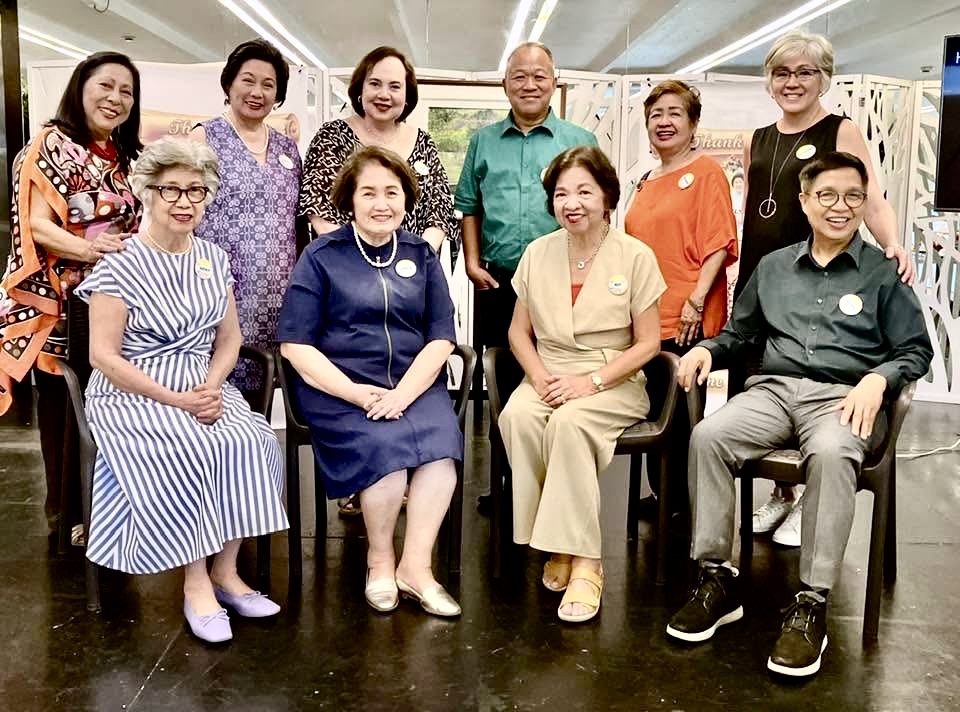
I HAD the privilege of attending the private launch of a book in Makati recently, a book titled Bridges of Memory produced by a group of seniors who had each contributed their poems, stories, and essays to the collection. None of them was a professional writer; I gathered that they came from distinguished backgrounds in banking, law, public service, and other pursuits. 

Prior to publishing the book, they had been mentored by an accomplished and experienced writer, the San Francisco-based poet Oscar Peñaranda, who just happened to be an old friend of mine. Oscar was in the US when the launch took place, so he sent a congratulatory video. I was pleasantly surprised to learn that this was already the “Sunshine” group’s (so named because they meet at the Sunshine Place for seniors in Makati) second such book.

As you might expect, the book contains the authors’ musings on life, love, and loss, the funny with the sad, the joyful with the tragic. The styles and the quality of the writing predictably varied, but the enthusiasm was palpably even, with all the contributors present eager to share their work.

At that very same moment, way across town, another mass book launch was being held at a major university, where one of the featured books was a long and distinguished biography that had partly been edited by me. I had also been invited to that event, but chose to attend the Makati one despite the Christmas traffic, because I had the feeling that it would somehow be a more enjoyable occasion, at least for me, as it would put me in touch with writers of a gentler disposition.

Having been caught in a whirlwind of literary activities over the past two months—from the Frankfurt Book Fair to the Palanca Awards to the PEN Congress—you’d think that I’d shy away from a small book launch, but aside from the fact that some of the authords were friends, I wanted to show my support for this kind of more personal writing and publishing that we too often take for granted as self-indulgence.

I’d seen books like this before, the output of writing groups, barkadas, high-school chums, and fellow alumni. They’re often triggered by an impending milestone, like a 50th anniversary or a grand reunion and homecoming.

The professional crowd might think of such volumes as vanity projects published by people who could never put out their own books. But then that’s the whole point: one person’s vanity is another person’s self-empowerment, and such private publishing reclaims the right to self-expression from the academic and commercial gatekeepers. The works they contain may not win any literary prizes, but they are as honest and heartfelt as writing can get, and satisfy the most basic urge that impels all good writers: to use words to give shape to one’s thought and feeling, and to share those words with others so they might think and feel the same way. They’re written neither for fame nor fortune, but to leave some precious memories behind for a very specific audience—although some pieces may be of such merit as to be more widely appreciated.

I’ve always said, even in my own creative writing classes at the university, that I believe that every person has at least one good story in him or her—and that it’s my job as a teacher to bring that story out. And people know this, too—many of them are dying to tell their story, but don’t know where and how, and who will listen. That’s particularly true for digitally-challenged seniors, who don’t have access to blogging, and who use Facebook for little more than “Happy Birthday!”

I’m particularly taken by the fact that these books are produced by seniors, who are increasingly being left out of a social world ruled by schemes and products for young people. Even within families—let’s admit it—very few grandchildren now have the time nor the patience to listen to their elders’ stories, much less to ply them with questions; they’d rather scroll through their social media than ask what a typical summer vacation was like half a century ago, or what people did before there were cellphones, computers, and satellite TV.

Years ago, fearing we would lose her soon because of her illness, I’d asked my mother to write down her memoirs in notebooks which I still keep. As it happened, she recovered magnificently, miraculously, and is approaching 97, still strong and alert, albeit a little slow. She walks every day, plays games on her iPad, and navigates Netflix on her own. When she’s staying with us (we siblings share her company), Beng and I pepper her with questions about her childhood in their village in Romblon, where she rode a horse and scooped fish out of the plentiful sea. The youngest of a dozen children, she was the apple of her father’s eye, and the only girl he sent to Manila for high school and college at UP. They had a rice mill, and snakes roosted in the large straw bins that kept the unhusked rice. But the snakes were to be feared much less than the beautiful encantos that came down from Kalatong on fiestas and lured their victims to join them with offerings of black rice. How could you not like and want to retell stories like that?

Our seniors are a treasury of stories to be told. They just need to be asked, encouraged to write, and published.

(For your copy of Bridges of Memory, email marketing@sunshineplaceph.com.)

Qwertyman No. 126: The Young Dodong Nemenzo (2)

Qwertyman for Monday, December 30, 2024

THIS WEEK I continue with excerpts from my interview with the late Francisco “Dodong” Nemenzo, on his recollections of his genesis as a young intellectual and activist at the University of the Philippines in the 1950s.

“It was all a popularity contest. Everything just seemed to be socials. Homobono ‘Bon’ Adaza, who was then the editor of the Philippine Collegian, tried to organize a socialist club with me. Bon even put out an announcement for a meeting. Bon and I were contemporaries, but he was a year older than me. I think I was a senior by then. I was living with my father on campus, since he was a professor here. We had a cottage in Area 2, then we later moved to Area 14. Our whole family was here. 

“It was because of my readings. I had already read the history of the socialist movement, and I was fascinated by that so we formed a socialist club. I think just three of us turned up for the meeting—the third was Princess. After that we were always together. We weren’t going steady yet then. We continued being friends because she was the only one who listened to my sermons on socialism. You ask her, but I don’t think she had any association with socialism before. We had just that one meeting. 

“Bon was eventually expelled from UP, but I had a hand in his election as chairman of the Student Council and editor of the Collegian twice because we were friends. The editor was elected from among the topnotchers of the exam. 

“The UPSCAns didn’t have a candidate who passed the exam, who were all frat boys. Bon landed in the top three, but he had no supporters. I bargained with the UPSCAns because they held the majority. So I used my vote in the council to push for Bon. Eventually he became editor of the Collegian

“Together with the chairman of the council and also the leader of the UPSCA, we decided to hold the first student strike. This was because for one and a half years, UP had no president, with Enrique Virata serving as acting president. It came down to a stalemate between Vicente Sinco and Gonzalo Gonzalez. Squabbling behind them were Jose P. Laurel, who represented the Senate on the Board of Regents, and Carlos P. Garcia who was supporting Gonzalez. No one could get the majority. I was on that strike. I proposed a solution arguing for the Board to take decisive action but also endorsing Salvador Lopez, whose essays I loved, for president. The UPSCANs didn’t care who won, as long as we had a president. 

“Our strike paralyzed the campus for a couple of days. It didn’t last as long as the Diliman Commune, but it was the first—and it was my first mass action. I was the one who was planning the tactics. 

“I was really looking for allies when I met this labor leader who used to be the secretary-general of the Federation of Free Farmers. [We’ll call him Hernando for this account, pending verification of the name—JD.]He claimed to be a socialist and he seemed to have read books on socialism. He was a layman. He was the one who introduced me to labor leaders such as Ignacio Lacsina and Blas Ople. They had a group of young people who revolved around Lacsina, and they met at his office in Escolta. 

“But I continued my reading. Sometimes I felt alienated because they weren’t Marxists. They were just for nationalization, and I felt more advanced than they were. There were other students there, but they were not as involved as I was. When the Suez Crisis exploded in 1957, the Americans intervened in Lebanon. We decided to picket the US embassy. We were  already using the word ‘imperialism’ then. Prominent labor leaders were there, including Hernando. When we got there, the labor attaché invited us inside to have breakfast with the US ambassador. I didn’t want to go in, but Ople and Lacsina thought they could change US policy by convincing the ambassador, so we did. I was utterly disgusted by that experience. 

“I was due then to go to US for my PhD, on a Rockefeller fellowship at Columbia University. Our demonstration took place just a few months before I was to leave. I was an instructor in UP and my college wanted me take up Public Ad, but I wanted to get out of that so I chose Political Sociology. I had become an admirer of C. Wright Mills who worked there and I wanted to work with him, only to find out that he didn’t want to handle graduate courses. 

“I already had a room at the International House in Columbia. Everything was prepared. I already had my visa. But on the day I was supposed to leave, the embassy told me that I could not leave. The consul general showed me the immigration law, which banned the entry of communists, anarchists, drug addicts, and prostitutes. 

“I think they had some earlier information about me because Lacsina later told me that Hernando was a CIA agent. He said that once, he and Blas Ople wanted to invite Hernando for a drink so they could get him drunk and then ply him with questions to extract the truth. What happened instead was that Blas got drunk first so nothing happened. Then he lashed out at Hernando and told him to his face that he was a CIA agent, and cursed him for blocking me from taking up my scholarship in the US. Looking back, I think Lacsina was right!”

Dodong Nemenzo eventually went to the University of Manchester in the UK for his PhD in Political History. He returned to serve as dean of the College of Arts and Sciences, chancellor of UP Visayas, faculty regent, and 18th president of the University of the Philippines. He married Ana Maria “Princess” Ronquillo and they had three children—one of whom, the mathematician Fidel, became chancellor of UP Diliman.

Qwertyman No. 125: The Young Dodong Nemenzo (1)

Qwertyman for Monday, December 23, 2024

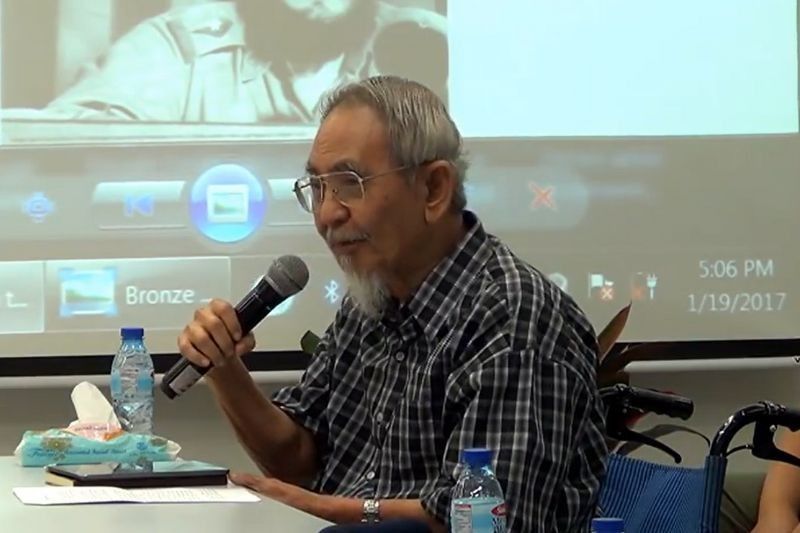
IT WAS with deep sadness that we received the news last week of the passing of Francisco “Dodong” Nemenzo, the staunch Marxist, nationalist, and former president of the University of the Philippines. My wife Beng and I are spending Christmas with our daughter in the US and being an all-UP family, we all knew Dodong and were much affected by his loss. Beng had been a student of Dodong’s at UP, and I was privileged to serve under him as his Vice President for Public Affairs twenty years ago. But long before this, I had met him as a student at the Philippine Science High School where his wife Princess taught us History; he came to pick her up in the afternoon in his Volkswagen Beetle whose door was emblazoned with the Bertrand Russell “peace” sign.

We will be missing the many memorial events that will surely be held in his honor these coming days, so I thought of recalling Dodong in a different way from what most of his colleagues and comrades will be speaking about him. More than ten years ago, I interviewed Dodong for a book I sadly have yet to finish, and he spoke with me about his life before he became the fighting ideologue everyone now remembers him to be. Let’s hear him in this abbreviated excerpt:

“We went back to Cebu after the war. Everything was still in turmoil. I enrolled at the Miraculous Medal School, a Catholic school, and completed my third and fourth grade there. By the time I reached fifth grade, Cebu Normal School was opened so I graduated from there. After sixth grade, I spent a year in the seminary in Cebu. That was my parents’ plan ever since I could remember. I was the only boy among three children, and the eldest. My parents were devout Catholics, and they considered it an honor when a member of the family became a priest or a nun. Since I was an only boy they wanted me to become a priest. I stayed there for only a year, and then I quit. That was probably the beginning of my radicalization. The seminary back then was run by Spanish or Vincentian priests who were supporters of Franco. They looked down on Filipinos and despised Rizal. 

“I went to the University of San Carlos. It was a Catholic school but my father was unhappy with the Science instruction. Our science textbook used the question-and-answer method and my father didn’t like that. He examined my notebooks every day and corrected what my teacher said. He got mad when we were taught creationism, and he lectured me on Darwin and evolution. I answered my teacher back and the principal reported me to my father for my heretical tendencies. My father decided to free me from this nonsense and transferred me to the Malayan Academy, a private non-sectarian school that had very good teachers. I finished near the bottom of my class, failing in Conduct and Tagalog. 

“I entered UP Diliman in 1953. The rule then was that you were exempted from the entrance exam if you had an average of 82, but my average was around 77 so I had to enroll in a summer institute that was like a backdoor into UP if you passed 6 units there. I didn’t know what course to take. My father didn’t want me to take up Law and wanted me to become a scientist like him, but I reckoned that if I did that, I would always be compared to him and come up short. So I chose a course called AB General. 

“The advising line was a mile long. Jose ‘Pepe’ Abueva, a friend of my father’s, passed by and saw me in the queue. He asked after me and I told him that I couldn’t think of a course I really wanted. He tried to sell me on Public Administration, but I didn’t like to serve in a bureaucracy. He said there’d be a lot of opportunities abroad, scholarships, and if I did well I could join the faculty. He had a lot of arguments, but the one that persuaded me was ‘If you join Public Ad right now, I’ll sign your Form 5 right away, and you won’t have to join this crowd.’ 

“That’s how I ended up in Public Ad. When the dean of Business Administration tried to recruit me and my (Pan Xenia fraternity) brod Gerry Sicat who was then in Foreign Service to go into Economics for our master’s, Pepe Abueva again swooped in and told me to take up an MPA instead, and to join the PA faculty immediately. So I became a faculty member in my senior year, just before my graduation, as an assistant instructor. I probably had the longest title in UP: ‘research assistant with the rank of assistant instructor, with authority to teach but no additional compensation.’ I really wanted to teach, but had no actual assignment. I only took over the classes of professors who went on leave. 

“I never joined the UP Student Catholic Action or UPSCA. Well, maybe for one year, but I was never active and then I got out of it. I joined only until I met an UPSCAn named Princess. We always met in Delaney Hall. We were together in the student council. She was representing Liberal Arts, I was representing Public Ad. I joined in 1955, my third year, along with Gerry Sicat, Manny Alba, and Jimmy Laya. I became a liberal and distanced myself from UPSCA. 

“I idolized (Philosophy professor) Ricardo Pascual. I was looking for a cause, but these liberals were just fighting for academic freedom with no purpose. It seemed empty. I was under the influence of Pascual for some time, but we had no advocacy. I joined a short course in Social Order at Ateneo on the papal encyclicals on labor. My liberalism and my growing social consciousness merged and I started reading Marx and Huberman on my own, to find out what we were fighting for. There were a couple of professors like Elmer Ordoñez and SV Epistola who according to Bill Pomeroy had already reached that level of consciousness, but when he left they became liberals, they weren’t really organized.” (To be continued)

(Photograph by Rick Rocamora, used with permission)

Qwertyman No. 122: On Writing as a Profession

Qwertyman for Monday, December 2, 2024

FOLLOWING THROUGH on last week’s piece about the challenges faced by creative writers trying to make a living in this country, let me share some further thoughts on that topic that I wove into my Rizal Lecture last week at the annual congress of Philippine PEN. My talk was titled “The Living Is in the Writing: Notes on the Profession of  Writing in the Philippines.”

Our writers of old made a profession of writing, often by working as journalists, speechwriters, and PR people at the same time that they wrote poems, stories, novels, and essays on the side. Some also taught, and of course some writing comes with that territory, but with teaching you get paid for your classroom hours than for your word count. (To which I should also add, so much of the writing that our literature professors do today is understandable only to themselves.)

Our best and most prolific writers lived by the word and died by it. The two who probably best exemplified this kind of commitment to writing—and nothing but writing—were Nick Joaquin and his good friend Frankie Sionil Jose. Both were journalists and fictionists (in Joaquin’s case, a poet and playwright as well). We can say the same for Carmen Guerrero Nakpil and Kerima Polotan, as well as for Gregorio Brillantes, Jose Lacaba, Ricky Lee, Alfred Yuson, Cristina Pantoja-Hidalgo, and Charlson Ong, among others. 

These were all writers whom you never heard to claim, as has been recent practice, that “I am a poet!” or “I am a fictionist!” They were all just writers, for whom the practice of words was one natural and seamless continuum, and a profession they mastered just as well as we expect doctors, engineers, mechanics, and lawyers to do. This was also when journalists could be poets who could also be politicians and even reformers, revolutionaries, and heroes.

This was paralleled in other arts such as painting, where artists such as Juan Luna, Fernando Amorsolo, and Botong Francisco routinely accepted commissions to support themselves and any other personal undertakings. (Of course, this was well within the old Western tradition of writers and artists having wealthy patrons to help keep them alive and productive.)

But then came a time when, for some reason, creative and professional writing began to diverge, as creative writing withdrew from the popular sphere and became lodged in academia, where it largely remains today. Professional writing, or writing for, money, came to be seen as the work of hacks, devoid of art and honor. Even George Orwell urged writers to take on non-literary jobs such as banking and insurance—which incidentally T.S. Eliot and Wallace Stevens did, respectively—rather than what he called “semi-creative jobs” like teaching and journalism, which he felt was beneath them. (Orwell himself worked as a dishwasher in Paris, where he wryly observed that “nothing unusual for a waiter to wash his face in the water in which clean crockery was rinsing. But the customers saw nothing of this.”)

An attitude of condescension soon emerged among poets and fictionists who looked down on journalists as a lesser breed—something I have always warned my students against, having been a journalist who had to turn in a story, any story, by 2 pm every day on pain of losing my job. Never knock journalists. Let’s not forget that when it comes to facing real dangers brought on by one’s written word, poets and fictionists have it easy. The last Filipino novelist who was shot for what he wrote was Jose Rizal; the only writers dying today are our journalists and broadcasters in the hinterlands offending the local poobahs. Governors and generals read newspapers, not novels; they are impervious to metaphor.

Professional writers, on the other hand, saw creative writers as artsy dilettantes enchanted by fancy words and phrases that no one else understood and very few people paid for. Creative writers took it as a given that they were wedded to a life of monastic penury, unless they had another skill or job like teaching, doctoring or lawyering, or marrying into wealth. It even became a badge of honor of sorts to languish in financial distress while reaping all manner of writing honors, in the misguided notion that starving artists produced the finest and most honest work. 

The fact is, both are two sides of the same coin, which is the currency of public persuasion through words and language. One is an artist, the master of design; the other is the artisan or craftsman, the master of execution. Both can reside in the same person, unless you’re foolish enough to disdain one or the other. You can produce great art, if you have the talent, the discipline, and the hubris for it; but you can also live off your artistic skills, if you have the talent, the discipline, and the humility for it. 

(That said, I have to report that in my forty years of teaching creative writing, some of the students who find it hardest to switch to fiction are journalists, who just can’t let go of the gritty and often linear reality they’ve been accustomed to; poets come next, those who feel preciousness in every word and turn of phrase, so much that they can’t move from one page to the next without agonizing, or, going the other way, without drowning us in verbiage.)

This was why, more than twenty years ago, I designed and began teaching an undergraduate course at the University of the Philippines called “CW198—Professional Writing.” Mainly intended for Creative Writing and English majors who had very little idea of their career options after college aside from teaching, the course syllabus includes everything from business letters, news, interviews, and features to brochures, scripts, speeches, editing, publishing, and professional ethics. The first thing I tell them on Day One is this: “There is writing that you do for yourself, and writing that you do for others. Don’t ever get the two mixed up.”

Qwertyman No. 113: My Lessons from Martial Law

Qwertyman for Monday, September 30, 2024

I WAS recently invited by a student organization at the University of the Philippines to speak to them about my martial-law experience, given that I had been a student activist in UP during what we called the First Quarter Storm, had been imprisoned, and had, against all odds, survived into a reasonably comfortable old age. It occurred to me, as I entered the SOLAIR building in Diliman where the event was going to be held, that I had last stepped into that place as a 17-year-old activist back in 1971 (that’s me in the picture, second from right, in that building). What had I learned since then? Here are some points I raised with my young audience:

1. We were always in the minority. Even at the height of student activism in UP and in other universities, those of us whom you might call truly militant or at least progressive were far smaller in numbers than the majority who dutifully went on with their studies and their lives and saw us as little more than a rowdy, noisy bunch of troublemakers. And the fact is, we were still in the minority in 2022, which is why Leni lost (yes, even in Barangay UP Campus). This bears emphasizing and thinking about, because sometimes we fall into the trap of believing that since we think we’re so right, surely others must think the same way. Which brings us to my next point.

2. We have to learn to communicate with other people with different views. The phrase “echo chamber” often came up in the last election, and with 2025 looming, it’s even more vital that we master modern propaganda as well as the other side does. This means sharper and more effective messaging. Enough of those two-page, single-spaced manifestoes written in the Marxist jargon of the 1970s and 1980s and ending with a string of slogans. Learn how to fight the meme war, how to navigate and employ Tiktok, Twitter/X, Facebook, Instagram, Youtube, and all the arenas now open in digital space.

3. When talking about martial law, don’t just dwell on it as the horror movie that it was for some of us. True, many thousands of people were killed, tortured, raped, imprisoned, and harassed. True, the trauma of that experience has lasted a lifetime for those involved. But most Filipinos never went through that experience, adjusting quickly to the new authoritarianism; many even look back to that period with nostalgic longing. That’s proof of martial law’s more widespread and insidious damage—the capture of the passive mind, and its acceptance or denial of the massive scale of theft and State terror taking place behind the scenes. Martial law imprisoned our minds.

3. People change; you could, too. One pointed question I was asked at the forum was, “Why is it that some very prominent student activists turned their backs on the movement and went over to the dark side?” It’s true—many of the shrillest Red-taggers we’ve seen these past few years were reportedly once high-ranking Reds themselves. So why the 180-degree turn? Well, it’s perfectly human, I said, trying to be as kind as I could, despite being at the receiving end of some of that calumny. People can hardly be expected to stay the same after twenty or forty years. Even if many if not most of my generation of activists have remained steadfast in our quest of the truth, freedom, and justice, one’s definition of exactly what is true, free, and just can change. Some people change their stripes out of conviction; some others do it for the oldest of reasons—money and power, or sheer survival. I’m saddened but no longer surprised by brazen betrayal. I learned from martial-law prison that people have breaking points, and some thresholds are much lower than others. 

4. We have to admit we were wrong about some things. This will vary from person to person, and there’s a line that could even constitute the “betrayal” I mentioned above. Some fellow activists will probably disagree with me on one of these key points: armed struggle didn’t work, and it won’t, not in the Philippines nor anytime soon. However we feel about the subject, the fact is, one armed Filipino revolutionary force or other has been at it for more than 80 years now—“the world’s longest running insurgency” as it’s often been referred to—with little gain to show for it. I don’t mean to denigrate the noble and heroic sacrifice of the thousands who gave up their lives fighting what they believed was a brutal dictatorship—many were personal friends—but how many more lives will it take to prove the efficacy of revolutionary violence, one way or another?

5. That leads me to the last point I made to my young listeners: live, don’t die, for your country. We can and will die for it if we absolutely have to (especially us seniors who have little more to lose), but today’s youth have options we never did. In the 1970s, if you were young, idealistic, politically aware, and daring if not brave, you could not but conclude that something was terribly wrong with Philippine society, and that change was badly and urgently needed. You chose between reform and revolution—and it was only a matter of time before you became convinced that the latter was the only way forward. 

Agreed, the basic problems of Philippine society may not have changed much—but one’s ways and means of addressing them have. The growth of civil society—the proliferation of NGOs covering a broad range of causes and concerns—offers practical, focused, peaceful, and professional alternatives to young people seeking social and economic change. One need not embrace the burdens of the entire nation, only to feel inadequate or ineffectual; one can do much if not enough by improving the lives of families and communities. Beyond feeling sorry or guilty for those who fought and died as martyrs, do what you can as a living, intelligent, and capable citizen to create a better Filipino future to the best of your ability.

If this sounds like the voice of a tired old man, it is. I’m tired of death and despair; I choose to fight for life and hope. 

Penman No. 465: Back to the Nineties

Penman for Sunday, August 11, 2024

AMONG THIS year’s most interesting new books is one that’s neither a novel nor a political exposé, but a musical chronicle of a decade that many Filipinos now look back on with a certain nostalgia, albeit for different reasons—the 1990s.

Say “the Nineties,” and a range of responses will come to mind depending on how old you were then. For today’s seniors, the core of it was likely FVR’s infectious optimism over “Philippines 2000,” the relative stability we had gained after the anti-Cory coups and in anticipation of our centennial in 1998. For those younger but old enough to drink beer, it was the age of the Eraserheads, Clubb Dredd, the ‘70s Bistro, and Mayric’s, an explosion of OPM like we had seen back in the 1970s but with a harder and sharper edge.

It’s that latter scenario—set against the context of our transition from Cory to FVR to Erap—that’s captured in Susan Claire Agbayani’s landmark Tugtugan Pamorningan: The Philippine Music Scene 1990-1999 (University of the Philippines Press, 2024, part of the Philippine Writers Series of the UP Institute of Creative Writing). An indefatigable cultural journalist, publicist, and sometime concert producer (and also, I must proudly admit, my former student), Claire was among the very few writers who could have undertaken this job (Eric Caruncho, Jessica Zafra, and Pocholo Concepcion, all of whom she cites, would have been the others). 

Comprehensively, the book’s chapters cover bars and concerts, the music scene, personality profiles, duos and trios, pop/jazz/R&B/show bands, alternative/rock bands, the Eraserheads (yes, a chapter all to their own), Mr. and Mss. Saigon, and visiting acts, rounded out by a gallery of period pics.

As a compilation of pieces from Claire’s reportage at that time, the book revives not only the music but also the issues besetting the industry then, such as Sen. Tito Sotto’s wanting to ban the Eraserheads song “Alapaap” for supposedly promoting drug abuse. Priceless vignettes abound, such as that of Basil Valdez singing “Ama Namin” to composer George Canseco’s wife over the phone, three days before she died, and of Ely Buendia telling Nonoy Zuñiga that he had won a singing competition in school with the latter’s “Doon Lang.” We learn about Humanities teacher and all-around performer Edru Abraham’s Lebanese ancestry and how it connects him to world music.

The best scenes, I think, are the saddest ones, such as this piece on a jazz diva:

“She goes around greeting the waiters, then the manager. At last, she sits on a stool, and croons ‘Left Alone,’ the song after which the bar was named. She closes her eyes, closed them more tightly as a couple walks out in the middle of her song. The waiters laugh loudly in the background, occupied with their own concerns. Those who remain inside the bar talk not in whispers. No, they don’t know her. They don’t know Annie Brazil.”

But ultimately it’s the music, the sheer variety and vitality of it, that surges through, so innate to the Filipino and so necessary. If there were an Olympics for music, we’d make the podium in all the categories, and Tugtugan Pamorningan reminds us why. As the title implies, it’s a nightlong festival for us when the music starts. But like night itself, even the Nineties came to an end, with the 2000s bringing in MP3, iTunes, and Spotify, and somehow the smoky, small-bar intimacy that the previous decade connoted gave way to Taylor Swift mega-concerts that people actually flew out to instead of taking a taxi.

I contributed an afterword to the book, so here’s a bit more of what I had to say:

I was a bit too old by the time the ‘90s came along to experience it in the way Claire has so capably and faithfully chronicled in this book, but still young enough to imbibe its energy and its excesses. I was 36 in 1990, finishing my PhD in the States, and when I returned to Manila the following year after five years of being away, I found a radically different scene from the one I’d left just after EDSA. I had a lot to adjust to, and somehow San Miguel beer and the city’s new nightlife seemed to ease those pains, at least until the next morning. 

That was how, despite being too old to know the Eraserheads and their music, I managed to stumble once or twice into Club Dredd, Mayrics, the ‘70s Bistro, and a few other meccas mentioned here, but mostly just out of curiosity. I guess I was looking for something else, and found it on Timog Avenue with my partners-in-crime Charlson Ong and Arnold Azurin, finishing up with some coffee or a beer for the road at Sam’s Diner on Quezon Avenue at 3 am. I wasn’t even a Penguin person—I never thought of myself as being hip or cool—and I preferred hanging out with journos after work in that kebab place on Timog.

That was my life as a barfly—which was also how my newspaper column got that title—and its soundtrack consisted of Basia, Bryan Adams, and “Total Eclipse of the Heart.” I wasn’t much into bands—no one could beat the Beatles—and OPM for me meant APO and Louie Ocampo, whose songs were singable and could make me smile, which I needed a lot. It was a wild time, when I was smoking and drinking and messing around town in my white VW, courting disaster, until one day I found my way home and decided to stay there forever.

That makes the ‘90s sound like some kind of inferno, but now that I think about it, it was the last gasp of innocence before the 2000s and everything we associate with it—9/11, GMA and Erap, the Internet, the iPod, social media, K-pop, tokhang, Trump, the pandemic, the Marcos restoration, and AI—came in. There was a simple-mindedness even to our vices then; truth was truth, fake was fake, and it was easy to tell one from the other. It was rough and raw in many ways—even our 14.4K modems screeched like cats in heat when they connected—but we still got wide-eyed about the possibility of extra-terrestial menace in The X-Files, and we may even have believed that FVR’s “Philippines 2000” was going to be a better place even as we got worried sick over what Y2K would bring, so there remained a tender spot of credulity in us.

That’s all gone now, like Jacqui Magno’s voice, replaced by CGIs, deep fakes, and other synthetics produced by FaceMagic and ChatGPT. 

I can’t honestly say that I miss the ‘90s, and I feel much relieved to have survived them, but there’d be a huge hole in my life—and in the nation’s—if they didn’t happen. What’s in that hole is what’s in the music Claire writes about—and the music often gets it better than even we writers can.

Qwertyman No. 105: Pronouns and Parodies

Qwertyman for Monday, August 5, 2024

SOME DAYS, I swear, when I open my Facebook feed, I’m met by a flood of vexatious opinion certain to trigger my worst reflexes. Much as I’m tempted to respond, I rarely do, knowing that FB comments don’t really soften hearts and minds, but only make them harder. Also, I’m not the witty sort with one-liners that will go viral; my thoughts and words like to ramble and even lose their way, but at least you know it’s not AI or the “Forward” button at work.

Two topics did get me worked up a bit last week, and I’m going to use this column to write the kind of longish social-media comment no one will read. You’ll recognize both issues instantly if you haven’t been living under a rock.

The first was that picture of a seated gay “personality” (I’m never quite sure how persons become “personalities”) lecturing a waiter standing at parade-rest, reportedly for two hours, on gender sensitivity, all because he called her “Sir.” 

There’s a part of me that understands how and why that happened. Some will call this silly wokeness, but in UP, we take our students’ preferred pronouns and names seriously as a sign of respect for the person. 

But what I also know is, when I teach, I stand and my students sit. That’s not to emphasize my authority, but so they can relax, listen, and hopefully imbibe what I’m telling them. I realize that the lady said she invited the waiter to sit down, but I also understand why he declined. Staff don’t sit for a chummy chat with customers. And imagine this: if I (an old man, dirty or not) were the customer and I felt poorly served by a female employee, and I asked her to sit at my table for two hours while I educated her on the finer points of etiquette, would or should she oblige? And I hate listening to or giving long lectures. If I can’t get something across in twenty minutes max, then I’m a lousy teacher.

There’s politics which can be good and right—and people who may not be. Some of the most politically savvy people I’ve met have also been, as some would say, that part of you where the sun don’t shine. 

The other hot topic, of course, was the “Last Supper” tableau at the opening ceremonies of the Olympics in Paris, which allegedly mocked the Lord and Christianity itself by replacing Jesus and his apostles at the long table with a raft of drag queens and other presumably degenerate characters. 

I never saw so many Christians and especially Catholics (some of them my good friends) come out of the woodwork to profess their outrage at what they took to be willful sacrilege. And predictably, like wolves sniffing out red meat, many more friends from the other side piled on the “offendees” with mini-treatises on Bacchus and bacchanals, pagan elements in Christian ritual, art criticism, the French mentality and sensibility, and such other topics worthy of dissertations.

Now, as I’ve often confessed in this column (maybe losing five readers and FB friends every time I bring it up; in this context, maybe more), I’m not much of a churchgoer, and have continuing issues with the religion I was born into—and with all of organized religion for that matter, despite growing up in Catholic school. I prefer to pray on my own. I have nothing against people who stay in the fold, go to Mass regularly, post daily proverbs on Viber, and believe in the Bible as the one and only true source of, well, the truth. If their faith keeps them whole and happy—and I can see in many cases that it does—then well and good. Some may be hypocrites, but I’m sure many or most aren’t—and there are hypocrites as well (and worse) among apostates like me.

But back to Paris. What I’m not going to say is, “You shouldn’t have been offended.” If you were, you were. Even if you later changed your mind after listening to all the learned explanations (to some, I’m sure, excuses), the fact is, you saw something you didn’t like. (I just have to wonder—how many people responded directly to the tableau itself, and how many were nudged into seeing it and later objecting by another post screaming, “Hey, you have to see this! Look what they’ve done to Jesus!”? It works the same way on the right and on the left: a meme cascades swiftly down the Internet, and people react viscerally even before they can think.) 

Sure, the “Last Supper” is only a painting by one Leonardo da Vinci, that smart Italian fellow who also imagined flying machines, tanks, and other wonderful contraptions—so why not Jesus’ last meal? (I don’t think there’s an exact record in any of the four Gospels about how the scene was blocked for thirteen characters, except that Christ very likely sat in the middle for better reach, and certainly nobody knows who sat next to whom and leaned over whom. Some depictions down the centuries don’t even use a straight table but an inverted U, or have everyone reclining on mats and pillows, or sitting in a circle.) But even images and objects have symbolic meaning and power, so it’s easy to get hopping mad if someone, say, spits on a painting of your grandmother, or turns it into an unflattering cartoon. 

I do share the consternation over why a hyper-expensive and PR-conscious global enterprise like the Olympics would risk alienating half of France and a third of the world (presuming all Christians took umbrage at the Blue Guy) by—according to the charge sheet—deliberately, premeditatedly, and maliciously mounting a patently anti-Christian production for the whole planet to see. I know the French eat strange things like sheep testicles and have a law requiring skimpy trunks and head caps (yes, even if you’re bald) in public pools, but really now, mock the Last SupperSacré Dieu! (Or, excuse me, let’s use the milder sacré bleu!)

Given all of that, my only question is, where was all the outrage when that President was joking about raping captive nuns and cursing the Pope? And speaking of the Renaissance and the power of representation, remember that Pieta-like photograph of a grieving mother cradling her murdered son at the height of that same President’s tokhang campaign, that President who called Catholic bishops “gay SOBs”? Where was all the righteousness? But maybe we’re just getting started. There’ll be FB accounts I’ll be checking in on, the next time something wildly repulsive happens.

(Image from arnoldzwicky.org–Please condemn him. not me!)