Penman No. 284: A Passion for the Past

IMG_3975.jpeg

Penman for Monday, January 1, 2018


DESPITE THE fact that I write biographies and institutional histories, I’m not a historian and have never claimed to be one. But some days I wish I were. Back in 1981, when I was re-entering UP after dropping out for ten years as a freshman, I chose between History and English as my professed major, and settled on English only because it offered the faster path to follow, to make up for lost time. But if truth be told, in more leisurely circumstances, I would have preferred to study History, and thereby learn Spanish and even some Latin.

That’s because I’m fascinated by the past—by what happened, and by “what if”; I suppose that becoming a writer of fiction satisfies some of that curiosity (one always has to imagine and construct a past that never really happened but could have, for one’s characters). I’ve indulged that curiosity by collecting vintage fountain pens, surmising the words of love, pain, loss, and hope they would have inked for their long-vanished owners.

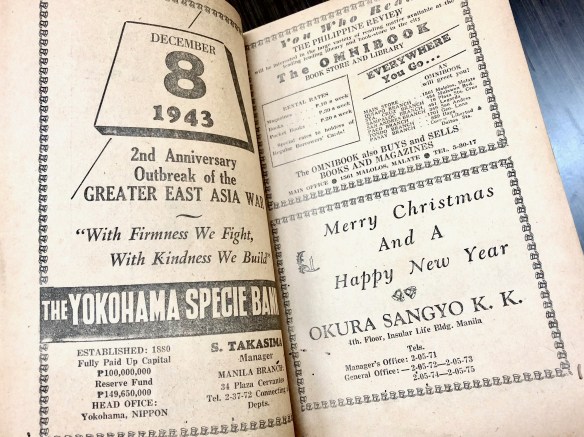
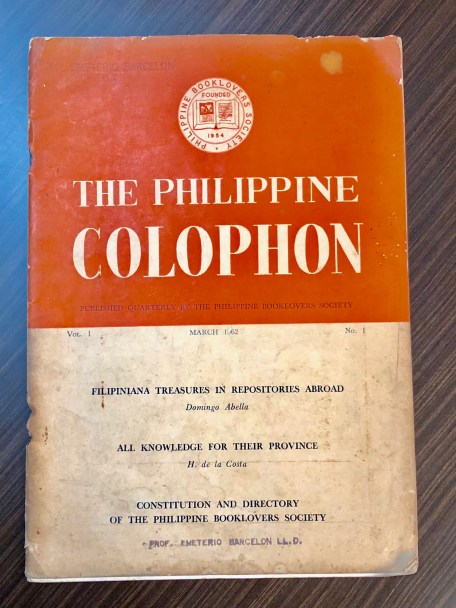
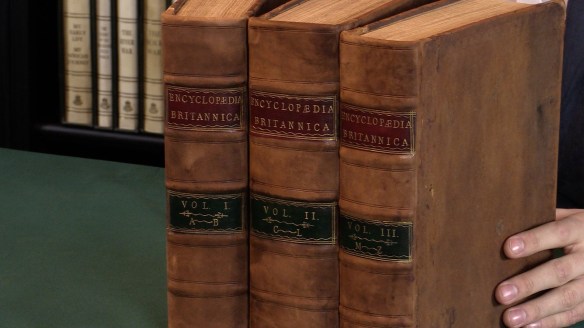
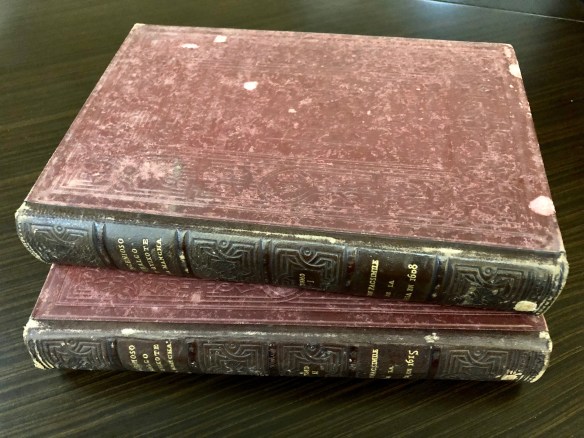
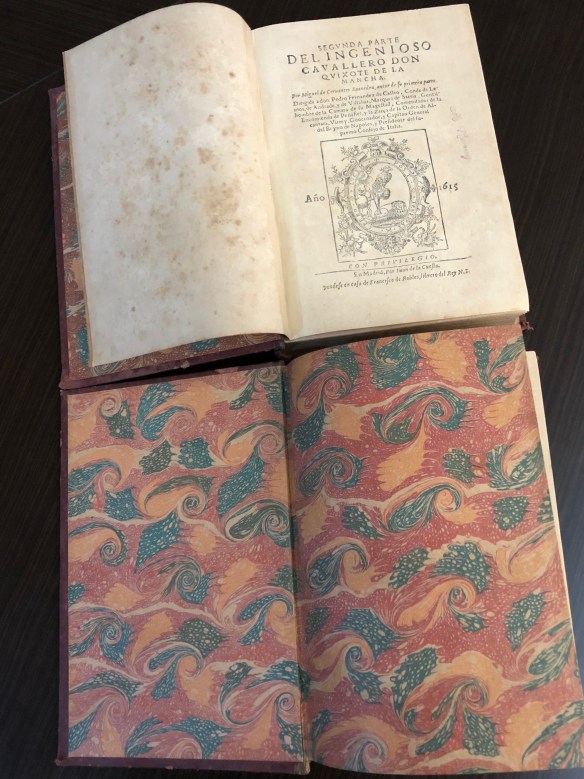
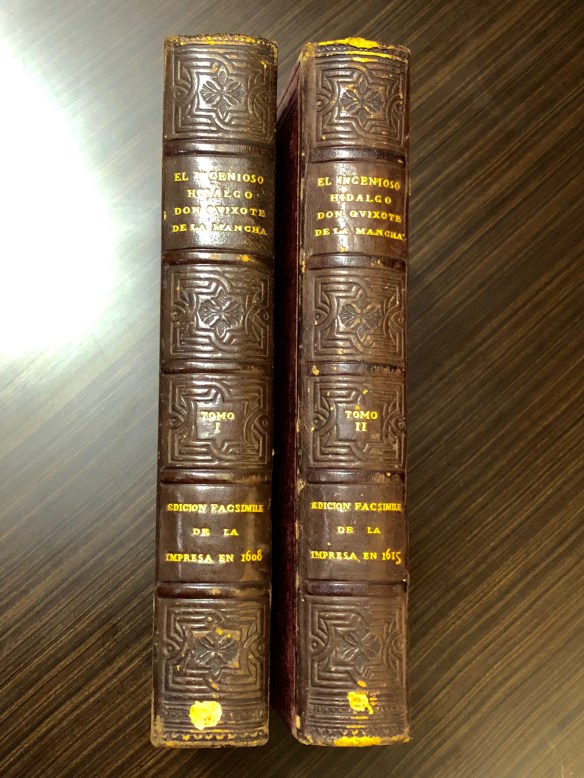
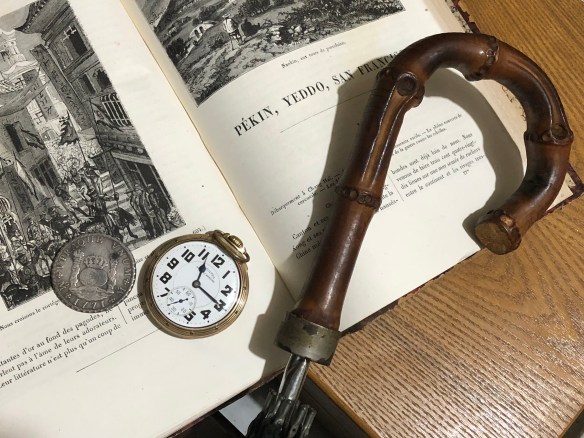
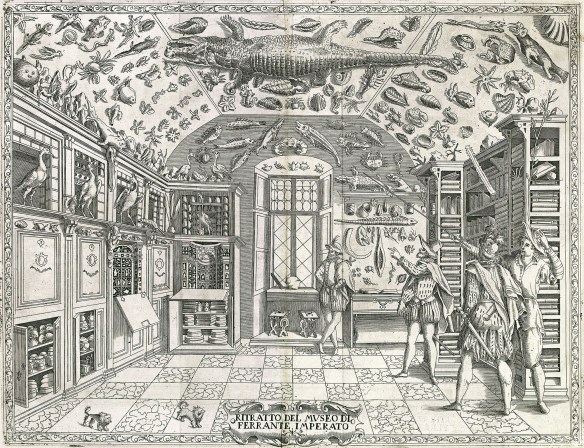
But more recently I’ve been edging into a new area of interest—old books and manuscripts. I’ve had the odd book from the 1800s and some beautifully handwritten documents from Spanish times, but my passion took a more serious turn with the acquisition, on eBay and elsewhere, of some rather more precious pieces. I often bring these specimens—like my December 1922 Philippine Collegian—to my classes, so my students can appreciate the material reality of the past and understand that the world, time, and society didn’t begin with the Internet and Facebook.

About a year ago, I picked up a first English edition of a book I’ve enjoyed (in paperback) since the 1970s—Paul P. de la Gironiere’s Twenty Years in the Philippines, later expanded into Adventures of a Frenchman in the Philippines. Gironiere was an adventurer who came to the Philippines from France in the early 1800s and established a large estate in Jalajala, on the shore of Laguna de Bay. He wrote about his exploits, and the original French came out in an English edition in 1853. I found a copy of that book on eBay, from the UK.

38985878042_bf134a46f3_b.jpg

38985877652_490a1afe80_b.jpg

Now, 1853 is pretty old, but that would soon be surpassed by another irresistible find: a book of letters written by the Jesuit missionaries in the Philippines, published in France in 1706. The Jesuits arrived here in 1581, so the book—part of a century-long series called the Lettres Edifiantes, covering their missions around the world—is full of stories. I may not be an Atenean and my French is very poor, but I can discern marvelous adventures and great historical importance in this volume, which I found in California.

27498055959_fffba7d055_b.jpg

IMG_4230.jpg

Before this, I actually had something older: a page of a German book from 1632, which I picked up at the Frankfurt Book Fair last year. But nothing could top the elation of a discovery I made just this Christmas Eve. I was idly browsing olx.ph; not finding any interesting pens, I searched for “antiques,” and stumbled on what was clearly a very old book in English from 1551, printed in Gothic blackletter. I made what I thought was a fair offer, and the seller texted back quickly to accept it; he’d been trying to sell it for a year with no takers, so my offer seemed timely, given the season. He said he was in Cubao; I said that in that case, I’d just drive over to pick it up. I saw the ad around 6:00 pm and by 7:00 the book was in my hands.

IMG_4127.jpeg

It’s nothing outstanding on its own—an abridgment by the churchman Thomas Langley of an earlier book, De inventoribus rerum, by Polidore Vergil, an Italian scholar, a kind of history of institutions like the Catholic Church (Vergil’s book got him in trouble with the church, which put it on its index of banned books). But I’m amazed by the fact that it’s survived quite handsomely for its 466 years—the pages are crisp, the leather binding firm—and charmed by the marginal notes of one of its owners, a Hugh Davies from 1650, written in extremely fine point with a quill, using sepia ink. When this book came out, Shakespeare (1564-1616) hadn’t even been born yet; the sacking of Manila was still 20 years away.

And how ever did it travel from London to Cubao across five centuries? My seller told me that his mother was a caregiver in Paris, whose clients gifted her with all manner of odds and ends—old books, Russian banknotes, silver spoons—and so the Pinoy diaspora once again works amazing wonders, bringing the flotsam and jetsam of history to our distant shores.

As I’ve often noted, the most wonderful thing about the past is that it’s over, especially when you think about all the terrible wars, the hardships, and the filth people had to endure just to get where we are today. But in a more romantic mood I can imagine myself strolling down the Escolta in the mid-30s in a white linen suit and straw hat, stepping into the Crystal Arcade or Heacock’s to scoop up the newest Parker Duofolds and Vacumatics. If you visit my office in UP, the magazine you’ll find on my visitor’s table won’t be from last month, but from February 1934. This will soon be joined by another magazine—indeed, the very first publication to use “magazine” in its title—the London-based Gentleman’s Magazine, issue of November 1773, and by a copy of the Illustrated London News, showing Taal Volcano, from February 4, 1860.

The past (or should I say eBay?) is truly inexhaustible; I only wish I could say the same for my finances. Happy New Year!

29865499124_9395dcd754_b.jpg


Penman No. 283: (Happy (Digital) Anniversary

ebay2

Penman for Monday, December 25, 2017


IT USED to be, in simpler times, that we marked and celebrated only the most meaningful of anniversaries—birthdays, weddings, the passing of loved ones, and maybe the day when we became a lawyer, a professor, or a boss. In my case, things got even simpler because Beng and I decided to get married on my 20th birthday (44 years ago in a few weeks). It’s a decision I’ve regretted since—not the marriage, but the twinning of these events, because it would have been nice to have two separate days and two separate excuses to celebrate.

But in this era, when relationships don’t seem to last much longer than cellphone batteries and when people can instantly “unfriend” each other for the most peevish of reasons, anniversaries have become precious things, with millennials having to invent such clumsy portmanteaus as “monthsaries” or “mensversaries” to find relief in the completion of another month’s tetchy togetherness.

And then there’s the turn of the consumer year that merchandisers won’t let you forget; if it’s September, then it’s not only the start of Yuletide in the Philippines, but also the inevitable announcement of the new iPhone X, Y, or Z (accompanied by a deep intake of breath as the awesome new gadget is unveiled, followed by the gnashing of teeth once the price is mentioned).

And yes, of course, I have the new X, which I was intrigued by but surely didn’t need—people my age could have lived happily ever after with the iPhone 4s, if truth be told—but I felt like rewarding myself for having stuck with the iPhone for ten years since the first one came out. That’s what anniversaries usually do—compel you to repeat a lunatic act. (Those of us now screaming about the X’s price tag will do well to remember that the first one, with all of 16 gigs of memory, cost a princely 45K in September 2007, plus another 5K to hack for use with local telcos. And before anyone subpoenas my SALN as a UP prof, I got my X at a steep discount through my telco, by hocking my soul for two more years.)

The decade-defining X reminded me of two more anniversaries that fell this year, of the kind that makes sense only in the context of our new digital reality, where a few years might as well be a lifetime in terms of changes in the way we think and work.

Last December 17, I marked my 20th year on eBay, which means I’ve been a digital consumer for longer than some of my students have been alive. EBay began as Auction Web in 2005, but it was in September 1997 when it opened shop as eBay, so it turns out that I signed up just a few months after its official launch. My first eBay purchase was a 1950s Pelikan 140 fountain pen from Germany, which stayed with me until I foolishly sold it a couple of years ago; my most recent one this month, again from Germany, was a 1950s Montblanc 234 ½ fountain pen—how odd is that? (But perhaps no odder than another recent acquisition—a book of letters of the Jesuits in the Philippines to the King of Spain, in a French edition published in 1706.)

DPb-BQ_UEAAmCOg

Between those two purchases lies a long green trail of about 1,000 other eager buys (my 100%-positive feedback score stands at 869)—mostly pens, watches, and books, but also computers, phones, spare parts for everything, and things you can’t get from any store (like original Apple shirts, the blue ones Apple Store employees wear). Like the cliché goes, one man’s junk is another man’s treasure, and I’ve very often been that other man, crazy and willing enough to take your grandfather’s Parker 51 or that weird-looking Hamilton Piping Rock (yes, that’s what it’s called) off your hands.

Friends scared of doing business online often ask if I’ve ever been scammed or burned on eBay. In those hundreds of transactions, maybe two or three times, I either never received what I bought, or got something else; but since eBay has an ironclad guarantee, I got refunded in the end. Presuming you take the right precautions—examine advertisements down to the minutest detail; read feedbacks (although they’re not infallible); know your product; review its price history, etc.—eBay’s safe and easily the world’s largest bazaar open to Filipinos. My only word of caution: it can get addictive, especially since it’s cashless; expect your PayPal/credit card bill to soon read “eBay eBay eBay…”

My other anniversary thankfully came free: last March, I marked my tenth year on Twitter. Ironically, I’m not much of a social-media guy, and that Twitter account (@penmanila), which I must’ve opened in 2007 on a whim, lay dormant for most of that decade until two years ago, when—uhm—a certain candidate in a certain election got me so worked up that I quickly found my meek and gentle self embroiled in a full-scale Twitter war with a vandal army. (“Something wicked this way comes,” I tweeted, quoting Macbeth; it didn’t stay that lofty or that literate for long.)

Wicked

I’m now up to 760 tweets, and counting—still nowhere near the many thousands that my younger readers have unleashed upon the universe, but old guys think more slowly and our fingers take more time to travel across the keyboard. That’s actually good for social media and its trigger-happy culture, and I can only wish I were that pokey and that deliberate on eBay.

Still, happy anniversary, and Merry Christmas, all!

Penman No. 282: Never Enough Patriots

IMG_4055

Penman for Monday, December 18, 2017


(THIS IS the last of three parts of my recent talk on “Celebrating Arguilla” at the Taboan Literary Festival in Bauang, La Union.)

Leonard Casper and Joseph Galdon aver that Manuel Arguilla’s best stories are those in the pastoral tradition, and I would agree that “Midsummer” is in a class all its own, but who knows what else he would have written, given ten or twenty more years? Stories like “Elias” convey less surface beauty than his pastorals, but in some ways are more resonant; his last story, “Rendezvous at Banzai Bridge,” is something of a psychological thriller.

This brings to me my main point, which is to propose that to celebrate Arguilla is to recognize and embrace his complexity and even his seeming contradictions. In a sense, he prefigured the situation of many Filipino writers today who find themselves caught between burning local issues and the seductions of the global. The Third World is the new Nagrebcan, and what lies beyond it the new metropolis.

One thing we have to note of Arguilla’s work is that he wrote in English—indeed, a very refined and educated English—which tells us that while he wrote tirelessly and affectionately about the farmers of Nagrebcan, he wasn’t writing to be read by them. That’s not an accusation—only an observation of the fact that Arguilla was very much a member of his literary milieu, a milieu inflamed by proletarian ideals but one that still conducted its passionate debates in English.

Many years ago, as a graduate student in Milwaukee, I found a copy in an old bookshop of the March 1936 issue of Story Magazine, America’s pre-eminent fiction publication then, featuring Sinai Hamada’s classic love story, “Tanabata’s Wife.” (I later gave that copy to the Hamadas in Baguio.) The author’s notes mentioned that Hamada had been preceded just the month before by another Filipino writer named Manuel Arguilla and a story titled “How My Brother Leon Brought Home a Wife.” Since then I tried to locate that issue, and more than 25 years later, I received it, as a gift from a friend who knew I had been looking for it. The note on the author doesn’t say much, only that “His biography has yet to reach us.” I also just recently acquired, on eBay, a copy of The Prairie Schooner from the Fall of 1935, where can be found a story titled “Midsummer” by Manuel Arguilla. This same journal would also later publish his story “Heat.”

All of these stories—including that of Hamada, who was younger than Arguilla by a year—had already been published in the Philippines. But they still sent them for publication in the US, because it was apparently important for them to do so in their time, just like we seek to be internationally published today not just to find more readers, but to be validated in the global society of letters.

They were young men in their early 20s, brimming with talent and ambition. All they wanted was to write, to be published, and to be read, just like all of you here today. And like many of you, they were outspoken about their beliefs, eccentric and maybe even offensive in certain ways, but totally dedicated to their craft. We lionize them today for good reason, but in truth, as persons and as writers, they were far from perfect, which also means that we can be like them.

Even after his martyr’s death, critical views of Arguilla’s work and legacy have varied widely. Indeed, among his peers, there seems to be a qualified dissatisfaction with his fiction that some of us today would find strange, if not unkind.

As I was preparing for this talk, I was elated to find, in my stash of old literary journals, a copy of the 1952 Literary Apprentice, where five writers—Lyd Arguilla, Ligaya Victorio Fruto, Francisco Arcellana, Edilberto Tiempo, and Alejandrino Hufana—shared their reminiscences of Manuel Arguilla in short personal essays. Lyd sweetly remembers the man and the husband—his bellowing laughter, his flair for fashion, his love of swimming, dancing, jazz, and poker (at least we share something), of Shakespeare, and above all of writing. Ligaya savors the “champaca-laden atmosphere” of the porch at the Arguillas’ house on M.H. del Pilar and the carefree banter of Manila’s prewar literary set, the names and initials of the notables—AEL, AVH, Estrella, Daisy and Bert, SP and Mary, and someone simply referred to by his surname Villa—dropping like cookies along some magical pathway. It all vanishes, of course, in the devastating war that sweeps in from just around the corner—the house, the company, the laughter, the floral fragrance.

Five years Manuel’s junior, Franz recalls Arguilla writing him a letter, urging him to “be true to your real self,” and gifting him with a book with that now famous inscription, “To Francisco Arcellana, May he put more life into his art and less art into his life.” Remarkably, Franz’s memoir ends with a candid admission that “the only thing that pleased me about him was his writing—when he wrote short stories. I didn’t like being lectured to, not even by him…. I shall never be able to forgive him his patriotism. He was no patriot…. He was a writer of short stories. He should have left patriotism alone…. We have many patriots. We don’t have too many writers.”

Ed Tiempo recognizes that “the outstanding gift of Arguilla is his sense of people, his characters,” but adds quickly that “people alone do not make successful fiction.” Ever the traditionalist, Tiempo looks for clearer meaning and coherence in Arguilla’s fiction, but grants that “because we accept the authenticity of the small details, there is something coercive even in (his) unconvincing characters.” Alex Hufana, another son of La Union, does a close reading of “How My Brother Leon Brought Home a Wife” and pronounces it authentic, praising the author for keeping “his hand cool even as they hold hot soil—decorum required of him as an artist.”

Whatever your own estimation of Arguilla may be, you will probably agree with me that at his best, he delivered what I tell my students should be the hallmark of a great story: it should not only be well written, but it should be moving, and it should be memorable.

What Arguilla teaches the young writer is that technical excellence alone is not enough. Too many writers exhibit little more than cleverness and linguistic virtuosity, with hardly any emotional impact or lasting effect. He also reminds us what a vast country we have, much larger, richer, and more complex than Starbucks, Facebook, and the Marvel and DC universe, and that a “real” writer, to use one of his favorite words, is one immersed enough in his or her society to recognize both beauty and brutality in the same place.

Franz Arcellana bemoans Arguilla’s loss to patriotism, but that too tells us something we often forget: that there are things more important than writing or literature, and country is one of them. In a war that tore through and across classes and across beliefs, Arguilla died for his country—not for literature, not for socialism, not for his class; well, maybe for Lydia, which makes him even more of a hero to me. With all due respect to my old teacher Franz, we have writers aplenty; of patriots, especially these days, we can never have enough.

IMG_3828

(Photo of Manuel Arguilla’s ancestral home along the National Highway in Bauang, La Union.)

Penman No. 280: Handfuls of Fragrant Hay

17565288453_db927cdd63_b

Penman for Monday, December 4, 2017


I WAS asked to give a keynote address at this year’s Taboan Literary Festival in Bauang, La Union on the subject of “Celebrating Arguilla”—Manuel Estabilla Arguilla, the writer who was born in Nagrebcan, Bauang, 106 years ago. I’ll share that talk in three installments starting this week.

“Celebrating Arguilla” seems simple enough. After all, who hasn’t read and enjoyed “Midsummer” or “How My Brother Leon Brought Home a Wife,” or pondered the social implications of “Caps and Lower Case,” to mention three of his most familiar stories?

But right there is a huge difference in theme and sensibility between “Midsummer” and “Caps and Lower Case,” which might as well have been written by two different people. How the dreamy romanticism of “Midsummer” could coexist with the gloomy realism of “Caps and Lower Case” might seem a mystery, but those of us who’ve written and read enough will know that, well, it happens, and perhaps it should. You see this spread and stretch in Arcellana, for example, in NVM Gonzalez, in Sionil Jose, even in Nick Joaquin.

I am not a literary scholar or theorist, so I cannot speak about Arguilla the way Fr. Joseph Galdon and E. San Juan do, and I have no special familiarity with him the way near-contemporaries like F. Sionil Jose would. I am a biographer of sorts, but have no access to his life beyond the standard summaries on Wikipedia and a few scattered accounts.

All I have to go on is the fact that I, too, have written stories, was born in a small village far from Manila and close to the sea, and have dealt quite often with the countryside in my fiction, although readers who know me as a city boy have never probably noticed that. I moved to the big city much sooner than Arguilla did, and so I cannot claim the almost ritualistic knowledge of rural life that he displays with gusto in his recollections of Nagrebcan, his evocation of such details as “handfuls of fragrant hay” in that stolidly premodern society where men till the fields and harvest the grain, and the women cook and wash.

IMG_3809

So the best I can do today is to engage Arguilla in a kind of conversation, raising the questions that one writer might have for another. Why do you write what you write, for whom, and for what? And for myself, I might ask, what is this writer doing that I should value? How does he or she reflect on my own work?

Without an autobiographical essay in which Arguilla himself would have explained his writing, I can only speculate on the answers based solely on the evidence of his fiction and of what others have said about his work.

Manuel Arguilla’s first—and to my knowledge, his only solely authored—book, How My Brother Leon Brought Home a Wife, a collection of 19 stories, came out in 1940, on the eve of a war that Arguilla would not survive. He was 29 when the book was published; within four years he was dead at the hands of the Japanese, reportedly beheaded at the Manila Chinese Cemetery in August 1944 along with other guerrilla leaders.

History tells us that 33 can be a good time to die, if you’ve more or less accomplished your mission, as did Jesus Christ, Alexander the Great, Eva Peron, and, just short by a few months, Bruce Lee. Arguably, Arguilla had much more to write, much more to achieve, when his life was abruptly cut short by war.

He had published his first book, with some of his stories appearing in prestigious American literary journals. He had successfully transplanted himself from his provincial roots in La Union to cosmopolitan Manila, earning a degree in Education in 1933 from the University of the Philippines, where he led the UP Writers Club and edited the Literary Apprentice. He taught creative writing at the University of Manila before moving to the Bureau of Welfare and edited its publication well into wartime, when he worked for the guerrillas in intelligence and was captured and executed by the Japanese.

His widow Lydia, herself a fine writer and also a guerrilla, went on to become a painter and to establish the Philippine Art Gallery in Ermita, a seminal promoter of modernist art in the country, and served as a diplomat in Geneva before her death in 1969. In 1957, the book Philippine Tales and Fables was published in Manila by Capitol Publishing, with Manuel posthumously sharing the authorship with Lyd. Two of Lyd’s stories—the first published under her maiden name Lydia Villanueva, before she married Manuel—are featured in Leopoldo Yabes’ landmark anthologies of the Philippine short story.

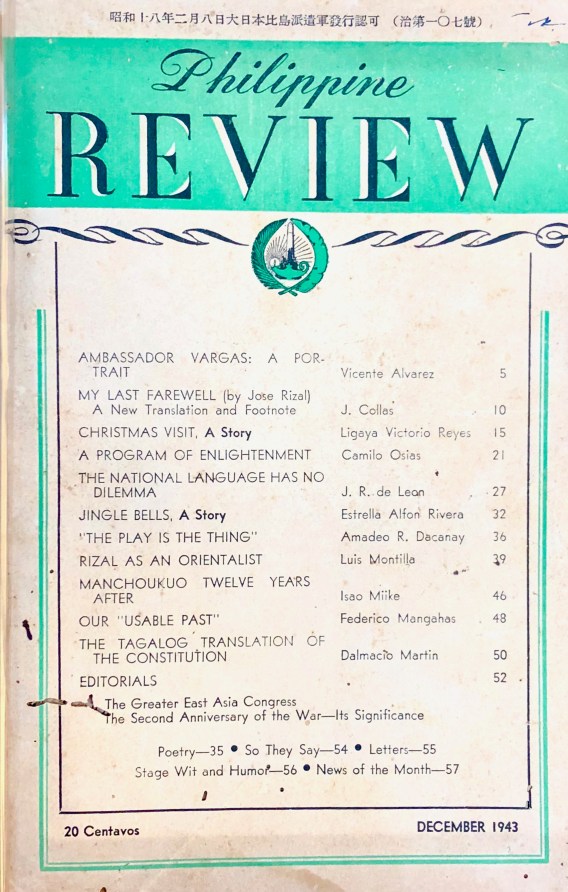
I have yet to locate his essays, but Manuel Arguilla definitely produced more than the 19 stories in his 1940 collection. One story, the rather whimsical “Rendezvous at Banzai Bridge,” was published in the Philippine Review in April 1943, a year before his death. But it will always be the stories in his book that will define Arguilla for us, and I’ll do a quick review of these for those who may not be too familiar with his work.

IMG_5538

Penman No. 277: The Wealth Within Us (1)

35092804316_00f878c388_k

Penman for Monday, November 13, 2017


THIS ASEAN week and next, I’m sharing excerpts from a short paper I presented at a conference on ASEAN Leadership Amid a New World Order that took place last November 8 at the Shangri-La Makati, under the auspices of the Stratbase ADR Institute and the Asia Society. Ours was a panel on ASEAN cultural cooperation, and I spoke as a writer and academic engaged in regional networking.

As a creative writer and professor of literature, I’ve had many opportunities over these past 25 years to meet and mingle with my Southeast Asian counterparts in various conferences.

Until recently, there weren’t too many of these regional networks for writers and artists to get together, but today, some formal networks are in place. In my field, for example, the Asia Pacific Writers and Translators or APWT—which held its tenth annual conference just two weeks ago in Bali—has been very active in making connections between writers, translators, teachers, scholars, and publishers around the region. APWT goes well beyond Southeast Asia to include China, Japan, Korea, India, and even the United States and the UK, and very recently its major sponsor has been Australia, which is seeking to expand its Asian footprint.

I’m sure that similar associations exist in the other arts—in theater, music, and dance, for example. But let me use these writers’ gatherings as an illustration of the challenges and opportunities we Filipinos face on the cultural front.

Cultural cooperation presumes an awareness of each other’s culture. The problem is, there’s very little of that kind of connection, people to people, around the region, or at least between us and the rest of the region. Chalk it down to the fact that we have been separated from the rest of Southeast Asia by geography, by history, by language, and by religion. Scholars, writers, and artists—and let’s add OFWs—should of course have a deeper understanding of regional cultures, but that’s their job.

And even so, at nearly every regional conference I’ve attended, I’m acutely reminded of how out of the loop we Pinoys are—out of the Sinic loop up north, out of the Indic loop out west, out of the Malay loop down south, and out of the Commonwealth loop to which many of those countries belong. Having cast our lot with America and English, we find little in common with most everybody else, beyond the color of our skin and our shared legacy of colonialism.

Ironically, cultural commonalities and exchanges of a kind do happen around the region, and even around Asia—largely as a result of globalization, the Internet, satellite TV, and their impact on youth and pop culture. Witness the spread of K-Pop, anime, rap, telenovelas, and anything from Hollywood, especially the Marvel and DC universe.

But while these influences have arguably injected new vitality into traditional cultures and media, they have also, to a significant extent, contributed to the homogenization of those cultures, and to the forgetting or even obliteration of traditional knowledge, leaving our youth in a cultural limbo, divorced and alienated from the common experience of their own people.

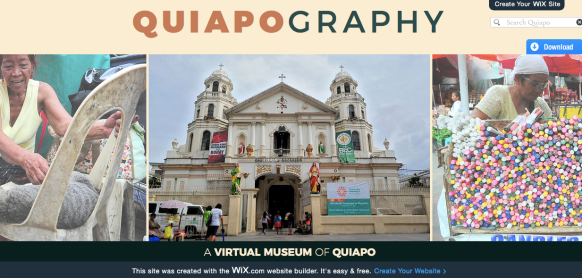
Consider this: young urban Filipinos don’t consider agriculture as a career option, don’t like to eat fish unless it’s imported salmon, have no idea where or what Quiapo is, see Mindanao as another country, and know more about Japanese manga and Star Wars than they do about our heroes. Their world-view is shaped by Facebook and Netflix and spread by Twitter and Instagram, and not by direct immersion in their societies, much less by the societies around them. Indeed the fashionable thing today is to propose that the very idea of “nation” is a thing of the past, even as the rabidly resurgent nationalisms of some of our neighbors reveal that to be a precarious fantasy.

Clearly this indicates a failure of education, but as we all know, subjects related to culture and history have increasingly been relegated to the back rows of our curricular priorities in favor of science, technology, and mathematics. As a graduate myself of the Philippine Science High School and an abortive engineer and economist, I have no quarrel with pushing those competencies in the name of competitiveness and national development.

But there are also powerful arguments to be made for supporting cultural programs and endeavors instead of diminishing them. I will focus on two: what I will call the moral argument, and the economic argument.

The moral argument is that culture is an essential element of national growth and development, as it helps define our national identity and our national interests. Without culture, we have nothing to stand on except our territory. Cultural cooperation begins at home, first of all with an awareness of what culture is and how it can not only explain but enhance human life.

Culture is a dynamic description of our commonalities and differences, without understanding which we will be moving forward blindly, guided only by the political and economic interests of our elites.

Politics and economics may dominate the news and people’s consciousness, but many of our problems are cultural in nature—indeed, our politics and economics are significantly shaped by culture, from the ascendancy of Rodrigo Duterte to the conflict in Marawi.

The problem is that we often see culture as little more than entertainment, a musical interlude between presumably more important matters. Even overseas, Filipinos think of culture as the obligatory pancit and tinikling on June 12—not the underlying reason why there are hundreds of Filipino organizations in Southern California alone but few major statewide Fil-Am political leaders. (More next week)


Penman No. 276: A Storyteller Returns

Cover

Penman for Monday, November 6, 2017


I EDIT a lot of books and manuscripts in the course of my work as a professional writer, mostly for institutions like banks, NGOs, government agencies, airlines, and even accounting firms. These people need help with their corporate communications, and I’m glad to lend a hand.

But now and then I get asked to edit a book of a more personal nature—a memoir, an autobiography, a travelogue, or a collection of essays—and when that happens I have to think twice about taking the job on, because these personal projects require a certain compatibility—almost an intimacy—between the writer and the editor. While institutional work is largely impersonal—the very reason I prefer it—editing someone’s life-work demands close familiarity with and sensitivity to the author’s character and concerns. That can be difficult, which is why I’ve declined many such invitations, unwilling to engage in so taxing a process.

There’s been one person, however, for whom I’ve edited four books—each one of them formidably full-length and chockful of detail. I have to admit—and she will agree—that the job has involved careful line-by-line editing and restyling. That’s easy to explain: she’s a terrific storyteller, but English wasn’t her first language—she also speaks Arabic, Greek, French, Dari, at least one other language—so she does need an editor, and she found me.

That happened 15 years ago through the intervention of a mutual friend, Jimmy Laya. He had a good friend in the United States, he said, whose husband had just passed away and who wanted to write a book about her life with him, a life that had taken them around the world and to the Philippines, where they had spent many good years. It seemed interesting enough, so I said yes.

And so began what became a unique friendship for me and my wife Beng with Mrs. Julie Hill, an Alexandrian Greek born and raised in Egypt but who moved to the US for her master’s degree in chemistry, then spent the next many decades traveling the globe with her husband Arthur, an official of the Ford Foundation. Later, Julie herself would become a telecommunications executive—and, after Arthur’s passing, an inveterate traveler trekking the Mongolian desert, the Afghan hills, the Russian steppes, the valleys of Papua New Guinea, and the Norwegian fjords.

Out of that life and those travels came four books, all of which I would edit: A Promise to Keep: From Athens to Afghanistan (2003), The Silk Road Revisited: Markets, Merchants and Minarets (2006), and Privileged Witness: Journeys of Rediscovery (2014). Her newest, In the Afternoon Sun: My Alexandria (2017), was launched just last week in Makati, again through the kind auspices of Jimmy Laya and the Society for Cultural Enrichment, which Jimmy serves as vice-chair, and which published Julie’s book.

IMG_4712

Despite her aches and pains—as any octogenarian globetrotter is bound to suffer—Julie flew in from Southern California to be with old friends like the Cesar Viratas and the Francis Estradas and to give thanks to Angola Consul Helen Ong, who graciously hosted the launch, and to Ambassadors Ahmed Abdelaziz Ezzat and Kaimenakis Nikolaos of Egypt and Greece, respectively. Of course she also gave special thanks to her cover artist, June Dalisay, and to her editor—who, sadly, had to fly to Thailand at the last minute on a mission for his university.

It may seem that My Alexandria—Julie’s haunting memoirs of her childhood years in that vanished cosmopolis—would have very little to do with us Filipinos (A Promise to Keep has some very sharp vignettes of expatriate life here under the Marcoses), and Julie herself had expressed serious doubt about its worth as a book, but I had urged her strongly to press on with it, convinced that its evocation of a place and time where cultures and religions could get along so well was what our fractured world today needed to see.

IMG_6711

Of all her books, it was frankly the hardest to work on, as I challenged her to go into sometimes painful detail; our relationship had long gone past editor and client, well past discussing fees, and I wanted this book to be the crowning glory of her authorial career. Here and there, as any editor would, I worked on tenses, participles, and modifiers; but what rewards the dutiful editor is a natural writer who sees what’s worth seeing, and Julie Hill has been just that, as this passage from an earlier book chronicling her journey over the Silk Road (taken when she was in her seventies!) reveals—simple in language, but bright and articulate with emotion. (You can find all her books on Amazon.)

Night had fallen; it was a bright full moon. The sky bristled with stars; but it remained bluish gray, unlike the black velvet firmament of Rajasthan or the Sulu Archipelago. Constellations tipped at an unfamiliar angle. A shooting star! It had been years since I viewed one, and it was a good omen for the trip.

 At dawn I stepped outside my ger. It was a soft morning with the sun rising behind high clouds. Seized by the clarity and the silence, I stood and listened. Not a breath of wind, not a sound from the gravel paths of our encampment, no machine whirring, no horse snorting, no voice coming from the nearby gers, no bird calling. I felt that I was in one of the emptiest places on earth.

 Freed of distraction I held my breath and listened to my own heartbeat; I sensed nothing. There was no wind to move the clouds or dust or bushes. No sound, no movement, no scent, no warmth yet in the sun, no cold remaining in the air. The only sensation was through the eyes: the desert, the mountains, and the hills. This was the Gobi. I wondered if it was possible to be happier.

 Welcome back, Julie, and from here, happy trails!


Penman No. 270: Precedents for Presidents

IMG_3085.jpg

Penman for Monday, September 25, 2017


It’ll only be around for a few days more, but painter Rock Drilon’s latest exhibit at Galleria Duemila on Loring Street in Pasay City is worth looking into, if only to see how a master abstractionist is inspired by the idea and the experience of home. Titled “Homecoming: Works from Dumangas,” the show is the culmination of the past five years that he’s been staying at the Drilons’ ancestral home in Dumangas, Iloilo, after decades of living and working in the big city up north. He’d originally returned to his roots just to help out his aging mother, but the pull of the province proved too strong, and Rock found himself staying on for good.

This is the 61-year-old’s 50th-plus show, and if you’ve followed his career you’ll see familiar figures in his latest work—the loopy lines and amoeba-like shapes—suffused with color, predominantly pastel but pockmarked with black, like life itself. Of course, the wonder of—and, for many, the problem with—abstract expressionism is that a work can seem to mean anything and everything that the viewer brings to the picture.

Drilon cites Chabet, Dubuffet, and Basquiat among his major influences, aside from his mentor Joya, and it helps to appreciate their art as a whole to see a pattern among the patterns. One manifesto seeking to explain the school famously defined it as “violently opposed to common sense,” and you can see that in Drilon’s creations, whose subjects defy categorization but provoke intense examination. No soul-comforting churches, no sunsets, no ricefields here, only squiggles that could be both microbes and galaxies, as minute or as massive as our imaginations will make them. “Homecoming” is on until September 30.

RockD.jpg

AN INVESTITURE, we’re told, is a “formal ceremony conferring the authority and symbols of high office, held during the new president’s first year in office,” and is a high point in the life of every university. Aside from the annual graduation, few opportunities exist for shows of pomp and circumstance—where the professors and administrators parade in full academic regalia—in universities like UP where egalitarianism is religion and simplicity of dress and manner are seen to complement sharpness of mind.

We had one at the University of the Philippines last Wednesday, in honor of our new president Atty. Danilo “Danicon” L. Concepcion, UP’s 21st, and it occurred to me that in all my 33 years in UP, I had somehow never been to one, although it’s taken place every six years in UP’s modern history. As one of his VPs, I had the honor of marching onstage, and so had a very special view of things.

The experience led me to dig into UP’s history of investitures, where I discovered more than few interesting factoids.

Our very first president, for example, wasn’t only a foreigner—an American—but also a clergyman, an Episcopalian pastor. His name was Dr. Murray Bartlett, and his investiture was held on December 20, 1911—three years after UP opened. About 2,000 students, teachers, and guests trooped to Padre Faura for the afternoon ceremony where—against the expectations of many—Bartlett argued in his speech for a “University for Filipinos” that would not merely copy US universities.

UP’s third president (after the Filipino jurist Ignacio Villamor) was again an American, and a Methodist minister—Guy Potter Benton—and his investiture in December 1921 was memorable not only for its lavish budget of P10,000 and a star-studded guest list that included Governor General Leonard Wood, Senate President Manuel Quezon, and Speaker Sergio Osmeña, but because of a feature that would never be seen again: the UP faculty wore all-white togas, which someone had thought more appropriate for the tropics. (It would be voted out the next year.)

Benton’s illustrious successor, Rafael Palma, had an investiture described as “austere,” but the word clearly did not apply to Don Rafael’s prolific pen, whose 8,000-word speech I clocked at about an hour and a half.

Flashing forward, Onofre D. Corpuz seemed to have spoken in the spirit of martial law when, in 1975, he scorned the notion of the university as a “battleground of ideas,” calling it “a romantic stereotype” which the people could ill afford to support with their taxes.

Edgardo J. Angara’s investiture in 1982 was besieged by a hostile crowd declaiming a litany of complaints—he had dared to start reforming UP’s ancient academic programs, and he would later reconfigure UP into constituent universities—but if anything, his raucous investiture would prove that you can get someone dead wrong, because Angara would go on to become one of UP’s best chief executives.

IMG_3077.jpg

These precedents were on my mind last week as I sat in my chair behind our new president, who made an impassioned appeal for the university’s constituents to find common ground, favoring “consensus over conflict, civility over calumny, and collaboration over confrontation.” UP, he said, should be “a clearing—a safe, free, and congenial space” within which its people could undertake “cutting-edge research, timely policy studies, exciting new exhibits and productions, and provocative art and literature.” (You can find the full text of his speech on www.up.edu.ph.)

We all cheered him on and wished him well—governing UP can sometimes be as difficult as governing the archipelago—and as we marched down the stage I felt more than a witness to history unfolding.

IMG_3088.jpg

Penman No. 265: Photography as Propaganda

Empire.jpg

Penman for Monday, August 21, 2017


I HAVE a cabinet in my home office where I keep shelves of my most valued books—first editions, signed copies, antiquarian volumes, and such. One shelf is occupied by a special mini-collection of books from the turn of the 20th century, from the late 1800s to the early 1900s, most of them having to do with what we’ve come to call the Philippine-American War. Bearing titles like War in the Philippines and Life of Dewey, Under MacArthur in Luzon, and An Army Boy in the Philippines, the books purport to chronicle—“celebrate” might be the better term—the occupation of the Philippines by the United States from 1898 onward.

I picked up many of these books more than 20 years ago when I was a graduate student in the American Midwest and on the prowl for Philippine-related material in used bookstores and flea markets. When eBay came along, I found many more, and was pleased to secure a few, often for less than $20 plus shipping.

While old, these books weren’t necessarily rare, because they must have been printed in the high tens or hundreds of thousands as a form of patriotic propaganda that straddled journalism and popular entertainment. Often written in a triumphal tone and exulting in the victory of America—then a rising naval and imperial power—over decrepit Spain, they blended into travelogues exploring the US’ new possessions—Cuba, Puerto Rico, Hawaii, and the Philippines—turning a military project into a story of adventure in exotic lands.

Shelf.jpg

These stories—and their accompanying illustrations—were very much on my mind last week when Beng and I attended a fascinating lecture at Ateneo de Manila University by an expert who had made that dark period (which few Americans and, sadly, just as few Filipinos seem to remember) part of her academic specialty. Dr. Nerissa Balce was in Manila to read from and talk about her book Body Parts of Empire: Visual Abjection, Filipino Images, and the American Archive (AdMU Press, 2017; U of Michigan Press, 2016), and we thought it was a good opportunity to catch up with and learn from an old friend (she married my Trivial Pursuit antagonist, the poet Fidelito Cortes).

After working as a journalist in Manila, Nerissa went to the University of California-Berkeley for a PhD in Ethnic Studies, took a postdoc at the University of Oregon, and taught at the University of Massachusetts-Amherst before joining the State University of New York-Stony Brook’s Department of Asian and Asian American Studies.

Through photographs and a refreshingly lucid lecture shorn of much of the academic jargon that often renders these presentations impenetrable to many listeners—even fellow professors like me—Nerissa showed how American photographers who were (to use a later term) embedded with the US military forces used their work to celebrate but then also obliquely if unintentionally criticize the violence of a colonial war. Photographs, she would argue in her book, have a life of their own, once taken and published; they may have been originally meant to depict the power of one side over another, and the abject position of the presumptive loser in the conflict, but seen or used a different way, they can convey other messages, like the subject’s insistent humanity or resistance.

I’d seen many such images in my books from that war; one of them—F. Tennyson Neely’s Fighting in the Philippines—typically portrays American soldiers towering angularly over the slack corpses of Filipino “insurgents” (as our fighters would be referred to for the longest time) as Filipino gravediggers prepare to bury their compatriots. This was what Washington wanted the American public to see: visual proof of American power and dominance. It must have been effective propaganda, especially when accompanied by narratives explaining America’s “civilizing” mission.

Soldiers.jpg

But, as Nerissa and other scholars point out, the very same photographs proved useful to those opposed to America’s imperial expansion. The Anti-Imperialist League published a collection of antiwar poems using a picture of a corpse-filled trench as its frontispiece. “The different political uses for the same photograph suggest the paradoxical power of the photographic image, and how photographs can celebrate as well as expose the violence of colonialism and war.” She goes beyond the battlefield to discuss how the empire shaped our image, and how that image, in a way, shaped the empire. Pictures of native women doing embroidery suggested a colony stabilizing into happy domesticity under a benign regime.

I’m not a historian, but if you want a reasonably reliable account of that period, read Brian McAllister Linn’s The Philippine War 1899-1902 (The University Press of Kansas, 2000); to see how that war was waged on the cultural front, Balce’s book makes a great companion piece. In this present time when, more than ever, pictures speak louder than words, and dead men’s bodies have begun to pile up again, we’d have to wonder what new empire is growing out of the shadows.

ph-china-drugwar.jpg

[Photo from philstar.com]


Penman No. 261: High and Low in La La Land

IMG_2365

Penman for Monday, July 24, 2017


BENG AND I have been fortunate to have visited many of the world’s major art museums—the Louvre, the Prado, the Met, the Tate, and the Art Institute of Chicago, among others—so I was glad for the chance to visit another great one, the Getty, in Los Angeles last week. we were on our way to visit our daughter Demi in San Diego, but decided to stop over in LA for a few days for Beng to meet up with old schoolmates and for me to finally take a longer look at La La Land. In all these years that I’ve been going to the US and passing through LAX, I’d never actually stopped in LA long enough to do the tourist thing and look up at the HOLLYWOOD sign or march down the Walk of Fame near the TCL Chinese Theater.

So when the chance presented itself through Beng’s friend Rose, we dropped off our bags at Rose’s place in West Covina and rode out to do some sightseeing—but first, of the highbrow kind. The Getty and the newer Broad Museum have been on my to-do list, but we had time this time for just the Getty—and I would quickly realize that “just the Getty” was the silliest thing to say.

IMG_2382.jpg

“The J. Paul Getty Museum” is actually two places in LA all at once—the Getty Center, a complex on a hilltop in the Brentwood area, and the Getty Villa in Pacific Palisades, which houses the Getty’s Greek, Roman, and Etruscan collections.

images.jpeg

But before we go any further, a word on the benefactor of these palaces of art, Jean Paul Getty (1892-1976), once the world’s richest man, thanks to his daring and foresight in buying a 60-year lease on Saudi oil. Despite his fabulous wealth, he was notoriously stingy, reportedly begrudging his fifth wife the medical expenses for their son who later died, and installing a pay phone at his English villa. When his grandson and namesake JP III was kidnapped in 1973, he dickered and paid only as much ransom as could be tax-deductible, and gave the rest as a loan to his son.

How such miserly men join the ranks of the world’s greatest philanthropists will remain a mystery for psychologists to plumb, but I’ll take it as a form of restitution. Getty had the villa, which fronts his home, built in the early 1970s to house his overflowing collection, but ironically he never saw it, dying in England. The Center, about a 20-minute drive down the beach and reachable by a funicular tram, opened in 1997. Remarkably, entrance to both venues is free; you just have to pay for the parking.

While I prefer modern art—from the utter simplicity of a fish by Brancusi or the melancholy of Hopper’s “Nighthawks”—I never fail to be awed and amazed by the workmanship and luminosity of the earlier masters. The Getty Center’s exhibits of Renaissance and Neoclassical art did not fail to impress. Most stunning of all for me was the work of an artist I’d never even heard of—Giovanni Battista Lusieri (1755-1821), whose A View of the Bay of Naples, Looking Southwest from the Pizzofalcone towards Capo di Posilippo, a monumental landscape with an equally kilometric name, displays an uncanny awareness of both the largeness and the smallness of things. True to her art-restorer self, Beng came to within half an inch of many masterpieces, scrutinizing the restorer’s technique, until the guard had to shoo her away.

giovanni_battista_lusieri_28italian_-_a_view_of_the_bay_of_naples2c_looking_southwest_from_the_pizzofalcone_toward_capo_di_posilippo_-_google_art_project

The villa, on the other hand, was as much to be visited as an artwork in itself as the pieces it contained. I was mesmerized by the beauty and delicacy of Roman glass, and by the almost contemporary pixilation of the mosaics, but like Mt. Vesuvius towering over Herculaneum—the villa’s inspiration—Getty’s shadow hovered over everything. Not surprisingly, he’s buried somewhere on the premises.

IMG_2388.jpg

We left LA for San Diego the next day, but not before indulging my small wish to cruise down Hollywood Boulevard for an encounter with the stars—at least those at one’s feet. While we never got to meet the likes of Gal Gadot or Emma Stone (not even Vin Diesel or Dwayne Johnson), we did spot several Spider-Men and lesser icons strutting on the street, ever ready for the next selfie. I had the feeling that I was going to meet a galaxy of these superheroes in San Diego, where Comic-con was due to open in a few days. (And with any luck I hope to be able to report on and from that event next week, as I did last year.)

 My readers will understand if I admit that, back in Hollywood, I planted my feet on the star of a reality-TV host named Donald Trump; it was, after all, a sidewalk, with all the stars meant to be stepped on—some, perhaps, more so than others.

IMG_2436.jpg

(Photo of J. Paul Getty from Celebrity Net Worth; Lusieri painting from Wikimedia.)


Penman No. 260: Meeting Major Kennon

Kennon

Penman for Monday, July 17, 2017


MY RECENT visit to the University of the Philippines Baguio and its new Museo Kordilerya, on which I reported last week, reminded me of another Baguio-related question which I’d been asking for some time now—in fact, every time I rode up or down Kennon Road, as I did last month. My question was, “Who was Kennon?”

I recall having found the answer to that in pre-Internet days—that he was an officer with the US Army Corps of Engineers who brought hundreds of Japanese laborers over to work on the road—but I didn’t know the details until I actively sought them out online.

 What happened to rekindle my interest was one of those early-morning trawls through eBay, where I typically look for Philippine-related material like old books, maps, and postcards, especially UP memorabilia. Prize finds have included a December 1922 issue of the Philippine Collegian, and the first English edition of Paul P. de la Gironiere’s Twenty Years in the Philippines, published in London in 1853.

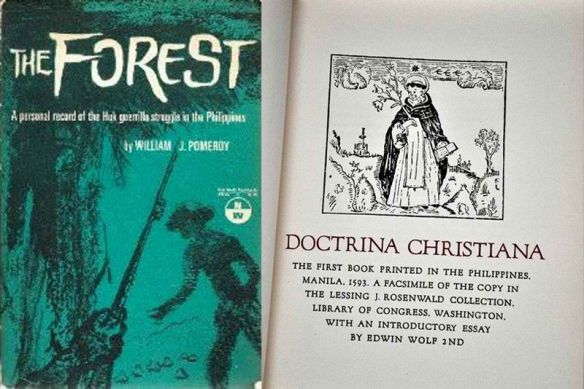
I buy them when I can afford them, seeing it as my mission of sorts to repatriate these artifacts from the great indifferent and unknowing void out there, but most of the time I enjoy myself just going over the images on eBay and saving them to my hard drive—postcards of Escolta ca. 1910 and 1950, portraits of Carnival Queens from the 1930s, and press photographs of fleeting personalities like the Huk guerrillas William and Celia Pomeroy upon their arrest.

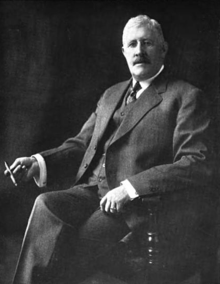
A postcard of Kennon Road—that 33.5-km stretch of zigzag road from Rosario, La Union to Baguio City—prompted me to ask again, “Who was Kennon?” Some Googling and a quick visit to Wikipedia yielded the information that Lyman Walter Vere Kennon (1858-1918) was a decorated US Army officer, a veteran of the Spanish-American War who was a major when he moved to the Philippines in 1899 after postings in Central America and Cuba. He served as the military governor of Ilocos Norte before going down to Mindanao, where he built the road linking Iligan to Lake Lanao. Then he went up north again to work on what would be called, in its early years, the Benguet Road. He finished it in two years, one year ahead of schedule, but not without much toil and sacrifice.

Benguet-Road

The real gem of that Google chase turned out to be an article by Kennon himself—a report he submitted to his superiors in August 1905 and reprinted by the Baguio Midland Courier in September 1957, the full copy of which you can read online here: http://www.baguiomidlandcourier.com.ph/centennial_article.asp?mode=centennial/supplements/kennon.txt.

In that report, Maj. Kennon lays out the scope of the task ahead of him: “The plateau (was) most difficult to access. The first explorers reached it only by following the steep, slippery, dangerous, and obscure trails of the native Igorrote. To make the highlands of Benguet accessible to the white man, the Spaniards, towards the end of the last century, built a horse trail from Naguilian to Trinidad and Baguio and planned an extensive sanitarium and other buildings in Baguio. Insurrection and war prevented the carrying out of the project.

“Soon after the American occupation the manifest need of some such institution was recognized and the Government decided to carry on into effect as soon as practical the plans of its predecessors. Baguio could practically be reached only from San Fernando and Naguilian, necessitating a sea trip of twenty-four hours from Manila and two or three days of horseback travel over a steep trail built by the Spaniards in 1892. In the stormy season, steamers were frequently a week in going from Manila to San Fernando. Evidently, such a trip was quite impossible for invalids and convalescents.”

Less than 18 months after they surveyed the terrain, Kennon could report that “This work had been done between the dates of Aug. 16, 1903 and Jan. 29, 1905—that is to say, in seventeen and one half-months. At the former date, the most optimistic prediction allowed three years for the opening of the road, ‘if it could be done at all.’ Others said it would take 20 years of work, some of the foremen on the road considered that they had ‘a life job.’”

Of course, Kennon’s triumphal report wasn’t the only side to that story. Kennon had imported large numbers of Japanese and Chinese workers to speed things up, and some of those workers stayed on, becoming part of Baguio’s rich cultural heritage. (As the late historian Lydia Yu-Jose would note, however, the real influx of Japanese immigrants would follow later.) Some of those encounters would prove almost unbearably bittersweet. Sinai Hamada’s classic love story “Tanabata’s Wife” draws on that experience, as does this story, recounted here: http://www.filipiknow.net/tragic-story-kato-brothers-benguet/.

Kennon died a brigadier general in 1918, a week after his 60th birthday, unable to join the war in Europe because of poor health, and likely a victim of the Spanish flu epidemic that decimated the global population that year. While a postcolonial view of Kennon Road would have the 4,000 anonymous workers who built the road as its real hero, it can’t hurt to remember or at least know the man who once looked up that mountainside and saw a ribbon of a road in his mind’s eye.

012506_174853

(Photos courtesy of Erwin Tiongson, Project Gutenberg, and imagesphilippines.com)