Qwertyman No. 64: The Death of a Crony

Qwertyman for Monday, October 23, 2023
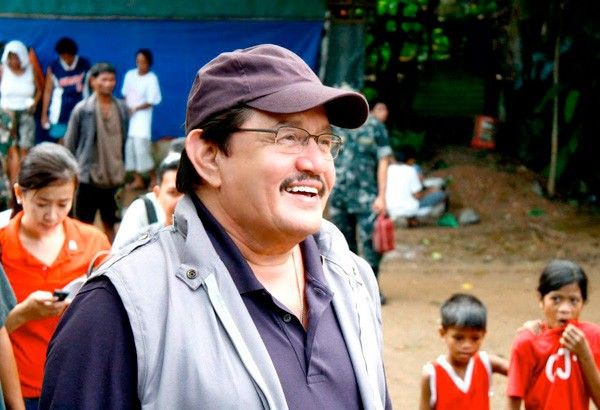
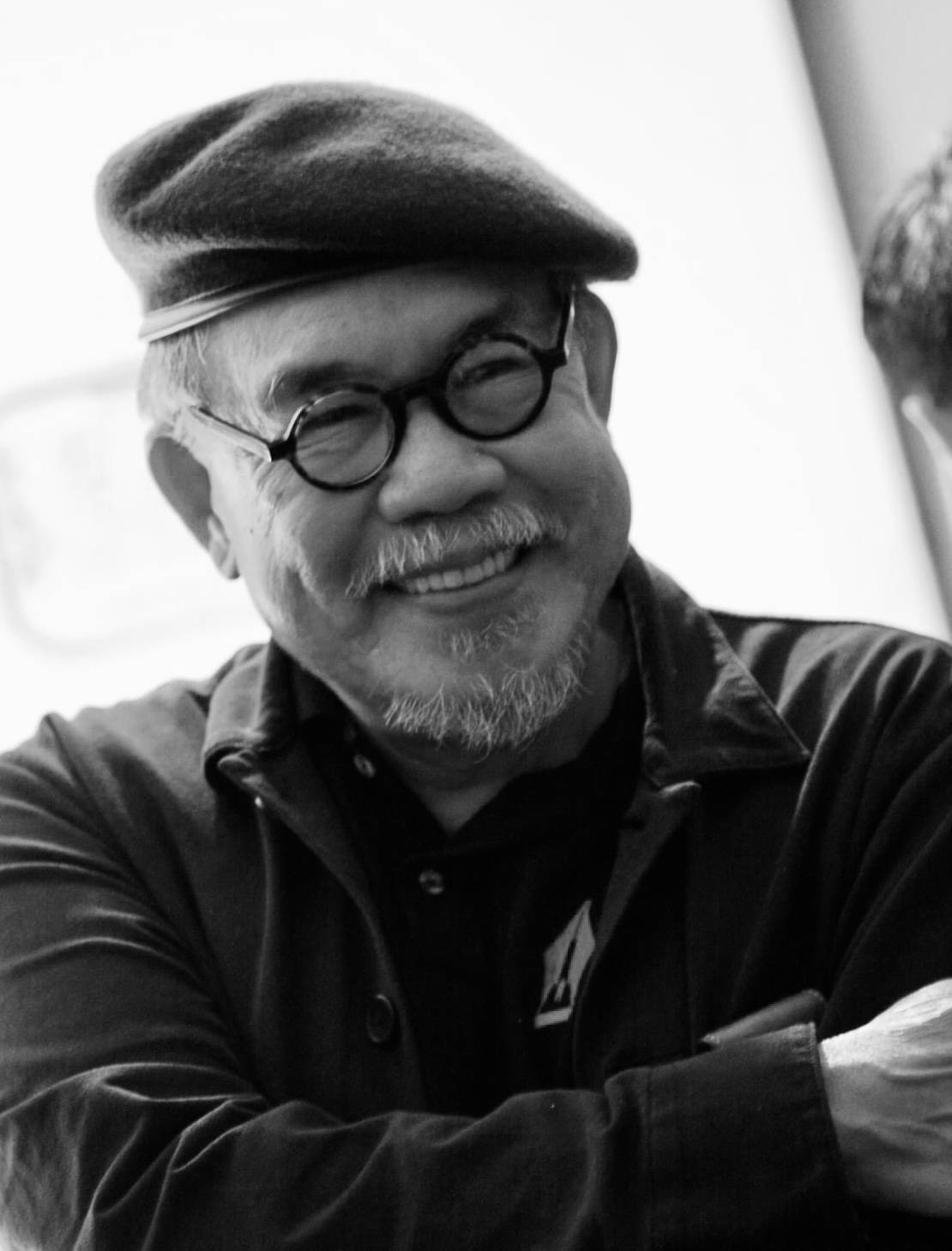
WHEN A friend asked me, about 15 years ago, if I would meet with another friend of his who wanted me to write his biography, I almost fell off my chair when I learned who my prospective subject was.

“It’s Rudy Cuenca,” I was told. 

I knew who he was, of course—a “Marcos crony,” which had become an almost generic term at one point, there being so many. I had actually met the man once before, on a bus trip to the Pahiyas festival in Lucban arranged by the late Adrian Cristobal. My first impression had been a surprisingly positive one: he was polite, urbane, funny, hardly the obnoxious and domineering person I had imagined a crony might be.

Still, he was who he was, and I didn’t know that writing a book about his life was the right or smart thing to do. I has already written Wash SyCip’s biography, and that man was almost saintly, or sainted by the acclaim of his peers and juniors. A Marcos crony was something else.

“How can I work with someone whose boss put me in prison?” I told my friend. As a student activist, I had spent seven months in Bicutan under martial law.

“Just meet with him, listen to what he has to say,” he said. “No commitments, no promises.”

And so I did. “I have a story to tell,” Cuenca told me over coffee. I knew what he was saying: he had been privy to the Marcos regime’s internal workings, and had been one of the President’s closest golfing buddies, but, at one point, had found himself fallen from favor, eased out of the inner circle by a more unctuous lieutenant. As stories went, it was irresistible. 

I took a deep breath and told him in so many words what I’ve said to many other clients since: “I’ll help you tell your story, but I won’t lie or lawyer for you; your story will speak for itself. What I leave within quotation marks will be you speaking, not me. I’m under no illusion that you will tell me everything you know, but to the extent possible, I’d appreciate your being honest with me, so I can tell your story the best way I can.” He agreed. What followed was Builder of Bridges: The Rudy Cuenca Story, co-authored by a former student of mine, Antonette Reyes. It was published by Anvil Publishing in 2010 and became a finalist for the National Book Award the following year.

A college dropout, Cuenca taught himself the basics of business and civil engineering, and went on from small public-works contracts to some of the country’s biggest infrastructure projects such as the North Luzon Expressway and the San Juanico bridge. It was widely believed that Cuenca’s Construction Development Corporation of the Philippines (CDCP), then the region’s largest construction company, benefited from his closeness to Marcos, whom he had supported since his first presidential campaign.

Most interesting were Rudy’s stories of Palace life. Herewith, some excerpts from the book:

“I was a member of Wack Wack and Valley Golf for a number of years before I joined Manila Golf’s ‘Mafia’ group in 1973 with Charlie Palanca as the head man. Golf helped me gain some ground in business. I became a Marcos golfing crony around 1969. Marcos ended the afternoons at the nine-hole Malacañang course. Typically, a call came from the Study Room—either golf at 4:30 in the afternoon or party organized by the First Lady. The afternoon golf was meant to be the President’s peaceful time, but this was taken advantage of by those who wanted to get his undivided attention. The HIS and HERS were with their folders and envelopes for endorsement or approval. The HERS usually could not get to see him, so they were inserted as part of the regular golfing group.

“The Study Room was operated by Presidential Security Command personnel. Blue Ladies and cronies alike waited for this office to call them to major Palace functions. If no such call came, they would run around like headless chickens in search of that awaited invitation. One crony got the message that the President no longer wanted his company through the Study Room, obviously on Imelda’s instructions. As Marcos was the sole source of dispensation, those seeking approval tried to find parings or sponsors. Sometimes, those projects were so absurd that they were rejected outright.”

Rudy remembers that “Every morning, Marcos got a written report from Fabian Ver about what was going on in the country. But Marcos also got two more reports, one from Alex Melchor, and one more I think from Johnny Ponce Enrile. Marcos read these three reports at breakfast, so he knew what was going on everywhere. These reports contained lots of information—who was the boss of who, who went where, and even who was fooling around with who. He knew everything.”

Rudy doesn’t deny the systemic—but relatively small—pay-offs that got projects approved and claims processed and released in the ‘50s, ‘60s, and ‘70s. But he also says that they were amateurs compared to today’s pros, and that the scale of greed has grown exponentially. “In the old days, nobody asked you to give,” he says. “If you did, you gave them dinner. Today, people are told outright and up front what they’re expected to pay, and those amounts are outrageous. No advance payment, no contract.” 

When asked why, for example, Philippine roads seem visibly inferior to those of even other Southeast Asian countries like Malaysia, he says: “It’s simply a matter of greed. In Malaysia there’s also corruption—I’ve lived there, I should know—but the thieves there make their money by overpricing the materials. Here in the Philippines people are extraordinarily greedy. Not only do they overprice, they also steal the materials. The cement’s deficient, the gravel’s deficient. So the thing crumbles that easily.”

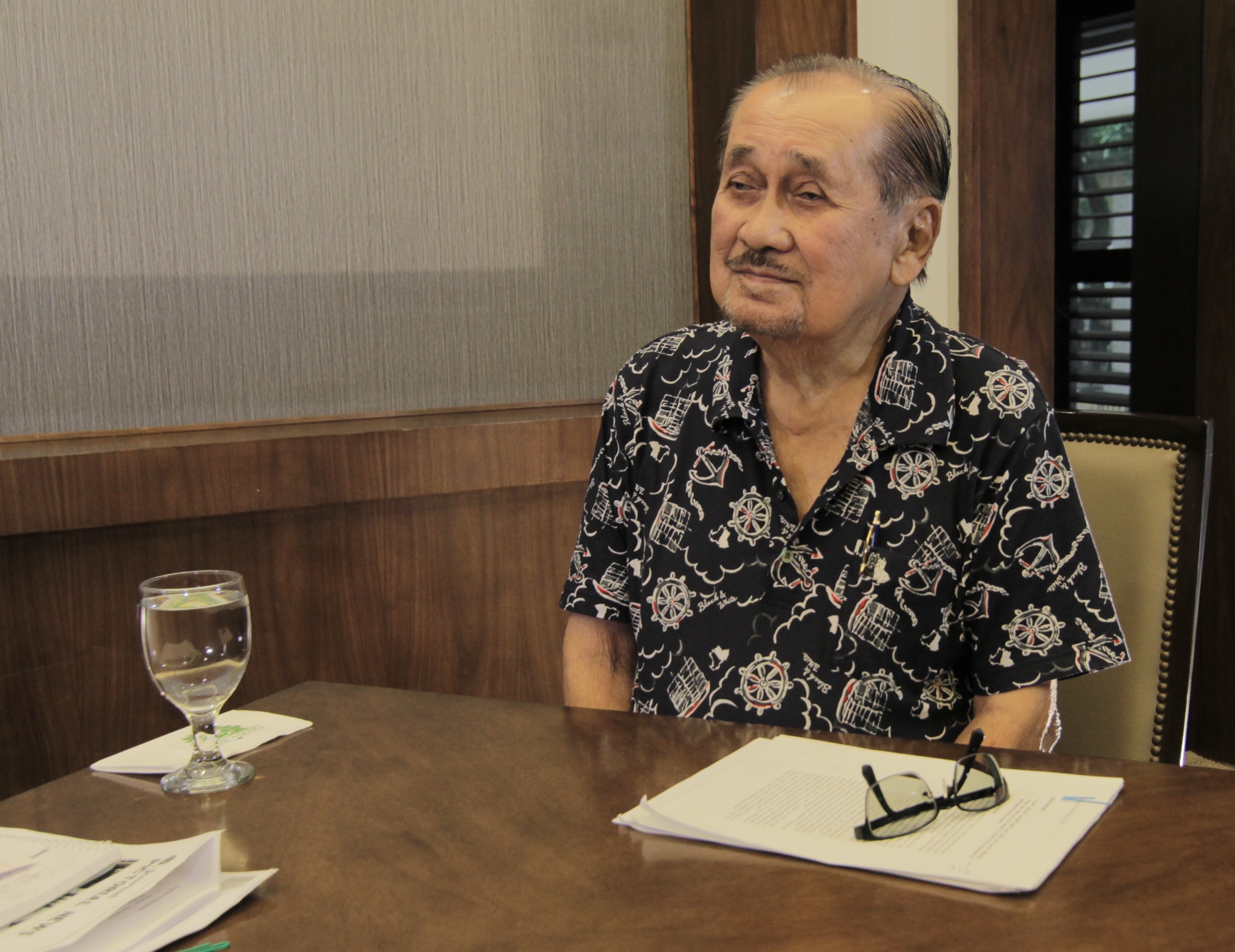
Rodolfo Magsaysay Cuenca’s passing last week at the age of 95 reminded me of how many stories about Ferdinand Marcos and martial law remain to be told. Fifteen years ago, it might have been considered safe for the members of that generation to spill their secrets (or justify their choices—no one will deny that these biographies are essentially self-serving), but the present dispensation will likely make people think twice about being so candid. 

I will leave it to more qualified scholars and more intrepid journalists to sift through the material and annotate the margins of my Cuenca biography, but I feel privileged to have listened to the man and to put him on the record. By any measure, it was a remarkable life. (In an even stranger twist, another crony approached me after I had done the Cuenca book, wanting me to do the same for him—the late Herminio Disini, of Westinghouse fame. I completed a draft but had to walk away, and the book never came out—but that’s another story.)

(Photo from riles.upd.edu.ph)

Qwertyman No. 63: The Slaughter of Innocents

Penman for Monday, October 16, 2023

TWO SATURDAYS ago, my wife Beng and I sat enthralled as we watched a brilliant performance of the play “Anak Datu” at the CCP’s Black Box Theater. It was a play that, among other objectives, sought to trace the roots of the armed conflict in Mindanao to a series of massacres perpetrated by the military against Muslims just before and after the declaration of martial law. It began with the well-documented killings of young Tausug recruits being trained in Corregidor for an abortive invasion of Sabah in 1968 and went on to the less-known Malisbong massacre in Sultan Kudarat on September 24, 1974, in which 1,500 men were reportedly killed.

For us—and I’m sure for the packed crowd in the theater as well—it was a harrowing revelation. We had known about the troubles in Jolo and had followed the rise of the MNLF, but to most Manileños then and now, Mindanao was another country, tourist-pretty but woeful, home to exotic fruits, fabrics, and dances, but otherwise mired in poverty, corruption, and bloodshed. The play tries to break through those stereotypes even as it acknowledges the complexities of politics and culture as they apply to Mindanao, especially to people just trying to catch a breath of peace.

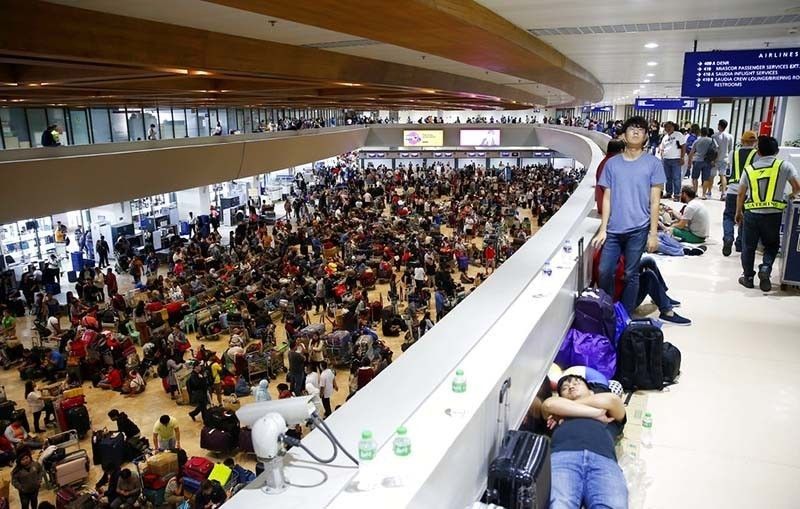
In pointed irony, earlier that same day on the other side of the world, Hamas militants had begun to mount an attack on Israel, eventually killing about 1,000 people and taking hundreds more hostage. In retaliation, Israel bombed the Gaza Strip and killed about as many. This nightmarish war of attrition is still continuing more than a week on, with no clear end in sight.

Like many Filipinos far from that war zone, all we could do was to mutter prayers for the dead, the displaced, and the suffering on both sides. On top of the war in Ukraine and natural disasters ravaging the planet, it seemed like the world was in the sorriest mess it had ever been since the Second World War, emerging from a pandemic only to destroy itself with more willful deliberation.

I know that some were not so generous as to seek or see a moral balance, and immediately identified with Israel, invoking the Bible, Washington, and common sense, especially with the reports and pictures of brave Filipino nurses standing their ground and being murdered by Hamas.

For certain, whatever and however long the history may be behind the legitimate grievances of Palestinians suffering under Israeli occupation, Hamas’ brutal assault on ordinary citizens will not win them any sympathy, at least in the Western media which we depend on for our news. We know that there has to be another side to the story, perhaps one just as terrifying, but we go with what we see. It could be argued that Hamas’ actions were the result of decades of oppression, like a man running amok; but this was cold premeditation, factoring in the inevitable retaliation it would provoke.

Still, with both Jews and Palestinians fighting for survival, we forget that not all Palestinians are Hamas, and that not all Israelis supported Netanyahu. The guns will drown out the voices of moderation in both camps, those who understand that there can be no real victors in these messy wars, only losers. Lives are lost, the truth is lost, our humanity is lost.

Countless posts on social media claim that the Lord has already taken a side in the conflict. But not being particularly devout, I remember only how often the Almighty’s name has been invoked to kill. The skeptic in me suspects that the Lord is, must be, indifferent, so we can use our own hearts and minds to sort things out; he will not play deus ex machina.

Nothing, not even quoted Scripture, will convince me that the slaughter of innocents in the name of God, Allah, or Yahweh is morally justified. It has happened, it happens, and will always happen because of our brutish nature, but that will be an explanation, not an excuse. The hard-nosed men in the war room will dismiss all this preciousness as so much sentimental handwringing, and raise the killer question: “If the enemy goes for your wife and daughter, won’t you go for theirs?” Revenge and retribution, an eye for an eye, will prevail over reason and compassion, often devalued as suicidal weakness.

Come to think of it, no one ever called the nuclear bombings of Hiroshima and Nagasaki—in which over 100,000 people died—“massacres.” Most of them were ordinary citizens just going about their business, with little or no say in their country’s militarist policies. Instead, conventional political and military wisdom has always insisted that these deaths were necessary for other deaths—particularly American, in a projected invasion—to be averted. One hundred thousand innocent lives wiped off the face of the earth in a literal flash, and no one in power even blinked, because of course it was justified as the lesser evil, made more acceptable by the savagery unleashed by Japanese soldiers on their captive populations.

In graduate school, I developed a keen and rather morbid interest in a genre of English Renaissance drama called “revenge tragedy” (think “Hamlet,” but there were many cruder, bloodier and frankly more entertaining examples). The object of all those plays was to show that “revengers” begin with a just cause, the victims of insufferable oppression and humiliation. But ultimately they prove little better than the beasts they seek to extinguish, wreaking havoc on the innocent. They cross a line, and lose all moral superiority.

That line is drawn somewhere in the sands of the Middle East, but  just as importantly, it also crosses our conscience. When we recall how easy it was for many Filipinos—even those who professed to be devout Christians—to condone and even applaud extrajudicial killings, thinking that society was merely ridding itself of riff-raff, we see how righteousness and evil can so comfortably cohabit.

I have no easy and firm conclusions to draw from this most recent conflagration, and I feel that we have to look beyond the intricacies of history and politics for answers. Diplomats, scholars, and zealots have tried almost all the formulas at their disposal, to no avail—with the notable exception of the two-state policy, an elusive political solution that will come with its own challenges.

It may be that only the hopelessly naïve or the naively hopeful—and I plead guilty—still imagine that any kind of just and enduring peace can be achieved in these circumstances. But before or while we condemn barbarity elsewhere, we have our own hordes of howling ghosts to confront, coming out of the Chinese pogroms under the Spanish, Bud Dajo, Samar, Corregidor, Malisbong, Mendiola, Maguindanao, and Mamasapano, among others. Let more “Anak Datus” be written, to lift and save us from Facebook’s summary judgments.

(Image from broadway world.com)

Qwertyman No. 62: Remembering Ed Hagedorn

Qwertyman for Monday, October 9, 2023

LIKE MANY Filipinos, I was surprised to hear last week that former Puerto Princesa mayor and Palawan congressman Edward “Ed” Hagedorn had passed away aged 76. It was a peaceful death, according to reports, which might have raised some eyebrows among those who knew him and his colorful past. Beyond surprised, I felt genuinely sad, because I had met the man and been much impressed by what he had been able to achieve, despite the brickbats thrown his way by his enemies and critics until the very end. (Only last July, the Sandiganbayan found him guilty of malversation of public property for failing to return some firearms issued to him when he was mayor.)

Hagedorn was one of those larger-than-life figures who stick in your memory like a barnacle. I came to know him two decades ago when he needed someone to write a book about Puerto Princesa’s regreening; I was available and happy to fly down to Puerto to see for myself what the buzz was all about, and looked forward to quiet beachside chats over beer and broiled squid. Instead I found myself rattling in the front seat of Hagedorn’s SUV on earthen roads at breakneck speeds, absorbing his stories, which never failed to make me wonder, “Is this guy for real?” But he was—a true politico, to be sure, who ate controversy for breakfast, but also a game-changer who left an indelible imprint on the community he served, just as Dick Gordon did for Subic and Bayani Fernando did for Marikina.

In memory of that man, let me share some unpublished notes I took for that project (which itself was overtaken by events, but that’s another story). Flash back to the early 2000s, and say hello to Ed Hagedorn:

With his well-combed pompadour, mestizo looks, and neat moustache, Hagedorn looks like a cross between actor-turned-President Joseph “Erap” Estrada and rebel-turned-Senator Gregorio “Gringo” Honasan. The resemblance goes beyond the physical, and the key lies in the movement of these men from the fringe to the center, in their mutation from outcast to power player.

For a man once feared as a teenage toughie, gambling lord, logger, and survivor of at least two assassination attempts, the two-term mayor of Puerto Princesa, Palawan, can be surprisingly gentle and charming. He speaks with an easy smile and a quiet, slightly raspy voice, the golden pin of a Christian dove bright on the collar of his gray bush jacket. He knows that the past hangs on his shoulders—something he has the honesty and the good PR sense not to deny—but he speaks much more enthusiastically about Puerto Princesa’s future, and its own transformation from sleepy island town to a global model for ecotourism, as acknowledged by no less than the United Nations.

Hagedorn appreciates the irony of his situation, and attributes his conversion to a religious faith that he now applies with a fanatic’s fervor to his job. Mayor since 1992, Hagedorn drove his former partners in crime out of the city, set down clear and strict environmentalist policies, especially those having to do with illegal logging, illegal fishing, and waste disposal. Today most of the land within Puerto has been reforested; a “Baywatch” program patrols the water; and a cigarette butt on the open street is about as common as hen’s teeth.

The story of Puerto Princesa’s regreening into a world-class showcase of Philippine environmentalism is an inspiring one, but the Hagedorn story is clearly the stuff of action movies. In fact, not one but two movies have already been made about the flamboyant mayor, who reconnoiters the city in his Chevy Suburban, wearing his trademark wraparound Cazal sunglasses and Rolex wristwatch (“It’s fake,” he says with a grin). 

He doesn’t drink, but until a few years ago couldn’t quit smoking, needing the nicotine to keep him going on typical killer workdays that begin at 6:00 a.m. and end at around 1:00 or 2:00 a.m. the next morning. (He kicked the habit in 2002.) “When I came into office in 1992,” he says, “I inherited the grand total of P26,000, plus one tractor and two dump trucks. In three years, we were able to pave 340 kilometers of roads—just 1,000 kilometers more to go!” Appalled by the city’s conditions when he assumed the mayorship, Hagedorn declared a state of calamity to gain access to P20 million in calamity funds; the government balked at his move, but the courts have since upheld the mayor. He talks about setting up International Environmental University on a large estate already blocked off in Puerto for environmental development.

People wait along the road for his SUV and flag him down. He stops to listen to an assortment of complaints; a secretary takes down notes and his instructions. Like a good politician, Hagedorn has a phenomenal memory: hosting several hundred guests at a banquet at a major hotel, he greets all the luminaries present by name, without notes. The next day he takes his guests to a bayside sari-sari store for a snack of cheap sweet biscuits and soft drinks; the tab comes out to P155; he hands the giggling storeowner a P500 bill and tells her to keep the change. “Don’t evict, develop,” he says of a squatter community that had sprung up on the bayshore. He has also set up 160 low-cost housing units on 100-square meter lots, payable at P500 a month for 25 years. Like an automatic wristwatch, the man’s mind is constantly working, kept alive by motion.

In quick succession, the mayor answers the typical interviewer’s questions:

“Is there anyone next to God whom Edward Hagedorn fears?” Answer: “My wife Ellen!”

“Whom did you grow up admiring the most?” Answer: “The Godfather!”

“Any political plans?” A job, he says, that would let him do more for the environment.

When Joseph Estrada was forced out of the Palace in early 2001, his staunch friend Ed Hagedorn stood by him to the end. That probably cost him the governorship in the election that May, when he challenged incumbent Gov. Joel Reyes for the job, running under the fallen Erap’s standard. We’ve heard that many trees have also fallen since in Palawan’s forests—one of them, reputedly the province’s largest, said to have been carted off to become a centerpiece for a politician’s house. 

I remember remarking then that to call Ed Hagedorn a saint would send St. Ignatius of Loyola—himself a colorful character in his time—into a spasm, but Edward Hagedorn is beginning to look like someone we’ll sorely miss when those trees start coming down for some bigshot’s dining table.

Qwertyman No. 61: Funding Real Intelligence

Qwertyman for Monday, October 2, 2023

YOU COULD hear the gnashing of teeth from Aparri to Zamboanga when the Filipino men’s basketball team crashed out of the recent FIBA tournament with three losses, the fans’ dismay relieved only momentarily by the locals’ drubbing of arch-nemesis China. All over social media and even in the mainstream press, there was a lot of hand-wringing, with soul-piercing questions like “Is basketball really a Filipino sport?” and “How do we regain our hardcourt glory?”, followed by angry demands for certain heads to roll and fresh calls for a renewed grassroots-based sports development program.

Aside from politics—arguably the most vicious blood sport hereabouts—nothing gets us Pinoys more worked up than sports (and maybe beauty contests, another kind of sport). We know all the players and coaches, can recite the history, analyze all the moves, surveille the opposition, and scout and spot the best prospects. You would think that it was a national industry, although it all comes down to one thing: Pinoy pride, our fervent desire to matter in the world at large, if not be No. 1.

That’s all understandable, so hold that in your memory while I rattle off some other “sporting” statistics for the Philippines.

In a 2018 PISA ranking of 15-year-old students from more than 100 countries worldwide in terms of their abilities in reading, math, and science, the Philippines scored second to last in both math and science, next only to the Dominican Republic. If that sounds bad, we scored last in reading. (The Program for International Student Assessment is run by the Organization for Economic Cooperation and Development.)

Maybe they got something wrong? In 2019, the Trends in International Mathematics and Science Study or TIMMS, with covered fourth-graders from 58 countries in math and science, ranked the Philippines last. That same year, the Southeast Asia Primary Learning Metrics, checking up on fifth-graders and their proficiency in reading, writing, and math, scored the Philippines below the regional average in all three; more than 40 percent of all Filipino students tested failed to meet the minimum proficiency standard for math.

Did we hear or do I hear any gasps of dismay or demands for accountability from our government and educational leaders—or from the general public, for that matter? Of course not. The private sector has taken note, knowing they’ll be paying for these gross deficiencies down the road, but they don’t make policy, or decide the budget. Otherwise, we don’t seem to be seeing ourselves in any kind of race in global education, which just isn’t sexy or entertaining enough like singing, dancing, or basketball. We’d all be insulted if anyone called us “stupid”—and these surveys don’t use the word—so we pretend that it’s not a real problem and that we can get by on our natural smarts, like we always have. 

If we’re feeling feistier, we can even trot out the names of all the Pinoy Spelling Bee and Quiz Bee winners, chess grandmasters, Moot Court victors, World Poetry Laureates, inventors of this and that gizmo, and so on. In the meanwhile, we scratch our heads and wonder why our neighbors like the Thais and Vietnamese are surging ahead of us (“Why, we have nicer beaches! And didn’t we teach those people advanced rice technology?)

So instead of ensuring adequate funding for  programs, reforms, and resources to address these shameful scores, what do we do?

We cut the budget of the Philippine Science High School System—our flagship secondary school system, especially in math and science—from P3 billion to P2.7 billion, an 11 percent reduction. Not only the PSHS, but other agencies in our science and technology cluster found their 2024 budgets slashed as well—a 14.17 percent budget cut for the Advanced Science and Technology Institute, 18.04 percent for the Food and Nutrition Research Institute, and 83.7 percent cut for the National Research Council of the Philippines.

“We can no longer sustain our cloud-based Knowledge Hub or KHUB learning system because of this cut,” PSHS Executive Director Lilia Habacon was quoted as saying. “We developed KHUB during the pandemic, and it was being accessed by 10,000 students.” The PSHS System now comprises 16 science high schools nationwide. “Even as we’ve returned to face-to-face learning, many of our modules remain online, and the students really learn from there.” The cut will also halt the system’s infrastructure projects such as gymnasiums, dormitories and multipurpose halls in Mimaropa, Zamboanga, Soccsksargen, Calabarzon and Caraga.

The Department of Budget and Management says that the cut corresponds to “38 non-recurring and terminating locally-funded projects in FY 2023,” but as Dir. Habacon points out, there are clearly many ongoing and vital projects that need continuing funding through to at least next year. 

The DBM also took the PSHS to task for its lack of “absorptive capacity,” meaning that it couldn’t spend its allotted funds fast enough. And here’s where the irony of this whole budget business and our national priorities really gets me. (Granted, the problem goes much deeper and at more basic levels than the PSHS, but if they can do that to our premier high school, what do you think they’re doing with the less illustrious others?)

The Office of the Vice President (OVP)—under recent criticism for spending P125 million in “confidential funds” in 11 days in 2022—claimed in its defense that it did so not in 11 days, but 19. Oh, okay—is that supposed to make us feel better? Does that qualify in the DBM’s books as proof of “absorptive capacity?”

Confidential funds here, intelligence funds there in the hundreds of millions, and the recipients even feel demeaned if they’re asked to account for the money, for which their fawning friends in Congress are only too happy to give a free pass.

Meanwhile, we scrutinize every line in our budget for science education, and probably in other areas as well, and get all uptight when we spot some tiny item we can’t figure out, like some alien cockroach, and squash it with gusto, thinking we’ve done our job. When it comes to funding real intelligence, we balk.

The sad part is, we’ll get away with it, because appallingly low science, math, and reading proficiency doesn’t get people worked up as much as poor basketball tactics do. We don’t even know who our National Scientists are (there are now 42 of them), nor care what they’ve done. Fire the education coach? What for? No harm, no foul.

Qwertyman No. 60: UP’s Southern Pivot

Qwertyman for Monday, September 25, 2023

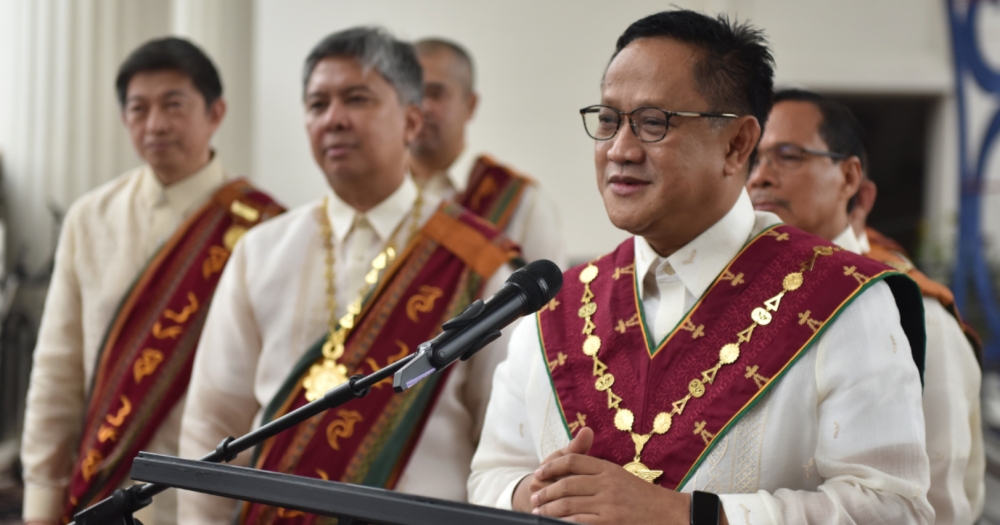
AT HIS formal investiture as the University of the Philippines’ 22nd president last September 14 in Davao, Atty. Angelo “Jijil” A. Jimenez made clear what his and UP’s priorities were going to be for the next six years of his administration: a renewed emphasis on service and equity, and more collaboration with other state universities and colleges (SUCs) and private higher education institutions (HEIs).

These priorities, he said, sprang naturally out of what he called the “three moral paradoxes” facing UP, the country’s “national university” mandated by RA 9500 to lead in Philippine higher education.

The first one he mentioned in his speech was the fact that, despite more than a century of UP producing national leaders, the country remains beset by mass poverty and economic and social inequality. “Beyond nurturing the Filipino mind and spirit, should UP have been more explicitly charged with raising our people’s material welfare? Are we doing enough at present to promote economic progress and social justice among our people?”

The second was his observation that UP, conceived as a “university for the Filipino people,” primarily serves the children of well-off, urban-based families, with 60 percent of its freshman population coming from private schools, “and our admissions policy unfortunately does not do enough to correct that bias.” Jimenez wants UP to help more underprivileged youth from the countryside prepare for, take, and pass the UPCAT, aside from other measures that can be undertaken to democratize access to a UP education.

Third, UP accounts for a fifth of the national budget for higher education, with the balance to be shared by more than 110 other SUCs, but was UP doing enough to share its academic resources with other schools? “If not everyone can come to UP, then UP must go not only where it can help raise academic standards, but also where it can cooperate and collaborate as an equal partner, and learn from SUCs with advanced and specialized expertise in certain areas,” said Jimenez.

Following through on his commitment to place UP at the service of HEIs all over the country, Jimenez convened an “SUC Summit” on the day after his investiture, attended by about 80 SUC presidents and representatives, to map out areas of collaboration between them and UP. Earlier, UP had also inked an agreement with officials of the Bangsamoro Autonomous Region in Muslim Mindanao (BARMM) to assist the latter in promoting access to quality education, improving health outcomes, strengthening the capabilities of SUCs and LGUs, and rehabilitating conflict-affected communities.

UP’s southward pivot was no accident. A former student leader and labor lawyer by training—he served as labor attaché in wartorn Iraq—Jimenez was born in Butuan, of Manobo blood. “It was a long way from Butuan to Baghdad, but in many ways, it is even longer from Mindanao to Manila. We have been so accustomed to thinking of Manila as the capital and Mindanao as the periphery, forgetting that once upon a time, the reverse was true. That imbalance is now being redressed, with Mindanao shaping up as our gateway to ASEAN, as the political and economic force that it has always been…. That it took the national university 115 years to have a president from Mindanao tells us something about we Mindanawons—and especially those of us who come from lumad origins—have had to contend with.”

So it was more than symbolic that Jimenez chose to hold his investiture not in Diliman, UP’s seat of administrative and academic power, but in UP Mindanao, one of the UP System’s eight “constituent universities” (and interestingly, the only one created by congressional fiat, after a push by Mindanawon lawmakers in the 1990s to have a UP of their own). 

President Jimenez also emphasized that he was adding one important word to UP’s longstanding motto of “Honor and Excellence.” That word was “Service,” a reminder to every Isko and Iska, as UP’s students are called, that their education is a debt to be repaid to the Filipino people for the rest of their lives.

These are noble and praiseworthy ambitions—most significantly, Jimenez’s desire to open UP up to the children of the poor, to break the tightening lock of privileged students on admission to the country’s premier state university. Ironically, because of the politically expedient but economically questionable free tuition law, public funds are subsidizing the college education of many children whose parents could very well afford to pay full tuition, while leaving the truly needy even farther behind. 

This wouldn’t be the first time that the “excellence vs. equity” issue came up for re-evaluation. UP oldtimers will recall when high school valedictorians and salutatorians from all over the country merited automatic entry into UP, ensuring broader geographical coverage. During the time of President Edgardo Angara, a system allowing disadvantaged students to come in via “presidential discretion” was put in place, but this was reportedly abused and later junked. (When I served as Vice President, I—and other UP officials—would routinely get calls from politicians, friends, and frantic parents hoping that we could work some magic to get their children in. I said I would rather resign than even try to compromise UP’s admissions system—it just doesn’t work that way in UP, even if it might elsewhere.)

Any strategy for producing an intellectual elite based on talent alone will favor those who come from strong elementary and high school backgrounds, most likely our top private and science high schools. On the other hand, especially given the sorry state of our public schools (this, even before budgetary diversions to “confidential funds”), you can’t just bring in students from all over just to make sure of equal representation; many of these poorly prepared students will suffer, as would the university itself. 

It’s a complicated but vital question: what primary purpose should UP serve? With universities today encouraged to join the global rat race run by Quacquarelli Symonds, Times Higher Education, Shanghai Ranking Consultancy, and other ratings bodies (businesses, that’s what they are), are we forgetting more basic needs by chasing after these costly metrics?

Jijil Jimenez’s heart seems to be in the right place in calling for UP to return to its roots—as he returned to his in Mindanao—as a university of the people, but working out the details will be a challenge. If he can rally the faculty behind him and get government support, then he can yet be one of  UP’s most effective and even beloved presidents.

(Photo from sunstar.com.ph)

Qwertyman No. 59: Counterintuitive

Qwertyman for Monday, September 18, 2023

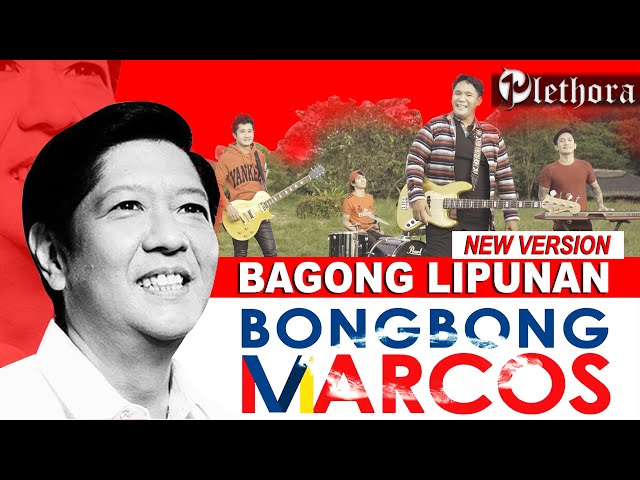
ON MY way to NAIA to catch a flight early one morning a few weeks ago, I snapped out of my half-sleep when I heard a song on the radio station that my Grab driver was tuned in to. I hadn’t heard it in almost half a century, and I was surprised to realize that I still knew the lyrics—not that I sang it back then, but because it was inescapable, flooding the airwaves with its bootstep optimism: “May bagong silang, may bago nang buhay, bagong bansa, bagong galaw, sa Bagong Lipunan!” The only difference—and what troubled me even more—was that it was a new arrangement, sung by a solo male voice, obviously a remake for a new generation. We were back in 1973, and whoever was behind that broadcast was making sure we knew it.

But of course, despite all the ironies that have been pointed out with the accession of another Marcos to power, and all the parallels that both the Junior and his detractors have drawn with the Senior’s reign, 2023 isn’t exactly 1973. The convenient conclusion would be to assume that Marcos Part II would be a replay of Marcos Part I—and many Filipinos, myself included, warned of that possibility in the run-up to the May 2022 election. But is there any possibility that President Ferdinand E. Marcos, Jr. might want to break out of his father’s mold and be, to some extent, his own man?

As soon as I say that—and before I get social media all riled up with my seeming revisionism—let me add that it’s the dramatist in me that appreciates the classic bind that Marcos Jr. must find himself in. Drama is premised on the possibility of character change—and even if the character reverts to his old self in the end, a brief flirtation with one’s opposite can be revealing.

In political caricature, characters are reduced to their extreme and basest versions—black and white, sinner and saint, damned and blessed. Oversimplification makes for effective propaganda, just so you don’t forget who the enemy is and which side you’re on. In realist drama, we move beyond types to explore the complexities of human character, taking the individual as a compound of many different—and sometimes even conflicting—traits and predispositions. Thus (goes the playwright’s conceit), no one is totally good or totally evil; the inner monster and the inner angel are in constant contention, and depending on the specific circumstances, one side will prevail at some key point that then defines that character for the history books. 

Motivations are key to what characters ultimately become—or decide to become, as personal agency and moral responsibility attend every important decision we make. Pride, love, honor, greed, revenge, and lust are powerful motivations, and often get the better of characters who are well aware of right and wrong, but who succumb to what’s been described as “human nature.” The good can become the bad; there’s a whole category of English Renaissance drama called “revenge tragedy” where, like Hamlet, a virtuous hero aggrieved by injustice plots to gain retribution, only to be so consumed by his vengeful passions that he becomes the very evil he condemns.

Now back to Marcos Jr. I’m trying, as the playwright and screenwriter I once was, to see him as the protagonist of our present play, shorn of my personal biases. Improbably—though some would say inevitably—he’s back where his father was, and with the weight of history on his shoulders. He’s firmly seated in power, and has all the opportunity and the resources to do what he wants. 

Independent and even critical observers I’ve spoken with have noted how generally cautious Marcos has been, so far, to avoid the kind of issues that will bring masses of people out onto the streets. Yes, the legitimacy of his election remains under serious question (something his handlers still have to convincingly address), but the “single IP” finding hasn’t been as politically incendiary as it probably would be in a more tech-savvy society (no, our appetite for TikTok and Facebook doesn’t count for tech-savvy). Yes, he travels and spends too much, but people—his 31.5 million, real or not—expect that to come with being a Marcos. Yes, he’s backed terribly risky if not silly ideas like a sovereign wealth fund and price ceilings, but again he knows that the economics of it will go over most people’s heads. 

On the other hand, he’s made all the right noises with regard to Chinese expansionism, in a dramatic and popular break from his predecessor. In our porma-conscious society, he looks and sounds more presidential than that predecessor who felt choked by a necktie and visibly lost in a roomful of younger, more articulate world leaders. Like his senior, Marcos Jr. understands imagery and pageantry. His rambling ad libs have been his bane, so he stays on script in his major speeches. He made some inspired and popular Cabinet choices such as the late lamented Toots Ople, although he quickly undermined any suggestion of sagacity with the appointment of the likes of Larry Gadon. 

Clearly he’s not going to repudiate his father’s legacy. His camp will continue to move to revise history and gild the rust and the rot of martial rule. In his recent speech before Singaporean businessmen, he couldn’t resist crowing that the Philippines’ 7.6% growth rate in 2022 was last achieved in 1976, “under my father’s administration.” Thanks to a DepEd edict, Filipino students will no longer learn about the “Marcos dictatorship” but simply “dictatorship,” which would be like talking about World War II without ever mentioning Hitler. The mechanical erasure of Marcosian martial law will be pushed forward by such measures as Sen. Robinhood Padilla’s proposed law designating September 21 as “Unsung Heroes Day,” to honor anti-communists.

But again the playwright in me wants to ask, is there room or possibility in Marcos Jr.’s character to make a clean break from the past and start over as his own man—or will self-interest, political habit, and family pressure prove too strong to overcome? One fellow columnist told me that his sense was that BBM was out to rehabilitate the Marcos name, to do better than his dad. Can that happen without admitting and making restitution for the wrongs of the past? We sentimental Pinoys will understand if the son will never speak ill of the father, but can he go beyond that to repair the damage done and build a bridge of trust toward his detractors—such as by releasing all political prisoners, squashing red-tagging, and putting the government’s massive intelligence funds to better use? Can and will he risk his political alliances to effect good governance?

Or will it be—to use that word that Executive Secretary Bersamin picked in his letter terminating Finance Undersecretary Cielo Magno for her unsolicited lesson in economics—too “counterintuitive” to do the right thing and accept wiser counsel? Only time and Ferdinand R. Marcos, Jr. will tell.

Qwertyman No. 58: A Long Grace Note

Qwertyman for Monday, September 11, 2023

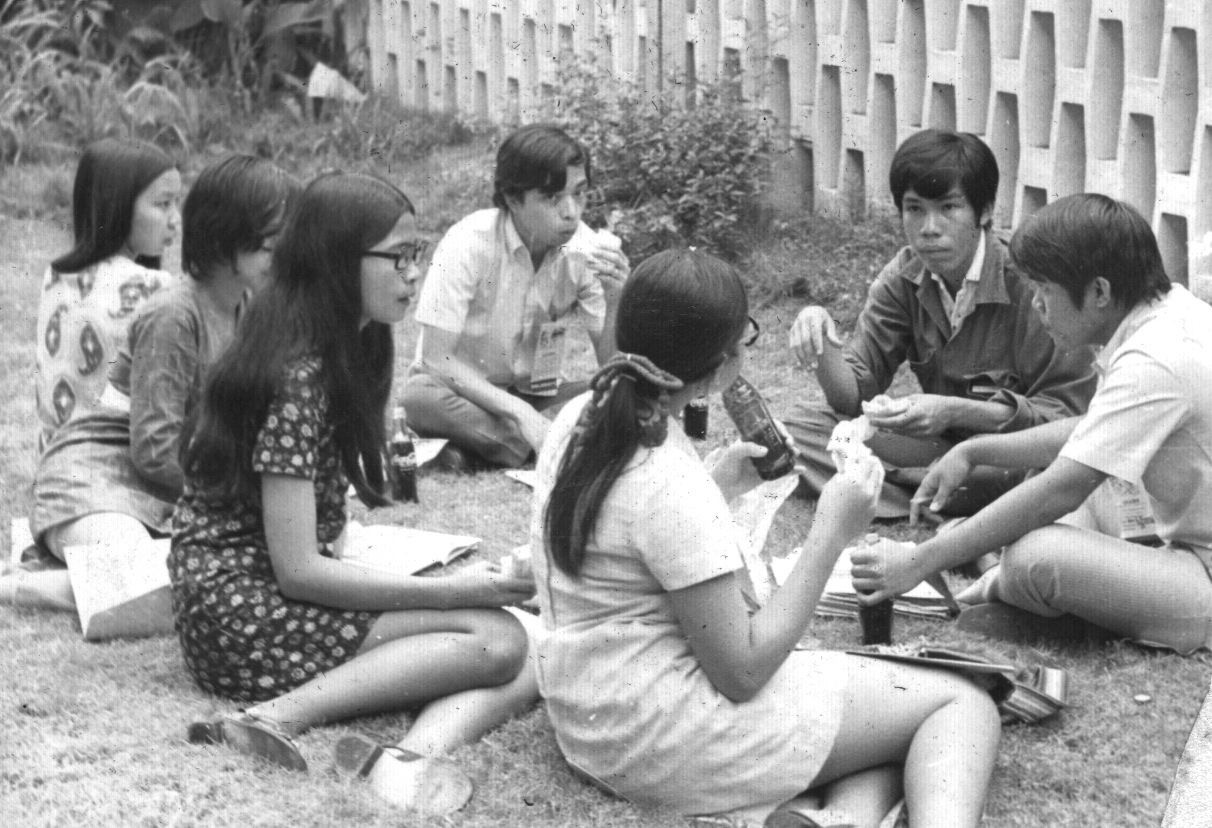
AT ABOUT this time fifty years ago, I was newly released from martial-law prison after seven months of what everyone euphemistically called “detention,” and wondering what to do with the rest of my life. I was just nineteen, so I suppose you could say that I had a lot of living ahead of me, but I felt very differently then. More than a dozen of my friends—all of them in their twenties or even younger—had died horrible deaths fighting the regime. We exalted them as the martyrs that they were, but grimly realized and acknowledged that given how things were going, we ourselves would be fortunate to see the ripe old age of thirty.

I had been arrested at home on a cold January morning in 1973, just past midnight. Like many student activists, I had dropped out of college during the First Quarter Storm of the early 1970s. But instead of joining “the movement” full-time, I improbably found a job with a newspaper as a general-assignments reporter. It was heady stuff at age eighteen, covering three-alarm fires, floodwater rescues, and the very same demonstrations I had joined on the other side of the police barricades. And then martial law was declared—I was actually covering a rally in UP, and thought I had a scoop when a radio station nearby came under fire from the Metrocom, only to be told by my night editor when I tried to phone the story in that we no longer had a newspaper to publish, because soldiers had taken over the office. 

Over the next few months I shuttled between part-time jobs and clandestine meetings with the anti-martial law underground, moving around the city. I wasn’t doing much, given how green I was, but I thought it was important to take part in the resistance in whatever way. And then when Christmas came, like a good boy, I went home to my parents and foolishly had a chat with a neighbor who turned out to be a military asset. Not long after, a posse of soldiers appeared at our door, and when my father nudged me awake, I had a gun pointed at my face. I was being arrested under a catch-all “Arrest, Search, and Seizure Order” or ASSO issued by the Defense Minister, Juan Ponce Enrile, for whom I would ironically be writing some speeches during his post-EDSA reincarnation (he won’t remember that, as I was a tiny mouse in the office).

My release in August 1973 came right out of a Kafka story. I was taking a shower one morning in our prison—which, by the way, is roughly where St. Luke’s BGC is today—when I heard my name being called over the PA system. “Dalisay, report to the guardhouse immediately!” The last time I had done that, after one Sunday dinner, I had been beaten up by some drunken guards just for the heck of it, so I groaned when I heard the announcement. Not again, and so early? As it happened, I was received by an Army officer with a stack of papers. He pulled mine out, squinted at it, and said, “Dalisay, you’re still here? Pack your things. We have nothing on you.” The first place I visited after I went home was the AS Steps in UP, where we had gathered for many a raucous rally; it was vacant and deathly silent, and I knew that I wasn’t going back to school just then. Only after a long detour—working as a printmaker, a writer, an economist, and meeting Beng and fathering Demi—did I return to UP and graduate with my degree at age thirty.

I’ve written about my activism and incarceration in my first novel, Killing Time in a Warm Place (Anvil Publishing, 1992), and it isn’t what this column is really about. Rather, it’s about the aftermath, about having a life after martial law, and an unexpectedly long one at that. 

For any activist from my generation who’s still alive, every breath we’ve taken after our 30th birthday is a grace note—what the dictionary describes as “an extra note added as an embellishment and not essential to the harmony or melody”—in other words, a bonus. Considering that we could have been gunned down like dogs or buried alive like some of our comrades were, you can understand why we feel that way. It’s almost absurd to contemplate, but education, marriage, career, success, fame, fortune—and all the downsides and flipsides that come with them—all these were a long string of surprises, any one of which might never have happened, but for a twist of fate or a stroke of luck (clichés, like life’s very milestones, but ones we appreciate).

When my fellow FQSers and I—all college editors who were part of the SERVE book that I wrote about last week and that we launched last Saturday—gathered around a table before the launch to pre-sign some copies, we noted with much chuckling how surprisingly old we had become. We were beset by diabetes and hypertension, which were lethal enough but easier to bear than the four bullets one of us took to his face and body; he was with us that day, laughing, his spirits buoyed by his fervent Christian faith. 

We had become university presidents and professors, Cabinet secretaries, CEOs, magazine editors, pastors, and opinion-makers. I don’t think there was anyone in that room who believed any longer in the necessity nor the efficacy of violence, but neither did anyone imagine that our youthful goals had been met, that the country had become a kinder place, and that our work for justice and freedom was done. We had come to terms with our past, were busily in the present, and were hoping to enjoy what little we had left of our extended lives. But like those shaken passengers who stagger away from a crashed plane, leaving the uncounted dead behind, I’m sure that we felt driven by survivor’s guilt to make the most meaning of our gifted years, to do well and to do good, and to serve our people in any way we could. 

We learned that everything may be political, but also that politics is not everything, and that the road to happiness and deliverance may be wider than we had thought. I myself have resolved that even as I fight on for truth and beauty, I will not allow my happiness to be determined by our political vicissitudes, if I can help it. That will be my sweet revenge on my jailers. I will survive you, live a fuller life, and meet my Maker with a clear conscience and a smile.

Qwertyman No. 56: The Rule of Rules

Qwertyman for Monday, August 28, 2023

HAVE A problem? No worries—the Philippine government will make a rule to fix it (maybe). Don’t have a problem? No matter—the Philippine government will make a rule to give you one.

Some days it feels like all that government exists for is to make new rules, because, well, it’s the government, and so it has to look and sound like one. Never mind what the preamble to our Constitution states, imploring the aid of Almighty God to “establish a Government that shall embody our ideals and aspirations, promote the common good, conserve and develop our patrimony, and secure to ourselves and our posterity, the blessings of independence and democracy under the rule of law and a regime of truth, justice, freedom, love, equality, and peace.” Forget the rule of law and all that jazz; all hail the rule of rules.

Two pronouncements by our hallowed poohbahs caught our attention in recent weeks. 

The first was an order from the Vice President and Secretary of Education, DepEd Order No. 21,  directing in its implementing guidelines that all public schools must ensure that “school grounds, classrooms and all their walls and other school facilities are clean and free from unnecessary artwork, decorations, tarpaulins, and posters at all times…. Classroom walls shall remain bare and devoid of posters, decorations, or other posted materials. Classrooms should not be used to stockpile materials and should be clear of other unused items or items for disposal.”

Why? Because these were distractions to learning, explained the good secretary, presumably including in her edict the pictures of past presidents, national heroes, posters of Philippine birds and plants, TV-movie idols, Mama Mary, cellphone and softdrink advertisements, half-naked women, CPP-NPA recruitment posters, the periodic table of elements, weapons of Moroland, and the winking Jesus. 

I actually found myself agreeing with the removal of some of these popular items of wall décor, especially the pictures of politicians, which doubtlessly produce anxiety and despair in those who might contemplate them seriously. The good presidents will make you ask, “Where did all that goodness go?” The bad ones will invite only dismay and even self-loathing: “How did these jokers even make it to Malacañang? So you can still be that kind of person and become President? What on earth were we thinking?” This leads to even more profound and troublesome questions about the nature and practice of democracy, which a poorly trained and underpaid sixth-grade teacher will be hard put to answer, undermining whatever little authority she still exerts over her students. (To her credit, Sec. Sara reportedly removed her own picture from a classroom she visited.)

But Rizal, Bonifacio, Mabini, Tandang Sora, and the usual pantheon of Philippine heroes decking our classroom walls? Will removing their visages encourage students to think more deeply about their Science or Math problems, or will young minds simply drift off to Roblox, Taylor Swift, and Spongebob Squarepants? Will making our classrooms look as bare as prisons (and even prisons have calendars and pinups) lead to a spike in student attentiveness and performance? What does it say of DepEd—with all the academic resources and intelligence funds at its disposal—that directives like this are issued apparently on a whim and without prior and proper study? Where was the attention to science and education that the secretary was aiming for?

The other new rule that sent us screaming to our group chats was the imposition of new guidelines for foreign travel by the Inter-Agency Council Against Trafficking, announced by the Department of Justice, supposedly to curb the incidence of human trafficking, which we all acknowledge t0 be a serious problem. But is this a serious solution?

Under the new guidelines, Pinoys going abroad to see the sakura in Tokyo or to watch the New Year’s Eve ball drop in Manhattan won’t get past NAIA immigration without showing their flight and hotel bookings, proof of their financial capacity to afford their trip, and proof of employment. That’s a lot of paperwork to bring along, and if you’ve seen how long the queues can get at NAIA even without these papers in the way, you can imagine what they’re going to be like with each single document having to be scrutinized by an immigration officer. There’s an even longer list of additional requirements for people traveling under sponsorship and for OFWs—including a requirement for a child traveling with his or her parents to present a PSA-issued birth certificate, which was already a requirement for that child to have been issued a passport.

Exactly what this rigmarole adds to the reduction of trafficking is unclear to my muddled mind, because it seems to me that any good trafficker worth his or her illegal fees will be smart enough to produce the fake documents their wards will need to slip through airport security. As experience has shown, it isn’t even fake documentation but corruption and connivance that have greased the wheels of trafficking. 

Which reminds me, I received a letter some time ago from an expat Briton and a longtime Philippine resident named Thomas O’Donnell, complaining about such unnecessary requirements as the filing of annual reports by foreigners in this country. The Philippines has a reciprocity agreement with other countries such as the UK, Thomas says, but the UK doesn’t require Philippine residents there to do the same thing. So was it—like many of our other rules—just something to keep our bureaucrats occupied (or possibly, profitably occupied)? Where was the fun in the Philippines, Thomas lamented, and how was a fellow like him supposed to love it? 

Having lived here for 23 years, Thomas clearly has found other, countervailing reasons for staying on, but he has a point. Despite an anti-red tape law in the books, we still invent ways to complicate the simplest things. And answer me this: if the DepEd chief thinks that bare walls can lead to clearer thinking, shouldn’t we declutter our travel processes as well, so we can all sit in the departure lounge in peace with an hour to spare, waiting for our flight (that will likely be delayed, but that’s another story)?

Qwertyman No. 54: Two Valedictories

Qwertyman for Monday, August 14, 2023

TWO SPEECHES delivered by graduating students of the University of the Philippines made the rounds of social media last week, garnering generally positive responses for their forthrightness. One was more strident than the other, but both carried essentially the same message: we need to reframe the way we look at the education of the poor, and what true success should mean for the working student.

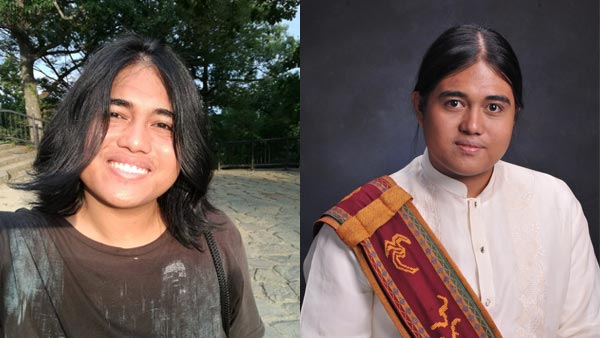
The first was Val Anghelito R. Llamelo, summa cum laude and class valedictorian, Bachelor of Public Administration. The son of an OFW, Val began working at a very young age at a BPO, as a marketing assistant, and as a tutor to support his needs and that of his family’s. He was, almost needless to say, the first UP graduate his family produced, and finishing summa against all odds was the icing on the cake.

He wasn’t there, he said, to deliver the usual valedictory speech you’d expect from a person with his kind of success story. He was grateful for his opportunities, but he didn’t feel like celebrating his hard-won triumph, which people would typically applaud for its sheer improbability. And that, precisely, was the problem, according to Val.

“Why should I be an exception?” he asked in so many words. “Why can’t more Filipinos from my background do well in college and finish like I did? Why does access to a quality education remain the privilege of a few? During the pandemic, how many poor students underperformed because of their lack of access to digital technology?”

Again I’m paraphrasing here, but Val went on to say, “I don’t want to be your inspiration or role model. No one should have to endure what I faced. I want you to be disgruntled enough with the system to demand something better and not settle for less, to yearn for a system where working students, indigenous people, and individuals from impoverished families can have fair opportunities to study and to succeed. Praising us gives politicians in power an excuse to renege on their commitment to improve our lives. We overvalue resilience. Using the familiar analogy of the glass that’s half-full and half-empty, we’re often made to feel that we should be contented with the fact that it’s half-full, but we should focus on the fact that it’s half-empty, and should hold our leaders accountable for filling it up.”

The other speaker was Leo Jaminola, a BS Political Science cum laude and MA Demography graduate who juggled six jobs—as an encoder, transcriptionist, library student assistant, tutor, writer, and food vendor—to complete his bachelor’s degree. 

“Graduating with honors back then was nothing short of a miracle,” says Leo. “In the years that followed, the list of jobs I took just grew longer as I became a research assistant, a government employee, a development worker, and a consultant for different projects with some engagements overlapping with each other.  

“The past years have been a long-winding maze of seeking financial security and I have still yet to find a way out of this crisis. From full-time work, part-time work, and competitions, I did my best to provide not only for myself but also for my family. 

“While some of my peers have hefty investments in high-yield financial instruments, here I am still overthinking whether I deserve an upgrade to a large Coke while ordering at the local fast food chain. 

“During my childhood, I saw how poverty manifested itself in the form of cramped makeshift houses, children playing near litter-filled canals, and senior citizens succumbing to illnesses without even getting a proper diagnosis. Growing up, I thought of these as normal occurrences that should be accepted as it is the way of life. Now, I do not think that this should be the norm. 

“Some people will say that poverty is a personal failure and that the members of my community should work harder but I know better. One of the things that I learned from my experience is that hard work as the primary factor in being successful is a myth. That’s not to say that it doesn’t play a role but privilege and access to resources have greater impacts on whether a person ends up successful or not. 

“If hard work is all it took, then the many young breadwinners I know who continue to support their families while chasing their own dreams would not be constantly organizing their budget trackers to find ways how to stretch their salary until the next payday. 

“Others will read this and use it as some kind of living proof that people, even those from the most marginalized groups, can make it in life simply by working hard rather than addressing structural barriers. But what of those who didn’t make it despite working as hard or even harder than me? How are their experiences not evidence of the continued inaccessibility of education and opportunities in our country? 

“Rather than success, we should see my experience and the stories of so many others as systemic failures. If anything, my story should make us angry and move us to demand a much better society—one that allows our people to live with dignity, dream freely, and enjoy equal opportunities.”

The speeches echo each other, but then so have the “model” valedictories that Val and Leo so forcefully seek to subvert. Indeed, the usual narrative we hear is that of the poor boy (or girl) made good, followed by congratulatory praises for his or her tenacity and faith in Divine Providence. (Some of them, like the poor boy from Lubao, even become President.)

I have to admit that we find such stories inspiring if not necessary, because they offer the possibility of salvation for a lucky and plucky few. But we have to bear in mind as well—as Val and Leo emphasize—that for every summit achieved like theirs lie hundreds if not thousands of others who never got past base camp, not for lack of talent or will but simply for lack of means. To succeed as a nation and society depends much less on producing exceptional one-offs than on leveling the playing field for most.

(Photos from Philstarlife and pep.ph)

Qwertyman No. 49: The Best We Can Do?

Qwertyman for Monday, July 10, 2023

“IS THIS the best we can do?” That question has been ringing in my mind since a couple of weeks ago when two issues came up that, for me and apparently many others, define the level of mediocrity to which governance and decision-making in this country has sunk. Both concerns have already been well ventilated in social media, which is far more scathing and cruel than a Monday column like mine can afford to be—I hate to start my readers’ week with something likely to leave them with an upset stomach—but let’s just think of this as a gargle to relieve our mouths and throats of unpleasant flavors.

First, ex-Atty. Larry Gadon. I don’t know the guy; I’ve yet to meet him and frankly I hope I never have to. I’ve heard the diatribe for which he was rightfully disbarred by the Supreme Court. It’s an awful slurry of verbal excrement that no one but its own source deserves to experience, and there’s doubtlessly more where it came from, disbarment or not. I can live with that, because I know that there’s an even higher court that will render judgment on this fellow and his kind, and it will come with a harshness commensurate to the totality of one’s character. 

What I find more odious is what came after: the Palace’s affirmation of its trust in its appointee as Presidential Adviser on Poverty Alleviation, and Gadon’s own vague reference to certain corporate managerial skills that supposedly qualified him for the job. I had been chatting with a lawyer the day after the disbarment, wondering what Malacañang would do next. “Oh, that won’t get past Justice Bersamin,” he said, adverting to the Executive Secretary. “Just you wait, they’ll take him down.” The next day Bersamin issued a lame press release echoing Gadon’s argument that he didn’t need to be a lawyer, anyway, to take on the Cabinet-level, Salary Grade 31 post, alleviating at least one person’s shortage of cash. (As Full Professor 12 in UP, after more than 30 years of teaching, I retired at Salary Grade 29. Am I envious? Of course I am—shouldn’t anyone be?)

At this point I was pulling hairs off my balding head. So, okay, he doesn’t need to be a lawyer to lead poverty alleviation. But what else does he bring to the job? Is choosing him the best BBM can do? Or does his selection merely confirm what Palace critics believe to be the lack of any genuine commitment to effective and legitimate governance, to give way to the dispensation of favors to political allies? Just when even skeptics were beginning to give their grudging approval to some appointments that made sense—Jimi FlorCruz as ambassador to China and Gibo Teodoro to Defense being two of them—we slid right back into the muck of patronage politics.

Does BBM think so poorly of the poor that he would entrust their fortunes to a man who, using the Supreme Court’s own words, was booted out of lawyering for his “misogynistic, sexist, abusive, and repeated intemperate language”? How will Presidential Adviser Gadon deal with the hundreds of poor women who will be flocking to his office seeking relief for their plaints? Now that he’s beyond the pale of the Supreme Court, will Gadon feel suitably chastened, or will he be emboldened to spread even more nightsoil around the yard? (The dramatist in me is whispering that true character will assert itself, and bring on its own downfall.)

Issue No. 2, the new “Love the Philippines” tourism slogan and the plagiarism mess that followed with its video. I never liked the word or expression “Meh,” which seems a lazy way to express dissatisfaction, but as 99% of social media seems to agree, “Love the Philippines” was triple-meh, totally uninspiring and unimaginative, and visually cluttered. I’m not even complaining about the P49 million reported to have been paid by the government to the ad agency that conceptualized the slogan; we know that the right few words, properly chosen, could make a world of difference in sales, many times more than the investment. (Nike’s “Just Do It” campaign, credited to the American Wieden+Kennedy agency, reportedly boosted Nike’s worldwide sales from $877 million in 1988 to $9.2 billion ten years later. We don’t know how much Nike paid for those three words, but its trademark and stunningly simple “swoosh” was drawn by a female college student who was paid $2 per hour in 1971.)

I also understand that we seem to be too self-critical and terribly hard to please when it comes to tourism slogans, maybe because they’re supposed to encapsulate and project our national identity—on which we have yet to arrive at a consensus, a century and a quarter onward. 

Dick Gordon’s “WOW Philippines” and the subsequent “It’s More Fun in the Philippines” earned their share of brickbats. But whatever those criticisms were, I’d have to agree that either one of them is infinitely better than “Love the Philippines,” whose imperative voice sounds tonally off. (Not to mention its susceptibility to parody, which the Palace’s PR watchdogs should have caught—a “Rob the Philippines” meme has been making the rounds, a tamer verb choice than others I’ve seen.) 

Social media is abuzz with what reportedly happened behind the scenes and what a Palace-favored director supposedly did to screw things up—but again, I’m not even going there, and will limit my dismay to the poor result that often emerges when money, politics, and egos get the better of creatives. The use of video clips from foreign sources to prop up a campaign for Philippine tourism was almost absurdly hilarious and totally inexcusable, and it’s hard to believe that a company as experienced and reputable as the contracted ad agency would have done that knowingly, although it owned up to it. 

At any rate, these missteps don’t do any good for any administration trying to earn the people’s trust, and the ultimate question is, what are they going to do about it? The answer will tell more about those in charge than the minor figures in these scandals.