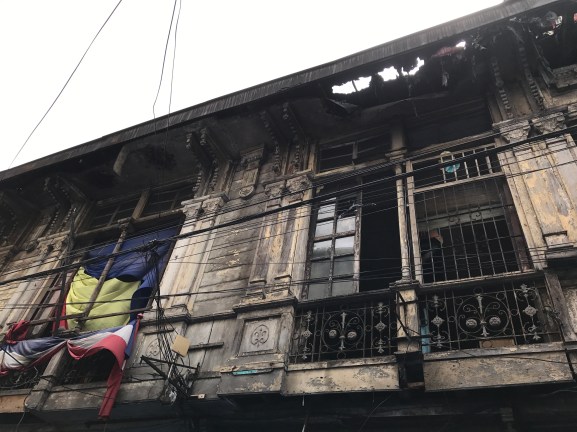
Penman No. 234: A Glimpse of Interesting Manila

im_cover3e

Penman for Monday, January 16, 2017

ASIDE FROM the fountain pens which I’ve recently stopped collecting, I’ve long nursed another, quieter passion, albeit on a much more modest scale. Since my grad-school days in the American Midwest in the 1980s, I’ve been drawn to old books from and about the Philippines. Sadly I can’t read Spanish—one of the great regrets of my college life, a casualty of our generation’s sweeping rejection of everything that smacked of colonialism (except, ironically, English)—so my pickings have been confined to books in English, largely from the late 1800s to the early 1900s.

I stumbled on the first of these books—and began to be conscious of their significance—while I was poking around antique and thrift shops for pens. The Midwest, with its many universities and industries (not to mention pen companies like Parker and Sheaffer), was a cornucopia of all things old and wonderful, and inevitably my eyes would drift to the dusty bookshelves that typically carried cookbooks, old Bibles, local lore, and Western novels.

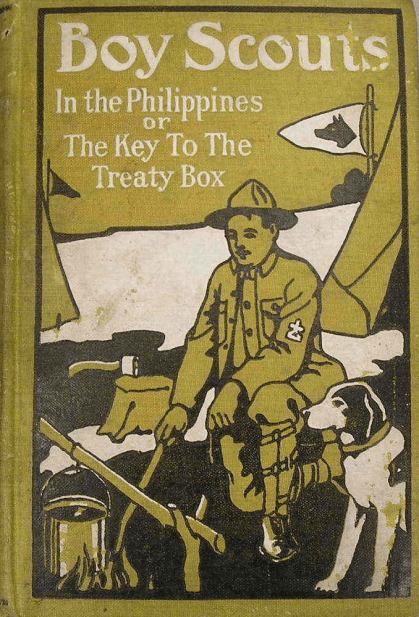
Now and then, however, I’d get lucky and come across a book with some Philippine connection, usually from around the early years of the American occupation. With titles like Uncle Sam’s Boys in the Philippines and Our New Possessions, these books celebrated American imperialism, the novel fact that it now had a colony across the Pacific that deserved to be introduced to curious readers in Kansas and Missouri.

bsp

I remember finding the massive two-volume Our Islands and Their People for $10 in a Milwaukee antique store, only to have to leave them behind when I flew home from graduate school in 1991. But I did bring back a small trove of similar material, and have added to them since then, largely via eBay.

My Holy Grail had been a first edition of Carlos Bulosan’s America Is in the Heart (I would acquire one later locally in the most interesting circumstances—I’ve told the story here—and would give it to my daughter Demi as a wedding present), but another precious book I was relieved to have saved from the Faculty Center fire by foolishly leaving it in my car is a first English edition from 1853 of Paul P. de la Gironiere’s The Adventures of a Frenchman in the Philippines, an eBay pickup from the UK.

I’m not an antiquarian by any means; I lack the vision, the resources, and the scholarship for that. To be honest, I haven’t even read everything I’ve collected, a pleasure I’m saving for my impending retirement. I just like salvaging these well-worn volumes from the scrap heap, or from some dark corner where they can’t possibly be appreciated. They’re neither particularly rare nor valuable—only two or three have cost me more than $100—but they all contain very interesting, if sometimes horrifying, stories about America’s imperial project.

s-l400

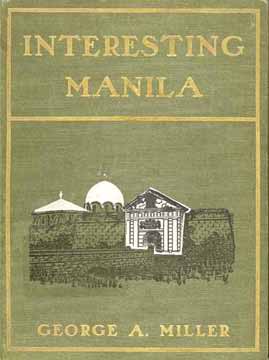
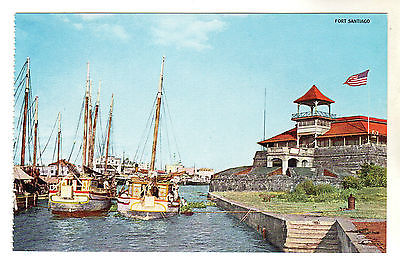
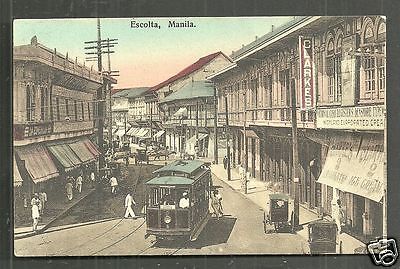
It’s difficult, even for a Filipino, not to be entertained by the descriptions in these early travelogues, revive as they do the nostalgic charm of a vanished era. Take, for example, Interesting Manila by George A. Miller, first published in Manila in 1906 by E.C. McCullough, a $10 purchase from a bookseller in Massachussetts.

Its evocation of the past reminds us that Manila was already old even then: “Beautiful these old churches were in their scars and moss and vines. Many have been spoiled by fresh coats of paint. But who can sit silent in their vaulted aisles without hearing from those stained and mellow walls, whispered prayers of priests who long since have vanished, and shadow chants of acolytes who have joined the choir invisible?… My first experience in a Manila church was at High Mass in Santo Domingo at the early hour. There were sixteen hundred candles shining in the gloom of the old sanctuary, and a thousand worshipers were kneeling on the polished floor. Among the high arches gathered the smoke of the incense, and way up in the dome the morning sun streamed red and gold through the colored glass.

“The chanting of the priests reverberated through the aisles like the noise of a cataract, and the answer of the prostrate people was like the murmur of many waters upon the sand. Then the great organ with its thundering reeds made the old pile ring and shout like some strong giant in sport, and in the succeeding silence the people waited in awe for what might follow. What did follow was the chanting of the boys’ choir without accompaniment, and the effect from the high gallery was as if the voices came from everywhere, the very stones had suddenly become vocal and joined in the acclamation.”

In a voice we might be hearing today, Miller laments the thoughtless “restoration” of these old buildings: “The present Malate church has been restored until it is of little interest. The old tile roof, the hole in the west gable made by American shot, and the walls with shrubs and trees growing in their crevices made a building worth going to see, but now it is all paint and corrugated iron.”

The vividness and vigor of the experiences described can be exhilarating: “One of the really delightful experiences that many people have never discovered is that of a trip up the Pasig at sunset. We took the car to Santa Ana and at five-thirty stood by the river and were besieged by a dozen vociferous banqueros, who contended for the distinguished honor of carrying our lunch basket to the landing. The bancas all looked alike, but there must be the preliminary diplomatic stunts as to distance and price. Tagalog, English, and bad Spanish were mixed in a verbal storm for five minutes and then we were aboard and off for Fort McKinley.”

Sometimes these colonial reports afford us a priceless glimpse into our prewar treasures, likely long gone: “There are about twelve thousand volumes on these shelves,” Miller notes of the Franciscan library. “The library of the Recoletos contains about nine thousand volumes; that of the Augustinians eleven thousand, and the Dominicans have eighteen thousand. Most of the collections contain several copies of the celebrated ‘Flora de Filipinas’ by Fr. Blanco and his co-laborers. This work is in six volumes and an index and is a remarkable piece of scientific research. The best edition contains two volumes of colored plates of the flora of the archipelago, and the press work done, in Barcelona, is of the best.”

And then again quite often the interest doesn’t come out of the narrative itself but in the perspective, which almost inevitably involves some triumphal trumpeting of America’s virtues. Miller’s assertion of the Westerner as a man of action and of the Oriental as a laidback soul is typical of these white male observers’ musings:

“The West is known by its deeds, the East by its dreams. The Anglo-Saxon lives in the concrete, the Oriental in the shadows. The American, having found a ‘proposition’ in a field, makes haste and sells all that he has and buys that field that he may dig therein and get ‘results.’ The Oriental inhales the drowsy fumes of some far-off good that was, or is, or is to come—it little matters which—and is content.”

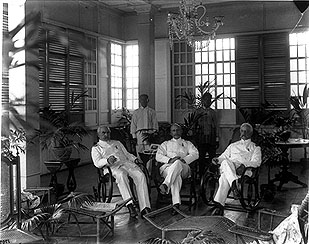
Interesting Manila, indeed—but even more interesting was what these books said of their linen-suited writers.

s-l400-1

philippines02

Penman No. 233: A Ray of Filmic Sunshine

Sunday_Beauty_Queen_poster.jpg

Penman for Monday, January 9, 2017

AS SOMEONE who wrote about 25 full-length screenplays for various film projects and directors in another life between the late 1970s and early 2000s, I really should be more interested in the remarkable developments that have taken place since in local cinema, especially on the indie scene.

But I have to confess, with some guilt and shame, that I haven’t kept up with what our younger, post-Brocka and post-Bernal directors have produced, except for the occasional viewing of a Brillante Mendoza or a Lav Diaz film, or outstanding documentaries such as last year’s Curiosity, Adventure and Love and An Open Door: Jewish Rescue in the Philippines. There are some personal reasons for this estrangement (not worth getting into at this time), but I do realize that I’ve missed out on a lot of good material while bingeing unpatriotically on Hollywood and Netflix.

I must say that the Metro Manila Film Festival and its seemingly bottomless decline from its glory days ages ago to the inevitable iteration of Enteng Kabisote contributed to my dismay. This most recent MMFF, however, seemed open to letting a ray of filmic sunshine through, with new criteria and a new selection process that put a premium on quality over commercialism. When I saw the list of the people involved and when I noted that their final selections were fresh titles by new directors, my expectations rose and I told Beng, after Christmas, “Let’s go see a movie!”

We’ve managed to see only two MMFF films as of this writing, but in both instances, our hopes were well rewarded.

Sunday Beauty Queen, which eventually won the Best Picture Award, documents the labors of Hong Kong’s OFW community in putting together a beauty pageant to ease the pangs of loneliness and the drudgery of their work. Directed by Baby Ruth Villarama, the film tracks pageant organizer Leo Selomenio—herself a longtime domestic helper—and the lives and stories of several key participants, all of them hardworking DHs. These girls, clearly, are no Gemma Cruzes or Pia Wurtzbachs, but even those of us who may scoff at the predictable inanities of beauty pageants will appreciate how the idea of “beauty” itself has been turned inward by this film, whose insistent positivity prompted me to tweet, as I stepped out of a cinema, that it was a “beautiful film about truly beautiful people.”

It wasn’t lost on me that I myself had written a novel, Soledad’s Sister, about OFWs, set briefly in Hong Kong, and had more than once observed our compatriots’ festive Sunday gatherings in Statue Square. Novels like mine tend to be morose reflections on human suffering, but there’s nothing like a well-crafted and even-handed documentary to bring out the verve and the tenacity that must accompany and cushion all that sorrow, and Sunday Beauty Queen draws on Pinay resilience in spades. The ultimate crown its subjects wear—and they are all winners—is that of dignity. Bravo, brava!

The other movie we chose to see was Ang Babae sa Septic Tank 2, with the irrepressible and hugely talented Eugene Domingo reprising her title role. We hadn’t seen the original movie from 2011 (and are now sorry we didn’t), but had no trouble wading into the premises of this sequel, which has Eugene playing herself as a comebacking star and tormenting her director (Kean Cipriano) with her “suggestions” for “improving” the script. It’s a riotously satirical project through and through, well-acted by its ensemble and well-scripted by the unfailingly sharp Chris Martinez, intelligent without being pretentious.

I may have chuckled more appreciatively than others in the audience, having gone through many of the absurd situations and propositions Eugene’s character raises in the film with her director-scriptwriter. I know I said at the start of this piece that I didn’t want to talk too much about how and why I got fed up with working in the film industry, but I feel like I should share at least one incident, from around 20 years ago, that’ll help explain why I moved from writing film scripts to writing novels and biographies.

Let’s set our scene in the offices of a big film studio, somewhere in Quezon City. I’ve been called to an urgent meeting by the producer because the movie we’re shooting (yes, we’re actually in the shooting stage) needs a new ending. Why? Because the studio’s Big Boss, who keeps track of the bottom line, doesn’t want our hero to die, like we’d originally planned; dead heroes bomb at the box office. So now we have to figure out a new extro, and the producers’ friends and alalays are all generously available and willing to help us think the ending through.

“So Gabby doesn’t die at sea when his banca is run over by a big ship,” one of them suggests, “but of course Sharon doesn’t know that, and in despair, she accepts Eric’s offer of marriage. But on the way to the wedding, she asks the car to stop by the beach, where she and Gabby used to promenade. She’s in her wedding gown, and she walks on the beach thinking about Gabby, until she reaches the tree they used to stand under. So she does some muni-muni, remembering their happy days….” At this point, another alalay interjects: “Ay, you know what, it will be so kilig if she looks up at the tree, and she’ll see the face of Gabby shimmering on every leaf!” I take a huge gulp of water to drown the welling acid in my gut.

“She makes a speech and tells the absent Gabby how much she truly loves him,” the original contributor ventures breathlessly, “and then she walks away… to her marriage and her life with Eric…. But it doesn’t end there! Because… because when she drives away, we see that there’s movement from behind the tree—it’s Gabby! He’s alive!”

There’s clapping and cheering all around the table, until somebody has the temerity to ask, “But why doesn’t he show himself to her?” It’s a question met with profound disdain. “Because—don’t you see?—Gabby is now in crutches, he lost one of his legs in the boating accident, and he loves Sharon too much to make her share her life with a cripple! So, nobly, he lets her go, as the theme song plays to the closing credits…..”

Appreciative sighs greet the revelation, as some of my water sputters onto the table.

Thankfully my director and I found a way to weasel out of that inspired conclusion, and the movie was shot and finished. I collected my paycheck, and resolved to do my best to write just stories, novels, nonfiction, and columns from that moment on.

Penman No. 232: The Other Leni

2330687643.jpg

Penman for Monday, January 2, 2017


PROMPTED BY the rumors swirling around Vice President Leni Robredo and her possible replacement in that post by Sen. Bongbong Marcos in a January judicial coup, my ruminations drifted over Christmas to the Marcos legacy, and how differently Filipinos see it, and why. At my usual poker table, for example—where I face millennials more than fellow seniors—a question I often hear whenever the Marcoses come up in conversation is, “Why, were they really that bad?” I wouldn’t be surprised if it came from a 30-something, but it’ll typically come from someone my age or older, who lived through the same period—or did they?

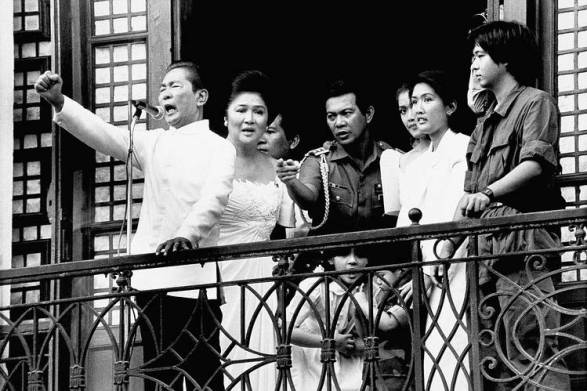
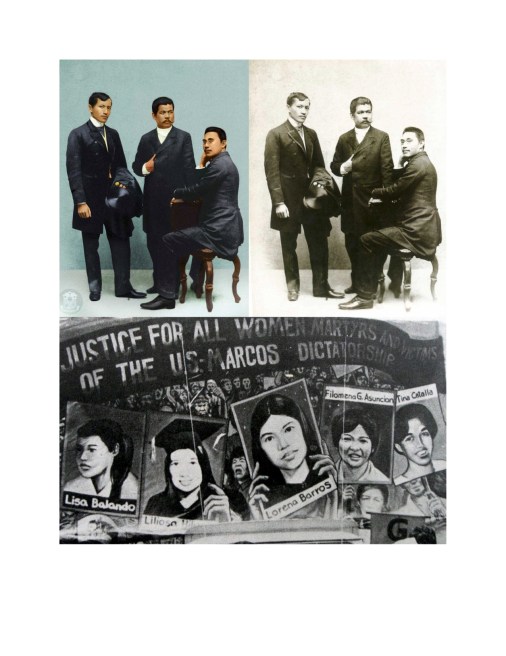
Those of us who worry about the historical revisionism or amnesia that seems to have overtaken us may be forgetting something else—that, just like in Hitler’s Germany, the dictatorship wouldn’t have lasted that long without some significant degree of popular acceptance or complicity. One of my pet theories about our martial law experience is that those of us who fought it were in a distinct minority, still are, and will be again. Most Filipinos never had the Metrocom or the ISAFP breaking down their doors; most Filipinos never had a son or a daughter shot or raped or imprisoned because of their beliefs; most Filipinos were already too poor to feel they had been stolen from. Many seniors—with understandable appreciativeness, especially at this point of their dialyzed and hypertensive lives—will remember only the medical complexes that Mrs. Marcos built.

If the present administration felt confident enough that it could get away with the Marcos burial, it can only be because it thought this way as well, and gambled on it. It understood that for far too long—and in the increasingly rare instances when it was even brought up in school—martial law, Philippine-style, had been depicted as a war between President Marcos and the communists, not as a systematic campaign of oppression and plunder waged by a dictator against his own people. Now that the CPP-NDF was having coffee in the Palace, what was the problem?

If we’re talking about educating Filipinos—and not just millennials—about martial law, the case will have to be made that it was an economic, political, and moral disaster for all Filipinos—not just for the Left, not just for some businessmen, and not just for some rival factions of the same elite. We were all materially impoverished and morally compromised by it—and continue to be, despite EDSA’s flickering promise. (And if you still don’t know or can’t remember exactly what the Marcoses did, here’s a report from The Guardian to refresh your memory.)

I’ll let that contention simmer for now, because what actually led me to write this column, my very first of the new year, was an essay on another Leni that I was reading online, titled “Fascinating Fascism,” written by the late Susan Sontag and published in February 1975 in the New York Review of Books.

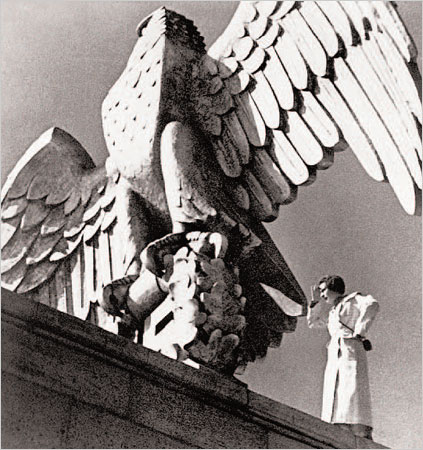
It must have been the image of some black-shirted (but surely well-intentioned?) young men giving clenched-fist salutes in front of the Rizal monument that led me to revisit the Hitler Youth and Nazi iconography—less to condemn it (let’s give the trolls a rest) than to see why it was so effective and appealing. There’s a scene from 1972’s hit movie Cabaret that might suggest why fascism, as Sontag says, can be so fascinating even and especially to ordinary folk, and you can watch that clip on YouTube here. It’s that of an angelic boy singing “Tomorrow Belongs to Me”—at least it starts that way—and it’s masterful moviemaking, showing within minutes how something so bright can be so chilling.

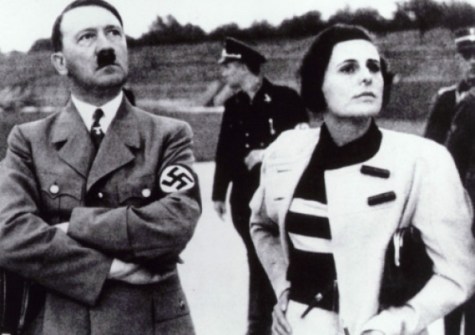
And speaking of moviemaking, this brings me to the other Leni—the German filmmaker Leni Riefenstahl (1902-2003), who directed the seminal Nazi propaganda films Triumph of the Will, about the party’s mammoth Nuremberg rally in 1934, and Olympia, about the 1936 Berlin Olympics. Her work would be hailed as technically brilliant and she herself as “an artist of unparalleled gifts” even by American critics—given especially that she was a woman trying to succeed in a male universe—and after the war, conveniently “de-Nazified,” she became something of a media darling, claiming that she had been politically naïve and knew nothing about the Nazis’ war crimes; she even joined Greenpeace and released a dreamy underwater movie on her 100th birthday.

triumph-of-the-will-leni-riefenstahl

(Photo from kinoimages.com)

But in her powerful essay on fascist aesthetics, Sontag cuts Riefenstahl no slack, painstakingly proving that contrary to Riefenstahl’s later assertion, she was a willing and willful collaborator of Hitler and Goebbels. The essay is a marvel both of scholarship and insight, something many writers today—who wrap themselves up in opaque critic-speak but yet fear or disdain to take a clear moral stance—can learn from. The full text can be found here.

This next leads me to a confession I’ve made before: that as a young screenwriter, I too was complicit in the making of a monumental film which would have been Marcos’ answer to Riefenstahl’s myth-making epics. It must have been around 1978 when I got word from Lino Brocka, with whom I had just begun to work, asking me to accompany him to a meeting called by Mrs. Marcos. It was the peak of martial law, and no one could say no, unless you were prepared to go to the hills or to march in the streets, as we obviously weren’t—not yet.

As it turned out, Imelda had summoned seven other leading film directors and their writers as well, and we were assembled at the Goldenberg mansion in Arlegui near Malacañang. Our marching orders—as Imelda would explain to us over the next many hours alongside her aesthetics of cinema (“No shots of squatter shanties!”)—were to produce an eight-part filmic history of the Philippines from Magellan to Marcos. Lino and I drew the Gomburza episode. We ended past midnight, after a personally guided tour of the premises and their precious artifacts, and were sent home with curfew passes.

The film was shot in pieces and later stitched together by the National Media Production Center—there’s a reference online to a “Kasaysayan ng Lahi” film being entered by the Philippines to an international film festival in Tashkent—but I never saw it and had no idea where the reels were kept until a friend told me a couple of years ago that they were stored somewhere in the offices of the Philippine Information Agency in Quezon City. In a sense I was glad that for some reason the film never hit Manila’s screens (at least not that I know of), as it would only have added to the perpetuation of a fable.

But then again, with a restoration underway (and I’m not referring to crumbling celluloid), it might yet play in your friendly neighborhood theater—and worse, in the blinding daylight. Like I texted a friend, somehow 2017 feels like 1971, all over again.

bn-mt815_0225ph_p_20160225035224

(Photo from wsj.com; photo of Hitler and Riefenstahl above from documentary.org)


Penman No. 231: A Sortie to Siem Reap

IMG_0296.jpg

Penman for Monday, December 26, 2016


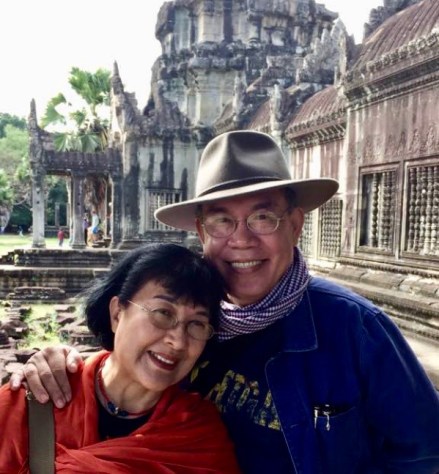
HAVING MADE a pact to see as much of the world together for as long as our knees could carry us, Beng and I headed out to Siem Reap in northwestern Cambodia just before Christmas. It was another booking we’d typically made months in advance (we’d booked our November trip to Guangzhou in February) to avail ourselves of budget fares, and a four-day sortie in mid-December sounded just about right, taking the weather and the crowds (or the lack of them) into account. A few years ago, we’d taken separate December trips to Beijing and Shanghai and had shivered in the snow, but were rewarded with spectacularly desolate views of and from the Great Wall.

At an age when people start talking about bucket lists, we just had to see Angkor Wat and its outlying complex of temples, but as it turned out, Siem Reap was much more than just a location or a jump-off point for Angkor Wat. It had ample charms of its own, and while it would be criminal to go there without visiting the temples, it offered much room for more solitary pursuits. We were there for four full days, spending two days on the road and two just lazing around about town, and it felt just right at our seniors’ pace.

IMG_0094.JPG

It takes just under three hours to fly to Siem Reap from Manila; our flight landed close to 10 pm, and we were met by a tuktuk sent by our boutique hotel as a free service, a welcome touch. There’s a long row of big hotels along the national highway but we chose a small one closer to the center of town, about a 20-minute ride away. I exchanged a couple of hundred dollars at the airport, but it turned out to be almost totally unnecessary—in Siem Reap, the US dollar is king, with dollar prices posted or quoted on everything from SIM cards and T-shirts to mango shakes and massages. (Do bring lots of small bills—I’ve never seen so many 2-dollar bills moving around, not even in the US, although curiously signs say that Cambodian banks won’t accept them.) Speaking of SIM cards, a $5 Cellcard SIM gets you 1.5 gigs of data, good for one week.

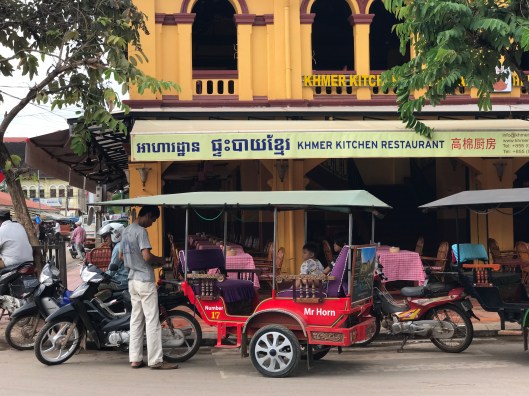
Aside from dollar bills, the other constant in Siem Reap is the tuktuk, larger and more spacious than its Thai counterpart, with two facing seats in the back and the motorcycle all by itself out front. Ours was driven by an unfailingly pleasant and efficient fellow called Thou (whose name kept me looking for a loaf of bread and a jug of wine); the only drawback to this design is that the driver sits too far ahead of you for any conversation beyond the yelled “Stop!” at points of interest, so I sadly never got to really chat with Thou, even if his English was surprisingly good.

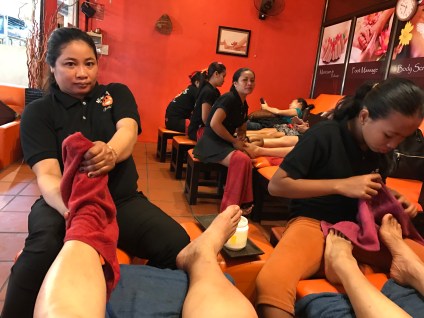
Indeed I was frankly astonished by the facility with which nearly every Cambodian I met—whether driver, waitress, masseuse, or vendor—spoke English. Of course Siem Reap is the country’s tourist capital, and English is now taught in Cambodian schools, but we didn’t see that kind of proficiency in Thailand or Vietnam. Quaint vestiges of French remain—a police outpost still called itself a “gendarmery” (with a Y). I remember last using my pidgin French some years ago with an old silk seller in Hanoi who didn’t speak English, but I never had that problem in Siem Reap. Our foot-massage suki said that she had learned English just by listening to her guests, while our guide at the war museum said that he had been taught the language by an NGO.

IMG_0295.JPG

IMG_0110.JPG

IMG_0340.JPG

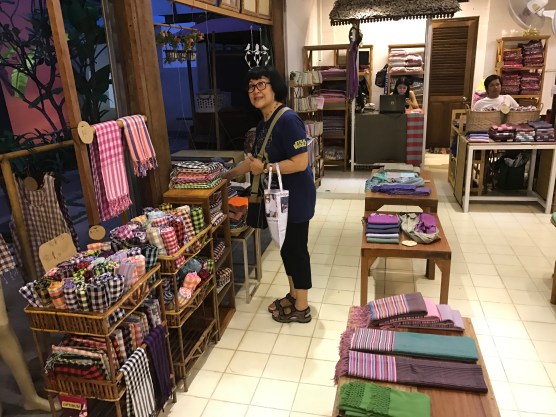
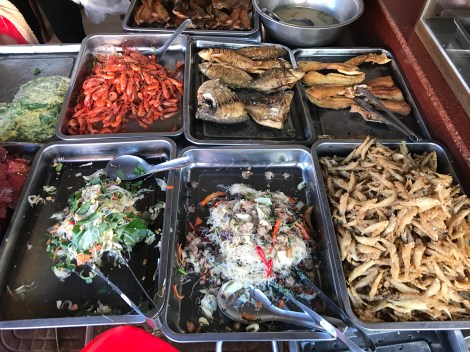
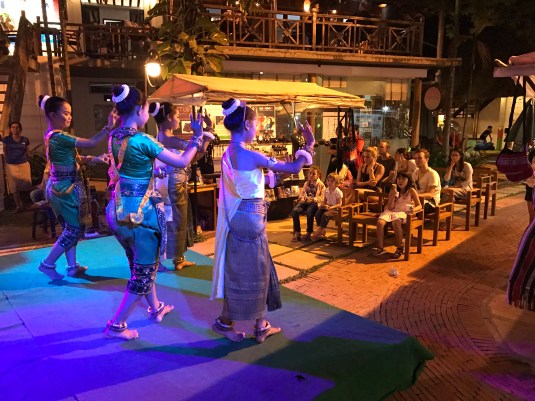
As you can guess, foot massages (widely available for $5 each) were on our daily schedule, mandatory especially after the 10K treks you’ll be making, but Siem Reap is silk-scarf, cotton-shirt, and silver-bangle heaven as well for the casual shopper. Great food—with dishes familiar to the Pinoy palate—can be found all over, and you can easily enjoy a meal for two, including drinks, for $10. Wherever we were, even in the humblest market stall (our kind of fine dining), the rice was consistently good, neither stony nor mushy but with that bounce to the bite that we Visayans call makid-ol. You could even have your massage or your meal with a free daily ladyboys show. If you abhor cheap stuff (I can’t say we do) and want the very best items at corresponding prices, the Artisans Angkor workshop and showroom is in a class all by itself; mid-range, there’s the “Made in Cambodia” market, which also features a free show of traditional Cambodian dance in the early evening.

IMG_0391.JPG

IMG_0402.JPG

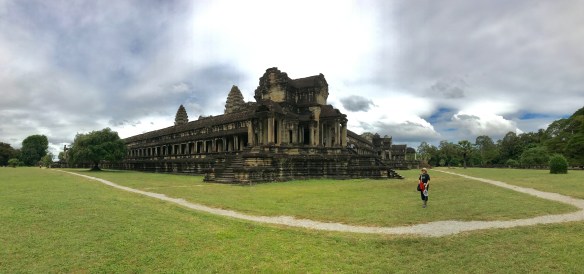
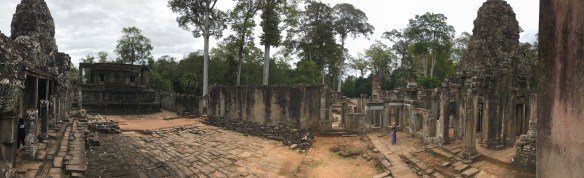
Any list of Siem Reap’s attractions will begin with the 12th-century Angkor Wat, and if I don’t say much about it here it’s only because you truly have to be there to appreciate its majesty, along with the smaller but no less wondrous Bayon and Ta Phrom temples. This complex is but a 30-minute drive away from downtown, but what a difference a half-hour makes—seemingly into the jungle, but actually into the heart of civilization itself.

img_0231

img_0246

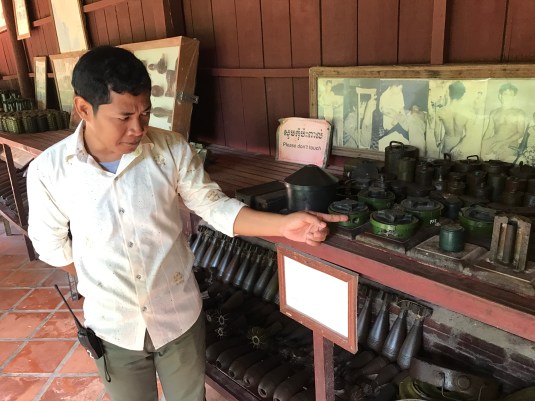
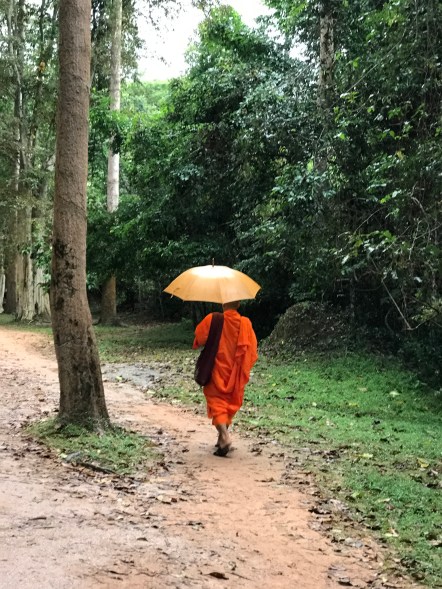
We had been warned by the guidebooks about the insufferable heat in Siem Reap, especially on the temple tours, but it was cloudy and drizzly—even cool and nippy—for most of the time we were there. Riding our tuktuk around the countryside was thoroughly instructive. Depending on your perspective, it was either reassuring or disconcerting to see so many orphanages and pharmacies along the road. Cambodian People’s Party signs were ubiquitous as well, and a visit to the War Museum proved indispensable in contextualizing the easy comforts of today’s Cambodia.

img_0320

Our museum guide Prem was born in nearby Battambang, close to the Thai border, and remembered witnessing battles with the Khmer Rouge as a boy; his parents survived the genocide by feeding on insects. (Angkor Wat is replete with reliefs of battle scenes, a reminder of how often and how strangely beauty and gore come together.) Democracy, Prem said, was a work in progress in his country, and I could only agree and advert to our own situation, although the horrors of the Pol Pot period—with 3 million, half the Cambodian population, killed in just four years—made us, with our mere thousands of largely faceless losses over a few months, appear absurdly civilized by comparison.

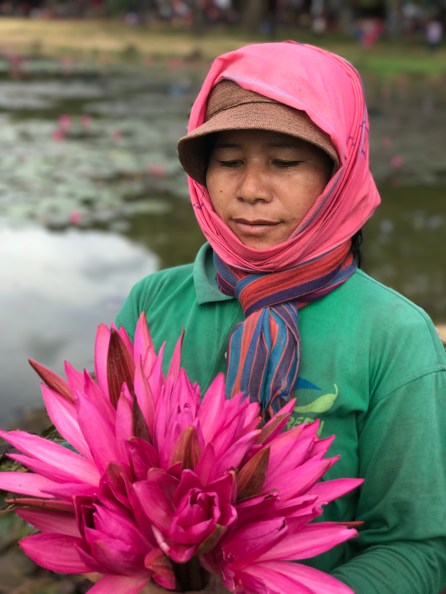
We motored to the edge of Tonle Sap—the largest freshwater lake in Southeast Asia and another major tourist attraction—but decided against taking the $20, two-hour cruise, having read on half a dozen websites about how commercialized the package had become. I’m sure we would have enjoyed it anyway, as writers and artists should find something noteworthy in the most trodden of paths, but it felt enough to contemplate the vastness of the lake from where we stood onshore. A pretty sight on the way to the lake was the carpet of flowering lotuses being farmed by the villagers.

img_0192

Just like its pinkish earth, which it seems any seed you throw into will explode in greenery, Siem Reap is a testament to the insistence of life itself, to the indomitability of the human spirit against all manner of despotism and despair. We flew home much refreshed, from our brows to our toes.

img_0291

Penman No. 229: Our Waking Dream—Why We Need Language and Literature

william blake illustrations.jpg

Penman for Monday, December 12, 2016

(This is the full version of a Powerpoint presentation I summarized for my Penman column, and I’m reproducing it here to share the visuals as well, culled from various sources on the Internet; if any of these images are copyrighted, I will be glad to take them down on request, thanks!) 

THANK YOU all for this kind invitation to share some of my thoughts with you today on “The Crucial Role of Language and Literature in the New GE Program.”

I could stand here for the next 20 minutes and deliver the standard academic lecture on why we need to put literature on the GE curriculum. But it would be the kind of lecture you would have heard dozens of times before, filled with the kind of platitudes you could recite in your sleep.

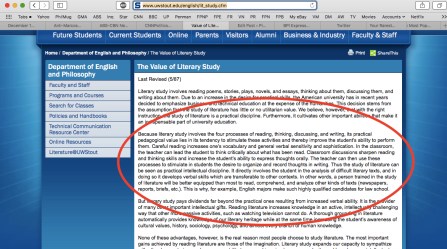
To give you an idea of what this talk could have sounded like, let me quote from what one of my alma maters, the University of Wisconsin, says about the need for literary study:

UWStout.jpg

“Because literary study involves the four processes of reading, thinking, discussing, and writing, its practical pedagogical value lies in its tendency to stimulate these activities and thereby improve the student’s ability to perform them. Careful reading increases one’s vocabulary and general verbal sensitivity and sophistication. In the classroom, the teacher can lead the student to think critically about what has been read. Classroom discussions sharpen reading and thinking skills and increase the student’s ability to express thoughts orally. The teacher can then use these processes to stimulate in students the desire to organize and record thoughts in writing. Thus the study of literature can be seen as practical intellectual discipline. It directly involves the student in the analysis of difficult literary texts, and in doing so it develops verbal skills which are transferable to other contexts. In other words, a person trained in the study of literature will be better equipped than most to read, comprehend, and analyze other kinds of texts (newspapers, reports, briefs, etc.). This is why, for example, English majors make such highly qualified candidates for law school.” (http://www.uwstout.edu/english/lit_study.cfm)

I’m sure this all makes perfect sense—indeed, that’s this whole session in a nutshell. Just to belabor the point, of course we need literature, because our students can’t live by math or physics alone. Besides, teachers of literature need jobs.

chicagostrike.jpg


But humor me for a minute and allow me to move away from the ridiculously obvious and the brain-deadeningly pedantic reasons, and return to the roots of why literature is important in the first place—in or out of the classroom, in or out of the GE program.

This will be a very short talk, and if you miss anything, don’t worry—at the end of my presentation, I’ll give a copy to the organizers to share with you. So you don’t even need to take notes; just listen.  I won’t be quoting from Shakespeare, or citing any eminent scholars with hyphenated European names. Begging your indulgence, I will simply construct the argument as I would teach it in my own class, on the topic of “Why are we studying literature?”

To begin with, we’re often told that like the other arts, “Literature is what makes us human.” But what exactly does that mean? How does literature humanize us?

2014-02-12-Fifthgraderreading.jpg


Literature relies on language, and other animals possess and command a form of language, too. Whales, monkeys, elephants, and birds communicate, presumably for the most basic things—food, sex, danger. We might even call their most basic utterances words and phrases of a kind, performing a clear and practical function. They form sequences of meaning, like saying, “There is food down there” or “I want to make a little baby with you.”

Funny-Animal-Love.gif

This is language, but it’s not literature as we know literature. Why not? Because literature requires imagination—dreaming of things beyond the immediate and the practical—and furthermore, a medium of transmission and preservation of the products of that imagination. We’re told that animals can dream, but they can’t record and communicate these dreams like we do.
Books3.png


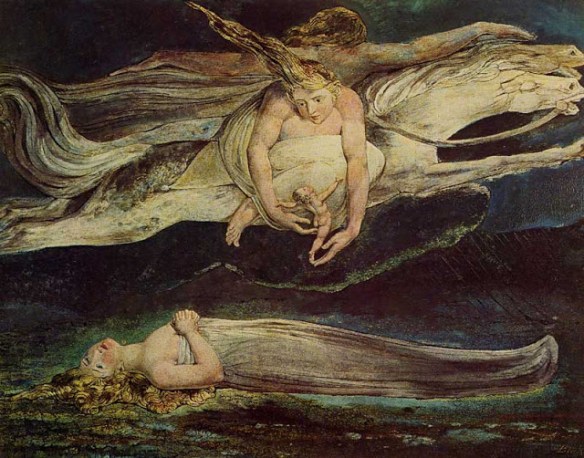
Literature is our waking dream, a dream we describe and share through words. These dreams—these stories we make up in our minds—can teach, can delight, can disturb, can enrage, can exalt. They can remember and can therefore preserve our memories—our thoughts and feelings—as individuals and as a race.

As far as I know, no other species—nothing and no one else—can do this. Literature makes us human, because it allows us to tell stories that make sense of our lives, even stories that never happened, except in our imaginations, which also makes belief in things like Paradise possible.

Without literature, we cannot acknowledge and even talk about our inner selves, our inner lives. That’s something math or physics can’t do—at least not in the way of a poet or a novelist. The appreciation of beauty belongs to this realm of the imaginary, the recognition of pleasing and meaningful patterns in the seemingly abstract.

th.jpeg


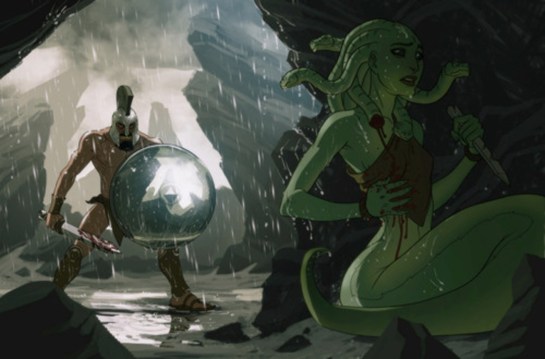
The magic of literature lies in how it deals with reality and reason through fantasy and the imagination, and approaches the truth through make-believe, or what we might call the artistic lie. Literature can make use of use of things that don’t exist or things that never happened to talk about things that do—because reality is often too painful to confront directly. As one of my own teachers put it, art (or literature) is “the mirror of Perseus.”

That’s because—if you recall the story of the Gorgons—Perseus could kill Medusa, whose fatal gaze would have turned him to stone, only by using his shield as a mirror. Literature is that shield. By deflecting our gaze and seeming to look at other people, we are able to see the truth about ourselves, in all its harshness and unpleasantness.

medusa.jpg

At this point, I’m going to backtrack a bit so I can go deeper into another basic argument why we need literature in any curriculum. The point is no longer just to say that literature makes us human; rather, literature makes us better humans, by teaching us discernment and critical judgment.

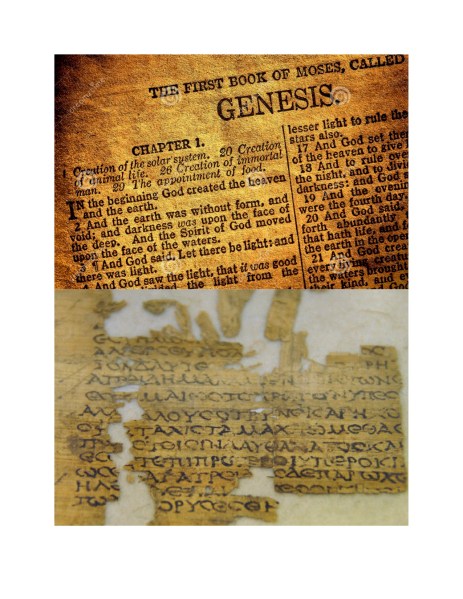
Literature is a history of the words that have made sense of our lives. Like the Bible or the Iliad or the Noli and Fili, it shows us at our best and worst, so we can choose how we want to live—whether as individuals or as citizens or as a society.

Books2.jpg


To do that—to help us use both our reason and imagination—literature uses language, and language uses words.

Through carefully crafted stories, poems, and essays, literature shows young readers that words are supremely important in becoming a better person. This is especially true at a time when words like friend” have been devalued by Facebook,

facebook-friends1.jpg


and “hero” by those to whom history, and honor and honesty, especially in public service, no longer mean anything.

Heroes2.jpg


Every entry and every post our students make on Facebook and on Twitter is a test of how well they have learned their language and literature. I’m not talking about their grammar. I’m talking about their sensibility—the way they think and express themselves, the way they deal with other people, especially people holding an adversarial opinion. How careful are they with their ideas, with their choice of words?
Apple_Store_Trolling.jpg


And it isn’t so much they as we who are being tested. How well have we taught them? How deeply have we drawn on the wealth of human experience in literature to impress upon them that life is full of difficult choices and decisions, of hard struggles to be fought and won? To a generation of millennials weaned on instant gratification and on tweeting before thinking, the complexity of life can be a profound discovery.

This is the first and the most important lesson of all literature:

Words have meaning.

And because they have meaning, words have power, and words have consequences.

Change.png


Words can hurt.

Words can kill.

Drugs-killings.jpg

But words can also heal.

Words can save.

i am sorry (6).jpg


Words make law.

Words make war.

FM-Declares-Martial-law-596x720.jpg

Words make money.

Trump.png


Words make peace.

Words make nations.

constitution1.jpg


Words are the songs we sing to our loved and lost ones.

Words are the prayers we lift up to the skies.

Picture4.png

Words are the deepest secrets we confess.

Picture5.png

Words are what we tell our children the first thing in the morning and the last thing at night.

Words are all that some of us—especially those whom we call writers—will leave behind.

Speaking of writers, seven hundred years ago, a Persian poet named Hafez wrote a short but wonderful poem:

Even

After

All this time

The Sun never says

To the Earth

“You owe me.”

Look

What happens

With a love like that.

It lights up

The whole

Sky.

This, my friends, is what we teachers—whether of literature or science—do with our students, with every class and every lesson we teach. We light up the sky of their minds with love—the love of ideas, of engagement with the world.

And that is why we need language and literature—not just in our GE programs, but in our lives.

Thank you all for your attention.

Penman No. 222: An Education for the Well-Rounded Filipino

1094625733_b065e8bc1c_z

Penman for Monday, October 24, 2016


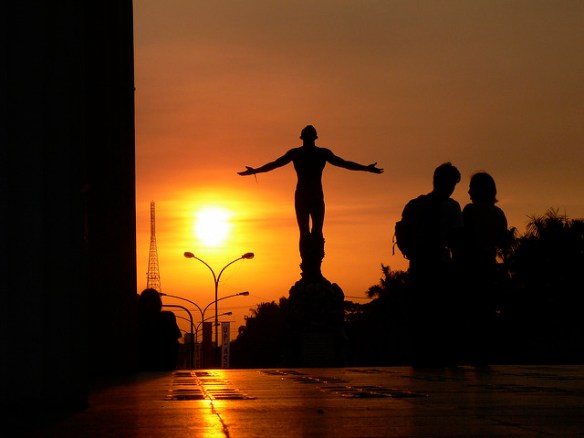
IN A few weeks’ time, several hundred professors at the University of the Philippines’ Diliman campus will gather together for an important vote on UP Diliman’s General Education program—long seen to be the hallmark of a UP education. It’s important because what happens there will determine, to a great extent, what “tatak UP” will mean for the next generation or two, and what being “the national university,” as its charter defines it, entails as far as the quality and the breadth of its offerings are concerned.

The raging battle seems to be over how many units (or class-hours a week) to allot to General Education subjects, which have traditionally covered basic and compulsory courses in such areas as language (English and Filipino), history, math, science, and philosophy.

There’s a menu of options on the table, ranging from a formidable 45 units to a scant 21, and an emerging compromise of 30-36 units in between; the mix of courses in these totals is also under negotiation. Those who want more want to ensure that every UP undergraduate—whether he or she plans to become a lawyer, an engineer, a surgeon, or a painter—can talk intelligently as a well-rounded citizen about the Katipunan and mitosis and perspective and Sophocles and interstellar travel. Those who prefer less want students to graduate from their programs sooner, for UP to remain competitive with other schools, and suggest that students can imbibe some GE skills both from their K-12 add-ons and from their higher-level classes.

I don’t mind saying that I put myself squarely on the 30+ side. We can’t keep complaining that young Filipinos can’t write or speak in proper sentences or don’t know who Apolinario Mabini was—without doing enough to fix the problem, given the chance. Sure, some of these learning points can be addressed in senior high; but subjects like History, English, and Philosophy will still be different when taught in UP’s staunchly secular context and pitched as adult concerns.

But never mind me—let’s give a listen to one of our most accomplished writers, the Leyte-born but now New York-based Gina Apostol, whose novels have won the 2013 PEN America/Open Book Award and National Book Awards in the Philippines. Some time ago, Gina wrote UP Diliman Chancellor Michael Tan to plead for the strengthening of UP’s GE program, and I got her permission to quote from that letter here:

I am writing as a graduate of the UP English department, 1980-1984, a former teacher at the department, and as a novelist whose work has been indelibly shaped by my education at UP—in particular, by its General Education program, to which I look back daily in my own work as a teacher and a writer.

My three published novels owe their genesis to that program. My current novel, William McKinley’s World, about the Philippine American War, began in a PI 101 class in a classroom at Palma Hall Annex, where my professor taught me about a war I never knew about.

In those first two years at UP, I learned to think. The General Education program made me into a writer. I went to a private high school in Leyte that certainly taught me well (arguably just as rounded as the current K-12 program); but I needed the General Education program at UP to make me whole—a critical consumer, a nationalist thinker, a global reader, and finally, it gave me ground to think honestly and seriously about what education means, it gave breadth of thought to allow me to become who I am—a novelist whose work is absolutely grounded in the questions that UP had asked of me in my first two years at the school.

It is my misfortune (though some call it luck) that I have ended up teaching in the States, living among an extremely lucky group of students: the wealthy enclave of Manhattan’s private schools. But every day, teaching my very privileged, very wealthy students who can enroll in any school they want, I can compare what they have to my education at Diliman, and I am daily impressed by the foundational, long view of knowledge grounded in the breadth of UP’s General Education curriculum.

My experience as an educator and an artist here in America is that the education I gained at the University of the Philippines is equal to and (given the state of America) too often exceeds the quality of education abroad. This is true of my fellow alumni who come to America: we understand how well we were prepared.

I cannot underline this enough: I know that UP provided me with an incalculable, a priceless education. I am writing to state emphatically that the General Education program at UP should be enriched, not reduced.

Even today, having been to and taught at several schools considered the best of their kind in America—so acculturated and mired in the world of the privileged as I am here in America—every day, in my classroom, I still marvel at the amazing comprehensive education I got at the University of the Philippines.

Here in Manhattan, these kids are killing themselves to get into colleges with the kind of education I got at UP. My own daughter went to the University of Chicago, and I will say that I was proud (and fascinated) to know my education as a freshman and sophomore was equal to her own rigorous coursework in the General Education program of the University of Chicago, where highly able freshmen have to go through the GE program. As you know, Chicago’s program still stands as a beacon of higher education in America today.

At UP, as my daughter was at Chicago, I was required to take philosophy, maths, history, sciences, and four rigorous courses in English that made me read across cultures (the stories of Akutagawa and D.H. Lawrence, Marquez and Achebe)—to read across time (Machiavelli and Madariaga, Rizal and Homer)—and to read across disciplines. I noted that just as at the UP in my time, the University of Chicago does not stint its students—my daughter was required to do the full two years of humanities reading before she did her majors, reading Hegel and Homer as a freshman and sophomore, as I was asked to do in Diliman. In my case, much of the knowledge that has stayed with me came in one packet (Dadufalza’s primer). The way UP taught its students to think then remains an incalculable benefit, equal to the best in America.

I repeat: I learned to think at UP, and the General Education curriculum made me into a novelist. It made me into a writer who can hold her own anywhere. It distresses me to think that the university will fail even one child, one student from the provinces, like me, who arrives at the university not knowing exactly who she could be—but now without the bulwark of its tough and extended humanities curriculum to point her to the myriad possibilities that creates not only engineers but also artists, not only scientists but also philosophers. The rigorous General Education program of UP is a boon to the country.
UP should strengthen its GE curriculum, not reduce it.

Please let me know how we, alumni across the world, can help to strengthen our alma mater. We love UP, we love our education, we would love to help.

Gina Apostol, AB English 1984


Penman No. 221: Teaching the Millennials

L1090932.JPG

Penman for Monday, October 17, 2016


THERE WERE no marching bands, greeting cards, or fireworks to mark the event, but World Teachers’ Day was celebrated last October 5. As unofficial or secular holidays like Mothers’ or Grandparents’ Day go, it’s a relatively new one, proclaimed by UNESCO in 1994 to draw attention to the key role teachers play in molding the citizens of every country. My calendar shows that I did nothing remarkable that Wednesday, my day off from teaching, so I very likely spent it on a foot-massage-movie-and-dinner date with Beng. But surely teaching would have crossed my mind, as it does every day, because we keep preparing for our next class even in our idle hours, wondering how we can make our students’ encounters with us more interesting and memorable.
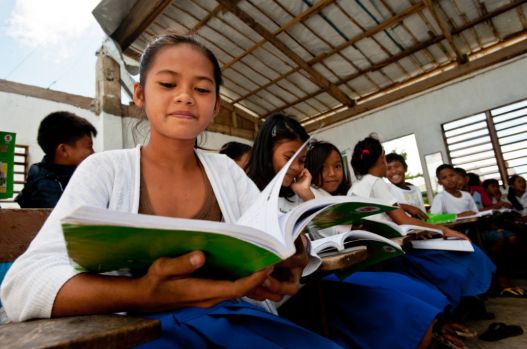
I’ve been thinking about teaching a lot more lately, first because of the recent deaths of some valued mentors and colleagues. Just over the past month, our department lost two of its stalwarts—Professors Sylvia Ventura and Magelende “May” Flores. I’ve written quite a bit in this corner about Sylvia, my Shakespeare teacher, who fired up my enthusiasm for Elizabethan drama and poetry. May was an English-language specialist and textbook author, a sweet, imperturbable lady with a caring smile for everyone. (Continuing the tradition, May’s son Emil also teaches with the department and has become one of our prime experts on science fiction and creative nonfiction.)

The second reason is my own impending retirement, less than three years hence. It’s hard to believe that it’s been more than three decades since I gave up my PR job at a government agency to devote the rest of my life—as I told myself then—to studying, writing, and teaching. I never did become much of a scholar—I guess I did become the writer I wanted to be—but even this close to the end of an active career, the teacher in me is still a work in progress.

That’s because every teaching day is a new performance, even if—like it would be for a theater actor—the script may essentially be the same for courses you’ve taught for years. Every new batch of students brings with it a new mix of challenges—even, over the decades, a generational drift to adjust to. For example, a teacher can’t simply blame millennials for their lack of a historical memory, which we helped create; I try to get them interested in the past not for the past’s sake, but to show them how an appreciation of the past can help their future.

Teachers, in other words, have to keep learning about their students and their interests, so lessons remain fresh and relevant, rather than boring incantations regurgitated from ages past. We need to relate the lesson to the student’s present realities, which may seem daunting if you’re talking about, say, a 19th-century short story about the French bourgeoisie, but which can be done with a little imagination (in this case, I’d begin by talking about the Filipino middle class and its aspirations—“Where do you see yourself ten years from now?”).

But as vital as it is to connect directly with millennials, it’s just as important to remind them that there are many things in this world that may seem to have little or nothing to do with them that will still affect their lives—in other words, that we’re still motes in the grand scheme of things, and that Nature can be profoundly indifferent to our noisome plaints and woes.

That’s a harder lesson to impart, even to older students—to any person who hasn’t encountered something much larger than himself or herself, like a World War, or martial law, or a terrorist attack. In a me-centered universe, no one wants to feel disempowered, so I then have to challenge them into getting out of themselves and enlarging the sphere of personal actions they can take to improve not only their own future, but also that of their fellowmen.

Back when we ourselves were freshmen and sophomores in the early 1970s, this message came down to us in the exhortatory slogan “Serve the people!” Exactly how seemed a lot simpler to figure out back then, when a predatory dictatorship was looming over everything and everyone (a dreadful specter I thought I’d escaped forever). Today a young person’s options are far richer and more complex, with all manner of personal advocacies, NGOs, weekend CSR programs, and Facebook groups competing for one’s political attention.

But whatever the chosen means may be, the overriding need for building empathy remains, for leading young urban, middle-class Filipinos to see, to appreciate, and to grow their stake in a future that they share with the millions of others who live unlike them, many without the opportunities that they enjoy. We can’t truly be a nation—much less a Christian one—if we continue to dismiss the bullet-riddled bodies of the poor as trash because we find nothing in common with them.

A teacher’s job is to help students draw the line between two points, including and especially the most seemingly disparate ones. That includes the line between teacher and student, between student and student, and between student and society. If that’s all I’ve done these past three decades, I can retire happy.


AND NOW for something liberative. According to the exhibit notes, “Ebarotika! (You are Erotic, Eve) follows the story of Eve who dared venture into the forbidden. Her defiant act opened knowledge’s connection with sexuality, the knowledge of one’s sexual and erotic desire. But it also resulted in shame and punishment. Thus, many of us cover and hide our sexual and erotic life. Those who are bold enough to come into the open are subjected to stigma, discrimination, and death. Sexuality and the erotic are a source of life, joy, and pleasure. They are not objects of fear, horror, and anxiety. They must be opened, shared, and celebrated instead of being censored, concealed, and criminalized.”

Curated by Lia Torralba, Ebarotika! features 19 Kasibulan artists: Yasmin Almonte, Lot Arboleda, Chie Cruz, Cecil de Leon Escobar, Imelda Cajipe Endaya, Anna Fer, Lorna Fernandez, Kristin Garanchon, Lorna Israel, Amihan Jumalon, Nina Libatique, Eden Ocampo, Jonabelle Operio, Fel Plata, Rebie Ramoso, Benay Reyes, Doris Rodriguez, Christine Sioco, and Lia Torralba.

It opened last Saturday, but will run until November 23 at the Sining Kamalig Art Gallery located on the Upper Ground Floor of Ali Mall in Cubao, Quezon City. See you there!


Penman No. 218: History and Irony

11884866_supreme-court-extends-status-quo-ante-order_e9546b1e_m.jpg

Penman for Monday, September 26, 2016


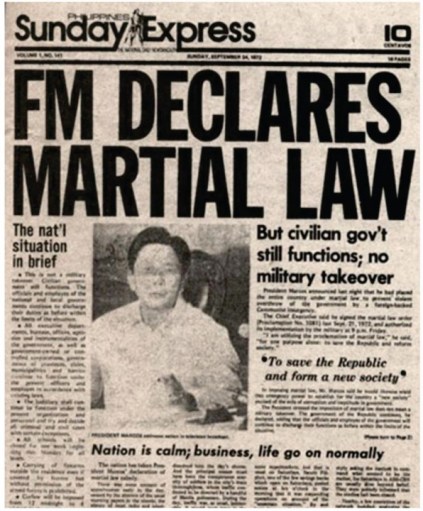
I’D NEVER heard of Ramon Cualoping III and Marco Angelo Cabrera until their names were linked to the recent flap involving the use of no less than the Official Gazette in an apparent effort to sanitize the memory of Ferdinand E. Marcos by removing any reference to martial law—you know, the martial law that Marcos invoked to impose his dictatorial rule on his people from 1972 until he was deposed by a popular revolt in 1986. (Yes, he technically lifted martial law in 1981 but he continued to rule with a rubber-stamp legislature.)

Some Googling revealed that Cualoping was an Ateneo Communication Arts graduate, batch 2004, while Cabrera graduated from San Beda in 2013 and interned briefly with the Department of Foreign Affairs; he had also worked for Sen. Bongbong Marcos. Those are both fine backgrounds for jobs at the Presidential Communications Operations Office—just the kind of posting on which many young writers and lawyers aspiring for a political future have cut their teeth—and I can surmise from the dates provided that Messrs. Cualoping and Cabrera must be in their mid-30s and mid-20s, respectively—too young, therefore, to have personally known what the Gazette expunged.

In the interest of full disclosure, I was a government propagandist myself at an even younger age—19, fresh out of martial law prison. Having dropped out of UP and having worked for the Philippines Herald and Taliba just before martial law, I got a job with the PR section of the National Economic and Development Authority. The irony of going from writing incendiary flyers to trumpeting such new government projects as Pantabangan Dam wasn’t lost on me. But I was getting married and needed a job, and all the old media jobs were gone save for the Express and the Bulletin, so I was thankful for whatever came my way. (I would much later write hundreds of speeches for FVR, among other Presidents and political clients—mostly to pay the rent, occasionally for the sheer privilege—so don’t look at me as some crusading journalist.)

I don’t know what drove Messrs. Cualoping and Cabrera to the Palace; I’m assuming their motives were loftier than mine. I also don’t know what made them officially forget (hey, it’s the Official Gazette, right?) that FM declared martial law. I suspect they knew what happened, but chose to ignore the most salient fact about Marcos’ life, for reasons only they can tell. To his credit, Communications Secretary Martin Andanar effectively reprimanded his staff for the deliberate oversight and corrected the record.

I’ll leave further chastisement of these two gentlemen to the netizens who broke the story. From one PR pro to another, what I can tell them is this: I understand the job you have to do and even your private allegiances, but there are things—very big things much bigger than yourselves—that you just can’t sweep under the rug. Denying martial law or its disastrous effects on our society and economy is like telling Jews that the Holocaust never happened, or was actually a good thing. I salute you for your cheek, but what on earth were you thinking?

There’s a book I’d like to recommend to these two, one which I and a dozen other writers—all students during martial law—put out four years ago on the 40th anniversary of Proclamation 1081, titled Not on Our Watch: Martial Law Really Happened, We Were There. (For more on that book, see here: http://www.philstar.com/sunday-life/806191/lest-we-forget.) I wasn’t too enamored of the long title at that time, but now I appreciate the emphatic clarity of the thing; it’s just the sort of book martial law amnesiacs and deniers need to read.

16136602._UY475_SS475_.jpg

But even as we review history, there’s one thing that seems to have escaped many: the current debate about how to look at martial law and where to bury Ferdinand Marcos isn’t about the past; it’s about the future, and what kind of people we are and want to be.

I know that millennials tend to get beat up on because they don’t know enough about martial law, which is hardly their fault since we didn’t teach them enough about it. But it isn’t just them. When people my age express bewilderment over how Bongbong Marcos came so close to becoming Vice President despite his dad’s misdeeds, and how the Marcoses have survived so handsomely, I have to remind them that even under martial law, those of us who opposed Marcos were in the distinct minority. Most Filipinos supported martial law, actively or passively, or it wouldn’t have lasted so long. Like the Germans who supported Hitler, most Filipinos stood by while we faced the truncheons and firehoses—and even applauded 1081, early on, as the antidote to Communism (1972’s “war on drugs”). So what should we be so surprised about?

That’s why I’ve never referred to EDSA 1 as a revolution, because it wasn’t one in terms of changing anything fundamental in the structures and workings of our society. It was a popular uprising, a street revolt led by another faction of the ruling class, with broad support from the metropolitan middle class. That doesn’t mean I didn’t feel euphoric that February, and I still get teary-eyed when I remember the moment; I guess the poignancy comes from knowing what came afterward.

I have no doubt that if the Palace incumbent were to declare martial law today for whatever reason, a majority of Filipinos would support him, although a noisy few of us would be up in arms. Martial law ca. 1972 was also like that, and remained popular for many more years, especially among amoral businessmen who sang its praises until it hit them in the pocket. And then it all went downhill.

Contrary to what you might expect, I don’t see Marcos as a one-eyed ogre, but rather as a calculating Macbeth, keenly aware of his actions and perhaps even troubled by them. In my own turn with revisionism, I’ve even managed to convince myself—as I told the BBC in a recent interview on EDSA (a part which never got aired for lack of time)—that Ferdinand Marcos may have done us a final act of kindness by leaving without ordering a bloodbath. It’s an arguable notion (one I wouldn’t put on the Official Gazette) and it doesn’t change the fact that his regime took what it could until we bled, but as a fictionist and playwright, I like to imagine characters to be more complex than they seem.

A couple of years ago, at a cultural function in Quezon City, Mrs. Marcos preceded me by a few steps down a narrow staircase. She was clearly having a hard time navigating the stairs, and she looked back at me apologetically to say, “Hijo, I’m very sorry I’m keeping you.” I smiled and said, “It’s all right, Ma’am, please take your time.” I felt amused and strangely triumphant.

History is sometimes best seen as a series of comic and tragic ironies, which straight journalism and certainly government tabloids can’t dispense. Come to think of it, who gives a hoot about the Official Gazette? If you want to lie and get away with it, try fiction. I’d be happy to see Messrs. Cualoping and Cabrera in my graduate workshop.


Penman No. 215: An Explosion of Graphic Talent


IMG_9307.JPGPenman for Monday, September 5, 2016


THERE WERE plenty of attractions at this year’s AsiaPOP Comicon, held August 26-28 at the SMX Convention Center at the Mall of Asia—chiefly the presence of such popular stars as X-Men’s Nicholas Hoult, The Vampire Diaries’ Claire Holt, Game of Thrones’ Joe Dempsie, and Stranger Things’ Millie Bobby Brown, and comic book artists Whilce Portacio, Mike Zeck, and Ken Lashley, among others. But what drew my attention and my wife Beng’s the most was the explosion of talent among Filipino graphic artists who displayed their work at the far end of the exhibition hall.

Let me take a step back and recall that just last July, thanks to the sheer luck of being in the right place at the right time, Beng and I found ourselves attending the San Diego Comic Con—the original and still the biggest pop-culture gathering of its kind. The sortie revived my juvenile interest in comics and all things strange and wonderful—an odd detour from the stodgy realism of my own work, but surprisingly refreshing. It was at the SDCC’s Artists’ Alley that I ran into the Fil-Am comics legend Whilce Portacio, and I interviewed him on the spot (the full interview will appear in a forthcoming issue of Esquire Philippines), during which I learned that he was coming to Manila soon for another pop culture event.

That event turned out to be AsiaPOP. AsiaPOP Comicon Manila was organized by Universal Events & Entertainment, a subsidiary of the Singapore-based Al Ahli Holding Group, whose head of Marketing and Business Development Abdulla Mahmood was glad to share the fact that AsiaPOP’s first Manila outing last year attracted 30,000 attendees—a more than respectable figure considering that the San Diego original typically brings in about 130,000 people over four days. “Pinoys are immersed in pop culture,” Abdulla told me, explaining why his group decided to launch their first such event in the Philippines. “They’re among the heaviest users of social media, too, which helps spread the word. From here, we’re bringing the show to Dubai, and from there on to other cities.”

New TV hit series like Stranger Things are central to that pop culture—Beng and I spent two sleepless nights binge-watching on Netflix, and now can’t wait for the next season to meet the Demogorgon (whom everyone seems to think is…). The senior citizen-professor in me has to wonder how Beng and I can so easily succumb to the seductions of superheroes and their ilk, but then I’d have to admit that with nothing much else to do outside of work, we’ve become TV and movie addicts who must’ve seen every nearly sci-fi and fantasy flick that’s been shown over the past five years (with some notable exceptions—we’ve yet to watch a single episode of Game of Thrones).

So we can understand all the buzz about Millie Bobby Brown, but as newcomers to the comics supershow, we’ve come to realize that the fun isn’t in chasing after individual characters and stars as much as imbibing the sheer variety and spectacle of the experience—everywhere you look, there’s something else to catch the eye, whether it’s the X-Men’s shapeshifting Mystique or a new superhero named… Lolang Tsora?

IMG_9290.JPG

That was Tandang Sora as we knew her from our history books, but in her reincarnation in Anthony Dacayo II’s Bayani series, she employs a spinning dreamcatcher to thwart her foes. We found Anthony and his merry band of artists in AsiaPOP’s own version of the Artists’ Alley, which hosted exhibits from dozens of the most gifted comic book artists in the Philippines. Anthony himself works on stories (and some of the drawings) for his Bayani project, which has since been developed by Ranida Games into a phone-based game that employs Filipino heroes as characters with special skill sets (Joe Rizal uses a quill sword, for example, and Rio Mabini his Verdadero Decalogo). It was his way, said Anthony, of bringing our national heroes into the consciousness of a new generation.

In another booth, we found Iloilo-born Jann Galino, who’s already done penciling work for Virginia-based Azure Multimedia’s “Ranger” comics. Jann exemplifies the Pinoy artist on the brink of the big breakthrough. He’s gone back to school to finish his Fine Arts degree while putting together a portfolio that he hopes will be good enough to show the scouts from Marvel and DC the next time they come around. On the other hand, Bukidnon native Harvey Tolibao has already done work for Marvel, DC, and Japanese game companies, among others, co-founding HMT Studios with some friends to expand and speed up the work.

IMG_9285.JPG

I was especially happy to run into a former student, Paolo Herras, who has published a series of Strange Native comic books for Quezon City-based Meganon Comics after stints in advertising and indie films, drawing on history and folklore to interrogate the present. Beside him was another young author and artist named Tepai Pascual, whose Maktan 1521 is a graphic retelling of the encounter between Magellan and Lapu-lapu.

IMG_9313.JPG

The biggest Pinoy names in the comic-book industry may now be too busy to appear at AsiaPOP—like Leinil Yu who trained with Whilce Portacio in the 1990s and is now one of the world’s most sought-after artists, and Budjette Tan, who now works for Lego in Denmark as a creative director in Lego’s ad agency. (A week after AsiaPOP, I ran into the California-based animator Jess Española, who won an Emmy in 2008 for his work on The Simpsons; he missed AsiaPOP but was in town to help motivate younger artists at his alma mater, the UP College of Fine Arts.)

But there’s no lack of younger Filipino graphic talent eager to follow on their heels, and events like AsiaPOP and the big Comicon in San Diego can provide the best launch pads for these Wacom-wielding wizards. (To know more about Filipino comics and their creators, check out http://www.philippinecomics.net.)


WITHIN DAYS of each other, two dear friends passed away last week—gallery owner Norma Crisologo Liongoren and retired professor and children’s book author Sylvia Mendez Ventura.

Norma was a memorable character whose eye-catching fashions lent more than a dash of color to her exhibition openings and parties in Cubao’s pioneering Liongoren Gallery. Most importantly, she was a generous spirit, lending artists both new and old her unflagging support and outright charity. Beng was especially close to Norma, and when I found her weeping and praying in our gazebo in the garden early one morning, I knew Norma had passed on in the night.

Sylvia was my Shakespeare teacher when I returned to school in the 1980s, and after one of her subjects, I was hooked on Shakespeare and the English Renaissance for life. Impeccably coiffed, this New York-educated diplomat’s daughter was a style icon who, like Robert Graves’ White Goddess, could lay bare your ignorance and cut you down with a single phrase. For some reason (and much to my classmates’ annoyance), I became her pet in class, and she would sometimes hand the lesson over to me to teach—which helped me decide to stay on and become a teacher myself. Sylvia was also a gifted painter, and I don’t think we ever told her, but for these past ten years, one of her flower paintings has hung over headboard. Good night, sweet princess, and flights of angels sing thee to thy rest!

Penman No. 211: From Fantasy to Reality: Comic-Con (2)

IMG_8346.jpgPenman for Monday, August 8, 2016


THE SAN Diego Convention Center’s ground-level exhibit hall covers more than half a million square feet—about the same acreage as the SMX Convention Center at the Mall of Asia—and Comic-Con occupied every inch of this territory and more, spilling over to more meeting rooms upstairs and to the adjacent hotels.

The throngs of attendees and kibitzers also fill up the streets and parks outside the venue, all the way to San Diego’s picturesque Gaslamp district, which turns into party town at night after the convention—a mammoth “Star Wars” bar scene, with throngs of costumed characters downing tequilas and exotic cocktails whipped up just for the occasion. You can have your pick of convention specials like the Katniss Kiss at Bang Bang (gin, honey, ginger, rose water), the Kryptonite Martini at Spike Africa’s (Svedka vodka, pepperoncini peppers, olive brine), or the Walking Dead at Searsucker (Hamilton’s Jamaican rum, Bacardi Light, pineapple juice, cinnamon simple syrup, Fee Brother’s bitters, fresh lime, Lemonhart 151, topped with ginger beer).

And you can choose to have that drink with Chewbacca or Captain Kirk, because Comic-Con’s strongest and most colorful attraction is, of course, cosplay, that not-too-subtle subterfuge by which anyone can be a superhero or super-villain for a day.

In this regard, Comic-Con 2016 more than met our expectations. There were Storm Troopers, Trekkies, Ghostbusters, and Batmen galore on the convention floor, even a Hulk, a Dumbledore, and a Silver Surfer or two. And as a couple of plus-size Supergirls demonstrated, you didn’t even need the prescribed physique to indulge your fantasy—just the costume, which the wearers had more than likely sewn up themselves, with a little help from suppliers like BuyCostumes.com (where you could be Spiderman for $44.99, or Queen Arwen for $59.99—Darth Vader will cost you more, with just the mask selling for $149.99). A day before Comic-Con opened, Demi’s nephew Matt was still busy preparing his costume and homemade weapon as the Soldier:76 character from “Overwatch,” with key components being shipped in by express courier from Hong Kong.

IMG_9059.JPG

If you didn’t care to dress up as a Sith Lord but had always wanted one to park behind your bar, you could take a life-sized Darth Vader home for about $7,000, for a tenth of which you could get a silicone mask of the Ice King from “Game of Thrones.”

Comic-Con, in other words, was merchandise mania, and it wasn’t uncommon to see hardcore fans staggering out of the venue with huge boxes and bags of souvenirs. Some may have addictions that will seem very peculiar to you and me—like the people who line up at midnight for special editions of the bobble-head Funko figurines—but beyond being a passion, it’s also a business that can see a Funko character that nominally sells for $15 be worth ten times that much on eBay the morning after (more on this later).

In a corner devoted to comic-book auctions, the cover art for an August 1977 issue of Conan the Barbarian had a pre-auction estimate of $12,000—a bargain compared to $20,000 for a Watchmen page. Being oldies and cheapskates, all Beng and I could sport were our black Star Wars T-shirts, which Demi had snapped at a sale (there wasn’t much demand, predictably, for T-shirts that invited you to “Join the Dark Side!”).


It’s all about fads and fashions, and those preferences are set on a screen somewhere—the movies, TV, the Internet, the mobile phone, the vast global domain of popular culture (which is to say, still largely Hollywood). The biggest draws this year included “Game of Thrones,” “The Walking Dead,” “Wonder Woman,” “Teen Wolf,” “Snowden,” “Suicide Squad,” “Aliens” (marking its 30th anniversary), “Supergirl,” “The Flash,” “Guardians of the Galaxy,” and “Star Trek Beyond,” but there’s never a lack of fans (and merchandise) for perennials like “Superman,” “Batman,” “Star Wars,” “Harry Potter,” and “Ghostbusters.”

But all these blockbusters begin with a writer and an artist—a “creator,” in industry parlance, along the lines of Marvel’s legendary Stan Lee—and as another main feature of Comic-Con, these creative geniuses were gathered at the far end of the hall in the Artists’ Alley. Tipped off by my younger friends at Philmug (who were attending Comic-Con vicariously through their former chairman), I made a beeline for the booth of Whilce Portacio, one of the most accomplished Filipino-Americans in the comic-book industry.

IMG_9045.JPG

Born a Navy brat in Sangley Point, Whilce had moved to the States as a baby and had grown up in Hawaii, where his artistic talent was nurtured by supportive teachers. He came home in 1978 and studied Fine Arts at Philippine Women’s University under Ibarra de la Rosa. Not speaking Tagalog and feeling very much alone, Whilce spent the time honing his craft, and by the time he flew back to the US a few years later, he was ready for his big break—where else but at Comic-Con, which was then a much smaller event but already the place to be if you were a gifted young artist with a portfolio to show.

A Marvel editor named Carl Potts (who also had some Filipino blood) took Whilce under his wing and from there on, there was no turning back. Whilce (a shortening of William Joyce) would go on to work on Punisher, X-Factor, Uncanny X-Men, Iron Man, Wetworks, and Spawn, among many other major projects, moving up from basic inking and penciling to becoming a creator himself of such characters as Bishop in X-Men and the Pinoy superhero Grail in Wetworks.

Following in the footsteps of such Filipino comics pioneers in the US as Alex Niño (who also had a booth at Comic-Con, but hadn’t checked in yet when I was there), Whilce sees himself as part of a series of waves of Filipinos who’ve excelled in the global industry. In 1995, he returned to the Philippines to set up a studio on Balete Drive, where he discovered and trained the next wave, which now includes such standouts as Leinil Yu and Philip Tan.

Indeed, another booth at Comic-Con featured the works of Philip Tan, Jay Anacleto, Stephen Segovia, and Carlo Pagulayan. While it took lucky breaks and personal contacts for people like him to succeed, Whilce says that “Today, with the Internet, young artists can introduce themselves. The bridges are now connected. The process and pipeline are now set for everybody.” (I know I promised to report on my long and very interesting interview with Whilce, but it would be a pity to summarize, so I’ll save that for another time. Better yet, come and see him in person when he flies in to Manila to grace our version of Comic-Con—the AsiaPOP Comicon, which will happen on August 26-28 at the SMX Convention Center, with tickets starting at just P550 for a one-day pass.)

IMG_9058.JPG

To cap my Comic-Con 2016 experience, and by another stroke of luck, our daughter Demi conjured a special pass to a live taping of Conan O’Brien’s show at the historic Spreckels Theater downtown (Conan has been a Comic-Con regular for some years now). Did I want to go? The featured guests were a surprise—the cast and crew of “Game of Thrones,” with Hodor, killed off in Season 6, getting the warmest applause. I’d have to admit that being a documentary and car-show freak, I’ve never been a fan of the series. But I had a great time watching Conan, the total pro, and every member of that audience left the theater with a Funko Conan Storm Trooper doll, which touts tried to buy at the door for a paltry $8.

Were they kidding? The dolls showed up on eBay the next day for as much as $300. I gave mine to Demi, which was the least her Tatay could do thank her for the treat of a lifetime.


IMG_9069.JPG