Penman No. 354: A Scottish Sortie

IMG_0415.jpegPenman for Monday, May 20, 2019
 

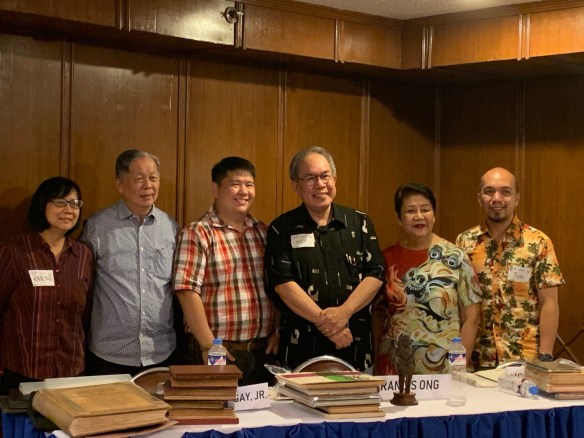
AS UNLIKELY as it may seem, many Filipino writers have a special affinity for Scotland, that northern country (yes, it is one) bound up into the United Kingdom with England, Wales, and Northern Ireland. That’s not only because of our passing familiarity with the likes of Robert Burns and Walter Scott, but because, over the past three decades, more than a dozen Filipino writers—among them Krip Yuson, Eric Gamalinda, Ricky de Ungria, Marj Evasco, Rofel Brion, Danton Remoto, Mia Gonzalez, and myself—have been fellows at the Hawthornden Castle International Retreat for Writers, about half an hour by bus in Midlothian, just outside of Edinburgh.

That was where, in 1994, I wrote much of what became Penmanship and Other Stories, including the title story, which came out of a serendipitous purchase of a 1938 Parker Vacumatic at the Thistle Pen Shop in Edinburgh. Indeed, two literary anthologies have emerged from the Pinoy-Scottish connection: Luna Caledonia, a poetry collection edited by Ricky de Ungria and published in 1992, and Latitude, a fiction collection co-edited by Sarge Lacuesta and Toni Davidson and published in 2005.

IMG_0369.jpeg

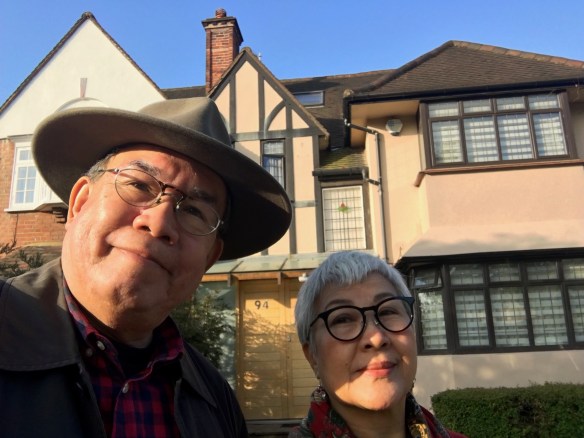
I returned to Scotland in 2000 with my wife Beng and daughter Demi in tow; I was a writing fellow then at the University of East Anglia in Norwich, and Demi was visiting us from Manila. As it happened, a local radio station was offering free train tickets to Scotland to whoever could dial in and answer some simple questions at 5 am, so for three consecutive mornings, I woke up early and did just that, and soon we three were rolling away to Glasgow, taking the scenic route along the western coast (and being feted on the train by a kindly Pinoy attendant).

That was 20 years ago, and since then Beng and I have expressed a more than idle longing to revisit Scotland—especially Beng, an unabashed fan of Braveheart and Outlander. In the meantime, Demi got married to bright young fellow from California named Jerry, and in 2014 Demi and Jerry treated us, on our 40thwedding anniversary, to a tour of Spain, following Rizal’s footsteps in Madrid and Barcelona, and Anthony Bourdain’s in San Sebastian.

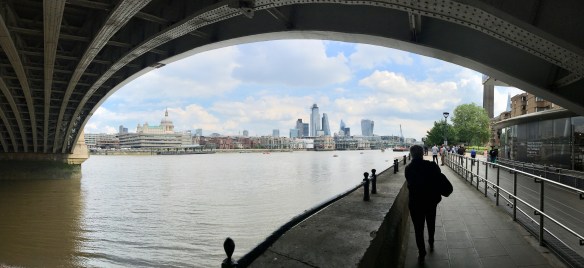
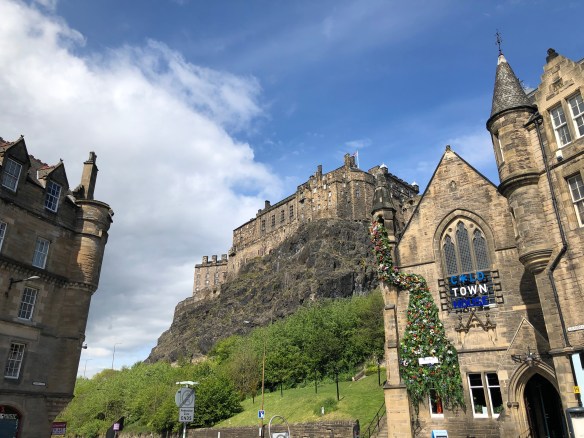
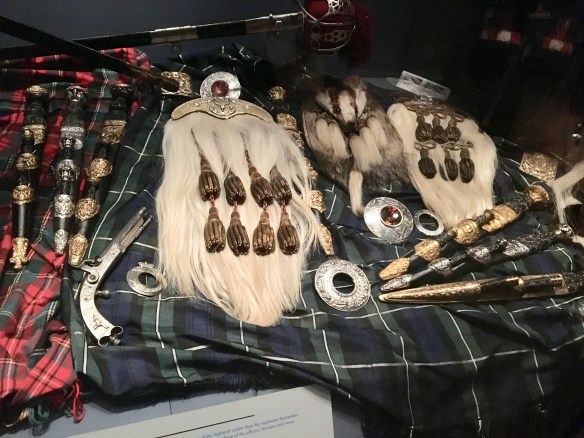
We wanted to repeat that this year to mark our 45th, so it was no huge surprise that we settled on Scotland where Jerry—who likes his single malts—had never been. After meeting up in London, we took a train to Edinburgh and lodged in the shadow of its imposing castle, to which we paid the obligatory visit. I treated our small party next to a day tour of Stirling Castle, Loch Lomond, Deanston Distillery, and Doune Castle, before moving on the next day to Glasgow and its more down-to-earth, industrial vibe.

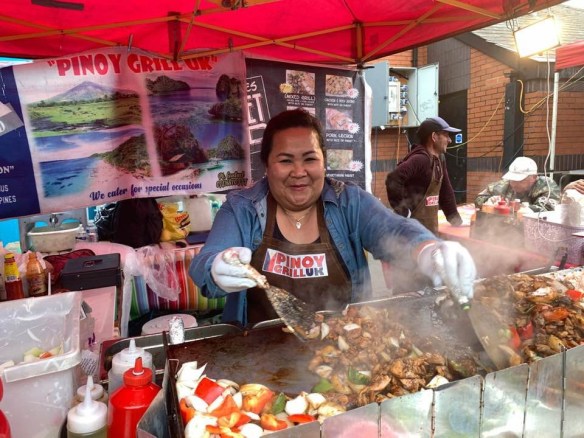
I wanted to record this not to bore you with the details of another family sortie, but to remark on what impressed us most, outside of the often desolate beauty of the Scottish highlands and our comic encounters with the “hairy coos” (the Highland cattle probably fattened by tourist feedings).

IMG_0434.jpeg

For me, a retired professor who can’t help being interested in a country’s educational and cultural infrastructure, the question was, how could the Scots have done so much with seemingly so little?

Pop stars like Sean Connery, Arthur Conan Doyle, Robert Louis Stevenson, JK Rowling, and Annie Lennox aside, Scotland has produced engineer James Watt, inventor Alexander Graham Bell, penicillin discoverer Alexander Fleming, social philosopher Adam Smith, and explorer David Livingstone. A book by the historian Arthur Herman titled How the Scots Invented the Modern World asks: “Who formed the first literate society? Who invented our modern ideas of democracy and free market capitalism? The Scots…. In the eighteenth and nineteenth centuries Scotland made crucial contributions to science, philosophy, literature, education, medicine, commerce, and politics—contributions that have formed and nurtured the modern West ever since…. John Knox and the Church of Scotland laid the foundation for our modern idea of democracy; the Scottish Enlightenment helped to inspire both the American Revolution and the U.S. Constitution; and thousands of Scottish immigrants left their homes to create the American frontier, the Australian outback, and the British Empire in India and Hong Kong.”

IMG_0387.jpeg

This from a country of less than 6 million people (that’s right, six), whose influence extends far beyond their shores. While wives and widows everywhere may bemoan the loss of their husbands to golf and whisky, both industries annually contribute £1 billion and £6 billion, respectively—about P500 billion combined—to the Scottish economy, which is also driven by oil and gas, a £12-billion industry. (To put things in perspective, you can add up those three for a total contribution of £19 billion or about US$25 billion, which is what Philippine BPOs generate, as well as OFWs—but with a much smaller denominator.)

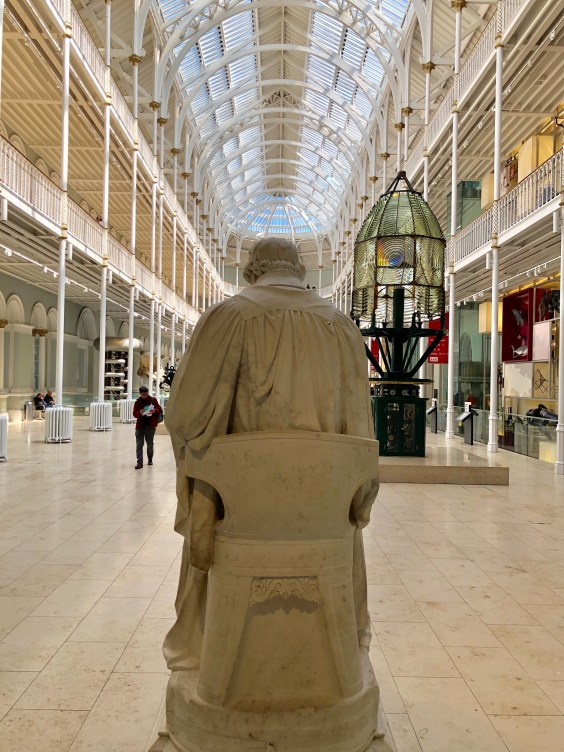
What was most telling to me was how Scotland, despite its plethora of warriors, politicians, engineers, and industrialists, valued its writers, who in turn valued Scottish national pride. The 200-foot statue of Walter Scott in Edinburgh is the largest in the world of any writer’s, and in Glasgow, Scott’s monument also towers over those of others in George Square.

Of course we can argue that we venerate Jose Rizal—only to elect his intellectual and moral opposites. As the Scots might put it, “A nod’s as guid as a wink tae a blind horse.”

IMG_0123.jpeg


Penman No. 350: An Avatar of Good Writing and Reading


All-My-Lonely-Islands-new-cover-e1536389355642-325x519.jpg

Penman for Monday, April 22, 2019


EVERY BOOK author needs a publisher, and in this country, depending on what you write, there aren’t too many of them. There will always be a market and a publisher for law, medical, and engineering books (and let’s add cookbooks and inspirational books), but for those of us who write fiction, history, and things that won’t make you any real money, the options are few and far between.

If you’re connected with a university, an academic publisher such as the University of the Philippines Press, the Ateneo de Manila University Press, and the UST Press could be your ticket—if you pass the rigorous standards of academic publishing, which explains the prestige of getting published under a university imprint. Of course, self-publishing (what used to be derided as “vanity” publishing) has gained growing acceptance around the world, given the possibilities opened up by new desktop technologies. That still leaves authors with the problem of distribution, which neither universities and much less individuals are too adept at.

Thankfully, another option—indeed at the top of the list for most Filipino authors—is Anvil Publishing, established in 1990 as a subsidiary of the giant National Book Store chain founded in 1942 by the Ramoses. The NBS network of over 230 branches all over the country gives Anvil a formidable edge over any competition, but publishing isn’t just about distribution; as importantly, it’s about product, and bringing that product to market.

That’s the job of Anvil’s General Manager Andrea Pasion-Flores, who joined the company two years ago, coming from an ideal background as an English major and a talented writer in her own right, becoming a lawyer and then Executive Director of the National Book Development Board, followed by a stint as the only Filipino literary agent with the Singapore-based Jacaranda Agency.

She took over from the very capable Karina Bolasco, who moved over to head the Ateneo press. For most of its nearly three decades, Karina had shepherded Anvil to its predominant position in the industry, and gave many authors like me the break they needed to reach a national audience. In 1992, Anvil took on my first novel, Killing Time in a Warm Place, the first of many projects I would do with them. Today, 27 years later under Andrea, Anvil is working with me again to produce my Collected Stories, the culmination of about 45 years of my work in short fiction, after I recently edited a new edition of Manuel Arguilla’s short stories for them. It’s a milestone I’m eagerly anticipating, which should be out before the year ends.

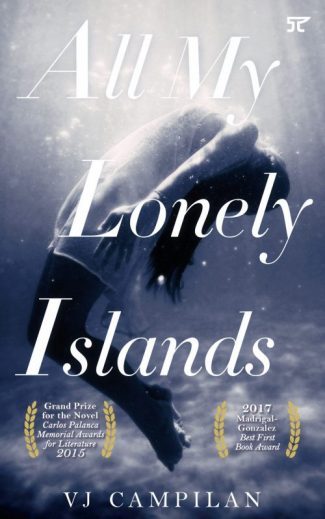
And it’s not even old folks like me, Krip Yuson, Ambeth Ocampo, and Lualhati Bautista that Anvil’s helping out the most these days, but exciting young authors like VJ Campilan, whose novel All My Lonely Islands has won a slew of awards. Anvil has also just teamed up with Wattpad to create Bliss Books for young Filipino readers, drawing on the popular YA online platform.

Last February, Anvil celebrated its 29thanniversary, and Andrea came out with a list of interesting company factoids, some of which I asked her permission to share with you:

  1. The first title published by Anvil was Atlas Adarna in May 1990, a collection of regional maps.
  2. Its first cookbook was The Best of Maya Cookfest, volumes 1-3, published in July 1990.
  3. Aside from the Atlas Adarna, Anvil’s first trade book was an anthology of Carlos Palanca award-winning stories, published in September 1990. Ambeth Ocampo’s Looking Back and Rizal Without the Overcoat were published in November 1990, and continue to be highly popular.
  4. Margarita Holmes’ Life, Love, and Lust was the first collection of essays published by Anvil. It came out in September of 1990 and sold for P125.
  5. Between 1990 and 1991, Anvil published 160 titles: pocket books, coloring books and the series Our World of Reading and Our World of Language, Our World of Science. It’s estimated to have since published more than 2,000 titles.
  6. In 2017, Anvil revived Anvil Classics, which for a long time only counted Nick Joaquin’s novel Cave and Shadows, but now has all his stories and his other novel The Woman Who Had Two Navels,and his collection of plays Tropical Baroque: Four Manileño Theatricals;  Lualhati Bautista’s most eminent novels (Dekada ’70, Desaparasidos, Bata Bata Paano Ka Ginawa, and ‘Gapo), Carlos Bulosan’s America Is in the Heart, and Manuel Arguilla’s collected stories. (My Collected Stories will fall under this imprint.)  

“In 29 years,” Andrea says, “Anvil has grown to be one of the leading publishers in the country, serving a diverse audience that is represented by the diversity of authors on its roster. And though the business of publishing books has become a little bit more complicated than 29 years ago, my two short years in the company have shown me that the commitment to books of the Ramos family, represented by Xandra Ramos-Padilla, is strong and unwavering. And for our growing team of 43, running up to 2020, we have a few things planned on all fronts.”

Congrats, Andrea, and may Anvil—among our other notable publishers—continue to promote good writing and reading for and by Filipinos.

Penman No. 344: Into the Typosphere

4Typers.png

Penman for Monday, March 11, 2019


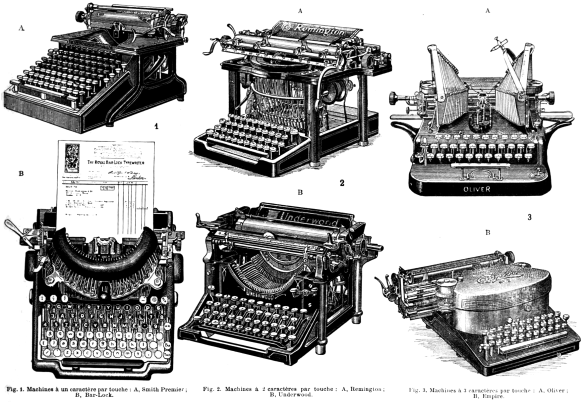
THE LAST time I wrote in this corner about typewriters, back in mid-August last year, I had just four of these machines in my stable, and primly announced that I really wasn’t a typewriter collector—yet. Since then, for some strange reason only equally strange people can understand, that quartet has grown to about 17, by my latest count. They breed! I was actually happy to sell off one typewriter one morning last week—to free up space, I told myself—only to find and buy another one that same afternoon.

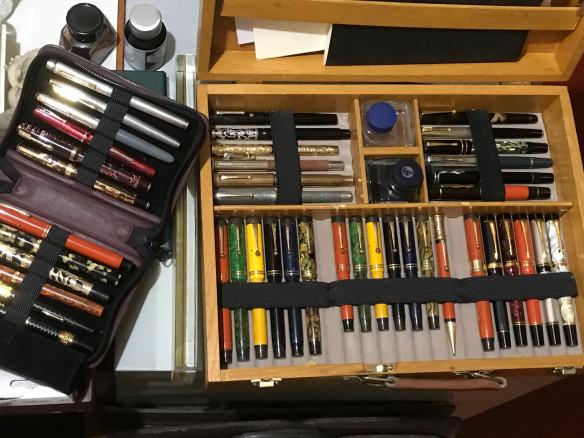
I’ve long acknowledged an addiction to old fountain pens, old books, and midcentury paintings—all of them jostling for accommodation and attention in my shrinking man-cave—but I’m still reluctant to face the fact that a taste for typewriters has been creeping up on me. (And if you think 17 is a lot, I have a lawyer-friend—who shall go unnamed for now—who has about 70; we have interesting conversations, having nothing to do with politics and everything to do with platens.)

As a writer with soft, warm feelings for the tools of his trade (aside from fountain pens, I also collected old Apple Macintosh laptops, about a dozen of which I finally gave away last month), I suppose it was only a matter of time before I returned to the machine on which, after all, I wrote my early stories, plays, and screenplays. I remember pecking away on a rusty Royal back in the 1970s, later replaced by my father-in-law’s battleship Olympia and then a handier Olympia Traveller that I ported with me to grad school in the US, to the amusement of my computer-savvy friends.

35808325815_2b417c9f18_k.jpg

2214237192_5f5270a04f_o.jpg

But there are still hundreds if not thousands of people out there—you’ll find the most ardent dozens on the Antique Typewriter Collectors group online—who may never have written more than business letters and birthday greetings on their Remingtons and Underwoods, and yet hold on to them with the sometimes scary passion of the true believer.

Typewriter collectors and users—they call themselves “typospherians” just as pen collectors might respond to “stylophiles” when they’re feeling fancy—don’t necessarily eschew computers, and may even lament the absence of the @ sign on some keyboard layouts. But they’re fiercely protective of their “typers,” and no crime could be worse than the sacrilege committed by “keychoppers” who playfully pull out and convert old typewriter keys into something resembling jewelry.

Comparison_of_Full-Keyboard,_Single-Shift,_and_Double-Shift_Typerwriters_in_1911.png

(Image from Wikipedia)

For the serious and practicing typist (in olden times, secretaries and clerks were themselves called “typewriters”), the allure of the clackety-clack is in the total concentration it forces upon you—with no screens or pop-up messages to distract you from the message or the novel you’re composing.

Just like car or watch or pen collectors, typospherians have their “holy grails” (you can find one such list here of the Ten Most Wanted), but short of the near-impossible to find, crowd favorites include the curvy Hermes 3000 in seafoam green, the iconic 1960s-pop Olivetti Valentine in red, and the 1920s foldable Corona 3, among other classics (and yes, I must sheepishly confess to having all three).

As with all collectibles, celebrity ownership helps (Sylvia Plath’s 1959 machine, on which she wrote The Bell Jar, sold a year ago at Bonham’s for £32,500, or over P2.2 million, while David Bowie’s Valentine sold at Sotheby’s in 2016 for £45,000), but it’s probably the least important factor in typewriter collecting, given that you can find near-mint examples at resale shops and garage sales in the US for well below $50, and online for below $200.

Typewriters4.png

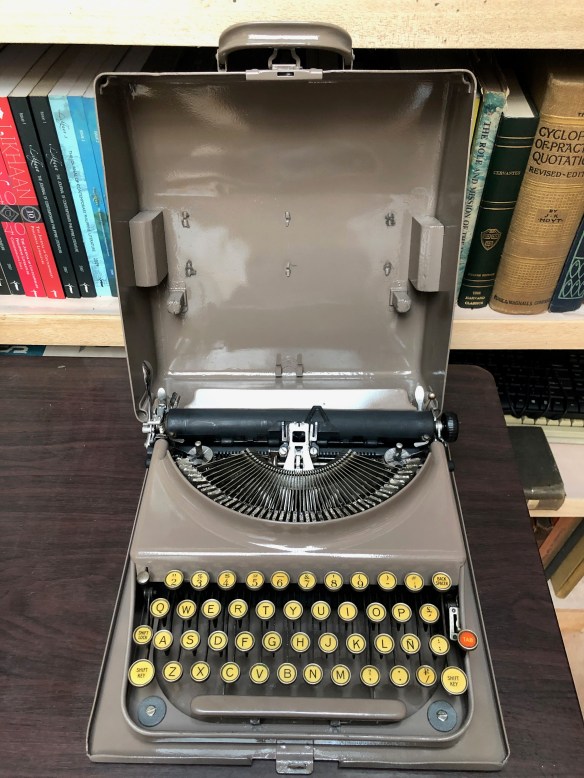
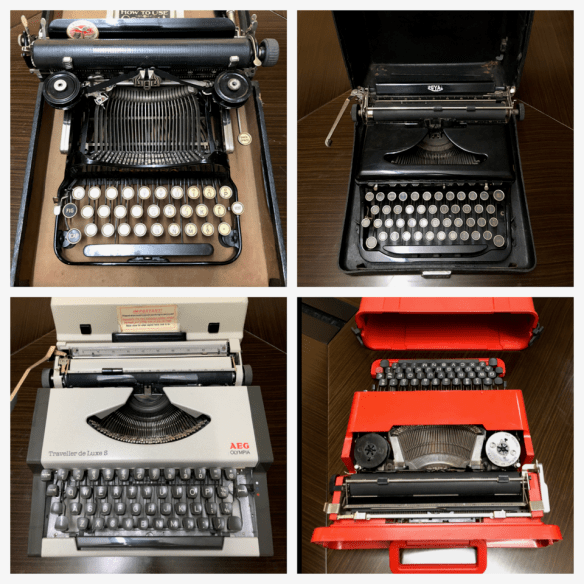
Last August, I trotted out my 1922 Corona 3, my 1930s Royal O, my 1970s Olivetti Valentine, and my 1980s Olympia Traveller de Luxe. This week, let me introduce a new quartet—all but one of them, incredibly enough, local pickups either posted online or sold in such specialty places as Cubao Expo.

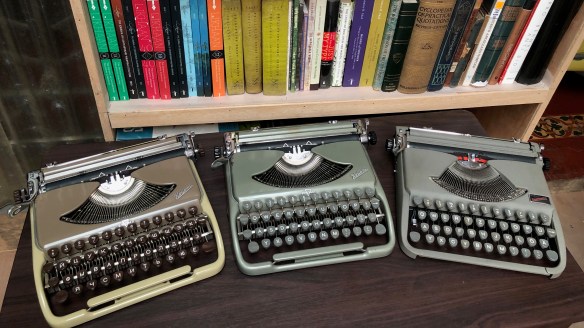
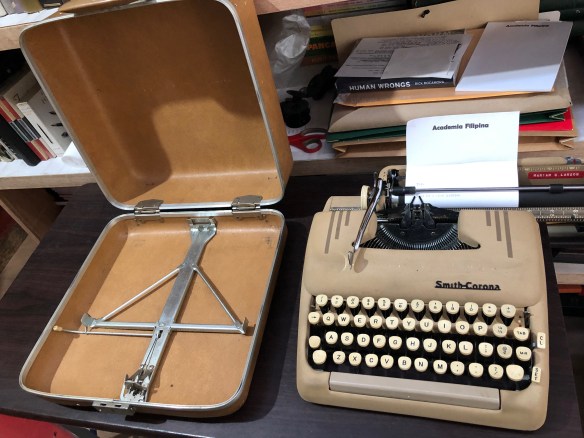
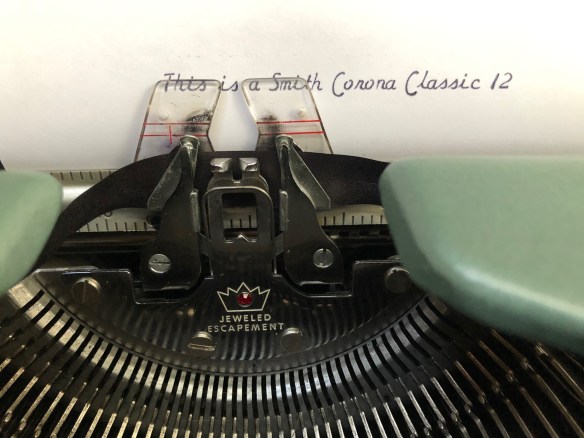
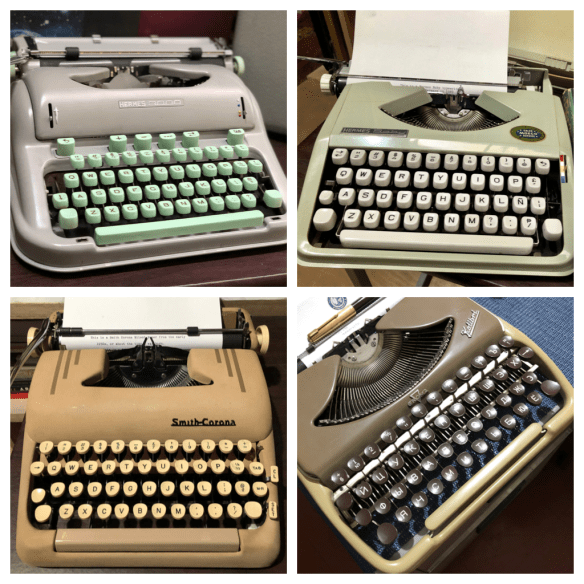
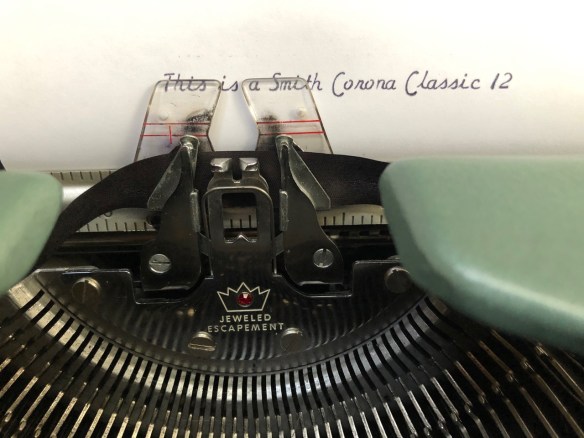
Let’s say hello to (clockwise in the pic) a Hermes 3000 from 1961, a Hermes Baby also from the 1960s still sporting its decal from the Manila Office Equipment Co., a 1950s Groma Kolibri from East Germany, with a Cyrillic keyboard (I don’t imagine writing any novels on this one), and a 1955 Smith Corona Silent Super (to add to the euphony, it’s super-smooth). I’m particularly elated by the Swiss-made Hermes 3000, finding just one of which—especially in this condition—could take years in this country; as luck would have it, I found two in great shape, at bargain prices, on the same day a couple of weeks ago (and passed one on to my lawyer-friend, at cost plus a nice bottle of shiraz or merlot, to celebrate the find). And sometimes it isn’t so much the machine itself but what it comes with that’s the surprise, like this fancy script I found on a 1970s Smith Corona Classic 12.

IMG_9518.jpeg

I should add that one of the great gurus of the typewriting world, Gerald Cha, lives right here in Manila, and does amazing work restoring old machines coming from as far away as the US. Right now he’s working on an 1886 Caligraph—check him and his projects out on Instagram.

I do my own hunting, but if you’re craving a pink or fire-red Olympia right now, visit https://typewritersmanila.com. Quick, brown fox—jump over the lazy dog!


Penman No. 341: War and Remembrance


James_Scott_collage.jpegPenman for Monday, February 18, 2019


FOR FILIPINOS, February is or should be a month of remembering, beyond the commercial confections of Valentine’s Day.

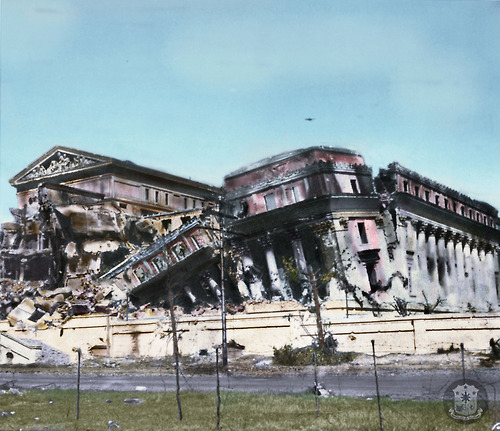
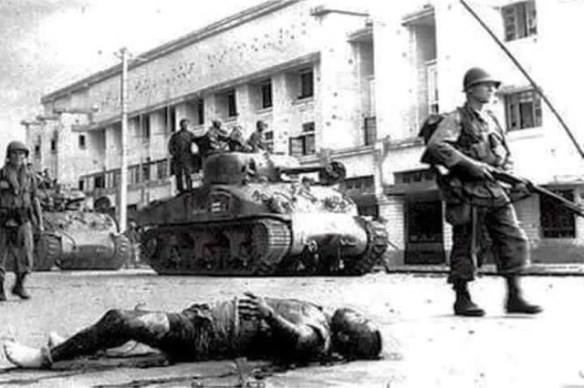
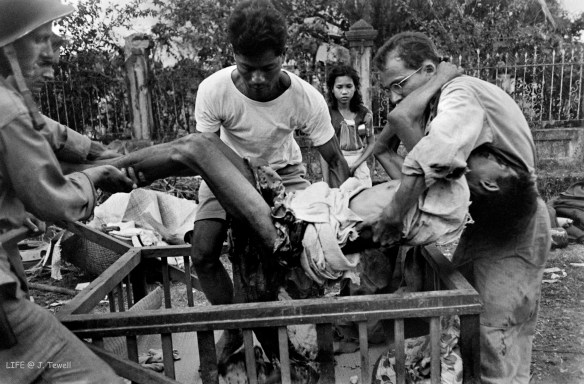
For people somewhat younger than me, February should recall the euphoria of EDSA 1986, and the forced departure of a dictatorship. For myself, the month marks the anniversary of the 1971 Diliman Commune, when we barricaded the university in symbolic resistance to what soon became the martial-law regime. For my parents’ generation, however, February can only mean the closure of the War in 1945, culminating in the bloody Battle of Manila that may have crushed the Japanese but also left 100,000 Filipinos dead in the most horrible ways and Manila thoroughly devastated.

Having been born nearly a decade after that war, I can only look back on it with both relief and, I must confess, morbid fascination, that curious wondering about what I might have done—or even if I would have survived—had I gone through that ordeal. I’ve written plays about the war, read as many books as I could, and visited war memorials, but never seem to have come around to answering how and why war can bring out both the best and the worst in us, sadly more often the latter.

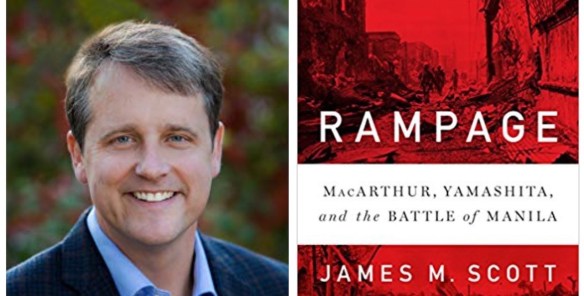
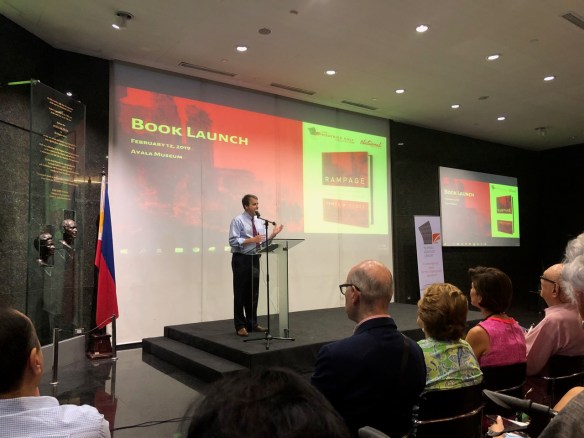
This was much on my mind last week when I attended a lecture at the Ayala Museum by the American author James M. Scott, who was in town to promote his newest book, Rampage: MacArthur, Yamashita,  and the Battle of Manila(New York: W. W. Norton, 2018, 635 pp.). James had actually been introduced to me by email before his visit by mutual friends, so I was doubly interested in meeting the war historian, whose earlier book Target Tokyo: Jimmy Doolittle and the Raid That Avenged Pearl Harborwas a 2016 Pulitzer Prize finalist.

IMG_9369.jpeg

Before a packed crowd that included survivors of the war, James brought the audience back to a time when Manila was indeed the Pearl of the Orient and Asia’s most beautiful city, with wide, tree-lined boulevards and a cosmopolitan culture to complement its charms. The war would change all that, over a few dark years of death, suffering and famine. Despite putting up their bravest front, the city’s residents and the thousands of foreigners interned at Sto. Tomas were in desperate need of food, medicines, and, of course, freedom when the Americans—led by the famous but also famously flawed Gen. Douglas MacArthur—landed in Lingayen Gulf and rolled into Manila. In command of the Japanese defenders, Gen. Tomoyuki Yamashita, the so-called Tiger of Malaya, had ordered Rear Adm. Sanji Iwabuchi to withdraw his forces—an order that Iwabuchi, a once-disgraced officer in need of redemption, had no intention of following (records would later show that the Japanese had made no plans for escape).

The stage was set for one of the most hard-fought and destructive battles of World War II. Instead of withdrawing, Iwabuchi directed his men to hold off the Americans with their guns, their swords, and if necessary their teeth. As the fight moved block by block south of the Pasig, the Japanese turned their retreat into wholesale slaughter; 200 Filipino men were beheaded in one house, women were raped scores of times at the Bayview Hotel, and babies were bayoneted; 41 victims were massacred in La Salle, many at the marble altar. Facing certain defeat, many Japanese committed ritual suicide—77 of them in one place over one night, with singing preceding the explosion of grenades. Iwabuchi slit his own belly. After 29 murderous days, the battle ended. Yamashita, who could have stopped his subordinate had he truly wanted to, was later tried and executed.

1LegisBldg.jpg

blogger-image--1666340230.jpg

16358751469_4a4fbdc210_o.jpg

More than 16,000 Japanese soldiers died in the battle, against only about 1,000 Americans. (Contrary to popular belief, Korean conscripts did not figure in the massacres, says Scott.) MacArthur would lament the loss of his family’s Civil War memorabilia and his son’s baby book in his Manila Hotel suite. But as Scott emphasizes, Filipino families paid the dearest price, with over 100,000 civilians dead in one month.

Drawing largely on first-person testimonies recorded soon after the events, the book is a searing account of the horrors of war; it was, says Scott, less a battlefield than a crime scene. A friend who read it told me she had to stop every once in a while to gather herself through her tears. The book takes note of subsequent judgments that the Americans bore as much responsibility for the destruction of Manila as did the Japanese, with their sustained bombardments of entrenched positions, but it’s the persistence of humanity—sustained by such organizations of war survivors as Memorare—that ultimately prevails.

Apart from many private acts of remorse, the Japanese government never formally apologized for their soldiers’ atrocities, and our own government’s recent removal of the comfort women’s statue shows how modern politics can obliterate the past better than a howitzer.

Such is the nature of today’s society—and of a generation obsessed with the present and the future—that many Filipinos can barely remember what happened five years ago, let alone 50, or 70. For some reason, our memories of conflict seem especially faint and fragile. Denial seems easier, revisionism even more attractive, so the despots who sent hundreds if not thousands to their graves and robbed us blind continue to live in mansions and be driven around in armored SUVs.

Meanwhile, we have James Scott’s anguished prose to ponder; I myself fear that if we disregard our liberties, the next Battle of Manila, we might inflict upon ourselves.

Penman No. 339: Dinner in Penang

IMG_9174.jpeg

Penman for Monday, February 4, 2019


A FEW days after I retired last month, Beng and I hopped on a plane to Kuala Lumpur on our way to Penang. I’d booked the trip many months ago, as a form of insurance against changing my mind about staying on at my job for another year or two, a very tempting option. Thankfully Malaysia Airlines had a sale on its flights, and that sealed the deal.

Why Penang? Because, about ten years ago, I made a vow to bring Beng to every city I’d ever been, and Penang was one of the few left on the list that was close and affordable, with the promise of a pleasant and relaxed vacation. (In your 20s, you look for bars and ziplining; in your 60s, a soft bed and a nice view of the sunset sounds just about right.) Malaysia also happens to be a personal favorite of ours—I’d taken Beng to KL, Melaka, and Kota Kinabalu before, with happy outcomes in all of those places.

The first and only time I’d been to Penang was in December 1992, when I and a few other Filipinos attended the Asean Writers Conference/Workshop being held there for writers below 40. It’s hard to imagine now that I was only 38 then, with a full shock of jet-black hair and a certain cockiness about the strength of Philippine writing in our part of the world; I’d just returned with a PhD from the US and had confirmed to myself that we could write as well as anyone else. That seemed to be upheld when the conference elected us president—an honor usually reserved for the host country—but our esteem took a few licks at dinnertime, when our Indonesian poet-friend, a man who had made a fortune reading poetry to thousands of paying listeners, dined up in the revolving restaurant, while my roommate Fidel Rillo and I snuck out to the hawker stalls, our precious ringgit jangling in our pockets.

IMG_9051.jpeg

There was, I must say, a sufficiency of ringgit to accompany Beng and me this time around, but we still chose to take the low road, as it’s very often more fun, foregoing the swanky beachside hotels in Batu Feringhi for more modest digs in central George Town, the island’s capital. We stayed at the aptly named 1926 Heritage Hotel, a long building that still displayed the grace and robust masonry of its colonial past. While highrises are beginning to crowd the Penang cityscape, its colonial architecture is the island’s true attraction, the old mansions set back by wide swaths of greenery and bougainvillea.

IMG_9062.jpeg

Not being beach types, Beng and I made a beeline on our first morning for the Penang State Museum (entrance fee, 1 ringgit), which had small but artful and informative exhibits on Penang’s mixed Malay, Chinese, and Indian heritage. We always make it a point to master the local bus or metro system wherever we go to save on taxis, and armed with seven-day bus passes for 30 (about P400) ringgit each, we just rode buses from one end of the line to the other, enjoying the view and riding back.

IMG_9124.jpeg

IMG_9126.jpeg

IMG_9109.jpeg

The must-sees for anyone touring Penang are Penang Hill, which offers spectacular views of the city from about 800 meters up via funicular train, and the Blue Mansion, the magnificently restored 130-year-old home of one of China’s richest men, now also a hotel and a restaurant, but open to guided tours (tip: Wife #7 will haunt you). We took it slow, enjoying just one major destination for every one of our four days there, but George Town is full of interesting turns—among them, the old Protestant Cemetery with graves from the 1700s that Beng and I strayed into while walking to the Blue Mansion.

IMG_9166.jpeg

Most of all, Penang is about hawker food (so Fidel and I were on the right track back in 1992), with brand-new Mercedes-Benzes lined up for parking beside stalls hawking Hainanese Chicken Rice for 5 ringgit a plate. Being a creature of habit, I was quite happy to try chicken rice at various stalls, while Beng had her choice of possibilities from congee to char kway teow.

IMG_9186.jpeg

The trip reminded me of a short poem I wrote after my first visit there nearly 27 years ago, and here it is (Elangovan is a prominent Singaporean playwright).

DINNER IN PENANG

 For the second time in as many days

I come to her, and have the same

Two-ringgit dish of hawker’s prawn

Steamed in fragrant both, and its succulence

Competes in joyfulness with the garlic sauce.


The next morning, Elangovan says to me:

Those prawns were fatted on the city’s slime—

Look here, it’s in the papers,

“Waterborne diseases on the rise!”—

And while my reason grapples

With the sordid possibilities,

My stomach’s heart has no regrets,

Having loved, without need of asking,

Having departed more complete, in trusting.

IMG_9188.jpeg


Penman No. 338: Back to Balangiga

9781616959449.jpeg

Penman for Monday, January 28, 2019


THE RECENT return of the fabled bells of Balangiga from the American West to their home in Samar reminded me of my fleeting involvement years ago in the effort to draw renewed attention to that traumatic episode of the Philippine-American War.

Sometime in 2001, the late film director Gil Portes called to ask me to work with him on a project that would focus on what people—echoing the American view—were then calling the “Balangiga massacre,” culminating of course in the loss of the bells (hardly the event’s most tragic outcome, considering the slaughter of innocents that the Americans undertook in the attack’s aftermath).

I suppose we were still basking in the afterglow of the Philippine Centennial, and directors were eager to take on historical subjects, long before Heneral Luna would prove that history artfully told could do well at the box office. In fact, our project ran alongside a similar one being put together by the formidable tandem of director Chito Roño and screenwriter Pete Lacaba. (Pete and I were good friends and knew what the other was doing.) The main difference was that our version was going to be a Filipino-American co-production, with the script in English, for a global audience.

I can’t recall now who our producer was, but I knew that Gil was in conversation with US-based financiers, and I did get a down payment for the sequence treatment and the script itself, so we were seriously engaged in the project—seriously enough that Gil and I went on a reconnaissance visit to Balangiga.

Balangiga is a small fourth-class municipality in Eastern Samar, reachable by surprisingly good roads (at least that long ago) from Tacloban across the San Juanico Bridge and past Basey. When we went there, we were billeted in the only “hotel” in town, where the rooms cost P100 a night and I tried to read my notes under a 10-watt lamp. But we were able to find and interview the descendants of Valeriano “Bale” Abanador, the town’s chief of police who led the attack in retaliation against American repression. I was even shown the wooden stick that Abanador was supposed to have waved as a signal to begin the attack that morning of September 28, 1901.

Sadly, after all the research and three drafts of the script, and despite rumors that Sony was going to be involved and that the likes of John Malkovich were being considered for the lead roles, our project fell through, as did the other one. One reason I heard was that in the wake of 9/11, it was proving difficult to bring a battalion of American actors over. Years later, Gil asked me for a copy of the script, thinking to revive the project, but then Gil himself died suddenly two years ago.

I don’t pretend to be a Balangiga expert, although I drew heavily on the writings of such real Balangiga scholars as UP Prof. Rolando Borrinaga and writer Bob Couttie, who have sorted much of the fiction from the facts of the event. I did fictionalize my treatment, as I was expected to do for dramatic purposes, without altering the basic facts as they were known to me. My chief conceit was to create a character named Ramon Candilosas, the fictional son of the bell ringer Vicente, who was a teenager when the attack happened.

My treatment opened this way:

SEQ. 1. Intro. EXT/INT. Fort Warren, Wyoming. Day.

 An old man, around 70, walks across the yard in Fort Warren, Wyoming, to where they keep the Balangiga bells. He pauses before one of them, takes off his hat, and reaches out with a trembling hand to touch one of the bells.

 Later, we see him signing his name with a scratchy fountain pen on a guestbook; a CLOSE-UP reveals his name: RAMON CANDILOSAS. “I do not know everything,” his voice begins to intone. “This is only what my father told me, and what I imagine to have happened in our hometown, in a war over a hundred years ago. It is a war we have forgotten, a war we find difficult if not impossible to believe.”

 Indeed, as I often remark to my American friends, I can understand if few Americans remember the Philippine-American War (downplayed for the longest time in American annals as the Philippine Insurrection). What’s sad is how few Filipinos do. At least writers like the US-based Gina Apostol are reviving that memory through her most recent and highly acclaimed novel Insurrecto, a complex and contemporary take on that century-old event.

But I’m glad for history’s sake that the bells are back, and that, for once, the fact has overtaken the fiction.

Penman No. 334: A Literary Yearender


IMG_8578.JPG

Penman for Monday, December 31, 2018


TWO BIG events rounded out the literary year for me, both of them related in some way to the University of the Philippines Institute of Creative Writing (UPICW), which not incidentally marked the 40th anniversary of its founding earlier this month.

The first was Writers Night last November 23, effectively an annual reunion and pre-Christmas party of the Filipino literary community. But more than a social bash, Writers Night also marks two important points on the literary calendar: the announcement of the winner of the Madrigal-Gonzalez Best First Book Award (given in alternating years to books in Filipino and English) and the launch of the latest issue of Likhaan: the Journal of Contemporary Philippine Literature.

Now on its 18thyear, the MGBFBA’s awarding is highly anticipated, not just because of the P50,000 cash prize but also because, miraculously, the UPICW has done a pretty good job of keeping the winner’s name secret until the proverbial opening of the envelope itself. This year’s winner was Emiliana Kampilan’s Dead Balagtas Tomo 1: Mga Sayaw ng Dagat at Lupa, published by Adarna Books, which went on to win a National Book Award the very next day.

Rappler’s Margie de Leon describes the work thus: “The first few pages alone of komikera Emiliana Kampilan’s Dead Balagtas Tomo 1: Mga Sayaw ng Dagat at Lupa will take your breath away. Depicting local mythology’s creation of the universe, each page is a luscious spread of lively lines and bold colors….The next chapters are a narrative feat, interspersing short stories between pairs of Filipinos and the geological birth of the nation. The tangled tales between each pair of characters serve to personify the actual physical shifts that occurred in our geography millennia ago.”

The second highlight of Writers Night was the launch of the Likhaan Journal, and this year being a milestone, we launched not one but two issues—the regular journal containing 20 of the year’s best and previously unpublished works in Filipino and English, and a similar collection, edited by me, which we called 40@40, featuring new works by our top writers in Filipino and English—the difference being that the 40@40 writers all had some connection to the UPICW as former fellows, panelists, or members of the board.

As I noted in my introduction to the volume, when the UP Creative Writing Center was set up in December 1978, the country was firmly in the grip of martial law, which had been declared in 1972 and six years later had settled into a certain stability, or at least the appearance thereof, buttressed by new governmental institutions such as the Batasang Pambansa, the Ministry of Human Settlements, the Ministry of Public Information, and the National Media Production Center.

Martial law—particularly martial law of “the smiling kind” that the Palace liked to tout—had to create its own fictions, chiefly that Filipinos were free to express themselves and that Philippine culture and literature could find no better sponsor than the present regime, which had after all established the Cultural Center of the Philippines in 1969. The establishment of the UPCWC—which became the UP Institute of Creative Writing (UPICW) in 2002—may have been part of that liberal façade, the notion that all was well in the New Society. It began as a small office where university-based writers and their friends converged for spirited chats over smuggled beer and gin (itself an act of subversion, as the university banned such libations), with no defined function graver than running the annual Writers Workshop and the occasional lecture or forum.

But over the years, and especially over the decades after the overthrow of the dictatorship at EDSA, the UPICW has grown into a truly writer- and university-driven institution, overseeing mid-career and novice writers workshops as well as seminars for teachers and translators, running an online portal to Philippine literature at Panitikan.com, conducting outreach programs, representing Philippine writing overseas, and encouraging writing in other Philippine languages beyond Filipino and English.

Even within UP, not too many Filipinos seem to appreciate the fact that the UPICW is a trailblazer and a leader in the region, indeed in all of Asia, in terms of what it does.

This proved true again in 2018’s last big literary event, the annual gathering of the Asia Pacific Writers and Translators held December 5-7 at Griffith University on the Gold Coast, Australia. A contingent of seven Filipinos, most of them affiliated with the UPICW, represented the Philippines—possibly the largest national contingent aside from the Australians themselves.

IMG_6908.jpeg

APWT is the region’s largest and most active literary network, and we hosted its annual conference in 2015. I sit on its advisory board, and I was accompanied in Australia by UPICW Director Roland Tolentino, writers Vlad Gonzales, Luna Sicat Cleto, Marby Villaceran, and Deedle Tomlinson, and my wife Beng. We held a very well attended panel discussion on Philippine literature, which remains a mystery to many of our neighbors who belong to the Commonwealth loop. APWT will move to Macau in 2019, and we expect an even stronger Philippine presence there.


Penman No. 326: A Season of Winners

Cafe.jpgPenman for Monday, November 5, 2018


UNEXPECTEDLY, OCTOBER turned out to be a season of winners, with a series of important awards being announced involving culture and the arts.

Foremost, of course, were the National Artist Awards, eagerly anticipated by the cultural community every two years or so. Dismayed as I was by the Palace’s decision to drop Nora Aunor (and even more by the silly excuse they gave for doing so—I’m reasonably sure I can live with the agony and torment if they went nuts and named me a National Artist, which I would shyly accept), the rest of the list pretty much got a pass from the arts community, as far as I could tell.

I was especially happy to see old friends and acquaintances like Amel Bonifacio, Resil Mojares, Kidlat Tahimik, and Ryan Cayabyab on the list, people whose work I’ve known and respected for a long time. And not to take the shine off any of the winners, but I was also sad to find, once again, that my personal bets for this highest of creative honors—among them the poet Jimmy Abad and the artists Junyee and Jaime de Guzman—would have to wait for yet another round. Having been involved to some minor degree in the search process for previous NAs, I know that more visibility for the artist helps, and we’ll work on it next time.

But there was plenty of recognition to go around last month, albeit on a more local scale.

For the past six years, I’ve been privileged to serve on the Selection Committee of Quezon City’s Manuel L. Quezon Gawad Parangal for Outstanding Citizens and Institutions. It’s a task I’ve shared with former Budget Minister and City Administrator Manny Alba, former UP President Emer Roman, former QC councilor Bert Galarpe, lawyer Vicky Loanzon, and former QC Vice Mayor Connie Angeles.

There’s never any shortage of achievers from Quezon City to acknowledge in whatever field, from politics, education, and business to the arts, media, and entertainment. This year, in ceremonies last October 12, I was delighted to greet some friends among the awardees. (I assure you our friendship had nothing to do with their recognition, impeccably supported by the evidence.)

Among them was the engineer and educator Rey Vea, who belonged to the mythical first batch of the Philippine Science High School, two years ahead of me; we worked together in the UP Collegian, were arrested within a day of each other under martial law, and flew to the US in the same batch of Fulbright study grantees. Rey went on to become dean of the UP College of Engineering, administrator of the Maritime Industry Authority, and president of Mapua University.

Another outstanding QC citizen honored was the poet, editor, and screenwriter Jose “Pete” Lacaba, one of those colleagues I deeply admire as much for his craft as for his dedication to it. Like his own hero Nick Joaquin with whom he worked, Pete never drew a line between journalism and creative writing, and produced first-rate results with whatever he put his mind to. A few years older than me and a Pateros boy, Pete hung out in the same Rizal Provincial Library that I spent many an afternoon in back in the mid-1960s. We later both wrote scripts for Lino Brocka, along with Ricky Lee and Joey Reyes, and the joke among us was that Pete got all the best, long-gestating projects like Jaguar and Bayan Ko because he also wrote the slowest.

And this is as good a time as any to congratulate my fellow STAR columnist and another good friend, the writer and entrepreneur Wilson Lee Flores, whom you’ll find smiling even in the most difficult circumstances, such as when the 79-year-old Kamuning Bakery that he had almost singlehandedly revived burned down last February. The bakery itself had won the same award last year for its artisanal bread, but our committee thought that the proprietor—also a three-time Palanca laureate—deserved one on his own.

In the institutional category, my loudest cheers went to Ma Mon Luk, the iconic house of noodles I’ve patronized since I was a boy and whose owner George Ma Mon Luk is a fellow fountain pen and typewriter collector, and the Erehwon Art Center, which its founder and patron Raffy Benitez has tirelessly guided within a few short years to becoming one of the city’s true cultural oases, virtually a mini-CCP that has projected the best of Philippine art both here and overseas.

And I can’t let this review pass without mentioning the Palanca Awards for Literature, which for the first time in its 68-year-long history held its Awards Night this year in October instead of the customary September 1. Among the winners was a neurosurgeon named Ron Baticulon who had nursed a dream of writing well enough to win a Palanca, which his work “Sometimes You Can’t Save Them All” did, for Second Prize in the Essay in English category. The piece is a powerful and moving account of a young doctor’s encounters with the families of the dying, and of the humanity that asserts itself in the bleakest of situations. I’m looking forward to the release of Ron’s first book from the UP Press early next year.

To them and all the other winners from last month’s derbies, my warmest congratulations.

Baticulon.jpeg


Penman No. 319: A Priceless Literary Treasure

IMG_7732.JPG

Penman for Monday, September 17, 2018


SINCE I seriously got into antiquarian book collecting not too long ago, I’ve picked up quite a few books that have required the services of a professional book restorer. Surprisingly for most people (but not to bibliophiles who know the history of papermaking and publishing), the books most in need of help often turn out to be the newer ones—and by “newer” I mean a hundred years old or so, books published in the early to mid-1900s.

My oldest book dates back to 1551, an abridged volume in English on the history of institutions. I found it in, of all places, Cubao via an OFW who received it from her employer in Paris and sent it on to her son, who thankfully for me had little use for it and advertised it online. It’s amazingly robust for its age, still tightly bound in its original leather covers, the paper crisp and the printing sharp and clear, annotated here and there by the hand of its various owners down the centuries. (I was tempted, but I didn’t dare inscribe my name on it.)

That’s also true for relatively more recent books from the 1700s and 1800s, some of which look and feel like they rolled off the press yesterday. (I first fell in love with old books as a graduate student of Renaissance drama at the University of Michigan, which kept books from the 1600s on the regular shelves of the library, fascinating me with the stiffness of their paper and the tactile feedback of the letters). I often treat visitors to my office with a whiff of centuries past, ruffling the pages of, say, a Jesuit history from 1706 beneath their noses.

But books from the 1900s and later typically turn yellow and crumbly. The culprit, of course, is the acid that forms in modern, wood-based paper because of a number of both internal and external factors.

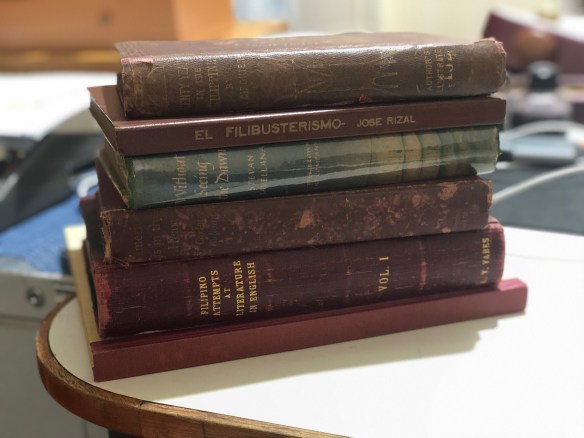
This was certainly true of a recent batch of books that I got back from my favorite book restorer (who shall remain unnamed for now lest she be deluged with requests, given that she has a full-time day job to mind). They included no book older than 1853 (a coverless edition of Paul P. de la Gironiere’s Twenty Years in the Philippines) and 1860 (a copy of Nathaniel Hawthorne’s The Marble Faun, which I didn’t even realize was a first edition until I noted the bookseller’s penciled notation 20 years after I’d bought it).

IMG_7699.jpg

The prize in the pile was a thick clothbound book titled Filipino Attempts at Literature in English, Vol. 1 (Manila: J.S. Agustin & Sons, 1924). The volume is a compilation of smaller books from the 1920s to the 1930s, put together by the legendary professor and anthologist Dean Leopoldo Y. Yabes (1912-1986), who was scarcely in his twenties when he assembled and bound this compendium (signed “Bibliotheque Particuliere de Leopoldo Y. Yabes No. 118).

It’s an outstandingly rare collection, because it contains the only extant copy, as far as we know, of Rodolfo Dato’s landmark Filipino Poetry—the first major collection of Filipino poems in English. In the florid prose typical of the time, Dato prefaces his book by describing it as “a collection of the maiden songs of our native bards warbling in borrowed language,” acknowledging that “the full flowering of our poetic art has not yet come, but the fertile field smiles abundant growth and gives promise of a rich and bountiful harvest in a day not far distant.” In various pieces rhymed and metered, writers like Maximo M. Kalaw, Fernando Maramag, Procopio Solidum, and Maria Agoncillo give praise to mayas, moonlight, sampaguitas, and Motherland.

I had long been searching for the Dato book in the usual places online, for naught; but one day, at a committee meeting, my dear friend Jimmy Abad—the poet and anthologist—slipped it over to me, with the note “Priceless!” And indeed it was. Dean Yabes had gifted it to Prof. Abad, who was now passing it on to me in that timeless ritual that exalts and humbles writers and teachers who know exactly what they are receiving.

The compendium also contains an English-German Anthology of Filipino Poets  translated and edited by Pablo Laslo, with a preface by Salvador P. Lopez (Libreria Manila Filatelica, 1934); Dear Devices, Being a First Volume of Familiar Essays in Englishby Certain Filipinos (N. p., 1933); and the 1935 Quill, the Literary Yearbook of the University of Sto. Tomas, edited by Narciso G. Reyes. I’ll say more about these other seminal works later, as they’re truly invaluable glimpses into our earliest impulses as writers in English (and I have to wonder, if this was just Vol. 1, what Vol. 2 was like, if any).

Friendship aside, Jimmy must also have known that I was in a better position to take care of the volume, whose first 80 pages or so—almost the entire Dato book—had been torn, not just detached, from the spine by that infernal chemistry I described earlier. So I sent it to my restorer, who patiently mended each torn and fragile page with Japanese paper. Like my other jewels, this book will find its way to the UP Library at some point, now renewed for another generation of readers and scholars.


Penman No. 318: Mysteries of Fish

GenSanTuna.jpg

Penman for Monday, September 10, 2018


I’VE OFTEN written and spoken about how—despite the fact that we inhabit an archipelago of over 7,000 islands, bordered on all sides by the sea, and comprising one of the longest coastlines in the world—we seem to have very little by way of a maritime literature. By this I mean novels, stories, poems, and plays that have the sea as a central element, beyond serving as a romantic backdrop.

There’s a whole economy and culture to be found in our relationship with the sea, but much of this has been lost to a metropolitan generation bred on canned tuna and Starbucks coffee. Even among my students, I can count on my fingers the number of people who’ve taken a boat ride longer than a spin around a lake or the short hop from Caticlan to Boracay.

I myself was born in a house a stone’s throw from the beach, in a village on an island far from Manila, so the sea has never been far from my mind and imagination. I dream about it constantly, with recurrent images of huge waves rolling and breaking on the shore, and I as a boy walking on the sand with my father, now long gone.

But I too have to admit that save for a few scenes and the opening chapter of my novel in progress, the sea has figured minimally in my fiction. That’s probably because I feel responsible for creating credible characters whose lives are inextricably waterbound, and haven’t felt confident enough to do justice to the task. The fact is, we’ve lost touch with our marine heritage, which is supremely ironic given how Filipinos have distinguished themselves as seafarers, and how many Filipinos depend on the sea for a living.

This was much on my mind two weeks ago when I flew to Iloilo to attend the formal investiture of Dr. Ricardo P. Babaran as the tenth Chancellor of the University of the Philippines-Visayas. A fisheries expert and nautical engineer, Ric recounted how, as a young boy far up north in Cagayan, he enjoyed going out to sea and to the river to fish.

“My fishing buddies generally used earthworms as bait, but they sometimes used live crickets using different fishing gear. As a young fisher, I observed that using either crickets or earthworms yielded different outcomes—certain fish seemed to prefer one or the other—but my fisher friends were never able to explain to me why. This mystery bothered me for a long time,” he told us.

RBabaran.jpg

Ric left Cagayan to study Fisheries in UP Diliman, and had to deal with the derision of other people who wondered “why Fisheries students needed four years just to learn how to capture fish with hook and line.” Even now, he says, this misappreciation of Fisheries partly explains why “fish-based industries are faring poorly in the Philippines.” (Indeed, an economist I know has pointed out that the recent spike in prices can be traced to some degree to a shortage of fish.)

Ric went on to take an MS in naval architecture and ocean engineering at the University of Washington, and then his PhD in Fisheries Science at Kagoshima University. It was in Japan where, Ric says, he finally found the answer to his childhood mystery: “I learned that catfish and mudfish responded differently to earthworms and crickets because of a process called chemo-reception.”

Dr. Babaran’s investiture was attended by many guests, including many academic officials and luminaries, but several of them stood out, for different reasons. Among them was Dr.  Loel Losanes, a UPV alumnus and the Filipino head of Japan’s Hikari Corporation, probably the largest producer of South Sea pearls in the world.

Just as significant was the presence of members of the Kamamado fishers group from Guimaras, many of them elderly women who, Ric noted, “supplement their daily income with the P40 they get from selling the equivalent of two-liter-sized containers of captured cardinal fish. Through this group, we will undertake a program that will promote responsible fisheries, which I believe will position the Philippines more strategically in the relation to the ornamental fish industry that generates $7 to 8 billion annually.”

I’m confident that the programs of Chancellor Babaran and UPV will improve the livelihoods of millions of our shore-dwelling countrymen, but I’m even more hopeful that a deeper and broader awareness of the importance of the sea in our lives will soon emerge, if only because of the crisis now roiling in the waters around us. (“About a third of our fish catch comes from the West Philippine Sea,” Ric told me.)

And I’m especially happy that a place like UPV exists to mind our waters. A young PhD in UPV, Noel Ferriols, recalled how he was convinced to study in UPV instead of Manila when he and his mother visited the campus in Miag-ao, which specializes in fisheries. “I was amazed when the security guard told me the scientific name of a certain kind of fish,” Noel said. “I thought to myself, if this is a place where even security guards can recite the genus and species of a fish, then it’s where I want to be.”