Penman No. 364: Rediscovering Anselmo Espiritu

Espiritu print.jpg

Penman for Monday, July 29, 2019


I’M SURE I’m not alone in having some fun tracking the online art auctions held regularly by the Leon and Salcedo houses, if only to daydream about the often fascinating artworks crossing the block. Now and then I dabble in a bit of buying and selling—a chair here, a book there—but mostly I’m a kibitzer enjoying the action from the sidelines.

What I do come away with, even just by poring over the auction catalogues (which themselves will very soon become collectible), is an ongoing education in Philippine art. Going beyond the peso signs, learning about our painters and sculptors and the stories behind specific artworks is a reward unto itself, especially given how the arts media today—driven and sometimes threatened by advertising and PR—devote precious little attention and space to historical subjects.

I love discovering (or rediscovering, since they were already well known to others) masters I never knew about, like Lorenzo Guerrero, Felix Martinez, Isidro Ancheta, and Jorge Pineda—most of them, not incidentally, painters of the kind of traditional, romantic Filipino landscape I personally prefer, as they give me comfort and peace of mind and spirit in my old age. Among their successors who figure prominently in my small collection are Gabriel Custodio (see below) and Elias Laxa, whose pieces I can never tire of looking at across a room.

IMG_6705.jpg

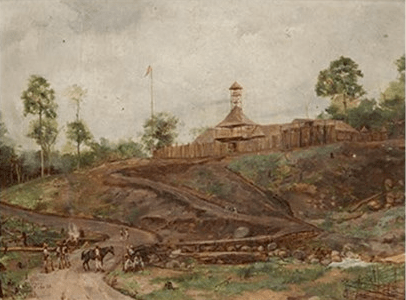
For example, just last month, a Spanish auction house featured two remarkable paintings of Marawi by the Spanish soldier and painter Jose Taviel de Andrade (1857-1910), who at one time was assigned to watch over (and perhaps spy on) Jose Rizal in 1887 but who later became his friend, and whose brother Luis served as Rizal’s defense counsel at his trial. The Andrade paintings depict Spanish fortifications and a bridge from the campaign against the Muslim resistance in Marawi—and if not for the auction brief, I would never have learned about and looked up this story of an improbable friendship, and about that campaign. (The two Andrade paintings opened at 8,000 euros and sold for 32,000—way above my pay scale!)
Andrade.png

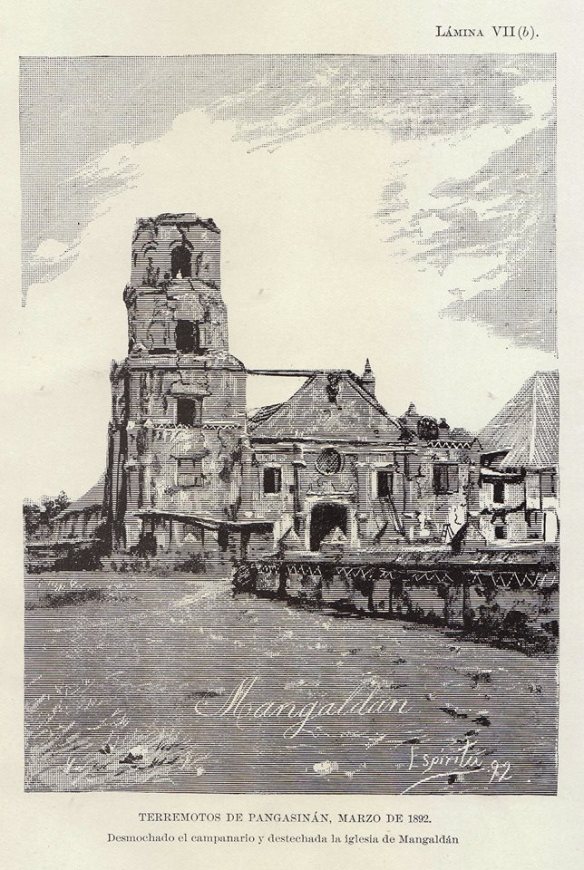
Yet another painter I just recently came to know about was Anselmo Espiritu, whose name and work I was alerted to by an online acquaintance named Wassily Clavecillas, who shares my interest in old books and artworks. Drawing on some scant references to Espiritu from various books and sources, Wassily introduced me to the fact that Anselmo—whose birthdate remains unknown, but who reportedly died in 1918—was a student of Lorenzo Guerrero, along with his brother Manuel (among Guerrero’s other students was Juan Luna). I’ll let Wassily narrate the rest of the story, slightly paraphrased by me:

“According to my research, Anselmo Espiritu was once commissioned by the Observatorio de Manila, then managed by Padre Federico Faura, SJ. In 1892 a great earthquake struck Luzon, decimating churches in Pangasinan. The Observatorio commissioned Anselmo to make paintings of the devastated churches, after which he then made serigraphs or silkscreen prints of those same paintings. Sadly the original paintings and their silkscreen versions perished along with the observatory itself during the Second World War, and the only copies of Espiritu’s depictions of the earthquake’s ravages in Pangasinan, as far as I know, have come down to us in the form of offset prints.” (Wassily has a few of these prints, and sent me digitized copies.)

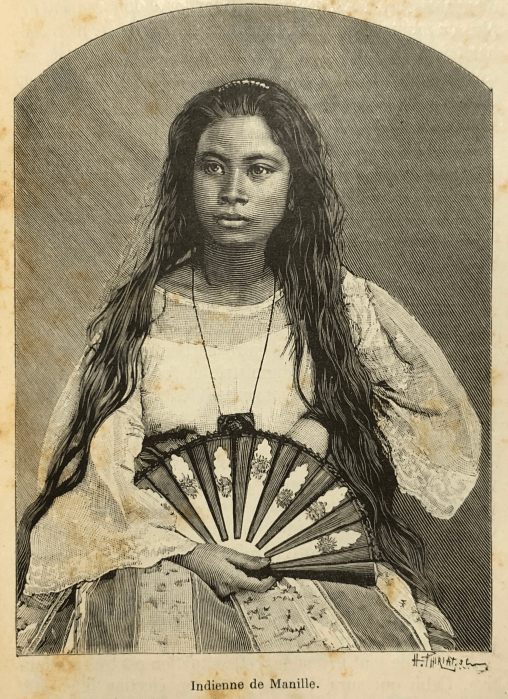
He raised another interesting question: “One also has to ask why the Observatorio and Padre Faura chose to commission Espiritu to do paintings of the devastated churches when photography was already available and even possibly affordable at that time. Why go through the effort of hiring a painter when photos were more accurate down to the minutest detail? Was it an aesthetic decision, in the way that the engravings in Alfred Marche’s book on Luzon and Palawan are prime examples of the engraver’s art?”

He was, of course, referring to Voyage aux Philippines, which the French naturalist and explorer published in 1887 after six years of traipsing around Tayabas, Catanduanes, Marinduque, and Palawan, among other places. I was lucky to acquire a copy of the original Hachette edition a few years ago, which will take me time to digest, as it’s in French (thankfully, an English translation is also available), but the illustrations (like the one below) are indeed exquisite, tending to support Wassily’s conjecture that an artist’s hand can often be more evocative than a photographer’s eye.
Indienne.png

Espiritu would go on from that commission to become a celebrated painter in his own right, winning medals for his works at the 1904 St. Louis World’s Fair, where the likes of Juan Luna, Felix Resurreccion Hidalgo, Fabian de la Rosa, Juan Arellano, and Isidro Ancheta also exhibited. His nephew Oscar (1895-1960) also became an established painter.
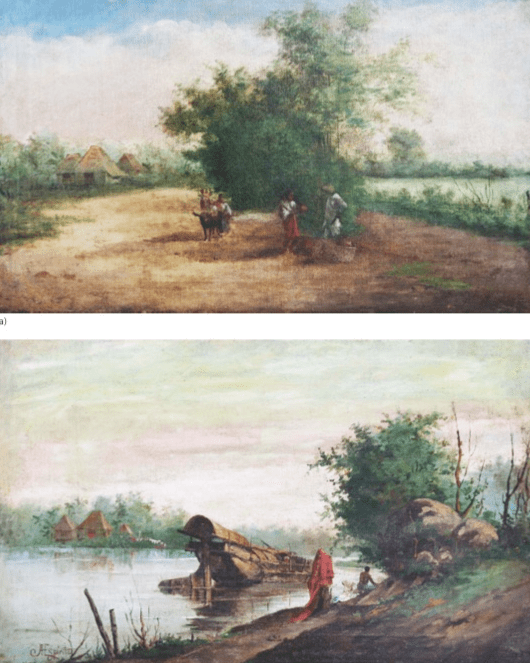
AEspiritu.png

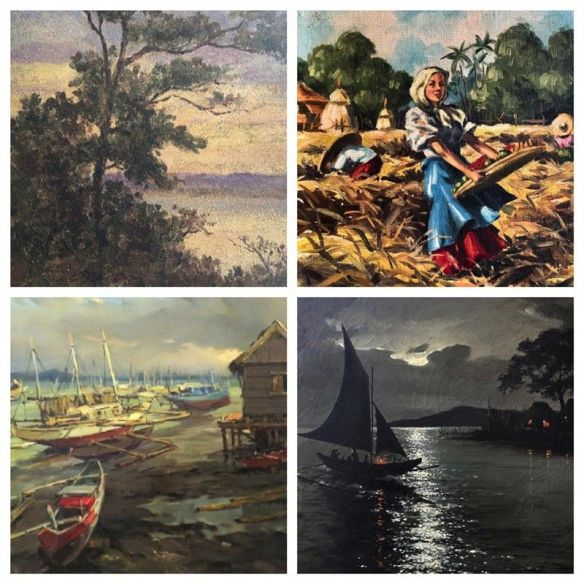
Two paintings of barrio scenes by Espiritu sold last month at a Leon Gallery auction for substantially higher than their opening bids. They came out of a private collection in Spain—or I should say, came home, which is one great service these auctions perform, even as newer Filipino artworks now cross the seas with the growing and well-deserved popularity of Philippine art. I’m happy just to watch this majestic traffic go by.
Penman No. 363: A Singapore Swing

IMG_0941.jpeg

Penman for Monday, July 22, 2019

I’VE BEEN visiting Singapore nearly every year for one reason or other, usually for a conference or at least passing through Changi on my way elsewhere, but this month Beng and I decided to fly there just to have a little fun.

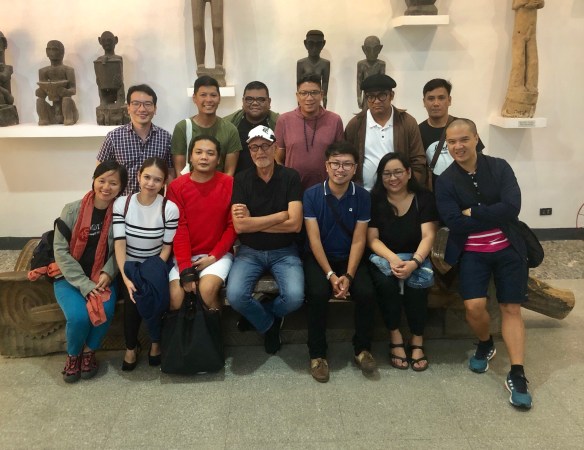
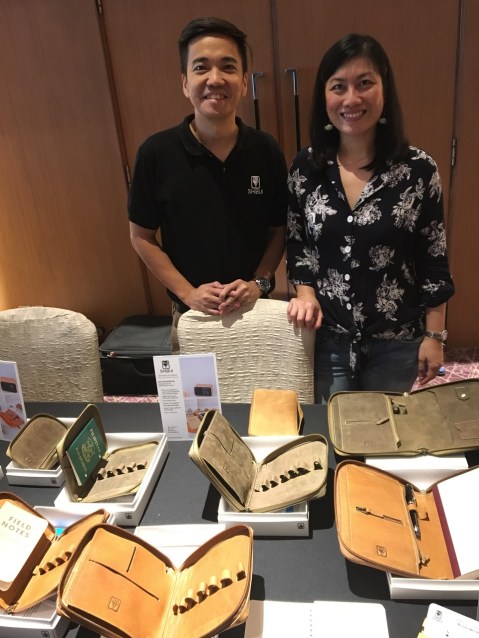
I did have an official excuse, sort of, for this particular swing—the 3rdSingapore Pen Show held at the Marina Mandarin on July 13, which brought together the country’s and region’s premier sellers of pens and related products. I thought I would drop by for a look-see as the “old man” of Philippine fountain pen collecting, and happily I was accompanied by a small but very knowledgeable Pinoy contingent that included adwoman and artist Leigh Reyes (who also happens to be the new president of our Fountain Pen Network-Philippines), medical executive Joseph Abueg, and avid collector Micah Robles, among others. We were all proud to see two major Filipino companies represented at the Singapore show and generating brisk sales and inquiries: Jillian Joyce Tan’s Everything Calligraphy, which was showing off its new line of Philippine-made Vinta inks, and Arnold Ang’s Shibui leather pen cases, which can easily compete in quality and design with the world’s best.

IMG_0335.jpeg

I’ve been to many other pen shows around the world, chiefly in America where they happen year-round, and while Singapore’s may be relatively smaller because newer, it also showcased Asia’s strengths as the producer of some of the world’s finest pens—the high-end Japanese Nakayas, for example, which are rarely seen in the West. Eurobox, which has a formidable collection of vintage pens, came in from Tokyo; and André Mora of the renowned Mora Stylos flew in all the way from Paris with a bevy of their coveted Oldwins. Pen shows are as much about people as they are about pens, and I was delighted to see some old friends like Lai Kim Hoong of Malaysia’s PenGallery, as well as make some new ones like Tan Fong Kum of Singapore’s Aesthetic Bay and Ng Lip Sing of Singapore’s Straits Pens.

So did I buy anything? I normally step out of pen shows with a wild man’s stare, clutching four or five precious finds in my fists, but the great thing about having too many pens is that you know when to stop and to just enjoy the scenery, which is what I did. I came to Singapore to talk pens with kindred spirits, and brought a selection of 12 of my most interesting vintage and modern pens, and had lively conversations about a few of them. Unlike our Manila Pen Show—the next one of which will take place November 16-17 this year—which is far busier and which features more side events like lectures and demos, Singapore’s was still more of a market than a community, and I would’ve liked a longer chat over coffee with our local counterparts, but maybe next time.

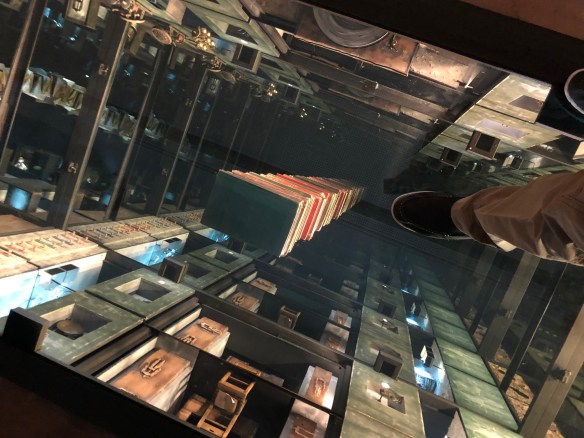
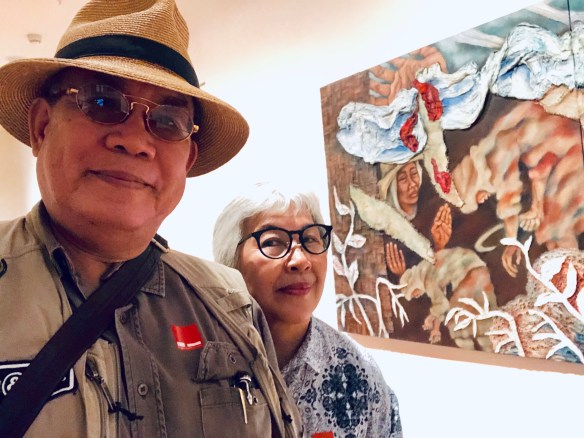
Our other objective for this Singapore trip was to visit the National Gallery, which somehow doesn’t figure on most tourist itineraries like the Marina Bay Sands or the Gardens by the Bay. Built where the old City Hall and Supreme Court stood, the National Gallery is both an imposing but also welcoming structure, with guides and docents ready to walk you through the exhibits. Aside from Singaporean art, of course, the gallery’s strength lies in its collection of Southeast Asian art, which is breathtaking in its range of styles as well as in its commonality of themes—nation, nature, people. Filipino talent is well represented throughout the exhibit—from the ground floor, where Mark Justiniani’s mind-blowing (and, for the vertiginous like me, unnerving) “Stardust” bridge obliges the visitor to take a literal walk through bottomless space, to the succession of galleries on Levels 3-5 where “Between Declarations and Dreams: Art of Southeast Asia since the 19th Century” is on show.

IMG_0924 2.jpeg

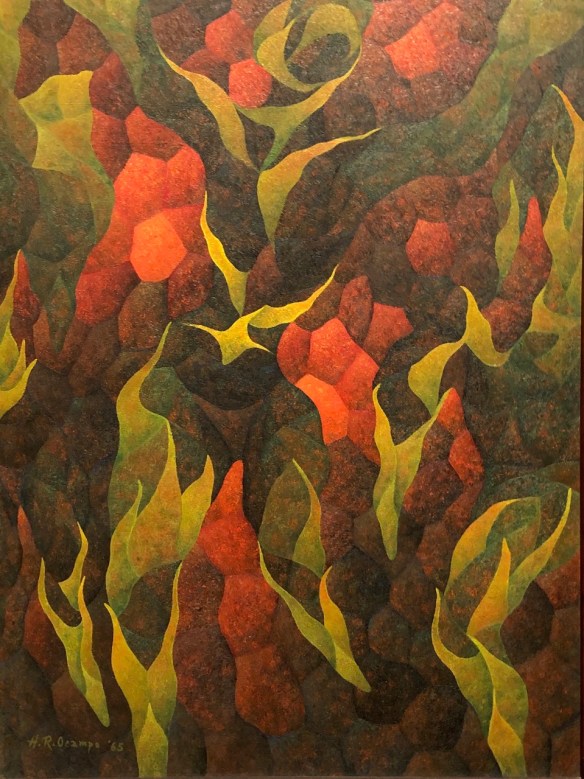
A trio of less-known 1940s Amorsolos is flanked by the orchestrated chaos of a Purugganan; an early and dark Edades exudes primal energy; elsewhere are exemplary pieces by Galo Ocampo, Arturo Luz, Anita Magsaysay-Ho, Napoleon Abueva, Bobby Chabet, Ray Albano, Santy Bose, and Imelda Cajipe. But the piece de resistanceof Filipino modernist representation is H. R. Ocampo’s Dancing Mutants, encountering which made our whole Singapore trip worth it. And the curators themselves must have been aware of the specialness of this stunning work from 1965, according it its very own corner in the gallery, almost altar-like. I’ve seen many Ocampos (with Beng restoring quite a few of them), but this one made me want to fall on my knees in praise of its creator.

IMG_0957.jpeg

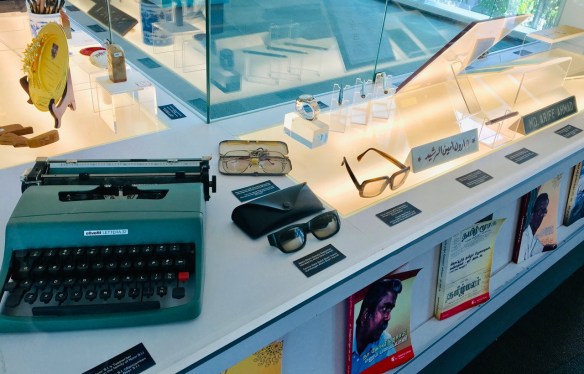
And purely by serendipity, when we stepped out of a mobile-phone shop on North Bridge Road, I noticed that the building across the street was none other than the National Library, which I’d visited as a journalist on a previous assignment. Let’s go in, I told Beng, I want to show you something. So we did, and there on the 11thfloor was a permanent exhibit on “Singapore’s Literary Pioneers”—featuring not only the books of the country’s best writers, but also their pens, typewriters, and even their eyeglasses. This, I told Beng wishfully, is how writers should be revered. Always better than a pen show is seeing what comes out of those pens, at their very finest.

IMG_0344.jpeg


Penman No. 362: Writers in Progress

IMG_0900.jpg

Penman for Monday, July 15, 2019


I’M ALWAYS happy when people who were my students rise up in their careers and begin to find their own voice and footing—especially as writers, good ones among whom remain few and far between. Each year, the University of the Philippines Institute of Creative Writing gathers the best of these young writing talents under one roof and around one table for the UP National Writers Workshop, the 58th iteration of which took place last week in its traditional venue in Baguio City.

Two of the 12 fellows—each of whom qualified for the advanced workshop by publishing at least one book—were Francis Quina and Sarah Fernando Lumba, both of whom had studied withme at one point or other, and whose thesis defenses I had sat at; both now teach at UP Diliman’s English department.This year’s batch was formidable, with some well-established names on the roster, but I kept an eye out for Francis and Sarah, to see how they were doing after all these years.

All workshop fellows were required to send in a short essay discussing their poetics (what, why, and how they write) along with short excerpts from their works in progress.

Francis said: “Recently, when my first short story collection was picked up by a publisher, the reader who had endorsed my manuscript to be published noted that I wrote about strong female and queer characters…. I’ve only known strong women in my life. And strong queer men and women, too. So I only write what I know. This also is true of the fallible male characters that I write about.

His project Window on the World brings two sisters together—each of them trapped and unhappy in their respective situations—on a plane for a holiday in Korea.

 “I’m scared,” Janine confessed, after they had stowed their bags in the overhead compartment and found their seats. She fumbled with the buckles of the safety belts. Maya knew what Janine meant. She had never been a good flyer, and perhaps because of what had happened to their mother, she never would be.

 “We’re going to be okay,” Maya said, feeling her heart beat faster as the plane began the pre-flight sequence. In front of them, two stewardsa man and a womandemonstrated how to deploy a life jacket in case of emergency landing at sea.

Maya fell asleep before the demonstration ended. She didn’t feel Janine take her hand and squeeze it nervously as the plane roared and slowly tilted upwards as they began their ascent. She didn’t feel the sensation of falling, as her mother did, the moment they left the ground and fate took hold of their future.

Somewhere between the 1,623 miles between Seoul and Manila, Janine nudged her sister awake and told her to look out the window just once, to see how endless the world was. Maya, groggy from her medication and nervousness, obliged and got up from her seat. With her sister, she finally looked at the world the way their mother used to.

Sarah, on the other hand, is working on a comic novel titled Twisted Sisters about martial law and revisionism (our dismaying tendency to forget history and repeat it all over again) set in her hometown of Marikina. “There are two main points that I wish to explore in this novel,” she says. “First, the reasons behind the significant support that Ferdinand Marcos continues to enjoy despite empirical data showing that much oppression had been committed by his regime; and second, the extent to which comic and humorous writing could help a people come to terms with—and even come together after—a collective trauma such as martial law.

She writes: “Metro Manila traffic is a hundred ways to die. You can get hit by a car as you cross the crosswalk. Be dragged to death by a motorcyclist careening through the sidewalk. Squished by two bullish buses. Knifed by a strangler as you wait for a jeep. Knifed inside a UV Express by a smartphone snatcher. Have a heart attack just by watching the taxi meter running continuously even if traffic hasn’t budged in the last thirty minutes. Drop dead just waiting for your Grab ride to arrive. Get choked by fumes inside your car because it’s summer and your AC’s busted and you kept your windows up just so you wouldn’t look poor. Get choked in your car by your husband who snaps because of, well, the traffic. Get choked by a druggie whom you meet in prison after you snap and kill your wife in the car because of, well, the traffic. Drown inside your car because flood levels in the streets rise faster than your speedometer. Get squashed by a derailed train coach overhead. Get assaulted with that mandatory lead pipe under the driver’s seat. Assaulted with an empty My Shaldan Lime canister. Shot by a policeman. By a car owner with a licensed gun. By a car owner with an unlicensed gun. Beaten to death by a pack of heat-stroked, smog-coated, PNP-wannabe MMDA enforcers. By a pedicab driver whose ride you scratched. By a congressman because, wala lang, he’s bored and has clout, and you’re there. Metro Manila traffic is death by asphyxiation. By exhaustion. By utter frustration. You can have an aneurysm just by staring at license plates or the sunburned napes of other passengers for two hours straight. You have become a human pipe bomb, a government imprimatur-ed minefield of nasty. One tiny fuse, one small misstep—ka-boom! Road rage. You are better off taking up smoking as your vice.”

Francis and Sarah, you’re well on your way to authorhood.


Penman No. 361: Intelligence Without Values

19657226_1983734168528318_2478868852356142321_n.png

Penman for Monday, July 8, 2019


IT’S NOT very often that a writer or artist gets invited to talk to an audience of science people, so I feel privileged to have done that a few times, most notably in 2004, when I spoke before the National Academy of Science and Technology on “The Role of the Humanities in Our Intellectual and Cultural Life,” and these past two years when I addressed the graduating classes of the UP College of Science and College of Medicine.

But I didn’t feel as personally invested in those talks as when, last week, I spoke at the curricular review workshop of the Philippine Science High School, being someone who had dreamed of becoming a scientist and who actually tried to become an engineer and an economist before settling for an English major.

I entered the PSHS in 1966, long before there was a Philippine High School for the Arts for the artistically inclined, but even given the choice today I would have stayed with the PSHS, to which I’m forever grateful for giving me a dry-eyed, rationalist outlook to ballast my more extravagant impulses.

I reminded my PSHS audience that despite the best efforts of our science managers and educators, we Filipinos continue to live in an environment largely indifferent if not hostile to science. Indeed our artists and scientists have something in common—they don’t figure in making national policy in this country, which is lorded over by politicians, businessmen, generals, priests, and even entertainers.

This establishes a special and urgent mission for our graduates—to matter not just in the laboratory, churning out papers for academia and products for industry, but in society itself, to help Filipinos make more intelligent and responsible choices based on truth and reason. They should not only be proficient in the traditional academic disciplines, but should—even and especially at this early stage—be potential thought leaders, citizens of conscience, champions of truth, reason, and justice.

I recall, with both pride and sadness, the kind of such public intellectuals that our first batches produced—the likes of Rey Vea, Mario Taguiwalo, Roberto Verzola, Rodel Rodis, and Ciel Habito; some became scientists, some did not. But their sharpness of mind was matched by a breadth of spirit that saw them engaged in the larger discourses of our national life, addressing with authority and passion the great issues of our time.

I am worried that apart from the fact that we produce scientists who are not listened to and are even manipulated by politicians for their ends, we may be producing scientists imbued with talent and professional zeal but without values—smart people who cannot tell good from bad and right from wrong. Recall Dr. Faustus, the medieval progenitor of Hollywood’s mad scientist whose insatiable thirst for knowledge comes at the expense of his soul.

The most dangerous thing in our world today is intelligence without values. We have geniuses aplenty, many of them employed by those in power, but like their despotic bosses they are moral idiots who have lost their sense of outrage and their fear of God. They laugh at jokes that degrade women, condone if not encourage rape, and betray everything we have been brought up to believe about decency, honor, virtue, and patriotism. There is sometimes no one more corruptible than an intelligent person, because that person believes that he or she can explain and rationalize everything away, including complicity in mass murder and the propagation of falsehood.

Values are a humanist concern; right and wrong, good and bad are established not in the crucible of the laboratory but in the corridors of debate. One of culture’s loftiest functions is to remind us of something larger and worthier than ourselves, something worth living and dying for, like God, family, and country. It will be the humanities that will provide that vision, in all its clarities and ambiguities; and it will be science and technology that will provide the means.

Humanizing the scientist in training, our young PSHS student, involves more than infusing the curriculum with Humanities and Arts subjects, as important and today as imperiled as they may be. Certainly they need to be exposed to poetry, to painting, to music, to philosophy, and to history as we all were.

But humanizing the PSHS student also means treating him or her literally as a human—as a complex, bright but vulnerable being whose life yet stretches far ahead, an unfolding adventure whose most interesting moments are yet to come.

At this point I brought up what I call the stupid, unscientific, and counter-productive contract that incoming PSHS students are required to sign, binding them to take a science course in college. Indisputably the main mission of a science high school is to produce scientists in training, which our country sorely needs. But I’ve also seen how some kids, bright as they are, burn out in college, dejected by having signed away their option to pursue their heart’s desire. You cannot hold a 12-year-old to a contract that will define what he or she will become for the rest of his or her life.

I’m sure my fellow vagrants like the writer Jessica Zafra, the dancer Nestor Jardin, the indigenous people’s activist Vicky Tauli Corpuz, the historian Rico Jose, the film director Auraeus Solito, the composer Joel Navarro, the model Anna Bayle, and the former SGV partner and Accenture chief Jaime del Rosario, among many others, would agree. Our minds were challenged and enriched by our science education, and that training remained with us for the rest of our lives.

Trust the student; trust his or her intelligence to make the best and most responsible decision for himself or herself. Whatever happens, the great majority of them will move on to a career in science, in any case—not because they have to, but because they want to.

Penman No. 359: Retrieval and Repatriation

arts3-pineda-paguia-buenventura-custodio_2019-06-23_16-53-03.jpg

Penman for Monday, June 24, 2019


CHATTING WITH a friend about my growing collections of old books and paintings the other day, it struck me how so many of my Philippine-related items were sourced abroad, mainly from the US, Spain, and the UK. In other words, these materials left the country one way or the other ages ago, and are only now being repatriated by those like me who pick up other people’s throwaways with a gleeful passion. And beyond just wanting to acquire some new old thing, we collect with a special mission—to find, retrieve, and restore valuable or at least interesting pieces of Filipiniana, so they can be enjoyed by another generation of Filipinos.

I have friends who have the kind of checkbooks and connections that allow them to score and bring home stray Lunas and Hidalgos from some obscure Spanish estate or farmhouse. I’m glad that players like them exist to compete with the high rollers at Sotheby’s and Christie’s, but I’m clearly not in that league, so I look for far more plebeian objects: books written by Filipinos or about the Philippines, and paintings by Filipino artists.

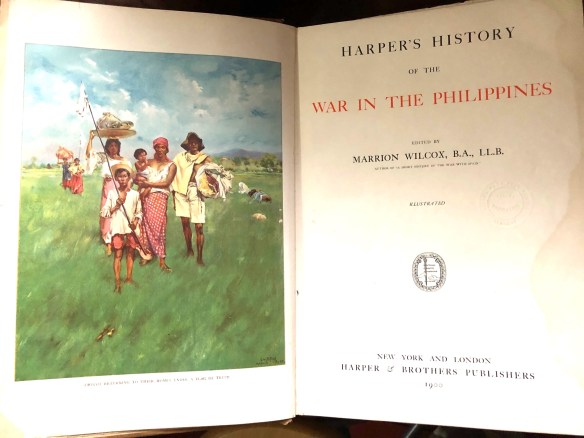
The books are far more plentiful than the paintings, of course. At the turn of the 20th century, following the American occupation of these islands, there was great publishing interest in accounts of America’s first imperialist adventure, as well as in depictions of life in the new colony. Easily the most available antiquarian books you can find on the Philippines will have to do with that period, sporting triumphal titles such as the large two-volume Our Islands and Their People (1899), War in the Philippines and Life and Glorious Deeds of Admiral Dewey (1899), and Under MacArthur in Luzon or Last Battles in the Philippines (1901). My best acquisition in this department is the huge, elephant-folio-sized Harper’s History of the War in the Philippines (1900), which has superb illustrations, but quite frankly, as a Filipino reader, I find the propagandistic prose barely tolerable, with only my indulgent humor to carry me through passages deploring our “numerous piracies and cannibalistic feasts.”

IMG_6451_2.jpeg

I’ve had more fun and a deeper sense of satisfaction tracking down the foreign publications of our literary masters like Carlos Bulosan, Manuel Arguilla, Jose Garcia Villa, Nick Joaquin, and Bienvenido Santos. Like many writers of their generation, they saw publishing in America as a form of validation, and while we may argue today that we needn’t look to New York for approval, you can’t deny that surge of pride when you see those names in, say, a 1953 issue of Partisan Review alongside the best of the West.

It was, in fact, my discovery of an issue of Story magazine from the early 1930s some 30 years ago, when I was a graduate student in the American Midwest, that fired up this enthusiasm for retrieval and repatriation. That issue contained the Baguio-based Sinai Hamada’s iconic story “Tanabata’s Wife,” and I had the pleasure of presenting his family with that copy years later. I would stumble on the odd book about Dewey and his exploits at antique malls for 50 cents, and bring that home. In Edinburgh years later, I found a postcard of Filipino women, and turned that into a story titled “We Global Men.” Sometimes you just have to look very closely; scanning some antique documents being sold online, I spotted a reference in a 1578 travel book to “von der Spanier mache in den Philippinischen Insuln,”and was able to pick that up for a few euros.

Most delightful have been the paintings that I’ve come across on eBay and other auction sites—among them, a purplish treescape by the great Jorge Pineda from 1937; a patriotically themed harvest scene by P. T. Paguia from 1945; a moonlit near-monochrome by Cesar Buenaventura from 1956; and a Cavite seascape by Gabriel Custodio from 1965. Probably brought over to the US by American servicemen or by tourists looking for souvenirs, and less regarded by their next owners, these artworks turn up like flotsam on the shores of eBay (or shopgoodwill.com, where the Custodio appeared, being sold out of a Goodwill store in Spokane). And how do I know they’re not fake? The answer is, I don’t, not until I actually have and see them, but then I’m a poker player, and quite used to going all-in on a solid hunch. (The Pineda was a tricky gamble, but it’s the original frame from the period—with the seal of the well-known but long-defunct frameshop in New York—that provided the validation).

I’m not the only person on the hunt for these lost treasures, so they don’t necessarily come dirt-cheap, and shipping poses special challenges, but holding them in your hands after they’ve crossed decades and thousands of miles brings a matchless thrill. Like Filipinos themselves—the Ulysses of this age, global wanderers who inevitably come home—these pieces best belong where they are loved.


Penman No. 355: Loverly London (1)

IMG_0319.jpeg

Penman for Monday, May 27, 2019


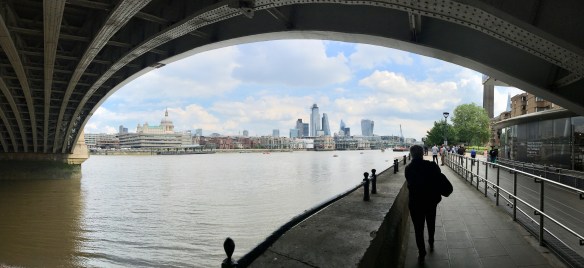
I FIRST visited London 25 years ago, on my way to Scotland to take up residence at Hawthornden Castle on the fellowship that led to Penmanship and Other Stories. Since then I’ve been back a few times—very often in 1999-2000, when again I was a writing fellow at Norwich. It’s easily my favorite city in the world to visit, given its cultural vitality and the accessibility of the things that matter most to me—museums, galleries, and flea markets—and for the past two decades, Beng and I had been dreaming of returning to London to step back into our old haunts.

That finally came true on the heels of our recent Scotland trip with our daughter Demi and her husband Jerry; they flew back to home and work in California, so Beng and I had a full week to ourselves, and wisely we decided to just spend almost all of that time in London, except for an overnighter in nearby Chelmsford and Norwich. As with 20 years ago, we did everything by train and by Oyster card (“contactless” is a new English word you’ll learn quickly just out of Heathrow). There’s nothing like a train ride into the English countryside and its undulating greens awakened now and then by brilliant yellow swathes of rapeseed to make one understand Wordsworth and Romanticism, in the same way that Glasgow’s sooty masonry and steel sinews recall a darker, Dickensian industrial past.

9101e10824ce12963ec78a189abcd3c22e091785.jpg

Speaking of Dickens, and like many Pinoys my age, my first impression of London was shaped by Broadway’s and Hollywood’s renditions of its Victorian upside and downside, in such confections as “Oliver Twist” and “Mary Poppins” (from which the screech of my schoolboy crush, Julie Andrews, still resonates, appealing for “a room somewhere, far a-wigh from the cold night air…. Awww, wouldn’t it be loverly?”).

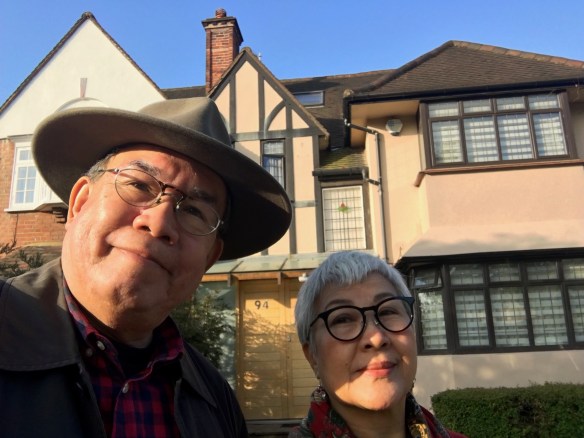
Well, thanks to Booking.com, Beng and I found ourselves a loverly, affordable room in a large house in the northwestern London suburb of Golders Green—a neat and quiet, multicultural neighborhood on the Tube’s Northern Line, historically Jewish but with many Turkish, Iranian, and Japanese restaurants and groceries lining the streets. And, of course, there were Filipinos everywhere, not tourists like us (you’ll find them at Harrods) but off-duty caregivers and housekeepers enjoying time together at the local KFC.

IMG_0329.jpeg

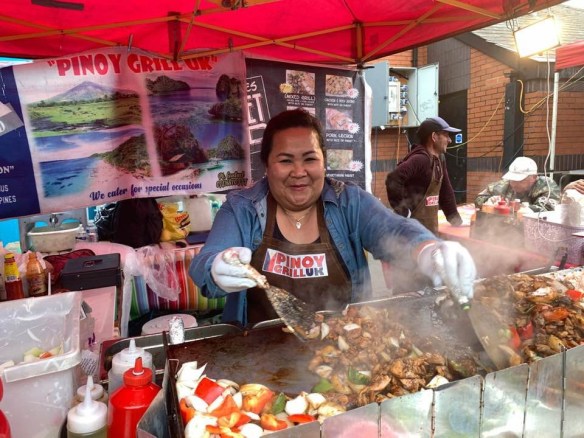
That’s where we met someone we’ll call Thelma, who has worked for the same Jewish employer for the past ten years. It just so happened that she and Beng had some mutual friends from Iloilo, where Thelma went to college. “I’m treated very well here,” Thelma said. “Every year I get a paid vacation to go home.” We spotted another unmistakably Pinay girl at the streetcorner selling suman, which we had for our next breakfast. And at the end of a long Sunday walk down Portobello Road, in a cluster of street-food stalls offering everything from vegan paella to Jamaican patties, we found Eva Caparanga’s Pinoy Grill UK, which instantly answered the question we had been asking all day, “What are we having for dinner tonight?” As she heaped our chicken adobo into a large takeout cup, Eva told us that she had been in the UK for more than 30 years, and was still working in health care, but that for the past three years she had used her days off to run her stall at the far end of the popular Portobello Market. “People ask me why I do this, and I tell them it’s so I can help family back home in Bicol. And again they ask me why I do that, and I say, well, that’s just how we Filipinos are!”

IMG_0618.JPG

The story of Filipinos in the UK and London is a long and colorful one, and I can’t count the many times they came to my succor during my tenure at Norwich and my weekend sorties to London years ago. When my feet acquired a horrible infection in Norwich, I ran to the National Health Service, only to find it staffed by kindly Pinoy nurses who got me back to walking in no time. In London, my host was the late, beloved Ed Maranan, who had ushered at the National Theatre and could sneak me into plays for free; in return, I made sure to wash the dishes at his flat on Goldhawk Road. The writer Jun Terra also brought me around once to marvel at the late Dr. Teyet Pascual’s art pieces in his Chelsea apartment.

This time, Beng and I were resolved to stay close to ground level, having neither the budget nor the inclination to splurge on the timelesss luxury that puts British-made things—whether they be suits, shoes, bags, or fountain pens—in a class all by themselves. This time, we said, we would go straight for the two things that we enjoy most in our sorties to foreign cities: flea markets and museums.

More on these next week.

IMG_0269.jpeg

Penman No. 354: A Scottish Sortie

IMG_0415.jpegPenman for Monday, May 20, 2019
 

AS UNLIKELY as it may seem, many Filipino writers have a special affinity for Scotland, that northern country (yes, it is one) bound up into the United Kingdom with England, Wales, and Northern Ireland. That’s not only because of our passing familiarity with the likes of Robert Burns and Walter Scott, but because, over the past three decades, more than a dozen Filipino writers—among them Krip Yuson, Eric Gamalinda, Ricky de Ungria, Marj Evasco, Rofel Brion, Danton Remoto, Mia Gonzalez, and myself—have been fellows at the Hawthornden Castle International Retreat for Writers, about half an hour by bus in Midlothian, just outside of Edinburgh.

That was where, in 1994, I wrote much of what became Penmanship and Other Stories, including the title story, which came out of a serendipitous purchase of a 1938 Parker Vacumatic at the Thistle Pen Shop in Edinburgh. Indeed, two literary anthologies have emerged from the Pinoy-Scottish connection: Luna Caledonia, a poetry collection edited by Ricky de Ungria and published in 1992, and Latitude, a fiction collection co-edited by Sarge Lacuesta and Toni Davidson and published in 2005.

IMG_0369.jpeg

I returned to Scotland in 2000 with my wife Beng and daughter Demi in tow; I was a writing fellow then at the University of East Anglia in Norwich, and Demi was visiting us from Manila. As it happened, a local radio station was offering free train tickets to Scotland to whoever could dial in and answer some simple questions at 5 am, so for three consecutive mornings, I woke up early and did just that, and soon we three were rolling away to Glasgow, taking the scenic route along the western coast (and being feted on the train by a kindly Pinoy attendant).

That was 20 years ago, and since then Beng and I have expressed a more than idle longing to revisit Scotland—especially Beng, an unabashed fan of Braveheart and Outlander. In the meantime, Demi got married to bright young fellow from California named Jerry, and in 2014 Demi and Jerry treated us, on our 40thwedding anniversary, to a tour of Spain, following Rizal’s footsteps in Madrid and Barcelona, and Anthony Bourdain’s in San Sebastian.

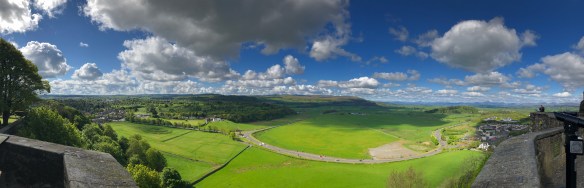
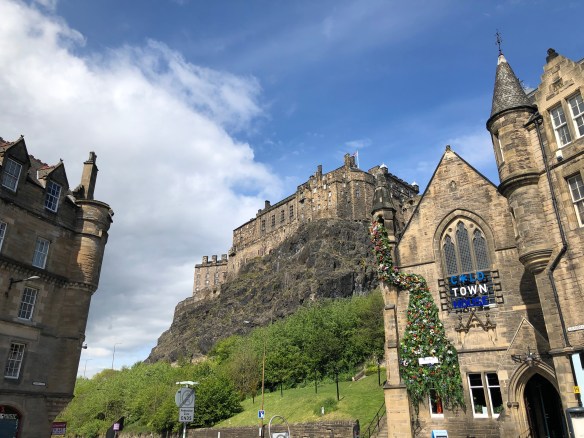
We wanted to repeat that this year to mark our 45th, so it was no huge surprise that we settled on Scotland where Jerry—who likes his single malts—had never been. After meeting up in London, we took a train to Edinburgh and lodged in the shadow of its imposing castle, to which we paid the obligatory visit. I treated our small party next to a day tour of Stirling Castle, Loch Lomond, Deanston Distillery, and Doune Castle, before moving on the next day to Glasgow and its more down-to-earth, industrial vibe.

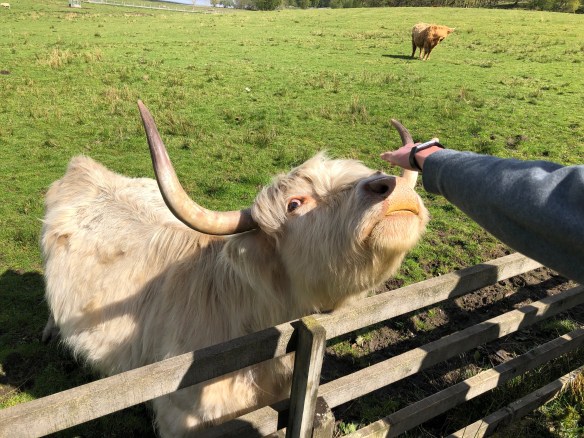
I wanted to record this not to bore you with the details of another family sortie, but to remark on what impressed us most, outside of the often desolate beauty of the Scottish highlands and our comic encounters with the “hairy coos” (the Highland cattle probably fattened by tourist feedings).

IMG_0434.jpeg

For me, a retired professor who can’t help being interested in a country’s educational and cultural infrastructure, the question was, how could the Scots have done so much with seemingly so little?

Pop stars like Sean Connery, Arthur Conan Doyle, Robert Louis Stevenson, JK Rowling, and Annie Lennox aside, Scotland has produced engineer James Watt, inventor Alexander Graham Bell, penicillin discoverer Alexander Fleming, social philosopher Adam Smith, and explorer David Livingstone. A book by the historian Arthur Herman titled How the Scots Invented the Modern World asks: “Who formed the first literate society? Who invented our modern ideas of democracy and free market capitalism? The Scots…. In the eighteenth and nineteenth centuries Scotland made crucial contributions to science, philosophy, literature, education, medicine, commerce, and politics—contributions that have formed and nurtured the modern West ever since…. John Knox and the Church of Scotland laid the foundation for our modern idea of democracy; the Scottish Enlightenment helped to inspire both the American Revolution and the U.S. Constitution; and thousands of Scottish immigrants left their homes to create the American frontier, the Australian outback, and the British Empire in India and Hong Kong.”

IMG_0387.jpeg

This from a country of less than 6 million people (that’s right, six), whose influence extends far beyond their shores. While wives and widows everywhere may bemoan the loss of their husbands to golf and whisky, both industries annually contribute £1 billion and £6 billion, respectively—about P500 billion combined—to the Scottish economy, which is also driven by oil and gas, a £12-billion industry. (To put things in perspective, you can add up those three for a total contribution of £19 billion or about US$25 billion, which is what Philippine BPOs generate, as well as OFWs—but with a much smaller denominator.)

What was most telling to me was how Scotland, despite its plethora of warriors, politicians, engineers, and industrialists, valued its writers, who in turn valued Scottish national pride. The 200-foot statue of Walter Scott in Edinburgh is the largest in the world of any writer’s, and in Glasgow, Scott’s monument also towers over those of others in George Square.

Of course we can argue that we venerate Jose Rizal—only to elect his intellectual and moral opposites. As the Scots might put it, “A nod’s as guid as a wink tae a blind horse.”

IMG_0123.jpeg


Penman No. 353: Our Very Own Indiana Jones

s-l1600.jpg

Penman for Monday, May 13, 2019


IT ISN’T every day that a Filipino scientist captures the imagination not only of his own people but of the world, but last month, this amazing feat happened, putting Filipino science squarely on the global map.

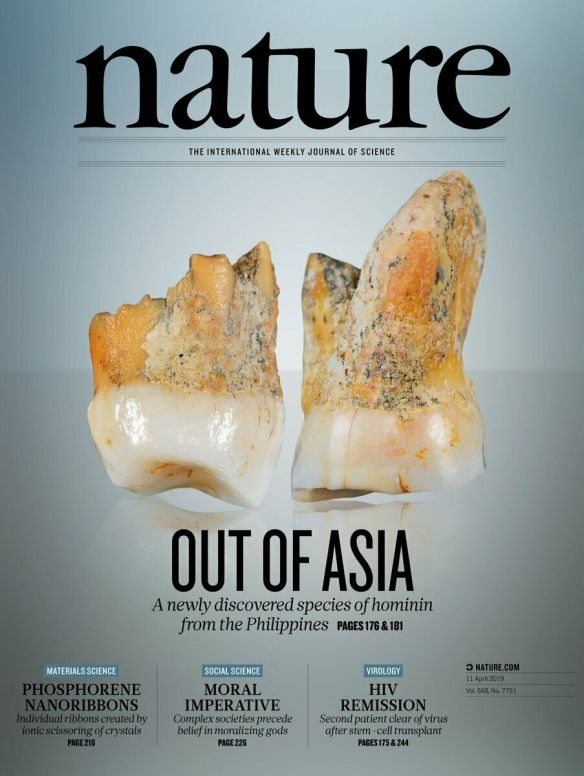
The “feat” wasn’t just one event but the culmination of many years of painstaking work, research, and analysis, culminating in the publication of the results in Nature magazine of a cover article titled “Out of Asia: A newly discovered species of hominin from the Philippines,” attributed to an international team including Filipino archeologists Armand Mijares, Eusebio Dizon, and Emil Robles. The article announced the discovery of what the team named Homo luzonensis, a new and previously unknown hominin or human-like species. (For a laymanized version of the article, see here: https://www.nature.com/articles/d41586-019-01152-3.)

The discovery consisted of about a dozen small bones found over several years in Callao Cave in Peñablanca, Cagayan, which taken together indicate that an early form of man lived here at least 50,000 years ago. Dr. Mijares, an associate professor with the University of the Philippines’ archeological studies program who led the international team, had been excavating the area since the early 2000s. In 2007, the digging paid off with the discovery of a foot bone “dated to 67 thousand years ago  (which) provided the earliest direct evidence of a human presence in the Philippines,” according to Nature. The discovery radically questions and reforms previous theories about human migration in Southeast Asia.

As exciting as the unearthing of luzonensis was, almost just as important was the fact of Mandy Mijares—a UP Manila graduate who took his PhD at the Australian National University—getting published in Nature, which stands at the very pinnacle of scientific publishing. As another well-known UP scientist and a good friend of Mandy’s, the geologist Dr. Mahar Lagmay, puts it, “It is every serious researcher’s dream and struggle to publish in this journal. Out of the 15,000 manuscript submissions that the editorial board of Nature receives a year, only 1,000 or approximately 7% are accepted for publication. Only 2% of science journals have an impact factor of 10 or higher. In 2017, Nature’s IF was 41.57—equivalent to publishing 40 articles in most other scientific journals.”

ASBrods.png

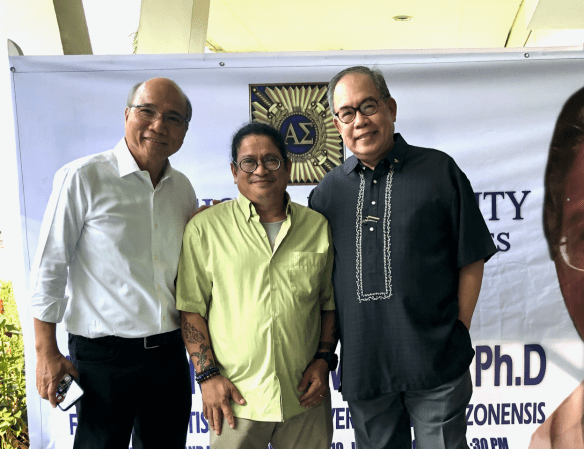
Mandy also happens to be a brother of mine in UP’s Alpha Sigma fraternity (that’s him in the middle, with me and Smart founder Doy Vea), and last week, the brods honored our very own Indiana Jones in a public program at the Asian Center, where he also presented his findings. I was asked to say a few words, and here’s part of what I said:

I had been hearing about this discovery from Brod Mandy in my private conversations with him over the past two years, and I knew he was sitting on something literally groundbreaking but even I had no sense of the magnitude of his project until I saw it on the cover of Nature. In my lectures on science journalism, I often refer to Nature as the one of the summits of scientific publishing. It’s hard enough to get published in, and much, much harder to land on the cover of. That’s what Mandy Mijares has been able to do.

But bragging rights aside, the joy I share with Mandy comes from seeing scientific inquiry and intellect recognized and rewarded in an environment that has become increasingly indifferent if not hostile to intelligence, indeed to the search for truth. Sophistry and opportunism have overtaken scholarship and honest labor, and political hacks purport to know and dispense the truth better than scientists and artists remote from the centers of money and power.

The discovery of luzonensis reaffirms the role of a university not just in its own country but in the world at large—in spearheading and supporting the pursuit of knowledge, even knowledge that will probably not add one percentage point to GDP or have any practical application we can think of at the moment, but which enlarges our understanding of ourselves as humans.

The question that luzonensis poses for us in the 21st century is, how much farther have we truly come along as humans from our hominin ancestors, and what have we done with our humanity? Are we any less crude, any less brutal? Could it be that luzonensiswas more caring for its own kind than we are today with ours? What have we done with our larger brains, our gift of language, with which we have become so facile that we can now distort the truth without batting an eyelash and even look smart and smugly smile and be praised by others for how cleverly we get away with murder? Faced with a creature that may have had no appreciation or even need for truth, reason, and justice, what does it say about us today, many millennia later, at a time when a good many of us seem to be in the same position, and let me repeat—with no appreciation or need for, and perhaps just a flickering memory of, truth, reason, and justice?

I’ll stop here before my sadness gets the better of me and beclouds the brightness of the hour, which properly belongs to Homo luzonensis and its brilliant discoverer. I’ll end with our fraternity’s exhortation to seek excellence in all endeavors—or I should say, in all good and just endeavors. Mabuhay ka, Brod Mandy!

Penman No. 350: An Avatar of Good Writing and Reading


All-My-Lonely-Islands-new-cover-e1536389355642-325x519.jpg

Penman for Monday, April 22, 2019


EVERY BOOK author needs a publisher, and in this country, depending on what you write, there aren’t too many of them. There will always be a market and a publisher for law, medical, and engineering books (and let’s add cookbooks and inspirational books), but for those of us who write fiction, history, and things that won’t make you any real money, the options are few and far between.

If you’re connected with a university, an academic publisher such as the University of the Philippines Press, the Ateneo de Manila University Press, and the UST Press could be your ticket—if you pass the rigorous standards of academic publishing, which explains the prestige of getting published under a university imprint. Of course, self-publishing (what used to be derided as “vanity” publishing) has gained growing acceptance around the world, given the possibilities opened up by new desktop technologies. That still leaves authors with the problem of distribution, which neither universities and much less individuals are too adept at.

Thankfully, another option—indeed at the top of the list for most Filipino authors—is Anvil Publishing, established in 1990 as a subsidiary of the giant National Book Store chain founded in 1942 by the Ramoses. The NBS network of over 230 branches all over the country gives Anvil a formidable edge over any competition, but publishing isn’t just about distribution; as importantly, it’s about product, and bringing that product to market.

That’s the job of Anvil’s General Manager Andrea Pasion-Flores, who joined the company two years ago, coming from an ideal background as an English major and a talented writer in her own right, becoming a lawyer and then Executive Director of the National Book Development Board, followed by a stint as the only Filipino literary agent with the Singapore-based Jacaranda Agency.

She took over from the very capable Karina Bolasco, who moved over to head the Ateneo press. For most of its nearly three decades, Karina had shepherded Anvil to its predominant position in the industry, and gave many authors like me the break they needed to reach a national audience. In 1992, Anvil took on my first novel, Killing Time in a Warm Place, the first of many projects I would do with them. Today, 27 years later under Andrea, Anvil is working with me again to produce my Collected Stories, the culmination of about 45 years of my work in short fiction, after I recently edited a new edition of Manuel Arguilla’s short stories for them. It’s a milestone I’m eagerly anticipating, which should be out before the year ends.

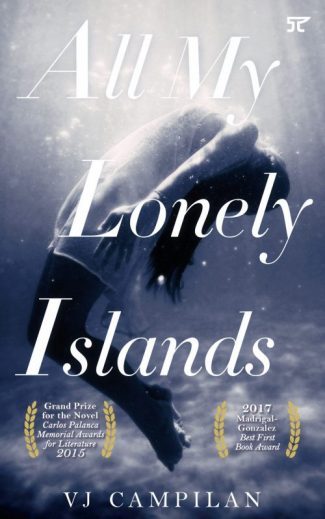
And it’s not even old folks like me, Krip Yuson, Ambeth Ocampo, and Lualhati Bautista that Anvil’s helping out the most these days, but exciting young authors like VJ Campilan, whose novel All My Lonely Islands has won a slew of awards. Anvil has also just teamed up with Wattpad to create Bliss Books for young Filipino readers, drawing on the popular YA online platform.

Last February, Anvil celebrated its 29thanniversary, and Andrea came out with a list of interesting company factoids, some of which I asked her permission to share with you:

  1. The first title published by Anvil was Atlas Adarna in May 1990, a collection of regional maps.
  2. Its first cookbook was The Best of Maya Cookfest, volumes 1-3, published in July 1990.
  3. Aside from the Atlas Adarna, Anvil’s first trade book was an anthology of Carlos Palanca award-winning stories, published in September 1990. Ambeth Ocampo’s Looking Back and Rizal Without the Overcoat were published in November 1990, and continue to be highly popular.
  4. Margarita Holmes’ Life, Love, and Lust was the first collection of essays published by Anvil. It came out in September of 1990 and sold for P125.
  5. Between 1990 and 1991, Anvil published 160 titles: pocket books, coloring books and the series Our World of Reading and Our World of Language, Our World of Science. It’s estimated to have since published more than 2,000 titles.
  6. In 2017, Anvil revived Anvil Classics, which for a long time only counted Nick Joaquin’s novel Cave and Shadows, but now has all his stories and his other novel The Woman Who Had Two Navels,and his collection of plays Tropical Baroque: Four Manileño Theatricals;  Lualhati Bautista’s most eminent novels (Dekada ’70, Desaparasidos, Bata Bata Paano Ka Ginawa, and ‘Gapo), Carlos Bulosan’s America Is in the Heart, and Manuel Arguilla’s collected stories. (My Collected Stories will fall under this imprint.)  

“In 29 years,” Andrea says, “Anvil has grown to be one of the leading publishers in the country, serving a diverse audience that is represented by the diversity of authors on its roster. And though the business of publishing books has become a little bit more complicated than 29 years ago, my two short years in the company have shown me that the commitment to books of the Ramos family, represented by Xandra Ramos-Padilla, is strong and unwavering. And for our growing team of 43, running up to 2020, we have a few things planned on all fronts.”

Congrats, Andrea, and may Anvil—among our other notable publishers—continue to promote good writing and reading for and by Filipinos.

Penman No. 347: The Master of Commandante Street


IMG_9726.jpeg

Penman for Monday, April 1, 2019


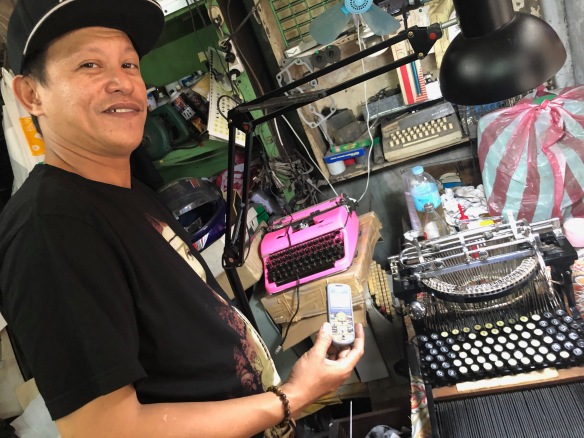
COMMANDANTE STREET branches off Evangelista in Manila’s Quiapo—a downtown district a poet-friend endearingly described as “the armpit of the city.” It’s an area teeming with shops selling generators, compressors, engine parts, filing cabinets, and cheap guitars and stereos, not too far from soft-porn moviehouses and restaurants offering Chinese noodles and dumplings. You wouldn’t know it, but on one side of a hole-in-the wall along Commandante works one of the world’s most highly regarded craftsmen, known to his clients and admirers only as “Gerald Cha.”

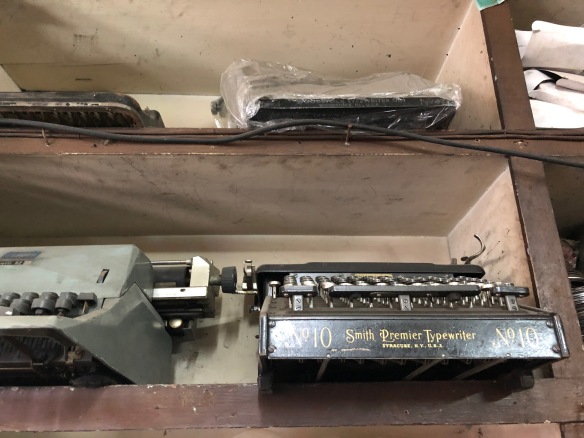
Gerald repairs and restores typewriters—yes, those noisy machines your grandparents used to write letters and fill out forms with—catering to a small but fiercely dedicated community of typewriter collectors and users, not only in the Philippines but worldwide. He’s not alone—there are still many master repairmen out there who can make a 1912 Blickensderfer or a 1955 Smith Corona Silent Super work for you (check out Duane Jensen’s Phoenix Typewriter videos on YouTube, for instance)—but Gerald has acquired near-mythical status in the online community, as much perhaps for his skills as for his mystery.

As one member of our Antique Typewriter Collectors group puts it, “Gerald Cha was a quiet man. He lived among the pines in seclusion. His family and friends knew him as a gentle soul, but the typewriters feared his name. Legend has it that Gerald Cha once carried 16 desktop typewriters, using 8 fingers and 8 toes, crawling on his elbows and knees. He stood 5.6 meters tall, weighed 10 stone, and could throw a VW Beetle 270 feet. His shoes could hold 23 gallons of water, each. Gerald did not seek attention, but attention found him.”

IMG_9701.jpeg

IMG_9702.jpeg

IMG_9706.jpeg

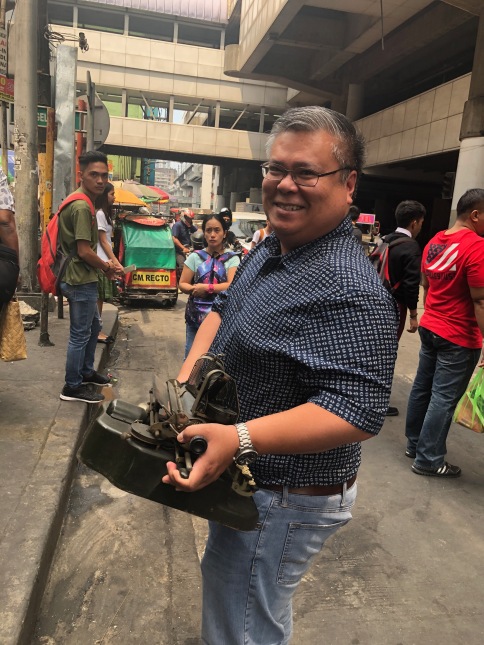
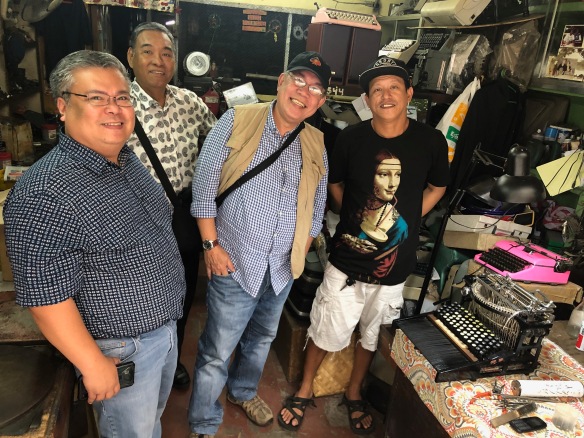
On the day that I and two other collector-friends—Toastmaster Dennis Pinpin and lawyer Javi Flores—visit Gerald at his shop, he’s poring over an 1880s Caligraph shipped in from the States. The Caligraph is a large, black Rube-Goldbergian contraption with a plethora of screws and bars. Like many early models, it’s an upstrike typewriter—meaning, the keys strike the platen (the rubber cylinder on which the paper is rolled) from under, instead of from the front, as in normal typewriters. In other words, you’re typing blind, not seeing what you wrote.

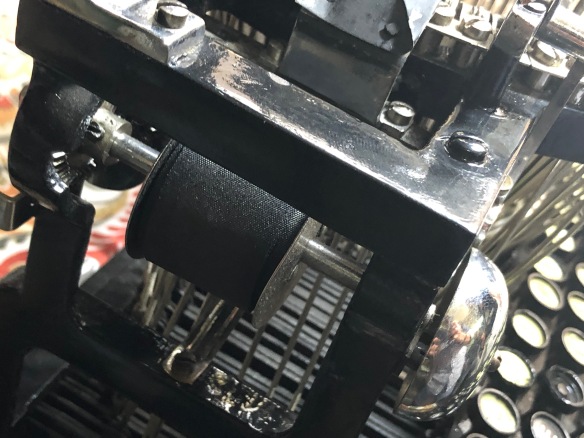
Gerald’s job is to see how everything hangs together, and to fabricate parts that no longer exist. He does this with the help of local artisans, including someone who custom-made the one-inch-wide ribbons used by the Caligraph (the standard size is half an inch). Most of the Caligraph’s key caps were gone, so he had to have a whole period-correct set of letters, numbers, and assorted characters printed out, along with the machine’s emblem—normally a decal, “but for now I’ll have to do with a sticker” that he had made. Gerald’s in the right place for any kind of copying—C. M. Recto Avenue, just around the corner, has a decades-old reputation, predating the Xerox, for being Manila’s Forgery Row, where you can order anything from a birth certificate to a diploma from the university of your choice.

IMG_9708.jpeg

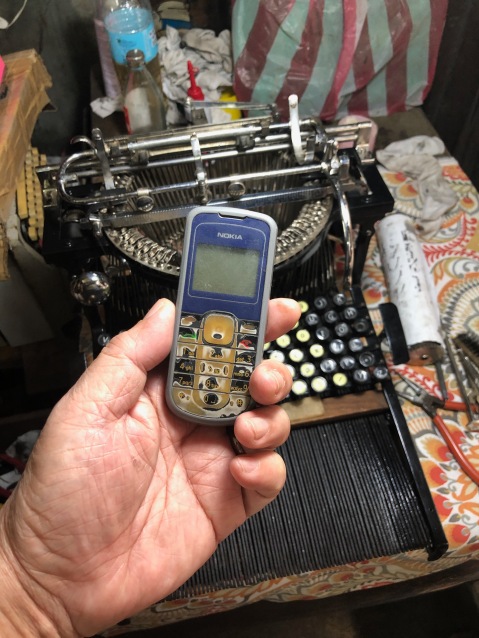
Our requests seem easy by comparison—Javi is having a ca. 1910 Oliver No. 5 restored, I need new rubber feet for my 1938 Royal O, and Dennis (he with the 90 typewriters) always has something or other for Gerald to mind. The man who attends to all these is no bearded guru, but a slightly built, soft-spoken guy in his early 40s. “Cha” is really his wife’s nickname. “There were too many other people with my name, so I had to find something different,” he says. Another signature is his impossibly weathered Nokia, as if to suggest how far behind the times he is, like his machines. But you can find him as “Gerald Cha” on Facebook, Instagram, and Messenger, urged by the likes of Dennis to share his uncommon expertise not just with fellow Filipinos but with the world. He’s been online for only a few years, but in that short time he’s risen to legendary status among the typerati (yes, I just made up that word).

IMG_9727.jpeg

Incredibly enough, he was born on the same street where he now works. “I was a helper in an office machines shop in my teens,” he explains as he looks over Javi’s Oliver. “That’s how I learned to do this. I never went to college because I was already earning good money!” That was then, of course, and while he still rules the roost, he’s had to make concessions to changing tastes to make ends meet. Aside from the tough specialist jobs he does for collectors, he refurbishes and repaints typewriters for an online outfit that sells the spiffed-up machines to millennials angling for a taste of vintage, including set and fashion designers looking for props. “They like their Olympias in hot pink.” His top sellers include chromed Royal QDLs and Olympia SMs.

Sadly, Gerald says, kids these days are more interested in computers, and no one will be taking over from him. “You can still find quite a few typewriter repairmen in Metro Manila,” Dennis tells me, “but Gerald is different. He loves his machines, loves to figure out how they work and how to get them back up to speed.”

IMG_9705.jpeg

If you need Gerald, you can text him at 0916-7761268, landline 733-4896—unless you want to take an interesting trip out to 1691 Commandante Street, in the armpit of Manila.