Qwertyman No. 95: Till Divorce Do Us Part

Qwertyman for Monday, May 27, 2024

IS THERE anything about divorce—a bill legalizing which will soon be taken up in the Senate—that hasn’t already been said, or that most people don’t know? This was on my mind last week as I walked to school, wondering what my class of 20-year-old seniors thought about the issue. As young people likely to get married within the next five to ten years, they’re the ones who stand to be most affected by the outcome of the current drive to get the bill passed.

So I brought it up—we’re taking up argumentative or opinion writing, and how to handle contentious topics, and divorce was right up that alley. I didn’t tell them which side I stood on, although, knowing me to be a flaming liberal, they could have guessed that. I let them speak. Given that this was the University of the Philippines, and even factoring in the possibility that students tend to dovetail along with what they think their teachers believe, it was no big surprise that everyone who spoke up in that room did so in favor of legalizing divorce; if there was anyone in opposition, which I rather doubt, he or she chose to remain silent. 

Clearly, a majority favored the move, for the very reasons cited by the bill’s supporters. One student had a very personal take on the matter: “As the child of parents whose marriage was annulled,” she said, “I can remember all the things they had to do to get that annulment. The poor can’t afford it.” And economics aside, what did divorce offer that annulment didn’t? “The freedom to remarry!” everyone chimed in. (Correction: annulment allows for remarriage, but legal separation doesn’t.)

But—I said, just to probe a bit further—what about the argument that divorce will contribute to the break-up of marriages? “Those marriages are already broken,” said a student. 

But the Vatican opposes divorce, doesn’t it? (It’s the only other country in the world, aside from the Philippines, which doesn’t recognize divorce.) “Priests don’t get married. What do they know about marriage?”

At this point, I found it useful to introduce a fact that was news to everyone in the room. “Did you know that we used to have divorce in the Philippines?” No! Really? “Yes, a divorce law was enacted under the Americans in 1917. It was even expanded under the Japanese Occupation, and continued after the war until the Civil Code of 1950 abolished absolute divorce and replaced it with legal separation. Go on, look it up. I don’t know how many Filipinos actually availed themselves of divorce when it was legal—it would be interesting to see the statistics—but it’s not like we never had the option. It was there, but Church-supported politicians took it back.” Did the Filipino family collapse back then because of the availability of divorce? Show me the proof.

If this exchange sends chills up the spine of ultraconservatives who still think of UP as a haven of rebels, atheists, and devil worshippers, I’m happy to tell them that religion is alive and well in UP—the services in both Catholic and Protestant chapels are usually full. But so are reason and critical thinking, which to me remain the best antidotes to doctrinaire dogmatism, whether from the left or from the right. 

The Catholic Church’s steadfast resistance to legalizing divorce and my students’ apparent willingness to push back against that bulwark reminded me of a critical period back in the 1950s when UP was torn by a struggle between religious forces allied with the popular Jesuit Fr. John Delaney such as the UP Student Catholic Action and those who, like Philosophy Prof. Ricardo Pascual, believed in maintaining UP’s non-sectarian character. In the end, secularism prevailed, but at the price of Pascual and other liberal-minded professors being denounced as “communists” before the House Committee on Anti-Filipino Activities.

I’d like to think that a lot has changed since then, although sometimes things seem pretty much the same, given how the Red-tagging continues despite the sharply diminished power and influence of the CPP-NPA. One thing that has changed, at least in the public’s perception, is the presumption of moral superiority once claimed by a Church now embroiled in sexual and financial scandal. Its invocations of “divine law” or “natural law” in matters relating to homosexuality, contraception, and divorce sound almost medieval in a world that has largely moved in the opposite direction—something the conservative faithful will see as all the more reason to hold on inflexibly to their core convictions.

We can’t argue with those convictions, to which everyone has a right, but conversely, our people as secular citizens shouldn’t be subject to any religion’s doctrines when it comes to personal decisions that are no prelate’s or imam’s business. (And just for the record, I have no plans of divorcing my adorable wife, with whom I just celebrated 50 years of a typically mercurial but happily enduring marriage.)

I’ve written previously about my disaffection with organized religion, so that may provide some context; I do believe in God and in the value of faith and prayer in our lives, and in the right of others to practice their religion—for as long as they don’t insist that theirs is the only right way forward, and impose their way of life on me. If you want to stay married in mutual and lifelong misery because you believe it’s the right thing to do, fine; but don’t expect others to do the same, because their lives aren’t yours to mess up. Happiness is hard enough to find in this dystopic world we live in; let’s not make it harder for others looking for another chance at love and peace. 

I doubt that they’ll change the wedding vows—“For better or for worse, till death do us part” is always worth two people’s best shot, until worse comes to worst. But divorce should be an option better left to the individual’s God-given intelligence, conscience, and emotional honesty to sort out than to institutions more concerned with abstractions than reality. It’s ultimately a reminder of how human we are—people make mistakes, which can’t be corrected by prolonging them; we learn, we do better, and we live on. I think that’s what a just and kind Almighty would wish for his creations.

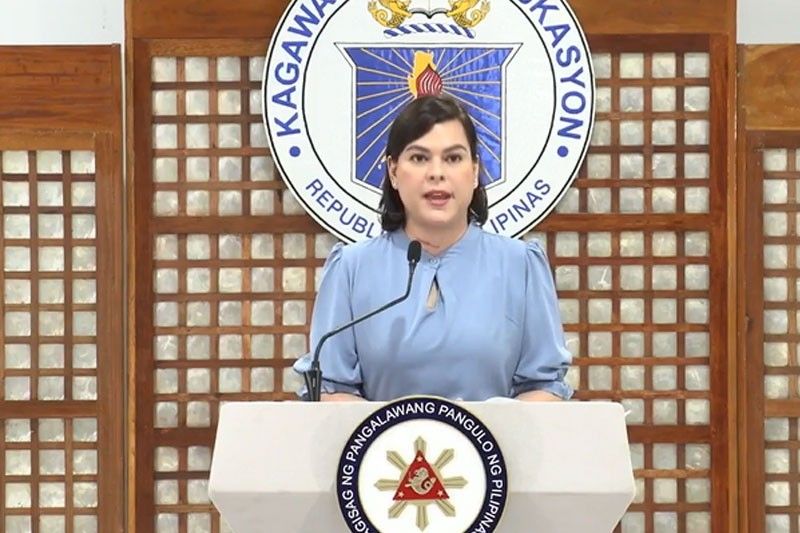
(Image from montanoflamiano.com)

Qwertyman No. 94: Artificial Intelligence

Qwertyman for Monday, May 20, 2024

DR. CHICHOY Carabuena had a problem. He wanted the school he owned and ran—the Generoso Carabuena Academy of Pedagogy in Santa Vicenta—to place higher in both national and international rankings, partly so he could raise tuition fees, and also so he could claim bragging rights among his university-president friends and drinking buddies. He had inherited the school from his grandfather; Generoso Carabuena was a banker who had collaborated with the Japanese and stolen the money they left behind to open a school for teachers, which was his wife’s dream, becoming a war hero in the process for outsmarting the enemy. 

The school had done well enough to the point that Chichoy’s dad Ramoncito could buy a Mercury Capri that he regularly drove to Manila to carouse in its nightclubs. Chichoy was the product of one of Ramoncito’s dalliances with the agreeable ladies, and it fell on him to rescue both the business and the family name from ruin and disrepute. He had been managing a carinderia for Pinoy workers in Dubai when the call came, and always wanting to become someone of substance, he returned to Sta. Vicenta to turn the daughters and sons of hog butchers and vegetable growers into teachers, like he imagined himself to be. Surely higher education wasn’t all that different from running a restaurant and coming up with the right menu at the right price for your customers. He had secretly dreamed of becoming a mayor, a congressman, or even governor, but first, he had to make a name for himself and make money.

Somewhere along the way he picked up a “Dr.” from a diploma mill and dressed the part, coming to his office even in the warmest of days in coat and tie. “More than anything else,” he would lecture his new recruits, “first impressions count, so before you even become a teacher, you have to look like a teacher, walk like a teacher, and sound like a teacher!” He had a faux marble statue made of his grandfather to greet visitors at the school entrance, and another one of Jose Rizal standing behind Generoso, as if looking on in approval. 

But lest people think he was beholden to the past, Chichoy Carabuena peppered his speeches with 21st-century mantras like “disruption,” “innovation,” “sustainability,” “customer-centric,” and, yes, “21st-century.” “The great challenge to higher education today,” he would often declaim, “is to produce graduates attuned to a global climate of disruption and innovation, mindful of evolving needs and opportunities in the marketplace of ideas while seeking sustainable and synergistic 21st-century solutions to problems rooted in our feudal and neocolonial history.”

Those speeches were written for him by his former executive assistant named Mildred, a UP graduate whom he had to fire when his wife discovered them smooching in his office—an act he vehemently insisted to be no more than a paternal gesture, much like  former President’s public bequeathal of a kiss on a married woman, a defense that gained no ground. His wife personally chose his next EA, a former SAF commando named Dogbert; making the best of the situation, Chichoy paraded Dogbert around as his bodyguard, spreading the rumor that his life was under threat from unspecified enemies determined to keep the quality of Philippine education down. “We can give them no quarter,” he declared at the last CHED event he attended. “We must resist, with all impunity, those who aim to keep our poor people shackled to the twin pillars of ignorance and idiocy!” He missed Mildred in those moments, but he felt quite pleased with his growing self-sufficiency in speechwriting, thanks to his new discovery, ChatGPT. Of course it never quite came up to his standards, so he tweaked the prose here and there, like that reference to Samson that he hoped would bring the house down.

But now, reading the reports of top Philippine universities slipping in their rankings in the usual Times Higher Education and Quacquarelli-Symonds surveys, Dr. Carabuena saw an opportunity for his modest HEI to rise. “As their mystique diminishes, so our aura will grow,” he informed an indifferent Dogbert. “We just need to come up with sustainable innovations that will disrupt the status quo.” Dogbert handed him a slim folder. “Sir, someone wants to see you, to apply for the position of Academic Vice President.” It was a position that Chichoy himself had held concurrently to save on salaries, but now he felt obliged to pass it on to a real expert. He flipped the folder open and saw the picture of a cute Chinese-looking woman going by the name of “Dr. Alice Kuan.” Chichoy was mesmerized. “Send her in—and get out!”

When Dr. Alice Kuan stepped into Chichoy’s office, he felt himself enveloped in a miasma of jasmine, peonies, and five spices—everything good he remembered from his only visit to China many years ago. Her lips were lotus-pink, her skin ivory-white, and here and there dumplings suggested themselves to his imagination. “Good morning, Dr. Kuan! Please, have a seat! You’re here to apply for the AVP job?”

“Yes, Mr. President,” she said with a quarter-moon smile, “and I come with many ideas for both improving your curriculum and raising revenues through academic innovations.”

“Innovations! I like that! Like what?”

“Why artificial intelligence, of course! We could use AI to teach many of our courses, reducing costs. Also, we could bring in more foreign students from—uhm—friendly neighboring countries, while creating part-time employment opportunities for them in—uhm—online entertainment, for which we could even lease out some of your campus property. It would create a huge economic boost for Sta. Vicenta!” 

Temple bells rang in Chichoy’s mind. Not only was she fetching; she was smart! Suddenly he could see his political future brightening. He wanted to know more about this adorable avatar, and only then did he notice how patchy her resume was. 

“Your birth certificate was filed when you were…. 17?”

“Was it? I don’t remember.”

“Which elementary school did you go to?”

“I don’t remember. Maybe homeschooling?” She threw him an exasperated sigh. “Look, Dr. Carabuena, does it matter? I can have AI do a perfect resume if that’s what you want. If not, I can take my ideas to the Fontebello Institute of Technology in San Bonito just an hour away, and maybe they’ll be more receptive to disruptive innovations—”

“No, no, no! Disruptive, I like disruptive! Please, Dr. Kuan, stay in your seat! I’ll have somebody prepare your contract. Dogbert!”

(Image generated by AI.)

Qwertyman No. 92: The Return of the Old Normal

Qwertyman for Monday, May 6, 2024

FEW WILL remember it, but yesterday, May 5, marked the first anniversary of the official end of the Covid-19 pandemic as a global health emergency, as announced by the World Health Organization. Of course it didn’t mean that Covid was over and gone—it would continue to mutate into thankfully less lethal variants—but the worst was over. It had infected more than 765 million people around the world, and killed almost 7 million of them; in the Philippines, as of last month’s latest figures, over 4 million of us caught Covid, and we lost more than 66,000 friends, family members, and neighbors to the disease.

It’s amazing what a difference a year makes. The pandemic rules had been relaxed long before May 5 last year, and much of 2023 and 0f the present year had been spent by us trying to get back to life as we knew it pre-Covid at a frenetic pace—engaging in that new term, “revenge travel,” buying new cars, building new homes, and as of last week, complaining about the infernal heat wave like it was the worst thing to have plagued us in decades (maybe it was—since Covid). For the most part, we seem to have willed Covid out of our minds, eager to replace its bitter memories with fresh and happy ones—an entirely human thing to do, to cocoon ourselves against the pain of loss. Are we in the “new normal,” or have we returned to the old?

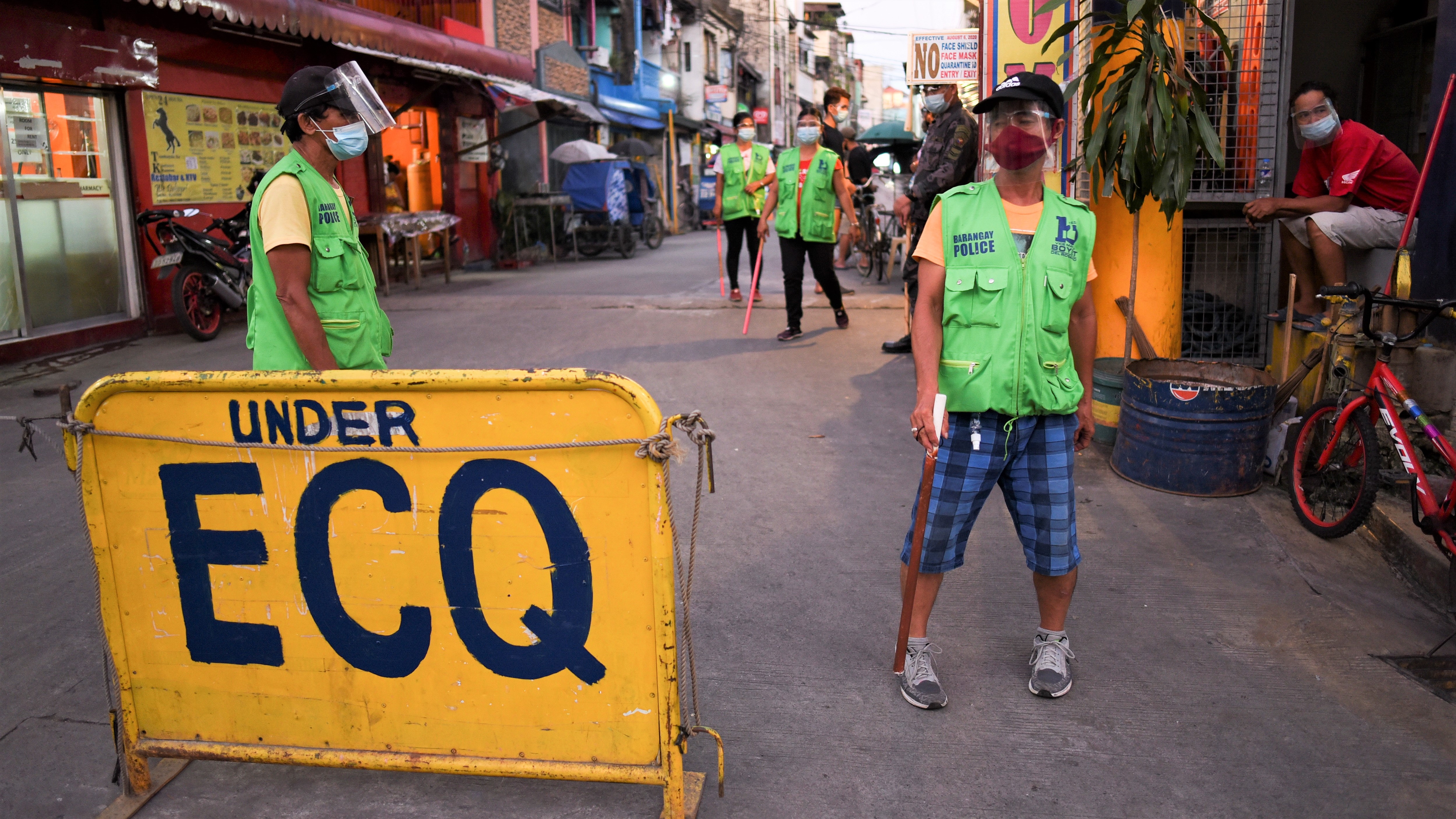
I remember most vividly the paranoia that gripped the country during the pandemic’s early days—the first reports of people we knew dying horrible deaths in isolation, the terror following a sudden and suspicious onset of coughing and fever, the constant fear of carrying the virus home to the innocent and the infirm in one’s shoes, one’s clothes, one’s merest touch, the rapid disappearance of disinfectants and bread from the shelves, the inevitable closure of cinemas and restaurants, the anxious eyes peering above face masks and through face shields, the physical boundaries beyond which only a select few could cross—and, of course, the near-endless wailing of sirens announcing the imminence of death and dying. Unfamiliar words and phrases entered our vocabulary: co-morbidities, social distancing, quarantine, lockdown, ECQ, EECQ, RT-PCR, community pantry, antigen, remdesivir, hydroxychloroquine, Ivermectin, Sinovac (and anti-vaxx), etc.

Like many others, I lost friends to Covid, from very early on when no one knew what was really going on and what could be done to save patients who were turning up feverish and could hardly breathe. One of them was my own cardiologist, who reportedly assisted a patient whom he didn’t know carried the virus. Others were academics and senior officials returning from conferences overseas. Fortunately, no one in our families died of the disease, although many of us, myself included, later caught it at some point despite all precautions. When I did catch it, I have to admit that it was with a strange sense of relief, not only because I could now count myself a participant in a grand if horrible experience, and also because I imagined, perhaps foolishly, that I would be rewarded with some kind of immunity from further and worse infection.

Those of us who survived Covid hopefully did so with a more profound appreciation of the gift and value of life, and of the need to do good in the time we have left. But the 2022 elections only seemed to prove the power of political patronage, which became even more keenly felt during the pandemic, when local officials down to the barangays held sway over their constituents like never before. Covid sharpened the already stark contrast between rich and poor, from access to what were seen as the most effective vaccines to self-declared exemptions from certain restrictions like liquor-lubricated parties and literal hobnobbing. In the end, the virus didn’t discriminate, scything rich and poor alike, although the poor, living in cramped communities, were always more likely to fall ill and die.

What the public often failed to witness—and therefore can’t remember—were the stories of the frontliners who met Covid head-on and served as heroes behind the scenes. I’m now working with Dr. Olympia Malanyaon—a pediatric cardiologist who also served as Director of the Information, Publication, and Public Affairs Office of UP Manila—on a book she’s writing to document the efforts of UPM and of the Philippine General Hospital (which is part of UPM) to respond to the Covid crisis. The PGH, the country’s largest public hospital, was designated a Covid-referral hospital almost as soon as the pandemic broke, and its people found themselves in the vortex of an unprecedented medical and social crisis, and we want to tell their stories in this forthcoming book.

The word “hero” gets bandied around a bit too easily these days, but if there was a time for heroes to emerge, it was during the pandemic, when what used to be the most routine decisions (“Should I report for work today?”) could mean a matter of life and death. When the death toll mounted, many PGH staff resigned for fear of infecting their families, but many more stayed on, with nurses pulling 16-hour shifts and some doctors remaining on duty for as long as 30 hours.

Even utility workers recalled how pitiful the plight of the afflicted was. One said that “They had no one with them, not even when they died. They would be put into body bags, which could not be opened. Then they would be cremated the next day, without being seen by their families.” And then, the staff felt shunned by society when they went home as ordinary neighbors. “When we ordered at the fastfood, the guard shooed us away when he learned that we worked in the Covid unit,” recalled another. “I was very upset. It felt very degrading to work so hard, to line up for food when you got hungry, only to be turned away.”

Thankfully, the crisis also brought out the best in some other Filipinos, such as those who poured their time and money into community pantries that served the hardest hit. For a while back there, we saw and felt the glimmer of our inner heroes. It was a spirit that I hoped would be sustained into a broader and more enduring wave of change in 2022, but as the pandemic receded, we realized how much of the old normal yet remained.

Covid made us aware of the precariousness of our health as individuals. Looking forward to 2025, I wonder what it will take for our people to value their well-being as a society and as a nation.

(Image from Reuters/Lisa Marie David)

Qwertyman No. 91: 1968 Redux

Qwertyman for Monday, April 29, 2024

A WAVE of pro-Palestinian protests has been sweeping American college campuses, prompting academic administrators and political leaders to push back and invoke their powers—including calling in the police—to curtail the demonstrations. 

House Speaker Mike Johnson—a Trump ally and staunch supporter of Israel—probably spoke for his ilk when he told protesting students at Columbia to “Go back to class! Stop wasting your parents’ money!” He also called on Columbia University president Minouche Shafik—an Oxford Economics PhD and English baroness who also happens to have been born in Alexandria, Egypt to Muslim parents—to resign for not moving strongly enough against antisemitism on the Columbia campus, despite Shafik’s controversial suspension of pro-Palestine student groups earlier and her resort to police action, resulting in mass arrests.

The protests and the violent response to them threw me back to 1968, when the world’s streets from Chicago to Paris shook from the boots of students and workers marching against the Vietnam War, for civil rights, and for women’s liberation. In the Philippines, student organizations such as the SCAUP and the newly formed SDK took up the same causes, on top of a resurgent nationalism. I was too young to have been part of these great movements then, although we marched in high school for “student power,” whatever that meant. I would get deeply involved as the decade turned, infected by the inescapable ferment in the air; in 1973 I would realize that protest had a price when I spent seven months in martial-law prison.

I’ve tried hard to think what it would be like to be 18 and a student today, what cause would drive me to the streets and to pitch a tent on the campus grass. While we Pinoys have our sympathies, Gaza seems too distant for us to mobilize for, and certainly we don’t lack for domestic issues to be bothered by, although our level of tolerance appears to have risen over time. In 1971, a 10-centavo increase in oil prices was enough for us to trigger the Diliman Commune; today we routinely wait for Tuesday’s inevitable announcement of gas price hikes and sigh.

Perhaps time and age do bring about shifts in perspective; some leftist firebrands of my youth have now become darlings of the right, and I myself have moved much closer to the center, ironically morphing from student activist to university official at the time of my retirement.

As that administrator—at a university where protesting is practically part of the curriculum—I can appreciate the bind Dr. Shafik now finds herself in, hemmed in from both left and right, with the complexity of her thinking and the brilliance of her own achievements reduced to a single issue: how to deal with students who won’t “go back to class and stop wasting their parents’ money,” as Speaker Johnson would have it, and will instead insist on their right to self-expression, whatever the cost. Aggressiveness, audacity, and even insolence will come with the territory. Persons in authority become natural targets of one’s rejection of things as they are; the preceding two generations are to be held immediately responsible for things gone wrong. 

I recalled a time when UP students barged into Quezon Hall to interrupt a meeting of the Board of Regents to plead their cause. Some furniture was scuffed, but the president sat down with the students and discussed their demands. No one left happy, of course, but what had to be said on both sides was said. At another meeting later, someone asked if the students involved should have been sanctioned for what they did. I had to butt in to pour cold water on that notion, knowing that any punitive action would just worsen the problem. Open doors, I said, don’t shut them; this is UP—that kind of protest is what makes us UP, and our kind of engaged response is also what makes us UP.

Some will say that these outbursts are but cyclical, and that young people never learn, in repeating what their now-jaded seniors did way back when. But then the State never learns either, by responding to student protests today the way they did back in 1968, with shields and truncheons, effectively affirming everything the young suspect about elderly authority.

The Israel-Hamas war—now magnified, through many lenses, into an Israeli war on Palestinians—is a particularly thorny issue for American academia and for a public habituated to looking at the Jewish people as biblical heroes and historical victims. Gaza has turned that perception around for many, with the aggrieved now seen as the aggressors. In my column two weeks ago, I agreed with that re-evaluation, although I was careful to take the middle road and to condemn the excesses—committed for whatever reason—on both sides. 

Not surprisingly, I quickly got blowback from both my pro-Israel and pro-Palestinian friends. War is always ugly, one said, and Israel has to do what it must to save itself; the Hamas attack on October 7 was overblown by propaganda, said another, and it was something that Israel had coming. 

I still accept neither extreme; call me naïve and even Pollyannish, but I stand not with Israel nor with Palestine, but for peace and justice, which are not exclusive to one side, and can only be achieved by both working and living together. You can argue all the politics and the history you want, but there is absolutely no humane rationalization for the rape of women, the murder of children, and yes, even the killing of innocent men—not even the prospect of potentially saving more lives, the very argument behind the incineration of 200,000 Japanese in Hiroshima and Nagasaki, an act of war we all benefited from, but cannot call guiltless.

In a conflict as brutal and as polarizing as this one, “middle” never quite cuts it, and the excess of one will always be justified by the excess of the other. (To complicate my ambivalence, some issues do seem to have no middle, like Ukraine.) There have been no mass protests or demonstrations to advance my kind of moderation, and I don’t expect students, whether in Columbia or UP, to take to the streets flashing “peace” signs. 

And in mentioning that, I think I’ve put a finger on one difference between 1968 and 2024: “peaceniks” were neither pro-Saigon nor pro-Hanoi, although her critics were quick to paint Jane Fonda red; they just wanted America out of a war that was none of its business. There was an innocence to that that seems to have been lost in our hyper-informed and over-analyzed century. We feel compelled to choose with passion and precision, and are defined by our choices, from politics to sneakers.

Qwertyman No. 90: Postscript to Masungi

Qwertyman for Monday, April 22, 2024

SENATE PRESIDENT Pro Tempore and environmental champion Loren Legarda did the right and necessary thing last week when she called on the Bureau of Corrections to desist from building prisons or offices on land it supposedly owns in the Masungi Georeserve in Tanay, Rizal. 

For unfathomable reasons, former President Gloria Macapagal Arroyo awarded BuCor 270 hectares in 2006 for new headquarters and a New Bilibid Prison in the heart of Masungi, a protected area that has become an internationally recognized showcase of nature conservation. Following Legarda’s statement, Bucor officials have assured the public that it will not push through with its plans, and will instead just build facilities for a detachment of forest rangers who will protect Bucor’s lot.

That’s still not the best solution—which would be the revocation of the land grant, given that prisons have no place in Masungi or any protected area for that matter. But even a reprieve is welcome, as it buys time for the national government to take a long, hard look at what’s happening in Masungi, where the threat of new construction pales in comparison to what’s already been built there.

I first wrote about Masungi last January, when I visited the 3,000-hectare georeserve along the border of Tanay and Baras, Rizal. It’s a critical stretch of land that’s not only home to some of the country’s rarest and most threatened species such as the purple jade vine and Masungi microsnail—as well as 72 kinds of birds—but also helps protect Metro Manila from catastrophic flooding because of the watershed it sits on. 

The place has had a long and complicated history, from the time the Department of Environment and Natural Resources (DENR) tried to use it for employee housing in the early 1990s to 2017 when its care and supervision was entrusted to the Masungi Georeserve Foundation, Inc. (MGFI) by then DENR Secretary Gina Lopez. Well before and since then, Masungi’s caretakers have battled a host of threats, including landgrabbing by syndicates reportedly backed up by powerful people connected to the government. Aside from the BuCor’s plan to make a prison out of a natural Eden, a wind farm is being built on Masungi by a Singapore-owned company.

But beyond the quarries, resorts, and private houses that have sprung up on the reserve, MGFI president Ben Dumaliang’s main source of worry is the government itself—specifically, the DENR, or what he sees as its inexplicable indifference or even hostility to the foundation and its efforts to preserve and protect Masungi from parties hungry for its land.

I met with Ben recently and he explained to me how many times he had tried to approach DENR officials to get their support for the foundation’s work on the georeserve—an achievement that the United Nations Sustainable Development Goals Action Awards recognized in 2022—but how he has been repeatedly rebuffed, and even threatened with the cancellation of their management contract. “The secretary didn’t even congratulate us for our UN award,” he told me in a voice tinged with sadness and dismay. 

It isn’t really the accolades that Ben and his team—which includes his two daughters and a corps of bright, young forest rangers and volunteers—are after. While they can bank on a deep wellspring of support from the public and most of the media—you can’t go to Masungi without being impressed by the extent and the inescapable beauty of the foundation’s reforestation efforts—they need resolute action from the DENR to enforce its own laws and rules. The cold-shoulder treatment he’s been getting has driven Ben to suspect that “rogue DENR officials” are behind the landgrabbing syndicates plaguing the reserve. 

“They see our foundation as the only hindrance to quarries, resorts, real estate, and many other deals in the protected area. Unfortunately for the environment and the public, these deals cause irreparable harm. Our presence, vigilance, and conservation work in the area have stalled, stopped, and derailed countless syndicates from pillaging the frontline forest that is being swallowed up by creeping urbanization and development,” says Ben.

I saw the irrefutable evidence of this massive encroachment myself on my visit there last January. A whole village—Sitio San Roque in Baras—sits and thrives where a forest should have been (and probably was). I saw a pool resort, mansion-like homes, shops, etc., all on land claimed by the residents to have been legally acquired under the Marcos-era PD 324, which granted free patents to land that it designated alienable and disposable. Ben points out that this is fraudulent, because PD 324 had long since been superseded and nullified by PD 705 and Proclamation 1636, which withdrew the land given out under PD 324 and protected it from settlement, disposition, and development. 

“The three big-time quarries totaling some 1,300 hectares misplaced in Masungi trace their roots also to the PD 324 scam,” Ben alleges. “The quarry owners justify their contracts with claims of private rights derived from PD 324. They were also fooled. They brazenly violate the prohibition against mining in protected areas of at least three laws—Proclamation 1636, the NIPAS Law, and the Mining Act.”

Ben wonders why, in the face of these strong legal arguments, the DENR hasn’t moved against the presumptive squatters in Masungi and has instead refused to meet with the foundation and work with it to defend and protect the georeserve. When I saw him recently, he brought up the same question I raised at the end of my previous column, which I’m asking again: “What do they have against us?” I think that deserves a clear, fair, and not incidentally overdue answer.

Qwertyman No. 89: The Country I Wanted to Love

Qwertyman for Monday, April 15, 2024

FOURTEEN YEARS ago, I received a writing assignment that any journalist would have jumped at: to go with other media representatives on a week-long visit to Israel and to report on our observations. Although the trip was sponsored by the Israeli government, and therefore clearly a PR initiative, we were under no instructions as to what to write about, or how. Of course there were implicit or effective restrictions: our itinerary did not include visits to Gaza, the West Bank, or other Palestinian-controlled areas, and we had no interviews with Palestinians (interestingly, one of our companions, ABS-CBN’s Uma Khouny, was half-Filipino and half Arab-Israeli). 

As expected, we saw the best of Israel, the sites that any “Holy Land” tour would have included: the Temple Mount, the Holy Sepulchre, the Wailing Wall, the Dead Sea, Masada, the bazaars, and so on. We also visited a kibbutz and marveled at how its inhabitants could coax so much life and verdure out of barren desert. We were brought to a state-of-the-art facility where we drove an Israeli-made, 100%-electric car around a track (this was in 2010, mind you). Just outside Tel Aviv, we met children at a hospital where they had heart operations they couldn’t have afforded or gotten otherwise; these children included Palestinians, Angolans, Chinese, and yes, a Filipino. We watched  vibrant performances of contemporary Israeli dance and music. We were moved close to tears by a visit to the Holocaust exhibits at Yad Vashem.

We left deeply impressed by the Israel we had seen and experienced, and I reported as much in two “Penman” columns for the STAR. We were aware that we had not seen everything on our carefully curated tour, and we understood that there were simmering tensions behind the high walls that were rising all over the place to block off zones that the government might have considered unsafe, but there was a time for every story, and this time was our hosts’.

Israel did not even need to invite me to gain my sympathy. Like many Catholic boys in the 1960s, I grew up steeped in the belief that the Jews were God’s chosen people—why else would he have delivered them out of Egypt (a scene replayed over and over again in Technicolor on Holy Week) to the Promised Land? I read Leon Uris’ Exodus and enjoyed the movie version with its memorable theme, “This Land Is Mine.” I learned to sing “Hava Nagila,” and so did you.

Over the next decades I would watch countless documentaries on the Mossad and its exploits in capturing Adolf Eichmann, freeing the hostages at Entebbe, going after the leaders of Black September in the wake of the Munich Olympics massacre, and gathering intelligence leading to the Yom Kippur War. The eye-patched Moshe Dayan and the grandmotherly Golda Meir were both cinematically compelling. More than biblical heroes, Israelis and Jews represented the finest of human qualities—tenacity, ingenuity, resolve, courage, and imagination. Even beyond Israel, who could argue with the brilliance of Isaac Bashevis Singer, Jascha Heifetz, Woody Allen, Barbra Streisand, and Marc Chagall? Never mind the Rothschilds and the Shylocks.

But now much of that luster has tragically vanished, lifted like so much vapor, in the wake of Israel’s invasion of Gaza and its horrific toll on human life. 

Like most onlookers from afar, I was appalled and outraged by Hamas’ attack on Israeli communities and citizens last October 7; subsequent reports of rapes and executions showed these assaults to have been premeditatedly barbaric, calculated to sow fear and terror in the enemy. No matter the history behind them, no matter the grievances that may have led to their unleashing, the violence committed especially against innocent civilians was brutish and repulsive.

Israel may have gained the moral high ground at that point in its pledge to avenge the victims, recover the hostages, and destroy Hamas, but it soon lost that superiority in its disproportionately savage invasion of Gaza. All its claims to sophistication and efficiency in waging war—the kind of surgical operation on display at Entebbe and elsewhere—went out the window in air strikes that have killed thousands of Palestinian civilians, including hapless children; even those who miraculously survive will forever bear the scars and trauma of this assault. To “weed out” Hamas, Netanyahu’s Israel has chosen to flatten and to destroy the whole garden. And as if the world were not watching, an Israeli commander even declared on TV that “There is no famine in Gaza.” 

This has gone far beyond “an eye for an eye, a tooth for a tooth.” The Israelis have claimed buckets of Palestinian eyes and teeth for every one lost to an Israeli. They have exceeded even the Roman practice of decimation, by which every tenth man in a cohort was executed in punishment for the offenses of the lot; instead, ten Palestinians seem to have suffered for every Hamas member deemed at fault for the October 7 attack (the actual kill ratio has been 30 to 1). The supreme irony of it is that Israel has merely guaranteed that Hamas’ age-old causes and resentments will live on, and even prosper with global sympathy for Palestinian self-determination, as may have been Hamas’ game plan all along.

Of course, the State of Israel does not need our admiration and affection, and we understand that it is engaged in an existential fight for its life on many fronts, as it has been since its inception in varying degrees of intensity; the same can now be said for the Palestinians. My opinion as a distant Filipino commentator will change nothing (except perhaps preclude me from further invitations to deplane at Ben-Gurion airport). I realize that what I am saying here will please neither side of this conflict and their partisans, and I expect to receive mail to insist that I failed to see this and that and to justify the ferocity of their actions. I know that we are no longer watching a movie with a billowing theme song and clear heroes and villains. 

But I suspect I am not alone in expressing my great sadness over the turn taken by a country I wanted to love. I can only take refuge in thinking that not all Israelis are Netanyahus, and not all Palestinians are Hamas. “Vengeance is mine, saith the Lord.” I wonder if that line from Deuteronomy has its equivalent in the Torah, or the Koran for that matter.

Qwertyman No. 88: Wanted: Gentlemen

Qwertyman for Monday, April 8, 2024

A SHIPLOAD (let’s get that consonant right) of questions has been raised over the “gentleman’s agreement” alleged to have been entered into between former President Rodrigo Duterte and China’s Xi Jing Pin over the disputed Ayungin Shoal in the West Philippine Sea. China has suggested as much, complaining about the present administration’s “inaction” over what it apparently considered a done deal.

According to former Duterte spokesman (should we also call him “former human rights lawyer”?) Harry Roque, Duterte and Xi did pledge between them to “maintain the status quo” in the troubled zone, meaning, there would be no rebuilding or reinforcement of Philippine installations there—specifically referring, I suppose, to the hopelessly decrepit BRP Sierra Madre that has to be the sorriest and loneliest maritime outpost in the world. 

Chinese Coast Guard cutters have routinely tried to block Philippine vessels attempting to resupply the Sierra Madre. A month ago, four Filipino sailors were injured when they were water-cannoned by the Chinese, and their ship rammed. Our resupply ships have been running these Chinese gauntlets to reach the marines on the grounded Sierra Madre, which symbolically enforces our claim to the Spratly Islands, or that portion of it we call the Kalayaan Islands group. This was precisely the kind of situation that Duterte and Xi reportedly tried to avoid with their agreement.

Upon hearing his former colleague’s explosive revelations, former presidential counsel Salvador Panelo quickly went on the air to dismiss them as the fabrications of a publicity-seeker, assuring the public that Digong himself had denied the report. He added that his old boss would never have sold out the country that way. In fact, Panelo claimed, Duterte had brought up the Philippines’ arbitral victory against China at the Hague with Xi—a judgment Duterte had ironically threatened to toss into the wastebasket as nothing more than “a piece of paper.” Roque then went on to explain that the “gentleman’s agreement” covered not just Ayungin Shoal but the entire West Philippine Sea, enlarging its scope exponentially. If it was a lie to begin with, as Panelo suggested, well, the lie got much bigger.

This spectacle of two Duterte mouthpieces not just speaking at cross-purposes but putting each other down would be immensely entertaining if our national territory and patrimony weren’t at stake. It doesn’t really matter who between these two, uhm, gentlemen is right, or whom we end up believing. What’s clear is that either way, beyond token whimpers and some lip service to sovereignty, Duterte and his crew never did much to defend Philippine territorial and maritime rights in the WPS, debating with their local critics on the issue more than with the Chinese, even waging a vain effort to denigrate the Hague ruling and those who had fought so hard for it. 

Given the new administration’s popular pivot toward a more aggressive stance on China, we can understand if Duterte and his boys seem scrambling to be seen as having been patriots all along. Who knows, maybe they were, and maybe we poor kibitzers were just too dumb or too dense to see that. 

Remember when Duterte made that famous “wastebasket” remark in May 2016? Then-spokesman Roque tried to spin that by saying no, no, no, you have to “apply the proper construction” (his exact words) to that statement—meaning (hold your breath), “He really didn’t mean it that way. Instead, go back to his UN speech where he vowed to defend the Philippines against China. When he said ‘I’ll throw this into the wastebasket,’ he wasn’t speaking for himself, he was speaking from the point of view of the Chinese.”

Huh? Forgive me if I can’t wrap my non-lawyerly mind around this “proper construction,” let alone explain why a Philippine president should be expressing the Chinese view.

To help sort this mess out, Sen. Risa Hontiveros has called for a hearing to find out if, indeed, Duterte and Xi had, as the young ones put it, an “MU” over Ayungin and the WPS. Predictably, Panelo thinks this probe will be a “waste of time,” insisting that the reported “gentleman’s agreement” never happened. 

Another newspaper quotes an anonymous Chinese official saying, like Roque, that it did. Under the reported terms of the deal, China would allow the Philippines to resupply the BRP Sierra Madre for as long as it did not reinforce or rebuild the ship. (How the agreement supposedly applies to the entire WPS as Roque claims remains murky.)

One would think that a true, broader, and more meaningful “gentleman’s agreement” in the West Philippine Sea would involve the non-building of offensive structures and bases, the avoidance of violent confrontation, respect for our fishing rights, and freedom of navigation for all nations in international waters—all of which the Chinese have flouted with impunity. Instead—and if true—all our former president did was to ask the Chinese for permission to resupply our own aging and ailing vessel, in exchange for a promise to let it rot. Whether that’s treason or patriotism, you be the judge.

Pending further inquiry, I myself suspect that some kind of bargaining did take place, but I somehow doubt that it was a gentleman’s agreement. For that you’d need at least two gentlemen in the house.

Qwertyman No. 87: A French Sojourn

Qwertyman for Monday, April 1, 2024

MY WIFE Beng and I were in France last week to give a series of lectures at the invitation of the Paris Institute of Political Studies, better known as SciencesPo. They don’t formally observe Holy Week in France (nor, for that matter, do many Filipinos to whom it’s simply come to mean “long weekend”). So we thought that it was the best time to come over and share some of our insights into Philippine literature, art, and politics with young French students as well as our countrymen in Paris, for whom I and fellow writer Cris Yabes, who’s based in France, gave a special reading at the Philippine embassy.

For those who’ve never heard of it—which won’t be too surprising given our Pinoy fixation on top American and British universities—SciencesPo (pronounced SEE-ansPO) is France’s leading university in the social sciences. It now has 14,000 students spread out over seven campuses across the country. Only 4,000 of those students are undergraduates; the rest are graduate students, including 350 taking their PhD. Unlike our universities, SciencesPo’s undergrads can finish in only three years, with their last year spent abroad. I was told that there are about 20 Filipino students currently enrolled at SciencesPo, and about half of its students come from overseas. As a public research university, SciencesPo is supported by the government through a private foundation, an arrangement that gives it a high degree of autonomy.

Founded in 1872, the university has served as the training ground for France’s political elite, producing five out of France’s eight presidents: Pompidou, Mitterand, Chirac, Hollande, and the incumbent Macron. Marcel Proust studied here for a year, and Christian Dior was a graduate.

With that kind of elite status comes criticism and controversy, and SciencesPo has had its share over the years. Nevertheless, it remains high on the list of desirable universities, especially for students with plans of joining the French civil service, after further studies at the Ecole Nationale d’Administration. (At Inalco, another Fremch university, we were surprised to find eight Filipino-French students studying Filipino for their degree under Prof. Elisabeth Luquin, who studied in UP and speaks Filipino like a local.)

Beng and I gave presentations on the Philippines at SciencePo’s main campus in Paris—a sprawling complex comprising ten buildings in some of Paris’ most precious real estate—and I had an additional three sessions in Le Havre, where SciencePo’s campus focuses on Asian studies. Wherever we went, we could see signs of intellectual and political ferment; like their predecessors at the Sorbonne whom we admired for their militancy 60 years ago, SciencesPo students have protested and rallied over many causes from domestic violence to Gaza.

To be fair, these concerns have occupied much of the rest of France as well. In a country where street protests are a time-honored tradition that have a real bearing on political outcomes, differences of opinion can run deep and long, and controversy stalks nearly every issue, from the wearing of religious headgear to the extension of the retirement age. To “liberté, egalité, fraternité,” we must now add “identité,” the subject of identity so central to political discourse in many countries today, especially those with large and strong immigrant populations like America and France.

“Over the last few years, France has been torn by culture wars—a shift that was less the effect of American concepts imported into French universities, as many on France’s right claim, than of the long-term decline, beginning in the early 1980s, of class politics and alternatives to capitalism. In a post-ideological France, class struggle has been displaced onto the terrain of identity,” noted sociologist Daniel Zamora in an article for Catalyst in 2021. “Despite Macron’s professed disdain for identity politics, his alternative can scarcely be construed as anti-identitarian. Building on what we have in common, Macron argued, meant finding an answer to the question, ‘What does it mean to be French?’”

Identity, at least, was not in question when Cris Yabes and I gave our reading at the Philippine embassy, thanks to the invitation of Ambassador Junever “Jones” Mahilum-West, one of the most amiable, gracious, and artistically inclined ambassadors I’ve ever met. (She was very game as well, happy to hoist an IPA beer with my wife Beng after our talks.) To a fairly sizeable group from the Filipino community in Paris, Cris and I read pieces that had to do with our foreign relations, particularly in my case with our diaspora, which my second novel Soledad’s Sister (which has been published in French by Mercure de France) dealt with. 

In the conversations that followed, I learned that there are around 26,000 documented Filipinos in France, with perhaps just as many existing belowground, most of them domestic helpers. One of them, Zita Cabais, was a victim of human trafficking more than two decades ago, having been enticed to come to Europe with the promise of a visa and a good job. Instead she was brought to Hungary, from where she was led on foot through Europe to finally reach France, whereupon her employer confiscated her passport, effectively holding her hostage. But unlike many other DH’s, Zita fought back, sued her employer, and succeeded. Since legalized, she now works for organizations devoted to fighting human trafficking. (The path to legalization is reportedly shorter in France, but knowing the French language is a prerequisite.)

One unexpected highlight of our visit was running into a group of Filipino seamen in our hotel in Le Havre, prior to my lecture. Beng and I had just come down for breakfast when we heard the familiar chatter of Filipinos at a nearby table. We came up to them and introduced ourselves, and we had a lively conversation during which they explained that they were still waiting for their ship to dock because of the bad weather. I’d met and chatted with seamen like them before in Hamburg and in Christchurch, among other places; as a writer and as a Filipino, I take it as a pleasant obligation.

Competition, they said, was driving them to accept shorter four-month stints at sea. “We barely break even, and it’s a tough life at sea, but we have no choice, since our families depend on us.” Part of my lecture that day was going to be about our Filipino notion of the hero as martyr, of Christ-like sacrifice for the common good. I suddenly realized that it was Good Friday. We had our smiling selfies taken, and they seemed proud to stand with UP professors, but it was Beng and I who felt honored to be there with them.

Qwertyman No. 86: The Real Pasaways

Qwertyman for Monday, March 25, 2024

THE LOCAL Internet came down hard last week on an anonymous teacher who was caught on livestream giving her students a scorching tongue-lashing for what she claimed was their lack of respect and discipline. Almost hysterical, Teacher X called them good-for-nothings without a future. Predictably, netizens deplored her derogatory language, which they equated with child abuse, and called on the Department of Education to investigate the incident and impose some disciplinary measure on the teacher concerned.

I agree that Ma’am seems to have gone overboard in expressing her displeasure over her students’ misbehavior, and that she could have been more circumspect in her choice of words. I’m certain that DepEd—which happens to be headed by someone who doesn’t mince words herself when it comes to court sheriffs—will use her case to remind teachers of the need for exemplary behavior, if not some sweetness and light, in classroom management. 

At the same time, having been a teacher myself for forty years, I can imagine and understand the exasperation that must have gone into a titanic diatribe like that. I’ve never taught in elementary or high school, where these aggravations come in spades on both sides of the teacher’s table, but I’ve heard and read enough to know what a cauldron of high emotions a Filipino classroom can be in the worst of circumstances. 

Let’s pack a room meant for twenty students with twice that number or even more, with the heat from a tin roof bearing down on everyone (or, in another season, rain leaking down onto desks and textbooks). The teacher recites her lesson in a funereal monotone, expecting her students (who keep themselves awake by sneaking glances at TikTok on their phones) to regurgitate what she has just said: “Class, how do you pronounce a-DO-le-scent?” 

Not that she truly cares what they say, because her mind’s on the box of chocolates she has to buy for the supervisor whose signature she needs for her salary loan. She’ll spend half that loan on a fence around her garden to keep the roaming pigs and pissing drunks away, and the other half on a new cellphone because her arch-rival Mrs. Buenafe has one that can take selfies without the blemishes. Maybe, if she took better pictures of herself, she could win back her husband Temyong from that tramp in Trece Martires.

Just then a fight breaks out at the back of the room because Etoy has dropped a ballpen to sneak a look at Corito’s underwear, in full view of Corito’s alleged boyfriend Mikmik. “Stop that, quiet, gademet, you imbecile a-DO-lescents, I order you to behave or I’ll squeeze your little balls until they pop! You have no future, you worthless pasaways! You’re going to rot in this living hell they call a classroom!”

Now, when Teacher X says “You have no future,” I take it to mean that Ma’am has read the Edcom II report on the sad state of Philippine education, which puts our young learners practically at the cellar of global achievement. Unless some systemic reforms are put in place by the same DepEd that will now trumpet the virtues of better decorum in the classroom, we might as well have cursed those kids that caused Teacher X to blow her top—and by “curse” I don’t mean the use of foul language, but rather a hex such as a witch might put on some unfortunate soul. 

Philippine education is full of pasaways, many of them more than ten or even fifteen years old. Some have been in the system for so long that they have mastered its ways and means (e.g., how to make good money off bad textbooks) to a level of proficiency worthy of a doctorate. Secretaries of Education come and go—some more lamented than others—but these pasaways remain, as they do in certain bureaus dealing with government revenues, because they ensure continuity, which everyone but the occasional and hopelessly naive reformer appreciates. They may even be well-mannered, with the nicest smiles and mildest dispositions you ever saw, because of their contentment with the world as it is and their philosophical acceptance of human frailty.

This brings to mind another kind of pasaway, a certain man of God—no, make that Son of God—who has steadfastly refused to honor a summons by a Senate committee looking into sex trafficking, of which this pastor has been accused, among other crimes and misdemeanors. Let me judged by the proper court, he has argued through his lawyers, although—if he is who he claims to be—then no one but God the Father will qualify for that privilege.

God must have been a prolific babymaker, because this prosperous preacher is but one of many around the world proclaiming themselves to be Sons of God. Nearly all have landed in some kind of trouble with the law, usually in matters of sex and money, paltry and mundane emoluments that Sons of God seem to feel especially entitled to, in partial recompense for the heavy burdens of divinity.

Someone should have assured our good pastor that the Senate is a decorous institution, exceedingly kind to its guests, as a recent hearing involving police officials being questioned by a former police official showed. A senator who walked out of that hearing out of disgust over the “babying” shown the witnesses by their inquisitor now himself stands accused of discourtesy. Notwithstanding the presence of a chairperson known for her intolerance of untruths, our Son of God can surely count on the professed and unshakeable friendship of some of her honorable colleagues to shelter him from the slings and arrows of earthly justice. We are a much kinder people than that apoplectic teacher might suggest.

Qwertyman No. 85: Epilogue to a Novel

Qwertyman for Monday, March 18, 2024

IT WAS in 1986, shortly after EDSA and my arrival in the US for my graduate studies, that I began thinking about what would eventually become my master’s thesis and my first novel, Killing Time in a Warm Place. It was published by Anvil in 1992 when I came home to resume teaching after completing my PhD. 

For those who’ve never heard of it, the novel is a semi-autobiographical account of coming of age during the Marcos years, from the point of view of a Filipino who makes the traditional journey from island to metropolis to the world at large, becoming, in the process, a kind of political chameleon. 

I had sent the first draft directly to several US publishers—my first try at getting a book published abroad—and one of them, Alfred Knopf, responded. They were interested, they said, but they needed some revisions. I knew very little about the book publishing industry then; I had no agent, wasn’t sure what lay ahead, and was in a hurry to see my book out, so I passed on Knopf—which turned out to be a titan in literary publishing—and went with Anvil, which had barely just opened.

I haven’t regretted that decision, although the Knopf deal, had it pushed through, would have been a tremendous break, not just for myself but for Philippine literature as a whole. I could understand that after EDSA, US publishing was hungry for books from and about the Philippines, so that opportunity was there, but I was also impatient to be read as a novelist by my fellow Filipinos, after having written short stories and plays. 

Anvil published the book in many printings and editions over the next two decades, as it got on the syllabi of college teachers who were looking for a novel in English on martial law, alongside Lualhati Bautista’s iconic Dekada 70. This has been my greatest reward and satisfaction from this book—knowing that somehow, it helped some of my countrymen understand what they went through.

It took a while for the novel to gain some traction overseas. In 2010, it was published in the US by Schaffner Press in a dual edition with my second novel, Soledad’s Sister. In 2012, it was translated into Spanish by Maria Alcaraz and published in Barcelona by Libros del Asteroide under the title Pasando el rato en un pais calido.

A few months ago, I received the happy news from my publisher Anvil that Killing Time was being picked up by the German publisher of Soledad’s Sister, which had apparently been doing well in the German market. So now the book is being translated into German, hopefully for a launch by Transit Verlag in time for the Frankfurt Book Fair this October, leading up to our big Frankfurt Guest of Honor year in 2025.

But I didn’t write this column just to tell you about the story of a book—rather, I wanted to say something about the story of its story.

In a message to Anvil a few days ago, my German publisher requested that I write a short epilogue to the novel, given that it’s been more than 30 years since it first came out, and that many things have happened since to the world and the Philippines—the Internet, Trump, and fake news, among others. 

So I sat down and wrote the short piece below, which I’m sharing with you since it’s highly unlikely that you’ll come across, or understand, the German translation of this epilogue if and when the new edition comes out. Here goes:

I began writing this novel in 1986, shortly after the downfall of the Marcos regime. That happened because of a massive uprising in Manila’s streets that made headlines and became a kind of model for peaceful anti-authoritarian movements worldwide. I proudly took part in that revolt, and felt the euphoria of liberation after more than a decade of martial law. It was a moment I would often return to and savor as the Iron Curtain fell and as various and largely non-violent revolutions took place elsewhere, including the Arab Spring.

I thought then that the best thing I could do was to write a novel that would try and explain how and why people fell under the spell of a dictatorship, as they did under Nazi Germany—not sparing myself, having been complicit in its later actions as an employee of the regime. I wrote it—in English—in America, mainly to fulfill my graduate school requirements, but also to celebrate our hard-won victory and share the good news with the world.

Almost four decades later, the seemingly unthinkable has happened: the right is back in power, not only in the Philippines but in many places we had thought to be reformed democracies. The optimism sweeping the planet toward the end of the 20th century has given way to a darkening horizon, a hardening of hearts, a closing of minds. Our most basic freedoms and values are under stiff and unrelenting assault, from forces we now realize had never really been vanquished but had merely been lying in wait, biding their time, seeking an opportunity for revival amidst the excesses of late capitalism.

And once again I am hearing the siren song of despotism, and see the eyes of people glazing over in the desperate desire for quick relief from their troubles, for quick salvation. I hear the march of boots, to which many young citizens—their ears plugged by loud music—seem indifferent. Even among many of their elders is a renascent yearning for the simple discipline of strongman rule.

I see all these and I wonder if I should write a sequel, an update for the new century, but what would be the point of repetition? My novel was supposed to be about the past. Why is it so suddenly pertinent again?