Penman No. 236: A Web of Entertainment

img_4017

Penman for Monday, January 30, 2017


IF I HAD to name three of the most important and most useful sites on the Internet that I’ve ever used, they would, unsurprisingly, be Google, Wikipedia, and YouTube. (Some would stick Facebook in there, but since I stay off the FB grid, I wouldn’t know).

Granted, they’re far from perfect and are eminently susceptible to manipulation by both the well-intentioned and the unscrupulous. It’s easy to become overly dependent on them for information, and to simply believe what they say and show without any kind of critical intervention. For many students and researchers, Google and Wikipedia have long replaced the physical library—and why not?—without minding the inflexible if inconvenient need for proper attribution of sources and for fact-checking. Google in particular gives weight to the popular, and in this age of fake news, post-truths, and “alternative facts,” where “If it’s retweeted a hundred times, it must be true,” the pitfalls abound.

But with enough awareness and discernment on the user’s part, they can be valuable tools for learning, and I have to say that I can’t possibly get as much work done as I do these days without drawing several times a day on these indispensable sites.

And there’s an even better reason, I’ve discovered, than cold research or trawling for factoids to explore these sites. They form a veritable Worldwide Web of entertainment, taking me to serendipitous discoveries of all sorts, thanks to the Web’s structure of hyperlinks. They often lead me to things and places I’d never have encountered otherwise, which is where much of the entertainment lies, in the continuously unfolding panoramas of knowledge that open up onscreen.

A good example came up about a month ago, while I was watching an episode of Great Performances on PBS (which I get by paying a small subscription fee, well worth the treasure trove of documentaries and arts programs). This one was titled “La Dolce Vita: The Music of Italian Cinema,” and it featured the New York Philharmonic Symphony Orchestra in a concert of classics by such renowned and popular film composers as Ennio Morricone and Nino Rota. (Morricone is a personal favorite—I keep playing Yo-Yo Ma’s rendition of “Gabriel’s Oboe” from “The Mission”, and even visited Morricone’s hometown in Cervara di Roma, where he’s venerated as a hero.)
220px-anonimous_venetian

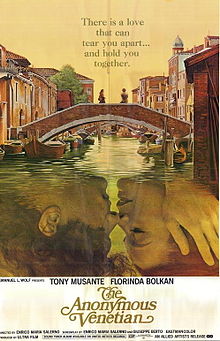
One tune that captured me was the haunting theme from a film called “The Anonymous Venetian,” played on the violin by Joshua Bell. I had heard the song before, but Bell performed it with such sublime intensity that it brought my wife Beng to tears when she listened in.

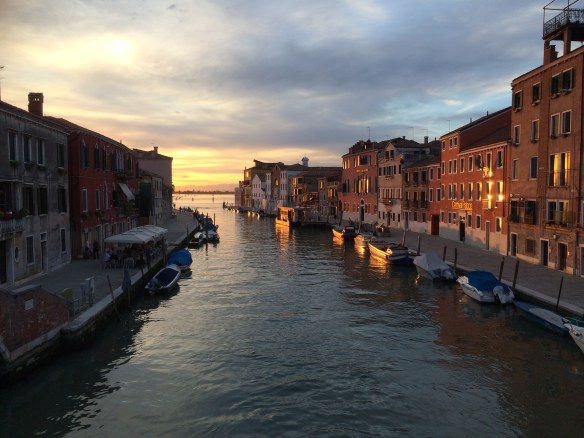
Now that I had the title, I went to Google to find out more about the song and the movie; Stelvio Cipriani had composed the music for the film, which had been directed in 1970 by Enrico Maria Salerno, starring Tony Musante and Florinda Bolkan. Further Googling revealed that the movie was about a terminally ill musician who meets his ex-wife in Venice, briefly rekindling their old passion. It was panned by the critics (and then again, some bad movies produce the best scores–remember “The Promise”?). I’m a fan of movies about Venice (Luchino Visconti’s “Death in Venice”, Nicholas Roeg’s “Don’t Look Now”) and Beng and I had spent some of our most blissful moments there riding the vaporetto on a one-day visit three years ago, so I went on eBay to buy the movie, but it wasn’t available on DVD.

Neither was it on YouTube, where you can find whole movies if you get lucky (and don’t mind the dubious provenance). But I was able to download the full PBS video on the PBS site and to find other versions of the song on YouTube, from which I cut clips to save to iTunes.

141170050

My attention then turned to Joshua Bell, who turned out to be something of a sensation in American music. Among other interesting factoids brought up about him by Wikipedia was that he owned and used a 1713 Stradivarius violin called the Gibson ex Huberman after two of its previous owners, a $4-million instrument which has been stolen not once but twice.

That led me to the story of the violin itself and back to YouTube, where a one-hour documentary titled “The Return of the Violin” traces the long and poignant pedigree of the violin, particularly its time in the hands of the Polish prodigy Bronislaw Huberman. Huberman received the violin as a gift from a Polish noble family in recognition of his astonishing prowess, but even more remarkably, he didn’t rest on his laurels; he saved many Jewish musicians during the Nazi period by recruiting them to join the Israel Philharmonic Orchestra, which he was setting up at the time.

bronislaw-huberman

At this point, I was getting far more than entertainment; I was getting an education in music and its humanizing influence, thanks to a few clicks on my keyboard.
Penman No. 235: High Time at the Henry

img_0634

Penman for Monday, January 23, 2017


A COUPLE of weekends ago, against all odds, Beng and I celebrated our 43rd wedding anniversary and not coincidentally my 63rd birthday. It seemed like an inspired idea at the time to get hitched as I turned 20, but over the years I’ve wondered if I should have given each day its proper due, and doubled my presents that way. But I soon realized that I was never going to get or find a better gift than Beng—patient, forgiving, and gentle Beng—so January 15 has largely been a day for two.

img_0616

Around Christmas I start thinking about how and where best we can spend the day, and this year, with UP having shifted its academic calendar to begin the school term in mid-January, we could have opted, funds permitting, to fly out to some exotic destination like Penang or Pattaya (or, heck, why not Paris?).

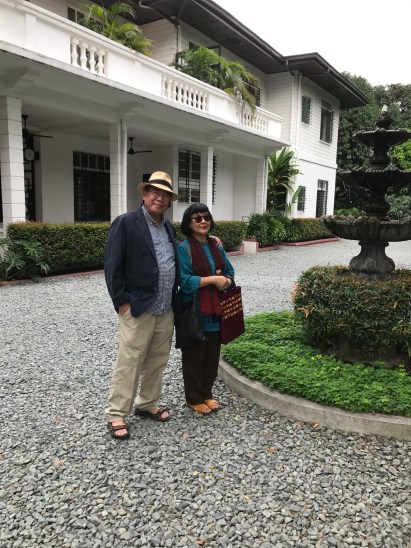
Instead, after some Googling, we ended up in the most unlikely of romantic locales—Pasay City, at the Henry Hotel along F.B. Harrison, to be more specific, where the magic begins once the gate opens.

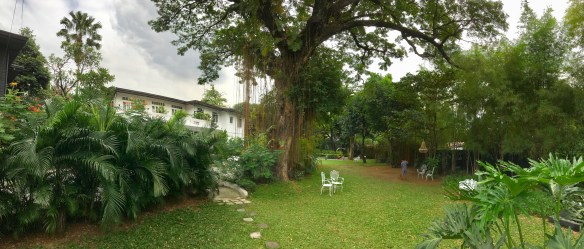
I’d read about the Henry somewhere before and had seen pictures of the place—a visual and sentimental journey back to the 1950s, with its stately main house and sculpted gardens, and I remember being amazed even then by the fact that such a sylvan hideaway could exist in the heart (or less kindly the armpit) of the metropolis. It was high time we checked in for a weekend staycation; the saved airfare alone would answer for the room. And being staunch northerners, we barely knew the southern sector of the city, except for visits to the Cultural Center and the Luneta area. We hadn’t even reconnoitered the cavernous Mall of Asia except again for the briefest sorties.

But again that’s not entirely true, because I had actually grown up in Pasay in the late ’50s and early ’60s, in a house on P. Manahan branching off F.B. Harrison. It was a neighborhood interlaced with catwalks, off one of which I once fell into the fetid water while showing off my brand-new cowboy outfit, which I had probably received for my fifth or sixth birthday.

That bit of unpleasantness aside, I could still remember afternoons swimming in Manila Bay and lounging on the long beach chairs by the sea wall, riding the double-decker Matorco buses up and down what was still Dewey Boulevard, and munching on foot-long hotdogs at the Brown Derby.

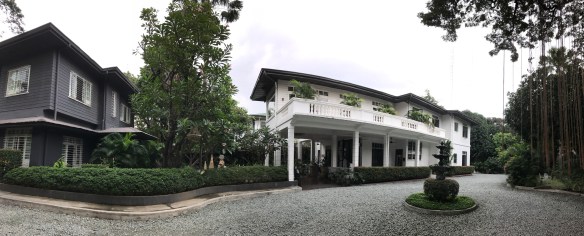
So this weekend in Pasay was something of a homecoming for me, even if all the old landmarks were gone. What’s now the Henry was already there when I was humming the Tom Dooley song, but it wasn’t a hotel yet then but a sprawling compound of large squarish but stylish wooden houses flanking a white concrete main house, amid greenery tamed and teased by Ildefonso P. Santos, who would go on to become a National Artist for Architecture.

img_0586

The 32-room Henry was built by its new owners out of that layout, preserving as much of the old while providing such modern amenities as wi-fi and air-conditioning. A long gravel driveway leads to a fountain and a roundabout fronting the main house, past a curtain of angel’s-hair vines; a swimming pool glows opalescent blue amid the verdure; the main house stands proud but welcoming.

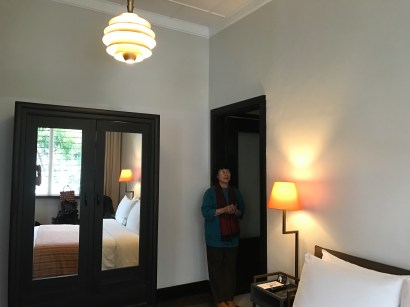
I’ll report that we had a most pleasant and restful stay, helped along by an unobtrusively efficient staff. We luxuriated in the fluffy pillows and the hot shower. It was a bonus to discover that the art gallery of an acquaintance, Albert Avellana, occupied one of the houses in the compound.

img_0594

img_0593

But our anniversary weekend wasn’t meant to be spent cooped up in a room, however charming the ambience. We’ve lately been used to taking 5-7 kilometer walks as part of our seniors’ exercise regimen, so we gamely walked for our bangus and salad breakfast to a restaurant near MOA, and walked many kilometers more within the mall itself.

Staying at the chic Henry was in a way the compleat anti-mall experience, but Beng and I have never pretended to be anything but pedestrian, so that for us was the exotic treat. The mall, like all markets, was familiar territory.

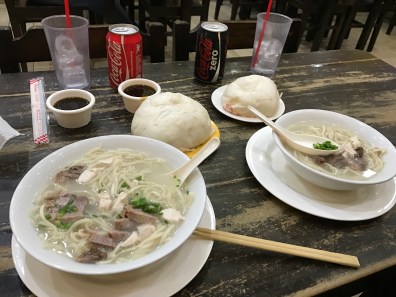
We took in a couple of action movies, buying more popcorn than we could ingest, and oohed at all the nice clothes that wouldn’t fit us. When we had lunch of ukoy and suam na halaya at the KKK restaurant, Beng loudly let the manager know that we were celebrating our 43rd, snagging us a free dessert of leche flan. Hankering for a sushi dinner, we misread Chinese for Japanese and stumbled into Masuki, which served huge bowls of my all-time favorite, Ma Mon Luk-style mami.

img_0617

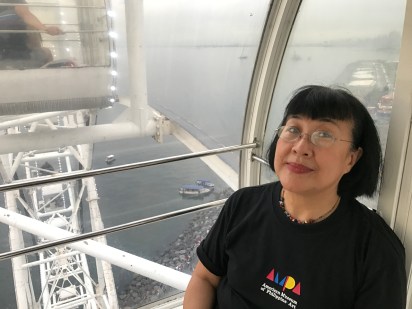
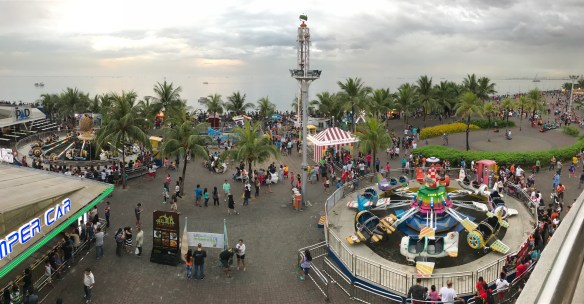
The literal highlight of our weekend had taken place earlier that afternoon. We had asked ourselves, the night before, “What kind of cheap, mindless fun haven’t we tried in a long time?” (Not that, naughty boys and girls.) We paid P150 each the next day for the answer: an eight-minute joyride up and down the MOA Eye, the big white Ferris wheel from whose apex we took selfies before tumbling out of our pod, giggling, to rejoin teeming humanity and the surefooted ordinariness of things.

img_0609

img_0612

Penman No. 233: A Ray of Filmic Sunshine

Sunday_Beauty_Queen_poster.jpg

Penman for Monday, January 9, 2017

AS SOMEONE who wrote about 25 full-length screenplays for various film projects and directors in another life between the late 1970s and early 2000s, I really should be more interested in the remarkable developments that have taken place since in local cinema, especially on the indie scene.

But I have to confess, with some guilt and shame, that I haven’t kept up with what our younger, post-Brocka and post-Bernal directors have produced, except for the occasional viewing of a Brillante Mendoza or a Lav Diaz film, or outstanding documentaries such as last year’s Curiosity, Adventure and Love and An Open Door: Jewish Rescue in the Philippines. There are some personal reasons for this estrangement (not worth getting into at this time), but I do realize that I’ve missed out on a lot of good material while bingeing unpatriotically on Hollywood and Netflix.

I must say that the Metro Manila Film Festival and its seemingly bottomless decline from its glory days ages ago to the inevitable iteration of Enteng Kabisote contributed to my dismay. This most recent MMFF, however, seemed open to letting a ray of filmic sunshine through, with new criteria and a new selection process that put a premium on quality over commercialism. When I saw the list of the people involved and when I noted that their final selections were fresh titles by new directors, my expectations rose and I told Beng, after Christmas, “Let’s go see a movie!”

We’ve managed to see only two MMFF films as of this writing, but in both instances, our hopes were well rewarded.

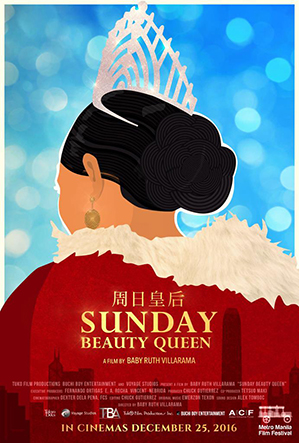
Sunday Beauty Queen, which eventually won the Best Picture Award, documents the labors of Hong Kong’s OFW community in putting together a beauty pageant to ease the pangs of loneliness and the drudgery of their work. Directed by Baby Ruth Villarama, the film tracks pageant organizer Leo Selomenio—herself a longtime domestic helper—and the lives and stories of several key participants, all of them hardworking DHs. These girls, clearly, are no Gemma Cruzes or Pia Wurtzbachs, but even those of us who may scoff at the predictable inanities of beauty pageants will appreciate how the idea of “beauty” itself has been turned inward by this film, whose insistent positivity prompted me to tweet, as I stepped out of a cinema, that it was a “beautiful film about truly beautiful people.”

It wasn’t lost on me that I myself had written a novel, Soledad’s Sister, about OFWs, set briefly in Hong Kong, and had more than once observed our compatriots’ festive Sunday gatherings in Statue Square. Novels like mine tend to be morose reflections on human suffering, but there’s nothing like a well-crafted and even-handed documentary to bring out the verve and the tenacity that must accompany and cushion all that sorrow, and Sunday Beauty Queen draws on Pinay resilience in spades. The ultimate crown its subjects wear—and they are all winners—is that of dignity. Bravo, brava!

The other movie we chose to see was Ang Babae sa Septic Tank 2, with the irrepressible and hugely talented Eugene Domingo reprising her title role. We hadn’t seen the original movie from 2011 (and are now sorry we didn’t), but had no trouble wading into the premises of this sequel, which has Eugene playing herself as a comebacking star and tormenting her director (Kean Cipriano) with her “suggestions” for “improving” the script. It’s a riotously satirical project through and through, well-acted by its ensemble and well-scripted by the unfailingly sharp Chris Martinez, intelligent without being pretentious.

I may have chuckled more appreciatively than others in the audience, having gone through many of the absurd situations and propositions Eugene’s character raises in the film with her director-scriptwriter. I know I said at the start of this piece that I didn’t want to talk too much about how and why I got fed up with working in the film industry, but I feel like I should share at least one incident, from around 20 years ago, that’ll help explain why I moved from writing film scripts to writing novels and biographies.

Let’s set our scene in the offices of a big film studio, somewhere in Quezon City. I’ve been called to an urgent meeting by the producer because the movie we’re shooting (yes, we’re actually in the shooting stage) needs a new ending. Why? Because the studio’s Big Boss, who keeps track of the bottom line, doesn’t want our hero to die, like we’d originally planned; dead heroes bomb at the box office. So now we have to figure out a new extro, and the producers’ friends and alalays are all generously available and willing to help us think the ending through.

“So Gabby doesn’t die at sea when his banca is run over by a big ship,” one of them suggests, “but of course Sharon doesn’t know that, and in despair, she accepts Eric’s offer of marriage. But on the way to the wedding, she asks the car to stop by the beach, where she and Gabby used to promenade. She’s in her wedding gown, and she walks on the beach thinking about Gabby, until she reaches the tree they used to stand under. So she does some muni-muni, remembering their happy days….” At this point, another alalay interjects: “Ay, you know what, it will be so kilig if she looks up at the tree, and she’ll see the face of Gabby shimmering on every leaf!” I take a huge gulp of water to drown the welling acid in my gut.

“She makes a speech and tells the absent Gabby how much she truly loves him,” the original contributor ventures breathlessly, “and then she walks away… to her marriage and her life with Eric…. But it doesn’t end there! Because… because when she drives away, we see that there’s movement from behind the tree—it’s Gabby! He’s alive!”

There’s clapping and cheering all around the table, until somebody has the temerity to ask, “But why doesn’t he show himself to her?” It’s a question met with profound disdain. “Because—don’t you see?—Gabby is now in crutches, he lost one of his legs in the boating accident, and he loves Sharon too much to make her share her life with a cripple! So, nobly, he lets her go, as the theme song plays to the closing credits…..”

Appreciative sighs greet the revelation, as some of my water sputters onto the table.

Thankfully my director and I found a way to weasel out of that inspired conclusion, and the movie was shot and finished. I collected my paycheck, and resolved to do my best to write just stories, novels, nonfiction, and columns from that moment on.

Penman No. 231: A Sortie to Siem Reap

IMG_0296.jpg

Penman for Monday, December 26, 2016


HAVING MADE a pact to see as much of the world together for as long as our knees could carry us, Beng and I headed out to Siem Reap in northwestern Cambodia just before Christmas. It was another booking we’d typically made months in advance (we’d booked our November trip to Guangzhou in February) to avail ourselves of budget fares, and a four-day sortie in mid-December sounded just about right, taking the weather and the crowds (or the lack of them) into account. A few years ago, we’d taken separate December trips to Beijing and Shanghai and had shivered in the snow, but were rewarded with spectacularly desolate views of and from the Great Wall.

At an age when people start talking about bucket lists, we just had to see Angkor Wat and its outlying complex of temples, but as it turned out, Siem Reap was much more than just a location or a jump-off point for Angkor Wat. It had ample charms of its own, and while it would be criminal to go there without visiting the temples, it offered much room for more solitary pursuits. We were there for four full days, spending two days on the road and two just lazing around about town, and it felt just right at our seniors’ pace.

IMG_0094.JPG

It takes just under three hours to fly to Siem Reap from Manila; our flight landed close to 10 pm, and we were met by a tuktuk sent by our boutique hotel as a free service, a welcome touch. There’s a long row of big hotels along the national highway but we chose a small one closer to the center of town, about a 20-minute ride away. I exchanged a couple of hundred dollars at the airport, but it turned out to be almost totally unnecessary—in Siem Reap, the US dollar is king, with dollar prices posted or quoted on everything from SIM cards and T-shirts to mango shakes and massages. (Do bring lots of small bills—I’ve never seen so many 2-dollar bills moving around, not even in the US, although curiously signs say that Cambodian banks won’t accept them.) Speaking of SIM cards, a $5 Cellcard SIM gets you 1.5 gigs of data, good for one week.

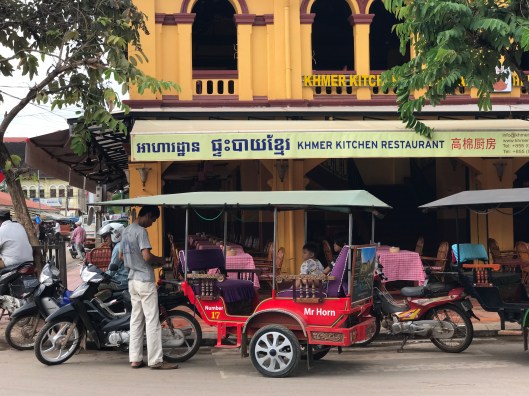
Aside from dollar bills, the other constant in Siem Reap is the tuktuk, larger and more spacious than its Thai counterpart, with two facing seats in the back and the motorcycle all by itself out front. Ours was driven by an unfailingly pleasant and efficient fellow called Thou (whose name kept me looking for a loaf of bread and a jug of wine); the only drawback to this design is that the driver sits too far ahead of you for any conversation beyond the yelled “Stop!” at points of interest, so I sadly never got to really chat with Thou, even if his English was surprisingly good.

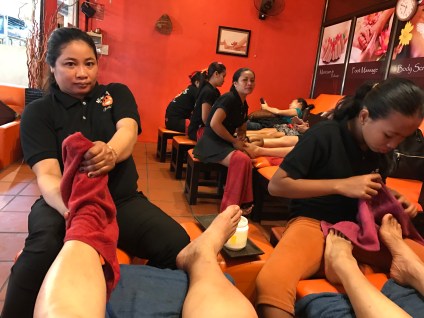
Indeed I was frankly astonished by the facility with which nearly every Cambodian I met—whether driver, waitress, masseuse, or vendor—spoke English. Of course Siem Reap is the country’s tourist capital, and English is now taught in Cambodian schools, but we didn’t see that kind of proficiency in Thailand or Vietnam. Quaint vestiges of French remain—a police outpost still called itself a “gendarmery” (with a Y). I remember last using my pidgin French some years ago with an old silk seller in Hanoi who didn’t speak English, but I never had that problem in Siem Reap. Our foot-massage suki said that she had learned English just by listening to her guests, while our guide at the war museum said that he had been taught the language by an NGO.

IMG_0295.JPG

IMG_0110.JPG

IMG_0340.JPG

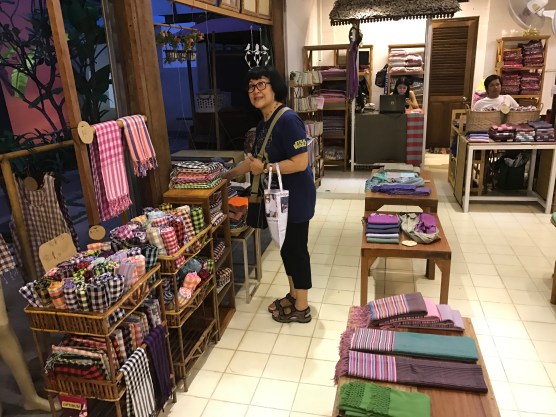
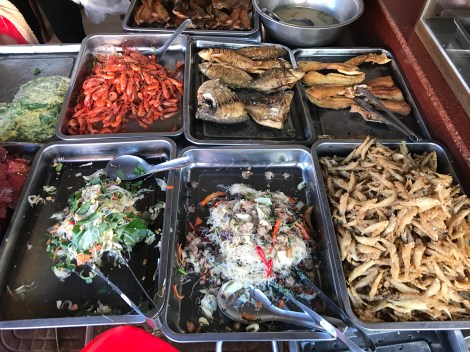
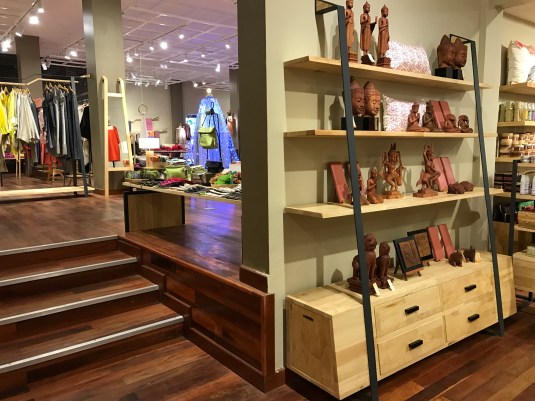
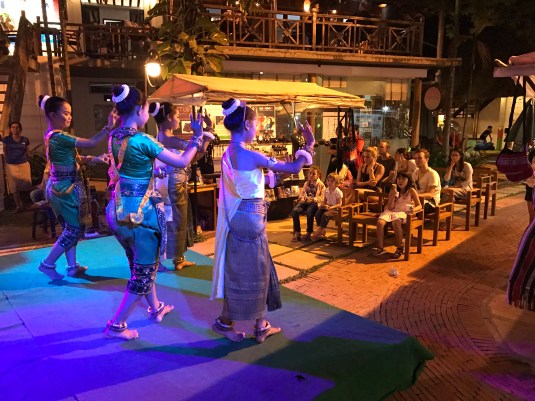
As you can guess, foot massages (widely available for $5 each) were on our daily schedule, mandatory especially after the 10K treks you’ll be making, but Siem Reap is silk-scarf, cotton-shirt, and silver-bangle heaven as well for the casual shopper. Great food—with dishes familiar to the Pinoy palate—can be found all over, and you can easily enjoy a meal for two, including drinks, for $10. Wherever we were, even in the humblest market stall (our kind of fine dining), the rice was consistently good, neither stony nor mushy but with that bounce to the bite that we Visayans call makid-ol. You could even have your massage or your meal with a free daily ladyboys show. If you abhor cheap stuff (I can’t say we do) and want the very best items at corresponding prices, the Artisans Angkor workshop and showroom is in a class all by itself; mid-range, there’s the “Made in Cambodia” market, which also features a free show of traditional Cambodian dance in the early evening.

IMG_0391.JPG

IMG_0402.JPG

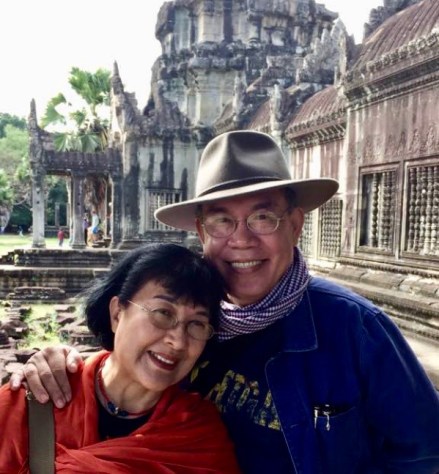
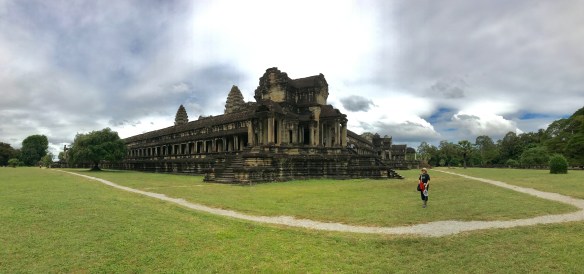
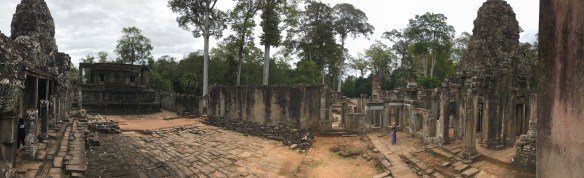
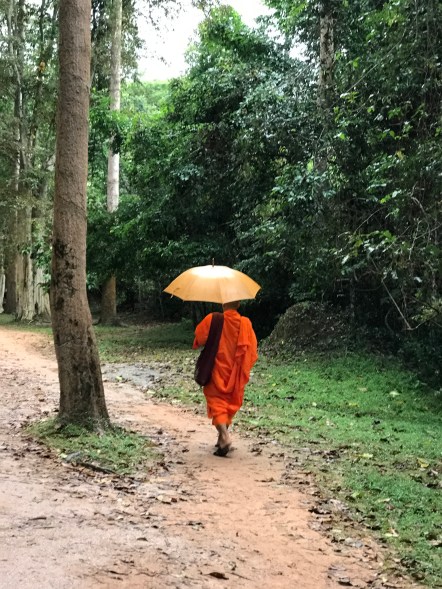
Any list of Siem Reap’s attractions will begin with the 12th-century Angkor Wat, and if I don’t say much about it here it’s only because you truly have to be there to appreciate its majesty, along with the smaller but no less wondrous Bayon and Ta Phrom temples. This complex is but a 30-minute drive away from downtown, but what a difference a half-hour makes—seemingly into the jungle, but actually into the heart of civilization itself.

img_0231

img_0246

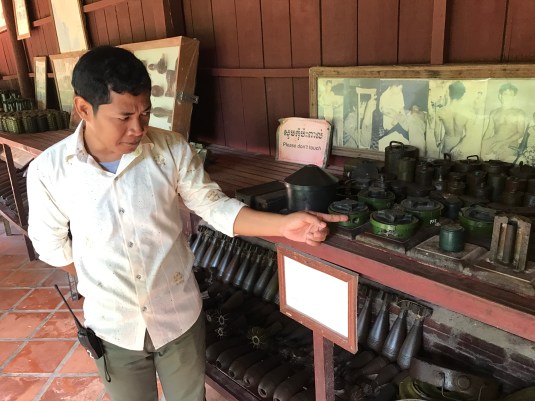
We had been warned by the guidebooks about the insufferable heat in Siem Reap, especially on the temple tours, but it was cloudy and drizzly—even cool and nippy—for most of the time we were there. Riding our tuktuk around the countryside was thoroughly instructive. Depending on your perspective, it was either reassuring or disconcerting to see so many orphanages and pharmacies along the road. Cambodian People’s Party signs were ubiquitous as well, and a visit to the War Museum proved indispensable in contextualizing the easy comforts of today’s Cambodia.

img_0320

Our museum guide Prem was born in nearby Battambang, close to the Thai border, and remembered witnessing battles with the Khmer Rouge as a boy; his parents survived the genocide by feeding on insects. (Angkor Wat is replete with reliefs of battle scenes, a reminder of how often and how strangely beauty and gore come together.) Democracy, Prem said, was a work in progress in his country, and I could only agree and advert to our own situation, although the horrors of the Pol Pot period—with 3 million, half the Cambodian population, killed in just four years—made us, with our mere thousands of largely faceless losses over a few months, appear absurdly civilized by comparison.

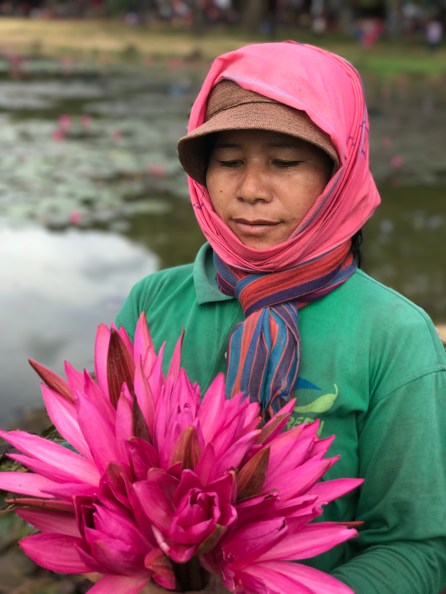
We motored to the edge of Tonle Sap—the largest freshwater lake in Southeast Asia and another major tourist attraction—but decided against taking the $20, two-hour cruise, having read on half a dozen websites about how commercialized the package had become. I’m sure we would have enjoyed it anyway, as writers and artists should find something noteworthy in the most trodden of paths, but it felt enough to contemplate the vastness of the lake from where we stood onshore. A pretty sight on the way to the lake was the carpet of flowering lotuses being farmed by the villagers.

img_0192

Just like its pinkish earth, which it seems any seed you throw into will explode in greenery, Siem Reap is a testament to the insistence of life itself, to the indomitability of the human spirit against all manner of despotism and despair. We flew home much refreshed, from our brows to our toes.

img_0291

Penman No. 230: Two Voices from Singapore

IMG_9764.jpg

Penman for Monday, December 19, 2016


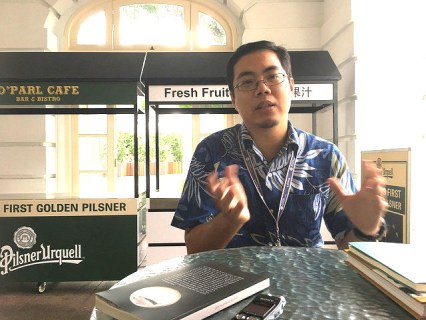
DURING THE Singapore Writers Festival last month, I had the opportunity to chat with two prominent poets from that city-state, Aaron Lee and Eric Tinsay Valles, and I’m sharing the highlights of our conversations to give my readers some idea of what Singaporean poets are writing about. Interestingly, both poets, now just in their 40s, were born outside of Singapore, but now feel very much embedded in that ethnic and cultural melting pot.

Malaysian-born Aaron Lee works as a corporate lawyer in the area of regulatory governance and ethics. “I was born in Malaysia to immigrant Chinese,” Aaron told me. “My father worked for Singapore Airlines so he commuted daily from Johor Baru. It was typical of people at the time to send their children to Singaporean schools if they could afford it. I commuted daily for many years with my passport in my pocket, between the ages of about seven to fifteen. My brother and sister did the same. In our mid-teens we moved to Singapore. After five years my parents moved back but the children stayed behind.

AaronLee.jpg

“I feel myself to be 100% Singaporean, but I do have a lot of affection for Malaysia, especially its natural environment, carried over from my childhood. The city can be a soul-crushing place, and this came out in my second collection, where the metropolis looms over you. In my third collection, I rediscover the renewing force of nature. This was also helped by frequent visits to Hawaii, where my wife studies Hawaiian culture. In my 20s, I met senior writers like Prof. Edwin Thumboo who were dealing with the postcolonial condition. I was a law student in college but I had a couple of English literature modules in which Prof. Thumboo lectured. Discovering this whole shared past of English-language literature between Singapore and Malaysia past gave me an intellectual and emotional hinterland, raising my consciousness of Malayan-ness, which is lost on the present generation.

“I began to take my creative writing seriously in my mid-teens, and I was fortunate to have high-school classmates like Alvin Pang who were just as serious about it. I found a community of people who were interested in literature and this was very important to my formation as a writer. After high school I even applied to several universities overseas to study literature and one of them accepted me but it didn’t come with a scholarship, so I decided to take up law instead here in Singapore, which was much cheaper.

“I’m not really conversant in Bahasa except for the kind of colloquial Bahasa you hear in markets. I’ve done some reading in Chinese but can’t write in Chinese. Our bilingual policy has deep flaws that prevent many Singaporeans from acquiring first-language facility with either English or their mother tongue. Many Singaporeans my age will speak English better than their mother tongue.

“My generation came into its own in the 1990s, and there are about a dozen of us poets who have been categorized as third-generation poets in English. Ours was the first generation of non-academic poets. We were lay people, so to speak, professionals engaged in business, journalism, and law. Our poetry is more down to earth. The earlier generations were more concerned with nation-building. We tend to be more personal.

“I’m essentially a lyric poet and I love the way words sound when they’re well put together. I’m concerned with the inner music of words in sentences and lines. As a student, I looked up to poets like Seamus Heaney and Philip Larkin. I’m also concerned with common humanity. My first collection was very personal, poetry about being a poet, but my later collections cast their eye on a wider world, even to current affairs in society and on the international stage. I observe that when people come together in the city, they become anonymized, dehumanized, and alienated from one another. I try to resist that by looking for what we have in common as people, for empathy, compassion, and love. My work might be political in a roundabout way, but at the end of it I always move back from the grand narrative to the person. My Christianity is a big part of my identity, my values, my world view. I see myself as a work of art being fashioned by my Maker. I don’t just want to be a poet, but the poem, a work in progress, a song coming out of the mouth of God.”

Eric Tinsay Valles 1.jpg

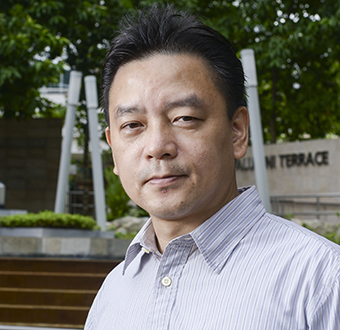
Philippine-born Eric Tinsay Valles teaches at the National University of Singapore High School of Math and Science. In 2013, he won a Goh Sin Tub Competition prize, which offers the biggest cash reward for creative writing in the region. Eric was working on his PhD in literature in NUS in 2000, and decided to stay on.

“I was a journalist in Taiwan for six years, and a teacher in Manila before that,” recalled Eric. “It was through Prof. Thumboo that I began to be published in Singapore, through an anthology that focused on the merlion, the very symbol of Singapore. It’s like a rite of passage for Singaporean poets to write about the merlion. Prof. Thumboo has mentored many of those young poets, and he has always been for inclusiveness and for the development of literary traditions in all the languages used here. That’s why the Singapore Writers Festival and the National Poetry Festivals are probably unique in that we have sessions in four languages. Young poets email him, and he responds to them.

“I just feel very fortunate to have met him in NUS. I invited him to speak before some students, and he invited me to attend some poetry sessions, and that was the beginning of a long association and friendship.

“I’m a permanent resident here, but am still a Filipino citizen. I’m the director of the National Poetry Festival here in Singapore and I’m now finishing my PhD in Creative Writing at Nanyang Technological University, working on trauma poetry and on a novella in verse set during the Japanese occupation.

“As a former journalist I got exposed to many human experiences, and some of that has been reflected in my work in terms of empathy for the downtrodden and the marginalized, and faith. My faith is part of my being Pinoy. My second collection is titled After the Fall, and that could allude to the biblical fall and also to the trauma we experience in everyday life. For Singaporean poets, trauma is more domestic, more felt in estrangement from other people such as family. Contentment and complacency lead to boredom, the desire for more wealth brings more tensions, and young Singaporeans grapple with modernity. Much of Singaporean literature deals with this conflict between modernity and tradition.

“I started writing poetry in primary school in Manila. There have been many influences on my work—Elizabeth Bishop, Thom Gunn, Neruda, Lorca, Heaney—but I’ve become very familiar with Singaporean poetry, especially since it’s a very small community.

“There’s about a dozen Pinoy writers working here in Singapore. We even have a couple of Pinoy domestic helpers who participated in the National Poetry Festival, and they read their poems in Filipino. I look forward to my visits home, where I sometimes hold writing workshops.”

[Eric Valles photo courtesy of the SWF.]

Penman No. 228: A Writers’ Gathering in Guangzhou

IMG_9909.JPG

Penman for Monday, December 5, 2016

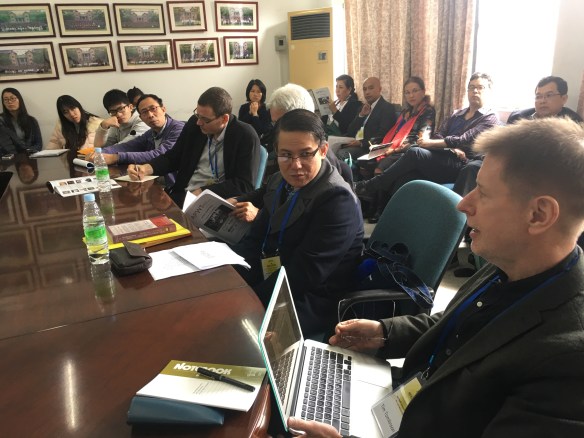
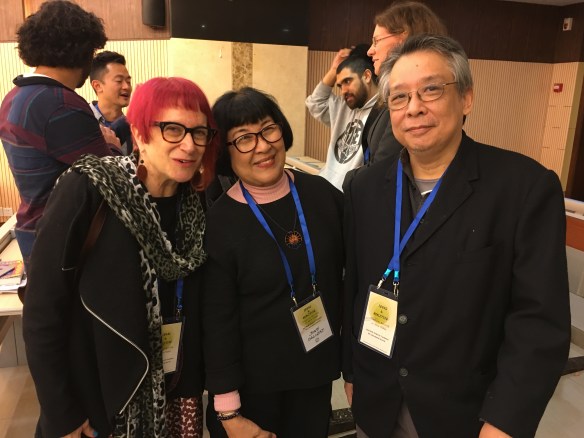
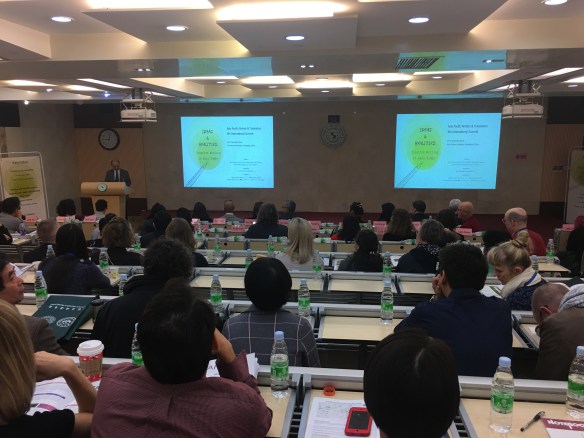
BARELY HAD Beng and I returned from VIVA Excon in Iloilo when we found ourselves jetting off again, this time to Guangzhou, China, to attend this year’s gathering of the Asia Pacific Writers and Translators (APWT), which has become one of the highlights of the literary year in the region. APWT has indeed grown into the Asia-Pacific’s premier literary network, drawing its strength from the fact that it comprises and is led by practicing writers and translators rather than by academics, critics or publishers, although many members perform those functions as well.

For the past several years, APWT has held its annual meetings in various cities around the region—I’ve been privileged to attend recent ones in Hong Kong, Bangkok, and Perth, among others—and last year Manila was honored to host the event, led by the University of the Philippines with the assistance of De La Salle University and the University of Sto. Tomas, with support from the National Commission for Culture and the Arts.

Accompanying me in the Philippine delegation were Cristina Pantoja-Hidalgo and Ralph Semino Galan of the University of Sto. Tomas; Jun Cruz Reyes, Charlson Ong, Jeena Marquez, Randy Bustamante, and Mabek Kawsek from the University of the Philippines; and Hope Sabanpan-Yu from the University of San Carlos. (I happily paid Beng’s conference fee so she could attend all the sessions, given her personal interest in translation.) It was also good to see old Manila hands like the Singapore-based Robin Hemley, the Hong Kong-based Kawika Guillermo, and New Yorkers Tim Tomlinson and his wife Deedle Rodriguez-Tomlinson, who’ll be visiting Manila again soon.

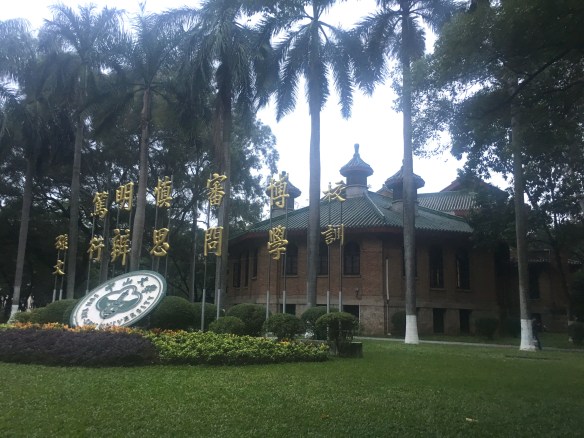
This year, our conference host was Sun Yat Sen University in Guangzhou, under the stewardship of the very gracious and capable Dr. Dai Fan, a professor of linguistics and the director of the Center for Creative Writing at the School of Foreign Languages at SYSU. Her university is one of the very few places in China where creative writing courses are taught in English, so it was a perfect venue for APWT, not to mention Guangzhou’s attractions and congeniality, about which I’ll say more in a minute.

IMG_9904.JPG

Revolving around the theme of “Ideas & Realities: Creative Writing in Asia Today,” this year’s sessions took on such practical concerns as teaching creative writing in English as a second language and networking from Asia to the rest of the world. At the same time, there was always more room for collaboration within the region. As the Australian author Nicholas Jose observed in his keynote, “Writing is a conversation that often begins with the writer’s own community, including editors, publishers, reviewers, critics and other writers. For Asian and Pacific writers, this can be complicated, with borders of language and culture to be crossed, and barriers to the way work becomes available. We need to expand the conversational community. We are our own best advocates and provocateurs. We can create our own audience.”

The keynotes were especially provocative and informative. Flying in from London, Qaisra Sharaz shared her writing life as a woman with multiple identities living in the West in the age of ISIS and battling Islamphobia. A crowd favorite was the US-born Australian Linda Jaivin’s talk on her becoming “The Accidental Translator,” a remarkable life complete with an amazing chance encounter on a Hong Kong subway train that would eventually lead her to subtitle modern Chinese classics such as Farewell My Concubine and Hero.

IMG_9921.JPG

I was glad to moderate a session on “Creative Writing in the Academy,” where panelists from Australia, the US, China, and the Philippines thankfully no longer had to deal with the age-old (and frankly stupid and annoying) question of “Can creative writing be taught?”, but rather discussed the material and moral support (or the lack thereof) that writing programs received in various universities. In this context, it deserves to be noted—especially given how we Filipinos often tend to put ourselves down—that the Philippines clearly leads the region in the field, with full-blown academic programs, writing centers, and writers’ workshops that go back more than half a century.

Aside from the keynotes and the sessions, the APWT meeting also featured special workshops led by experts in the field, such as Robin Hemley who guided both novices and experienced writers on an exploration of “Travel Writing in the 21st Century.” Robin challenged his workshoppers thus: “How do you write about place in a way that makes the place new? How do you write about a place that’s been written about many times before, Venice, for instance, or Paris? In the 21st century, who is the travel writer’s audience and what are the ethical responsibilities of the travel writer? After all, writing about the most unspoiled beach in the world will surely spoil it. Travel literature is not necessarily for the leisure class but for those who wish to have a better perspective on their own sense of the world and place.”

IMG_9903.JPG

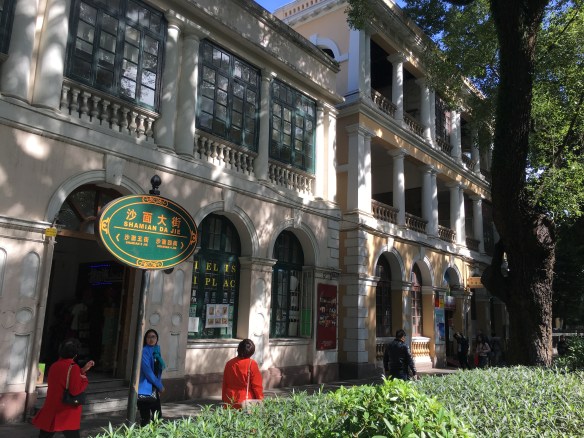
Revisiting Guangzhou was something of a sentimental journey for me, as it was here, almost 30 years ago, that I went with a posse of then-young writers that included Krip Yuson, Ricky de Ungria, Eric Gamalinda, and Timmy Lim. It was our first trip to China, and we had already visited Beijing and Shanghai before stopping by Guangzhou on our way to Hong Kong and Macau. We had stayed in what was the new White Swan Hotel along the Pearl River, and last week I took Beng there on a stroll down the length of picturesque Shamian Island (actually a sandbar on the river, with colonial buildings favored by wedding photographers).

IMG_9938.JPG

We were told that first time that “You go to Beijing for sightseeing, to Shanghai for shopping, and to Guangzhou for eating,” and that still seemed to be true—the best meal we had all week, aside from the closing Yunnan dinner, was an 11-yuan breakfast of dimsum, xiao long bao, and ma chang in a hole-in-the-wall—but it wasn’t as if Guangzhou was lacking in sites worth visiting—starting with the stately, tree-lined campus of Sun Yat Sen University itself.

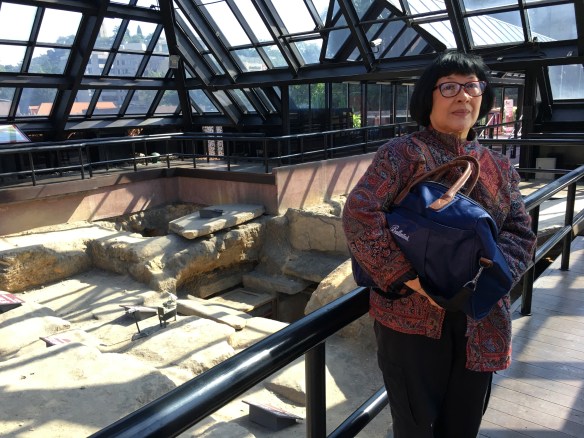
On our last day in the city, with our flight not leaving until 10 pm, Beng and I took off for Yuexiu Park, a public park sprawling over seven hills and three small lakes. Within this neighborhood, we explored the subterranean chambers of the mausoleum of the jade-shrouded Nanyue King, then climbed the five storeys of the centuries-old Zhenhai Tower for a marvelous view of the landscape. From that vantage point, one could think only of great literature and great art, capturing for posterity the inexorable passage of time.

Next year, APWT will move to Bali; I can hear the gamelan tinkling.

IMG_9985.JPG

Penman No. 227: The Southern Lights Shine Brightly

IMG_9859 2.jpeg

Penman for Monday, November 28, 2016


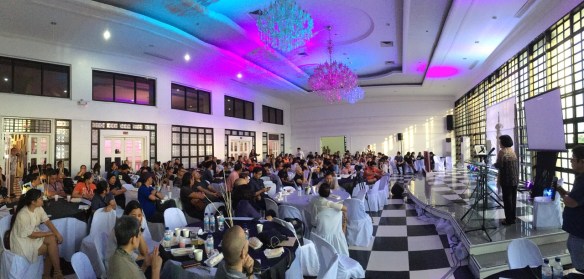
A RECENT gallbladder operation and the stitches in four corners of my belly couldn’t stop me from flying down to Iloilo City last week to catch the tail-end of VIVA Excon 2016, which I’d plugged here some time ago but just had to see for myself. The personal reason was that my wife Beng was one of the scheduled speakers, for a session on “Art Conservation and Restoration,” but I’d also heard that VIVA Excon was one of the most successful events of its kind in the country (“probably the only surviving and longest-running Filipino biennale,” VIVA Excon stalwart and chronicler Cecilia Locsin-Nava would emphasize to me). Here’s what I found.

From November 17 to 20, more than 250 artists, speakers, and guests from the Visayas, Mindanao, and Manila gathered at Casa Real in the old provincial capitol of Iloilo to celebrate, interrogate, and propagate art in all its splendorous variety—the important qualifier being that this was new art produced south of Manila. It’s been around since 1990, moving around the major capitals of the Visayas such as Cebu, Bacolod, Dumaguete, and of course Iloilo. Surprisingly, it was only the second time that Iloilo hosted VIVA Excon, after a 20-year hiatus, so the local organizers made up for lost time by mounting one of its most vibrant editions ever.

When it started—spurred by the need to create a southern antipode for the arts, given the emergence of such bright new talents as the Negrense painter-sculptor Charlie Co—VIVA Excon had to be funded by the artists themselves, but this year Iloilo’s provincial and city government pitched in to guarantee the event’s success, with help from a host of sponsors led by the National Commission for Culture and the Arts (NCCA). On top of the local planning was painter Rock Drilon, assisted by a corps of wizards and elves who made sure that the dozens of events on the program went off like clockwork. VIVA Excon originals Ed Defensor, Charlie Co, Peewee Roldan, and Cecilia Nava were also around to lend their wisdom and support.

IMG_9862.jpeg

As its name suggests, VIVA Excon (the “VIVA” stands for Visayas Islands Visual Arts) was at once both an exhibition and a conference. As someone who has helped to organize quite a few literary conferences myself, I was much impressed by the scope and depth of the topics taken up at the conference and by the expertise of the speakers engaged for the occasion, some of them coming from as far as the US, Singapore, and Hong Kong. I missed most of the earlier sessions, but I would have loved to listen to Ma. Victoria “Boots” Herrera speak on “Museum Practices: What Artists Need to Know”; Silvana Diaz on “Creative Economics: Art Management and Economic Viability”; Elvert Bañares on “Creative Crossover: From Visual Art to Cinema and Back—The Visayan Artists’ Experience”; Rex Aguado on “Art, the Artist, and the Art Collector”; and Patrick Flores on “Art Criticism—Its Value to the Artist and the Artworld.”

Fortunately, I came in time to catch UP art theorist Lisa Ito address issues in writing about the arts—“for what and for whom,” she would say, “beyond the popular writing geared toward the art market, and the academic writing produced by scholars and theorists.” Lisa felt that more writing should be undertaken to “connect artistic production to social contexts and current realities, and developing publics and communities that validate the vitality of art and culture” as well as to “document design practices and projects and to record transient cultural events for future generations—how communities adapt, such as by using tricycles as mobile galleries and by putting up makeshift museums.”

She was followed by New York-based Carina Evangelista whose lecture on “When Forces Shape Form” led the audience to where art has gone far beyond and outside the museum, in performative gestures—often deeply and manifestly political—that emphasized process over product, transience over permanence, and repurposing over originality. (One example: the banknotes that Brazilian artist Cildo Meireles stamped with a political message and circulated in 1970 as a form of mobile graffiti, which nervous recipients couldn’t pass on quickly enough, thereby abetting its purpose.) It was truly a semester’s worth of material packed into 45 minutes on new forms of art from body mutilation to sound and video installation, reminding me of Marjorie Perloff’s lecture on avant-garde poetry just a couple of weeks earlier in Singapore; sometimes you learn the most wonderful things in the oddest places.

Of course, I was happiest and proudest to see Beng onstage walking the audience through the various stages of restoring Amorsolos and Botong Franciscos, and it was clear from the flurry of questions she fielded after her presentation that conservation and restoration were two of the least understood concerns of the art world, yet also two of the most vital if not inevitable. (Sculptor and installation artist Martin Genodepa graciously emceed the presentations.)

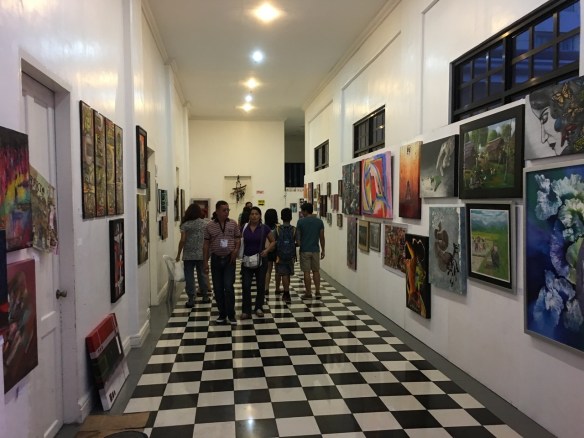
Outside the conference hall, three art exhibits were held: a curated one on “Contemporary Art of the Islands” at the UP Visayas Art Gallery, the more freewheeling Visayas Art Fair at Casa Real, and a special retrospective of the late Ilonggo sculptor Timoteo Jumayao at the Museo Iloilo.

IMG_9867.JPG

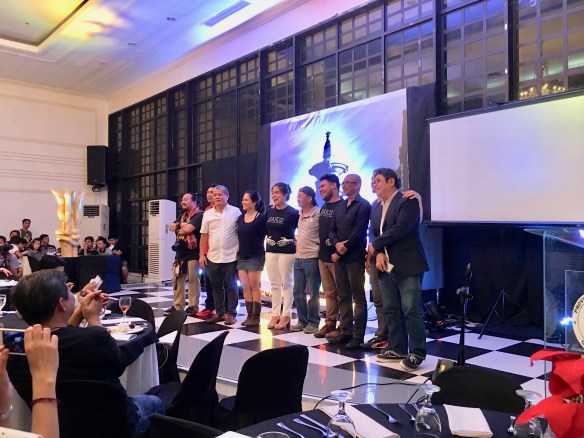
The culminating activity of VIVA Excon was the presentation of the Garbo sa Bisaya award to eight outstanding Visayan artists for excellence in their respective fields: painter Antonio Alcoseba (Cebu); scholar and painter Dulce Cuna Anacion (Leyte); film artist Elvert Bañares (Iloilo); film animator Oliver Exmundo (Iloilo); painter Allain Hablo (Iloilo); multimedia artist Manny Montelibano (Negros Occidental); painter Javy Villacin (Cebu); and painter and scholar Reuben Cañete (Cebu).

IMG_9887.jpg

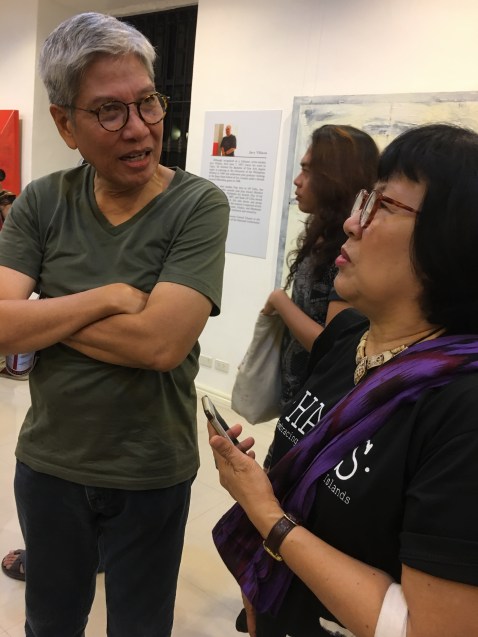
But I’m sure that all the attendees will agree if I suggest that the best part of VIVA Excon was, ultimately, the company of fellow artists, a fraternity forged over beer and music as much as over linseed oil and plaster. Even if I was little more than an onlooker at the event, I was glad to meet up with old friends and acquaintances like Rock Drilon, whose Mag:Net bar and gallery on Katipunan Avenue used to be one of our favorite hangouts. He moved to Iloilo years ago to take care of his ailing mom, and found himself drawn inextricably into the local art scene, until he realized that he was truly home. “Viva should last beyond the Excon,” Rock told me, “so an artists’ cooperative has been organized to sustain the energy sparked by VIVA Excon.”

IMG_9881.JPG

Two years from now, the event will be hosted by Roxas City in Capiz. Iloilo could be hard to top, but these Visayans are full of surprises.

Link

IMG_9635.jpg

Penman for Monday, November 17, 2016


IT WASN’T on the official itinerary, but I have to report that the personal highlight of our recent participation at the Frankfurt Book Fair didn’t happen at the fair itself, or even in Frankfurt, but about an hour and a half away by train and bus. This was a plan that a few of us had hatched even before we left Manila: we’d do our jobs and put in our hours in the Philippine booth, then take a day off in pursuit of a pilgrimage that any Pinoy in Frankfurt shouldn’t forgo: a visit to Jose Rizal’s haunts in Heidelberg and neighboring Wilhelmsfeld.

I’ve been a lifelong fan of Pepe, not just for his writing skills and love of country (I won’t mention his charming ways with the ladies) but also his wanderlust which made him, in my book, the first truly global Filipino. Considering that he didn’t live very long, he was still able to do more and see more than most of us do in a full lifetime. The intensity of that life and the excellence he sought at every turn have been enduring inspirations for me, and I’ve realized that sometimes by design and sometimes by serendipity, I’ve been tracking his footsteps around the world.

In 2009, my wife Beng and I, along with our daughter Demi and her husband Jerry, had booked ourselves into the Palace Hotel on Market Street in San Francisco, where it took a waiter (a fellow Pinoy, of course) to inform us that Rizal had stayed there during his only visit to America in May 1888, an event commemorated by a marker just outside the hotel, which we had missed.

PalaceHotel.jpg

Two years later, Beng and I visited Rizal’s well-kept shrine in Dapitan, where he had spent four fruitful years in exile before being transported back to Manila. How poignant it must have been to catch the sunset along the bay with Josephine Bracken, inflamed and torn by two of the strongest passions to afflict any writer—love and revolution.

Dapitan.jpeg

And then in 2014, again with Beng, Demi, and Jerry, I sought out some of Rizal’s locales in Spain, from Plaza Mayor in Madrid to the Castell de Montjuic in Barcelona, where Rizal had been detained before being shipped back to Manila for trial and eventual execution. (The castle has designated a room, Sala Rizal, in his honor and in memory of the many political prisoners who had spent time in that place—ironically, one of the best spots from which to appreciate the city’s beauty.)

Montjuic.jpg

There was no question, therefore, that I would make that sortie to Heidelberg, given the once-in-a-lifetime opportunity. Five other sojourners made up our group: National Artist Virgilio “Rio” Almario and his wife Lyn, their daughter Ani and her husband, the geologist CP David, and the poet and Inquirer staff writer Ruey de Vera. Lyn and Ani were attending the book fair on behalf of Adarna House and the Book Development Association of the Philippines, but we all agreed that a visit to Heidelberg was well worth a day off.

Rizal had stayed in various places in Heidelberg and Wilhelmsfeld for much of 1886, marking his 25th birthday there, studying ophthalmology with tutors like Dr. Otto Becker while improving his command of German. When he moved to Wilhelmsfeld—a 12-kilometer walk through the forest that Rizal essayed and even today a 30-minute bus ride from downtown Heidelberg—Rizal boarded with Pastor Karl Ullmer and his family, and it was there that he completed the manuscript of Noli Me Tangere (a feat that, achieved at 25, still astonishes me when I consider the juvenilia most of us still produce at that age).

Rio Almario had visited Heidelberg once before but not Wilhelmsfeld, and the rest of us were total newcomers to the area (I had traveled around Germany and reported on it extensively in 2004, but hadn’t gone this far). So it was with giddy enthusiasm that we assembled at the Frankfurt Bahnhof and boarded the 9:20 train to Heidelberg. About an hour later, we were in Heidelberg, where we made a beeline for the information kiosk just outside the train station to buy bus tickets to Wilhelmsfeld. “Filipinos?” asked a clerk at the kiosk, apparently familiar with posses of brown-skinned Asians asking about Jose Rizal, and he whipped out a xeroxed guide to Rizal’s known habitations in Heidelberg and Wilhelmsfeld. There were about six of these sites in Heidelberg alone, so we decided to go for Wilhelmsfeld first, given our limited time.

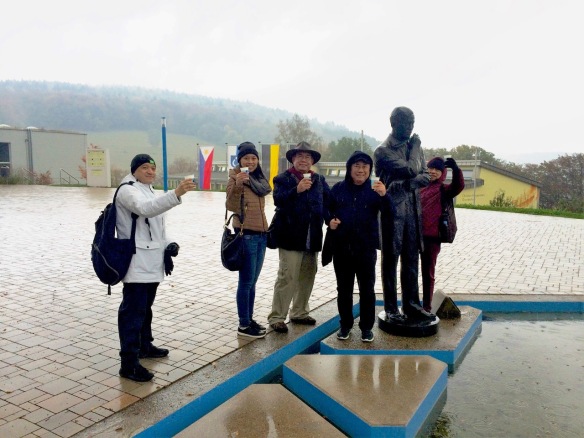
After a pleasant ride along the Neckar River and the lovely autumn scenery (punctuated only by an unexpected stop during which two European bison appeared fairytale-like out of the woods), we reached Wilhelmsfeld, which announced itself in a most unusual way, with a Filipino flag flying abreast of its German counterpart in front of the Rathaus, or town hall (Wilhelmsfeld and Calamba are sister cities). We were in search specifically of the statue that sculptor Anastacio Caedo had made of Rizal in a special park devoted to him. An initial query led us astray, to the wrong church and into a drizzle of hail (magical story elements we couldn’t have invented to accentuate our pilgrim status), until a kind lady pointed us in the right direction.

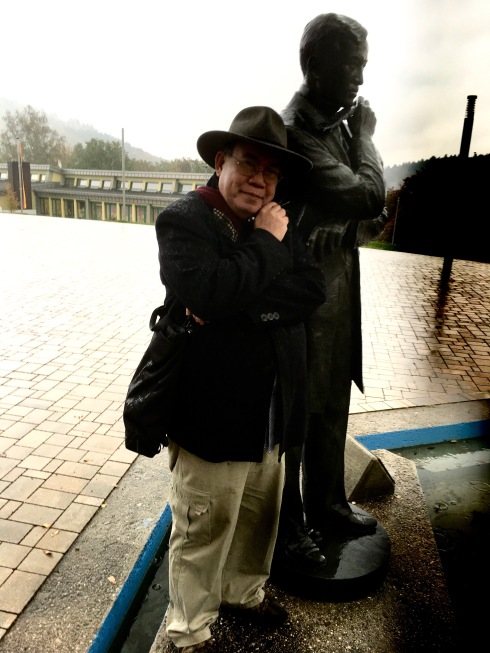
Many shuddering steps later, we arrived at a park overlooking the valley, in the center of which stood Rizal’s figure, easily a foot larger than life, as it deserved to be. We celebrated by opening a bottle of Potsdamer beer which CP had brought along for the occasion, and raising a toast to the great wanderer who had preceded us by 130 years but who yet challenged us, as it were, to write a Noli for our own times. After lunch back in Heidelberg, we prepared for another long trek to find his clinic at Bergeimherstrasse, only to realize that we had gotten off on exactly that street, and were only steps away.

Wilhelmsfeld.JPG

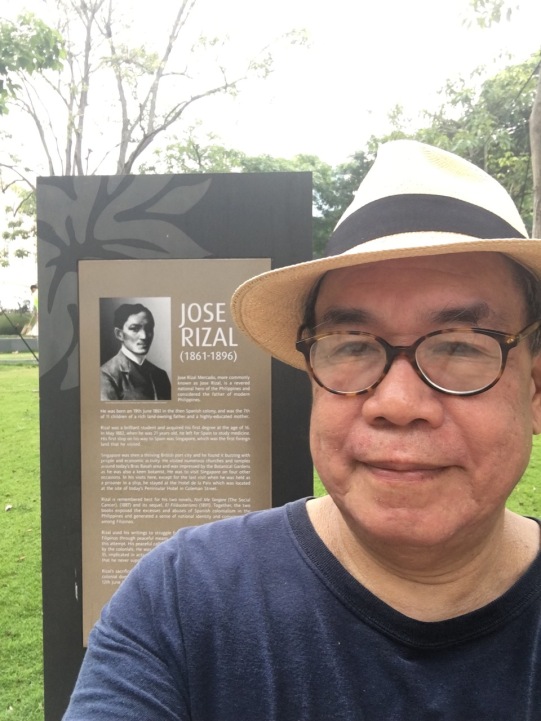
Weeks later, a totally unexpected bonus followed. I was in Singapore covering the Writers Festival when fictionist Cathy Torres—a diplomat who was serving with the Philippine Embassy in Berlin after a stint in Singapore, and had also joined us in Frankfurt—casually mentioned to me that Rizal had taken note in his letters of the black elephant statue beside the old Parliament House where the festival was being held. As it turned out, Rizal had visited Singapore four times—the first time in 1882, on what also happened to be the 21-year-old’s first trip abroad. The tip prompted me to look up Rizal’s Singaporean connections—immortalized in a marker near the Cavenagh Bridge, beside the likes of Ho Chi Minh, Jawaharlal Nehru, and Deng Xiaoping—but what floored me was discovering that he had once stayed at the old Hotel de la Paix at the corner of Coleman and Hill Streets—long gone, but since replaced by the Peninsula-Excelsior Hotel, where I was staying. I felt like I was no longer following Rizal, but he was following me.

IMG_9813.jpeg

In Dapitan, he had written: “I left, scarcely a youth, my land and my affections, and vagrant everywhere, with no qualms, with no terrors, squandered in foreign lands the April of my life.” If this was squandering one’s youth, what a glorious waste it was.


Penman No. 225: Sayang in Singapore

IMG_9764.jpg

Penman for Monday, November 11


TO US Filipinos, sayang has one meaning and one meaning only: a regrettable loss, something that causes us to shake our heads or hold our palms to our hearts and say, “Oh, that’s too bad.” But elsewhere in the region, from some sultry corner of which the word worked its way up our archipelago, sayang means that and more: the love which may have been that which was lost, love as both a noun and a verb, or even an endearment, depending on the nuances of its intonation. So love and loss—the former all too often trailed by the latter—coexist in this wonderfully complex word, through which we Filipinos can at least claim some vestigial connection to the heart of Asia.

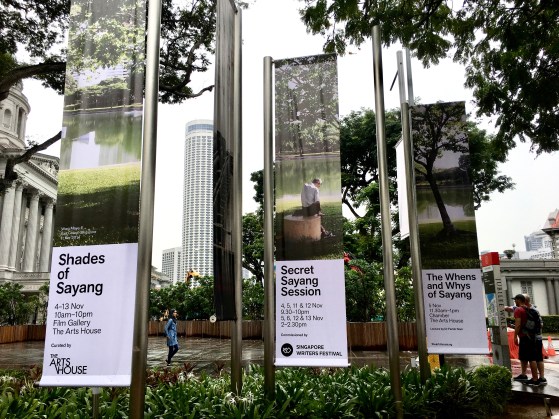
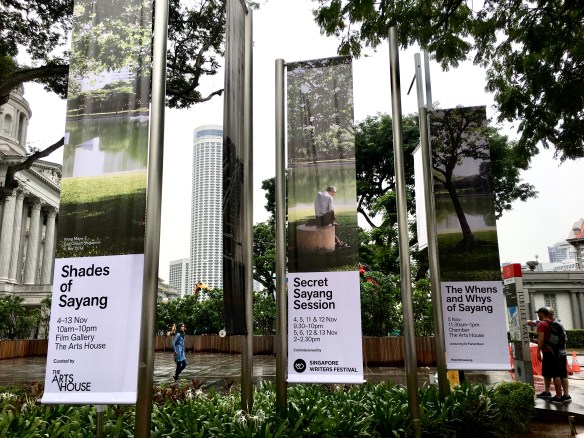
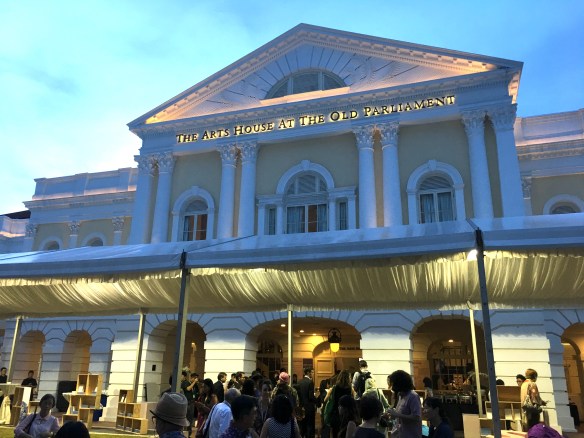
Sayang was very much on people’s lips in Singapore last week—you would have thought a lovefest was going on, and in a sense, it was. But the love was for books and literature, the occasion being the Singapore Writers Festival, which I was visiting for the third time after a hiatus of five years. Sayang had been chosen as the festival’s theme, and the word was festooned against a suitably floral backdrop all over the Arts House area where most of the festival events took place.

IMG_9754.jpg

Now on its 19th edition, the SWF began in 1986 as a biennial event, but it has since become a fixture on the regional cultural calendar (alongside the Singapore Arts Festival), cementing the city-state’s reputation—like its iconic Merlion—as the fountain of artistic endeavor in this part of the world. (I know what you’re thinking: “Shouldn’t that be us, the Philippines, with our long tradition of cultural expression and our bountiful artistic talents?” But I’ll tell you what festival director Yeow Kai Chai—himself a poet and journalist—told me over lunch: “I can’t believe you Filipinos have yet to establish a Department of Culture!”)

It was clear, from the minute I stepped out into Changi’s arrival area, that the National Arts Council, under Singapore’s Ministry of Culture, had once again pulled all the stops to guarantee a pleasant and efficiently managed experience for all SWF attendees, expected to number about 20,000. I was here as a journalist on coverage for the Star (I had attended the SWF as a participant in 2008, and returned to cover it in 2011) and I knew what to expect, but like they say, you never cross the same river twice, and this year’s festival offered a steady stream of 300 events spread out over ten days from November 4 to 13. There were over 300 official participants registered, with a hundred of them coming from overseas.

That makes the SWF one of the world’s largest and longest festivals of its kind, if not probably the most multilingual one, with its support for literature not just in English but also in Bahasa, Chinese, and other Asian languages. According to Yeow, the goal was to be as inclusive as possible in the SWF’s programming, going so far as to offer facilities for the hearing-impaired.

The fullness of the festival programme required selectivity, so I cherry-picked my way through the three days of my stay there, paying special attention to literary developments in Singapore itself. I’ve often remarked—most recently at a reading in Diliman featuring authors brought over by Ethos Books, one of Singapore’s most energetic presses—that the Philippines and Singapore have enjoyed a longstanding “bromance” going down the generations: between F. Sionil Jose and Edwin Thumboo, for example, followed by Krip Yuson and Kirpal Singh, then Joel Toledo and Alvin Pang, to name a few. We’ve published books together; not too long ago, Isabel Mooney and Lily Rose Tope worked with their Singaporean academic counterparts to edit a landmark anthology of Southeast Asian writing in English. So I wanted to see where things were at.

IMG_9762.JPG

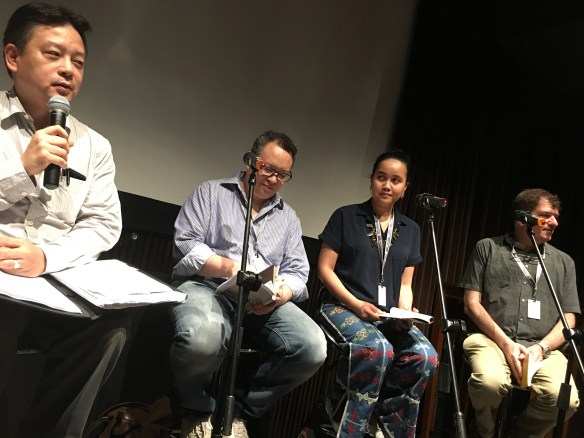
The first session I attended addressed the diasporic element in Singaporean literature—but unlike our exodus of workers and writers to the far reaches of the planet, this diaspora was inbound, and a voluntary one. Moderated by the Filipino expat poet Eric Tinsay Valles, the panel comprised the Eurasian short story writer Jon Gresham, who had come to Singapore via the UK and Australia; the Filipino fictionist and diplomat Cathy Torres, who had moved from her posting in Singapore to Germany; and the American creative nonfiction expert Robin Hemley, who’s married to a Filipina and who now teaches in Singapore.

They discussed how, in the words of Eric, the diaspora could be “a creative space” within which the experience of estrangement could create some positive value. Being away from one’s home, the three agreed, made new impressions and expressions possible. The writer’s struggle to adjust and adapt was in itself the story. Jon spoke about how “It isn’t so much about roots as routes—the journey, the getting there” for the diasporic writer. Adverting to the title story of her debut collection, Mariposa Gang and Other Stories, Cathy observed how “Diasporic stories are like butterflies. They may look alike but no two are truly the same. I try to catch them and send them out into the world.”

But the it was the keynote talk by Farish Noor, a Malaysian political scientist and historian who’s become something of an intellectual rock star in the region, that both charmed and alarmed the packed chamber where the Singaporean parliament used to meet. Dr. Noor introduced his talk thus:

“How a word can have multiple meanings at the same time, and have their meanings change over time, is an interesting mirror to the unfolding of history. This lecture looks at one word in particular, sayang, charting its path of adaptation from pre-colonial and colonial histories to the post-colonial present; and considering how the changes in its meanings and applications—from fables to novels to cinema and pop culture—tells us more about ourselves, like how our own sensibilities and worldviews have evolved, leading to the postmodern present which we inhabit today. The word remains the same, but do we sayang today as our ancestors did?”

Looking back on how concepts of love evolved over time in the region—including love across species in folklore, and love for the colonial master—Farish noted how “Words are what we have left of the past, and the past is far more complicated—more rich, more deep—than the present. Today, in the age of Facebook, ‘love’ has been reduced to clicking a ‘Like’ button.”

During his turn in the chamber, Singapore’s unofficial poet laureate Edwin Thumboo looked back on a lifetime of literature in his country thus: “Young poets no longer write about nation because the nation has been constructed for them. It’s no longer a problem….. It’s so easy now to get published but I don’t think there’s enough revision going on. People are anthologizing like mad. Be patient. Always think you can do better.”

The renowned American critic Marjorie Perloff spoke at the last event I attended, and she closed SWF 2016 for me with a rousing challenge: “Avant-garde poetry has crossed the boundaries between the verbal and the visual, but poetry hasn’t changed in 70 years the way painting and music have. We need another kind of revolution!”

Many thanks again to my hosts and to my SWF friends—it was all sayang and yet no sayang for me this past weekend. In a coming column, I’ll digest two interviews I conducted with Singaporean poet Aaron Lee and our very own Eric Tinsay Valles on what it’s like to be a poet in Singapore.

Penman No. 224: Fantastic, Frenetic Frankfurt (2)

IMG_9577.JPG

Penman for Monday, November 7, 2016


GOING TO the Frankfurt Book Fair was a great opportunity to renew old friendships and make new ones within both the global and Philippine publishing community. While we authors count publishers among our closest and most valuable friends, I realized in Frankfurt that we really don’t talk about their side of the business that much, as engrossed as we often are by our own fabulations.

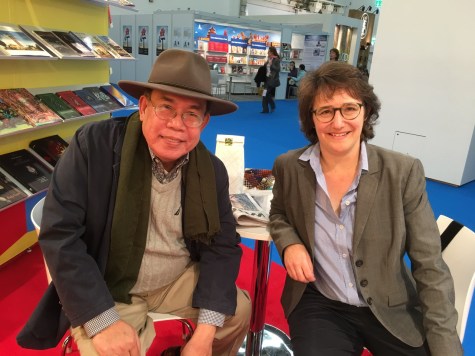
I was particularly happy to finally meet Renuka Chatterjee, who had been India’s premier literary agent when she worked for the big Osian’s cultural conglomerate in New Delhi. As my first literary agent, Renuka had been instrumental in getting my second novel, Soledad’s Sister, translated and published in Italy; but more than that, she guided me through my first textual revisions, through which I began to learn how international publishing worked. When Osian’s shut down its literary operation, I passed on to another very capable agent in New York, and Renuka eventually joined another leading publishing house in India, Speaking Tiger. We had corresponded by email over the years, but Frankfurt gave us an excuse and a venue for a long-overdue face-to-face.

Another acquaintance lost and found was the dynamic and groundbreaking Malaysian publisher Amir Muhammad, whom I had first met at a conference in Penang in 1992; Amir gifted me with a new trilogy of Southeast Asian stories he had just published, featuring the works of some of our best young Filipino authors. (Those books—like many others I’ve gathered on my travels—are now lodged at the Gonzalo Gonzalez Reading Room in UP, where we keep a repository of contemporary Southeast Asian literature.) Indeed, and not surprisingly, the Malaysians became the Philippine delegation’s best buddies at the fair; we frequented their booth to partake of the nasi lemak and to trade notes on the writing life. The Indonesians were equally hospitable, and our troop of visitors enjoyed a chat and the inevitable selfie with their star, the novelist Eka Kurniawan, whose Man Tiger made the 2016 Man Booker International Prize long list.

IMG_9554.JPG

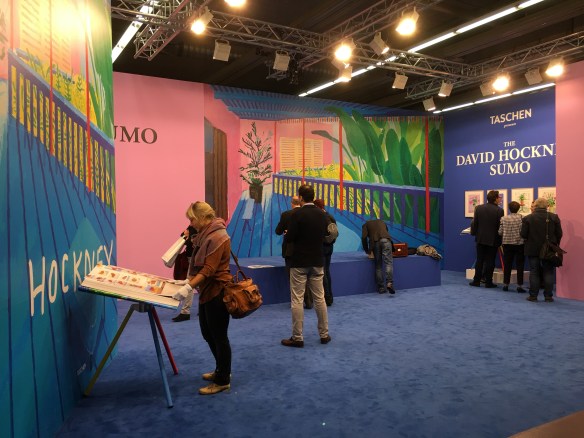
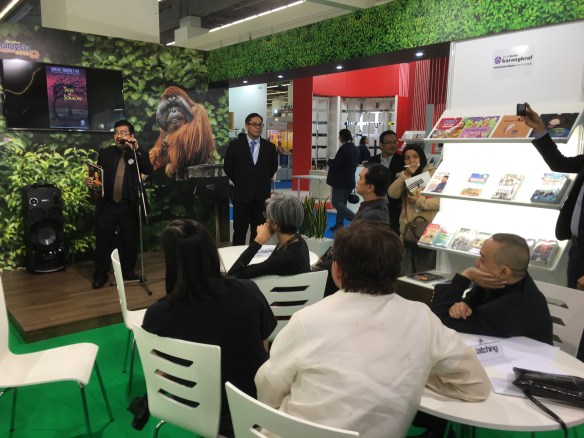
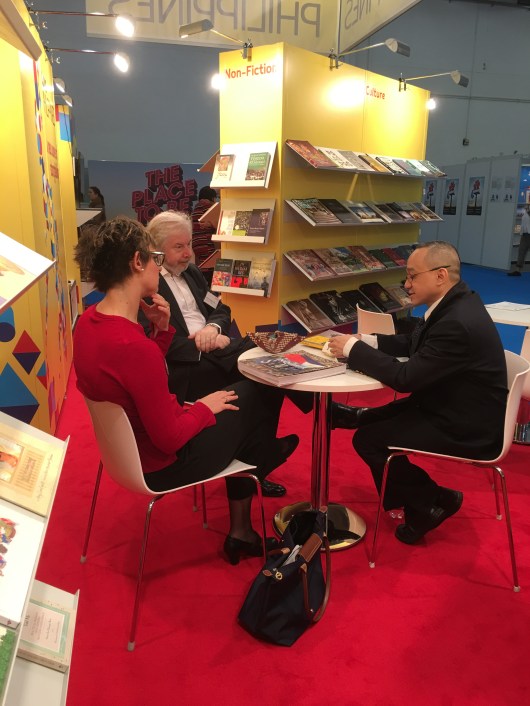
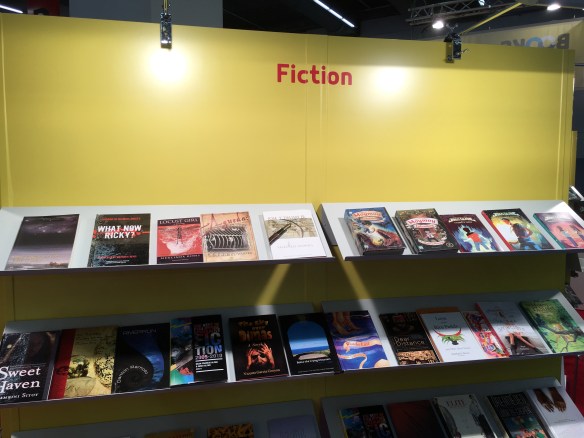
Neither were the long hours at our own booth wasted, as a steady stream of visitors curious about our books and our culture came by to browse, to converse, and to do business. Business, after all, was what most people went to the book fair for, and while some of us minded the store, our delegates were often out meeting with their counterparts from the US, the UK, Europe, and the rest of Asia. (I had a very productive conversation with a gentleman from Montenegro who runs a kind of global blog of blogs—expect “Penman” to appear there soon, but only after it’s published here, of course.)

IMG_9583.JPG

It was the Ateneo University Press’ new boss Karina Bolasco’s third straight year at the fair, which she had previously attended representing Anvil Publishing. University presses don’t generally look at their books as profit-makers, reducing the financial pressure somewhat, but Karina still had a full schedule of meetings with academic publishers, especially longtime Philippine partners such as the University of Wisconsin Press. “Our job is to negotiate for reprint rights,” Karina told me. “We try to find material already published abroad that will be interesting to Filipino readers, and we also offer other presses the rights to reprint Filipino works with a global appeal.”

One of the most visited displays in the Philippine booth this year was that of Mandaluyong-based OMF Literature, Inc., which has published religious and inspirational books since 1957. OMF CEO Alexander Tan told me that their market was big and growing—extending even to OFWs in the Middle East—and that it had developed its own local stars such as pastor Ronald Molmisa, who draws huge crowds to his lectures on love and relationships. “I realized that by breaking the rules and letting people like Ronald use Taglish in their books, we could reach more readers,” Alex said.

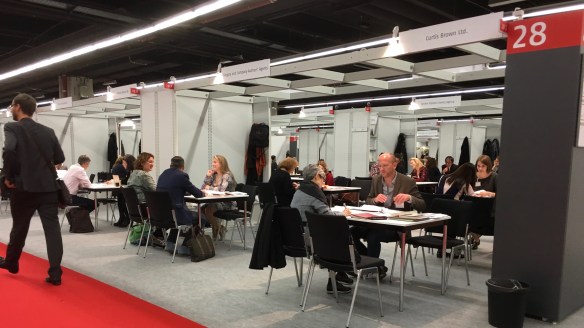
On the other hand, literary agents like Andrea Pasion-Flores, who now works with the Singapore-based Jacaranda agency, assume the task of representing Filipino authors abroad and finding publishers to buy their works (and who then assign editors to work closely with the authors on revising their text for publication). Andrea—an accomplished author in her own right who also happens to be a lawyer and the former executive director of the National Book Development Board—is the first and, so far, the only literary agent working actively in the Philippines. Jacaranda has already sold the rights for such distinguished Filipino writers as the late Nick Joaquin, Charlson Ong, Isagani Cruz, and Ichi Batacan (whose Smaller and Smaller Circles will be a movie soon).

IMG_9563.jpg

Andrea and her Jacaranda colleagues Jayapriya Vasudevan and Helen Mangham spent long working days in Frankfurt at the exclusive Literary Agents section upstairs, which only registered agents (who paid a hefty price for table space) and publishers could theoretically access. But Andrea secured a pass for me so I could observe the frenetic 30-minute “speed-dating” sessions that took place in hundreds of cubicles. “You’re probably the only author in this room,” Andrea told me. When I asked her what international publishers were looking for from Filipino authors, her response was quick and to the point: “The big novel, more genre fiction, and more high-quality literary fiction—and less ego, please, as Filipino authors generally aren’t used to revising their work!”

Back downstairs the next day, my companions at the Philippine booth were surprised to see me in animated conversation in Filipino with a Caucasian lady, whom I was happy to introduce to everyone. Our visitor was Annette Hug, a novelist and translator who had come from her home in Zurich to meet with me and with her publisher at the book fair. Annette—who took her MA in Women’s Studies in UP and regularly practices her Filipino with an OFW friend—had just translated a piece I had published last month in the Philippine edition of Esquire magazine, a piece on extrajudicial killings that had somehow gone viral; Annette’s translation had come out that same day in a Swiss newspaper and she brought me my copies, fresh off the press. But apart from that sad topic, Annette had also just published a novel in German, Wilhelm Tell in Manila, based on Jose Rizal’s work on that Swiss hero’s life, and the UP Press will now explore the possibility of publishing a translation of her novel in the Philippines.

IMG_9597.jpeg

Another visitor was children’s book author and Palanca Hall of Famer Eugene Evasco, who just happened to be in Munich on a three-month research fellowship, so he took the three-hour train ride to Frankfurt to visit the fair and to take in the mind-blowing displays at the children’s literature section.

Of such providential encounters, magnified into the thousands, was the Frankfurt Book Fair made, and while I was there less on business than as a roving cultural ambassador of sorts, I was glad and privileged to tick another item off my bucket list. I’ve run out of space to talk about an excursion some of us took to trace the footsteps of that quintessential Filipino writer, Jose Rizal, in nearby Heidelberg, so I’ll save that for another column soon.

IMG_9567.JPG