Qwertyman No. 46: The Writer as Liberator

Qwertyman for Monday, June 19, 2023

AS PART of its Independence Day celebration, the J. Amado Araneta Foundation asked me to give a talk on “The Writer as Liberator” last Saturday, and today being Jose Rizal’s birthday, I’m very happy to share that talk in full (a shorter version appeared as my Qwertyman column in the Star):

When I was first asked to talk about “The Writer as Liberator,” the first thought that went through my mind was probably the thought that’s now going through yours, which was that of the writer as political revolutionary or dissident, in the mold of Jose Rizal, Marcelo H. del Pilar, Lorraine Hansberry, Alexander Solzhenitsyn, Nadine Gordimer, Wole Soyinka, and so many others of their caliber and stature.

That presumption, of course, is certainly valid and reasonable. Indeed, human history is fraught with examples of writers who fought colonialism, slavery, racial prejudice, and feudal and capitalist oppression and exploitation in India, South Africa, and the United States, particularly the American South, among many if not most other countries in the world. Wherever evil has reared its head, writers have arisen to call it out by name in all its forms—overweening pride among the ancient Greeks, blind ambition in Shakespeare’s time, lust and greed everywhere down the ages. 

The Philippines has been no exception. Decades before Rizal, Francisco Baltazar or Balagtas employed allegory in Florante at Laura to depict suffering and denounce injustice. Rizal and the whole Propaganda Movement followed, in a story of resistance and revolution that many of us already know. It’s a high climactic point that we could talk about all day but I won’t, because I’d rather talk about other things that most of us don’t know about writers and liberation. 

Again, to deal with the obvious, writers of all kinds have been at the forefront of political and social change. They included poets, playwrights, novelists, journalists, screenwriters, and today we would have to count bloggers and comic book script writers.

Our heroes and champions of freedom were poets—Rizal’s Mi Ultimo Adios and Bonifacio’s Pag-Ibig sa Tinubuang Lupa spring to mind, but they were also followed by the likes of Claro M. Recto, Francisco “Soc” Rodrigo, Carlos P. Garcia, and Diosdado Macapagal. These men—sadly, our political and even our cultural life was dominated then by the patriarchy—came from a generation when there was a very thin line between journalism and creative writing, when an opinion column could appear in verse, and when senators were expected to be literate and eloquent.

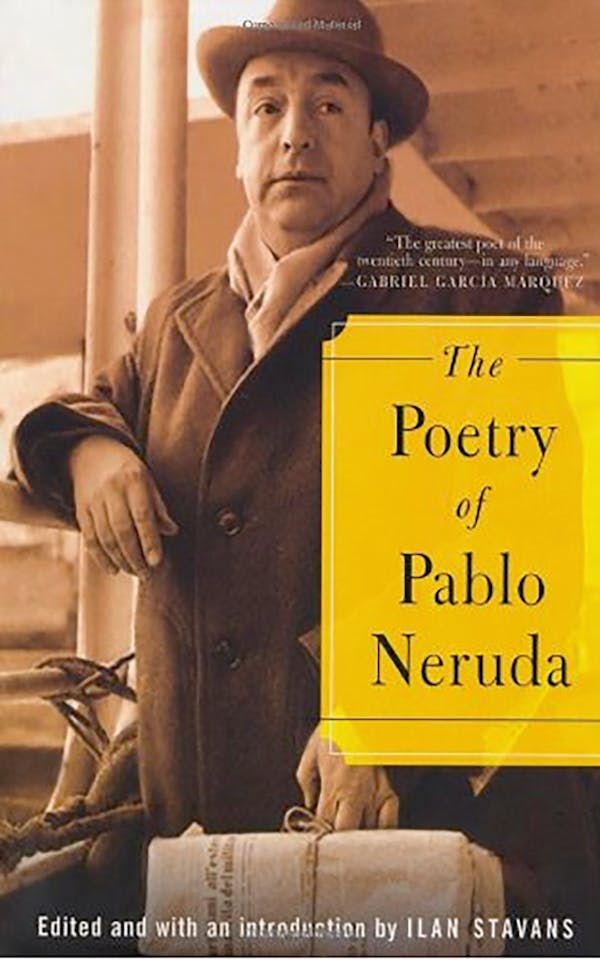
As I mentioned earlier, this was true of many countries around the world where people were fighting for freedom and justice. In South America, Simon Bolivar—who was known as The Liberator or El Libertador—led the fight for independence from Spain of what are now his native Venezuela, Colombia, Bolivia, Peru, Ecuador, and Panama, but he was also a poet, alongside the Cuban Jose Marti, among others. The Chilean poet and Nobel Prize winner Pablo Neruda wrote a poem in tribute to Bolivar, titled “A Song for Bolivar,” which I will read to you:

Our Father thou art in Heaven,
in water, in air
in all our silent and broad latitude
everything bears your name, Father in our dwelling:
your name raises sweetness in sugar cane
Bolívar tin has a Bolívar gleam
the Bolívar bird flies over the Bolívar volcano
the potato, the saltpeter, the special shadows,
the brooks, the phosphorous stone veins
everything comes from your extinguished life
your legacy was rivers, plains, bell towers
your legacy is our daily bread, oh Father.

The line “everything comes from your extinguished life” might as well have applied go Neruda himself, who was murdered by the fascist Pinochet government he opposed. Many writers have died for what they have written—and again we go back to Rizal—but others fought, lived on, and even succeeded in their struggles for national liberation. Two of the most prominent were Ho Chi Minh and Mao Zedong, who led long and ferocious wars against both local and foreign oppressors.

Imprisoned in China during the war, Ho Chi Minh wrote this poem in 1943 upon reading a book called the Anthology of a Thousand Poets:

The ancients liked to sing about natural beauty:
Snow and flowers, moon and wind, mists, mountains and rivers.
Today we should make poems including iron and steel,
And the poet should also know how to lead an attack.

In 1950, shortly after the Communists took over in China, Mao wrote this poem in reply to another poet named Liu Yazi:

The night was long and dawn came slow to the Crimson Land.

For a century demons and monsters whirled in a wild dance,

And the five hundred million people were disunited.

Now the rooster has crowed and all under heaven is bright,

Here is music from all our peoples, even from Yutian,

And the poet is inspired as never before. 

Note how, in these two poems, Ho and Mao locate the poet at the center of a collective struggle. This idea is developed even more strongly by Jose Ma. Sison—who by the way was an English major in UP—in his poem from the 196os titled “The Guerilla is Like a Poet”:

The guerilla is like a poet 
Keen to the rustle of leaves 
The break of twigs 
The ripples of the river 
The smell of fire 
And the ashes of departure. 

The guerilla is like a poet. 
He has merged with the trees 
The bushes and the rocks 
Ambiguous but precise 
Well-versed on the law of motion 
And master of myriad images. 

The guerilla is like a poet. 
Enrhymed with nature 
The subtle rhythm of the greenery 
The inner silence, the outer innocence 
The steel tensile in-grace 
That ensnares the enemy. 

The guerilla is like a poet. 
He moves with the green brown multitude 
In bush burning with red flowers 
That crown and hearten all 
Swarming the terrain as a flood 
Marching at last against the stronghold. 

An endless movement of strength 
Behold the protracted theme: 
The people’s epic, the people’s war. 

Given the aesthetics of the Philippine Left at that time, you could actually reverse this proposition to read “The poet is like a guerilla,” which Emman Lacaba certainly was, as was Ma. Lorena Barros, whose poem “Sampaguita” follows:

This morning Little Comrade

gave me a flower’s bud

I look at it now

remembering you, Felix,

dear friend and comrade

and all the brave sons and daughters

of our suffering land

whose death

makes our blades sharper

gives our bullets

surer aim.

How like this pure white bud

are our martyrs

fiercely fragrant with love

for our country and people!

With what radiance they should still have unfolded!

But sadness should not be

their monument.  

Whipped and lashed desperately

by bombed-raised storms

has not our Asian land

continued to bloom?

Look how bravely our ranks

bloom into each gap.

With the same intense purity and fragrance

we are learning to overcome.

Decades later, her namesake Kerima Lorena Tariman would write “Pagkilos,” a poem that celebrates motion in both nature and society:

Ang lahat ng bagay ay tila kitikiti,
Palagiang kumikilos at hindi mapakali.
Ang paggalaw ay kakambal ng bawat bagay,
Likas na kaugnay at hindi maihihiwalay.

Ang mga bagay-bagay ay kay hirap isipin,
Kung walang paggalaw, kung kaya, gayundin,
Ang paggalaw mismo ay di natin matatanto,
Kung wala ang mga bagay dito sa mundo.

Sa daigdig, halimbawa, nagpapahinga man ang pagod,
Matikas man ang estatwa at patay-malisya ang tuod,
Sila’y hindi naliligtas sa paggalaw ng planeta,
Ang pag-ikid at pag-inog ang palagiang sistema.

Kung kaya ang masa na akala mo’y walang imik,
Kapag natutong lumaban ay nagiging matinik!
May mga kasama man na natitigil sa pagkilos,
Ang rebolusyon sa daigdig ay hindi natatapos!

A, lahat ng bagay ay saklaw ng ating kilusan,
Katotohanan ito na di maaaring iwasan.
Kung kaya’t habang tayo ay may lakas at talino,
Sa pagkilos natin ialay ang ating bawat segundo!

Tragically, both Lorenas—and Emman Lacaba before them—would be killed in the struggle that they took on, and be hallowed as revolutionary martyrs.

Now, all this may sound like an open invitation for our favorite red-taggers to call all poets rebels, and all rebels communists. That would be ridiculous. Most poets are still happy and perfectly within their rights to write about the moon and the stars and undying love. Some rebel-poets were proud and self-admitted communists, at a time when the word was invested with a sheen of holiness. But the abject failure of communism to set up a truly free and egalitarian society and its appropriation in both China and Russia by new and autocratic elites has shed much of that romantic mystique, and it is supremely ironic that those writers and artists now fighting for civil liberties in both countries are considered enemies of the state.

“The Writer as Liberator” was an easier concept to deal with when we had a foreign occupier like Spain, America, or Japan. Today, our oppressors are internal, lodged within our society, and within our hearts and minds. The liberation we need today is from our worst selves, which is often the hardest enemy to face. Bad leadership has enabled and encouraged that side of us that accepts extrajudicial killing and unjust imprisonment as normal. 

The minds of so many of our people remain shackled by ignorance, falsehood, prejudice, superstition, fear, and a crippling dependency on the old and familiar, however self-destructive they may be. In an increasingly polarized and intolerant world, people everywhere face racial violence and discrimination, gender inequality, economic exploitation, and political repression.

The writers who will battle this chimera have many weapons at their disposal—not just books and the traditional press but social media, a universe of communication unto itself that Rizal and his contemporaries never dreamed of. Journalists fight with the truth, creative writers fight with the truth dressed up as artistic lies. 

I have often said that the best antidote to fake news is true fiction. By this I mean that it often takes artistry and good storytelling, more than a mere recitation of facts, to show people what is true.

Long before there were newspapers, writers gave voice to their people’s hopes and fears through what today would be called fiction: through myths, legends, tales, epics. These stories transported people from the crushing routine of their everyday lives to the realm of the gods, to a romantic past cloaked in the mists of fable and fancy. Indeed, these stories came even earlier than literacy itself, transmitted orally from one generation to the next. Creation myths validated and gave meaning to a tribe’s or a people’s existence; tragic drama reminded them of the consequences of our moral choices. 

When I started my Qwertyman column in the Philippine Star and began writing what I called “editorial fiction,” a columnist in another newspaper immediately cried “Foul!”, claiming that fiction cannot possibly be taken as opinion. I responded that all fiction is opinion, if you know how to read it closely enough. Like the mirror Perseus used to kill Medusa, we employ fiction to deal with truths we cannot bear to face.


I am under no illusion that the next revolution, whatever it may be against or when, will be sparked by a novel or a poem. Very likely, it will be a viral video that will ignite that flame. I pray it will not be violent, but rather a comprehensive conversion of our people’s minds and spirits for the good. But there will always be a place for the writer in the offices, kitchens, and workshops of democracy, on the bunkbeds where we lie dreaming of justice and prosperity for all. 

Let me close with a short poem that I wrote last year, titled “Freedom Is When”:

Freedom is when 

We don’t think about it

But it’s there like air

We seek only in its absence

When we’re gasping for breath.

Freedom is when

We can choose whom to love

Or whom or what to believe 

Without any fear

Of punishment or death.

Freedom is when

We can sleep without guilt

And dream without ghosts

Waking up to the aroma

Of steaming rice and stewed fish.

Ang kalayaan ay kung

Hindi natin ito iniisip

Tulad ng hangin

Hanggat ito’y mawala

At tayo’y maghingalo.

Ang kalayaan ay kung

Malaya tayong pumili

Ng iibigin, o paniniwalaan

Nang walang katatakutang

Parusa o kamatayan.

Ang kalayaan ay kung

Mahimbing tayong makakatulog

At managinip nang di minimulto

Hanggang tayo’y pukawin ng halimuyak

Ng bagong saing na kanin at pinangat.

Qwertyman No. 45: Onward to Frankfurt?

Qwertyman for Monday, June 12, 2023

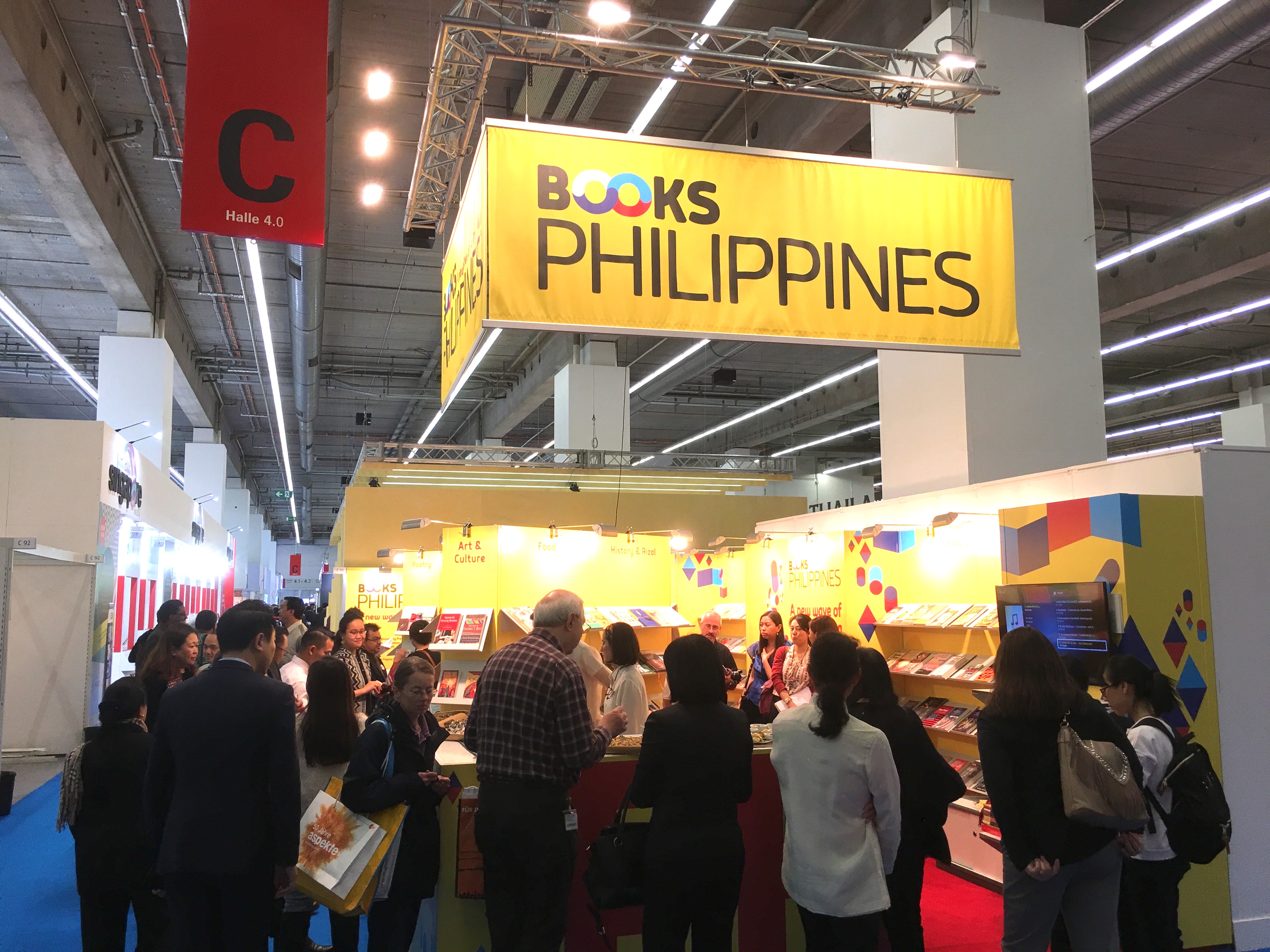
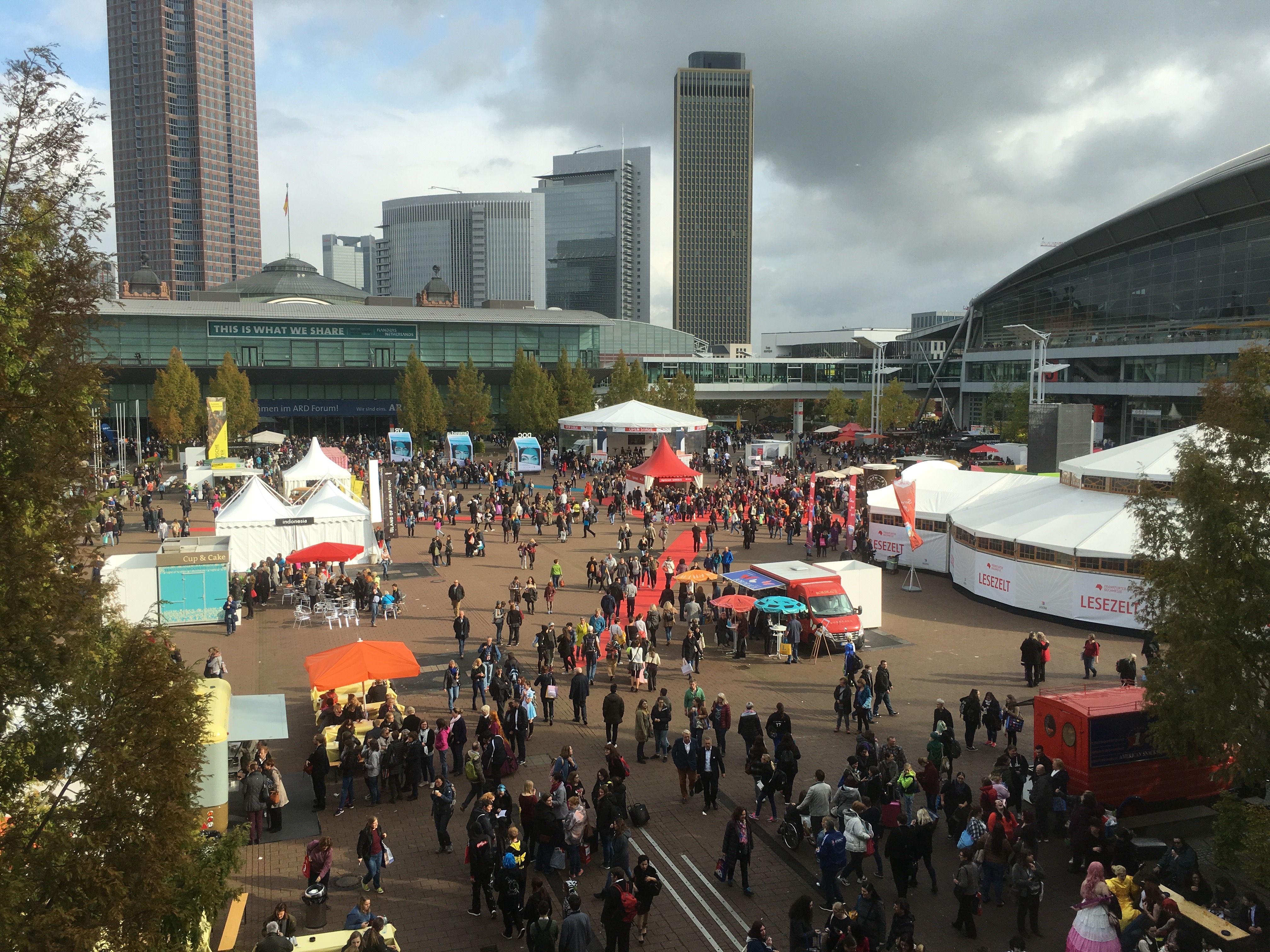
IF YOU were at the Philippine Book Festival (PBF) that took place at the World Trade Center earlier this month, you would have been surprised to find how many Filipinos were writing, publishing, selling, buying, and reading books. A project of the National Book Development Board (NBDB), the PBF was the first such event devoted solely to locally produced books—as opposed to, say, the Manila International Book Fair (MIBF) in September, which is open to books and publications from overseas. The NBDB wisely decided to showcase our homegrown literary talents—not only from Manila, and not only from my generation of old fogeys, but from all over the country, and writers of all persuasions and ages (as young as fourteen!).

We Pinoys have become so immersed in Netflix, YouTube, and social media that many of us have forgotten about reading, and what a good book can do for one’s mind and soul. We want everything delivered to us in short sentences—even in acronyms or, if possible, in memes—because long paragraphs (and, God forbid, pages) can only mean a waste of our precious time (which is, of course, best spent posting what we last ate on Instagram, and critiquing someone’s OOTD). Whether fiction or nonfiction, books challenge us to carry ideas through to the limits of our reason and imagination. The difference between a good meme and a good book can be that between wit and wisdom—between the bubbles that rise to the top of your champagne and the notes that linger on your tongue and senses long after you’ve put your drink down.

And despite the death knells that have been tolled for publishing and reading in this country, the droves of people who flocked to the PBF and the MIBF show otherwise; as I’ve noted elsewhere, more new authors and publishers are emerging across various genres and languages than ever before, spurred by writing programs and workshops, new technologies, and more exposure for Filipino writers in international markets.

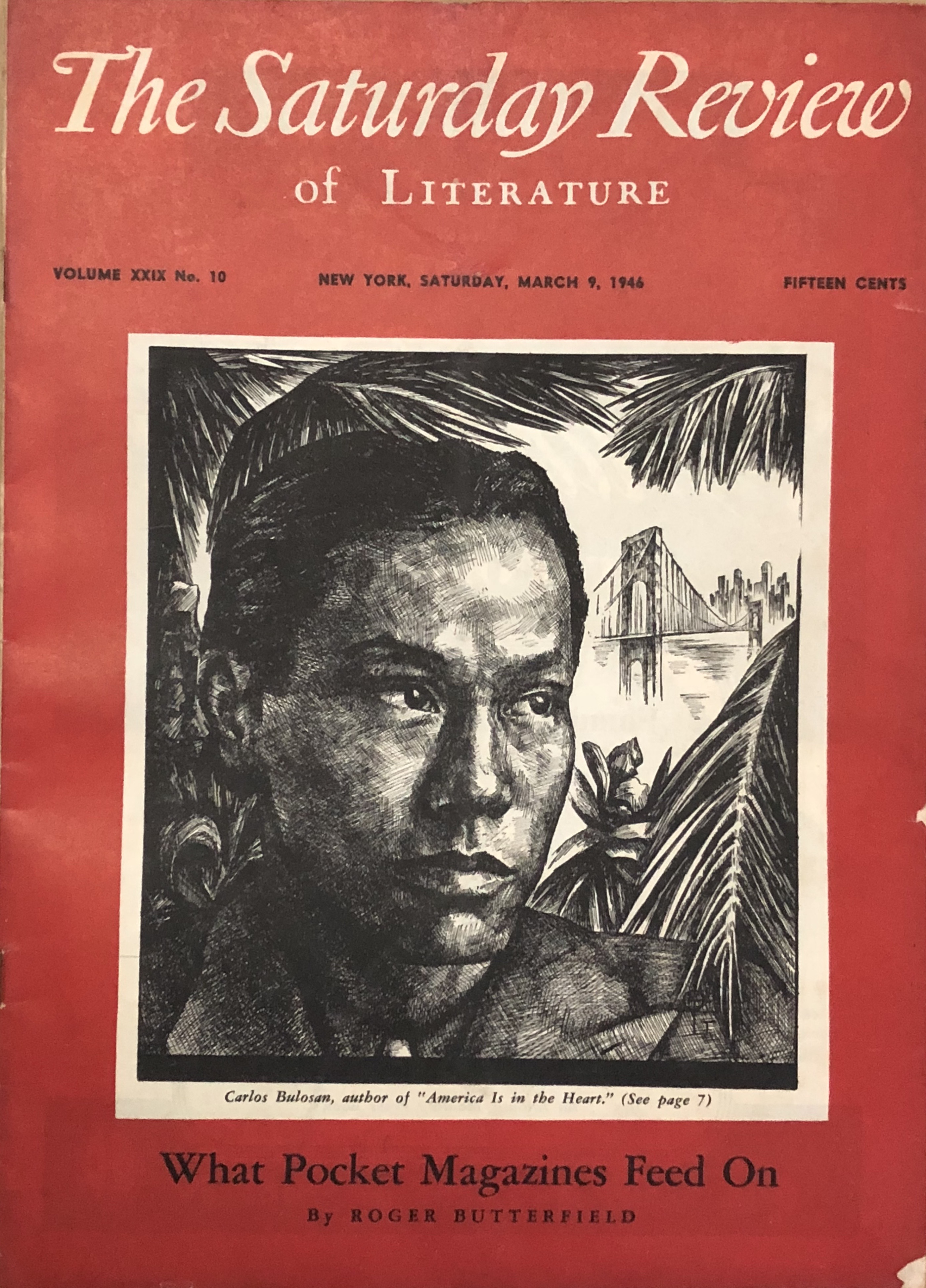
That last note—the emergence of Philippine writing in the global consciousness—has been a long time coming. We’ve had, of course, writers who’ve been published abroad, most notably Jose Rizal and the late National Artist F. Sionil Jose. In America, both expatriate and US-born writers such as Gina Apostol, Ninotchka Rosca, Jessica Hagedorn, Eric Gamalinda, Zach Linmark, and Brian Ascalon Roley have made important inroads into publishing, some with mainstream publishers. Of course, they were preceded by the likes of Carlos Bulosan, Jose Garcia Villa, NVM Gonzalez, and Bienvenido Santos, in a time when getting published in America seemed to be the apex of a literary career. We’re way past that now, having found our own voice and our own readers right here at home. 

I’ve often remarked that I’d rather be read by 10,000 Filipinos than 100,000 Americans, but I may have spoken too soon, as even those 10,000 Pinoys willing to buy and read a serious novel can be hard to round up. Therein lies the irony: we’re happy to write and publishers seem happy to publish, and the high attendance at the PBF could be a sign that things are changing, but creating a critical mass of local readers for literature remains a struggle. 

Even in America, where we imagine that almost four million Filipinos should be able to clear out an edition of 5,000 books without any trouble, that simply doesn’t happen. I suspect that that’s because we’ve never really been a book-reading culture, unlike the Japanese and the Indians, and the easy availability of entertainment on Netflix and Tiktok just aggravates the situation. (A more disturbing possibility is that our writers still haven’t learned to write the kind of stories with the kind of treatment that Filipino readers—and there are also many kinds of them—expect, without sacrificing literary “quality,” whatever that means. In my old age, this is what I’m aiming for—to give my readers stories that they’d want to see turned into movies.) 

There’s no doubt that we’re producing materials of high literary value—in English, Filipino, and our regional languages; we saw that in the PBF and we see it in our classes and workshops all the time. These works deserve to be shared with a broad audience—not just here, but overseas, where the Chinese, the Japanese, the Koreans, the Indonesians, and the Vietnamese have already made a name for themselves in the publishing world. 

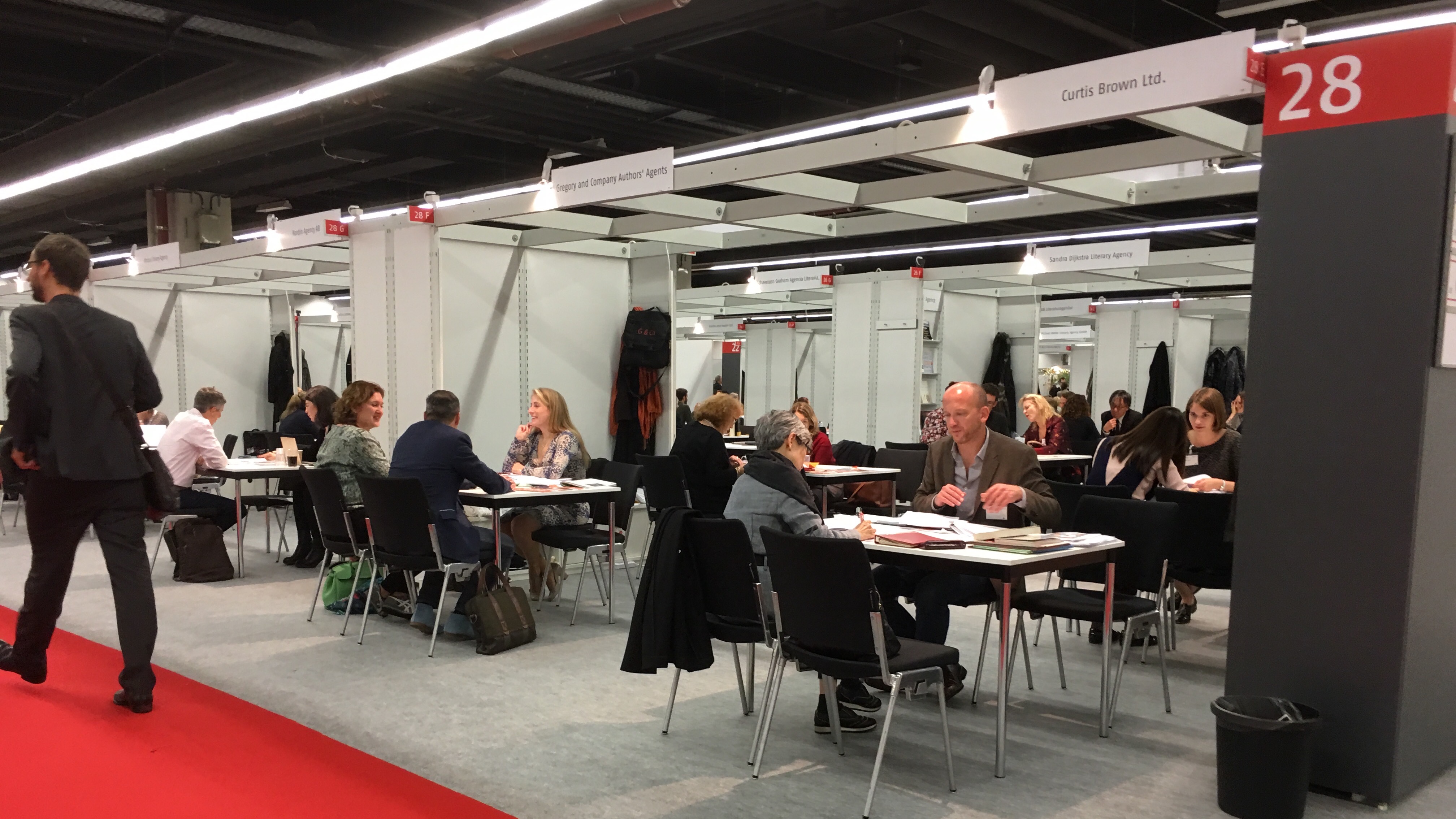
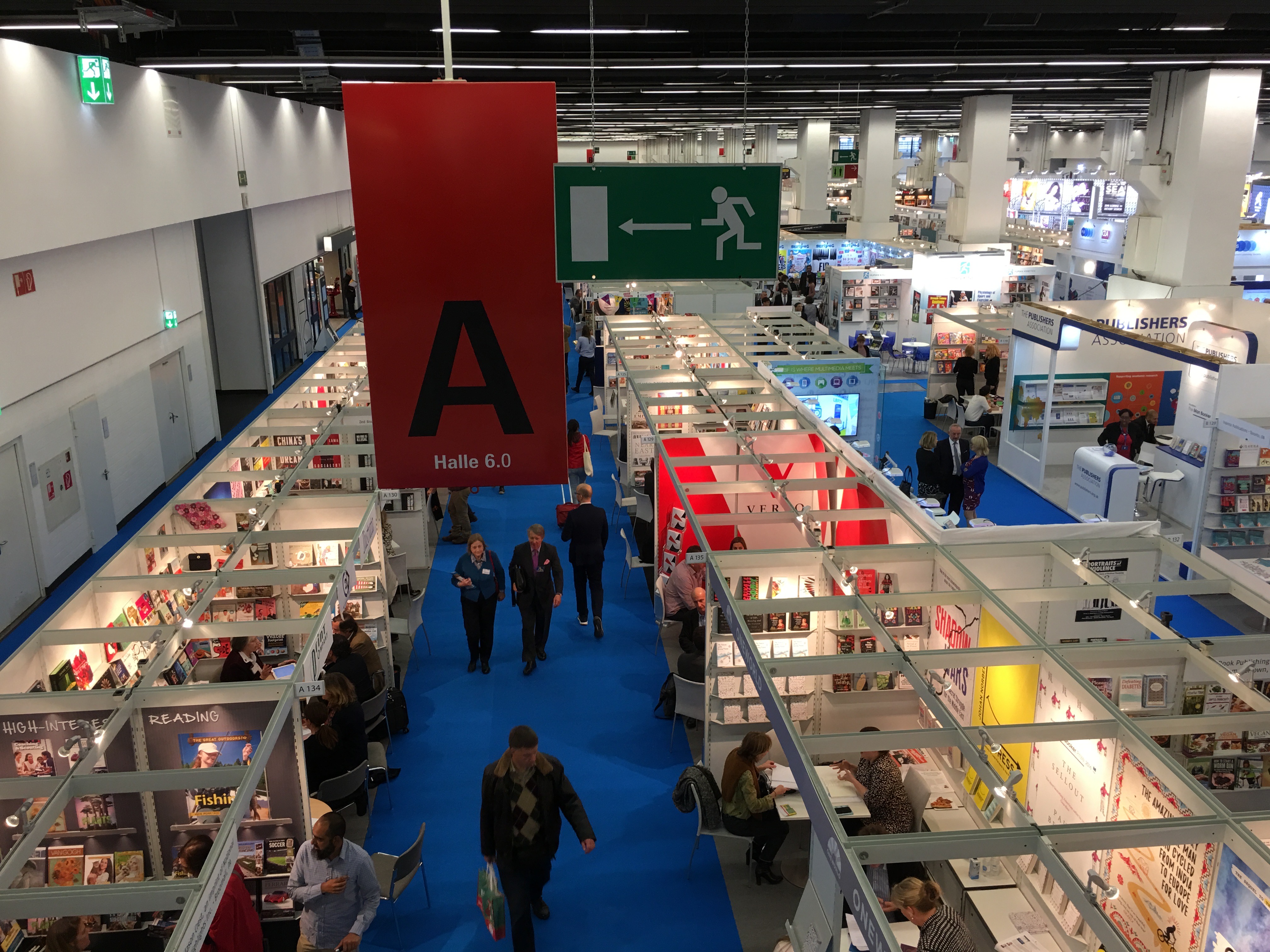
But that takes a network we still have to familiarize ourselves with and learn how to navigate—a network of translators, literary agents, editors, publishers, and booksellers largely unknown and therefore closed to us. We’re not totally clueless. Through the NBDB and local publishing stalwarts such as Karina Bolasco (just recently retired from the Ateneo Press and the founder of Anvil Publishing before that) and Andrea Pasion-Flores (our very first international literary agent, now owner of Milflores Publishing and president of the Book Development Association of the Philippines), the Philippines has been represented over the past few years in such major events as the annual Frankfurt Book Fair, the world’s largest such market of authors, publishers, and agents.

Not meaning to be immodest, thanks to my agents and publishers, I myself have benefited from this kind of exposure, having sold my second novel Soledad’s Sister in last year’s FBF into a German translation and edition, which just came out; before that, it had already been translated into and published in Italian and French, aside from an American edition. Imagine what that network could do for the rest of our writers.

This brings me to an idea whose time, I strongly believe, has come: focal representation in a forthcoming Frankfurt Book Fair as a “guest of honor,” a position reserved for a country wishing to showcase the best of its literary talent across all genres (two years ago it was Canada, followed by Slovenia). This has to be accompanied by a strong effort in translation—from the regional languages to English, and from English to other international languages like Spanish and French, perhaps even Chinese. It will take much planning and a sizeable budget, but as our recent forays into the Venice Biennale have shown on behalf of our leading artists, with the right cultural leadership and vision, it can be done.

Penman No. 451: A Harvest of Books

Penman for Sunday, June 4, 2023

IF YOU’RE reading this on this Sunday morning, then it’s not yet too late for you to find a cab and get yourself over to the World Trade Center in Pasay City to catch the last day of the Philippine Book Festival, and have your favorite Filipino authors sign their books for you.

Organized by the National Book Development Board (NBDB) in partnership with the National Library and other agencies and organizations, the PBF will showcase the best of new Philippine writing and publishing, with the bonus of having most of the authors around for signings, chats, and the now-obligatory selfies.

Since the Internet took off thirty years ago, people have been declaring that “Books are dead!” (And even before that, “The Author is dead!”—although, of course, not quite in that almost literal sense). Well, guess what—both are very much alive, whole new generations of them, as if the Internet never happened. I don’t have the hard figures to show—I’m sure the NBDB has them—but just from what I’ve seen at the past Manila International Book Fairs (the next one of which will be held in September), there’s much more new writing and publishing happening now than there was before the Internet. 

There are many drivers for that, one of which has to be the proliferation of writing programs and workshops, whose graduates really succeed only when they come out with books. (Like I often remind Creative Writing grad students who take forever to “perfect” their thesis projects, “You’re writing for no more than five readers—your dissertation committee—and when you’re done, your thesis will be sitting on a solitary shelf. Just do what you need to pass the damned defense and focus on producing your first book out of that draft! Your real examiners will be your readers.”) 

Another factor is the growth of the publishing industry, which has become much more diversified in terms of ownership, material, and audience. The long years of martial law drove much creative output underground, so to speak, with few available venues for literary publishing and only competitions like the Palancas providing incentives for continued production. (On the other hand, the government presses kept churning out books on the First Couple’s abounding wisdom.) Post-EDSA, the pent-up dam broke, and literature flourished, but still hardly on the scale we’re seeing today.

I suspect that’s because many new players have gone into publishing, finding niche markets for everything from religious and self-help books to graphic novels and high-end coffee-table books. Among these, I’d count Milflores Publishing, founded by the late Tony Hidalgo and now in the hands of the very capable Andrea Pasion-Flores. Balangay Books, focused on local literature, has been opening doors for new young authors, and belongs to the Indie Pub Collab PH, a group of independent publishers. Down south, Savage Mind Bookshop and the Ateneo de Naga University Press have made great strides in literary publishing not just in the Bicol region but well beyond. Emerging in the wake of the Pink Revolution, San Anselmo Publications has made a name for itself as a purveyor of progressive thought. A recent visit to OMF Literature’s bookshop and office along Boni Avenue showed me how Christian literature is flourishing, attracting both new authors and readers. 

Let’s not forget self-publishing, which with such new technologies as print-on-demand and e-books has outgrown the stigma of “vanity” publishing and has produced both commercial and critical successes. While overall quality remains highly variable, the free Internet has empowered and enabled a new generation of young people to feel like they can become “writers” by posting on such sites as Wattpad—and some of them will be. (The irony here is that, as on Amazon, writers who succeed in their e-book debuts then get picked up by publishers of physical books.) Professional design and editorial outfits such as Studio 5 and Perez NuMedia also exist to help individuals and institutions turn their ideas into prizewinning books.

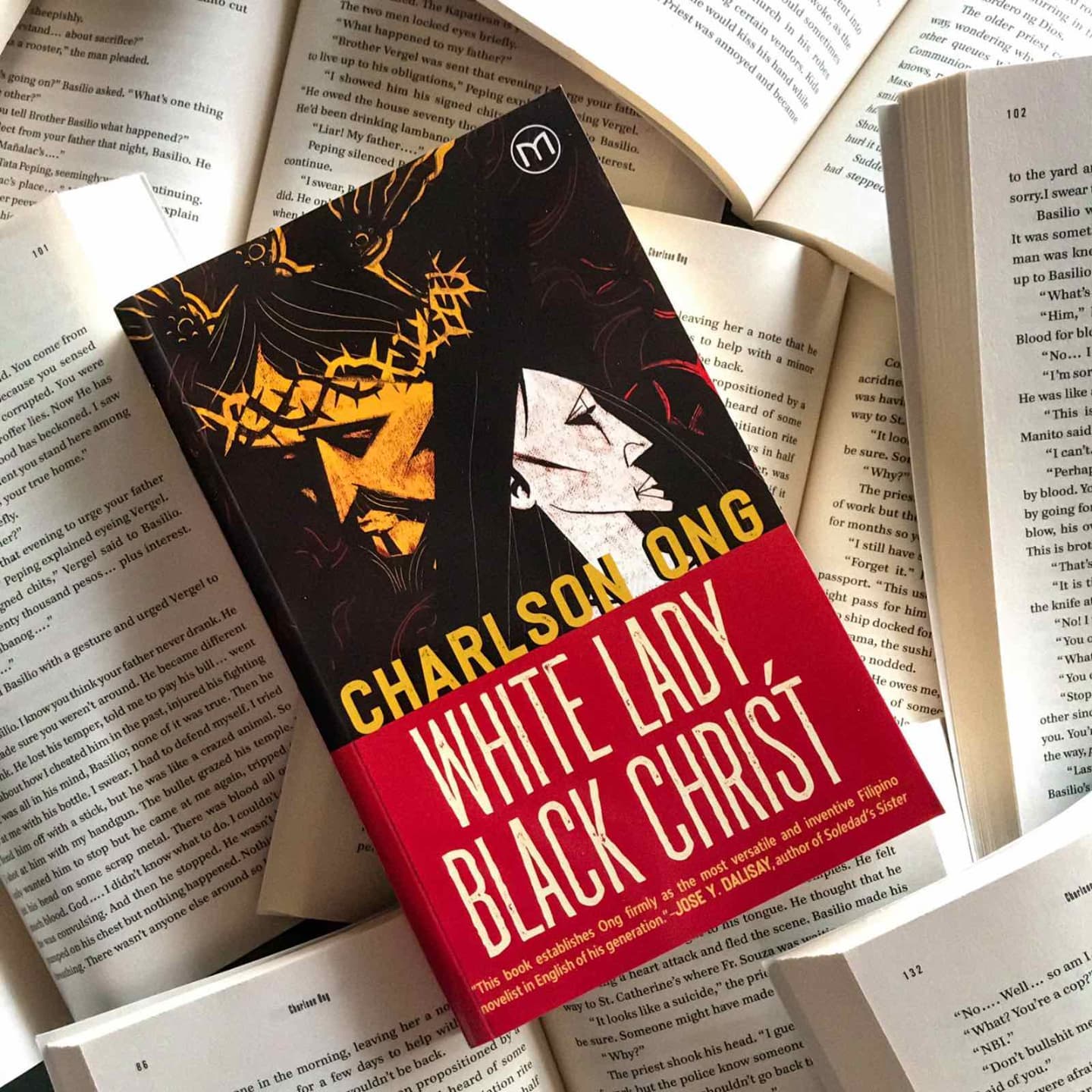
And then of course the long-established big-name publishers and academic publishers are still around: Anvil Publishing, UP Press, Ateneo de Manila University Press, UST Publishing House, and the University of San Carlos Press, among others. Vibal Publishing has produced impressive and sumptuously printed historical books—as has, let’s not forget, the National Historical Commission. They remain the publishers of choice for what might generally be considered prestigious but non-commercial projects, although their marketing savvy has vastly improved, from book design to distribution (much of the bookselling has moved online, to Shopee and Lazada). But since the wait at these publishing houses tends to be long, even established Filipino authors like novelist Charlson Ong (White Lady, Black Christ) have gone with such alternatives as Milflores (as did I, in its previous incarnation), which can often provide speedier results with no sacrifice of quality.

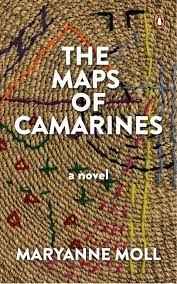
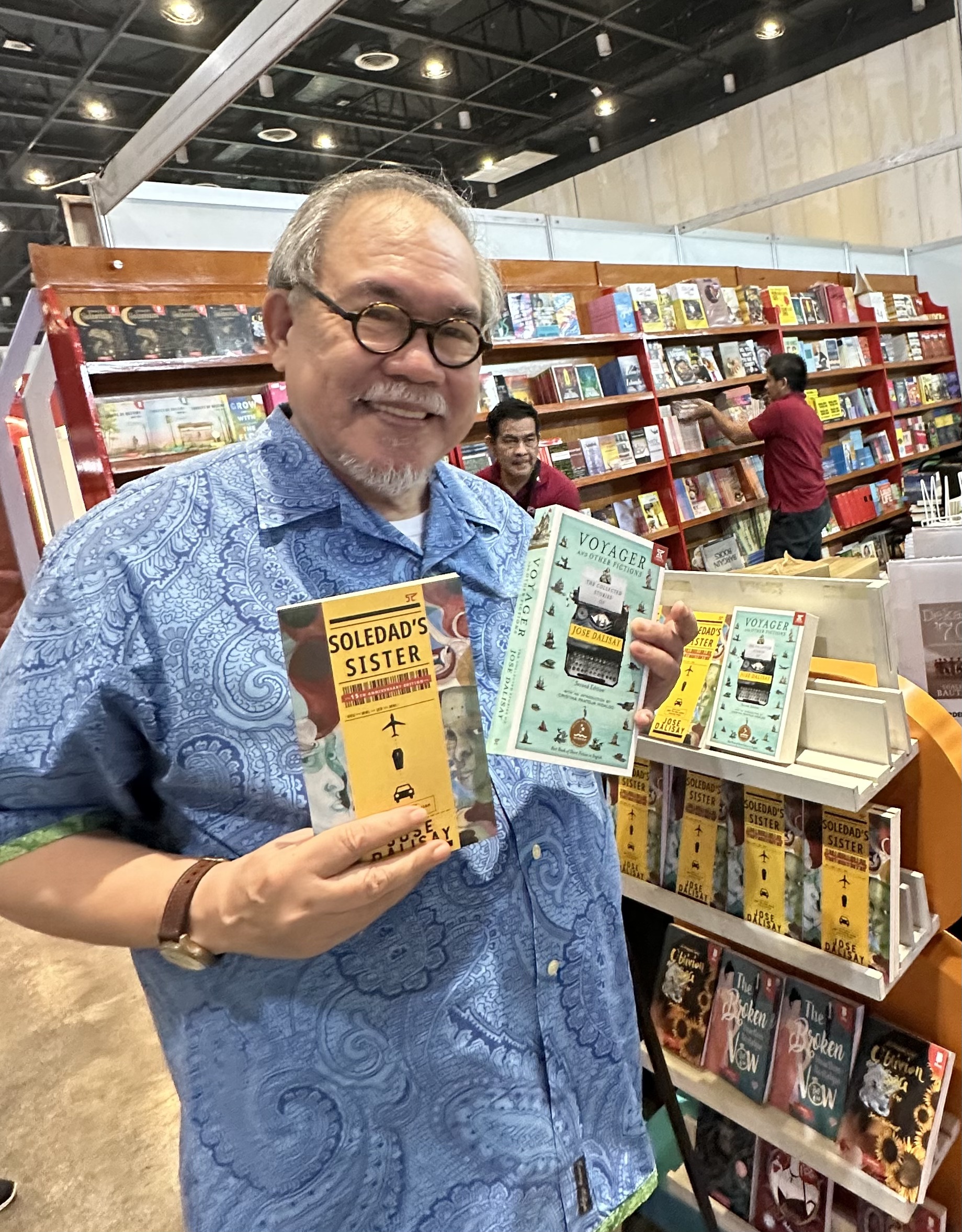
One more thing: more Filipino authors have begun to get published and noticed abroad, beyond America. Note the recent publication of Ulirát: The Best Contemporary Stories in Translation from the Philippines, edited by Tilde Acuña et al., and the South Africa-based Jim Pascual Agustin’s Waking Up to the Pattern Left by a Snail Overnight, both by Gaudy Boy in Singapore. Singapore is also where Penguin Random House SEA is based, and from where it published Danton Remoto’s novel Riverrun and his book of stories The Heart of Summer(aside from his translations of our classic works in Filipino), and Maryanne Moll’s novel The Maps of Camarines. I’m also happy to report that my novel Soledad’s Sister just came out in a German hardcover edition (as Last Call Manila) from Transit Buchverlag, following earlier editions in Italy, France, and the US. A 15th-anniversary edition of the novel, along with a new edition of my Voyager collected stories, are on sale at PFB—as are almost all of the books I mentioned here, with their authors on hand to sign them.

So wait no further and grab that ride to the WTC, for your share of this bountiful harvest of Filipino books. (Did I say that entrance is free?)

Qwertyman No: 40: Teaching History

Qwertyman for Monday, May 8, 2023

I HAVE a subscription to the New York Times, which I enjoy for its features and commentary as much as its news coverage, and the other day my attention was piqued by a small headline: “It’s Not Just Math and Reading: US History Scores for 8th Graders Plunge.”

According to the article, recent test scores reveal that young Americans (about 13-14 years old for eighth-graders) have become much less knowledgeable about their history and civics over the past decade—with 40 percent scoring “below basic” and only 13 percent ranked as “proficient.” 

I immediately wondered how our students would score given similar tests. Would they be able to answer even simple questions about why Ferdinand Magellan sailed to the Philippines, what prompted Filipinos to revolt against Spain, why the Americans occupied us, what led to our involvement in the Second World War, and what martial law and EDSA were all about? I’ll probably be safe in my prediction that they would score dismally, from what I’ve seen in my own classes in UP (yes, in UP), where I’ve been dismayed to find a yawning ignorance of history and literature among my students, supposedly among the best in the country. 

Don’t get me wrong: these are bright, idealistic kids, desirous of all things good for their people and their families. They perform well in class and will likely succeed in whatever career lies ahead of them. But when I ask a roomful of English majors if they know or have read NVM Gonzalez and only a couple of hands go up, I get worried. When I ask when or what year the Americans arrived to conquer us and I get strange answers like “1945,” I get worried. 

However shocked we may profess to be, we can’t blame the students. In 2014, following the passage of the Enhanced Education Act of 2013 or the K-12 Law, the Department of Education issued Order No. 20, Series of 2014, effectively removing Philippine History as a high school subject and subsuming it as an “integrated subtopic” under “Asian Studies,” supposedly to provide students with a wider global perspective. The idea sounds nifty, but as many educators have since pointed out, its practical effect has been to dilute the teaching of Philippine history to the point of oblivion. The result is that we have young Filipinos with no knowledge of the most basic facts and issues of their past, and no appreciation of how that past brought us to where we are today.

That vacuum has been an open invitation to misinformation and historical distortion, the stock-in-trade of political propagandists, trolls, and spinmeisters. It’s become much easier to sell myths like a golden age under martial law to impressionable youngsters who were never told or taught the truth. Not surprisingly, Order No. 20 has been attacked by its critics as a means to lobotomize the youth and to render them more susceptible to alternative narratives (aka fake news) concerning our history. 

And yes, I have to acknowledge that all this began under the late President Noynoy Aquino, a champion of K-12, whom I prefer to believe had no such nefarious motives in mind, as he and his family would have had little to gain by erasing history. But the policy was upheld and sustained by the following administration, with DepEd Secretary Leonor Briones arguing strenuously that History (including our martial-law experience) was being taught in Grade 6 under Araling Panlipunan, and again in high school as a component of Asian and World History.

Given the current DepEd’s expressed desire to review K-12, it might be a good time to test how effective that policy has been: just how much Philippine History are our high school students learning and retaining? How much should they know by the time they get to college, where thornier issues such as nationalism, agrarian reform, and foreign policy will be threshed out in all their nuances?

Long before these questions arose, it was a common complaint among students and even teachers that our problem with History was how badly it was taught, often as a collection of names and dates rather than a coherent narrative (which I must say I sometimes wonder about, fact often being stranger and messier than fiction). We generally agree that History should involve more reasoning than rote memorization. But as the New York Times reports, “That emphasis can contribute to a troubling lack of background knowledge,” with experts observing a “rapid and very significant decline in what students know about history and geography—like the fact that Africa is a continent, not a country.” So the basics of names, dates, and places remain important—getting the facts straight before getting into more complicated arguments.

It’s even more troubling to note that on top of this decline in historical knowledge and awareness among young Americans, there’s now a ham-fisted effort from conservative politicians to purge school curricula of what they see as “woke” content—subjects that have challenged the longstanding impression of America as a nation forged by whites. Governors like Florida’s Ron DeSantis—eager to present themselves as the flag-bearers of political and moral rectitude—have supported moves to eliminate African-American and LGBTQ studies from the curriculum. Others have called for banning books that threaten their view of traditional America, including books titled “The Infinite Moment of Us” (a young adult novel about love and sex) and “How to Be an Antiracist” (a nonfiction book about racism and ethnicity). This reminded me of how some Philippine state universities, not too long ago, went on their own book-banning spree, on some silly suspicion that books by such authors as National Artist Bienvenido Lumbera were “subversive.”

The New York Times piece came with an irresistible teaser: a brief five-question, multiple-choice history quiz for readers to test themselves on how well they know American history. I scored four out of five (failing a question about post-Civil War reconstruction)—not too bad, I thought, for a guy living seven thousand miles away. But then I come from a generation schooled on American textbooks, who know American history and geography better than many Americans. That’s a topic for another column.

In the meanwhile, let’s ask ourselves: how well do we know our history, and how important is that knowledge to understanding our present and shaping our future? Is “Maria Clara and Ibarra” pointing the way forward?

Penman No. 448: Designing for the Eye and Mind

Penman for Sunday, March 5, 2023

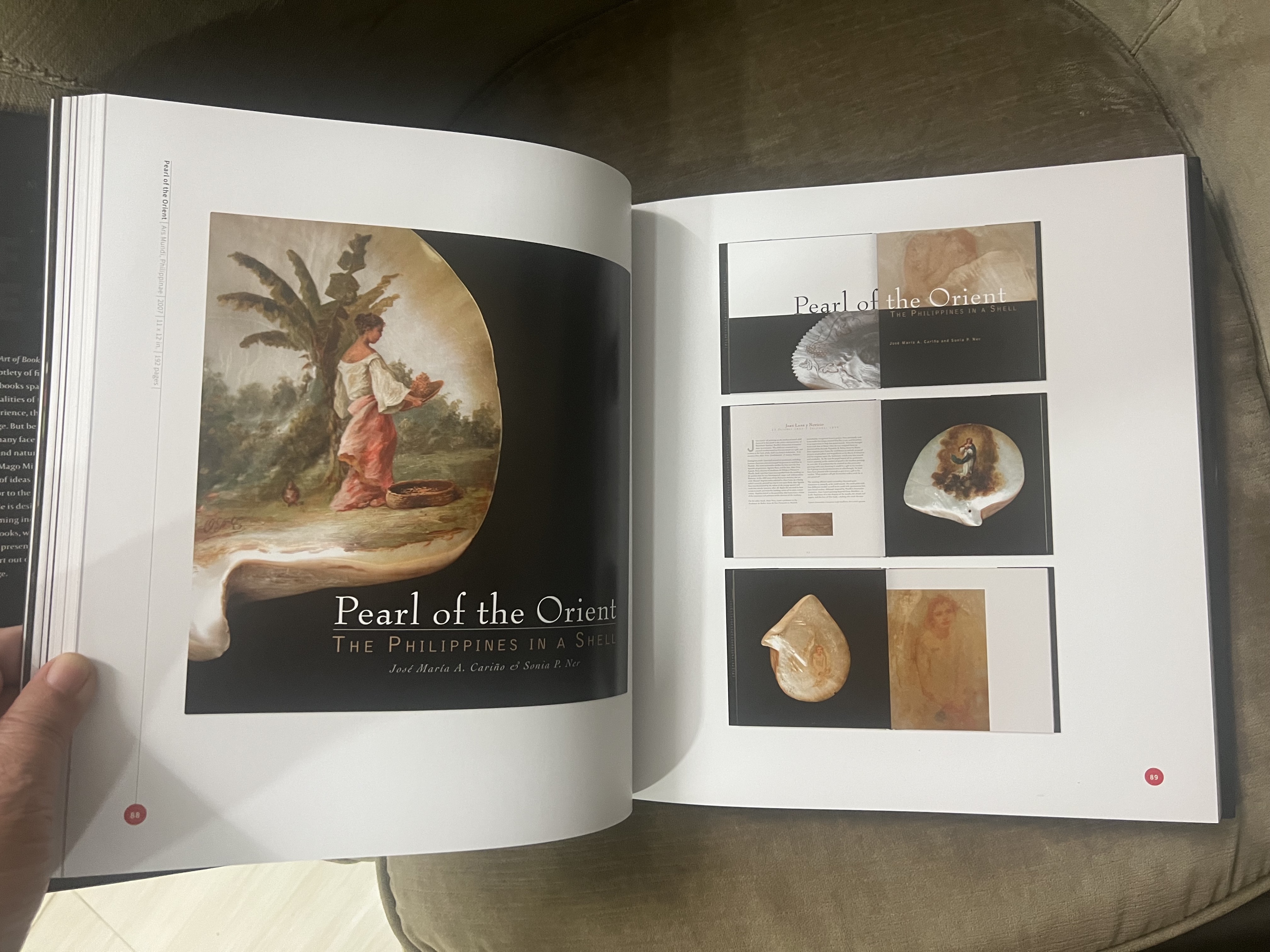
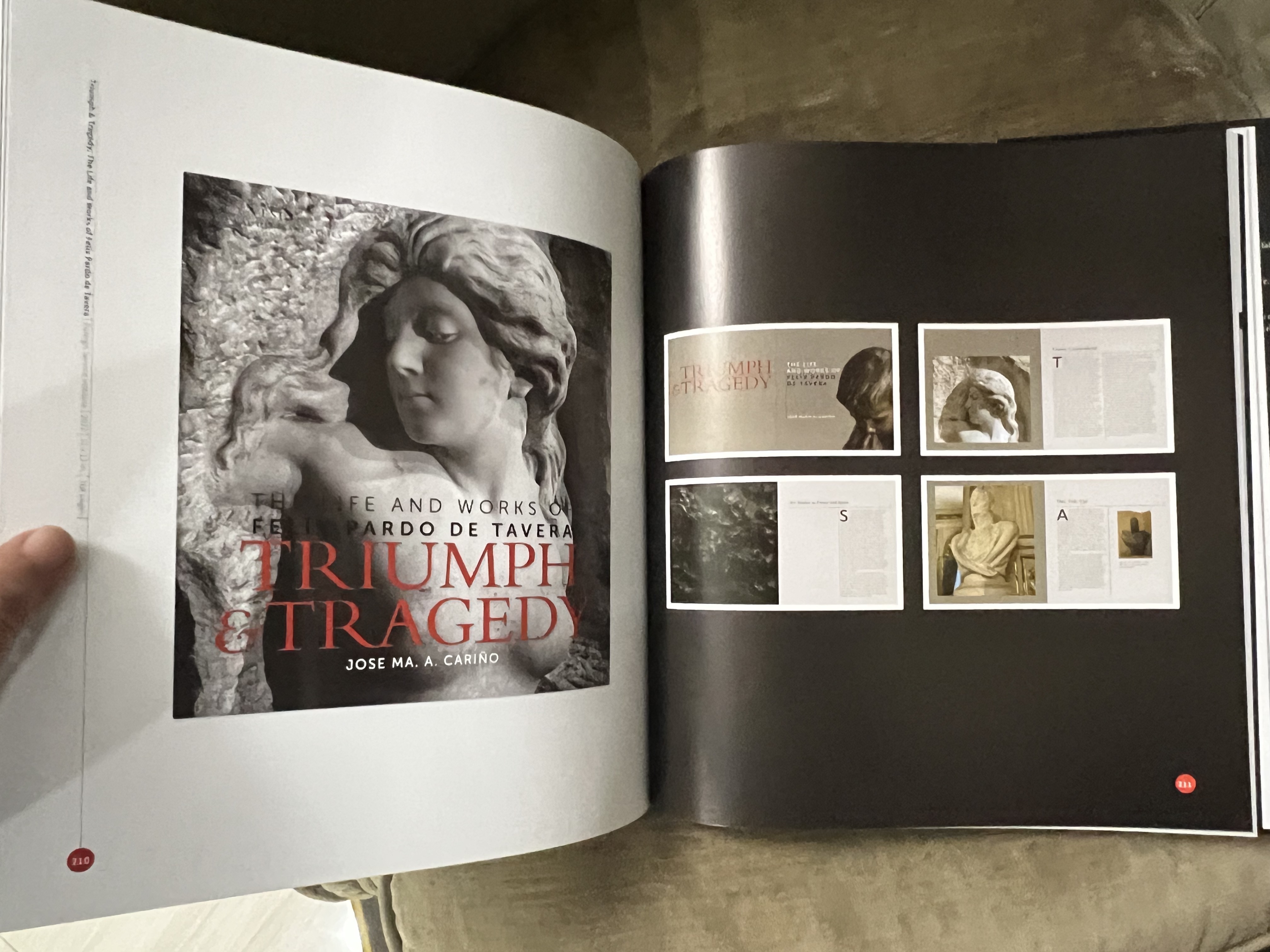
I DON’T normally review books—even books sent to me with a request to be reviewed, which I apologetically ask authors not to do, unless they’re willing to wait a year or two. That’s because I prefer to enjoy books rather than to critique them, which sounds too much like the kind of work I happily retired from. But every now and then, along comes a book I simply can’t ignore, because it’s just too important or maybe just too beautiful to be put aside.

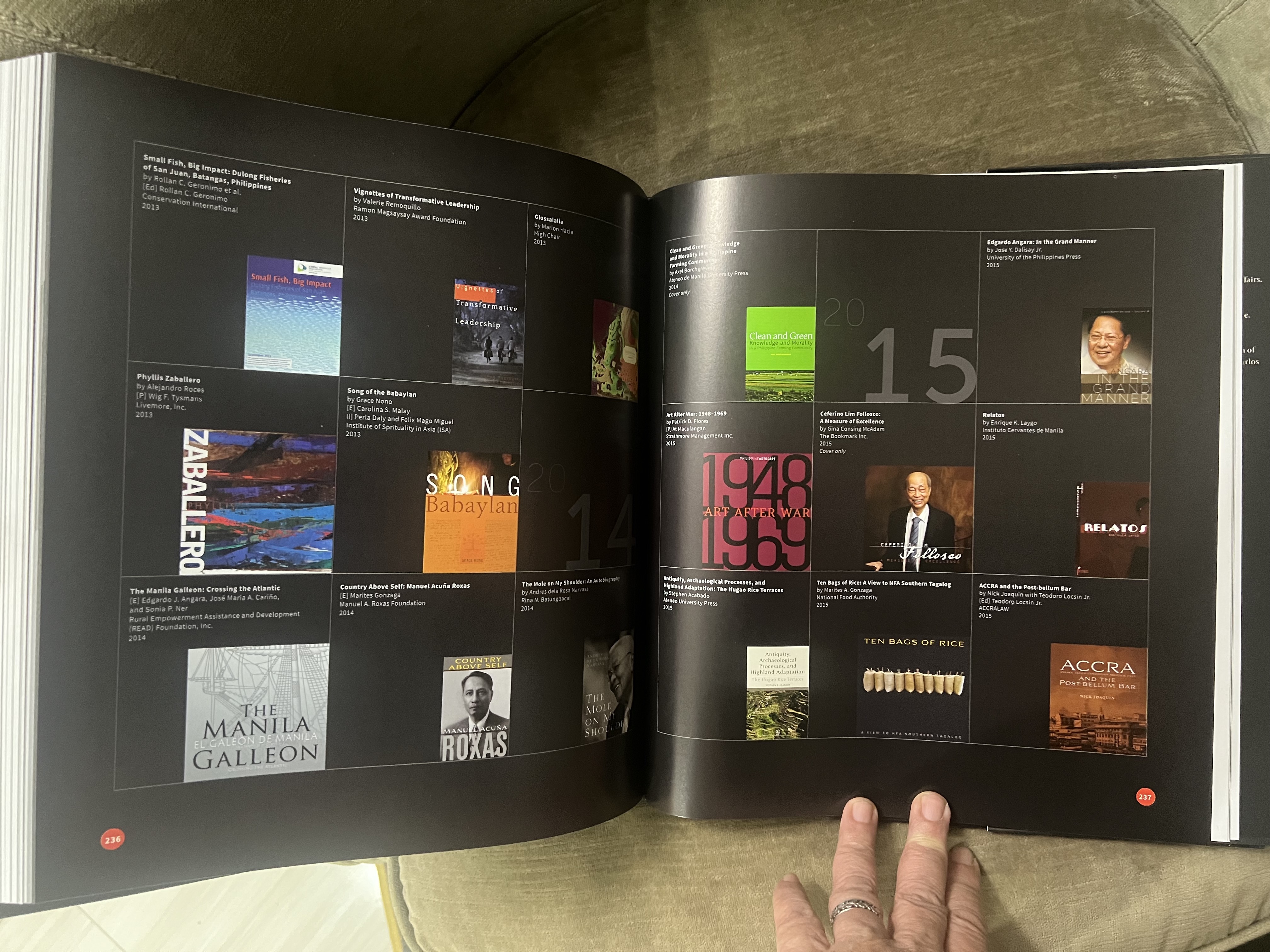
One such book—both important and beautiful—was dropped off at my doorstep last week, and as soon as I opened it, I knew I had to share my knowledge of its existence with fellow enthusiasts of art and design. The book was Felix Mago Miguel: The Art of Book Design, written by Felix’s wife Amelia F. Zubiri-Miguel, edited by Ambassador Jose Ma. Cariño, and published by the Foreign Service Institute.

One of the most talented and prolific Filipino book designers of our time, Felix has designed more than 130 books over the past 20 years, and I’ve been fortunate to have authored and edited a good number of those, including several coffee-table books and the biographies of Edgardo J. Angara and Leonides S. Virata. This hefty 264-page book is a biography, treatise, and catalogue all in one, a fine embodiment and example of its own subject, sumptuously produced not just to showcase Felix’s work but also to discuss his theory and experience of book design.

Ours has always been a country of gifted authors with endless stories to tell, but only recently has enough attention been paid to the proper design, production, and marketing of our books. The growth of Philippine publishing and the opening of foreign markets to Philippine material has spurred some of that interest as a matter of economic necessity, but the general appreciation of book design remains low. 

As an author myself, I’ve always been fussy about how my books look; I didn’t work that hard just to come out with an ugly book with my name on it. But sadly not all authors or publishers share that worry. As Felix himself laments, we Pinoys have a famous fear of spaces—horror vacui—and tend to cram our pages with as much text as we can, as if wide margins (and better readability) were a waste of precious paper.

Coffee-table books, which are Felix’s particular area of expertise, present both special challenges and opportunities. Being typically meant for promotional rather than commercial purposes, CTBs have large budgets that will allow for better production. But a poorly thought-out or executed design can render those millions useless. I’ve groaned at obviously expensive book projects ruined by gaudy or overly busy covers, barely readable type, narrow margins, and bad paper. (One of my biggest pet peeves is printing text over a photograph for that artsy effect, rendering it illegible.)

Felix’s background as a painter (and as a graduate of the Philippine High School for the Arts and the UP College of Fine Arts) allows him to see a book project not just as a technical challenge but also an intellectual exercise—a process of understanding what the book really wants to say, and translating that into a visual language.

“A book project is always like a thesis, a problem to be solved, an experience to be fleshed out,” he says. “Everything for me begins with figuring out what the book is trying to say and how best to say it. I do my best to learn the narrative, reading to understand it, absorbing its contents. If there are visuals already, I go through them, looking for the narrative that I just read among the photos and illustrations. Doing these things enables me to better feel the book and the direction it will go. My goal is to find the personality of the book, to figure out who is talking and to decide on what kind of experience is best—to design the book in such a way that, as Rita Jacobs says, it may be the only way that it can be presented.”

He designs as much for the mind as for the eye. As Amelia puts it, “Though people may say that a designer’s job is all simply a matter of art, my years of seeing Felix working have told me that it is not. At the end of the day, he always ends up more knowledgeable, better informed, and wiser with insights not just from the manuscripts but from the totality of the discussions and the time he had spent with his clients, which is probably the best bonus and priceless privilege that comes with the job, because at the end of every project, a really beautiful book needs to be more than just pretty to look at.”

Felix adds: “As designers, we become builders of experience. We may not have the privilege of letting our audience touch the skin or the sinews of what they are looking at, but if we did well in our work, what one designed becomes an exhilarating, unforgettable experience. Not only do we introduce the authors and their voices, but through a well-designed book, readers may experience the same things vicariously. What is separated by time and space is connected through emotions. And a book that touches your soul is indeed an experience to be cherished.

“After learning the technical aspects of design—the use of typography, colors, spaces, photos and illustrations, pages, covers, and printing—I realized, I have a new medium. And just like in painting, the medium is not the end of the painting; it is just part of it, because more importantly, there is a story to be told and that story is the priority of the design. My role is to ensure that this invisible visual force will allow the story to be told.”

And tell the story Felix does, in an inimitably pleasing and tasteful style that more than does justice to his material. I look forward to our next project together, whatever that may be—a writer can only write better knowing how superbly his work will look in a capable designer’s hands. 

Penman No. 445: Some Notes on Travel Writing

Penman for Sunday, December 4, 2022

I’M SURE you’ve noticed—with much envy in my case—how so many of your friends have been traipsing around the world these past few months on what’s been called “revenge travel,” that perfectly human impulse to flee the cage after years of imposed isolation. 

And whether you’re guzzling down a pint of beer in Munich, chasing pintxos in San Sebastian, or crossing a bridge in Kyoto, the chances are you’ll be happy with a raft of digital photographs to show for your adventures. Many will want to post about their tours on their blogs, while a much smaller group will—perhaps months later—sit down to reflect on their experience and write about it in an effort to make better sense of what they went through. 

That’s something I’ve done myself from time to time, and so I thought of sharing some notes for the prospective travel writer—not just of the usual travel feature we produce for commercial media, but of a more personal kind of travel essay, one focused as much on the traveler as on the place itself. Beyond reportage citing facts and figures, this is writing that implicates and engages the traveler, the writing persona, and makes him or her a character in the piece. 

At my age, I consider myself a fairly well-traveled person, but one of the first things I want to say about good travel writing is that it’s really not about where you’ve gone or how many countries you’ve been to. It’s not about quantity, but quality of experience, perspective, and insight. The challenge isn’t to go to what to most Filipinos would be an exotic place like Paris or Tahiti. It’s to go there and to find and to tell us something about it that millions of other visitors or tourists have never seen.  

And when I say “something others have never seen,” it’s not about looking for obscure places, new bars, strange customs, or unique souvenirs. They could all be part of a great story because they’re intrinsically interesting, and if all you want to do is a standard feature story for a magazine, that would be all right. You could even make a good and exciting living writing these travel features, because the industry travel constantly needs them and they sell. 

For many of us, that would be a dream job: fly off to faraway destinations and to first-class hotels with all your expenses paid, just to write about how wonderful the place and the experience was. In my two decades as a columnist for the Lifestyle Section of the Philippine Star, I was lucky to have had a taste of that kind of luxury, having been sent on special assignment to the US, Germany, Israel, and Malaysia, among many other places. When I traveled for academic or professional conferences, which was quite often, I wrote those up too as travel pieces.

But—putting on my creative writing teacher’s hat—I also want you to think of travel writing not just as a function of place, but rather a function of mind. I want you to realize that you don’t need to go to an African safari or to ride a gondola in Venice to be a good travel writer—or a good writer, period. I want you to be able to turn a place you may have been to a thousand times or even lived in—say, Cubao—into a travel destination, and to explore not just its surface but its culture and subcultures, its inhabitants, its range of markets, its daytime and nighttime versions.

There are always two tracks embedded in a good travel essay: the story of the place itself, and the story of the traveler. To put it another way, there is the external journey, and the internal journey. 

The external journey is the story of the journey itself—the purpose of the travel, the choice of destination, the mode of travel, observations along the journey, reaching the destination, first impressions, engagements with the local people, sights, food, experiences, and other vignettes until departure time. 

The internal journey is the story of the traveler’s life situation at the start of the travel—his or her expectations, anxieties, distractions—and then his or her reactions to the unfolding environment, his or her interactions with the place and people, and his or her terminal thoughts and feelings about the whole experience, whether explicitly stated or implied. Very often, the internal journey involves some kind of quest—a search for something beyond the place itself, or some object in it, but an answer to some personal question, which gives meaning to the visit and the encounter with the place. 

That question could be “Who am I?” or “Where do I belong?” or “What do I really want?” or “Is there hope?” As the travel progresses, the answers to these questions begin to be formed or revealed. Thus do the external and internal tracks run parallel or congruent until they bend and meet at a certain point. Indeed, it can be argued that the external track, the travelogue itself, is simply an excuse or a device to tell the personal story, which emerges as the true point of interest in the piece. 

The internal track could also be subtle and subdued, embedded in the main narrative, and palpable only upon closer reading. Nevertheless it will be there, the result of a place or an experience’s impact on a person. In the travel essay, therefore, it is the interaction between person and place and the insight that comes from it that is the real, unified story. 

As the great travel writer Pico Iyer put it, “We travel, initially, to lose ourselves; and we travel next to find ourselves. We travel to open our hearts and eyes and learn more about the world than our newspapers will accommodate. We travel to bring what little we can, in our ignorance and knowledge, to those parts of the globe whose riches are differently dispersed. And we travel, in essence, to become young fools again—to slow time down and get taken in, and fall in love once more.” 

So when you write your next travel story or travel essay, don’t just tell us about what you’re looking at, which many thousands of visitors before you have already seen. Try to look at it from another angle, or find an interesting detail that’s been paid little attention to, and reflect on what it says to you. Your perspective is as important as the place itself; it may not be shown or expressed too strongly, but it will be there and should be there, for the work to be truly yours, truly unique, and truly worth doing. Happy trails!

Qwertyman No. 19: The Real Maria Ressa

Qwertyman for Monday, December 12, 2022

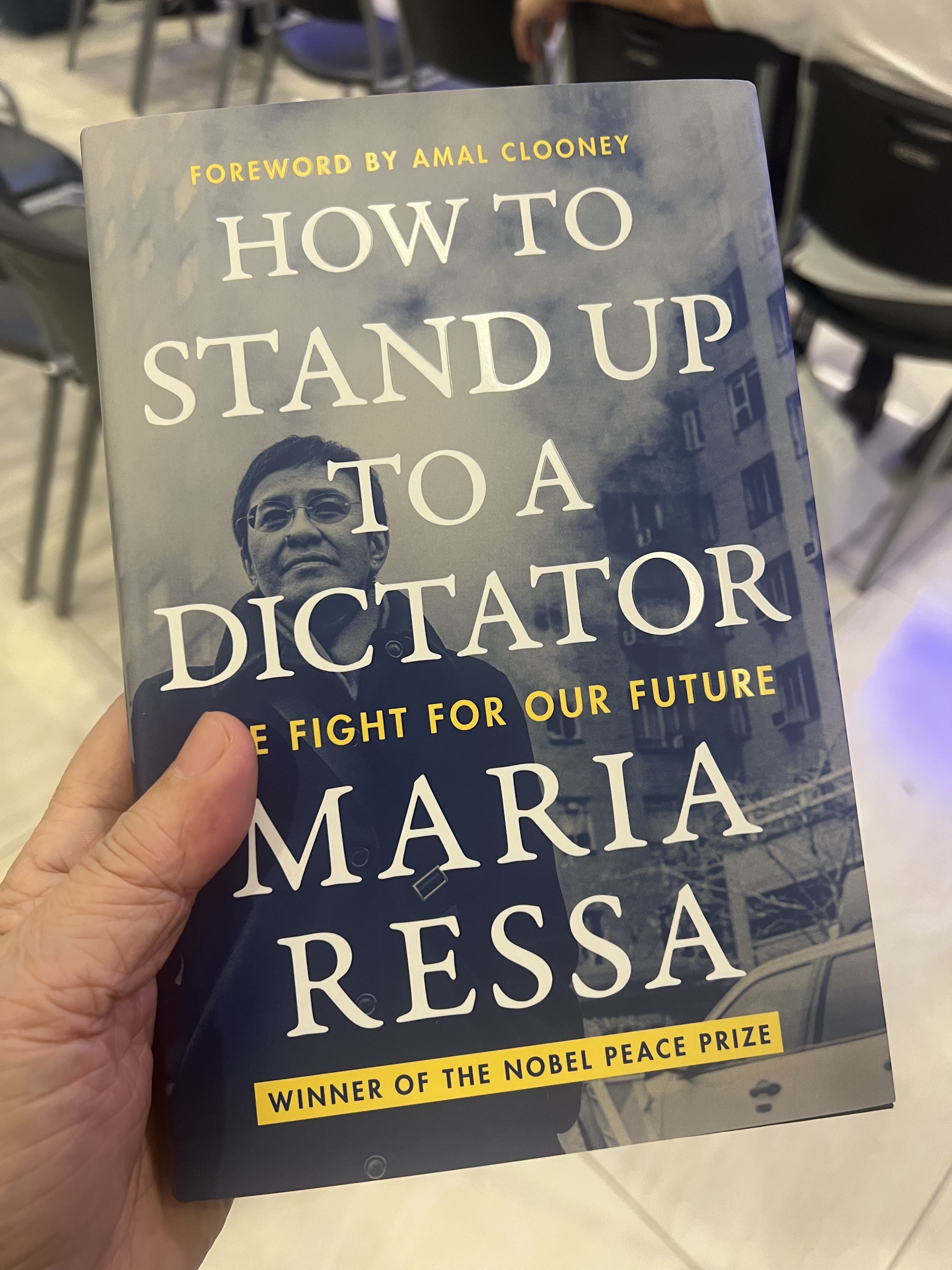
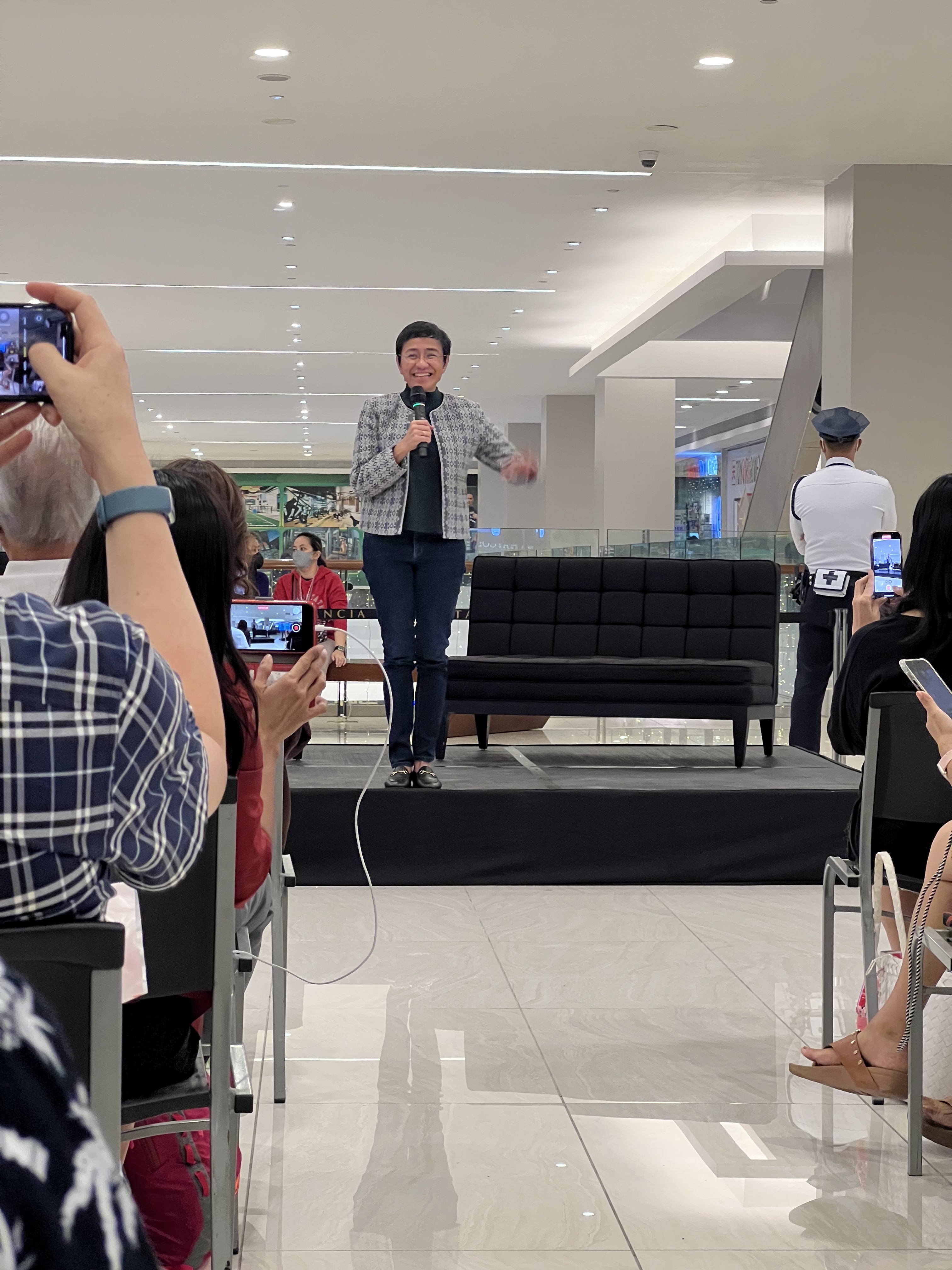
I WAS very honored to speak last Saturday at the launch of Maria Ressa’s new book, How to Stand up to a Dictator: The Fight for Our Future (Harper, 2022). I’d read an advance copy of it a couple of weeks ago, and to cut to the chase, if you’re thinking of buying a book to read for the holidays or to gift to friends, look no further. This book, for me, is among the year’s best in nonfiction.

I have to emphasize that word—nonfiction. As we all know we live in times when fiction has taken over as the most influential form of human discourse, particularly in the political arena. As a practicing fictionist, I should be happy about that, but I’m not and I can’t be, because so much of it is bad fiction, crudely written—and surprisingly, infuriatingly effective, at least with a certain kind of reader. 

Maria’s book cuts through all that. It’s undisguised, old-fashioned, in-your-face truth-telling, told in the same voice and tone we’ve become familiar with over the years of listening to her reportage over CNN. I’m sure that, like me, many of you wondered the first time you heard her: “Who was this little brown-complexioned woman speaking with an American accent?” She looked Filipino, but how come we’d never seen her before?

This was all before she rose to prominence—some would say notoriety—as the moving spirit behind Rappler, and subsequently to global fame as a Nobel Prize winner for Peace. We identified with her travails, shared her anger and sadness at the abuse she has received, and rejoiced in her victories, whether in the courts or in the larger sphere of public opinion. 

But how well do we really know Maria Ressa, and whatever drives her to be who and what she is? This book takes us to the person behind the phenomenon, and answers many questions we may have had about her and her stubborn advocacies.

The book’s title sounds like that of an instruction manual—which it is, and also is not, being part autobiography, part journalism, and part testimonial. As a manual for freedom fighters, it emphasizes the need for collaborative and collective action against seemingly insurmountable forces. Those forces now include the Internet, which, as Maria documents with both precision and profound dismay, has morphed from a medium that once held all kinds of liberative promises into a medium for mass deception and targeted assault. She draws her counsel not from some esoteric guru or academic paradigm, but from some very basic values that have informed her own life—the Honor Code she followed in school, and the Golden Rule.

“That’s what I lay out in this book,” she says, “an exploration into the values and principles not just of journalism and technology but of the collective action we need to take to win this battle for facts. This journey of discovery is intensely personal. That’s why every chapter has a micro and a macro: a personal lesson and the larger picture. You will see the simple ideas I hold on to in order to make what have—over time—become instinctive but thoughtful decisions.”

It’s this constant back-and-forth between the personal and the political—and at some point they become inextricably fused—that forms the fiber of Maria’s narrative and gives it strength. Her convictions are grounded in personal experience; they have not been paid for—as the hacks in the journalistic trade will allege, seeking to bring her down to their own level—except in the coin of personal suffering under the constant threat of imprisonment and violence.

But we learn from this book that trauma is nothing new to Maria. (We also learn that Maria Ressa wasn’t the name she was born into, but to find out her birth name, you’ll have to buy the book.) From her abrupt relocation from Manila to America at the age of ten, to her journalistic immersion in the horrors of conflict and disaster in Indonesia and Ormoc, the book chronicles Maria’s quest for truth, meaning, and purpose in her life, and that of others. She stresses the importance of remembering the past to make sense of the present, quoting TS Eliot’s phrase, “the present moment of the past.”

And so can we, she seems to suggest, even in these times of high anxiety, when we can see the vultures hovering over such once-sacrosanct treasures as our pension funds, while billions more go to feed the dogs of an increasingly untenable counter-insurgent war. The big words we have become used to tossing around—truth, freedom, reason, justice, democracy—they all come down to a personal choice to do the right thing, and the courage to do it. 

Nowhere is this matter of choice more evident than in the fact that Maria is here in the Philippines, having willfully subjected herself to our brand of justice, however imperfect it may be, instead of escaping to the safety of America or another haven, which her dual citizenship if not her celebrity can certainly afford her. She will see her own story through to the end, in the locale where it matters, among the people to whom it matters most.

I’ve often remarked, as a creative writer and professor of literature, that in this country, the writers most in danger of political persecution and retribution are really not fictionists or poets like me. Not since Rizal has a Filipino novelist been shot dead for what he wrote. For sure, we have lost many brilliant writers to the struggle for freedom and democracy—Emman Lacaba, and most recently Lorena Tariman and her husband Ericson Acosta. But they were killed by the State not for what they wrote—the State is illiterate when it comes to metaphor—but for what they allegedly did.

Rather, the most imperiled writers in the Philippines as in many other places are the journalists who speak the language of the people and of their plaints in terms too clear to ignore. They could be radio announcers like Percy Lapid, or the victims of wholesale murder in Maguindanao, or high-profile and exemplary targets such as Maria Ressa. It would have been easy for her to lash back at her critics and tormentors with the same viciousness. But, she says, “I will not become a criminal to fight a criminal. I will not become a monster to fight a monster.”

That, too, is a difficult choice, and one I am sure we are often tempted to cast aside. But Maria’s equanimity in the face of savagery shames us back into our better selves. It will be that kind of quiet resolve that we will need to survive and prevail. After all, we survived martial law. We can survive this regime—with agility, patience, and courage. But don’t take my word for it. Read Maria’s book to know that we can, and why we must.

Qwertyman No. 6: The Extraordinary Vice Mayor Koo

Qwertyman for September 12, 2022

“PAPA, PAPA! What does ‘consanguinity’ mean?” 

“Consang-what?” Vice Mayor Edison Koo was busy with his cellphone, negotiating his cut from the new bridge they were putting up in Barangay Tullahan. It annoyed him that Mayor Baloloy was going to make double, despite the fact that all the mayor did was to sign the papers while he had to meet with the contractor at a popular girlie joint in Manila—not that he minded the female company.

“Consanguinity. C-O-N-S-A-“

“I can spell it!” VM Koo knew he wasn’t the sharpest pencil in the box—he had passed the bar on his third try, after much coaching from his friends and a novena to St. Jude the Apostle—but he could still remember what “consanguinity” meant and how to spell it. He had stumbled on a question about wills, trusts, and estates that involved consanguinity in his second bar exam, which was why he had to study it extra hard for his next retake. 

“So what does it mean, Papa?” At thirteen, Lawrence was about seven years past being cute and was just being pesky at the worst possible times, but Edison had plans for the boy’s political future and wanted to impress him with his knowledge. “Consanguinity” was easier to explain than to spell, Edison thought with a triumphant smile. 

Facing a mango tree, he recited a memorized Civil Service Commission pronouncement to impress himself with his knowledge: “Under Section 79 of the Local Government Code of 1991, the prohibition against nepotic appointments extends to the appointing or recommending authority’s relatives within the fourth degree of consanguinity or affinity, such as first cousin or first cousin-in-law.” He turned to Lawrence and said, “Does that answer your question?”

“No,” said the boy, fiddling with his cellphone, “but never mind. I found it on Google. It means ‘being descended from the same ancestor.’ So if my Science teacher says we all came from apes, that’s consanguinity? All monkeys are my cousins?”

“Weeell…. If the monkey can show a valid NSO-certified birth certificate that can prove the relationship, why not?” VM Koo congratulated himself for his clever answer; the boy had to think his dad was a genius, to follow in his footsteps and inherit his musty law books. “Why are you asking, anyway? Aren’t you supposed to be going to the mall with your friends? I gave you some money—” A mall—the town’s first—had opened six months earlier, a sure sign of the place’s progress, as a consequence of which the mayor was able to acquire a new van for his wife and an SUV for himself. This was why Edison was convinced he had to run for mayor in the next election—not because Mayor Baloloy was a corrupt bastard, but because he, Edison J. Koo, Esq., was the much better, more highly qualified bastard.

“You know I don’t like hanging out with my friends, Papa,” said Lawrence. “I prefer to stay home and read books and to listen to the news about the war in Ukraine and climate change and all the things that will affect my future as a young Filipino citizen!”

Edison looked at his son more closely, looking for signs that Lawrence was gay; it was his mother’s fault, giving the kid all those books about endangered species and disappearing islands, when any healthy teenage boy should have been hanging out in malls watching the girls in shorts go by. “So what does that have to do with consanguinity?”

“Well, I came across this news report about a new law that will require public officials like you to disclose all their relatives linked to subversive organizations, up to the fourth degree of consanguinity….”

“Really? What for? Don’t those idiots have better things to do?” It infuriated the vice mayor that on top of the SALN—on which he had to very deftly dissimulate—another reporting requirement was going to be imposed on hardworking civil servants like him.

“What does ‘subversive’ mean, Papa?”

“Oh—it means someone who doesn’t like the government, people like me, and wants to bring it down!”

“You mean like Tita Rory?” Lawrence remembered her fondly for giving him books like Catcher in the Rye and The Little Prince.

Edison felt a wave of shame and guilt wash over him, which he tried not to show the boy, who picked it up anyway. Rory was his younger sister, who had been a troublemaker since high school as far as he was concerned, who never listened, who deplored and never supported his entry into politics, and who once even denounced him in the plaza as a crook. So he also publicly disowned her, calling her a madwoman, and cut off all communication, even when she left and vanished into the underground.

“Yes, like your Tita Rory!” Edison sputtered, barely able to say the name. His eyes bulged as he began to understand the import of “consanguinity.” “Dammit, even when she’s not here, she’s going to put me in trouble!” He was thinking ahead to the next mayoral race, to being accused of consorting with the enemy, and worse, of being a subversive himself, which was the most ridiculous thing, because he didn’t have a rebellious bone in his body. He even ticked off Rory once by calling Rizal stupid for having badmouthed the Spanish.

“I like the books she gave me,” said Lawrence, thinking of a little fox and a garden of roses.

“Burn them! They’re full of silly ideas that—that will turn you into a little red monster. You won’t believe in God, you’ll disobey authority, you’ll do all kinds of terrible things—” 

“Is stealing money from the people subversive, Papa? Tita Rory said—” 

“Your Tita Rory said a lot of crazy things! That’s why she’s—not here. She’s not one of us. Not anymore. I pray for her soul, but I firmly believe in the government’s anti-insurgency program! And I’ll make sure everyone knows that—that their humble servant, Vice Mayor Koo, is a staunch defender of democracy, of peace and order, and of the rule of law! You’ll be very proud of me, my son!”

Just then a text message arrived. The bridge contractor had agreed to throw in a free trip to Seoul for him and Mrs. Koo, with a “K-drama Location Tour” attached. Edison beamed. His wife loved “The Extraordinary Attorney Woo,” and although he hadn’t seen it himself—he preferred Vin Diesel movies—she was sure to love him for it, too.

Qwertyman No. 3: The Book Convention

Qwertyman for Monday, August 22, 2022

THE ANNUAL convention of the National Association for the Advancement of Books of the Democratic Republic of Kawefo was about to begin, and after a rowdy rendition of the National Hymn that was sung in two keys when the video failed, followed by a ten-minute prayer in five different languages invoking Divine Guidance in the formulation of a “coherent, cohesive, and comprehensive national book development policy,” the Introduction of the Honorable Guest Speaker began, properly enough with the birth of the speaker in the country’s easternmost islands, better known for brigandry than textual poaching. 

“Minister Fwefwe could not have arrived at her exalted position at the helm of Kawefan higher education and cultural development without her deep and abiding commitment to the promotion of knowledge, which she gained through her lifelong immersion in the world’s intellectual foundries,” intoned her introducer, the current Vice-Minister of Propaganda whom everyone knew was angling for Fwefwe’s job at the next Cabinet reshuffle. An ex-Marine colonel who had been sacked for leading his men into a rebel ambush while searching for a cellular signal on which he could call his mistress, Vice-Minister Penpen had been rehabilitated through the good graces of his cousin, the chief cook at the Palace who served President Ongong his favorite dishes. “Who could have known that a chance encounter at the circulation desk of the Manoa Public Library on that fateful day of the 23rd of November, 1986, would lead to her elevation from a humble library assistant to our republic’s Chief Cultural Czarina?”

“Good Lord,” muttered Dr. Gawgaw in his corner, “he’s going to tell the full story all over again, is he?” Gawgaw dipped a nacho into the puddle of cheese before him and munched on it noisily. He sat with a group of old men sporting flowery ties and silver-tipped canes, with a sprinkling of elderly ladies whispering in an arcane Creole-like dialect. A retired Professor of Kawefan History, Gawgaw would have preferred to stay home in his library, sniffing the powdery biblichor out of his pigskin-bound volumes on “Robinaux’s Account of Kawefan Border Crossings, 1773” and admiring the faux-Victorian binding of “Society in a Centrifuge: Sugar and the Colonial Domestication of Kawefo,” which he wrote himself. But he had to attend this silly convention on behalf of his Society for the Preservation of Kawefan History, to ensure that any new book policy did not forget to account for the past, of which he was both protector and gatekeeper. “Madame Minister, republish our books!”

Across the aisle, the Kawefan Educational Publishers Guild had other ideas. “Books are everyone’s business!” And indeed it was, especially for Mrs. Krekre, lifetime president of the guild, the grande dame of Kawefan textbook publishing, and supplier of choice to all the government’s informational requirements. The guild employed hundreds of moonlighting schoolteachers to write textbooks that satisfied whatever Kawefan industry and ideology required (the ideology changed every six or twelve years, except for the occasional coup in between), and there was always a need to refresh history and its interpretation. The new administration was anxious to encourage the rumor that its ruling family’s wealth had been founded on ancient treasure, so new myths were being discovered and stories being written about the Lost Kingdom of Lifofo, to which President Ongong could trace his divine ancestry. New material meant new editions and teaching supplements, all of which required thorough vetting by the Ministry of Public Instruction, where Mrs. Krekre’s patient goodwill ensured everyone’s satisfaction.

Oblivious to the proceedings onstage were the members of the Kawefan Popular Writers League, an association dedicated to the principle of literature as entertainment, toward which they concocted dizzying romances set in the Swiss Alps, deep-space honeymoons, movie-star ghost stories, and murder sprees provoked by a secret kimchi recipe. They sipped their wintermelon-flavored milk tea at their table, sharing stories of their latest forays and frolics, and when Minister Fwefwe screeched into the mike about something that sounded like “social responsibility,” they screeched right back and giggled, annoying everyone else, but no one could shut them up or leave them out of the party, because everyone read them in their cars and bathrooms, including Dr. Gawgaw and Mrs. Krekre.

Looking much less happier were the dozen-odd members of Kawefan PEN, who stood forlorn just outside the convention hall, clutching placards that mentioned words like “FREEDOM” and “JUSTICE” alongside a slim stand of books illustrated with skulls, barbed wire, and raised fists. They were led by Prof. Mikmik, who had done his dissertation on Baudelaire at Harvard but who, after the Vietnam War, had seen the Marxist light and now sported a goatee and wrote inflammatory poetry. He had once been friends with Dr. Gawgaw until they quarreled over whose books mattered more in the grand scheme of things. Mikmik was convinced that he was under constant and intense surveillance, especially since his FB account was barraged by friend requests from nubile ladies masquerading as masseuses and escorts.

There were spies, indeed, on the convention floor, shuttling from one exhibition booth and table to another, deputized by the Inter-Agency Counter-Subversion Agency to locate, expose, and denounce subversive literature “in whatever form, format, or genre, for the purpose of undermining the people’s faith and belief in duly constituted authority….” The IACSA’s operatives had attended a workshop in Camp Ngungu, where important questions like “What’s a genre?” were addressed by retired professors of comparative literature (“A novel, a cookbook, a nursery rhyme!”). Key words like “liberal,” “gay,” “rejection,” and “penguins” were dissected and discussed to lay bare the insurgent cancer throbbing at the heart of Kawefan society.

Agent Pogpog had joined the IACSA after sleeping on his call-center job, and was now intent on making a name for himself by bagging his first major subversive author, following the recent, high-profile arrests of poets Gemgem, Kripkrip, and Ricric. For the past three hours, pretending to be a graduate student, he had been keeping Prof. Mikmik company, trying to figure out if Mikmik’s autobiographical epic, Seven Seasons of Solipsism, was subversive or not. It contained a line about “the promethean susurrus of unvanquished desire,” which sounded suspiciously rebellious. “It’s totally subversive, I assure you,” said Mikmik, “and if those fools in the military only knew their Homer, I should have been locked up and shot dead thirty years ago when this book came out. And then this book would be in its tenth edition!”

Inside the convention hall, Dr. Gawgaw burped, Mrs. Krekre laughed, and Minister Fwefwe raised a toast to all authors past and present, and to their boundless imagination.

Hindsight No. 18: Wisdom from Suffering

Hindsight for Monday, May 16, 2022

(Image from tunedinparents.com)

THERE’S A line I remember from a college course in Greek drama—specifically the play Agamemnon by Aeschylus—where Zeus memorably explains why the gods bring pain and torment to humans, when they could just as easily shower them with joyful blessings: “Justice inclines her scales so that wisdom comes at the price of suffering.” Man suffers, so he will learn.

I kept going back to that line this past week as I tried to comprehend the enormity of what had just happened: by what appeared to be a huge majority, our people had chosen a dictator’s son to lead this country for the next six years. Despite reports of massive vote-buying and irregularities at the polling stations, I wasn’t even contesting the overall results—I was never much of a conspiracist—but asking myself how and why the masses of our people keep making poor choices at the ballot box, voting against their own strategic interests. (Am I being presumptuous to sit in judgment of our average voter? Yes, and I make no apologies, having lived through martial law, all three EDSAs, Garci, tokhang, and Covid.)

Did we not suffer enough over the Marcos years and from the plunder and repression enabled by martial law to have learned that unbridled authoritarianism is a curse on everyone, both despot and citizen alike? Clearly not, or we would not be here today, facing the restoration of that rapacious regime. And it will be because—going by the moral logic that informed the Athenian stage—we have brought it upon ourselves, by casting more votes for the very same people whose greed we continue to pay for, and will pay yet more for, all over again.

In that case, should we flog ourselves over that seeming poverty of collective wisdom? Shall we call ourselves stupid and even hopeless, to have gained the freedom to vote, only to squander it for the benefit of those who took it away in the first place?

Of course, the right to vote never came with any assurance of voting wisely and responsibly, with democratic values foremostly in mind. For those whose lives have never changed regardless of administration, it can simply be another source of easy income. For others, it can be a form of personal revenge for injustices suffered daily, for the sharp tongues and heavy hands of otherwise pious employers. Still others might simply want, for once in their lives, to be part of what they think is the winning side. 

From these “winners,” we can expect a barrage of gloating and taunting, which has already begun. The cynical will remind us that we were wrong to have even hoped and tried; this was all foreordained by the numbers, which are the only thing elections are ever about. Some will even trot out that hoary quote, “Vox populi, vox Dei,” to stamp divine approval upon this outcome. In other words, we were all just exercising our free will, our freedom of choice, which after all is central to democracy. Only sore losers cry.

But then again, free will has never guaranteed critical intelligence. Which leads me—not being a political scientist—to ask these questions of those who might know better:

What if that “freedom” had been subverted and compromised by massive and deliberate disinformation? Was it still a free citizen who willfully cast a ballot for someone provably inimical to democracy, or a wound-up robot executing a series of plotted motions? Can we blame the desperate and the misled? Can we still call it a “free, fair, and clean election” if the fraud already started many years before, in the distortion of history and the rehabilitation of unpunished convicts? 

If and when voters elect a buffoon and a bully president—like they did with Donald Trump, among other such demagogues we know—does that validate buffoonery and bullying, and make them acceptable? Does it wipe the slate clean, erase all liabilities, and establish a new norm for political behavior? Most simply—as millions of us must have been thinking these past few months—if the president refuses to pay his lawful taxes, can we be morally compelled to pay ours? 

Vox populi, vox Dei—if this was God speaking, what was he saying? This is what I’m hearing: “By your own choice, I am giving you this man to be your president—so you will learn.”

I wonder how much more suffering we shall have to endure for our people—especially the generations post-martial law—to learn that voting has personal consequences, that the Marcoses do not represent “moving on” but sliding back into the dismal past, and that this election was their best chance in ages of creating a true “golden era” of humane, honest, and progressive governance, instead of the tinsel fantasy they’d been sold. How and when can we value the truth once more?

Again, Aeschylus—writing half a millennium before Christ—throws us a line from Prometheus Bound, spoken by the hapless girl-turned-cow Io. Hounded by a gadfly, Io is in constant pain, and tells Prometheus her tale of woe; but she insists, at the end of her story, that she wants to know her future, however difficult it might be: “If you can say what still remains to be endured, tell me; and do not out of pity comfort me with lies. I count false words the foulest plague of all.” This campaign saw innumerable “false words” rain down on our electorate, not just words of spite but also of artificial sweetness. 

I am angry and dismayed, but not without hope. In Io’s case, despite her terrible travails, she learns that her future is much brighter than she would have expected—she will be restored to human form, and would count among her descendants the great hero Hercules. 

We can yet be the progenitors of our best selves as Filipinos. We just need to endure, to learn, and to endure some more.