Penman No. 241: The Long and Short of Summary

240_f_86352387_qpckndkcg4djurkk2t8g8niysulm2iejPenman for Monday, March 6, 2017


IN DEALING with communications and reports drafted by my office staff and by my students, one problem I often encounter is the writer’s inability or reluctance to summarize needlessly long passages.

Some of that happens simply because the writer doesn’t know how to digest material, which further means that he or she can’t distinguish between the relative levels of importance of different statements. Another reason is sheer fear, especially in authoritarian or sensitive environments where messing with someone else’s text could land you in major trouble.

But we all need summaries, good ones, of everything out there. We simply don’t have the time to slog through every document that comes our way in this information-saturated age.

Good summarizing takes sharpness of mind and boldness of spirit. It means you know which parts you can cut without doing damage to the heart of the piece and that you can stitch the snippets together to form a new whole. You’d be surprised by the compelling clarity that shines through a properly summarized paper, by how much latent energy pulses in tautened prose.

I had an interesting conversation last year with a Filipino graduate student in Seoul. I was recalling the time more than 40 years ago when, as a junior writer-editor employed by the National Economic and Development Authority, I wondered why the current Five-Year Development Plan I was editing was as fat as a phone book, while the South Korean plan I had as a reference was no thicker than a Perry Mason paperback. And look, I told the student, where Korea had gone, minus the verbosity.

And then the student told me something that explained away the mystery of that anorexic document. In Korea, he said, managers and CEOs put a premium on brevity; the higher up the ladder your document went, the more condensed it was expected to be, to spare the bosses the chore of plowing through pages of data. Recommendations were to be brief and to the point.

It’s surprising because it seems so counterintuitive. For most of us, less is simply less and more is surely more. Our normal tendency is to add, to elaborate, to complicate until we can barely remember what our original thought was. We Pinoys especially have a tradition of rhetorical bombast that employs big words without meaning much, and we’ve mastered the art of filling dead air with, well, dead sounds.

This is why speakers in school programs (and the people who introduce them) take forever to say the most prosaic things; people walk up to the mike in the open forum and feel compelled to tell their life story before finally asking a question, if they do at all. We love to talk for the sake of talking, cluttering our prose with the same verbal indiscipline.

For me, a good summary begins, first of all, with the writer’s grasp of the main ideas running through the piece he or she is summarizing. This requires a thorough read-through of the original and an understanding of its basic argument. Without this sympathetic comprehension, attempts at trimming it down to size are bound to fail or to at least be misdirected. The best book reviewers are great at being able to reduce a thick volume to its thesis. That’s because they’re not just idle English majors like you and me, but are very likely experts in the field who may know more about the writers and their subjects than the writers themselves.

Since most of us aren’t such experts, the next best thing would be to take careful notes of what’s being said—identifying (and even physically highlighting) main points in the text and understanding why they’re being made. These points can then be paraphrased, condensed, and sequentially presented.

A good summary is also mindful and possibly reflective of the tone of the original—whether businesslike, contemplative, combative, or comic, for example. Nowhere should the summarizer’s own opinions or biases intrude, unless one is summarizing one’s own material.

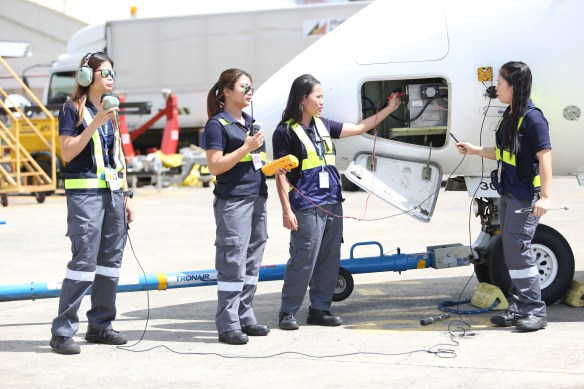
This leads me to one of my pet peeves, the abuse of PowerPoint by speakers who don’t know the difference between a talk and an AV script. These are the people who will turn their whole speech into slides that are little more than blocks of text and unreadable graphs, and who will do little more than read everything that’s being flashed onscreen.

We might not mind this practice too much if these speakers were audibly engaging, knowing which phrases to emphasize or when to pause for dramatic effect. In many cases, however, this ritual is performed by zombie-like drones who seem to have no inkling that they actually have an audience behind them (behind, because they’re reading off the screen)—and an audience that can read as well as, if not faster than, them. PowerPoint presentations are meant to be verbal and visual summaries of whatever is being pitched.

There’s little excuse for a long paragraph to be splashed across the screen where a picture and four or five memorable words will do. That paragraph will be forgotten as soon as the slide vanishes, but the image will linger long afterwards.

Of course you’ll always lose a little something even in the best summary, but let’s put it this way: the best summaries will make the reader want to read the rest of the material, which is what you probably wanted to happen in the first place.

(Image from fotolia.com)

Penman No. 240: Cebu Goes MAAAD

img_0860

Penman for Monday, February 27, 2017


THAT’S MAAAD as in “Master of Arts in Applied Arts and Design,” a new degree program recently launched by the University of the Philippines Cebu in collaboration with Taiwan’s Shu Te University (STU).

And what’s the big deal about this new offering? Well, it taps into one of Cebu’s native strengths—its deep roots in artistic expression, coupled with cutting-edge technology—while bringing Cebu in direct contact with leading global knowledge centers like STU.

Cebu, of course, isn’t just one of the country’s major economic and political capitals. It’s also home to rich cultural traditions in painting, literature, music, dance, theater, and film, among other genres. It’s no surprise that it gave birth to a world-class talent like furniture designer Kenneth Cobonpue, who graced the launch of the MAAAD program along with Cebu City Mayor Tomas R. Osmeña, UP President Danilo L. Concepcion, UP Cebu Chancellor Liza D. Corro, and CCAD Acting Dean Jocelyn Pinzon. STU was represented by its former President Dr. Chu Yuan Hsiang and Dr. Eing Ming Wu, among others.

The cooperation between UP Cebu and STU is no accident. Cebu and Kaohsiung are sister cities, an unusually strong relationship made visible by the proliferation of modern “Kaohsiung” buses in Cebu. It implements the Taiwan-Philippines Academic Networking Platform which was forged in May last year between UP and the Southern Taiwan Universities Alliance, following a visit to Kaohsiung by a UP team led by then President Alfredo E. Pascual and UP Open University Chancellor Grace Javier Alfonso.

“We in Taiwan have usually focused on Western countries like the US, Canada, Australia, and New Zealand, neglecting an English-speaking country much closer to Taiwan, the Philippines,” noted the ebullient Dr. Wu, who would email me upon his return to Kaohsiung to report that “I am overwhelmed by the new momentum created by our partnership. At this moment, ten UP Cebu students plus one chaperone have arrived to visit physiology labs in three different distinguished universities. They will be staying at the UP Guest House in Kindness Hotel, a facility we set up to host our Filipino visitors. Another batch of six UP Diliman faculty members will be in Kaohsiung to seek matches with Southern Taiwan universities for their PhD degrees from February 28 to March 3.”

UP Cebu is uniquely positioned at the nexus of tradition and innovation. It’s the UP System’s eighth and newest constituent university, but it will be celebrating its centennial as an educational institution next year. The age shows in the old college building along Gorordo Avenue, but don’t let the antique charm fool you—a laser cutter and 3D printer are busy at work in another wing next door. For its part, and although relatively young, STU has already won prestigious international awards for its students’ work in communications and design, including the iF Student Design Award in 2016.

The new MAAAD program promises to be both challenging and rewarding. To be administered by UP Cebu’s College of Communication, Art, and Design (CCAD), the 36-unit, four-semester program will cover courses in research, digital content design, product design, fabric design, technology, and art, among others. Classes will be taught by instructors from STU at UP Cebu’s new campus at the South Road Project—a huge reclamation area that promises to be the city’s new boomtown—but students will defend their theses and receive their diplomas at STU in Kaohsiung. (Mayor Osmeña had made the five-hectare SRP lot available to UP.)

MAAAD faculty and students can bank on laboratories and facilities comprising UP Cebu’s FabLab (put up with DTI support), fine arts workshops, and the CCAD’s computer laboratory. It won’t be cheap, with tuition running at nearly P60,000 per semester, but a scholarship scheme is being discussed. Besides, explains Chancellor Corro, “We expect many of our students to be working professionals for whom the program will present expanded opportunities for further growth.”

In his remarks, Kenneth Cobonpue made a wry reference to the fact that UP turned him down years ago when he applied to its Fine Arts program after failing his drawing exam. He later found his true calling in industrial design. The MAAAD program should now make sure that no design geniuses are turned away at the door, ever again. For more information, email maaad.upcebu@gmail.com. The deadline for applications is July 15.


ON BEHALF of my old office, the UP Institute of Creative of Writing (UPICW), I’m also glad to announce the fellows to the 56th UP National Writers Workshop to be held on March 12-19, 2017 at the BP International Makiling, Los Baños, Laguna. Twelve writers have been selected for the workshop, to be led by this year’s workshop director Vladimeir Gonzales.

The 2017 fellows are Arbeen Acuña (Fiction, Filipino), Christa de la Cruz (Poetry, Filipino), Zeno Denolo (Fiction, Filipino), Rowena Festin (Fiction, Filipino), Rogene Gonzales (Fiction, Filipino), Arvin Mangohig (Poetry, English), Arnie Mejia (Creative Nonfiction, English), Paolo Enrico Melendez (Creative Nonfiction, English), Charisse-Fuschia Paderna (Poetry, English), Wilfredo Pascual (Creative Nonfiction, English), Karren Renz Seña (Fiction, English), and Alvin Ursua (Poetry, Filipino).

See you all next month in Los Baños!


SPEAKING OF Cebuano artists and writers, I was very sad to hear about the passing after a long illness of a colleague and friend—and one of UP’s and Cebu’s most outstanding art scholars and critics—Dr. Reuben Ramas Cañete. Reuben was also one of the stalwarts of the Erehwon Center for the Arts, and we went to the US together last July on Erehwon’s behalf to pitch hard for the establishment of the American Museum of Philippine Art. More than that, he had been one of my daughter Demi’s favorite teachers when she was an Art Studies major, and my wife Beng was a dear friend of his to the last. Reuben left an indelible impression on everyone he met with his prodigious knowledge, his acerbic wit, and his passion for books and learning. Godspeed, Reuben, and see you in that great gallery in the sky!


Penman No. 238: A Little Carillon Music

cadena

Penman for Monday, February 13, 2017


IT’S BEEN a bit nippy these past few mornings on the campus of UP Diliman, where I’ve not only taught for the past 33 years but where we’ve also lived for almost 14 years now, in a house once occupied by one of the most beloved icons of the English department, the late Prof. Concepcion “Ching” Dadufalza. I inherited the bungalow on Juan Luna Street when Miss Dadufalza moved out to be with her sister. She could have stayed in it forever as Professor Emeritus—one of the loftiest distinctions a lifelong teacher could aspire for—but she merited better care and companionship in her old age, as only her family could give her. In a sense, of course, the university was Ching Dadufalza’s family—and they would come and visit her in Juan Luna, stalwart wards like the poet Jimmy Abad, her eternal student and virtual son.

Campus housing is one of those few perks of university life that professors look forward to, given the crippling rentals in the metropolis and, just as insufferable, the traffic you have to plow through to get to your classroom in time. Beng and I actually owned a small house in San Mateo (which we’ve since sold to raise funds for a newer car), but the commuting crushed us, so we stayed for many years in a succession of apartments closer to UP until the opportunity arose to live on campus.

That opportunity came when I was appointed Vice President for Public Affairs by President Francisco “Dodong” Nemenzo in 2003. I was chair of the English department then and still eager to tickle young minds in the two classes I taught. I felt no great urge to take on a heavier administrative burden—the position came with the kind of prestige that only my UP-alumna mother could boast about to her Tuesday-Circle friends, and very little otherwise by way of extra emoluments. I would end up sending the office’s pockmarked Corona to the body shop for a spray-over at my own expense, figuring that the university’s chief spokesman and lobbyist deserved a veneer of respectability.

But being on call to the President and the office 24/7 was also a good argument to live on campus, and when Miss Dadufalza moved out of Juan Luna, her former home was assigned to me. As far as I was concerned, that privilege of campus housing was my true salary for serving as VP. Whether the larger bungalows for senior faculty or the walk-ups for young instructors, it’s prized not only because it’s affordable and hard to get, but also because… well, let me explain.

Ching’s house had a gazebo put up in the yard for her by her loving students, and when the giant mango trees overhead were fruiting, you could hear mangoes drop on the roof in soft thuds, and pick up the fruits and eat them after a quick wash.

By day, on the job, I would dash off across the city in the old Toyota for meetings with cranky politicians and even crankier students over the proposed new UP Charter. But I came home to sweet mangoes, fragrant papayas, and birdsong in the branches, to the enveloping coolness, the cadena de amor, and the carillon music that had defined Diliman for me since I began roaming the campus as a boy in the early ‘60s, hoping to someday study there. I had never imagined becoming a professor, much less a poobah, and now here I was in a starched barong, defending and propagating the legacy of Rafael Palma and Salvador P. Lopez.

But I began by saying how cool it’s been in Diliman this February. Beng and I have been taking five-kilometer walks every other day to savor the air. Two years short of retirement, I could stop here at the Sunken Garden and just enjoy the dewy scenery.

One afternoon last week, I embarrassed myself in my American Lit class by talking about that scenery, and then uncharacteristically weeping. I told my students that I had just been asked to serve, once again, as VP for Public Affairs, and I wanted to say no because I knew I was going to be sorry when the workload hit and when the problems started streaming in, but I couldn’t, because it was UP asking, and because my mother would be happy, and because UP had given me, quite literally, a good home. So here I am again, brushing my shoes and counting my barongs, a little carillon music tinkling between my ears.


jdqh

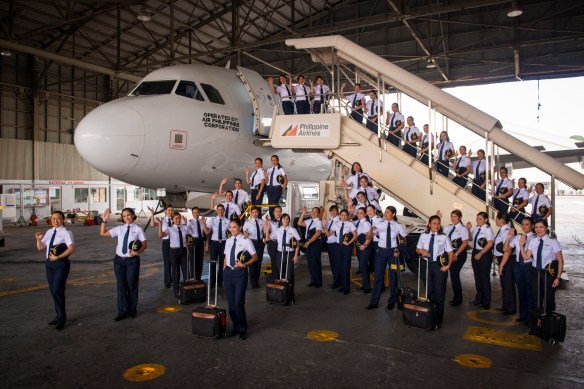
And now let me put in a word for a friend, the writer and translator Chichi Lizot who, as it turns out, had quite a lively and a lovely youth. She wrote me to recall that “My seven-year stint as a flight attendant was perhaps the most daring thing I had ever done. I joined Philippine Airlines when it was still a small family, in 1974. I was barely eighteen!  I naturally think of the late Chona Kasten, epitome of elegance, grace, and class. I flew during her time when many of us regarded her as very much like the head mistress of a revered finishing school that was not easy to get into.”

Chichi wants her fellow PAL alumni to know that on Saturday, February 18, a reunion of over 600 PAL ex-personnel from all departments and indeed from all over the world will take place at the Fiesta Pavilion of the Manila Hotel. Latin Night is sponsored by the Association of Former Flight Attendants of Philippine Airlines for the benefit of Tahanan ni Maria, a home for the aged in Carmona, Cavite. Naty Crame Rogers, 94 years old, who began flying in 1946, will show her juniors how to salsa during this Latin-inspired evening of dinner, dance, a fashion show of PAL uniforms through the years, a raffle of great prizes, and many more.

For tickets, please call AFFAP Chairman Christie Altura at 0917-8478117 or AFFAP President Avelyn Jahns at 0917-8199018.


Penman No. 237: A Singular Honor

1091857175_807c3b9981_z

Penman for Monday, February 6, 2017


I’VE HAD the pleasure and the privilege of winning a number of awards for my writing and teaching, but none of them has been as personally overwhelming for me as a recent honor bestowed upon me by my university and by a private benefactor.

At its 1323rd meeting last December 16, the University of the Philippines Board of Regents approved the creation of the One UP-Jose Yap Dalisay Jr. Professorial Chair in Creative Writing, to be awarded once every three years to a deserving professor (an assistant professor at the minimum) in the Department of English and Comparative Literature (DECL) who has distinguished himself or herself in creative writing and its teaching.

The awardee will receive a grant of PHP 120,000 per year for a three-year period, and will be selected based on criteria set for One UP professorial chairs and by a committee of the DECL.

The chair will be funded by a donation of PHP 4.15 million contributed by a donor based in the United States, who wishes to remain anonymous and to be identified only as “a longtime friend of the Philippines.” The donation was coursed through the Friends of the UP Foundation in America (FUPFA), with the assistance of the Office of the Vice President for Academic Affairs and the UP Foundation.

My department and I are profoundly grateful for this great honor which, until it happened, was something I never imagined would fall on me, especially within my lifetime—and while I’m still in active service, two years’ short of retirement. Professorial chairs are usually set up by wealthy families or corporations in their own names. We have several endowed chairs in the humanities at UP, but this is our first for creative writing, and it will go a long way toward ensuring that young Filipino writers and their work get due recognition. (And just to make it clear, I myself won’t be seeing a single centavo of this generous grant—but that’s all right and as it should be, as I hold another chair.)

I have to admit that I do know the anonymous donor—a dear friend who spent many years in the Philippines and who has written about her experiences here with deep affection and insight. I’ve helped her bring those experiences to fruition as the editor of her books and, she says, her mentor, and later her friend. She could just as easily and more logically have named the chair after herself or her family, as I had urged her to do when she first broached the idea of endowing a chair at UP, but she insisted that it be in my name until I could no longer demur. While she has had no personal connection to UP, her late husband’s developmental work involved UP, and she and her late husband had many friends there—Carlos P. Romulo, Salvador P. Lopez, and Cesar Virata among others—so the chair recognizes those valuable relationships as well.

I can say that while our donor is by no means a Bill Gates or a Rockefeller—she lives modestly by herself in her advancing years—she is unfailingly generous and hospitable whenever Beng and I pay her a visit, and she knows the world (and I do mean the whole wide world, beyond the Worldwide Web) more intimately and more wisely than most people do.

The plans for the chair were put together over the past few months, and we have to thank outgoing UP President Fred Pascual, Vice President for Academic Affairs Giselle Concepcion, UP Foundation Executive Director Gerry Agulto, Friends of the UP Foundation in America Vice-Chair Polly Cortez, and DECL Chair Lily Rose Tope for facilitating the process. (Yes, folks—if you have friends and fellow UP alumni in the US who may want to give donations to UP for various causes, these can be coursed through Ms. Cortez at fupfa.org).

I know she doesn’t want too much of a fuss to be made about this, but once again I’d like to thank my friend for this singular honor, which will long outlive both of us. At current rates, the chair will be endowed for 34 years, although we’ve provided for the necessary adjustments to be made to account for inflation and other supervening circumstances. I look forward to the imminent selection of the first chairholder, who will also be expected to produce a book-length work and to deliver a lecture over his or her tenure. A life in academia has few pleasures, but this is one of them, and one of the best ones—for the recipient, the donor, and the honoree alike.

And this is as good a time as any to say thank you as well to Fred Pascual, Giselle Concepcion, and the other members of the UP System administration, whose six years in service will end with the turnover of the university’s reins to incoming President Danilo “Danicon” Concepcion and his team on February 10. I’m amazed by and rather sad at how quickly those six years have passed. Being a non-academic, Fred Pascual assumed the presidency as a relative unknown and got off to a rocky start, and I was among the vocal critics of some early missteps that could have been avoided with better advice.

But I came to be impressed by how hard Fred and Giselle worked over the years to raise UP to global standards (an initiative still not without its critics, UP being UP) and to expand its reach and resources. And while I never sought or held office under this administration other than the directorship of the Institute of Creative Writing, I was glad to be of some quiet service to Fred and his people when I could. We citizens of the Diliman Republic wish them well, as we look forward to even more achievements (let’s hear it for those Maroons!) under President Danicon and returning UPD Chancellor Mike Tan. Push on, UP!

Penman No. 234: A Glimpse of Interesting Manila

im_cover3e

Penman for Monday, January 16, 2017

ASIDE FROM the fountain pens which I’ve recently stopped collecting, I’ve long nursed another, quieter passion, albeit on a much more modest scale. Since my grad-school days in the American Midwest in the 1980s, I’ve been drawn to old books from and about the Philippines. Sadly I can’t read Spanish—one of the great regrets of my college life, a casualty of our generation’s sweeping rejection of everything that smacked of colonialism (except, ironically, English)—so my pickings have been confined to books in English, largely from the late 1800s to the early 1900s.

I stumbled on the first of these books—and began to be conscious of their significance—while I was poking around antique and thrift shops for pens. The Midwest, with its many universities and industries (not to mention pen companies like Parker and Sheaffer), was a cornucopia of all things old and wonderful, and inevitably my eyes would drift to the dusty bookshelves that typically carried cookbooks, old Bibles, local lore, and Western novels.

Now and then, however, I’d get lucky and come across a book with some Philippine connection, usually from around the early years of the American occupation. With titles like Uncle Sam’s Boys in the Philippines and Our New Possessions, these books celebrated American imperialism, the novel fact that it now had a colony across the Pacific that deserved to be introduced to curious readers in Kansas and Missouri.

bsp

I remember finding the massive two-volume Our Islands and Their People for $10 in a Milwaukee antique store, only to have to leave them behind when I flew home from graduate school in 1991. But I did bring back a small trove of similar material, and have added to them since then, largely via eBay.

My Holy Grail had been a first edition of Carlos Bulosan’s America Is in the Heart (I would acquire one later locally in the most interesting circumstances—I’ve told the story here—and would give it to my daughter Demi as a wedding present), but another precious book I was relieved to have saved from the Faculty Center fire by foolishly leaving it in my car is a first English edition from 1853 of Paul P. de la Gironiere’s The Adventures of a Frenchman in the Philippines, an eBay pickup from the UK.

I’m not an antiquarian by any means; I lack the vision, the resources, and the scholarship for that. To be honest, I haven’t even read everything I’ve collected, a pleasure I’m saving for my impending retirement. I just like salvaging these well-worn volumes from the scrap heap, or from some dark corner where they can’t possibly be appreciated. They’re neither particularly rare nor valuable—only two or three have cost me more than $100—but they all contain very interesting, if sometimes horrifying, stories about America’s imperial project.

s-l400

It’s difficult, even for a Filipino, not to be entertained by the descriptions in these early travelogues, revive as they do the nostalgic charm of a vanished era. Take, for example, Interesting Manila by George A. Miller, first published in Manila in 1906 by E.C. McCullough, a $10 purchase from a bookseller in Massachussetts.

Its evocation of the past reminds us that Manila was already old even then: “Beautiful these old churches were in their scars and moss and vines. Many have been spoiled by fresh coats of paint. But who can sit silent in their vaulted aisles without hearing from those stained and mellow walls, whispered prayers of priests who long since have vanished, and shadow chants of acolytes who have joined the choir invisible?… My first experience in a Manila church was at High Mass in Santo Domingo at the early hour. There were sixteen hundred candles shining in the gloom of the old sanctuary, and a thousand worshipers were kneeling on the polished floor. Among the high arches gathered the smoke of the incense, and way up in the dome the morning sun streamed red and gold through the colored glass.

“The chanting of the priests reverberated through the aisles like the noise of a cataract, and the answer of the prostrate people was like the murmur of many waters upon the sand. Then the great organ with its thundering reeds made the old pile ring and shout like some strong giant in sport, and in the succeeding silence the people waited in awe for what might follow. What did follow was the chanting of the boys’ choir without accompaniment, and the effect from the high gallery was as if the voices came from everywhere, the very stones had suddenly become vocal and joined in the acclamation.”

In a voice we might be hearing today, Miller laments the thoughtless “restoration” of these old buildings: “The present Malate church has been restored until it is of little interest. The old tile roof, the hole in the west gable made by American shot, and the walls with shrubs and trees growing in their crevices made a building worth going to see, but now it is all paint and corrugated iron.”

The vividness and vigor of the experiences described can be exhilarating: “One of the really delightful experiences that many people have never discovered is that of a trip up the Pasig at sunset. We took the car to Santa Ana and at five-thirty stood by the river and were besieged by a dozen vociferous banqueros, who contended for the distinguished honor of carrying our lunch basket to the landing. The bancas all looked alike, but there must be the preliminary diplomatic stunts as to distance and price. Tagalog, English, and bad Spanish were mixed in a verbal storm for five minutes and then we were aboard and off for Fort McKinley.”

Sometimes these colonial reports afford us a priceless glimpse into our prewar treasures, likely long gone: “There are about twelve thousand volumes on these shelves,” Miller notes of the Franciscan library. “The library of the Recoletos contains about nine thousand volumes; that of the Augustinians eleven thousand, and the Dominicans have eighteen thousand. Most of the collections contain several copies of the celebrated ‘Flora de Filipinas’ by Fr. Blanco and his co-laborers. This work is in six volumes and an index and is a remarkable piece of scientific research. The best edition contains two volumes of colored plates of the flora of the archipelago, and the press work done, in Barcelona, is of the best.”

And then again quite often the interest doesn’t come out of the narrative itself but in the perspective, which almost inevitably involves some triumphal trumpeting of America’s virtues. Miller’s assertion of the Westerner as a man of action and of the Oriental as a laidback soul is typical of these white male observers’ musings:

“The West is known by its deeds, the East by its dreams. The Anglo-Saxon lives in the concrete, the Oriental in the shadows. The American, having found a ‘proposition’ in a field, makes haste and sells all that he has and buys that field that he may dig therein and get ‘results.’ The Oriental inhales the drowsy fumes of some far-off good that was, or is, or is to come—it little matters which—and is content.”

Interesting Manila, indeed—but even more interesting was what these books said of their linen-suited writers.

s-l400-1

philippines02

Penman No. 230: Two Voices from Singapore

IMG_9764.jpg

Penman for Monday, December 19, 2016


DURING THE Singapore Writers Festival last month, I had the opportunity to chat with two prominent poets from that city-state, Aaron Lee and Eric Tinsay Valles, and I’m sharing the highlights of our conversations to give my readers some idea of what Singaporean poets are writing about. Interestingly, both poets, now just in their 40s, were born outside of Singapore, but now feel very much embedded in that ethnic and cultural melting pot.

Malaysian-born Aaron Lee works as a corporate lawyer in the area of regulatory governance and ethics. “I was born in Malaysia to immigrant Chinese,” Aaron told me. “My father worked for Singapore Airlines so he commuted daily from Johor Baru. It was typical of people at the time to send their children to Singaporean schools if they could afford it. I commuted daily for many years with my passport in my pocket, between the ages of about seven to fifteen. My brother and sister did the same. In our mid-teens we moved to Singapore. After five years my parents moved back but the children stayed behind.

AaronLee.jpg

“I feel myself to be 100% Singaporean, but I do have a lot of affection for Malaysia, especially its natural environment, carried over from my childhood. The city can be a soul-crushing place, and this came out in my second collection, where the metropolis looms over you. In my third collection, I rediscover the renewing force of nature. This was also helped by frequent visits to Hawaii, where my wife studies Hawaiian culture. In my 20s, I met senior writers like Prof. Edwin Thumboo who were dealing with the postcolonial condition. I was a law student in college but I had a couple of English literature modules in which Prof. Thumboo lectured. Discovering this whole shared past of English-language literature between Singapore and Malaysia past gave me an intellectual and emotional hinterland, raising my consciousness of Malayan-ness, which is lost on the present generation.

“I began to take my creative writing seriously in my mid-teens, and I was fortunate to have high-school classmates like Alvin Pang who were just as serious about it. I found a community of people who were interested in literature and this was very important to my formation as a writer. After high school I even applied to several universities overseas to study literature and one of them accepted me but it didn’t come with a scholarship, so I decided to take up law instead here in Singapore, which was much cheaper.

“I’m not really conversant in Bahasa except for the kind of colloquial Bahasa you hear in markets. I’ve done some reading in Chinese but can’t write in Chinese. Our bilingual policy has deep flaws that prevent many Singaporeans from acquiring first-language facility with either English or their mother tongue. Many Singaporeans my age will speak English better than their mother tongue.

“My generation came into its own in the 1990s, and there are about a dozen of us poets who have been categorized as third-generation poets in English. Ours was the first generation of non-academic poets. We were lay people, so to speak, professionals engaged in business, journalism, and law. Our poetry is more down to earth. The earlier generations were more concerned with nation-building. We tend to be more personal.

“I’m essentially a lyric poet and I love the way words sound when they’re well put together. I’m concerned with the inner music of words in sentences and lines. As a student, I looked up to poets like Seamus Heaney and Philip Larkin. I’m also concerned with common humanity. My first collection was very personal, poetry about being a poet, but my later collections cast their eye on a wider world, even to current affairs in society and on the international stage. I observe that when people come together in the city, they become anonymized, dehumanized, and alienated from one another. I try to resist that by looking for what we have in common as people, for empathy, compassion, and love. My work might be political in a roundabout way, but at the end of it I always move back from the grand narrative to the person. My Christianity is a big part of my identity, my values, my world view. I see myself as a work of art being fashioned by my Maker. I don’t just want to be a poet, but the poem, a work in progress, a song coming out of the mouth of God.”

Eric Tinsay Valles 1.jpg

Philippine-born Eric Tinsay Valles teaches at the National University of Singapore High School of Math and Science. In 2013, he won a Goh Sin Tub Competition prize, which offers the biggest cash reward for creative writing in the region. Eric was working on his PhD in literature in NUS in 2000, and decided to stay on.

“I was a journalist in Taiwan for six years, and a teacher in Manila before that,” recalled Eric. “It was through Prof. Thumboo that I began to be published in Singapore, through an anthology that focused on the merlion, the very symbol of Singapore. It’s like a rite of passage for Singaporean poets to write about the merlion. Prof. Thumboo has mentored many of those young poets, and he has always been for inclusiveness and for the development of literary traditions in all the languages used here. That’s why the Singapore Writers Festival and the National Poetry Festivals are probably unique in that we have sessions in four languages. Young poets email him, and he responds to them.

“I just feel very fortunate to have met him in NUS. I invited him to speak before some students, and he invited me to attend some poetry sessions, and that was the beginning of a long association and friendship.

“I’m a permanent resident here, but am still a Filipino citizen. I’m the director of the National Poetry Festival here in Singapore and I’m now finishing my PhD in Creative Writing at Nanyang Technological University, working on trauma poetry and on a novella in verse set during the Japanese occupation.

“As a former journalist I got exposed to many human experiences, and some of that has been reflected in my work in terms of empathy for the downtrodden and the marginalized, and faith. My faith is part of my being Pinoy. My second collection is titled After the Fall, and that could allude to the biblical fall and also to the trauma we experience in everyday life. For Singaporean poets, trauma is more domestic, more felt in estrangement from other people such as family. Contentment and complacency lead to boredom, the desire for more wealth brings more tensions, and young Singaporeans grapple with modernity. Much of Singaporean literature deals with this conflict between modernity and tradition.

“I started writing poetry in primary school in Manila. There have been many influences on my work—Elizabeth Bishop, Thom Gunn, Neruda, Lorca, Heaney—but I’ve become very familiar with Singaporean poetry, especially since it’s a very small community.

“There’s about a dozen Pinoy writers working here in Singapore. We even have a couple of Pinoy domestic helpers who participated in the National Poetry Festival, and they read their poems in Filipino. I look forward to my visits home, where I sometimes hold writing workshops.”

[Eric Valles photo courtesy of the SWF.]

Penman No. 228: A Writers’ Gathering in Guangzhou

IMG_9909.JPG

Penman for Monday, December 5, 2016

BARELY HAD Beng and I returned from VIVA Excon in Iloilo when we found ourselves jetting off again, this time to Guangzhou, China, to attend this year’s gathering of the Asia Pacific Writers and Translators (APWT), which has become one of the highlights of the literary year in the region. APWT has indeed grown into the Asia-Pacific’s premier literary network, drawing its strength from the fact that it comprises and is led by practicing writers and translators rather than by academics, critics or publishers, although many members perform those functions as well.

For the past several years, APWT has held its annual meetings in various cities around the region—I’ve been privileged to attend recent ones in Hong Kong, Bangkok, and Perth, among others—and last year Manila was honored to host the event, led by the University of the Philippines with the assistance of De La Salle University and the University of Sto. Tomas, with support from the National Commission for Culture and the Arts.

Accompanying me in the Philippine delegation were Cristina Pantoja-Hidalgo and Ralph Semino Galan of the University of Sto. Tomas; Jun Cruz Reyes, Charlson Ong, Jeena Marquez, Randy Bustamante, and Mabek Kawsek from the University of the Philippines; and Hope Sabanpan-Yu from the University of San Carlos. (I happily paid Beng’s conference fee so she could attend all the sessions, given her personal interest in translation.) It was also good to see old Manila hands like the Singapore-based Robin Hemley, the Hong Kong-based Kawika Guillermo, and New Yorkers Tim Tomlinson and his wife Deedle Rodriguez-Tomlinson, who’ll be visiting Manila again soon.

This year, our conference host was Sun Yat Sen University in Guangzhou, under the stewardship of the very gracious and capable Dr. Dai Fan, a professor of linguistics and the director of the Center for Creative Writing at the School of Foreign Languages at SYSU. Her university is one of the very few places in China where creative writing courses are taught in English, so it was a perfect venue for APWT, not to mention Guangzhou’s attractions and congeniality, about which I’ll say more in a minute.

IMG_9904.JPG

Revolving around the theme of “Ideas & Realities: Creative Writing in Asia Today,” this year’s sessions took on such practical concerns as teaching creative writing in English as a second language and networking from Asia to the rest of the world. At the same time, there was always more room for collaboration within the region. As the Australian author Nicholas Jose observed in his keynote, “Writing is a conversation that often begins with the writer’s own community, including editors, publishers, reviewers, critics and other writers. For Asian and Pacific writers, this can be complicated, with borders of language and culture to be crossed, and barriers to the way work becomes available. We need to expand the conversational community. We are our own best advocates and provocateurs. We can create our own audience.”

The keynotes were especially provocative and informative. Flying in from London, Qaisra Sharaz shared her writing life as a woman with multiple identities living in the West in the age of ISIS and battling Islamphobia. A crowd favorite was the US-born Australian Linda Jaivin’s talk on her becoming “The Accidental Translator,” a remarkable life complete with an amazing chance encounter on a Hong Kong subway train that would eventually lead her to subtitle modern Chinese classics such as Farewell My Concubine and Hero.

IMG_9921.JPG

I was glad to moderate a session on “Creative Writing in the Academy,” where panelists from Australia, the US, China, and the Philippines thankfully no longer had to deal with the age-old (and frankly stupid and annoying) question of “Can creative writing be taught?”, but rather discussed the material and moral support (or the lack thereof) that writing programs received in various universities. In this context, it deserves to be noted—especially given how we Filipinos often tend to put ourselves down—that the Philippines clearly leads the region in the field, with full-blown academic programs, writing centers, and writers’ workshops that go back more than half a century.

Aside from the keynotes and the sessions, the APWT meeting also featured special workshops led by experts in the field, such as Robin Hemley who guided both novices and experienced writers on an exploration of “Travel Writing in the 21st Century.” Robin challenged his workshoppers thus: “How do you write about place in a way that makes the place new? How do you write about a place that’s been written about many times before, Venice, for instance, or Paris? In the 21st century, who is the travel writer’s audience and what are the ethical responsibilities of the travel writer? After all, writing about the most unspoiled beach in the world will surely spoil it. Travel literature is not necessarily for the leisure class but for those who wish to have a better perspective on their own sense of the world and place.”

IMG_9903.JPG

Revisiting Guangzhou was something of a sentimental journey for me, as it was here, almost 30 years ago, that I went with a posse of then-young writers that included Krip Yuson, Ricky de Ungria, Eric Gamalinda, and Timmy Lim. It was our first trip to China, and we had already visited Beijing and Shanghai before stopping by Guangzhou on our way to Hong Kong and Macau. We had stayed in what was the new White Swan Hotel along the Pearl River, and last week I took Beng there on a stroll down the length of picturesque Shamian Island (actually a sandbar on the river, with colonial buildings favored by wedding photographers).

IMG_9938.JPG

We were told that first time that “You go to Beijing for sightseeing, to Shanghai for shopping, and to Guangzhou for eating,” and that still seemed to be true—the best meal we had all week, aside from the closing Yunnan dinner, was an 11-yuan breakfast of dimsum, xiao long bao, and ma chang in a hole-in-the-wall—but it wasn’t as if Guangzhou was lacking in sites worth visiting—starting with the stately, tree-lined campus of Sun Yat Sen University itself.

On our last day in the city, with our flight not leaving until 10 pm, Beng and I took off for Yuexiu Park, a public park sprawling over seven hills and three small lakes. Within this neighborhood, we explored the subterranean chambers of the mausoleum of the jade-shrouded Nanyue King, then climbed the five storeys of the centuries-old Zhenhai Tower for a marvelous view of the landscape. From that vantage point, one could think only of great literature and great art, capturing for posterity the inexorable passage of time.

Next year, APWT will move to Bali; I can hear the gamelan tinkling.

IMG_9985.JPG

Penman No. 225: Sayang in Singapore

IMG_9764.jpg

Penman for Monday, November 11


TO US Filipinos, sayang has one meaning and one meaning only: a regrettable loss, something that causes us to shake our heads or hold our palms to our hearts and say, “Oh, that’s too bad.” But elsewhere in the region, from some sultry corner of which the word worked its way up our archipelago, sayang means that and more: the love which may have been that which was lost, love as both a noun and a verb, or even an endearment, depending on the nuances of its intonation. So love and loss—the former all too often trailed by the latter—coexist in this wonderfully complex word, through which we Filipinos can at least claim some vestigial connection to the heart of Asia.

Sayang was very much on people’s lips in Singapore last week—you would have thought a lovefest was going on, and in a sense, it was. But the love was for books and literature, the occasion being the Singapore Writers Festival, which I was visiting for the third time after a hiatus of five years. Sayang had been chosen as the festival’s theme, and the word was festooned against a suitably floral backdrop all over the Arts House area where most of the festival events took place.

IMG_9754.jpg

Now on its 19th edition, the SWF began in 1986 as a biennial event, but it has since become a fixture on the regional cultural calendar (alongside the Singapore Arts Festival), cementing the city-state’s reputation—like its iconic Merlion—as the fountain of artistic endeavor in this part of the world. (I know what you’re thinking: “Shouldn’t that be us, the Philippines, with our long tradition of cultural expression and our bountiful artistic talents?” But I’ll tell you what festival director Yeow Kai Chai—himself a poet and journalist—told me over lunch: “I can’t believe you Filipinos have yet to establish a Department of Culture!”)

It was clear, from the minute I stepped out into Changi’s arrival area, that the National Arts Council, under Singapore’s Ministry of Culture, had once again pulled all the stops to guarantee a pleasant and efficiently managed experience for all SWF attendees, expected to number about 20,000. I was here as a journalist on coverage for the Star (I had attended the SWF as a participant in 2008, and returned to cover it in 2011) and I knew what to expect, but like they say, you never cross the same river twice, and this year’s festival offered a steady stream of 300 events spread out over ten days from November 4 to 13. There were over 300 official participants registered, with a hundred of them coming from overseas.

That makes the SWF one of the world’s largest and longest festivals of its kind, if not probably the most multilingual one, with its support for literature not just in English but also in Bahasa, Chinese, and other Asian languages. According to Yeow, the goal was to be as inclusive as possible in the SWF’s programming, going so far as to offer facilities for the hearing-impaired.

The fullness of the festival programme required selectivity, so I cherry-picked my way through the three days of my stay there, paying special attention to literary developments in Singapore itself. I’ve often remarked—most recently at a reading in Diliman featuring authors brought over by Ethos Books, one of Singapore’s most energetic presses—that the Philippines and Singapore have enjoyed a longstanding “bromance” going down the generations: between F. Sionil Jose and Edwin Thumboo, for example, followed by Krip Yuson and Kirpal Singh, then Joel Toledo and Alvin Pang, to name a few. We’ve published books together; not too long ago, Isabel Mooney and Lily Rose Tope worked with their Singaporean academic counterparts to edit a landmark anthology of Southeast Asian writing in English. So I wanted to see where things were at.

IMG_9762.JPG

The first session I attended addressed the diasporic element in Singaporean literature—but unlike our exodus of workers and writers to the far reaches of the planet, this diaspora was inbound, and a voluntary one. Moderated by the Filipino expat poet Eric Tinsay Valles, the panel comprised the Eurasian short story writer Jon Gresham, who had come to Singapore via the UK and Australia; the Filipino fictionist and diplomat Cathy Torres, who had moved from her posting in Singapore to Germany; and the American creative nonfiction expert Robin Hemley, who’s married to a Filipina and who now teaches in Singapore.

They discussed how, in the words of Eric, the diaspora could be “a creative space” within which the experience of estrangement could create some positive value. Being away from one’s home, the three agreed, made new impressions and expressions possible. The writer’s struggle to adjust and adapt was in itself the story. Jon spoke about how “It isn’t so much about roots as routes—the journey, the getting there” for the diasporic writer. Adverting to the title story of her debut collection, Mariposa Gang and Other Stories, Cathy observed how “Diasporic stories are like butterflies. They may look alike but no two are truly the same. I try to catch them and send them out into the world.”

But the it was the keynote talk by Farish Noor, a Malaysian political scientist and historian who’s become something of an intellectual rock star in the region, that both charmed and alarmed the packed chamber where the Singaporean parliament used to meet. Dr. Noor introduced his talk thus:

“How a word can have multiple meanings at the same time, and have their meanings change over time, is an interesting mirror to the unfolding of history. This lecture looks at one word in particular, sayang, charting its path of adaptation from pre-colonial and colonial histories to the post-colonial present; and considering how the changes in its meanings and applications—from fables to novels to cinema and pop culture—tells us more about ourselves, like how our own sensibilities and worldviews have evolved, leading to the postmodern present which we inhabit today. The word remains the same, but do we sayang today as our ancestors did?”

Looking back on how concepts of love evolved over time in the region—including love across species in folklore, and love for the colonial master—Farish noted how “Words are what we have left of the past, and the past is far more complicated—more rich, more deep—than the present. Today, in the age of Facebook, ‘love’ has been reduced to clicking a ‘Like’ button.”

During his turn in the chamber, Singapore’s unofficial poet laureate Edwin Thumboo looked back on a lifetime of literature in his country thus: “Young poets no longer write about nation because the nation has been constructed for them. It’s no longer a problem….. It’s so easy now to get published but I don’t think there’s enough revision going on. People are anthologizing like mad. Be patient. Always think you can do better.”

The renowned American critic Marjorie Perloff spoke at the last event I attended, and she closed SWF 2016 for me with a rousing challenge: “Avant-garde poetry has crossed the boundaries between the verbal and the visual, but poetry hasn’t changed in 70 years the way painting and music have. We need another kind of revolution!”

Many thanks again to my hosts and to my SWF friends—it was all sayang and yet no sayang for me this past weekend. In a coming column, I’ll digest two interviews I conducted with Singaporean poet Aaron Lee and our very own Eric Tinsay Valles on what it’s like to be a poet in Singapore.

Penman No. 224: Fantastic, Frenetic Frankfurt (2)

IMG_9577.JPG

Penman for Monday, November 7, 2016


GOING TO the Frankfurt Book Fair was a great opportunity to renew old friendships and make new ones within both the global and Philippine publishing community. While we authors count publishers among our closest and most valuable friends, I realized in Frankfurt that we really don’t talk about their side of the business that much, as engrossed as we often are by our own fabulations.

I was particularly happy to finally meet Renuka Chatterjee, who had been India’s premier literary agent when she worked for the big Osian’s cultural conglomerate in New Delhi. As my first literary agent, Renuka had been instrumental in getting my second novel, Soledad’s Sister, translated and published in Italy; but more than that, she guided me through my first textual revisions, through which I began to learn how international publishing worked. When Osian’s shut down its literary operation, I passed on to another very capable agent in New York, and Renuka eventually joined another leading publishing house in India, Speaking Tiger. We had corresponded by email over the years, but Frankfurt gave us an excuse and a venue for a long-overdue face-to-face.

Another acquaintance lost and found was the dynamic and groundbreaking Malaysian publisher Amir Muhammad, whom I had first met at a conference in Penang in 1992; Amir gifted me with a new trilogy of Southeast Asian stories he had just published, featuring the works of some of our best young Filipino authors. (Those books—like many others I’ve gathered on my travels—are now lodged at the Gonzalo Gonzalez Reading Room in UP, where we keep a repository of contemporary Southeast Asian literature.) Indeed, and not surprisingly, the Malaysians became the Philippine delegation’s best buddies at the fair; we frequented their booth to partake of the nasi lemak and to trade notes on the writing life. The Indonesians were equally hospitable, and our troop of visitors enjoyed a chat and the inevitable selfie with their star, the novelist Eka Kurniawan, whose Man Tiger made the 2016 Man Booker International Prize long list.

IMG_9554.JPG

Neither were the long hours at our own booth wasted, as a steady stream of visitors curious about our books and our culture came by to browse, to converse, and to do business. Business, after all, was what most people went to the book fair for, and while some of us minded the store, our delegates were often out meeting with their counterparts from the US, the UK, Europe, and the rest of Asia. (I had a very productive conversation with a gentleman from Montenegro who runs a kind of global blog of blogs—expect “Penman” to appear there soon, but only after it’s published here, of course.)

IMG_9583.JPG

It was the Ateneo University Press’ new boss Karina Bolasco’s third straight year at the fair, which she had previously attended representing Anvil Publishing. University presses don’t generally look at their books as profit-makers, reducing the financial pressure somewhat, but Karina still had a full schedule of meetings with academic publishers, especially longtime Philippine partners such as the University of Wisconsin Press. “Our job is to negotiate for reprint rights,” Karina told me. “We try to find material already published abroad that will be interesting to Filipino readers, and we also offer other presses the rights to reprint Filipino works with a global appeal.”

One of the most visited displays in the Philippine booth this year was that of Mandaluyong-based OMF Literature, Inc., which has published religious and inspirational books since 1957. OMF CEO Alexander Tan told me that their market was big and growing—extending even to OFWs in the Middle East—and that it had developed its own local stars such as pastor Ronald Molmisa, who draws huge crowds to his lectures on love and relationships. “I realized that by breaking the rules and letting people like Ronald use Taglish in their books, we could reach more readers,” Alex said.

On the other hand, literary agents like Andrea Pasion-Flores, who now works with the Singapore-based Jacaranda agency, assume the task of representing Filipino authors abroad and finding publishers to buy their works (and who then assign editors to work closely with the authors on revising their text for publication). Andrea—an accomplished author in her own right who also happens to be a lawyer and the former executive director of the National Book Development Board—is the first and, so far, the only literary agent working actively in the Philippines. Jacaranda has already sold the rights for such distinguished Filipino writers as the late Nick Joaquin, Charlson Ong, Isagani Cruz, and Ichi Batacan (whose Smaller and Smaller Circles will be a movie soon).

IMG_9563.jpg

Andrea and her Jacaranda colleagues Jayapriya Vasudevan and Helen Mangham spent long working days in Frankfurt at the exclusive Literary Agents section upstairs, which only registered agents (who paid a hefty price for table space) and publishers could theoretically access. But Andrea secured a pass for me so I could observe the frenetic 30-minute “speed-dating” sessions that took place in hundreds of cubicles. “You’re probably the only author in this room,” Andrea told me. When I asked her what international publishers were looking for from Filipino authors, her response was quick and to the point: “The big novel, more genre fiction, and more high-quality literary fiction—and less ego, please, as Filipino authors generally aren’t used to revising their work!”

Back downstairs the next day, my companions at the Philippine booth were surprised to see me in animated conversation in Filipino with a Caucasian lady, whom I was happy to introduce to everyone. Our visitor was Annette Hug, a novelist and translator who had come from her home in Zurich to meet with me and with her publisher at the book fair. Annette—who took her MA in Women’s Studies in UP and regularly practices her Filipino with an OFW friend—had just translated a piece I had published last month in the Philippine edition of Esquire magazine, a piece on extrajudicial killings that had somehow gone viral; Annette’s translation had come out that same day in a Swiss newspaper and she brought me my copies, fresh off the press. But apart from that sad topic, Annette had also just published a novel in German, Wilhelm Tell in Manila, based on Jose Rizal’s work on that Swiss hero’s life, and the UP Press will now explore the possibility of publishing a translation of her novel in the Philippines.

IMG_9597.jpeg

Another visitor was children’s book author and Palanca Hall of Famer Eugene Evasco, who just happened to be in Munich on a three-month research fellowship, so he took the three-hour train ride to Frankfurt to visit the fair and to take in the mind-blowing displays at the children’s literature section.

Of such providential encounters, magnified into the thousands, was the Frankfurt Book Fair made, and while I was there less on business than as a roving cultural ambassador of sorts, I was glad and privileged to tick another item off my bucket list. I’ve run out of space to talk about an excursion some of us took to trace the footsteps of that quintessential Filipino writer, Jose Rizal, in nearby Heidelberg, so I’ll save that for another column soon.

IMG_9567.JPG

Penman No. 223: Fantastic, Frenetic Frankfurt (1)

IMG_9550.jpeg

Penman for Monday, October 31, 2016


I’VE BEEN to mammoth meetings before—the Modern Languages Association in Chicago, MacWorld in San Francisco, Comic-con in San Diego, for instance—but nothing comes close to the Frankfurt Book Fair in size and scope. Covering over ten hectares of exhibition space spread out over several buildings and many floors, it’s certainly the world’s biggest and best-known book fair, gathering participants from nearly 200 countries.

Unlike author-focused literary festivals, the vast majority of those participants are publishers, booksellers, editors, literary agents, and printing industry representatives, all looking to make a pitch and a sale of their wares across the globe. That globe may have been made much smaller by the Internet, but nothing still beats a face-to-face transaction with one’s possible partners, and that’s where a book fair like Frankfurt’s comes in, as a week-long physical marketplace where the world’s publishers, from the biggest to the smallest ones, all go.

Inevitably a few writers and artists stray into the mix (we spotted David Hockney through a crack in the wall being interviewed at the Taschen booth by German TV), and this year I was one of those lucky few, with some help from the National Commission for Culture and the Arts and the University of the Philippines. Spearheaded by the National Book Development Board and invaluably assisted by the prime advocate of culture and the arts in the Senate, Sen. Loren Legarda, the Philippines expanded and upgraded its representation at FBF 2016, with a much larger booth and an impressive array of books from all our major commercial and academic publishers. The NCCA also sponsored one of our top graphic artists, Manix Abrera, and it didn’t hurt that National Artist Virgilio Almario came along in his private capacity to accompany his wife Lyn and daughters Asa and Ani who were representing Adarna Books and the Book Developers Association of the Philippines.

IMG_9720.jpeg

While Filipinos have attended the FBF in dribbles for some time now, it was only this year that we went all out, helped incalculably by our bigger booth. Last year, publishers had to chip in P100,000 each to rent a tiny plot of real estate at the fair, which starts at 400 euros per square meter. Sen. Legarda’s timely intervention meant that publishers could put their rental money into bringing more representatives and more books, and our 2016 delegation hit a historic high at over 40 members.

Though not yet quite the pavilion that countries like China and Singapore could afford, our corner booth was colorful and visually attractive—a plus in a fair with thousands of such offerings, all competing for the passing viewer’s eye. Through the Ateneo University Press (now headed by Karina Bolasco, formerly of Anvil Publishing), the Philippines also had another albeit smaller booth in another hall as part of the FBF’s invitational program, an affirmative-action project that brings in and sponsors selected publishers from developing countries. Predictably, China’s exhibit occupied a whole city block (for the price of which they could have gotten a better English editor for their signs, which proclaimed “Chinese Publication”).

On the other end of publishing pomp and circumstance, the FBF annually invites and celebrates a Guest of Honor, and this year it was the Netherlands and Flanders, which decked out an enormous hall as a haunting landscape reminiscent of the Dutch flatlands. The Guest of Honor status focuses attention not only on that country’s literature but its entire culture and society, providing an opportunity to put one’s best foot forward (Dutch royalty attended the opening ceremonies, lending a touch of glamor to the event—and ratcheting up security for everyone). The Guest of Honor also gets to choose a theme for its exhibit, which this year was “This Is What We Share” (last year, New Zealand—on the other side of the world, for Europeans—whimsically chose “While You Were Sleeping”). My fancy tickled, I asked what the Philippines needed to be named Guest of Honor—one can both apply or be invited—and received an unequivocal answer: “Millions of dollars.” I shut up.

Its cultural import aside, the book fair means big business for Frankfurt, which, in partnership with the private sector, leases out the fair grounds to such clients as the publishers’ association which directly runs the book fair; at other times the venue hosts other big events such as automotive fairs and a forthcoming Justin Bieber concert. Last year the FBF brought in 250,000 participants, a figure the organizers expect to rise to 280,000 in 2016.

IMG_9573.JPG

This year’s edition of the Frankfurt Book Fair is officially the 68th, but it traces its lineage much farther back to medieval times, when friars traded pages of illuminated Biblical manuscripts. There’s still a special section of the FBF devoted to the antiquarian trade, to which I gravitated naturally, being interested in all things ancient. Other than this parchment-heavy and leather-bound corner, the FBF dwells and thrives on nothing but new, newer, and newest—new books, new ideas, new authors, new media, new technologies, new markets, new connections, new networks.

Exhibits are grouped by geographic region, by language, and by theme, so one has to roam far and wide to get the full scale of things and to zero in on specific interests. Much of the business at Frankfurt, however, is pre-planned; with table space at a premium, publishers and agents would have emailed each other months or weeks in advance to set up meetings for specific dates and times in Frankfurt.

IMG_9584.JPG

The publishers of so-called “trade books”—novels, cookbooks, children’s books, etc. aimed at the general public—showcase their works to attract attention from international publishers and booksellers who may want to translate them into another language, or to sell the books on consignment in other countries. Academic publishers—this year we were represented by the UP Press, Ateneo de Manila University Press, and UST Press—negotiate among each other for reprint rights, which can make costly works more easily available to local readers.

Led by NBDB Chair Neni Sta. Romana-Cruz, the Philippines launched its exhibit with a reception at its booth on the fair’s formal opening on October 19, a well-attended event graced by Ambassador Melita Sta. Maria-Thomeczek (who was happy to recall that she had once been an employee in Rio Almario’s Adarna Books and had been a student of Rio’s wife Lyn at Maryknoll) and by First Secretary and Consul Cathy Rose Torres, who herself happens to be a prizewinning fictionist. The reception was catered by Maite Hontiveros, who laid out a scrumptious spread that featured lumpia, spoonfuls of adobo on rice, mango juice, and Philippine chocolate, which were clearly a hit among our foreign guests.

IMG_9536.jpg

Filipino books, of course, remained on top of the menu, and for the next week, we took turns at the booth to entertain visitors and book buyers from other countries, while occasionally slipping out to survey the vast array of exhibits and inevitably to marvel at the scope, vitality, and quality of global publishing in the 21st century. I came away even more convinced that culture is a global battleground, and that books are weapons—of mass instruction, if you will.

Next week, I’ll share the highlights of my conversations with key people at the book fair, and report on retracing Rizal’s footsteps in Heidelberg.

IMG_9564.JPG