Qwertyman No. 89: The Country I Wanted to Love

Qwertyman for Monday, April 15, 2024

FOURTEEN YEARS ago, I received a writing assignment that any journalist would have jumped at: to go with other media representatives on a week-long visit to Israel and to report on our observations. Although the trip was sponsored by the Israeli government, and therefore clearly a PR initiative, we were under no instructions as to what to write about, or how. Of course there were implicit or effective restrictions: our itinerary did not include visits to Gaza, the West Bank, or other Palestinian-controlled areas, and we had no interviews with Palestinians (interestingly, one of our companions, ABS-CBN’s Uma Khouny, was half-Filipino and half Arab-Israeli). 

As expected, we saw the best of Israel, the sites that any “Holy Land” tour would have included: the Temple Mount, the Holy Sepulchre, the Wailing Wall, the Dead Sea, Masada, the bazaars, and so on. We also visited a kibbutz and marveled at how its inhabitants could coax so much life and verdure out of barren desert. We were brought to a state-of-the-art facility where we drove an Israeli-made, 100%-electric car around a track (this was in 2010, mind you). Just outside Tel Aviv, we met children at a hospital where they had heart operations they couldn’t have afforded or gotten otherwise; these children included Palestinians, Angolans, Chinese, and yes, a Filipino. We watched  vibrant performances of contemporary Israeli dance and music. We were moved close to tears by a visit to the Holocaust exhibits at Yad Vashem.

We left deeply impressed by the Israel we had seen and experienced, and I reported as much in two “Penman” columns for the STAR. We were aware that we had not seen everything on our carefully curated tour, and we understood that there were simmering tensions behind the high walls that were rising all over the place to block off zones that the government might have considered unsafe, but there was a time for every story, and this time was our hosts’.

Israel did not even need to invite me to gain my sympathy. Like many Catholic boys in the 1960s, I grew up steeped in the belief that the Jews were God’s chosen people—why else would he have delivered them out of Egypt (a scene replayed over and over again in Technicolor on Holy Week) to the Promised Land? I read Leon Uris’ Exodus and enjoyed the movie version with its memorable theme, “This Land Is Mine.” I learned to sing “Hava Nagila,” and so did you.

Over the next decades I would watch countless documentaries on the Mossad and its exploits in capturing Adolf Eichmann, freeing the hostages at Entebbe, going after the leaders of Black September in the wake of the Munich Olympics massacre, and gathering intelligence leading to the Yom Kippur War. The eye-patched Moshe Dayan and the grandmotherly Golda Meir were both cinematically compelling. More than biblical heroes, Israelis and Jews represented the finest of human qualities—tenacity, ingenuity, resolve, courage, and imagination. Even beyond Israel, who could argue with the brilliance of Isaac Bashevis Singer, Jascha Heifetz, Woody Allen, Barbra Streisand, and Marc Chagall? Never mind the Rothschilds and the Shylocks.

But now much of that luster has tragically vanished, lifted like so much vapor, in the wake of Israel’s invasion of Gaza and its horrific toll on human life. 

Like most onlookers from afar, I was appalled and outraged by Hamas’ attack on Israeli communities and citizens last October 7; subsequent reports of rapes and executions showed these assaults to have been premeditatedly barbaric, calculated to sow fear and terror in the enemy. No matter the history behind them, no matter the grievances that may have led to their unleashing, the violence committed especially against innocent civilians was brutish and repulsive.

Israel may have gained the moral high ground at that point in its pledge to avenge the victims, recover the hostages, and destroy Hamas, but it soon lost that superiority in its disproportionately savage invasion of Gaza. All its claims to sophistication and efficiency in waging war—the kind of surgical operation on display at Entebbe and elsewhere—went out the window in air strikes that have killed thousands of Palestinian civilians, including hapless children; even those who miraculously survive will forever bear the scars and trauma of this assault. To “weed out” Hamas, Netanyahu’s Israel has chosen to flatten and to destroy the whole garden. And as if the world were not watching, an Israeli commander even declared on TV that “There is no famine in Gaza.” 

This has gone far beyond “an eye for an eye, a tooth for a tooth.” The Israelis have claimed buckets of Palestinian eyes and teeth for every one lost to an Israeli. They have exceeded even the Roman practice of decimation, by which every tenth man in a cohort was executed in punishment for the offenses of the lot; instead, ten Palestinians seem to have suffered for every Hamas member deemed at fault for the October 7 attack (the actual kill ratio has been 30 to 1). The supreme irony of it is that Israel has merely guaranteed that Hamas’ age-old causes and resentments will live on, and even prosper with global sympathy for Palestinian self-determination, as may have been Hamas’ game plan all along.

Of course, the State of Israel does not need our admiration and affection, and we understand that it is engaged in an existential fight for its life on many fronts, as it has been since its inception in varying degrees of intensity; the same can now be said for the Palestinians. My opinion as a distant Filipino commentator will change nothing (except perhaps preclude me from further invitations to deplane at Ben-Gurion airport). I realize that what I am saying here will please neither side of this conflict and their partisans, and I expect to receive mail to insist that I failed to see this and that and to justify the ferocity of their actions. I know that we are no longer watching a movie with a billowing theme song and clear heroes and villains. 

But I suspect I am not alone in expressing my great sadness over the turn taken by a country I wanted to love. I can only take refuge in thinking that not all Israelis are Netanyahus, and not all Palestinians are Hamas. “Vengeance is mine, saith the Lord.” I wonder if that line from Deuteronomy has its equivalent in the Torah, or the Koran for that matter.

Penman No. 461: A Parisian Interlude

Penman for Sunday, April 7, 2024

WHY IS it that just when you think you’ve begun to figure out a foreign city’s transport system, it’s time to come home? That happened again barely two weeks ago when my wife Beng and I flew to France for some speaking engagements in Paris and Le Havre. We were there for work, not tourism, and more work waited for us as well back home, so we couldn’t stay for as long as we would have wanted to. We’d been to Paris three times before and had done the obligatory Louvre and Eiffel Tower visits, but it almost seems criminal not to linger and loiter around such a beautiful city.

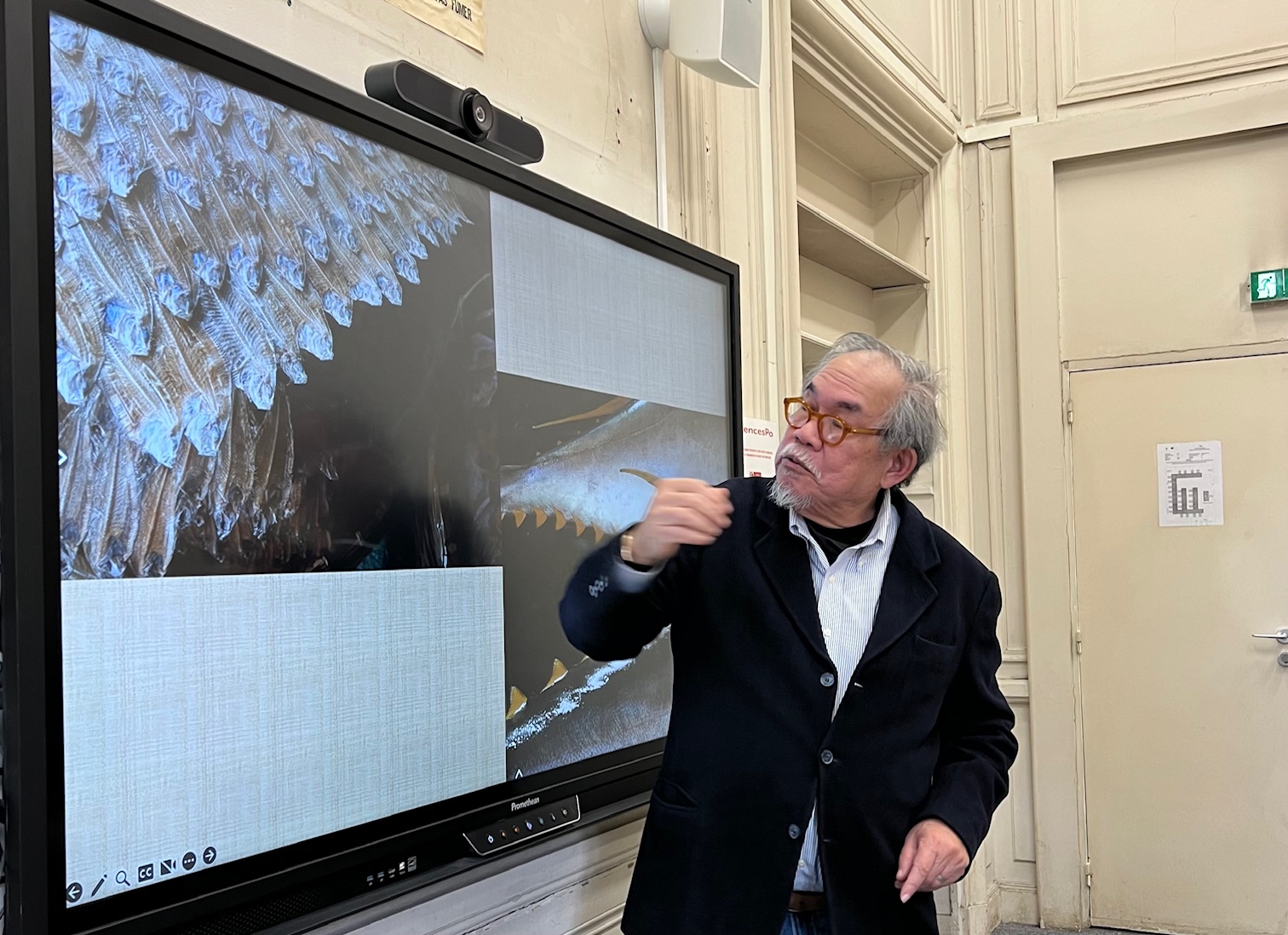
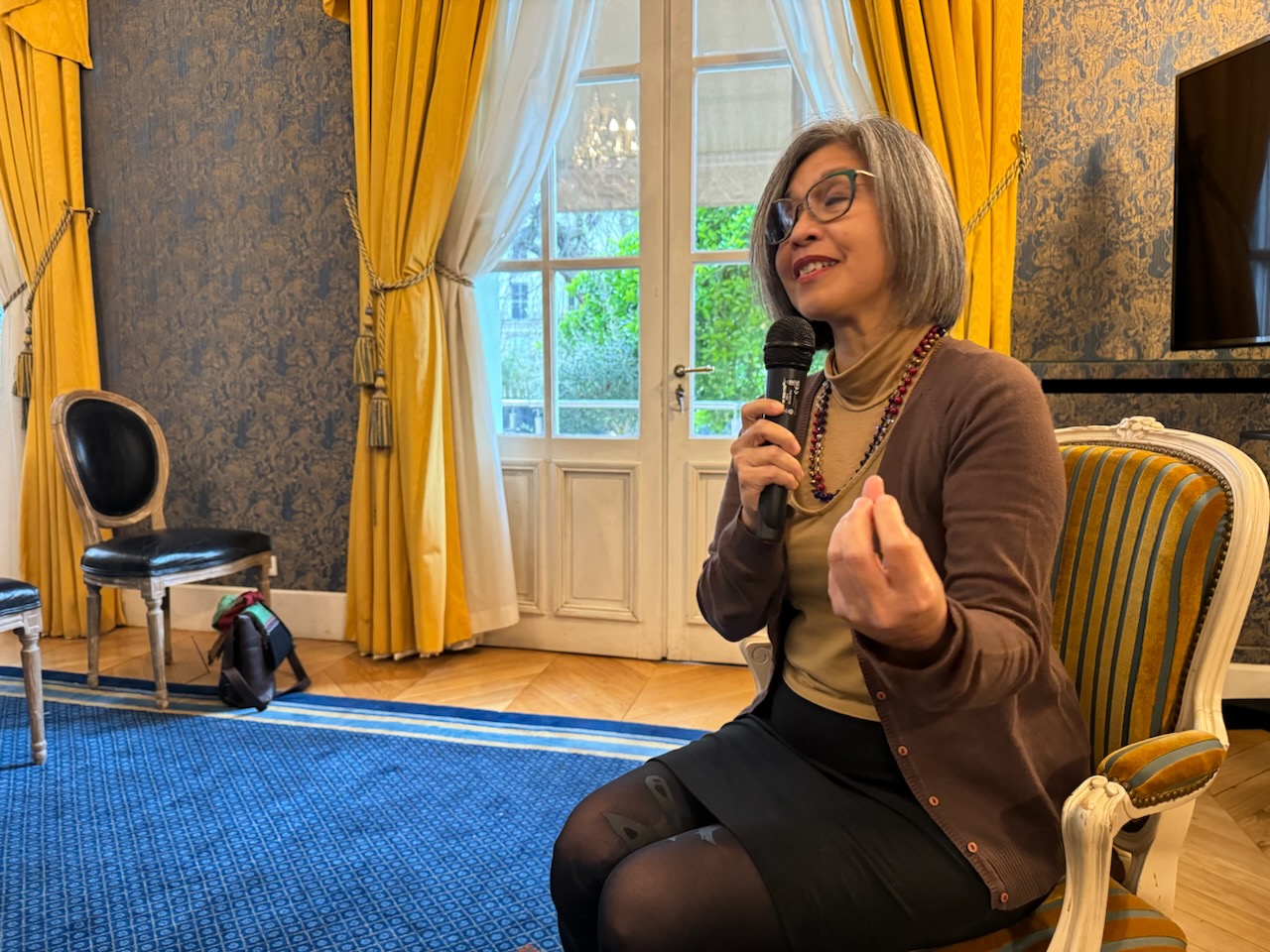
We were there at the invitation of SciencesPo, France’s leading social sciences university, for a series of talks on Philippine literature and art. Along with France-based writer Criselda Yabes, I gave a reading as well at the Philippine embassy in Paris at the behest of our most gracious ambassador, Mme. Junever “Jones” Mahilum-West, an avid amateur painter and supporter of Philippine culture. Our host at SciencesPo, Dr. Pauline Couteau, also arranged some events for us at their campus in Le Havre and sponsored a special screening of Lino Brocka’s classic “Maynila sa mga Kuko ng Liwanag” at the Entrepot Theater in Paris.

It was a hectic week that left these footloose septuagenarians exhausted but exhilarated at the same time, warmed up in France’s unseasonably chilly weather (often falling below 10C) by the enthusiasm of our new friends, both French and fellow Filipinos. 

Again, however, we had a sweet problem to deal with even before we flew to Paris: with such little time left on our schedule for more casual diversions, what places or experiences would we put on top of our list for our relaxation and amusement, given Paris’ almost inexhaustible offerings of wonder and delight?

Anthony Bourdain, bless his soul, famously advised short-term visitors to Paris not to make a mad dash to try and see everything all at once, but to just relax, have coffee, imbibe the neighborhood culture, stay in bed (and for those able and inclined, make love). Beng and I recalled, with both fondness and regret, how we had first seen Paris a quarter-century earlier from the back of a bus on a 99-pound budget tour from our base then in Norwich, England. The bus went by the city’s landmarks so fast that Beng missed Rodin because she was in the on-board restroom then. Subsequent visits afforded us a bit more time to see the Mona Lisa (of course) and to go up the Eiffel Tower (of course) but our happiest memories came, as Bourdain suggested, from just walking in the city gardens and along the Seine.

This time, we decided to do just two things with our limited free time: visit one museum, and hit the flea markets. This follows a pattern that Beng and I have observed over decades of traveling together, from Amsterdam, Barcelona, and London to New York, Tokyo, and Shanghai. The museums capture and preserve the glory of the past, and if you’re lucky, rather than pay for made-in-China miniatures at the museum gift shop, you can find some genuine article from that past in the flea market. 

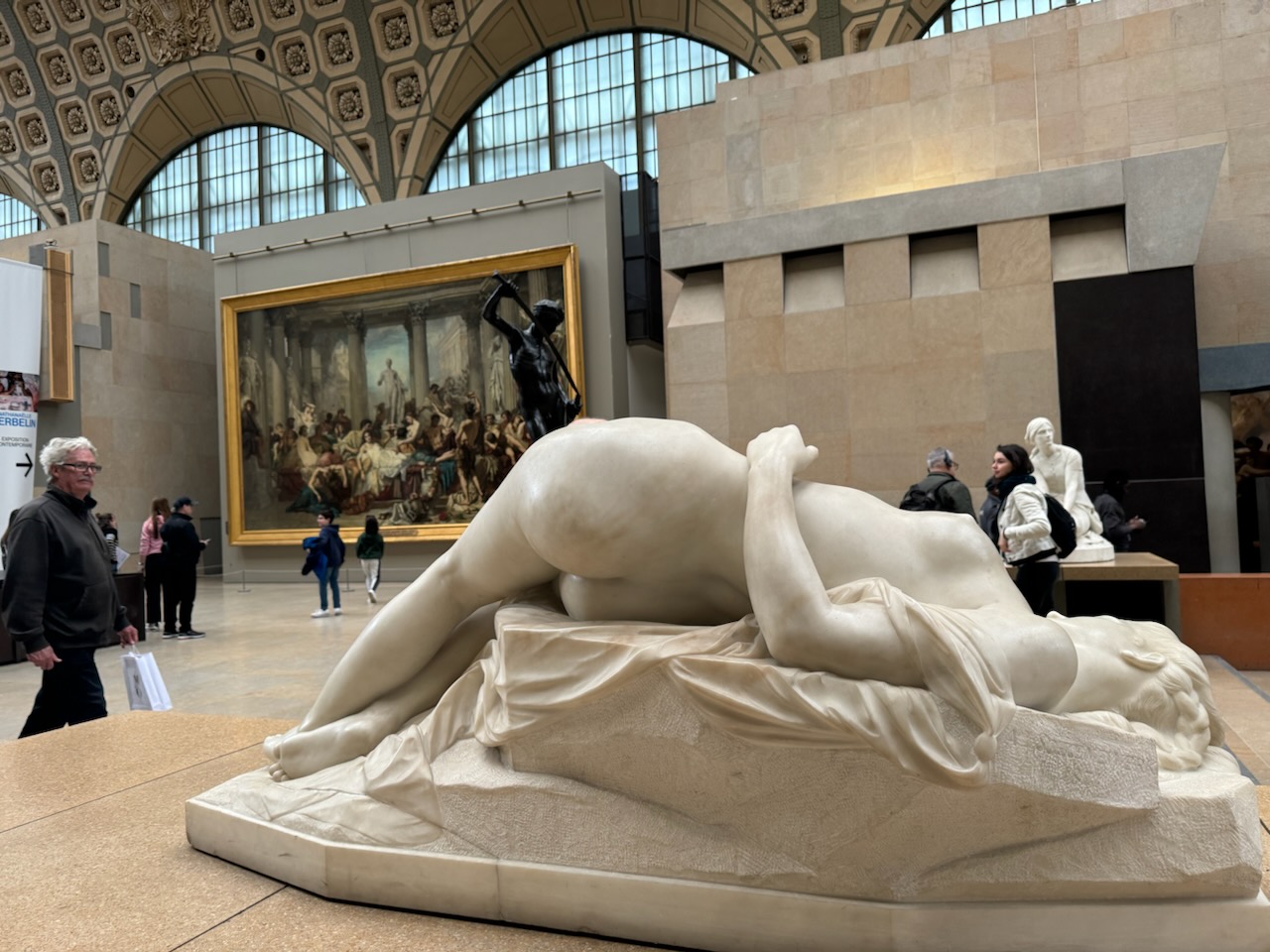
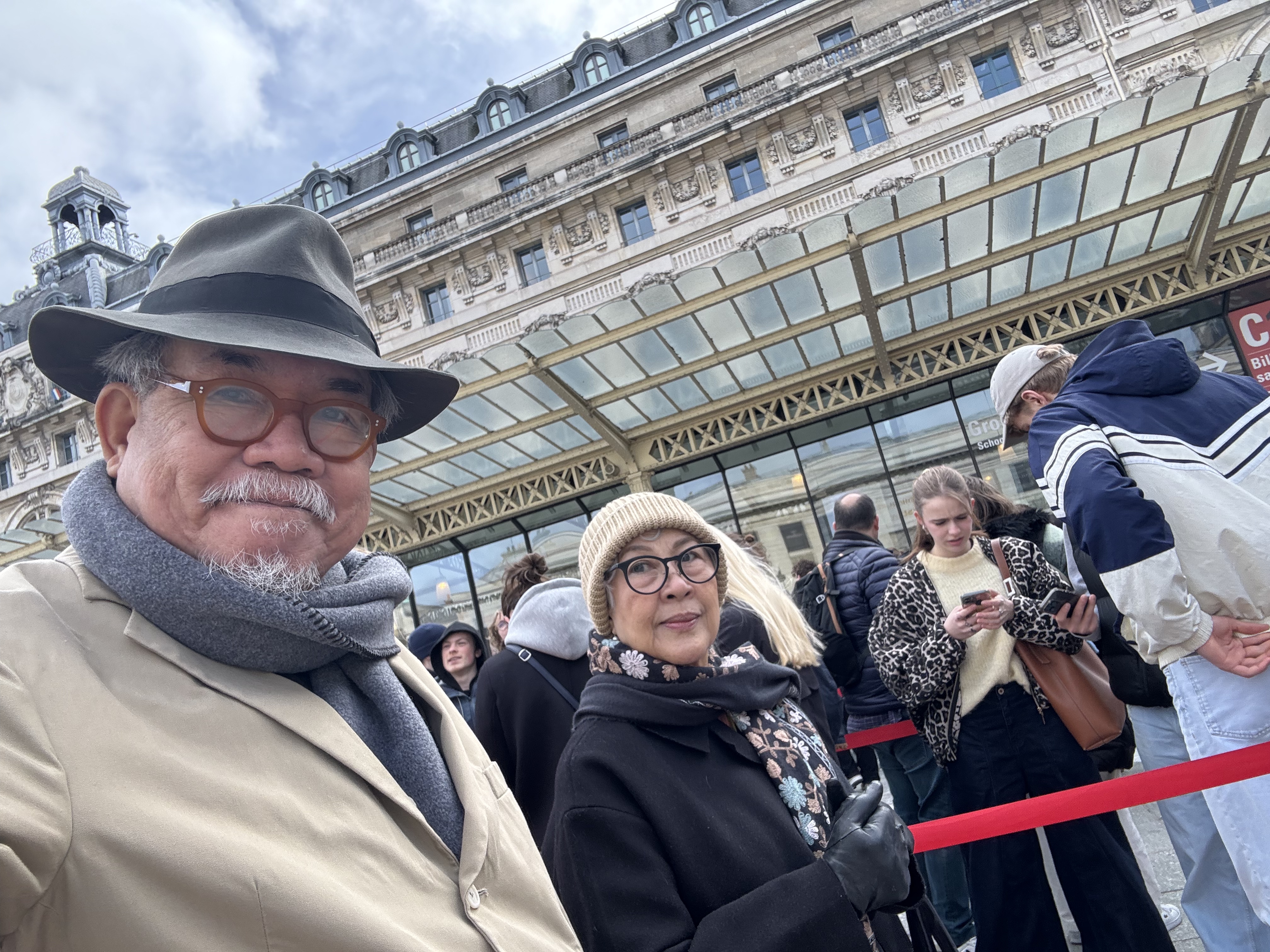
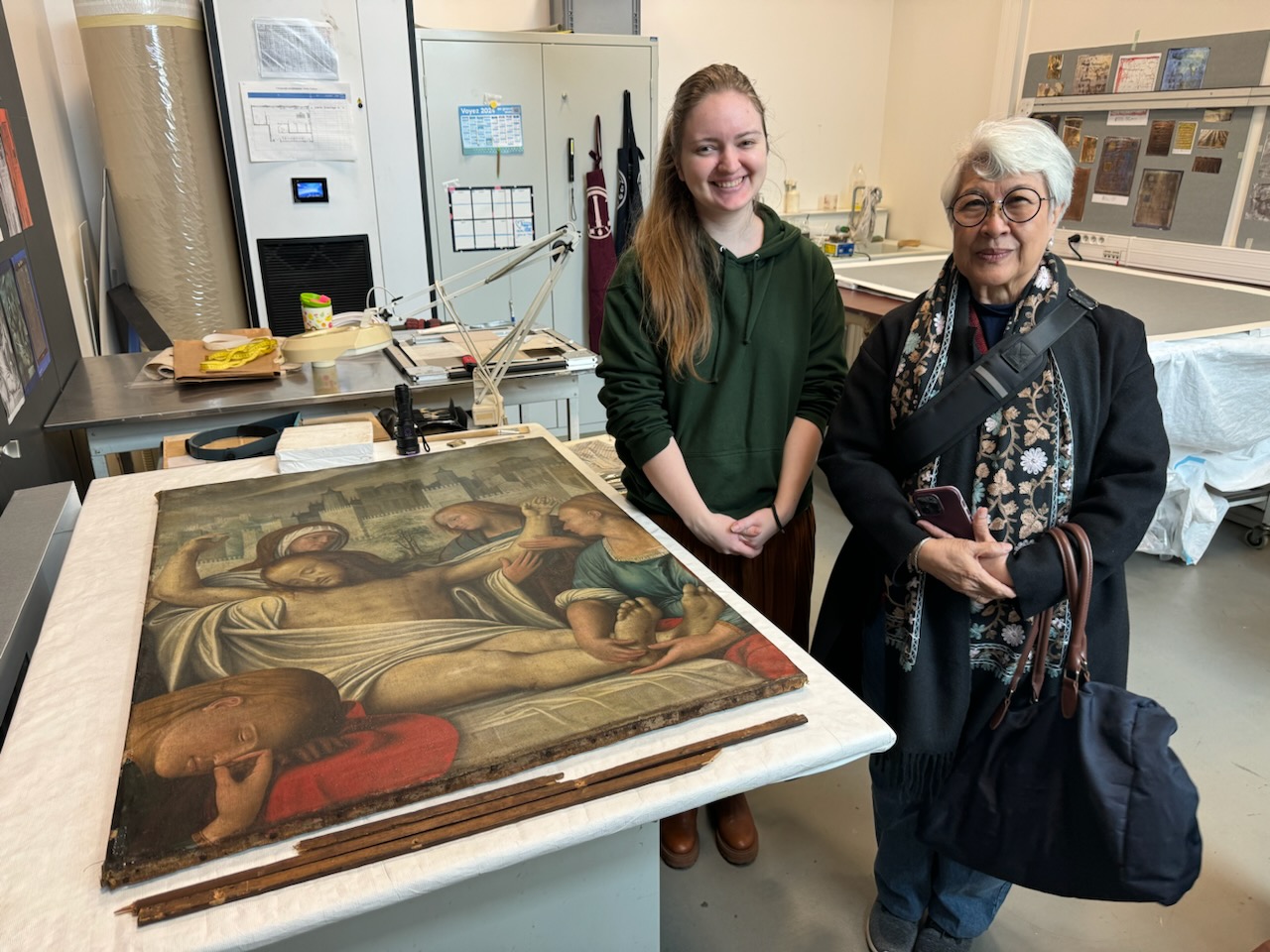
Our choice of museum was easy: Paris has dozens of fantastic museums—and you’ll never, ever finish the entire Louvre in one visit—but the great one we’d never been to was the Musée d’Orsay, the former train station that’s become France’s cathedral of Impressionism. Finally, this time, in the few hours we had just before boarding the train to Le Havre, we managed to step into the Musée d’Orsay, and what a divine experience e that was, to find room after room filled by the masterworks of Renoir, Monet, Manet, Seurat, Degas, Redon, Courbet, and so on, like walking into a book of pictures. 

Understandably, hundreds of other people had the same idea, so the best time to visit may have been after 6 pm—the museum closes at 9:45—when admission rates are also cheaper. Not a few friends have remarked that they found the Musée d’Orsay much better than the Louvre, perhaps because of its relative compactness and its delivery of proven crowd-pleasers in its collection.

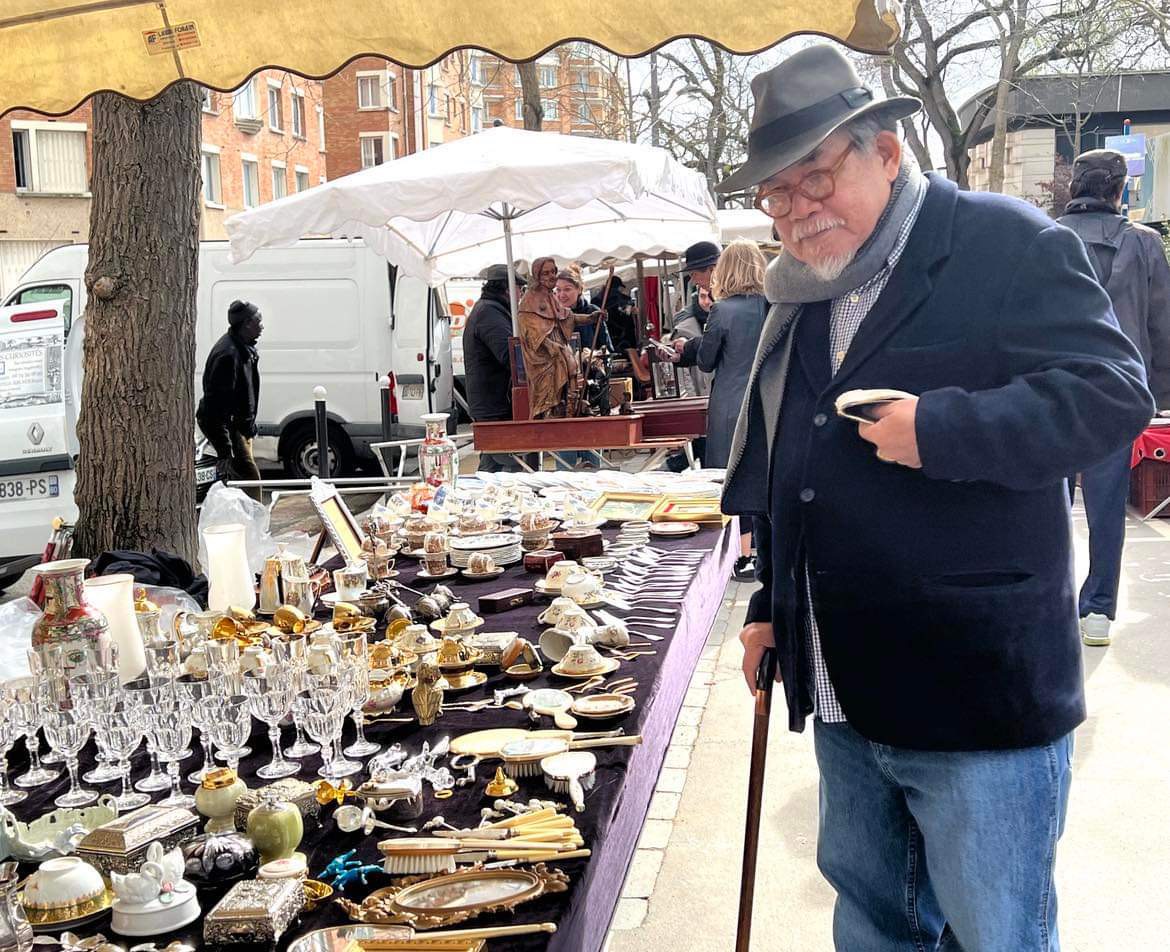
Our flea-market sorties proved just as wondrous, with the additional thrill of unpredictability, as each table will be different from the one before it and you need a quick, trained eye to spot the jewel in the junkyard. As flea-market addicts from decades back when we used to scour the yard sales and antique barns of the American Midwest for things we could drag home, Beng and I have developed a routine of scan-and-scrutinize, looking for our respective grails (old fountain pens for me, old bottles and costume jewelry for her).

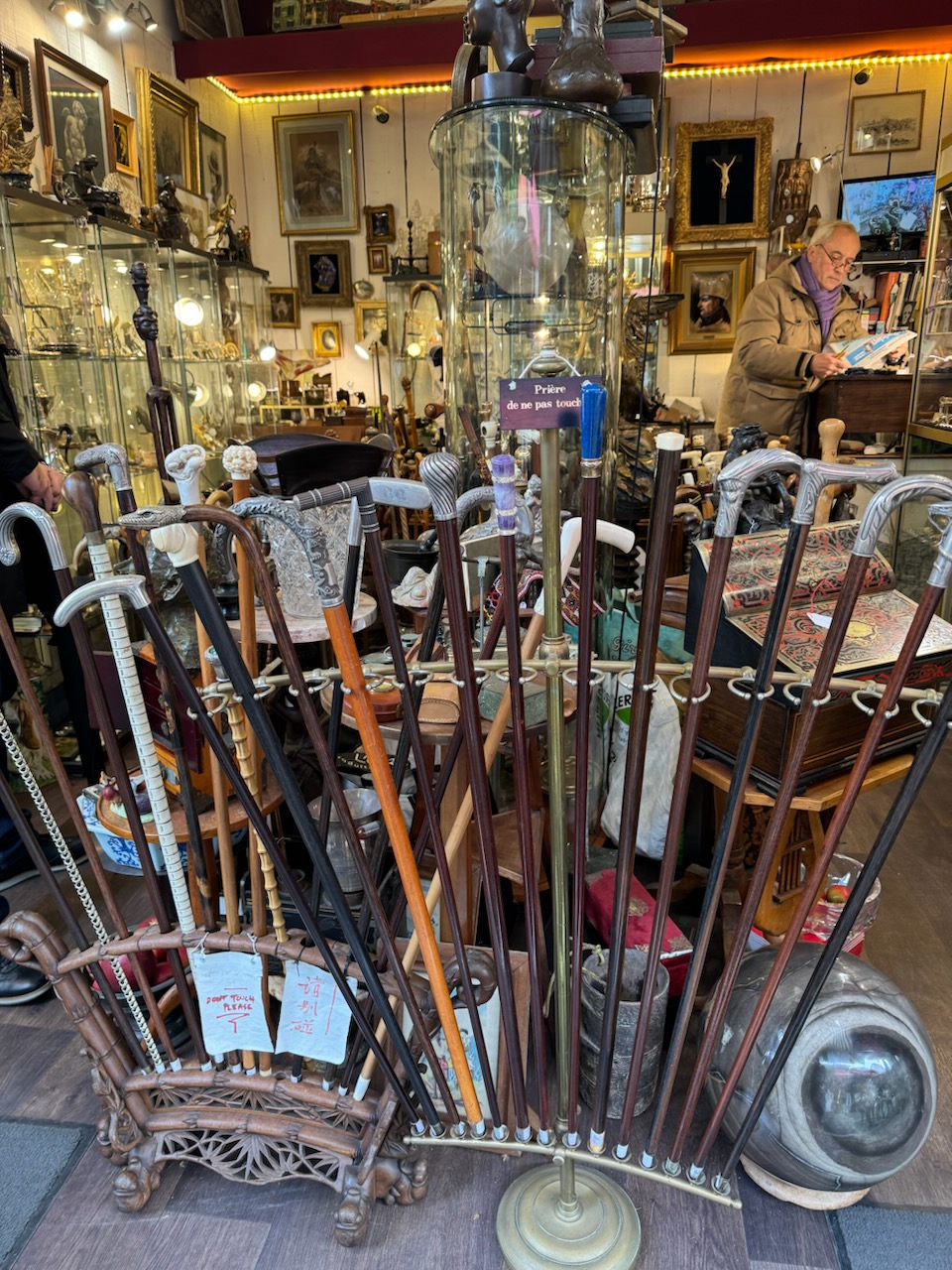
We were lucky to be billeted near our first flea market, the one at Porte de Vanves, which has about a hundred dealers strung along a large city block selling all manner of goodies from 18th-century books and Christofle silverware to walking sticks and paintings. I searched in vain for that lost Juan Luna and that stray copy of the Fili (which Rizal finished in Paris), but the flea-market gods blessed me instead with an early 1900s “safety” fountain pen sheathed in gold, perfect in every way, lying all by its lonesome on a table of bric-a-brac. “Combien, madame?” I asked in my schoolboy French, my throat dry with anticipation. “Cinquante euros,” she said; it was easily worth five times that, but I gathered up all my courage and countered, “Quarante?” “Okay,” she said, “A quick “Merci!” and 40 euros later, I was a happy boy with a new toy—what could be a better memento of this short trip than a gorgeous century-old pen with the word “Paris” on its 18-carat nib?

Of course, this luck was not to be repeated on our visit to the big flea market of St. Ouen in Clignancourt—reputedly the largest of its kind in the world—a few hours before boarding the plane back for home, but we rewarded our labors with a late lunch in a Chinese restaurant. After a week of French cuisine, immersed in the grandeur of French art and culture, huge platefuls of Cantonese fried rice sounded just about right. It was as if we were being told, “You’ve had your Parisian interlude and your souvenirs, it’s time to go home.” Au revoir!

Qwertyman No. 87: A French Sojourn

Qwertyman for Monday, April 1, 2024

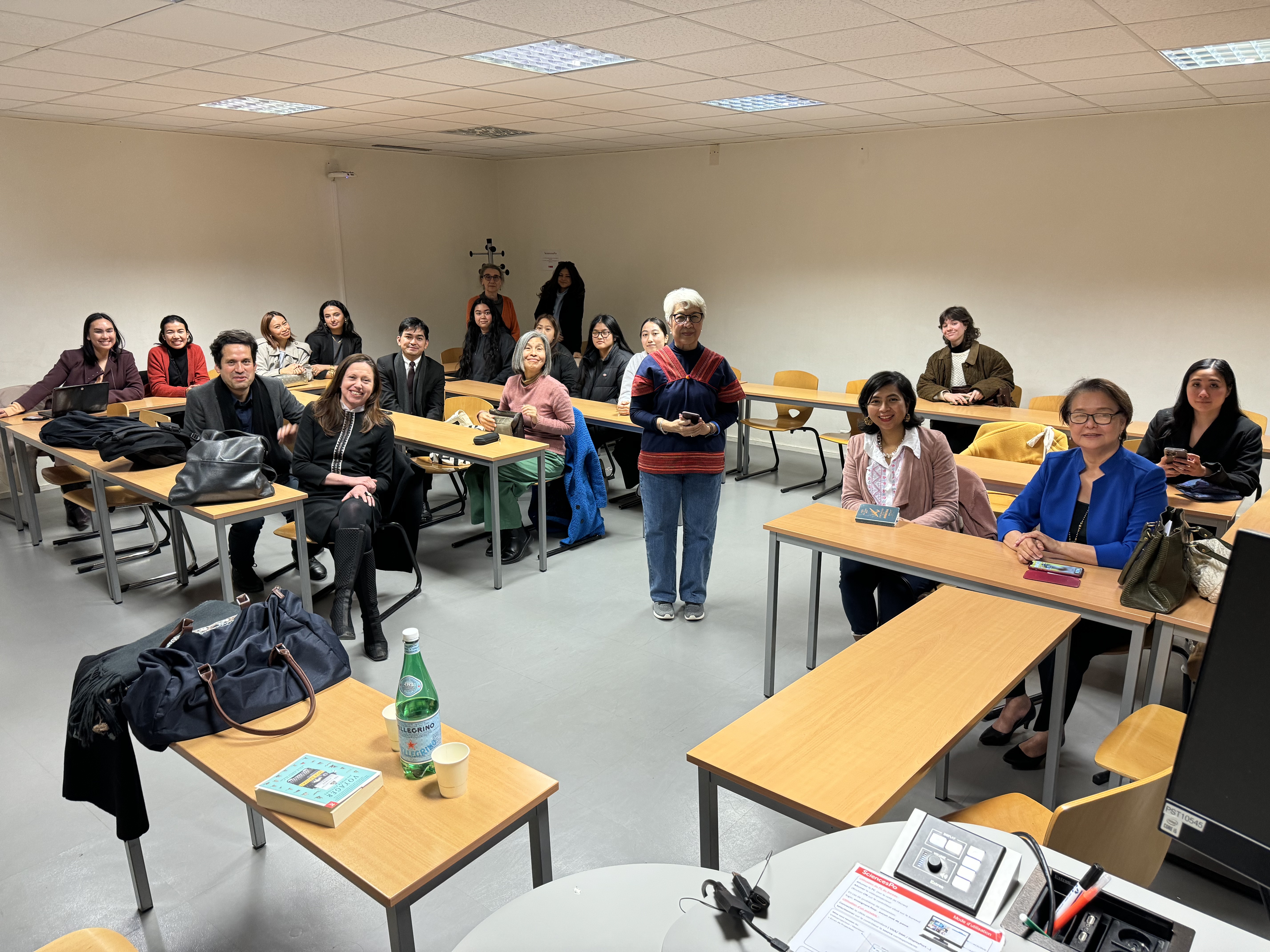
MY WIFE Beng and I were in France last week to give a series of lectures at the invitation of the Paris Institute of Political Studies, better known as SciencesPo. They don’t formally observe Holy Week in France (nor, for that matter, do many Filipinos to whom it’s simply come to mean “long weekend”). So we thought that it was the best time to come over and share some of our insights into Philippine literature, art, and politics with young French students as well as our countrymen in Paris, for whom I and fellow writer Cris Yabes, who’s based in France, gave a special reading at the Philippine embassy.

For those who’ve never heard of it—which won’t be too surprising given our Pinoy fixation on top American and British universities—SciencesPo (pronounced SEE-ansPO) is France’s leading university in the social sciences. It now has 14,000 students spread out over seven campuses across the country. Only 4,000 of those students are undergraduates; the rest are graduate students, including 350 taking their PhD. Unlike our universities, SciencesPo’s undergrads can finish in only three years, with their last year spent abroad. I was told that there are about 20 Filipino students currently enrolled at SciencesPo, and about half of its students come from overseas. As a public research university, SciencesPo is supported by the government through a private foundation, an arrangement that gives it a high degree of autonomy.

Founded in 1872, the university has served as the training ground for France’s political elite, producing five out of France’s eight presidents: Pompidou, Mitterand, Chirac, Hollande, and the incumbent Macron. Marcel Proust studied here for a year, and Christian Dior was a graduate.

With that kind of elite status comes criticism and controversy, and SciencesPo has had its share over the years. Nevertheless, it remains high on the list of desirable universities, especially for students with plans of joining the French civil service, after further studies at the Ecole Nationale d’Administration. (At Inalco, another Fremch university, we were surprised to find eight Filipino-French students studying Filipino for their degree under Prof. Elisabeth Luquin, who studied in UP and speaks Filipino like a local.)

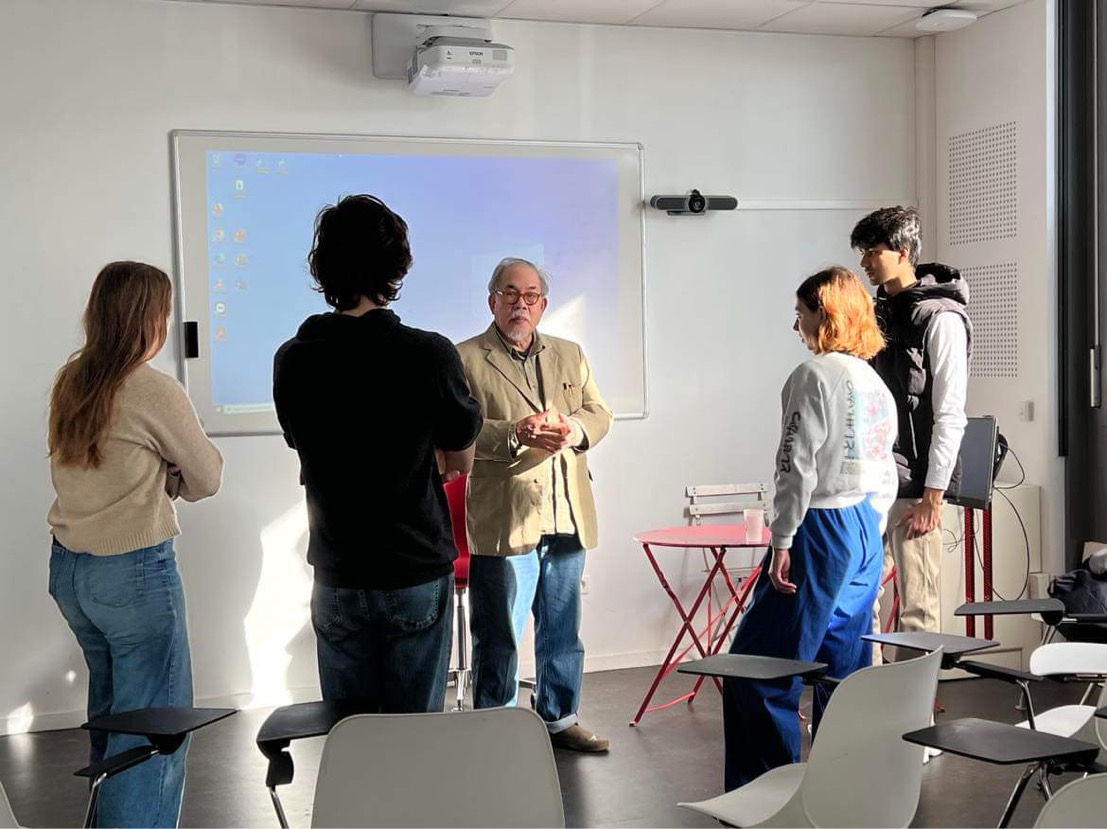
Beng and I gave presentations on the Philippines at SciencePo’s main campus in Paris—a sprawling complex comprising ten buildings in some of Paris’ most precious real estate—and I had an additional three sessions in Le Havre, where SciencePo’s campus focuses on Asian studies. Wherever we went, we could see signs of intellectual and political ferment; like their predecessors at the Sorbonne whom we admired for their militancy 60 years ago, SciencesPo students have protested and rallied over many causes from domestic violence to Gaza.

To be fair, these concerns have occupied much of the rest of France as well. In a country where street protests are a time-honored tradition that have a real bearing on political outcomes, differences of opinion can run deep and long, and controversy stalks nearly every issue, from the wearing of religious headgear to the extension of the retirement age. To “liberté, egalité, fraternité,” we must now add “identité,” the subject of identity so central to political discourse in many countries today, especially those with large and strong immigrant populations like America and France.

“Over the last few years, France has been torn by culture wars—a shift that was less the effect of American concepts imported into French universities, as many on France’s right claim, than of the long-term decline, beginning in the early 1980s, of class politics and alternatives to capitalism. In a post-ideological France, class struggle has been displaced onto the terrain of identity,” noted sociologist Daniel Zamora in an article for Catalyst in 2021. “Despite Macron’s professed disdain for identity politics, his alternative can scarcely be construed as anti-identitarian. Building on what we have in common, Macron argued, meant finding an answer to the question, ‘What does it mean to be French?’”

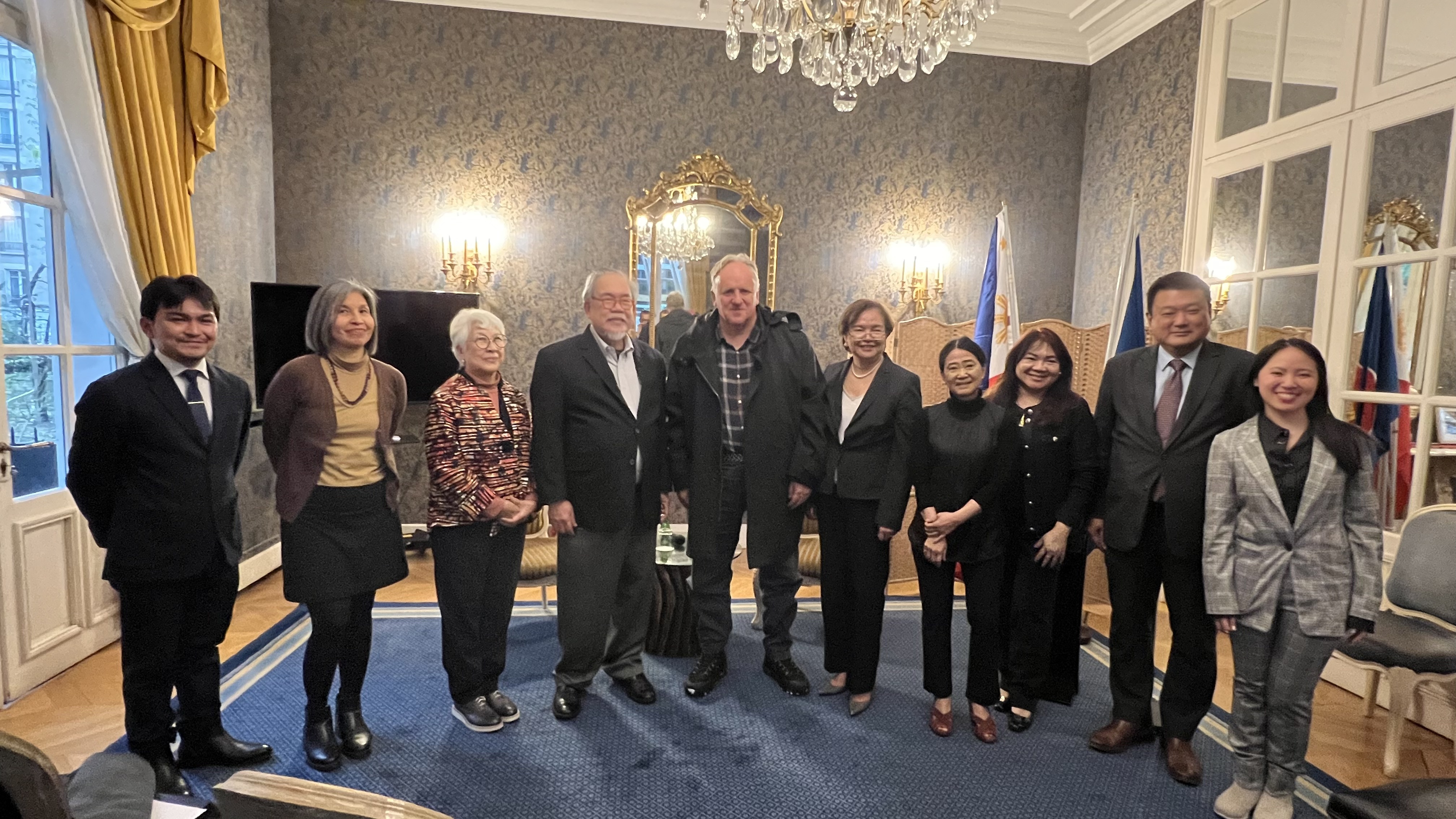
Identity, at least, was not in question when Cris Yabes and I gave our reading at the Philippine embassy, thanks to the invitation of Ambassador Junever “Jones” Mahilum-West, one of the most amiable, gracious, and artistically inclined ambassadors I’ve ever met. (She was very game as well, happy to hoist an IPA beer with my wife Beng after our talks.) To a fairly sizeable group from the Filipino community in Paris, Cris and I read pieces that had to do with our foreign relations, particularly in my case with our diaspora, which my second novel Soledad’s Sister (which has been published in French by Mercure de France) dealt with. 

In the conversations that followed, I learned that there are around 26,000 documented Filipinos in France, with perhaps just as many existing belowground, most of them domestic helpers. One of them, Zita Cabais, was a victim of human trafficking more than two decades ago, having been enticed to come to Europe with the promise of a visa and a good job. Instead she was brought to Hungary, from where she was led on foot through Europe to finally reach France, whereupon her employer confiscated her passport, effectively holding her hostage. But unlike many other DH’s, Zita fought back, sued her employer, and succeeded. Since legalized, she now works for organizations devoted to fighting human trafficking. (The path to legalization is reportedly shorter in France, but knowing the French language is a prerequisite.)

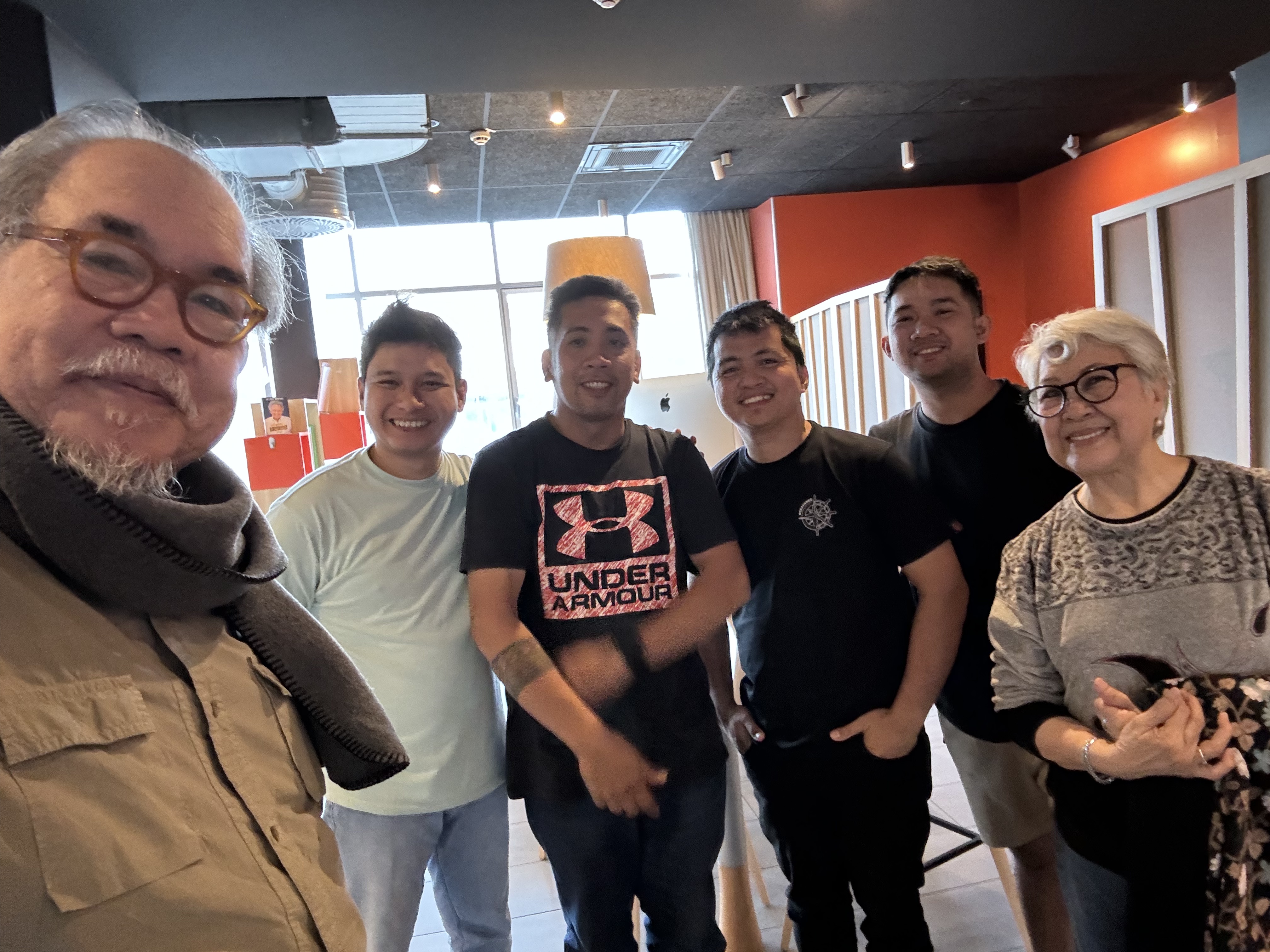
One unexpected highlight of our visit was running into a group of Filipino seamen in our hotel in Le Havre, prior to my lecture. Beng and I had just come down for breakfast when we heard the familiar chatter of Filipinos at a nearby table. We came up to them and introduced ourselves, and we had a lively conversation during which they explained that they were still waiting for their ship to dock because of the bad weather. I’d met and chatted with seamen like them before in Hamburg and in Christchurch, among other places; as a writer and as a Filipino, I take it as a pleasant obligation.

Competition, they said, was driving them to accept shorter four-month stints at sea. “We barely break even, and it’s a tough life at sea, but we have no choice, since our families depend on us.” Part of my lecture that day was going to be about our Filipino notion of the hero as martyr, of Christ-like sacrifice for the common good. I suddenly realized that it was Good Friday. We had our smiling selfies taken, and they seemed proud to stand with UP professors, but it was Beng and I who felt honored to be there with them.

Qwertyman No. 84: An Advocate for IBD

Qwertyman for Monday, March 11, 2024

YOU’LL FORGIVE me this “proud papa” moment if I preface this week’s column with the news that our unica hija Demi Dalisay Ricario, who’s unbelievably turning 50 later this year, represented Asian-Americans—and indeed the Philippines—on Capitol Hill in Washington, DC recently to lobby for changes in US health laws on behalf of patients. That’s an ocean and a continent away and doesn’t really affect us, but what’s salient here is that Demi went there on behalf of the American Gastroenterological Association (AGA) as an advocate for Inflammatory Bowel Disease (IBD) concerns—and that touches on our lives as Filipinos.

IBD is one of those little-known and often misunderstood diseases that can turn life into a living hell for its sufferers. It comes in two variants—ulcerative colitis (UC) and the more severe Crohn’s disease (CD), both of them involving inflammation of parts or all of the intestines. Often accompanied by bloody diarrhea, UC and CD and can be extremely painful and be lifelong burdens—or even turn fatal. 

Their causes remain unknown, but genetics, environmental factors, and immune responses seem to be active factors. Remedies include strict dietary changes and employing colostomy bags. Patients can find their social lives diminished or even be stigmatized. It’s not that common—according to the IBD Club of the Philippines, UC hits 1.22 out of 100,000 Filipinos and CD just 0.35, but it’s that same obscurity that makes it difficult to recognize, diagnose, and treat properly. In our culture where people tend to ignore or diminish their ailments—especially embarrassing ones—and consult doctors only as a last resort, the problem gets magnified.

It was on one of our visits with Demi in San Diego ten years ago that she fell terribly ill with blood in her stool, and despite all the tools available to modern American medicine, no one could tell why. Only months later was she positively diagnosed with UC, bringing both relief and radical lifestyle changes, especially to her diet (she can’t eat anything with wheat like ordinary sliced bread, among others). She held a high-pressure job as a frontliner in one of San Diego’s premium hotels, and stress is a high inflammatory factor.

“People often struggle to understand that IBD is an invisible illness, which means that sufferers might look healthy outwardly yet still experience significant health challenges,” Demi says. “This misconception is particularly challenging for individuals like me, who worked in high-end environments like the US Grant hotel, where maintaining an elegant appearance and managing demanding clients was part of the job. The contrast between looking ‘well’ and feeling unwell led to misunderstandings, as people would say, ‘But you don’t look sick!’

“The unpredictability of IBD symptoms significantly impacts mental health and daily life (it makes me anxious sometimes). Fluctuating symptoms such as frequent restroom visits and pain can hinder social interactions and activities. The inconsistency of the disease makes it difficult to commit to plans, as fatigue is a common issue. Additionally, managing a career can be problematic; frequent medical appointments and unexpected flare-ups often disrupt regular work schedules. This was my experience at The Grant, where I had to forego managerial opportunities to avoid exacerbating my condition. Additionally, managing relationships and friendships can be complex with IBD.”

IBD patients have a hard time at parties and social events, especially in the Philippines, where pakikisama is part of a strong food culture. People with colitis can’t eat ordinary bread or drink milk (think halo-halo). Demi has had to be adept at declining offers of food—a no-no for Pinoys—and explaining her unusual condition.  

“Before heading to any event or restaurant, I take a look at the menu online to figure out what I can eat. I’ve even gotten into the habit of giving the host a heads-up about my diet to make sure there’s something on the table I can actually enjoy. When it’s time for those long flights to places like Manila, I pack a stash of gut-friendly snacks in my carry-on (usually gluten-free bread, granola bars, nuts, and fruit). Whenever available, I pre-order gluten-free meals for my flights. After dealing with IBD for almost a decade, I’ve learned the hard way what foods are my friends and which ones are foes, such as gluten and lactose.”

To help her fellow Pinoys deal with IBD, Demi created a “Dear Colitis” Facebook page, also to encourage them to come out in the open and realize that they have a virtual global support group. Her advocacy continues online and with various entities like Pfizer, the Academy for Continued Healthcare Learning, and the Crohn’s Colitis Philippines FB group. Last year she was invited by the American Gastroenterological Association to join six other advocates as part of their pilot Patient Influencer Program to help promote IBD awareness, giving her the opportunity to participate in this year’s Digestive Disease National Coalition Public Policy Forum in DC. 

She explains that “Filipinos dealing with IBD should be well-informed about their condition and discerning about the reliability of information sources they encounter. It’s crucial for patients to be their own advocates, boldly voicing their needs and concerns whether at home, in the workplace, or in social gatherings. This self-advocacy is key to maintaining a good quality of life. Cultural concepts such as hiya (shame or embarrassment), pakikisama (camaraderie or fitting in), and the fear of being a pabigat (burden) can pose significant challenges. These factors might discourage individuals from speaking out about their condition, but overcoming these barriers is essential for their well-being and mental health. By confidently communicating their needs and educating those around them, Filipino IBD patients can navigate their condition more effectively while fostering understanding and support in their respective circles.”

Spoken like, well, a spokesperson, but I think a good one for the job.

(Illustration from Johns Hopkins Medicine)

Penman No. 459: Spartan but Splendorous

Penman for Sunday, February 11, 2024

WE OFTEN think of ecotourism in terms of swimming with whale sharks or encountering rare species of flora and fauna in some faraway forest. But not too far from Metro Manila lies a natural haven that will satisfy adventurers and conservationists alike—and the ecotourists who are both.

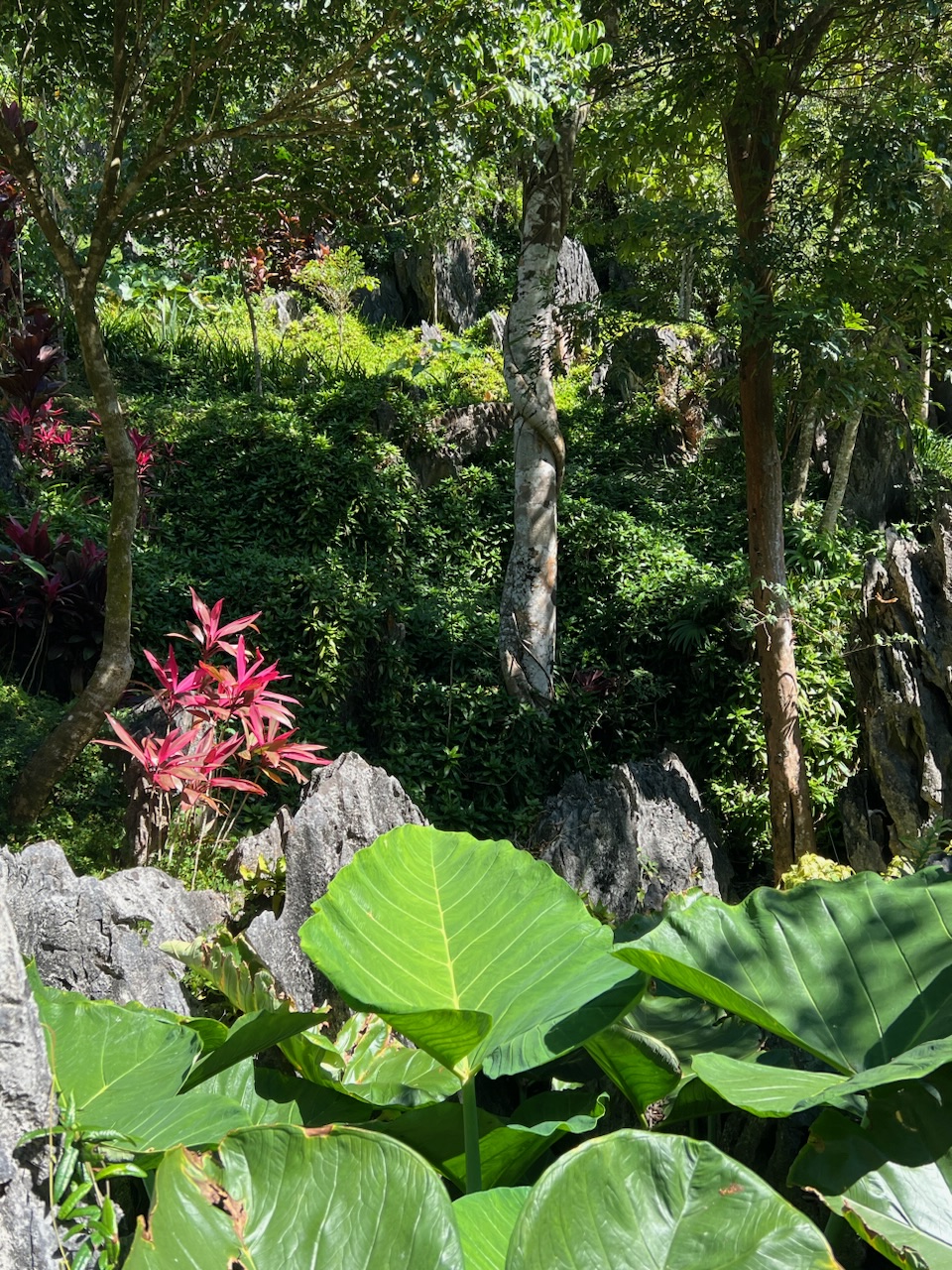
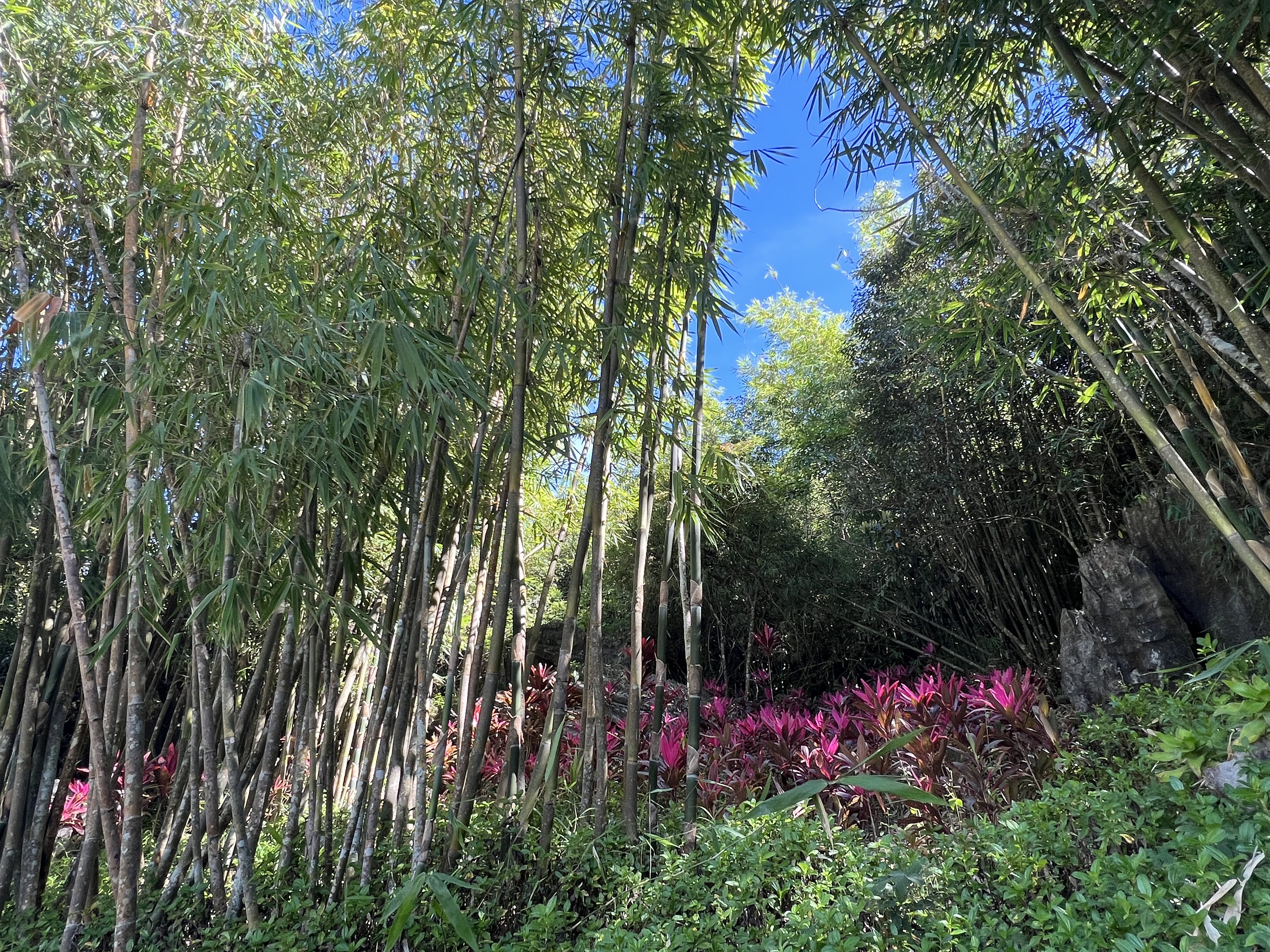
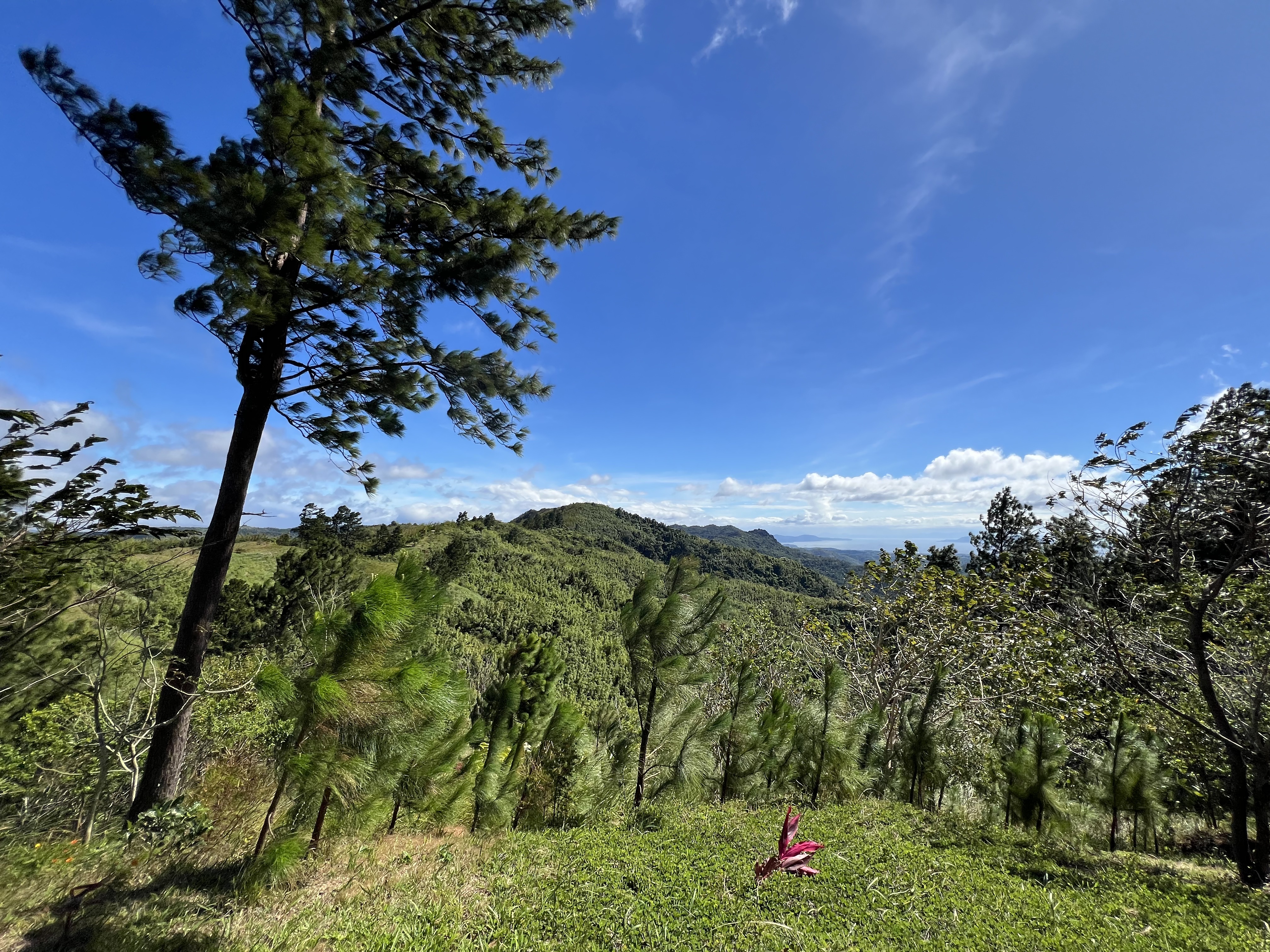
That haven is the Masungi Georeserve, a 3,000-hectare tract of largely reforested land marked by sharp karst or limestone shards jutting out into the sky amid bamboo groves, exotic orchids, and Benguet pine.

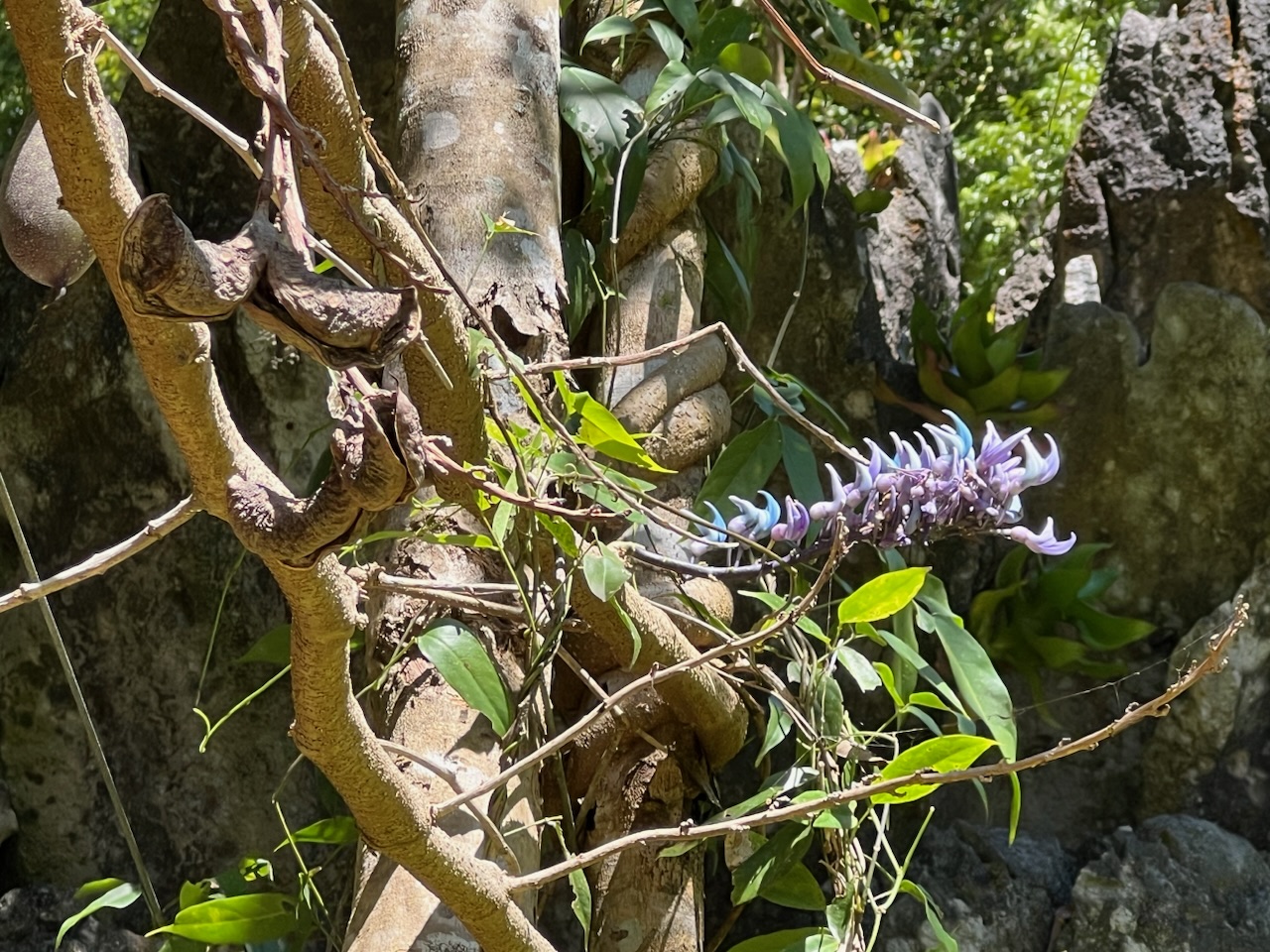
The unlikely remainder of an aborted housing project for DENR employees, Masungi now serves as home to hundreds of species, many of them rare and some even unique, such as the purple jade vine and the Masungi microsnail.

These sightings alone would be well worth the trip—a pleasant 30-kilometer drive from Quezon City through Masinag and Antipolo on the Marikina-Infanta or Marilaque Highway, on some of the country’s best and widest roads. (On the weekday morning we went there, it took us just a little over an hour from UP Diliman.) 

Masungi straddles the Sierra Madre boundary between Baras and Tanay, Rizal, much of which is occupied by the Upper Marikina Watershed, across the Kaliwa Watershed on the northern side. Its name comes from the Tagalog sungi, meaning sharp, a reference to the profusion of limestone outcrops looking like sharp teeth across the mountainous landscape.

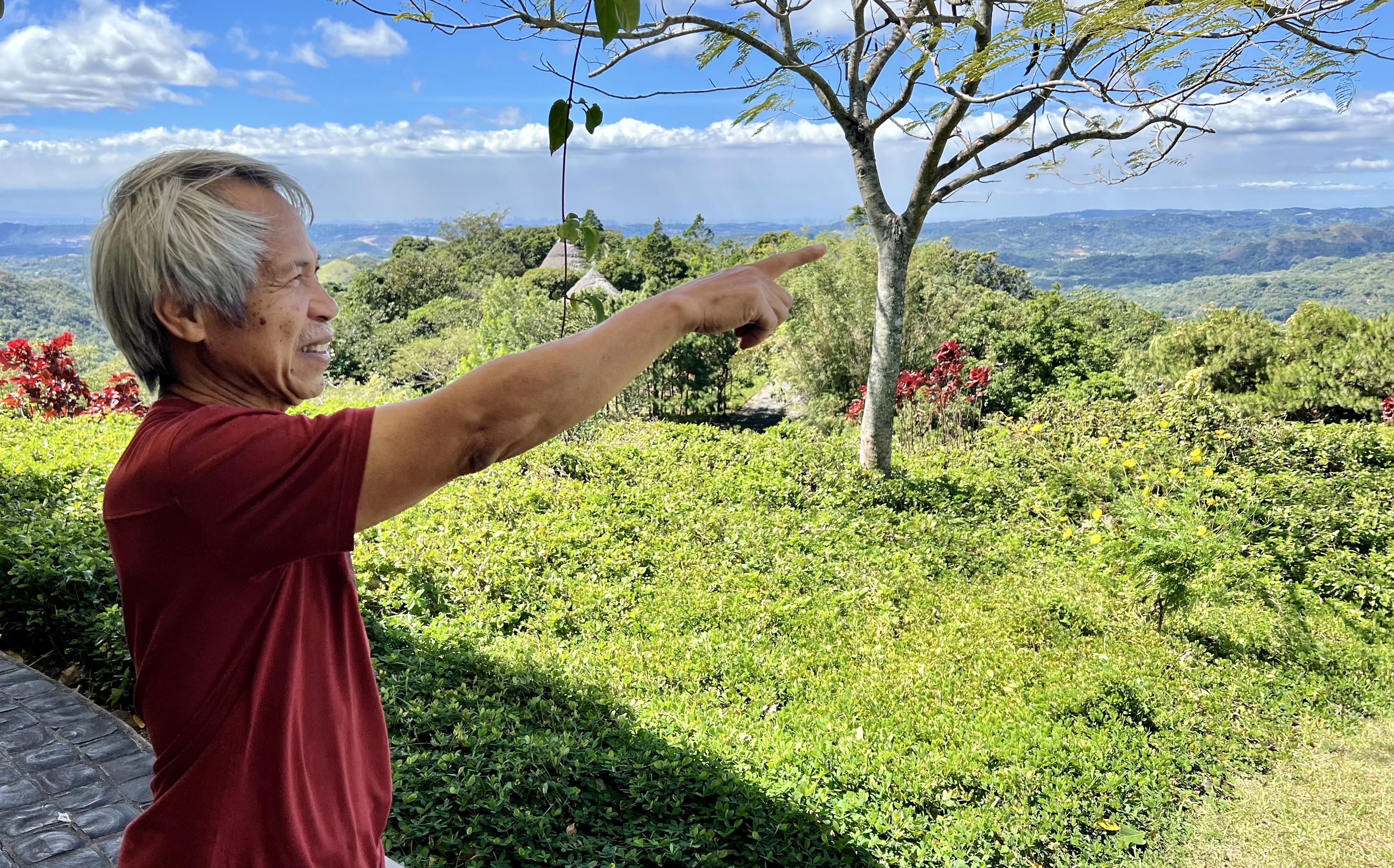
The georeserve—now being managed by the Masungi Georeserve Foundation—wasn’t set up as any kind of pleasure park. Indeed “pleasure”—except the visual kind—was the last thing this septuagenarian thought of when he went up the steep trails to a vantage point that afforded a spectacular view of Laguna de Bay and the surrounding metropolis far below. Younger and fitter visitors, however, will surely find the challenge pleasurable and even exhilarating.

When the housing project with the DENR failed to materialize—the DENR couldn’t evict the squatters already there and the land, in truth, was simply too steep and inhospitable to permanent human habitation—engineer Ben Dumaliang and his Blue Star company (the housing project contractor) took it upon themselves to rehabilitate what land they could and regrow the forest that would have been lost forever. In 2015, Ben’s daughters established the Masungi Georeserve Foundation to oversee the place, and in 2017, the MGF entered into a contract with the DENR under then Sec. Gina Lopez for the georeserve’s replanting and conservation.

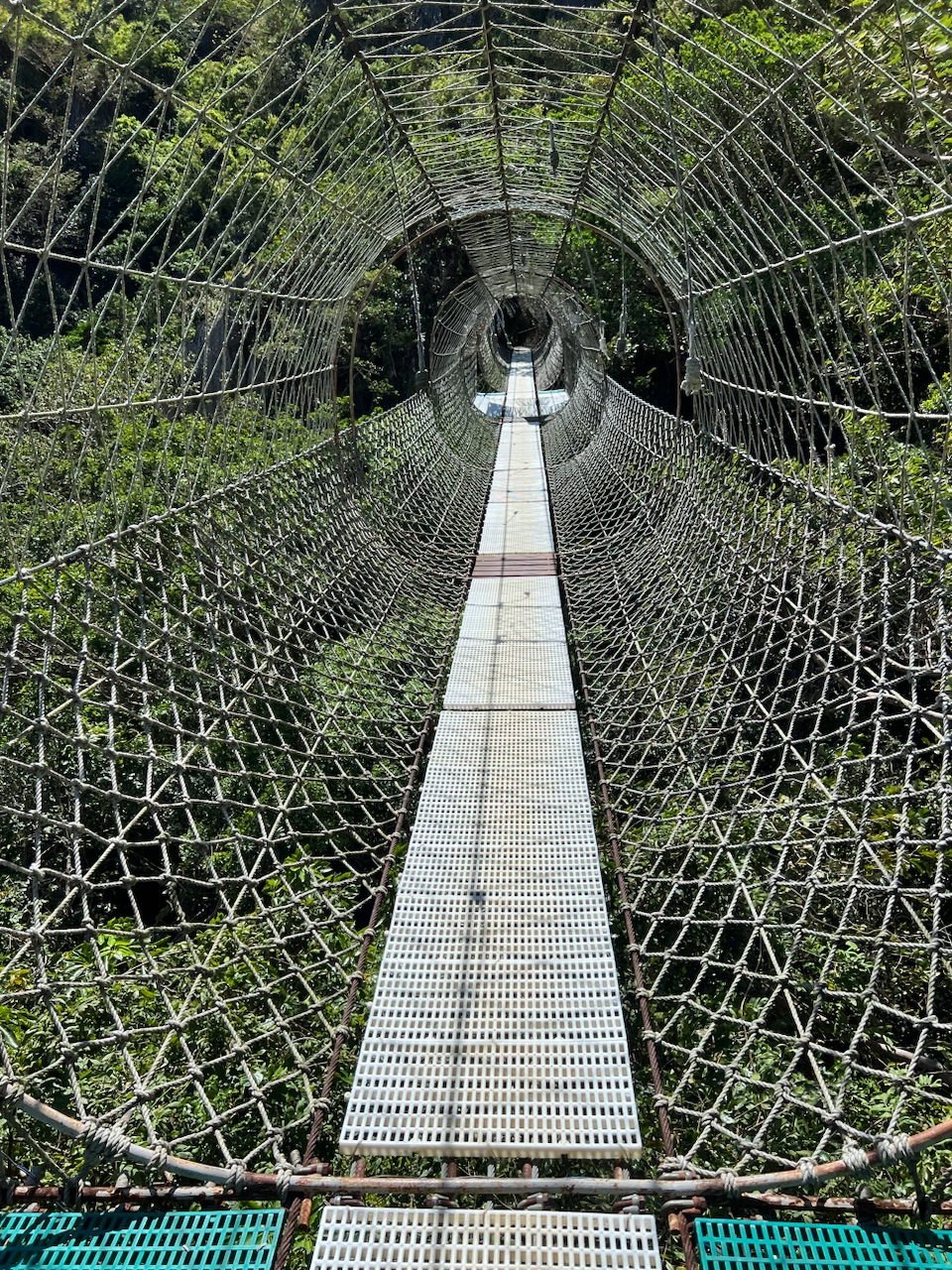
Masungi now features a Discovery Trail for hikers aged 13 and up that takes about three to four hours to complete, although it can be shortened depending on the hikers’ preference. The challenging trails feature hanging bridges, a giant spiderweb, rope walls, caves, and other points of interest (or maybe not, for acrophobes like me). Protective headgear is provided.

Typical reviews on Tripadvisor include comments like this one, from a Singaporean visitor: “Perfect day at Masungi Georeserve. The hike was well-organized and well-paced with sufficient rest stops. Our guide was knowledgeable and friendly, allowing us to take our time and helping to take our photos. You do need a certain level of fitness and daring to tackle the ropes, steps, and hanging bridges, but you will be rewarded with stunning views of the limestone karst formations. There are alternative paths to take for those who have a fear of heights but these detours may take longer. Best not to rush and go with people who won’t judge you if you feel like dropping out! Well done to the Foundation and for educating the public on biodiversity and sustainable tourism. Book ahead and pray for great weather.”

This one came from a repeat visitor, Ronald R: “Had the privilege of visiting Masungi Georeserve for the ninth time (six times on the Legacy Trail, thrice at side trails and once on the Discovery Trail) and every visit was a memorable learning and life-changing experience. All dedicated forest rangers are well versed in the changing landscape and diversity of flora and fauna. The experience differs depending on the weather. I prefer windy, cloudy weather when going up there. The Sierra Madre is more dramatic with rain clouds. Beyond the transformations, the team behind Masungi Georeserve is focused on restoring the lost and abused part of the Upper Marikina Watershed Area. Masungi Georeserve is a platform to make anyone fall in love with nature in a much deeper level. The Masungi Georeserve experience should be in every nature lover’s bucket list.”

Experienced rangers—most of them recruited from the local community, including indigenous Dumagats—serve as guides for these treks. To support the place’s upkeep—it gets no funding from the government—the georeserve charges guests P1,500 each on weekdays and P1,800 on weekends, covering the tour and simple but satisfying snacks (including a refreshingly minty tea made from the kayumanis, a native plant; a set lunch buffet is also available at the hilltop Silayan restaurant). The number of daily visitors is strictly controlled to minimize wear and tear to the area, and groups are kept manageably small. (For more helpful and detailed instructions, as well as photos of the various features along the trail, visit willflyforfood.com and look for “The Masungi Georeserve Survival Guide.”)

It’s a spartan but bracing experience, minus the spa, the massage, the gourmet menu, the uniformed attendants, and all the other amenities we associate with more genteel and patrician hideaways. This is nature in your face—but what a splendorous sight it is to behold, a painterly tableau of rock, tree, bird, and flower set against a radiant blue sky, 640 meters up and far removed from the smog and sludge of the metropolis. 

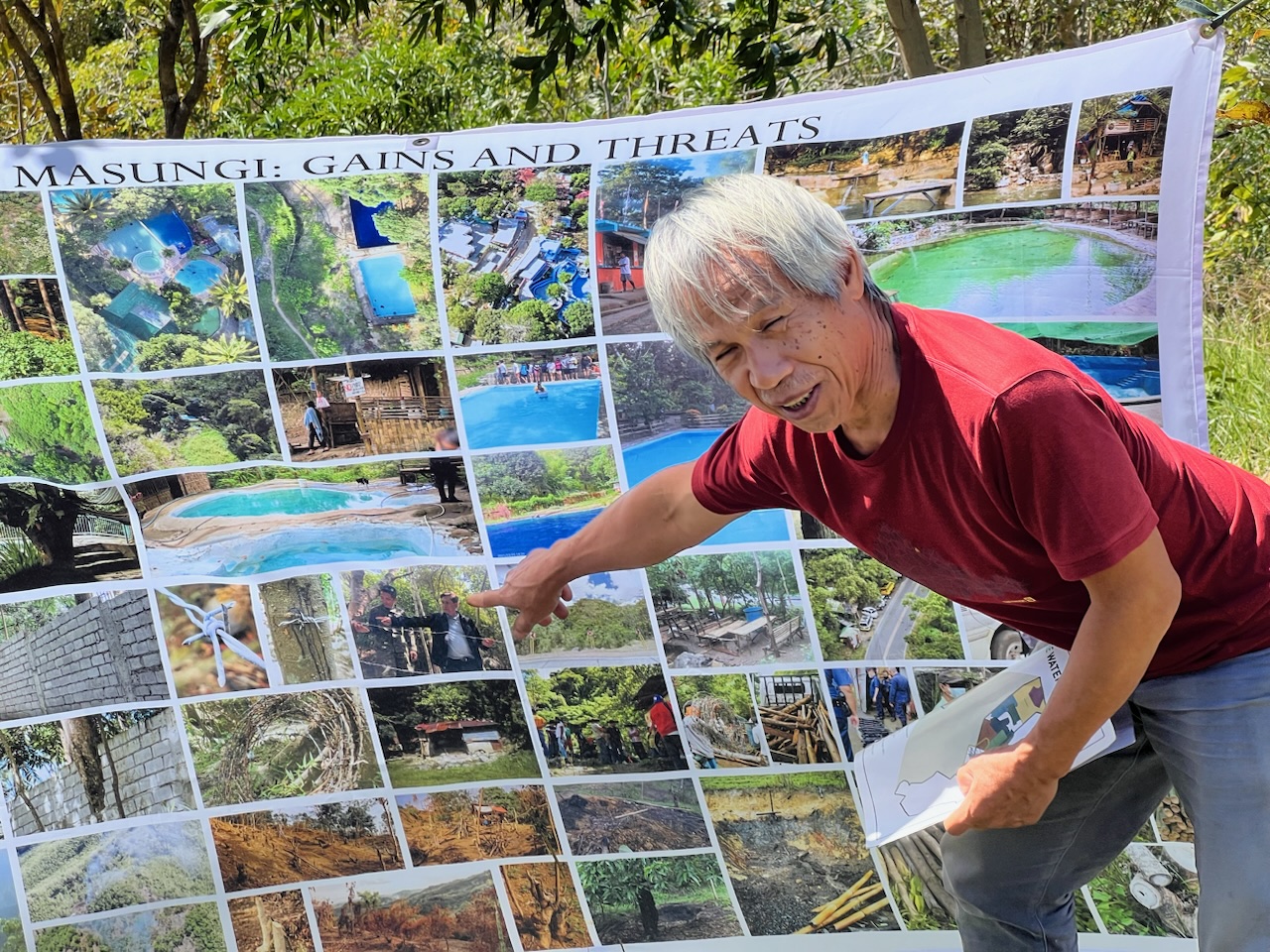
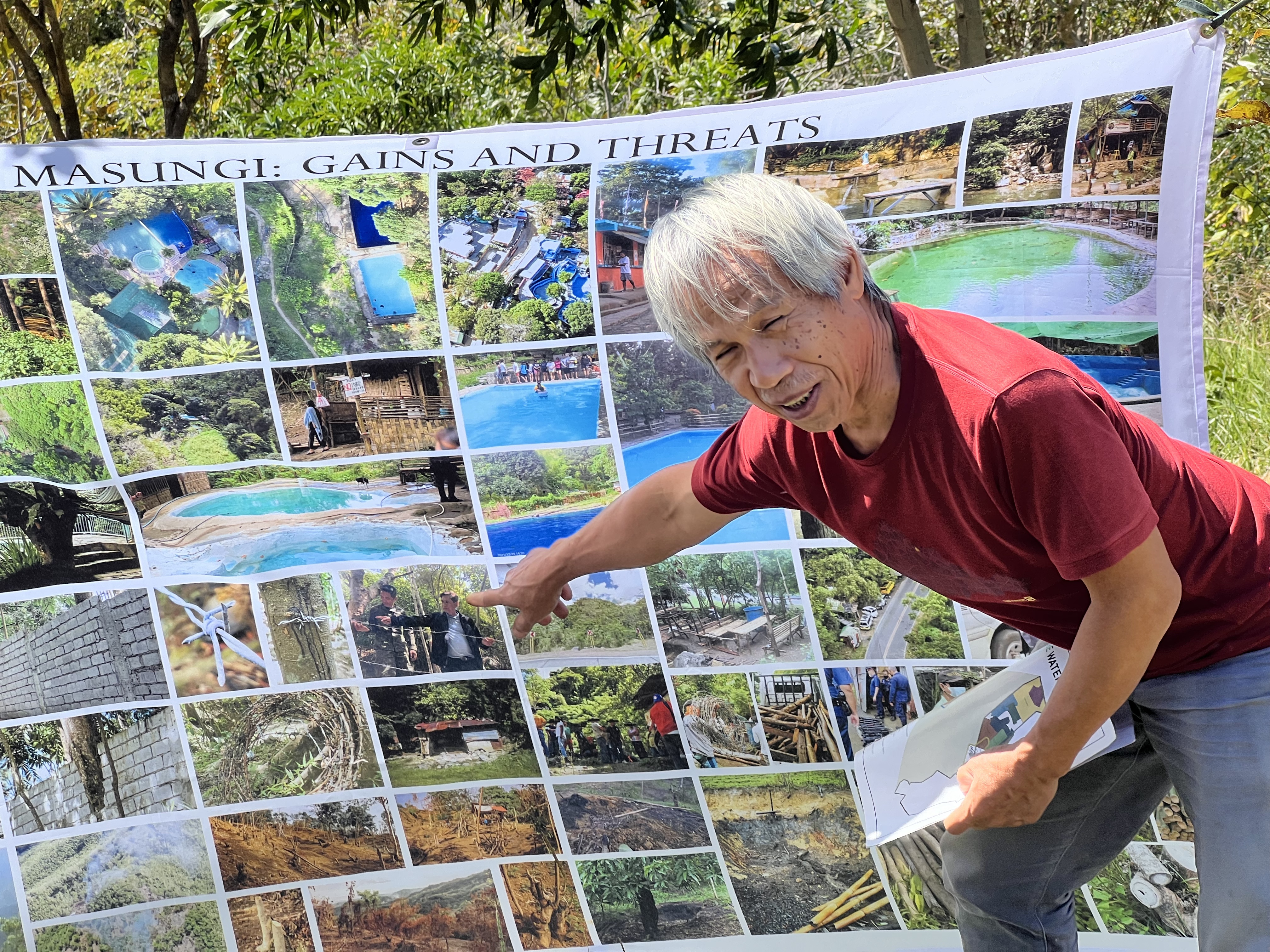
It’s sad and alarming that Masungi continues to be threatened by powerful landgrabbing syndicates as well as by the indifference if not hostility of the government people who should be supporting it, but that’s another story (check out my Qwertyman column last January 29, “Fighting Windmills at Masungi”). In the meanwhile, avail yourself of this chance to encounter nature like you never have before, and enjoy Masungi while it lasts.

Qwertyman No. 78: Fighting Windmills in Masungi

Qwertyman for Monday, January 29, 2024

“ONDOY STARTED here.” If that memory of the catastrophic flood that turned much of Metro Manila into a deadly swamp in 2009 doesn’t chill you, then little else will.

The man telling me this as he sweeps his hand over the vast Upper Marikina Watershed below and around us is Ben Dumaliang. At 68, Ben is exceptionally articulate for a civil engineer, but he needs to be, because he’s no longer just building houses. For almost 30 years, he’s been building the Masungi Georeserve—a 3,000-hectare expanse of mostly forest land on the slopes of the Sierra Madre along the boundary of Tanay and Baras, Rizal.

Masungi sits on the watershed that both nourishes and protects Metro Manila, providing it with fresh water while helping to keep flooding in check—if things like trees and streams are where and how they’re supposed to be. And there’s the problem, that helped a freak downpour like Ondoy become the biblical torrent it turned out to be. 

“Much of this was logged over not too long ago,” says Ben. “We had to reclaim the land from the loggers, the quarry companies, and the land speculators, and then reforest it.”

Today the Masungi Georeserve is about as close to a natural Eden as you can get this close to the city—about 30 kilometers from where I live in Diliman—with lush new growths of Philippine trees, unique plants and animals such as the purple jade vine and the Masungi microsnail, and hundreds of endemic species including 72 kinds of birds.

But it wasn’t always that way, as Ben recalls the georeserve’s unlikely beginning. “This was government land that the Department of Environment and Natural Resources (DENR) intended to use for employee housing back in the 1990s. In 1996, my construction company, Blue Star, won the bidding for the housing project, and we began building roads on the property and making improvements on it. However, the land had been chopped up among various syndicates, and the DENR failed to deliver on its obligation to clear the land of settlers, and after a while people lost interest in living here, and the housing project stalled.”

In the meanwhile, Ben had begun to appreciate the natural beauty of the place, despite its ravaged state, and started developing parts of it—particularly the centrally located Lot 10, which remains the hub of the georeserve. He began taking the land back from its illegal settlers, who included rich and powerful people who had put up cottages in the area.

Almost immediately, he began to get blowback. “Our rangers were shot at and mauled when they tried to do their job, and the police did nothing about it.”

Not surprisingly, Ben says that a group of police generals had apportioned parts of the watershed among themselves, citing the Marcos-issued PD 324 which had declared these lands alienable (conveniently forgetting that PD 324 was effectively repealed by Marcos himself under the Forestry Code aka PD 705 and by Presidential Proclamation 1636 prohibiting tree cutting and dwelling in the watershed). 

In 2015, Ben’s daughters Billie and Ann set up the Masungi Georeserve Foundation, to which Blue Star entrusted the care and management of the area. (Ben is a principal in both entities, and both daughters remain active in the foundation.)

It was in 2017 that the most auspicious turn happened for Masungi. Then newly appointed DENR Secretary Gina Lopez visited the place, liked what she saw—particularly what Ben and his people were doing to restore and conserve the forest—and had a contract drawn up between the DENR and the foundation granting it the right and obligation to replant the georeserve. 

Today sturdy growths of Benguet pine crown the hilltops of the watershed. The georeserve is thick and picturesque with trees, orchids, and returning wildlife. A limited number of ecotourists come every day to hike trails that weave through the sharp karst limestone landscape.

But not far below the pine trees, Sitio San Roque in Baras remains host to a bustling community (that reportedly includes, yes, at least one police general and one high-ranking government official who owns a pool resort, against whom a case had been filed but who was allowed to retire with full benefits). “The syndicates and rogue officials are the root cause of deforestation and environmental degradation,” says Ben. “I fear for my life and my family’s,” he admits. “It’s very easy to die in a place like this.” (For more background information, refer to my fellow columnist Jarius Bondoc’s piece from September 13, 2023, titled “DENR ignoring public appeals to evict watershed landgrabbers.”)

The threats are more than personal. Insanely, the Bureau of Corrections managed to secure 270 hectares in the heart of the reserve to build a new national penitentiary and its headquarters there. The DENR also reportedly agreed for Tanay to build wind turbines on the ridge overlooking Lot 10. Neither project can possibly be good for jade vines, microsnails—and people, for that matter.

Some days, Ben feels like he’s fighting windmills in Masungi—and not just the literal ones, either. He doesn’t understand what he sees as the antipathy of the DENR toward him and the foundation. The DENR wants his contract canceled, ostensibly because he had gotten Sec. Lopez to sign it when she was ill and just before she left office after failing to be confirmed (Ben denies this, saying she was the one who insisted on the contract getting done. “They seem to think I’m getting rich from this, but in fact I’ve been drawing from my own resources for the georeserve,” he explains. The MGF gets no funding from the government and relies on its limited income and on private support for its operations.) DENR Sec. Ma. Antonia Yulo-Loyzaga, he says, has ignored all his letters and requests to meet to thresh out any issues between them.

Nature reserves don’t grow just trees—they breed enemies, few of them natural; most walk on two feet.

(On a rather distressing side note, I have good and trustworthy friends on both sides of this issue messaging me to believe this and not to believe that. For the moment, I’ll have to believe the evidence of my eyes, but to be fair, I invite the DENR to send me their comments, and specifically their answer to this simple question: “What is the Masungi Georeserve Foundation doing wrong?”) 

Qwertyman No. 69: Tabi Kayo Riyan!

Qwertyman for Monday, November 28, 2023

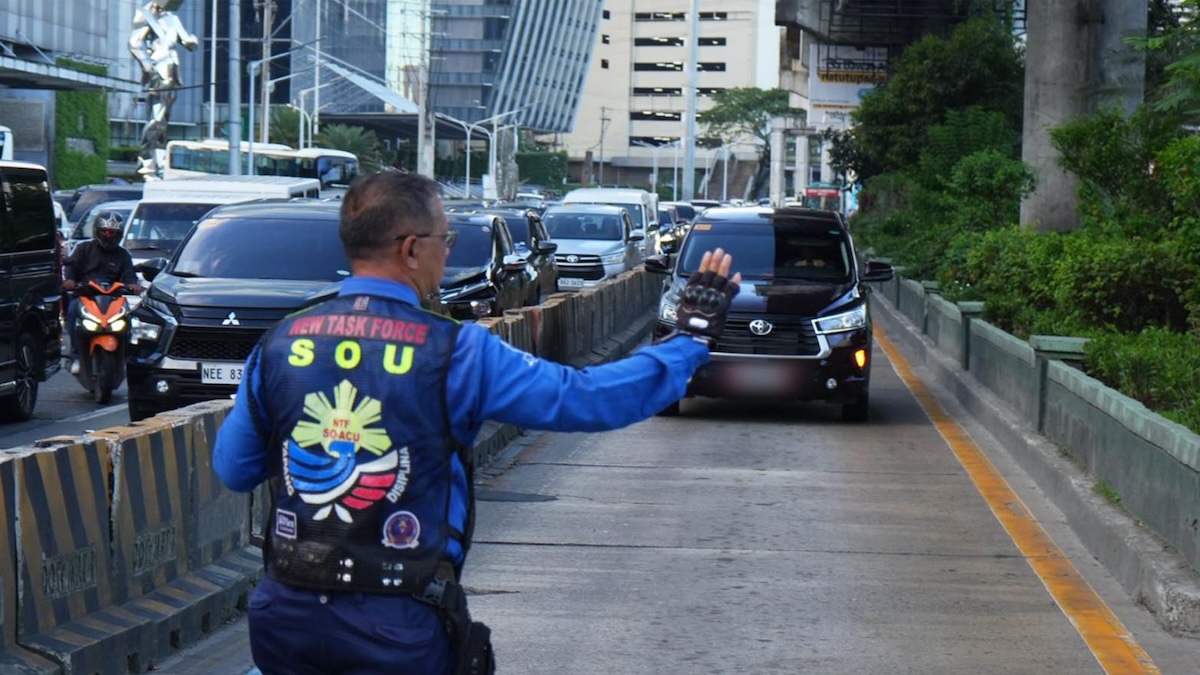
WHEN THE EDSA busway—a special lane just meant for public utility buses—was inaugurated in June 2020, I was among the many millions of Metro Manila motorists and commuters who breathed a sigh of relief and said, “Finally! Somebody’s come to their senses and did what had to be done.” 

It wasn’t going to banish the traffic problem for good—that burden still lies with our woefully inadequate mass transit system—but it applied a logical solution to a particularly oppressive aspect of our urban existence, the infernal sludge that tossing private cars and public buses into the same slurry produces. The traffic’s still bad in many spots on busy days and hours, but at least you could see some order in disorder. For this driver in his car, I can even find some ironic humor in watching buses speed down their lane while I struggle like a jockey in the middle of the pack to keep a nose ahead of the big SUV sniffing at my flank.

We’ve seen these special bus lanes in use elsewhere—most notably in Jakarta and Bangkok—and they seem to work. (Bangkok’s bus lanes have been around since 1980; Chicago adopted the world’s first bus lane in 1940.) London has set aside about 80 kilometers for 24/7 bus lanes, but some other roads also have designated bus lanes during peak hours; the fines are stiff, going up to as much as P11,000 for an infraction.

Here in Manila, according to the Management Association of the Philippines (MAP), just 550 buses transported as many as 450,000 people a day along EDSA as of December 2022; in its 30 months, the busway accommodated 154 million passengers. That’s a lot of traffic and a lot of people, and the true social benefit of a bus lane isn’t that these buses and their passengers are being shunted aside for our cars to move a little faster, but that those passengers—most of them the workers and wage-earners to whom we owe our other comforts—get to work and get to come home to their families sooner. It’s tacit acknowledgment that their lives are hard enough, and every bit of relief counts. In a sense, it’s social justice in practice. 

But now comes a proposal from the Metro Manila Development Authority (MMDA)—already approved by the Department of Transportation (DOTr), we’re told—to grant exemptions to the President, the Vice President, the Senate President, the Speaker of the House, and the Chief Justice, riding in five-car convoys, to use the bus lanes. Even more, senators and congressmen are also being considered for exemption (emergency vehicles and properly identified government vehicles are already exempted).

It might be argued, at least in theory (since the mischievous will ask for proof), that the big poohbahs have important national business to attend to, requiring their expeditious transport from Point A to Point B. (In Jakarta, only the President and the VP are exempt.)

The same cannot be said for senators and especially congressmen whose business it is to know the situation on the ground and to bring relief to their commonest complaints. Chief among those complaints for millions living in the metropolis is the horrendous traffic, a three-hour immersion in which should be part of every politician’s initiation into public service. 

As even Patricia Evangelista noted in her landmark book, Some People Need Killing, President Noynoy Aquino—for all of his virtues—lacked and almost disdained the common touch. But he understood the fundamental relationship between a leader and his people, and what he may have wanted in empathy, he compensated for in correctness. His proscription against the use of sirens and alarms to open a Moses-like path through traffic for government officials may seem trivial but sent absolutely the right message to citizens for whom “Daang Matuwid” might as well have been just another throwaway slogan. 

Sadly, our “wang-wang” culture—which, as a STAR editorial noted just last week, involves “not just the actual use of sirens and blinkers by VIPs whether in government or in the private sector, but the mindset itself that it’s OK to jump the line and that public officials deserve such VIP entitlements”—has crept back after PNoy, with a vengeance. 

The convoys of black, tinted SUVs with their sirens screaming “Tabi kayo riyan!” have become ubiquitous once again, flaunting the perks of power. The MAP deplored this by stating that “Accommodating convoys of officials demonstrates inconsistency of public policy: favoring the privileged few over the overwhelming majority of the commuters and motorists who deserve an efficient EDSA busway.” I’m sure that you and I have shorter and less Latinate words to say every time one of those convoys brushes past us on EDSA and along that larger avenue we call Philippine society.

That society, for better or for worse, takes its cues from the top. When our presidents behave, we (or most of us, at least) try to walk the straight and narrow; when they steal, their minions feel emboldened if not empowered to fill their own pockets; when their mouths spew obscenities like sewers, rudeness and vulgarity become excusable, and even fashionable.

In the Tang dynasty, the Emperor Taizong was known to be a wise ruler, and even wrote The Zenghuan Executive Guide, a kind of management manual. Among his best practices was the employment of “remonstrants”—as many as 36 of them—whose job was to provide the Emperor with “remonstrances,” to tell him to his face what he was doing wrong. “I often sit quietly and reflect on myself. I am concerned that what I have done may … cause public discontent. I hope to get advice and remonstrance from honest men so that I am not out of touch with the outside world,” Taizong was quoted as saying.

There’s no record of whether the Emperor Taizong’s soldiers pushed other wagons and pedestrians aside on the road to make way for the imperial train, but I suspect not. I just wonder, who will be our Taizong, and who will be his remonstrants?

(Photo from topgear.com.ph)

Penman No. 456: A Pocket of Peace and Quiet

Penman for Sunday, November 5, 2023

ROXAS CITY, the capital of Capiz, is proud to declare itself the “Seafood Capital of the Philippines” as well, but I didn’t even know that when I booked a flight for me and my wife Beng last month to spend a few days in Roxas. I still had a few “super passes” I’d bought a bunch of from an airline promo last year and they were expiring soon, so as Beng and I are wont to do, we decided to pick a place on that airline’s list of destinations, one where we’d never been before. It would help that Beng was Ilongga, and having been married to her for almost 50 years, I could understand Hiligaynon, so getting around would be no problem. The “seafood capital” tag popped up when I googled “Roxas City” for ideas about where to go and what to do—that was the clincher for me, the scourge of crabs, shrimp, scallops, and all aquatic arthropods. 

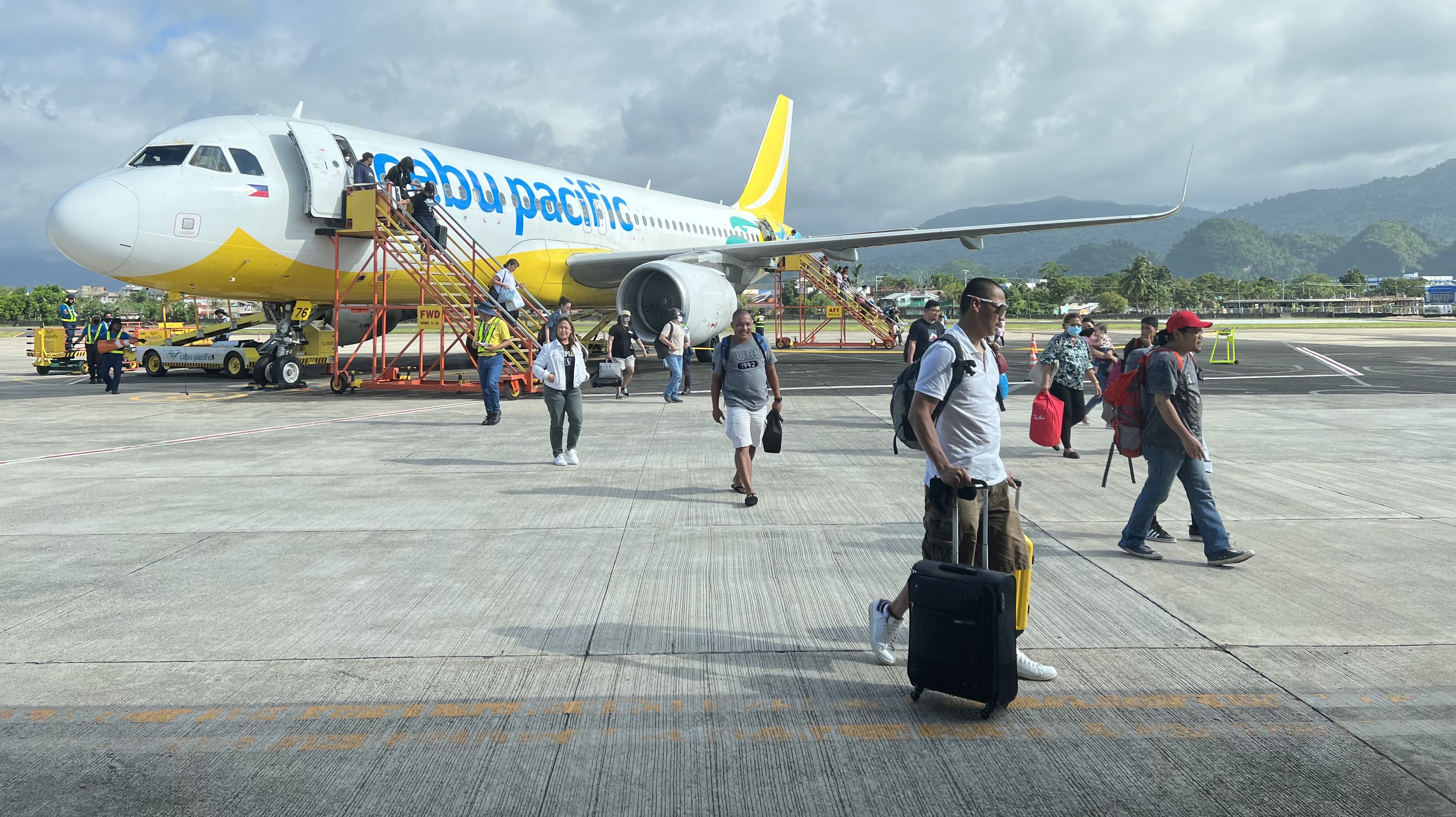
An hour-long plane ride from Manila deposited us in Roxas City’s airport, which has the advantage of being a short tricycle ride away from downtown. 

For our “hotel,” I picked out, online, a place called the Olive Hostel, which proved to be an adventure on its own. At just over 1K a night with free breakfast and within walking distance of Western civilization, it seemed just right for Beng and me, who don’t insist on five-star luxury. If you’ve ever wondered what it’s like to live in a container, well, we found out. It literally was built out of steel containers piled on top of each other, with doors and windows cut out. But don’t get me wrong: it was all very capably and tastefully done, and as tiny as our quarters were, it was actually quite cozy; the bathrooms were immaculately clean and the wi-fi was strong. There was no TV, but we made up for that by watching Netflix on my laptop, perched on my tummy. (Beng and I are used to tiny hotels in HK, Japan, and Korea; I’m usually claustrophobic, but I don’t feel that with Beng beside me.) 

The Olive Hostel’s grounds were, by contrast, spacious and very well maintained, lovely especially in the evening. For those seeking more traditional lodgings, the President’s Inn downtown comes highly recommended. Among the city’s newest and most modern hotels, three—the Veronica, the Urban Manor, and the Islands—can be found in Pueblo de Panay township.

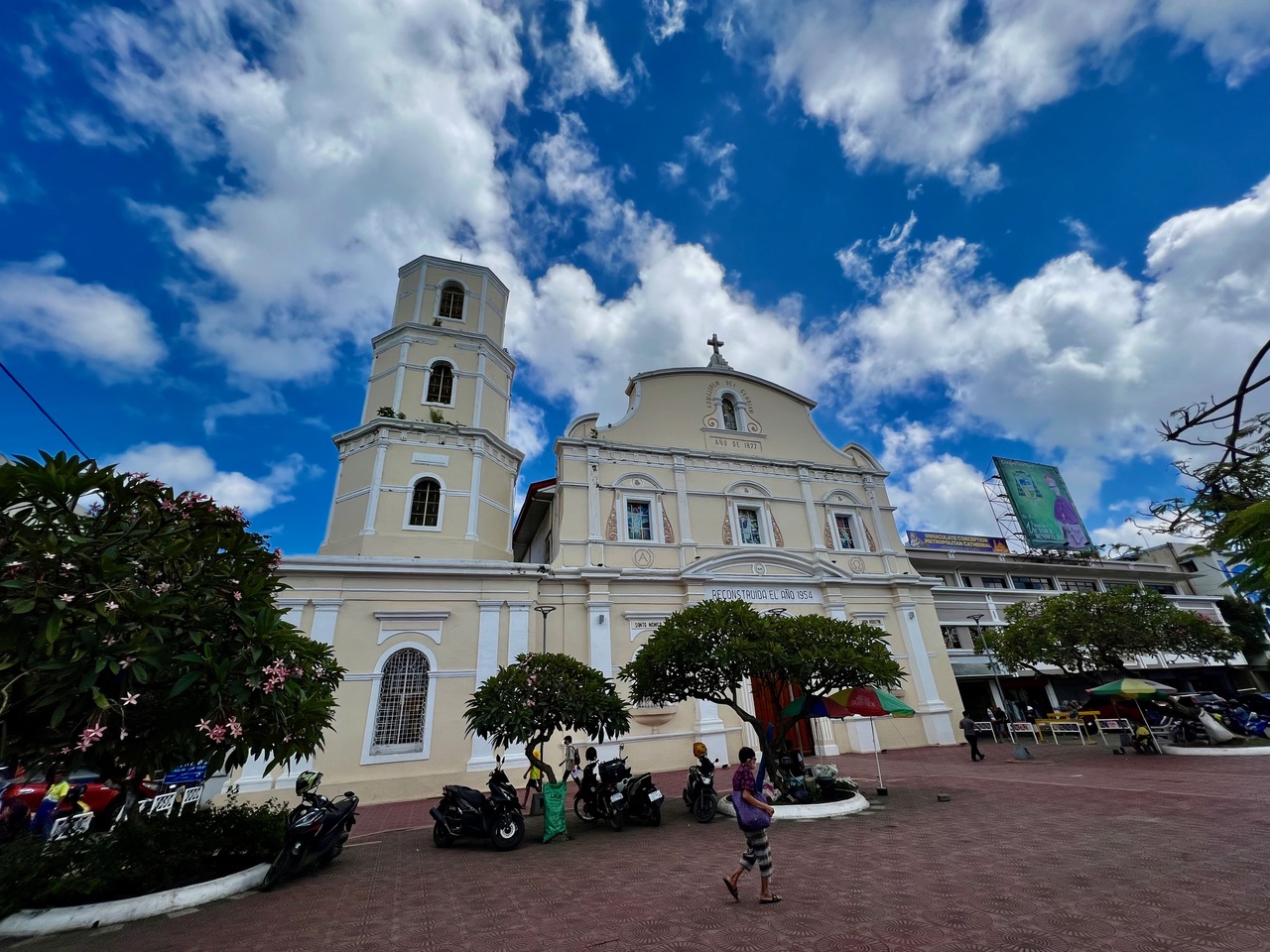
Roxas City has one of the prettiest and cleanest plazas I’ve seen around the country, small but the very picture of what a plaza has always been in our provincial imaginations, with City Hall, the church, and a park with a bandstand beside a river.

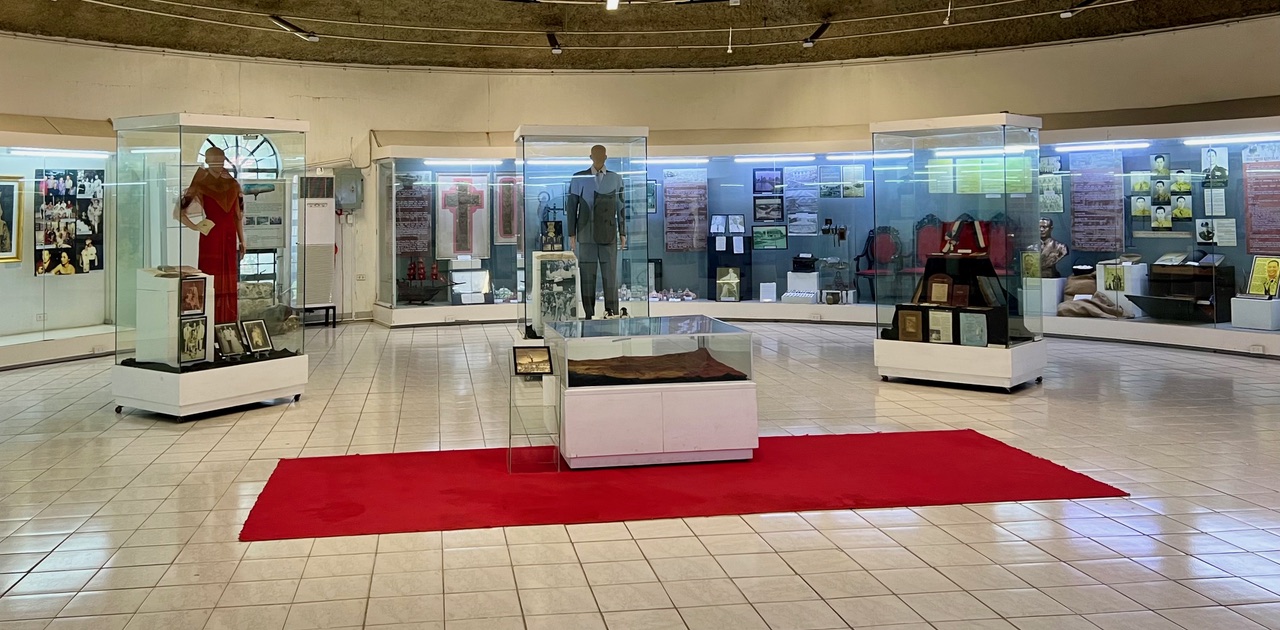
To one corner stands the Panublion Museum, a cleverly repurposed water tank that showcases highlights of Capiznon history and culture. Managed by its very capable director, Cheryl Anne del Rosario, Panublion features the personal memorabilia of the city’s favorite son, President Manuel A. Roxas, including the flag flown at the July 4, 1946 inaugural of Philippine postwar independence. (President Roxas’ ancestral home is not too far away and is open for public viewing, but was closed on the day we toured the city.)

The museum also showcases the tools and finery of the province’s and island’s indigenous peoples. Most captivating were the exhibits  featuring Capiz’s two female National Artists—Jovita Fuentes for Music and Daisy Avellana for Theater. Fuentes’ golden gown contrasted sharply with the suit of armor worn by Avellana as Joan of Arc. Entrance to the museum is free, but donations are welcome. 

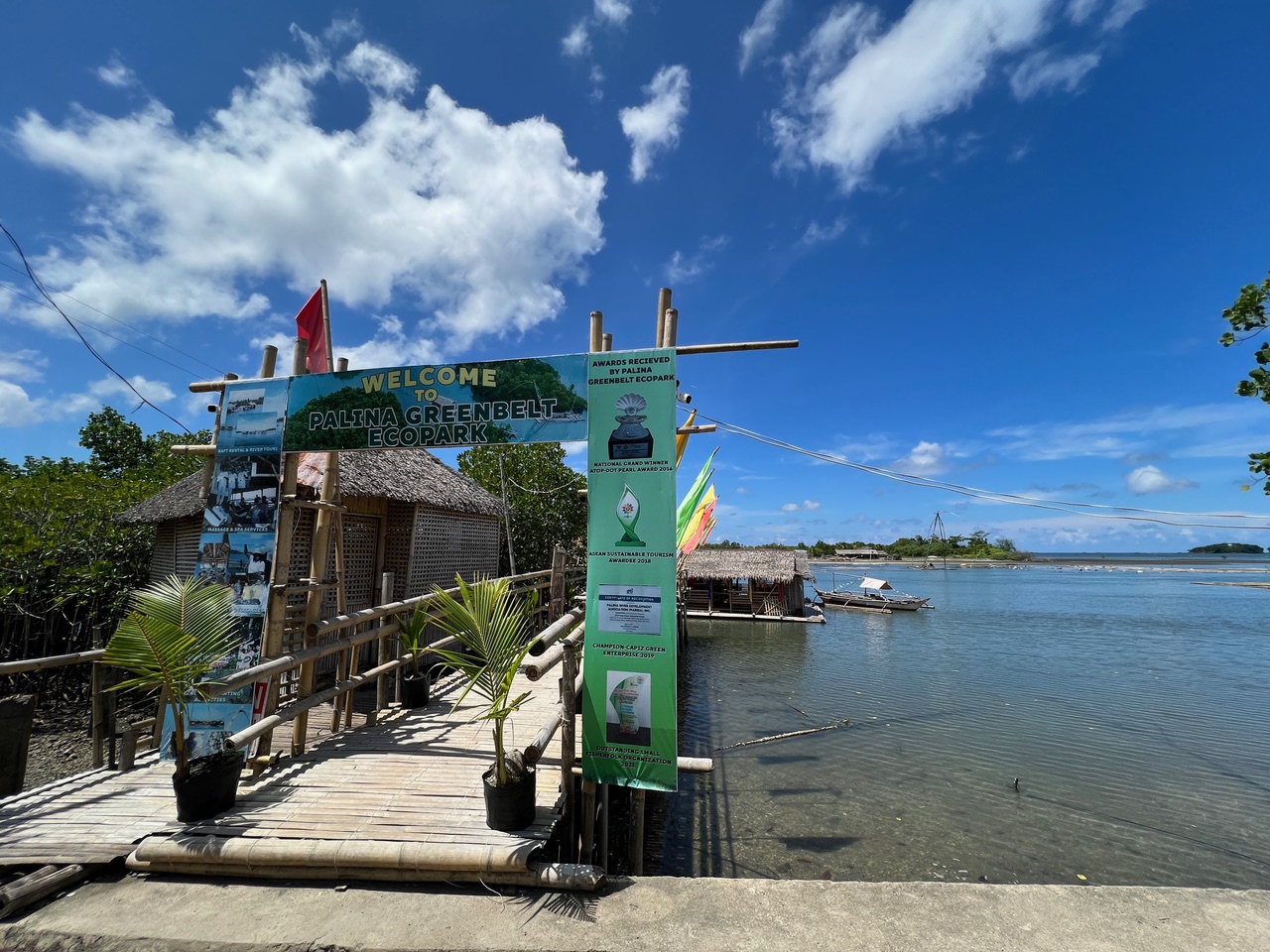
On our first night we walked out to a neighborhood restaurant where the chicken inasal was P108 with unlimited rice and a surprisingly good fruit drink, plus lomi at P68. We had the obligatory seafood lunch in one of the many restaurants along Baybay (literally, the beach), but much more charming and restful was a similar lunch on a bamboo raft on the river at the Palina Greenbelt Ecopark, normally part of a lazy cruise (the tide was too low when we arrived for any cruising, but the scenery was enough to soothe the senses).

Roxas has no shortage of malls for the urban dweller. The usual suspects—SM, Gaisano, CityMall—line the main highway downtown. Its equivalent of Metro Manila’s BGC is the 670-hectare Pueblo de Panay township, a residential and commercial development project master-planned by a Singaporean company and offering the most modern facilities and amenities to Capiz’s and Panay’s rising middle class. 
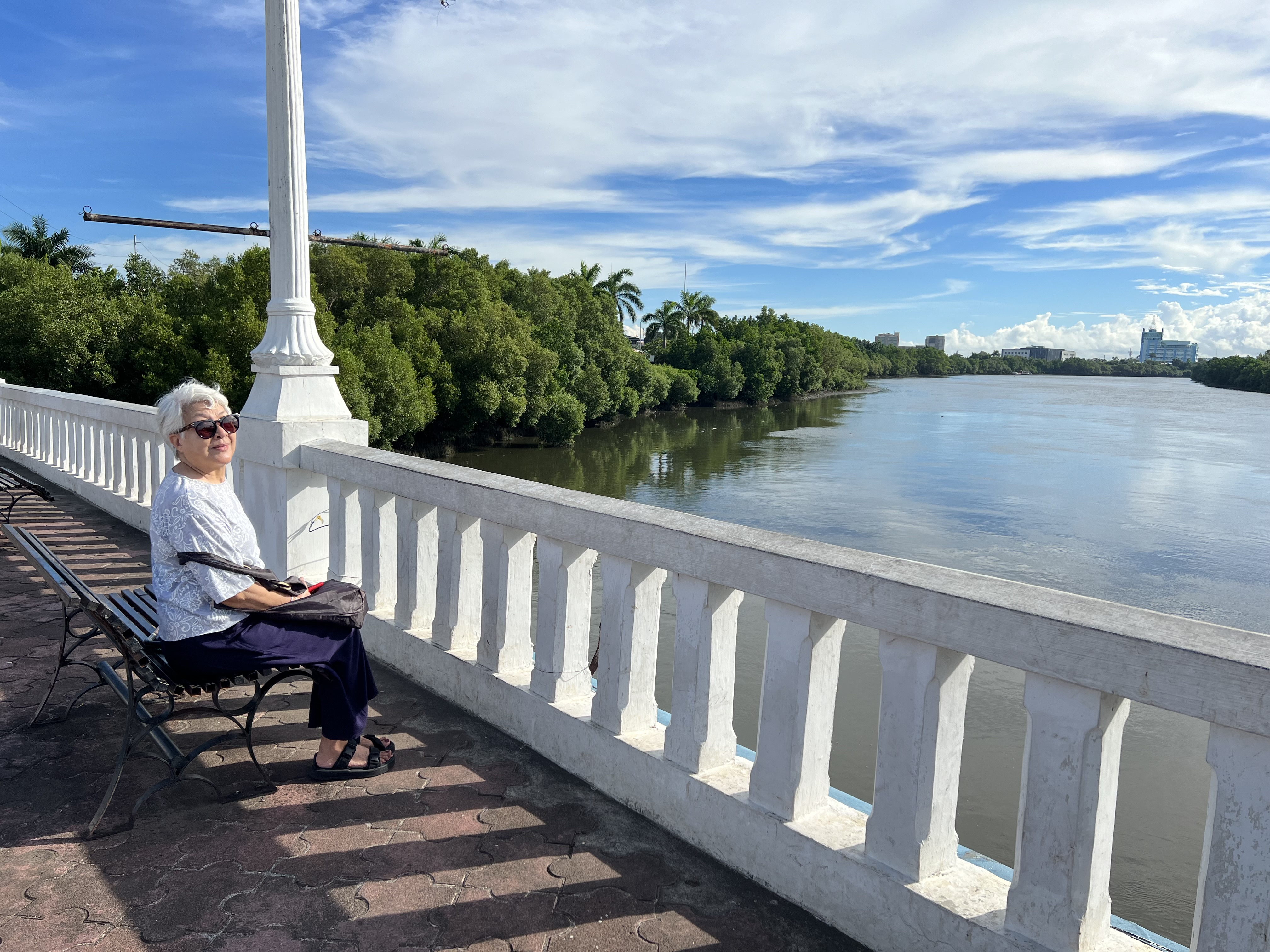
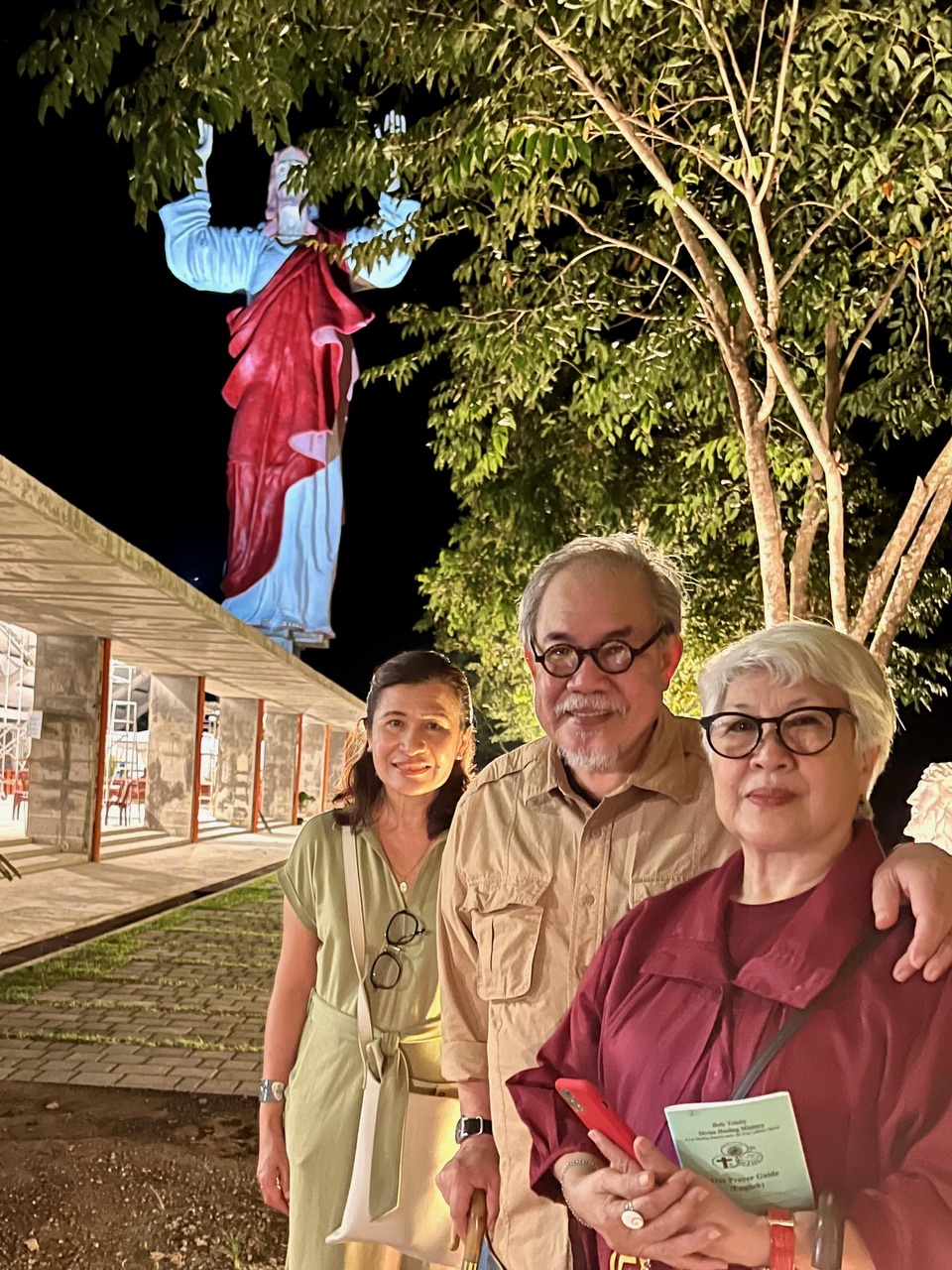
A mutual friend—the peripatetic Susan Claire Agbayani—introduced us to Hariette Ong Banzon and her husband Peter, the couple behind the Pueblo, who invited us to dinner at Cafe Terraza, their hilltop restaurant offering a panoramic view of the city far below. But before dinner, Hariette made sure to bring us to see the project dearest to her heart and now one of the city’s—indeed the island’s—most remarkable landmarks: the 132-foot statue of the Sacred Heart of Jesus, which Harriette commissioned following the miraculous cure of a relative. Hariette and Peter—incidentally both fellow PSHS alumni, so we had other memories to share—are people of faith and conscience, reflecting their values in their optimism about Roxas City’s prospects and the way they run their business.

For all the things we seek in this troubled world—a pocket of peace and quiet, good food, rejuvenation of body and soul, and friendly people—Roxas City has much to offer, and we can only give it our ultimate accolade: “We’ll be back!”

Qwertyman No. 67: Business with Culture in Iloilo

Qwertyman for Monday, November 13, 2023

OVER THE past year, still eagerly emerging from our post-pandemic stupor, my wife Beng and I have been traveling up a storm, limiting ourselves to local destinations such as Bacolod, Virac, Davao, Roxas City, and Iloilo City. We chose these places because we’d never been there before—such as Virac and Roxas—or hadn’t visited for many years.

We were most impressed by the progress shown by Iloilo, whose transformation into a rapidly urbanizing metropolis I had begun to observe well before the pandemic. City and provincial officials, under the initial leadership and with the strong support of former Sen. Franklin Drilon, had managed to unite behind the key objectives of a continuing comprehensive development plan that has straddled several local and national administrations. 

All over the country, you hear about politicians achieving national prominence and power, even to the point of aspiring for the presidency—except that back in their home provinces, they did little or nothing for their constituents, and may even have lost the local vote to an outsider as a result. Drilon never ran for President—a job I think he would have performed excellently, if our voters were thinking rationally—but if he did then he could have counted on a near-solid Iloilo vote for never forgetting where he came from and ensuring Iloilo’s emergence as a model of city planning.

Any visitor to Iloilo cannot fail to be impressed by its dynamic growth, from the minute he or she steps off the plane in the city’s airport in Cabatuan, about 20 kilometers from downtown Iloilo. The long drive to the city down the wide, smooth highway is a virtual introduction to the city’s progress, with new malls, office buildings, car dealerships, hotels, construction depots, hospitals, and housing lining both sides of the road; new bridges and overpasses were rising here and there. A Grab car service just opened this year, our driver said, happy to be lifted by that rising economic tide.

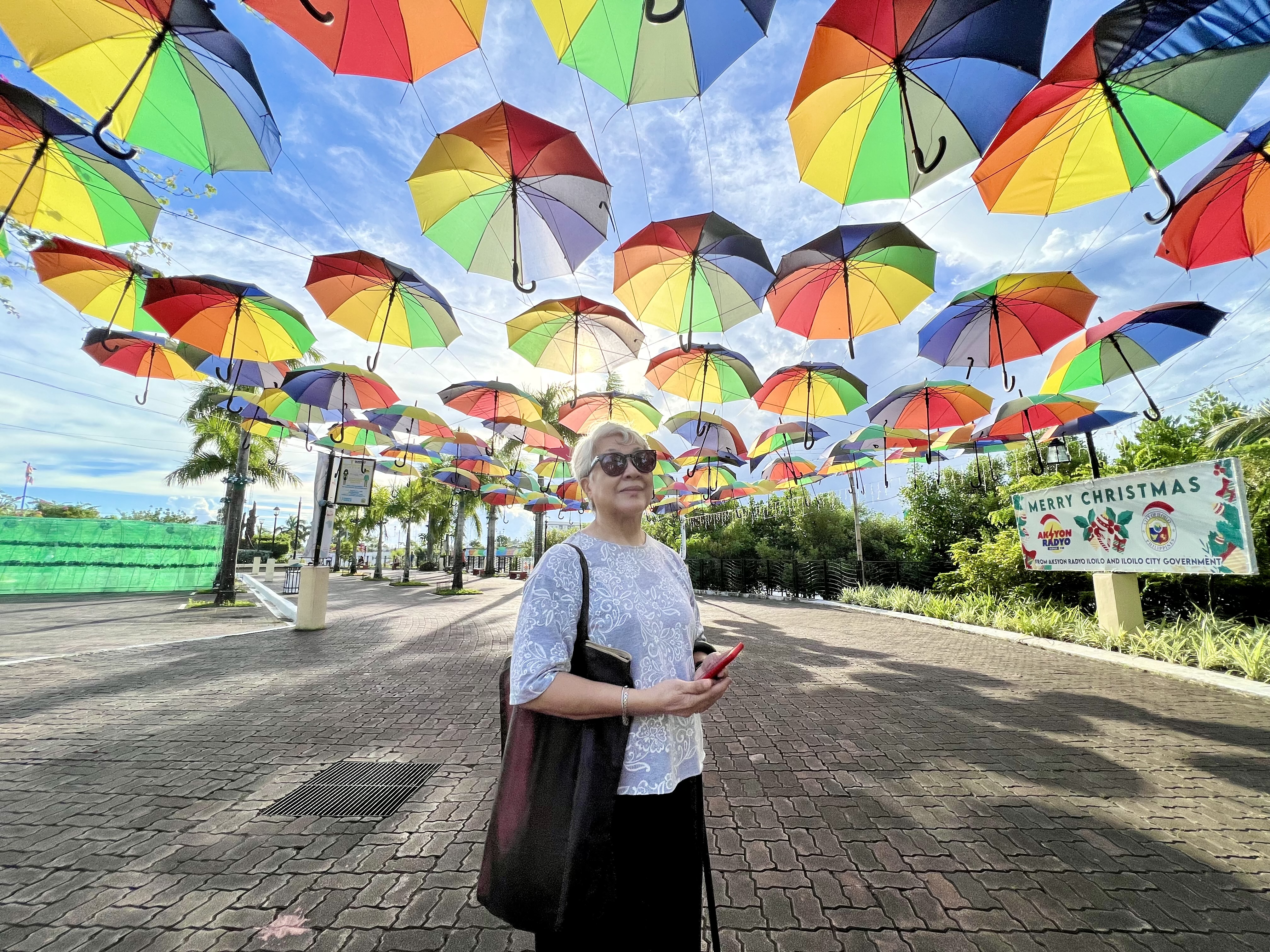
The crown jewel of Iloilo’s renaissance is clearly the Iloilo River Esplanade, now stretching nine kilometers along both banks of the river in its expanded form. Designed by the celebrated architect Paulo Alcazaren, the Esplanade is what we Manileños want our Pasig riverbank to look like, in our dreams, but here in Iloilo, it’s been a reality for over a decade now. From early morning until after sunset, the Esplanade is filled with joggers, couples, families, and tourists who can also duck for a drink or a meal into one of the restaurants and cafes lining the walk. The river itself, once described as a septic tank into which the effluents of the city’s factories, slaughterhouse, and beer gardens drained, is clean and clear, fringed by a healthy belt of mangrove where we spotted egrets taking refuge. 

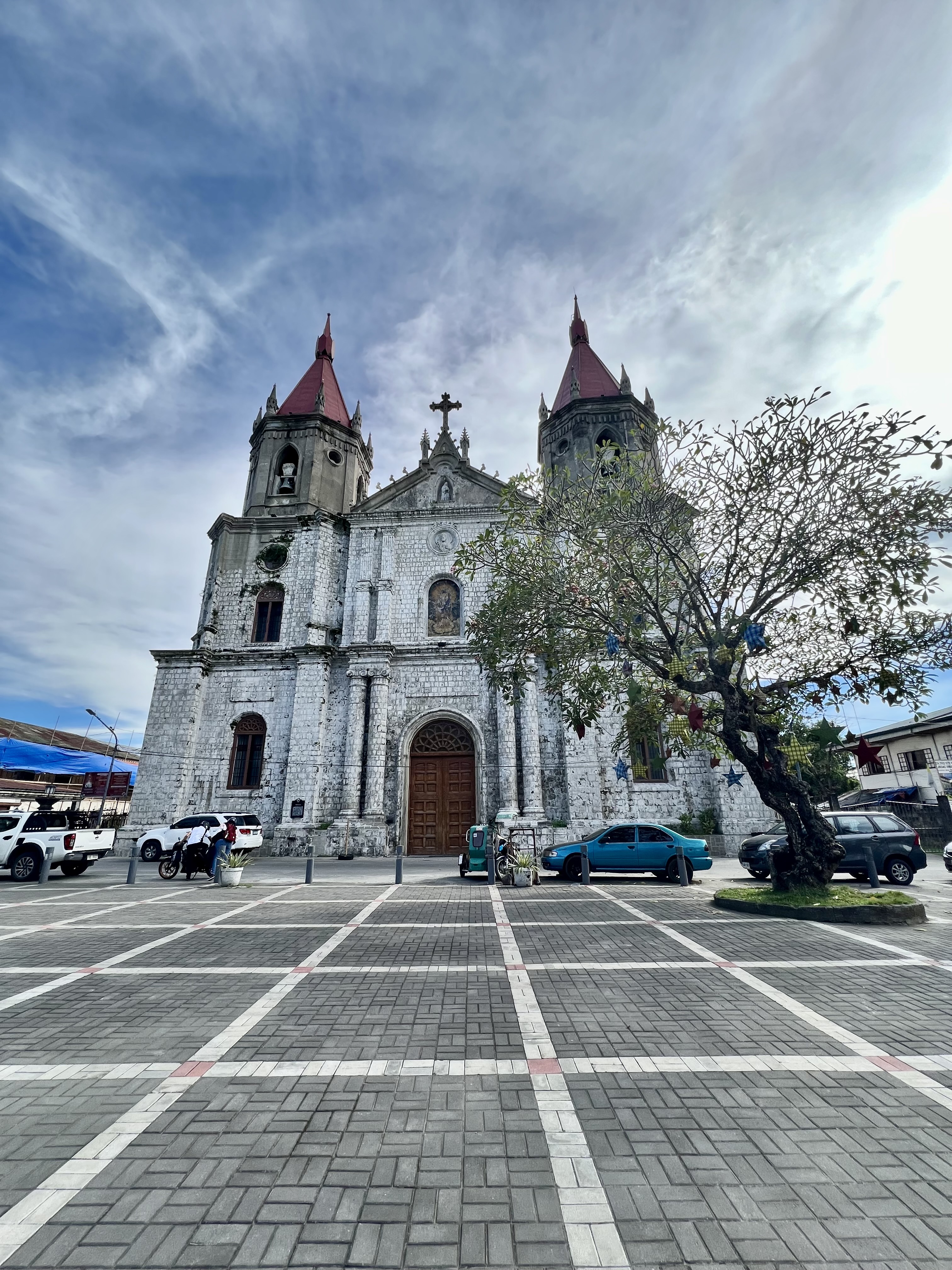
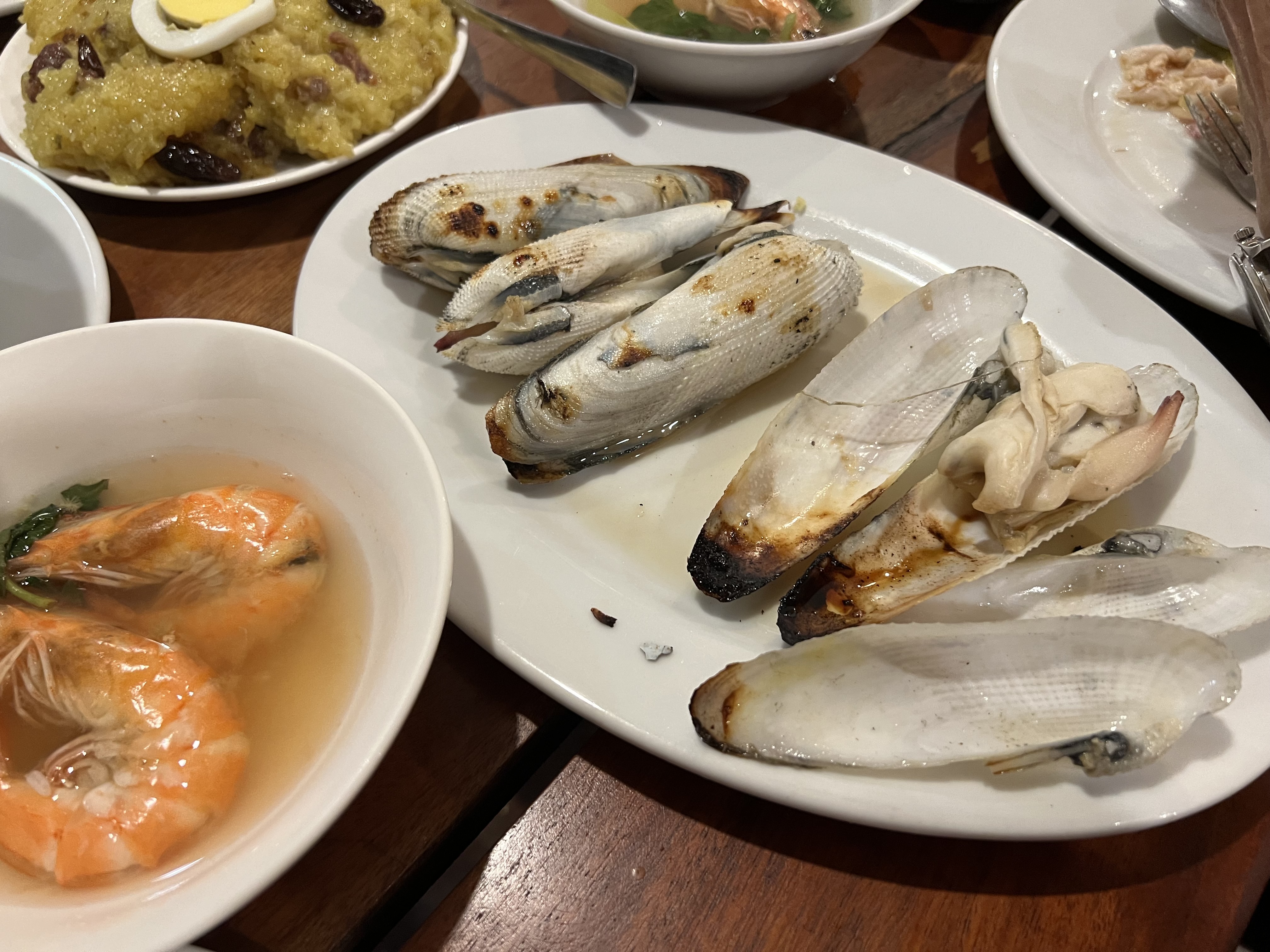
There’s a point of view that sees malls as the bane of urbanization and the death of small, artisanal businesses, and that’s been true in many places. It’s abundantly obvious that malls and mall culture have invaded Iloilo, with some negative consequences down the road. But so strong is local culture and tradition that it’s almost inconceivable that Iloilo will lose Tatoy’s, Breakthrough, Ted’s La Paz Batchoy, Panaderia de Molo, pancit molo, KBL, diwal, and all the other little things that make the city what it is. Indeed, instead of being pushed out, many of these institutions are now in the malls. At the plaza in front of Molo Cathedral, after a 3-km walk from our hotel via the Esplanade, we had breakfast of mini-bibingkas baked right before us the way they’d been done for decades.

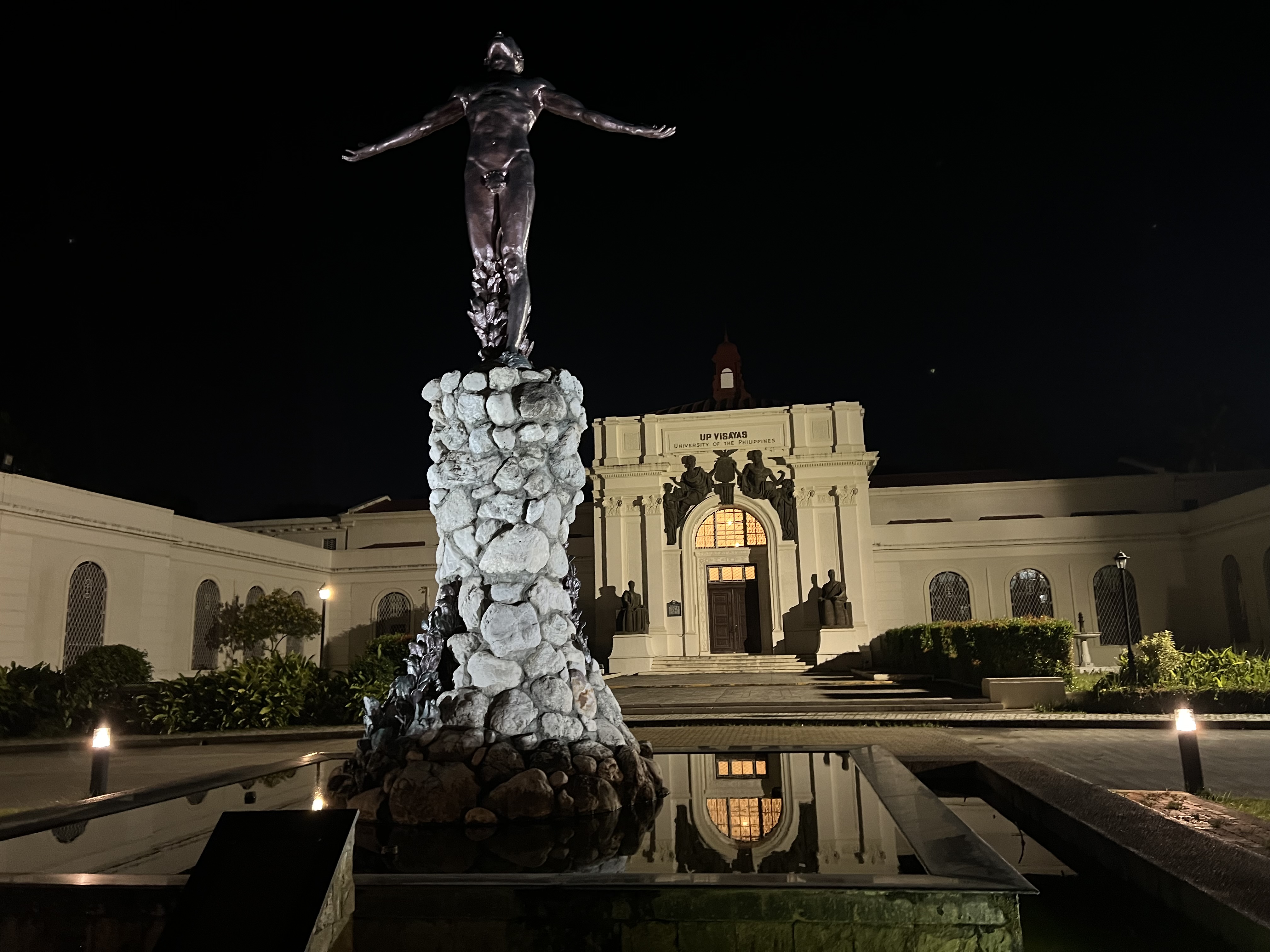
It was a happy coincidence that, during our visit, UNESCO named Iloilo as the country’s first Creative City of Gastronomy, in recognition of its outstanding culinary culture and heritage. This was achieved by the city government under Mayor Jerry Treñas with the assistance of a team from UP Visayas’ College of Management that facilitated a workshop for the city’s food-industry leaders last May. Education remains one of the city’s strengths; its West Visayas State University College of Medicine is now one of the country’s top-ranked medical schools, aside from UPV’s commanding role in the region.

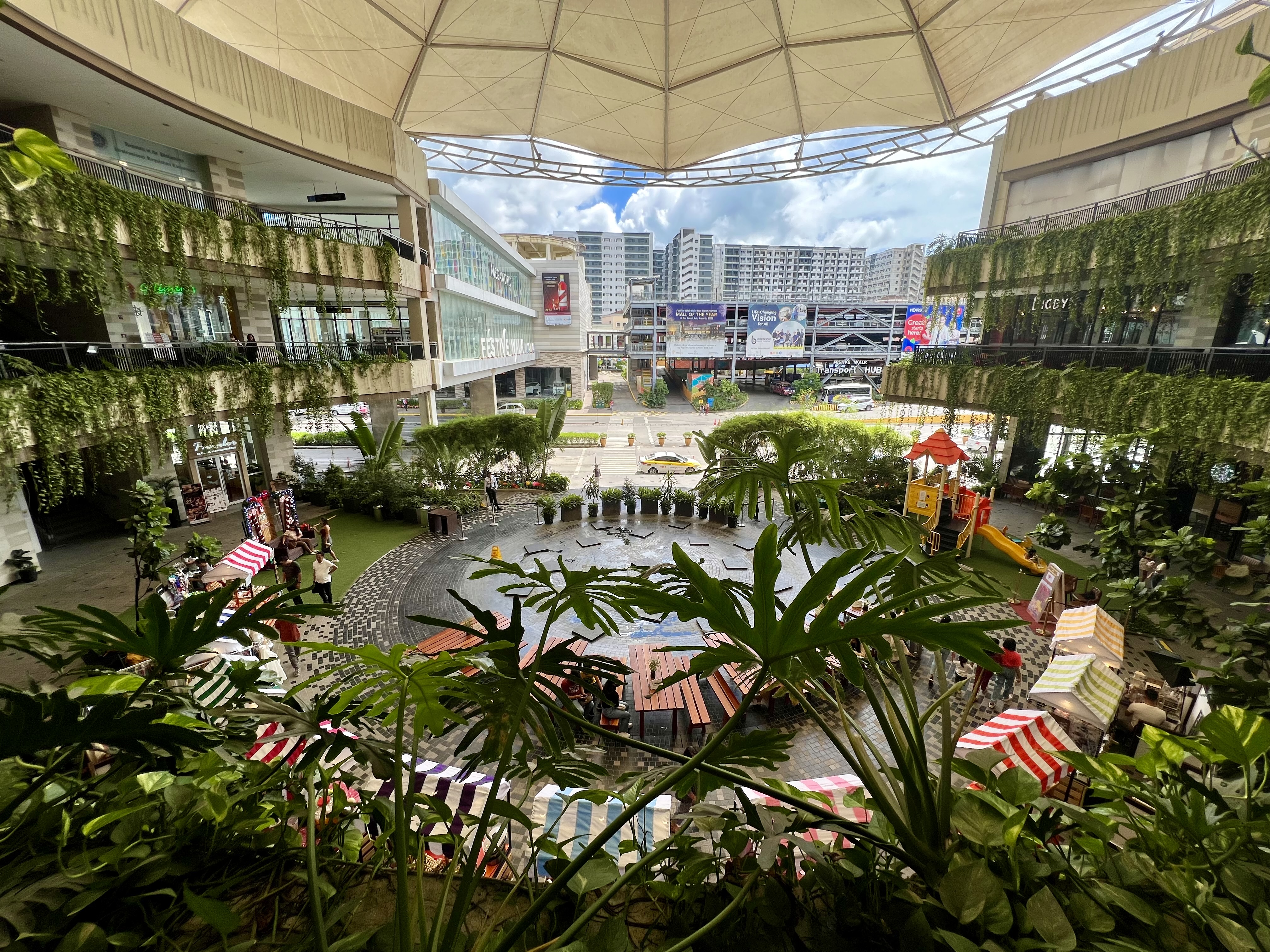
It was UPV Chancellor Clement Camposano who, after dinner in one of the many seafood restaurants that have cropped up in Leganes on the city’s outskirts, drove us around so we could appreciate the city by night. On our way to Molo, we passed through the new Megaworld/Festive Walk business district and were blown away by how smartly designed everything was; it was almost as if we were in Singapore or some such country. It was hard to believe that not too long ago, this was the old Iloilo airport in Mandurriao, and that the road we were traveling on had once been a runway. This is also where the Iloilo Convention Center is located, where the APEC 2015 summit was held (Drilon had negotiated the donation of the site from Andrew Tan, in exchange for the ICC’s being built there).

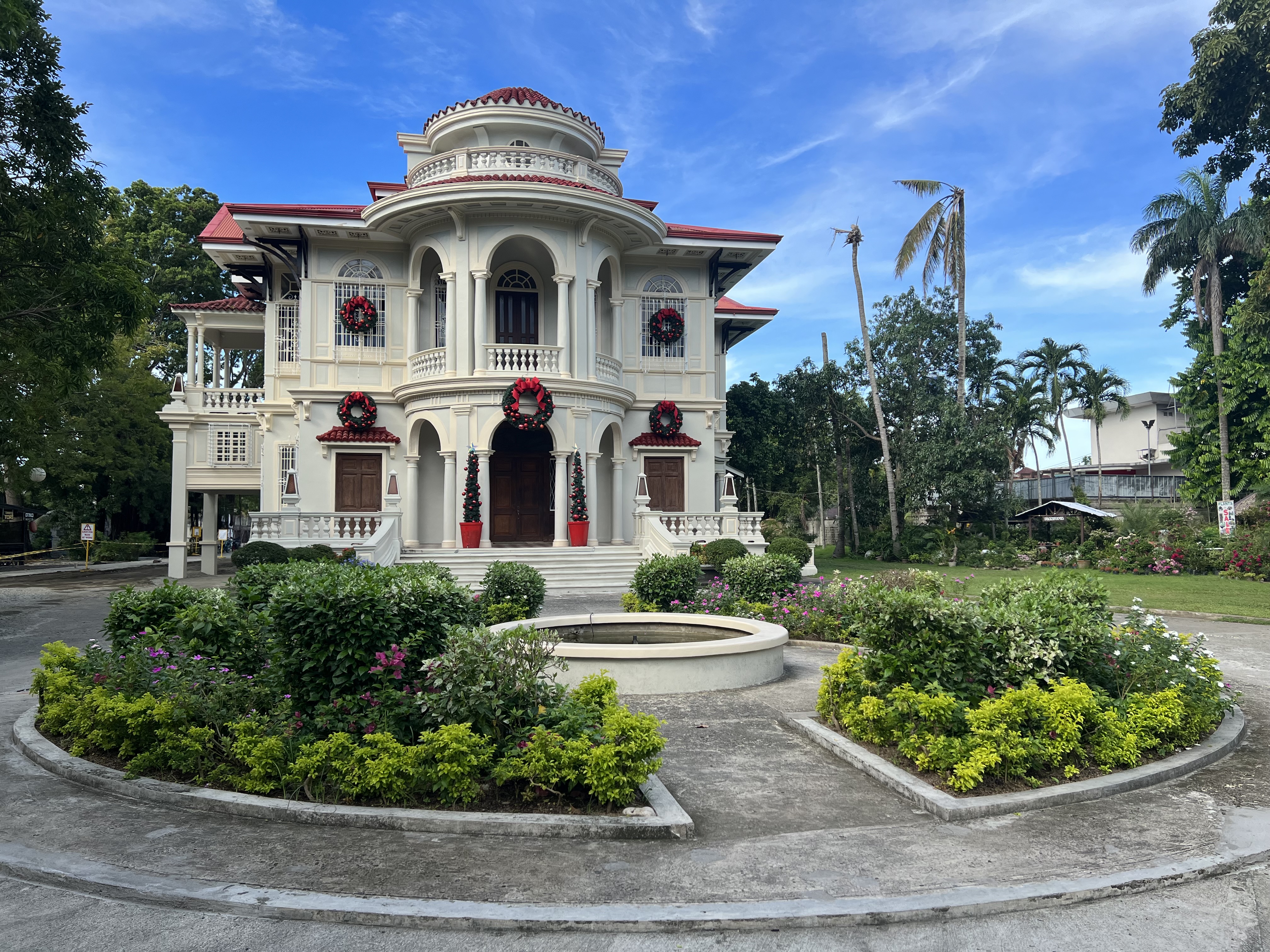
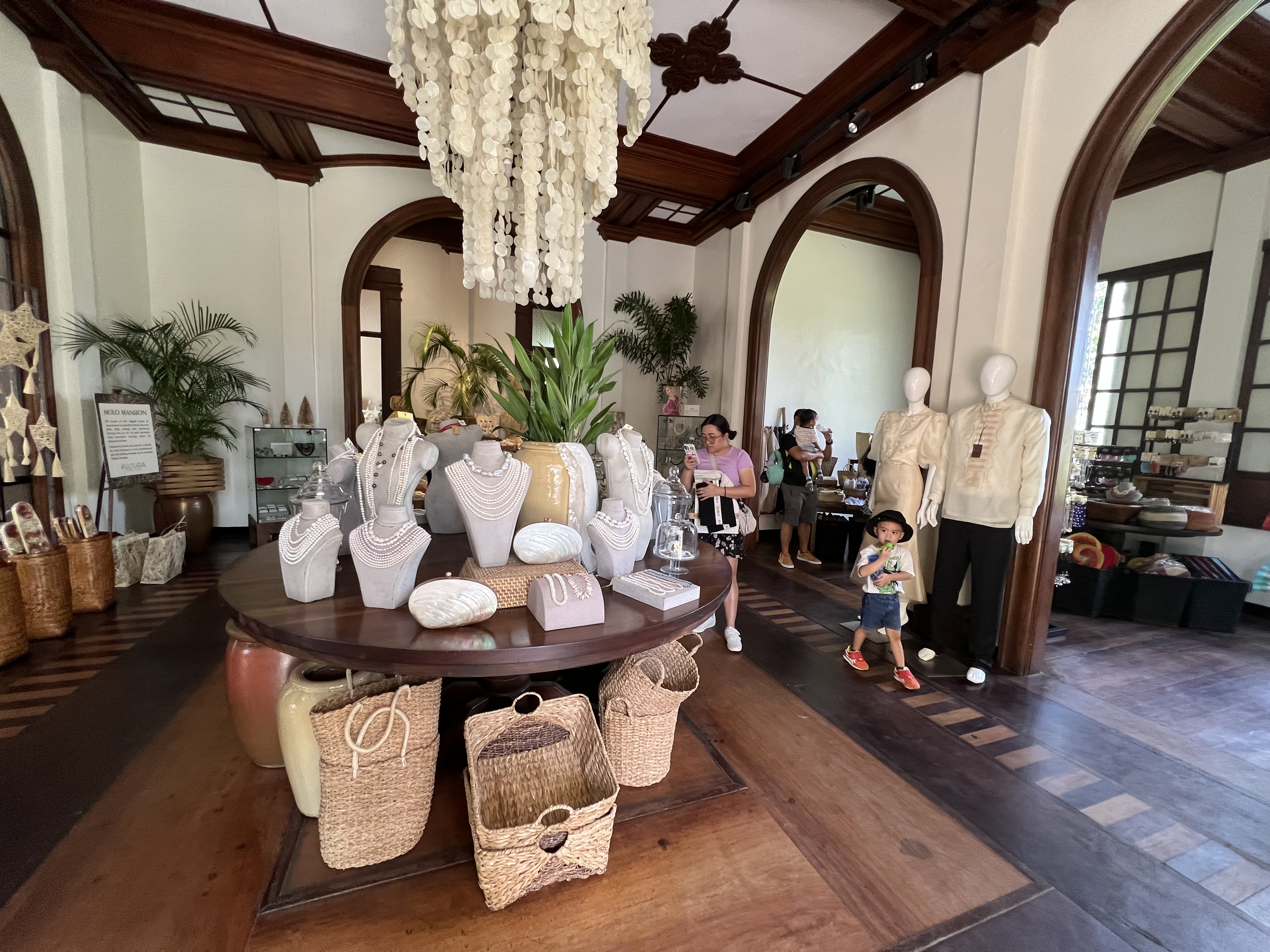
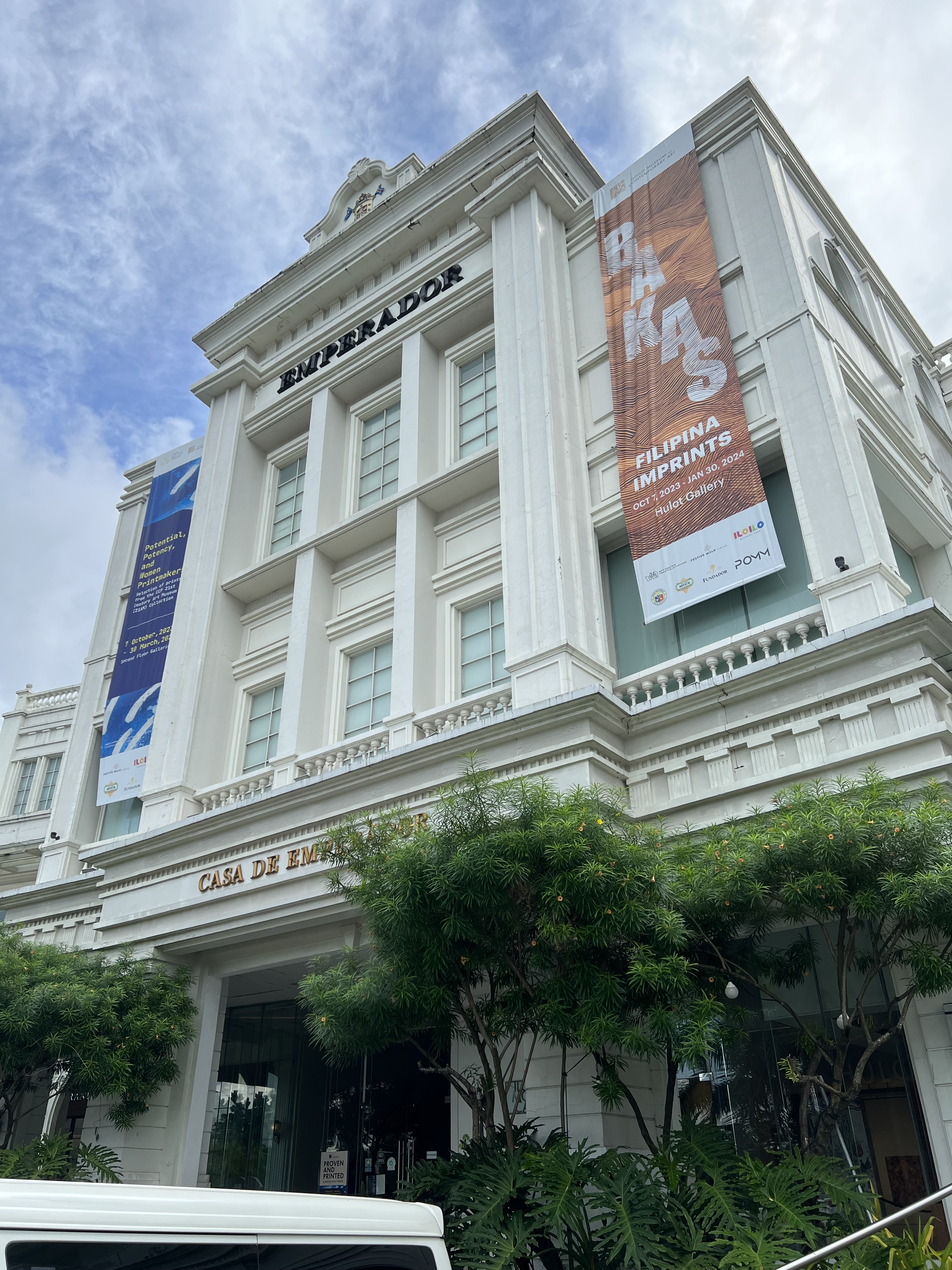
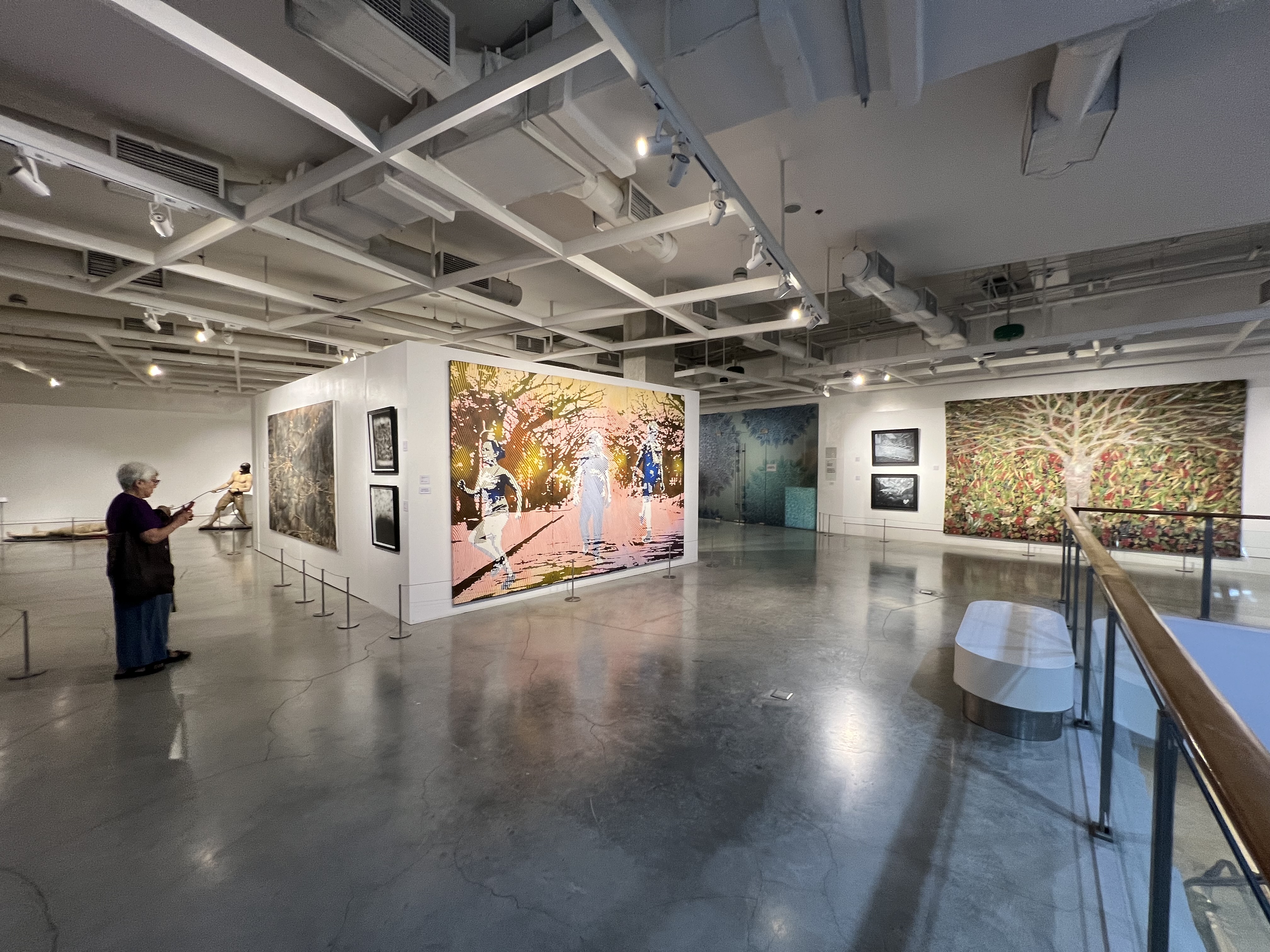
We returned to this place in the daytime to visit one of Iloilo’s most recent and also most impressive attractions: the Iloilo Museum of Contemporary Art or Ilomoca, a three-story showcase of both local and national talent. Ilomoca’s establishment in the middle of one of Iloilo’s CBDs demonstrates what seems to be the local formula for sustainability, the merging of the modern with the traditional, of business with culture. You can best see this in the majestic Consing mansion in front of the Molo Cathedral, which was bought by SM but tastefully renovated and transformed into its Kultura shop. There’s no doubt that modernization is coming to Iloilo in a big way, but its leaders are smart enough to know that the city’s appeal lies in what it has built over the past two centuries, which no money can buy.

You’d think that Iloilo has gotten this far just because of political patronage from Manila, but Iloilo was one of the 15 provinces that went for Leni Robredo in 2022. The city’s former mayor, Jed Mabilog, was hounded out of office by threats of tokhang under the previous administration, but the city seems to have weathered the political storms under Treñas, returning to his old job under the National Unity Party. What this tells me is that good local governance matters, whatever may be happening elsewhere. 

Email me at jose@dalisay.ph and visit my blog at http://www.penmanila.ph.

Penman No. 454: Revenge Travel, Local Edition

Penman for Sunday, September 3, 2023

WE PINOYS don’t really know what “summer” is any longer, with heavy rains falling out of the sky as much in March as they do in September, but especially with the new school calendar in place, most of us now do what used to be our summer traveling between May and August, if Facebook posts are any indication.

Many Filipinos—those who can afford it—still seem to be in “revenge travel” mode, flying off to Prague, Helsinki, Myanmar, and other parts off the usual travel charts. My wife Beng and I had a couple of dream spots halfway around the world in mind—recalling our pre-pandemic spree in 2019 when we blew a chunk of my retirement kitty on an escapade to Penang, Tokyo, England, Scotland, Singapore, the US, Turkey, and Macau—but our shrunken pesos and aching knees urged something kinder and more affordable: go local, and suffer no jetlag.

As it happened, we visited at least four places these past few months that I’d like to share with our readers looking for alternatives to the usual weekend destinations, ie, Tagaytay, Subic, Baguio, and Boracay. Some of these trips were partly for work, although I have to admit that pleasure pretty much overpowered anything else on our minds once we got there.

The first was a treat for the whole household—Beng, myself, my 95-year-old mom Emy, her caregiver Jaja, our housekeepers Jenny and Ara, Jenny’s husband and Beng’s assistant Sonny, and Jenny’s and Sonny’s kids Jilliane and Buboy. This is our extended family, whom we genuinely enjoy being with, so every year I promise to take them out on an overnight trip to water resort, as everyone (well, at least below 65) loves to swim. That means a wave pool, a place to cook, good and clean rooms for sleeping and showering, and not too long a ride (for my mom who gets carsick). 

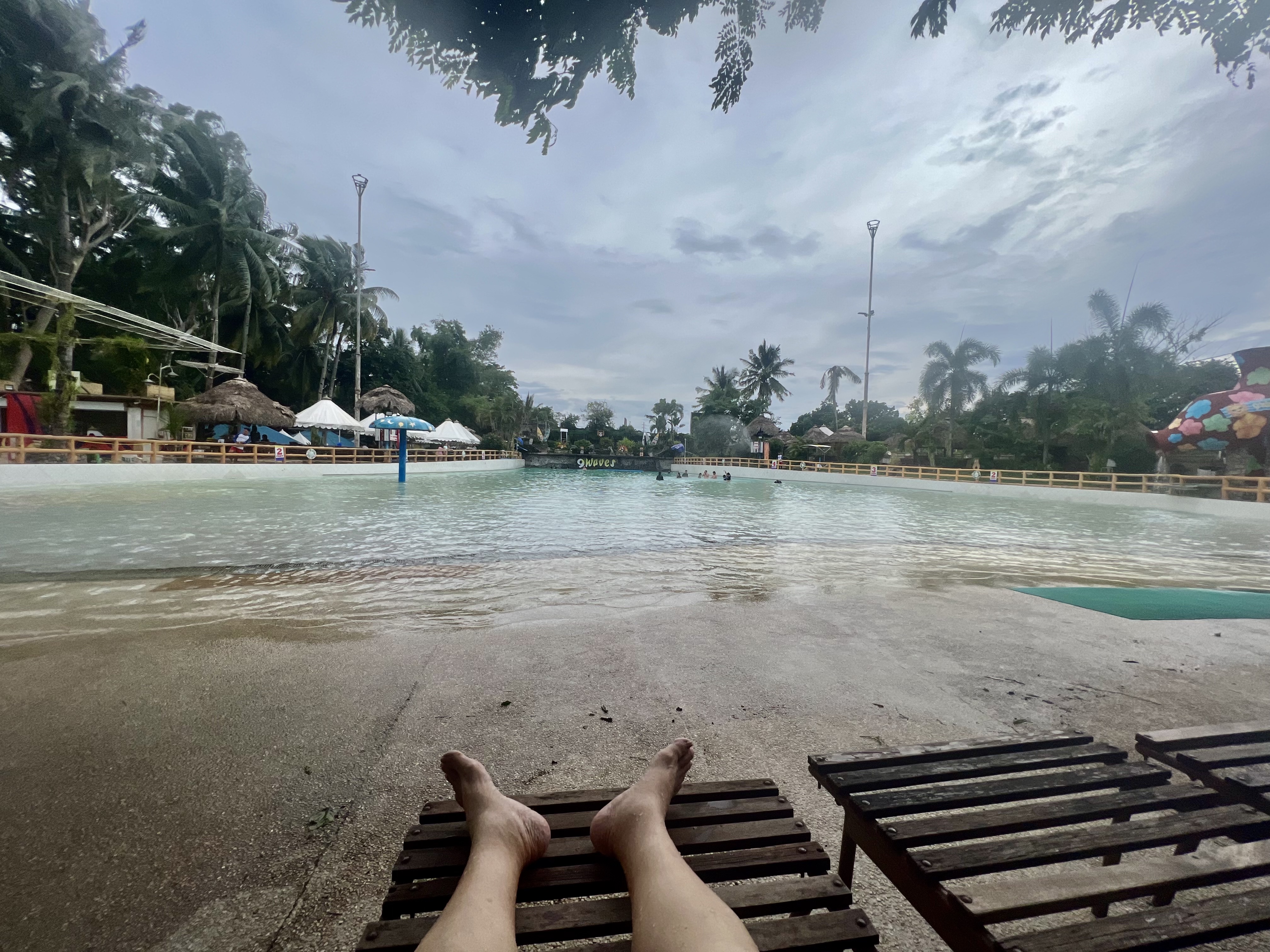
Last year it was the Villa Excellance Beach and Wave Pool Resort in Tanza, Cavite that did the trick for us—and it’s still worth a weekend for your family—but a little Googling yielded me something much closer to our home on UP Campus: the Ciudad Christhia Nine Waves Resort in San Mateo, Rizal, just a 30-minute hop away via the Commonwealth/Tumana route. The place had everything we were looking for—it’s an ideal venue as well for teambuilding seminars, if you don’t want to go too far, with very helpful staff and prices that won’t break the bank; you can do your broiling right beside the huge pool, and the cabanas were clean and cozy. While I flailed around in the knee-high water, six-year-old Buboy had a blast in the wave pool, which was all that mattered.

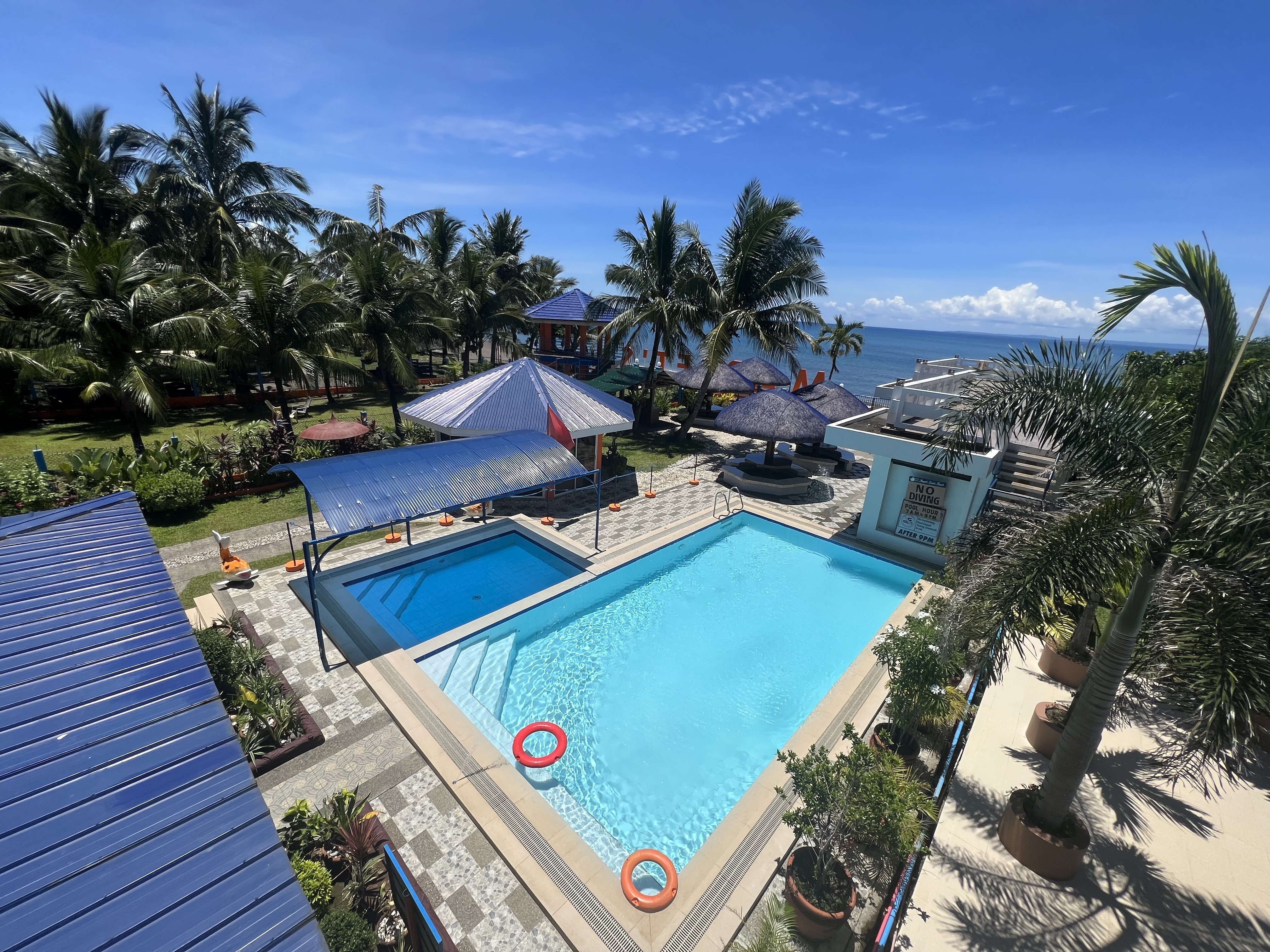
If you don’t mind driving through the mountains on a zigzag road for about three hours, then a trip to Infanta, Quezon will make the effort worth it. Facing the Pacific, but with Pagbilao Island buffering the waves in between, Infanta offers a bevy of beach resorts, of which Beng and I went to the Marpets Beach Resort, which was run by an American expat and his Filipino wife. Aside from its stretch of beach, the resort had three swimming pools, very livable quarters, and deliciously cooked food. The great thing about a roadtrip to Quezon—which is reachable via the zigzag Marilaque Highway from Marikina and also via the equally scenic though more moderate route passing Antipolo, Famy, and Real—is that the journey itself is an adventure, with much local produce to buy along the way, and breathtaking views to snap. 

Our third destination was almost a random but providential choice. Looking for an inexpensive getaway far enough from Manila to require a plane, and with some airline credits to expend, Beng and I looked up Cebu Pacific’s destination map and settled on one spot we’d never been to—Virac, Catanduanes. We Manileños often hear of Virac only in the context of incoming typhoons, for which it’s probably unfairly used as a reference point, but if you catch it on a sunny day like we did, then you’d rather be here than busy Boracay. I found a new boutique hotel on booking.com called Happy Island Inn in San Vicente, a short tricycle ride from downtown fronting the water, and it turned out to be a winner, priced very reasonably with the friendliest front desk fellow I’ve ever met in all my travels.

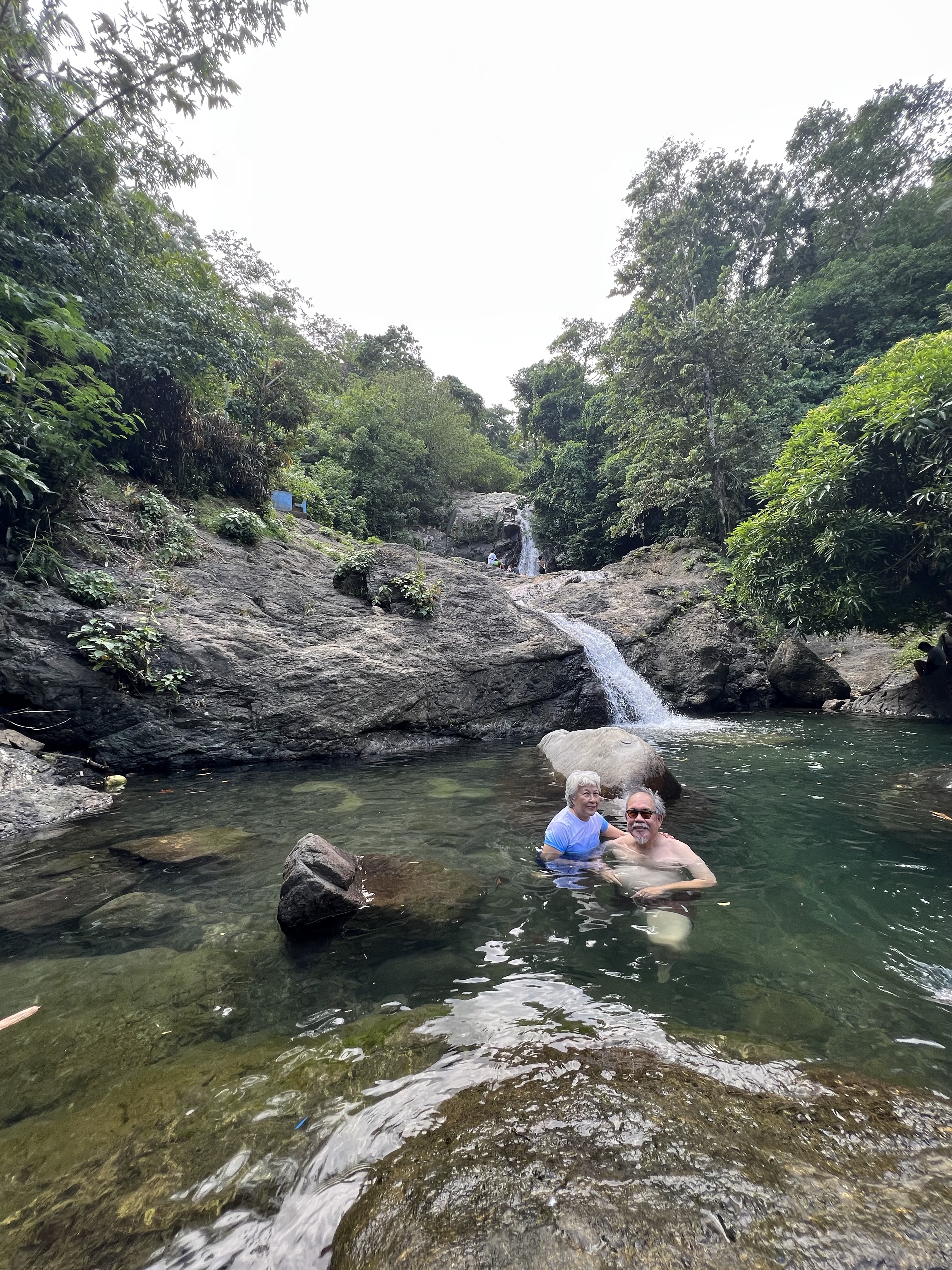
Soon we learned that nearly everything in Virac is reachable by tricycle, which we hired for a day tour that included a beachside lunch at the ritzy Twin Rocks resort, a visit to the historic Bato church, hewn out of stone and coral, and a bracing dip into the cool and clear waters of Maribina Falls (entry fee, P25 per person). We made new friends of a lovely couple, Bobby and Myette Tablizo, with whom we shared stories under a full moon. There’s a lot more to be discovered of Catanduanes up north—the island can be circled on a first-class circumferential road—but we’ll save that for next time.

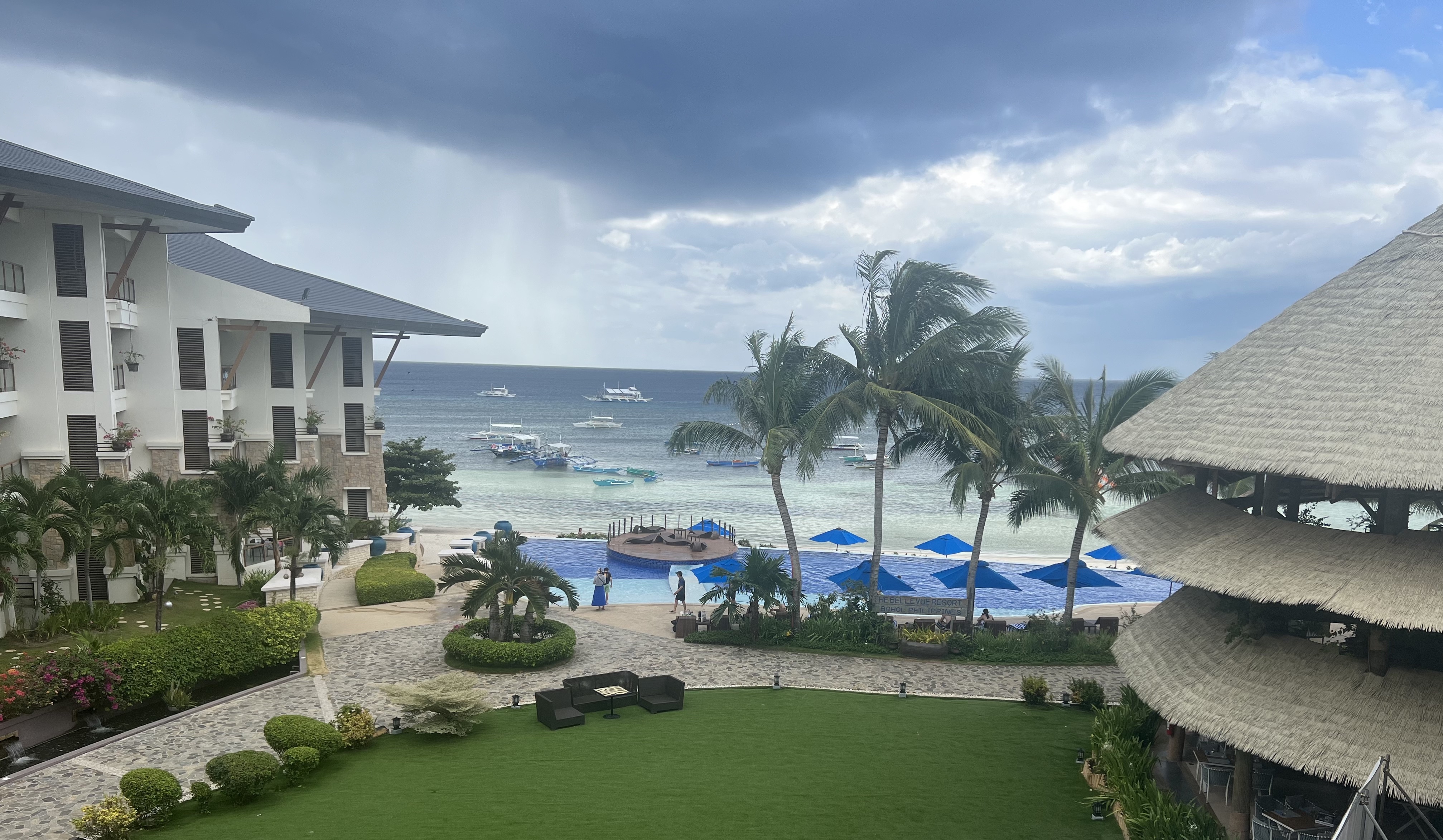
My last sortie was by my lonesome and work-related, but work gets doubly hard in a place meant to transport you to blissful oblivion. This was in Panglao, Bohol, which, the last time I looked many years ago, was little more than a cluster of huts. Imagine my surprise when we stepped off the plane into a world-class airport and then, just minutes later, were wheeled into the kind of resort you find on some glossy magazine cover or on the travel channel but never thought was right in your backyard. (Well, of course there’s a whole class of Pinoys who do know about such places, and I’ve been fortunate to have been invited to a few, but my poor-boy’s jaw still can’t help dropping in the face of luxury.)

The Bellevue Resort in Panglao is one such place that will make you wish you’d studied something like plastic surgery so you could spend a few weekends here every year. The rooms are as plush and comfortable as you should expect at its price point, but it’s the waterfront that will captivate the first-time visitor, with its white-sand beach, tour boats, infinity pool, and multilevel restaurant. Breakfast or dinner beachside is an option, and a tour of the rest of Bohol can be arranged.
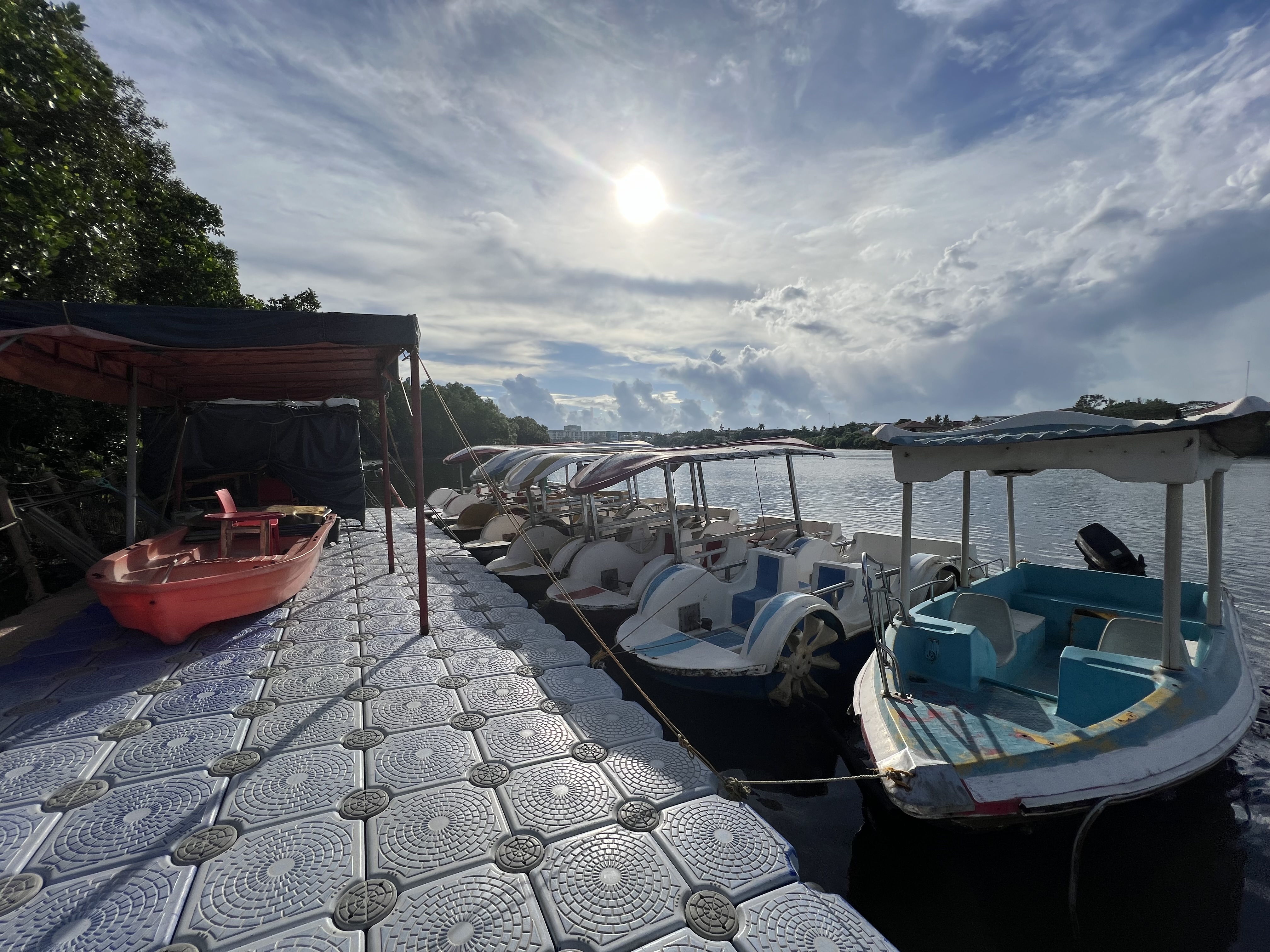
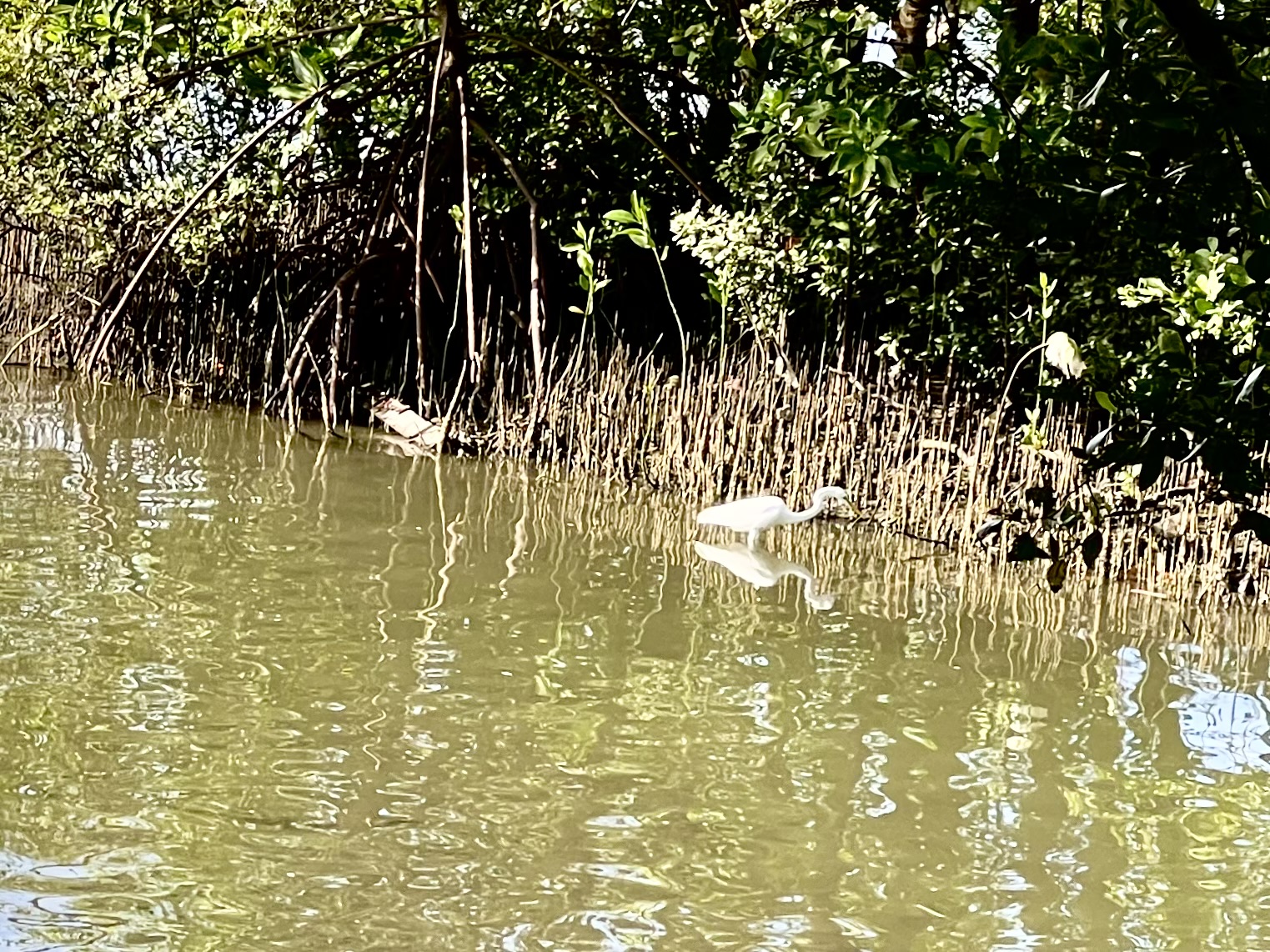
Of course, there’s always Bali or the south of France, but with the new travel paperwork requirements, who needs the hassle at immigration? Save yourself the travel tax and go local. It’s still more fun in the Philippines, if you know where to look.