Penman No. 357: A Feast for Book Lovers

IMG_0651.jpeg

Penman for Monday, June 10, 2019


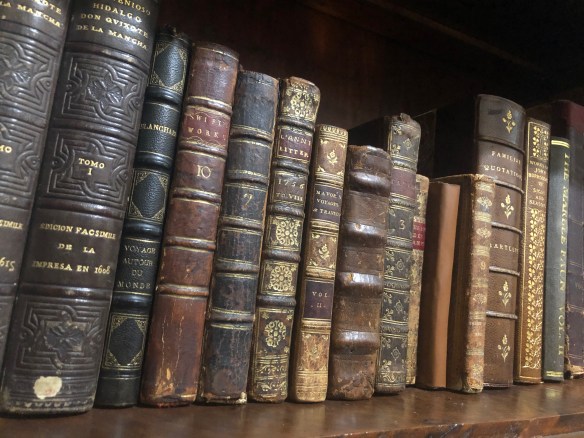
IF YOU love books—whether as a reader, writer, or collector of them—you have to put this on your calendar: June 15, Saturday, 1 pm, Great Eastern Hotel, Quezon Avenue. That’s when I join a panel of fellow bibliophiles to talk about “Advanced and Antiquarian Book Collecting” at the 10thPhilippine International Literary Festival sponsored by the National Book Development Board.

It was actually at my suggestion that this panel was put together, when the NBDB solicited panel proposals a few months back. I asked Anthony “Tuni” John Balisi and Francis Ong, two prominent members of our online Filipiniana Book Collectors Club (FBCC), to sit on the panel with me, and happily they agreed.

There are, of course, far more accomplished, knowledgeable, and comprehensive book collectors out there—the formidable tandems of Mario Feir and Steven Feldman and of Jonathan Best and John Silva come to mind, as well as the likes of Jimmy Laya and Ambeth Ocampo—and we hope they can join us to share their experiences and insights. But for the purposes of the panel, we wanted to keep things on a strictly amateur and fun level, to focus on the joy and the excitement of acquiring desirable books that remain fairly accessible to new and middling enthusiasts like us.

You’d think that book collecting—especially in this digital age—would be a pastime for old fogies who never really made the transition to e-books and who still write notes with a fountain pen or a typewriter (two of my other collecting passions), but you’d be surprised by the number of young people, male and female alike, looking for and selling books on FBCC and other online sites. Perhaps, as with pens and typewriters, it’s a romantic gesture, a tip of the hat to a less troublous past. But the fact is that a lot of book collecting now happens online, putting to rest the notion that these old guys (and gals) can’t key in a URL or do a Google search to find a signed first edition of Carlos Bulosan’s America Is in the Heart if their lives depended on it.

As my rationale for the panel put it, books are an invaluable resource as repositories of knowledge, experience, and analysis. In the Philippines, they have figured prominently in our history both as keepers of the national memory and as instigators of change, even of revolution. Collecting and preserving our most important book is a mission and passion shared by advanced collectors who complement the efforts of libraries and other institutions to ensure that the best and most significant books of the past and present can be bequeathed to the future.

Our panel’s focus will be on Filipiniana, particularly history, literature, art, and religion. Through this session, we seek to engage the Filipino public in book collecting both as a hobby and as a means of preserving and promoting the value of books as cultural artifacts and keepers of the national memory. The discussion can also include where and how we source rare books, how to restore and conserve them, and the book market. The session should result in a greater public awareness of the value of books as cultural artifacts and of book collecting as a specialized art in itself.

I’m going to save the better and more detailed parts of this discussion for my talk at the PILF—and for this column next Monday—but let me just say, as a teaser, that we will be bringing some of our most interesting acquisitions to the event, for show and tell. (Aside from Filipiniana, I plan on exhibiting some of my oldest books, including one in English from 1551, and manuscripts from the 1500s and 1600s.)

And we’d just be a morsel in a veritable feast for the book lover at the PILF, which this year is devoted to the theme of “Gunitâ: a pursuit of memory”—which means, according to the NBDB, “making a mark in the age of forgetting by remembering our roots and fostering new voices through our literature. Gunitâ is the ability to remember. We are at a time when forgetting is common and we are chasing after our memories and history so that it is not forgotten.” Keynoting the festival will be National Artist Resil Mojares—one writer I deeply admire for the lucidity of his scholarship—whose talk will be followed by a plenary discussion that will also include Miguel Syjuco, Lualhati Abreu, and Joel Salud.

You can view the full PILF program here: tinyurl.com/program10thPILF. Entry to the festival is free, but you have to pre-register for it for Day 1 at tinyurl.com/10thPILFDay1and for Day 2 at tinyurl.com/10thPILFDay2.
 

Penman No. 356: Loverly London (2)

IMG_0602.jpeg

Penman for Monday, June 3, 2019


TO PUT it one way, the United Kingdom is the kind of place where the money looks too pretty to spend, especially the duotone one-pound and two-pound coins. But you better have a lot of it, and be prepared to let go—unless, like Beng and me, you thrive on the low end of things, which can come for next to nothing, if not for free.

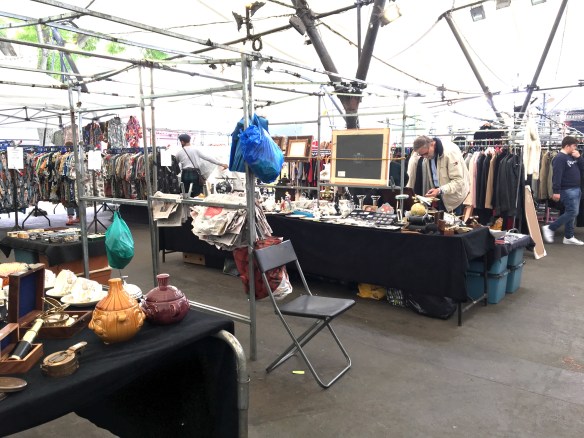
As I’ve often mentioned here, Beng and I are inveterate flea market fanatics, and one reason we travel so much isn’t to pose beside the landmarks as nearly everyone else does, but to scour the flea markets, thrift shops, and garage sales of the world for the glorious stuff others see as junk—or maybe don’t see at all. From New York’s Hell’s Kitchen, Amsterdam’s Waterlooplein, and Barcelona’s Encants to Paris’ Clignancourt, Singapore’s Sungei, and Beijing’s Panjiayuan, we’ve been there and done that.

IMG_0285.jpeg

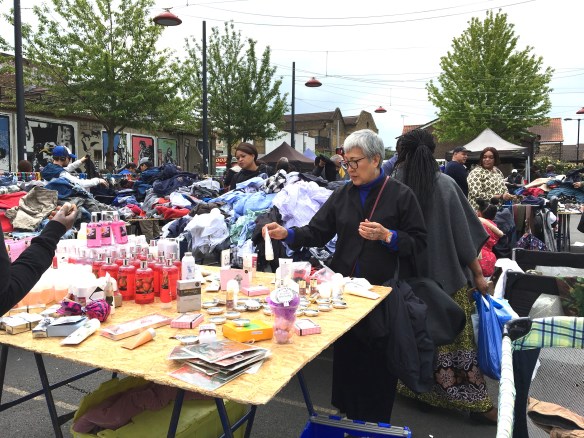
As it happens, we’ve yet to find a city as full of flea markets as London. On the weekends, you can easily find a dozen of them hawking everything from vintage Gladstone bags and Victorian silverware to paisley shirts from the ‘60s and ancient Roman coins. Beng usually looks for little silver baubles and I, of course, look for pens, old books, and anything to do with writing.

London is also charity and thrift-shop heaven, and every square mile you’d be guaranteed to find at least one Oxfam, British Heart Foundation, Cancer Research, Norwood, Barnardo’s, or British Red Cross shop, often right next to another. Being fairly large for a Pinoy, I don’t mind saying that nearly everything I wear on top comes from some ukay-ukay or resale shop, so London’s flea markets and thrift shops are always a chance to pick up well-cut shirts and blazers for a tenth or less of what they would go for on the High Street.

IMG_0238.jpeg

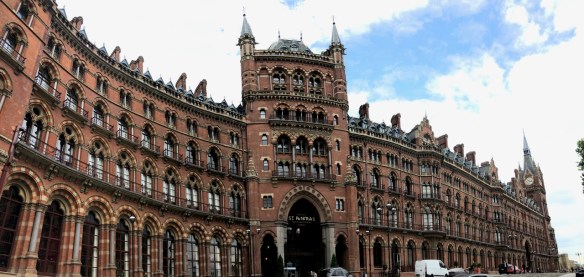
And true enough, London delivered in spades. Portobello Road is every tourist’s idea of a weekend bargain paradise (thanks to the Notting Hill movie—Hugh Grant’s bookshop at #142 is now a shoe shop), but the fact is that even more interesting and affordable markets can be found at Deptford, Brick Lane, and Islington, among others.

IMG_0281.jpeg

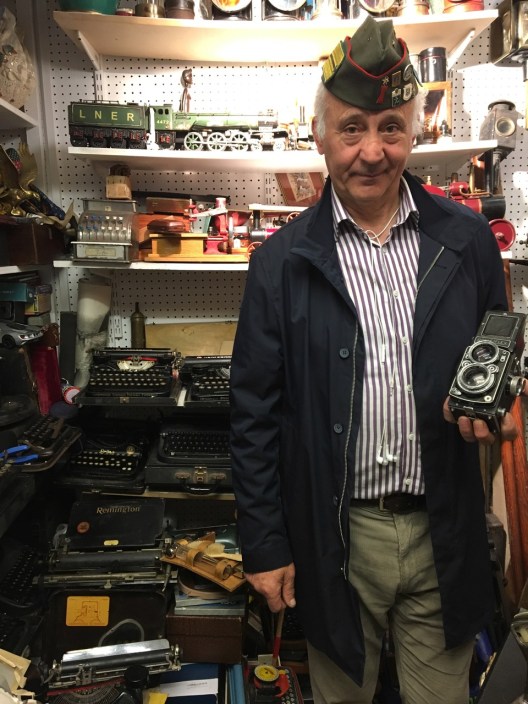
I did have a good chat with an antiques dealer named Nicholas on Portobello Road. He came over to me when he saw me craning my neck at the awesome pile of vintage typewriters he kept in one of his stalls. Even if I had to tell him that I couldn’t possibly drag one of those beauties home in my luggage, he seemed happy to meet someone—a Filipino at that—who understood how lovely and valuable his Erikas and Bar-Lets were.

IMG_0294.jpeg

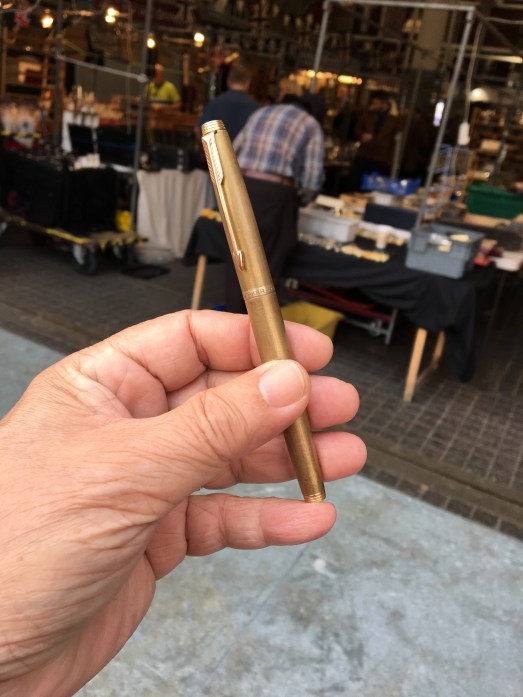
Of course I couldn’t leave London without buying a pen or two. A tip from Nicholas led me to the Jubilee Antiques Market which happens at Covent Garden every Monday. The dealers set up as early as 5 am, and we were there at 7, me scouting the stalls for tubular objects, Beng interviewing a licensed mudlark (someone who pokes around the banks of the Thames) about his finds. I came away with a prize for £25, haggled down from £30—a rare brass prototype of the iconic Parker 75.

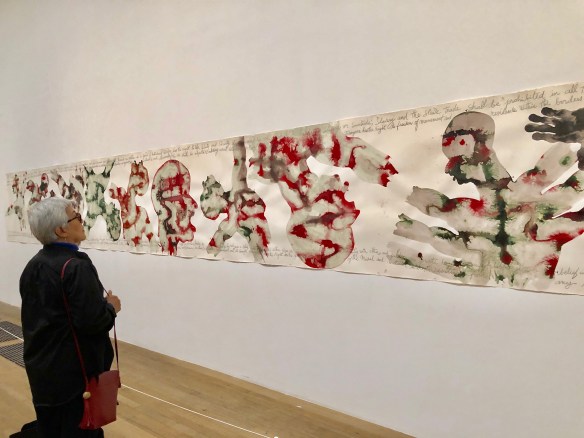
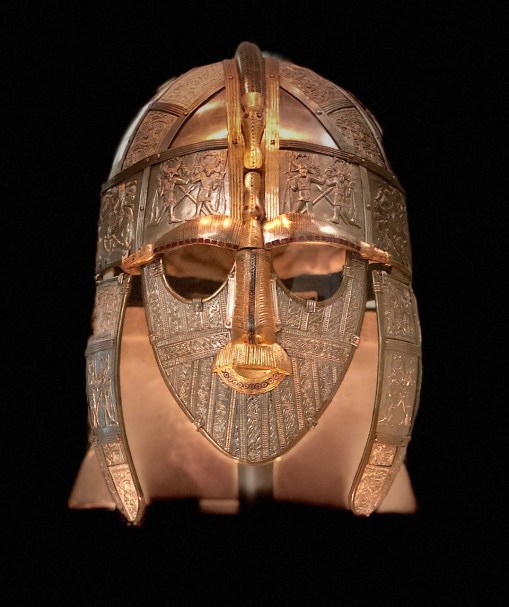
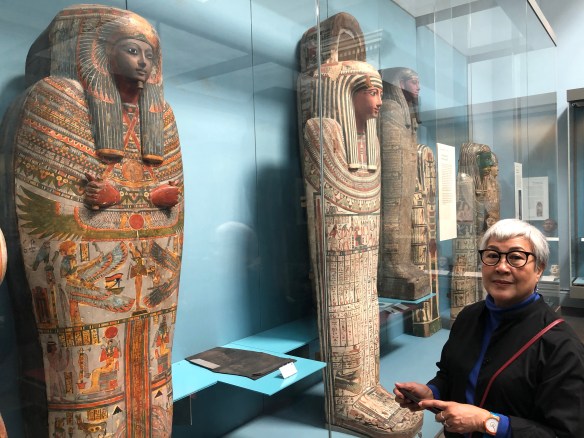
But more than markets, London is mecca for museum rats, which Beng and I also are, and while we’ve been there before and seen literally the same old things, we took in and reveled at the Sutton Hoo masks and the Egyptian mummies at the British Museum all over again, before hopping over to the Tate Modern at the South Bank for a mind-blowing exhibition of paintings from the Weimar Republic and highly inventive political art from the present. What impressed us even more were the guided tours for children at the Tate, their early exposure to the complexity of the modern mind. (Most London museums are free and open all week.)

IMG_0588.jpeg

IMG_0566.jpeg

IMG_0572.jpeg

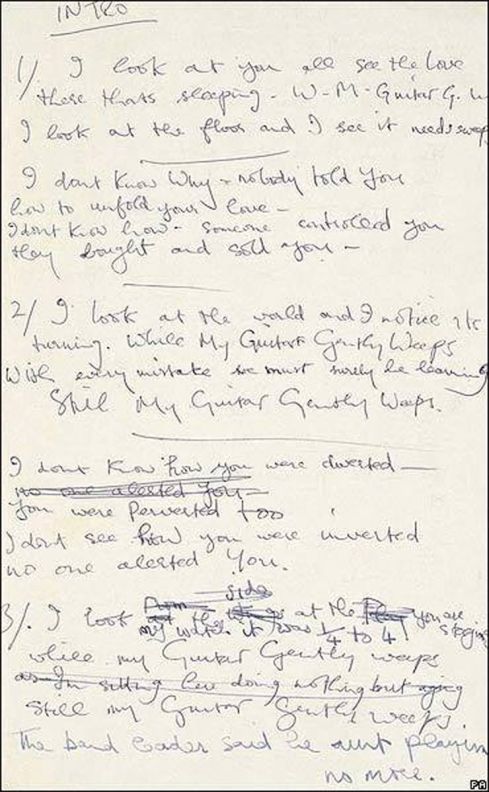
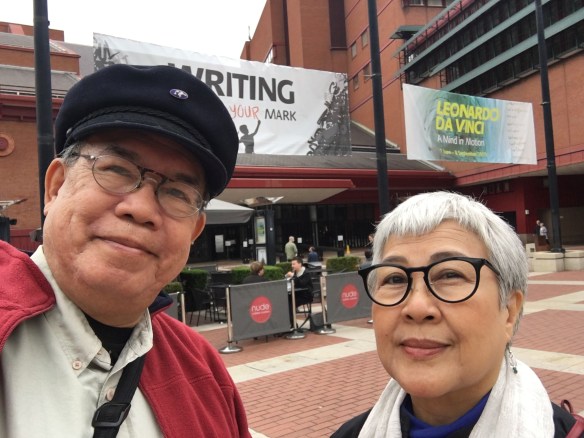
We reserved our last stop in London for a treat I had been anticipating for ages: a return to the British Library and to its exhibit of its treasures, ranging from old Bibles, the Magna Carta, and pre-modern maps to a special section on the Beatles. I was struck by how neat, orderly, and indeed unfailingly precise the ancient manuscripts were, as you might have expected of sacred texts, such as the Codex Sinaiticus, its every word hand-inscribed in the 4thcentury but looking as sharp and as fresh as this morning’s paper. Contrast that to the vigorous scrawls, scribbles, and cross-outs of modern writers—including the Beatles, who wrote letters and lyrics with a schoolboyish disregard for form and order: the draft of “Michelle” on the front of an envelope, that of “A Hard Day’s Night” on a greeting card. Elsewhere, Sylvia Plath sends a poem to a publisher in long hand.

d7bbdbf04633e0c9431f751041ddf1d6.jpg

IMG_0327.jpeg

Words, decades, and centuries come alive in London—not just in the library or museum but on the street, which makes yet another visit worth yearning for.

Penman No. 350: An Avatar of Good Writing and Reading


All-My-Lonely-Islands-new-cover-e1536389355642-325x519.jpg

Penman for Monday, April 22, 2019


EVERY BOOK author needs a publisher, and in this country, depending on what you write, there aren’t too many of them. There will always be a market and a publisher for law, medical, and engineering books (and let’s add cookbooks and inspirational books), but for those of us who write fiction, history, and things that won’t make you any real money, the options are few and far between.

If you’re connected with a university, an academic publisher such as the University of the Philippines Press, the Ateneo de Manila University Press, and the UST Press could be your ticket—if you pass the rigorous standards of academic publishing, which explains the prestige of getting published under a university imprint. Of course, self-publishing (what used to be derided as “vanity” publishing) has gained growing acceptance around the world, given the possibilities opened up by new desktop technologies. That still leaves authors with the problem of distribution, which neither universities and much less individuals are too adept at.

Thankfully, another option—indeed at the top of the list for most Filipino authors—is Anvil Publishing, established in 1990 as a subsidiary of the giant National Book Store chain founded in 1942 by the Ramoses. The NBS network of over 230 branches all over the country gives Anvil a formidable edge over any competition, but publishing isn’t just about distribution; as importantly, it’s about product, and bringing that product to market.

That’s the job of Anvil’s General Manager Andrea Pasion-Flores, who joined the company two years ago, coming from an ideal background as an English major and a talented writer in her own right, becoming a lawyer and then Executive Director of the National Book Development Board, followed by a stint as the only Filipino literary agent with the Singapore-based Jacaranda Agency.

She took over from the very capable Karina Bolasco, who moved over to head the Ateneo press. For most of its nearly three decades, Karina had shepherded Anvil to its predominant position in the industry, and gave many authors like me the break they needed to reach a national audience. In 1992, Anvil took on my first novel, Killing Time in a Warm Place, the first of many projects I would do with them. Today, 27 years later under Andrea, Anvil is working with me again to produce my Collected Stories, the culmination of about 45 years of my work in short fiction, after I recently edited a new edition of Manuel Arguilla’s short stories for them. It’s a milestone I’m eagerly anticipating, which should be out before the year ends.

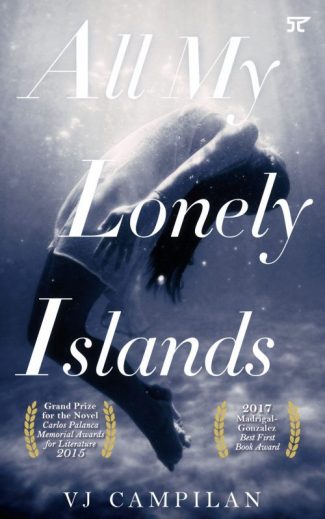
And it’s not even old folks like me, Krip Yuson, Ambeth Ocampo, and Lualhati Bautista that Anvil’s helping out the most these days, but exciting young authors like VJ Campilan, whose novel All My Lonely Islands has won a slew of awards. Anvil has also just teamed up with Wattpad to create Bliss Books for young Filipino readers, drawing on the popular YA online platform.

Last February, Anvil celebrated its 29thanniversary, and Andrea came out with a list of interesting company factoids, some of which I asked her permission to share with you:

  1. The first title published by Anvil was Atlas Adarna in May 1990, a collection of regional maps.
  2. Its first cookbook was The Best of Maya Cookfest, volumes 1-3, published in July 1990.
  3. Aside from the Atlas Adarna, Anvil’s first trade book was an anthology of Carlos Palanca award-winning stories, published in September 1990. Ambeth Ocampo’s Looking Back and Rizal Without the Overcoat were published in November 1990, and continue to be highly popular.
  4. Margarita Holmes’ Life, Love, and Lust was the first collection of essays published by Anvil. It came out in September of 1990 and sold for P125.
  5. Between 1990 and 1991, Anvil published 160 titles: pocket books, coloring books and the series Our World of Reading and Our World of Language, Our World of Science. It’s estimated to have since published more than 2,000 titles.
  6. In 2017, Anvil revived Anvil Classics, which for a long time only counted Nick Joaquin’s novel Cave and Shadows, but now has all his stories and his other novel The Woman Who Had Two Navels,and his collection of plays Tropical Baroque: Four Manileño Theatricals;  Lualhati Bautista’s most eminent novels (Dekada ’70, Desaparasidos, Bata Bata Paano Ka Ginawa, and ‘Gapo), Carlos Bulosan’s America Is in the Heart, and Manuel Arguilla’s collected stories. (My Collected Stories will fall under this imprint.)  

“In 29 years,” Andrea says, “Anvil has grown to be one of the leading publishers in the country, serving a diverse audience that is represented by the diversity of authors on its roster. And though the business of publishing books has become a little bit more complicated than 29 years ago, my two short years in the company have shown me that the commitment to books of the Ramos family, represented by Xandra Ramos-Padilla, is strong and unwavering. And for our growing team of 43, running up to 2020, we have a few things planned on all fronts.”

Congrats, Andrea, and may Anvil—among our other notable publishers—continue to promote good writing and reading for and by Filipinos.

Penman No. 343: A Feast for the Eye and Spirit

IMG_9257.jpegPenman for Monday, March 4, 2019
 

IF YOU ever find yourself with a free morning or afternoon in Manila, with some loose change in your pocket and a bee buzzing in your head about what to do, think no further and just do as I say: get thee to the San Agustin Museum in Intramuros. Your P200 (or even less, with concessions for seniors and students) will never be spent better, certainly not for a movie at the mall.

I hadn’t been to that museum in over 20 years; the last time I visited, it was a dark and gloomy place, as you might expect a 400-year-old institution to be. The museum is attached to the church of the same name, which was completed in stone in 1607 after two earlier and flimsier incarnations were destroyed by fire in 1574 and 1583. The Augustinians were inspired and industrious church builders—the corridors of the museum are lined with paintings of their glorious creations throughout the archipelago—and San Agustin Church itself remains the splendorous anchor of that evangelical effort.

The church has become a favorite choice for weddings, and indeed it was for the wedding of a friend that Beng and I went to San Agustin a few weeks ago. We got there an hour early, so we stepped into the foyer of the museum, and decided to while away the time viewing the exhibits. And what a feast for the eye and spirit that turned out to be.

IMG_9278.jpeg

The museum is organized along six basic themes that circumscribe Augustinian life: Love for Songs, Love for Prayer, Love for Music, Love for Wisdom, Love for Science, and Love for Culture.

IMG_9265.jpeg

Love for Songs speaks of the order’s devotion to liturgical music, embodied in the old choir books, many still on parchment, that were used in the church’s famous and now accessible choir loft, from where the visitor can appreciate the church’s full majesty under the towering organ.

IMG_9277.jpeg

Love for Prayer describes the community’s gathering five times a day for prayer in that loft or coro, seated in intricately carved silleriaor choir stalls that go back to the early 1600s. The space is dominated by the lectern and organ. A tip for the visitor: peek behind the organ for a glimpse of the original colors of the place, preserved in the masonry.

Love for Music is a special exhibition of musical instruments employed for church services, highlighting the work of two important masters, the composer and organist Fr. Manuel Arostegui and musical director Marcel Adonay.

IMG_9286 2.jpeg

Love for Wisdom brings us to the order’s library which, despite the ravages of war—many thousands of volumes were lost to Manila’s sacking by the British and then to the city’s bombardment in the Second World War—still displays books dating back to the 1500s, proof of the Augustinian devotion to scholarship (particularly to linguistics, based on the exhibits). Being something of an antiquarian, this was of the greatest interest to me (I noted with some amusement that the oldest book in the room was said to have been published in 1552—one year younger than the oldest in my personal collection), but unfortunately the library as a whole can be seen only through a glass wall, perhaps to protect its precious contents.

IMG_9269.jpeg

Love for Science brings us to the work of the pioneering botanist Fr. Manuel Blanco, alongside that of two other Augustinian scientists, Fr. Ignacio Mercado and Fr. Antonio Llanos. It was, of course, Fr. Blanco’s Flora de Filipinasthat put the Philippines’ horticultural wealth on the global map, and the book’s illustrated 3rd edition (since reproduced) remains among the most coveted of Philippine publications.

IMG_9288.jpeg

Finally, Love for Culture dwells on the Augustinian mission in education, starting with their first school in Cebu in 1565.

In a larger sense, that educational mission continues with the museum itself and what it offers the modern visitor—people like us who, immersed in the business and digital traffic of the 21stcentury, step into a time tunnel to be magically transported into a past materially composed of gold, ivory, parchment, and wood. Indeed, as we did, the best way to appreciate this museum is simply to walk through it, without too much thought to system or design, allowing the objects—whether they be glass-eyed Madonnas, gold-threaded priestly vestments, or the gravestone of Juan Luna y Novicio—to speak to you. I’m not even a particularly religious person—I’ve long had issues with the Church, despite my deep respect for its core intentions—but this exposure to specific aspects of the Augustinian mission in the Philippines strangely reassures me that good things survive.

Endowed by the likes of the late Don Luis Ma. Araneta, the museum has been very capably maintained and is well lit, and its two stories of exhibits, plus Father Blanco’s Garden, offer the visitor at least an hour of quiet wonderment—with an emphasis on “quiet,” an increasingly rare grace to be found in our frenetic city. Spare that hour and those 200 pesos; you will feel amply rewarded.

IMG_9262.jpeg


Penman No. 341: War and Remembrance


James_Scott_collage.jpegPenman for Monday, February 18, 2019
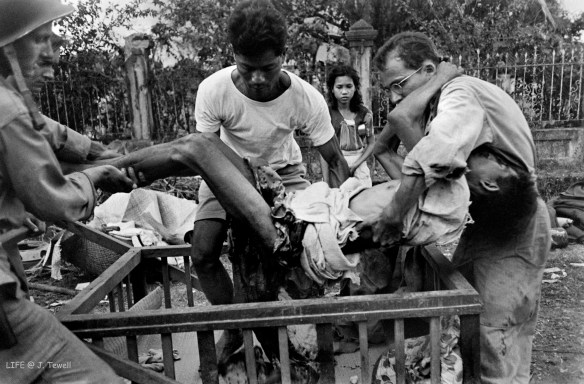
 

FOR FILIPINOS, February is or should be a month of remembering, beyond the commercial confections of Valentine’s Day.

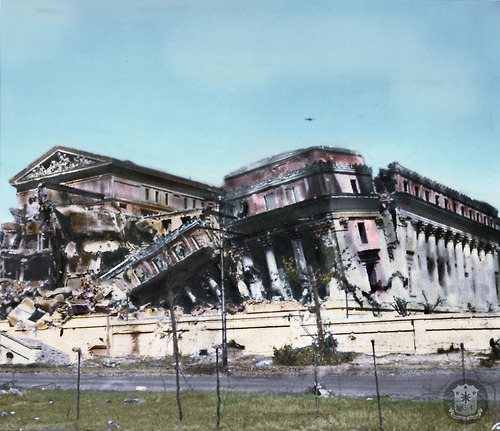
For people somewhat younger than me, February should recall the euphoria of EDSA 1986, and the forced departure of a dictatorship. For myself, the month marks the anniversary of the 1971 Diliman Commune, when we barricaded the university in symbolic resistance to what soon became the martial-law regime. For my parents’ generation, however, February can only mean the closure of the War in 1945, culminating in the bloody Battle of Manila that may have crushed the Japanese but also left 100,000 Filipinos dead in the most horrible ways and Manila thoroughly devastated.

Having been born nearly a decade after that war, I can only look back on it with both relief and, I must confess, morbid fascination, that curious wondering about what I might have done—or even if I would have survived—had I gone through that ordeal. I’ve written plays about the war, read as many books as I could, and visited war memorials, but never seem to have come around to answering how and why war can bring out both the best and the worst in us, sadly more often the latter.

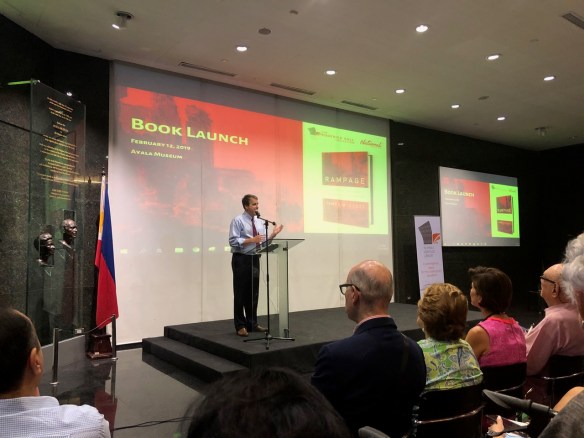
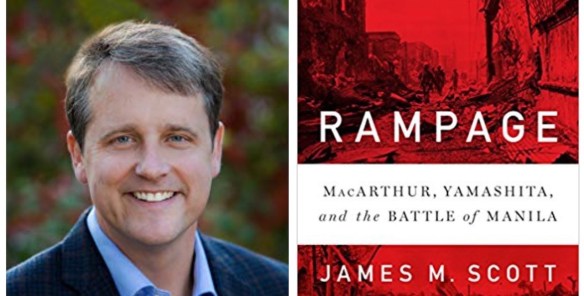
This was much on my mind last week when I attended a lecture at the Ayala Museum by the American author James M. Scott, who was in town to promote his newest book, Rampage: MacArthur, Yamashita,  and the Battle of Manila(New York: W. W. Norton, 2018, 635 pp.). James had actually been introduced to me by email before his visit by mutual friends, so I was doubly interested in meeting the war historian, whose earlier book Target Tokyo: Jimmy Doolittle and the Raid That Avenged Pearl Harborwas a 2016 Pulitzer Prize finalist.

IMG_9369.jpeg

Before a packed crowd that included survivors of the war, James brought the audience back to a time when Manila was indeed the Pearl of the Orient and Asia’s most beautiful city, with wide, tree-lined boulevards and a cosmopolitan culture to complement its charms. The war would change all that, over a few dark years of death, suffering and famine. Despite putting up their bravest front, the city’s residents and the thousands of foreigners interned at Sto. Tomas were in desperate need of food, medicines, and, of course, freedom when the Americans—led by the famous but also famously flawed Gen. Douglas MacArthur—landed in Lingayen Gulf and rolled into Manila. In command of the Japanese defenders, Gen. Tomoyuki Yamashita, the so-called Tiger of Malaya, had ordered Rear Adm. Sanji Iwabuchi to withdraw his forces—an order that Iwabuchi, a once-disgraced officer in need of redemption, had no intention of following (records would later show that the Japanese had made no plans for escape).

The stage was set for one of the most hard-fought and destructive battles of World War II. Instead of withdrawing, Iwabuchi directed his men to hold off the Americans with their guns, their swords, and if necessary their teeth. As the fight moved block by block south of the Pasig, the Japanese turned their retreat into wholesale slaughter; 200 Filipino men were beheaded in one house, women were raped scores of times at the Bayview Hotel, and babies were bayoneted; 41 victims were massacred in La Salle, many at the marble altar. Facing certain defeat, many Japanese committed ritual suicide—77 of them in one place over one night, with singing preceding the explosion of grenades. Iwabuchi slit his own belly. After 29 murderous days, the battle ended. Yamashita, who could have stopped his subordinate had he truly wanted to, was later tried and executed.

1LegisBldg.jpg

blogger-image--1666340230.jpg

16358751469_4a4fbdc210_o.jpg

More than 16,000 Japanese soldiers died in the battle, against only about 1,000 Americans. (Contrary to popular belief, Korean conscripts did not figure in the massacres, says Scott.) MacArthur would lament the loss of his family’s Civil War memorabilia and his son’s baby book in his Manila Hotel suite. But as Scott emphasizes, Filipino families paid the dearest price, with over 100,000 civilians dead in one month.

Drawing largely on first-person testimonies recorded soon after the events, the book is a searing account of the horrors of war; it was, says Scott, less a battlefield than a crime scene. A friend who read it told me she had to stop every once in a while to gather herself through her tears. The book takes note of subsequent judgments that the Americans bore as much responsibility for the destruction of Manila as did the Japanese, with their sustained bombardments of entrenched positions, but it’s the persistence of humanity—sustained by such organizations of war survivors as Memorare—that ultimately prevails.

Apart from many private acts of remorse, the Japanese government never formally apologized for their soldiers’ atrocities, and our own government’s recent removal of the comfort women’s statue shows how modern politics can obliterate the past better than a howitzer.

Such is the nature of today’s society—and of a generation obsessed with the present and the future—that many Filipinos can barely remember what happened five years ago, let alone 50, or 70. For some reason, our memories of conflict seem especially faint and fragile. Denial seems easier, revisionism even more attractive, so the despots who sent hundreds if not thousands to their graves and robbed us blind continue to live in mansions and be driven around in armored SUVs.

Meanwhile, we have James Scott’s anguished prose to ponder; I myself fear that if we disregard our liberties, the next Battle of Manila, we might inflict upon ourselves.

Penman No. 336: Goodbye to All That


IMG_8927.jpegPenman for Monday, January 14, 2019
 

TOMORROW, THE 15th of January 2019, I retire from the University of the Philippines after 35 years of teaching, a few of them spent in administration as department chair, institute director, and most recently on my second stint as Vice President for Public Affairs.

As I write this, a week in advance, the impact of departure hasn’t hit me yet. My schedule is still bursting with meetings and appointments, I’m still shining my shoes, and the guard at our building still opens the door for me, despite my daily gesture for him not to bother getting up from his seat.

I occupy a pretty large office on the ground floor of Quezon Hall, UP’s Greek-columned administration building. Erected in 1950, Quezon Hall was renovated recently, and I was among the first beneficiaries of that facelift, stepping two years ago into the same space I had used when I first served as VP in 2003-2005, but now spruced up and modernized in all kinds of ways.

I’m really a simple guy—I can get work done with just a laptop on, well, my lap—so I can appreciate the finer things in life more than someone born to them. I still remember, like most retirees would, my first office desk back in the early 1970s, when I joined the National Economic and Development Authority as a writer, and the sense of fulfillment that one felt just to have a table and typewriter of one’s own.

Having such a nice and well-appointed office—with its own restroom, conference table, sofa, bookshelves, air conditioning, electronic security, sprinklers, and strong wifi—didn’t only make me feel privileged, but also more responsible, knowing that public money had been spent to make me feel comfortable, work efficiently, and look dignified. Indeed, I had to dignify the office, by acting as I imagined a university official should—with respect and consideration for whoever came in to see me, and with prompt attention for any piece of paper in my tray, or any message in my inbox.

The first thing I did when I moved in was to personalize the place, mainly by bringing in the best of my private collection of paintings, pens, and antiquarian books. Having lost three decades’ worth of precious items in my Faculty Center office in the 2016 fire, I resolved that my new office was now the safest place to store my baubles, although I had nothing of too great a monetary value to attract thieves.

Aside from my favorites among my wife Beng’s own watercolors, the paintings consist of midcentury landscapes by the likes of Jorge Pineda and Gabriel Custodio, accomplished minor masters but nowhere as auctionable as Amorsolo or Kiukok. I have books, maps, and manuscripts dating back to 1490 (a page from a Latin breviary, my one example of true incunabula), but who else seriously wants to sniff handwritten letters from the 1600s, or musty English periodicals from the 1700s? Now and then I get a respectful question from visitors about my curios—let’s not forget the 1970s Olivetti Valentine and 1923 Corona folding typewriter stashed in a corner—but usually they don’t even notice that the magazines on my coffee table go back to the 1930s.

That’s been perfectly fine by me, because the office was always more of a shelter than a showcase, a cabinet of curiosities for my own inspection and enjoyment, particularly in moments of stress and anxiety, as any PR job inevitably entails. Confronted with the crisis of the hour, I’d leaf through the marvelous illustrations in a 200-year-old book of world travels, or patiently clean a Parker Duofold pen that Henry Ford or Manuel L. Quezon might have used, or gaze at an indelibly orange sunset from the 1940s, and feel reassured by the certainty that all the kinks and creases of today will get smoothened out by the sheer passage of imperial time.

I’m doubtlessly going to miss this mini-museum that I’ve cobbled together. I’ll be bringing the items home, or putting them away in safe storage, but it will be the place itself that I’ll be looking back on wistfully, knowing that, unlike many less-blessed employees trooping joylessly to their cubicles, I loved going to the office and working there, in the mute but expressive company of my favorite things. (I have a home office, of course, similar in some ways but much smaller and less carefully curated.)

In my fondest dreams, I wish that UP would someday accept my best books, manuscripts, and paintings as a donation and house them in a properly ventilated reading room, so that more generations of students can appreciate what I’ve enjoyed putting together and poring over. It was, after all, for the looks of surprise and delight on my students’ faces that I first bought these old books and brought them to class—not just to be ogled, but to be held and leafed through, so they could appreciate the materiality of literature, indeed of things before their time, in this now-centered world.

As I join that past and become, myself, an antiquarian artifact, let me say goodbye to all that, thanking my lucky stars and all the people who made UP the best possible workplace and second home to this writer-cum-bureaucrat. No bigger and brighter office to next step into than the future itself.

Penman No. 334: A Literary Yearender


IMG_8578.JPG

Penman for Monday, December 31, 2018


TWO BIG events rounded out the literary year for me, both of them related in some way to the University of the Philippines Institute of Creative Writing (UPICW), which not incidentally marked the 40th anniversary of its founding earlier this month.

The first was Writers Night last November 23, effectively an annual reunion and pre-Christmas party of the Filipino literary community. But more than a social bash, Writers Night also marks two important points on the literary calendar: the announcement of the winner of the Madrigal-Gonzalez Best First Book Award (given in alternating years to books in Filipino and English) and the launch of the latest issue of Likhaan: the Journal of Contemporary Philippine Literature.

Now on its 18thyear, the MGBFBA’s awarding is highly anticipated, not just because of the P50,000 cash prize but also because, miraculously, the UPICW has done a pretty good job of keeping the winner’s name secret until the proverbial opening of the envelope itself. This year’s winner was Emiliana Kampilan’s Dead Balagtas Tomo 1: Mga Sayaw ng Dagat at Lupa, published by Adarna Books, which went on to win a National Book Award the very next day.

Rappler’s Margie de Leon describes the work thus: “The first few pages alone of komikera Emiliana Kampilan’s Dead Balagtas Tomo 1: Mga Sayaw ng Dagat at Lupa will take your breath away. Depicting local mythology’s creation of the universe, each page is a luscious spread of lively lines and bold colors….The next chapters are a narrative feat, interspersing short stories between pairs of Filipinos and the geological birth of the nation. The tangled tales between each pair of characters serve to personify the actual physical shifts that occurred in our geography millennia ago.”

The second highlight of Writers Night was the launch of the Likhaan Journal, and this year being a milestone, we launched not one but two issues—the regular journal containing 20 of the year’s best and previously unpublished works in Filipino and English, and a similar collection, edited by me, which we called 40@40, featuring new works by our top writers in Filipino and English—the difference being that the 40@40 writers all had some connection to the UPICW as former fellows, panelists, or members of the board.

As I noted in my introduction to the volume, when the UP Creative Writing Center was set up in December 1978, the country was firmly in the grip of martial law, which had been declared in 1972 and six years later had settled into a certain stability, or at least the appearance thereof, buttressed by new governmental institutions such as the Batasang Pambansa, the Ministry of Human Settlements, the Ministry of Public Information, and the National Media Production Center.

Martial law—particularly martial law of “the smiling kind” that the Palace liked to tout—had to create its own fictions, chiefly that Filipinos were free to express themselves and that Philippine culture and literature could find no better sponsor than the present regime, which had after all established the Cultural Center of the Philippines in 1969. The establishment of the UPCWC—which became the UP Institute of Creative Writing (UPICW) in 2002—may have been part of that liberal façade, the notion that all was well in the New Society. It began as a small office where university-based writers and their friends converged for spirited chats over smuggled beer and gin (itself an act of subversion, as the university banned such libations), with no defined function graver than running the annual Writers Workshop and the occasional lecture or forum.

But over the years, and especially over the decades after the overthrow of the dictatorship at EDSA, the UPICW has grown into a truly writer- and university-driven institution, overseeing mid-career and novice writers workshops as well as seminars for teachers and translators, running an online portal to Philippine literature at Panitikan.com, conducting outreach programs, representing Philippine writing overseas, and encouraging writing in other Philippine languages beyond Filipino and English.

Even within UP, not too many Filipinos seem to appreciate the fact that the UPICW is a trailblazer and a leader in the region, indeed in all of Asia, in terms of what it does.

This proved true again in 2018’s last big literary event, the annual gathering of the Asia Pacific Writers and Translators held December 5-7 at Griffith University on the Gold Coast, Australia. A contingent of seven Filipinos, most of them affiliated with the UPICW, represented the Philippines—possibly the largest national contingent aside from the Australians themselves.

IMG_6908.jpeg

APWT is the region’s largest and most active literary network, and we hosted its annual conference in 2015. I sit on its advisory board, and I was accompanied in Australia by UPICW Director Roland Tolentino, writers Vlad Gonzales, Luna Sicat Cleto, Marby Villaceran, and Deedle Tomlinson, and my wife Beng. We held a very well attended panel discussion on Philippine literature, which remains a mystery to many of our neighbors who belong to the Commonwealth loop. APWT will move to Macau in 2019, and we expect an even stronger Philippine presence there.


Penman No. 328: Writers for Peace

GwangjuPic.png

Penman for Monday, 19 November 2018


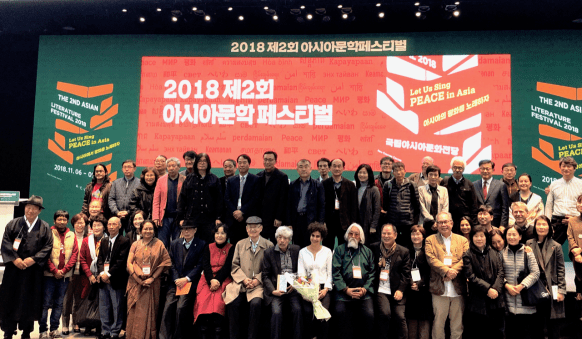
TO FOLLOW through on my initial report last week on the 2ndAsian Literature Festival in Gwangju, South Korea from November 6 to 9, it was an exhilarating and enlightening experience to be among fellow Asian writers getting together to wield literature as a weapon of peace.

I’ve been to many international literary festivals and conferences, but inevitably these gatherings—even those held in Asia—have tended to focus on Western writers and their concerns. For a while back there, the Man Asian Literary Awards, which culminated in a gala ceremony in Hong Kong, drew some special attention to contemporary Asian writing, but that fledgling effort folded up too soon. The Asia Pacific Writers and Translators (APWT), which will be holding its annual conference in Australia a few weeks from now, is arguably the region’s largest and most active literary network, but with so many topics on offer and so many attendees, it’s hard to keep your eyes and minds on one thing at any one time.

The Gwangju meeting felt just right, bringing together 11 writers from outside Korea to meet and interact with about the same number of their Korean counterparts. I was privileged to be the first Filipino to be invited to this young festival, which was headlined last year by 1986 Nobel Prizewinner Wole Soyinka. This year, the prolific and immensely talented Chinese novelist Yan Lianke, winner of the Franz Kafka Prize, led the delegates, who also included the Mongolian poet Damdinsuren Uriankhai, the first winner of the Asian Literature Award, which is given out at the festival.

Why Korea? Because—even as it globally exports kimchi, Koreanovelas, cellphones, and K-Pop—Korea (at least the southern part of it) is seeking to strengthen its cultural connections to the world at large, by exposing its people to cultural and literary movements from the outside, especially from beyond the Eurocentric zone. Among the key agents of this pivot is the publisher and editor Kim Jae-yong, a professor of modern Korean literature and world literature at Wonkwang University in Iksan, supported by the likes of Prof. Sohn Sukjoo from Dong-a University in Busan. Last year, it was also Prof. Kim and Prof. Sohn who brought another group of writers, including myself, to Jeju to discuss how our literatures were emerging out of the Western shadow.

The Gwangju event was less a conference than an intense but still festive sharing of experiences and responses to the many threats to peace, freedom, and justice around the world today, especially in Asia. As the festival chair Prof. Paik Nak-chung put it, “Particularly, 2018 is a special year when the journey towards denuclearization and lasting peace on the Korean Peninsula began as the leaders of the two Koreas met in Panmunjom and in Pyongyang. The festival urges Asian writers to carry on the spirit of peace on the Korean Peninsula to sublimate Asia’s wounds through literature.”

Writers, of course, are neither politicians nor diplomats (despite Shelley’s generous attribution of poets as the “unacknowledged legislators of the world”). Much of what we write inevitably has political content and intent, but governments don’t listen to writers (and would, in fact, shut down the teaching of language and literature as superfluities, like our magistrates did last week). We agreed, therefore, that our approach has to be direct to our peoples and audiences, to resensitize them to their humanity; freedom and justice are prerequisites to any kind of real and lasting peace, and these in turn are premised on the worth of the individual, which literature can help establish.

It was a great honor to share the company of the likes of Bao Ninh, a Vietnamese novelist who had fought the Americans during the war and had once found just himself and a comrade left alive in their platoon after a bloody encounter. His novel Sorrows of War is a poignant reflection on the fruitlessness of war, and the man’s quiet but fervent advocacy persuaded us (with me as one of the jurors) to award him the Asian Literature Award for this year. Another writer I got along very well with was the Taiwanese novelist Syaman Rapongan, a champion of his Tao tribe from Taiwan’s Orchid Island, who gave up a professorship in anthropology to pursue his true passions, writing and seafaring; “The ocean is a poem we cannot recite to the end,” one of his works memorably begins. The bestselling Korean novelist Sim Yungkyung, a molecular biologist by training, also became a good friend, and with our very capable guide Ms. Kim Hye Ji, my wife Beng and I saw the best of Korean culture and hospitality that week.

Not incidentally, the Asian Literature Festival was organized and sponsored by Korea’s Ministry of Culture, Sports, and Tourism through Gwangju’s impressive Asian Culture Center (ACC), which should be a model for other countries to emulate. But the best service of festivals like this is to remind writers—especially writers of conscience—that as solitary and sometimes as disheartening as their work can be, they are not alone, and are appreciated.

Penman No. 324: Where Have All the Great Minds Gone?

IMG_8262.jpg

Penman for Monday, October 22, 2018


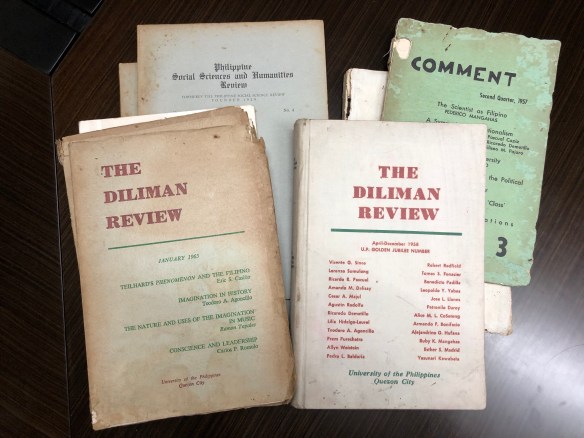
I’M TAKING stock of my latest acquisition of old books and magazines, delivered to my office by a seller who seems to have hit upon a trove of scholarly materials from the 1950s and 1960s, very likely from the estate of one or two of that period’s leading academics.

They include copies of the Diliman Review, a prominent journal of the University of the Philippines since the early 1950s; the University College Journal, from the early 1960s when UP still had a University College in charge of implementing its General Education Program for the student’s first two years; the Philippine Social Sciences and Humanities Review, established in 1929; and Comment, a liberal quarterly from the late 1950s. There’s a special issue of the Philippine Collegian from 1957 devoted solely to the topic of academic freedom. A unique bonus is a copy of the Golden Jubilee issue of the Diliman Review from 1958—UP’s 50th anniversary—a handsome hardbound volume I didn’t even know existed.

As I leaf through the yellowing pages of these journals, a troubling thought looms increasingly larger in my head: Where have all the great minds gone? Indeed, where have all the great debates and discourses gone?

In an age of short attention spans, dominated by tweets, where “likes” and “retweets” have taken the place of scientific verification, there seems to be little room for these ponderous journals and the topics they embrace, whose complexities our times would demand to be reduced to ten-word “hugot” lines or 280-character tweets.

A cursory scan of the contents of these journals and their authors reveals the prevailing anxieties and ambitions of half a century ago: “The Chinese Exclusion Policy in the Philippines,” by Tomas S. Fonacier, PSSHR, March 1949); “The Scientist as Filipino,” by Federico Mangahas (Comment, 1957); “The Filipino Struggle for Intellectual Freedom,” by Leopoldo Y. Yabes (Collegian, 1957); “A Republic Within the Republic,” by Salvador P. Lopez (Collegian, 1957); “A Portrait of the Filipino Composer as Artist,” by Ester Samonte-Madrid (DR, 1958); “On Contemplating a Life: The Study of Biography,” by Nieves B. Epistola (UCL, 1961-62); and “Imagination in History,” by Teodoro A. Agoncillo (DR, January 1965).

What’s interesting is that we’re not just talking about ourselves, to ourselves. A man summarily described in the notes as “a Japanese fiction writer,” Yasunari Kawabata—the Nobel Prize winner for Literature in 1968—contributes a short story, “The Moon in the Water,” to the 1958 DR issue. The foreign scholars Ernest J. Frei and Francis X. Lynch, SJ essay the development of the Philippine national language and the Bikol belief in the asuwang, respectively. The legendary Ricardo R. Pascual dissects Bertrand Russell, Marinella Reyes-Castillo takes on Andre Malraux, and Juan R. Francisco—later to become an Indologist—explains the philosophy of Mo Tzu. And displaying what it takes to be a true intellectual, Agustin Rodolfo, a professor of Zoology, writes about “Rizal as Propagandist” and “The Sectarian University.”

I see that even government bureaucrats then were expected to be literate and to be able to articulate their policies beyond press releases and interviews. The 1958 DRissue includes essays by Amando Dalisay, then Undersecretary of Agriculture and Natural Resources, on “Economic Controls and the Central Bank” and by Sen. Lorenzo Sumulong on “The Need for Economic Statesmanship.”

I wonder how many of these names will still resonate with Filipinos below 40, even within UP itself. I’m guessing that “Agoncillo” might trigger a vague notion of nationalist history, but that will likely be it, which means that we have lost our sense of an intellectual history and of the traditions that colored it—say of the great debates between the University and the State on the issue of academic freedom—and of our sense of quality or even greatness of mind, and what it takes to achieve that standard. Sadly, our academics today are too often trapped in theoretical jargon, in Party doctrine, and in self-obsessed mewling to make truly insightful, original, and meaningful contributions to national discourse.

As I contemplate retirement three months hence, these books and journals remind and make me proud of UP’s past and hopeful for its future, if it doesn’t forget its basic mission as a producer not just of smart employees but of new and bold ideas.

Where are these minds today, and especially, where are they in government—in the Senate and Congress, let alone the Palace—where they should matter most? In an essay for the University College Journal (First Semester 1963-64) titled “The Filipino Scholar,” the late Prof. Leopoldo Y. Yabes—himself no mean scholar of literature and the humanities—complains that government has been taken over by mediocrities:

“It is quite disheartening to see the spectacle of puny, warped minds having anything to do with administration and direction of intellectual activity on the local and national scenes, of unemancipated minds exercising power over other minds more liberated and definitely superior to them, of parochial intellects charged with the solution of problems beyond their ken and pretensions. Their scholarly prestige seems to be built not on the basis of actual meritorious achievement but by means of press release and other mass communications media.”

I turn my TV on to witness the gaudy train of senatorial hopefuls, many bringing little to the table but their showbiz ratings and their connections to power. I turn the TV off and reach for my books.


Penman No. 319: A Priceless Literary Treasure

IMG_7732.JPG

Penman for Monday, September 17, 2018


SINCE I seriously got into antiquarian book collecting not too long ago, I’ve picked up quite a few books that have required the services of a professional book restorer. Surprisingly for most people (but not to bibliophiles who know the history of papermaking and publishing), the books most in need of help often turn out to be the newer ones—and by “newer” I mean a hundred years old or so, books published in the early to mid-1900s.

My oldest book dates back to 1551, an abridged volume in English on the history of institutions. I found it in, of all places, Cubao via an OFW who received it from her employer in Paris and sent it on to her son, who thankfully for me had little use for it and advertised it online. It’s amazingly robust for its age, still tightly bound in its original leather covers, the paper crisp and the printing sharp and clear, annotated here and there by the hand of its various owners down the centuries. (I was tempted, but I didn’t dare inscribe my name on it.)

That’s also true for relatively more recent books from the 1700s and 1800s, some of which look and feel like they rolled off the press yesterday. (I first fell in love with old books as a graduate student of Renaissance drama at the University of Michigan, which kept books from the 1600s on the regular shelves of the library, fascinating me with the stiffness of their paper and the tactile feedback of the letters). I often treat visitors to my office with a whiff of centuries past, ruffling the pages of, say, a Jesuit history from 1706 beneath their noses.

But books from the 1900s and later typically turn yellow and crumbly. The culprit, of course, is the acid that forms in modern, wood-based paper because of a number of both internal and external factors.

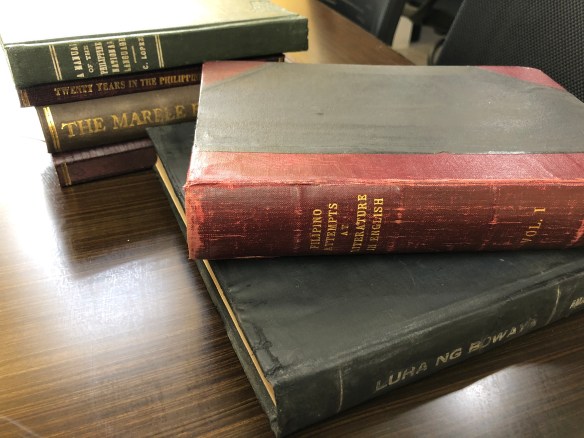
This was certainly true of a recent batch of books that I got back from my favorite book restorer (who shall remain unnamed for now lest she be deluged with requests, given that she has a full-time day job to mind). They included no book older than 1853 (a coverless edition of Paul P. de la Gironiere’s Twenty Years in the Philippines) and 1860 (a copy of Nathaniel Hawthorne’s The Marble Faun, which I didn’t even realize was a first edition until I noted the bookseller’s penciled notation 20 years after I’d bought it).

IMG_7699.jpg

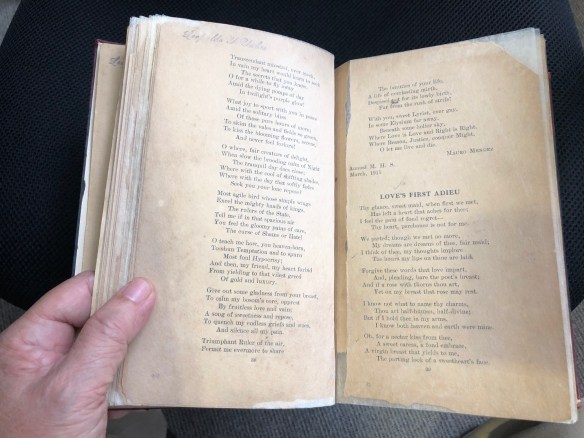
The prize in the pile was a thick clothbound book titled Filipino Attempts at Literature in English, Vol. 1 (Manila: J.S. Agustin & Sons, 1924). The volume is a compilation of smaller books from the 1920s to the 1930s, put together by the legendary professor and anthologist Dean Leopoldo Y. Yabes (1912-1986), who was scarcely in his twenties when he assembled and bound this compendium (signed “Bibliotheque Particuliere de Leopoldo Y. Yabes No. 118).

It’s an outstandingly rare collection, because it contains the only extant copy, as far as we know, of Rodolfo Dato’s landmark Filipino Poetry—the first major collection of Filipino poems in English. In the florid prose typical of the time, Dato prefaces his book by describing it as “a collection of the maiden songs of our native bards warbling in borrowed language,” acknowledging that “the full flowering of our poetic art has not yet come, but the fertile field smiles abundant growth and gives promise of a rich and bountiful harvest in a day not far distant.” In various pieces rhymed and metered, writers like Maximo M. Kalaw, Fernando Maramag, Procopio Solidum, and Maria Agoncillo give praise to mayas, moonlight, sampaguitas, and Motherland.

I had long been searching for the Dato book in the usual places online, for naught; but one day, at a committee meeting, my dear friend Jimmy Abad—the poet and anthologist—slipped it over to me, with the note “Priceless!” And indeed it was. Dean Yabes had gifted it to Prof. Abad, who was now passing it on to me in that timeless ritual that exalts and humbles writers and teachers who know exactly what they are receiving.

The compendium also contains an English-German Anthology of Filipino Poets  translated and edited by Pablo Laslo, with a preface by Salvador P. Lopez (Libreria Manila Filatelica, 1934); Dear Devices, Being a First Volume of Familiar Essays in Englishby Certain Filipinos (N. p., 1933); and the 1935 Quill, the Literary Yearbook of the University of Sto. Tomas, edited by Narciso G. Reyes. I’ll say more about these other seminal works later, as they’re truly invaluable glimpses into our earliest impulses as writers in English (and I have to wonder, if this was just Vol. 1, what Vol. 2 was like, if any).

Friendship aside, Jimmy must also have known that I was in a better position to take care of the volume, whose first 80 pages or so—almost the entire Dato book—had been torn, not just detached, from the spine by that infernal chemistry I described earlier. So I sent it to my restorer, who patiently mended each torn and fragile page with Japanese paper. Like my other jewels, this book will find its way to the UP Library at some point, now renewed for another generation of readers and scholars.